Wedding ring enhancers are jewelry pieces designed to be worn around or alongside an existing engagement ring to add sparkle, structure, protection, or a more complete ring combination without replacing the original ring. They can include ring guards, wraps, jackets, and designs that frame or enhance the engagement ring’s appearance.
Choosing a wedding ring enhancer is not always about wanting a bigger or more dramatic ring. Many people use enhancers to celebrate an anniversary, update a meaningful piece, add balance to a simple solitaire, protect a delicate setting, or create a new look while keeping the original engagement ring at the center.
This guide explains wedding ring enhancers, including the differences between enhancers, guards, wraps, and jackets, when they make sense, how they work with engagement rings, common mistakes, and how enhancers fit into the broader choice of wedding rings and wedding bands.
What Is a Wedding Ring Enhancer?
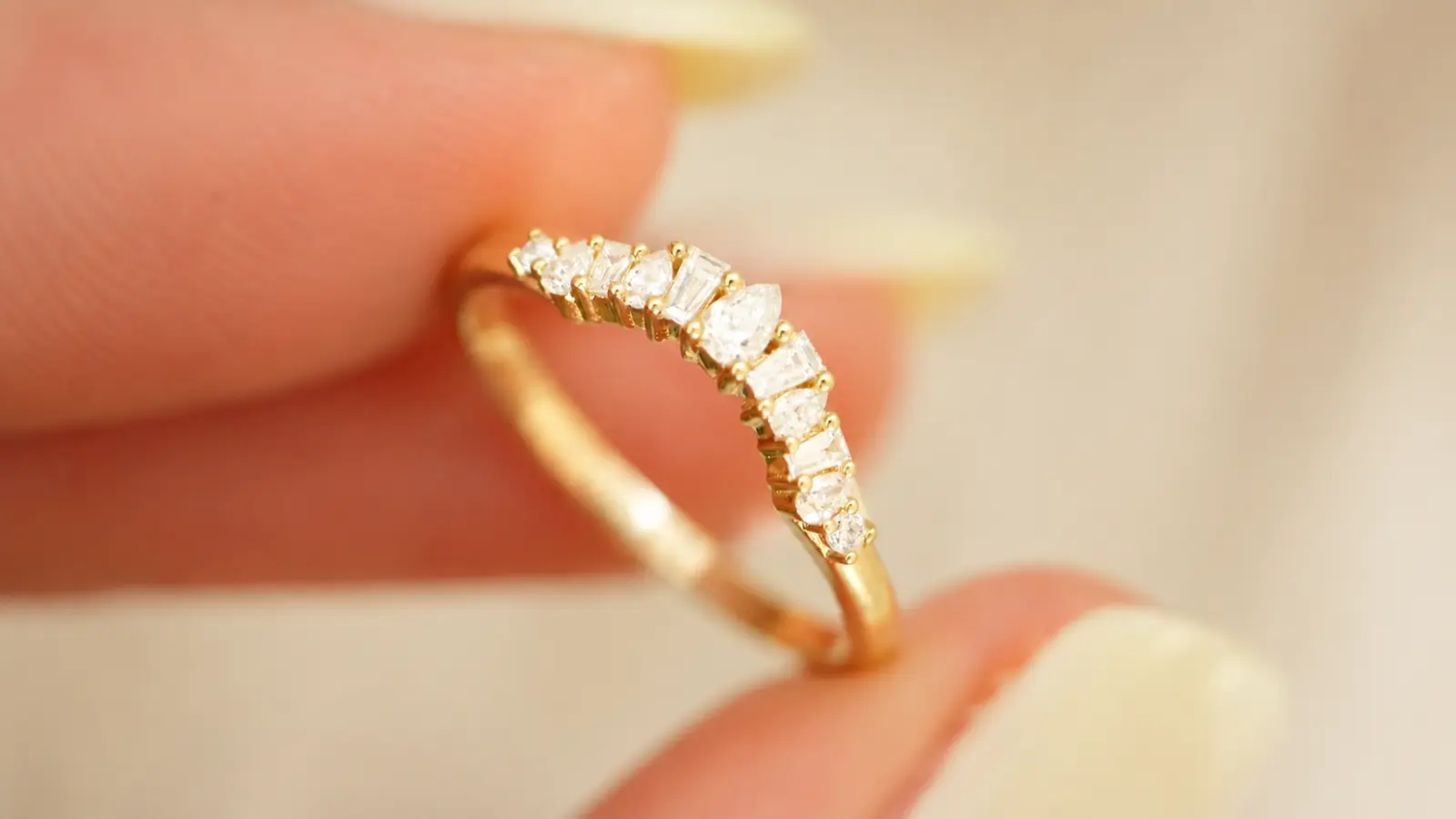
A wedding ring enhancer is a secondary ring worn alongside or around an existing engagement ring, designed to add visual presence, diamond sparkle, or architectural framing to the combination. The engagement ring, its center stone, its original setting, and the meaning it carries all stay exactly as they were, and the enhancer simply works around it, changing how the combination reads without replacing what was there before.
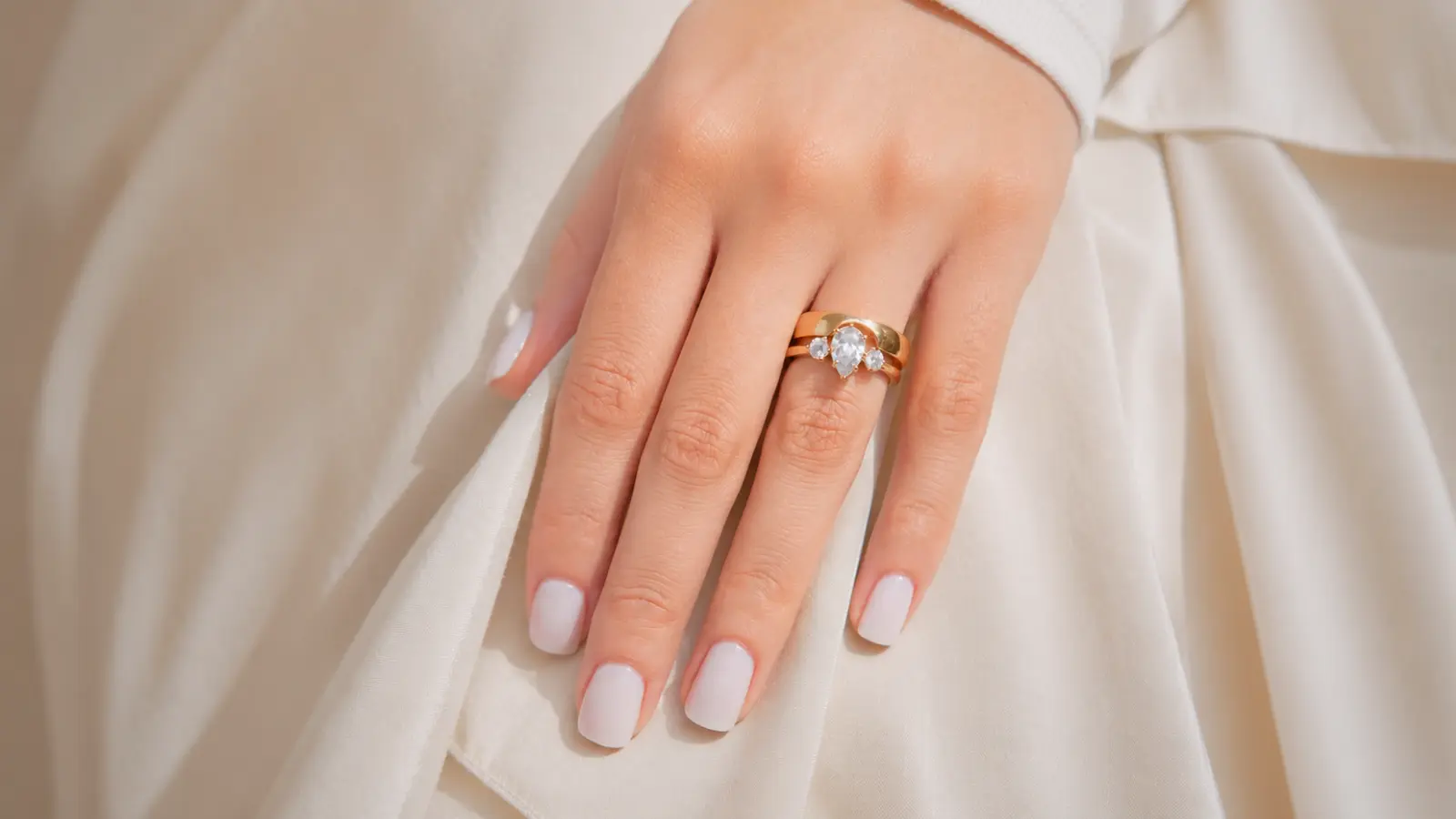
Enhancers typically appear in one of three forms. The most common is a matched pair of bands, one placed on each side of the engagement ring, that frame the center stone symmetrically and add stones or metal structure on either side. The second is a single curved or contoured band designed to sit on one side of the engagement ring, creating an asymmetric emphasis. The third is a fully encircling piece, what jewelers often call a jacket, that wraps around the sides of the engagement ring’s shank and effectively places the original ring inside a larger, more elaborate setting.
The purpose varies by wearer. Some use an enhancer to upgrade a ring that was chosen with modest budget in mind and that has since felt too simple for where life has taken them. Others use it to incorporate a meaningful ring, a family heirloom, a ring received as a gift rather than chosen, into a more personally expressive combination. Some want to mark a milestone anniversary with something that adds to the existing ring without replacing it. Others simply want more presence for a formal occasion, worn occasionally rather than daily.
The terminology problem
Enhancer, guard, wrap, jacket, shadow band, and ring insert are all terms that appear in the bridal jewelry market for products that do similar or overlapping things. The terminology is not standardized, and a given piece might be labeled differently at different retailers. The most useful way to think about these categories is by what they are primarily intended to do: add design presence (enhancer or jacket), provide security and protection (guard), or encircle the existing ring as a single structural piece (wrap). Many products serve more than one of these functions simultaneously: a diamond guard adds sparkle while stabilizing the ring, which is part of why the terms blend.
When shopping, the most important question is not what the piece is called but what it will do in combination with the specific engagement ring it will be worn beside. The name on the tag matters less than the fit and proportion on the finger.
Ring Guard vs. Ring Wrap
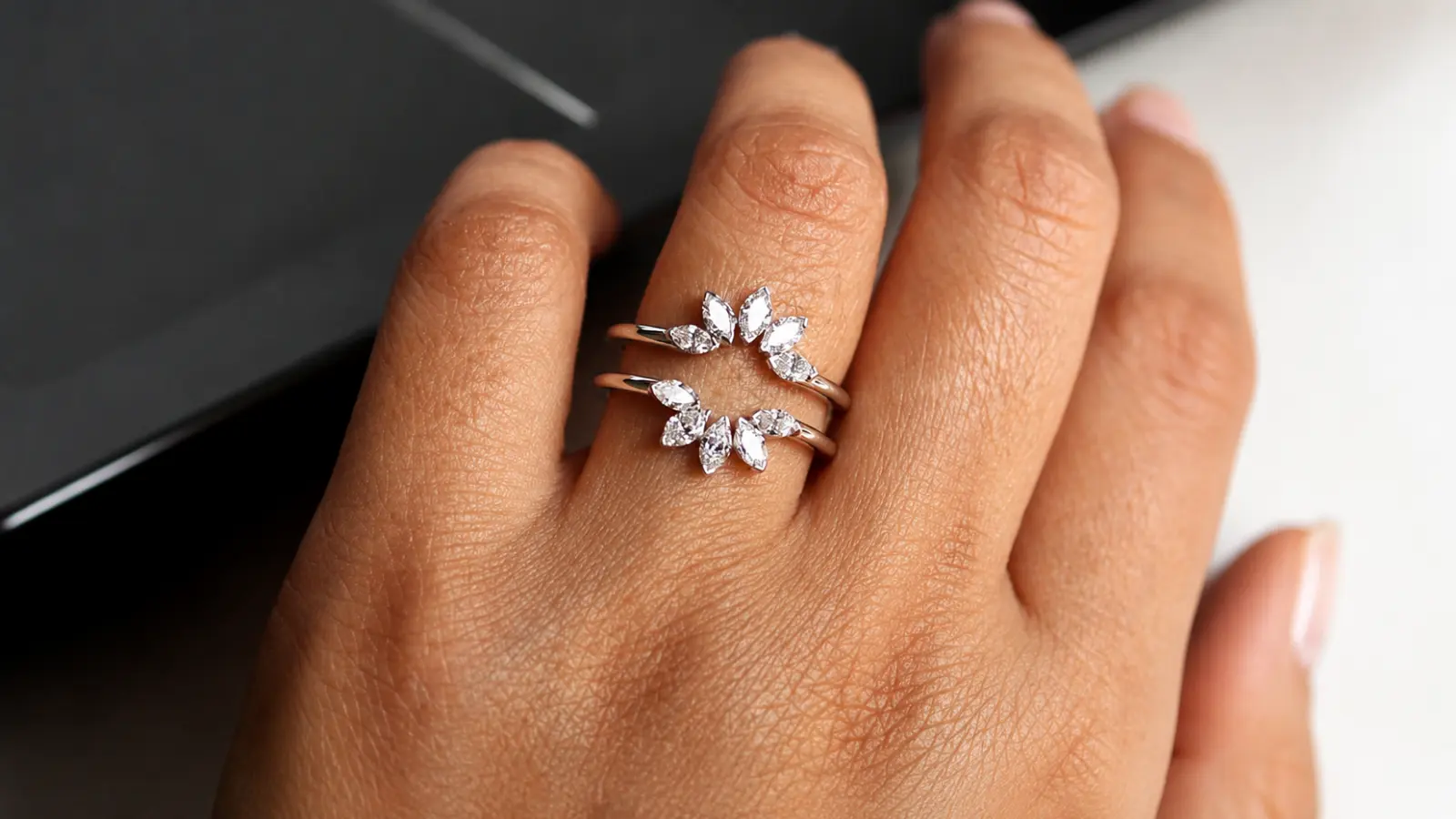
Within the broader enhancer category, ring guards and ring wraps address different primary concerns, though in practice, both often accomplish several things at once.
What a ring guard does
A ring guard’s defining function is protective and stabilizing. It holds the engagement ring more securely on the finger, prevents it from spinning, and can protect the center stone’s setting from direct lateral contact with other rings or hard surfaces. A guard typically sits on one or both sides of the engagement ring, creating a physical barrier between the center stone’s prong area and whatever lies beside it. For wearers whose engagement ring spins during daily wear, either because the ring fits loosely or because the center stone’s weight creates a top-heavy imbalance, a guard on the inner side of the ring can address both issues at once.
Guards are also used to create space between a delicate engagement ring setting and a wedding band that would otherwise press against it. A very high-set or fragile prong arrangement pressed directly against another metal ring accumulates small amounts of wear at the contact point over years of daily wear. A narrow guard placed between the two rings creates a buffer, practically useful for protecting a meaningful setting over decades of daily use.
What a ring wrap does
A ring wrap is a single piece designed to encircle the engagement ring, wrapping around its sides, beneath its base, or along both edges, to create the visual effect of a more elaborate multi-piece combination from one purchase. Where a pair of enhancer bands sits as two separate rings flanking the engagement ring, a wrap is one continuous piece that achieves a similar visual result. Wraps often have an opening or a channel designed to accommodate the engagement ring’s shank, holding it in place rather than sliding freely beside it.
The practical advantage of a wrap is that it moves as one piece with the engagement ring rather than as a second ring that can rotate or shift independently. The trade-off is that a wrap that encircles the ring’s shank is more difficult to resize than an independent band, and more difficult to separate from the engagement ring once the two are habitually worn together, particularly if a wearer occasionally wants to wear the engagement ring alone without the wrap.
How they overlap
In everyday use, the distinction between guard, wrap, and enhancer is functional rather than absolute. A diamond-set curved band worn on the inner side of the engagement ring guards the setting, adds sparkle, and could reasonably be called any of the three names depending on the jeweler selling it. The category the piece belongs to matters less than how it fits, how it wears, and what it does to the visual combination. The guide to curved wedding bands covers the closely related category of contoured bands that serve some of the same functions in a more traditional wedding band form.
When Should You Use an Enhancer?
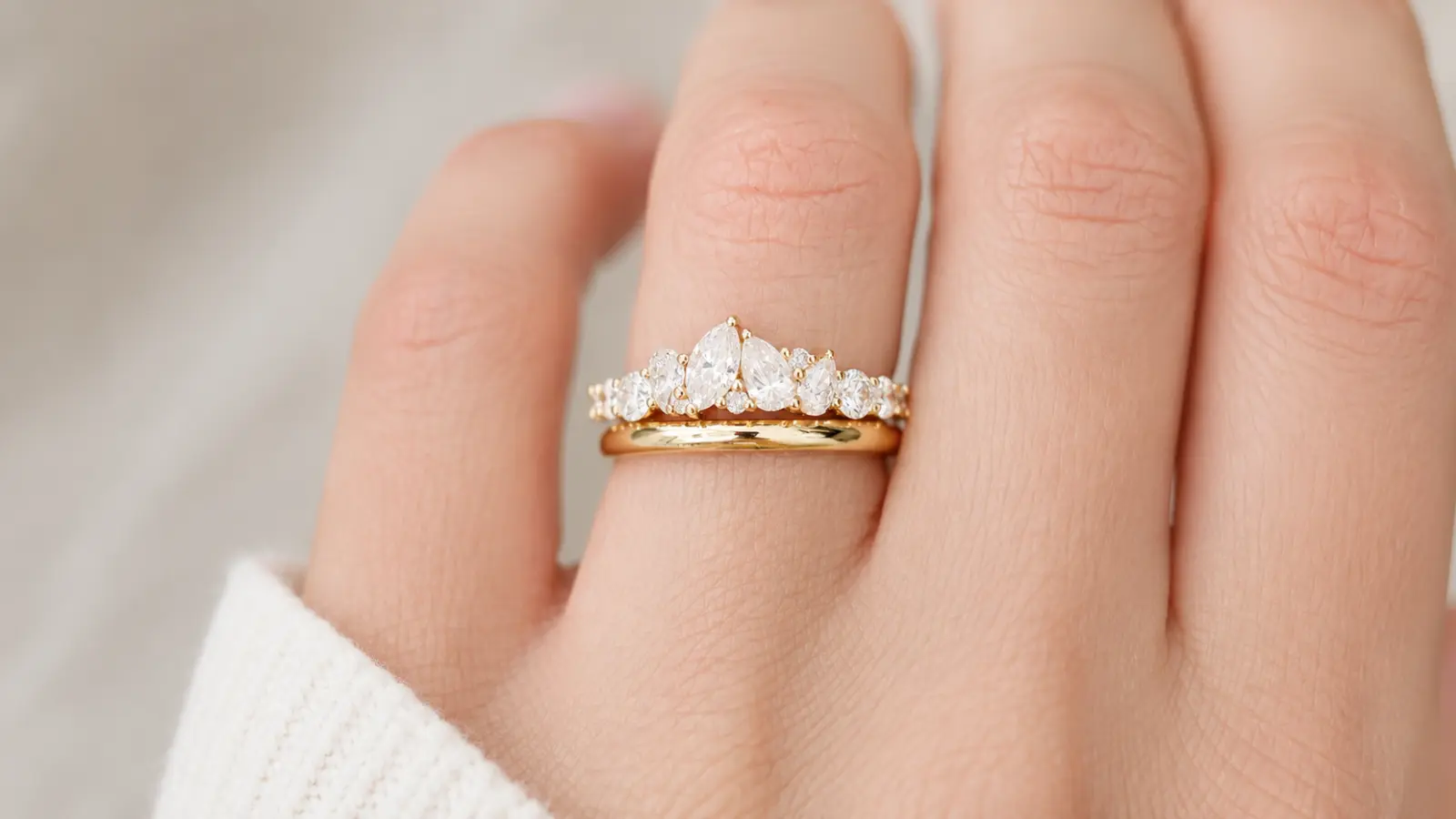
Ring enhancers are not a universal solution, and they are not appropriate for every situation where the existing ring feels insufficient. The moments where an enhancer genuinely helps, and the moments where a different approach would serve better, are worth distinguishing before the purchase.
When the ring is meaningful but visually simple
The most common and most legitimate use case for a ring enhancer is an engagement ring that carries significant personal meaning but whose design is simple relative to what the wearer now wants to wear. A plain solitaire on a thin gold band, a family heirloom ring with a small or dated-looking stone, a ring chosen early in a relationship when budget was the primary constraint, all of these can feel inadequate for occasions or life stages where the wearer wants more visual presence without replacing what the original ring represents.
An enhancer in this context adds to the ring rather than replacing it, which preserves both the meaning of the original piece and the relationship with the person who gave it. This is a meaningful distinction for many wearers, and it is why enhancers exist as a category at all.
When the ring spins or fits loosely
A ring that spins during daily wear is both annoying and a subtle source of stone setting wear: the ring rotating brings the setting into contact with other surfaces and other rings in ways that a properly balanced ring would not. A narrow ring guard placed on the inner side of the engagement ring provides a stabilizing counterweight that addresses the spinning without resizing the ring itself. This approach works best when the ring fits the finger correctly in circumference but is top-heavy rather than genuinely oversized. If the ring is significantly too large, professional wedding ring resizing by a jeweler is the more reliable solution. A guard can help with mild looseness but is not a substitute for proper fit.
When a formal occasion calls for more presence
Some wearers maintain a ring enhancer specifically for formal occasions, worn with the engagement ring for events where more visual impact is appropriate, and left at home when the simpler combination suits the day. This occasional-use approach is practical and widely done, particularly for wearers who would find a full-time elaborate ring combination too much for daily life but who want the option of more presence when the occasion warrants it. The consideration here is finding an enhancer that wears well enough for a full formal occasion, comfortable, secure, not prone to catching on fabric, without requiring the kind of daily commitment that a permanent addition would.
When a different solution would serve better
An enhancer is not always the right answer. If the engagement ring no longer fits correctly, resizing is the direct solution, not a guard purchased to manage the fit problem indirectly. If the wearer wants a different look entirely, purchasing a new wedding band in a style that works alongside the engagement ring may produce a cleaner result than wrapping the existing ring in a piece designed around a different aesthetic. And if the ring combination already feels right but lacks diamond sparkle, adding a simple diamond band beside the engagement ring, as a stackable addition rather than an enhancer, often creates a more flexible and versatile result. The stackable wedding rings and the guide to diamond wedding bands cover those alternatives in detail.
Wedding Ring Wraps for Engagement Rings
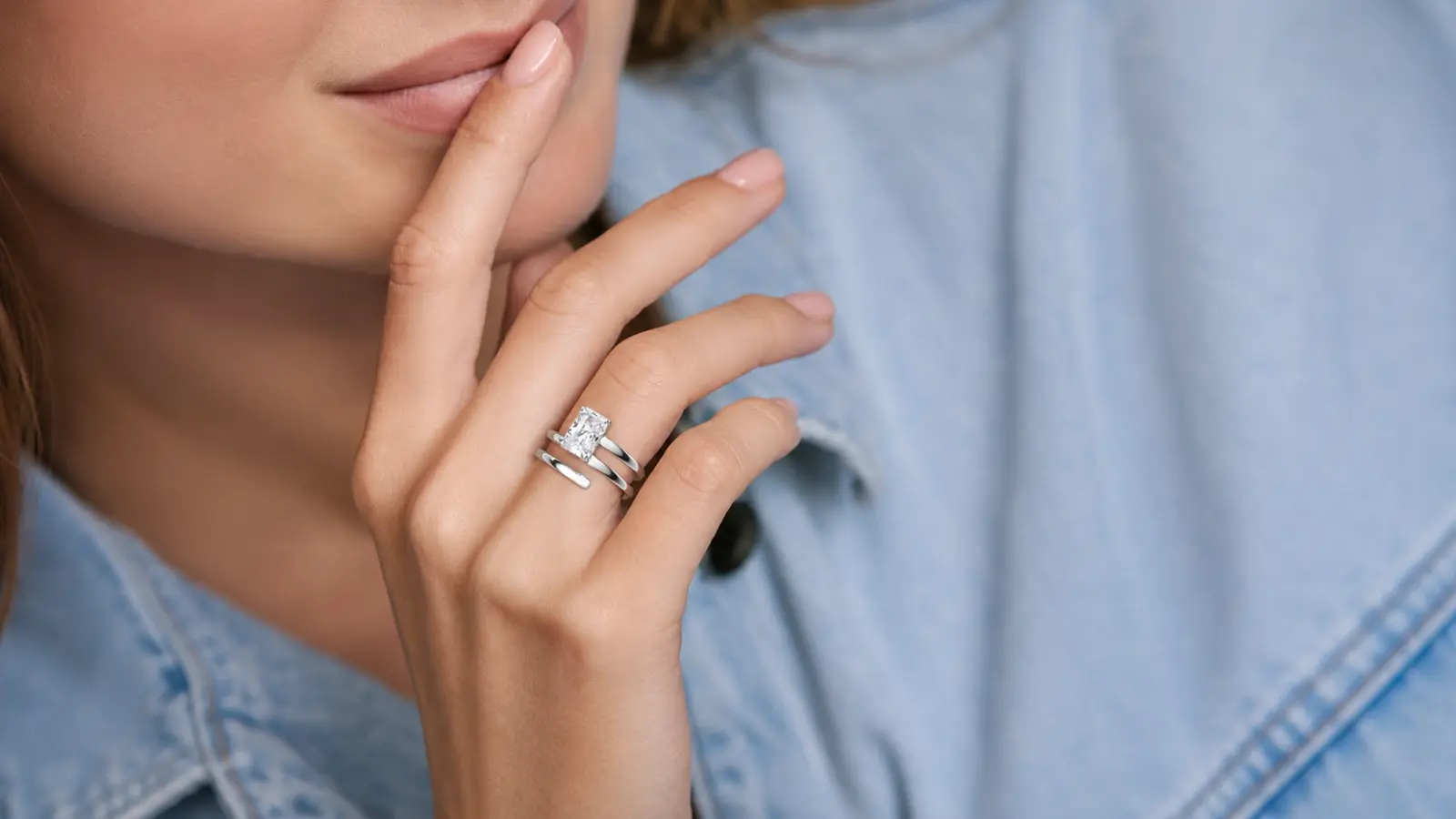
Ring wraps designed specifically for engagement rings occupy a particular niche: they are intended to transform the visual presence of a single-stone ring by creating the impression of a more elaborate set, without requiring the wearer to remove the original ring or commit to a permanently altered combination.
The solitaire upgrade
The most common application of a ring wrap is with a simple solitaire engagement ring, a single center stone on a plain shank, often in yellow or white gold. A wrap placed around the solitaire’s shank can create the visual effect of a pavé-set band surrounding the stone, a vintage-style filigree frame, or a double-band silhouette that makes the single-stone ring appear to be part of a more considered set. The solitaire’s center stone is still fully visible and remains the focal point; the wrap adds context and embellishment around it.
This application works most successfully when the wrap is designed or selected with the solitaire’s specific proportions in mind. A wrap engineered for a round brilliant solitaire on a standard shank will not fit cleanly on an oval solitaire with a wider head, and the attempt to make it work will produce visible gaps or misalignment that undermines the effect entirely. The fitting process, bringing the actual engagement ring to the jeweler and checking every combination in person, is not optional for this category of purchase.
Wraps for heirloom and vintage rings
Vintage and antique engagement rings present a particular case for ring wraps. These rings often have settings with profiles, dimensions, and aesthetic languages that modern curved wedding bands and standard enhancers do not accommodate well, the scale is different, the prong styles are different, the shank proportions are different. A custom wrap made specifically for a vintage ring’s dimensions can reframe it in a contemporary context while preserving the original piece intact. This is a more elaborate and more expensive path than purchasing a ready-made wrap, but for a genuinely meaningful heirloom piece, it is often the most respectful approach to the ring’s original design.
Wraps vs. matched bridal sets
It is worth naming the alternative explicitly: a bridal set, an engagement ring and matching wedding band designed together as a pair, is the product the ring wrap is essentially substituting for, in situations where the wearer did not start with a bridal set. For couples choosing an engagement ring now who know they want a more elaborate combination, a matched bridal set or an engagement ring with a coordinating curved or contoured wedding band is a cleaner solution than purchasing a simple ring and adding a wrap later. The guide to wedding ring sets covers what to look for in matched combinations. Wraps are most valuable when the engagement ring already exists and a matched set purchase is no longer the path available.
Pros and Cons of Ring Guards
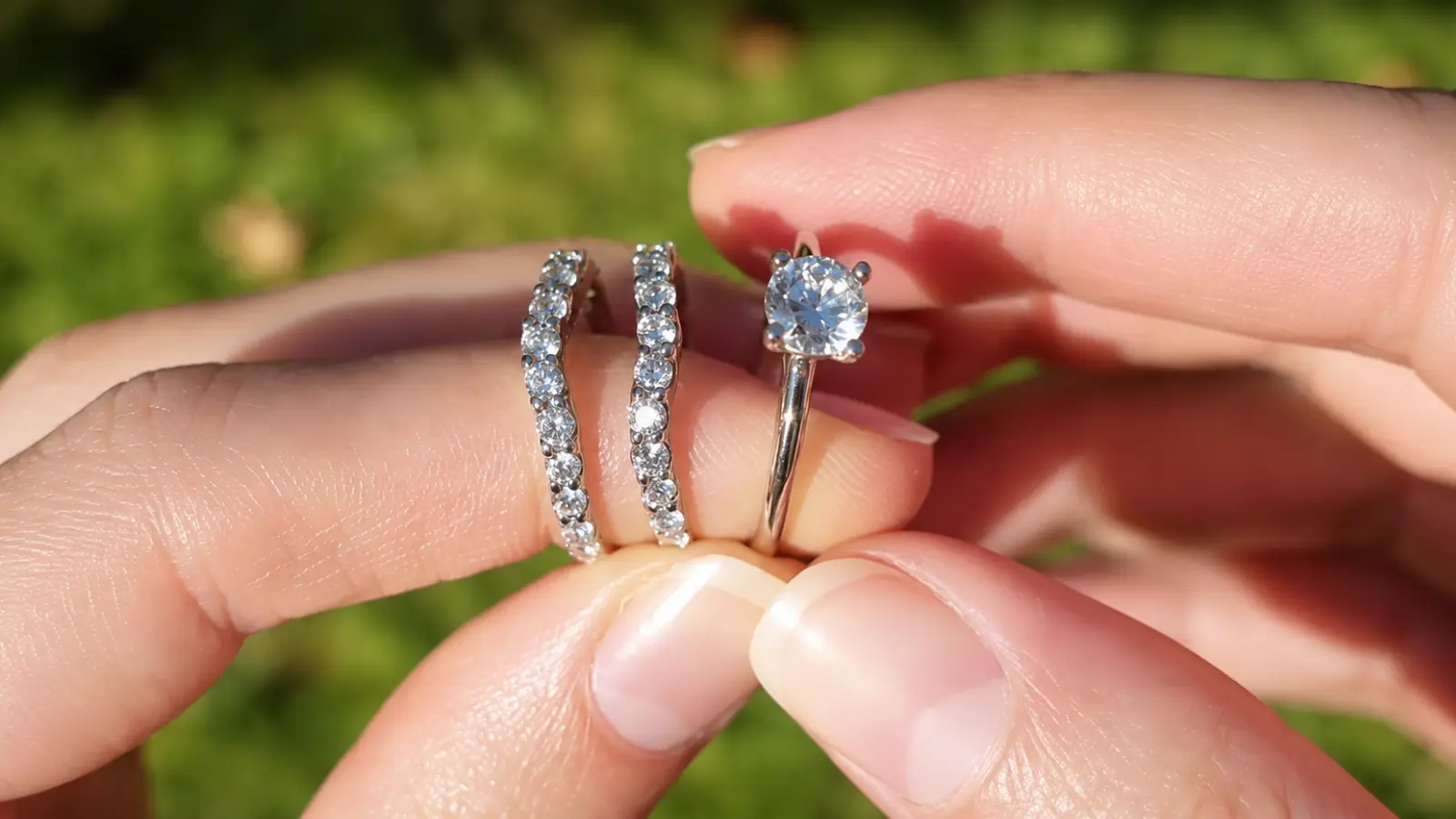
Ring guards are the most practically motivated piece in the enhancer category, and their value is most clearly assessed by asking two questions: what specific problem is the guard solving, and is the guard the most appropriate solution to that problem?
The advantages
A ring guard that stabilizes a spinning ring addresses a genuine daily frustration without requiring any alteration to the engagement ring itself. For rings that fit correctly in circumference but are top-heavy, where the weight of the center stone causes the ring to rotate so the stone ends up on the palm side of the hand, a guard that provides counterweight on the inner side of the finger resolves the issue without resizing. This is particularly useful for rings that cannot easily be resized, such as some pavé-set shanks where resizing would disrupt the stone settings along the band.
A guard that protects the engagement ring’s setting from direct contact with a wedding band is a practical consideration for very high-set or delicate prong arrangements. Prongs in direct daily contact with a metal band accumulate micro-wear over years, occasionally enough wear that a prong becomes thin and the stone’s security is eventually affected. A narrow guard that creates a buffer between the two rings is a legitimate durability measure for wearers with particularly fragile or high-value settings.
The design addition is real as well. Even a guard purchased primarily for functional reasons can function as a subtle wedding ring upgrade, and for wearers who want both outcomes, a diamond-set guard delivers on both dimensions simultaneously.
The trade-offs
A ring guard is an additional ring on an already-occupied finger. It takes up space, adds width to the ring combination, and introduces a second piece that must be managed, sized correctly, kept clean, and occasionally removed independently of the engagement ring. For wearers who find their existing ring combination already full or their finger already carrying as much as is comfortable, a guard can tip the balance toward a ring combination that feels like too much.
Ring guards also do not replace proper ring sizing. For rings that are significantly too large, more than a half size too big, a guard is an imprecise substitute for resizing that requires finding a guard wide enough and heavy enough to counteract the ring’s movement, while not being so wide that it creates its own comfort problems. A jeweler who resizes the ring correctly solves the problem once, permanently; a guard solves it approximately and introduces its own variables.
Finally, the aesthetic risk is real and specific: a ring guard chosen without careful attention to proportion can make the combination look overloaded rather than considered. The next section addresses this directly.
How to Avoid an Oversized Look
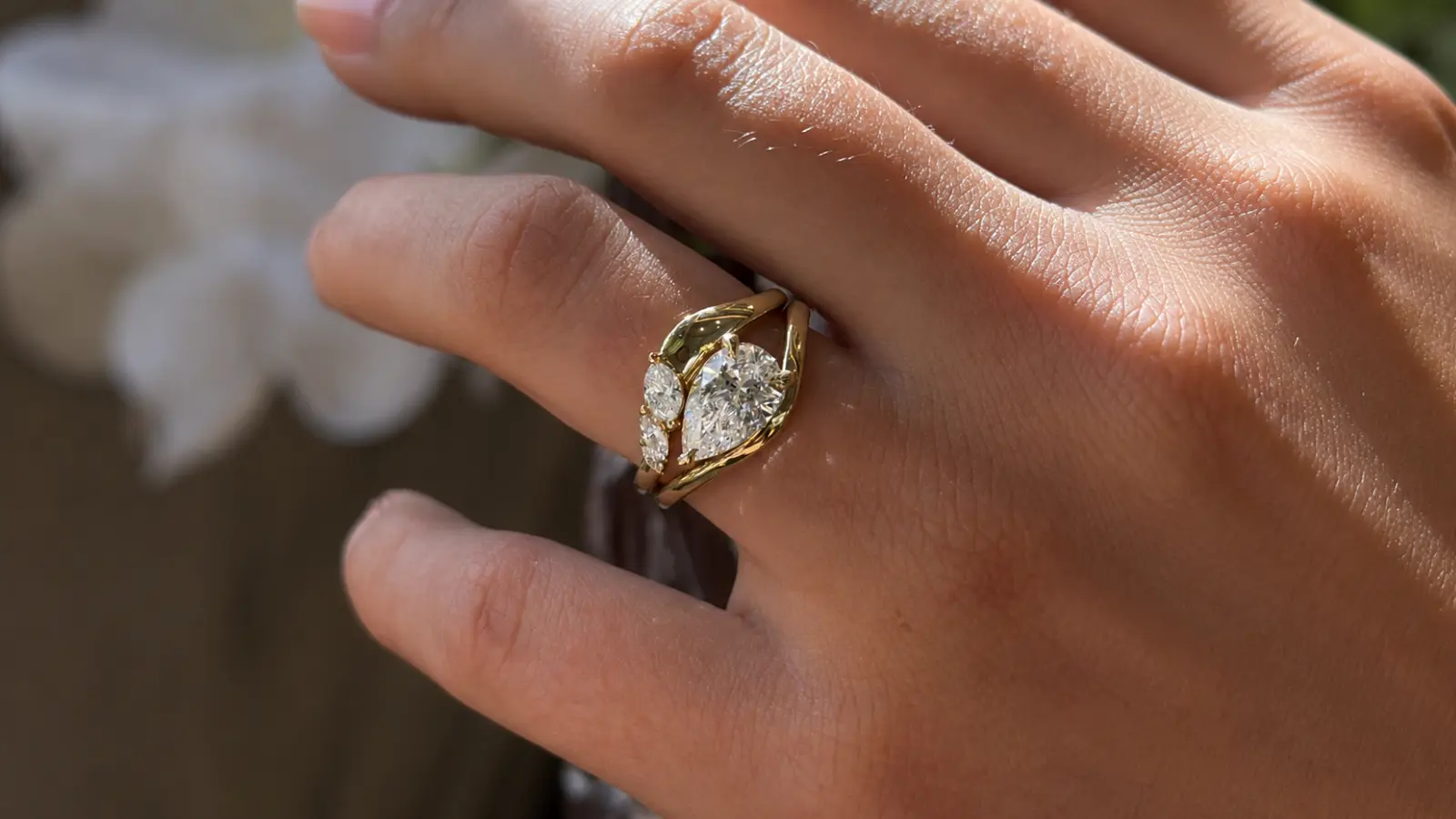
The most common complaint about ring enhancers, from wearers who regret the purchase, is that the combination looked right in the jewelry case and too much on the hand. This is a predictable outcome when the enhancer is chosen based on the engagement ring’s center stone dimensions rather than on the ring’s total visual presence, or when the enhancer is tried against a display ring of the wrong size rather than the actual engagement ring. Avoiding it requires understanding the specific ways an enhancer can overwhelm what it is meant to enhance.
The proportion problem
An enhancer that is visually heavier than the engagement ring it frames will not frame the engagement ring, it will replace it as the visual focal point of the combination. The engagement ring, instead of being elevated by the enhancer, disappears behind it. This happens most often when the enhancer carries significantly more diamond coverage than the engagement ring, when its width is substantially greater than the original ring’s shank, or when its architectural structure rises higher than the engagement ring’s center stone profile. All three of these conditions are easy to produce accidentally when selecting an enhancer from photographs or display rings rather than against the actual engagement ring.
The proportion check: hold the combined pieces up and identify the most visually prominent element. If it is the center stone of the original engagement ring, the combination is working. If it is the enhancer, the combination has inverted the intended hierarchy.
Scale the enhancer to the existing ring
A delicate engagement ring, a thin shank, a modest center stone, a simple setting, needs a delicate enhancer. A narrow diamond band or a very thin pavé wrap reads as an addition alongside a delicate ring. A wide, heavily stone-set guard or a structured jacket-style enhancer reads as a replacement, visually consuming the original ring. The more modest the engagement ring, the more restrained the enhancer needs to be to preserve the ring as the focal point of the combination.
Conversely, a substantial engagement ring, a large center stone, a wider shank, a prominent setting, can accommodate a more substantial enhancer. The visual weight of the enhancer needs to reach up toward the visual weight of the ring it accompanies, or the enhancer will appear underwhelming and the combination will look mismatched in the opposite direction. The goal in either case is proportional balance, not sameness.
Avoid adding height
One of the subtler ways an enhancer creates an oversized look by adding height: elements that rise above the existing ring’s setting profile, creating a taller, more visually complex silhouette than the engagement ring alone. An enhancer with architectural prong work, a raised filigree frame, or pavé diamonds that stand above the shank surface all add profile height to the combination. On a hand, that height accumulates visually and can make the combination look like a statement piece rather than a considered ring stack. Flat-profile options, such as pavé-set bands close to the finger or thin wraps without raised elements, add sparkle and width without adding height, which is generally the more flattering and more wearable result.
Try before buying
Photographs of ring enhancers, even accurate and well-lit ones, do not replicate what the combination looks like on a specific hand with a specific engagement ring in actual light. Ring size, finger length, skin tone, and the scale of the original ring all affect how an enhancer reads in person. Trying the enhancer against the actual engagement ring on the actual finger, in natural light, for at least several minutes, is the only reliable assessment. If an in-person appointment is not possible before purchasing, choosing a retailer with a clear return policy that allows physical examination before committing is the most practical alternative.
The guide to how to wear wedding rings covers the broader context of ring fit, proportion, and combination decisions that apply to enhancers as much as to any other piece worn on the same finger.hasing, choosing a retailer with a clear return policy that allows physical examination before committing is the most practical alternative.
Wedding Ring Enhancer Inspiration
Wedding ring enhancers can transform the way an engagement ring looks while keeping the original piece at the center. Explore our inspiration board for diamond enhancers, ring guards, wraps, jackets, solitaire upgrades, and elegant wedding ring combinations.
Choosing a Wedding Ring Enhancer That Complements Your Story
A wedding ring enhancer is not about replacing the ring you already have — it is about finding a way to let that ring continue evolving with you. The best enhancers add beauty, balance, or function while keeping the original piece and its meaning at the center.
Whether you choose a diamond wrap, a simple ring guard, or a custom enhancer designed around your engagement ring, the right choice should feel like a natural extension of what you already love. A wedding ring combination becomes meaningful not because it changes with every trend, but because it continues to reflect the life built around it.
Frequently asked questions (FAQ)
What does a wedding ring enhancer actually do?
A wedding ring enhancer changes the appearance or structure of an existing engagement ring without replacing it. It can add sparkle, frame the center stone, make a simple ring feel more substantial, or create the appearance of a complete ring set. The best enhancers improve the original ring while keeping the engagement ring itself as the main focus.
What is the difference between a ring enhancer, guard and wrap?
A ring enhancer is usually chosen to add visual impact, while a ring guard is often used for support, protection, or stability. A ring wrap typically surrounds more of the existing ring to create a new combined design. However, jewelers often use these terms differently, and many pieces perform more than one function. The most important factor is how the piece fits and works with your specific ring.
When should you add an enhancer to an engagement ring?
A ring enhancer can be a good choice when you love your engagement ring but want more presence, sparkle, or balance. It is often used with simple solitaire rings, heirloom rings, milestone upgrades, or rings that feel incomplete next to a wedding band. An enhancer works best when you want to build around the original ring rather than replace it.
Can a wedding ring enhancer make a ring look too big?
Yes. A wedding ring enhancer can look too large if it overwhelms the engagement ring instead of complementing it. The enhancer should frame the original ring, not become the first thing people notice. Matching the width, height, diamond coverage, and overall proportion of both pieces is the key to creating a balanced look.
Is a ring enhancer better than buying a new ring?
A ring enhancer is better when the original ring has emotional meaning and you want to preserve it while changing the overall look. Buying a new ring may make more sense if your personal style has completely changed or if the original ring no longer works for your lifestyle. An enhancer adds to the existing story instead of starting over.
What should you know before buying a wedding ring enhancer?
Before buying a wedding ring enhancer, try it with your actual engagement ring rather than judging it alone. The fit, proportions, setting height, comfort, and ability to wear the pieces separately all matter. A beautiful enhancer should feel like it was designed for your ring — not like an unrelated piece added later.