
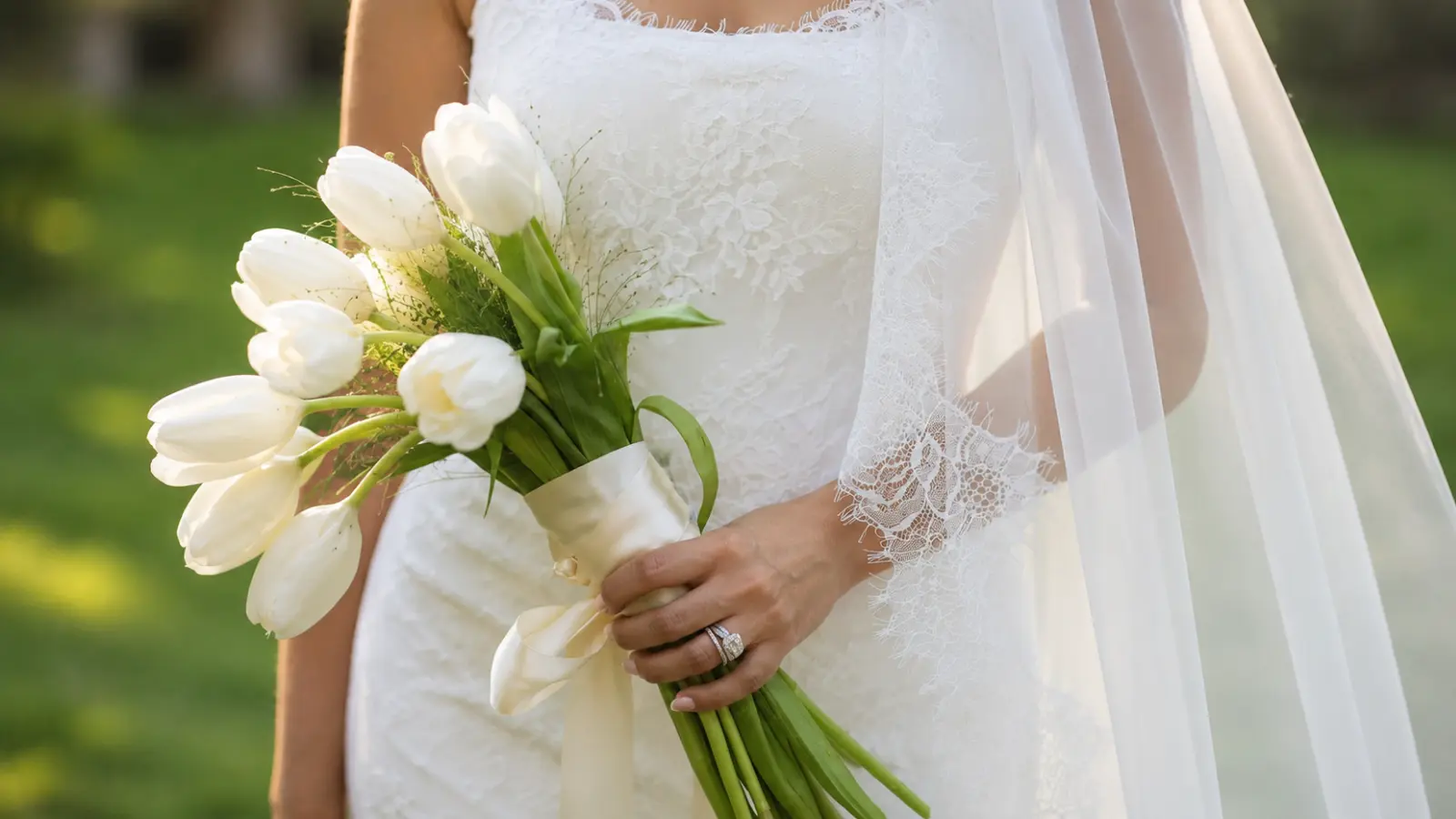
Tulip wedding bouquets are a timeless choice for brides who love clean lines, soft elegance, and naturally seasonal flowers. Their graceful shape, wide range of colors, and understated beauty make tulips perfect for spring weddings, minimalist celebrations, and romantic garden ceremonies where simplicity becomes part of the overall design.
Although tulips appear effortless, they have characteristics every bride should understand before choosing wedding bouquet flowers. They continue opening after they’re cut, respond quickly to warmth and light, and perform best with proper conditioning. Knowing how they behave helps you enjoy their beauty throughout the ceremony, photographs, and reception.
This guide explores tulip wedding bouquets in detail as part of the broader world of wedding bouquets, including bouquet ideas, white tulip designs, spring wedding inspiration, simple bouquet styles, flower care, and practical advice for creating a bouquet that feels elegant, fresh, and perfectly suited to your wedding day.
Are Tulips Good for Wedding Bouquets?
The honest answer is yes — with some context. Tulips have qualities that make them genuinely well-suited to bridal florals, but they also have specific needs that roses and ranunculus don’t. Understanding both sides of that equation helps you make a decision you’ll feel confident about.
On the positive side: tulips have one of the widest color ranges of any cut flower, which means they’re not a limiting choice for couples with a specific palette. They photograph with a soft, clean quality that lends itself to many bridal bouquet styles, from editorial to natural designs. A monochromatic tulip bouquet — all white, all blush, all deep burgundy — has a visual intentionality that reads as considered rather than simple. And because the stems are long and uniform, hand-tied tulip bouquets have a naturally elegant shape without requiring complex construction.
The consideration worth naming honestly: tulips are more heat-sensitive than roses or orchids, and they continue to open as the day goes on. Neither of these is a reason to avoid them — but both are reasons to handle them differently than you would a hardier flower. A tulip bouquet assembled the morning of the wedding and kept in cool water until the ceremony will look beautiful. A tulip bouquet left in a warm car or in direct sun for two hours may not. The care section of this guide covers the specifics.
One more thing worth noting: tulips bend and move with gravity in a way that some brides love and others find less predictable. A fresh tulip held at an angle will gradually arc toward light and warmth over the course of a day. Most experienced florists see this as part of the flower’s character — but if you want everything to stay precisely in place, a sturdier flower may be a better fit for your preferences.
Tulip Wedding Bouquet Ideas
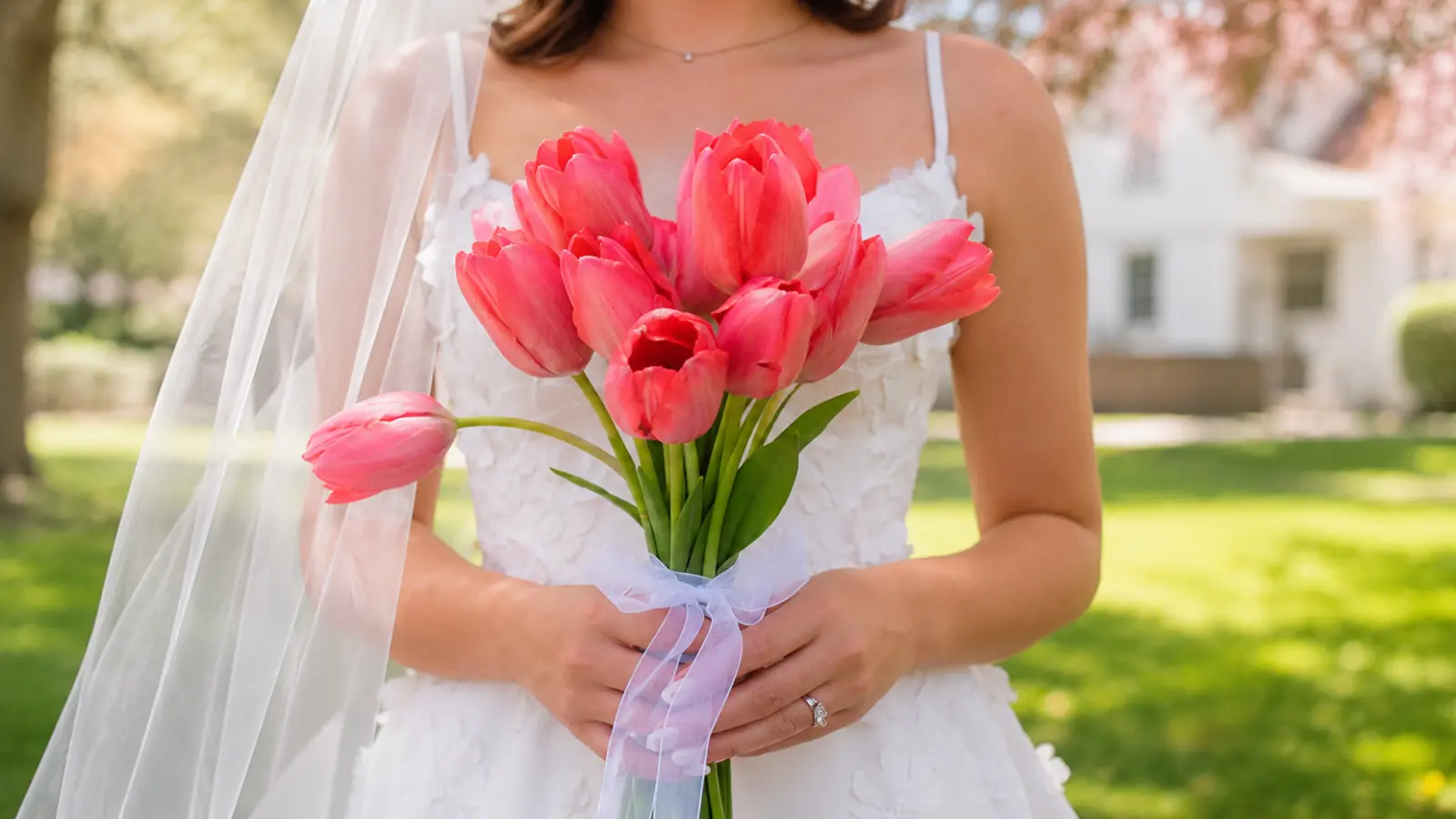
Tulips are flexible enough to work across a range of styles, but they tend to shine brightest in arrangements that let the flower’s natural shape do the work rather than burying it in competing blooms. Here are the most practical directions to consider.
Single-variety hand-tied is one of the strongest tulip bouquet formats. Grouping 20 to 30 stems of the same variety — all white, all blush, all a deep wine red — produces a bouquet that reads as intentional and refined. The repetition of form creates visual rhythm that a mixed arrangement would disrupt. This style works across minimalist, modern, and classic aesthetics.
Mixed spring bouquet is the other strong direction: tulips as the primary flower alongside ranunculus, sweet peas, anemones, or soft greenery. The tulip carries visual weight while the secondary flowers add texture without competing for attention. This approach suits romantic, garden-inspired weddings and works especially well with a blush or mixed pastel palette.
Parrot and fringe tulips are worth knowing about if you want something with more visual texture. Unlike the clean, cup-shaped form of standard tulips, parrot varieties have ruffled, almost feathered petals that add a more lush, painterly quality to a bouquet. Fringe tulips have delicate serrated edges that catch light differently. Both can give a tulip-forward bouquet more visual complexity without introducing other flower types.
Loose arm sheaf style is another natural fit. Tulips, with their long uniform stems, carry well in a presentation bouquet — stems visible, flowers fanned slightly, ribbon tied simply around the middle. This style has grown in popularity for brides who want something that feels less structured and more like something gathered from a garden that morning.
White Tulip Wedding Bouquets
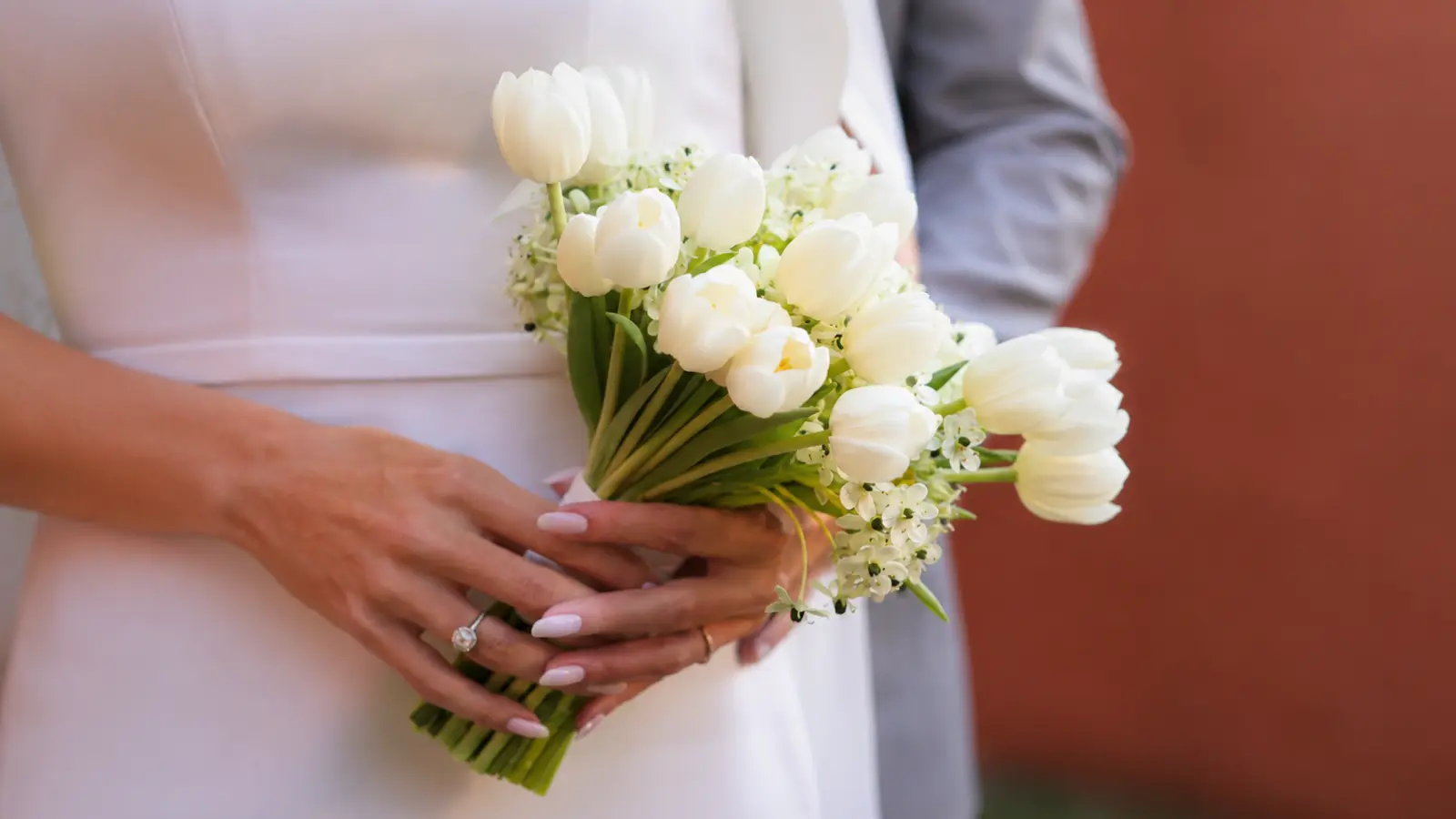
White tulips are among the most quietly elegant options in bridal florals. They don’t have the layered complexity of a white peony or the formal grandeur of calla lilies — what they have is a different kind of grace: uncluttered, softly luminous, and photographically clean in almost any light.
A bouquet of all-white tulips, tightly hand-tied with a satin ribbon in ivory or soft white, is one of the most understated bridal choices available. That understated quality is the point. In an era when many bouquets trend toward maximum visual density, a white tulip bouquet reads as a deliberate choice — and in photos, particularly at the altar or in natural outdoor light, it holds its own without competing with the dress or the ceremony setting.
For brides who want something between a fully single-variety bouquet and a mixed arrangement, white tulips pair well with white ranunculus, white sweet peas, and soft green foliage like Italian ruscus or lily grass. This adds texture without introducing color. The result is a bouquet that looks more layered in person while still reading as clean and cohesive from a distance or in wide-angle photos.
One practical note on white tulips specifically: the petals can bruise or develop soft spots if handled too much during assembly or if they’re exposed to humidity and warmth. Conditioning them properly and handling them as little as possible during the construction process produces noticeably better results. If you’re doing a DIY bouquet, a practice run with a less expensive tulip variety first is genuinely worth the time.
Spring Tulip Bouquets
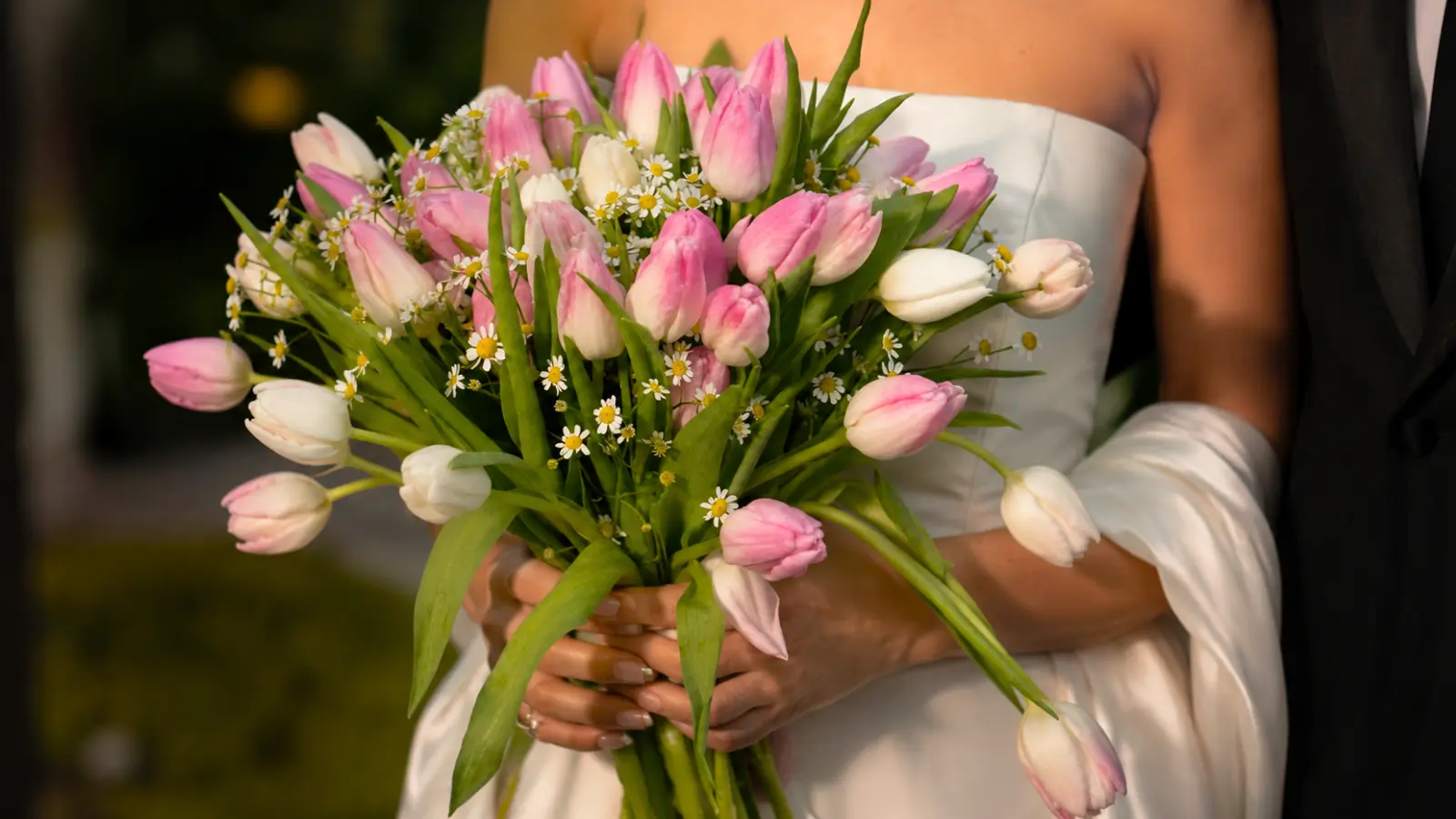
If you’re getting married in spring, tulips are one of the most seasonally honest choices you can make — and that seasonal alignment shows in both the quality of the flowers and what you’ll spend on them. From late winter through mid-spring, tulips are at their natural peak: the stems are stronger, the blooms are more vibrant, and the price per stem is lower than at any other time of year.
Spring also opens up the full color range of the tulip family in ways that greenhouse production outside the season can’t always replicate. Soft coral, warm peach, saturated magenta, bi-color varieties, fringe tulips — all of these are more reliably available and at their best quality during peak season. If wedding bouquet colors are important to you, this is worth factoring into your wedding date conversation.
Spring tulip bouquets pair naturally with the other flowers that peak at the same time: ranunculus, sweet peas, anemones, muscari, and lilac all share overlapping seasons. Building a bouquet around what’s naturally in season together tends to produce arrangements that feel coherent without being forced — the colors, textures, and scales complement each other because they come from the same seasonal moment.
| Tulip Color | Natural Pairing Flowers | Palette Mood |
|---|---|---|
| White / Cream | Sweet peas, ranunculus, lily grass | Timeless, clean, bridal classic |
| Blush / Soft Pink | Garden roses, anemones, eucalyptus | Romantic, soft, spring garden |
| Coral / Peach | Ranunculus, muscari, Italian ruscus | Warm, fresh, modern spring |
| Lavender / Purple | Sweet peas, lilac, dusty miller | Soft, dreamy, vintage-inspired |
| Burgundy / Deep Red | Anemones, dark greenery, dried elements | Rich, editorial, early spring or fall |
Outside of spring, tulips are still available through greenhouse growers and imported sourcing — but the quality and cost picture changes. If you’re set on tulips for an October or January wedding, your florist can almost certainly make it work, but it’s worth a direct conversation about what’s realistic at that time of year.
Simple Tulip Bridal Bouquets
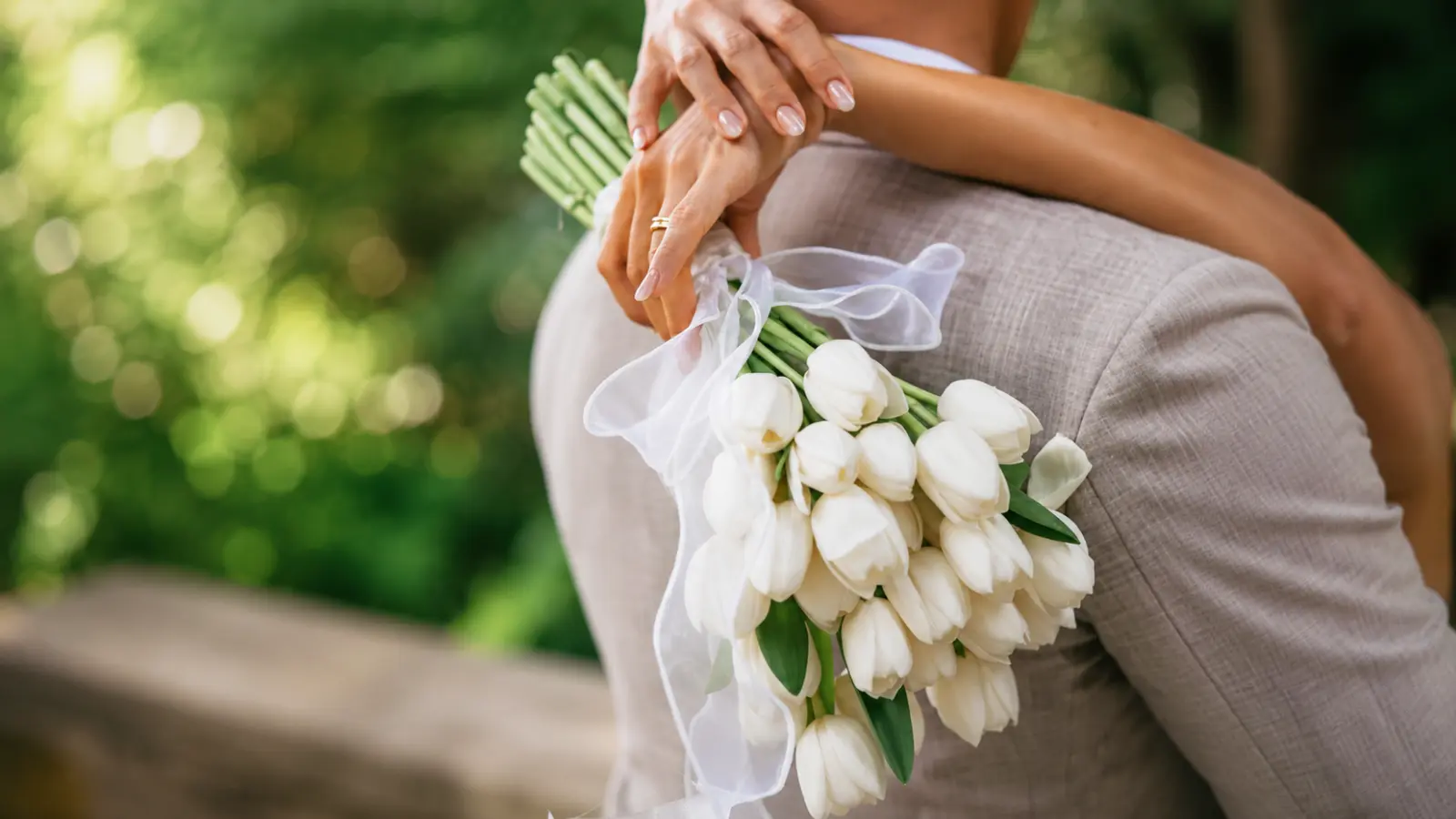
There’s a version of “simple” that looks like a budget compromise, and there’s a version that looks like a considered editorial choice. Tulip bouquets almost always land in the second category — and understanding why helps you communicate the right vision to your florist.
The reason tulips read as elegantly simple rather than just plain comes down to the flower’s geometry. A tulip bloom is a complete, architecturally coherent shape. Unlike a garden rose or a peony, which relies on multiple layers of petals unfolding against each other to build visual complexity, a tulip carries its elegance in a single clean cup. When you group tulips together, the repetition of that form creates a bouquet that looks deliberate — not sparse.
What Simple Actually Means Here
For tulip bouquets, simplicity usually takes one of two forms. The first is a single-variety, single-color arrangement: all white French tulips, all blush Foxtrot variety, all deep purple Queen of Night. The second is a two-element arrangement: one tulip variety plus one complementary green, like lily grass or Italian ruscus, which adds line and movement without introducing another bloom. Both of these approaches are genuinely simple in construction but produce bouquets that read as refined in photos and in person.
What doesn’t work as well is trying to add complexity to a tulip bouquet by including too many competing flowers. Tulips don’t need supporting flowers the way smaller blooms do. When you mix them with roses and peonies and ranunculus all at once, the tulip’s distinctive shape gets lost in the density of the arrangement. The edit is the design.
Matching Simple to Your Dress
Simple tulip bouquets work particularly well with dresses that have their own strong design presence — a dramatic neckline, significant embellishment, or an architectural silhouette. A clean bouquet doesn’t compete; it completes. They also work beautifully with minimalist column gowns and slip dresses, where the simplicity of the bouquet extends the aesthetic logic of the dress rather than contrasting with it.
Tulip Bouquet Care Tips
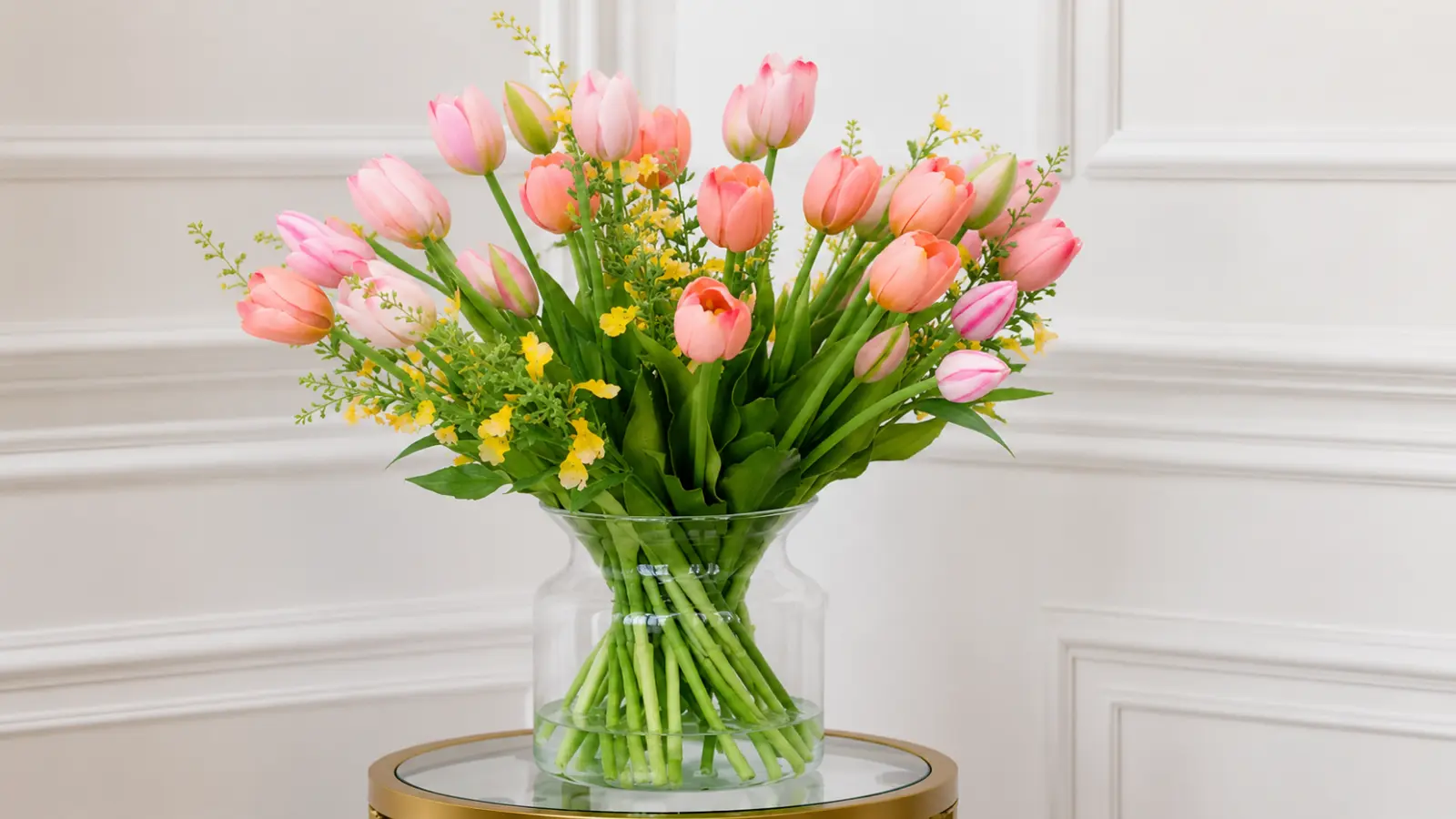
Tulips need a little more attention than hardier flowers, but the care routine is straightforward once you know what you’re dealing with. Most of the common problems — drooping, early opening, soft spots on petals — are preventable with the steps below.
Conditioning Before the Wedding
Buy your tulips two to three days before the wedding and condition them as soon as they arrive. Trim the stems at a 45-degree angle with sharp scissors — straight across or with dull scissors reduces water uptake significantly. Place them in clean, cool water with a floral preservative packet and store them somewhere cool and away from direct light. Tulips prefer shallow water rather than deep vases, which is a different requirement from most other cut flowers.
One thing that surprises people: tulips continue growing after they’re cut. They can add an inch or more in height after being placed in water, which can change the proportions of an assembled bouquet. If you’re assembling the bouquet yourself, trim with that in mind — or assemble the day of after the stems have stabilized.
On the Wedding Day
Keep the assembled bouquet in cool water until the last possible moment before the ceremony, especially if you plan to preserve your wedding bouquet afterward. Wrap the stems in a damp paper towel if transit time is longer than 15 to 20 minutes. Keep it out of direct sunlight and away from heat sources — a warm car, a sunny windowsill, or a warm reception hall before the ceremony can cause tulips to open faster and droop sooner than they otherwise would.
A Note on Tulips Opening During the Day
Tulips open in response to warmth and light, which means your bouquet may look somewhat different at 2 PM than it did at 10 AM. For most brides, this isn’t a problem — a more open tulip has a softer, more generous look that many people find even prettier than the closed bud. It’s worth knowing about in advance, though, so it doesn’t come as a surprise. If your ceremony is later in the day and you want the tulips to stay more closed, keep them in a consistently cool environment for as long as possible.
Temperature and Venue Considerations
Outdoor summer weddings are the setting where tulips require the most planning. In high heat — above 80°F — tulips will open quickly and may start to lose their shape by the end of a long reception. For warm outdoor events, having a backup plan (a cool room to store the bouquet between the ceremony and photos) helps considerably. Tulips at spring outdoor weddings, when temperatures are naturally cooler, are far less of a concern.
For indoor ceremonies in air-conditioned venues, tulips are quite reliable. The controlled temperature slows the opening process and gives you more predictable results through the ceremony, photos, and early reception.
Tulip Wedding Bouquet Inspiration
Explore elegant tulip wedding bouquets featuring white, blush, coral, and deep burgundy tulips, romantic spring arrangements, minimalist bouquet designs, and timeless floral inspiration for every wedding style.
Tulips Celebrate the Beauty of Simplicity
Tulips prove that an unforgettable wedding bouquet doesn’t need elaborate designs or dozens of different flowers. Their graceful stems, refined blooms, and remarkable range of colors create arrangements that feel fresh, elegant, and effortlessly timeless. When chosen in season and handled with care, tulips bring a natural beauty that few flowers can match.
The best tulip bouquet is one that embraces the flower’s character instead of trying to change it. Let the season guide your choices, keep the design thoughtfully simple, and trust the clean lines that make tulips so distinctive. With the right preparation, a tulip bouquet becomes one of the most elegant details of your wedding celebration.
Frequently asked questions (FAQ)
Are tulips a good choice for a wedding bouquet?
Yes. Tulips are an excellent choice for brides who love understated elegance, clean lines, and seasonal flowers. They photograph beautifully, come in an exceptional range of colors, and naturally create refined hand-tied bouquets. Their main consideration is temperature, as they perform best in cooler conditions and require proper hydration throughout the wedding day.
What is the best season for tulip wedding bouquets?
Tulips are naturally at their peak from late winter through spring, generally between February and May. During this period they offer the best quality, widest color selection, and most competitive pricing. While tulips are available year-round through greenhouse production and imports, spring remains the ideal season for both freshness and value.
Do tulips wilt quickly in a wedding bouquet?
Tulips are more sensitive to warmth than flowers such as orchids or roses, but they perform very well when properly conditioned. Keeping the bouquet in cool water until shortly before the ceremony, avoiding direct sunlight, and transporting it carefully helps tulips remain fresh throughout the ceremony, portraits, and reception. Their natural tendency to open gradually during the day often makes the bouquet appear even fuller over time.
How many tulips do you need for a bridal bouquet?
Most medium bridal bouquets use approximately 20 to 35 tulip stems, depending on the desired fullness and bouquet style. Smaller hand-tied bouquets or nosegays may need only 12 to 18 stems, while larger arrangements require more. Purchasing a few extra stems is always recommended in case of damage during preparation.
Can tulips be mixed with other flowers in a wedding bouquet?
Absolutely. Tulips pair beautifully with ranunculus, sweet peas, anemones, peonies, and garden roses. For a more minimalist design, many florists combine tulips with only one greenery variety, such as Italian ruscus or lily grass, allowing the tulips to remain the focal point while adding subtle texture and movement.
How do you create an elegant tulip wedding bouquet?
The most elegant tulip bouquets embrace simplicity. Using a single tulip variety, limiting the color palette, keeping the bouquet loosely hand-tied, and avoiding too many competing flowers allows the natural shape of the tulips to become the design itself. Clean ribbon wraps and thoughtful proportions create a timeless bouquet that feels intentional rather than minimal.