
Wedding thank you card etiquette can quickly start to feel like a rulebook you were somehow expected to know already. Who actually needs a card? How soon should you send it? Does every note have to be handwritten? And if you’re already late, is sending one months later still better than skipping it altogether?
Fortunately, most of the rules are less rigid than they sound. Some traditions still matter because they make sure gifts and meaningful gestures are properly acknowledged, while others have become much more flexible as weddings, families, and guest lists have changed. Knowing which expectations are genuine courtesies and which ones can reasonably be adapted makes the entire process much easier.
This guide explains wedding thank you card etiquette from start to finish, including who should receive a card, when to send it, what to do when you’re late, handwritten versus printed notes, how to address and sign cards, and the etiquette around digital cards and postcards. For the complete picture, our wedding thank you cards guide also covers wording, organization, formats, and common gift scenarios.
Are Wedding Thank You Cards Necessary?
For gifts, yes. Anyone who gave you something, whether a physical item, cash, or a check, has an expectation of acknowledgment, and its absence tends to be noticed even when no one says so directly. That part of the etiquette hasn’t loosened much, even as other wedding traditions have.
What has loosened is the idea that every guest, gift or no gift, requires the exact same treatment. Some couples send a note to every single person who attended. Others reserve cards specifically for gift-givers and thank the rest of their guests in person or through a follow-up message. Both are reasonable, and neither is a breach of etiquette. For a broader look at what belongs in the note itself and why the gesture matters, see our full wedding thank you card.
Who Should Receive a Wedding Thank You Card?
The short version is simple: anyone who gave a gift gets a card. The longer version depends on the specific relationship, and that’s where most of the genuine etiquette questions live.
Do All Wedding Guests Need One?
Not strictly. Attendance alone doesn’t create an obligation the way a gift does. That said, many couples choose to send a warm note to every guest regardless of what they gave, especially close family and friends. It isn’t required, but it’s rarely seen as excessive either.
Should You Send Cards to Guests Who Did Not Give a Gift?
This is a courtesy, not a rule. A guest who traveled a long distance, took time off work, or is simply someone you’re close to often appreciates a note thanking them for being there, even with no gift involved. If you choose to skip this group, that’s also acceptable; just be consistent so no one feels singled out.
Should You Send Cards to People Who Sent a Gift but Did Not Attend?
Yes, without exception. These guests made a gesture without the benefit of celebrating with you, which makes the acknowledgment more important, not less. It’s easy for this group to slip through the cracks simply because they weren’t part of the day-of guest list, so it’s worth double-checking your records specifically for them.
Should Parents Receive a Wedding Thank You Card?
Parents typically warrant something more personal than the standard note, particularly if they contributed financially, took on planning responsibilities, or supported you emotionally through the process. A brief card can still be part of it, but many couples pair it with a longer, handwritten letter that goes beyond a gift acknowledgment. Our guide to wedding thank you messages for parents and the wedding party covers what to say in that longer note.
Should the Wedding Party Receive Cards?
Most couples send something to their wedding party, separate from any gift-related card, acknowledging the time, cost, and effort involved in standing up for them. This isn’t a strict etiquette requirement in the same way gift acknowledgment is, but skipping it is one of the more common regrets couples mention after the fact.
Should Vendors Receive Thank You Cards?
Vendors are a professional relationship first, so the expectation here is genuinely different from guests. A note isn’t required, but it’s a thoughtful gesture for a photographer, planner, or officiant who felt more like a collaborator than a hired service. Keep it brief and specific rather than treating it as an obligation on your list.
Wedding Thank You Card Etiquette at a Glance
Some of these questions come up so often that it helps to see the standard guidance side by side, along with what’s reasonable to adjust based on your own circumstances.
| Etiquette Question | Best Practice | Acceptable Alternative | What to Avoid |
|---|---|---|---|
| Who receives a card? | Everyone who gave a gift, whether or not they attended | Extending cards to all guests as a gesture of warmth | Skipping guests who sent a gift but couldn’t attend |
| When should cards be sent? | As soon as reasonably possible after the wedding | Completing the notes within the first few months if more time is needed | Leaving the list open indefinitely with no plan |
| Should cards be handwritten? | A handwritten note inside every card | A printed card with a personal, handwritten line added | A fully printed card with no personal touch |
| Who signs the card? | Both partners, in a shared “we” voice | One partner writing, but referencing both of you | Signing a joint gift’s card with only one name |
| How do you handle vendors? | A short, specific note for vendors who went above expectations | A verbal or email thank you for standard service | Treating vendor notes as a mandatory obligation |
Used as a checklist rather than a rulebook, this table is a fast way to settle the etiquette questions that tend to cause the most second-guessing once the writing actually starts.
When to Send Wedding Thank You Cards
Timing is where wedding thank you card etiquette gets the most attention, largely because the “right” window feels different depending on who you ask. The honest answer is that there’s a reasonable range rather than one fixed rule, and understanding that range takes the pressure off considerably.
When to Send Cards for Gifts Received Before the Wedding
Gifts that arrive ahead of the wedding, whether from a shower, an engagement celebration, or an early wedding gift mailed in advance, are best acknowledged close to when they arrive rather than held until after the ceremony. Wedding shower thank you cards follow their own wording and timing considerations when the gift comes specifically from that event.
Waiting means the note gets folded into a much longer post-wedding list, and there’s no etiquette reason to delay it. Sending a sincere card soon after receiving the gift keeps the acknowledgment timely and prevents it from getting lost in the larger post-wedding list.
When to Send Cards After the Wedding
For gifts given at or around the wedding itself, the best approach is to send thank you cards as soon as reasonably possible after the celebration. Etiquette recommendations vary by source, and many couples aim to complete their notes within the first few months. What matters most is acknowledging each gift thoughtfully rather than allowing uncertainty about the “perfect” deadline to delay the process indefinitely.
How Late Is Too Late?
There is no strict cutoff after which a thank you card stops being meaningful. If more time has passed than you intended, send the note anyway rather than letting the delay become a reason to skip it entirely. A late card can still express genuine appreciation, and a thoughtful acknowledgment sent later is always better than no acknowledgment at all. The goal is progress, not a perfect deadline.
What to Write When the Card Is Very Late
A brief, honest acknowledgment of the delay, followed immediately by a genuine thank you, is the right tone. One sentence is enough before moving straight into the specific gratitude. For more wedding thank you card wording examples across different guests and situations, the wording guide can help you adapt the rest of the message naturally.
Do Wedding Thank You Cards Need to Be Handwritten?
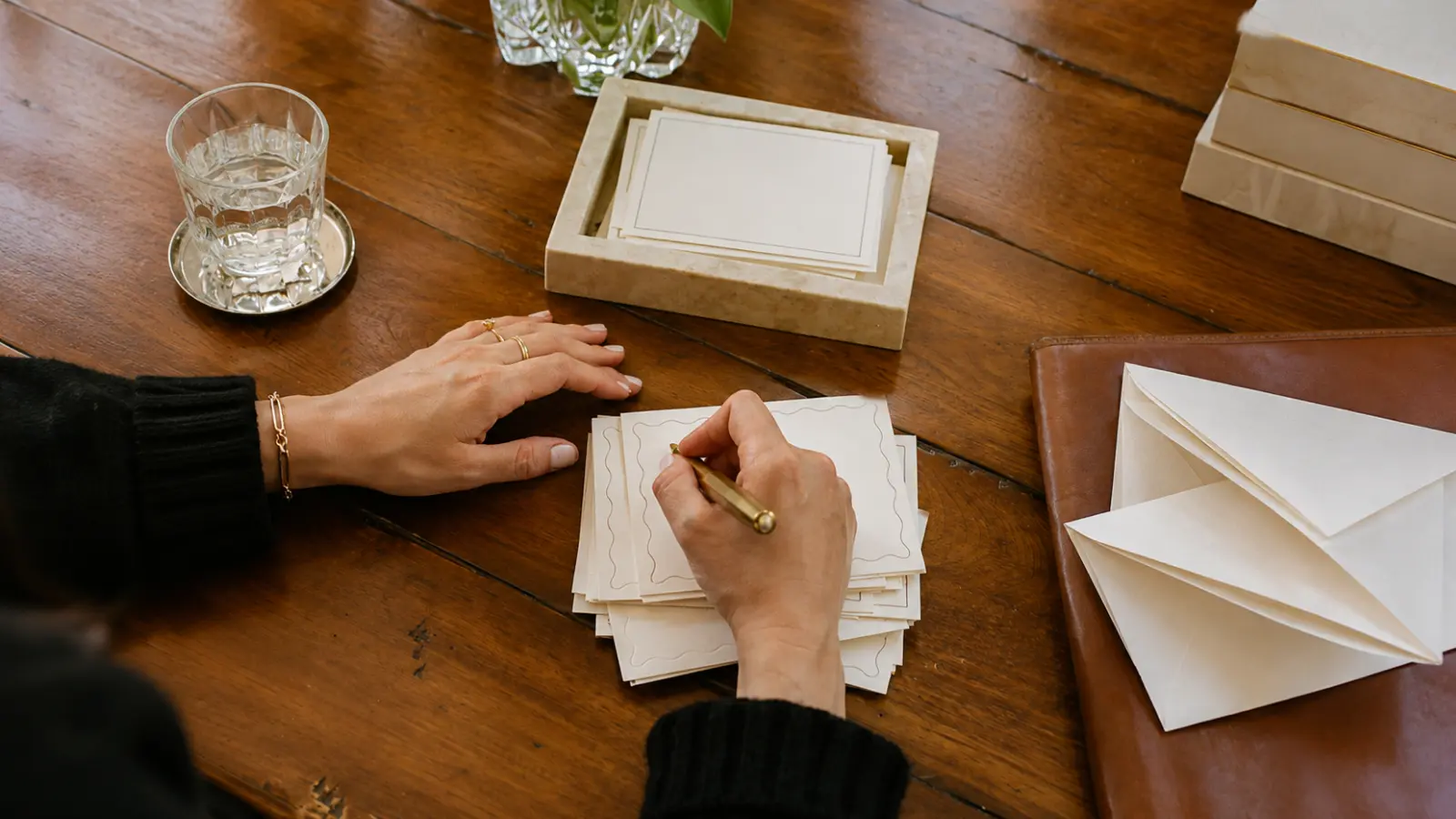
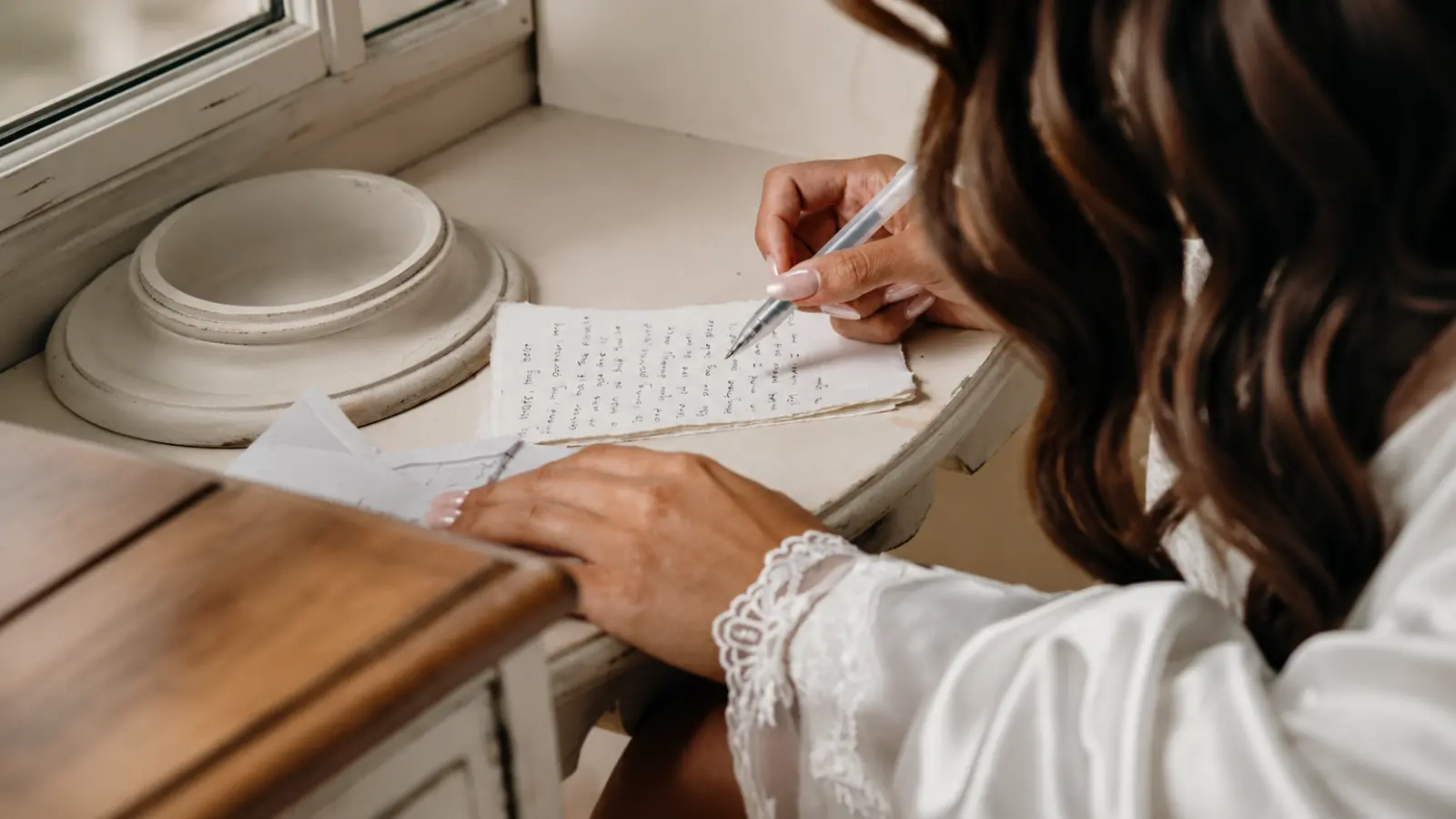
Etiquette traditionalists would say yes, and handwriting does remain the most personal option available. It signals time and intention in a way that’s hard to replicate. That said, the practical reality of writing dozens or even hundreds of individual notes has made a slightly more flexible standard common: a printed card with even one or two handwritten lines is widely accepted, particularly for large guest lists.
What tends to fall short isn’t the format itself but the absence of any personal touch. A fully pre-printed card, with no name, no specific gift mentioned, and no handwriting at all, is the version that reads as impersonal regardless of how nice the design is.
Can Couples Divide the Cards Between Them?
Yes, and dividing the workload is one of the most practical ways to actually finish the list. Splitting cards by who knows each guest best (your side, their side, mutual friends) tends to work better than splitting randomly, since the resulting notes read as more personal. The signature, however, should still reflect both of you, even if only one person physically wrote the note.
How to Address and Sign Wedding Thank You Cards
The mechanics of addressing and signing come up constantly, mostly because modern households don’t always fit the traditional templates etiquette guides were originally written around.
How to Address the Envelope
Use full names rather than initials or nicknames, and match formality to the relationship. A close friend might get a first-name-only inside address, while a parent’s colleague or an older relative usually warrants a more formal, full-name version. The return address should be legible and complete, since a card that’s returned to sender because of an address issue defeats the purpose entirely.
How to Address Couples, Families and Households
For married couples sharing a last name, “Mr. and Mrs. [Last Name]” remains a widely accepted traditional format, though many couples now prefer listing both first names. For couples with different last names, list both full names, typically joined by “and,” rather than combining them under a single shared surname. For families, addressing the envelope to the parents’ names with “and family” beneath covers the household without needing to list every child individually.
How to Sign the Card
Sign with both names, and write the note itself in a shared voice where possible (“we loved it,” “we’re so grateful”) rather than first-person singular. This matters even when only one partner physically wrote the card, since the gift was given to both of you. A simple closing like “with love” or “warmly,” followed by both first names, is enough for the vast majority of relationships.
Printed, Digital and Postcard Etiquette
Beyond handwriting, a handful of format decisions come with their own etiquette considerations worth knowing before you commit to an approach.
Printed Message vs Personal Handwritten Note
A printed message works as the base layer of a card, but etiquette expects something added on top of it: a name, a specific gift reference, or even a single handwritten sentence. Printed text alone reads as a mass mailing rather than a personal acknowledgment, regardless of how warm the printed wording sounds.
Digital vs Mailed Thank You Cards
A digital thank you note is better than no acknowledgment at all, and for some relationships, particularly casual or long-distance ones, it’s genuinely appropriate. But it remains the least formal option, and etiquette expectations still lean toward a mailed card for guests who gave a physical gift or attended in person. When in doubt, mail it, especially for close family.
Postcards vs Folded Cards
Postcards are faster and less expensive to send, but they offer very little room to write, since the message shares space with the address and stamp. Folded cards give you an interior page for a real note and tend to feel more substantial for significant gifts or close relationships. Postcards suit brief, casual acknowledgments well; folded cards are the safer choice whenever the relationship or the gift calls for more than a line or two.
Wedding Thank You Card Etiquette Mistakes to Avoid
Most etiquette missteps aren’t dramatic; they’re small oversights that are easy to make when you’re working through a long list under time pressure.
- Treating “attended” and “gave a gift” as the same category. They aren’t, and conflating them is how guests who sent gifts but couldn’t attend get accidentally left off the list.
- Assuming vendors expect a note. Most don’t, and treating it as mandatory adds unnecessary pressure to an already long list.
- Waiting for a “perfect” deadline before starting. There isn’t one universal cutoff, and waiting for certainty about timing often delays the process far more than simply starting.
- Signing a joint gift’s card with only one name. It’s a small detail, but it reads as though only one of you noticed the gesture.
- Addressing envelopes inconsistently. Mixing formal and casual formats across a single list looks careless rather than intentional, even when it’s purely accidental.
None of these mistakes are difficult to avoid once you know to watch for them. The etiquette here rewards consistency and thoughtfulness far more than it rewards perfection.
Thoughtful Etiquette Matters More Than Perfect Timing
Wedding thank you card etiquette is ultimately less about following a rigid set of rules and more about making sure the people who supported your wedding feel genuinely acknowledged. Sending a personal note, mentioning the people behind each gift, and treating every thank you with care matter far more than meeting an arbitrary standard of perfection.
Use traditional guidelines when they’re helpful, adapt them when your circumstances require it, and don’t let a delayed timeline become the reason a card never gets sent. Whether your notes go out soon after the wedding or considerably later, a sincere thank you still carries meaning—and finishing the list thoughtfully will always matter more than finishing it perfectly.
Frequently asked questions (FAQ)
Who should receive a wedding thank you card?
Anyone who gave you a wedding gift should receive a thank you card, whether or not they attended the celebration. Parents, wedding party members, and others who contributed significant time or support may also deserve a personal note, although those messages serve a different purpose from standard gift acknowledgments.
Do all wedding guests need a thank you card?
Not necessarily. A gift creates a clear expectation of a thank you card, while attendance alone does not carry the same etiquette requirement. Many couples still send notes to guests who traveled, provided meaningful support, or are particularly close to them, but doing so is a thoughtful courtesy rather than a universal rule.
When should wedding thank you cards be sent after the wedding?
Wedding thank you card timelines vary by etiquette source, but the best approach is to send them as soon as reasonably possible after the celebration. Many couples aim to complete their notes within the first few months, while gifts received before the wedding are better acknowledged soon after they arrive rather than saved for one large post-wedding batch.
How late is too late for wedding thank you cards?
There is no point at which a sincere thank you card becomes worse than sending nothing. If your cards are going out later than planned, briefly acknowledge the delay if it feels appropriate and move directly into your gratitude rather than writing a lengthy apology. Even a significantly delayed card can still be meaningful.
Do wedding thank you cards have to be handwritten?
A handwritten note remains the most personal and traditional option, but it is not the only acceptable format. A printed card with a genuine handwritten message or personal line can work well, particularly for large guest lists. Fully pre-printed cards with no individualized element tend to feel much less personal.
Do you send thank you cards to wedding vendors?
You are not required to send thank you cards to wedding vendors because the relationship is primarily professional. However, a brief personal note is a thoughtful gesture for a planner, photographer, officiant, or another vendor who went beyond expectations or played a particularly meaningful role in your celebration.
How do you address a wedding thank you card to a couple with different last names?
Use both people’s full names rather than placing them under a surname they do not share. Their names can typically be listed together and joined by “and.” When you know how the couple normally identifies themselves socially, following that preference is the safest and most respectful approach.

About the Author
Débora Justo
Founder and editor of EVORÉ, creating practical wedding planning resources, thoughtful inspiration and useful tools for the decisions that shape a celebration.
Read more about the author →