
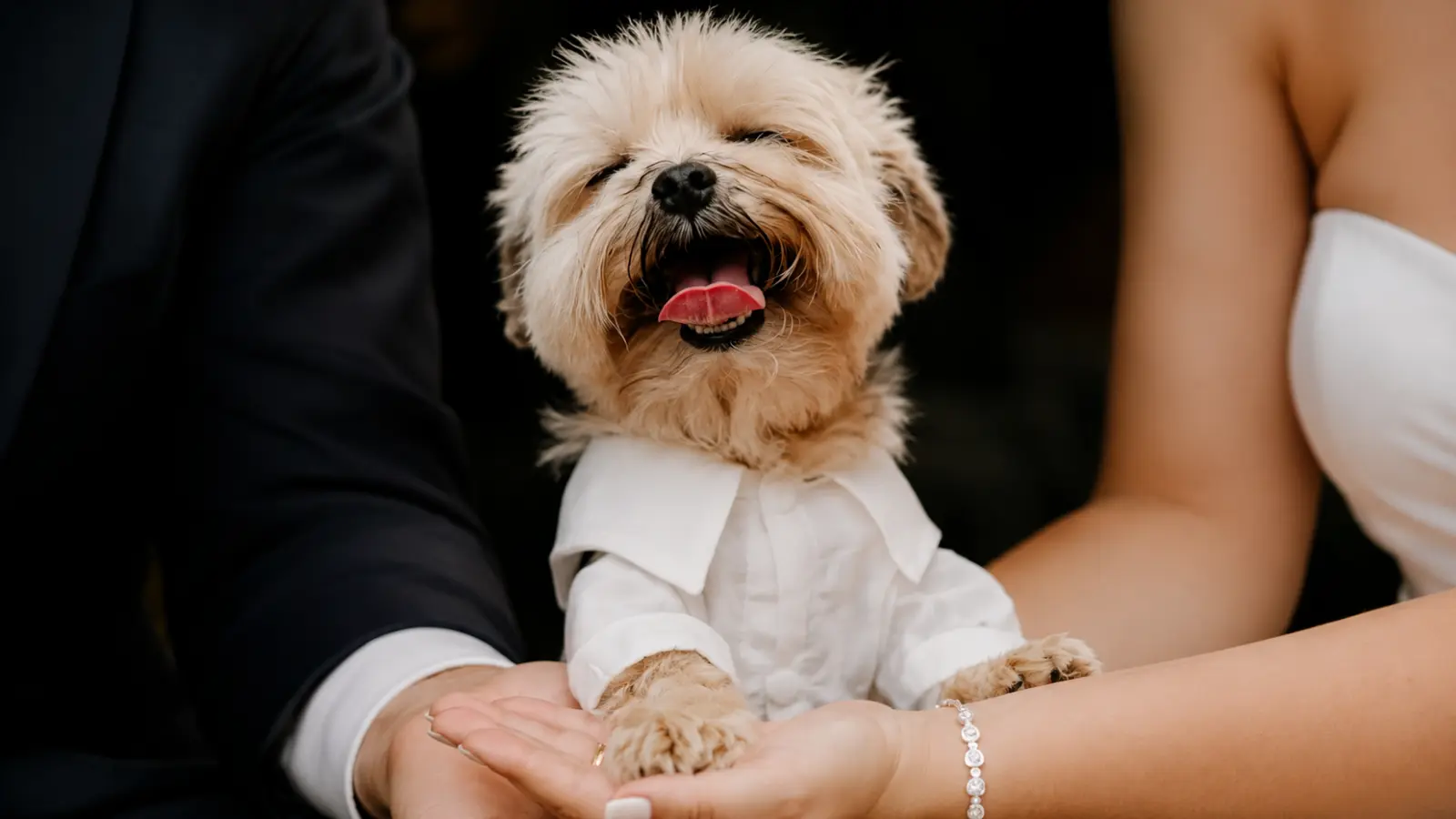
Pets at weddings have become an increasingly popular way for couples to celebrate with the animals they love most. Whether it’s a dog walking down the aisle, a cat included in portraits, or a meaningful tribute to a pet who has passed away, there are many thoughtful ways to make pets part of the wedding day.
For many couples, a pet truly is family. That emotional connection makes it natural to imagine them sharing one of the most meaningful days of your life. But weddings are also busy, noisy, and unfamiliar environments, which means the decision should start with what’s best for the animal not just what makes a beautiful photo.
This guide explains everything you need to know about pets at weddings, including how to include your pet in your wedding, which animals are good candidates, how to prepare your venue, choosing ceremony roles, hiring a pet attendant, keeping pets safe, and meaningful ways to include them even if they cannot attend in person.
Quick Guide: Pets at Weddings
Before getting into the details, here’s a straightforward overview of the most common questions couples ask when they start thinking about including a pet.
| Question | Simple Answer |
|---|---|
| Can pets be at weddings? | Yes, if the venue allows it and the pet is comfortable |
| Which pets do best? | Calm animals used to people, travel, and new environments |
| Can cats attend? | Sometimes, but symbolic inclusion usually works better |
| Do you need a handler? | Yes, almost always |
| Can pets attend the reception? | Sometimes, but food, noise, and crowds make it harder |
| What if the pet can’t attend? | Photos, cake toppers, bouquet charms, illustrations, signage, memorial details |
The details behind each of these answers matter — and they vary depending on your specific pet, venue, and ceremony setup. The rest of this guide breaks it all down.
What It Actually Means to Have Pets at a Wedding
Including a pet in a wedding can mean a lot of different things, and it’s worth being clear about what you’re actually imagining before you start planning logistics. Some couples want their dog to walk down the aisle as a ring bearer. Others want the cat in one or two portraits taken before the ceremony, then safely at home by noon. Some want a pet who has passed to be honored through a small detail in the décor. These are all valid — and they require completely different levels of planning.
One of the most common ways to include a pet is having a dog participate in the ceremony itself: walking down the aisle, standing near the couple during the vows, or being handed off after a quick moment in the spotlight. That’s the image most people have in mind when they search “pets at weddings,” and it’s the scenario that needs the most preparation. A reception appearance is rarer and harder to pull off well, mainly because the environment — loud music, buffet tables, lots of guests moving around — tends to be more stressful for animals and more difficult to manage safely.
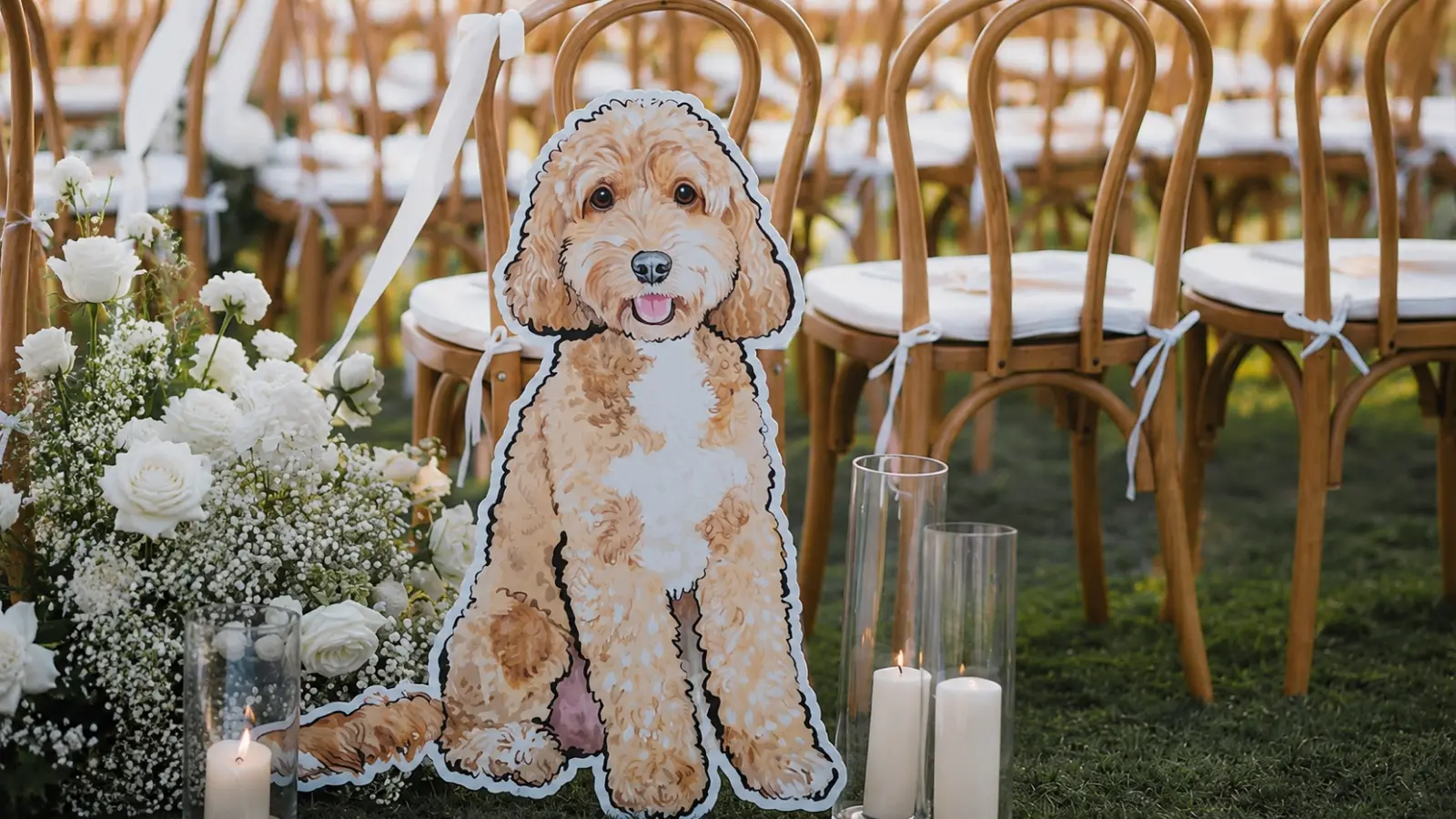
Then there’s the symbolic route, which doesn’t get enough credit. A pet doesn’t have to be physically present to be genuinely part of the wedding. A custom illustration, a bouquet charm, a framed photo at the welcome table, a line in the program — these are meaningful inclusions that don’t require anyone to manage a live animal in a stressful environment. For cats, senior pets, anxious animals, or any pet who has passed, symbolic inclusion is often the most thoughtful choice, and it can be just as personal as having the animal there.
Should You Include Your Pet in Your Wedding?
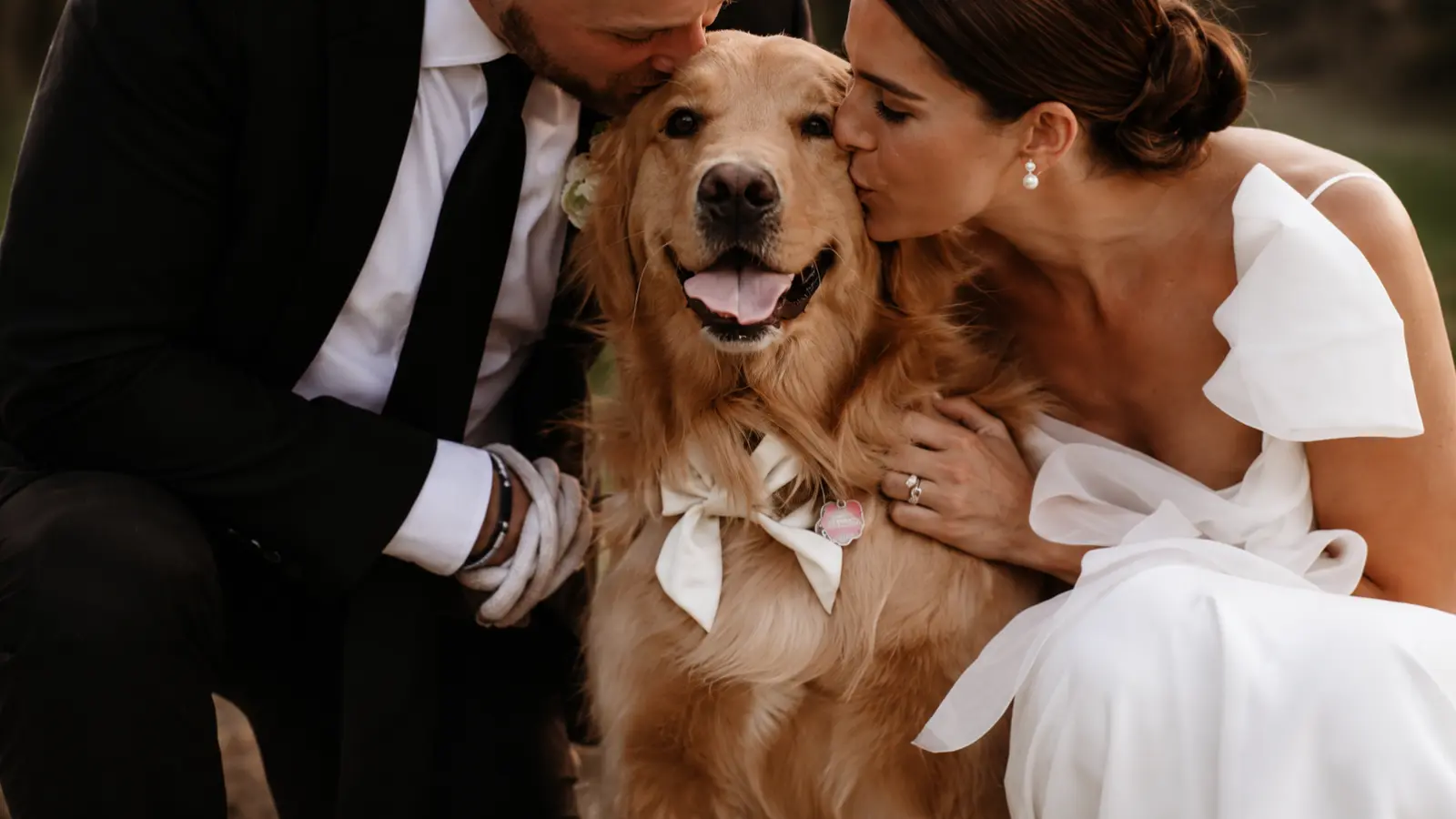
This is the real question, and the answer depends entirely on the animal. Not on how much you love them, not on how great the photos would look — on the animal’s actual personality, stress tolerance, and comfort in unfamiliar situations.
A wedding is not a normal environment for any pet. Even the most socialized, laid-back dog is going to encounter things at a wedding that don’t happen on a regular Tuesday: a large group of people in formal clothes, floral arrangements that smell nothing like home, a camera crew moving around, music played at ceremony volume, children running in directions nobody predicted, and a couple who is emotionally heightened and physically unavailable. All of that in a venue the animal has likely never visited.
Some dogs genuinely take all of that in stride. Others find one piece of it — the noise, the crowd, the unfamiliar space — deeply unsettling. And an unsettled dog at a wedding doesn’t stay quietly unsettled. They bark, pull, pace, or shut down completely. That’s not a failure of the dog. It’s a mismatch between what the animal needed and what the day required.
Before you commit to bringing your pet, honestly answer these questions:
- Is your pet calm around strangers? Not just tolerant — actually calm. A dog who is friendly in small doses but anxious in crowds is a different calculation than one who greets every person like an old friend.
- Has your pet been to loud, busy events before? Familiarity with environments like that matters. A dog who has been to farmers markets, busy parks, or outdoor events will handle a wedding better than one whose entire world is your apartment.
- Does your pet travel without distress? Getting to the venue requires transport, usually in a car. If that alone stresses the animal, the arrival will already start on the wrong foot.
- Is your pet obedient enough without you? During most of the ceremony, you’re busy getting married. The pet needs to be manageable by their handler without your constant presence and attention.
- Is there a reliable person who can be fully responsible for the pet all day? If the answer is no, the pet probably shouldn’t come.
If your answers are mostly confident yeses, your pet may be a good candidate to participate with thoughtful planning. If you’re hedging on most of them, consider whether symbolic inclusion might honor your pet without putting them through a hard day.
Questions to Ask Your Venue Before Bringing a Pet
Venue policy is the first filter. Choosing pet-friendly wedding venues matters just as much as having a well-behaved dog, since some locations simply don’t permit animals on the property. This conversation needs to happen early — ideally before you sign a contract — because some venues have firm restrictions, some allow pets in specific areas only, and some require additional documentation or deposits that affect your planning.
When you speak with your venue coordinator, ask:
- Are pets permitted on the property? And if so, which areas — ceremony only, grounds, certain indoor spaces?
- Are there restrictions on breed, size, or species? Some venues have blanket policies, others are more specific.
- Is a pet waiver or additional liability insurance required? This is increasingly common, especially at historic or indoor venues.
- Is there a quiet, secure space where the pet can wait before and after their moment? A room, a designated outdoor area, somewhere away from the main foot traffic.
- Are there specific vendors — caterers, florists, rental companies — who have policies that might affect a pet being present? Some floral arrangements use flowers that are toxic to animals. Some caterers have food-safety concerns about pets near service areas.
- What are the rules around cleanup? Most venues expect you to be fully responsible for any accidents, and you should be.
Get all permissions in writing. A verbal yes from the venue coordinator isn’t enough — you want something documented so there’s no confusion on the wedding day when a different staff member is on site.
Which Pets Are Best Suited for Weddings?
Not every pet is a good candidate for a wedding appearance, and that’s not a judgment on the animal. It’s about temperament, species, and what the day actually involves. Here’s how to think through the most common scenarios.
Dogs at Weddings
Dogs are the most common pet at weddings, and for good reason. Many dogs — especially those who are well-socialized, trained, and familiar with different environments — can genuinely handle the experience. The key qualities to look for are: calm around strangers, not reactive to loud sounds, leash-trained, and comfortable being managed by someone other than their primary owner.
Larger, calmer breeds often do well — Labs, Golden Retrievers, Bernese Mountain Dogs but breed alone is never the deciding factor. Plenty of small dogs are completely unfazed by crowds, and plenty of large dogs find the same environment overwhelming. Know your specific dog. If your dog has anxiety triggers, a wedding is not the place to test their limits.
Dogs tend to work better in ceremony roles (ring bearer, flower companion, aisle moment) than at the reception, where the combination of food, movement, and noise is harder to manage. A ceremony appearance with a clean exit — handed off to the handler before cocktail hour — is usually the smoothest version.
Cats at Weddings
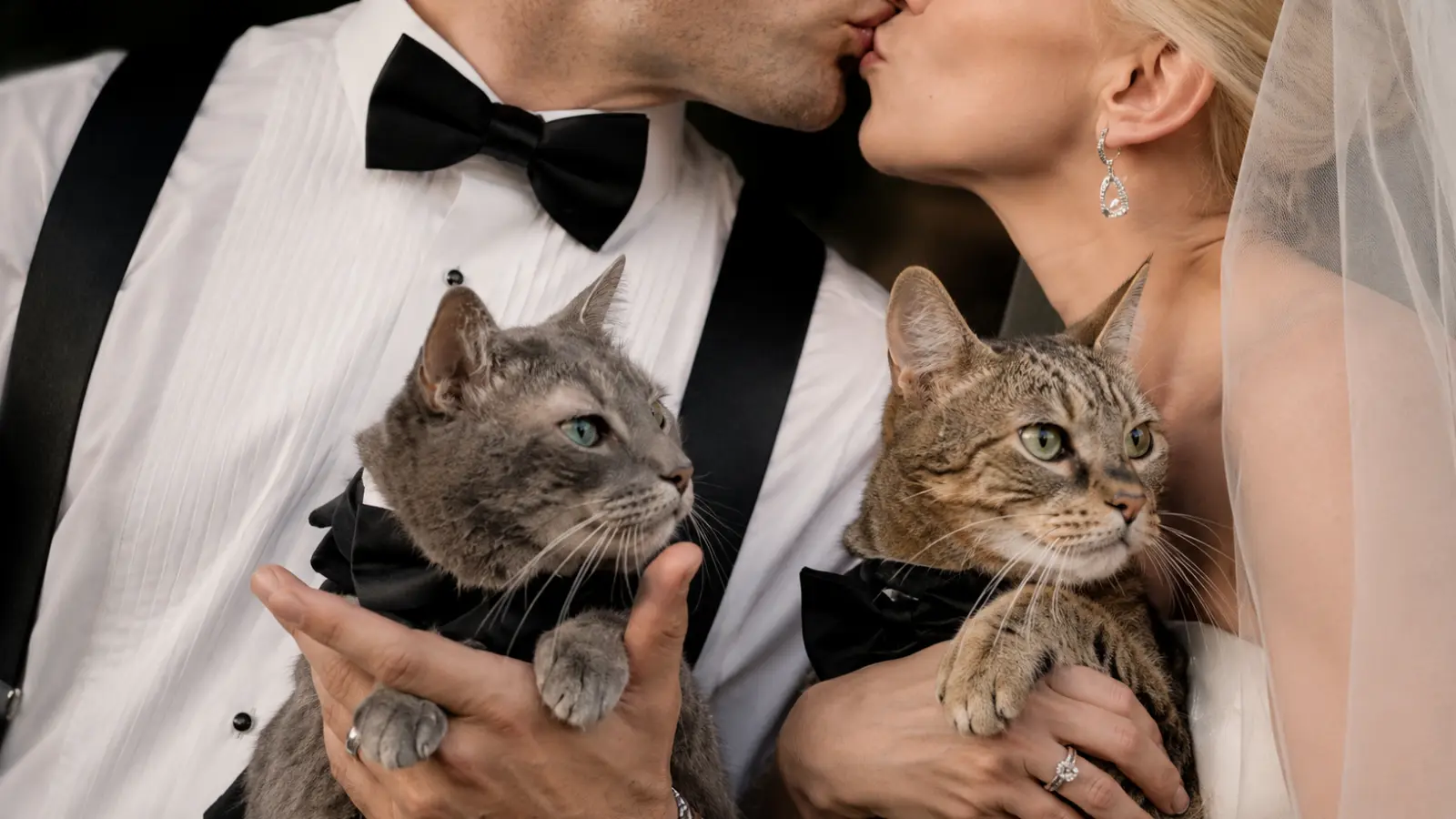
Cats can be part of a wedding, but they require more careful thought. Most cats are territorial animals who find unfamiliar environments genuinely stressful. A wedding venue — with its unfamiliar smells, strangers, camera flashes, and constant movement — is close to the opposite of what a cat finds comfortable. Even cats who seem relaxed at home can become anxious, defensive, or completely shut down in a new space with a crowd.
There are exceptions. Some cats are unusually social and adaptable, and if yours genuinely is, you may be able to plan a brief, low-key appearance — engagement-style photos taken before guests arrive, then home. But for most cats, symbolic inclusion is the more respectful and realistic choice. A custom portrait, a cake topper, an illustration on the ceremony program — these let your cat be part of the wedding without putting them through something they didn’t choose and can’t understand.
Small Pets and Other Animals
Rabbits, birds, and other small animals occasionally appear at weddings, usually for portrait sessions in a controlled setting. The same principles apply: temperament matters more than species, the environment needs to be managed carefully, and a brief, calm appearance is always preferable to a long one. Small animals can be particularly sensitive to temperature, noise, and handling by strangers, so any appearance should be short, supervised, and low-stress. Most small pets are best honored symbolically on the wedding day and reserved for portraits in a familiar setting before or after.
How Pets Are Most Commonly Included in Wedding Ceremonies
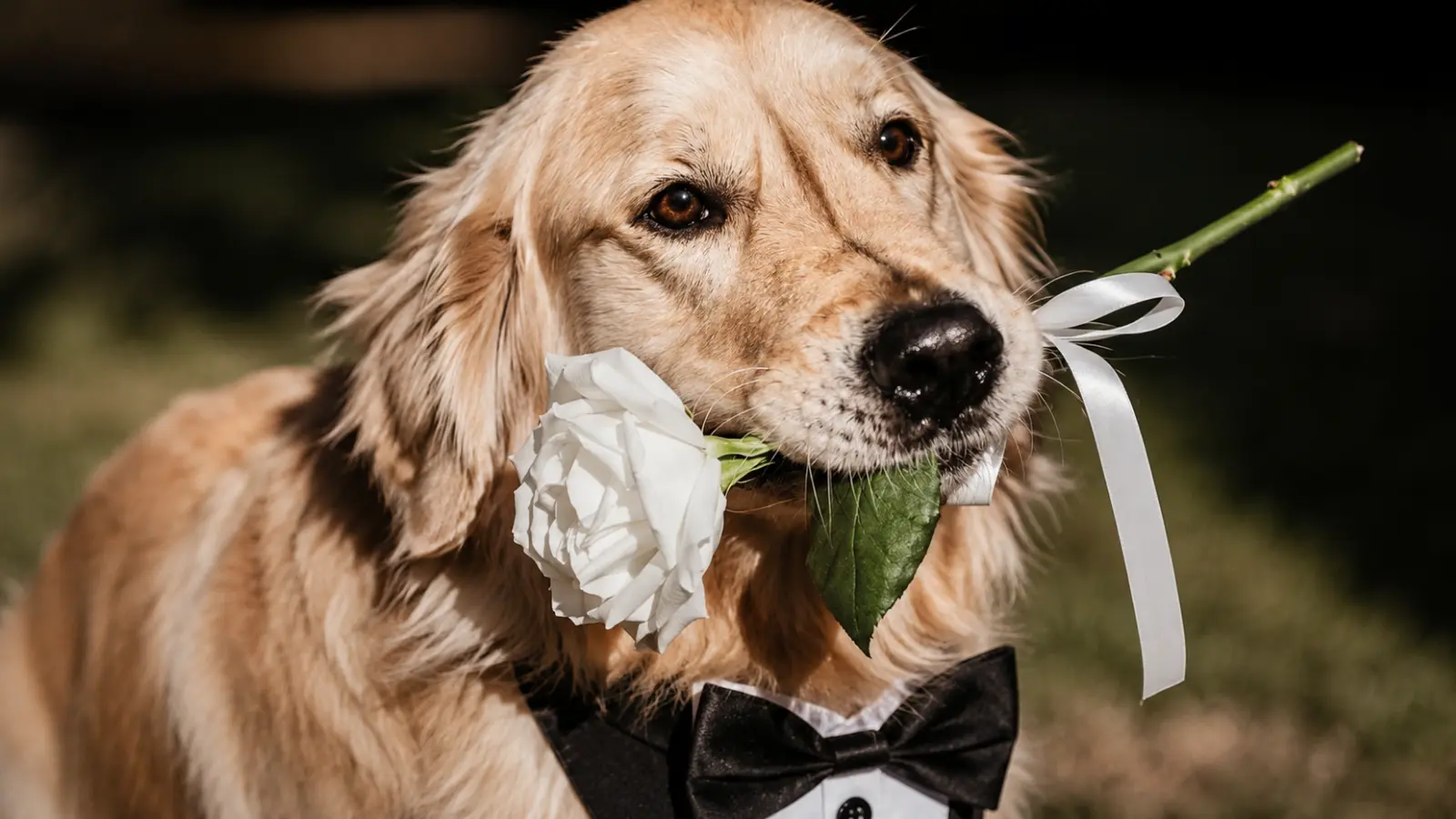
There are several natural moments in a wedding where a pet can participate without disrupting the flow of the ceremony. The key is choosing one role, planning it carefully, and having the handler ready to step in the moment it’s done.
Pet in the Processional
Walking a dog down the aisle during the processional is one of the most common and visually striking ways to include them. The dog can walk with a member of the wedding party, be led by the handler, or — if trained well enough — walk alongside a flower girl or ring bearer. The moment is brief, contained, and easy for guests to enjoy. Once the dog reaches the front, the handler takes over and removes them from the immediate area before the vows begin. This keeps the moment clean and prevents the dog from becoming a distraction during the more emotionally important parts of the ceremony.
Pet Ring Bearer
The dog ring bearer has become a beloved tradition at American weddings. The rings are typically attached to a pillow clipped to a harness or secured to the collar with a ribbon, and a handler walks alongside the dog down the aisle. Once the dog reaches the officiant, the rings are removed and the dog exits with the handler. The role works best with calm, leash-trained dogs who won’t be spooked by applause or the sight of many faces staring at them. For more detail on how to set this up well, the dedicated dog ring bearer guide covers the logistics fully.
Pet Stationed Near the Couple
Some couples choose to have their dog near them throughout the ceremony — sitting beside them at the altar or held by the officiant or a nearby attendant. This can create a beautiful and memorable moment, but it requires a dog who can remain calm without constant reassurance. If the dog starts pulling, whining, or trying to reach the couple during the vows, it shifts the attention of every guest in the room. This option works best for exceptionally calm animals and should include a clear plan for what happens if the dog needs to be removed.
Pet in the Photos
For many couples, this is the ideal role. Planning wedding photos with pets before the ceremony allows the pet to appear in meaningful portraits before heading home. A dedicated photo session — before guests arrive, during cocktail hour, or in a quiet corner of the venue — gives you the images you want without requiring the animal to manage the full emotional and logistical weight of the day. The photographer and the handler coordinate timing in advance, and the session is kept short. The pet gets to be in the wedding album, and nobody has to manage a stressed animal through three hours of reception. This is genuinely one of the best solutions for dogs who are social but not exceptionally calm, and for cats or other animals who do better in quieter moments.
Pet Wedding Attire
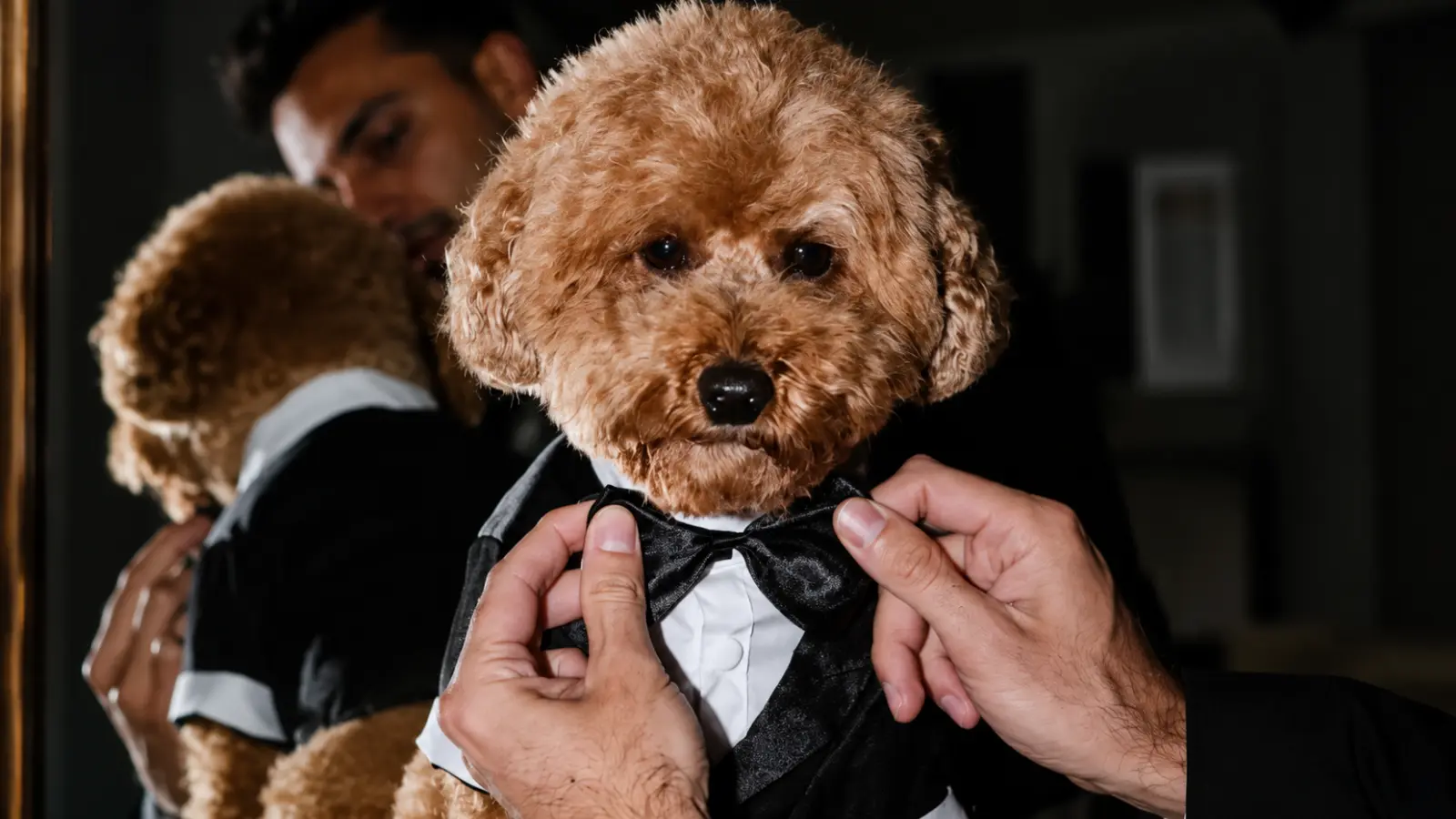
Dressing a pet for a wedding is one of those things that can look genuinely charming or completely uncomfortable depending on how it’s handled. A practical approach is simple: if the pet is comfortable, move around freely, and the outfit stays on without constant adjustment, it can be a lovely detail. If any of those things aren’t true, skip it.
The most wearable options for dogs include a floral collar or crown made from safe, non-toxic flowers, a bandana or bow tie in a fabric that matches the wedding palette, a simple harness dressed up with ribbon or greenery, or a custom leash that photographs well without restricting movement. Full costumes, elaborate harnesses with multiple attachments, or anything that covers the face or ears significantly tends to cause discomfort and stress — and an uncomfortable dog moves constantly, which means the photos won’t work anyway.
The rule of thumb: the outfit should take five minutes to put on, should not require the pet to be restrained to keep it in place, and should not limit the animal’s ability to breathe, see, hear, or move normally. For full guidance on styling options, the pet wedding attire guide goes into much more detail.
Pets at the Reception
The reception is a harder environment for most animals than the ceremony. Food is everywhere. Music is louder. Guests are moving around more freely, often approaching the pet without warning. Children are unpredictable. The evening goes long. All of that adds up quickly for an animal who was already dealing with a new environment.
Some dogs do manage it well — particularly if they have a dedicated handler, a quiet retreat space away from the main room, and a firm end time for when they’ll be taken home. But this is the exception, not the default. Most couples who bring their dog to the ceremony find that sending the pet home before cocktail hour is the better call. The ceremony moment and the portraits are captured. The pet goes home comfortable. Everyone enjoys the rest of the evening.
If you do plan to have the pet at the reception, a few things are essential: the handler stays with the animal the entire time, the pet has access to water and a quiet space, and there is a clear plan for removing them if they show signs of stress. Food left at guest level — on tables, on the dance floor — needs to be managed carefully. Many catering teams have concerns about pets near service areas, and some foods commonly served at weddings are toxic to dogs and cats. This is worth coordinating with your caterer in advance.
Do You Need a Wedding Pet Attendant?
In most cases, yes. And the distinction between a pet attendant and a pet-aware guest matters more than people expect.
A pet attendant — sometimes called a handler or pet coordinator — is a person whose only job on the wedding day is the animal. They arrive with the pet, manage the pet throughout the day, execute the ceremony moment on cue, coordinate with the photographer for portrait timing, handle any accidents or stress responses, and take the pet home when it’s time. That’s a full-time job during a wedding, and it cannot be combined with being a guest, a member of the wedding party, or a vendor who has other responsibilities.
Asking a family member to “keep an eye on the dog” while also attending cocktail hour is rarely the best solution. Asking a bridesmaid to hold the dog during the ceremony while also standing in the processional doesn’t work. A pet needs one person, fully available, who is not distracted by the wedding itself.
Some professional pet attendants specialize specifically in weddings and are familiar with ceremony timing, vendor coordination, and how to read an animal’s stress signals. If you don’t have a trusted person who can take on the full role, hiring a professional is worth considering. The wedding pet attendant guide covers how to find and brief the right person.
Food, Flowers, Noise, and Safety
Wedding environments contain several things that are genuinely dangerous for animals, and these are worth thinking through specifically rather than assuming everything will be fine.
Food: Many foods commonly served at weddings are toxic to dogs and cats — grapes, raisins, onions, garlic, chocolate, alcohol, xylitol-containing items, macadamia nuts, and others. With food at table level during cocktail hour and reception, an unsupervised pet can get into serious trouble quickly. This isn’t a hypothetical. Make sure the handler is vigilant and that the catering team knows a pet will be present.
Flowers: Many popular wedding florals are toxic to pets. Lilies are severely toxic to cats and can cause kidney failure with even small exposure. Other common flowers — tulips, hydrangeas, baby’s breath, azaleas — can cause gastrointestinal distress in dogs and cats. Talk to your florist about what will be in the arrangements and make sure the pet doesn’t have unsupervised access to floral installations, bouquets, or centerpieces.
Noise: Ceremony music, applause, cocktail hour background noise, and reception DJ or band volume — all of it adds up. Some pets are genuinely sound-sensitive, and a wedding is not the place to discover that. If your pet startles at loud sounds, has anxiety around music, or reacts to applause, a physical appearance may not be the right choice. This is also a reason why having a quiet retreat space — a room or enclosed outdoor area away from the main event — is so valuable for animals who do attend.
Heat and crowds: Outdoor summer weddings in warm climates can be dangerous for animals who aren’t used to extended time in heat. Crowds limit airflow, and a pet who is warm, stressed, and unable to move freely is at real risk. Water, shade, and a clear exit plan are essential for any outdoor summer appearance.
What If Your Pet Cannot Attend?
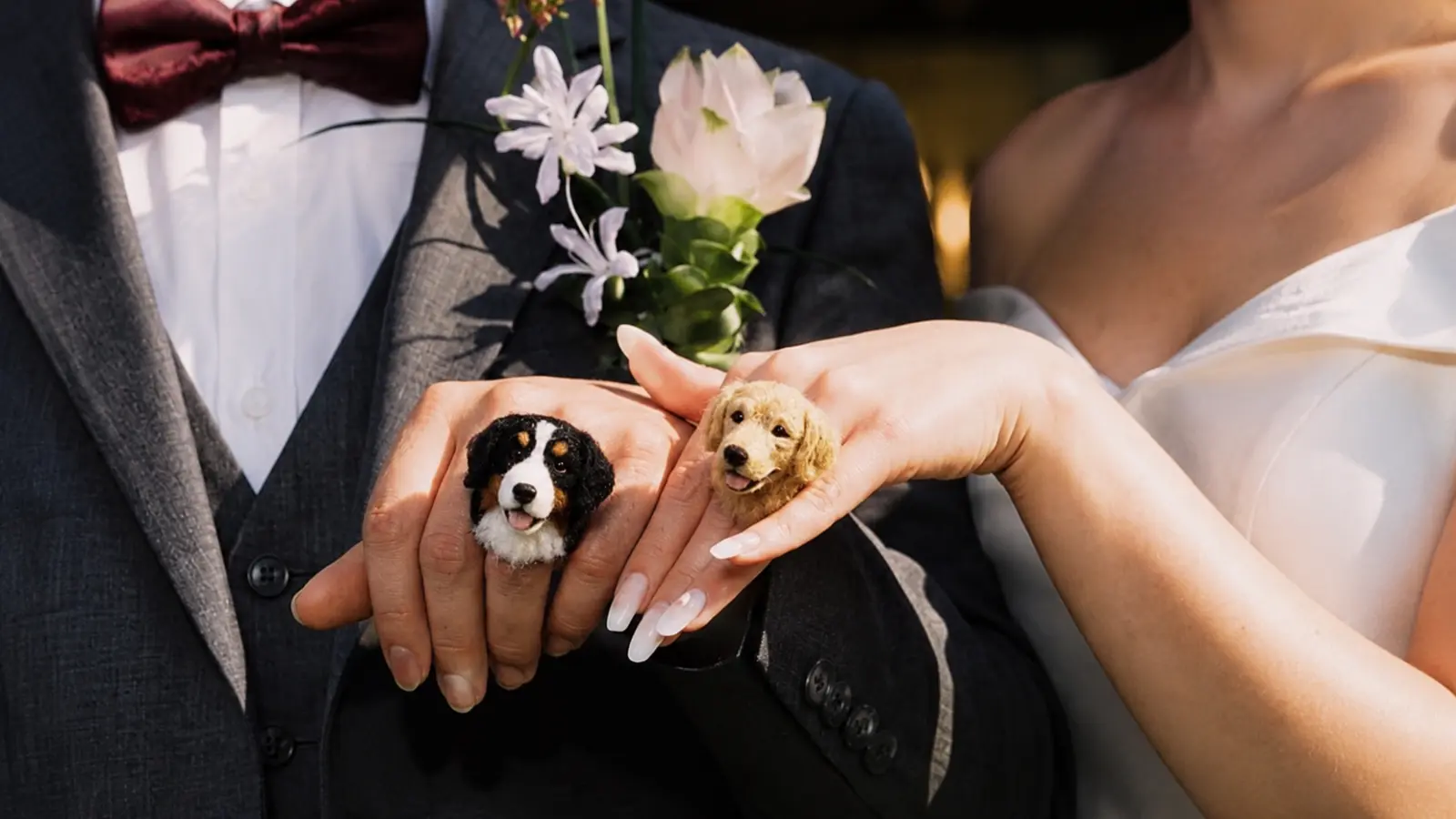
This is where a lot of planning conversations stop too soon. If the venue doesn’t allow it, if the pet’s temperament isn’t right, if the logistics don’t work, if the pet has passed away — there are still meaningful ways to include them in the wedding. And honestly, some of these options are among the most touching details couples end up with.
Consider:
- A framed photo at the welcome table or memory table. Simple, visible, personal. Guests who knew the pet will notice it immediately.
- A bouquet charm with the pet’s name or a small photo. Carried by the bride throughout the ceremony, present in every portrait.
- A custom illustration on the ceremony program. A hand-drawn portrait of the pet woven into the program design is a detail guests remember.
- A cake topper featuring the pet. Custom toppers with illustrated or sculpted versions of the couple’s pets are widely available and often become keepsakes.
- A small candle or memorial moment during the ceremony. For a pet who has passed, a brief acknowledgment from the officiant or a lit candle near the altar can be incredibly moving without being excessive.
- Napkins, signage, or stationery with a pet motif. Subtle, cohesive, and a lovely way to weave the pet through the visual identity of the day.
- A dedicated line in the ceremony program. Acknowledging a pet who has passed — with their name and years — is a quiet, dignified way to honor them.
These aren’t second-best options. For couples whose pet has passed, in particular, a thoughtful detail like this can be one of the most meaningful parts of the whole day. The complete guide to honoring your pet at your wedding covers every option in depth.
Can Your Pet Be a Wedding Witness?
You may have seen this idea floating around — the dog as an official witness, paw print on the marriage license. The concept is charming, and in a few specific jurisdictions, it may technically be possible as a ceremonial gesture. But the legal reality varies significantly by state and county, and no animal can be a legally recognized witness under U.S. marriage law.
If this is something you’re drawn to as a symbolic gesture, talk to your officiant. Some officiants are happy to include a ceremonial “signing” moment as part of the celebration without it affecting the legal document. But don’t assume it’s possible without checking — and don’t rely on information you’ve seen in a social media post. Marriage license requirements are set at the county level, and what’s permitted in one state may not be permitted in another.
Common Mistakes to Avoid
Most of the problems that happen when pets attend weddings are preventable. Here’s what to watch for:
- Assuming the pet will be fine because they’re usually fine. “Usually fine” and “fine at a wedding” are different thresholds. A dog who is calm at home, in your neighborhood, and at the dog park has not necessarily been tested in a space with 150 people in formal clothes, professional lighting, and ceremony music.
- Not confirming venue permission in writing. A verbal okay from one staff member doesn’t guarantee the same answer on the wedding day when a different coordinator is running the event.
- Assigning handler duties to someone who has other responsibilities. A bridesmaid, a family member who is also a guest, a photographer’s assistant — none of these people can be a real handler while also doing their actual job.
- Not having a backup plan. What happens if the dog becomes visibly stressed during the processional? If the venue calls an audible on pet access? If the pet has an accident? These scenarios need a pre-decided answer, not an improvised one.
- Keeping the pet at the venue longer than necessary. The ceremony moment and the portraits are usually the peak of what a pet can handle well. Extending the appearance into cocktail hour and the reception significantly increases the chances of a stressful incident.
- Not coordinating with vendors. Your photographer needs to know the pet is coming and when the portrait session is scheduled. Your florist needs to know so they can flag any toxic florals. Your caterer needs to know if the pet will be near food service areas.
- Ignoring the pet’s signals. Panting, yawning, lip licking, pacing, whale eye (showing the whites of the eyes), excessive sniffing, or trying to move away are all signs of stress in dogs. These are not signs that the dog needs more time to warm up. They’re signs that the animal needs to be removed from the situation.
Pets at Weddings Inspiration
Planning a wedding with your pet? Explore ceremony ideas, dog ring bearer inspiration, pet-friendly wedding tips, meaningful ways to include cats and other pets, and thoughtful details that keep every member of the family part of the celebration.
Your Pet Doesn’t Have to Be There to Be Part of the Day
The most successful weddings with pets are the ones that respect the animal’s personality as much as the couple’s vision. For some pets, that means walking proudly down the aisle. For others, it means a quiet portrait session before guests arrive or a small keepsake woven into the celebration. Every option can be meaningful when it reflects both the couple’s wishes and the pet’s well-being.
Whether your companion joins you in person or is represented through a thoughtful tribute, the goal is the same: creating a wedding that celebrates every member of the family in a way that feels natural, safe, and unforgettable.
Frequently asked questions (FAQ)
Can pets attend weddings?
Yes. Many pets can attend weddings if the venue allows animals and the pet is calm, well-socialized, and comfortable around crowds, unfamiliar places, and loud noises. Successful pet-friendly weddings also require a dedicated handler, careful planning, and a backup plan in case the pet becomes stressed.
Should you bring your pet to your wedding?
It depends entirely on your pet’s personality rather than your wedding plans. Calm, confident animals who enjoy meeting people and adapting to new environments are often good candidates. Pets that become anxious around crowds, loud sounds, or unfamiliar places are usually happier being included in other meaningful ways instead.
Do you need a pet handler at a wedding?
Yes. In almost every case, a dedicated pet handler is essential. Their only responsibility should be caring for the pet throughout the day, coordinating ceremony timing, supervising photos, monitoring stress, and taking the animal home when needed. Asking a guest or member of the wedding party to do this in addition to their own responsibilities rarely works well.
Can cats be included in weddings?
Yes, but most cats are much happier being included symbolically rather than attending in person. Wedding venues are often loud, unfamiliar, and stressful for cats. Many couples choose custom illustrations, bouquet charms, framed photos, or cake toppers instead, allowing their cat to be part of the celebration without unnecessary stress.
What should you ask a wedding venue before bringing a pet?
Ask whether pets are allowed, which areas are pet-friendly, whether any size or breed restrictions apply, if additional insurance or waivers are required, and whether a quiet retreat area is available. It is also worth asking about floral safety, food service areas, and cleanup policies. Always get approval in writing before the wedding day.
What is the best role for a pet at a wedding?
The best role depends on your pet’s temperament. Calm dogs often do well as ring bearers, in the processional, or during portraits before the ceremony. Many pets are happiest appearing only for photos before returning home. The goal is choosing a role that suits the animal instead of trying to fit the pet into a tradition.
How can you include a pet that cannot attend the wedding?
There are many meaningful alternatives, including framed photos, bouquet charms, custom illustrations, cake toppers, ceremony program artwork, memorial displays, and personalized stationery. These details allow pets including those who have passed away to remain part of the celebration without attending in person.