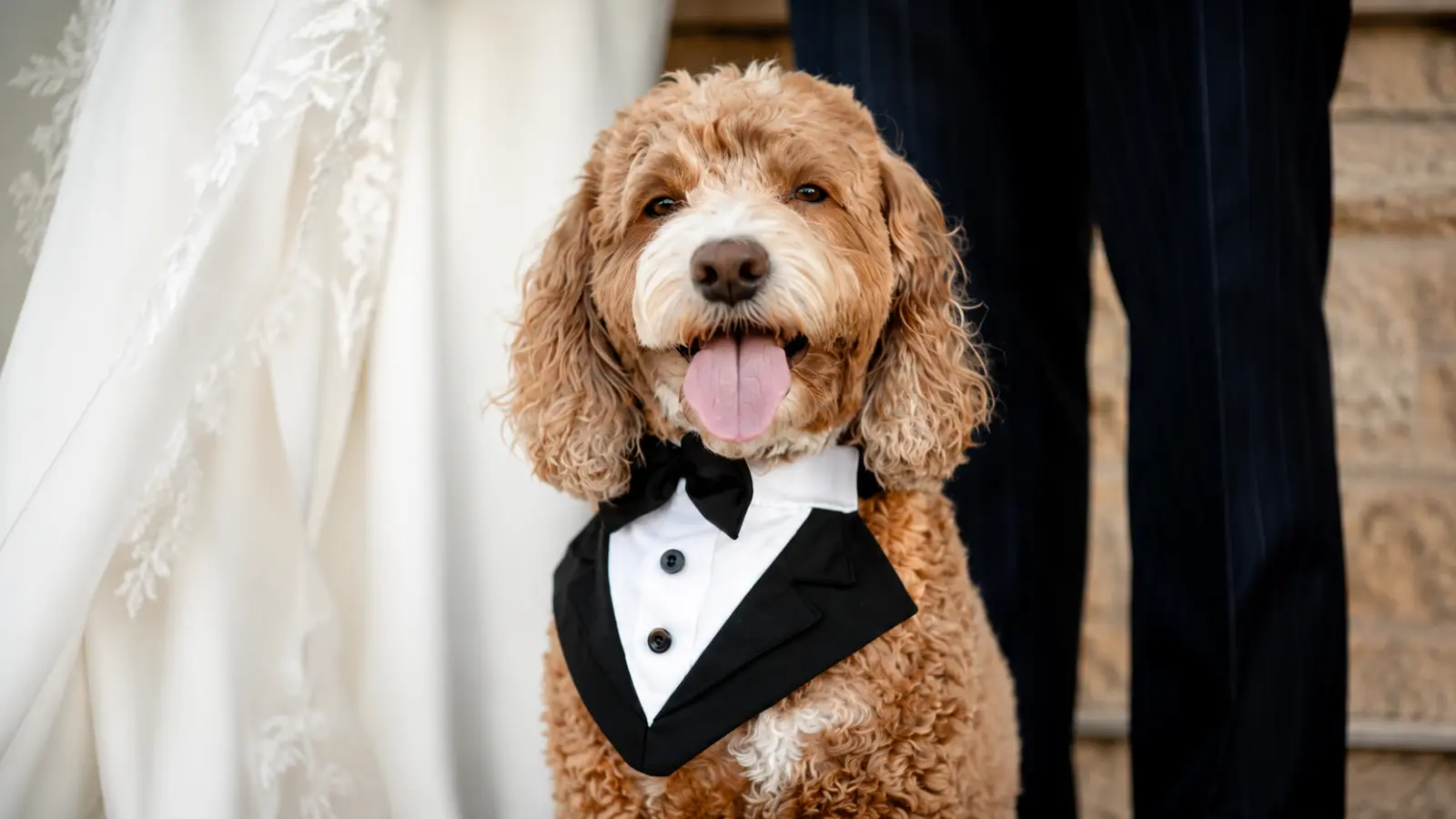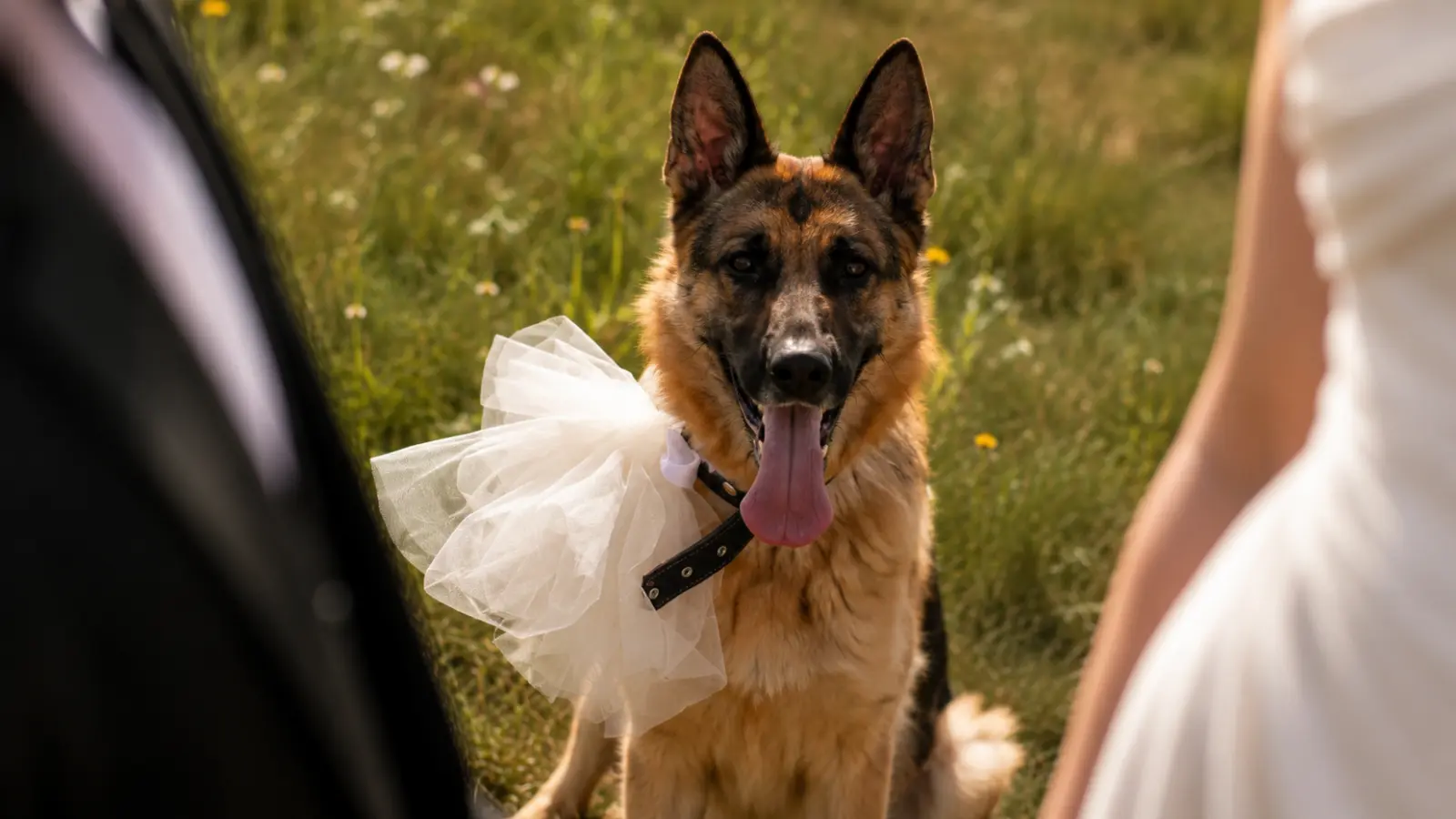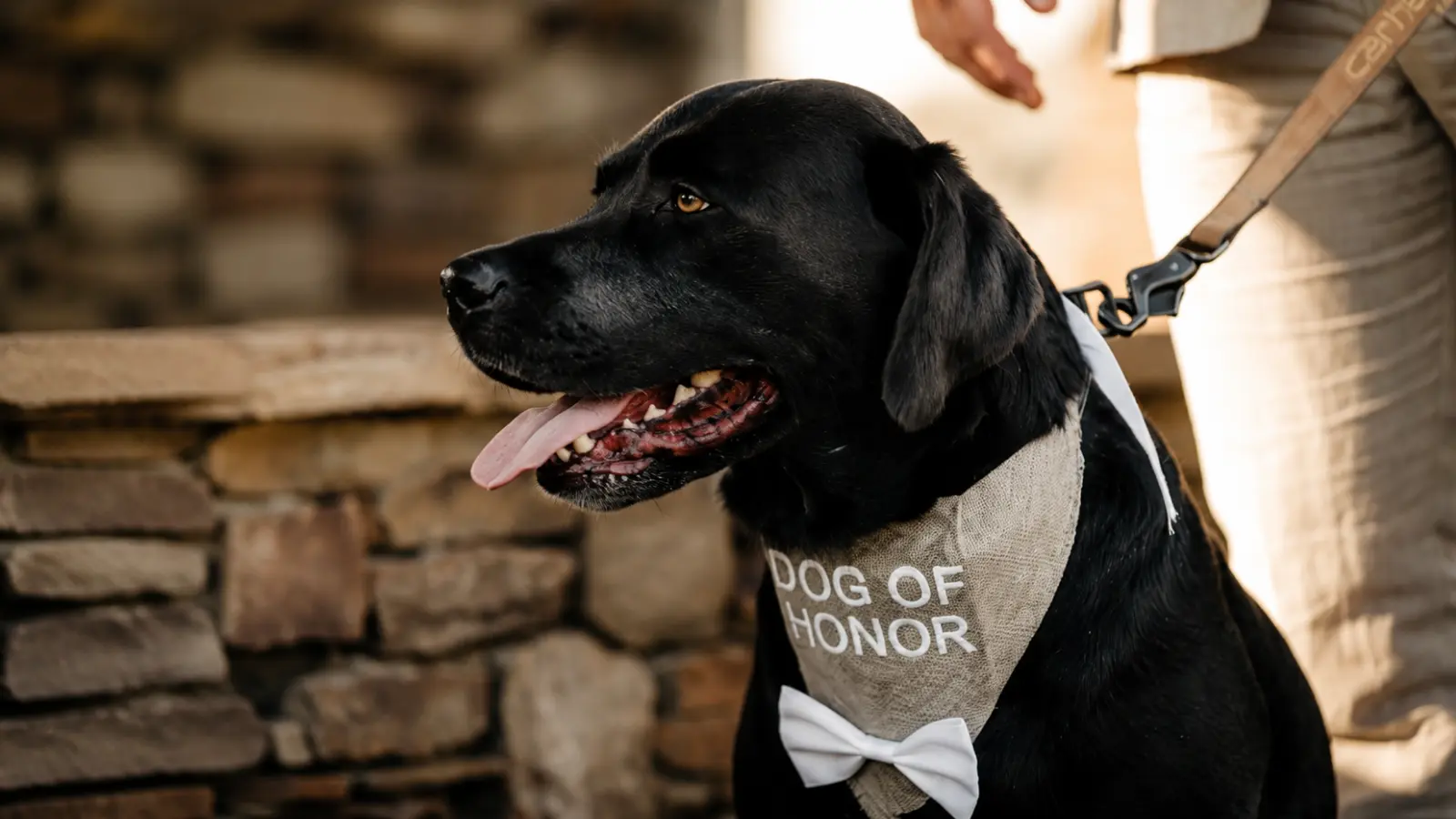
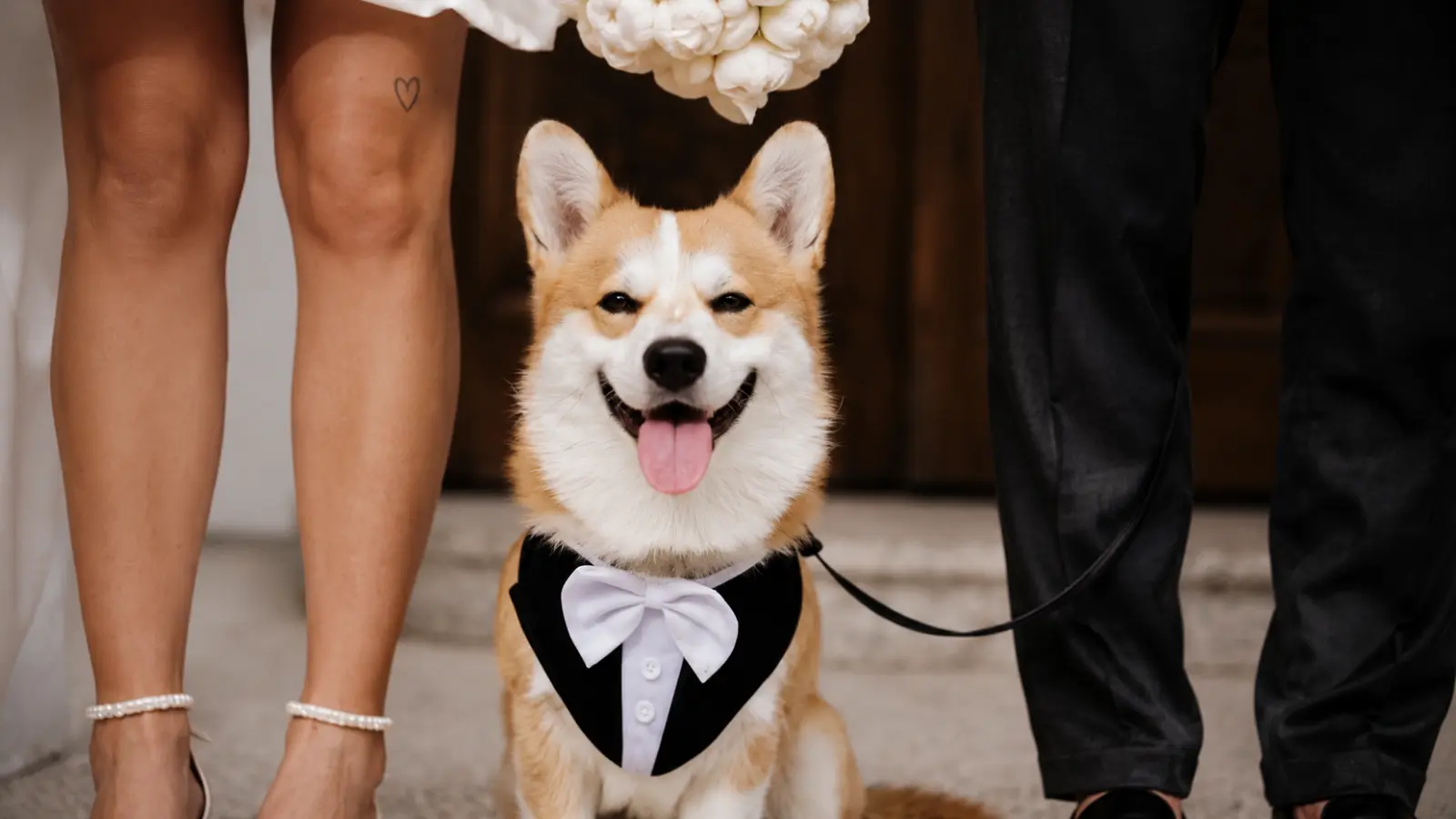
Wedding photos with pets create some of the most meaningful images of the entire wedding day, but they rarely happen by chance. Beautiful pet portraits depend on planning the right timeline, preparing the photographer, choosing realistic locations, and making sure your pet feels comfortable throughout the session.
Many couples focus on poses while overlooking the details that actually determine whether the photos succeed. The timing of the session, the presence of a dedicated handler, familiar treats, and a calm environment often matter much more than any specific pose you have saved on Pinterest.
This guide explains how to plan wedding photos with pets, choose the best moments for portraits, prepare your photographer, keep your pet relaxed, capture natural images that feel genuine instead of staged, and successfully include pets at weddings.
How to Plan Wedding Photos With Your Pet
Planning pet portraits starts with one conversation that most couples put off too long: telling the photographer. Not a mention in passing the week before the wedding, but a real conversation during the booking process — before the contract is signed and the timeline is set.
Your photographer needs to know the species and breed or size of the animal, the pet’s general temperament, whether a handler will be present, and roughly how many pet portrait setups you’re hoping for. That information changes the shooting timeline, the location scouting, and sometimes the photographer’s equipment choices. A photographer who finds out about the dog two weeks before the wedding is working around a variable they didn’t plan for. One who knew from the beginning has already thought through how to make those shots work.
The second planning step is putting pet portraits on the timeline as a named block — not a flexible add-on that happens if there’s time, but a specific window with a start and end. Twenty minutes is a realistic floor for a pet portrait session that includes a few different setups. Thirty is better. Less than fifteen is almost always not enough time to settle the animal, work through a few poses, and capture something genuinely usable. When couples treat pet photos as an afterthought, the session gets squeezed from both sides and the photos show it.
Quick Guide: Pet Photo Moments and What to Know
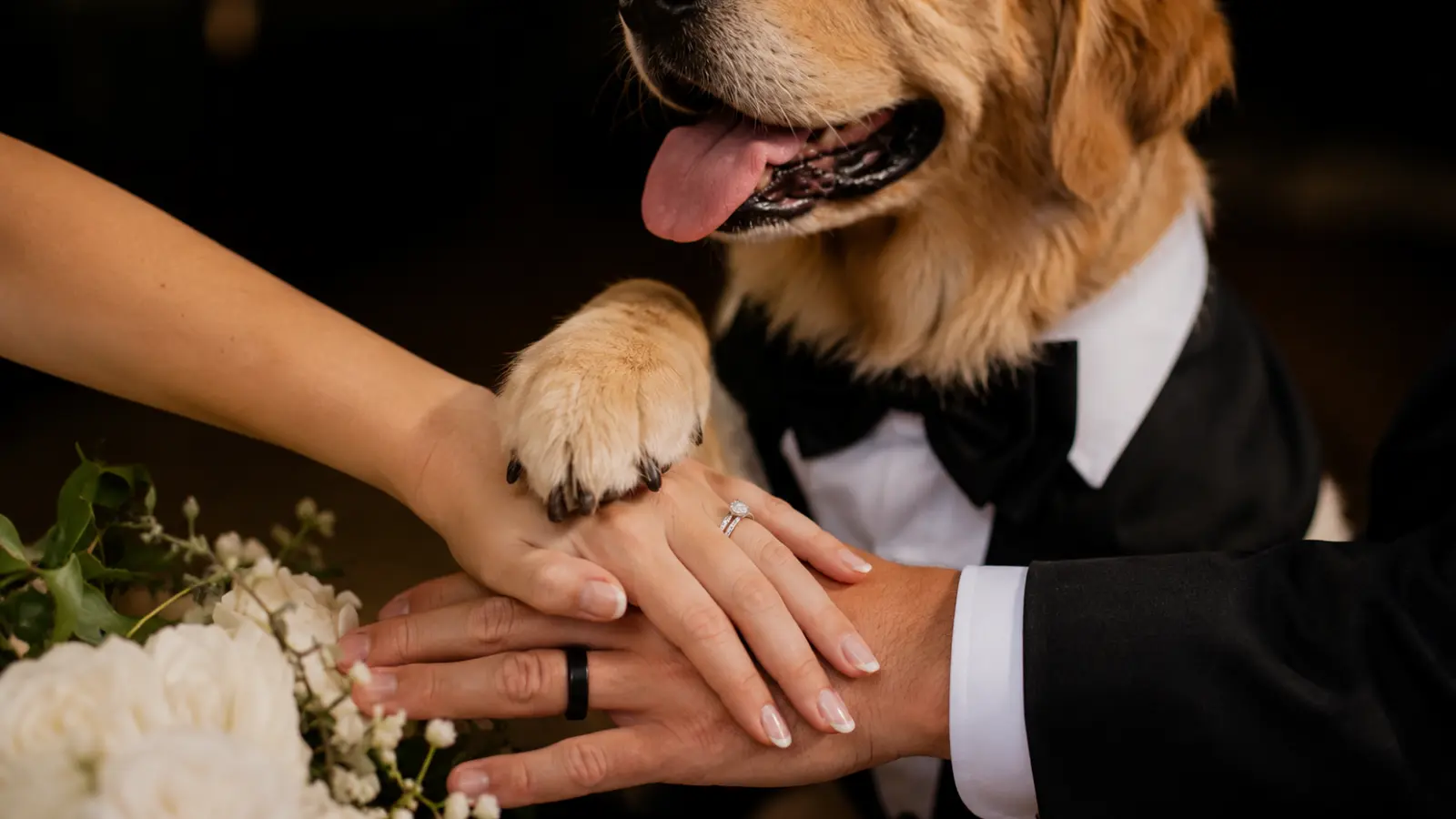
There are several natural moments in the wedding day where pet portraits fit. Not all of them work equally well for every animal — the table below is a starting point for deciding which ones belong in your timeline.
| Photo Moment | Best For | Watch Out For |
|---|---|---|
| First look with pet | Emotional, candid portraits before the ceremony | Excitement or stress from a new environment |
| Couple portraits | Classic keepsake photos with the full family | Leash in frame, handler positioning, paw prints on dress |
| Getting ready photos | Calm indoor pets in a familiar-feeling environment | Venue rules on pets in bridal suites |
| Ceremony entrance | Ring bearer or processional moment, active role | Crowd stress, timing pressure, applause |
| Wedding party photos | Groups where everyone knows and likes the pet | More people equals more distraction for the animal |
| Family portraits | Pets who are closely bonded with specific family members | Extra time needed; family formals already run long |
| Detail photos | Collar, bandana, ring on paw — symbolic close-up shots | Animal needs to hold still briefly; handler required |
Most couples benefit from choosing two or three of these moments rather than trying to include the pet in every photo category, which is often the best approach when deciding how to include your pet in your wedding. The animal gets less tired, the handler has a clearer job, and the photographer can give real attention to each setup instead of rushing through all of them.
Add Pet Photos to the Timeline
The wedding day timeline is where the best intentions for pet portraits either survive or get quietly eliminated. If the pet session doesn’t appear as a named block with actual minutes attached to it, it will be the first thing to disappear when the day runs even slightly behind.
When you’re building the timeline with your photographer and coordinator, treat the pet portrait session the same way you treat family formals or the couple’s portrait hour — as a committed block that other things work around, not into. Identify exactly when the pet will be arriving, who is bringing them, and where the handler is taking them immediately after the session ends. If the pet is leaving after the portrait window, confirm who is picking them up and whether they’ll need to exit through a specific area of the venue.
Also note the pet session in the vendor communication. The officiant doesn’t need to know, but the coordinator and the photographer’s second shooter do. If the caterer is setting up nearby when the pet session is scheduled, a quick heads-up prevents a situation where the animal is suddenly surrounded by servers carrying trays of food.
First Look With Your Pet
The first look is one of the most underused opportunities for pet portraits, and for many couples it turns out to be the best one. The logic is simple: the first look happens before the ceremony, before most guests arrive, and before the day’s noise level and emotional intensity have fully built. The environment is as close to calm as it’s going to get. The couple is together, present, and usually more relaxed than they expect to be at that moment.
A first look that includes the pet works like this: the couple’s standard first look happens first, between the two of them. Then the handler brings the pet in for a separate reveal moment — the couple sees the dog, the dog sees the couple, and the photographer captures what happens next without directing it. Those unposed seconds tend to produce the images couples keep on their walls.
The first look pet session also solves a logistics problem. If the pet can only be at the venue for a limited window, the pre-ceremony period is the cleanest time to contain that window. The dog arrives, the portraits happen, the handler takes the animal home before the ceremony begins. The couple gets every photo they wanted, and nobody is managing a live animal through the rest of the day.
Bride and Groom Portraits With Your Pet
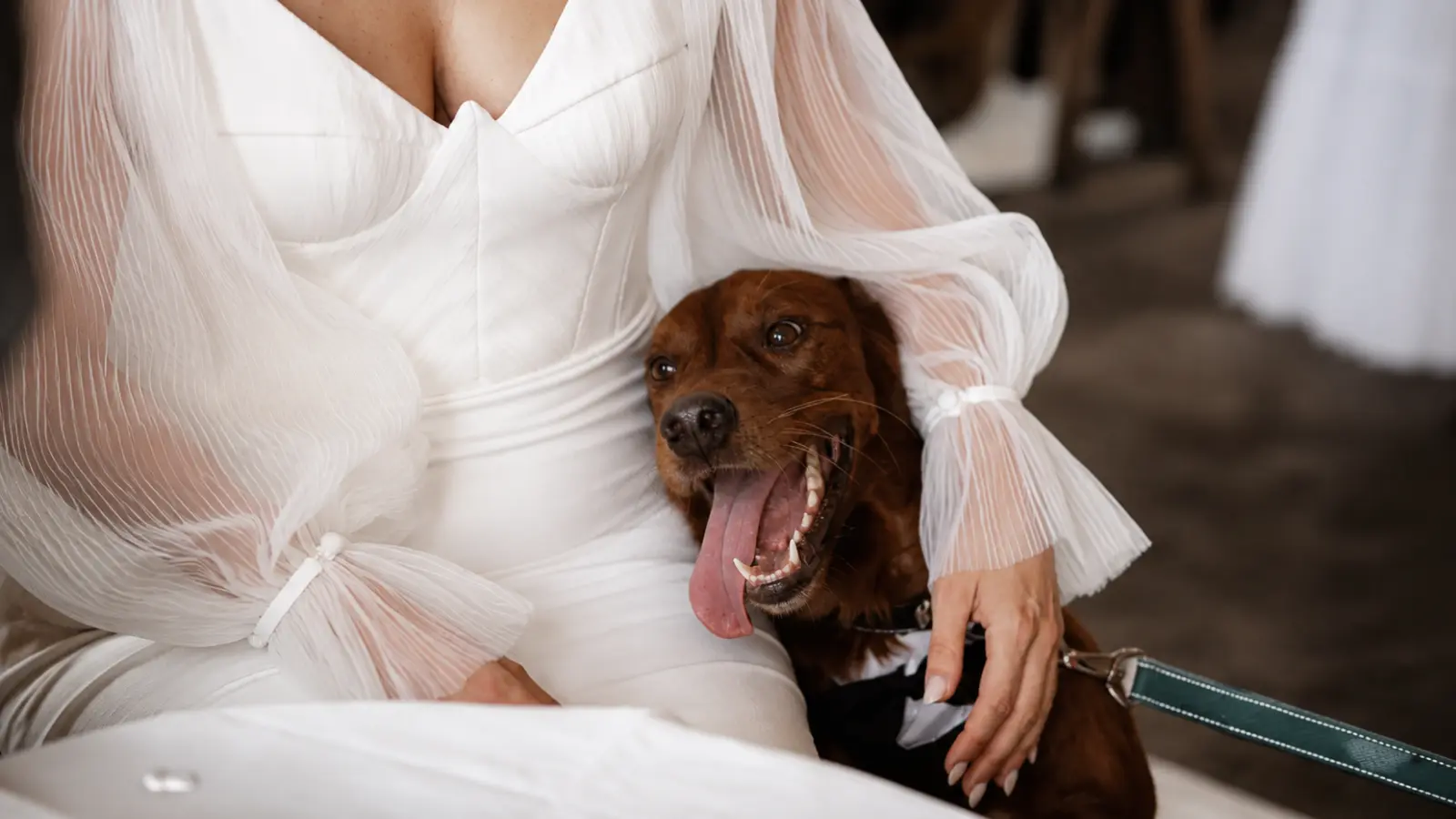
The classic couple portrait with a pet — both partners, the animal between or in front of them, a natural setting — is the setup most couples imagine when they start thinking about pet photos. It’s also the setup that needs the most active management to work.
The handler’s position is the first thing to work out with the photographer. In most posed couple shots, the handler should be just out of frame and slightly below the photographer’s eyeline, holding treats or making attention sounds to keep the pet’s focus forward. The exact position changes with every shot setup, and the handler needs to move quickly and quietly when the photographer shifts angle. Brief the handler on this before the session begins — not in the middle of it.
Keep the poses simple. A couple sitting or crouching at the pet’s level photographs more naturally than two people standing while a dog jumps or pulls toward them. If the dog is large, sitting together on the ground gives the animal something to lean into rather than climb over. If the dog is small, having one person hold them at chest height or sit with the pet in their lap creates a clean sightline for the camera. The most common mistake in couple-pet portraits is trying to engineer a specific pose rather than letting the animal’s natural behavior shape the shot.
For the dress: muddy paws, shed fur, and an excited greeting from a jumping dog are real possibilities, especially on outdoor shoots. Have the handler wipe the dog’s paws before any shots that involve contact with the gown. Keep a lint roller in the attendant’s kit and accessible between setups. If the dress is particularly delicate or light-colored, consider doing pet portrait setups before the ceremony while a cover-up is still on, and reserving the gown shots for the ones where the animal is calmest and most settled.
Wedding Party Photos With Your Pet
Including the pet in wedding party photos adds warmth and personality to what can otherwise be the most formulaic part of the shooting schedule. It also adds time and complexity — which is worth knowing before you commit to it.
More people means more distraction for the animal. A dog who is focused and calm during couple portraits may become overexcited, overwhelmed, or simply uncooperative when surrounded by eight people in formal clothes all trying to interact with them at once. The handler needs to be actively managing the pet throughout the wedding party setup, which is harder to coordinate when the photographer is also directing a large group.
If you want the pet in wedding party photos, tell the photographer in advance so they can sequence these shots efficiently — ideally capturing the pet-inclusive versions first, while the animal is freshest, and finishing with the group shots that don’t require the pet’s attention. And remind the wedding party before the session starts: don’t all try to greet the animal at once, don’t feed the pet anything from their own pockets, and follow the handler’s lead on when to interact and when to hold still.
Family Photos With Your Pet
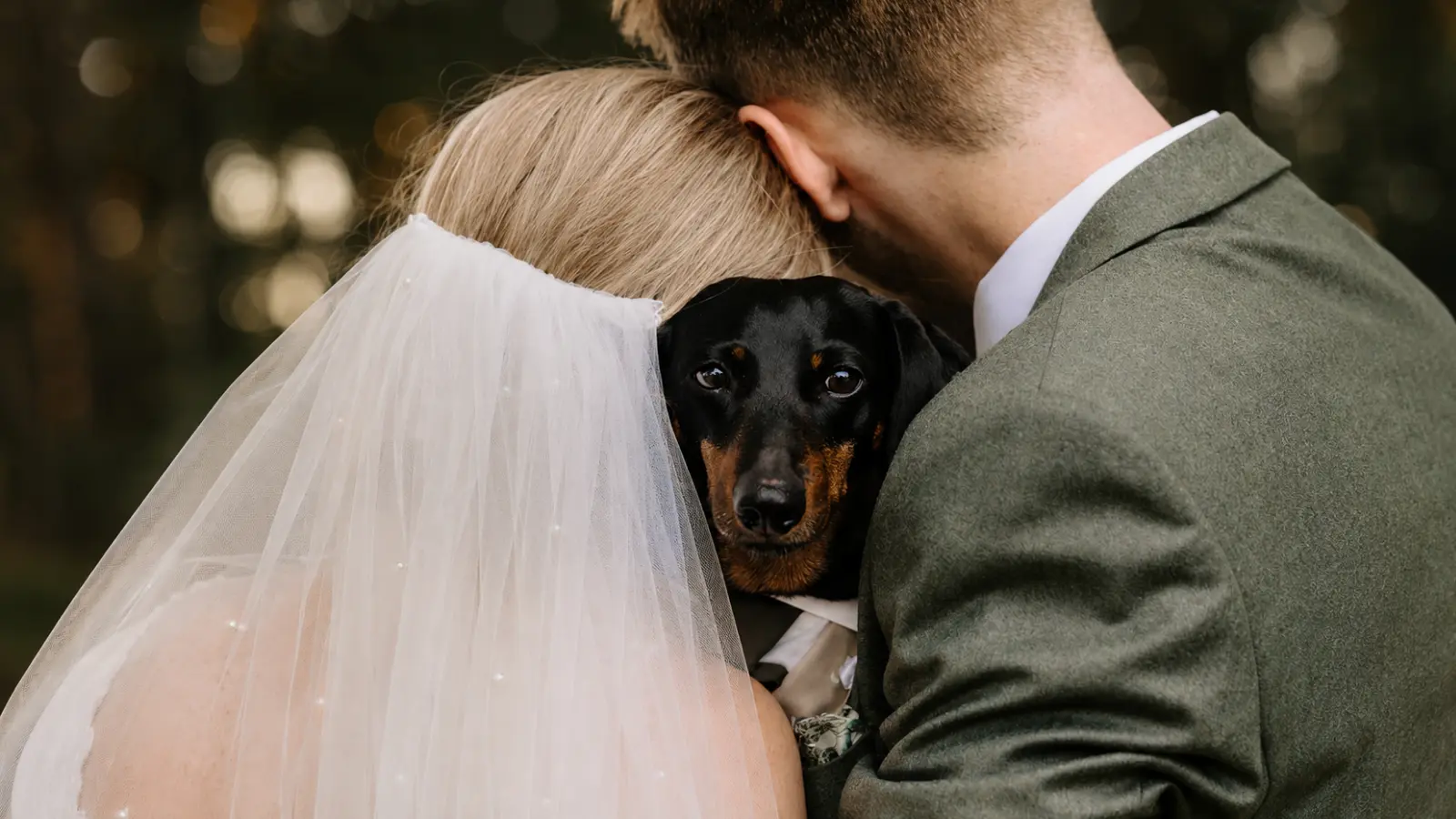
Family formals are one of the most time-constrained parts of the wedding day, and adding a pet to any group shot extends the time needed for that grouping. Build that into the timeline explicitly rather than assuming the photographer can absorb it.
Family photos with pets tend to work best when the animal is closely bonded to the specific family members in the shot. A dog who adores the couple’s parents will settle more naturally in a photo that includes them than in a shot with extended relatives the animal has never met. If you’re planning specific family groupings that include the pet, share that list with the photographer in advance so they can sequence those shots before the animal’s patience runs out.
One practical note: family formals often happen immediately after the ceremony, when the emotional energy is high, the timing is tight, and the pet has already been at the venue for a while. If the animal is showing early stress signals by this point — panting, pacing, reluctance to take treats — it’s worth considering whether the family photo with the pet is still realistic, or whether the shots taken earlier in the day are the ones to use.
Pet Walking Down the Aisle: Photo Considerations
If the pet is taking part in the ceremony processional as a dog ring bearer, the aisle walk produces some of the most photographed moments in modern weddings — and some of the most technically challenging ones for the photographer to capture well. Knowing what the photographer needs from the handler during this moment makes a difference in the final images.
The photographer will be positioned to capture the dog’s walk from the back of the aisle, from the side, or from the front — or moving between positions if they have a second shooter. What tends to ruin aisle photos is a leash that cuts across the frame, a handler who is in the shot, or a dog who has stopped walking and is looking at a flower arrangement. None of these are avoidable with certainty, but they’re all less likely when the handler knows the camera angles in advance and has practiced the walk with the animal at the actual venue if possible.
The shot that couples most often wish they had from this moment is the dog’s face looking toward the couple at the front of the aisle. That moment is unpredictable — but a photographer who knows to anticipate it and is already positioned for it will catch it when it happens. Brief them on it in the pre-wedding conversation.
Detail Photos: Collar, Bandana, Leash, and Rings
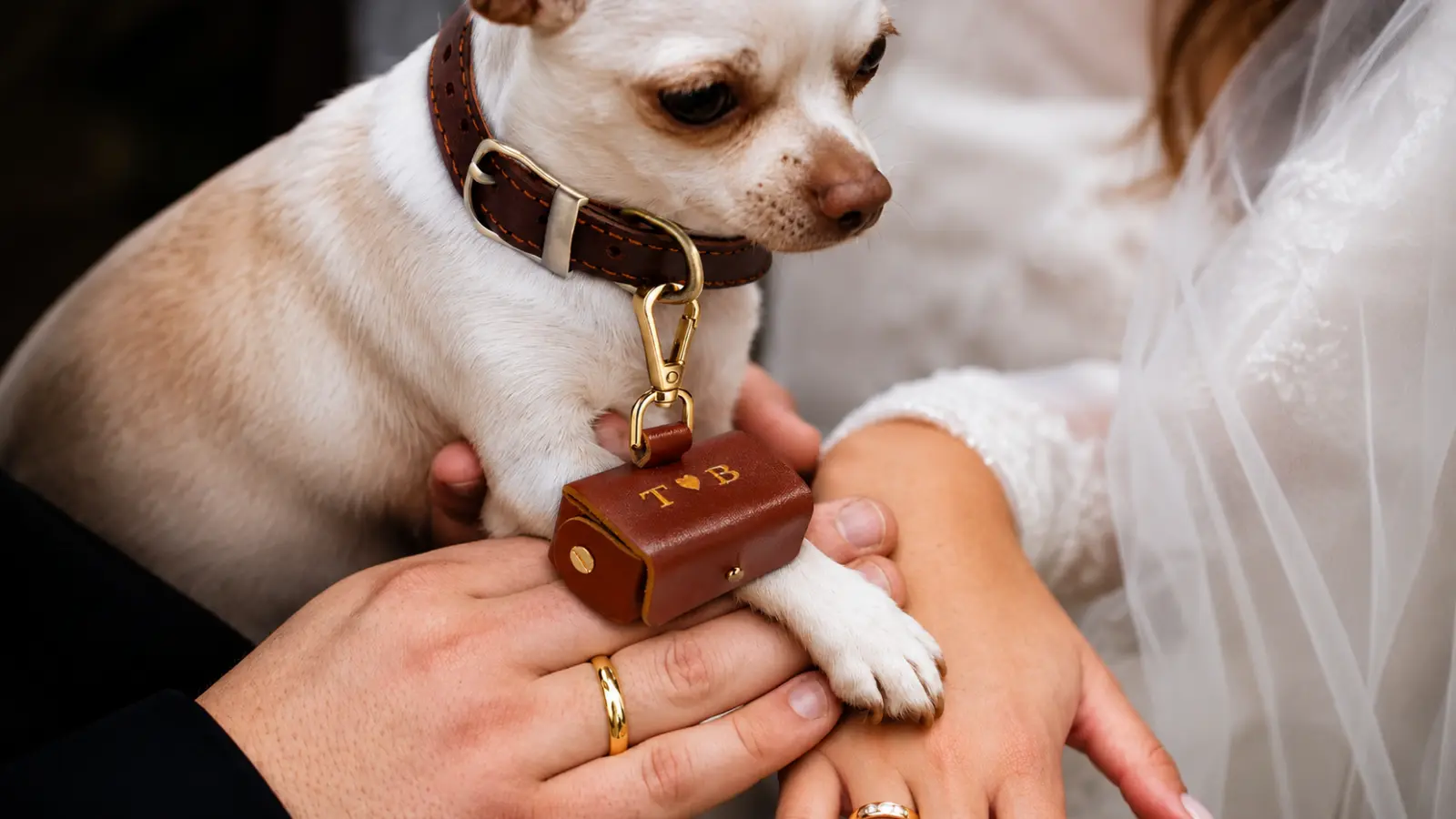
Detail shots with the pet are lower-stakes than posed portraits and often produce some of the most distinctive images in a wedding album. A close-up of the dog’s collar with the wedding date engraved on it, the pet’s paw next to the wedding rings, the bandana in the wedding color palette draped on a chair, the dog’s leash wrapped loosely around the bouquet — these shots are quiet, specific, and personal in a way that group portraits rarely are.
Most detail shots require the animal to hold still briefly rather than perform anything. For a paw shot, the dog needs to be lying calmly while the photographer works at close range. For a collar or bandana detail, the animal often doesn’t even need to be in frame — it’s the accessory itself that’s being photographed. These setups tend to take less time than portrait setups and can serve as a reset moment between more active shots, both for the pet and for the couple.
Tell the photographer which details matter to you before the day — including custom pet wedding attire, the engraved tag, the floral wreath, or a special collar — so they can plan to shoot each one rather than noticing them in passing. Detail shots that are planned photograph better than ones that happen accidentally.
Treats, Toys, and Commands: Getting Your Pet’s Attention on Camera
The difference between a pet portrait where the animal is looking at the camera with bright, engaged eyes and one where they’re sniffing the ground or looking away almost always comes down to what’s happening just out of frame. Getting that attention reliably requires preparation, not luck.
Treats are the most versatile attention tool for dogs. Use whatever the animal responds to most strongly at home — not something new introduced on the wedding day, and not a treat so exciting it sends the dog into a frantic state. The handler holds the treat just above the camera lens or at the photographer’s eyeline, produces it the instant before the shutter fires, and rewards the dog immediately after the shot to reinforce the behavior. Small, soft treats that can be eaten quickly work better than crunchy ones that require chewing time between shots.
Toys work for some dogs who are less food-motivated. A familiar squeaky toy held out of frame can produce an alert, engaged expression — though it can also produce a lunging dog. Test the response at home before relying on it during the session.
Specific verbal commands — the dog’s name, a familiar “sit” or “look” — can bridge the gap between treat moments. The handler should be the one using these commands during the session, not the photographer or the couple, who may be mid-pose and unable to deliver the cue at the right moment. Decide before the session starts who is giving commands and who is holding treats so the animal isn’t receiving mixed signals from three directions at once.
For cats and other animals, treats still apply where the animal is food-motivated. The key difference is that cats respond better to patience than to performance — position the animal, give them a moment to orient, and photograph what happens naturally rather than trying to engineer a specific expression. Cats in wedding photos almost always look better when the session is short and the couple leans into the animal’s own behavior rather than fighting it.
Why You Need a Handler for Pet Photos
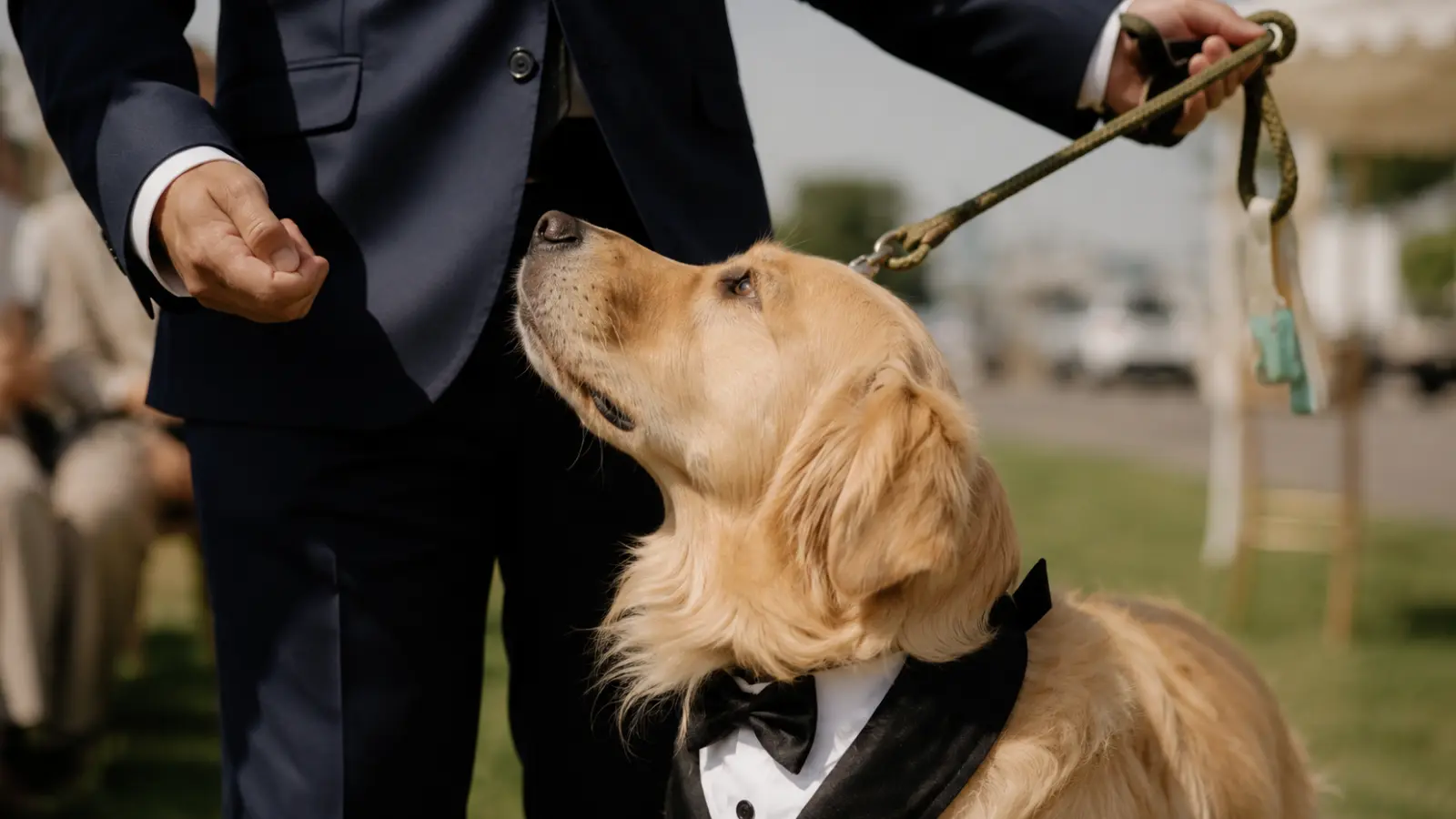
Every photo in this guide assumes a handler is present. That’s not an editorial preference — it’s a practical requirement that shapes whether the session produces usable images.
The couple cannot manage a pet and be photographed at the same time. The moment one partner reaches down to reposition the dog or redirect the cat, the natural quality of the portrait breaks — the body language shifts, the eye contact with the camera or with each other is lost, and the photographer is waiting for a reset. A handler who is actively managing the animal from just outside the frame means the couple can hold their position and their connection with each other while the photographer works.
The handler’s job during portrait sessions specifically is to keep the pet in the general area, get the animal’s attention on cue, move quickly and quietly between shot setups, and retrieve the pet if the animal needs a break. None of that is compatible with also being a bridesmaid, a parent, or a guest trying to watch the session unfold. The handler stands where the photographer needs them and moves when the photographer moves.
If you don’t already have a handler designated, and you haven’t yet read the guide on wedding pet attendants, that’s the place to start — the handler role and the attendant role are usually the same person, and the session goes significantly better when it’s someone the animal already knows.
Best Locations for Pet Wedding Photos
Location shapes the photos more than most couples realize. The venue’s most architecturally impressive spaces aren’t always the best for animal portraits — and sometimes a quiet corner of the grounds produces better images than the formal garden that looked perfect in the bridal shoot.
The characteristics that tend to make a location work well for pet portraits: enough open space that the handler can move freely without appearing in the frame, a background that doesn’t compete with the animal for visual attention, relatively even ground that doesn’t require the dog to navigate obstacles mid-shot, and enough distance from high-traffic areas that sudden noise or movement won’t startle the pet at the wrong moment.
Shade matters for outdoor sessions, particularly in warmer months. A dog that is overheating will not hold a pose or make eye contact, and summer afternoon light is often too harsh for portraits anyway. Early morning or late afternoon natural light — the same golden hour that flatters every couple portrait — also tends to produce the warmest, most natural-looking pet photos. If outdoor portraits are part of the plan, flag the timing and the location with the photographer in advance so they can position the session within that window.
For cats and small pets, a more contained location at pet-friendly wedding venues — such as a bridal suite, a garden bench, or a quiet corner of the property — usually works better than open-ended roaming. Fewer escape routes means more control, which means a shorter, more productive session for an animal that is fundamentally not built for sustained human direction.
Dog Wedding Photos: What Makes Them Work
Dogs are the most common subject of wedding pet portraits, and the range of what works varies enormously by individual dog. The breed and size create some general patterns, but temperament is what actually determines how the session goes.
Larger, calmer breeds — retrievers, Bernese Mountain Dogs, standard poodles — tend to settle into portrait setups more naturally because they’re physically heavy enough to stay in place and often have the temperament to hold a position with mild treat encouragement. Smaller dogs with high energy may need more active management from the handler and shorter individual setups before a break. High-prey-drive or reactive dogs may find the environment overwhelming in ways that no amount of treat motivation can overcome — and knowing that in advance lets the couple adjust expectations for what the portraits will look like rather than being disappointed on the day.
One universal truth across all dog sizes and breeds: the photos that look the most natural are almost never the ones where the dog was asked to perform something specific. The dog leaning against the groom’s leg, the dog looking up at the bride mid-walk, the dog flopped across both partners during a seated portrait — these happen because the handler has the animal relaxed enough to move naturally, not because someone positioned them deliberately.
Cat Wedding Photos: What to Consider
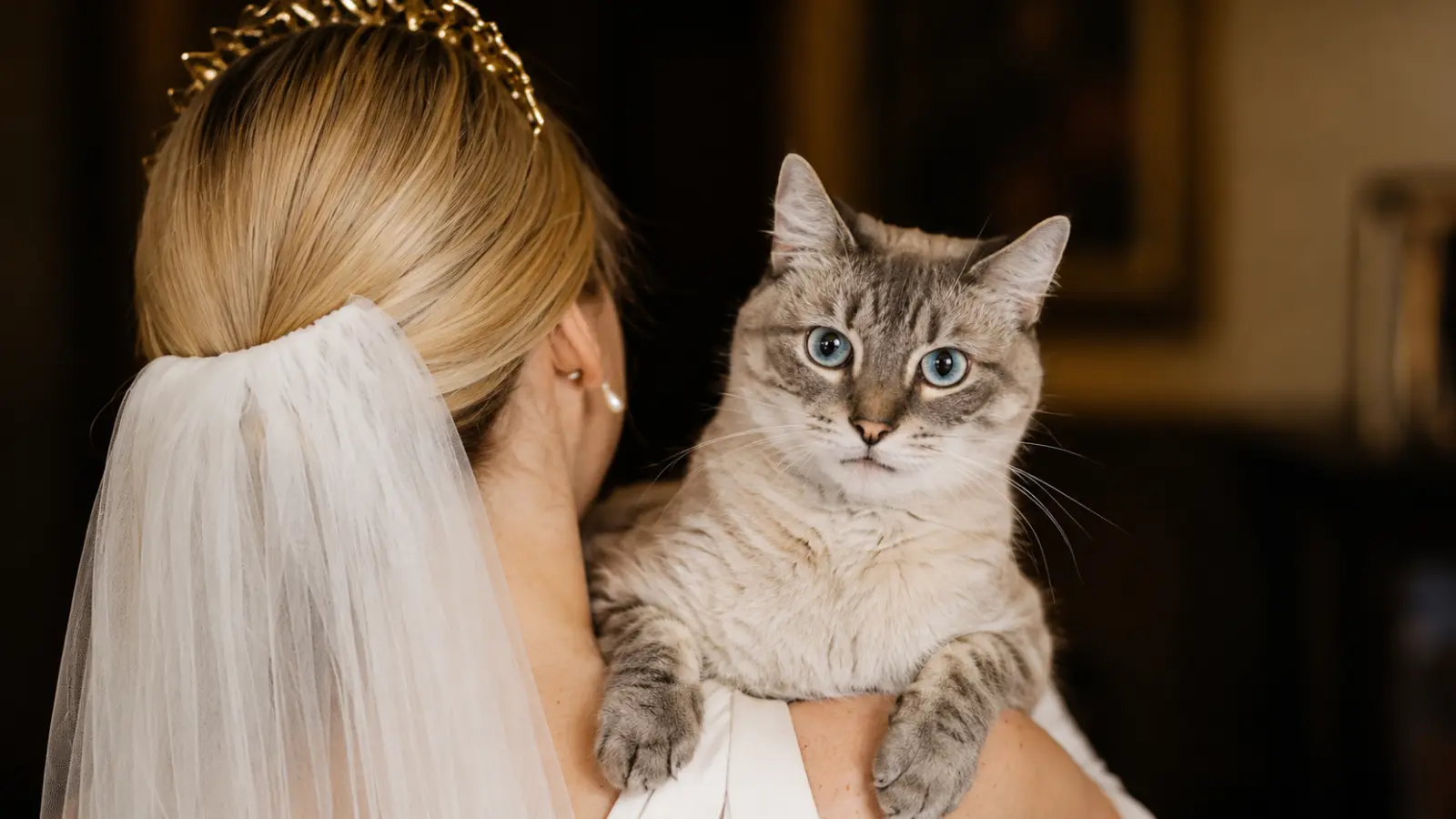
Including a cat in wedding photos requires a genuinely different approach than dogs — not because cats can’t photograph beautifully, but because the conditions that produce good cat photos are almost the opposite of what wedding days naturally provide.
Cats do best in familiar environments, with minimal strangers, in a calm and quiet space, with full control over their movement. A wedding venue introduces an unfamiliar smell, unfamiliar people, unfamiliar sounds, and a level of activity that most cats find actively stressful. The cat who is completely relaxed on the couch at home may spend the first fifteen minutes of a venue session frozen in a carrier or pressed against a wall looking for an exit.
The approach that works most consistently: schedule a brief cat portrait session in a controlled space before the ceremony, when the venue is at its quietest. Let the cat come out of the carrier on their own terms. Photograph what the animal actually does — exploring a chair, sitting in a window, investigating the bouquet — rather than trying to pose them. Keep the session to ten or fifteen minutes maximum. Have the handler immediately available to retrieve the cat if they show signs of stress.
For couples whose cat truly cannot tolerate a venue environment, a getting-ready session at home the morning of the wedding is a genuinely strong alternative. The animal is in their space, the light in a well-lit room can be beautiful, and the photos of the couple with their cat in the context of their real life often feel more authentic than anything that could have been staged at a venue anyway.
What If Your Pet Cannot Stay All Day?
Most pets shouldn’t stay all day — and planning around a limited window is a feature, not a constraint. The question isn’t whether to limit the pet’s time at the wedding. It’s how to make the most of the window you have.
The practical approach: identify the one or two photo moments that matter most to you, build a defined session around those, and send the pet home after that session is complete. For most couples, this means a 20- to 30-minute window during the first look or pre-ceremony period. The pet arrives fresh, the session happens in the quietest part of the day, the handler takes the animal home before the ceremony begins, and the couple walks into the rest of the day knowing those photos are done.
Communicate this clearly to the photographer so the session is treated as a standalone priority rather than something to fit in around other shooting. A pet portrait window that’s on the official timeline gets the photographer’s full attention. One that’s described as “we’ll figure it out” gets whatever minutes happen to be left.
Mistakes to Avoid
Most problems with wedding pet photos are predictable — which means they’re avoidable with the right preparation. These are the ones that come up most often.
Not telling the photographer until the week before. The photographer needs this information during the booking conversation, not as a last-minute add-on. It changes the timeline, the equipment, and the location planning.
Skipping the handler. The couple cannot manage a pet and be photographed at the same time. Every pet portrait session needs a dedicated handler who has no other job during those minutes.
Forgetting treats or bringing the wrong ones. Treats are the primary attention tool for most dogs. Bring what works at home, not something new. Pack enough for the full session plus a reserve.
Scheduling pet photos at the worst time of day. The end of the day — after family formals, after cocktail hour, during the reception — is when the animal is most tired and the couple is least available to focus on photos. Earlier is almost always better.
Trying to force a specific pose. Repositioning a dog repeatedly to achieve an exact image usually produces a frustrated animal and stiff photos. Let the handler settle the pet into a general position and let the photographer capture what happens naturally from there.
Ignoring the dress. Muddy paws and white fabric are a real combination at outdoor weddings. Have a plan — clean paws before contact, lint roller in the attendant’s bag, consider a cover-up for certain setups.
No plan for when the pet is done. Animals communicate when they’ve had enough, and a session that continues past that point produces worse photos, not more of them. Have the handler ready to step in and take the pet to a quiet space — or home — the moment the animal stops responding to treats and starts showing stress signals.
Wedding Photos With Pets Inspiration
Planning wedding photos with your pet? Explore first look ideas, natural poses, couple portraits, ceremony moments, detail shots, and practical photography tips to create beautiful memories while keeping your pet comfortable throughout the session.
The Best Pet Photos Feel Natural
The wedding photos couples treasure most are rarely the ones where every detail is perfectly posed. They are the moments when the pet behaves naturally, the couple relaxes, and the photographer captures genuine interactions instead of trying to force them. Planning the session carefully creates the freedom for those moments to happen.
Whether your pet joins you for a full portrait session or just a few meaningful photographs before the ceremony, thoughtful preparation will always produce better memories than improvisation. Give your photographer time, give your pet patience, and let the best moments unfold naturally.
Frequently asked questions (FAQ)
How do you get great wedding photos with your pet?
The best wedding photos with pets come from planning rather than luck. Tell your photographer about your pet before booking, schedule a dedicated photo session, bring a handler the animal already knows, use familiar treats or toys, and keep the session short enough that your pet stays relaxed. Comfortable pets create natural photos that cannot be staged.
When is the best time to take wedding photos with a pet?
The first look or pre-ceremony window is usually the best time because the venue is quieter, the couple is less rushed, and the photographer has more flexibility. Many couples also schedule getting-ready portraits at home or in the bridal suite before guests arrive. Earlier sessions almost always produce calmer pets and stronger photographs.
Do you need a handler for wedding photos with a pet?
Yes. A dedicated handler allows the couple to focus on the photographer while someone else manages treats, leash positioning, attention cues, breaks, and the pet’s safety. Without a handler, portrait sessions usually take longer and become much more stressful for everyone involved.
How do you keep a dog calm during wedding photos?
Use familiar treats, a trusted handler, short sessions, and plenty of breaks between poses. Schedule portraits before the busiest part of the day and avoid introducing new commands, toys, or accessories during the session. A calm dog produces much more natural expressions than one who is overwhelmed.
What if my pet can only stay for part of the wedding day?
That is completely normal and often the best option. Plan a dedicated portrait session during the time your pet is present, usually before the ceremony, then let the handler take the animal home once the photos are finished. This keeps the pet comfortable while ensuring you still capture meaningful images together.
How do you prepare your wedding photographer for pet photos?
Tell your photographer during the booking process that your pet will be included. Share your pet’s species, size, temperament, planned role, preferred photo ideas, and the time blocked for portraits. Early communication allows the photographer to build the session into the timeline instead of treating it as a last-minute addition.