Understanding the wedding veil meaning can make choosing whether to wear one feel much more personal. While some brides see the veil as a timeless bridal tradition, others simply love the way it completes their wedding look—and both perspectives are equally valid.
Throughout history, the wedding veil has represented different ideas, from protection and modesty to celebration, family traditions, and personal expression. Today, its symbolism is more flexible than ever.
This guide explores the history, symbolism, religious traditions, and modern meaning of the wedding veil, helping you decide what this iconic bridal accessory means to you.
Where the Wedding Veil Comes From
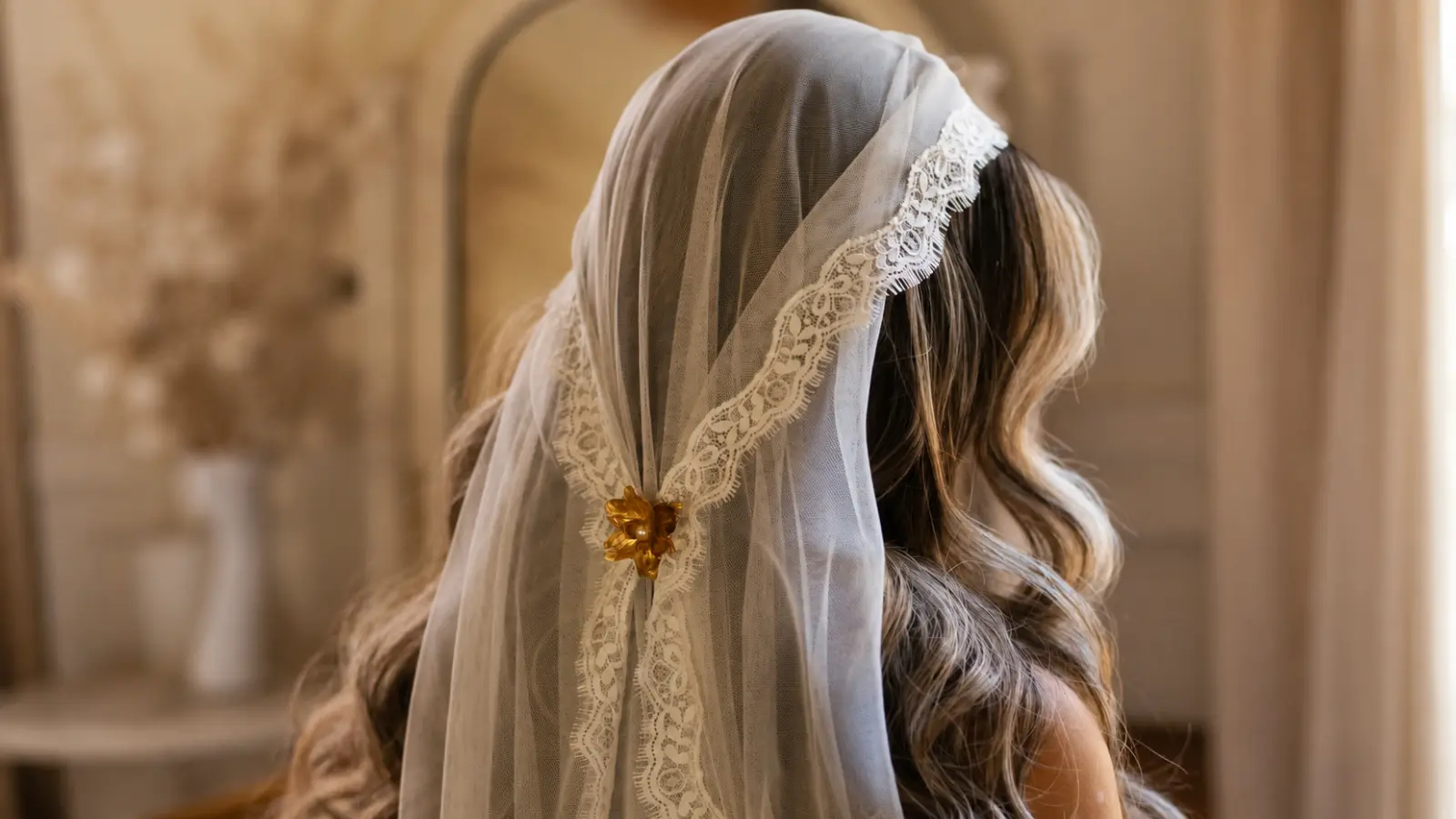
The veil is one of the oldest items in Western bridal tradition, and its origins are genuinely ancient — which means the original reasons for wearing one are quite different from anything we’d recognize today.
In ancient Rome and Greece, brides were covered in fabric from head to toe, often in bright colors, to ward off evil spirits that were believed to target brides on their wedding day. The logic was protective, not aesthetic: covering the bride made it harder for malevolent forces to identify and harm her. The Roman flammeum — a large orange-yellow veil — is one of the earliest documented examples of a bridal face covering used for this purpose.
In medieval Europe, the symbolism shifted toward modesty and purity. The veil became associated with the bride’s virtue and her formal status as someone being transferred from her father’s household to her husband’s. In arranged marriages, the veil had a more practical function: in some traditions, it prevented the groom from seeing the bride’s face until the ceremony was complete, reducing the risk that he would refuse the match based on appearance.
Queen Victoria’s white wedding in 1840 had an outsized effect on what bridal fashion became. Her choice of white fabric and a white veil — departures from the colored alternatives typical at the time — was widely imitated across class lines, and the association between brides and white veils gradually solidified through the Victorian era into something that felt like a rule, even though it had started as a personal style choice made by one woman.
By the twentieth century, the white or ivory veil had become the American bridal default, carrying the accumulated associations of purity, formality, and ceremony — a kind of compressed symbolism that most brides inherited without examining too closely.
What the Veil Has Traditionally Symbolized
Different cultures and time periods have layered different meanings onto the wedding veil, and many of those meanings contradict each other when you look at them side by side. This isn’t a sign that the tradition is confused — it’s a sign that the veil, like most enduring symbols, has been flexible enough to carry whatever meaning a culture needed to project onto it.
The most common historical associations include:
- Purity and modesty: The interpretation most people associate with veils today, rooted in medieval and Victorian ideals. The veil as a marker of virtue — something to be revealed by the groom at the appropriate moment.
- Protection: The ancient understanding that covering the bride shielded her from spiritual or physical harm on a day when she was considered especially vulnerable.
- Obedience and transfer: In many historical traditions, the veil was part of a formal ritual in which the bride was transferred from her father’s authority to her husband’s. The lifting of the veil was an act of symbolic possession as much as romantic revelation.
- Status and wealth: In periods when fine fabric was expensive, a long, elaborate veil was a display of social standing. The length and quality of the veil signaled the family’s resources.
- Religious sanctity: In various Christian traditions, covering the head in a sacred space was a sign of reverence. The veil carried a devotional meaning independent of marriage.
What’s worth noting is how few of these traditional meanings feel relevant to contemporary American brides. The idea of a veil as a marker of purity is rarely invoked sincerely. Protection from evil spirits is not a typical concern. The transfer of authority from father to husband is a framing most modern couples actively reject. The veil has carried these meanings, but it doesn’t need to anymore — and understanding that gap between history and present is part of what makes it easier to decide what the veil actually means for you.
The Meaning of the Blusher Veil
Of all the veil’s component parts, the blusher carries the most concentrated symbolism — and it’s the one element whose ceremonial purpose is still actively used in modern weddings, even by brides who don’t think of themselves as particularly traditional.
The blusher is the shorter front layer of a two-tier veil, draped forward over the bride’s face during the processional and lifted at the altar — typically by the groom, a parent, or the officiant — before the vows or the first kiss. The lifting gesture has historically represented the formal moment of revelation: the groom seeing his bride, the ceremony completing the transition from one state to another.
Historically, the meaning was more transactional than romantic. In cultures with arranged marriages, the veil-lifting was the moment the groom acknowledged acceptance of the match. The “blushing bride” image is rooted here — the bride’s face covered out of modesty, her emotion visible only when revealed.
In modern American weddings, the blusher moment reads very differently. Most couples have been together for years, have chosen each other entirely on their own terms, and are not operating within any context that would make the historical symbolism meaningful. What remains is something quieter: a staged pause in the ceremony, a private moment in a public ritual, the groom or a parent lifting the veil as a gesture of welcome rather than possession. Many couples find it one of the most genuinely moving moments of the ceremony, precisely because its meaning has been emptied of the old framework and replaced with something personal.
Not every bride who wears a two-tier veil uses the blusher for the face-covering moment. Many flip it back before the processional, preferring to see their guests clearly while they walk. Both approaches are normal. For more on how the blusher works practically, see our blusher veil.
Veils in Religious Wedding Traditions
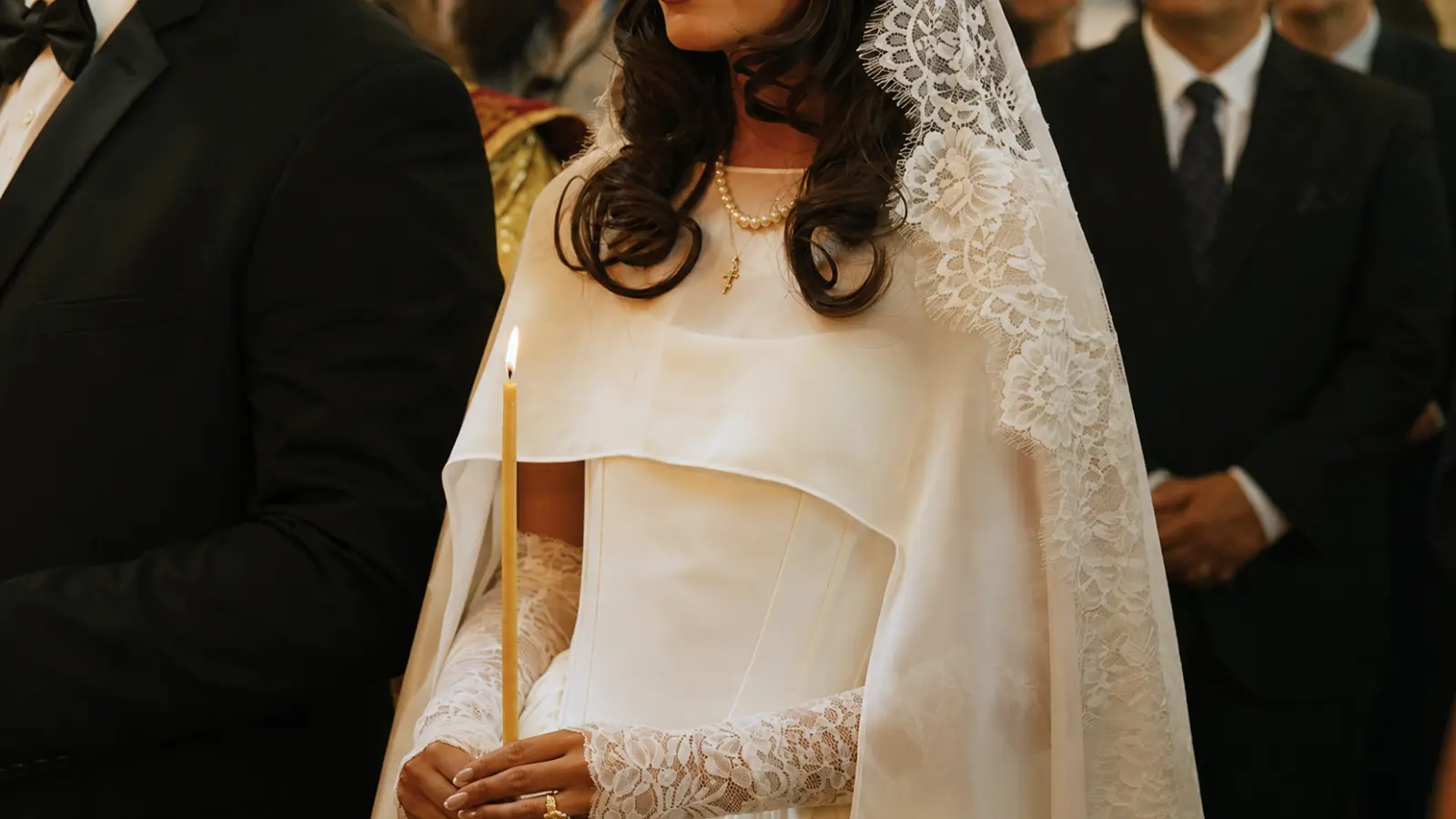
Religious traditions vary widely in how they relate to the bridal veil, and the picture across denominations is less uniform than most people assume. This section is intended as a broad, informational overview — not as religious instruction, and not as a claim about what any specific faith requires.
Catholic Weddings
The Catholic Church has a longstanding tradition of head coverings for women in sacred spaces, rooted in Scripture passages about modesty and reverence. In practice, many modern Catholic brides wear a veil, and the tradition is strong enough that “Catholic wedding veil” is a common search — but the Church does not mandate a specific type of veil or headcovering for marriage. What brides often associate specifically with Catholic weddings is the mantilla-style veil, which drapes over the head and has a distinct, devotional quality. Some traditional Catholic communities have seen a revival of the chapel veil as an expression of devotional practice independent of the wedding context. If you are marrying within a Catholic tradition and want to know what your specific parish expects or recommends, speaking directly with your officiant is the most accurate source.
Jewish Weddings
In Jewish wedding tradition, the bedeken (also spelled bedekn) is a pre-ceremony ritual in which the groom lowers a veil over the bride’s face before the ceremony begins. It has historical roots in the biblical story of Jacob, who was deceived into marrying Leah when he meant to marry Rachel — the bedeken is partly understood as confirming that the groom sees and recognizes his intended. Not all Jewish denominations practice the bedeken, and the form it takes varies by tradition. The wedding veil worn during the ceremony itself may be separate from the bedeken veil.
Other Traditions
In Eastern Orthodox Christian weddings, head coverings carry devotional significance, and the veil is often part of the formal bridal look. Many Protestant denominations have no specific veil tradition — the bride may wear a veil or not, entirely as a personal and aesthetic choice. In civil ceremonies, the veil carries no religious significance at all; brides wear one or don’t based on personal preference alone.
The common thread across all of these traditions is that the veil’s role has been shaped by local custom more than universal doctrine. If your wedding is taking place within a specific religious tradition, the most useful thing to do is ask your officiant rather than rely on general guidance.
What a Wedding Veil Symbolizes Today
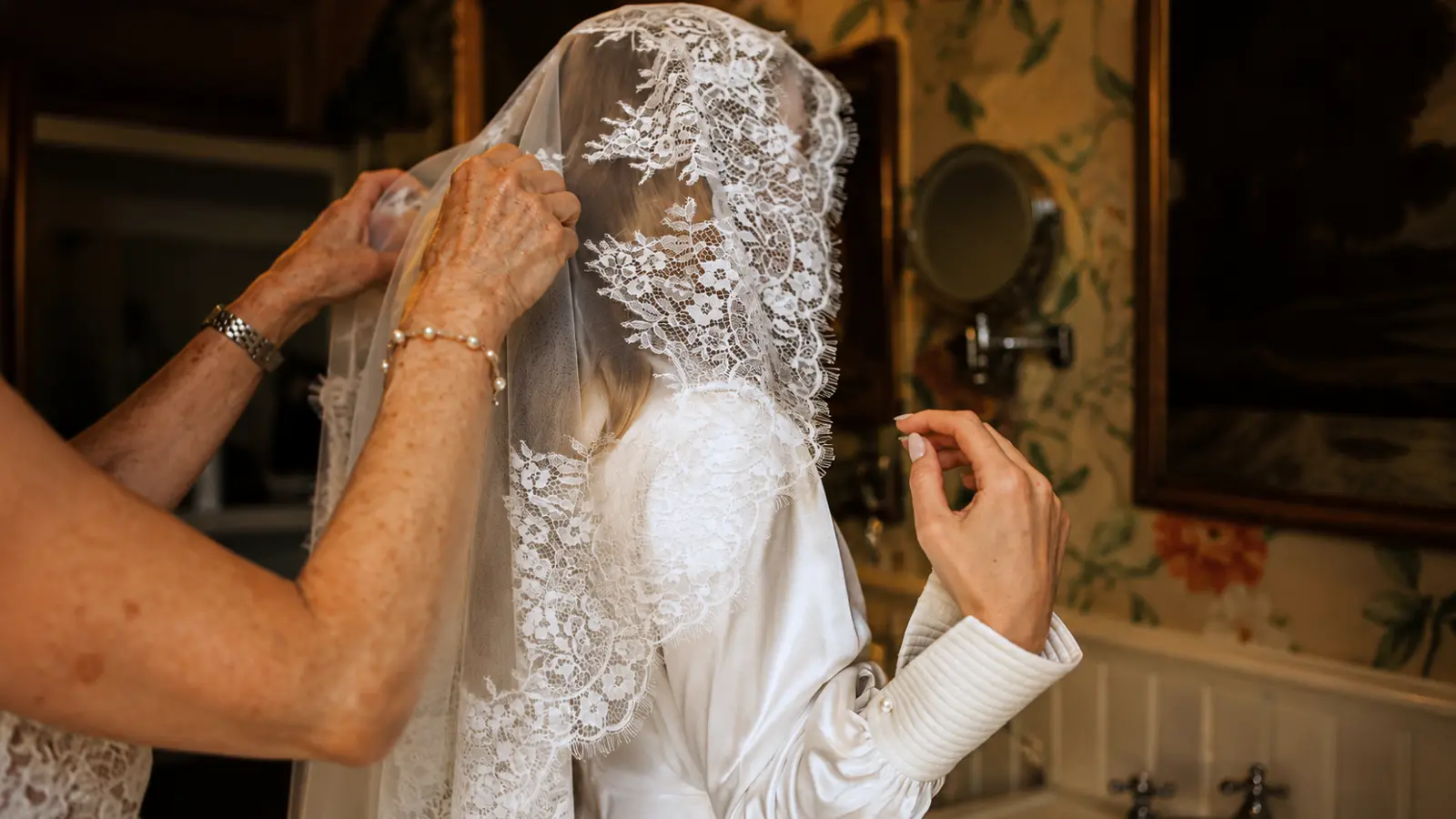
Here is where the history and the present diverge most significantly, and where most of the genuinely useful thinking for a modern American bride happens.
The old symbolism — purity, transfer of authority, protection — has largely faded from active use. The veil has survived the loss of most of its original meaning, which is itself worth noticing. It’s still one of the most widely worn bridal accessories in the United States, still one of the most photographed elements of any wedding, and still capable of producing a recognizable emotional response in most rooms when a bride walks in wearing one. It has outlasted the reasons it was invented, and taken on new ones in the process.
What modern American brides most commonly say the veil means to them:
- A ceremony marker. The veil distinguishes the wedding day from any other day in a way that’s hard to replicate with other accessories. Many brides describe taking it off at the reception as a felt shift in the day’s tone.
- A connection to family tradition. Wearing a mother’s or grandmother’s veil carries an obvious emotional weight that has nothing to do with historical symbolism and everything to do with continuity and love.
- A photographic element. This is real and worth acknowledging: the veil moves, catches light, creates depth and frame in photographs in a way no other accessory quite matches. Many brides who were ambivalent about veils choose one after seeing what it does in photos.
- An aesthetic choice. Some brides want a veil because it’s beautiful and it completes the look they have in their head. That’s a legitimate reason, and it doesn’t require any further symbolic justification.
- Something personal and private. A smaller number of brides do assign symbolic meaning to the veil — as a spiritual gesture, as a marker of intentionality, as something they’ve always associated with the particular kind of ceremony they wanted. The meaning they bring to it is real, even if it’s their own.
None of these are the “right” meaning. They’re different reasons, held by different brides, in the same tradition. The veil is unusual in that it has managed to carry historical weight while remaining genuinely open to individual interpretation — which is probably part of why it has lasted as long as it has.
Do You Have to Wear a Veil?
No. There is no requirement to wear a veil at an American wedding, in any type of ceremony — religious, civil, or otherwise. The question comes up often enough that it’s worth saying plainly: the veil is an accessory, and whether you wear one is entirely your choice.
The feeling that it might be required often comes from one of a few places. Families with strong traditions can create an implicit expectation, especially if multiple generations have worn a veil and the assumption is simply that you will too. Some venues and ceremonies — particularly very formal church weddings — have an aesthetic that seems to call for one, even if no one has actually said so. And bridal media, which is saturated with veil imagery, can make it feel like the default rather than an option.
None of those are requirements. If you want to wear a veil because you love it, wear one. If you don’t feel drawn to it, you don’t owe the tradition anything. The brides who tend to be most satisfied with their accessory choices are the ones who made them intentionally, in either direction.
If you’re navigating pressure from family or feeling uncertain about how to explain your choice, it sometimes helps to frame it simply: a veil is something you wear when it feels right for you, and something you skip when it doesn’t. The decision belongs to the bride.
Wearing a Veil at a Second Wedding
The old etiquette position — that second-time brides should not wear a veil — was rooted in the same outdated symbolism that tied the veil to virginity and first marriages. That particular rule has not survived contact with how American couples actually live and celebrate. It is no longer observed in most contemporary contexts, and a bride getting married for the second time who wants to wear a veil should feel entirely free to do so.
That said, some second-time brides find they want a veil that feels different from a first wedding — not because of any rule, but because the occasion feels different to them. A shorter veil, a simpler style, or a different placement can carry a distinct quality without looking like you’re trying to recreate something that came before. Others get married the second time and find they want the full experience they didn’t feel ready for before, and choose accordingly. Both responses are reasonable.
What tends to guide the decision for second-time brides is less about tradition and more about what the veil represents to them personally. If it feels like it belongs in the day you’re planning — the venue, the tone, the emotional register of the ceremony — it belongs. If it feels like a piece of the first wedding carried forward awkwardly, a different accessory may feel more true to where you are now.
There’s no version of this where wearing a veil is wrong. The question is simply whether it’s right for you, in this ceremony, at this point in your life.
Choosing Not to Wear a Veil
This deserves its own section because the decision not to wear a veil is sometimes treated as the absence of a choice rather than a choice itself. It isn’t. Deciding not to wear a veil is a considered, complete decision — and it’s worth making it consciously rather than arriving at it by default.
Brides who don’t wear veils often find that a single well-chosen alternative — a structural headband, a simple pair of hairpins, a floral element, or nothing at all — gives the hairstyle a clarity and intention that a veil would actually have competed with. The look reads intentional when the reasoning behind it is intentional. For a full look at what’s possible without a veil, see our wedding veil alternatives.
If you’ve decided against a veil but feel a residual pull toward the tradition, it’s worth examining where that pull is coming from. If it’s family pressure or a sense that a “real” wedding requires one, those are external forces, not reasons. If it’s genuine uncertainty — you’re not sure how you’ll feel when the moment arrives — that’s a different question, and spending thirty minutes trying on veils at a bridal salon can usually answer it.
Wedding Veil Meaning & Tradition Inspiration
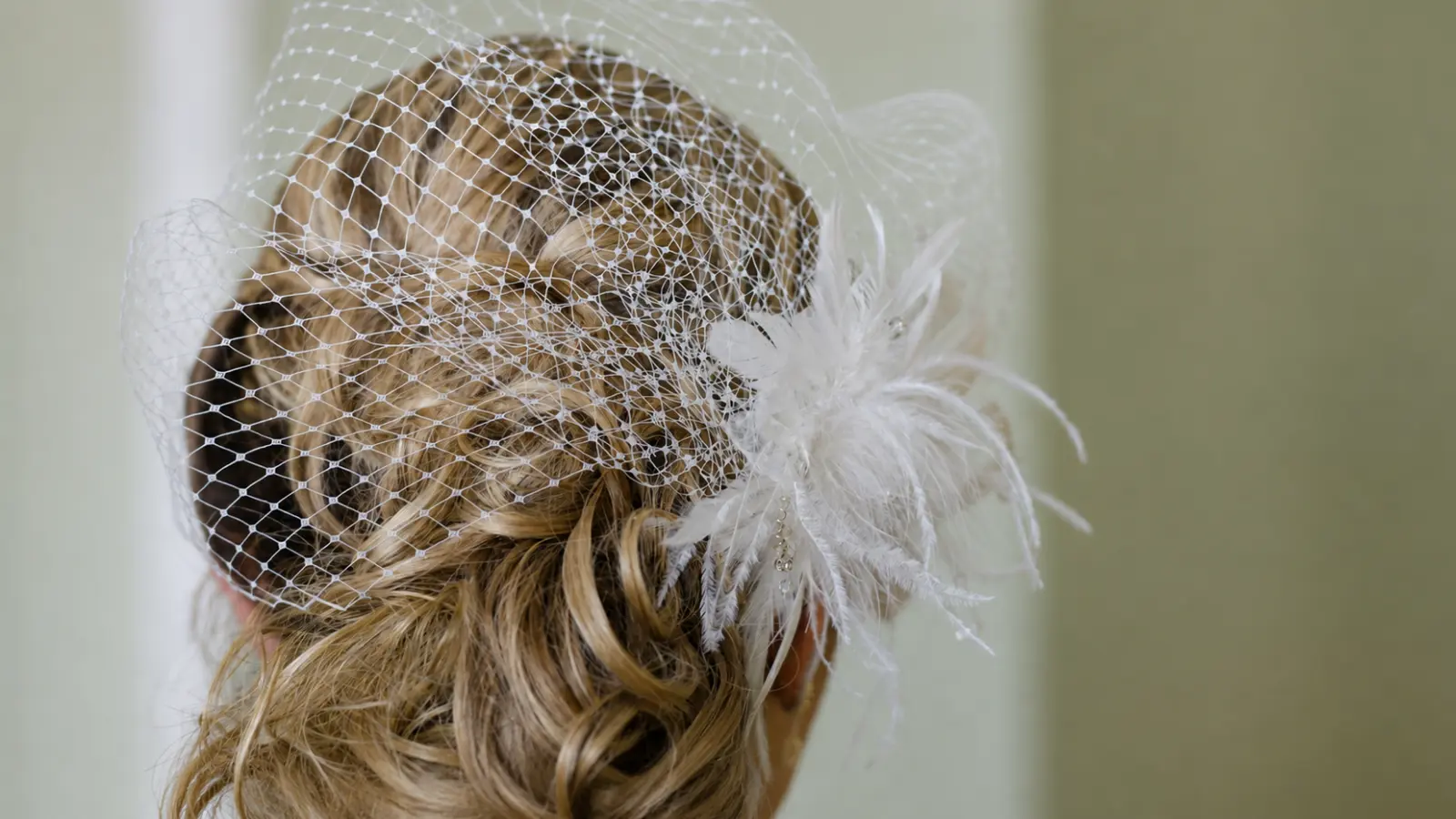
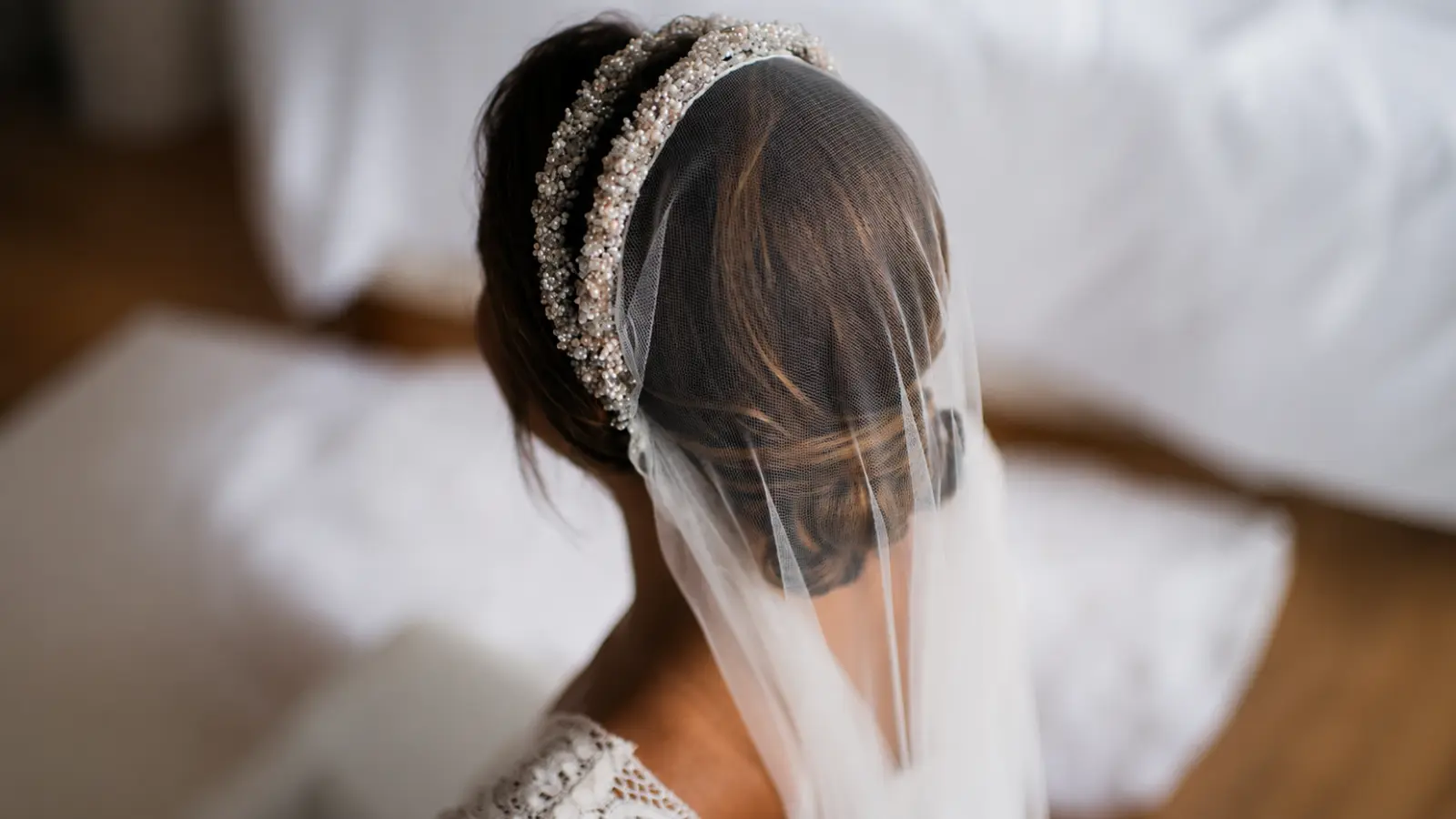
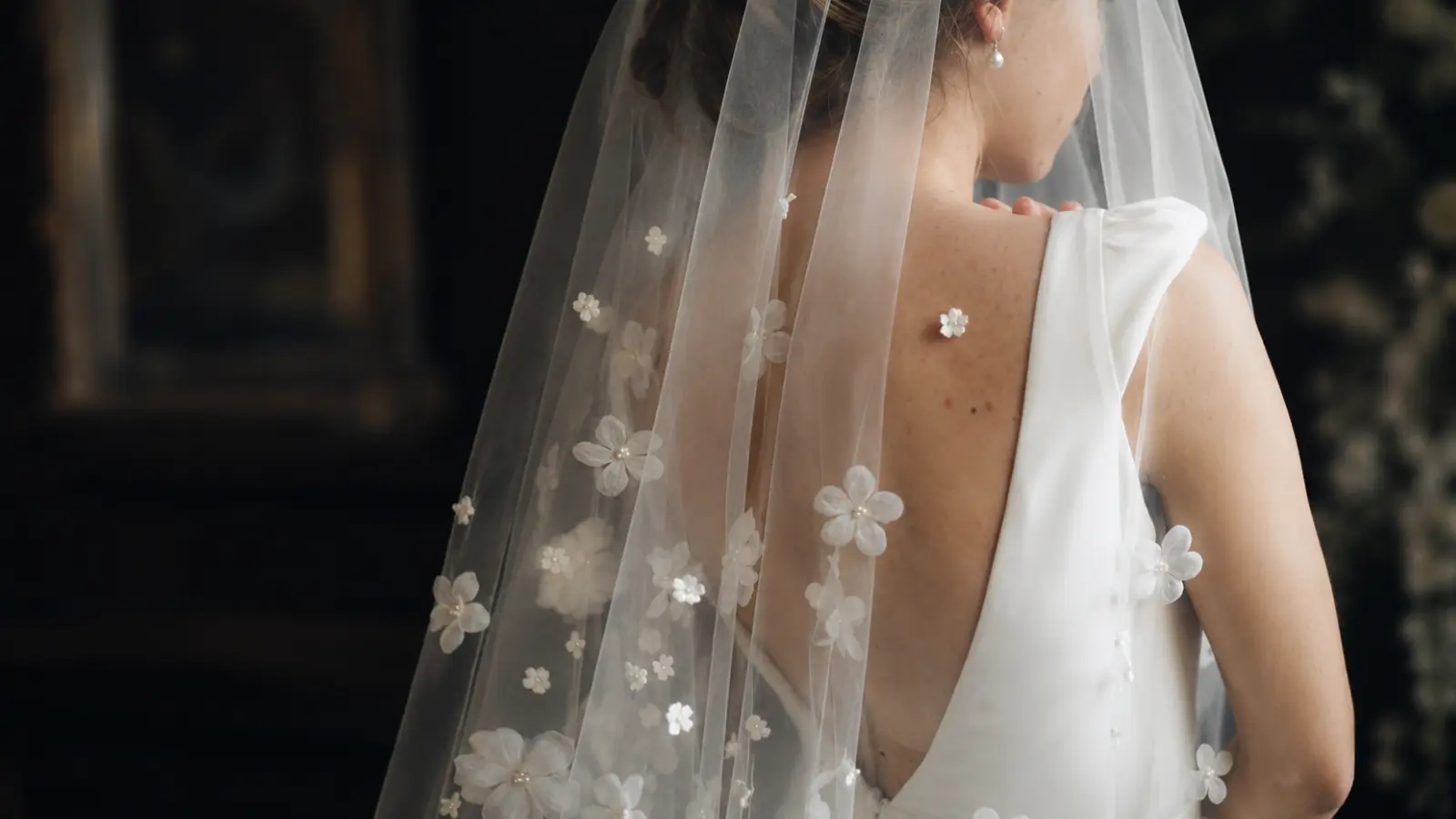
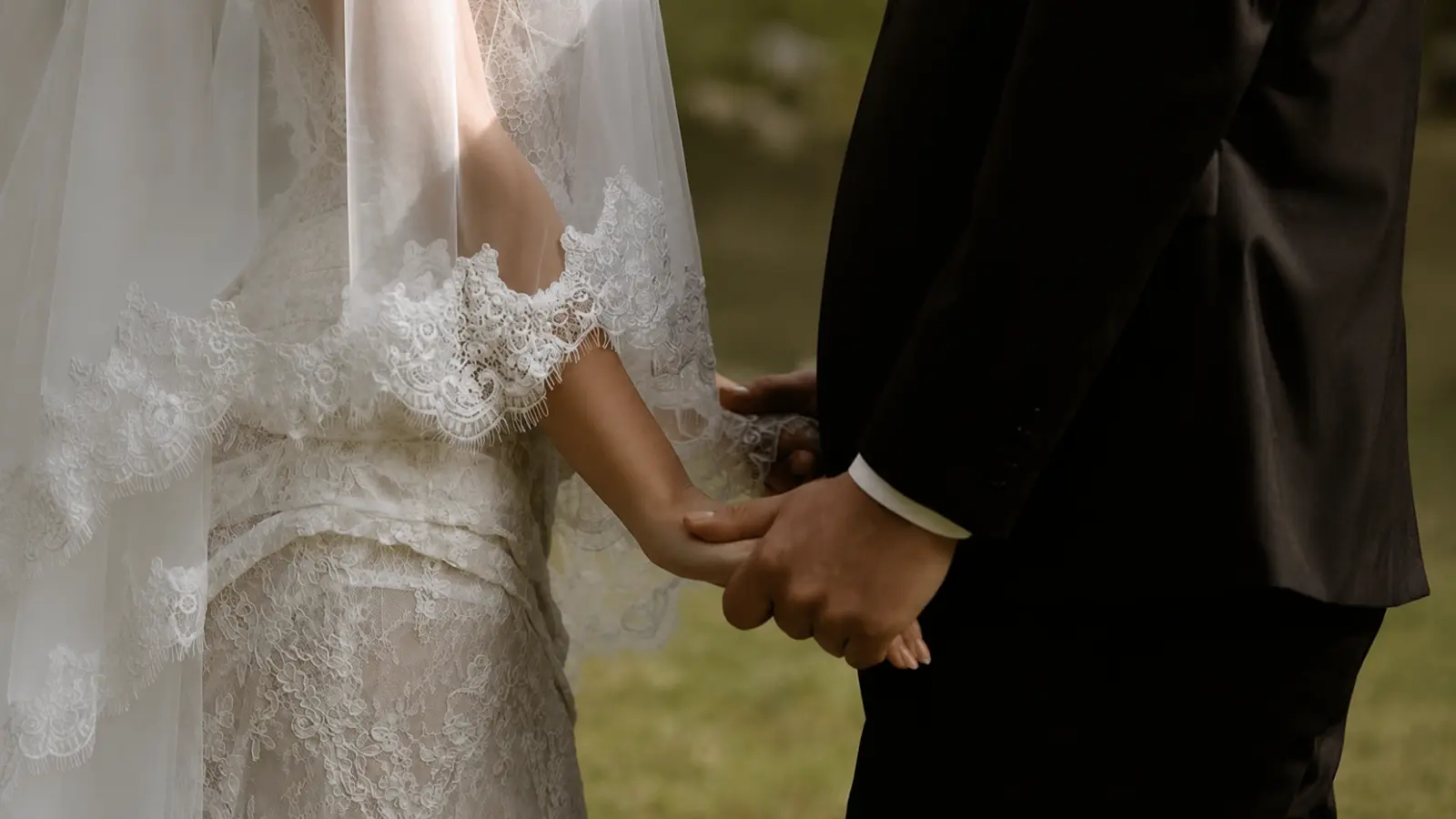
Discover the fascinating history and symbolism behind wedding veils while exploring beautiful bridal inspiration from timeless cathedral veils to modern minimalist styles. Learn how different traditions, cultures, and personal stories have shaped the meaning of the wedding veil throughout history and today.
The Meaning Is Yours to Define
A wedding veil has carried many meanings throughout history, but none of them are more important than the meaning it holds for you today. Whether you wear a veil to honor family traditions, embrace a cherished bridal moment, express your personal style, or simply because you love the way it looks, your choice is entirely your own.
Understanding the history behind the wedding veil can make the tradition even more meaningful—but it doesn’t have to define your decision. The most beautiful bridal traditions are the ones that genuinely reflect who you are and the story you want your wedding day to tell.
Frequently asked questions (FAQ)
What does a wedding veil symbolize?
Historically, wedding veils have been associated with modesty, purity, spiritual protection, social status, religious reverence, and the formal transition of a bride into marriage. Those meanings varied across cultures and periods rather than forming one universal tradition. Today, a veil may symbolize ceremony, family continuity, personal faith, transformation, or simply the bridal look a woman has chosen for herself.
Do you have to wear a veil at your wedding?
No. A wedding veil is optional in most modern ceremonies. Brides may wear one because of personal preference, family tradition, religious practice, or aesthetics, but choosing not to wear one does not make the ceremony less formal or meaningful. When a wedding belongs to a specific religious community, ask the officiant whether that congregation has any expectations regarding head coverings.
Why do brides wear wedding veils today?
Modern brides wear veils for many different reasons. Some have always imagined wearing one, some want to honor a family tradition, and others love the movement and visual impact it creates during the ceremony and in photographs. A veil can also distinguish the ceremony from the reception or carry a private spiritual meaning. It does not need to represent its historical associations unless the bride wants it to.
What is the meaning of the blusher veil?
The blusher is the shorter layer that covers the bride’s face and may be lifted at the altar. Historically, the gesture was connected with modesty, revelation, and the formal transition into marriage. In modern weddings, many couples treat it as a personal ceremonial moment rather than preserving its older meanings. Brides may also wear a two-tier veil without covering the face at all.
Is it okay to wear a veil at a second wedding?
Yes. The older etiquette idea that veils belonged only to first-time brides came from outdated associations between veils, virginity, and first marriage. Modern brides can wear any veil that feels appropriate to their ceremony, whether it is their first, second, or later marriage. Choosing a shorter or simpler style is an aesthetic preference, not an obligation.
Are wedding veils religious?
Wedding veils can carry religious meaning, but they are not exclusively religious accessories. Different Christian and Jewish traditions have used veiling in distinct ways, while many civil and nonreligious brides wear veils purely for personal or aesthetic reasons. Because practices vary among denominations and communities, couples planning a religious ceremony should confirm local customs with their officiant.
Are wedding veils outdated?
No. What has changed is not the existence of the veil but the expectation surrounding it. Veils are now treated as an intentional option rather than an automatic requirement. Brides wear traditional mantillas, modern drop veils, short birdcage styles, dramatic cathedral veils, or no veil at all. That freedom allows the accessory to feel personal rather than obligatory.