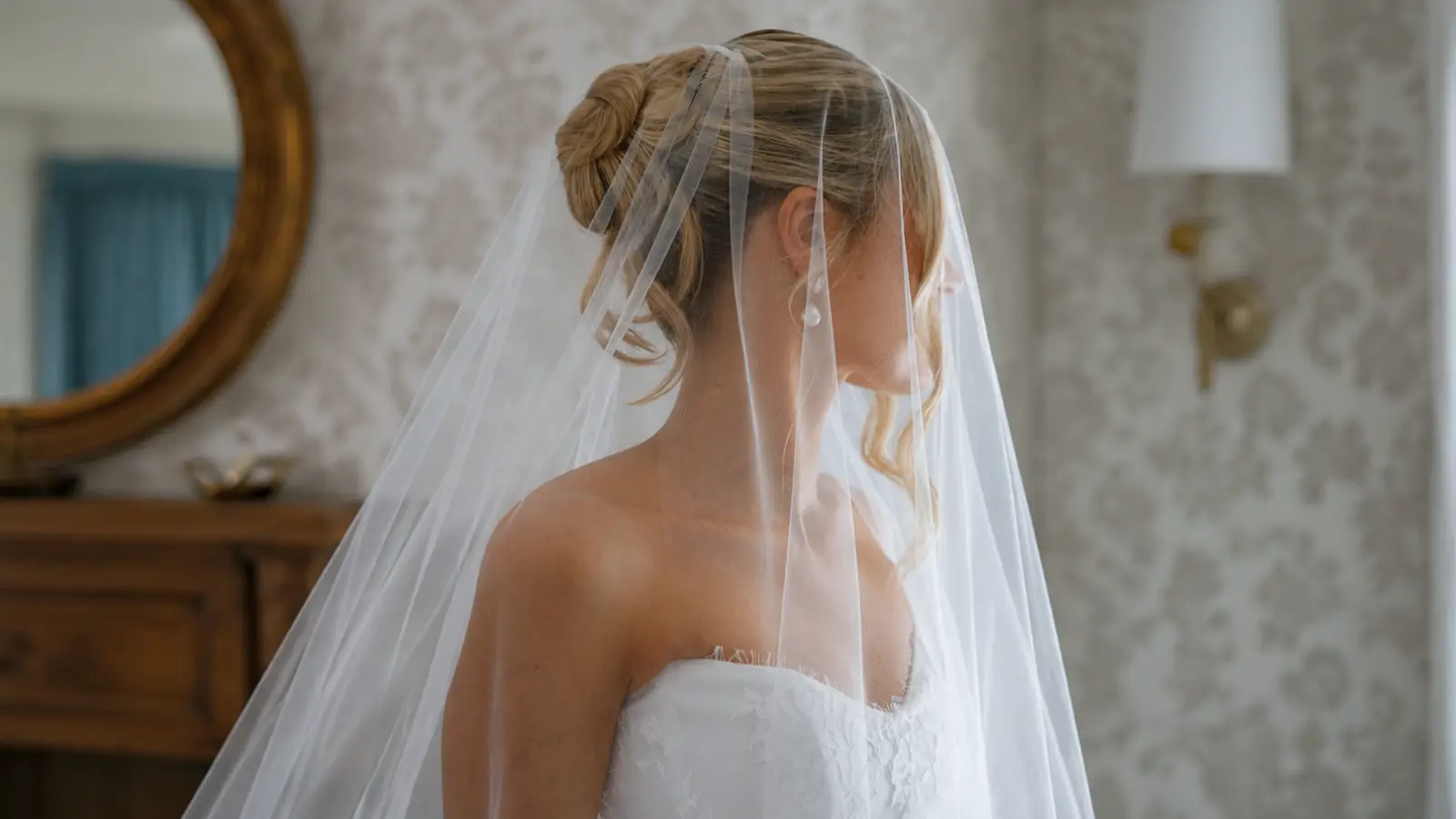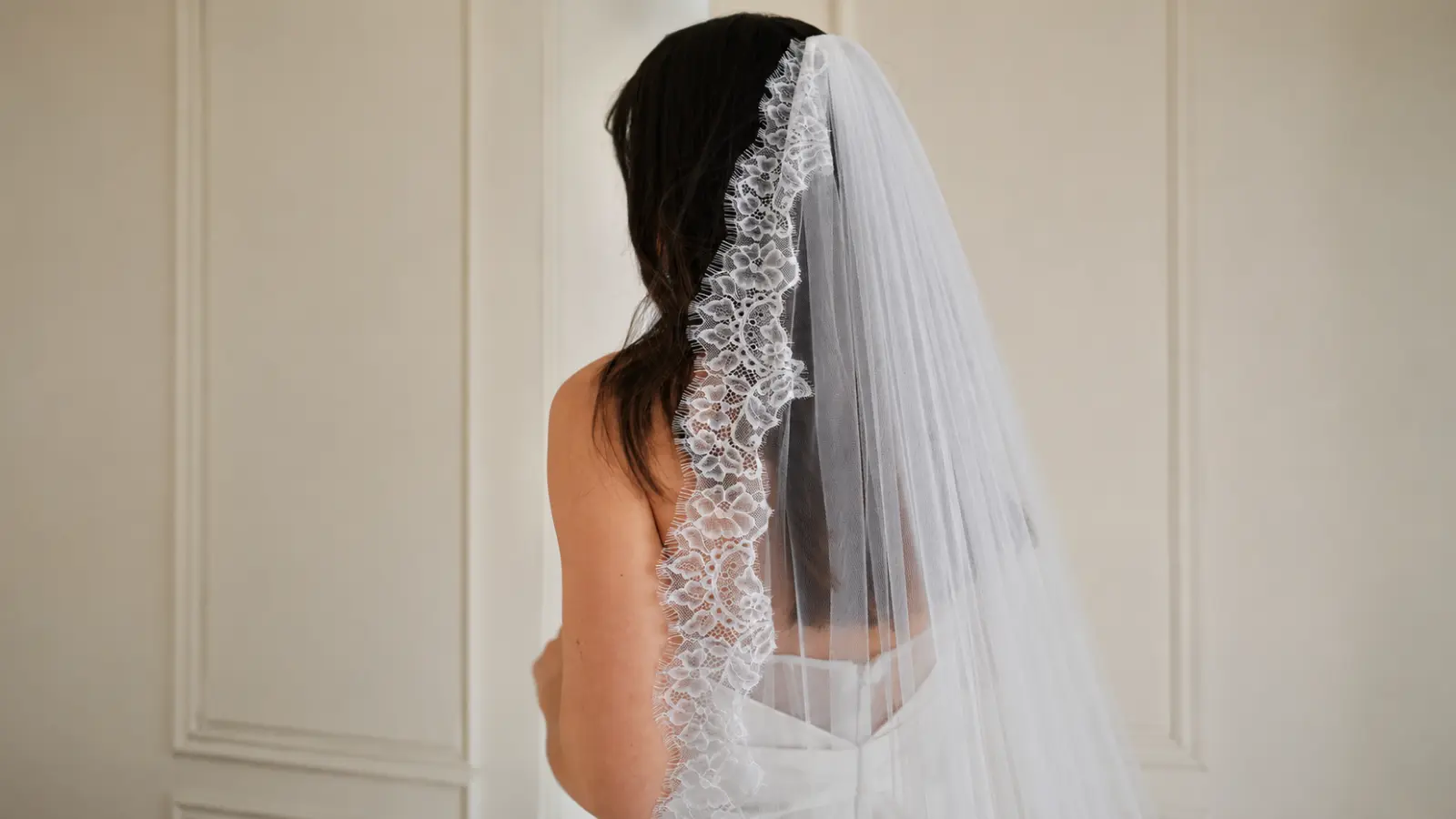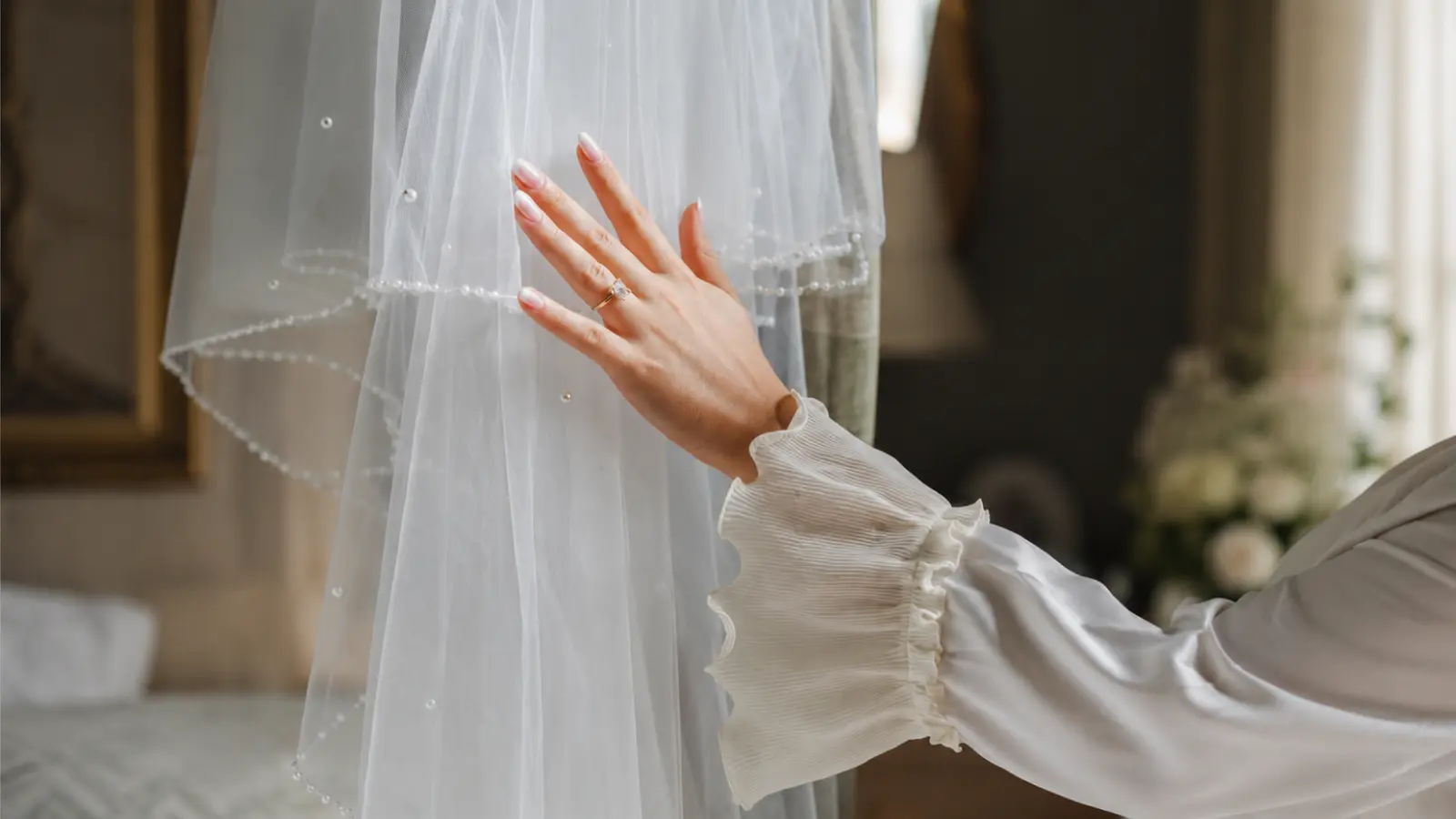
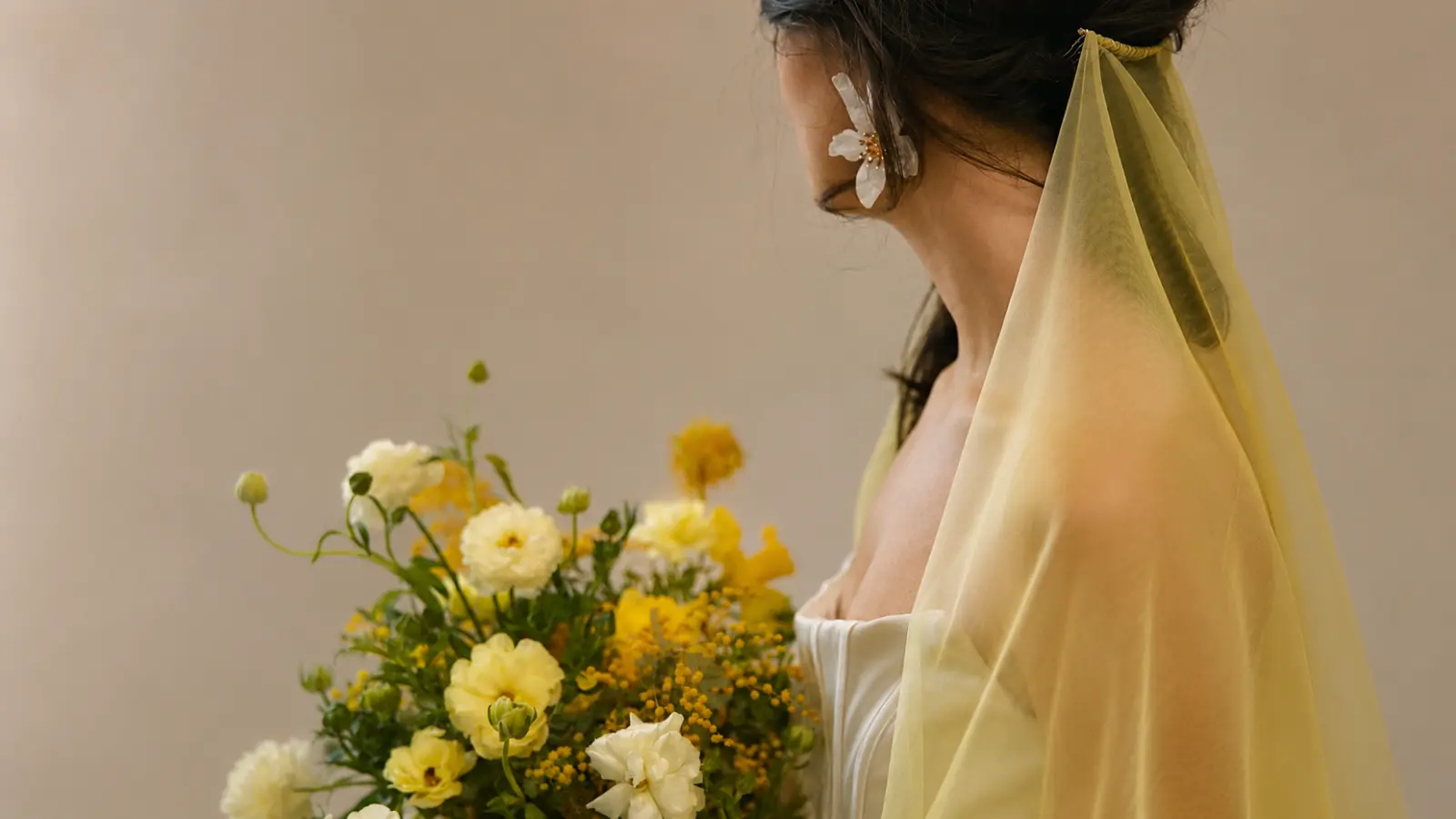
Colored wedding veils have become one of the most creative ways to personalize a bridal look while still feeling elegant and intentional. From soft blush and champagne tones to dramatic black, red, and blue veils, color can completely transform the mood of your wedding style.
The key is choosing a shade that complements your dress, venue, and overall color palette rather than competing with them. When thoughtfully styled, a colored veil becomes part of the entire bridal story instead of simply standing out.
This guide explains the most popular colored wedding veils, how each shade works with different wedding styles, and how to confidently choose the right color for your celebration.
Colored Veil Overview: What to Know Before You Choose
Before diving into individual colors, it’s worth understanding how colored veils function differently from white or ivory ones. A traditional veil works in part because it disappears into the overall bridal silhouette — it adds movement and dimension without adding another distinct color to the look. A colored veil does the opposite. It introduces a new element into the palette, which means it interacts with the dress, the florals, the setting, and even the skin tone in a way that a white veil simply doesn’t.
That interaction can be beautiful when it’s planned and awkward when it isn’t. The brides who wear colored veils most successfully tend to start with a clear sense of what the color is doing in the look — is it the accent, the focal point, or the element that ties the dress to the floral palette? — and choose accordingly. The wedding veil materials you choose also affect how deeply and naturally that color reads once the veil is worn.
A few practical notes that apply across all colored veils:
- Fabric matters more, not less. Color in a low-quality tulle reads flat and slightly costume-like. Color in quality tulle or silk tulle has depth and translucency that keeps the piece looking bridal. If you’re investing in a colored veil, the fabric is not where to cut corners.
- Try it with the dress, not separately. A colored veil that looks interesting in isolation can look completely wrong against a specific fabric or embellishment. The appointment where you try the veil with your actual dress — or with a dress in the same silhouette and fabric — is the real test.
- Length affects drama. A black elbow veil and a black cathedral veil are very different visual statements. Longer lengths amplify the color’s impact. If you want the color to be noticeable but not overwhelming, shorter lengths give you more control over the degree of drama.
With those principles in mind, here is how the most-searched colored veil options break down in practice.
Black Wedding Veil
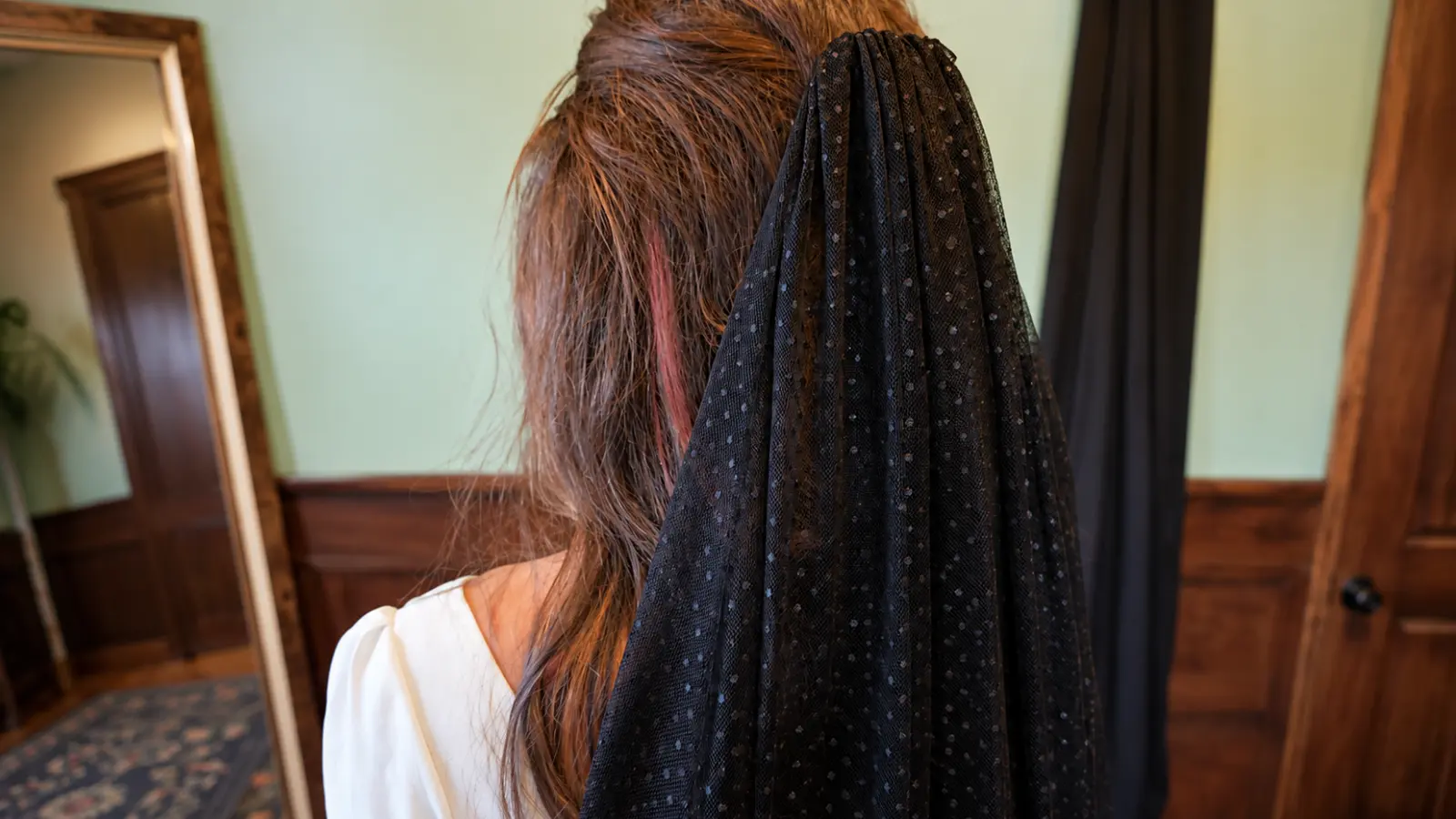
The black veil is the most frequently searched non-traditional veil color, and for good reason — it’s the most visually arresting option in the category. Against a white or ivory dress, a black veil creates graphic, high-contrast drama that reads immediately in photographs. Against a black dress, it creates a layered, tonal look that is harder to pull off but compelling when it works.
A black veil is at home in gothic and alternative weddings, dramatic evening ceremonies, and non-traditional celebrations where the bride has deliberately moved away from convention. It can also work in more contemporary settings when the rest of the look is polished — a sleek, minimalist gown with a black cathedral veil, for example, reads as editorial rather than costume when the pairing is confident.
What keeps a black veil from reading as costume is context. A black veil over a heavily embellished ballgown with black lace and a dark floral palette reads cohesively. The same veil worn with a traditional ballgown and white florals in a conventional church setting can feel disconnected from the rest of the event. The veil should fit the world the couple is creating, not just the bride’s dress.
Historically, black veils were associated with mourning in Western culture. In modern American weddings, that association has largely faded — a black veil today is read almost entirely as a style choice. That said, it’s worth being aware of the association in more traditional or religious contexts, where some guests may bring older cultural meanings to the image.
Red Wedding Veil
Red carries more cultural weight than almost any other veil color. In Chinese, Vietnamese, and South Asian bridal traditions, red is the bridal color — associated with luck, celebration, and prosperity — and a red veil or dupatta is a central part of the look. For brides incorporating those cultural traditions, a red veil is not unconventional at all; it’s the point.
For brides outside those traditions who are drawn to a red veil for its visual impact, it functions as one of the bolder choices in the colored veil category. A deep red veil over a white gown creates a strong contrast that reads dramatically in photographs. A softer, slightly muted red reads with less intensity but is easier to integrate into a broader color palette that includes florals and venue tones.
Red veils work best in weddings with a intentional color story — deep floral palettes with burgundy, wine, or cranberry tones, or darker, more atmospheric settings. In a bright, airy venue with pale florals and a white gown, a red veil can feel isolated from the rest of the visual environment rather than part of it. As with the black veil, the question isn’t whether red is appropriate but whether red belongs in the specific world of this particular wedding.
Blush and Pink Wedding Veil
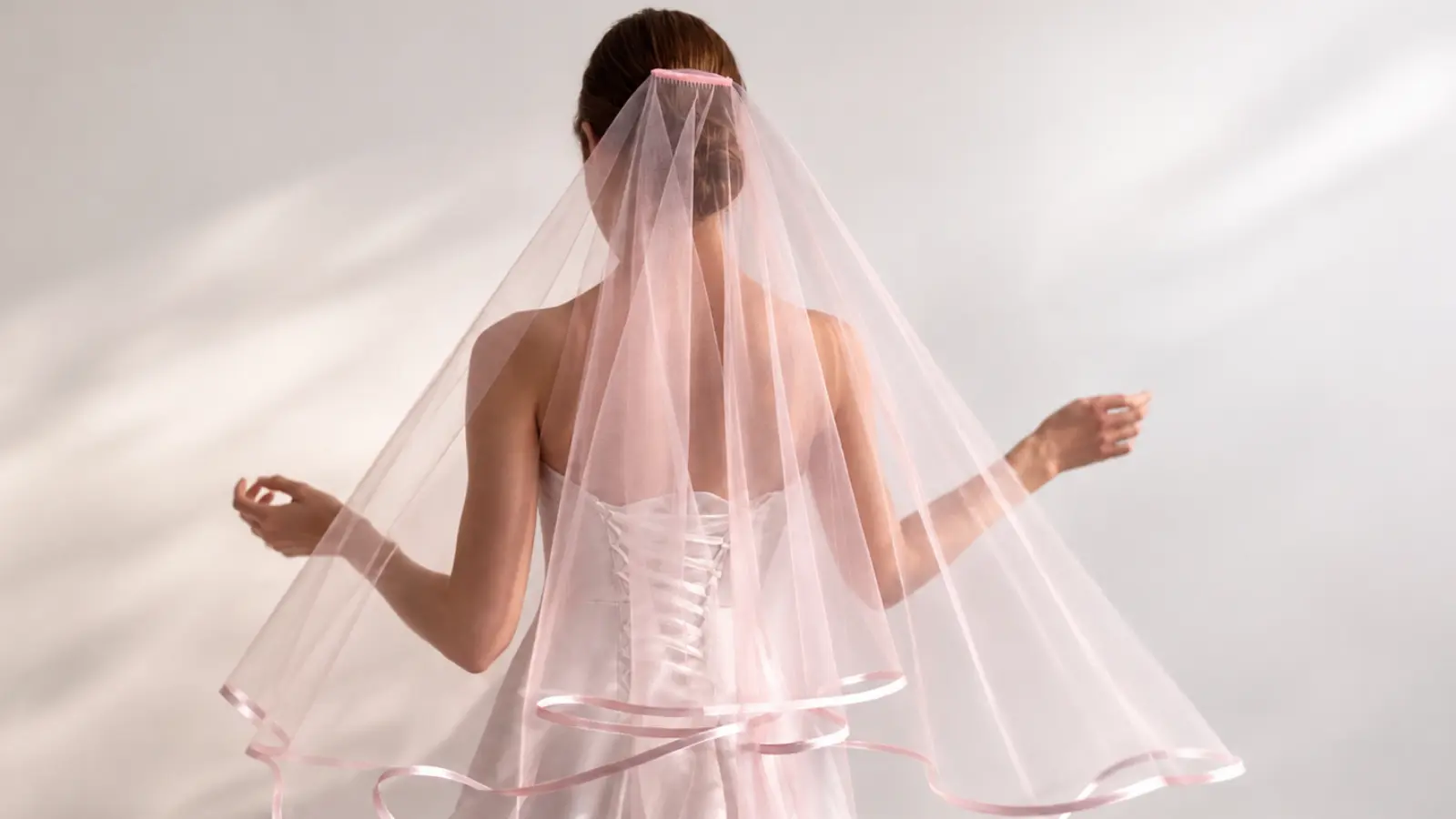
Blush is the most approachable entry point in the colored veil category, and in terms of search volume, it’s the most popular non-white option. The reason is practical: blush sits close enough to ivory and warm white that it reads as a tonal variation on the traditional veil palette rather than a departure from it. Many brides who describe themselves as wanting a “colored veil” end up in blush because it satisfies the desire for something different without requiring the rest of the look to compensate for dramatic contrast.
Blush works particularly well with white gowns, where it adds warmth and a soft rose tone that reads beautifully in natural light. With ivory gowns, finding the right wedding dress with veil combination depends on the specific tones — a pale blush and a warm ivory can clash in ways that are hard to predict without trying them together. With blush or dusty rose gowns, a veil in the same family creates a tone-on-tone look that is currently one of the more popular approaches in garden and romantic wedding aesthetics.
Deeper pinks — rose, mauve, or dusty pink — are less neutral than blush but still considerably more wearable than the bolder options. They work well in vintage, romantic, and garden wedding settings and pair naturally with floral palettes that include pink, peach, or coral tones. A deep rose veil in a floral or lace style, in particular, can be a beautiful complement to a romantic aesthetic without requiring a non-traditional wedding setting.
Blue Wedding Veil
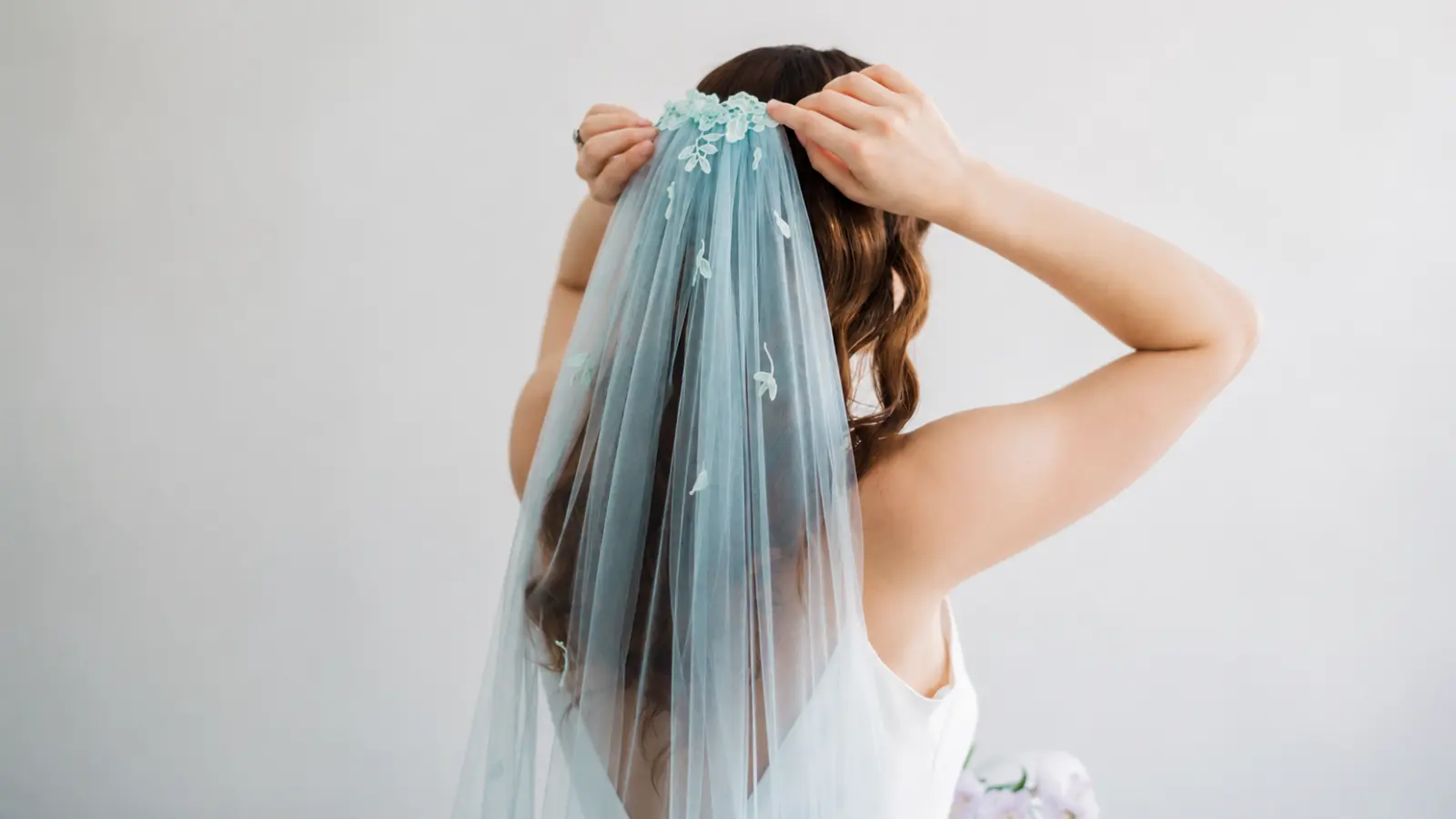
The “something blue” tradition gives blue veils a specific cultural logic that other non-traditional colors don’t have, and some brides use a blue veil as a way to honor that tradition more visibly than a blue garter or a blue ribbon inside the dress hem. It’s a meaningful connection — and it’s a more interesting visual one.
How a blue veil reads depends significantly on the specific shade. Pale blue — sky, powder, or baby blue — is soft and almost bridal in feel, particularly in outdoor or garden settings where it picks up the color of daylight. Navy reads much darker and more dramatic, closer to black in terms of contrast against a white dress. Dusty blue, a muted and gray-toned blue, has become one of the more popular non-traditional colors in weddings generally and translates well to a veil because it sits comfortably in the neutral-adjacent space.
Blue veils photograph particularly well outdoors, where the color interacts with natural light in a way that makes the translucency of the tulle more visible. For indoor ceremonies in warmer-toned spaces — candlelit, amber-lit, or with warm wood interiors — certain shades of blue can look slightly cold or disconnected from the environment. Trying the veil in a similar light condition to your venue before committing is particularly worthwhile for blue.
Gold and Champagne Wedding Veil
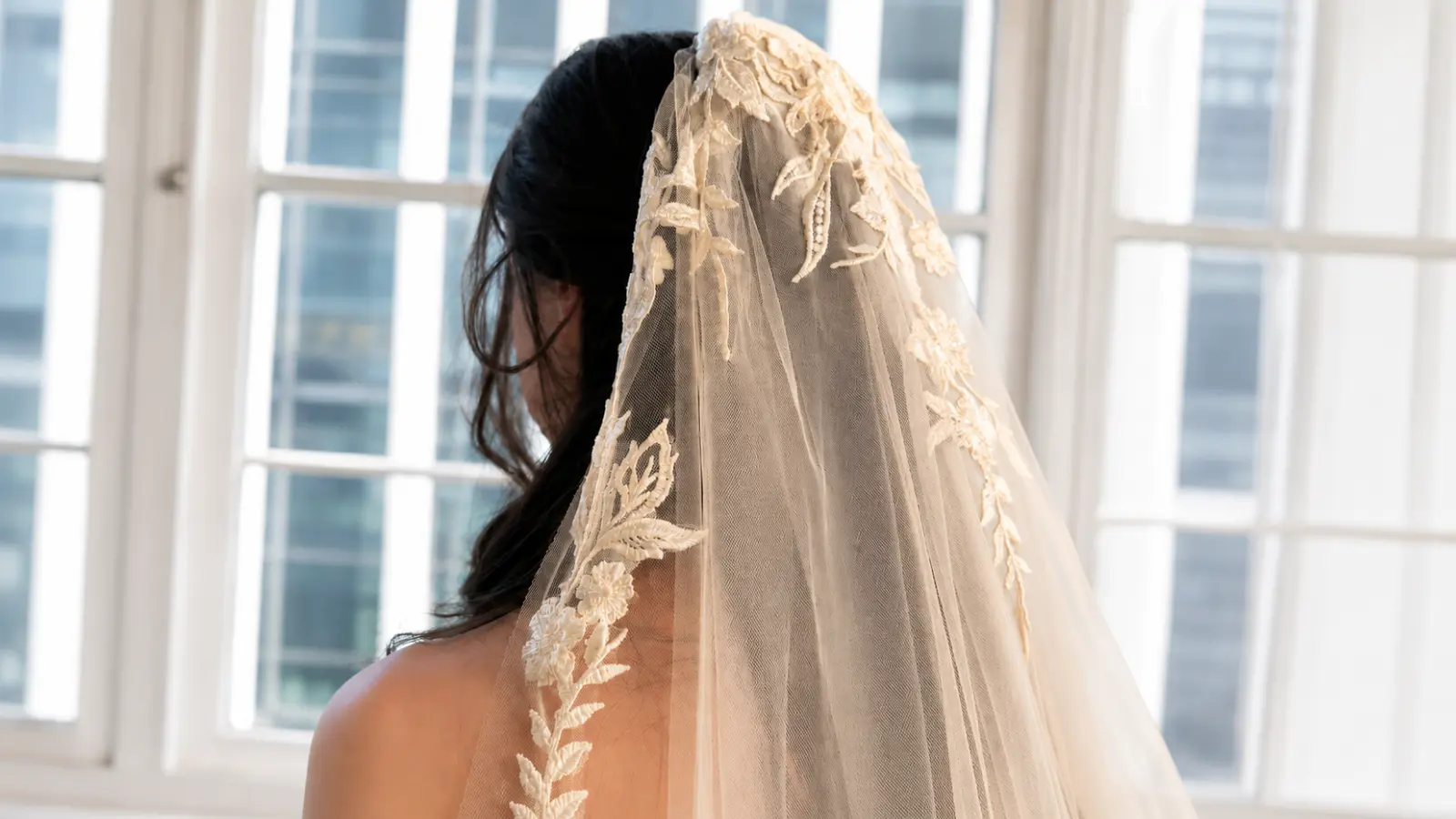
Gold and champagne occupy a specific position in the colored veil landscape: they are the options that feel most inherently bridal, even in a non-white tone. Part of this is the color family — warm golds and champagne tones sit naturally within the ivory and off-white spectrum that traditional veils already occupy. Part of it is that metallics and warm neutrals photograph with a luminosity that reads as celebratory and elevated rather than unconventional.
Champagne is the more neutral of the two — effectively a warm, slightly amber version of ivory — and works with most dress colors and fabrics. It’s particularly suited to vintage and Art Deco-inspired weddings, where the warm tone feels period-appropriate. It also pairs well with gowns in warm ivory or lightly embellished with gold beading, where the veil reads as a continuation of the dress’s palette rather than a separate color statement.
Gold veils carry more visual weight. A deeply gold veil in a metallic or slightly iridescent tulle can read very richly — formal, warm, and theatrical in the best sense. It works well in evening ceremonies, black-tie settings, and weddings with a warm, jewel-toned color palette. As with all metallic-adjacent colors, the key is that the veil’s warmth matches the warmth of the broader look rather than conflicting with cooler or more neutral tones in the dress.
Green, Purple, and Other Colors
Beyond the most commonly searched options, a small number of other veil colors appear in non-traditional and alternative weddings. Green veils — particularly in soft sage or dusty olive tones — are a natural fit for garden, botanical, and earthy wedding aesthetics and pair well with floral palettes that include greenery as a dominant element. Deeper forest greens are more dramatic and work in moody, atmospheric settings.
Purple and lavender veils are less common but follow similar logic: pale lavender reads softly and romantically; deep violet or plum reads more dramatically and works in jewel-toned palettes alongside burgundy, navy, or deep floral arrangements. Both tend to photograph best in outdoor natural light, where the translucency of the tulle allows the color to read with depth rather than flatly.
For any of these less-common colors, the same principle applies: the veil color should belong in the broader color story of the wedding, not exist in isolation as a single unexpected element. A sage green veil in a botanical garden wedding with greenery-forward florals is cohesive. The same veil at a minimalist white-and-gold wedding reads as an outlier.
Veil Color Guide: Best For and Styling Warnings
This table is a practical reference for the most common colored veil options, covering which wedding styles and settings each color suits and where the specific styling risks tend to appear. Use it as a starting point, not a final answer — color, wedding veil length, dress, venue, and palette all influence how dramatic the finished look feels.
| Veil Color | Best For | Styling Warning |
|---|---|---|
| Black | Gothic, alternative, dramatic evening ceremonies; high-contrast editorial looks | Can read as costume if not paired with a deliberate, cohesive look; check venue and cultural context |
| Red | Cultural weddings (Chinese, Vietnamese, South Asian traditions); bold non-traditional ceremonies; deep floral palettes | Isolated in pale, airy settings; can overpower soft or neutral palettes |
| Blush | Garden weddings, spring and summer ceremonies, romantic and soft aesthetics; tone-on-tone with blush gowns | Blush and warm ivory can clash depending on specific tones — always try together |
| Pink (deeper) | Vintage, romantic, and garden settings; floral palettes with pink, peach, or coral tones | Can read as playful rather than bridal if the tone is too bright or saturated |
| Blue (pale) | Outdoor and garden ceremonies; “something blue” tradition; soft, romantic aesthetics | Can look cold in warm-toned interior settings; shade selection matters significantly |
| Dusty blue | Most settings; particularly natural and relaxed wedding aesthetics; pairs well with dusty, muted palettes | Can photograph gray in low or warm light — check in similar lighting conditions |
| Navy | Dramatic ceremonies; formal or evening settings; dark floral palettes | High contrast against white; reads closer to black at a distance — consider whether that’s the intention |
| Champagne | Vintage and Art Deco weddings; warm ivory gowns; gowns with gold embellishment | Can clash with cool white dresses — works best with warm-toned gowns |
| Gold | Evening and black-tie ceremonies; jewel-toned palettes; formal and theatrical settings | Can overwhelm simple or minimalist gowns; works best when the dress also has warm or metallic detail |
| Sage / Olive green | Garden, botanical, and earthy weddings; greenery-forward floral palettes | Can feel disconnected in settings with no green in the broader palette |
| Lavender / Purple | Soft romantic settings; jewel-toned palettes; outdoor natural light | Can read flat in warm interior light — photographs best outdoors |
The consistent thread across all of these is that no colored veil exists in isolation. The color that reads beautifully in one context can read jarring in another. If you’re unsure, the safest test is always to evaluate the veil in a setting as close as possible to your actual venue lighting.
How to Keep a Colored Veil Bridal
The concern most brides have with a colored veil is the same one that follows simple veils in a different direction: will this look intentional, or will it look like I made the wrong choice? For colored veils, the specific version of that concern is usually: will this look bridal, or will it look like a costume?
The distinction is almost always about cohesion. A colored veil that belongs in the look reads as bridal because it feels like it was considered. A colored veil that appears disconnected from the dress, the palette, and the setting reads as a departure — something added rather than something chosen.
A few things that consistently help:
- Echo the color somewhere else in the look. A blush veil with a blush ribbon in the bouquet, or a dusty blue veil with blue florals in the arrangement, reads as a deliberate palette decision rather than an accident. The veil doesn’t need to match exactly — it needs to belong to the same color world.
- Keep the rest of the look clean when the veil is bold. A black or red veil carries significant visual weight. If the dress is also heavily embellished and the jewelry is statement-level, the veil can tip the look from intentional to overwhelming. The bolder the veil color, the more restraint is useful elsewhere.
- Match the veil’s formality to the event’s formality. A deeply colored veil in a dramatic length reads bridal in a setting that supports that kind of formality — a grand venue, a candlelit church, a styled evening ceremony. The same veil in a casual outdoor backyard setting can feel out of proportion with the environment.
- Choose fabric that holds color well. Some tulle fabrics carry color with depth and translucency; others look flat and synthetic. Seeing the colored fabric in person — or requesting a fabric swatch — before committing is particularly worthwhile with non-standard colors, where the rendering varies significantly between fabrics.
A colored veil keeps its bridal quality when it reads as a decision made about the whole look, not a single accessory that stands apart from everything else.
Colored Veil as a Second Look
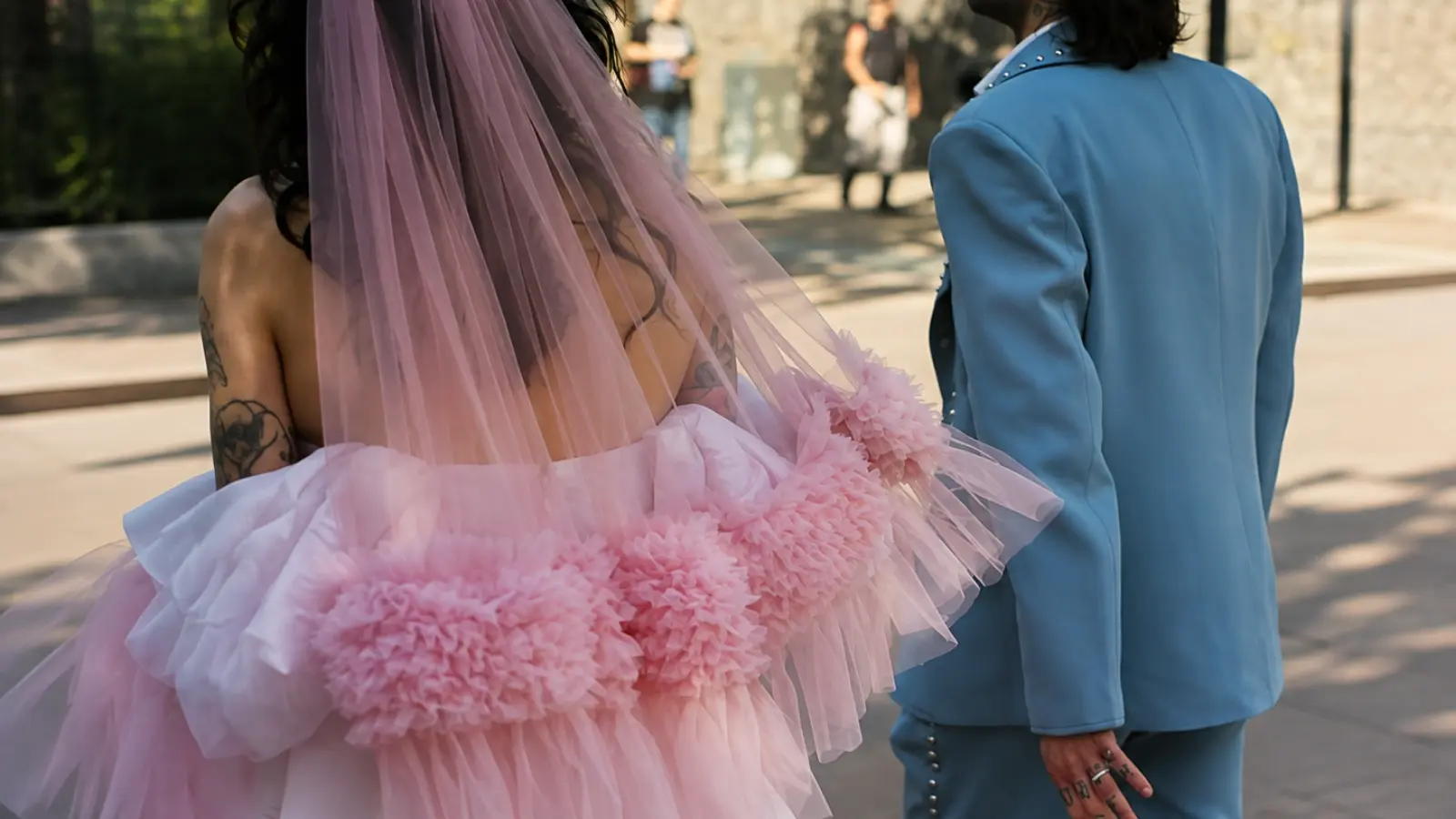
One of the most practical and increasingly popular uses of a colored veil is as a reception second look. The idea is simple: the bride wears a traditional white or ivory veil for the ceremony and ceremony portraits, then switches to a colored veil — often shorter and more playful — for the reception entrance or first dance.
This approach gives you the best of both aesthetics without requiring the colored veil to carry the entire wedding day. The ceremony photographs have the traditional bridal look; the reception photographs have something unexpected and personal. The switch also works logistically — a shorter colored veil for the reception is easier to manage during dinner and dancing than a cathedral-length one in any color.
For a second-look colored veil, length matters more than it does for a ceremony veil. Short wedding veils at elbow length or above tend to work best because they read as deliberate and spirited rather than as a full-scale bridal accessory. A blusher or short single-tier veil in a bold color — red, black, or a jewel tone — creates a strong visual moment at the reception entrance without the logistical challenges of a longer veil in a dramatic color.
If you’re considering this approach, plan for the removal of the first veil and the addition of the second in your getting-ready timeline. Knowing how to wear a wedding veil and remove it cleanly makes the change much easier, especially when one specific person — your maid of honor or coordinator — is responsible for helping.
What to Avoid
Colored veils have a specific set of pitfalls that are worth knowing before you fall in love with something in a salon. Most of them come down to the gap between how a colored veil looks in isolation and how it reads in the context of a full look and a specific setting.
- Choosing a color that doesn’t appear anywhere else in the wedding’s palette. A colored veil that has no relationship to the florals, the venue, the dress detail, or any other element in the look reads as a standalone statement — which works if that’s the intention, but often reads as an outlier rather than a considered choice. Before committing to a color, ask where else that color appears in the wedding.
- Trying the veil without the dress. The color combination of veil and dress is more complex than it looks on a hanger. Certain shades clash in ways that are invisible until you see them together in the same light. A blush veil and a warm ivory gown, for example, can read as mismatched in a way that neither color alone predicts. Always evaluate the combination together.
- Going long in a bold color without thinking through the logistics. A red cathedral veil is a significant undertaking. It requires someone to arrange it before the processional, it needs to be stored carefully at the reception, and it creates strong color contrast in every photograph taken from behind during the ceremony. All of those things can be wonderful — if they’re planned for. They become problems if the decision was made without thinking them through.
- Choosing a color for trend rather than for the look. Colored veils go through cycles of fashion, and what reads as fresh in one season can feel dated several years later in photographs. The most reliable guide is whether the color makes sense for this specific dress, this specific wedding, and this specific bride — not whether it is currently appearing frequently on editorial boards.
Avoiding these mistakes doesn’t mean playing it safe. It means making the bold choice with enough information that it reads as intentional rather than impulsive. A black cathedral veil worn with full confidence in a setting built for it is one of the most striking things a bride can wear. The same veil worn as an afterthought in an incompatible setting is a very different image.
Colored Wedding Veil Inspiration
Discover beautiful colored wedding veil inspiration featuring black, blush, champagne, blue, red, and other unique bridal veil colors. Explore romantic, modern, gothic, and editorial wedding looks to find the perfect colored veil for your personal style.
Is a Colored Wedding Veil Right for You?
A colored wedding veil is more than a trend—it’s an opportunity to express your personality while creating a bridal look that feels intentional and memorable. Whether you prefer the subtle warmth of champagne, the romance of blush, or the bold statement of black or red, the right color should enhance the entire wedding aesthetic rather than stand apart from it.
When your veil complements your dress, venue, flowers, and overall styling, color becomes a natural extension of your bridal vision. The most beautiful colored veils aren’t chosen simply because they’re different—they’re chosen because they tell your story.
Frequently asked questions (FAQ)
How do you keep a colored wedding veil looking bridal?
A colored wedding veil looks bridal when it feels like part of the overall wedding design rather than an isolated statement. The veil should complement the dress, floral palette, venue, and accessories, creating a cohesive look instead of drawing attention on its own.
Are colored wedding veils acceptable for a traditional ceremony?
Yes, depending on the color. Soft shades like blush and champagne are widely accepted because they stay close to the traditional ivory palette. Bolder colors such as black or red can also work, especially when they suit the venue, wedding style, and overall aesthetic.
Can I wear a colored veil with a white wedding dress?
Absolutely. A white gown provides a neutral backdrop that allows the veil color to stand out beautifully. Soft colors create subtle contrast, while darker shades like black or red create a dramatic editorial effect when used intentionally.
What is the easiest colored wedding veil to wear?
Blush is generally the easiest color because it feels like a natural extension of traditional bridal tones. Champagne is another versatile option, offering warmth and elegance without feeling dramatically different from ivory.
What does a black wedding veil mean?
Today, a black wedding veil is primarily a fashion statement rather than a symbol. While it historically had associations with mourning in some cultures, modern brides typically wear it to create a bold, dramatic, or alternative bridal look.
Can a colored veil work as a reception second look?
Yes. Many brides wear a traditional ivory or white veil during the ceremony and change to a colored veil for the reception. This creates a fresh visual transition while keeping the ceremony photographs more traditional.
Which colored wedding veil photographs best?
Every color photographs differently depending on lighting. Blush and champagne create soft, romantic images, while black, red, and jewel tones produce stronger contrast and dramatic editorial photographs. Viewing the veil under lighting similar to your venue is the best way to judge its final appearance.