A DIY Wedding Seating Chart does not need to be complicated to look polished. The best display is easy to read, simple to update, practical to transport, and clear enough that guests can find their table without creating a crowd at the reception entrance.
Printed boards, framed lists, individual cards, mirrors, and hanging displays can all work, but each format handles revisions, setup, transport, and readability differently. The cheapest option is not always the one with the lowest material cost if one last-minute change forces you to rebuild or reprint the entire display.
This DIY Wedding Seating Chart guide compares affordable display ideas by readability, update flexibility, transportation, setup, and guest lookup speed so you can choose a format that looks intentional without turning the project into an unnecessary craft challenge.
Start With Function Before Style
The display has one operational job: help every guest find a table assignment quickly.
Before choosing materials, decide where the chart will stand, how many people may approach it at once, whether the list is alphabetical or by table, and how likely the seating plan is to change close to the wedding.
A display that is beautiful but hard to update or impossible to read from a comfortable distance creates more stress than value.
The design should support the guest flow, not compete with it.
DIY Seating Chart Displays Compared
The table below compares common DIY formats by relative cost, update ease, transportation, and readability. Cost is intentionally described in broad terms because materials, printing, and local vendors vary.
| Display | Cost | Update Ease | Transport | Readability |
|---|---|---|---|---|
| Printed Board / Poster | Low to moderate | Low after printing | Easy if lightweight | High with good type size |
| Framed Lists | Low to moderate | High by replacing one sheet | Moderate | High when panels are clear |
| Individual Cards | Low to moderate | Very high | Easy if packed carefully | High with organized layout |
| Mirror | Varies | Low to moderate | Difficult and fragile | Can be reduced by glare |
| Hanging Panels / Cards | Low to moderate | High | Moderate | High if stable and spaced well |
The cheapest display is not necessarily the one with the lowest material cost; it is the one that does not force a full reprint or rebuild after a small change.
Printed Board or Poster
A wedding seating chart poster is one of the simplest DIY formats because the entire list can be designed digitally and printed as one piece.
This works well when the seating chart is already stable and the venue has an easel, wall, or stand that can support the finished board. A lightweight mounted print is usually easier to transport than a heavy decorative surface.
The main drawback is revision. Once printed, one changed table assignment can require a new print unless you are comfortable adding a small correction that still looks intentional.
A wedding seating plan poster is strongest when the guest list is nearly final before production.
Framed Lists
Several frames can be easier to update than one large board because each frame can hold one alphabetical range or group of tables.
If a late change only affects one section, you replace one printed sheet instead of reprinting the entire display. Frames also give you flexibility in how the list is spread across a table or wall.
The tradeoff is setup time. Multiple frames need to stay aligned, visible, and stable, and glass can create glare depending on lighting.
For a DIY project, modularity is the real advantage.
Individual Cards
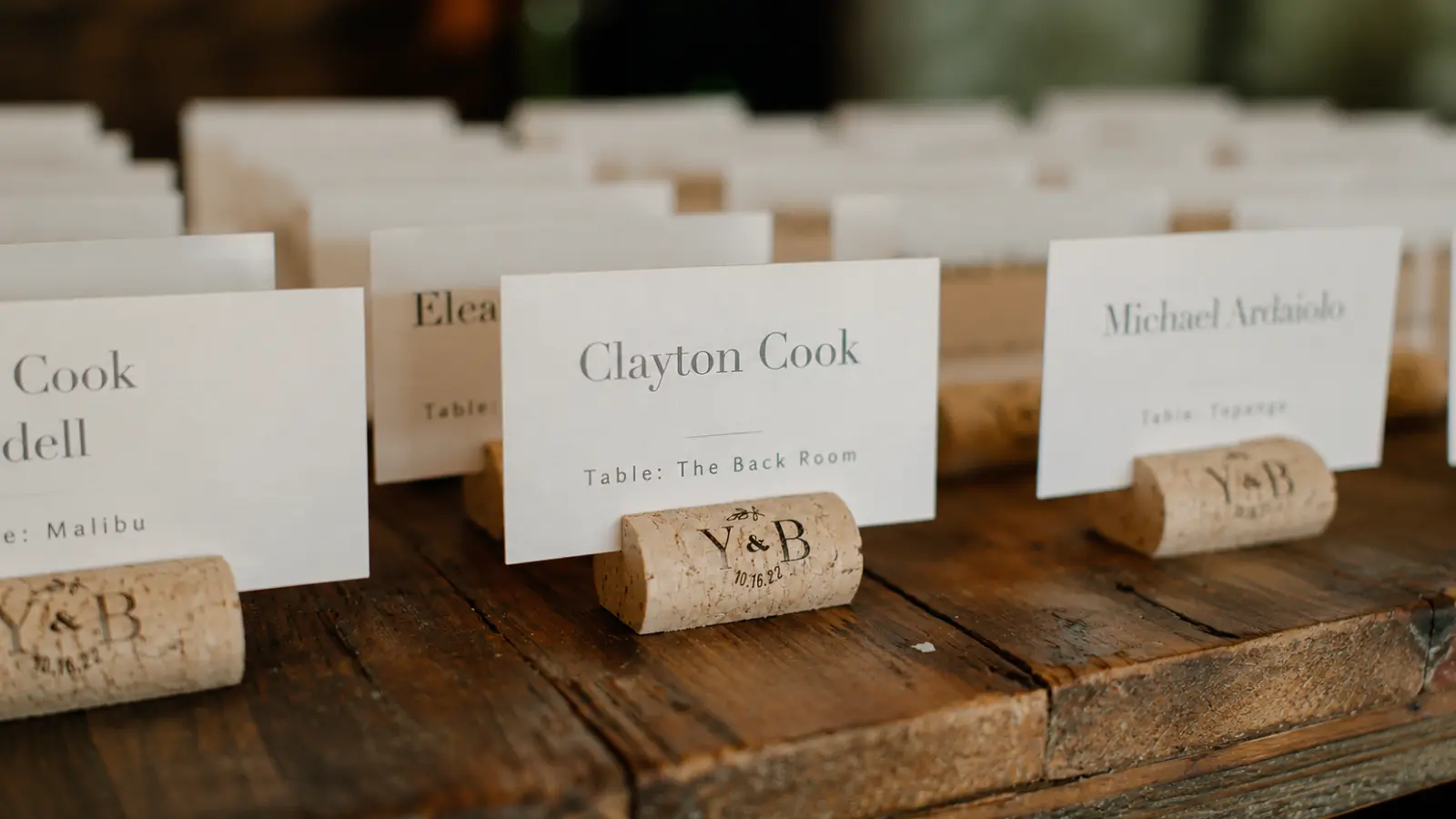
Individual cards are one of the easiest formats to update because each name or household can be changed without touching the rest of the display.
They can be arranged alphabetically on a board, shelf, table, clip system, or another simple holder. This format also works well when the cards double as escort cards that guests physically take with them.
The risk is disorder. If cards are not anchored or arranged clearly, guests can move them, wind can shift them outdoors, or the alphabetical sequence can become harder to scan.
Use cards when update flexibility matters more than having one continuous graphic surface.
Mirror Seating Charts
Mirror seating charts can look polished, but they are less forgiving than printed formats.
Reflections, venue lighting, fingerprints, and glare can reduce readability. Large mirrors can also be heavy or fragile, and hand-written updates may be difficult to execute cleanly once the final list is in place.
If you already own or can easily transport a suitable mirror, it can be a reasonable DIY option. If you would need to buy, move, protect, and letter a large mirror only for this purpose, the project may stop being low-cost or low-stress.
The mirror should earn its place through practicality, not just appearance.
Hanging Seating Displays
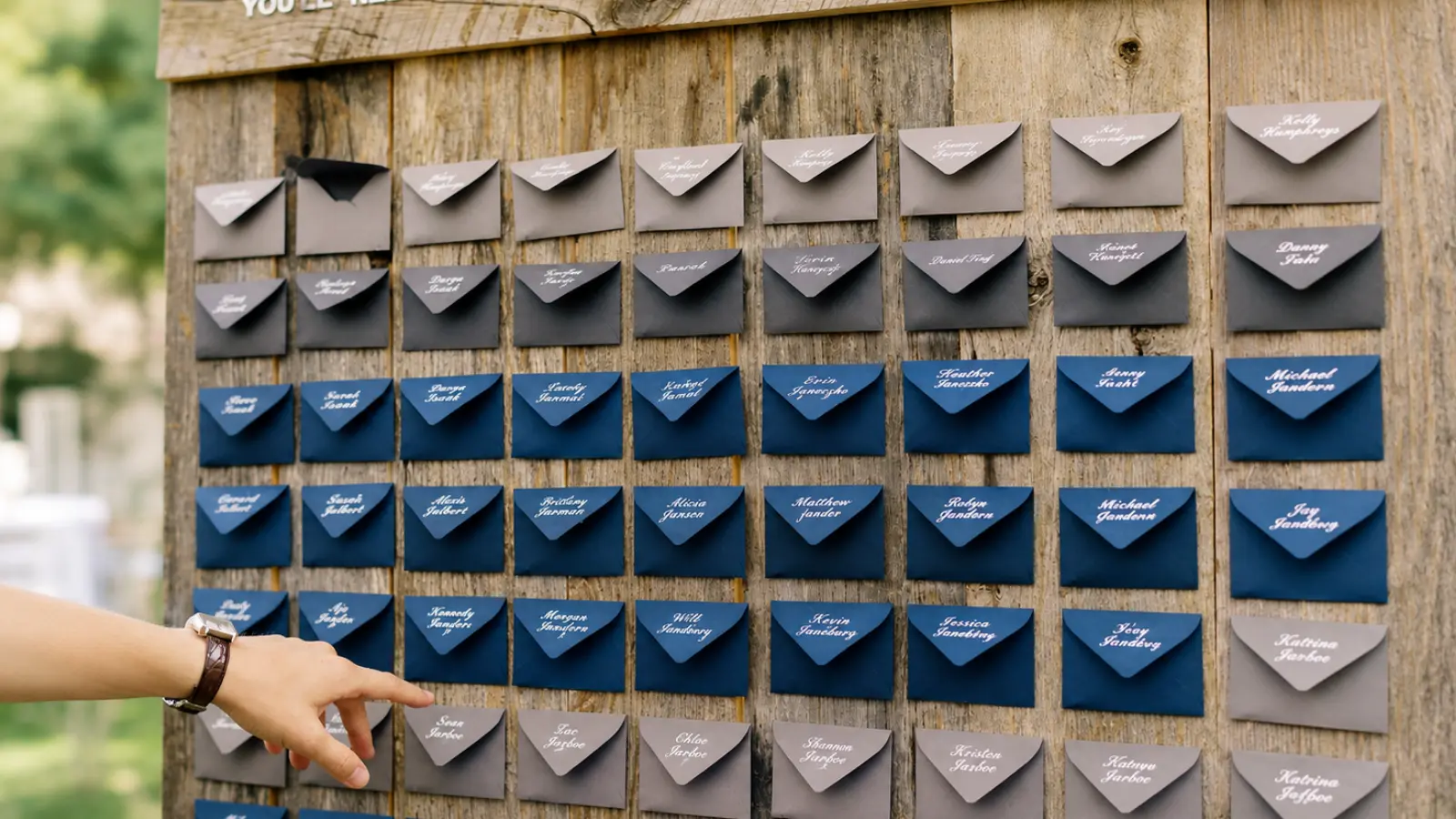
Hanging formats can create a light visual footprint while keeping names in separate, replaceable pieces.
Cards or small printed panels can hang from a simple frame, rail, grid, or other stable support. The modular structure makes last-minute updates easier than reprinting one large board.
Stability is the main concern. The display should not swing, twist, or become difficult to read when guests touch it or when used outdoors.
A hanging system works best when each piece stays aligned and visible from the front.
How to Keep the Display Low-Cost
Low-cost seating charts usually save money by simplifying materials and avoiding unnecessary rework.
Good cost-control choices include:
- Use standard print sizes: easier to source than custom-cut materials.
- Borrow or reuse frames and easels: avoid buying support pieces that are only needed once.
- Choose replaceable paper inserts: one changed panel is cheaper than one fully reprinted board.
- Keep embellishments minimal: the guest list itself should remain the visual priority.
- Design digitally first: catch spelling and table-number errors before anything is printed.
A cheap DIY wedding seating chart succeeds when the savings do not create extra setup risk or unreadable results.
Use Alphabetical Order When Speed Matters
Alphabetical order is usually the fastest lookup method when the guest list is medium or large.
Guests know their names; they may not know their table number. An alphabetical display lets them go directly to the correct section instead of scanning every table group.
For small weddings, by-table organization can still work well because there are fewer groups to scan.
The dedicated alphabetical vs. by-table guide goes deeper into display order; the important DIY principle is to choose the method that keeps people moving.
Choose Font Size for Real Viewing Distance
The right font size is the one guests can read comfortably without standing inches from the display.
Do not decide type size only by how it looks on a laptop screen. Print a sample at actual size and view it from the distance guests will naturally stand.
Long guest lists often tempt couples to shrink the text so everything fits on one board. That can save space but create a crowd because every guest has to move closer and search longer.
If the list becomes too dense, use more panels rather than sacrificing readability.
Plan Transport and Setup Before the Wedding Day
A DIY display should be designed for the trip to the venue as carefully as for the final look.
Check whether the finished piece fits in the vehicle, whether frames or mirrors need protection, whether hanging parts need assembly, and what stand, easel, hooks, or table space the venue provides.
Pack a small update kit with the tools the format actually needs: spare printed cards, removable adhesive, clips, tape, or a backup list. Avoid bringing an entire craft box for a display that should already be finished.
The easiest setup is the one that arrives organized, assembles quickly, and still matches the final master seating chart.
Make the Display Easy to Read, Update and Set Up
A DIY Wedding Seating Chart works best when function controls the design. Choose a format guests can scan quickly, keep the text readable at a natural viewing distance, and avoid materials that become expensive or difficult to revise after one table assignment changes.
Plan transportation and venue setup before the project is finished, especially for mirrors, frames, hanging pieces, or oversized boards. The most successful DIY display is not necessarily the most elaborate one — it is the one that arrives intact, matches the final seating plan, and helps guests find their tables without having to think about how the system works.
Frequently asked questions (FAQ)
What is the best DIY wedding seating chart idea?
The best DIY option is the one that matches how stable your seating assignments are and how easily the display can be updated. A printed board or poster works well when the plan is nearly final, while framed lists, individual cards, or hanging panels are better when late changes are still possible. Prioritize readability, transport, setup, and update flexibility before decorative complexity.
What is the easiest DIY wedding seating chart to make?
A printed board or poster is usually one of the simplest options because the full list can be designed digitally and printed as one piece. It works best when assignments are already stable. If you expect last-minute changes, framed lists or modular cards may be easier because only the affected section needs to be replaced.
What is the cheapest way to make a wedding seating chart?
Use standard-size prints, simple digital layouts, and borrowed or already-owned frames, easels, or display supports. Modular paper inserts can also save money because a late change does not require reprinting the entire seating chart. The lowest-cost option is usually the one that minimizes both materials and rework.
Is a mirror seating chart a good DIY option?
It can be if you already have an appropriate mirror and can transport it safely. Consider glare, reflections, fingerprints, weight, breakage risk, and how easily names or table assignments can be changed. If the mirror requires expensive purchase, lettering, or difficult transport, a printed or modular format may be more practical.
Should a DIY wedding seating chart be alphabetical?
Alphabetical order is usually the easiest for medium and large guest lists because guests can search directly for their own names. A by-table arrangement can still work well for smaller weddings with fewer tables. Choose the structure that lets guests find their assignment quickly without creating a crowd around the display.
How large should the text be on a wedding seating chart?
Use text that guests can read comfortably from the distance they will naturally stand. Print a sample at actual size and test it physically rather than judging the type only on a computer screen. If the names become too small to fit on one board, use additional panels instead of sacrificing readability.

About the Author
Débora Justo
Founder and editor of EVORÉ, creating practical wedding planning resources, thoughtful inspiration and useful tools for the decisions that shape a celebration.
Read more about the author →