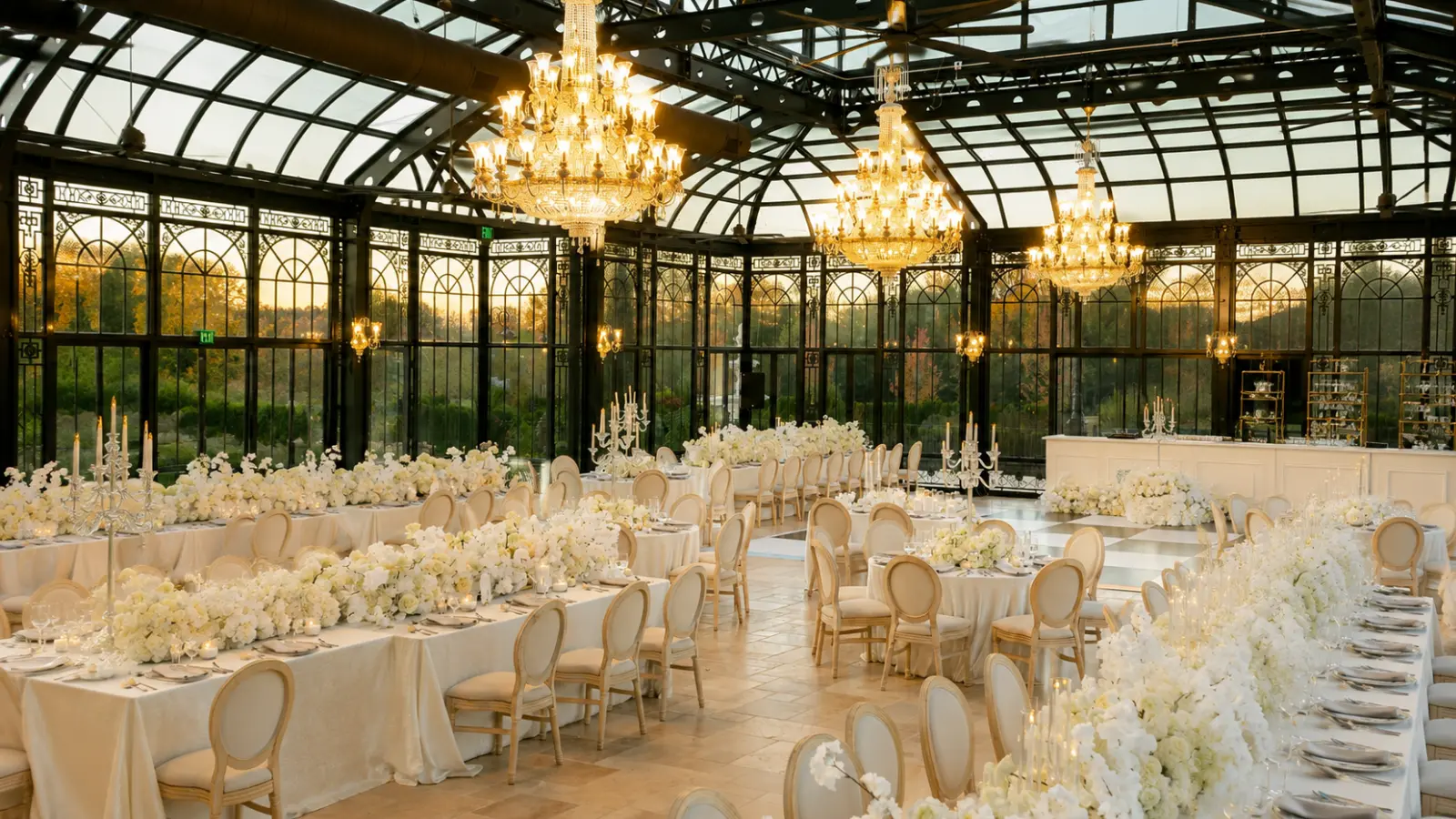
Learning how to plan a luxury wedding is less about adding expensive details and more about coordinating a higher level of production, service, customization, and guest experience. The celebration may involve a venue buyout, a multi-day program, custom-built installations, premium creative teams, private transportation, hospitality staff, and tightly managed transitions across several spaces or events.
That added complexity changes the planning process. A high-end wedding usually has more dependencies, more specialists, more advance decisions, and less room for last-minute improvisation. The planning team may be integrating design, production, hospitality, technical systems, rentals, transportation, guest movement, and multiple event days into one operating plan.
This guide shows how to plan a luxury wedding from that structural perspective, including guest experience, venue strategy, planners and producers, design systems, custom builds, premium vendors, multi-day events, logistics, and hospitality. The goal is not to make the wedding look expensive — it is to make a highly customized experience feel seamless because the structure behind it is strong.
Define Luxury by Experience and Complexity
A luxury wedding should not be defined by one minimum budget or one style. What makes the planning process distinctly high-end is usually the combination of customization, service, exclusivity, and production complexity.
A wedding may earn that description because the venue is fully bought out, the guest program spans several days, the design is largely custom, transportation is privately coordinated, the food and beverage service is highly personalized, or every major guest touchpoint is intentionally staffed and managed.
Before booking anything, decide what “luxury” needs to mean for your wedding. The answer should describe an experience, not a shopping list.
Luxury Wedding Production at a Glance
The table below shows where complexity tends to increase in high end wedding planning. Lead time varies by market, venue, season, and scope, so use these as planning priorities rather than fixed deadlines.
| Element | Complexity | Lead Time | Specialist |
|---|---|---|---|
| Guest Experience | High when arrivals, lodging, gifting, transport, and multiple events are coordinated | Early | Planner / Hospitality Lead |
| Venue Buyout | High contractual and operational impact | Early | Planner / Venue / Legal Review as Needed |
| Creative Direction | High when multiple spaces and events must feel cohesive | Early to Mid | Planner / Designer / Creative Director |
| Custom Builds | High fabrication, engineering, transport, and install dependency | Early to Mid | Fabricator / Production Team |
| Premium Vendor Team | High coordination across scarce specialists | Early | Planner / Producer |
| Multi-Day Events | High guest, vendor, venue, and transport dependency | Early | Planner / Producer / Hospitality |
| Technical Production | High power, sound, lighting, staging, and timing dependency | Mid | Production / AV / Lighting |
| Guest Logistics | High when several hotels or venues are involved | Mid to Final | Planner / Transportation Lead |
The pattern is consistent: luxury becomes operationally demanding when several high-touch systems have to perform together without guests noticing the complexity behind them.
Design the Guest Experience Before the Decor
The strongest luxury weddings begin with how the guest moves through the celebration. Design matters, but hospitality determines whether the event actually feels elevated.
Map the guest journey from invitation to departure. Consider arrival, lodging, welcome, transportation, ceremony, cocktails, dinner, entertainment, late-night movement, and the next morning if the weekend continues.
Then identify friction. Are guests waiting between events? Are transportation instructions unclear? Is the hotel too far from the venue? Is there enough staff at check-in, coat check, bars, and transportation points? The most elevated weddings are often most visible where inconvenience has been removed before the guest ever notices it.
Use Venue Buyouts Strategically
A full or partial venue buyout can create privacy, control, and continuity, but it also increases contractual and logistical responsibility. The benefit is not simply exclusivity; it is the ability to shape the guest experience across more of the property.
Before committing, clarify exactly what the buyout includes: guest rooms, public spaces, restaurants, pools, event rooms, staff, food and beverage, setup access, late-night use, security, parking, and restoration or turnover requirements.
Also understand what remains outside the buyout. Exclusive use of the property does not automatically mean unlimited event hours, unrestricted vendor access, or permission to build anywhere—a buyout is most valuable when the additional control supports the wedding plan rather than simply increasing the scale of the contract.
Hire the Right Planner or Producer
A luxury wedding planner should be able to manage more than a long vendor list. High-complexity weddings may require someone who can coordinate design, production, hospitality, technical teams, custom fabrication, transportation, multiple venues, and several event days.
Ask who owns each layer of the project. Some firms combine planning, design, and production internally. Others lead the project while collaborating with separate designers, producers, technical teams, or hospitality specialists.
What matters is clear ownership. If one team assumes another team is handling guest transportation, install timing, power, or backstage logistics, complexity becomes risk—choose the planning structure that matches the production structure you are creating.
Build One Design System Across the Wedding
Luxury design is strongest when it feels intentional across the entire celebration rather than concentrated in one dramatic room.
Create a visual system that can move across stationery, ceremony, reception, welcome events, lighting, florals, rentals, signage, tabletop, and guest-facing materials without forcing every space to look identical.
That system may include a defined material palette, typography, color hierarchy, floral language, lighting approach, and repeated architectural or graphic motifs. The more events you add, the more important restraint becomes—cohesion usually reads more sophisticated than introducing a completely new concept every six hours.
Treat Custom Builds Like Production Projects
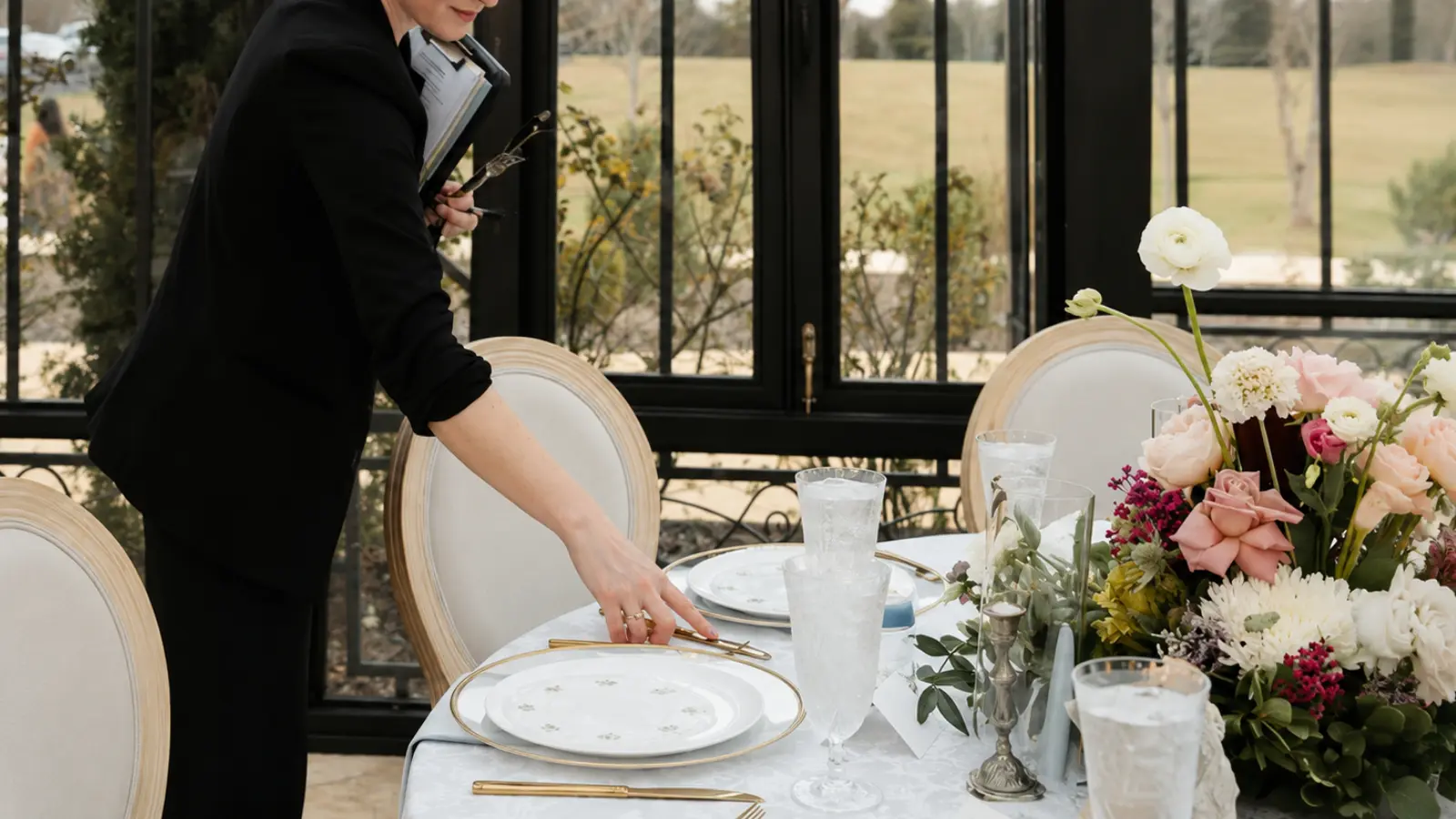
Custom fabrication can transform a wedding, but it should be managed like production rather than decor. Anything that is designed, engineered, fabricated, transported, installed, powered, secured, and removed has dependencies that extend far beyond aesthetics.
Custom bars, stages, ceremony structures, suspended installations, dance floors, facades, signage systems, or specialty furniture may require drawings, site measurements, engineering review, venue approval, load-in planning, labor, power, rigging, flooring protection, or overnight installation depending on the project.
Before approving a custom build, confirm who owns design, technical review, fabrication, transport, install, strike, storage, and damage responsibility. The more bespoke the element, the earlier it needs operational ownership.
Hire Premium Vendors for Capability, Not Status
Premium vendors are most valuable when their capability matches the complexity of the event. Reputation alone is not enough.
Evaluate whether each vendor can manage the scale, staffing, customization, travel, venue restrictions, install window, technical requirements, and collaboration level the wedding demands.
A highly sought-after florist who cannot support an overnight install may be the wrong fit for a production-heavy design. A celebrated photographer may not be ideal if the weekend requires multi-day coverage across several locations and a larger photo team—vendor selection should ultimately answer one question: can this team execute the work at the level the plan requires?
Plan Multi-Day Events as One Guest Journey
Multi-day weddings should feel connected, not like several unrelated events sharing the same guest list.
Define the role of each gathering. The welcome event may be social and low-pressure. The wedding day may be the most formal. A brunch or farewell event may need a softer pace after a late reception.
Then connect the logistics: hotel movement, attire guidance, transportation, staffing, vendor resets, guest communication, meals, and recovery time between events. Not every hour needs programming—a luxury weekend can feel more generous when guests have time to rest, explore, or spend time privately between hosted moments.
Build Logistics Around Precision and Redundancy
Luxury production needs more contingency because more systems are interdependent. One delay can affect several vendors at once.
Build the operating plan around fixed anchors, then layer in load-in, rehearsals, technical checks, transportation, guest arrival, service timing, entertainment cues, room turns, and strike.
For the most critical systems, create redundancy where it is practical: backup transportation, spare technical equipment, alternate weather plans, duplicate key documents, extra staffing, and clear authority for real-time decisions. The goal is not to eliminate every possible problem; it is to make sure small problems do not become guest-visible failures.
Make Hospitality Visible Without Making It Loud

Luxury hospitality should feel intuitive rather than theatrical. Guests should know where to go, how to move, where their belongings belong, and who can help without needing to ask the couple.
That may mean dedicated transportation hosts, hotel welcome support, guest-services staff, attendants at coat check or restrooms, clearly staffed entrances, thoughtful accessibility support, or a hospitality desk for a multi-day destination celebration.
Hospitality also includes timing. A meticulously designed room does not feel elevated if guests wait too long for transportation, drinks, dinner, or information—the service layer is often what makes high-end production feel effortless.
Luxury Wedding Checklist Before Major Contracts
A useful luxury wedding checklist should confirm the production model before the design becomes difficult to reverse.
- Guest experience brief: define how the celebration should feel from arrival through departure.
- Planning structure: identify planner, producer, designer, hospitality, and technical ownership where needed.
- Venue control: understand buyout terms, access, restrictions, and what spaces are truly exclusive.
- Custom production: identify builds, fabrication, lighting, staging, and technical systems early.
- Vendor capability: confirm staffing and production capacity, not just creative fit.
- Multi-day scope: map every hosted event and the logistics connecting them.
- Contingency: protect weather, power, transportation, technical production, and guest movement with realistic backups.
If those decisions are clear, the wedding can become highly customized without becoming operationally fragmented.
Make Complexity Feel Effortless
A luxury wedding is not defined by how many premium details it can contain. It is defined by how seamlessly service, production, design, logistics, and hospitality work together to create an experience that feels considered at every stage.
Build the structure first: clear ownership, capable specialists, realistic lead times, strong contingency plans, and a guest journey that works before the visual details are layered on top. When the operational side is strong enough to disappear into the background, the customization can feel effortless instead of complicated.
Frequently asked questions (FAQ)
How do you plan a luxury wedding?
Start by defining the guest experience and the level of customization, service, and production the wedding should deliver. Then build the planning team, venue strategy, design system, vendor roster, hospitality, transportation, technical production, and contingency plans around that brief. The more bespoke the celebration becomes, the earlier those specialists need to coordinate with one another.
What makes a wedding luxury?
There is no universal price threshold. A luxury wedding is better defined by the depth of customization, service, exclusivity, production, and guest experience. Highly coordinated hospitality, custom design, premium execution, and seamless logistics can make a wedding feel more elevated than simply increasing the amount spent.
Do you need a luxury wedding planner?
You need planning support that matches the complexity of the event. A wedding involving custom production, several venues, multi-day events, extensive guest travel, a property buyout, technical systems, or multiple specialist teams can benefit significantly from a planner or producer experienced in coordinating high-complexity events.
How early should you start planning a luxury wedding?
Start early enough to secure the venue, planner, and specialists that the wedding concept depends on. The ideal lead time varies by location, season, vendor availability, destination logistics, and custom production requirements. Weddings with highly specific venues, scarce creative teams, custom fabrication, or several event days generally benefit from more lead time.
What is the difference between a wedding planner and a wedding producer?
The titles are not standardized, so the written scope matters more than the label. A planner may oversee strategy, vendors, design, budget, communication, and logistics, while a producer may take heavier responsibility for technical production, staging, fabrication, installations, and complex execution. Some firms handle both functions internally.
Can a luxury wedding still feel intimate?
Yes. Luxury and intimacy describe different aspects of a wedding. A celebration can include custom design, premium service, sophisticated production, and highly coordinated hospitality while still having a small guest list, close seating, shared dining, personal toasts, and meaningful interaction with every guest.