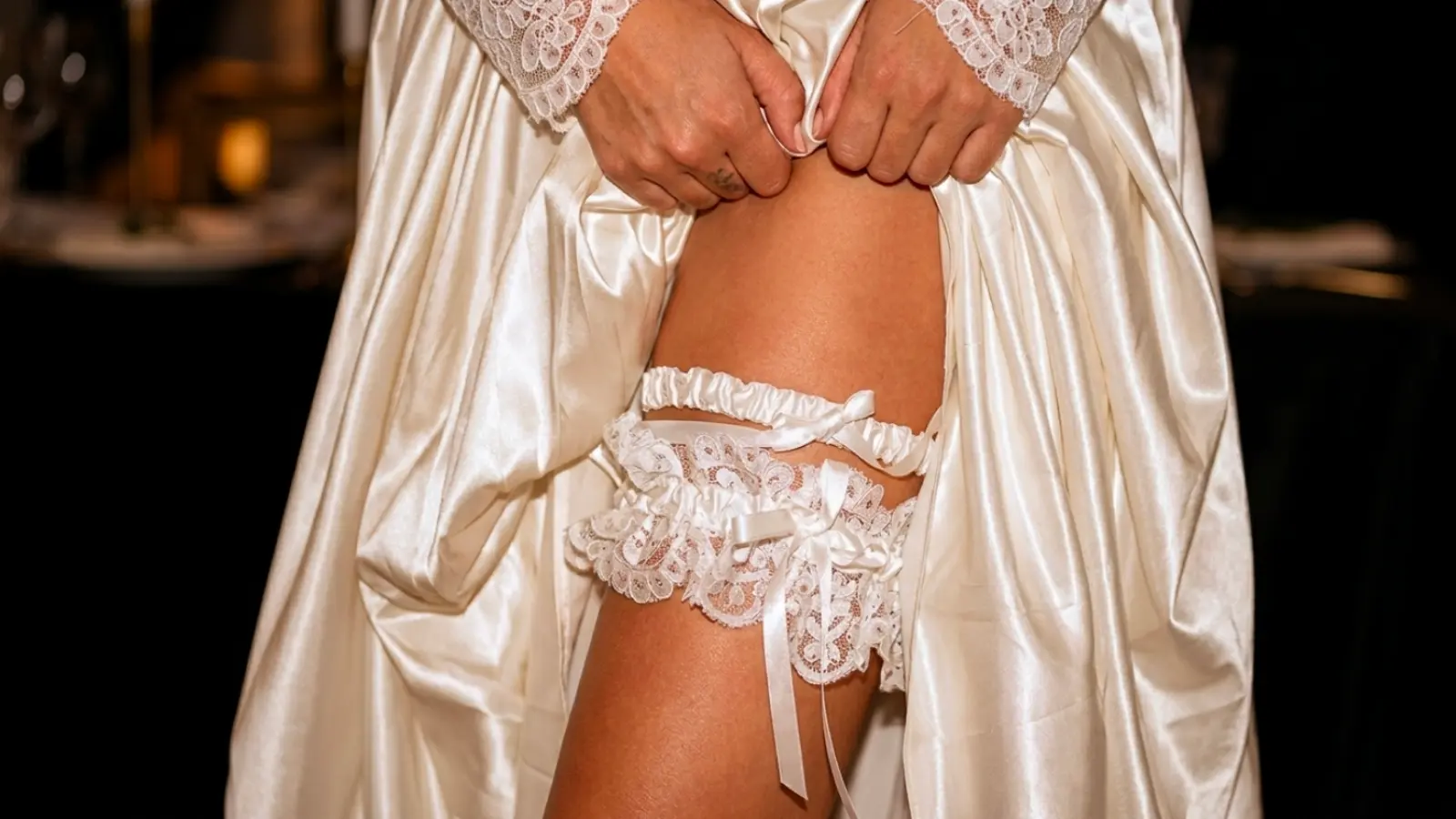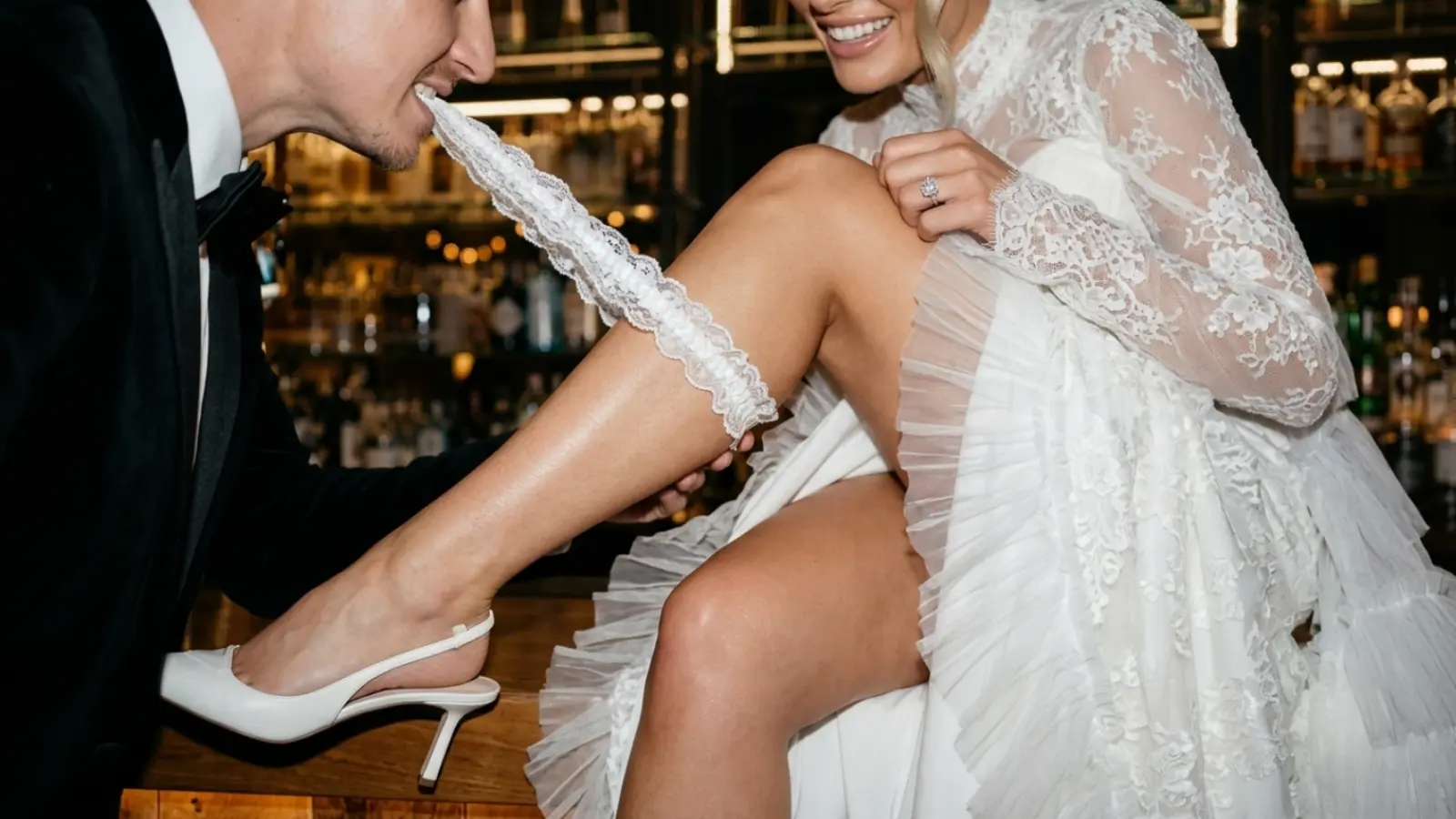
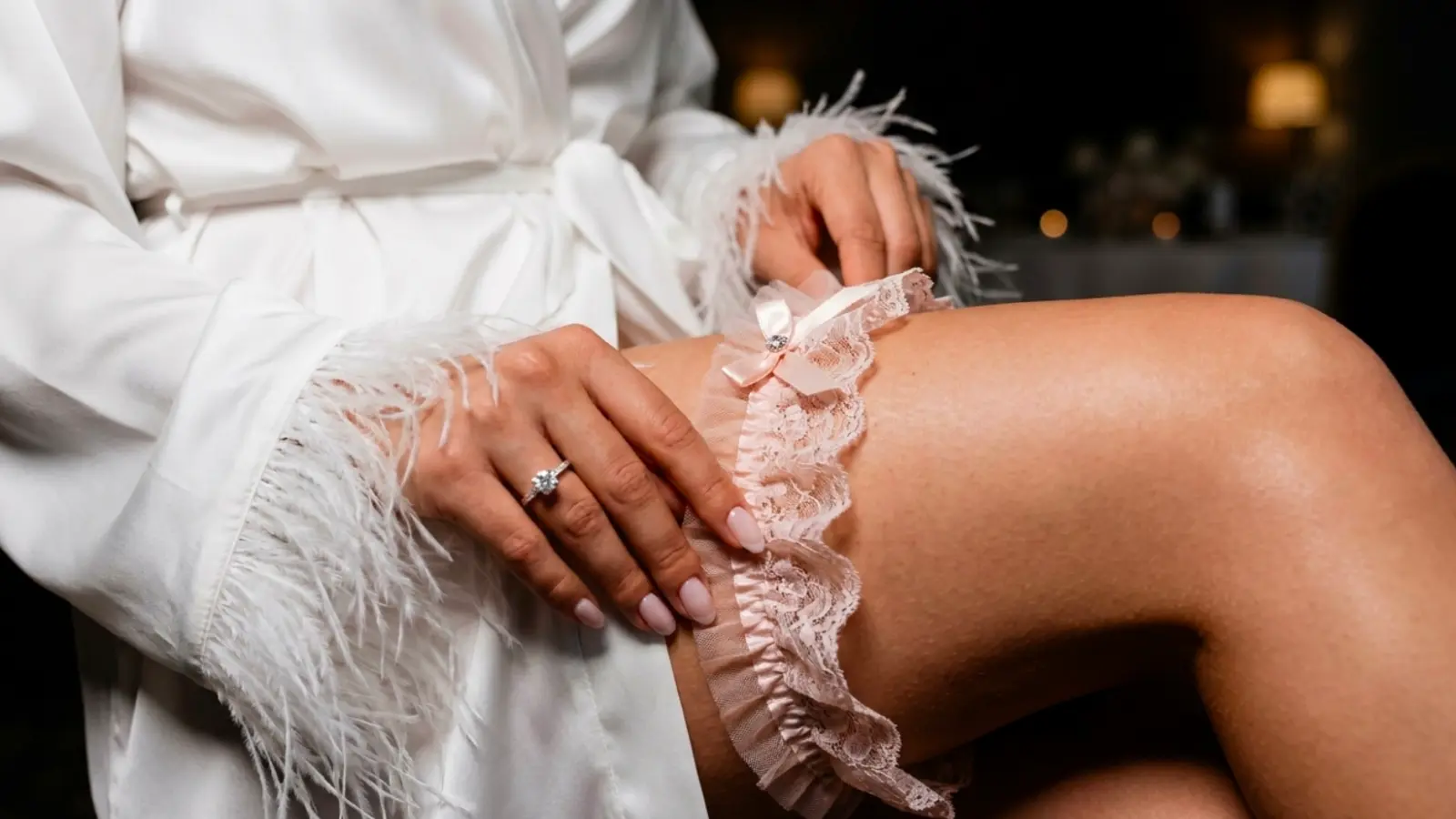
Wedding garter colors can carry different meanings, traditions, and personal styles depending on the shade you choose. While blue remains the best-known option because of the “something blue” tradition, many brides choose white, ivory, blush, black, navy, champagne, or other colors that better match their wedding palette or simply reflect their personality.
Because the garter is worn beneath the dress and rarely seen by guests, color becomes one of the most personal decisions in the entire bridal look. Some brides follow tradition, others coordinate it with their bouquet or wedding colors, and many simply choose the shade they love most. There is no required color only the one that feels right for your celebration.
This guide explains the meaning behind the most popular wedding garter colors, how each one fits different wedding styles, and how to choose a wedding garter that complements your dress, bouquet, and overall color palette without feeling forced or overly matched.
Wedding Garter Colors at a Glance
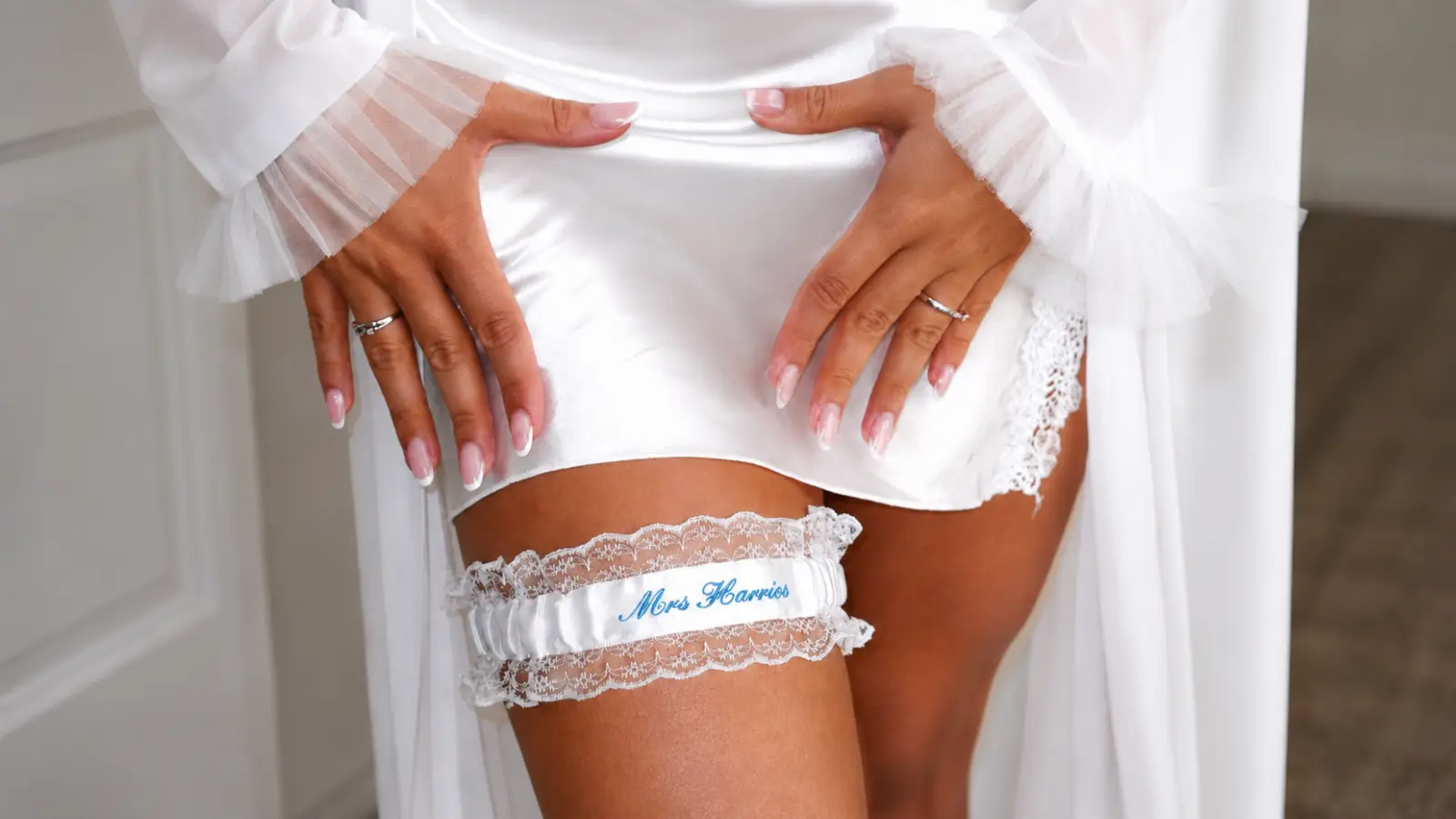
The color of a wedding garter is often more personal than practical. Some brides choose blue to honor tradition, while others prefer a shade that matches their dress, bouquet, or wedding palette. Since the garter is usually hidden beneath the gown, there is no right or wrong choice only the color that feels most meaningful to you.
Use this quick guide to compare the most popular wedding garter colors before exploring each one in more detail.
| Color | Meaning | Best For | Choose When |
|---|---|---|---|
| Blue | Fidelity, “something blue” | Any wedding honoring tradition | You want a classic, sentimental touch |
| White / Ivory | Purity, simplicity | Classic, minimalist weddings | You want the garter to disappear under the dress |
| Blush | Romance, softness | Romantic, garden, soft-palette weddings | Your dress or palette leans warm and soft |
| Black | Drama, modern edge | Formal, modern, editorial weddings | You want a bold contrast under a light dress |
| Navy | Quiet elegance | Formal or nautical-themed weddings | You like blue’s meaning but want something deeper |
| Champagne / Gold | Warmth, luxury | Neutral, warm-toned, glam weddings | Your palette runs ivory, gold, or warm neutrals |
| Red / Burgundy | Passion, boldness | Fall weddings, bold color palettes | You want a rich, statement color |
| Floral / Personalized | Individuality, sentiment | Any style, especially custom weddings | You want the garter to tell your specific story |
Blue Wedding Garter
Blue is the most traditional garter color, and the one most people picture by default when they hear the word “garter” at all. It comes from the old rhyme “something old, something new, something borrowed, something blue,” a Victorian-era good luck tradition meant to bless the marriage with happiness, fidelity, and a strong start. Blue specifically was tied to loyalty and love long before it became part of wedding custom.
The garter solved a practical problem for brides who wanted to honor the rhyme without changing the look of their dress. A blue ribbon sewn into a hem or a blue sash across a white gown would show. A blue garter, worn under the dress and never seen unless it’s part of the toss or removal, let brides check the box quietly. That practical advantage is one reason many brides have chosen a blue garter as their “something blue,” allowing them to include the tradition without changing the visible bridal look.
- Best for: Brides who want to keep the classic tradition alive
- Pairs well with: Any dress color, since it’s worn underneath and stays unseen
- Common shades: Powder blue, sky blue, royal blue, dusty blue
For the full story behind the wedding garter tradition, including where the “something blue” rhyme comes from and how it evolved, see the something blue garter guide.
White and Ivory
A white or ivory garter is the choice for brides who want it to blend seamlessly with the dress rather than stand out as its own element. There’s no message being sent by this choice, it’s simply the quietest option, more of a finishing touch underneath the gown than a deliberate accent. Brides who lean toward simplicity in every part of their look, minimal jewelry, a clean dress silhouette, a small bouquet, tend to gravitate here naturally, since a white garter continues that same restraint into a detail no one will see anyway.
- Best for: Classic, minimalist, or traditional weddings
- Pairs well with: Ivory or white gowns, lace details, simple bouquets
- Common shades: Bridal white, soft ivory, champagne-white
Blush
Blush sits in the space between white’s quietness and a true color statement. It reads as soft and romantic rather than stark, which is why it has become a popular choice for garden weddings, spring ceremonies, and any wedding built around a warm, gentle palette rather than crisp whites and bold jewel tones. For brides who feel like pure white is a little too plain but aren’t ready to commit to a bold contrast color, blush often hits the right note.
- Best for: Romantic, garden, or soft-palette weddings
- Pairs well with: Blush or champagne bouquets, soft pink or neutral palettes
- Common shades: Pale pink, dusty rose, peach-blush
Black
Black garters have grown more popular as bridal style overall has moved away from the idea that every detail needs to be soft or pastel to feel bridal. Worn under a light or white dress, black creates a small, deliberate contrast, the kind of detail that feels a little unexpected and a little confident at the same time. It’s become a natural fit for brides planning fashion-forward or editorial-style weddings, where the rest of the look already leans modern and a touch of black underneath continues that same sensibility.
- Best for: Formal, modern, or fashion-forward weddings
- Pairs well with: White or ivory gowns, black-tie receptions
- Common shades: Solid black, black lace, black with metallic trim
Navy
Navy carries some of the same sentiment as blue, fidelity and tradition, but reads as deeper, richer, and a touch more formal. It’s a good option for brides who like the meaning behind the “something blue” tradition but want a shade with more weight to it than a pale powder blue, especially for weddings happening in fall or winter, or any wedding where the overall color story already runs deep and saturated rather than light and airy.
- Best for: Formal weddings, nautical themes, fall and winter weddings
- Pairs well with: Navy wedding party colors, deeper jewel-toned palettes
- Common shades: Classic navy, midnight blue
Champagne and Gold
Champagne and gold occupy a similar role to white and ivory, blending into a neutral palette rather than standing apart from it, but with a touch more richness. These shades suit weddings built around warm lighting, metallic accents, and neutral tones throughout, the kind of wedding where the overall palette already feels a little more elevated than a simple white-and-green color story. A champagne garter reads as polished without ever needing to be seen to do its job.
- Best for: Glam, neutral, or warm-toned weddings
- Pairs well with: Gold accents, champagne bridesmaid dresses, warm lighting and decor
- Common shades: Champagne, soft gold, antique gold
Red and Burgundy
Red and burgundy are the boldest entries on this list, and they tend to appeal to brides who like the idea of a little drama in a detail nobody else will ever see. These shades show up most often in fall weddings, where the broader palette is already running toward wine, rust, and deep greens, but they work just as well for any bride who simply loves a rich, saturated color and wants that color somewhere in her look, even if it’s hidden under the dress all day.
- Best for: Fall weddings, bold or jewel-toned palettes
- Pairs well with: Burgundy florals, deep red bridesmaid dresses
- Common shades: True red, burgundy, wine
Floral and Personalized
Floral patterns, embroidered initials, a wedding date, or a short meaningful phrase shift the garter from a color decision into something closer to a keepsake. This is a particularly good direction for brides who already know they’re keeping the garter rather than tossing it, since a personalized detail only really matters to the person who’ll have it forever. A garter stitched with a wedding date or a private phrase between partners carries a kind of sentimental weight that no color alone can match.
- Best for: Any wedding style, especially brides who want a sentimental keepsake
- Pairs well with: Whatever feels personally meaningful, not necessarily tied to the dress or palette
- Common options: Floral lace, embroidered initials, wedding date, a short meaningful phrase
Matching It to Your Dress, Bouquet, and Palette
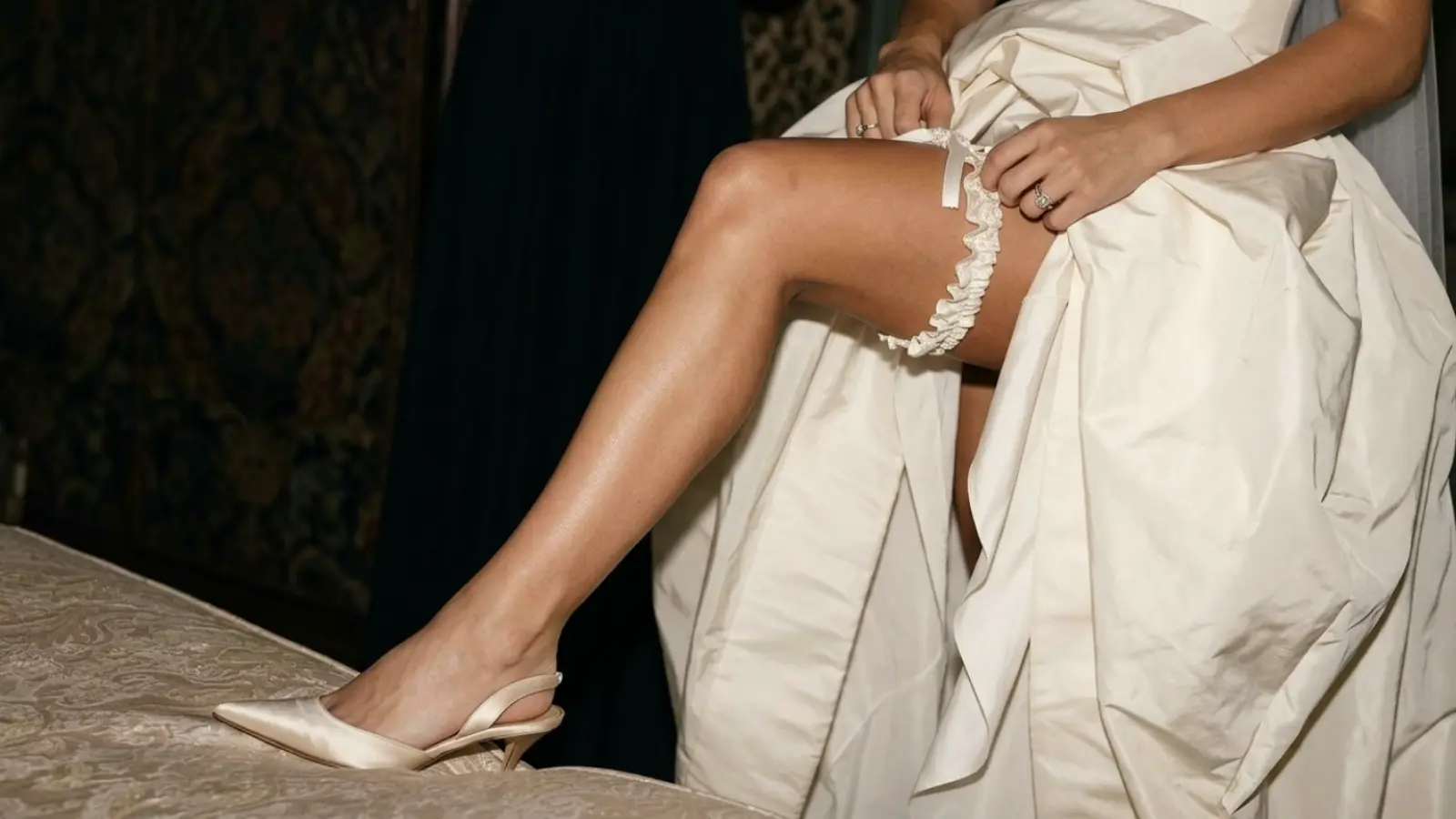
Because you wear a wedding garter hidden for most of the day, it doesn’t need to match anything precisely. That said, a few simple approaches make the color choice feel more intentional.
- Matching the dress: White, ivory, or champagne garters blend in and disappear, a good option for brides who want the garter to feel like part of the dress rather than a separate accessory.
- Matching the bouquet: Pulling a color directly from the bouquet ribbon or one of the featured flowers ties the garter into the bridal look without it needing to match the dress itself. The wedding bouquets guide covers color and style choices that can help inform this.
- Matching the wedding palette: A garter in the wedding’s accent color, navy, burgundy, sage, blush, connects it to the day’s overall design even though it’s never seen by guests. For help defining that palette in the first place, see the wedding color palette guide.
- Matching nothing at all: Plenty of brides choose a garter color purely because they love it, with no attempt to coordinate it to anything else. Since it’s a private detail, this is just as valid as any color-matching approach.
Choosing Without Overdoing It
Because the garter is small and mostly unseen, it’s genuinely hard to choose a color that looks “too much.” A bold black or red garter under a soft white dress doesn’t compete with the rest of the look the way a bold accessory might, since it’s rarely visible at all.
The simplest way to keep the choice feeling intentional rather than random is pulling the color from something that already exists in the wedding: the palette, the bouquet ribbon, a groomsman’s tie, or even just a color that holds personal meaning. Beyond that, there’s no real risk of “getting it wrong.” The garter is one of the lowest-stakes color decisions in the entire wedding, which makes it a good place to choose something purely because it feels right.
Wedding Garter Colors Inspiration
Wedding garter colors can reflect tradition, personal style, or simply the wedding palette you love most. Explore blue, white, ivory, blush, black, navy, champagne, and other wedding garter colors to discover what each one represents and how to choose the perfect shade for your bridal look.
The Color That Feels Right for You
The color of a wedding garter is one of the few bridal decisions that belongs almost entirely to the bride. Because it is usually hidden beneath the dress, it does not have to satisfy expectations, follow trends, or match every visible detail of the wedding. It simply has to feel meaningful to the person wearing it.
Whether you choose a traditional blue garter, a classic ivory design, a bold black accent, or a color that carries a personal story, the best choice is the one that fits your wedding naturally. Like many of the smallest wedding details, its value comes less from visibility and more from the meaning it holds for the bride.
Frequently asked questions (FAQ)
What color wedding garter should a bride wear?
There is no single correct color for a wedding garter. Blue is the most traditional choice because of the “something blue” custom, while white, ivory, and champagne blend naturally with the dress. Other colors, such as black, blush, navy, or burgundy, are often chosen to match the wedding palette or simply reflect the bride’s personal style.
Why is a blue wedding garter so popular?
A blue wedding garter is popular because it is one of the easiest ways to include the traditional “something blue” in a bridal outfit. Since the garter is worn under the dress, it adds the symbolic color without changing the visible look of the wedding gown. Many brides choose blue for its traditional meaning, while others simply like the sentiment behind it.
Does a wedding garter have to match the wedding dress?
No. A wedding garter does not have to match the dress exactly because it is usually hidden throughout the day. Some brides choose white or ivory for a seamless look, while others intentionally choose a contrasting color that matches the bouquet, wedding palette, or another meaningful detail.
Can you choose a wedding garter in any color?
Yes. Wedding garters are available in almost every color, including blue, white, ivory, black, blush, navy, champagne, gold, burgundy, and many custom designs. There is no etiquette rule limiting brides to traditional colors, making the garter one of the most personal accessories in the bridal look.
How do you choose the right wedding garter color?
The easiest way is to decide whether you want the garter to represent tradition, coordinate with your wedding colors, or hold personal meaning. Some brides match the bouquet or overall palette, while others choose a hidden color that reminds them of a special memory. Because the garter is rarely visible, it offers a lot of freedom without affecting the overall bridal look.
What wedding garter color is best for a modern wedding?
There is no single best color for a modern wedding. Many brides still choose classic blue, while others prefer blush, champagne, black, or custom colors that reflect their wedding style. The best choice is the one that feels intentional and fits naturally with the rest of the celebration rather than following a tradition simply because it exists.