A wedding garter is a decorative band worn around the leg, usually made from lace, satin, ribbon, or other bridal fabrics. Traditionally connected to older Western wedding customs, the garter today is an optional accessory that can be worn as a personal detail, a keepsake, or part of a reception moment like the garter toss.
Modern brides approach wedding garters in very different ways. Some love the tradition and the hidden sentimental detail, some wear one as their “something blue,” and others skip the garter completely because it does not match their style or celebration. There is no required version of this tradition — the important part is understanding the options and choosing what feels right.
This guide explains everything about wedding garters, including the meaning behind the tradition, how to wear one, which leg it goes on, garter sets, colors, blue garters, the garter toss, modern alternatives, comfort tips, and how to decide whether a garter belongs in your wedding day.
What Is a Wedding Garter?
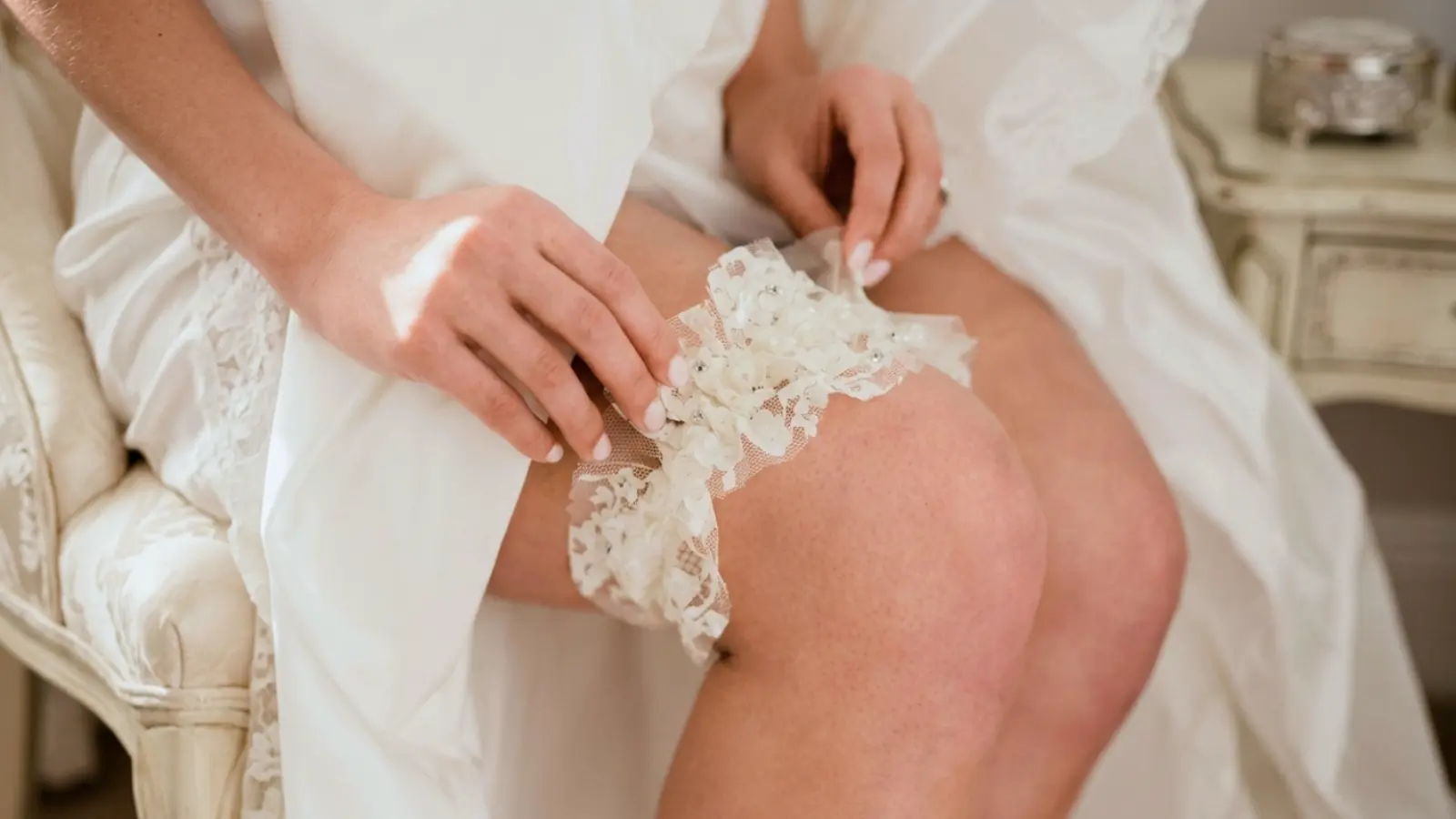
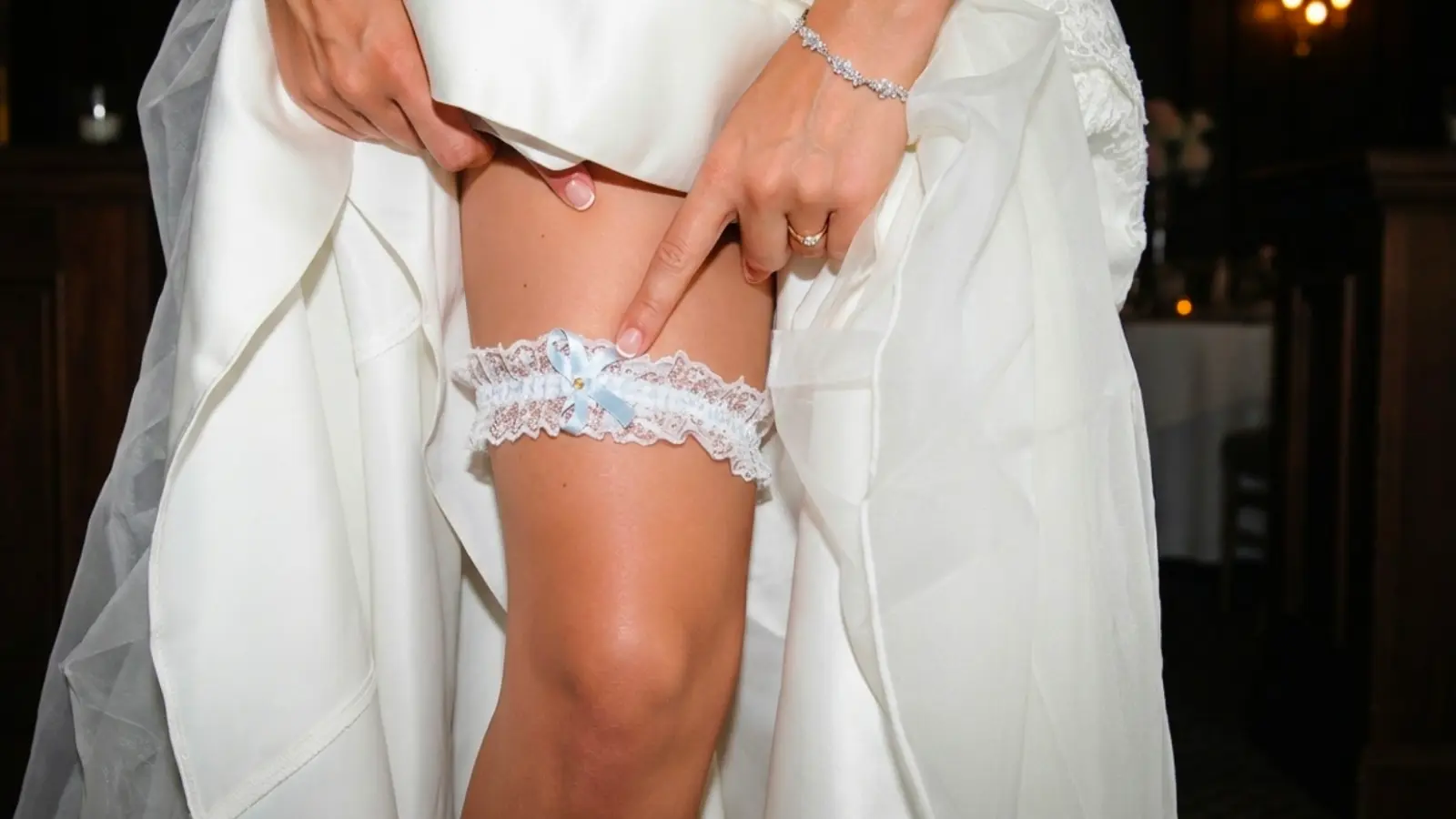
A wedding garter is a decorative elastic band, typically made of lace, satin, ribbon, or a mix of materials, worn around the thigh underneath the wedding dress. It’s one of the wedding accessories that usually remains hidden during the ceremony and only becomes visible, if at all, during a specific reception moment.
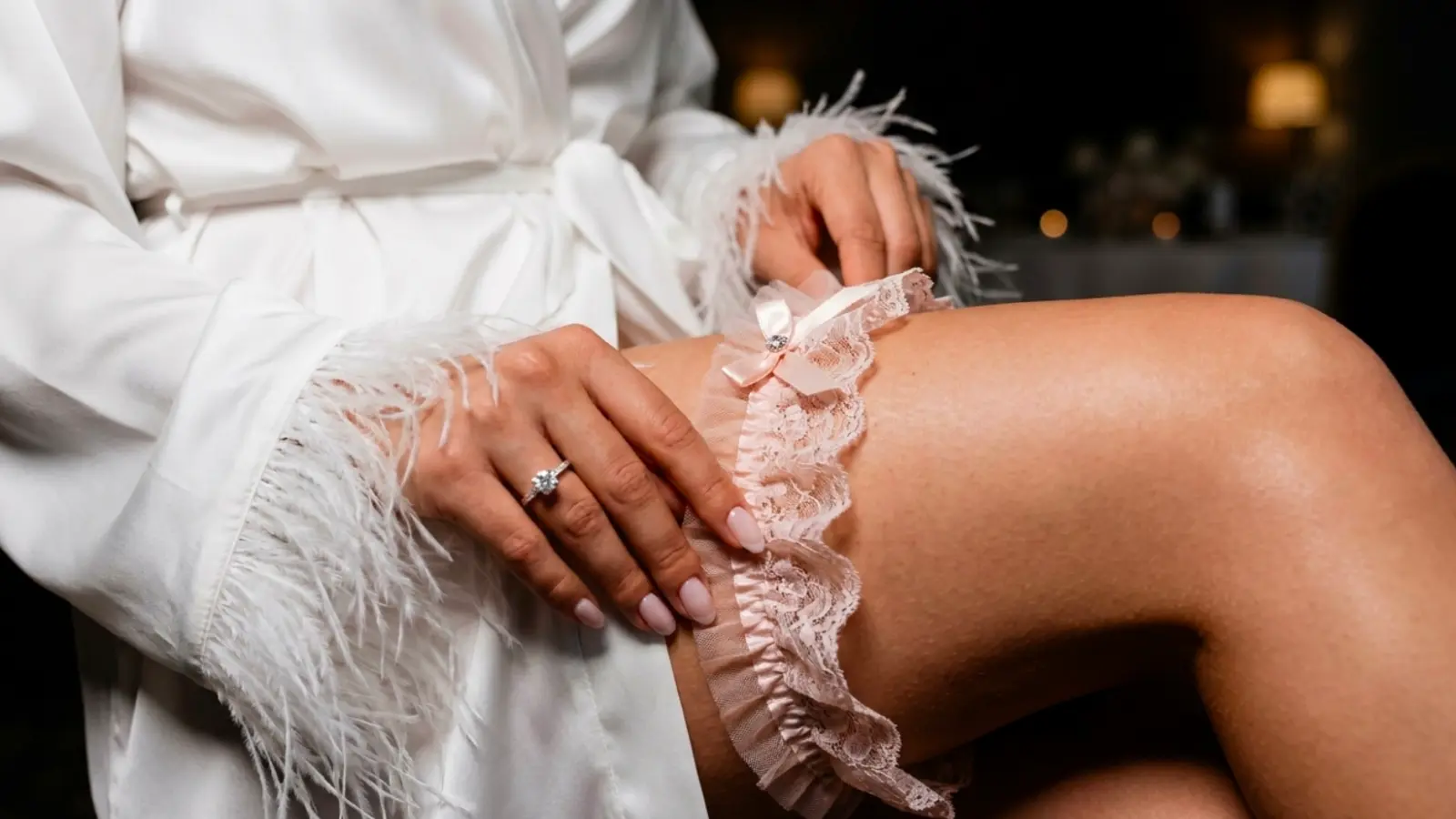
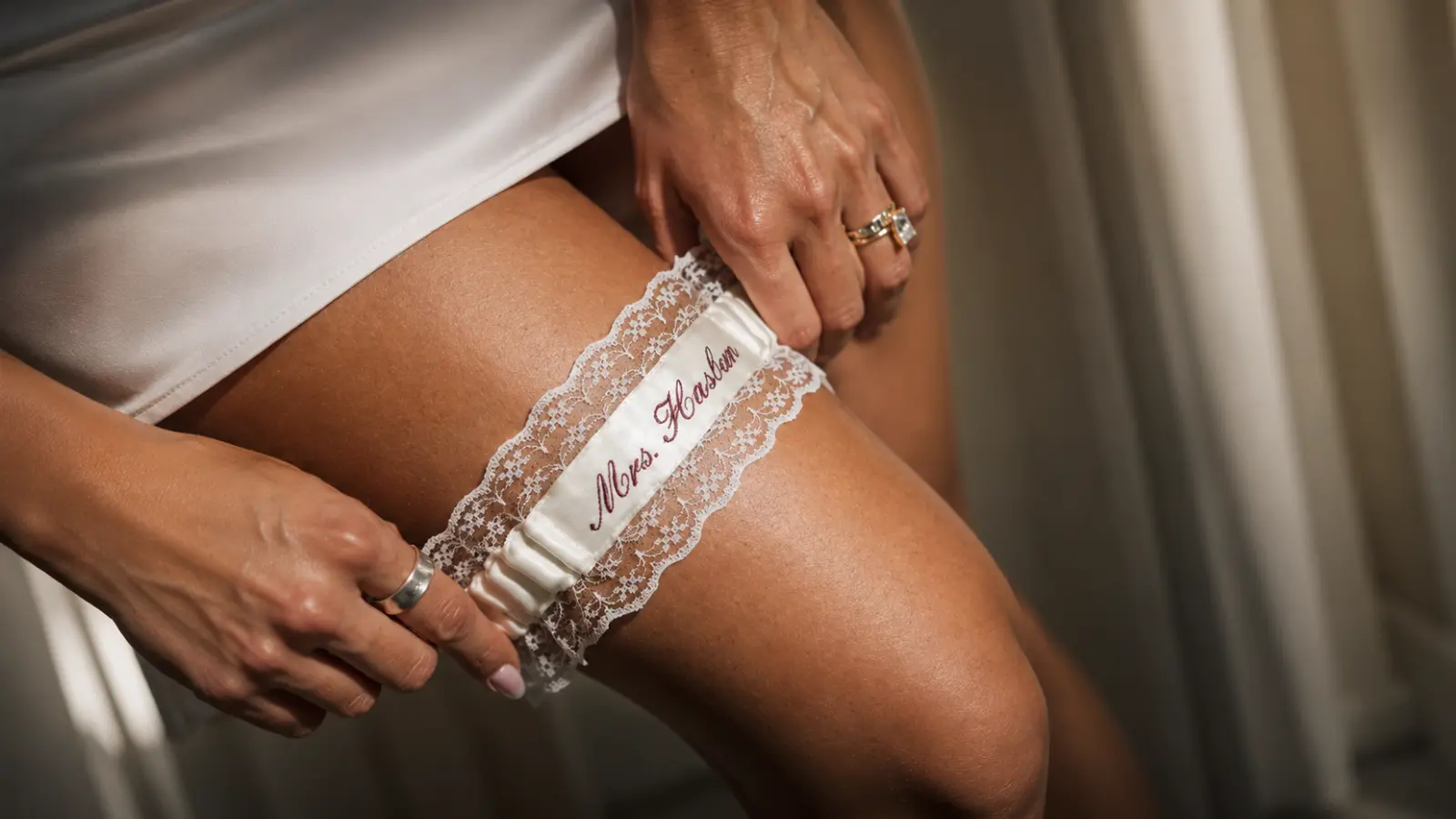
Garters range from simple and unadorned to fairly elaborate, with details like bows, charms, lace trim, or a small embroidered detail such as a date or initials. Some brides choose a garter that matches the dress fabric or lace pattern closely; others pick something with no visual connection to the dress at all, since it’s rarely seen by anyone but the bride and her partner.
Do You Need to Wear a Garter?
No. A garter is entirely optional and modern wedding etiquette does not require it. Brides who skip it aren’t leaving anything out. Brides who wear one purely for themselves, with no public moment attached, aren’t doing it halfway. There’s no correct way to handle this particular accessory beyond what feels right.
Some couples build a small reception moment around the garter because they enjoy that kind of lighthearted tradition. Others find the whole thing doesn’t match their style, their venue, or simply isn’t something they want guests watching. Both are common, and neither needs a justification at the reception or in conversations with family members who might expect otherwise.
Where the Tradition Comes From
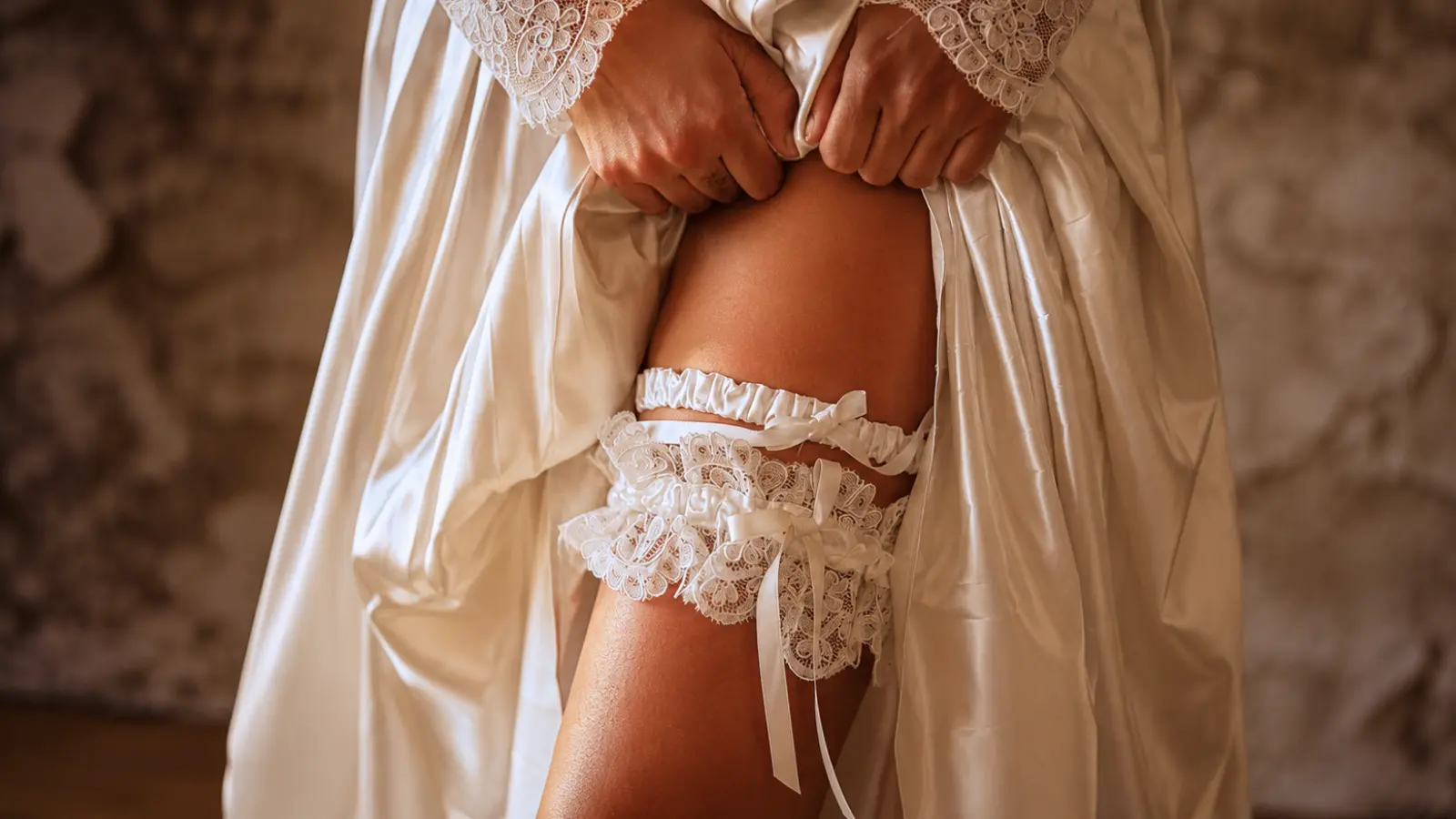
The garter tradition goes back several centuries in Western Europe, rooted in an old belief that a piece of the bride’s wedding attire carried good luck. In earlier eras, this belief led to a fairly chaotic practice: wedding guests would sometimes try to grab pieces of the bride’s dress, flowers, or other attire as keepsakes, occasionally before the bride had even left the ceremony.
Over time, the garter toss evolved into a more organized version of that earlier custom, replacing the practice of guests trying to take pieces of the bride’s attire with a more structured reception tradition. Instead of guests pursuing pieces of the bride’s clothing directly, the groom would remove the garter and toss it to the crowd, redirecting the lucky-keepsake tradition into something far less disruptive and, frankly, more dignified for the bride.
How the Tradition Has Changed
The version of the garter tradition practiced today bears little resemblance to its origins. What started as crowd management has become, in most cases, a brief and lighthearted reception moment, often treated as a parallel to the bouquet toss rather than anything tied to its original purpose.
Many couples have also simply moved away from it. As wedding receptions have become more personalized and less tied to a fixed sequence of “must-do” moments, the garter toss has shifted from an expected part of the evening to one option among many, alongside an anniversary dance, a guest game, or nothing at all in that slot. The accessory itself, separate from any public moment, has also become more about personal styling and keepsake value than performance for guests.
Garter Toss, Removal, and What Each One Means
Wearing, removing, and tossing the garter are three separate decisions, and a couple can choose any combination of them.
Wearing simply means the garter is on under the dress, with no public moment attached. Plenty of brides wear one this way purely as a personal styling detail or for the “something blue” tradition, and no one beyond the couple ever knows it’s there.
Removal – Wedding garter removal refers to the groom taking the garter off the bride’s leg, usually during a reception moment, sometimes done with some humor or showmanship, sometimes kept brief and low-key. Removal doesn’t have to be followed by a toss; some couples do the removal as its own small moment and skip the throwing entirely.
Tossing is the act of throwing the garter to a group of unmarried male guests, the loose parallel to the bouquet toss for unmarried female guests. It’s the most public-facing version of the tradition and the one most couples choose to skip if they’re skipping any part of it.
A couple might wear the garter with no removal or toss at all. They might do a quiet removal with no public toss. Or they might do the full traditional sequence. None of these requires guests to participate beyond what they’re comfortable with either, and gathering unmarried guests for a toss is itself an optional moment that can be made brief, opt-in, or skipped without comment.
How to Wear a Garter
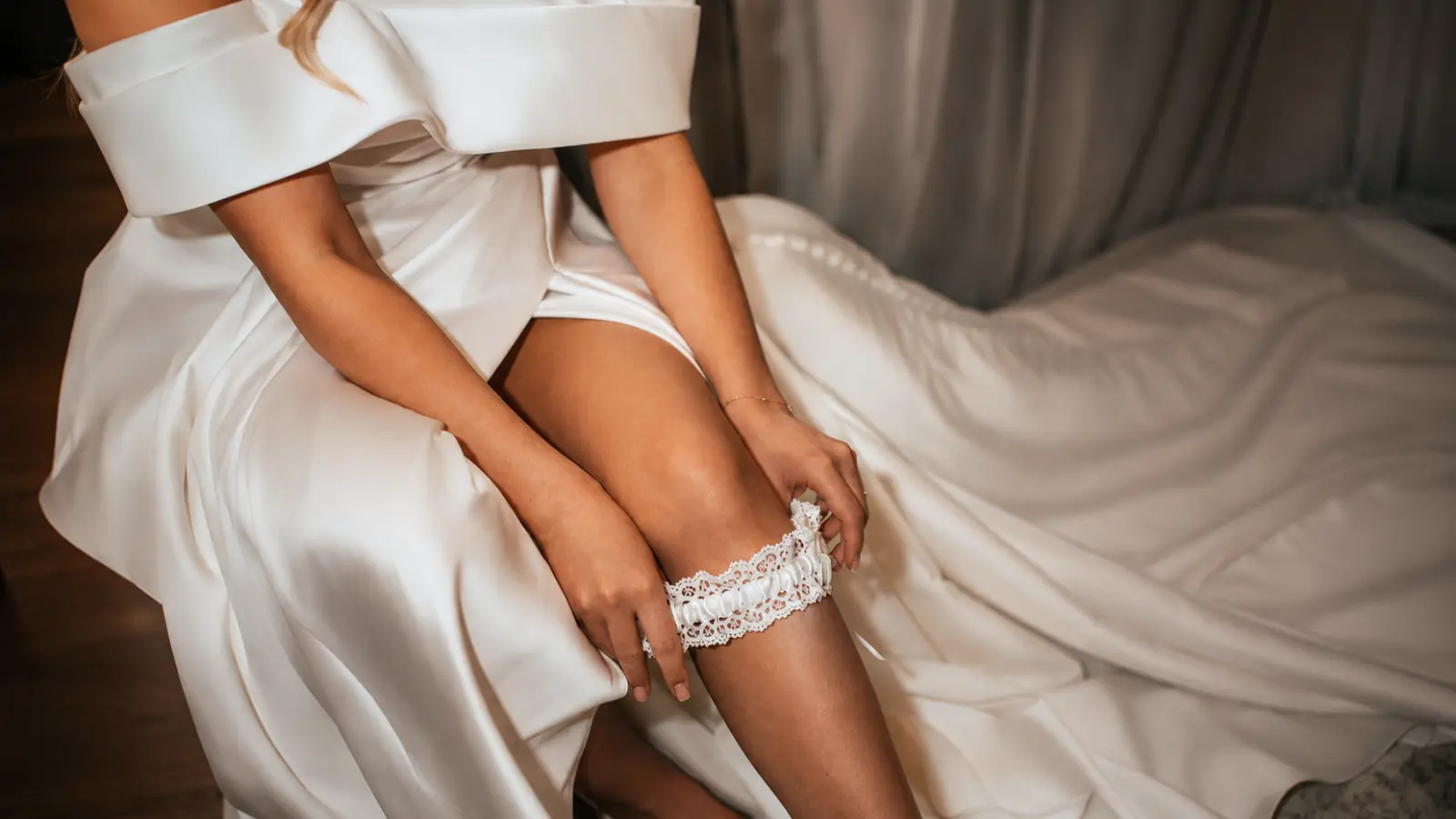
For brides who do want to wear one, comfort matters more than tradition here. When you choose a wedding garter, it should sit snugly enough to stay in place through dancing and movement, but not so tight that it leaves marks or becomes uncomfortable over a long day.
There’s no fixed rule for which leg. Most brides choose whichever feels more natural, and for many that ends up being the right leg, mainly because it’s a bit easier to reach during a removal moment if one is planned. Positioning is usually mid-thigh, high enough to stay hidden under most dress silhouettes but low enough to remain comfortable while sitting or dancing.
For a full walkthrough of sizing, placement, and what to do if a garter keeps slipping, see the how to wear a wedding garter guide.
Garter Sets: One to Keep, One to Toss
A garter set typically includes two garters: one designed to be tossed or removed during a reception moment, and a second meant to be kept as a personal keepsake. This setup offers a practical solution. A bride who wants to participate in a toss tradition doesn’t have to give up the one she might want to keep, frame, or pass down later.
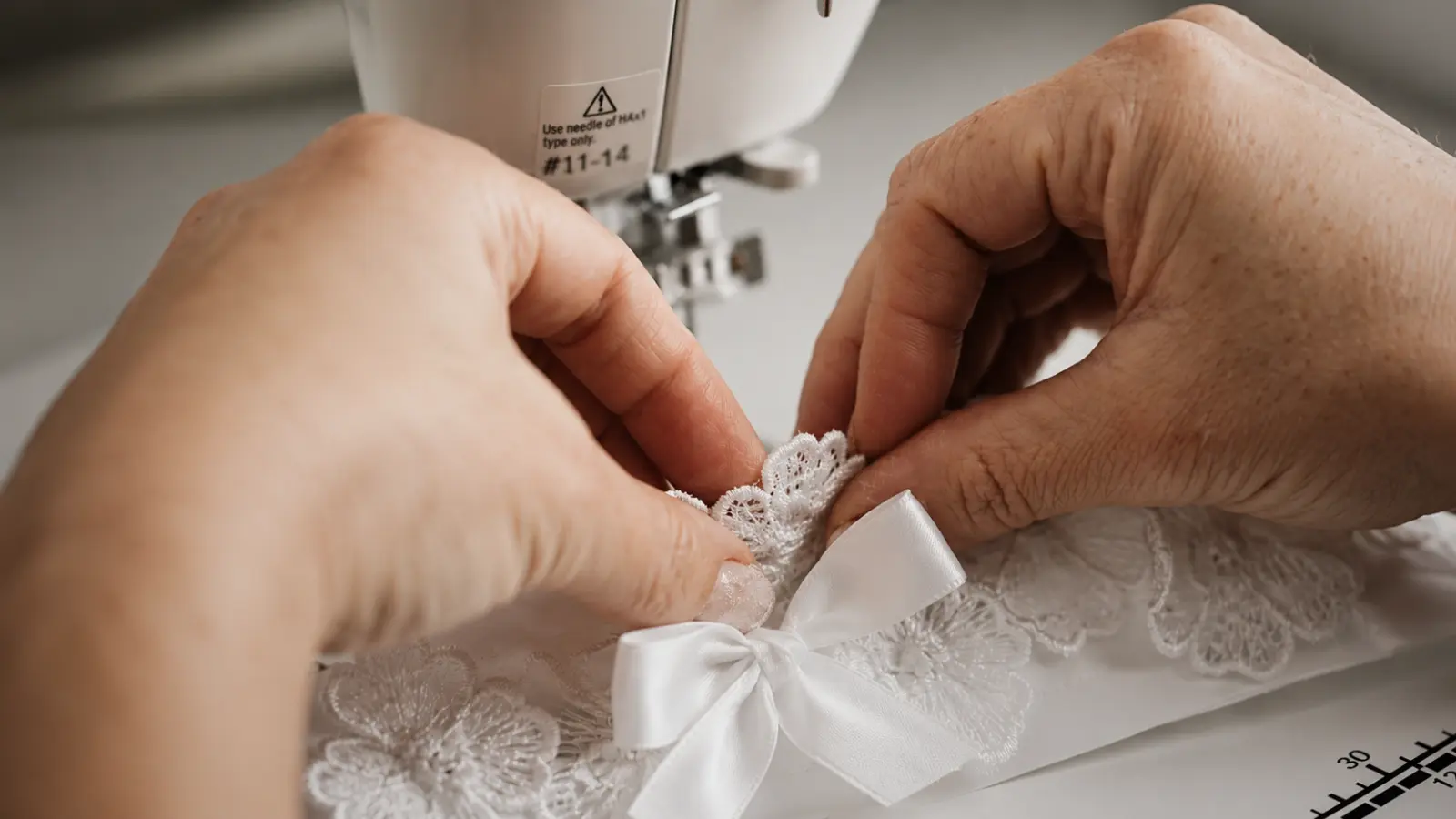
The toss garter is usually simpler, since it’s meant to be thrown into a crowd and possibly not treated with much care afterward. The keepsake garter tends to be the more detailed or sentimental piece, and some brides prefer a DIY wedding garter with fabric that matches the dress, a small embroidered detail, the wedding date, or a meaningful phrase.
Blue Garter and Something Blue
A blue garter is one of the most common ways brides fulfill the “something blue” line from the old rhyme “something old, something new, something borrowed, something blue.” Since the garter is typically hidden under the dress, it’s a practical way to include the color without it showing up anywhere in the visible bridal look.
The blue garter carries no meaning beyond that single tradition, and choosing it (or not) is purely a matter of personal preference. Some brides like the small private detail of it; others fulfill “something blue” with jewelry, embroidery inside the dress, or another item entirely and skip the garter as that particular tradition’s vehicle. For more ideas, see the something blue ideas guide.
Other Garter Colors
White and ivory are the most common garter colors, mainly because they coordinate easily with most dress tones. Beyond that, garters are available in a wide variety of colors, and the choice is purely aesthetic.
Some brides pick a color that matches their wedding palette, even though the garter itself is rarely seen. Others use the color choice as a small personal or sentimental detail, like a school color, a favorite shade, or a color tied to a family tradition. Because the garter typically stays hidden, color choice carries no etiquette weight at all.
| Garter Color | Common Meaning or Style |
|---|---|
| White or ivory | Classic, traditional, and easy to pair with most wedding dresses |
| Blue | A discreet way to include the “something blue” tradition |
| Blush | Soft, romantic, and subtle under a bridal gown |
| Black | Modern, dramatic, or slightly unexpected |
| Navy | An elegant alternative to brighter blue |
| Champagne or gold | Warm, vintage-inspired, or quietly glamorous |
| Burgundy or red | Bold, personal, and more dramatic than classic bridal shades |
For a full breakdown by color and what each one tends to pair with, see the wedding garter colors guide.
Comfort and Plus-Size Options
Comfort is the most practical consideration for any bride choosing to wear a garter, and it matters more than which style looks best in a photo. A garter that’s too tight can leave marks or become genuinely uncomfortable over the course of a long day involving sitting, standing, and dancing. One that’s too loose may slip, which can be its own minor distraction.
Plus-size brides sometimes find that standard garter sizing doesn’t fit comfortably, which has led to a wider range of extended-size and fully adjustable garters becoming available. Look for garters with a wide adjustable range or those specifically labeled for a fuller thigh measurement, rather than assuming a single standard size will work universally. For full sizing guidance and comfortable style picks, see the plus-size wedding garter guide.
Modern Alternatives
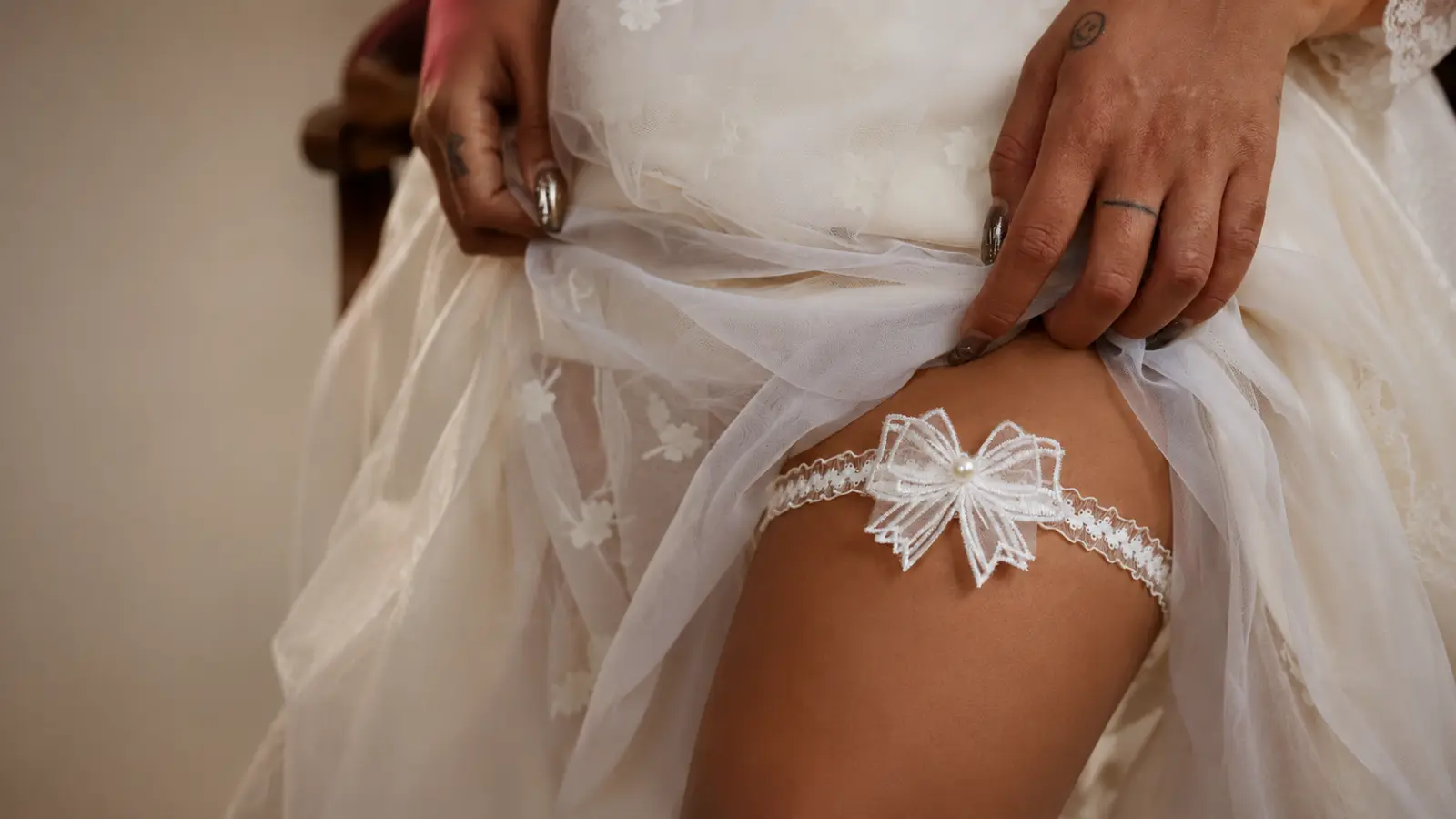
For couples who like the idea of a lighthearted reception moment but want to skip the traditional garter toss specifically, there are several options that achieve something similar without the garter itself.
- Anniversary dance. Couples are called to the dance floor and gradually eliminated based on years married, until the longest-married couple remains. They’re often asked to share a piece of advice, which tends to be a genuinely warm moment.
- Bouquet toss only. Some couples keep the bouquet toss and skip the garter toss entirely, which preserves a familiar reception moment without including the part they find uncomfortable.
- Private garter moment. The bride can wear the garter as a personal detail or keepsake without involving guests, music, or a public removal moment.
- A raffle or small guest game. A quick, low-stakes activity that gives guests something fun without involving anyone’s leg or undergarments.
- A money dance. In some cultural or family traditions, guests pay a small amount to dance briefly with the bride or groom, with proceeds going toward the honeymoon or another shared goal.
- Skipping the moment entirely. Many receptions move straight from dinner and toasts into open dancing with no toss-style moment at all. For many couples, that feels like the most natural choice.
For a longer list of ideas and how to introduce them to your DJ or planner, see the garter toss alternatives guide.
What to Avoid
A few things tend to make the garter moment, if a couple chooses to include one, go more smoothly.
- Skip anything that makes guests visibly uncomfortable. A toss should be brief, optional to join, and easy to laugh off if no one steps up.
- Avoid an overly long or drawn-out removal moment. A few seconds of lighthearted fun reads very differently from something stretched out for attention.
- Don’t feel obligated to explain a decision to skip it. If a family member expects a garter toss and the couple doesn’t want one, a simple “we’re doing things a little differently” is enough.
- Avoid a garter that’s uncomfortable just for the sake of matching the dress exactly. Fit and comfort should win over a perfect color match.
Wedding Garter Inspiration
Wedding garters can be a meaningful tradition, a hidden personal detail, or simply a beautiful bridal accessory. Explore wedding garter ideas, including lace styles, blue garters, personalized designs, keepsake options, and modern ways to include or skip the tradition.
A Small Detail With Your Own Meaning
A wedding garter does not have to represent the same thing for every bride. For some, it is a connection to tradition. For others, it is a private detail, a sentimental keepsake, or simply something they choose not to include at all.
The most meaningful wedding details are the ones chosen with intention. Whether you wear a garter, save it, toss it, personalize it, or skip the tradition completely, the choice should feel like it belongs to your wedding — not like something you were expected to do.
Frequently asked questions (FAQ)
What is a wedding garter?
A wedding garter is a decorative band worn around the bride’s thigh, usually made of lace, satin, ribbon, or other soft fabrics. While it began as part of an old Western wedding tradition, today it is mostly worn as an optional bridal accessory, a keepsake, or for a reception tradition like the garter toss. Many brides also choose not to wear one, and that is completely normal.
Do you have to wear a wedding garter?
No. A wedding garter is completely optional. Some brides wear one for tradition, others for sentimental reasons, and many skip it altogether. Modern wedding etiquette does not expect every bride to wear a garter, and choosing not to include one does not take anything away from your wedding day.
What is the meaning behind the wedding garter tradition?
The wedding garter tradition dates back centuries and originally came from the belief that a piece of the bride’s clothing brought good luck. Over time, the garter toss became a more organized way to continue that tradition without guests trying to take part of the bride’s attire. Today, the garter is usually viewed as a personal choice rather than an important wedding ritual.
What is the difference between wearing a garter and doing the garter toss?
Wearing a garter simply means having it under your wedding dress, whether anyone sees it or not. The garter toss is a separate reception activity where the garter is traditionally removed and tossed to guests. Many brides wear a garter without including a toss, while others skip both traditions entirely. The two choices are completely independent.
How do you wear a wedding garter comfortably?
A wedding garter should fit snugly enough to stay in place without feeling tight or uncomfortable. Most brides wear it on whichever leg feels more natural, usually around the mid-thigh where it stays hidden under the dress. Comfort is more important than following any traditional rule about placement.
What can you do instead of the garter toss?
Many couples replace the garter toss with alternatives such as an anniversary dance, bouquet toss only, guest games, raffles, or simply moving straight into dancing after dinner. Others wear a garter as a private keepsake without including any public reception tradition.
Which leg do you wear a wedding garter on?
There is no official rule about which leg to wear a wedding garter on. Most brides simply choose the leg that feels most comfortable. The garter is usually worn around the mid-thigh, high enough to stay hidden under the wedding dress while remaining comfortable throughout the day.