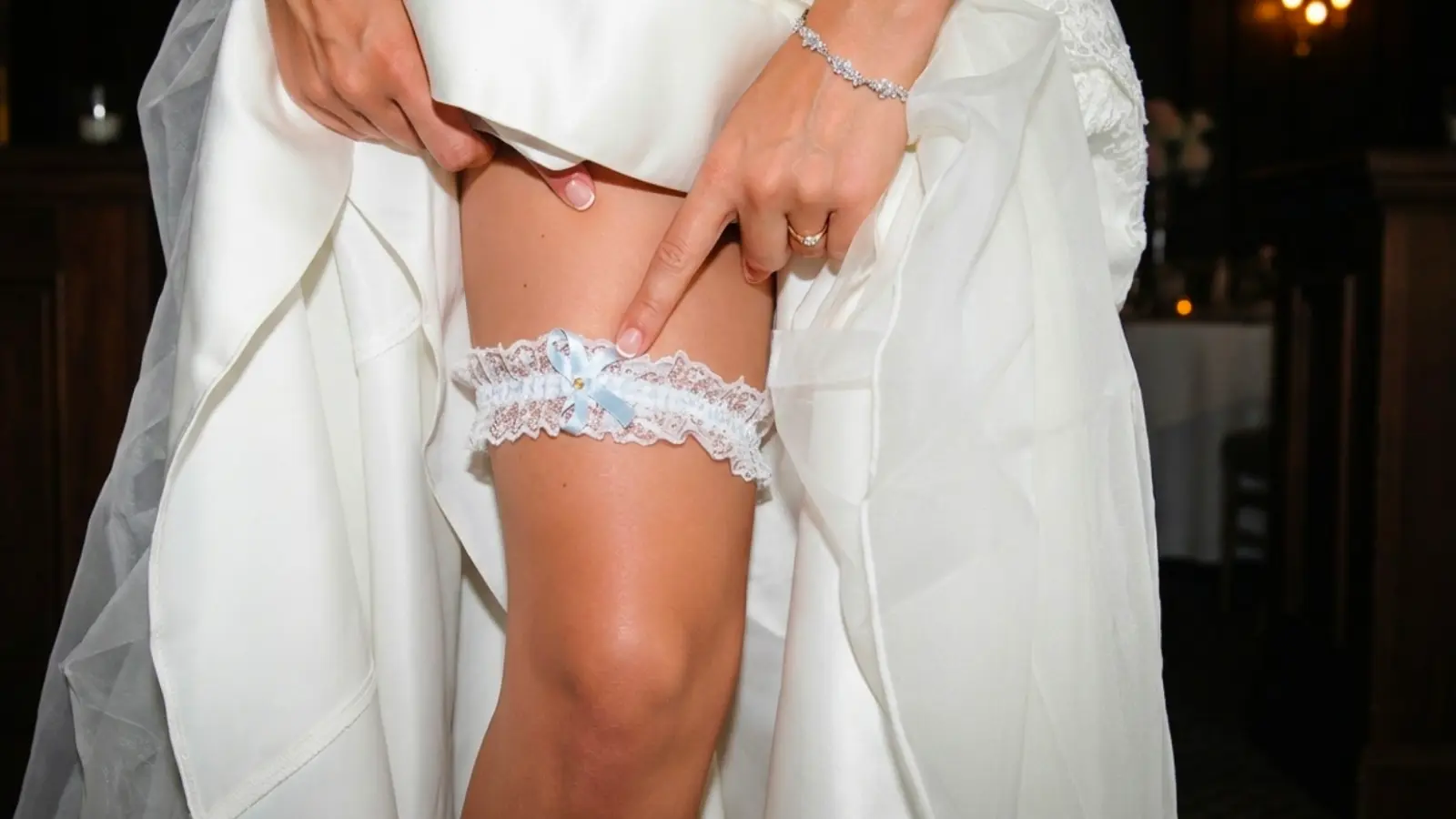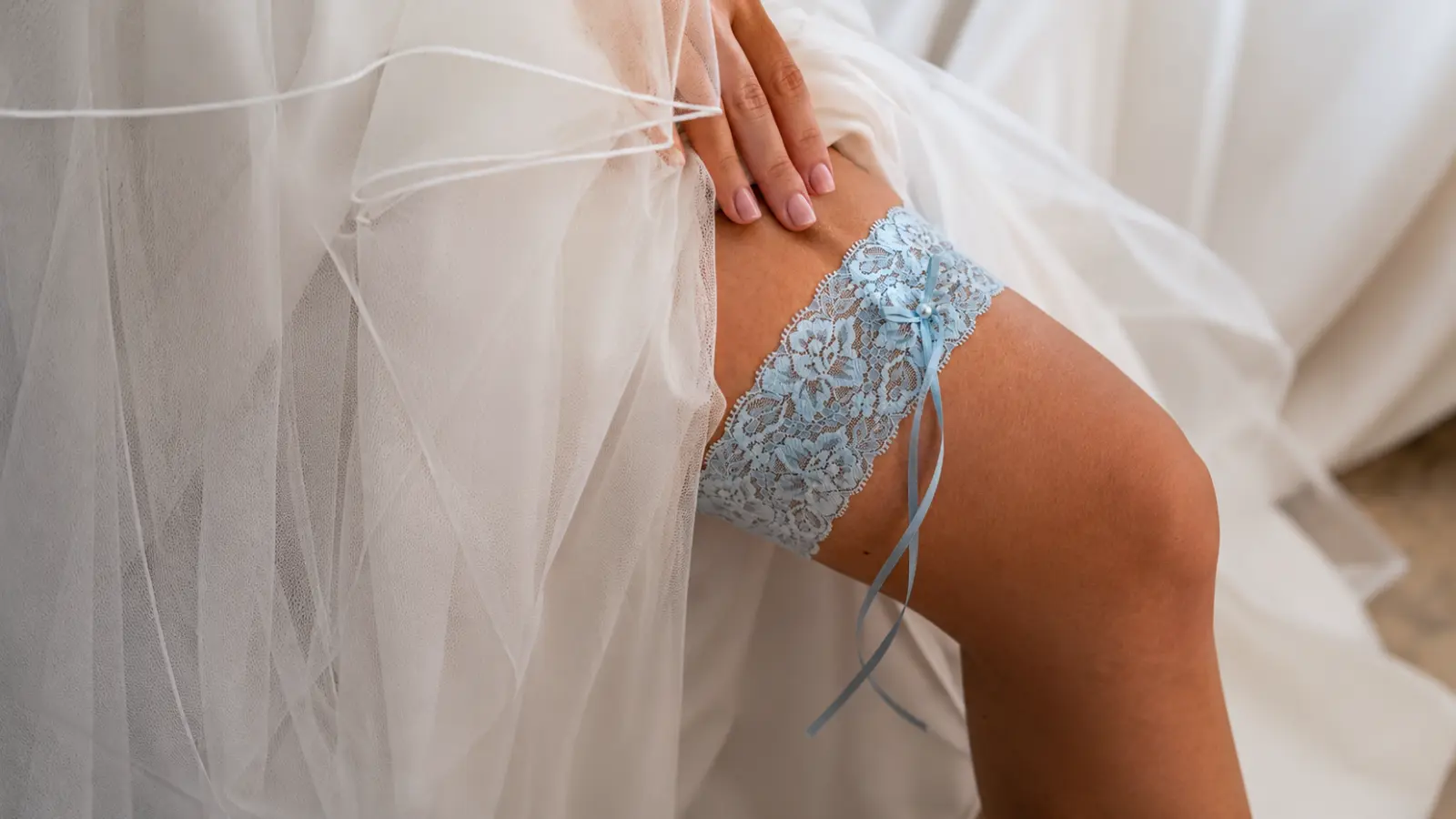
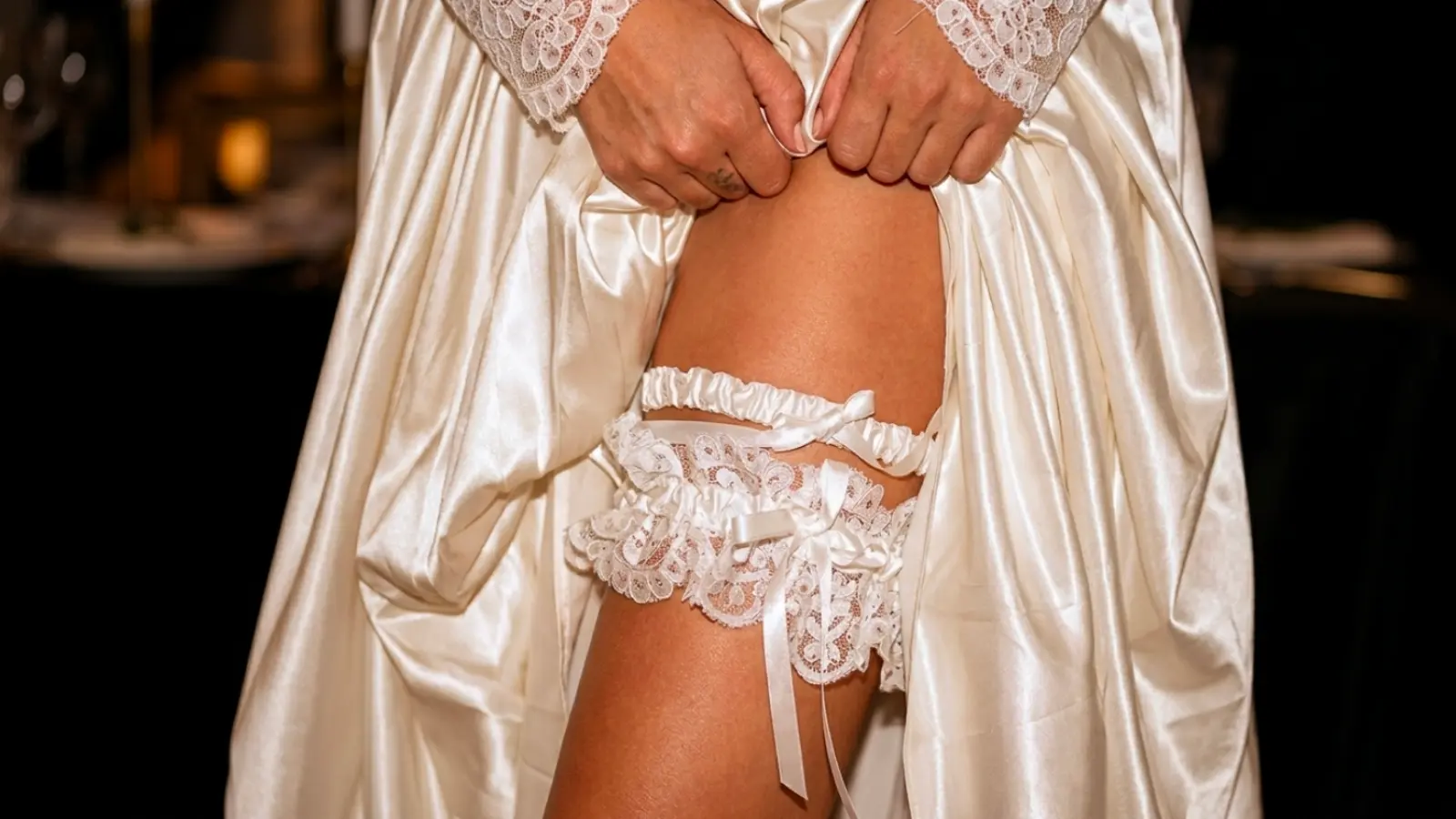
The wedding garter tradition is one of the longest-standing wedding customs still recognized today, but its original meaning is very different from the lighthearted reception tradition most couples know. What began centuries ago as a belief about luck gradually evolved into an optional wedding custom that many modern couples choose to adapt—or leave behind entirely.
The wedding garter tradition is older, stranger, and less romantic than most modern explanations make it sound. Understanding where it actually came from helps explain why opinions about it are so divided today. Some couples see it as a meaningful connection to wedding history, while others feel its origins no longer reflect the kind of celebration they want to create.
This guide explores the history of the wedding garter tradition, what the garter originally symbolized, how the garter toss developed, why the tradition changed over time, and how modern American couples choose to honor, adapt, or skip it altogether.
Where the Tradition Began

The garter tradition traces back several centuries in Western Europe, to a period when a folk belief held that anything touched by or worn by a bride on her wedding day carried good luck. This wasn’t a gentle, symbolic notion. Guests acted on it directly, and historical accounts describe wedding parties where guests would chase the bride, attempting to tear pieces of her dress, ribbons, or stockings as personal tokens of that luck.
This is worth being clear-eyed about: it was not a charming custom by modern standards. It was, by most accounts, genuinely invasive and at times frightening for the bride, who had little control over guests pursuing pieces of her clothing in the middle of her own wedding celebration. The garter eventually became a kind of pressure valve for this behavior, something the bride or groom could offer up deliberately so guests would stop pursuing other parts of her attire.
What the Garter Symbolized
The garter carried two overlapping layers of folk symbolism in this era: luck and fertility, both recurring themes in European wedding customs of the time. Because the garter was worn close to the body, underneath the dress, possessing it was treated as possessing something more intimately connected to the bride’s luck than, say, a flower from her bouquet or a ribbon from her hair.
None of this symbolism survives in any meaningful way in how the tradition is understood today. Few, if any, modern couples or guests think about fertility or luck when a garter comes out at a reception. The object has stayed roughly the same. The meaning attached to it has almost entirely emptied out.
How the Garter Toss Developed
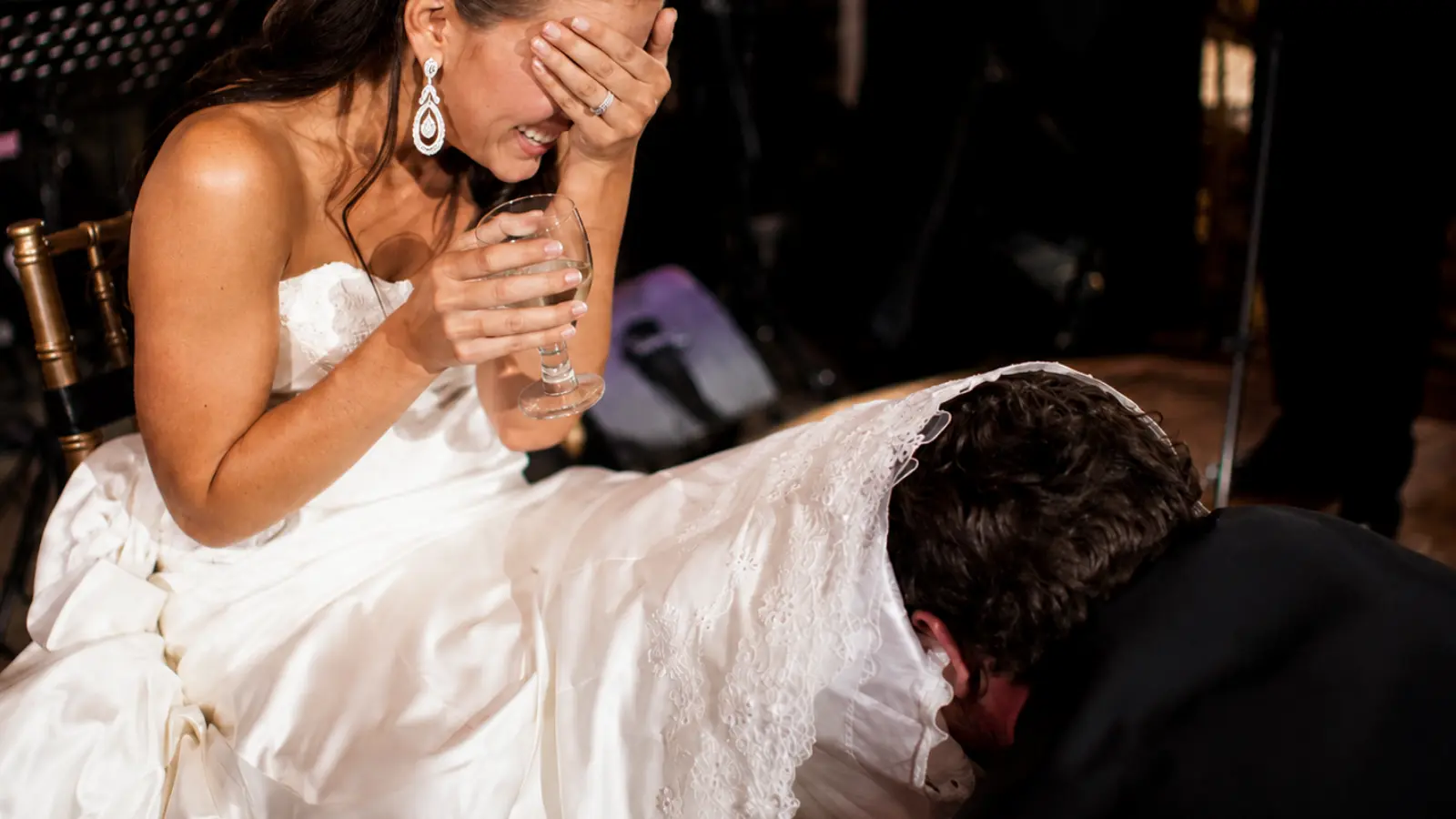
The garter toss developed as a more controlled alternative to guests pursuing the bride’s clothing directly. Instead of leaving the bride to fend off guests trying to grab pieces of her attire, the groom began removing the garter himself and throwing it to the crowd, redirecting the lucky-keepsake tradition into a single, brief, and far more contained moment.
Many historians describe this evolution as a practical way of adapting the tradition over time. Rather than guests pursuing the bride directly, the garter became a more controlled part of the celebration that couples could choose to include. In that sense, the garter toss as it’s known today is itself already a moderated, softened version of something that started out considerably rougher.
Where Garter Removal Fits In
Wedding garter removal, the act of the groom taking the garter off the bride’s leg, is the step that sits between the original chaotic grabbing and the modern, brief toss. Removal by the groom himself, rather than guests reaching for the bride directly, was part of what made the custom more dignified and more within the bride’s control.
That distinction still matters today, even with the original context long gone. A couple can choose to do a removal moment without a public toss, keeping a small piece of the historical custom (the groom removing it, rather than anyone else touching the bride’s attire) while skipping the more public, attention-drawing part entirely.
How the Tradition Survived Into Modern Weddings
The garter tradition survived for a fairly simple reason: it got smaller and safer with each generation, not bigger or more elaborate. What started as guests grabbing at a bride’s clothing narrowed down to a groom removing one specific item, then narrowed further into a quick, often comedic toss lasting under a minute. Each stage stripped away more of the original behavior while keeping a recognizable thread connecting it back to the custom guests and couples had seen at other weddings.
By the time the tradition reached the form most American couples recognize today, it had been thoroughly disconnected from its original meaning. It became less about luck or fertility and more about the wedding garter as a familiar, expected part of the reception, something many couples include simply because they have seen it at many weddings over the years, not because they believe in or even know its original purpose.
Why Some Couples Still Keep It

Plenty of couples keep some version of the tradition, and the reasons tend to be more about familiarity than belief. It’s a recognizable beat that guests expect and enjoy, particularly older relatives who’ve seen it at every wedding in the family for decades. For some couples, it’s simply fun: a low-stakes, slightly silly moment that fits the overall energy of their reception.
For others, it’s closer to nostalgia than tradition. Including it connects their wedding to their parents’ or grandparents’ weddings in a small, visible way, even if no one in the room could explain where it actually came from. That kind of continuity matters to some couples regardless of the custom’s stranger origins.
Why Other Couples Skip It
Other couples skip it for reasons that are just as straightforward. The public, somewhat intimate nature of a removal in front of guests doesn’t sit well with everyone, regardless of how brief or tasteful it’s kept. Some find the framing around marital status, even softened into a joke, simply not something they want built into their reception.
Many couples skip it for an even simpler reason: they never connected to it. A tradition with complex and sometimes uncomfortable origins is not something every couple automatically chooses to include just because it’s been at most of the others. Plenty of couples look at the custom, find it doesn’t reflect them, and leave it out without much deliberation at all.
The Modern Meaning, Honestly
Stripped of much of its original context, the modern garter toss carries a very different meaning for most couples today. It’s a brief reception bit, more closely related to other lighthearted wedding moments like a bouquet toss or a send-off than to anything resembling its centuries-old origin. Most couples who include it aren’t reviving an old belief about luck. They’re including a familiar, low-effort moment because it’s expected, fun, or both.
That emptied-out meaning is actually part of why the tradition is so flexible today. Because it no longer carries real symbolic weight for most people, couples can pick it up, modify it, or set it down entirely without feeling like they’re disrespecting something sacred. It’s closer to a wedding-day inside joke that’s been passed down for generations than a custom with any binding meaning attached.
For a closer look at how the toss itself works today, including etiquette around whether it fits your specific wedding, see the garter toss guide.
How to Honor the Tradition Without Doing a Toss
For couples who like the idea of acknowledging wedding history without including a public toss, several options let the tradition exist in a quieter form.
- Wear the garter privately. Treat it purely as a hidden styling detail under the dress, with no removal moment at all. The history is acknowledged simply by the object being present.
- Fold it into “something blue.” A blue garter is one of the most common ways to fulfill that line of the old rhyme, letting the garter serve a different tradition entirely while staying out of the reception spotlight. See the something blue ideas guide for more.
- Use a family heirloom garter. Wearing a garter that belonged to a mother, grandmother, or other relative connects to family tradition directly, without needing a public moment to make that connection visible.
- Do a quiet, private removal. Keep the groom-removes-it piece of the custom (the part historically tied to protecting the bride) while skipping the public toss that follows it.
- Skip it entirely. A wedding with no garter at all loses nothing in terms of completeness or tradition. The custom is optional in every sense, including whether to engage with its history at all.
For more ways to rethink the reception moment without losing the fun, see the garter toss alternatives guide. For everything on wearing the garter itself, including sizing and placement, see the how to wear a wedding garter guide.
Wedding Garter Tradition and History
The wedding garter tradition has evolved from centuries-old customs into a personal choice for modern couples. Explore its history, original meaning, how the tradition changed over time, and thoughtful ways to honor it with or without a garter toss.
A Tradition That Belongs to the Couple
The wedding garter tradition has survived for centuries not because every couple follows it in exactly the same way, but because each generation has adapted it to fit changing ideas about weddings, family, and celebration. What once carried deep symbolic meaning has become a personal decision shaped far more by comfort than by obligation.
Whether you choose to wear a garter, include the toss, honor the tradition privately, or skip it completely, the most meaningful choice is the one that reflects your own wedding. Traditions remain relevant when they are chosen with intention—not simply repeated out of expectation.
Frequently asked questions (FAQ)
Where does the wedding garter tradition come from?
The wedding garter tradition dates back several centuries in Western Europe, where people believed that anything worn by the bride on her wedding day brought good luck. Guests often tried to obtain pieces of the bride’s clothing as keepsakes, which eventually led to the garter becoming a more controlled way of continuing the custom. Over time, the tradition evolved into the modern version that many couples recognize today.
Why did brides start wearing wedding garters?
Brides originally wore wedding garters because they were part of everyday clothing, but they later became connected to wedding customs and beliefs about luck and fertility. As wedding traditions evolved, the garter became a symbolic item associated with the bride rather than simply a practical accessory. Today, most brides who wear one do so for tradition, personal style, or sentimental reasons rather than its original meaning.
What does the wedding garter tradition mean today?
Today, the wedding garter tradition means different things to different couples. Some see it as a fun connection to wedding history, while others treat it as a sentimental keepsake or simply another optional bridal accessory. Unlike in the past, it is no longer tied to beliefs about luck or fertility for most modern weddings.
Is the wedding garter tradition still common?
Yes, many couples still include some version of the wedding garter tradition, especially at more traditional weddings. However, it is no longer considered an expected part of a wedding. Many modern couples choose to adapt the tradition or leave it out entirely based on their personal preferences and the style of their celebration.
Do you have to follow the wedding garter tradition?
No. The wedding garter tradition is completely optional. Modern wedding etiquette does not expect couples to include it, and choosing to skip it does not make a wedding less meaningful or less traditional. Most couples simply decide whether it fits their personalities and wedding plans.
How has the wedding garter tradition changed over time?
The tradition has gradually become simpler and more personal over the centuries. What once involved old superstitions and customs surrounding the bride’s clothing has evolved into an optional wedding detail that many couples adapt, reinterpret, or skip entirely. Today, the focus is usually on personal preference rather than historical symbolism.
Can you honor the wedding garter tradition without doing a garter toss?
Yes. Many couples wear a garter as a private keepsake, use it as part of their “something blue,” choose a family heirloom garter, or simply appreciate the history of the tradition without including a public garter toss. The tradition can be acknowledged in many different ways without becoming part of the reception.