White wedding nails are one of the most elegant bridal manicure choices because they feel clean, polished, and naturally connected to the wedding look.
White wedding nails are bridal manicures built around white, milky, ivory, pearl, chrome, or sheer white finishes, designed to complement the dress, ring, bouquet, and wedding photography without overpowering the overall bridal style. A well-executed white manicure can look soft, modern, romantic, or editorial depending on the finish, shape, and level of opacity.
This guide covers the best white wedding nails for brides, including milky white nails, pearl white finishes, white chrome, white French tips, white and gold combinations, glitter details, and the specific white nail styles that look elegant in real wedding photography.
Why White Works for Wedding Nails
White wedding nails have a particular relationship with wedding photography that most other colors and wedding nails styles do not. A camera captures hands constantly on a wedding day — the ring exchange, the bouquet hold, the cake cut, the first dance. In every one of those shots, the nails are visible. White nails read as clean and finished in photographs regardless of lighting conditions, and they never compete with the ring, the bouquet flowers, or the dress detail the way a colored nail can.
The other thing white does that most brides underestimate: it elongates. A well-shaped nail in a soft white finish makes fingers look longer and hands look more elegant than almost any other color. This is why nail artists and photographers consistently recommend white or near-white for brides who are not sure what to choose — it is the nail equivalent of a nude heel.
What many couples do not realize when comparing wedding nail colors is how different the white finishes actually are from each other. Milky white and opaque white are separated by more visual distance than opaque white and blush pink. Understanding what each finish actually looks like — not just in person but in photographs, under venue lighting, against different skin tones — is the real work of choosing white wedding nails.
Classic White Wedding Nails
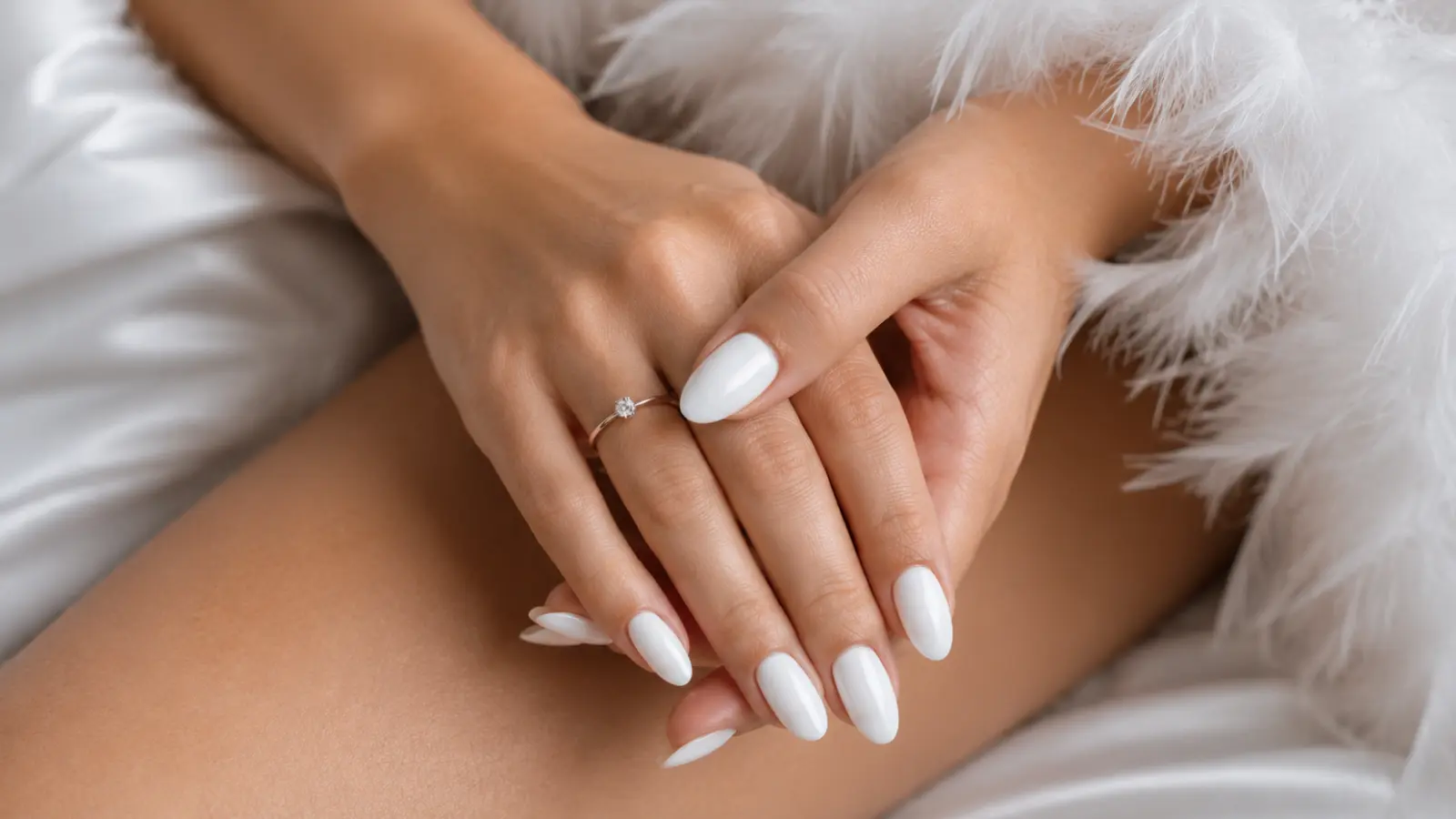
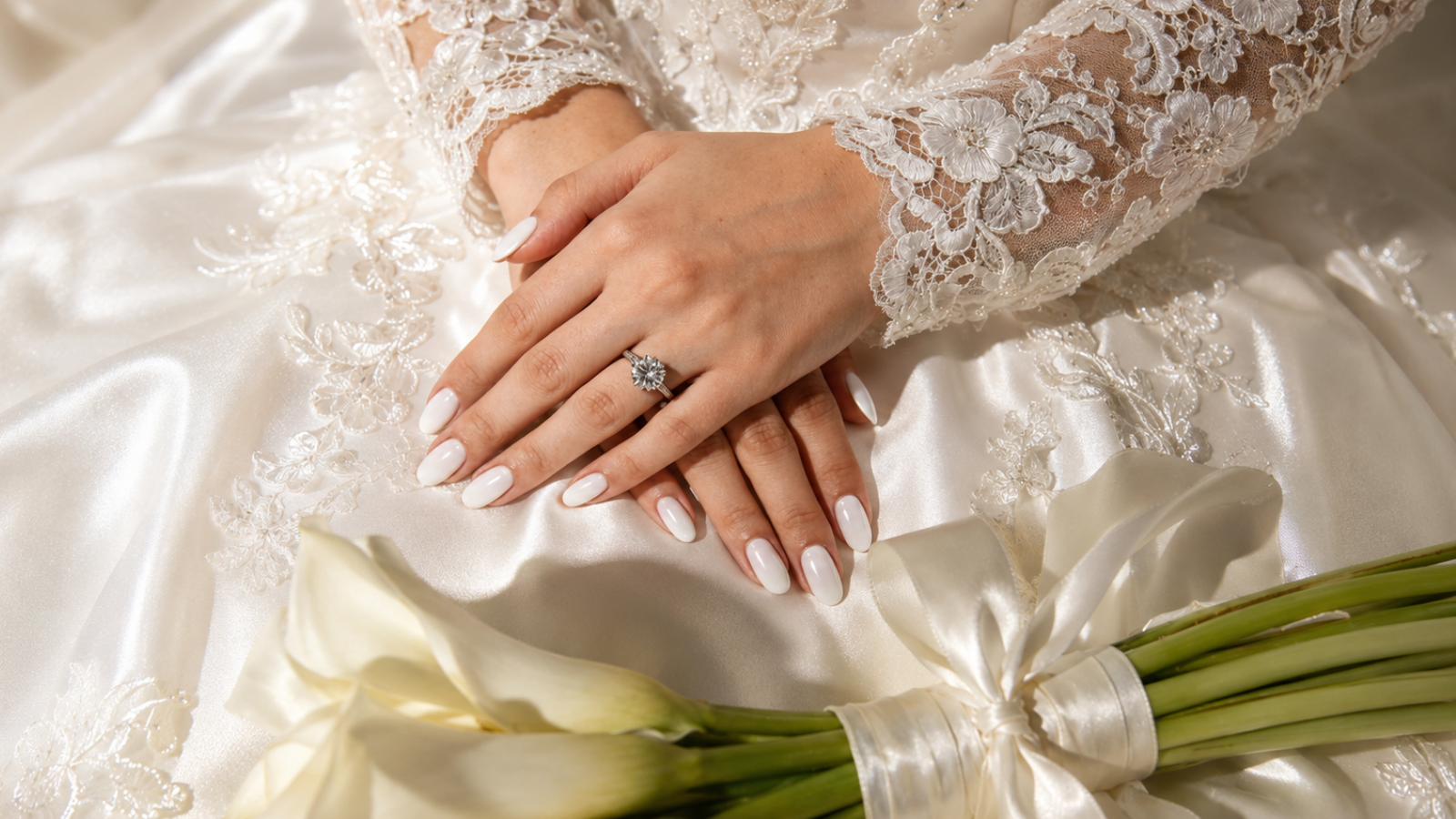
Classic white wedding nails are fully opaque, fully pigmented, and make a clear and confident statement. This is the white of a freshly painted wall — clean, bright, and unmistakable. Done on a well-shaped nail with a high-gloss top coat, classic white is bold in a way that reads as intentional rather than stark.
Classic white works best at modern, minimalist, and fashion-forward weddings — beach ceremonies, city hall elopements, contemporary venues where the aesthetic is clean lines and strong choices. It also works at maximalist celebrations where the dress and décor are elaborate enough that a bold white nail is simply part of a larger visual statement rather than fighting for attention.
The finish matters enormously with opaque white. A glossy top coat keeps classic white looking polished and modern. A matte top coat transforms the same white into something softer and more editorial — less “bright nail,” more “intentional design choice.” Many brides who find full gloss white too stark discover that a matte version of the same color works completely.
Shape recommendations for classic white: almond and oval shapes prevent the full-coverage opaque white from reading as artificial. Square shapes work at shorter lengths. Coffin and stiletto shapes push classic white into editorial territory — deliberate and fashion-forward rather than traditionally bridal. Choose your shape based on the overall aesthetic of your wedding, not just the nail in isolation.
Milky White Wedding Nails
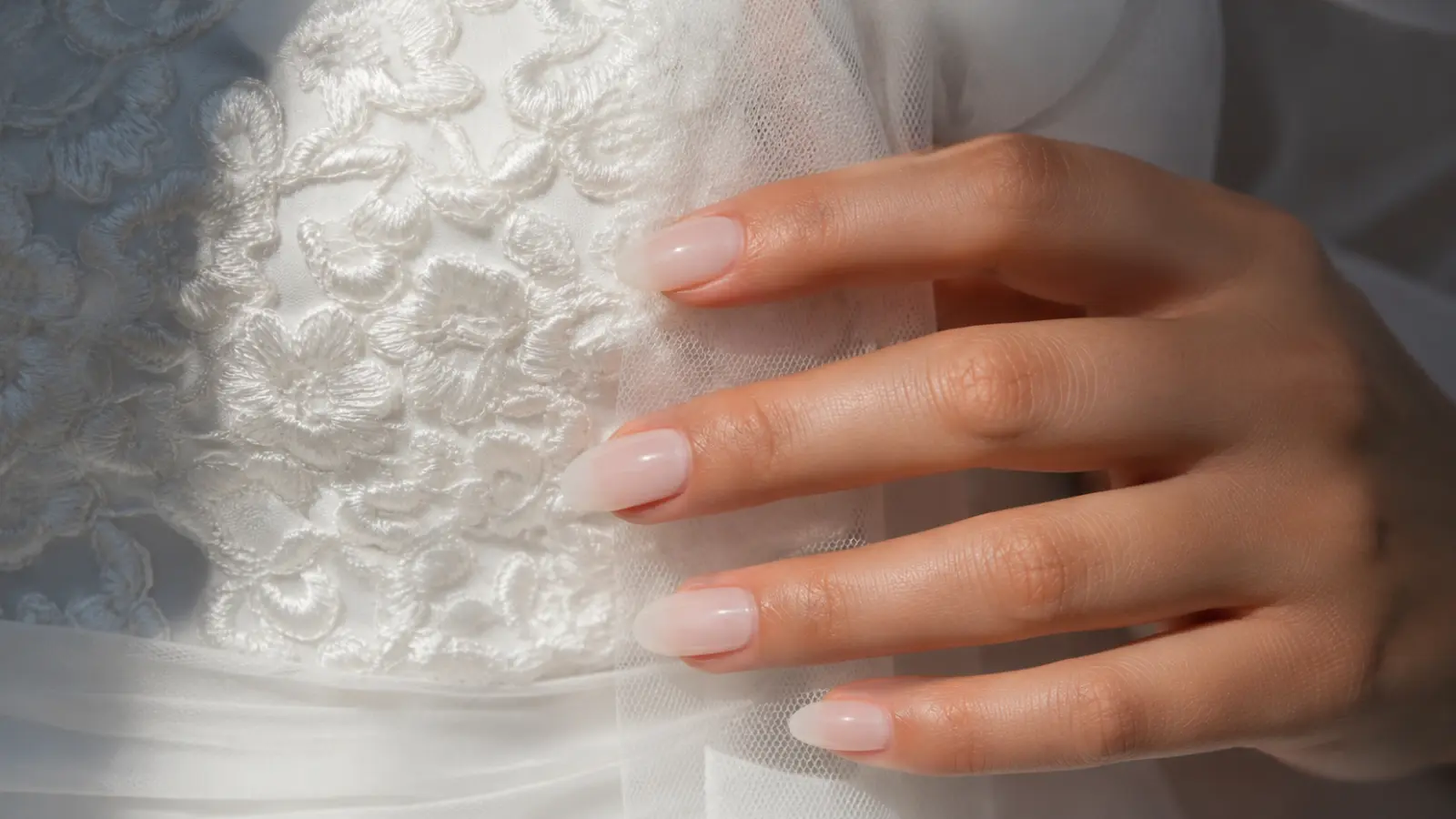
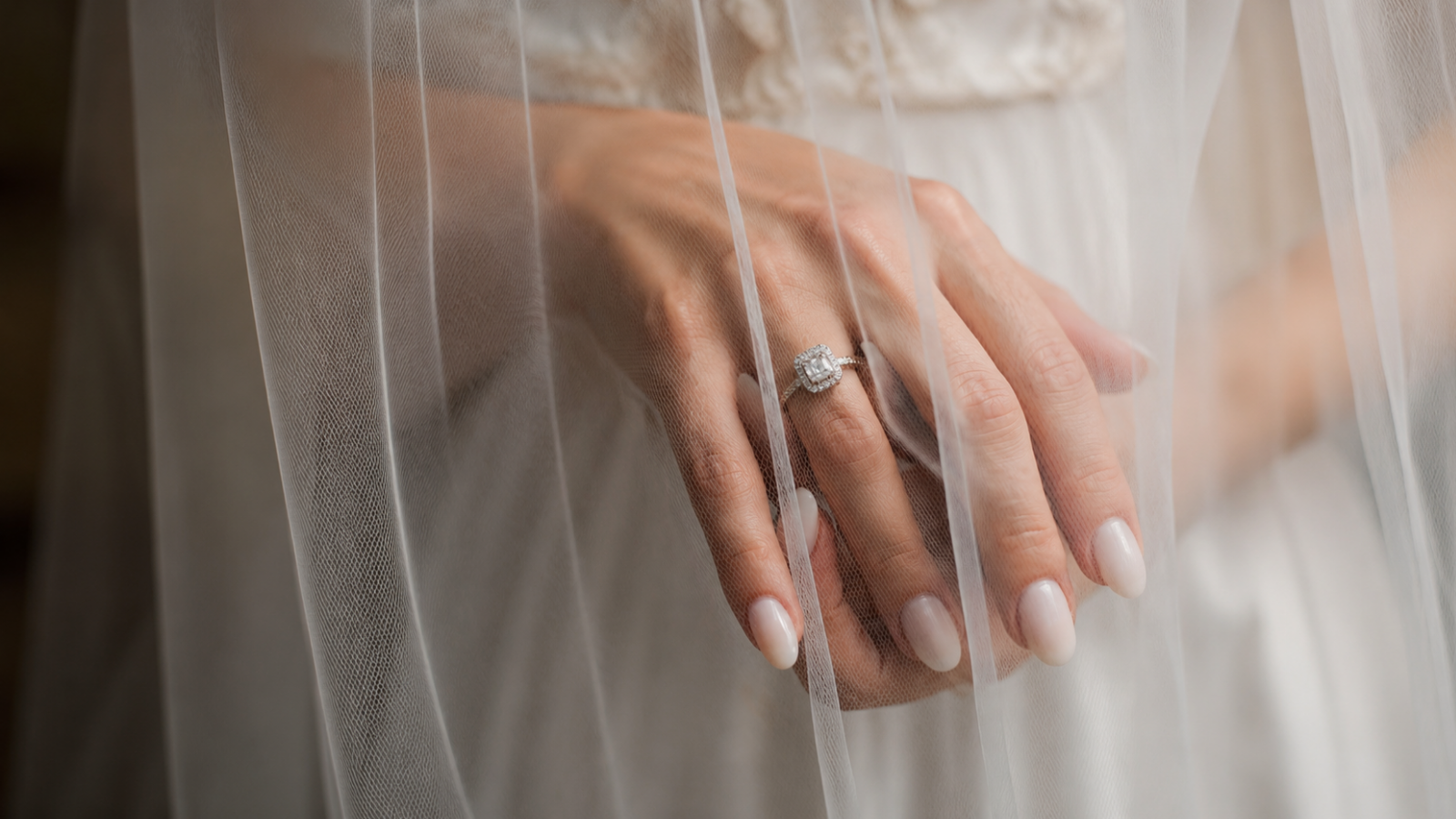
Milky white is the finish that has dominated bridal nails for the past two years — and it has dominated for a reason. It is the most universally flattering version of white that exists on a nail.
What milky white actually is: a sheer-to-semi-opaque polish that creates a soft, luminous white with translucency — you can see the nail bed through it, which means the natural pink undertone of your skin shows through and warms the white rather than creating a stark painted surface. The result looks like frosted glass, or the inside of a shell, or — fittingly — milk held up to light. It is white without being white-white, and that distinction is everything.
Why it photographs so well: milky white catches light differently at different angles. In direct flash photography it reads as soft and clean. In natural light it picks up a slight warmth. In dim venue lighting it glows rather than reflecting harshly. Every lighting condition that exists on a wedding day makes milky white nails look good — which cannot be said of most finishes.
Why it works across skin tones: because the translucency lets the natural nail color show through, milky white adapts to the undertone of each person’s skin rather than sitting on top of it as a fixed color. On fair skin it reads as almost cloud-like. On medium skin it picks up warmth and looks genuinely luminous. On deeper skin tones it creates a beautiful contrast while still feeling soft rather than stark.
The practical note: milky white typically requires two to three coats to reach its ideal finish — one coat looks too sheer, four coats starts to lose the translucency that makes it special. Have your nail artist build it slowly and assess at each coat. The sweet spot is usually two coats with a high-shine top coat.
Best milky white nail polishes and gels used at salons: OPI “Funny Bunny,” Essie “Blanc,” CND Shellac “Negligee” (sheerer), and Gelish “Sheree White” are among the most commonly used professional milky white options. If you are going to a new salon for your wedding nails, bring a reference photo of the specific milky white you want — “milky white” means different things to different artists.
White Chrome Wedding Nails
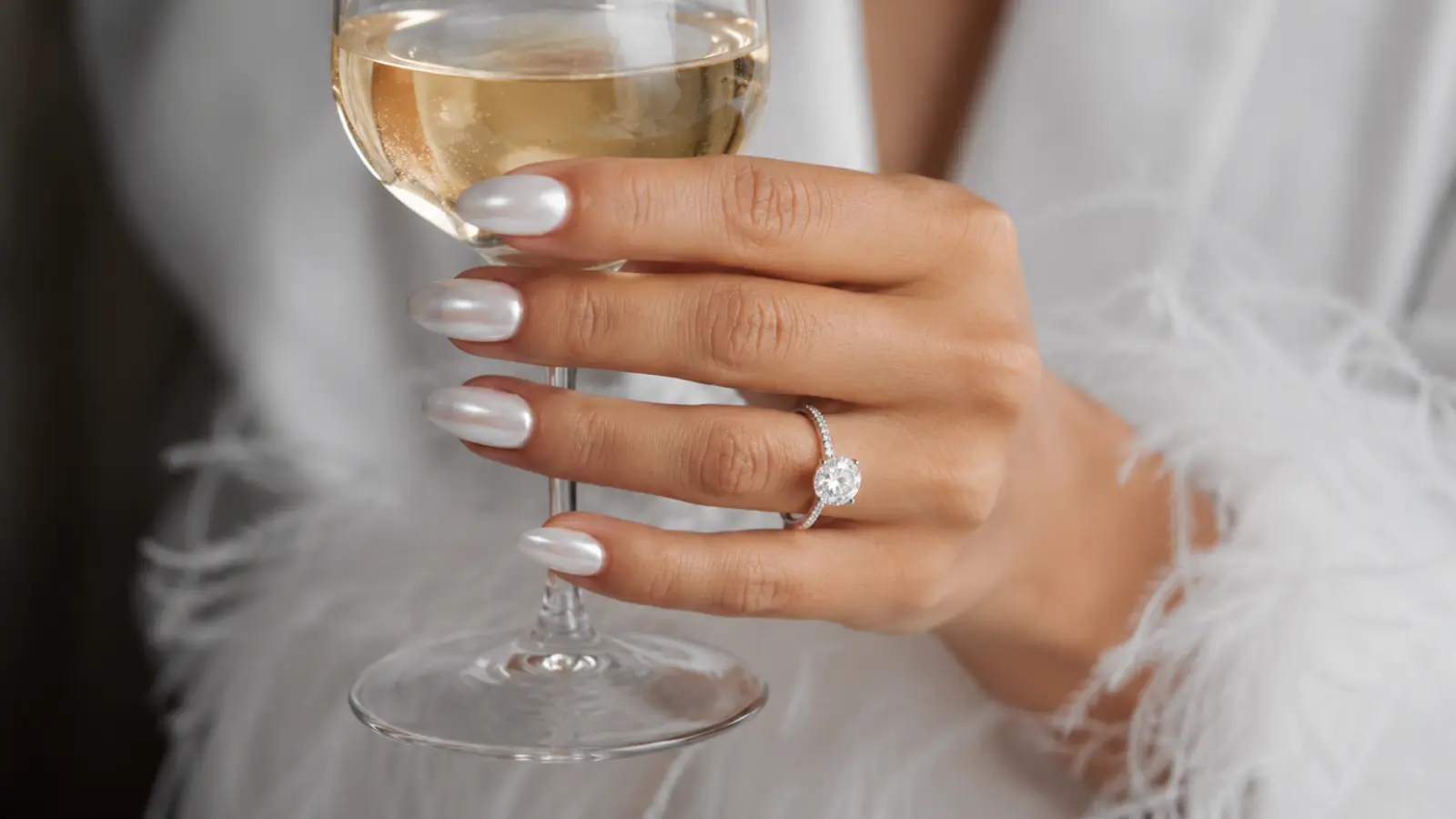
White chrome nails are the most dramatic and modern version of white in the bridal nail spectrum. A chrome finish is achieved by applying a metallic powder over a cured gel base — the result is a mirror-like, highly reflective surface that catches every light source in the room and turns it into a bright, sharp reflection. White chrome specifically reads as liquid mercury or polished platinum on the nail.
White chrome is not a subtle choice, and it should not be treated as one. It is bold, editorial, and fashion-forward in a way that works beautifully at the right wedding and looks out of place at others. Modern minimalist weddings, industrial venues, fashion-focused celebrations where the bride’s overall look is deliberately stylized — these are the contexts where white chrome nails make complete sense. A traditional church ceremony with a ballgown and cathedral veil is probably not the setting where chrome nails land best.
The photography consideration: chrome nails are extraordinary in photographs because they create their own light. In every shot where hands are visible, chrome nails add a point of visual interest that draws the eye naturally. The ring shows beautifully against a chrome nail because the reflective surface complements the metal without competing with the stone.
The application detail: white chrome requires a specific process — a gel base coat, color layer, cure under UV/LED lamp, and then chrome powder applied with a sponge applicator and buffed to activate the mirror finish, followed by a no-wipe top coat to seal it. It is not a polish you can replicate at home with standard products. Go to a nail artist who has done chrome work before and ask to see photos of their chrome results specifically — the quality of the chrome powder and the technique of the application make an enormous difference in the final finish.
Maintenance note: chrome nails are gel nails and last as long as a gel manicure — two to three weeks with proper care. They can chip at the tips if subjected to heavy use. For the wedding day specifically, schedule chrome nails one to two days before, avoid hand-intensive activities in the 24 hours after application, and bring a small bottle of nail glue as a just-in-case measure.
White and Gold Wedding Nails
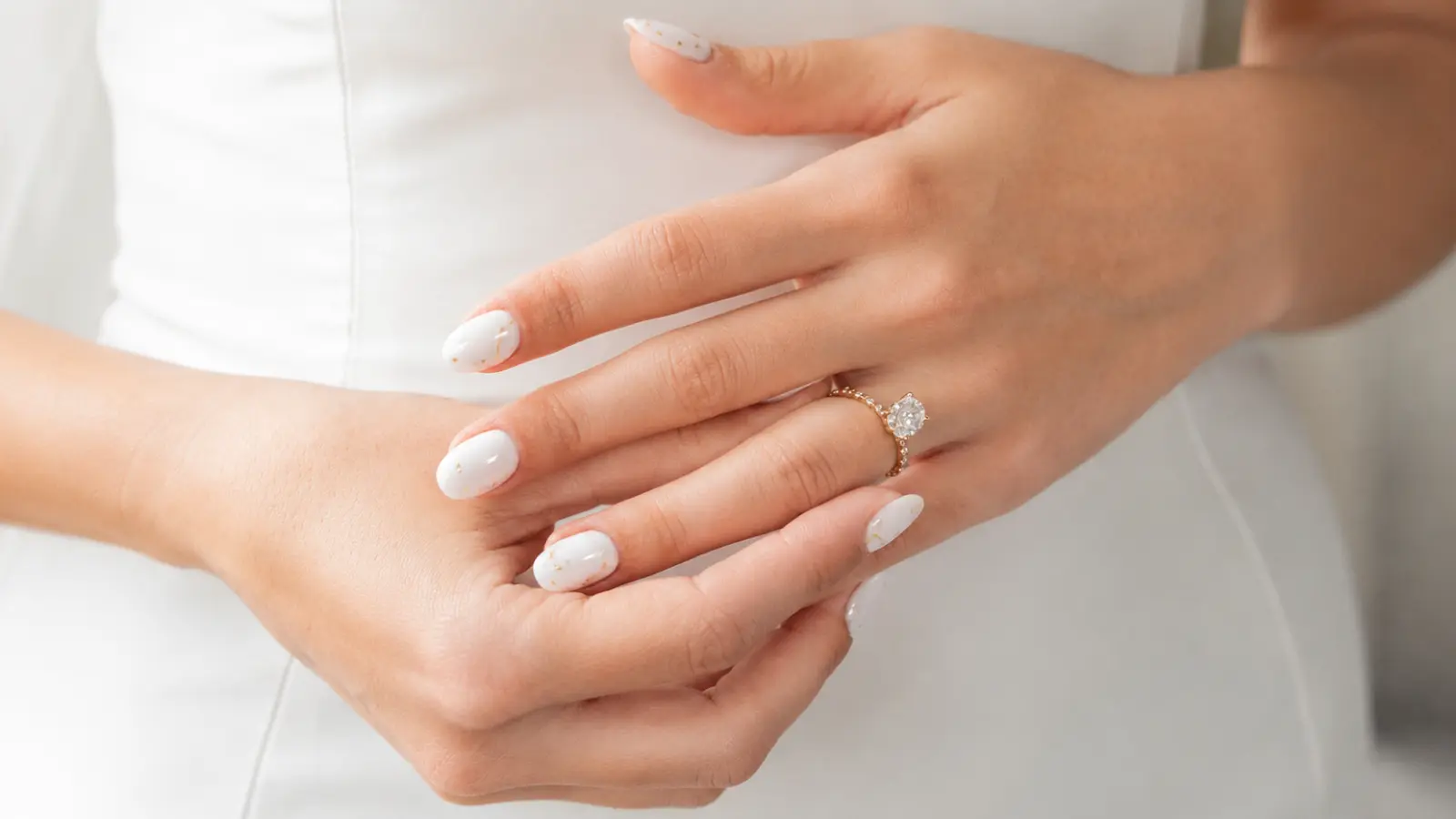
White and gold is the most classically luxurious combination in the bridal nail world — and it earns that reputation because the contrast actually works. Gold warms white in a way that prevents it from reading as cold or clinical, and white gives gold a clean backdrop that lets it read as elegant rather than heavy. The combination is simultaneously romantic and polished, which is exactly the register most brides are aiming for.
The ways white and gold appear on wedding nails vary significantly in how bold they read:
Gold foil on white: Delicate fragments of gold leaf or foil placed on one or two accent nails over a white base. The most subtle interpretation — the gold catches light without dominating the nail. Works at every wedding style from traditional to contemporary.
Gold French tip on white: The classic French tip shape with gold replacing the white tip. Sophisticated and structured, works beautifully at longer nail lengths. This is the nail version of a gold-trimmed wedding dress — refined and deliberate.
Gold nail art on white: Thin gold lines, geometric patterns, floral outlines, or abstract swirls on a white base. The specific design determines how traditional or modern the look reads. Fine-line gold art on white is one of the most editorial bridal nail looks currently in salons.
White with gold glitter accent: A solid white nail with a single accent nail in gold glitter or gold chrome. The sparkle adds visual interest without requiring the discipline of nail art.
White chrome with gold details: The most modern interpretation — chrome white as the base with fine gold nail art or gold foil on one or two nails. This combination is high-impact and works best at fashion-forward celebrations.
The ring consideration with white and gold: if the engagement ring or wedding band is yellow gold, white and gold nails create a visual echo that looks intentional and elegant rather than accidental. If the ring is platinum or white gold, white and silver or white chrome reads more cohesively than white and yellow gold.
White French Wedding Nails
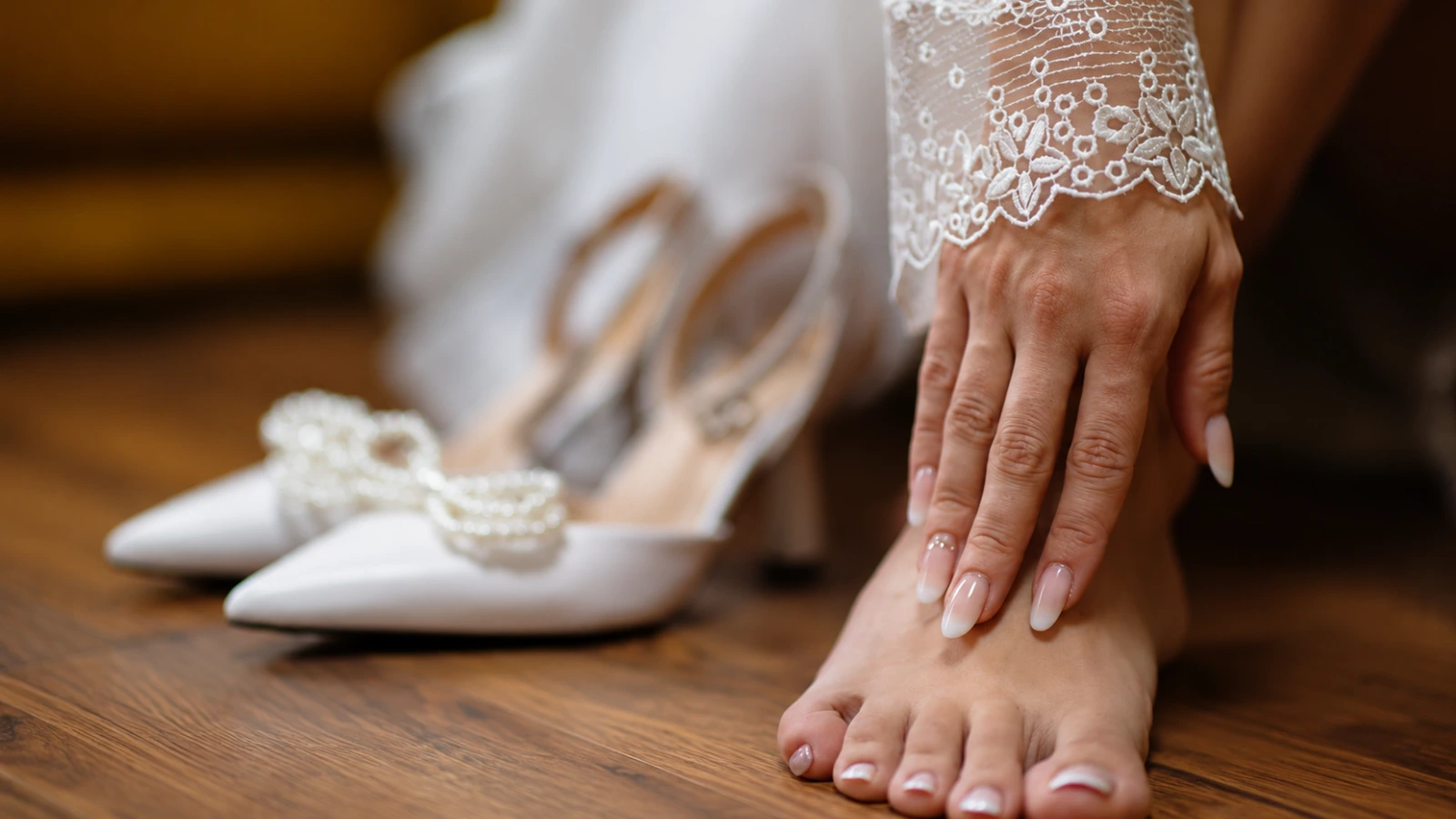
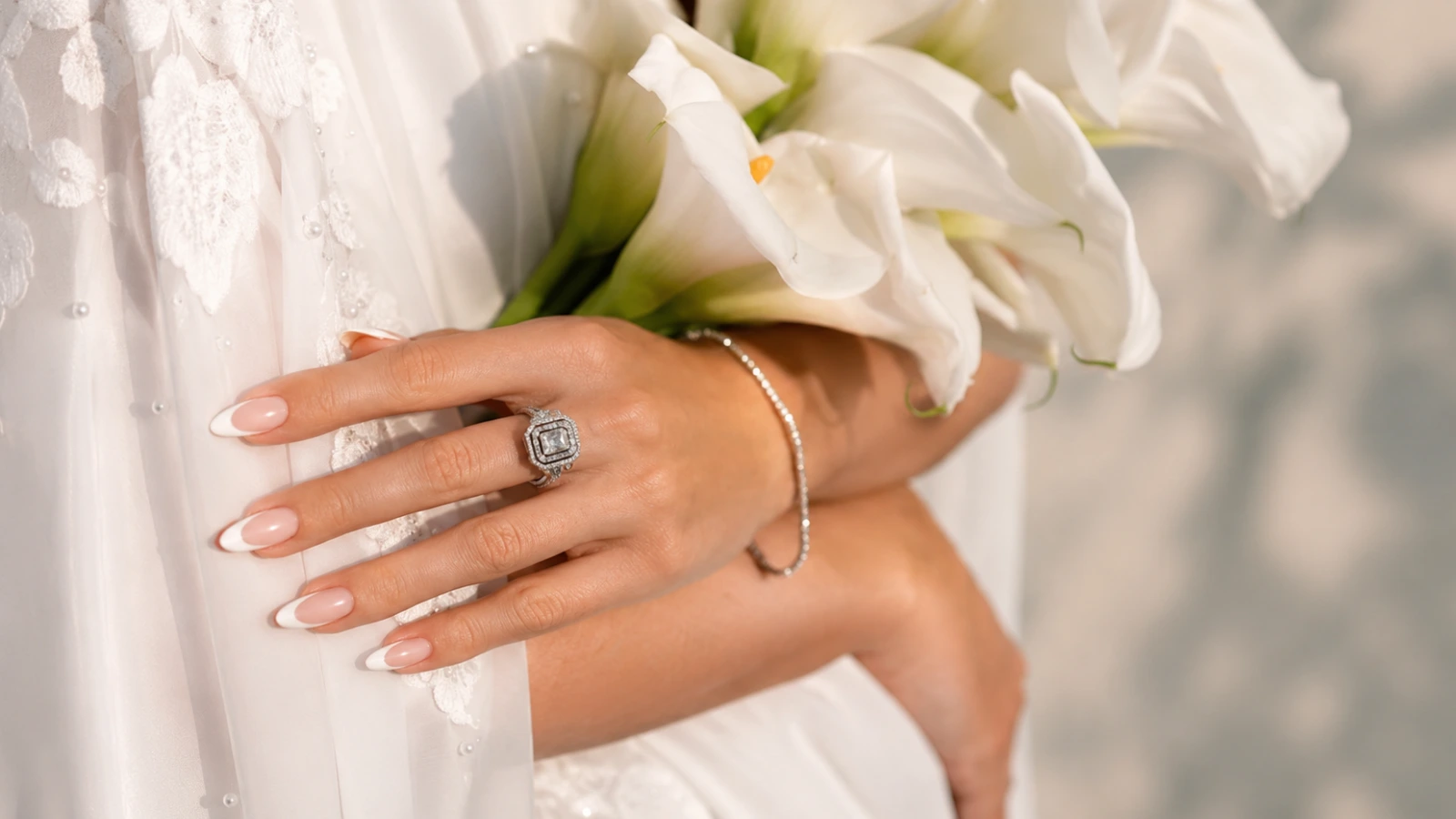
French tip wedding nails have been a bridal nail standard for decades — and they have maintained that status because they genuinely work. A clean white French tip on a natural or nude base is one of the most polished, finished looks that exists on a nail, and it photographs cleanly in every context.
What makes the modern bridal French tip different from the version that dominated the 2000s is shape and proportion. The original French manicure had a thick, perfectly defined white tip with a stark line between the tip and the base. Modern bridal French tips are more varied — and more interesting.
Classic French tip: The original — natural or nude base with a white tip, clean line, glossy finish. Still works completely for brides who want a traditional, time-tested bridal nail. Nothing about it feels dated if the nail shape is current and the line is clean.
Soft French tip: The same shape as the classic French but with a blurred or softened line between the tip and the base rather than a sharp demarcation. The transition is gradual, which makes the nail look more natural and less painted. This version is particularly beautiful in milky white — the tip grades into the translucent base seamlessly.
Micro French tip: A very fine line of white at the very edge of the nail rather than a substantial tip section. Delicate and modern — looks particularly refined on medium-length oval or almond nails. For brides who love the French manicure concept but want something that reads less obviously as “French manicure.”
French tip with nail art: The classic French base with added detail — a thin gold line along the smile line, small floral art on one accent nail, or minimalist geometric elements. The art adds individuality without abandoning the clean structure of the French.
Colored French tip: The French shape with a non-white tip — champagne, blush, or a very pale pink in place of bright white. This reads as French-inspired rather than French-traditional, and the softer tip color works particularly well for brides who want the elegance of the shape without the brightness of white.
Pearl White Wedding Nails
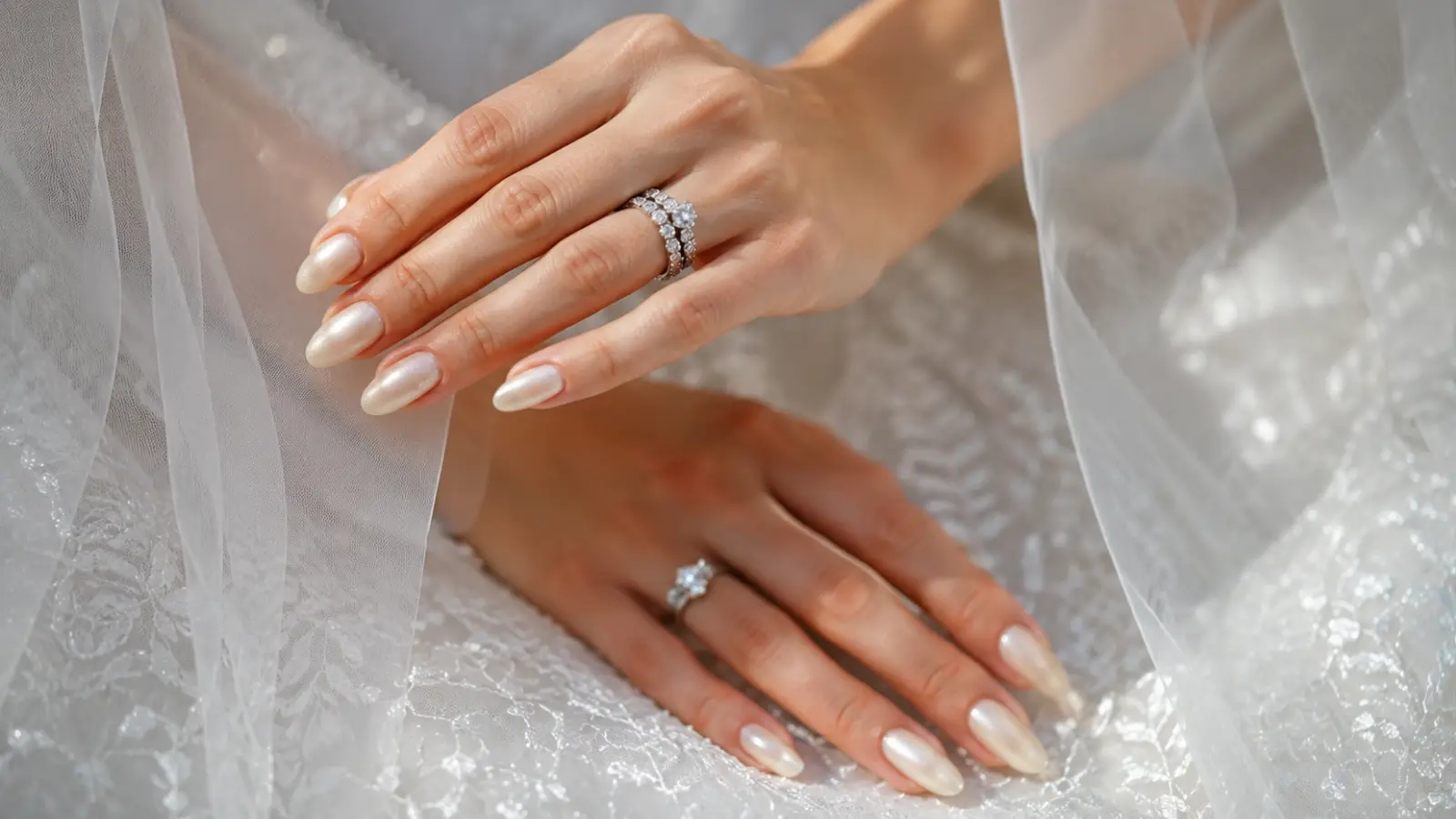
Pearl white sits between milky white and chrome on the finish spectrum — it has more shimmer than milky white but softer, more diffused light than chrome. The specific quality of a pearl finish is its iridescence: it shifts between white, pale pink, and soft silver depending on the angle and the light source. In direct sunlight it glows. Under candlelight it shimmers. In photographs it catches every light differently.
Pearl white is the most romantically bridal of all the white finishes — it looks like the surface of the pearls that generations of brides have worn at their weddings, and that association is not accidental. Many brides choose pearl white nails specifically because they are wearing pearl jewelry or a pearl-embellished dress, and the nail finish creates a visual continuity that reads as deliberate and elegant.
Pearl white also has a practical advantage: the shimmer conceals minor imperfections in the nail surface that a flat opaque white would reveal. For brides whose nails are not perfectly smooth or who are working with natural nails rather than gel extensions, pearl white is a more forgiving finish than full opaque white.
The finish works at every nail length but reads most beautifully at medium to long lengths where the surface area gives the iridescence room to shift and catch light. At very short nail lengths the pearl quality is harder to see, which makes milky white one of the most effective choices for short wedding nails.
White Glitter Wedding Nails
White glitter wedding nails fall into two distinct categories that produce very different looks — and knowing which one you want before you sit down at the nail appointment saves significant time and potential disappointment.
White base with glitter accents: A milky or opaque white nail with glitter added on top — either a full glitter top coat, a glitter gradient from the tip down, or glitter concentrated at the cuticle as a reverse french effect. The white base keeps the look soft and bridal; the glitter adds sparkle without changing the overall white aesthetic. This is the more traditionally bridal of the two interpretations and the one most likely to appear in wedding content.
White glitter as the nail itself: A polish or gel that is white and glittery throughout — the shimmer is part of the base color rather than an addition on top. This reads as more festive and less polished than a clean white with glitter accents, and works better at celebrations where sparkle is already a dominant aesthetic theme (winter weddings, NYE celebrations, maximalist receptions).
The glitter particle size matters too. Fine shimmer reads as elegant and photogenic. Chunky or holographic glitter reads as festive and bold — more appropriate at a party than at a ceremony. For bridal nails specifically, fine white shimmer or iridescent micro-glitter in a white base produces the most universally flattering and wedding-appropriate result.
White Wedding Nails for Brides — How to Choose Your Finish
The question most brides arrive at after looking at options is: which version of white is right for my specific wedding? The answer depends on three things — the dress, the venue, and the overall aesthetic.
Match the finish to the dress fabric. A silk or satin gown has a smooth, reflective surface — it reads best with nails that have a similar quality: pearl white, chrome white, or high-gloss opaque white. A lace or textured gown has a softer, more diffused surface — milky white or soft French tips complement it better than a high-shine chrome. A beaded or embellished gown is already doing a lot visually — milky white or a delicate pearl keeps the hands from competing with the dress detail.
Match the finish to the venue light. Outdoor ceremonies in natural light make pearl and milky white look extraordinary — both finishes are designed to respond to natural light. Indoor venues with dim or warm lighting make chrome and glitter more effective because they generate their own light rather than relying on ambient conditions. Bright indoor venues with overhead lighting work well with almost any white finish.
Match the finish to the aesthetic. Traditional and classic weddings: classic white French tip, milky white, or pearl. Modern and minimalist: opaque white, white chrome. Romantic and garden-style: pearl white, milky white with floral art. Fashion-forward or editorial: chrome white, white with gold geometric nail art. Beach or destination: milky white, soft French.
The practical checklist before booking: Bring a reference photo of the exact finish you want — not just “white nails.” Confirm the salon has done that specific finish before and ask to see photos of their work. Book gel or gel-polish rather than regular polish — white shows chips and wear more than any other color. Knowing when to get your nails done before the wedding matters because scheduling one to two days before the wedding rather than the morning of helps keep the manicure fresh. And test the length you plan to wear before the wedding week — the day itself is not the time to discover that a nail length you have never worn before feels unfamiliar.
Can Guests Wear White Nails to a Wedding?
Yes. When choosing wedding guest nails, guests can absolutely wear white nails to a wedding.
The tradition of not wearing white to a wedding — one of the most widely understood social rules in American wedding culture — applies specifically to clothing. The concern is wearing a white dress or outfit that could be confused with or could visually compete with the bride’s gown. Nail polish is not clothing, and a guest’s nail color makes no statement about the wedding party hierarchy or the bride’s singular status as the person in white that day.
White nails have also become one of the most common neutral nail looks in American beauty culture over the past two years. They appear constantly at events of every formality, including weddings, without any social friction. A guest who shows up with milky white nails or a white French tip is simply wearing one of the most popular nail looks of the moment — not making any kind of statement about the bride or the wedding.
That said, if you are a guest who feels uncertain about it — or who knows the bride has very specific feelings about the wedding aesthetic — softer options like milky white, pearl white, or a nude-with-white-tip French manicure read as neutral rather than clearly white. These are safe choices that will never create any awkward conversation.
The one scenario where a guest might reconsider full opaque white nails: if the wedding has a very specific color theme and the bride has communicated that she wants the visual palette of the day to feel cohesive in a particular way. In that case, checking with the bride or wedding party is the considerate move — not because white nails are wrong, but because some couples have strong aesthetic intentions for their wedding day and appreciate guests being thoughtful about the overall visual.
White Wedding Nails Inspiration Board
Before choosing your final white manicure, it helps to see different white nail finishes across dress styles, skin tones, nail shapes, and wedding photography settings. Explore our white wedding nails inspiration board for milky white nails, pearl white finishes, white French tips, white chrome manicures, white and gold details, short white nails, and elegant bridal ideas to save for your appointment.
Final thoughts
The best white wedding nails are not simply about choosing the color white.
They are about choosing the right version of white — the finish that complements the dress naturally, the undertone that flatters the skin beautifully, and the texture that photographs elegantly throughout every part of the wedding day.
That is why milky white, pearl finishes, soft French tips, and refined chrome details continue to dominate bridal nail trends while harsher or overly complicated designs fade quickly. The strongest bridal nail choices always feel intentional rather than excessive.
And when the right white is chosen carefully, the nails stop looking like a trend and start feeling like part of the wedding itself.
Frequently asked questions (FAQ)
What are the most popular white wedding nail styles?
Milky white nails, pearl white finishes, white French tips, and soft white chrome are the most popular white wedding nail styles because they look elegant and photograph beautifully.
Can guests wear white nails to a wedding?
Yes. The tradition of avoiding white applies to clothing, not nail polish. White nails are considered a neutral and are completely appropriate for wedding guests.
What is the difference between milky white and opaque white nails?
Milky white nails have a soft translucent finish that looks natural and luminous, while opaque white nails are fully solid, brighter, and more dramatic.
Do white wedding nails work on short nails?
Yes. White nails look especially elegant on short oval or rounded nails because the clean color keeps the manicure polished and timeless.
What white nail finish looks most elegant for weddings?
Milky white and pearl white are usually considered the most elegant bridal finishes because they reflect light softly and complement wedding dresses without looking too harsh.