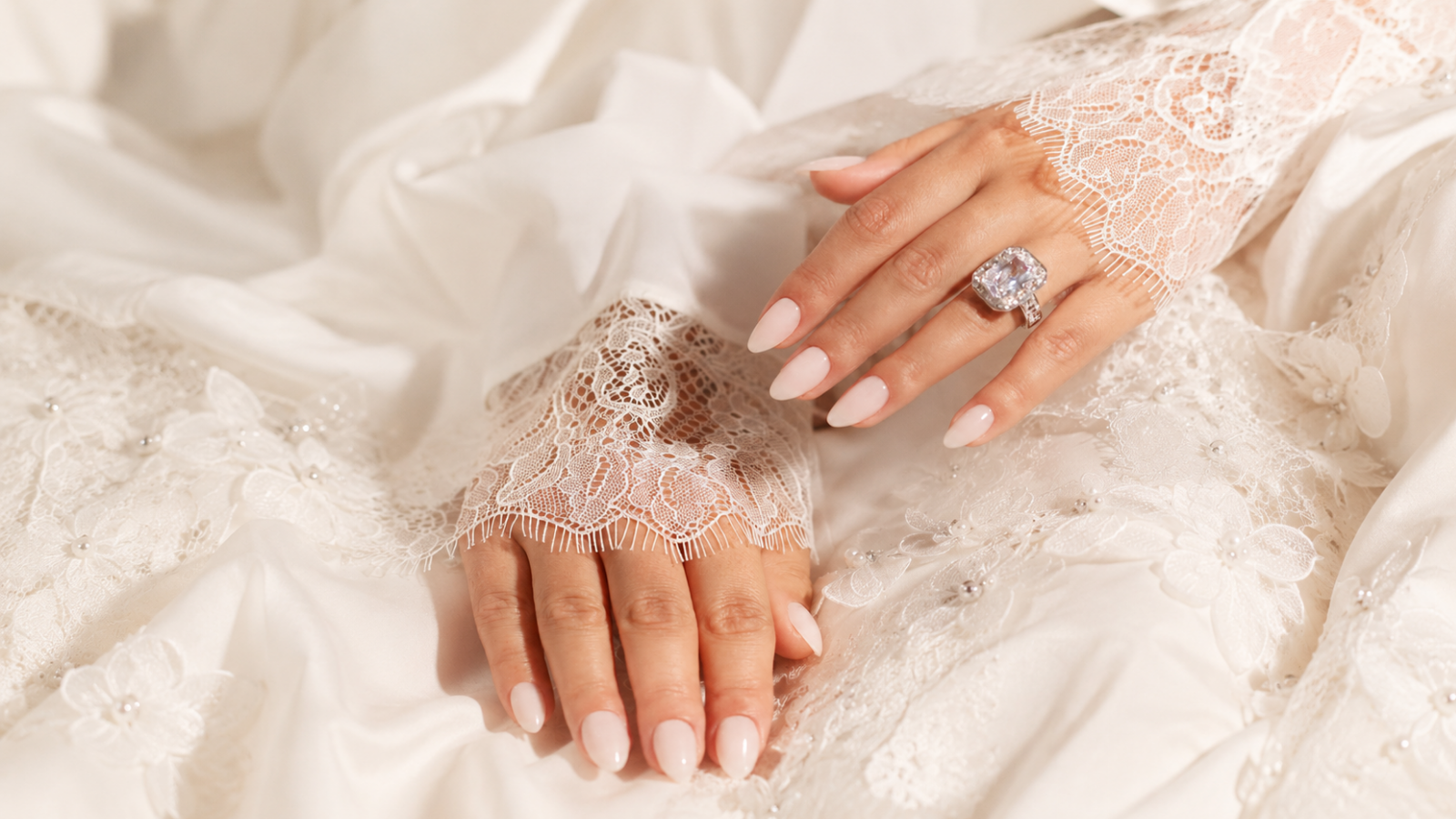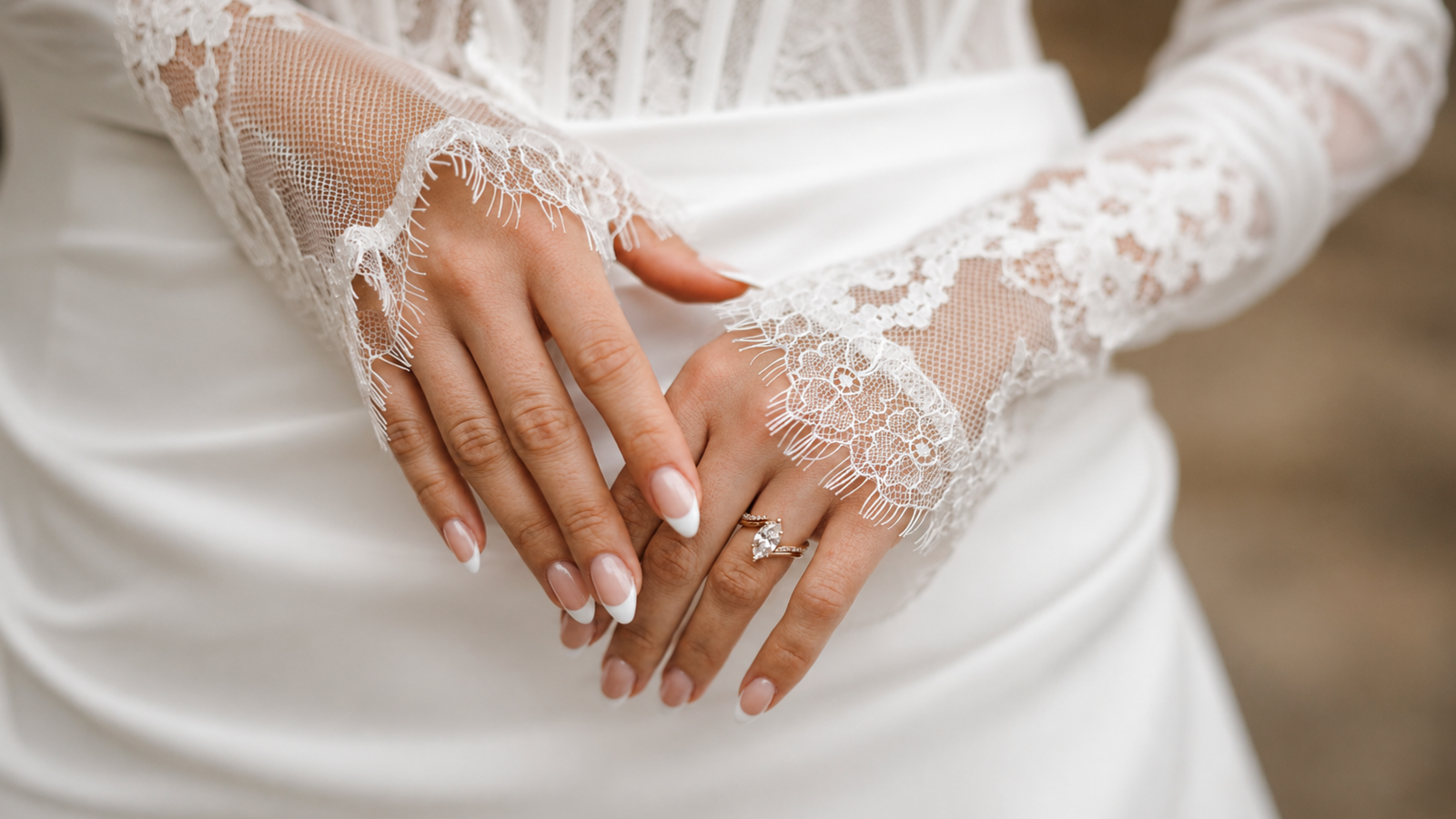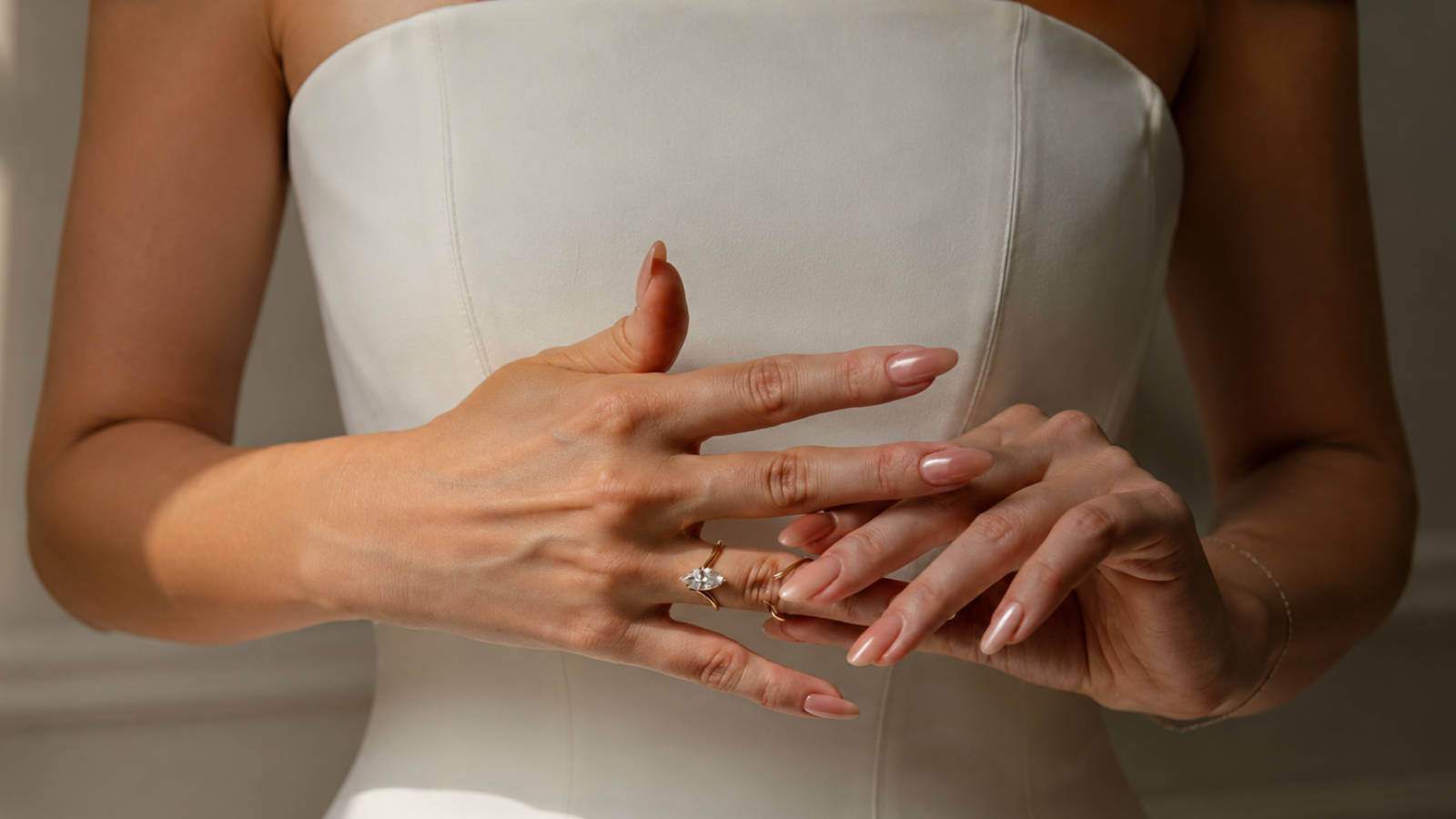
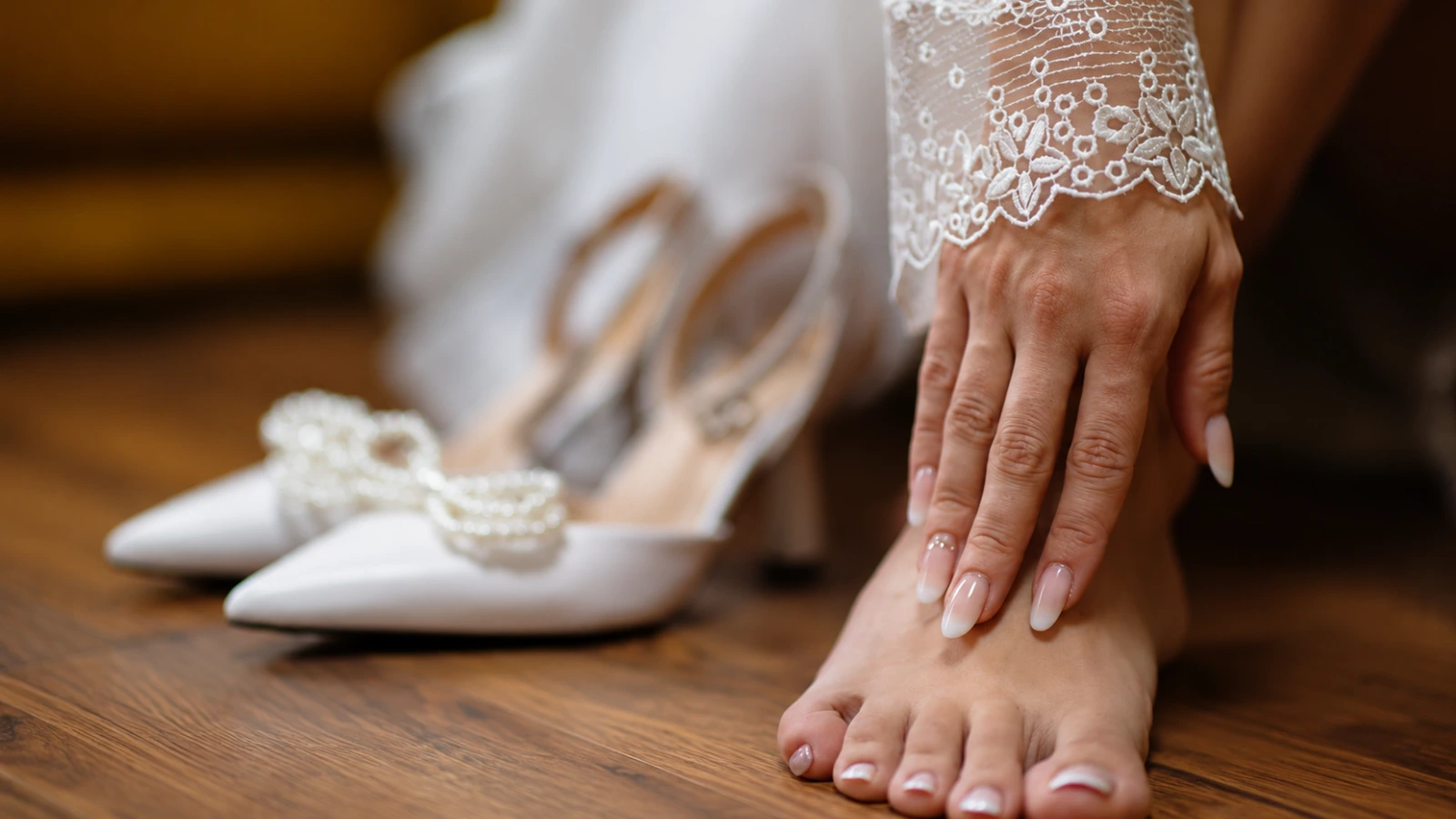
Wedding nails and toes should look coordinated enough to feel intentional, especially if the bride is wearing open-toe shoes, sandals, or planning barefoot wedding photos.
A bridal mani-pedi is the combination of the wedding manicure and pedicure, usually chosen to complement the dress, ring, shoes, skin tone, photography style, and overall wedding aesthetic. The colors do not have to match exactly, but they should feel connected through the same color family, finish, undertone, or level of formality.
This guide covers everything brides, guests, and bridesmaids need to know about wedding nails and toes, including whether nails and toes should match, the best pedicure colors for weddings, French pedicures, wedding toenail ideas for open-toe shoes, bridal mani-pedi coordination, and the pedicure styles that photograph beautifully on a real wedding day.
Wedding Nails and Toes: Should They Match?
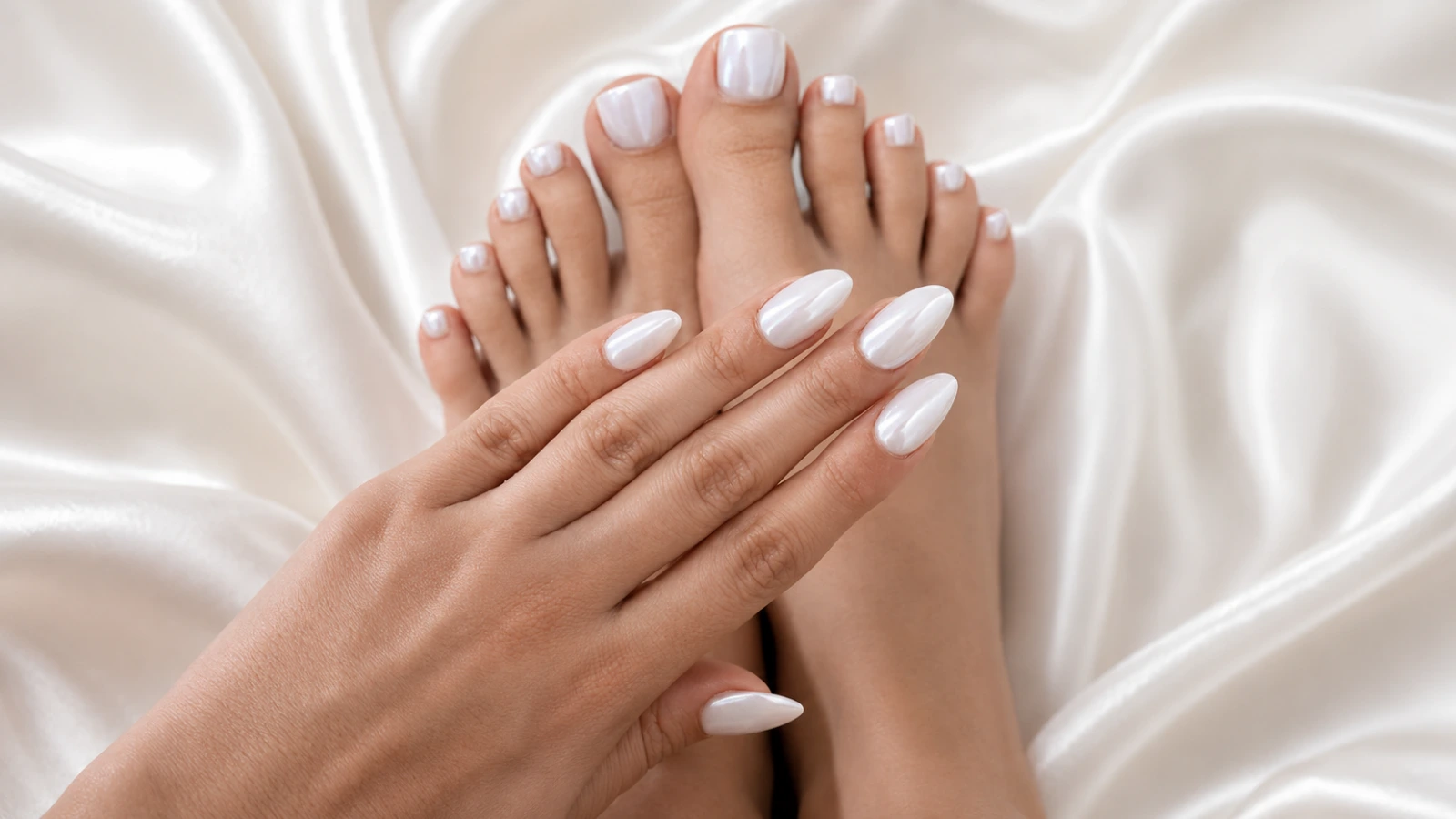
The short answer: they should coordinate, not necessarily match — and there is a meaningful difference between the two.
Matching means the exact same color and finish on fingernails and toenails. It is the most cohesive look, photographs cleanly in any shot that includes both hands and feet, and requires zero visual decision-making. If you are already committed to a specific fingernail color, applying the same gel shade to the toenails is always a safe and polished choice.
Coordinating means the same color family, or a closely related shade, in the same or a slightly different finish. A bride with white wedding nails, like a milky white gel manicure, might wear a soft nude pedicure — same cool-neutral palette, slightly different expression. A bride with a sheer pink glaze on her fingernails might wear the same shade in a matte finish on her toes. The result reads as intentional without being rigid.
What does not work and what shows up clearly in wedding photographs is the accidental combination. Dark burgundy toenails with a pale blush manicure. Bare, unpainted toenails with an elaborate fingernail design. Bright coral toes with a neutral nude hand. These are not bold choices. They read as oversights. And in photographs that you will look at for years, oversights are the details that catch the eye.
Many couples don’t realize how often the feet appear in wedding photography until they are reviewing the final gallery. A skilled photographer will capture the shoes, the aisle, the moments where the dress moves — and the toenails are there in every one of those shots. Understanding the full scope of wedding nails decisions, including the hands, helps put the toes in perspective: they are one piece of a coordinated whole, not a separate afterthought.
The three approaches — and when each one works
| Approach | What It Looks Like | Best For |
|---|---|---|
| Exact match | Identical shade and finish on hands and feet | Brides who want zero visual inconsistency · open-toe shoes · any style where the detail shots matter most |
| Coordinated | Same color family, slightly different shade or finish | Brides who want flexibility · different finishes (glossy nails / matte toes) · a slightly deeper or lighter version of the same color |
| Complementary | Different colors that share the same palette temperature | Brides who want more personal expression · cool-toned nails with a different cool-toned toe color · warm nudes across both with different undertones |
Wedding Toe Nails for Brides
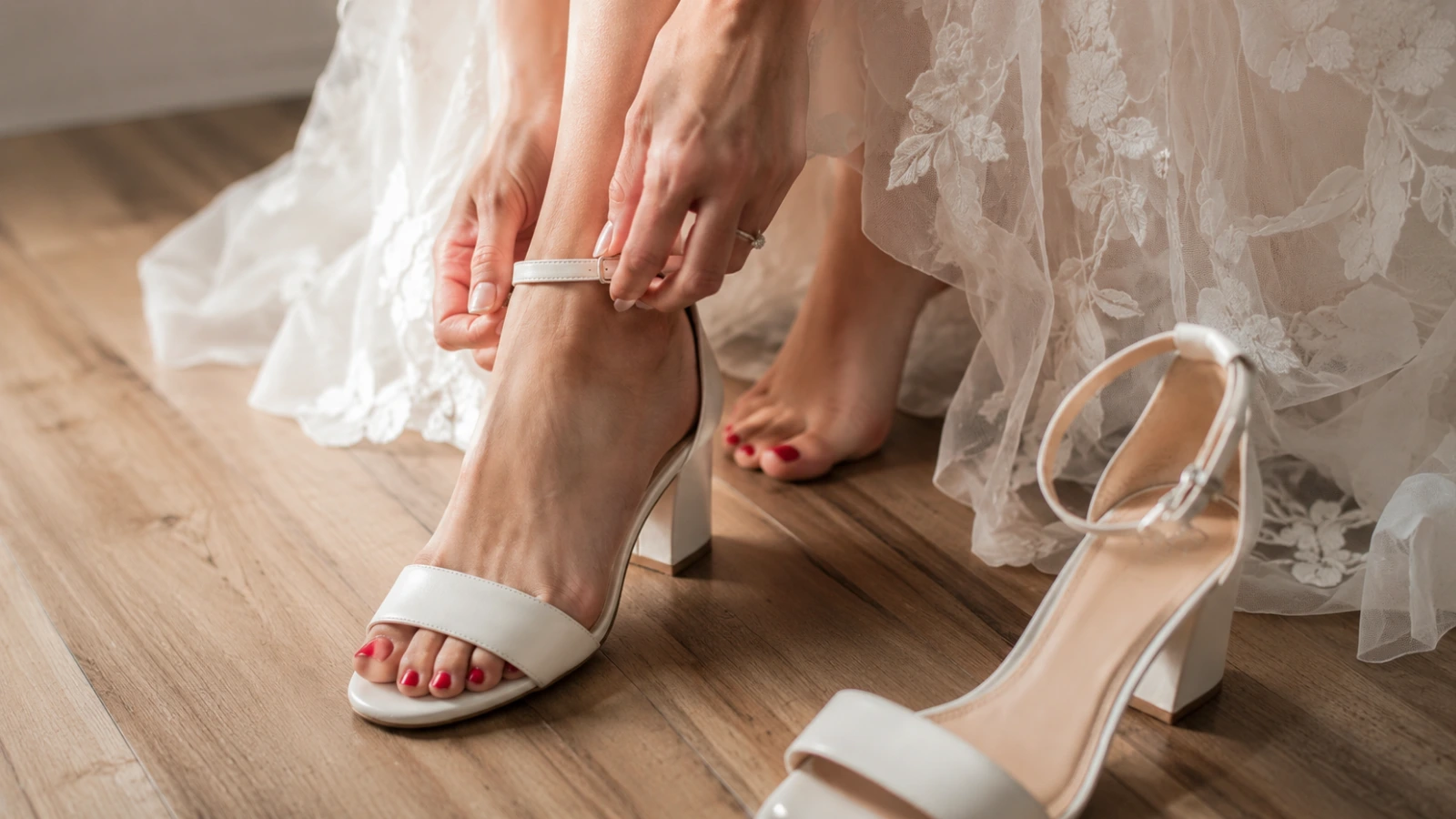
For the bride, the toenail decision is driven almost entirely by one question: what shoes are you wearing, and how much of the foot will be visible?
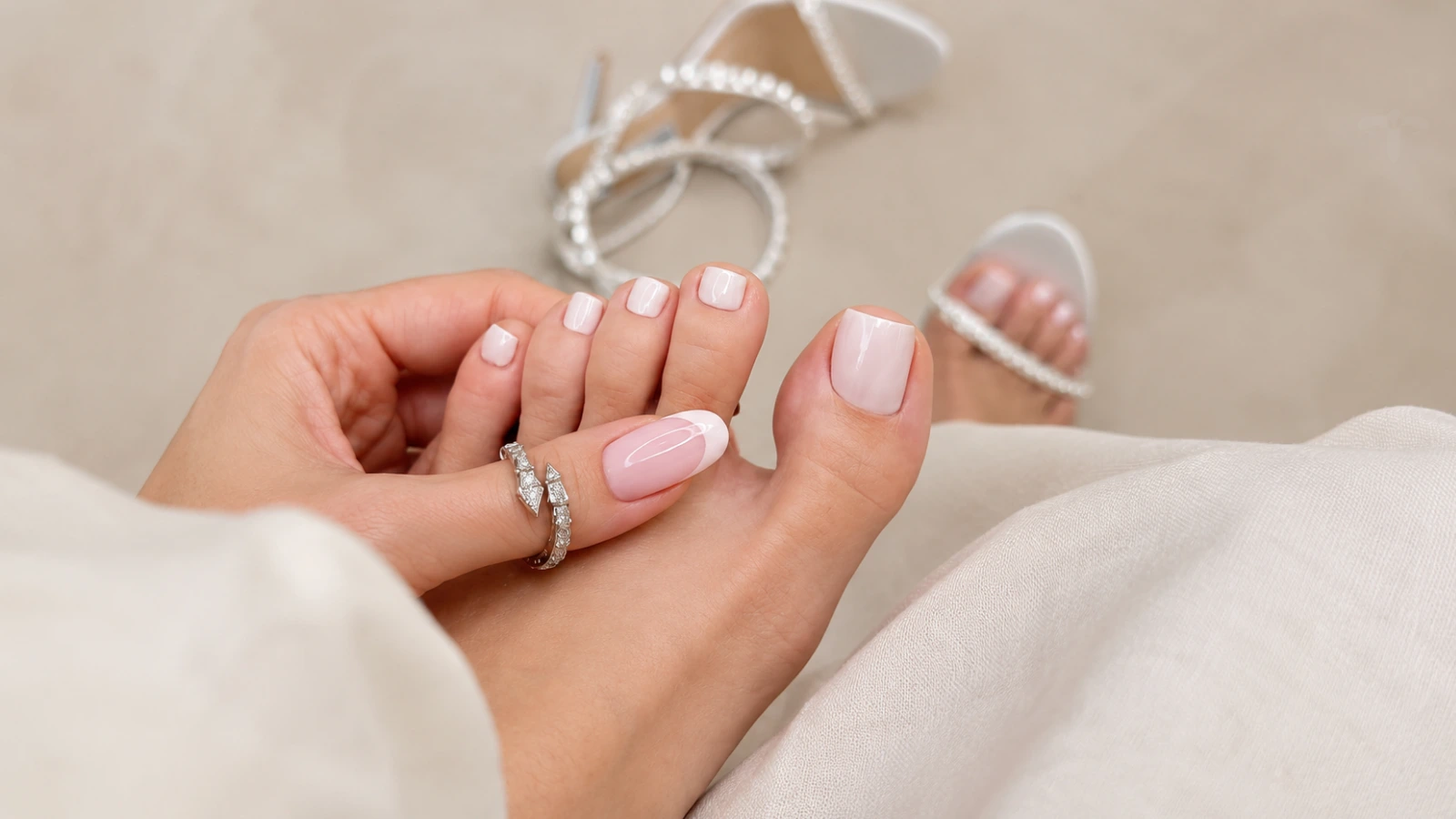
Open-toe heels and strappy sandals. One of the most common bridal shoe choices and the one that makes the pedicure most important. In open-toe shoes, the toenails appear in every photograph from the mid-body down. The big toenail is the most visible; the second and third are close behind. A polished, intentional pedicure in a color that coordinates with the fingernails becomes an important part of the overall look.
The most effective wedding nail colors for brides in open-toe shoes are the same neutrals that dominate the fingernail palette: soft nude, sheer pink, milky white, French tip, or a light champagne. These colors work because they do not compete with the shoe, the dress, or the fingernails — they complete the look quietly. A bride who has spent significant time choosing the right shoe deserves a pedicure that makes the shoe look better, not one that introduces a visual element the shoe has to compete with.
Closed-toe shoes. If the shoes are fully closed, the toenails are invisible in photographs — and the decision becomes entirely personal. A simple, clean gel in whatever color you find pleasant is the right choice. Many brides in closed-toe shoes still get a pedicure before the wedding because it feels good, because the getting-ready photographs sometimes include bare feet, and because the honeymoon is coming. But the specific color is genuinely low-stakes here.
Barefoot or beach wedding. The toenails become part of the styling. A bride walking barefoot on a beach or garden receives the same photographic treatment as a bride in open-toe heels — sometimes more, because there is nothing else to look at. A French tip on the toenails works beautifully against bare skin; a soft nude or sheer pink creates the same clean effect. This is the one setting where an accent nail on the big toe — a pearl or shimmer detail — makes the most photographic sense.
Bridal toe nail design ideas by shoe type
| Shoe Type | Best Pedicure Approach | What to Avoid |
|---|---|---|
| Open-toe heels | French tip · nude gel · sheer pink · milky white | Dark or bold colors that compete with a light dress · mismatched undertones with the fingernails |
| Strappy sandals | Nude that complements skin tone · champagne for metallic straps · soft pink for ivory leather | A color that clashes with the strap color · bare nails |
| Closed-toe pumps | Any color you prefer · simple gel in a personal favorite | Nothing — this is the low-stakes choice |
| Block-heel mules | Coordinates with fingernails · or a shade deeper in the same family | Unpainted nails or visually disconnected color |
| Barefoot / beach | French tip · sheer pink · pearl accent on big toe | Dark colors that interrupt the natural skin tone · chipped polish |
Wedding Toe Nails for Guests
Wedding guest nails and pedicures have significantly more freedom than the bride does — but more freedom does not mean no guidelines. The same general principle applies: intentional reads better than accidental, and nothing should compete with the couple or the wedding party in photographs.
For guests, the toenail question is mostly driven by the shoes. If you are wearing open-toe shoes or sandals to the wedding — which many guests do, particularly in warm seasons or at outdoor venues — the toenails are visible and should be done. A bare or chipped pedicure in a strappy sandal at a formal wedding is the kind of detail that other guests notice even if they never say anything.
The range of acceptable colors for guests is wider than for the bride. A clean red is perfectly appropriate at most weddings. Fall wedding nails, like deep berry and warm terracotta shades, work beautifully when they suit the outfit and the formality of the event. The one situation where guests should think twice about a bold toe color is when the shoes are a statement piece that the bold color will fight: a dramatic embroidered sandal does not need a competing pedicure color.
What tends to work reliably for guests across any wedding setting is the same neutral palette that works for the bride — nude, soft pink, sheer, French tip — but guests are not limited to it the way the bride is. The standard worth remembering: choose a color that looks chosen for your outfit, not a color that demands attention for its own sake.
Best Pedicure Colors for Weddings
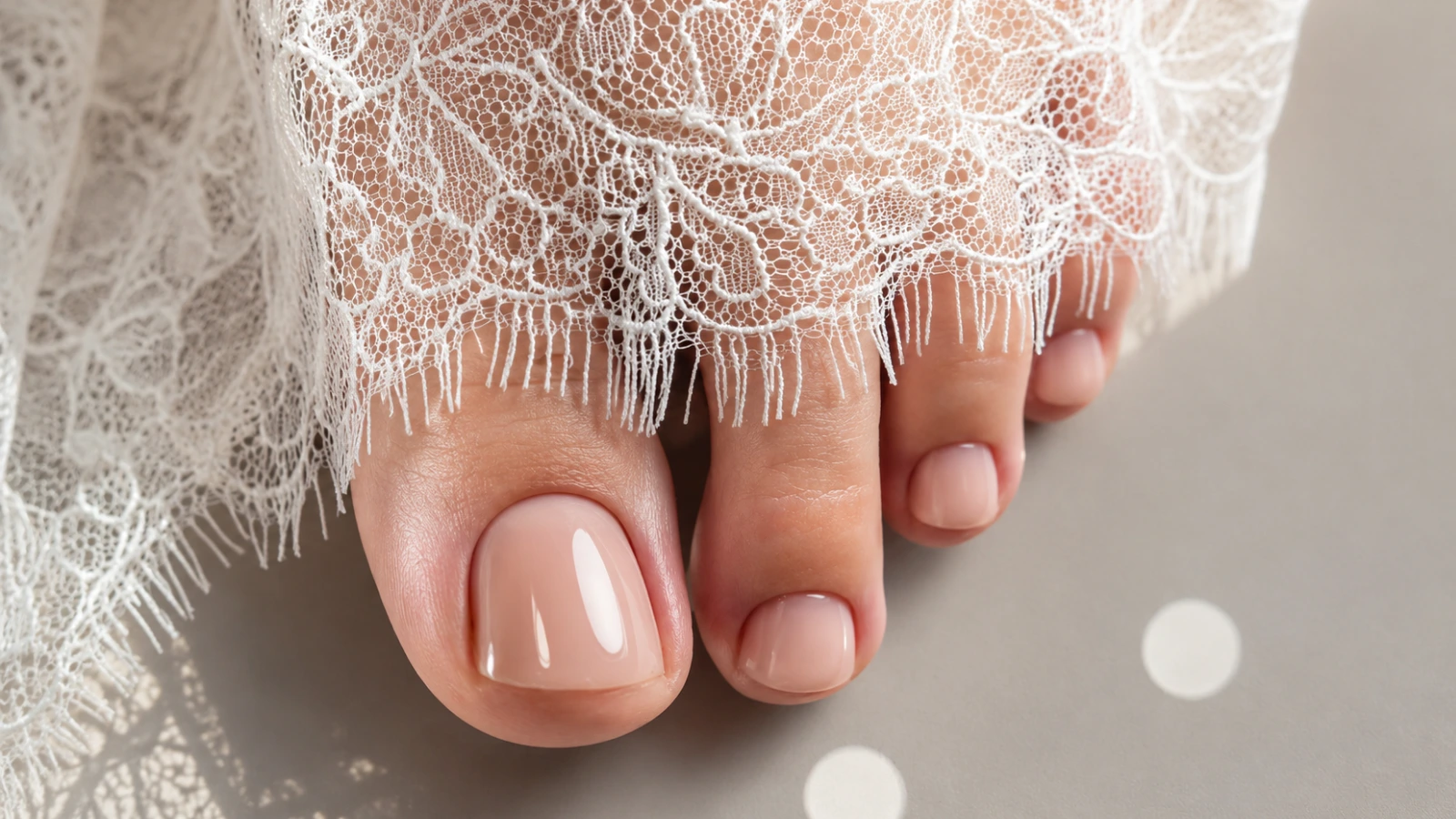
The colors that consistently perform best in wedding pedicures are the ones that resolve the fundamental challenge: the feet appear in photographs with the dress, the shoes, the venue, and the fingernails all in the same frame. A pedicure color that works in isolation may not work in that context. The ones listed below do.
| Color / Finish | What It Looks Like | Works Best When |
|---|---|---|
| Soft nude | A beige-pink that blends with the skin without disappearing entirely | Any shoe color · any dress color · any season · the safest and most universally flattering pedicure choice for a wedding |
| Sheer pink | A translucent pink with enough color to read as deliberate but light enough to coordinate with everything | Bridal and bridesmaid looks · open-toe shoes with ivory or blush dress · any spring or summer wedding |
| Milky white | A creamy, translucent white — not stark, not sheer, but distinctly white with depth | White or ivory dress · minimalist aesthetic · a bride who wants her manicure and pedicure to feel coordinated without being identical |
| French tip | Pale pink or nude base with a white tip on the toenails | Open-toe shoes · beach or barefoot wedding · brides who want the pedicure to look deliberately done rather than simply neutral |
| Champagne / warm nude | A slightly warm, golden-toned neutral that works beautifully with metallic shoes | Metallic sandals or heels · warm skin tones · fall or winter weddings |
| Glazed pearl / chrome | A soft shimmer finish over a nude or pink base — luminous without being metallic | A bride whose fingernails are glazed donut or pearl finish and wants the toes to coordinate in character if not exactly in color |
| Deep neutral (mauve, dusty rose) | A deeper neutral that reads as color without being bold | Fall or winter weddings · guests who want more depth than nude · anyone who finds pure nude too understated for the occasion |
A note on bold colors: they are not off-limits, but they require more care in the context of a wedding. A bright coral toe in a strappy sandal at a summer outdoor wedding can look beautiful and deliberately, seasonally right. The question is whether the color serves the overall look or introduces a visual element that the overall look has to accommodate. When in doubt, the neutrals listed above are usually the safest and most elegant choice.
French Pedicure for Weddings
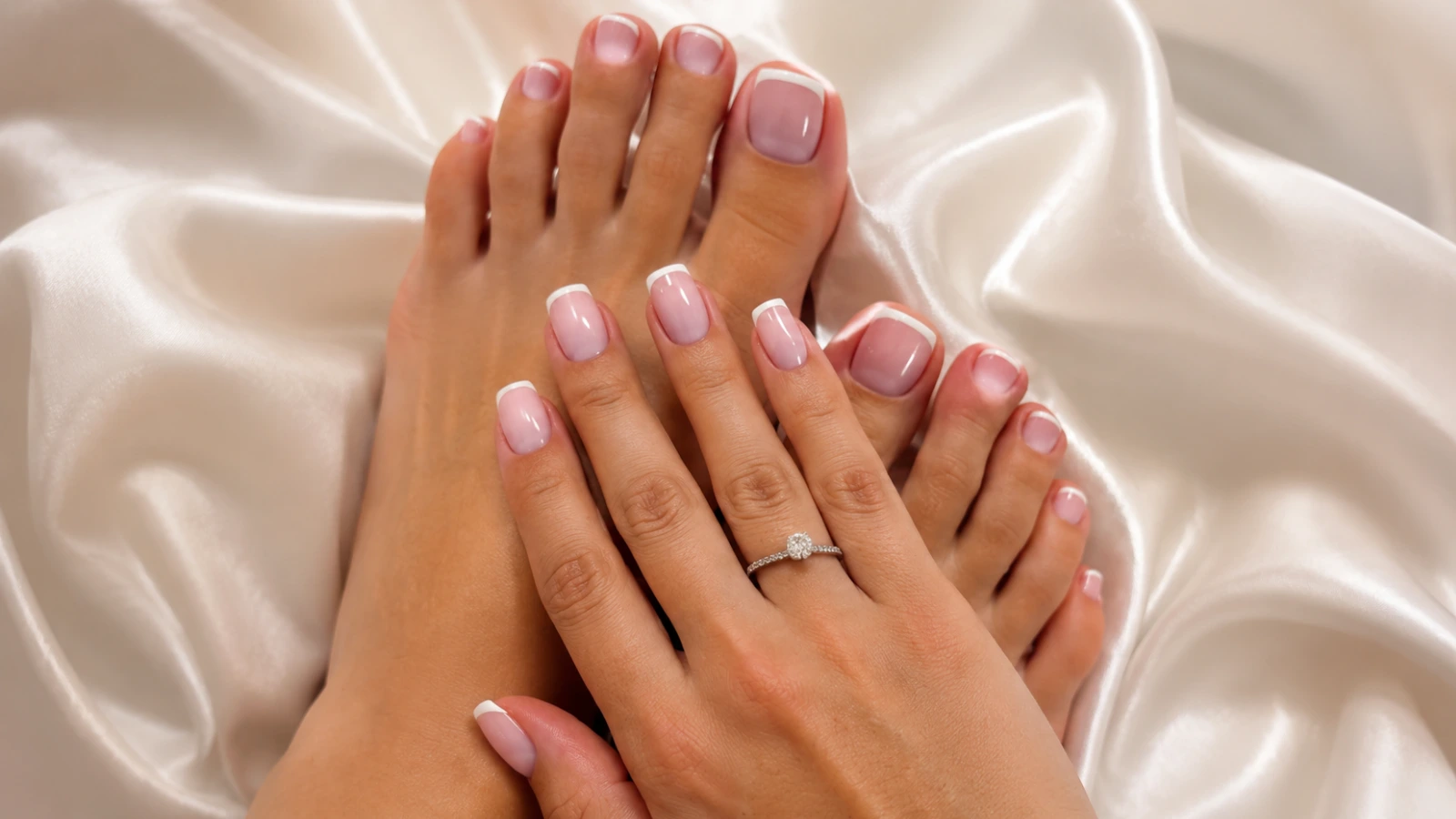
The French pedicure deserves its own section because it is more distinctive on toenails than most people expect and more effective.
On fingernails, the French tip is so common at weddings that it has become essentially neutral. On toenails, it is less expected. A French tip on the toes reads as something that was thought about and done deliberately, which is exactly the quality that elevates a pedicure from a quick appointment to a detail worth noticing. Against bare skin in open-toe shoes or sandals, the pale base and clean white tip create a specific kind of elegance that a solid color rarely achieves.
The key to a French pedicure that works on toenails is proportionality. The white tip should be thin and precise — not the wide, rounded arc that was popular in the 2000s, but a narrow, clean line that follows the natural curve of the nail. The base should be sheer or soft pink rather than stark white or opaque nude. Done correctly, a French pedicure on toenails looks like your nails but better — which is the exact standard any bridal nail choice should meet.
French pedicure: the updated version
The French tip has evolved at the fingernail level, and those updates translate directly to the toenails. The most current version for a wedding pedicure:
- Thin tip, softer base. The white line is narrow and precise. The base is a sheer or milky pink, not opaque.
- Micro-detail option. A barely-there shimmer in the white tip, or a thin champagne line where tip meets base, adds dimension without changing the fundamental elegance of the design.
- Pearl accent on the big toenail. The big toenail with a pearl French tip while the remaining toes carry a solid sheer pink is a current and distinctive bridal option. The pearl detail in the toe coordinates naturally with pearl accents in the fingernail design.
Many brides who want their French tip manicure to extend to their feet choose the standard French pedicure — the same pale base and white tip carried from hands to toes creates a fully coordinated look that photographs with clean consistency across every image where both hands and feet appear.
When to Get Your Pedicure Before the Wedding
Timing is where most brides make their only real mistake with the pedicure — and the mistake is almost always booking it too close to everything else rather than too far out.
The practical issue is this: the week before a wedding is already dense with appointments, fittings, rehearsal dinners, and the general acceleration of pre-wedding life. Squeezing a pedicure into a day that already has three other things on it means the pedicure gets a rushed appointment, insufficient drying or curing time, or gets skipped entirely when the schedule collapses.
The ideal pre-wedding pedicure timeline
| When | What to Do |
|---|---|
| 4 to 6 weeks before | If your feet need significant prep work — calluses, dry skin, cuticle conditioning — start now. A pedicure at this point is maintenance, not the final product. This is also a good time to test your preferred pedicure color on the actual toenails rather than a color card. |
| 2 to 3 weeks before | A good window for a relaxed maintenance pedicure — feet in good condition, color tested. If you are getting a gel pedicure, this appointment keeps the feet ready without requiring a last-minute booking during the busiest week. |
| 1 to 2 days before the wedding | The final pedicure appointment. Gel applied 1 to 2 days before will be fully cured, chip-free, and looking fresh on the wedding day and through the honeymoon. This is the ideal window. Book it as a standalone appointment — not back-to-back with the manicure in the same visit unless the salon specifically schedules bridal mani-pedi packages with adequate time for both. |
| Morning of the wedding | Only for touch-ups, not a full appointment. The getting-ready schedule is already full. A full pedicure appointment the morning of the wedding creates stress and timing risk. The pedicure should be done — and done well — before this day begins. |
One detail many brides miss: book the pedicure as a separate appointment from the manicure, even at the same salon on the same day. The two services require different focus, different positions, and different drying or curing time. Back-to-back in the same chair with the same technician moving between hands and feet typically produces a result that is slightly rushed on at least one of them. A dedicated pedicure appointment — its own block on the schedule — produces a better result.
What to tell your technician: bring a photo of your fingernail design, specify whether you want an exact match or a coordinating approach, and let them know whether you are wearing open-toe shoes so they understand why the result matters beyond aesthetics.
Bridesmaids and Toe Nails
The bridesmaid pedicure question is almost always asked by the bride, not the bridesmaids themselves — which tells you something about how it should be handled.
Matching bridesmaid toenails is not a requirement. It is a choice, and it is worth being direct about whether it matters enough to make it a request. If the bridesmaids are wearing open-toe shoes, and the bride cares about visual consistency in group photographs, a specific pedicure color request is reasonable and most bridesmaids will happily comply. If the shoes are closed-toe, or if the bride is not planning close-up group photography that includes the feet, the bridesmaid pedicure is entirely personal.
The most common coordinated approach: the bride wears a pearl or milky white pedicure; bridesmaids wear the same shade in a sheer pink or soft nude. The palettes coordinate without being identical. In photographs, the group looks intentional. In real life, each person chose a color that works for their skin tone and their own outfit.
If you are a bridesmaid who has not been given guidance: coordinate with your fingernails. A pedicure that matches or complements your manicure reads as intentional regardless of what the rest of the wedding party is wearing. The goal is simply to avoid the look of a pedicure that was not thought about at all — which is easy to avoid and makes a real difference in any photographs that include your feet.
Wedding Nails and Toes Inspiration Board
Before choosing your final bridal mani-pedi, it helps to see manicure and pedicure combinations across different shoe styles, nail colors, finishes, skin tones, and wedding settings. Explore our wedding nails and toes inspiration board for French pedicures, soft nude toes, milky white manicures, sheer pink finishes, champagne pedicures, open-toe shoe ideas, and elegant bridal mani-pedi combinations to save for your appointment.
Final thoughts
The best wedding pedicures are rarely the ones trying hardest to be noticed.
They are the ones that make the entire bridal look feel complete — the color that works naturally with the shoes, the finish that photographs cleanly in every detail shot, and the pedicure that feels intentional rather than last-minute.
That is why soft nudes, French pedicures, sheer pinks, milky whites, and warm champagne shades remain some of the most reliable wedding pedicure choices. They support the overall look instead of competing with it.
And when the manicure and pedicure work together naturally, the result does not feel overly styled or forced. It simply feels polished in every photograph from beginning to end.
Frequently asked questions (FAQ)
Should wedding nails and toes match?
Wedding nails and toes do not need to match exactly, but they should coordinate intentionally. The most polished approach is using the same color family in slightly different tones or finishes.
What is the best pedicure color for a wedding?
Soft nude, sheer pink, milky white, French tip, and champagne are the most elegant wedding pedicure colors because they photograph beautifully and work with almost every shoe style.
What pedicure works best with open-toe wedding shoes?
French pedicures, soft nude shades, and sheer pink gel pedicures work best with open-toe wedding shoes because they create a clean and refined look without competing with the shoes.
When should you get a pedicure before a wedding?
The ideal time is 1 to 2 days before the wedding. This keeps the pedicure looking fresh while avoiding chips, smudges, or last-minute scheduling stress.
Are French pedicures good for weddings?
Yes. French pedicures are one of the most timeless and elegant wedding pedicure styles because they look clean, intentional, and photograph beautifully in sandals and barefoot wedding photos.