Wedding veil styles can seem surprisingly confusing when you first begin shopping. While many brides focus on veil length, the style of the veil—its shape, structure, and overall design—is what truly defines how it looks and feels as part of your bridal look.
From timeless single-tier veils and romantic mantillas to vintage birdcage veils, elegant cape veils, and modern minimalist designs, every style creates a completely different visual effect. Understanding those differences makes choosing the right veil much easier.
This guide explains every major wedding veil style, how each one looks, who it suits best, and how each style fits into the broader process of choosing the perfect wedding veil for your dress, hairstyle, venue, and wedding aesthetic.
Veil Style vs. Veil Length: Why the Distinction Matters
Most brides start shopping by searching for length: “cathedral veil,” “fingertip veil,” “chapel veil.” That makes sense — length has the biggest visual impact on the overall look. But length and style are two independent variables, and mixing them up makes shopping significantly harder.
Here’s the clearest way to think about it: length is where the veil falls (at the fingertips, at the floor, several feet behind the bride). Style is what the veil looks like — its shape, structure, and how it functions on and around the head. A fingertip veil can be a single-tier drop, a mantilla, a two-tier with blusher, or even a birdcage depending on structure. A cathedral-length veil can be plain or lace-edged, gathered or flat, one layer or two.
When you go to a bridal appointment knowing what both mean, you can say something like, “I’d like a single-tier drop veil at fingertip length with a lace edge” instead of pointing at a photo and hoping the stylist interprets it the same way. That specificity gets you to the right veil faster. For full length comparisons and measurements, our wedding veil lengths covers each option in detail.
The Classic Veil: Single-Tier
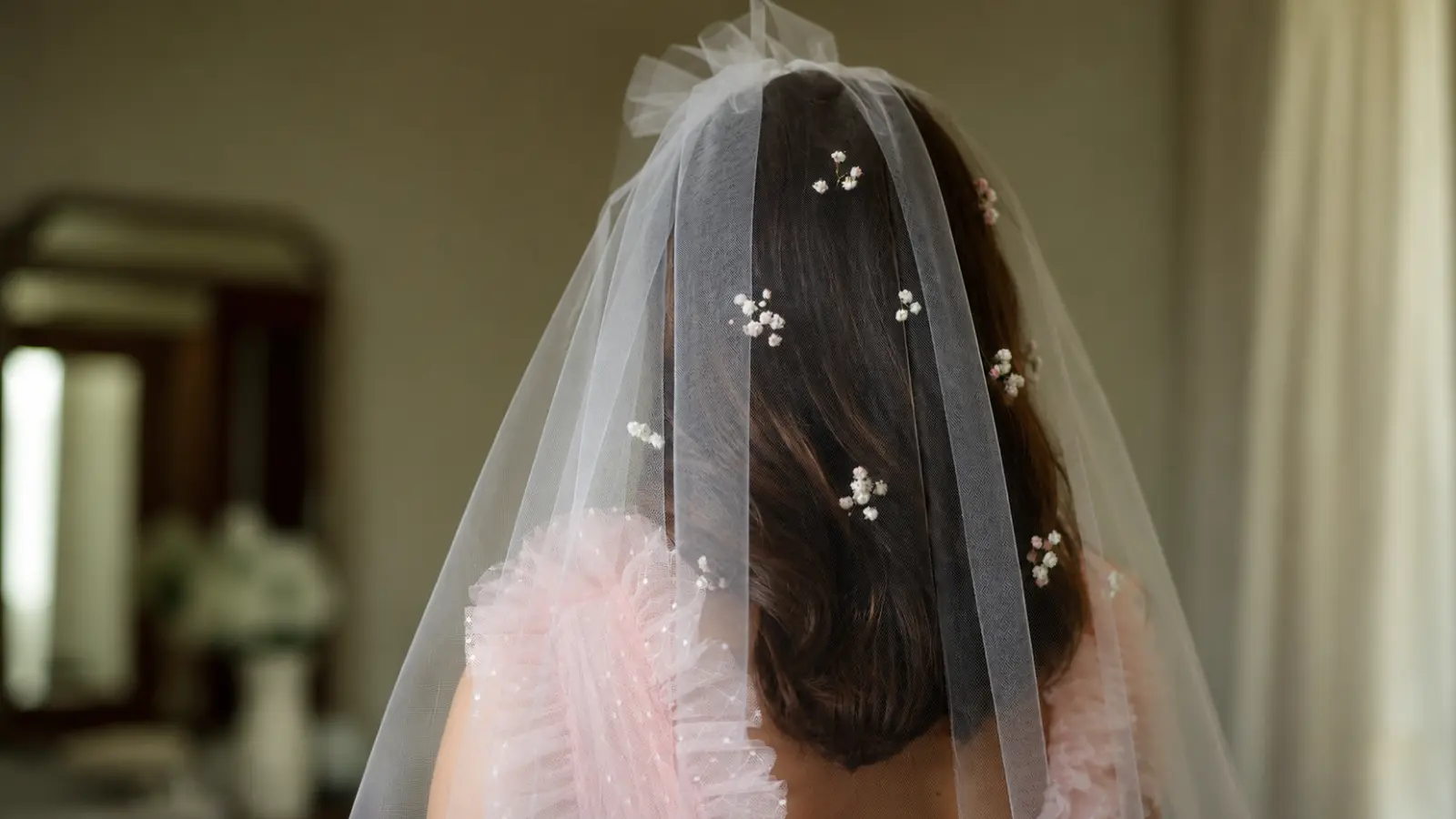
The single-tier veil is the most widely worn bridal style in the United States, and for good reason. One layer of fabric, attached at the crown or back of the head, falling behind the bride. No face covering, no ceremony mechanics, no second layer to manage. It’s the default when someone pictures a wedding veil, and it earns that status by being genuinely versatile.
Within the single-tier category, there are two structural variations worth knowing. A gathered veil has fabric gathered at the comb, which creates volume and fullness as it falls — this is the more traditional silhouette and tends to read as classic and romantic. A drop veil has no gathering at the attachment point; the fabric lies flat against the head and falls in a clean, uninterrupted line. The drop style is sleeker and more modern, often chosen by brides with minimalist gowns or structured silhouettes who want the length without the volume.
Single-tier veils work at every length from elbow to cathedral. Because the style itself is neutral, the main design decisions shift to length and edge detail — which is why this style gives you the widest range of creative choices within a single category.
Two-Tier Veil
A two-tier veil has a shorter front layer — called a blusher — and a longer back layer that forms the veil’s main silhouette. The blusher covers the bride’s face during the processional and is lifted at the altar, typically by the groom, a parent, or the bride herself, before the vows or the first kiss. That moment is one of the most photographically and emotionally charged of the entire ceremony.
The blusher is optional within the two-tier structure. Some brides flip it back before walking down the aisle because they don’t want their face covered or because they want full visibility of their guests. Others love the reveal moment and keep it in place all the way to the altar. Both are perfectly normal choices that don’t change the fundamental look of the veil.
In terms of styling, a two-tier veil adds more presence and formality than a single-tier, partly because of the layering and partly because of the ceremony tradition it carries. It pairs well with formal church ceremonies, ballgowns, and brides who want a strongly traditional bridal look. For a full breakdown of the style, including how to wear it and what it looks like at different lengths, see our blusher veil.
Mantilla Veil
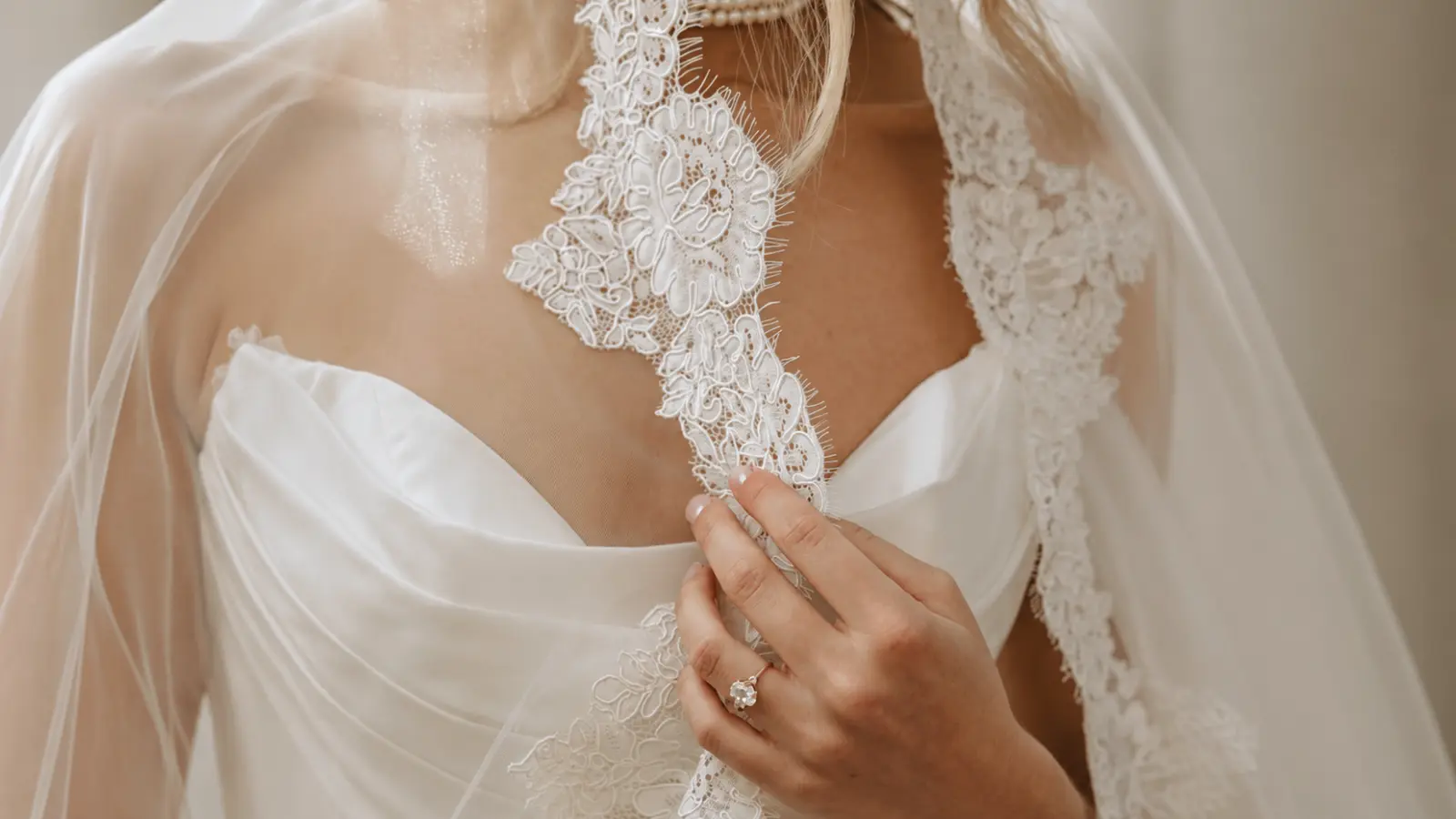
The mantilla is one of the most distinctive and recognizable veil styles, and also one of the most misunderstood. It is not a length — it’s a shape. A mantilla is a large oval or round piece of lace (or lace-edged tulle) worn draped directly over the head, framing the face and falling around the shoulders and down the back. Unlike most veils, which gather on a comb and fall behind the head, the mantilla envelops the bride from above.
Because it frames the face and cascades around the sides of the head, a mantilla changes the entire visual composition of the bridal look. It tends to look most striking with a clean face and a hairstyle that doesn’t compete with the lace edge — a low bun, loose waves, or a simple updo. It can be worn at almost any length from elbow to cathedral, though longer mantillas create a more dramatic and traditional effect.
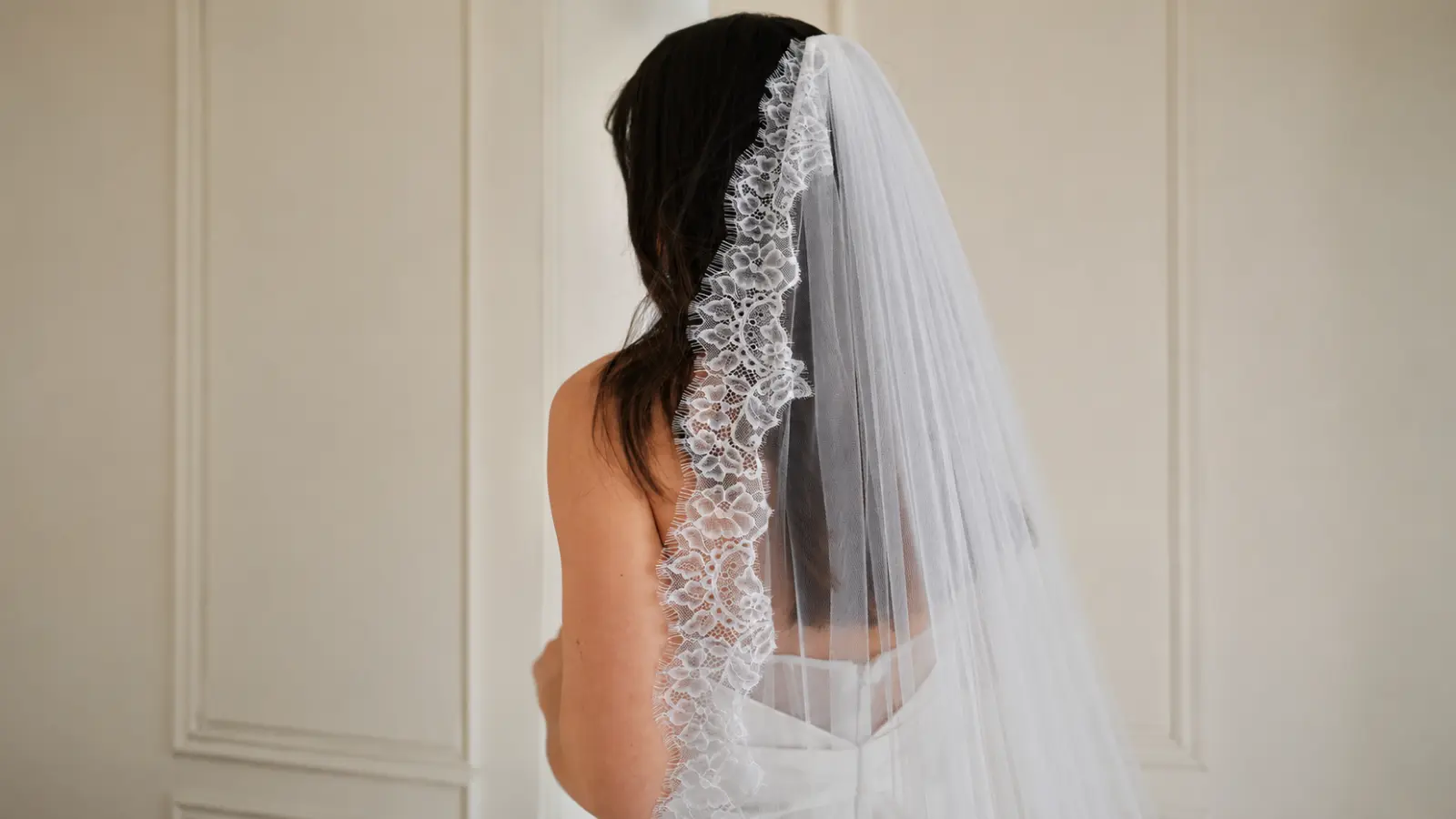
The style has roots in Spanish and Catholic bridal tradition and carries a distinctly romantic, old-world quality. It’s a committed aesthetic choice — and a rewarding one for brides whose dress and wedding setting support it. For everything about wearing and styling this veil, see our mantilla wedding veil.
Birdcage Veil
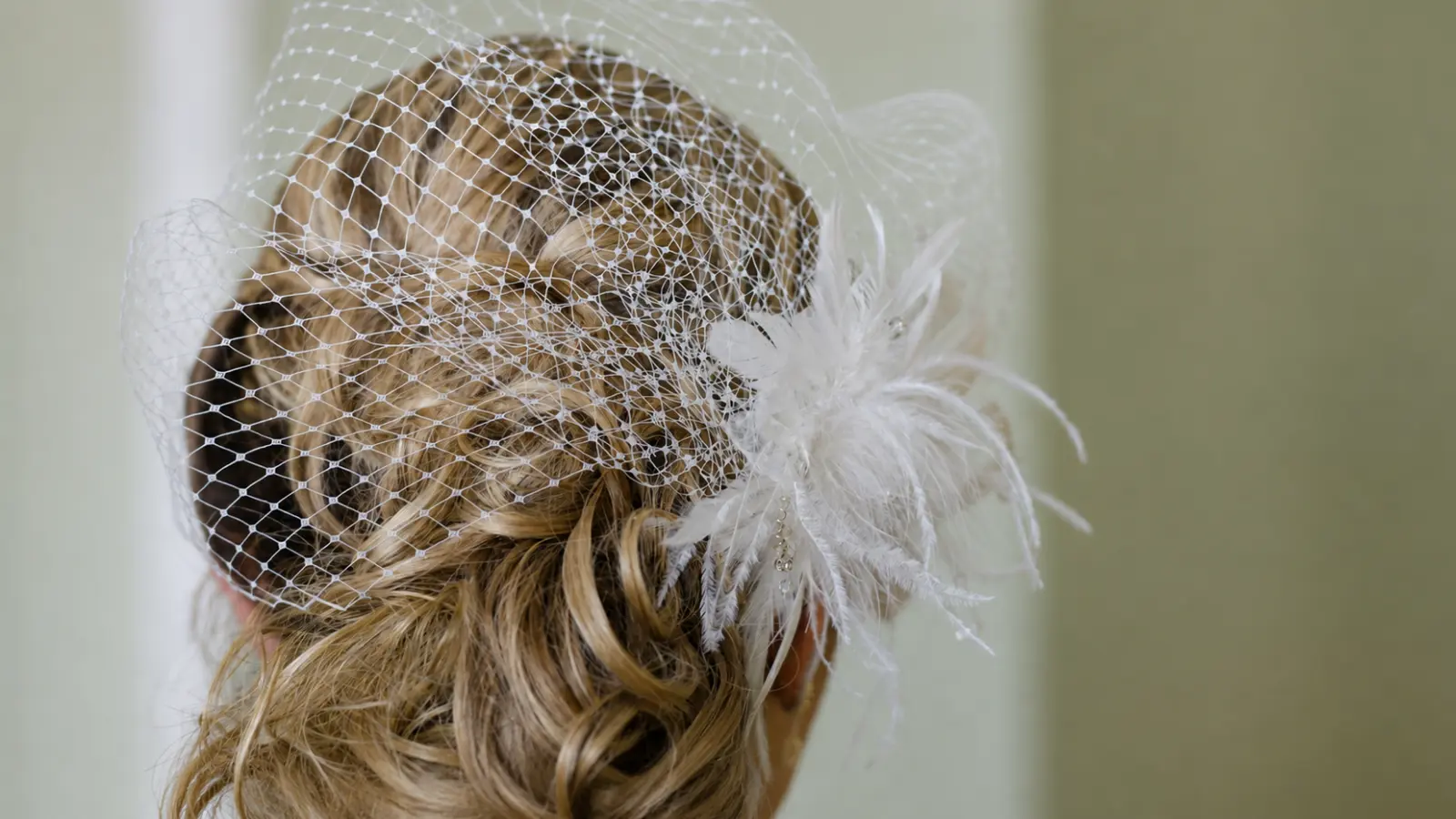
The birdcage veil occupies its own aesthetic category. Made from wide-weave netting rather than traditional tulle, it sits close to the face and typically covers from the eyes to the nose or chin — sometimes clipped to one side, sometimes centered. It attaches with a small comb, clip, or decorative base and reads as distinctly vintage.
The associations are clear: 1940s and 1950s glamour, old Hollywood, pin-up bridal. The birdcage veil works beautifully with tea-length dresses, bridal suits, jumpsuits, and any bride leaning into a retro or maximally styled look. What it is not is a universal choice — it’s a style with a very specific visual vocabulary, and it either fits a bride’s aesthetic completely or it doesn’t fit at all.
It is also worth noting that the birdcage is a style and a length simultaneously — it doesn’t scale up to longer versions the way a single-tier does. For brides considering this style, our birdcage veil covers placement, hairstyle pairings, and dress compatibility in detail.
Juliet Cap Veil
The Juliet cap veil deserves its own section because it’s genuinely different from every other veil style — not a variation on a theme, but a distinct silhouette that many brides don’t encounter until they’re deep in the shopping process.
The defining feature is the cap itself: a small, fitted piece that sits on top of or toward the back of the head, often made from lace, fabric, or a mix of delicate embellishments. The veil attaches at the base of the cap and falls behind the bride in a single tier. The overall effect is structured but soft — less formal than a traditional gathered veil, more intentional than a simple drop.
The name comes from Renaissance-era headwear, and the veil carries that aesthetic forward. Think: romantic, European, subtly historical. It became associated with the 1920s and 1930s bridal look and has stayed in the bridal repertoire as a niche but beloved choice for brides who want something with genuine vintage personality rather than vintage-inspired approximations.
It works particularly well with:
- Bohemian or garden weddings where the setting supports a soft, romantic look
- Minimalist or column gowns where the cap provides the visual interest without competing with the dress
- Brides wearing hair down, in loose waves, or in a low bun — the cap looks best when the hairstyle doesn’t overpower it
- Intimate ceremonies or elopements where an elaborate traditional veil would feel out of scale
One practical consideration: the cap needs to be properly fitted to your head and secured well, since it sits higher and less anchored than a standard comb. If possible, try it with your actual hairstyle during your fitting rather than assuming the fit will translate. When it works, it’s one of the most distinctive choices in bridal headwear — the kind of veil people ask about after the wedding.
Cape Veil
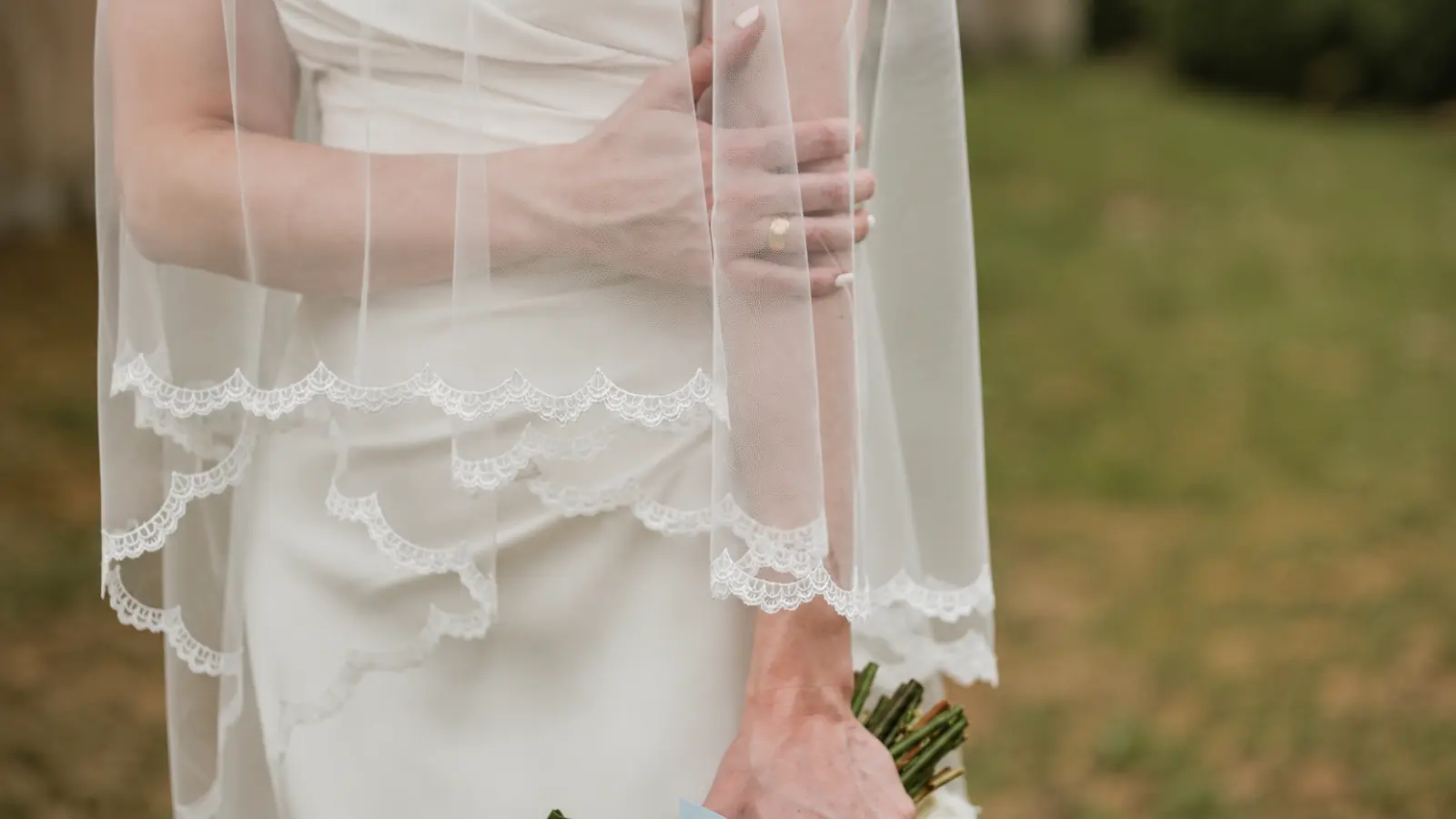
A cape veil is a bridal style choice, not simply an alternative to a traditional veil. That distinction matters because many brides encounter the cape veil in the “alternatives” section of a guide and assume it’s a concession — something you choose when you don’t want a real veil. It isn’t. The cape veil is a defined aesthetic with its own visual logic, and for the right bride and the right dress, nothing else comes close.
The structural difference is significant: where a traditional veil attaches at the crown or back of the head and falls from there, a cape veil attaches at the shoulders, upper arms, or yoke of the dress. The result is a structured, horizontal shoulder line that creates a dramatically different silhouette from behind. Some cape veils are made from tulle or organza and move like a traditional veil. Others are constructed from structured lace or embroidered fabric and have a more architectural quality.
Cape veils work best with:
- Column and sheath gowns, where the cape adds back-of-the-dress drama without competing with a fitted silhouette
- High-neck or long-sleeve gowns, where the cape extends the graphic quality of the neckline design
- Minimalist dresses that need one strong visual statement at the back
- Brides who find the look of fabric falling from the crown of the head unflattering or impractical for their hairstyle
The one honest limitation: a cape veil doesn’t work as naturally with the blusher ceremony tradition, and it may not pair as easily with full-skirted ballgowns where the shoulder attachment can look out of proportion. But for the silhouettes it suits, it creates a back-of-the-aisle moment that photographs beautifully and often more memorably than a standard veil.
Veils Defined by Detail: Lace, Pearl, Floral and Simple
Beyond structure, veils are also defined by what’s done to the fabric — or, in the case of plain styles, deliberately not done to it. These detail categories often cross with the structural styles above: a single-tier veil can be simple or lace-edged; a mantilla is almost always lace by definition. Understanding the detail categories separately helps you put together a more complete picture of what you’re actually looking for.
Lace veils range from a delicate scalloped trim at the edge to all-over lace that covers the full veil panel. The weight and pattern of the lace has a significant effect on the final look — a light Venice lace reads very differently from a dense Chantilly pattern. The key consideration with a lace veil is whether it echoes or competes with the lace on your dress. Matching types exactly often reads as too coordinated; a complementary lace at a different scale usually works better. Our lace wedding veil covers this pairing question thoroughly.
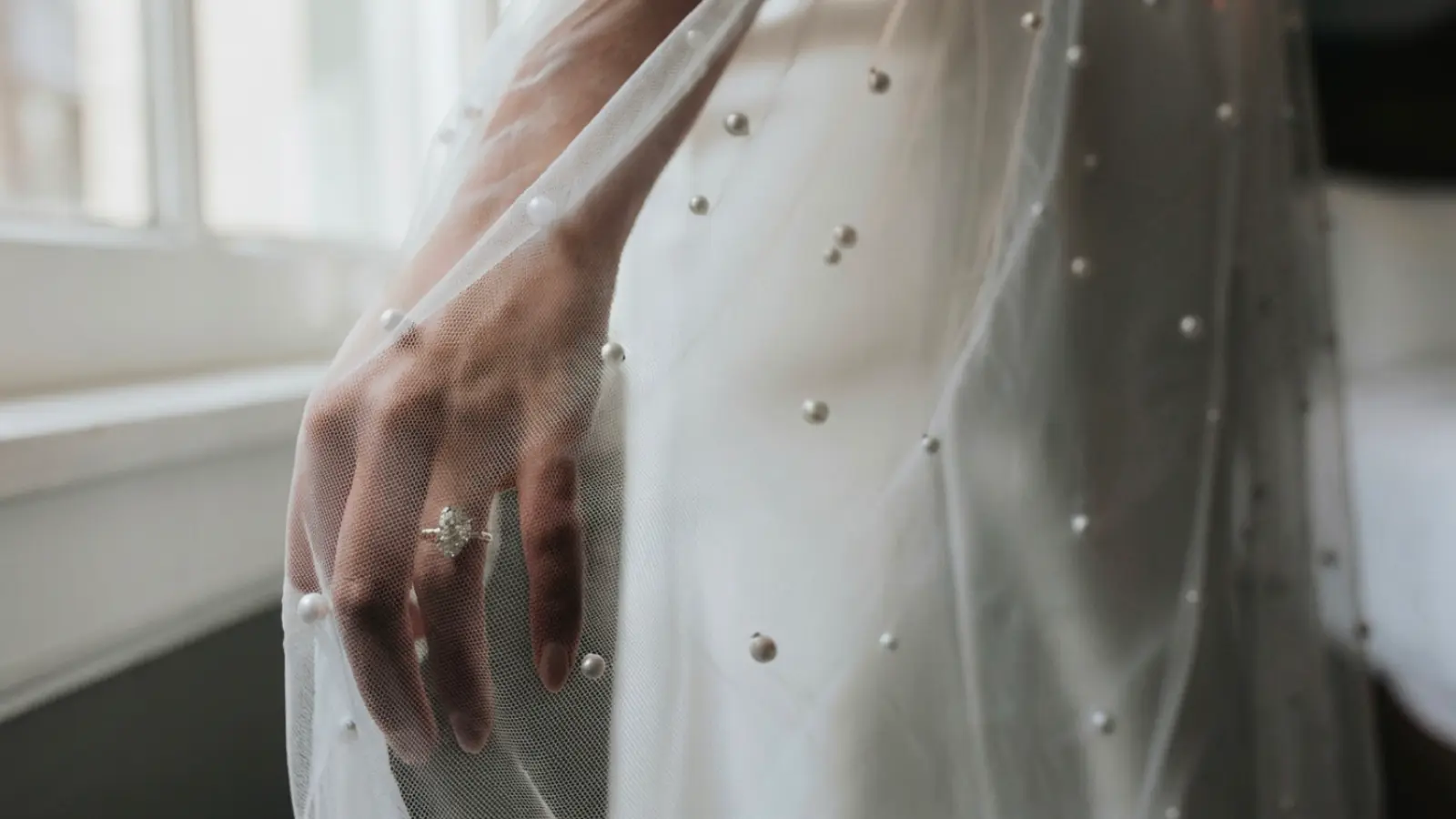
Pearl veils use pearl beading along the edge or scattered across the veil surface to add weight, texture, and light. The effect is romantic and slightly luxurious without being overly formal — pearls catch light differently than crystals do, with a warmer, softer glow. They work beautifully with pearl accents on the dress or with satin fabrics, but can feel mismatched with very modern minimalist gowns. For styling details, see our pearl wedding veil.
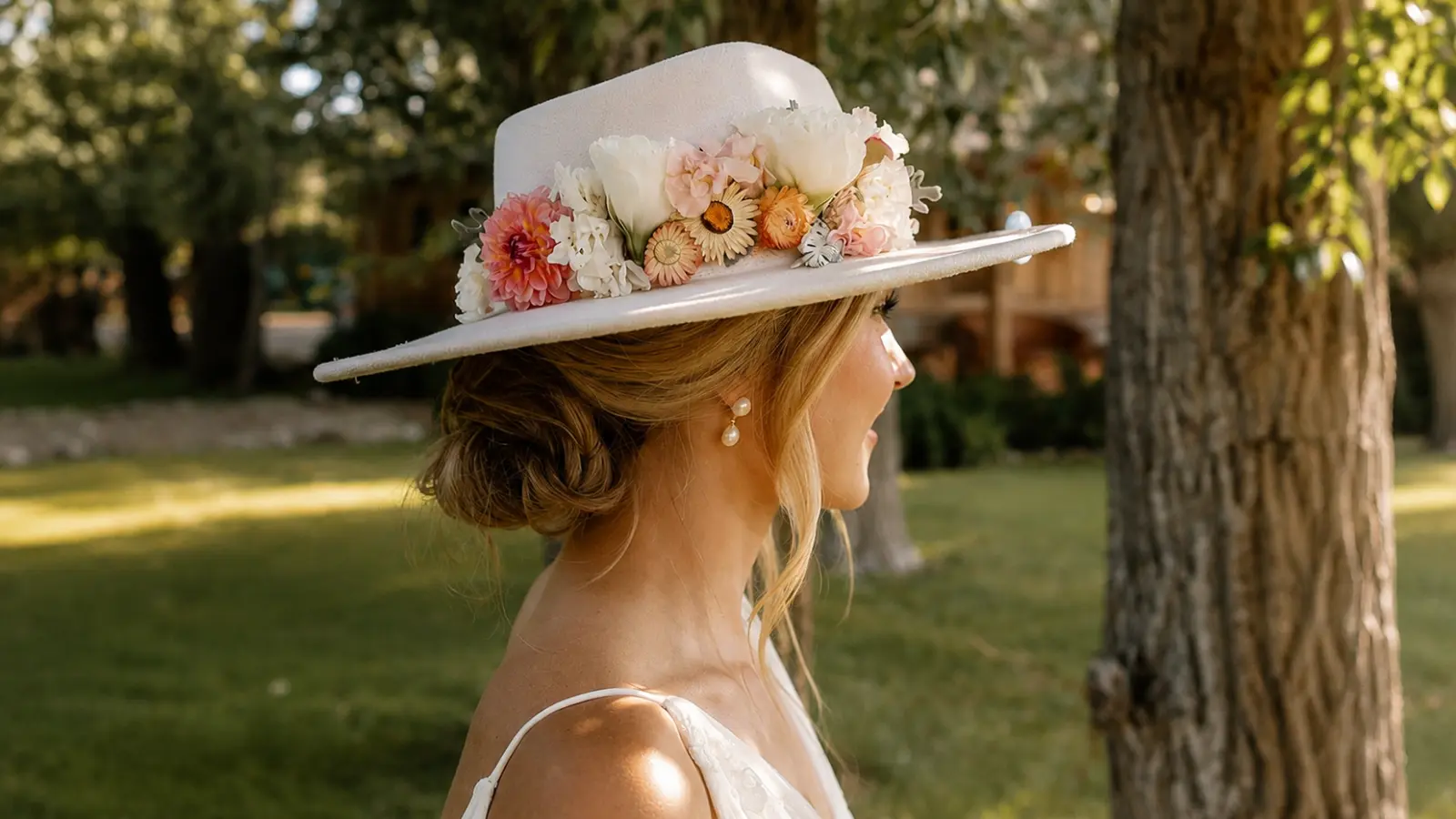
Floral veils incorporate three-dimensional fabric flowers or appliqués into the veil, either along the edge, at the attachment point, or scattered throughout the panel. The style reads as strongly romantic and slightly bohemian. It works best for garden ceremonies, outdoor settings, or brides whose dress already carries floral embroidery or detailing. A floral veil on a very modern or structured gown often creates a tonal conflict. For a fuller look at the style, see our floral wedding veil.
Simple veils — plain or barely-trimmed tulle with a raw, rolled, or horsehair edge — are not the absence of a choice. They’re a specific aesthetic decision. A simple veil keeps all the attention on the bride and the dress. It reads as clean and modern, works at any length, and is the right answer for heavily embellished gowns where adding edge detail would tip the look into excess. For brides who want the veil’s presence without its decoration, our simple wedding veil goes deeper on how to make plainness look intentional.
Colored Veils
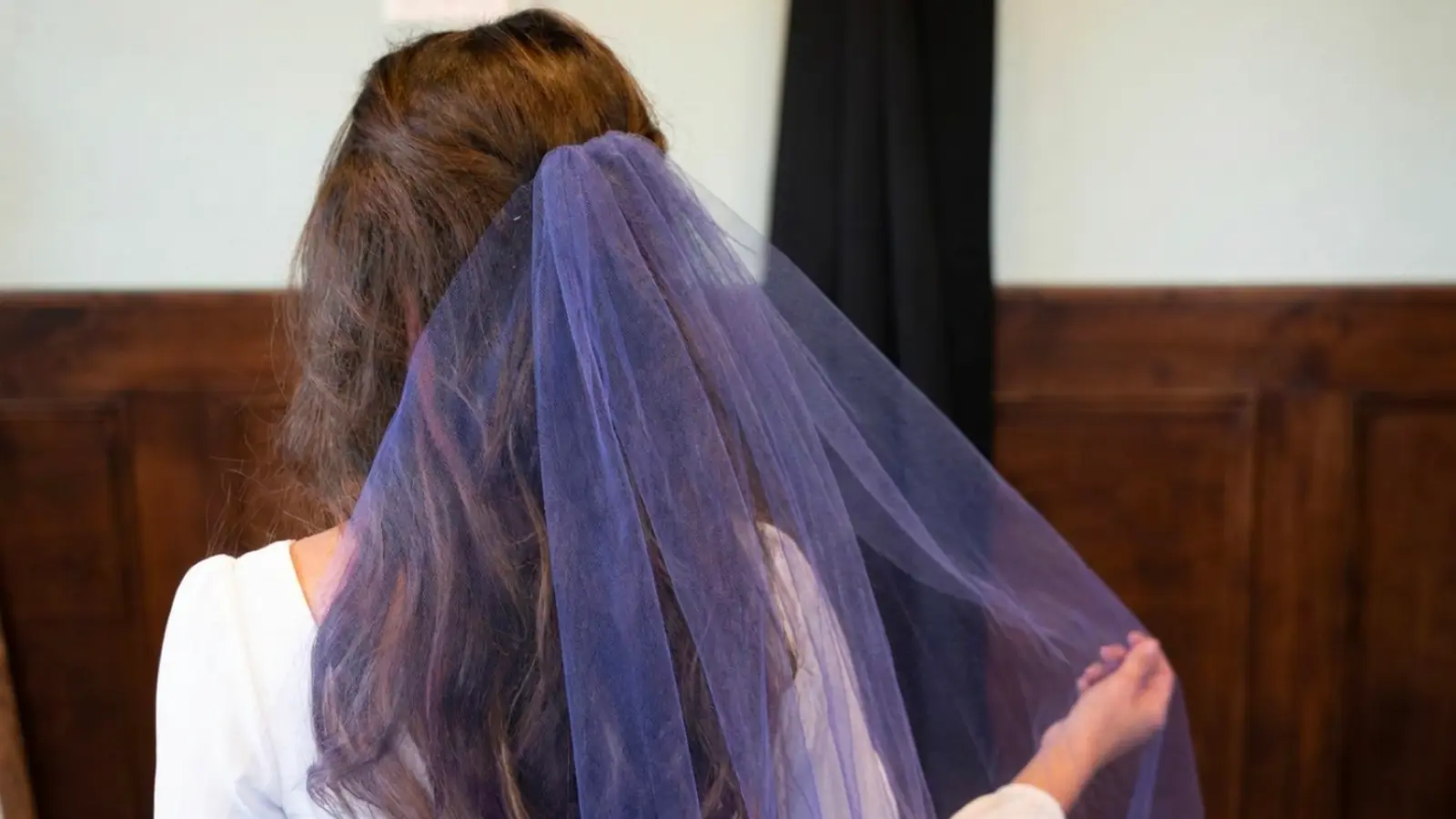
The vast majority of wedding veils are sold in the ivory-to-white spectrum — bridal white, ivory, champagne, and soft blush. But colored veils do exist, and for a specific type of bride, they’re worth considering.
The most common colored veil options are blush pink, pale gold or champagne, soft blue (for the “something blue” tradition), and black (for non-traditional or gothic-influenced aesthetics). Red veils appear in South Asian and Chinese-influenced bridal traditions. Deeply saturated colors are rare in Western bridal retail but can be custom-made.
A colored veil works best as part of a deliberate overall color story, and colored wedding veils such as blush or champagne designs are easiest to style when they connect naturally with the gown. Using a colored veil as a standalone surprise without other tonal connections in the look tends to read as an afterthought rather than a statement. If you’re considering this direction, bring the veil and the dress together early in the planning process to make sure the colors read the way you intend.
Choosing by Dress Silhouette
The dress silhouette is the most reliable starting point when narrowing down veil styles. This doesn’t mean there’s one correct veil for every dress shape — there isn’t. But certain combinations have a visual logic that makes them easier to wear, and knowing those starting points helps you move through the appointment with direction rather than trying everything blind.
| Dress Silhouette | Veil Styles That Work Well | What to Consider |
|---|---|---|
| Ballgown | Single-tier or two-tier at chapel or cathedral length; mantilla; simple or lace-edged | Volume needs a veil proportionate to it; very short veils can look lost against a full skirt |
| A-line | Almost anything works — single-tier, two-tier, mantilla, cape veil | The most veil-versatile silhouette; let the venue and aesthetic guide the choice more than the dress |
| Sheath or column | Drop veil (single-tier flat), cape veil, birdcage, simple fingertip | Gathered volume can compete with the sleekness of the silhouette; flat-falling styles complement it |
| Mermaid or trumpet | Single-tier at cathedral or chapel; birdcage for contrast; drop veil | The drama is already in the dress; a veil that echoes the length reads as cohesive, not competing |
| Tea-length or short dress | Birdcage, shoulder or elbow single-tier, Juliet cap | Scale matters; cathedral-length veils on short dresses tend to look disproportionate |
| Heavily embellished dress | Simple veil; plain drop; unadorned single-tier | Let the dress be the statement; a decorated veil fights a decorated gown |
| Minimalist or plain dress | Lace, pearl, floral, two-tier with blusher, mantilla, Juliet cap, cape veil | A plain dress gives the veil room to carry the detail — almost any embellished style works here |
These are starting points, not rules. Brides regularly and successfully wear combinations that don’t follow this logic — but arriving at the appointment with a sense of where to begin saves time and makes it easier to assess what’s working when you’re actually trying things on.
Choosing by Wedding Aesthetic
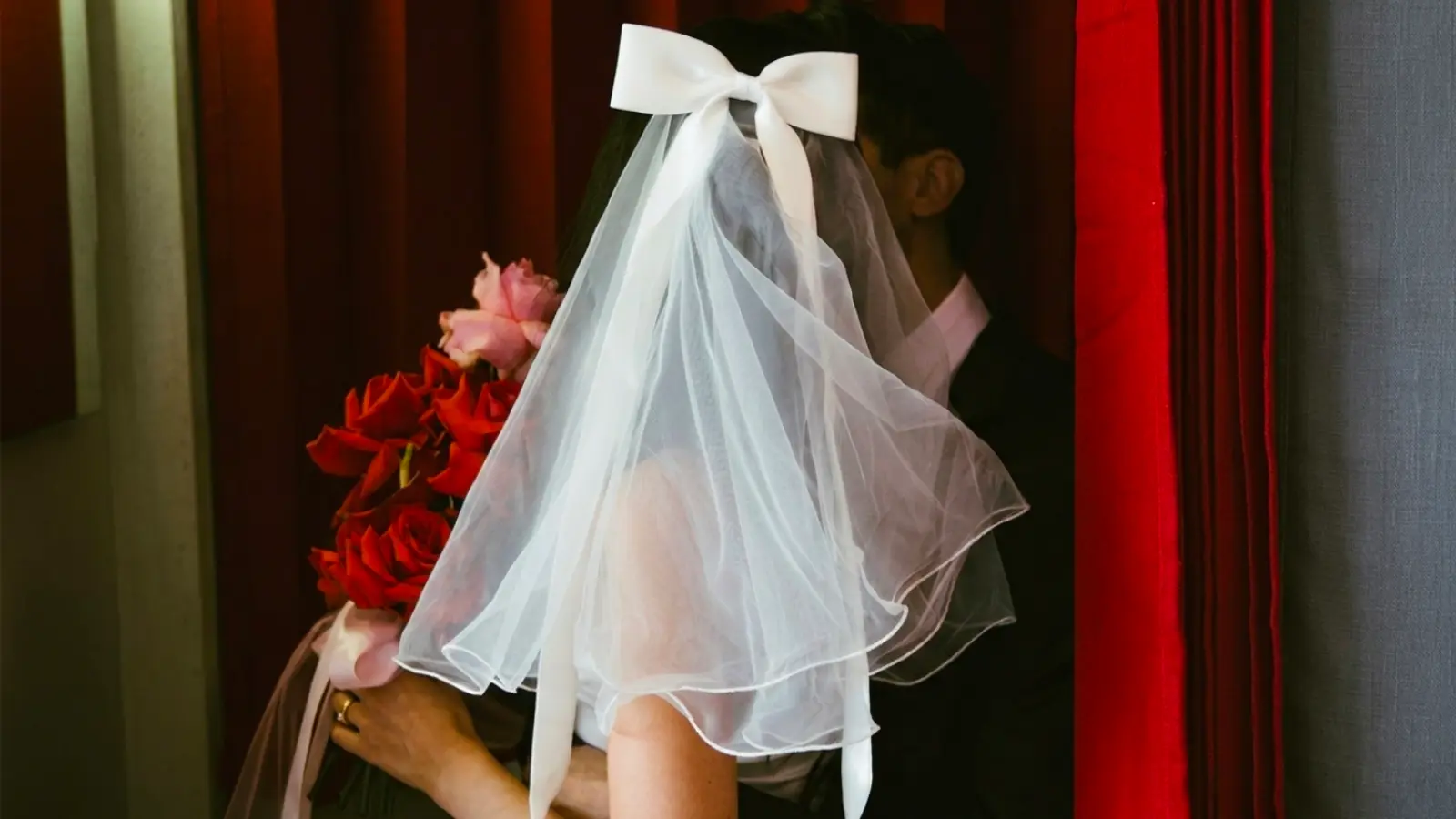
Dress silhouette tells you what’s proportional, which is why finding the right wedding dress with veil combination comes first. Wedding aesthetic then tells you what’s tonally right. A veil that makes sense with the dress can still feel out of place if the style of the wedding doesn’t support it. This matters most for strongly styled weddings — a very traditional church ceremony reads differently from a bohemian outdoor ceremony, and the veil can either reinforce that tone or work against it.
For traditional church or ballroom weddings, the two-tier with blusher, chapel or cathedral single-tier, and mantilla are all natural choices. They carry ceremony weight, photograph with presence in formal spaces, and align with the visual language of a traditional wedding.
For garden, outdoor, or bohemian weddings, the Juliet cap, a floral veil, a simple fingertip or elbow-length drop, and the mantilla all work well. The cape veil can also be striking here. Very long trailing veils on outdoor terrain require more management — wind, grass, and uneven ground are all factors worth thinking through practically, not just aesthetically.
For intimate ceremonies, elopements, and city hall weddings, the birdcage veil, Juliet cap, a simple short veil, and a colored or minimalist style all make sense. The scale of the moment is different, and a cathedral veil in a courthouse or small garden can read as overdressed relative to the setting — not wrong, just worth considering deliberately.
For black tie or formal evening weddings, a cathedral or chapel veil with pearl or crystal edge detail is the most cohesive choice. The cape veil can also read beautifully in formal evening settings where the rest of the look is equally polished.
Veil Style Quick-Reference Table
This table summarizes each major style with a straightforward note on who it’s best suited for — and when it’s worth reconsidering. It’s meant to be a fast reference before an appointment, not a final answer.
| Veil Style | Best For | Reconsider If |
|---|---|---|
| Single-tier (classic) | Any dress silhouette, any venue; most versatile choice | You want the blusher moment at the altar — that’s the two-tier’s territory |
| Two-tier with blusher | Traditional ceremonies, formal settings, brides who want the face-covering moment | You don’t want your face covered during the processional, or your ceremony is casual/informal |
| Mantilla | Romantic, classic, or religious ceremonies; brides who want the veil to frame the face | You have a very elaborate updo or heavy headpiece that competes with the draping |
| Birdcage | Vintage, retro, 1940s-1950s aesthetics; tea-length dresses; intimate venues | Your wedding aesthetic is modern, bohemian, or traditionally romantic |
| Juliet cap | Bohemian, vintage, or European-romantic aesthetics; minimalist or column gowns; loose or low hairstyles | You need a veil that works with a formal updo or with heavy headpiece jewelry |
| Cape veil | Column, sheath, or high-neck gowns; brides who want shoulder-attached drama; minimalist silhouettes | You’re wearing a ballgown with significant volume, or you want the traditional blusher ceremony |
| Lace veil | Plain or lightly adorned gowns; romantic and traditional aesthetics | Your dress already has heavy lace — matching lace types carefully is critical to avoid visual chaos |
| Pearl veil | Romantic, satin, or pearl-accented gowns; formal evening ceremonies | Your dress reads as very modern or minimalist — pearl detail can feel tonally mismatched |
| Floral veil | Garden weddings, bohemian aesthetics, floral-embroidered gowns | Your venue or dress is very modern and sleek — florals need a soft setting to land right |
| Simple/plain veil | Heavily embellished gowns; minimalist aesthetics; brides who want the veil’s presence without decoration | You want the veil to do the work that a plain dress leaves room for — in that case, add some detail |
Use this table as a first filter, not a final verdict. The best way to confirm any veil style is to try it with your actual dress, in a fitting room with good light.
Wedding Veil Style Ideas
Discover beautiful wedding veil style ideas, from classic and romantic to modern bridal looks. Explore mantilla, birdcage, cape, lace, pearl, and timeless veil inspiration for every wedding style.
Find the Wedding Veil Style That Feels Like You
Choosing a wedding veil style isn’t about following trends or traditions—it’s about finding the one that feels like a natural extension of your personality, your dress, and the atmosphere you want to create on your wedding day. Whether you’re drawn to a timeless single-tier veil, a romantic mantilla, a vintage birdcage, or a dramatic cape veil, every style tells a different story.
Now that you understand how each wedding veil style differs, you can approach your bridal appointment with confidence instead of uncertainty. The perfect veil isn’t simply the most popular one—it’s the one that makes you feel completely like yourself from the moment you walk down the aisle.
Frequently asked questions (FAQ)
How do you choose the right wedding veil style?
Choose your veil style by starting with the dress silhouette, the amount of detail on the gown, the wedding aesthetic, and how traditional or modern you want the finished look to feel. Single-tier veils are the most versatile, two-tier veils suit brides who want a blusher, mantillas create a romantic face-framing effect, birdcage veils feel vintage, and cape veils add drama without attaching to the hair. The best style should complement the dress rather than compete with it.
What is the difference between veil style and veil length?
Veil length describes where the fabric falls, such as shoulder, fingertip, chapel, or cathedral. Veil style describes the veil’s shape, structure, and visual character, such as single-tier, two-tier, mantilla, birdcage, Juliet cap, or cape. These are separate decisions. For example, a mantilla can be fingertip or cathedral length, while a cathedral veil can be single-tier, two-tier, plain, or lace-edged.
What is the most popular wedding veil style?
The single-tier veil is generally the most versatile and widely worn style because it works with almost every dress silhouette and can be made at nearly any length. It also does not require a face-covering layer or special ceremony moment. Brides wanting a more traditional look often choose a two-tier veil with a blusher.
What veil style works best with a simple wedding dress?
A simple or minimalist dress allows the veil to carry more visual detail. Lace-edged, pearl, floral, mantilla, two-tier, Juliet cap, and cape veils can all work well, depending on the silhouette and wedding aesthetic. A plain veil is also appropriate when the goal is to keep the entire bridal look clean and understated rather than add contrast.
What veil style works best with a heavily embellished dress?
A plain single-tier veil, simple drop veil, or minimally trimmed style usually works best with a heavily embellished gown. These options preserve the visual focus of the dress and prevent lace, beading, embroidery, or appliqués from competing with one another. The veil can still be long and dramatic without carrying additional decoration.
Can a cape veil replace a traditional veil?
Yes. A cape veil is a complete bridal style rather than a lesser substitute. It attaches at the shoulders or upper back and works especially well with column, sheath, minimalist, high-neck, or long-sleeve gowns. It creates movement and aisle drama without covering the hairstyle or falling from the crown of the head.
What veil style works best with a ballgown?
Ballgowns usually pair well with veils that have enough scale to balance the full skirt. Single-tier or two-tier veils at chapel or cathedral length are classic choices, and a long mantilla can also work beautifully. Very short or mid-length styles may appear visually lost unless the contrast is intentional and supported by the rest of the bridal look.