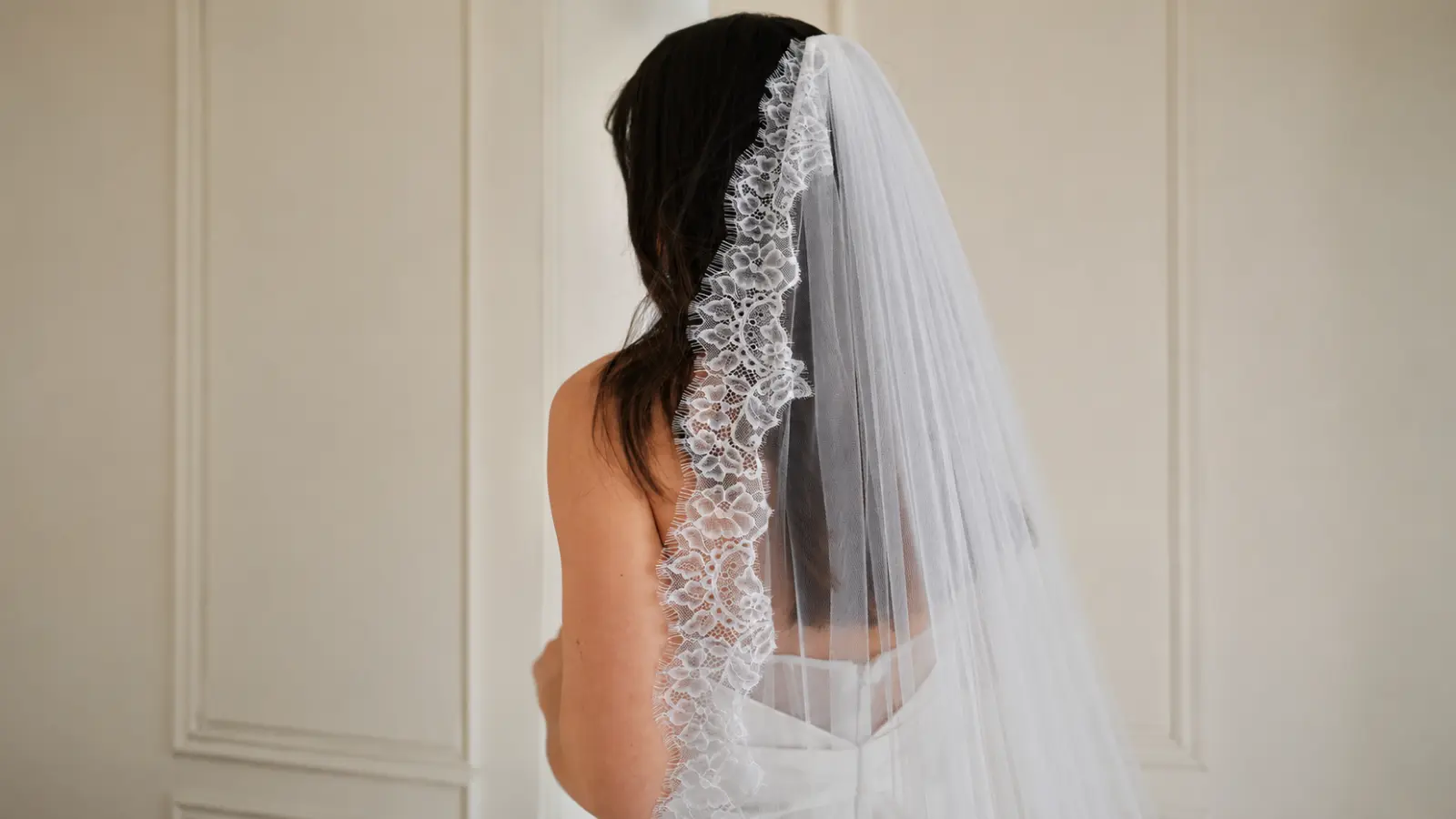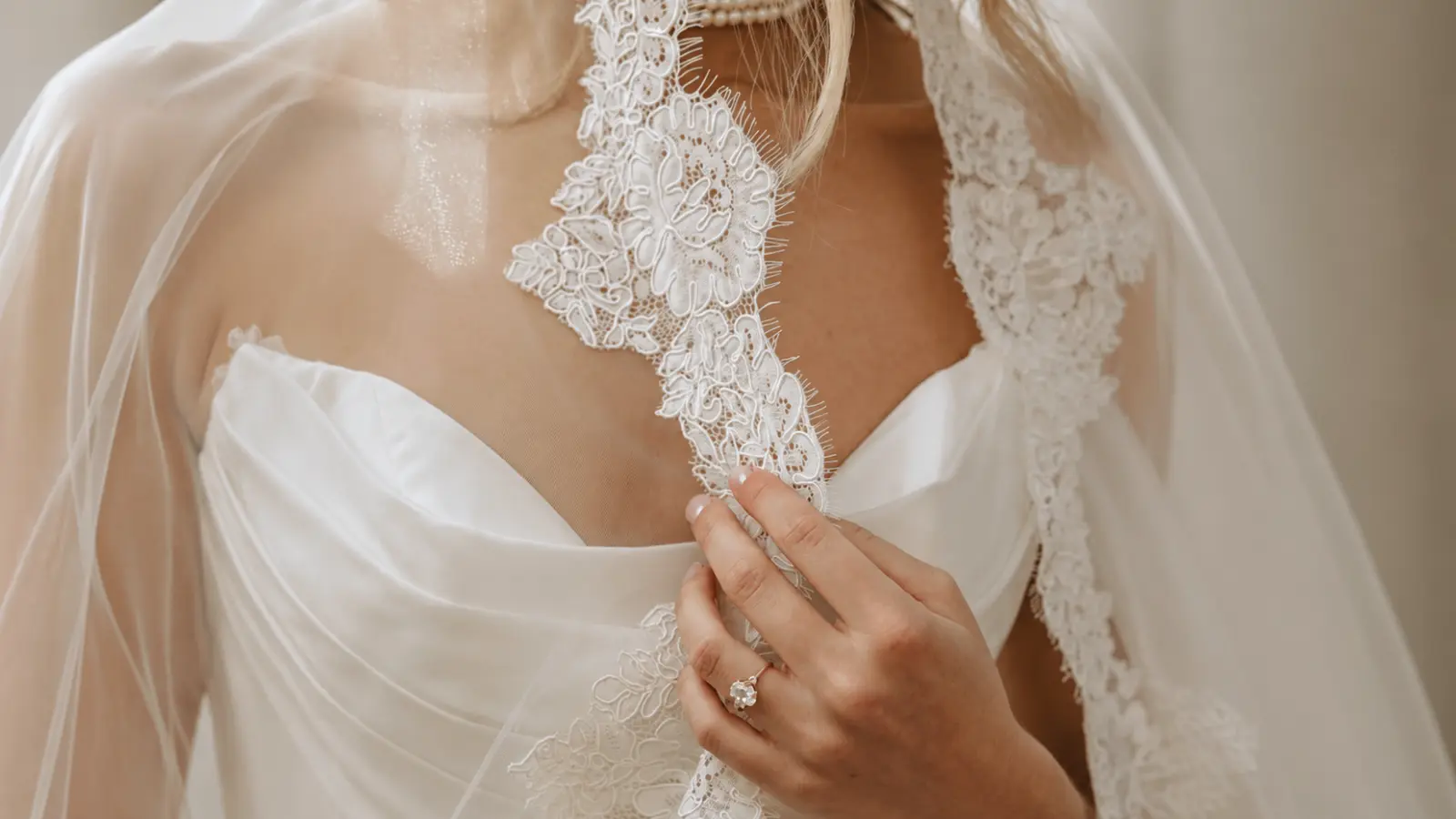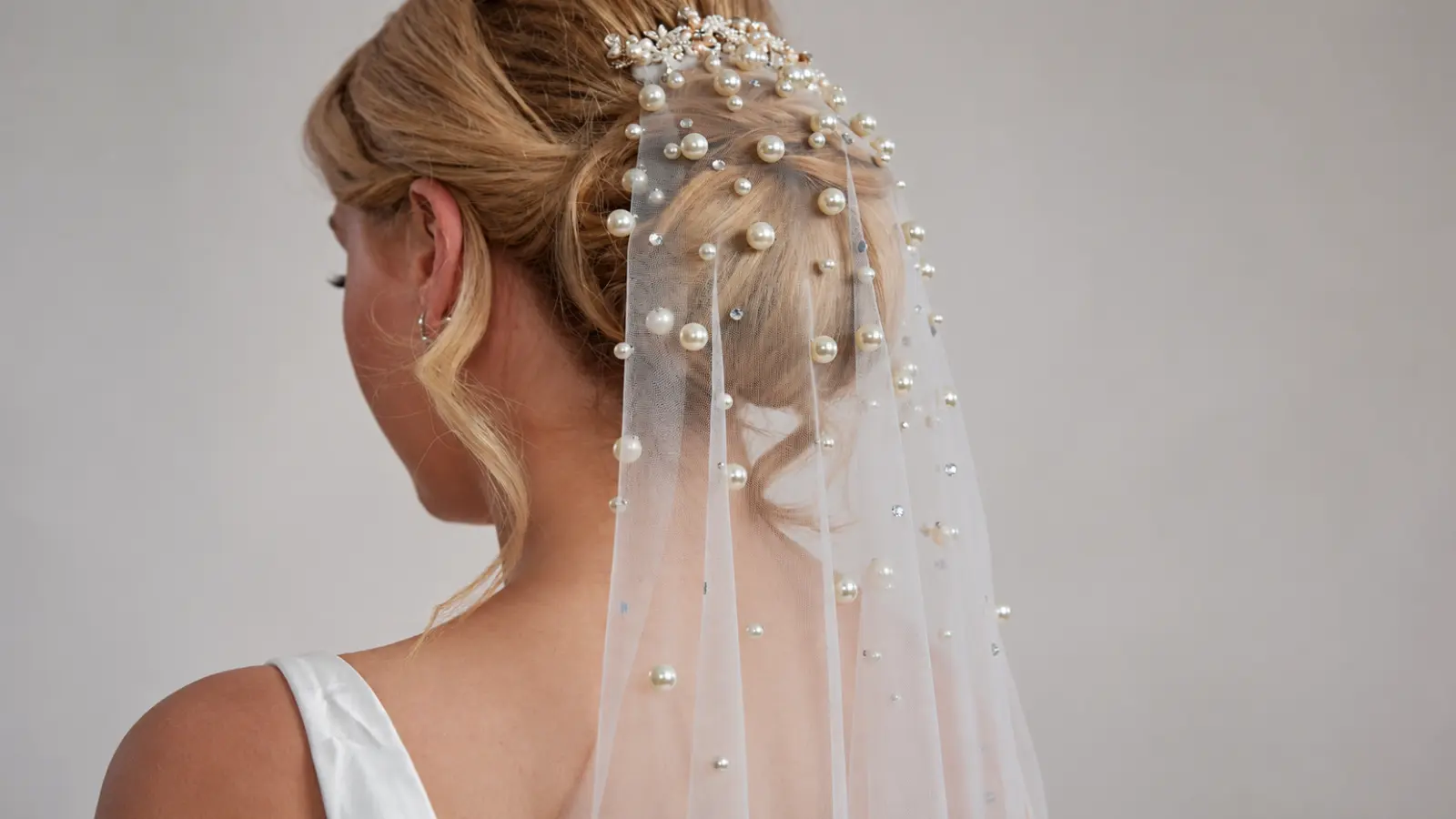
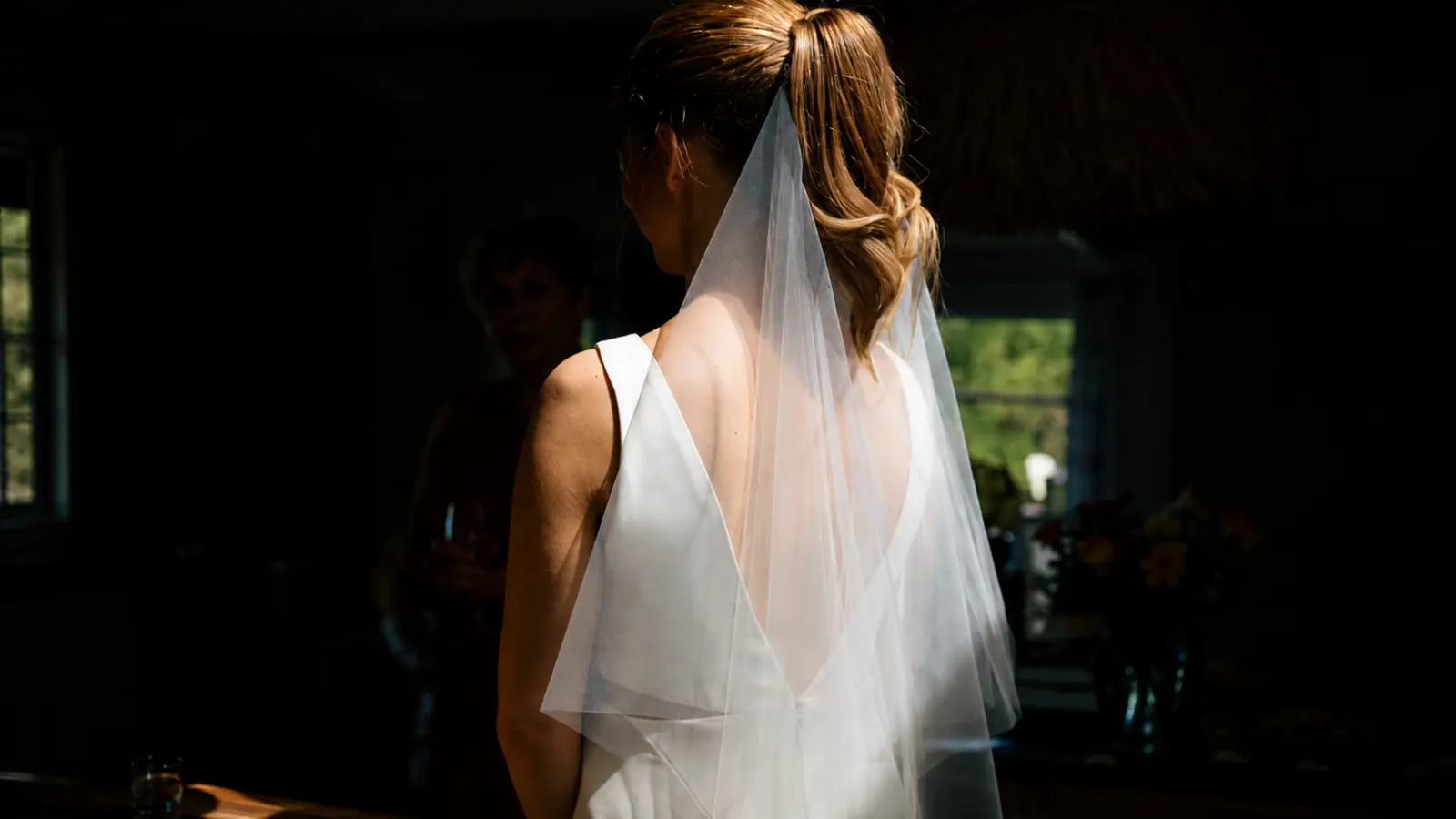
A simple wedding veil proves that elegance doesn’t need embellishment. With the right fabric, length, and placement, a plain veil creates a timeless bridal look that feels refined, modern, and effortlessly sophisticated.
Rather than relying on lace, pearls, or embroidery, a minimalist veil lets movement, proportion, and beautiful tulle become the focus. The result is a bridal look that feels intentional instead of understated.
This guide explains everything you need to know about choosing a simple wedding veil, including fabrics, edge finishes, lengths, dress pairings, and styling ideas for every wedding style.
Simple Does Not Mean Boring
There’s a particular assumption that tends to follow minimalist brides into the salon: that choosing a plain veil means you couldn’t find one you liked, or that you’re playing it safe. The opposite is usually true. The brides who wear plain veils well tend to have the clearest vision of their look, not the most uncertain one.
A simple veil asks something of the bride that an embellished one doesn’t. When there’s no lace, no embroidery, and no crystal edging drawing the eye, the veil has to earn its place through other qualities: its movement in light, the way it catches a breeze during an outdoor ceremony, the soft frame it creates around the face in portraits, and the way it extends the silhouette of the gown without competing with it. These are not small things. They’re the things that make a veil photograph beautifully for 30 years.
The assumption that “simple equals basic” usually comes from seeing simple veils on the wrong fabric, at the wrong length, or without thought given to how the edge is finished. A raw-edge silk tulle veil in a cathedral length is not a compromise. It’s a statement that happens to involve very little decoration.
What Makes a Simple Veil Work
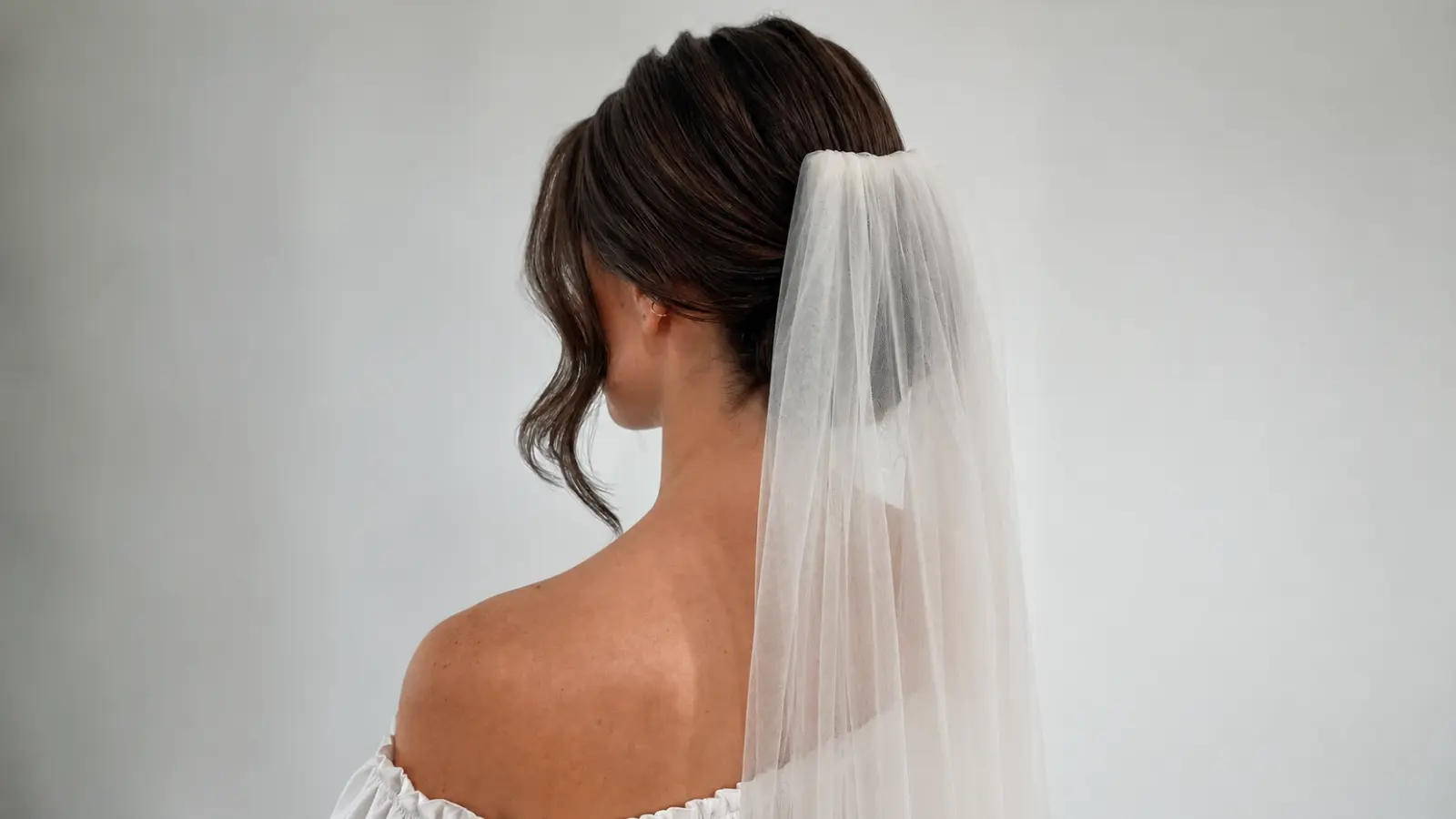
When a veil has no embellishment to carry it, the quality of its construction becomes the entire argument. These are the elements that separate a simple veil that photographs beautifully from one that reads flat in person and disappears in images.
Fabric
Bridal illusion tulle is the standard — it’s lightweight, holds its shape, and catches light without being reflective. It works at most price points and photographs clearly indoors and out. Silk tulle is softer and more fluid; it drapes differently and has a luminous quality that bridal illusion doesn’t replicate. The choice matters more on a plain veil than on an embellished one, because the fabric is the only visual element. If you’re investing in a simple veil, the fabric is where that investment should go. For a full comparison of veil fabrics and how they behave, see our wedding veil materials.
Weight and Density
Plain tulle comes in different weights, and the weight changes both the movement and the visual presence of the veil. A very lightweight, single-layer veil in a sheer tulle can look almost invisible in photographs — which may be exactly what you want, or may be a disappointment. A slightly denser tulle holds its shape better, creates more visible movement, and reads more clearly in images. When looking at simple veils, hold the fabric up to a light source and look at how it diffuses. That’s a reasonable proxy for how it will behave on camera.
Length
On a simple veil, length carries a disproportionate share of the visual work. Without embellishment drawing the eye, the silhouette of the veil — the shape it creates from the attachment point to the hem — is the primary visual element. A fingertip veil creates one kind of statement. A cathedral veil creates a completely different one. Choosing the right length for a plain veil is more consequential than it is for an embellished veil, where the detail can compensate for a length that isn’t quite right.
Placement
Where the veil attaches in the hair changes how a plain veil reads almost as much as the length does. Understanding how to wear a wedding veil at different placement points helps you decide whether a higher crown position or a lower attachment creates the effect you want. On a plain veil, the placement is especially visible because there is no decorative comb or heavy edge trim creating another focal point.
Edge Finishes on Plain Veils
The edge finish is the detail closest thing to embellishment on a simple veil — it’s often the only visible decision beyond length and fabric. Understanding the options helps you choose intentionally rather than accepting whatever the first veil you try happens to have.
| Edge Finish | What It Looks Like | Best For |
|---|---|---|
| Raw cut / raw edge | Unfinished, soft border that fades into the fabric; barely visible | Modern, minimalist, contemporary looks; brides who want the veil to seem to disappear at the hem |
| Rolled hem | Narrow machine-stitched border; clean, defined line | Classic and traditional; slightly more visible edge that photographs clearly |
| Narrow ribbon trim | Thin satin or grosgrain ribbon stitched at the hem | Adds a subtle border without being embellished; works with modern and classic dresses |
| Horsehair trim | Stiffened border that creates shape and volume at the edge | Brides who want structure in the veil’s silhouette without lace or embroidery |
| Narrow pearl trim | A single row of small pearls at the hem; the simplest embellished edge | The bridge between plain and embellished; adds detail without committing to a decorative veil |
The raw edge and the rolled hem are the two that define the “simple veil” category most clearly. The choice between them is largely a matter of whether you want the edge to read at all. Raw cut disappears; rolled hem defines. Both are considered clean and modern — neither reads as unfinished.
Simple Veil Styles by Length
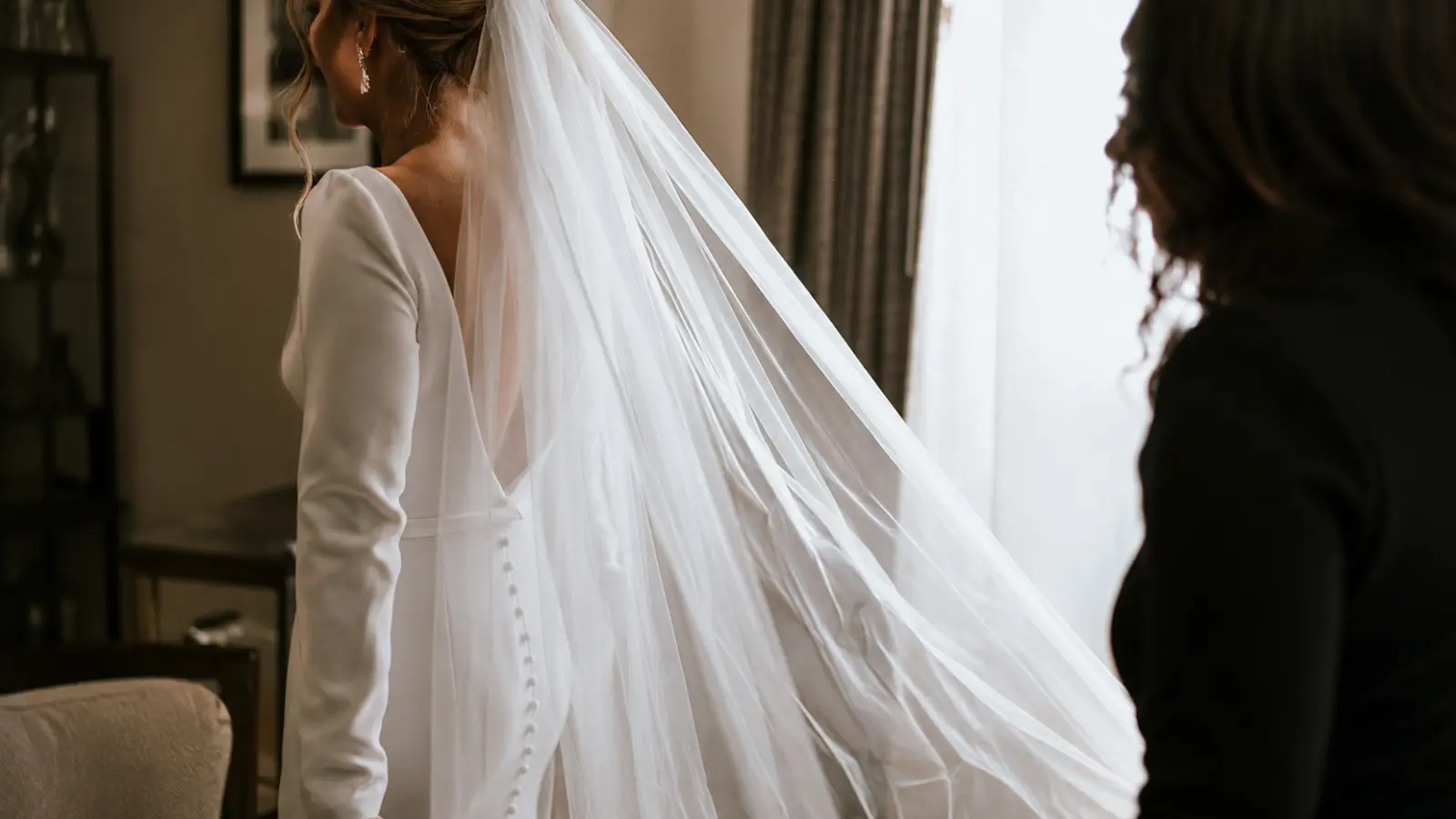
Every length has a different character when the veil is plain. Without embellishment to anchor the eye, the silhouette becomes the statement — so length deserves more thought on a simple veil than it might on a decorated one. Here’s how the most common wedding veil lengths read in practice.
Simple Fingertip Veil
The most versatile length in the simple veil category. At fingertip length, a plain tulle veil frames the upper body in portraits, falls at a point that reads naturally in full-length photographs, and creates movement without requiring significant logistical management. It works with most dress silhouettes and for most ceremony settings. For a bride choosing her first veil or uncertain about length, fingertip is the most reliable place to start.
Simple Chapel Veil
A mid-formal option that sweeps the floor without trailing dramatically behind the dress. On a plain veil, chapel length creates a soft, long silhouette from behind that reads elegantly in ceremony photographs without the scale commitment of cathedral length. It’s a practical choice for brides who want the drama of a floor-length veil but don’t want to manage additional fabric during the reception.
Simple Cathedral Veil
This is where a plain veil makes its strongest argument. A cathedral-length single-tier veil in quality tulle — no lace, no embroidery, no trim — is one of the most formally striking bridal accessories available. The length itself becomes the statement. When a bride walks down a cathedral aisle with 120 inches of plain tulle trailing behind her, no one is looking for embroidery. The scale does all the work. For guidance on the logistics of wearing and managing this length, see our cathedral wedding veil.
Simple Elbow Veil
A relaxed, modern length that works particularly well for outdoor ceremonies, garden weddings, and less formal settings. On a plain veil, elbow length reads as intentionally casual rather than understated — it has a lightness and ease that longer lengths don’t. It’s also the most practical of the longer options for brides who want to wear the veil through more of the reception without managing significant fabric.
Simple Veil and Dress Pairing Guide
The relationship between a plain veil and a dress is different from the relationship between a decorated veil and a dress. When the veil has no detail of its own, its entire contribution to the look comes from its length, its movement, and how it relates to the dress silhouette. This pairing guide is built around that reality.
| Dress Type or Silhouette | Best Simple Veil | Why It Works |
|---|---|---|
| Heavily embellished dress (beaded, sequined, heavily laced) | Plain raw-edge or rolled-hem veil, any length | The dress carries the detail; the veil stays out of its way |
| Minimalist crepe or satin gown | Plain cathedral or chapel veil in quality tulle or silk tulle | Length becomes the feature on both pieces; the pairing is intentionally editorial |
| A-line with a full skirt | Fingertip or chapel length, single-tier | The full skirt reads as the volume statement; the veil adds length without competing |
| Sheath or column dress | Cathedral or chapel length; or elbow for a modern contrast | Long veil adds movement and softness to a streamlined silhouette |
| Lace dress | Plain tulle veil — raw edge or narrow ribbon trim | The lace dress already has its detail; a plain veil avoids visual competition |
| Short or tea-length dress | Elbow or fingertip; avoid floor-length | Proportional scale; floor-length veils overwhelm shorter skirts |
| Boho or relaxed silhouette | Soft raw-edge elbow or fingertip veil in lightweight tulle | Relaxed edge and light fabric suit the ease of the style |
| Ballgown with a dramatic skirt | Cathedral length for drama, or elbow for contrast | Cathedral echoes the formality; elbow adds modern contrast to the volume |
A plain veil paired with a plain dress is not a default — it’s a choice that requires the most confidence of any pairing because there’s nothing to carry the look except the quality of the two pieces and the way they move together. When it works, it tends to photograph like editorial. When it doesn’t, the issue is usually fabric, not the absence of embellishment.
Simple Veil With a Detailed Dress
This is one of the most reliable pairings in bridal styling and one that more brides should consider. A heavily embellished dress — beaded, sequined, covered in intricate lace — does not need a competing veil. It needs a frame. A plain veil in a good length does exactly that: it extends the silhouette and adds movement without pulling focus away from the dress’s detail.
The practical question is how plain to go. A completely unadorned raw-edge veil lets the dress be the sole visual story. A narrow ribbon trim at the hem or a horsehair border gives the veil just enough presence without becoming a second act. Both approaches work; the choice depends on whether you want the veil to be noticed at all, or whether you want it to read as light and air around the dress.
Length is also worth thinking about carefully here. On a heavily embellished dress, a very long plain veil photographs most clearly because the contrast between the dense embellishment of the gown and the sheer emptiness of the veil is part of the visual effect. A shorter plain veil on a very detailed dress can feel as though the veil simply didn’t have enough presence to register. When in doubt, go slightly longer rather than shorter when pairing a plain veil with a highly detailed gown.
Simple Veil With a Minimalist Dress
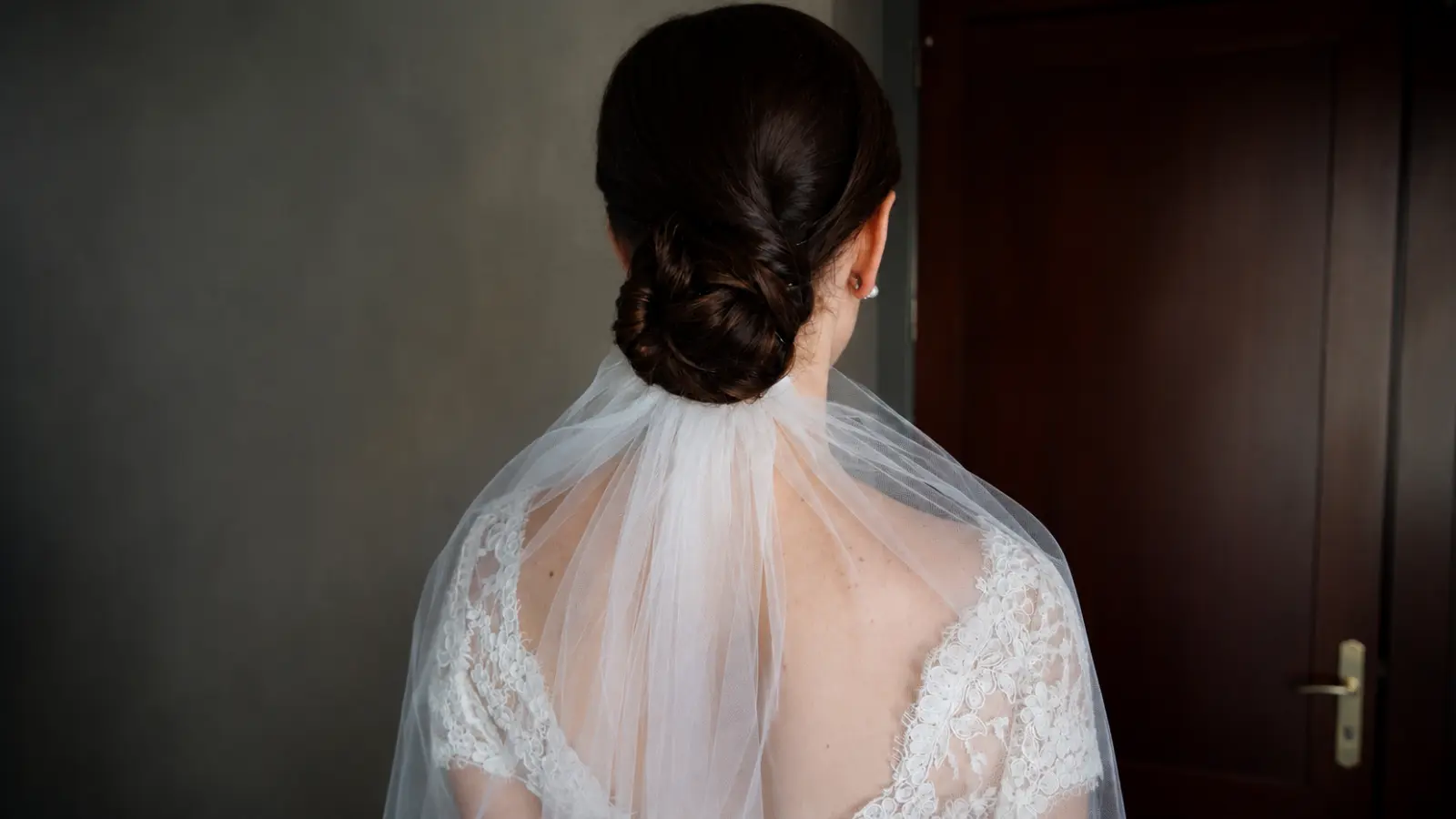
This is where the stakes are highest for a plain veil, and where the fabric and length decision carries the most weight. When both the dress and the veil are minimal, there’s nothing in the look carrying embellishment — no lace, no beading, nothing to catch light or create texture. The entire look rests on silhouette, movement, and the quality of the materials.
Done well, this pairing is genuinely striking. A crepe column dress with a cathedral-length silk tulle veil is one of the most photographically powerful combinations in contemporary bridal styling. Done without care — the wrong tulle, the wrong length, no thought given to placement — it can feel flat and underdeveloped rather than considered.
A few things that help:
- Invest in the fabric here more than anywhere else. When both pieces are plain, the drape and light-response of the fabric is all you have. Silk tulle on a minimalist look makes a noticeable difference compared to standard bridal illusion.
- Let the length make the statement. On a plain dress with a plain veil, length is the design decision. A very long veil creates drama without decoration. A shorter veil creates ease and modernity. Pick a length with intention rather than defaulting to something in the middle.
- Add personality elsewhere in the look. A plain dress with a plain veil works beautifully when the rest of the look has some specificity — distinctive earrings, an interesting hair placement, shoes with character. The accessories do the work that embellishment would otherwise do.
For more on how to match veil choices to specific dress silhouettes, including minimalist and column styles, see our wedding dress with veil.
Keeping a Plain Veil Looking Bridal
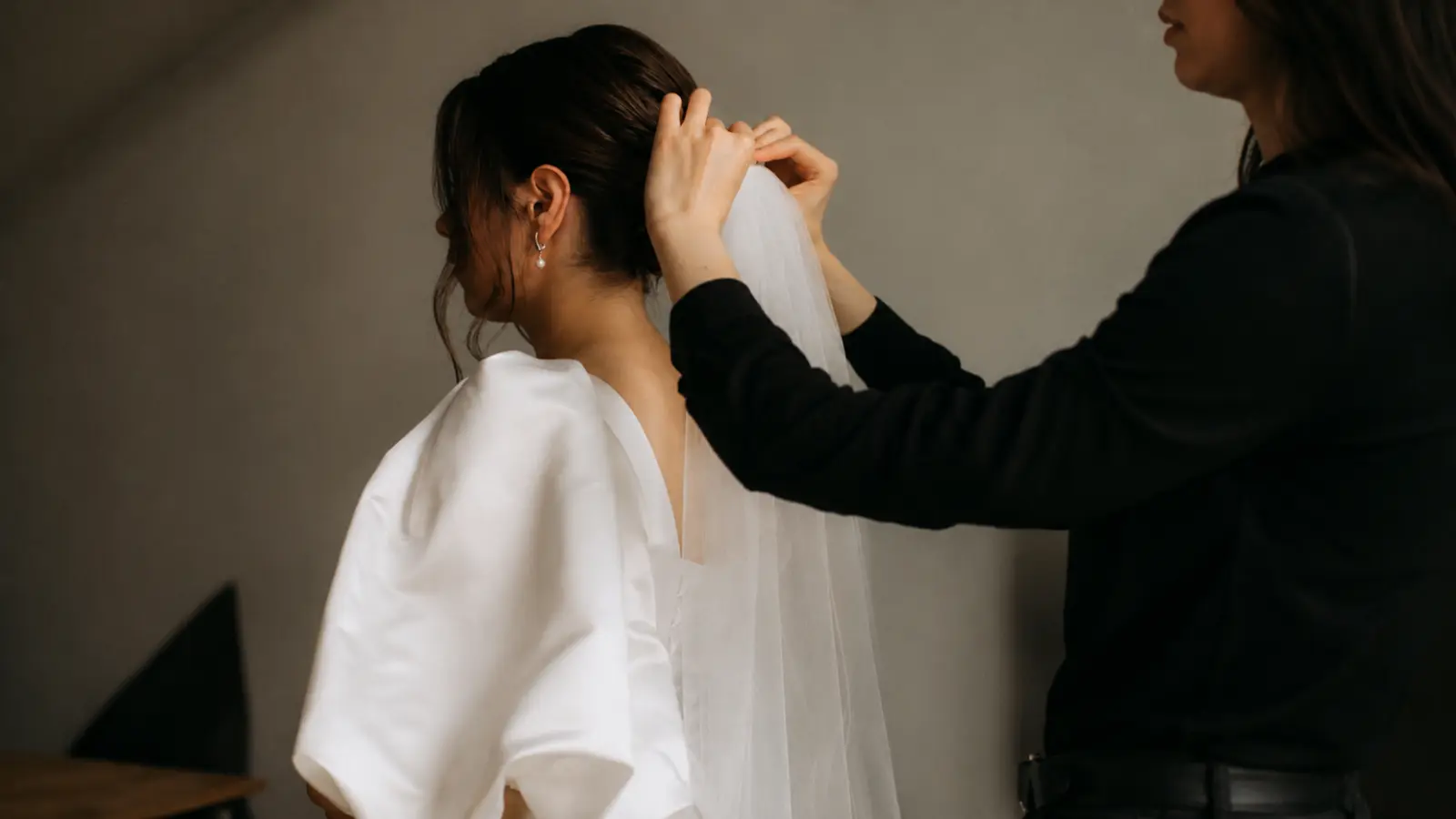
The most common concern brides have about simple veils is whether they’ll look bridal enough — which is really a question about whether the veil will feel ceremonial and significant, not just like a piece of fabric clipped into the hair. It’s a fair question, and it has a practical answer.
A plain veil reads as bridal when three things are true: the fabric is appropriate, the length is considered, and the placement is intentional. A veil that hangs limply from an attachment point too low on the head, made from tulle that doesn’t move, at a length that doesn’t relate to the dress — that reads forgettable. The same silhouette on the right fabric, placed with care, at a length that suits the dress and the venue, reads as unmistakably bridal.
Beyond those fundamentals, two things reinforce the bridal quality of a plain veil in the overall look:
- Treat it as a formal accessory. A plain veil worn casually — half-attached, slightly off-center looks like an afterthought. The same veil placed deliberately, with the comb positioned correctly and the fabric smoothed before the processional, looks purposeful.
- Let it be the only thing on the head. A plain veil paired with a floral crown, a headband, and decorative pins can lose its clarity. When the veil is simple, the rest of the hair accessories should be restrained — a single comb, a small pin, or nothing else at all. The veil needs the visual space to read on its own terms.
What to Avoid
Simple veils have their own category of common mistakes — different from those that come with embellished veils, but just as worth knowing before you shop.
- Choosing fabric based on price rather than quality. A plain veil has nowhere to hide. On an embellished veil, the trim, the lace, and the beading provide visual interest that can partially compensate for a lower-quality tulle base. On a plain veil, the fabric is the entire visual statement. Spending on better fabric is more consequential here than almost anywhere else in the veil category.
- Assuming simpler means shorter decisions. Because a plain veil has fewer variables — no lace pattern to evaluate, no embroidery style to choose — it can feel like the choice is easy. But the fewer variables there are, the more important each one becomes. Fabric, length, edge finish, and placement all require the same level of deliberateness that an embellished veil requires.
- Choosing a length that doesn’t relate to the dress. On a decorated veil, a length that isn’t quite right can be partially rescued by the visual interest of the detail. On a plain veil, the relationship between the hem of the veil and the hem of the dress is simply visible. If the veil ends mid-train, or at an awkward point relative to the skirt, there’s nothing to redirect attention away from that.
- Wearing the veil too low on the head. Placement changes how a plain veil reads dramatically. A veil attached too low at the nape can look sloped and heavy. Placed higher, with the tulle fanning out from a point closer to the crown, the same veil creates lift and creates the light-catching movement that makes veils photograph well.
- Confusing “simple” with “no decision required.” The most visible mistake in the simple veil category isn’t a style choice — it’s the absence of a choice. A veil that was bought quickly, attached without thought, and worn without a plan for removal tends to read as an afterthought, regardless of how beautiful the fabric is. Simple veils reward intentionality more than embellished ones do, not less.
All of these trace back to the same underlying principle: simplicity requires confidence to carry. The good news is that once you’ve found the right fabric at the right length, a plain veil is genuinely low-maintenance on the wedding day itself — no fraying lace to catch, no beads at risk of snagging, no embroidery to protect during removal.
Simple Wedding Veil Inspiration
Discover elegant simple wedding veil inspiration featuring minimalist bridal styles, soft tulle veils, timeless cathedral lengths, and effortlessly sophisticated wedding looks. Explore beautiful dress pairings and modern styling ideas for a refined bridal aesthetic.
Is a Simple Wedding Veil Right for You?
A simple wedding veil is a timeless choice that allows beautiful fabrics, graceful movement, and thoughtful proportions to become the focus of your bridal look. Without decorative embellishments, every design decision—from the tulle to the length and placement—becomes even more meaningful.
Whether you’re wearing a minimalist gown or balancing a highly detailed dress, a well-chosen simple veil creates elegance through restraint. When quality, fit, and styling come together, simplicity becomes one of the most sophisticated bridal statements you can make.
Frequently asked questions (FAQ)
What makes a wedding veil look simple rather than cheap?
A simple wedding veil looks elegant when the focus is on quality rather than decoration. Fine tulle, thoughtful edge finishes, the right length, and graceful movement create a refined bridal look, while stiff fabric or poor construction can make even the simplest veil appear inexpensive.
Can a plain wedding veil still look bridal?
Absolutely. A plain veil doesn’t rely on lace or embellishments to feel bridal. Its impact comes from the quality of the fabric, the silhouette it creates, and how it complements the dress. Many of the most timeless bridal looks feature completely unadorned veils.
What is the difference between a raw edge and a rolled edge veil?
A raw edge has no visible finish, allowing the tulle to blend softly into the air for a modern, barely-there appearance. A rolled edge has a narrow stitched border that subtly defines the outline of the veil, creating a slightly more traditional and polished look.
Does a simple wedding veil work with a detailed wedding dress?
Yes. In fact, a simple veil is often the best choice for an embellished gown. It frames the dress instead of competing with beading, lace, or embroidery, allowing the gown to remain the visual focal point while adding softness and movement.
Does a simple veil work with a minimalist wedding dress?
Yes, but fabric quality becomes especially important. When both the dress and veil are minimal, the beauty of the look depends on silhouette, proportion, drape, and movement. A cathedral-length veil in high-quality tulle or silk tulle can create an elegant editorial effect without needing decorative details.
Does a simple veil work for a formal wedding?
Yes. Simplicity does not reduce formality. A plain cathedral-length veil made from beautiful fabric is one of the most sophisticated choices for a traditional church or black-tie wedding. Length, proportion, and fabric create elegance more than embellishment does.
Should a simple veil match the wedding dress fabric exactly?
Not necessarily. Exact fabric matches are rare and usually unnecessary. What matters most is that the veil has a similar weight, drape, and overall feel so it complements the dress naturally rather than creating a noticeable contrast.