Wedding veil alternatives have become increasingly popular among brides who want a beautiful bridal look without wearing a traditional veil. Whether your style is minimalist, modern, romantic, or fashion-forward, there are countless ways to create an elegant wedding look that feels authentic to you.
Choosing not to wear a veil doesn’t mean sacrificing bridal style. The key is understanding what the veil would have added to your overall look—movement, symbolism, drama, or softness—and selecting an accessory that fulfills the same purpose while reflecting your personality and wedding aesthetic.
This guide explores the best wedding veil alternatives, including bridal capes, tiaras, flower crowns, headbands, statement jewelry, and minimalist styling ideas, helping you decide which option best complements your dress, hairstyle, and ceremony.
Do You Have to Wear a Wedding Veil?
No — and this is worth saying without qualifications before moving on. A veil is a cultural tradition with roots that go back centuries, but in the United States today, wearing one is a personal choice, not an obligation. There is no etiquette rule, legal requirement, or mainstream religious expectation that mandates it. Brides at formal church weddings, black-tie receptions, backyard ceremonies, and courthouse elopements regularly marry without veils, and no one considers it incomplete or inappropriate.
The one exception worth noting: a small number of very traditional religious communities — certain Catholic parishes, some Orthodox Jewish ceremonies, some conservative Protestant denominations — do have specific expectations about head covering or modesty during the ceremony. If you are getting married within one of these traditions and are uncertain, a brief conversation with your officiant before the planning is finalized will tell you what, if anything, is expected. In most cases, a simple headscarf, mantilla, or chapel veil satisfies the requirement without committing to the full bridal-veil look if that is not what you want.
For every other bride: the decision is entirely yours. The rest of this guide exists to help you make it clearly, with a real sense of what is out there and what will actually work for your look.
What Is the Veil Actually Doing for Your Look?
Before choosing an alternative, it helps to identify which function the veil was serving in the first place — because “I don’t want a veil” can mean several different things, and the right alternative depends on which one applies to you.
Most of what a wedding veil does falls into one of four categories. Identifying yours makes the rest of the decision much easier.
- Drama and visual weight behind the dress. A long veil creates movement, frames the back of the look in photos, and adds a sense of scale to the bridal silhouette. If this is what you are looking for but a veil does not feel right, a bridal cape or a dress with a dramatic train can serve the same function.
- A ceremony marker — something that comes off at the reception. Some brides wear a veil specifically as a symbol of the ceremony itself, something to remove when the celebration begins. If this transitional quality appeals to you, a removable cape or a headpiece worn only for the ceremony can create the same effect.
- Texture and visual interest at the head and face. A veil adds fabric movement and softness around the face that photographs beautifully. If this is the function you’re after, an embellished headband, a flower crown, or a well-placed hair comb can provide similar photographic texture without the trailing fabric.
- Family tradition or personal meaning. Some brides want to wear a veil because a parent or grandparent wore one, or because they have always pictured themselves in one. If meaning and continuity are the reason, no alternative quite replicates it — and that is useful information too. The question becomes whether you feel strongly enough about that meaning to wear something that otherwise does not feel like you.
With that in mind, understanding the wedding veil meaning behind tradition, symbolism, and family continuity can also help clarify what you would actually be replacing. From there, it becomes easier to compare what the main alternatives provide — and who each one works for.
The Main Alternatives to a Wedding Veil
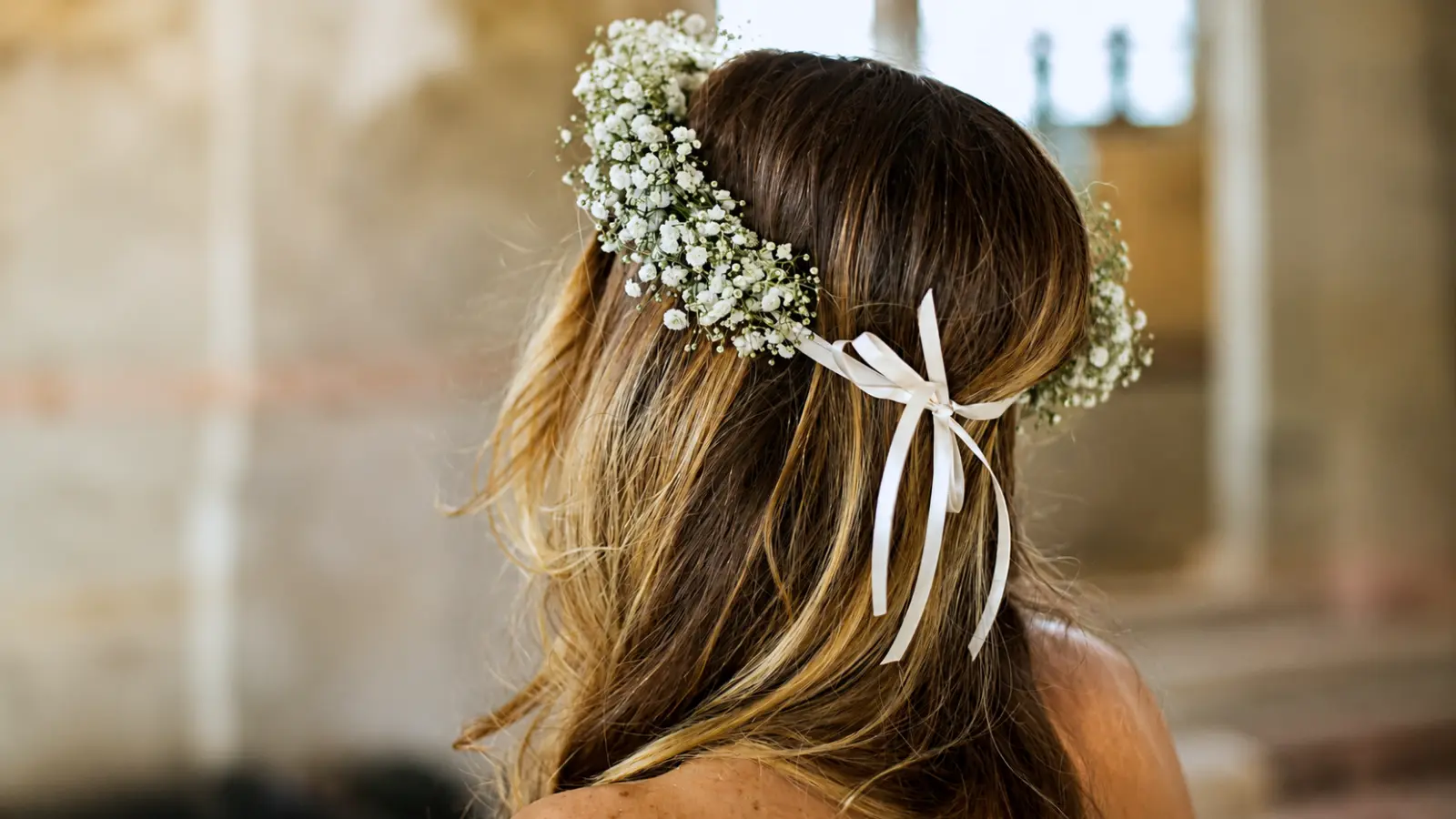
Each of these options has a distinct feel and practical profile. They are not interchangeable, and the right choice depends on your dress, your hairstyle, your ceremony setting, and the function you identified above.
Embellished Headband
A bridal headband — whether set with pearls, crystals, or a simple metal design — is one of the most versatile veil alternatives available. It frames the face, photographs well from the front and side, and adds a clear bridal element without trailing fabric. Headbands work across most hairstyles and dress silhouettes, and they come in a wide enough range of styles that there is almost always an option that fits a specific aesthetic, from very minimalist to quite ornate. The one limitation is movement: a headband does not create the flowing, fabric-in-the-breeze effect that a veil does, so if that visual texture was the appeal, a headband alone will not replicate it.
Tiara or Crown
A tiara or crown provides structure, height, and a clear focal point at the top of the bridal look. It reads as formal and ceremonial without the fabric element of a veil, which makes it a natural choice for brides who want something with visual presence but find veils too traditional or too much to manage. Tiaras tend to work better with updos that create a stable attachment point; full crowns require closely pinned hair to stay in place through the ceremony. For a full guide to styling tiaras and crowns with or without a veil, see our wedding veil with tiara.
Flower Crown
A flower crown — whether made with fresh flowers, dried botanicals, or high-quality fabric blooms — brings a soft, organic quality to the bridal look that nothing else quite replicates. It suits outdoor ceremonies, garden settings, and brides whose aesthetic runs toward romantic and nature-forward. The practical considerations are worth knowing: fresh flower crowns need to be placed as close to the ceremony as possible, and they do not always hold up as well in heat or humidity as structured accessories. Dried or fabric versions are more durable and can be made well in advance. A flower crown on its own, without a veil, reads beautifully in portraits — especially when the dress is relatively simple and the flowers can carry the detail.
Decorative Hair Comb
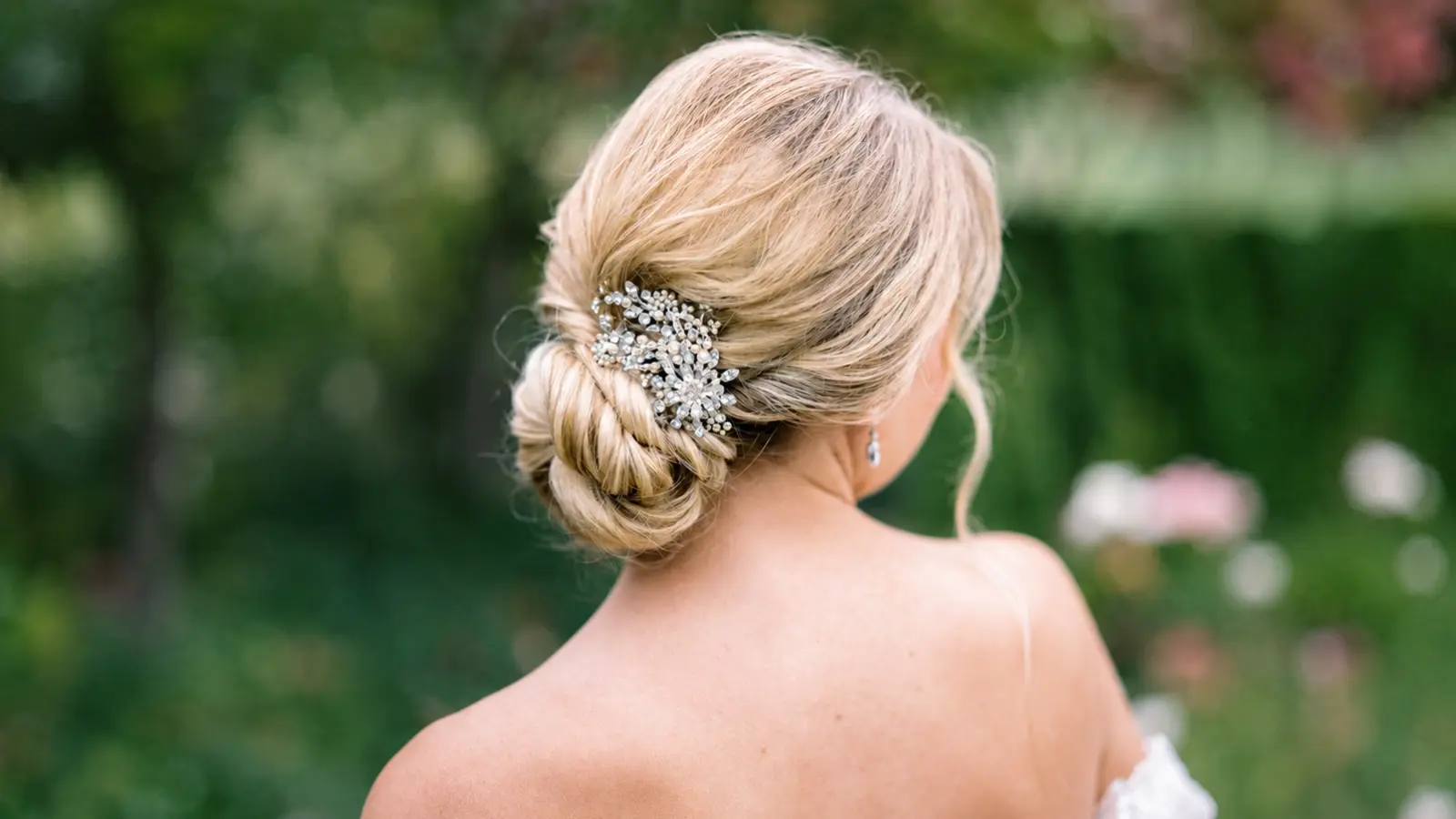
A single well-chosen hair comb — pearl cluster, crystal spray, floral metal design, or even a simple tortoiseshell — adds bridal detail without any of the logistical demands of a veil. It is the most discreet option on this list and works best when the dress itself carries the visual interest and the hair accessory is meant to complement rather than lead. A comb also allows for a lot of creativity in placement: side-swept, centered at the back of an updo, or tucked into a loose half-up style. For brides who want something genuinely understated, this is often the right call.
Wedding Hat With Netting
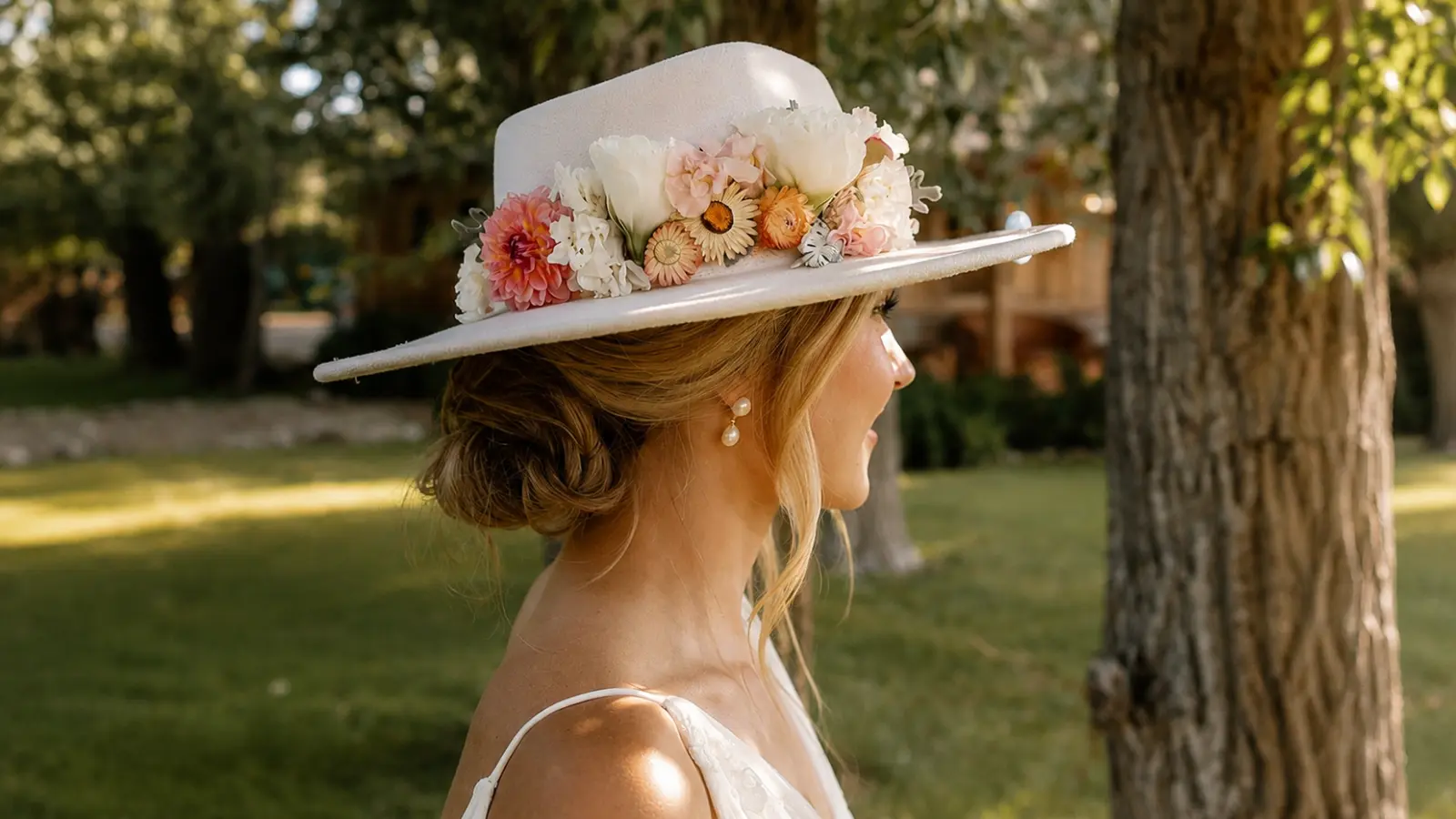
A bridal hat — particularly a wide-brimmed style with a short piece of netting at the brim — offers a completely different take on the traditional bridal look. It has a strong fashion sensibility, photographs with a lot of personality, and suits a specific kind of bride: one who wants to look distinctly herself rather than classically bridal. Bridal hats work best in more relaxed, intimate settings and with non-traditional dress silhouettes. They are not the right fit for every venue or aesthetic, but for the bride who is drawn to them, there is nothing else that quite achieves the same effect.
Statement Earrings
When a bride does not want any head accessory at all, statement earrings become the primary jewelry element and, in some cases, the visual focal point of the entire look. Long chandelier earrings, sculptural drops, or bold pearl clusters draw the eye to the face and neck and create a clear sense of intention — this bride is not underdressed; she has made a deliberate styling choice. Statement earrings work particularly well when the hair is worn up or swept back so the earrings are fully visible, and when the neckline of the dress is relatively open. They require nothing in terms of management on the day, which is a practical advantage that is easy to underestimate.
Ribbon or Bow
A satin or grosgrain ribbon tied in the hair — whether as a half-up bow, woven through a braid, or fastened around a low bun — is having a sustained moment in American bridal fashion. It photographs with a softness and femininity that reads distinctly bridal without looking traditional, and it suits brides who want something playful, modern, and completely personal. The scale of the bow matters significantly: a very large bow makes a strong statement, while a smaller, more delicate one reads as a detail. Both can work, but they suit different aesthetics and different dress styles.
Alternatives at a Glance
This table is meant as a starting point, not a prescription. Real choices depend on your specific dress, your hairstyle, and your overall aesthetic — but seeing the options side by side can help narrow the field before you start trying things on.
| Alternative | Best For | Closest Veil Function It Replaces |
|---|---|---|
| Embellished headband | Most dress styles; versatile and modern | Facial framing and photographic texture |
| Tiara or crown | Formal ceremonies; structured updos | Visual ceremony presence and formality |
| Flower crown | Outdoor, garden, and bohemian ceremonies | Softness, movement, and organic texture |
| Decorative hair comb | Simple dresses; brides who want minimal accessories | Subtle bridal detail without visual weight |
| Wedding hat with netting | Non-traditional aesthetics; intimate settings | Personality and photographic character |
| Statement earrings | Open necklines; hair worn up; very modern looks | Facial focal point without any headpiece |
| Ribbon or bow | Romantic, playful, or fashion-forward aesthetics | Softness and bridal intentionality |
| Bridal cape | Brides who want drama and movement without a veil | Back-of-look drama and ceremony transition |
| Nothing at all | Minimalist brides; ceremonies where hair is the feature | Confidence as the accessory |
One thing this table cannot show: how each option feels on your head in the context of your dress, your face shape, and your specific ceremony. Whatever your initial instinct is, try at least two or three options in person before deciding. The one you thought you wanted is sometimes the one that does not work once it is actually on.
The Cape: Drama Without the Veil
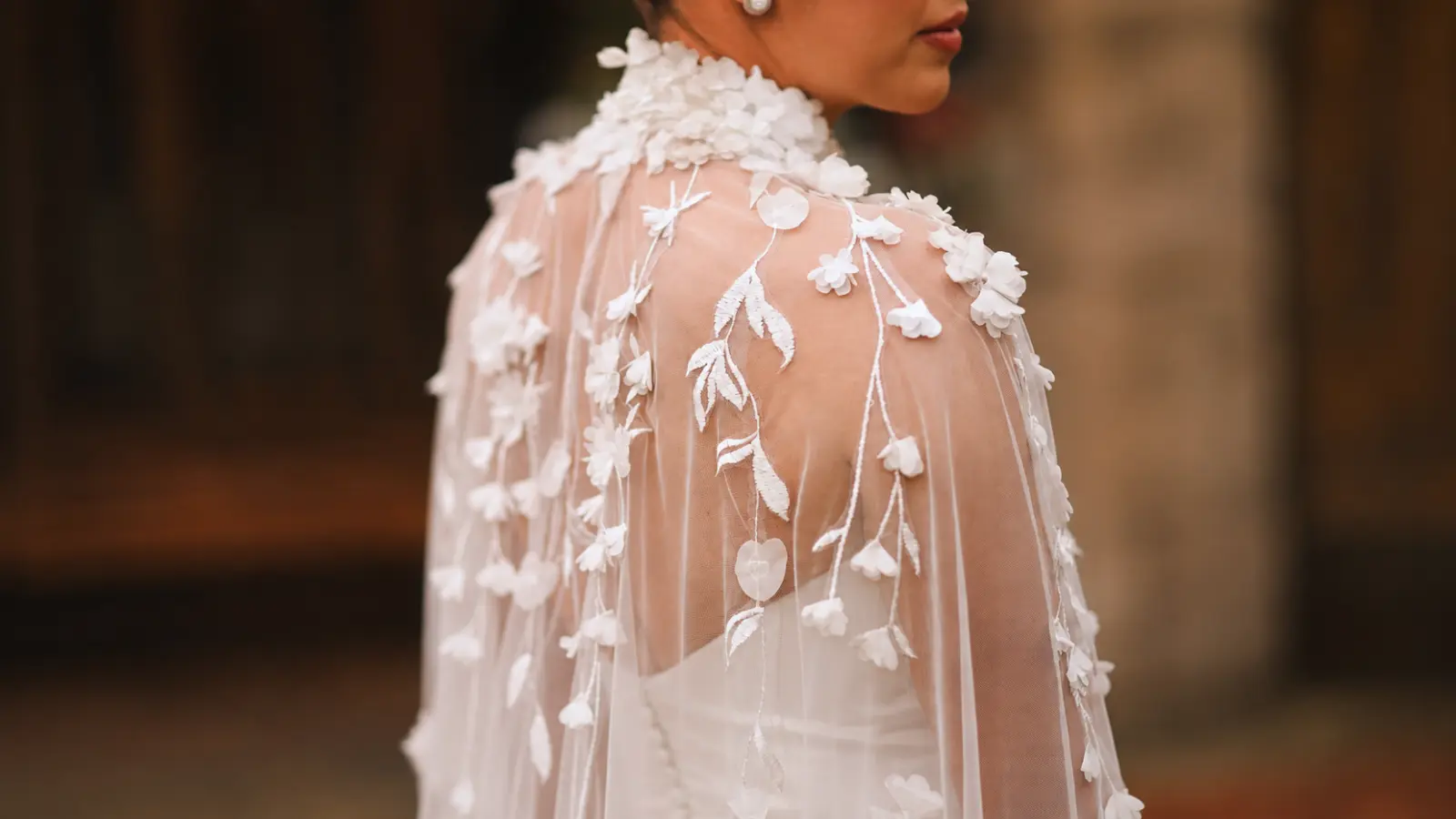
A bridal cape deserves its own section because it functions differently from every other option on this list. While headbands, combs, and crowns replace the veil’s head detail, a cape replaces the veil’s back-of-look drama — which is a meaningfully different function.
A bridal cape attaches at the shoulders or the back neckline of the dress and flows behind the bride, creating movement and visual scale in a way that reads similarly to a veil in photos and during the processional. The difference is that a cape sits on the body rather than the hair, which means it works independently of hairstyle and requires no comb, no pin, and no hair trial coordination.
Capes range from very short (covering just the shoulders and upper back) to full chapel length. They come in sheer tulle — where they read very similarly to a veil fabric — as well as organza, lace, and even embroidered silk. A sheer tulle cape at chapel length, from behind, is nearly indistinguishable from a veil in most photographs.
This makes the cape the most natural choice for a bride who wants the drama and ceremony presence of a veil but finds the head-attachment element uncomfortable, the blusher moment unnecessary, or the hair logistics too demanding. It is also a strong option for brides with very short hair or no hair, for whom the veil comb attachment is not practical.
One practical note: most capes attach with a clasp or hook at the back of the dress or at the shoulders. Confirm the attachment method works with your specific gown construction, particularly if your dress has an open back, a halter neckline, or heavy beading at the shoulders where a clasp might not sit cleanly.
The No-Accessory Option
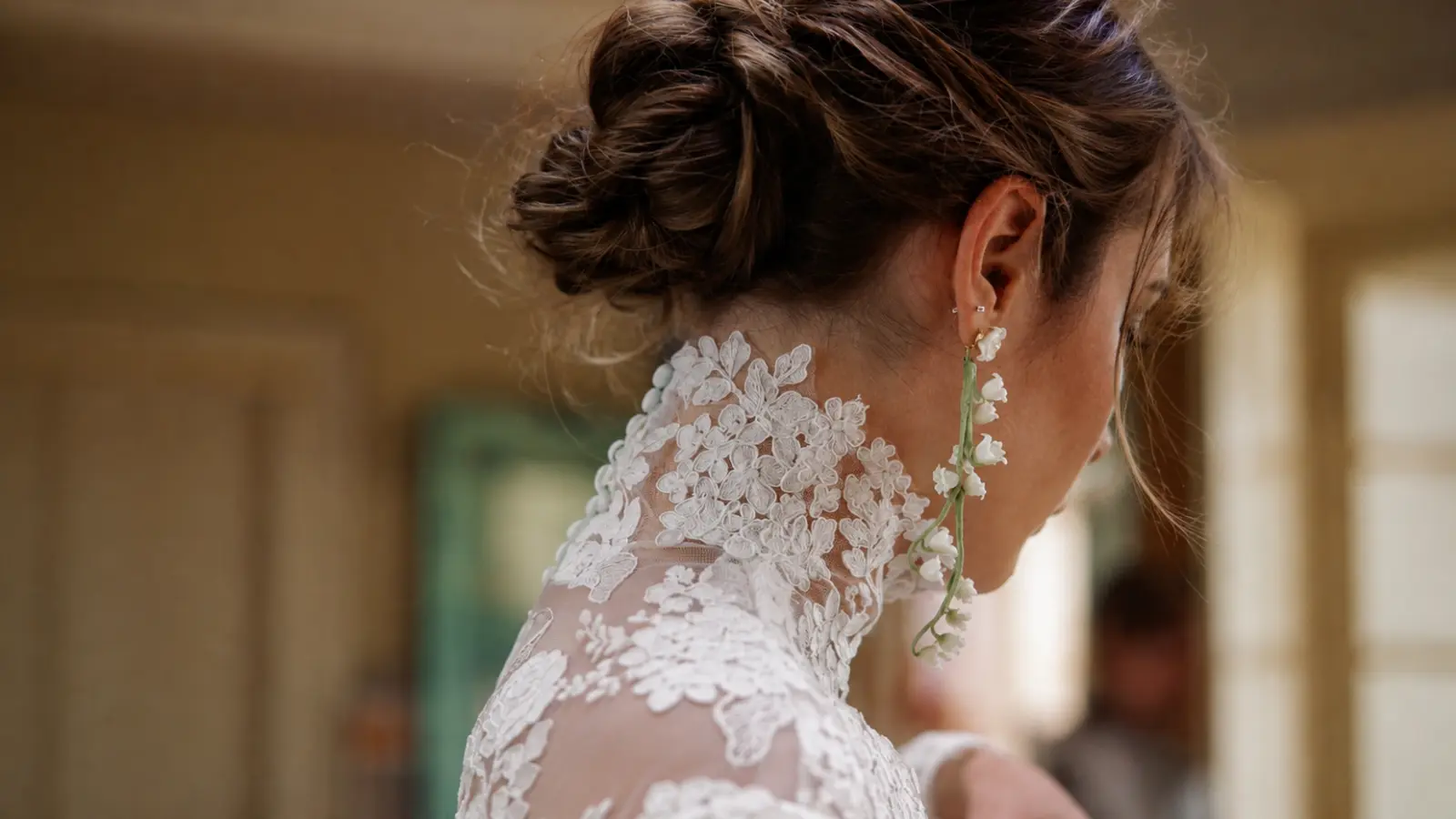
Some brides wear nothing at all — no veil, no headpiece, no accessory of any kind — and the result is often one of the most striking bridal looks in the room. This works when the hairstyle itself is intentional and complete, the dress provides enough visual interest, and the bride is someone who would genuinely feel more like herself without something on her head.
The no-accessory choice tends to photograph most strongly when the hair is styled with real intention — a sculptural updo, a clean low bun, a sleek blowout, or a defined curl pattern — rather than left as an afterthought. The absence of an accessory is a decision, and it reads as one when everything else in the look is deliberate. When it reads as an oversight, it is usually because the hairstyle is not yet complete or because the dress needed more detail at the top of the look and nothing else is providing it.
If this is the direction you are leaning, bring your hairstylist into the conversation early. Ask specifically: does this look feel complete without anything in the hair? A good stylist will tell you honestly, and some will suggest a single small element — a single pin, a tucked flower, a subtle comb — that creates the sense of intention without adding much.
Courthouse Weddings and Elopements
For brides getting married at a courthouse or eloping, the veil question often answers itself — not because a veil is inappropriate in those settings, but because the context naturally encourages a more personal and less traditionally formal approach to the whole look.
Many courthouse brides choose a shorter, simpler dress and no headpiece at all, letting the dress and the occasion speak for themselves. Others wear a flower crown or a simple headband as a nod to the bridal element without the full formal apparatus. A short, sheer veil — elbow or fingertip length — also reads well at a courthouse because it is present enough to feel intentional without overwhelming a more intimate setting.
The honest practical note: there is no audience at most courthouse ceremonies, or a very small one. What you wear is for you and for your photos, not for a room full of guests who will form opinions. That freedom is one of the more underrated aspects of an elopement or civil ceremony, and it is worth using. Wear what photographs the way you want to be remembered on that day.
Second Weddings: Veil or No Veil?
The old guidance — that second-time brides should skip the veil entirely — is largely outdated and does not reflect how most American couples approach remarriage today. Whether to wear a veil for a second wedding is a personal decision, and the etiquette conventions that once governed it have softened considerably.
Some brides who are marrying for the second time choose to skip the veil because it does not feel right for them specifically — not because of a rule, but because the ceremony is smaller, the aesthetic is more relaxed, or they simply did not connect with the veil at their first wedding either. Others wear a veil because they want to, because they did not have the wedding they actually wanted the first time, or because this ceremony is larger and more formal than the first one was.
Both choices are legitimate. The question to ask is not “am I allowed to wear a veil?” but “does a veil feel like me for this wedding?” If the answer is yes, wear one. If the answer is no, do not. The alternatives in this guide apply equally to a second wedding as to any other.
One note specific to second weddings: brides who have young children from a previous relationship sometimes incorporate a small family element into the hair or headpiece — a flower from the child’s garden, a pin that belonged to a family member, something that marks the occasion as a blended beginning rather than a conventional one. It is a small thing, but it can give a headpiece or a simple hairstyle a layer of meaning that no accessory purchase can replicate.
Will I Regret Not Wearing a Veil?
This is one of the more searched versions of the veil question, and it deserves a direct and honest answer rather than false reassurance.
Some brides do feel a moment of wistfulness when they look back at wedding photos and see themselves without a veil. Usually — not always, but usually — this happens when the decision was made primarily for practical reasons (cost, hassle, not knowing what to choose) rather than because a veil genuinely did not feel right. The practical reasons are real, but they are not the same as a clear personal preference, and that distinction matters in retrospect.
Brides who skip the veil because it does not feel like them, because it conflicts with the aesthetic they have chosen, because the ceremony setting does not call for it, or because they simply do not connect with the tradition rarely look back with regret. The decision came from somewhere clear, and the look they created reflects that clarity.
The most useful thing you can do before deciding is try one on. Even if you are already leaning strongly against a veil, comparing a few wedding veil styles in a salon or dressing room can resolve the uncertainty faster than any amount of reading or asking people. You will either feel like yourself and confirm your instinct, or you will feel something unexpected — and that reaction, whatever it is, is real information.
There is no wrong answer here. There is only the answer that is actually yours.
Wedding Veil Alternatives Inspiration
Discover beautiful wedding veil alternatives featuring elegant bridal capes, sparkling tiaras, delicate headbands, flower crowns, statement earrings, and modern bridal accessories. Explore stylish no-veil wedding ideas that complement every dress, hairstyle, and wedding aesthetic while creating a timeless bridal look.
Are Wedding Veil Alternatives Right for You?
Wedding veil alternatives allow you to create a bridal look that feels completely personal while still celebrating the elegance and significance of your wedding day. Whether you choose a dramatic cape, a delicate headband, a romantic flower crown, or no accessory at all, the best choice is the one that reflects your personality rather than tradition alone.
The most successful bridal styling begins by understanding what you want your overall look to communicate. By selecting accessories that complement your dress, hairstyle, and ceremony, you’ll create a timeless wedding style that feels intentional, authentic, and uniquely yours.
Frequently asked questions (FAQ)
How do you know if a wedding veil is right for you?
Think about what you want your bridal look to express. If the symbolism, movement, or tradition of a veil feels meaningful to you, wearing one may enhance the experience. If it feels like an obligation rather than a choice, exploring alternatives will likely result in a look that feels more authentic.
Do you have to wear a veil at your wedding?
No. A wedding veil is entirely optional. There is no legal, etiquette, or mainstream religious rule requiring American brides to wear one. Many brides choose other accessories—or none at all—and still create a beautiful bridal look.
What can I wear instead of a wedding veil?
Popular alternatives include embellished headbands, tiaras, flower crowns, decorative hair combs, bridal capes, hats with netting, ribbon bows, statement earrings, or simply wearing no head accessory. The best choice depends on what you wanted the veil to contribute to your overall look.
Will I regret not wearing a wedding veil?
Brides who skip the veil because it genuinely does not match their style rarely regret the decision. Regret is more common when the choice was driven mainly by convenience or uncertainty. Trying on a veil before making the final decision often provides the clarity you need.
Is it okay to skip the veil for a church wedding?
Yes, in most American churches. Only a small number of religious traditions maintain specific expectations regarding head coverings. If you are unsure, your officiant can easily clarify what is appropriate for your ceremony.
Should a second-time bride wear a veil?
Absolutely, if she wants to. Modern wedding etiquette no longer treats the veil as something reserved only for first marriages. The decision should reflect the style of the wedding and the bride’s personal preference rather than outdated traditions.
What is the closest alternative to the look of a wedding veil?
A bridal cape usually creates the closest visual effect because it adds movement, softness, and dramatic flow behind the dress without attaching anything to the hair. Brides who love the silhouette of a veil but dislike wearing one often find the cape to be the best substitute.