
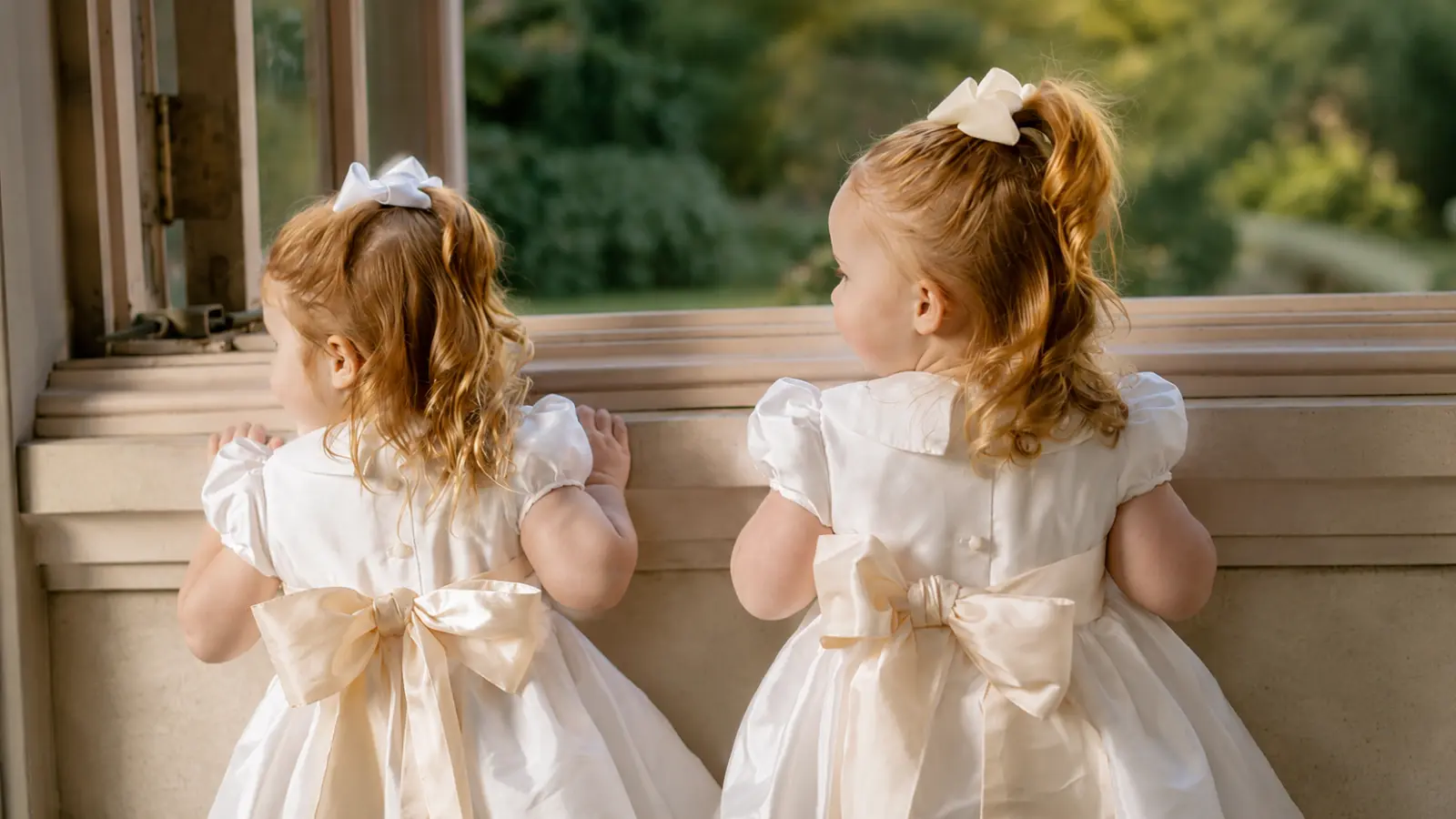
Flower girl age can help you predict how much independence, instruction, and support a child may need during the wedding processional. There is no official minimum or maximum age, and children at very different stages can participate successfully when the role is adapted to them.
The commonly discussed age range is around three to eight, but temperament matters just as much as the number itself. A confident toddler may enjoy walking with a parent, while an older child may prefer a more grown-up role such as junior bridesmaid.
This guide explains flower girl age expectations at every stage, from babies and toddlers to school-age children and older girls, including walking, petals, rehearsal tips, backup plans, ceremony seating, and when a junior bridesmaid role may be a better fit.
What Is the Best Age for a Flower Girl?
If there is a sweet spot for the flower girl role, it tends to fall between five and seven years old. Children in that range are usually old enough to understand what they’re being asked to do, confident enough to walk independently in front of a crowd, and young enough that the role feels natural rather than awkward. They can hold a basket, scatter petals if that’s the plan, and follow the simple direction of walking toward the front and finding a seat.
That said, “best age” is a generalization, and temperament matters as much as age. A shy six-year-old may need more support than a bold four-year-old who has been performing for audiences since she could walk. Knowing the specific child — not just her age, but how she responds to new situations, crowds, and being watched — is the most useful input you have when designing the role for her.
The three-to-eight range appears in most planning conversations because it captures the developmental window where children are old enough to participate meaningfully but young enough that the role fits them socially and emotionally. Outside that range, participation is still possible — it just requires more thoughtful adjustments on either end.
Can a Baby Be a Flower Girl?
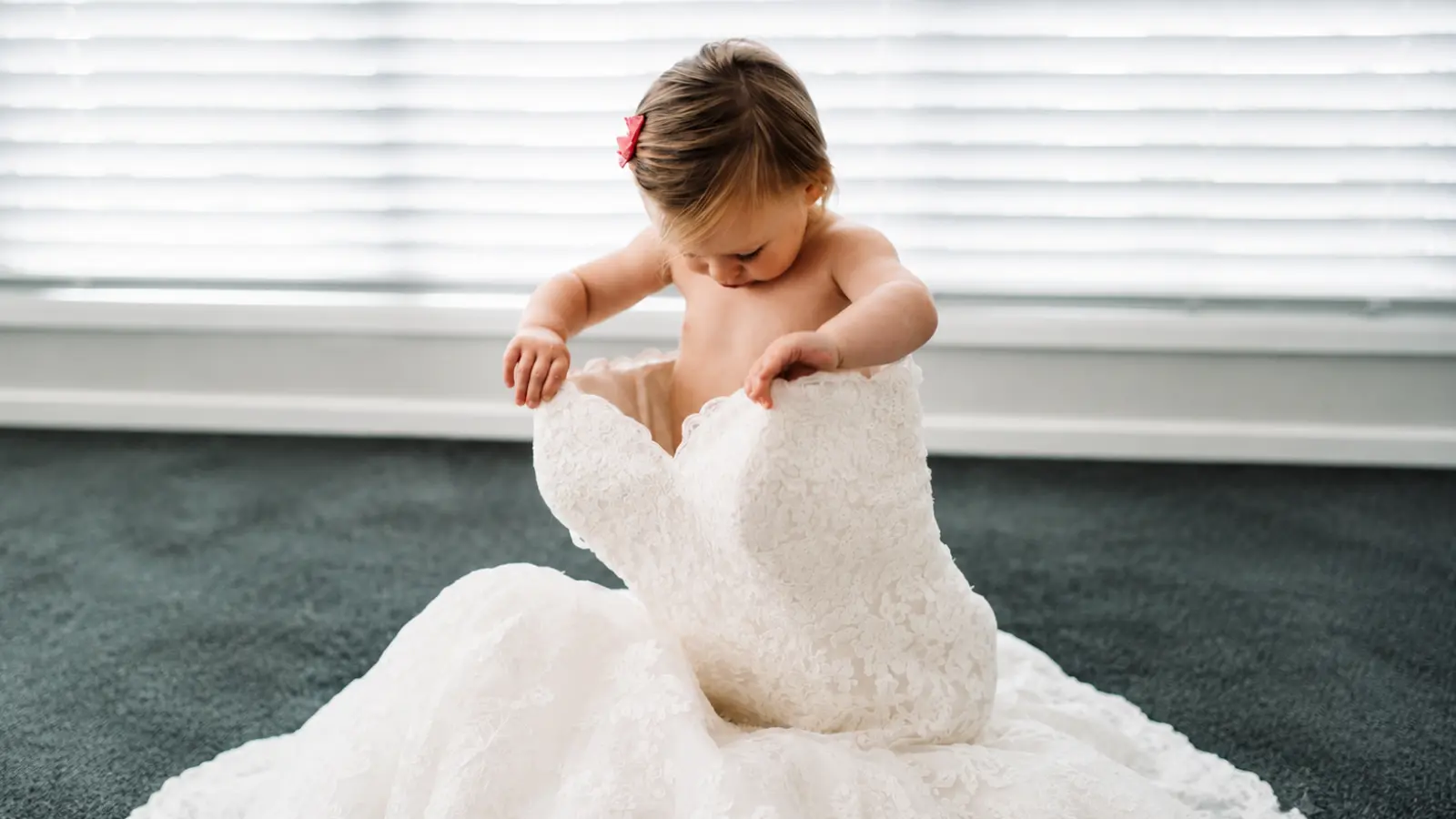
Yes, though the role looks different at this age than it does for an older child. A baby or infant cannot walk the aisle independently, and no one should expect her to — but she can absolutely be included in the processional in a way that feels sweet and intentional rather than forced.
The most common approaches for babies and infants include:
- Being carried by a parent or bridesmaid. A parent who is not in the wedding party can carry the baby down the aisle as part of the processional. This keeps the child visible and included without requiring anything from her.
- A decorated wagon or basket. A small wagon pulled by an older child or a parent, or a large basket carried by two people, can transport a baby or young toddler down the aisle in a way that reads as charming and deliberate.
- A symbolic role in the ceremony photos. If the logistical complexity of including a baby in the processional is not worth the effort, she can still appear in family portraits, be present for the ceremony in her parent’s arms, and be recognized in the program. The role doesn’t have to include the aisle walk to be meaningful.
The honest planning note for babies: their cooperation is not guaranteed, and the plan should account for that. A baby who is hungry, overtired, or simply not in the mood for a crowd is going to express that clearly. Having a clear backup — a parent ready to step in, a seat nearby, a sitter standing by — makes the moment enjoyable rather than stressful.
Toddler Flower Girl
Toddlers between roughly eighteen months and three years are one of the most unpredictable and, when it works, most genuinely charming ages for this role. The key word is unpredictable. A toddler who walked the aisle perfectly at the rehearsal may stop at the top of the church steps on the wedding day and refuse to move. Or she may run. Or she may sit down and wave at guests. All of these are possibilities, and the plan should accommodate all of them.
What consistently works better for toddlers than trying to give them a performance-level role is keeping the task as simple as possible. One thing to do — walk forward — is manageable. Walking forward while scattering petals while smiling while not stopping is not. A toddler who is simply walking down the aisle, ideally hand-in-hand with a parent or someone she knows well, toward a face she recognizes at the front, is set up for success.
Dress choice matters especially at this age. A toddler needs a dress she can move in freely, a hem she cannot trip over, and closures that allow for a bathroom change without a full undressing. Comfort is not a secondary consideration — it is the primary one. The flower girl dresses covers what to look for by age in more detail.
Flower Girl Ages 3 to 5
This is the range where the flower girl role starts to become genuinely reliable — with some caveats. A three-year-old and a five-year-old are in notably different developmental places, and the role should be calibrated accordingly.
Three-year-olds are capable but still benefit significantly from walking with a parent or a known adult, especially if the ceremony space is large, the crowd is unfamiliar, or the aisle is long. They can carry a basket and understand what it’s for, but asking them to scatter petals in a controlled pattern while walking and smiling is more than most three-year-olds will prioritize when they spot Grandma in the second row.
Four and five-year-olds tend to have more confidence in new situations and are often excited about the role in a way that carries them through the nerves of the moment. They can usually walk independently, carry a basket or a small bouquet, and follow a straightforward instruction. A rehearsal walkthrough the day before helps significantly — seeing the actual space and walking the actual aisle removes a lot of the mystery and gives the child a clear picture of what she’ll be doing.
For this age range, the sweet spot is a single, simple task. One thing to carry, one direction to walk, one person to find at the front. The ceremony is not a performance; it’s a brief moment in her day, and it works best when that’s how it feels to her.
Flower Girl Ages 6 to 8
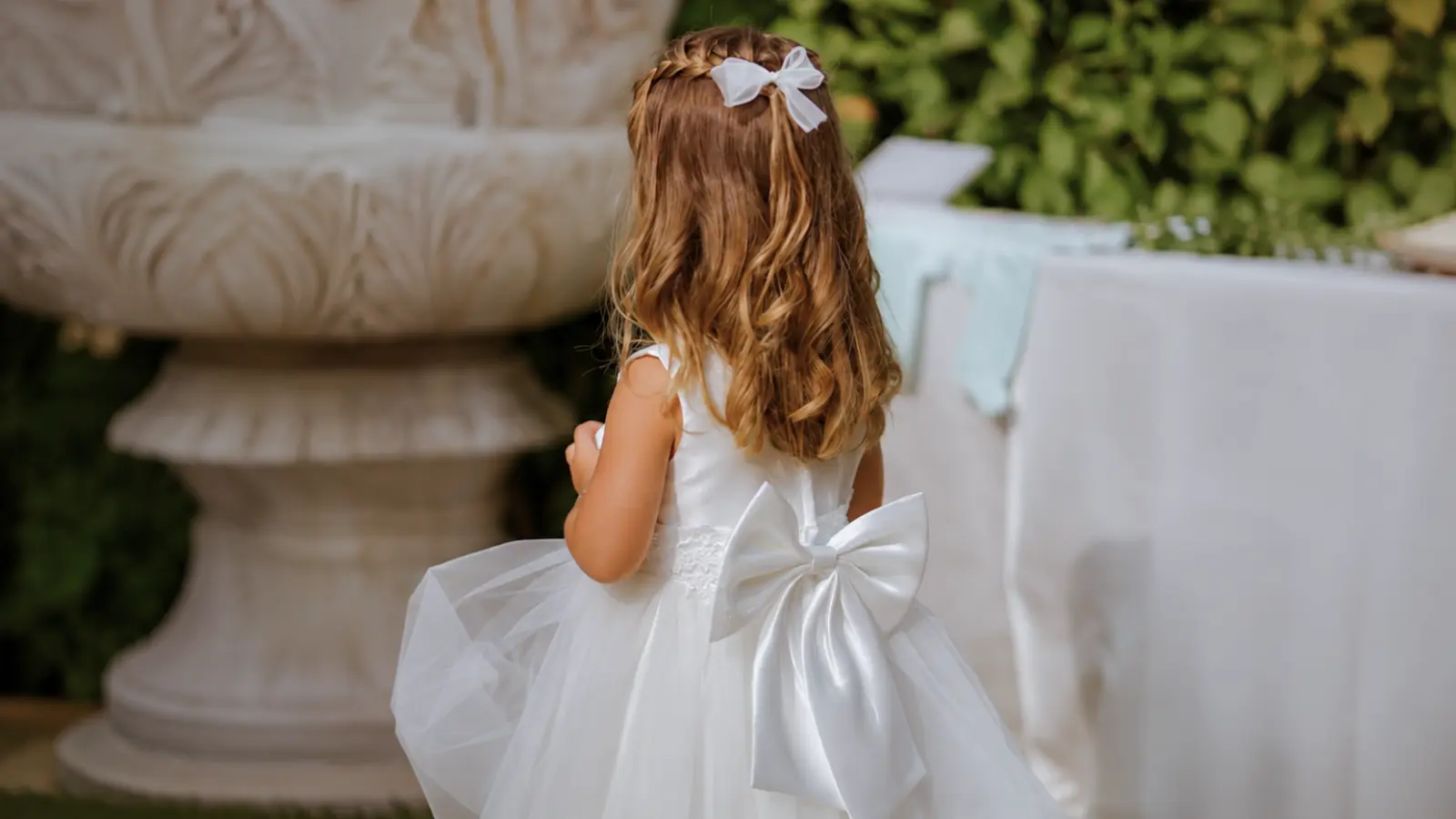
Six to eight is often cited as the most reliable range for the flower girl role, and the reasons are practical: children in this window tend to have the social maturity to handle being watched, the physical coordination to walk and scatter simultaneously if asked, and enough self-awareness to take the role at least a little seriously without being old enough to feel self-conscious about it.
A child in this range can walk the aisle independently without an escort, carry a basket or a mini bouquet without prompting, and scatter petals at a reasonable pace if that’s the plan. Many children this age can also sit through the ceremony and generally manage their participation with less adult intervention.
That said, this age range does not mean every child needs an elaborate role. A six-year-old who is shy or anxious around crowds may still benefit from walking in with a parent, and an eight-year-old who is genuinely nervous does not need to prove anything by walking alone. The goal is still a child who feels comfortable and enjoys the experience — the age just makes more options available, not all of them mandatory.
Can an Older Girl Be a Flower Girl?
Yes. There is no rule against including a nine, ten, or eleven-year-old in the flower girl role if the girl herself is enthusiastic about it and the couple wants her in that capacity. Convention suggests a younger child for this role, but convention is a starting point for decision-making, not a ceiling.
The practical consideration at this age is that the role should match how the child feels about it. An older girl who is genuinely excited to walk the aisle, carry flowers, and be part of the ceremony in this way is likely to carry it off naturally and make the moment feel warm and intentional. An older girl who feels the role is babyish or who is self-conscious about the dress or the task is going to have a harder time, and that discomfort will show.
If you’re considering including a girl in the nine-to-twelve range, it’s worth having an honest conversation with her — and her parents — about what she’d prefer. Some girls that age would love the flower girl role. Others would much rather have a junior bridesmaid title and the slightly more grown-up experience that comes with it.
When Is a Girl Too Old to Be a Flower Girl?
There is no universal answer, but the more useful question is whether the role fits the child rather than whether the child fits a fixed age limit. Most girls over twelve — and many over ten — will feel more comfortable and more genuinely included in a junior bridesmaid role than as a flower girl. The flower girl role is visually and socially coded as a young child’s part in the ceremony, and an older girl in a children’s dress scattering petals can feel out of place in a way that a slightly more grown-up role would not.
The honest signal is the child’s own reaction. If she lights up at the idea of being a flower girl, age is less of a concern. If she seems lukewarm, hesitant, or quietly uncomfortable, that’s useful information about which role would actually work for her.
Older Flower Girl vs. Junior Bridesmaid
For girls between roughly nine and thirteen, the choice between flower girl and junior bridesmaid is worth thinking through before you ask. The two roles look similar from the outside — both involve a girl participating in the ceremony — but they carry meaningfully different expectations and a different experience for the child.
| Aspect | Flower Girl | Junior Bridesmaid |
|---|---|---|
| Typical age range | 3–8 (can extend to 10–11) | 9–13 |
| Role in ceremony | Processional walk, then sits with family | Walks with wedding party, stands at altar |
| Dress style | Children’s dress, often with full skirt | More grown-up style, closer to bridesmaids |
| Responsibilities | Walk the aisle, carry flowers or basket | More involved, may assist bridesmaids |
| Best for | Younger children, or older girls who want it | Tweens who want a more meaningful role |
The junior bridesmaid role gives an older girl a more substantive place in the wedding — she’s part of the party rather than a moment in the processional. For many girls in this age range, that distinction matters. The full guide on junior bridesmaid covers what that role involves and how to communicate it to the child and her family.
Should a Young Flower Girl Toss Petals?
It depends on the age and the child. For confident five-year-olds and most six-to-eight-year-olds, tossing petals is manageable and can be one of the genuinely sweet moments of the processional. For toddlers and most three-year-olds, it’s simply too much to coordinate at once.
The reason toddlers and young children struggle with petal-scattering is that it splits their attention at exactly the moment when they most need to focus on one thing: moving forward. A child who is trying to reach into a basket, pull out petals, scatter them artfully, keep walking, and respond to the crowd of faces watching her is going to stall — usually at the beginning of the aisle, in full view of everyone. Giving her a single task (carry the basket, or walk with someone, or just walk) tends to produce a calmer and more natural moment.
For any age, it’s also worth checking the venue’s policy on loose petals before committing to the tradition. Some indoor venues restrict them for flooring or cleanup reasons. Freeze-dried petals, fabric petals, or a simple bouquet are good alternatives if the scattering option is off the table. The flower girl baskets covers what to put in the basket and how to set up the task for different ages.
Can She Walk With a Parent?
Yes, and for many children this is the right arrangement regardless of age. A parent walking alongside a young flower girl — hand in hand, or with the parent slightly behind — gives the child a reliable anchor through what is, from her perspective, a walk in front of a large room of people looking directly at her. That is a genuinely big ask for a small person, and having someone she trusts beside her makes it significantly more manageable.
Walking with a parent is not a concession to a child who “couldn’t handle” the role independently. It’s a thoughtful setup that puts the child’s comfort first — which also, not incidentally, produces a more natural and emotionally resonant moment than a child who is white-knuckling her way through the aisle alone because the plan didn’t include a backup.
The parent’s role in this arrangement should be clear before the day: walk at the child’s pace, stay slightly behind or beside her rather than leading her, and have a plan for where to go once they reach the front. Usually the parent guides the child to their seat and sits down immediately, allowing the processional to continue without a long pause.
Does She Have to Stand During the Ceremony?
No, and for many young children, sitting with family is the easier option. Standing at the altar for the full length of a ceremony — which can run anywhere from fifteen minutes to an hour or more — is genuinely difficult for a young child. The results tend to involve fidgeting, wandering, sitting down on the steps, or a steady escalation of whispered negotiations with a nearby bridesmaid.
One common arrangement, especially for younger flower girls, is that the flower girl walks to the front, is guided to a seat with her family or a designated adult, and watches the rest of the ceremony from there. Her meaningful moment was the walk. The ceremony is not hers to perform through; it’s something she gets to witness from a comfortable seat.
For older flower girls — nine or ten and up — standing with the wedding party at the altar is more feasible if that’s the plan and she’s comfortable with it. Even then, having a nearby seat available and visible is a quiet form of permission that makes the whole ceremony easier for everyone.
Practice Tips by Age
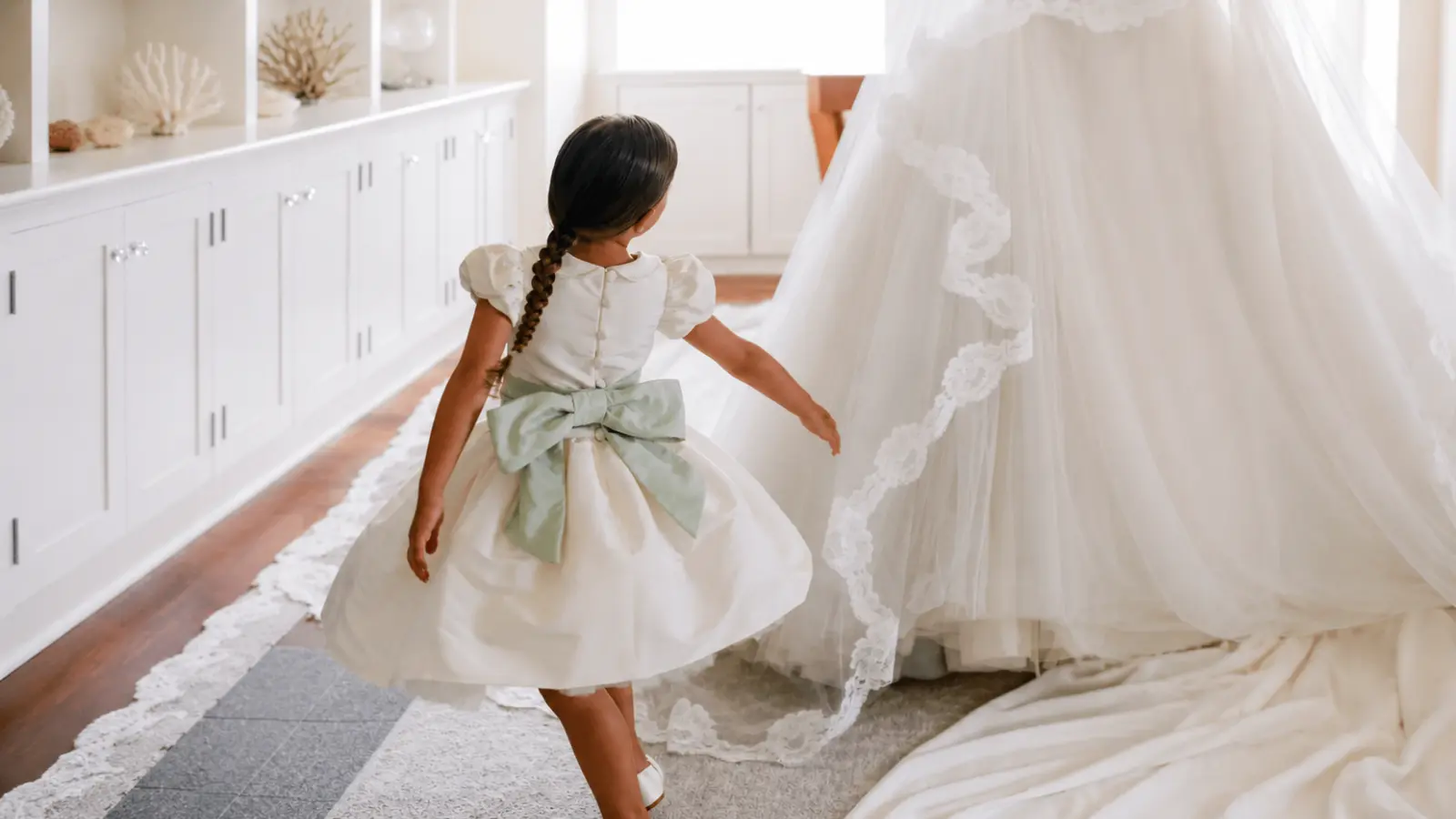
How much preparation the flower girl needs before the day depends significantly on her age. Over-rehearsing a young child creates pressure and can flatten the natural spontaneity that makes the moment memorable. Under-preparing an older child leaves her without a clear picture of what she’s expected to do. The right amount of practice sits somewhere in between, calibrated to the child.
- Babies and infants. No practice needed. The adult carrying her is the one who needs to know the plan. Walk through the logistics with the parent or escort rather than the child.
- Toddlers (1–2). A single walkthrough at the rehearsal is enough — and even that should be low-stakes. If she participates, good. If she doesn’t, that’s also useful information. Don’t rehearse at home repeatedly; it tends to bore or confuse children this age.
- Ages 3–5. One relaxed rehearsal walkthrough at the actual venue, with the music if possible, gives her a clear picture of the space and what she’ll be doing. Reinforce the single task she has — walk to the flowers at the front, or walk to where Grandma is sitting. Keep it simple and specific.
- Ages 6–8. A rehearsal walkthrough is valuable, and this age group can usually absorb a little more detail — where to stand at the start, how to hold the basket, where to go after reaching the front. Don’t turn it into a performance note session; one clear walkthrough is sufficient.
- Ages 9 and up. Older children benefit from a full rehearsal walkthrough and a brief conversation about the order of events. They can handle more context and tend to appreciate knowing exactly what to expect rather than being told to “just walk slowly.”
At any age, the goal of practice is to remove the unknown from the equation, not to engineer a specific outcome. A child who knows what the space looks like, where she’s going, and what she’s carrying is prepared. What she actually does on the day is hers to decide.
Backup Plan by Age
Every flower girl plan benefits from a clear backup — not because something is likely to go wrong, but because children are unpredictable and the day runs more smoothly when there’s a calm, pre-decided response to the most common scenarios. The backup plan should be known to the child’s parent and to whoever is coordinating the processional, so there’s no confused pause if the moment calls for it.
- Baby or infant. If she’s fussy or uncooperative in the moments before the processional, the parent holds her and waves from their seat rather than walking the aisle. The meaningful inclusion is still there; it just moves from the processional to the ceremony itself.
- Toddler. If she freezes or turns around, the parent or escort who was already positioned at the back of the aisle simply takes her hand and walks with her. No one needs to retrieve her from the middle of the aisle if the parent is already there.
- Ages 3–5. If she stops or gets overwhelmed, a designated person — a bridesmaid, a parent standing at the back — walks out to her calmly and walks the rest of the aisle with her. Designate this person in advance and make sure they know it’s their job if needed.
- Ages 6 and up. Older children rarely need a rescue plan, but it helps to tell them directly: “If you feel nervous, just look for me at the front and walk toward me.” A specific face and destination is more calming than a general instruction to stay composed.
The best backup plan is one that never has to be used. But having it ready — and making sure the right adult knows it — means the moment stays warm and relaxed rather than turning into a logistical problem in the middle of the processional.
Flower Girl Age & Role Inspiration
Discover flower girl inspiration for every age, from babies and toddlers to school-age children and older girls. Explore age-appropriate aisle ideas, baskets, flowers, dresses, processional roles, parent-assisted walks, and junior bridesmaid alternatives to help create a wedding role that feels comfortable, meaningful, and suited to the child.
What Is the Right Flower Girl Age for Your Wedding?
There is no single perfect flower girl age. Age gives you a useful starting point, but personality, confidence, familiarity with the ceremony, and the simplicity of the role often matter just as much.
Choose the role around the child rather than asking the child to fit a predetermined version of it. With realistic expectations, a clear task, and the right support, flower girls at many different ages can have a comfortable and memorable experience.
Frequently asked questions (FAQ)
What is the ideal age for a flower girl?
Most flower girls are between three and eight years old, with ages five to seven often being the easiest for independent participation. Children in this range can usually understand simple instructions, walk confidently, and manage a basket or petals. There is no required age, however, and temperament, confidence, and the support available matter just as much as the child’s age.
Can a baby or infant be a flower girl?
Yes. A baby can be carried down the aisle by a parent or bridesmaid, ride in a safely managed wagon, or simply have a symbolic place in the processional. At this age, the role should require nothing from the baby herself. Keep the plan flexible and have a parent or caregiver ready if she becomes tired, hungry, or upset.
When is a girl too old to be a flower girl?
There is no fixed maximum age, but girls around ten to twelve may begin to prefer a junior bridesmaid role because it feels more age-appropriate. If an older girl genuinely wants to be a flower girl, she can still participate. Her comfort with the title, dress, and responsibilities matters more than following a strict age cutoff.
Should a toddler flower girl toss petals?
Usually, a simpler task works better. Walking down the aisle while scattering petals can require too much coordination for a toddler, especially in front of a crowd. She can carry a basket or single flower, walk empty-handed, or hold a trusted adult’s hand instead. Petals can be added later as the child becomes more confident and coordinated.
Can a flower girl walk with a parent?
Yes. Walking with a parent, bridesmaid, or another trusted adult is often the best arrangement for toddlers, shy children, or anyone nervous about the processional. The adult provides a familiar anchor and can guide the child to her seat afterward. Walking independently is not a requirement for being a flower girl.
What is the difference between a flower girl and a junior bridesmaid?
A flower girl is typically a younger child whose main role is walking in the processional before sitting with family. A junior bridesmaid is usually an older girl, often around nine to thirteen, who participates more like a bridesmaid and may stand with the wedding party. The right role depends on the child’s age, maturity, and preference.