
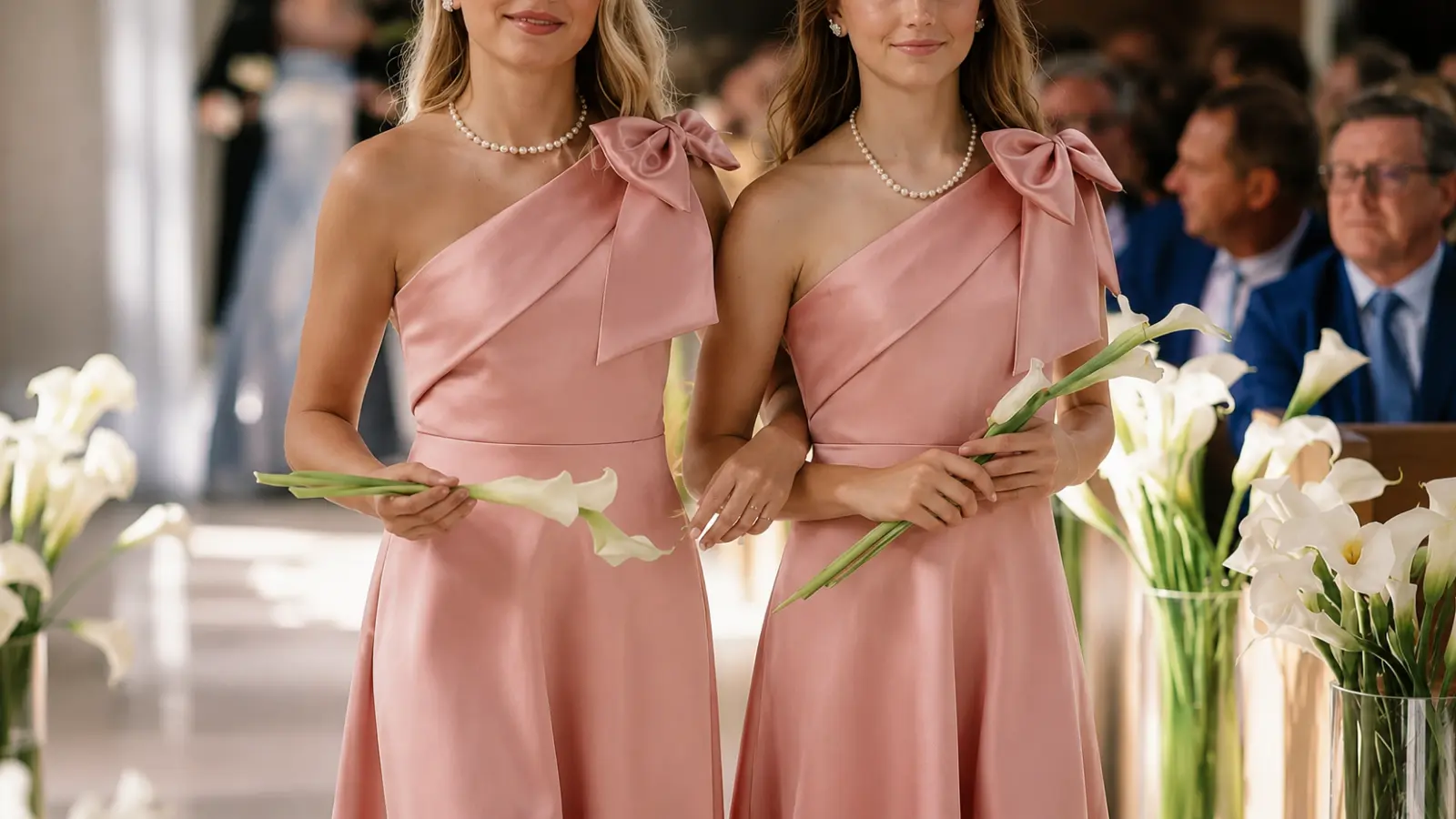
A junior bridesmaid is an older girl or young teen who has a meaningful place in the wedding party without taking on the responsibilities expected of an adult bridesmaid. The role can be especially useful when someone important to you feels too old for flower girl but is not yet ready for a traditional bridesmaid role.
She can walk in the processional, wear a dress that coordinates with the bridal party, join wedding photos, and participate in age-appropriate parts of the celebration. What she should not inherit automatically are adult expectations involving money, planning, or adult-only events.
This guide explains the junior bridesmaid role, including meaning, age, duties, processional order, dresses, hairstyles, proposal and gift ideas, the difference between junior bridesmaid and flower girl, and how to include her without creating unnecessary pressure.
What Is a Junior Bridesmaid?
A junior bridesmaid is an older girl or young teen who participates as a member of the bridal party in a way that fits her age. She walks in the processional, wears a dress that coordinates with the bridesmaids, and is included in photos and in the ceremony — but she is not asked to take on any of the financial or social responsibilities that adult bridesmaids carry.
The role is informal in the sense that there is no official protocol for it. Different couples define it slightly differently depending on the girl’s age, her relationship to the couple, and the structure of the wedding party. What stays consistent is the spirit of it: she is included, she feels honored, and the role is shaped around what she can actually handle — not around what an adult in her position would be expected to do.
Junior Bridesmaid Meaning
The term “junior bridesmaid” signals something specific in wedding planning: a girl who is part of the bridal party but in a modified, age-appropriate version of the role. The word “junior” is not a diminishment — it is a descriptor, in the same way that junior members of a team are full participants with responsibilities calibrated to where they are.
For the girl herself, the meaning of the role is often more significant than couples realize. Being asked to be a junior bridesmaid rather than a flower girl tells her something: that she is old enough to be treated as a real member of the wedding party, not as the cute child element of the processional. That distinction tends to matter considerably to girls in the nine-to-fifteen range, who are often acutely aware of how they are being perceived.
Best Age for a Junior Bridesmaid
The junior bridesmaid role is commonly suited to girls around nine to fifteen, although maturity matters more than the exact age. Within that range, individual maturity matters more than the exact age — a confident eleven-year-old may be more comfortable in this role than a shy thirteen-year-old, and that is worth factoring into the decision.
The lower end of the range (nine to eleven) tends to work well when the girl is clearly too old for the flower girl role but still young enough that the wedding-party experience will feel exciting and new. She will need a little more guidance and a lower-pressure version of the role — clear instructions at the rehearsal, someone to walk beside in the processional, and a seat with family rather than a prolonged stand at the altar.
The upper end (twelve to fifteen) can handle more. An older teen in this role often feels genuinely proud to be included and can take on a slightly more active presence during the ceremony. She may enjoy being part of the getting-ready morning, standing with the bridal party for photos, and having a more visible role during the reception. The key is calibrating expectations to what she actually wants, not to what you assume she can handle.
Junior Bridesmaid vs. Flower Girl
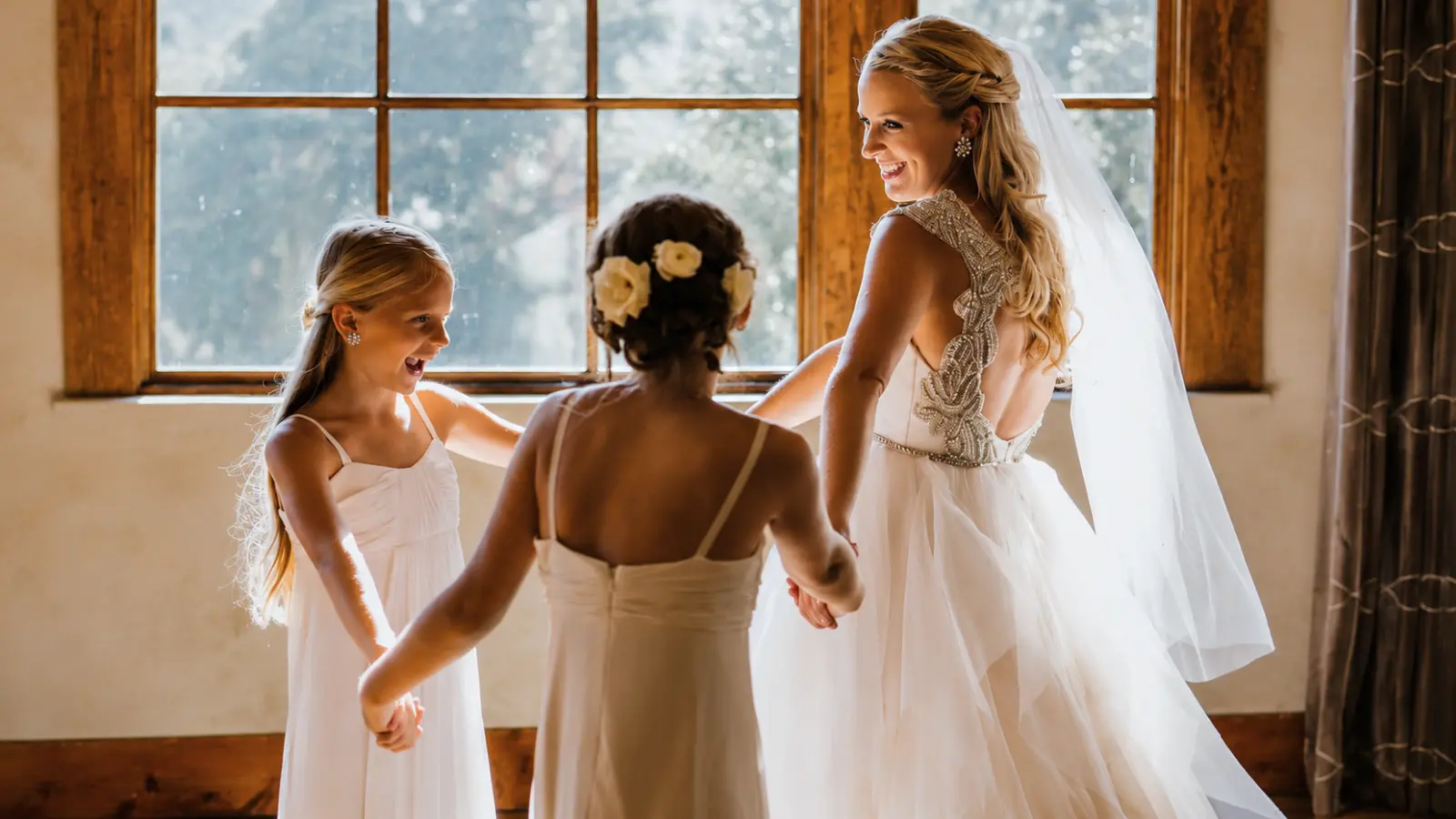
The clearest way to think about this distinction is by what the role asks of the child and how she is likely to feel doing it. A flower girl’s role is simple, sweet, and brief — she walks down the aisle, she carries something, and then she sits with her family. The role is designed for young children, and it works because it is low-stakes and visually charming in the way that small children naturally are.
A junior bridesmaid’s role is more integrated. She is part of the bridal party rather than a sweet addition to the processional. She walks with or near the adult bridesmaids, she is included in wedding party photos, and she carries a bouquet rather than a basket of petals. The role signals that she is old enough to be treated as a real participant, not as a child being given a moment.
For most girls over ten or eleven, the junior bridesmaid role will feel more honoring — and more appropriate — than being asked to do something that reads as a younger child’s role. If you are not sure which fits better, ask her parents. They will know almost immediately which one she would prefer.
Junior Bridesmaid vs. Bridesmaid
The difference between a junior bridesmaid and a bridesmaid is primarily about responsibility. An adult bridesmaid is typically expected to contribute financially to her own dress, attend pre-wedding events like the bridal shower and bachelorette party, and participate in the planning process to whatever degree the bride invites. These are adult expectations, and they make sense for adult members of the wedding party.
A junior bridesmaid carries none of that. Her dress is typically covered by the couple, she does not attend adult-only events, and she is not expected to contribute to planning decisions. Her role is ceremonial and relational — she is included because she matters to you and because the wedding is a meaningful moment for her too, not because she is needed to help organize anything.
The processional walk, the photos, and the ceremony itself are the full scope of what the junior bridesmaid role involves. Everything beyond that is optional and should be offered only if it genuinely suits her age and interests.
When a Girl Is Too Old to Be a Flower Girl
There is no hard cutoff, but most girls start to feel self-conscious in the flower girl role around ten or eleven. The dress, the petals, and the general framing of the role are designed for young children — and a preteen who is aware enough to care about how she is perceived will often feel uncomfortable being positioned that way, even if she doesn’t say so directly.
Signs that a girl may have outgrown the flower girl role: she seems hesitant when you bring it up, she asks questions about what she’ll be wearing or doing in a way that suggests she’s worried about looking babyish, or she’s noticeably older than the other flower girls in your wedding. Any of these is a reasonable signal to consider the junior bridesmaid role instead.
The more important question is not whether she is “too old” in the abstract, but whether the flower girl role will make her feel included or slightly embarrassed. The junior bridesmaid role almost always lands better with girls in this in-between stage because it treats them as older, not younger, than they might actually be ready for. That direction of error tends to feel much better.
What Does a Junior Bridesmaid Do?
The junior bridesmaid’s duties are modest by design. Her role centers on the ceremony itself, with a few extensions before and after depending on her age and the couple’s preferences.
Before the wedding, she attends the rehearsal — this is important, because understanding where she walks, where she stands, and what she does when she reaches the front of the aisle will make her far more comfortable on the day. She may also join the getting-ready morning, which many girls in this age range enjoy, and attend the rehearsal dinner with the wedding party.
On the wedding day, her main role is the processional walk. She carries a bouquet, walks with or just before the adult bridesmaids, and takes her place at the front of the ceremony. After that, she either stands near the wedding party or sits with her family, depending on her age and the ceremony’s length. She is included in wedding party photos throughout the day.
At the reception, she participates as a guest. She is not expected to give a toast, organize anything, or perform any wedding-party function beyond being present and celebrating with the people she loves.
Does She Walk Down the Aisle?
Yes. The processional walk is the central moment of the junior bridesmaid role. Her place in the processional depends on the ceremony and the wedding party, but she is generally included with the bridal party rather than the flower girls — whichever arrangement works best for the processional order and the size of the wedding party.
If there are multiple junior bridesmaids, they can walk together side by side or follow one another. If there is also a flower girl, the flower girl typically walks after the junior bridesmaid, immediately before the bride. Work out the exact order at the rehearsal so everyone knows their cue and there is no uncertainty on the day.
Does She Stand With the Bridesmaids?
This depends on her age and the length of the ceremony. For younger junior bridesmaids — those in the nine-to-eleven range — sitting with family after the processional is usually the better choice. Standing at the altar for the full duration of a ceremony is a long time, and a younger girl who is fidgeting or looking restless during the vows creates more distraction than her standing there is worth.
For older junior bridesmaids — twelve and up — standing with the wedding party is more realistic and often something she will want to do. Decide this in advance, tell her clearly what to expect, and make sure she knows where to go when she reaches the front. Ambiguity in this moment tends to produce exactly the kind of awkward pause you want to avoid.
Does She Attend the Rehearsal?
Yes, always. Whenever possible, include the junior bridesmaid in the rehearsal so she knows exactly what to expect on the wedding day. Where she enters, how she walks, where she goes when she reaches the front, and who she follows are all things that need to be walked through in person, not explained over text.
If you’re having a rehearsal dinner and it is appropriate for her age, including her can reinforce her sense of belonging and help her feel comfortable with the bridal party before the wedding day.
Does She Attend the Bachelorette Party?
No. The bachelorette party is an adult event, and a junior bridesmaid should not be included regardless of how mature she seems or how close she is to the bride. This is not about excluding her — it is about protecting her from a social context that is not designed for her age.
If you want to celebrate her specifically before the wedding, a separate outing works beautifully: a lunch, an afternoon at a spa that accommodates younger guests, a cooking class, or any activity that is genuinely designed around what she enjoys. A personal experience created just for her tends to mean more than being included in an adult event where she would naturally feel like an outsider anyway.
What Should a Junior Bridesmaid Wear?
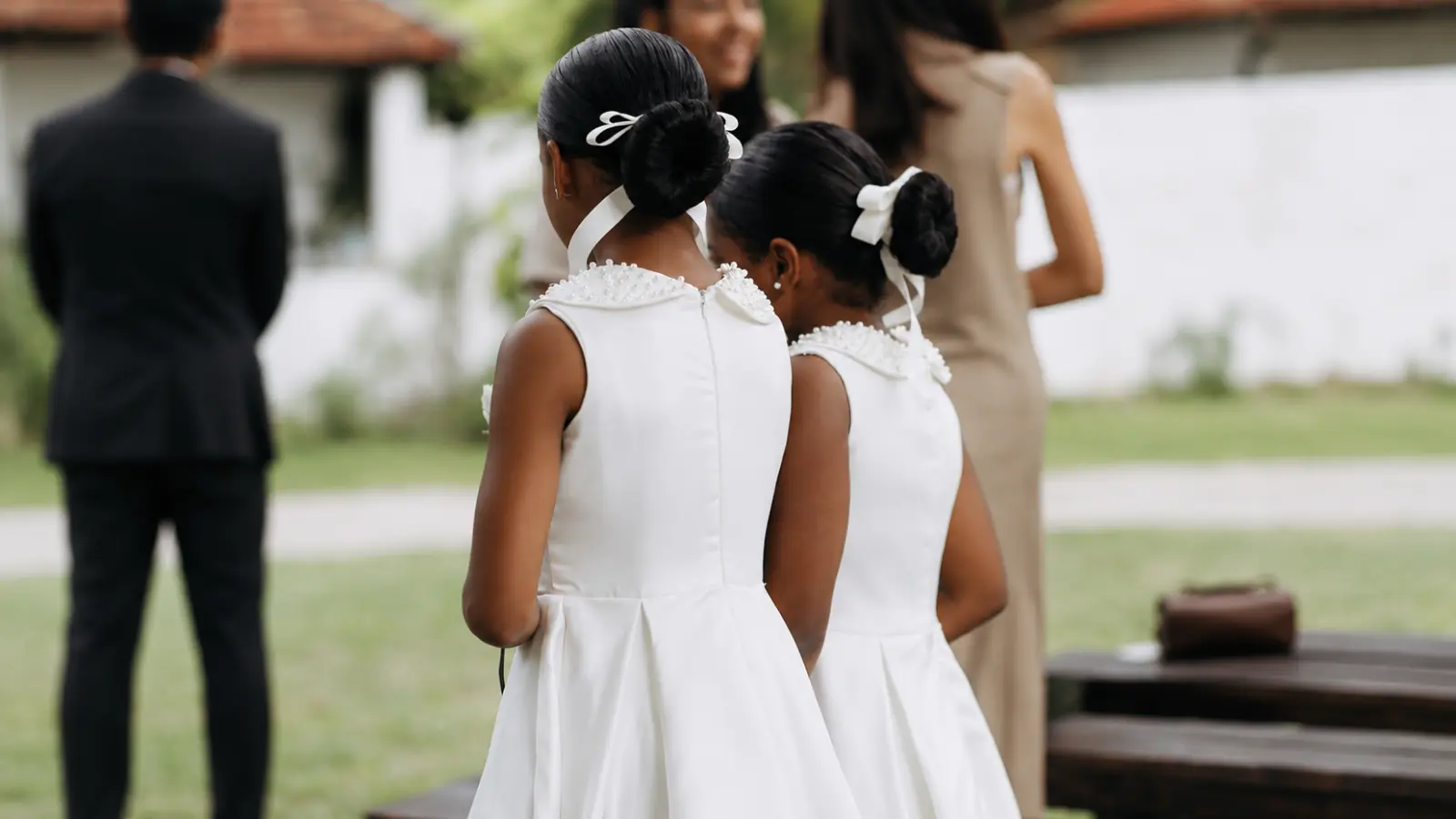
The junior bridesmaid’s dress should coordinate with the bridesmaids without being an adult gown altered to fit a younger girl. Many bridesmaid dress brands offer junior or girls’ styles in the same color families as their adult collections, and starting there is almost always the better approach than trying to make an adult silhouette work on a child’s frame.
The key considerations are age-appropriateness and comfort. Necklines should suit her age — nothing too low-cut or structured in a way that looks odd on a younger body. The skirt length should be practical for a girl who will be walking, standing, and sitting through a full ceremony and reception. And the fabric should be something she can actually wear for several hours without discomfort; lined, soft fabrics in chiffon or light crepe work well across most ages in this range.
Color coordination is usually more effective than an exact match. A junior bridesmaid in a shade that complements the bridesmaids’ dresses — rather than the identical fabric and cut — tends to look more intentional in photos because she reads as part of the palette without appearing to be a smaller version of the adult women beside her. Her dress should feel like hers, not like a borrowed piece of the bridal party aesthetic.
For girls on the older end of the junior bridesmaid range, the dress conversation may include some input from the girl herself. Asking her what she feels comfortable in — or at least what she doesn’t want — is a reasonable step that tends to produce a better outcome and makes her feel genuinely included in the process. More on choosing the right style in the flower girl dresses, which covers many of the same comfort and coordination principles.
Junior Bridesmaid Hairstyles
Junior bridesmaid hairstyles should follow the same general principle as the dress: coordinated with the bridal party, but age-appropriate and comfortable for her. A formal updo that suits an adult bridesmaid may feel stiff and out of place on a twelve-year-old who would be more naturally herself with her hair down or in a soft half-up style.
Work with the girl’s natural hair texture and her own preferences wherever possible. Girls in this age range often have strong feelings about their hair, and overriding those feelings in favor of a look that photographs well tends to produce a child who is visibly uncomfortable in the photos you were trying to improve. A style she feels good in will always photograph better than one she doesn’t.
If the bridal party is wearing their hair in a specific way, a looser or slightly less formal flower girl hairstyle can offer useful inspiration for the junior bridesmaid — same general direction, calibrated to her age. Fresh flowers or a simple hair accessory can tie her look to the wedding’s aesthetic without requiring a style that feels adult or overly formal.
Junior Bridesmaid Proposal Ideas
How you ask a girl to be your junior bridesmaid matters — probably more than you expect. A girl in this age range is old enough to understand what being asked means and to feel genuinely honored by the gesture. A phone call to her parents followed by a personal note or small gift for her lands far better than a casual mention at a family dinner.
A handwritten card with her name on it, explaining why you chose her and what the role will involve, is the most meaningful version of this moment. It does not need to be elaborate. Two or three sentences that say something true — “You are one of the most important people in my life, and I cannot imagine this day without you beside me” — carry more weight than the most beautifully curated proposal box.
If you want to include a gift with the proposal, choose something that fits her age and feels personal. A piece of simple jewelry she could wear on the wedding day, a book or item connected to something she loves, or a small keepsake with her name on it all work well. The gift is secondary to the ask — and the ask is secondary to the relationship behind it.
One practical note: talk to her parents before you ask her. The same logic that applies to the flower girl proposal applies here. Her parents can confirm she is available, tell you how she is likely to respond, and help you calibrate the moment to what she will actually connect with.
Junior Bridesmaid Gift Ideas
A gift for the junior bridesmaid — either at the proposal or on the wedding day — should feel age-appropriate and personal, not like a scaled-down version of a bridesmaid gift box. Adult-skewing items like wine, spa products, or elaborate beauty sets are not the right fit for a girl in this role.
A few directions that tend to work well across the nine-to-fifteen range:
- Simple jewelry. A delicate necklace, a bracelet, or a pair of earrings she could wear on the wedding day and keep afterward. Choose something understated that fits her personal style — not something that reads as costume jewelry, but nothing too adult in scale either.
- A robe or pajamas for the getting-ready morning. If she is joining the wedding morning, a personalized robe or pajama set with her name on it makes her feel like part of the group and gives her something she will actually use beyond the wedding day.
- A keepsake with the wedding date. A small engraved item — a bracelet, a compact, a locket — with the wedding date or her initials has lasting value and tends to be kept long after the wedding itself.
- Something connected to her interests. A book, an activity, or a gift related to something she genuinely loves — art supplies, a journal, tickets to something she would enjoy — is often more memorable than anything wedding-themed.
- A framed photo from the wedding day. Sent after the wedding with a handwritten note, a photo of the two of you together or of her in the processional becomes a keepsake that she will likely keep for years.
The same principle applies here as with flower girl gifts: the gift should delight the actual girl in front of you, not look good in a proposal flat lay. If you know her well, trust that knowledge over any category suggestion.
How to Include Her Without Pressure
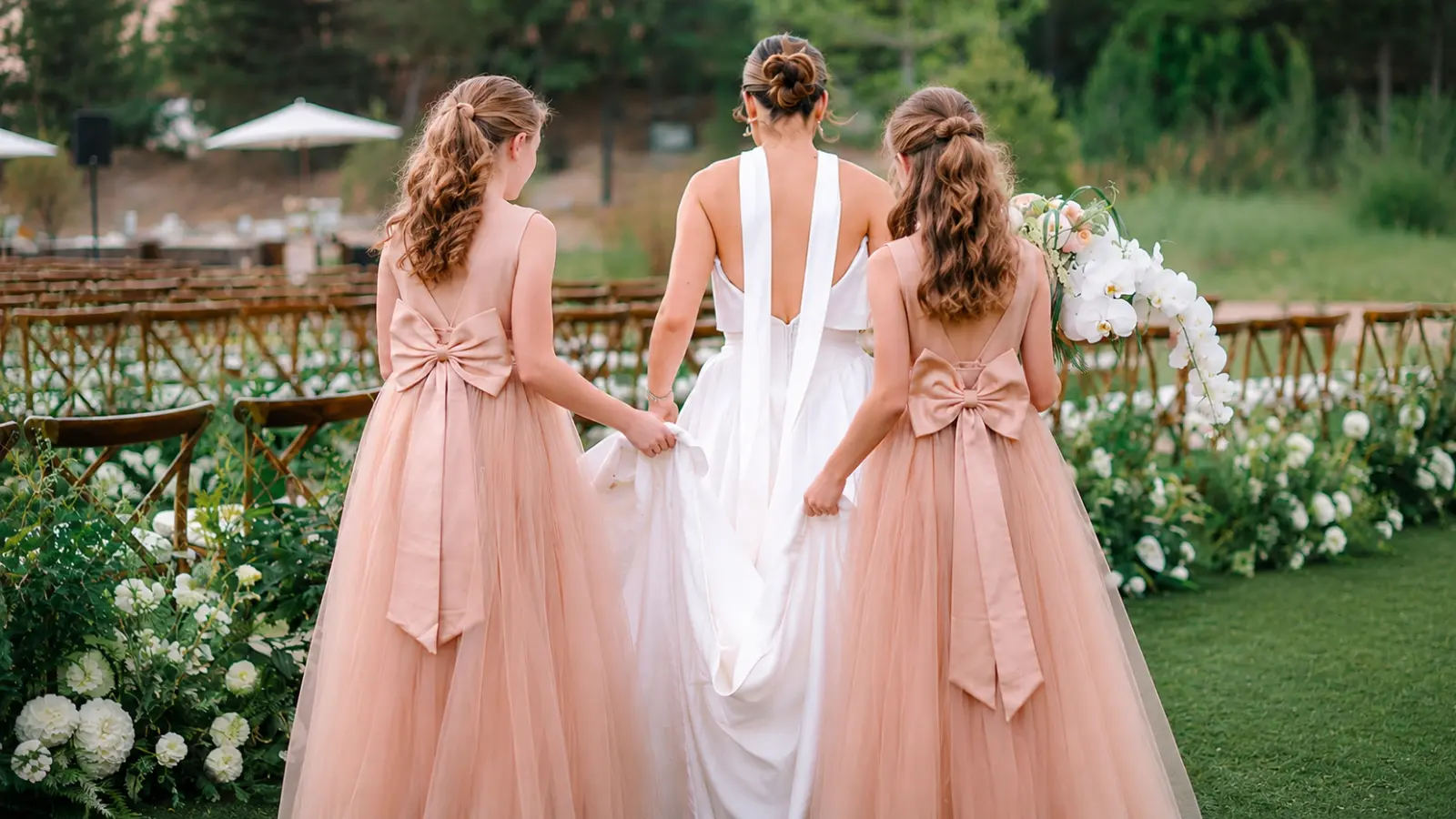
The junior bridesmaid role works best when it is built around what the girl can comfortably do and what she will genuinely enjoy — not around filling a slot in the wedding party or making the processional look a certain way. A few things that tend to make a meaningful difference:
Tell her clearly what to expect. Girls in this age range do not do well with ambiguity about social situations. Knowing in advance exactly when she walks, who she walks near, where she goes afterward, and what happens at the reception lets her arrive on the day feeling prepared rather than anxious. Go through this at the rehearsal in detail.
Give her someone to be next to. Whether it is a bridesmaid she already knows, a family member nearby, or simply a clear anchor in the processional order, knowing who she is walking beside and where to look when she gets to the front makes a significant difference for younger girls in this role.
Do not assign her social management tasks. Asking her to help keep younger children in line, manage the flower girl, or coordinate anything with guests is more than a junior bridesmaid should be doing. Her job is to participate in the ceremony, not to help run it.
Check in with her between the engagement and the wedding. A girl who has been asked to be a junior bridesmaid and then hears almost nothing until the week of the wedding can feel forgotten. A brief note, a quick call, or a small gesture in the months between the ask and the day itself reinforces that she genuinely matters to you — not just as a processional element, but as a person.
What to Avoid
Most junior bridesmaid missteps come from either treating her too much like a child or giving her too much responsibility for her age. Both directions create problems that could easily be avoided.
- Including her in adult-only events. The bachelorette party, late-night celebrations, or any event designed for adults should not include a junior bridesmaid. If you want to celebrate her, plan something separate and designed for her.
- Asking her to pay for anything. Her dress, her hair, her accessories — all of these should be covered by the couple if you are the one who chose them. Do not create financial expectations for a young teen or her family around a role that is a gift, not an obligation.
- Treating her like a flower girl. If you asked her to be a junior bridesmaid, treat her like one. Do not hand her a basket of petals and walk her in with the small children if she was expecting to be included as part of the bridal party.
- Ignoring her preferences entirely. A girl who clearly hates her dress, is uncomfortable with her hair, or has expressed anxiety about a specific part of the role deserves to be heard. Small adjustments that make her more comfortable almost always lead to a better outcome for everyone — including in the photos.
- Making the role feel like an obligation. If she seems lukewarm about being a junior bridesmaid, take that seriously. The role should feel like an honor, and if it doesn’t, it is worth having a gentle conversation about whether there is a version of it she would genuinely enjoy — or whether a different form of inclusion might suit her better.
The version of this role that works is the one where she arrives on the wedding day feeling proud to be there and leaves feeling like she was a real part of something meaningful. That outcome is much more about how you treated her throughout the process than about any specific decision you made about her dress or her place in the processional.
How Do You Make the Junior Bridesmaid Role Feel Meaningful?
A junior bridesmaid should feel genuinely included without being expected to act like an adult member of the wedding party. Give her a clear role, explain what will happen, include her in the parts of the celebration that suit her age, and leave adult responsibilities with the adults.
The best version of the role is shaped around the individual girl rather than a fixed list of expectations. When she understands where she belongs and feels comfortable with what is being asked of her, junior bridesmaid becomes a meaningful middle ground between flower girl and bridesmaid.
Frequently asked questions (FAQ)
What is a junior bridesmaid?
A junior bridesmaid is an older girl or young teen who joins the bridal party in an age-appropriate role. She walks in the processional, wears a dress coordinated with the bridesmaids, and takes part in the ceremony and photos without the adult responsibilities expected of full bridesmaids.
What is the best age for a junior bridesmaid?
Most junior bridesmaids are between nine and fifteen years old, although maturity matters more than a specific age. The role is ideal for girls who have outgrown being a flower girl but are not yet ready for the expectations that come with being an adult bridesmaid.
How is a junior bridesmaid different from a flower girl?
A flower girl usually has a simple role focused on the processional, while a junior bridesmaid is included as a member of the bridal party. She carries a bouquet instead of petals, joins wedding party photos, attends the rehearsal, and has a more visible role throughout the day, while still avoiding adult responsibilities.
What does a junior bridesmaid do?
A junior bridesmaid attends the rehearsal, walks in the processional, wears a coordinated dress, and participates in the ceremony and wedding photos. Depending on her age and the ceremony length, she may stand with the bridal party or sit with her family after the processional. She celebrates the wedding without taking on planning or financial responsibilities.
Should a junior bridesmaid dress match the bridesmaids?
The goal is coordination rather than an identical match. A dress in the same color family with an age-appropriate silhouette usually looks more natural than a smaller version of an adult bridesmaid gown. Comfort and confidence should always come before exact matching.
Does a junior bridesmaid attend the bachelorette party?
No. The bachelorette party is an adult event and is generally not appropriate for a junior bridesmaid. If you would like to celebrate with her before the wedding, plan a separate activity designed for her age, such as lunch, a craft day, or another experience she will genuinely enjoy.