
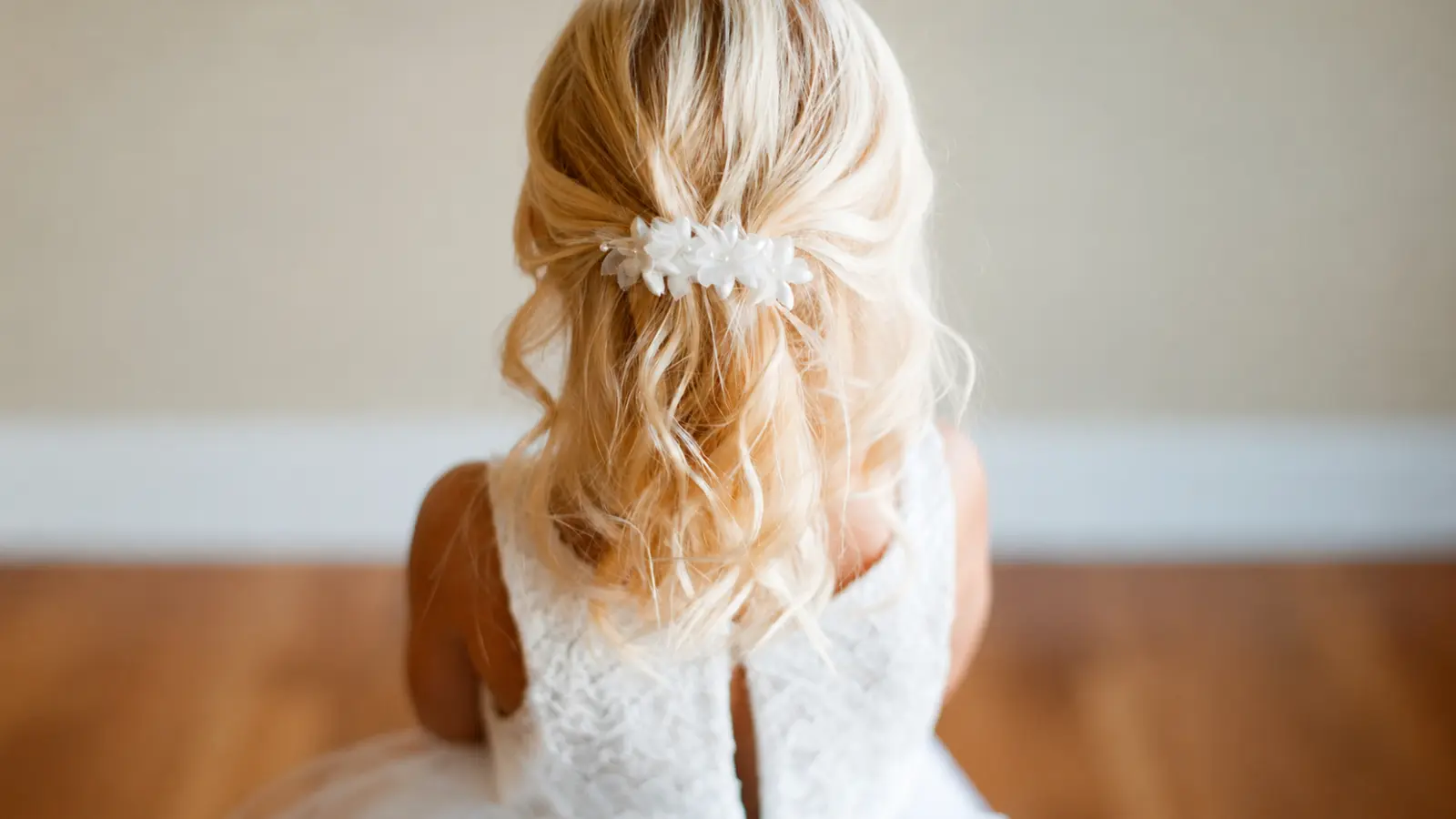
Flower girl hairstyles should look beautiful without asking a child to spend the wedding day uncomfortable, over-pinned, or constantly adjusting her hair. The best style is usually one that suits her natural hair type, stays secure through the ceremony, and still feels comfortable hours later.
Simple styles are often the most reliable. Half-up hair, soft braids, low buns, natural curls, short hair with a clip, or a lightweight flower crown can all work beautifully when the look matches the child’s age and how much styling she is comfortable with.
This guide explores flower girl hairstyles by hair type, age, and wedding style, including half-up looks, braids, buns, loose curls, curly and short hair ideas, flower crowns, headbands, tiaras, outdoor wedding options, and practical ways to keep the style comfortable throughout the day.
Best Flower Girl Hairstyles
The styles that consistently work best for flower girls share a few qualities: they’re appropriate for the child’s hair type and length, they don’t require an uncomfortable amount of pinning or pulling, and they’ve been tested before the wedding day rather than attempted for the first time on it. Within those parameters, the range of options is genuinely broad.
For most children, the most reliable choices are half-up styles, low braids, and soft updos — all of which hold well, work across hair types, and look polished without requiring salon-level precision. Natural styles with a single accessory are equally valid and often more comfortable for younger children. The goal is a hairstyle that the child is still wearing comfortably when the dancing starts, not one that required three adults and thirty minutes to achieve and came apart by the ceremony’s end.
Half-Up Flower Girl Hair
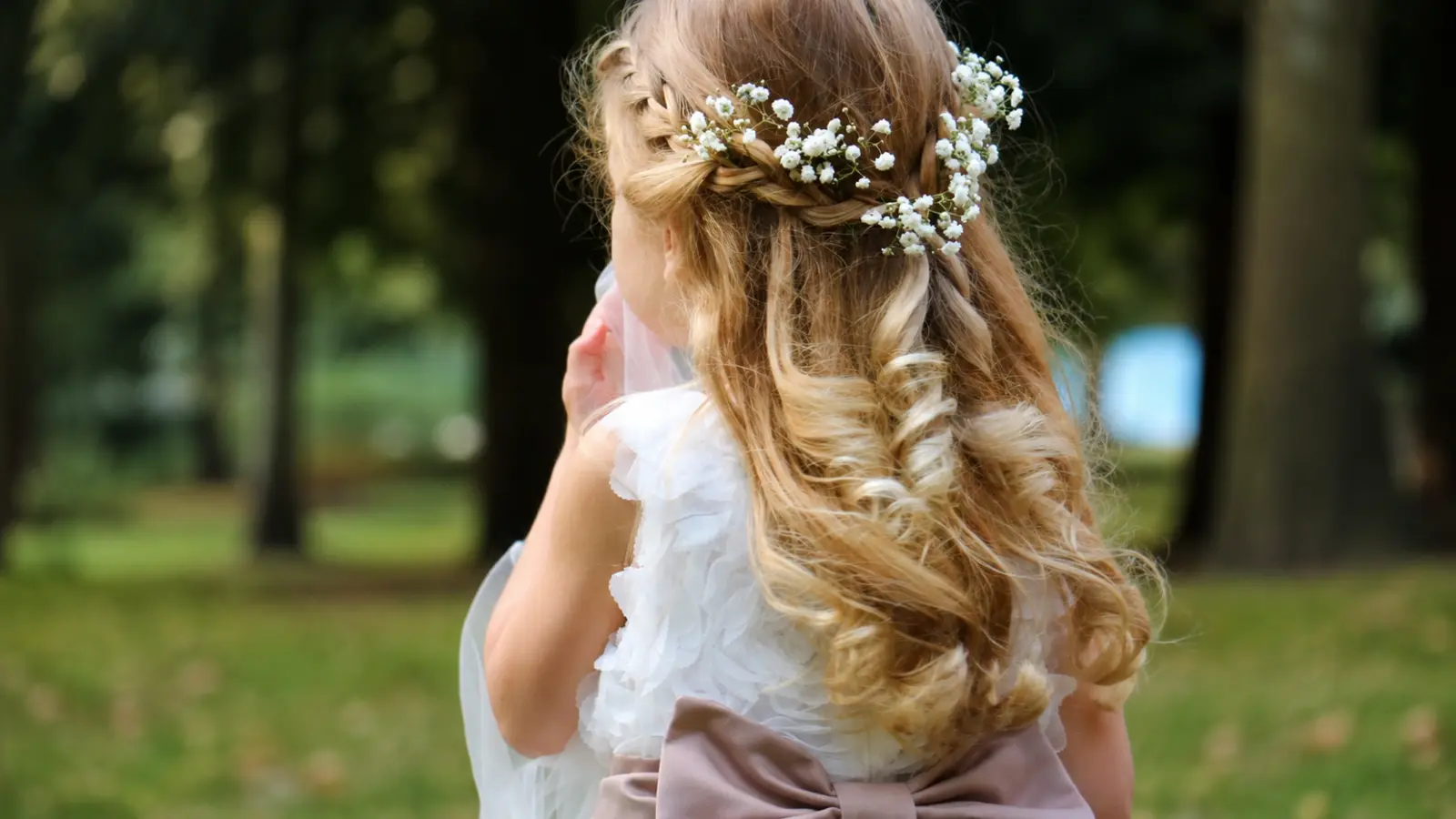
A half-up style — where the top section of hair is gathered and secured while the rest falls loose — is probably the most reliable flower girl hairstyle across ages and hair types. It looks intentional without requiring full updo mechanics, works on most lengths and textures, and can be decorated with a bow, clip, or small flowers without structural complexity. For a child who dislikes having her hair fully pulled up, it’s also the most comfortable middle ground.
The main technical issue is clip security in fine or slippery hair. A hair tie under a decorative clip or a few crossed bobby pins beneath the bow solves the slipping problem. The section gathered at the crown should be comfortable — not too tight, not too loose — and the child should be able to move her head freely without feeling the pull. This is one of the easiest styles to test at home before the wedding, and it’s worth doing so.
Braids for Flower Girls
Braids are a natural choice for active children and outdoor ceremonies because they contain the hair reliably without heavy pinning. A simple three-strand braid worn low, a loose side braid, or a crown braid that circles the head are all options that stay contained through movement, weather, and the general unpredictability of a child at a wedding. They also tend to be durable — a braid that starts the ceremony intact usually ends it intact.
The most important thing to get right with braids is tension. A braid that’s pulled too tightly is uncomfortable over hours, and discomfort in a child’s scalp shows immediately in photos and behavior. Braiding loosely — or braiding normally and then gently pulling each section slightly to loosen it — produces a style that’s secure without being tight. For very young children with fine hair, a simple single braid is more reliable than anything involving multiple sections or French braiding techniques.
Flower Girl Bun
A low bun suits formal and traditional ceremonies and photographs well against veils and cathedral settings. It keeps all the hair contained, works well with floral pins or a small accessory at the back, and reads as polished from every angle. For older flower girls who are comfortable with updos, it’s a strong option.
For younger children, a bun requires more cooperation during styling and can create pressure at the nape or crown if secured too tightly. A loose, slightly undone low bun is more comfortable than a precise one and still looks intentional in photos. The trade-off with any bun is that it requires more pins than other styles, which means more potential pressure points over a long day. If the child tends to reach for her hair or dislikes things touching the back of her neck, a bun is probably not the right call regardless of how it looks in photos.
Loose Curls
Soft curls look beautiful in ceremony photos and work particularly well at romantic, classic, and garden weddings. They require some prep — curling fine or straight hair and having it hold through several hours requires the right product and technique — but the payoff in photos is consistent.
For styled curls, use a gentle technique appropriate for the child’s hair and avoid excessive heat or heavy product. If heat styling is used, the hair should be fully dry and the style should be tested before the wedding day.
Curly Hair Ideas
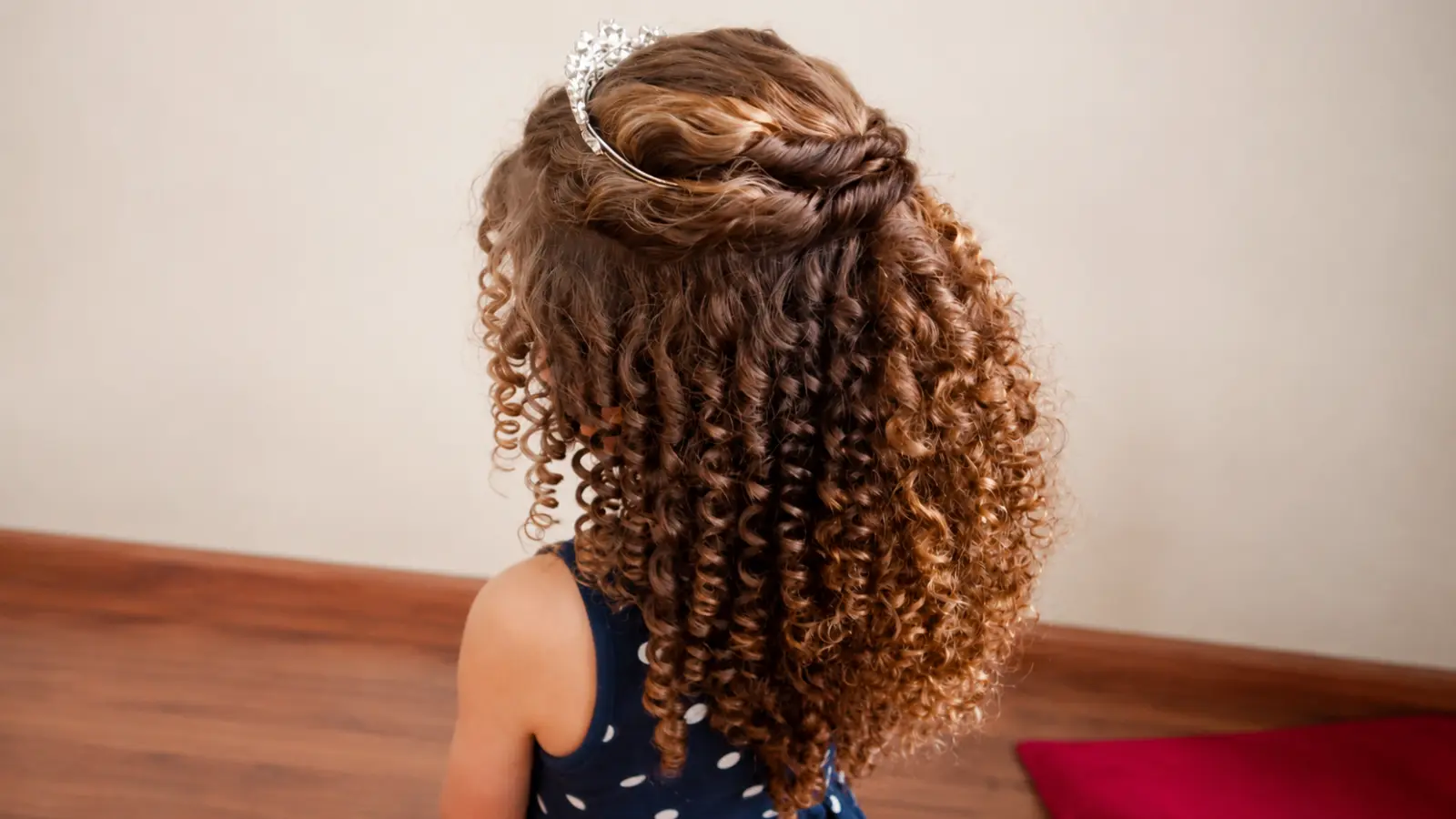
Natural curls can work beautifully for flower girls and often require less intervention than heavily styled looks. A half-up style that leaves curls loose in the back, a low bun that gathers curls without flattening them, or simply loose curls with a ribbon or clip are all genuinely lovely and take far less effort than trying to fight the hair’s natural texture.
Significantly changing the child’s natural texture can require more styling and maintenance throughout a long wedding day. A style that works with the natural curl pattern is often simpler and easier to maintain. For children with tight coils or natural texture that requires specific care, the stylist (or parent) should work with the hair’s natural behavior rather than against it.
Short Hair Ideas
Short hair is one of the lower-maintenance options for this role, which is worth stating because it sometimes gets overlooked in favor of longer styles. A simple headband, a small bow clipped at the temple, or natural styling with a touch of product is all that’s needed — and the morning prep time is significantly shorter than almost any other option.
Short hair also works particularly well with a flower crown or a delicate hairpiece, which adds a ceremonial detail without needing length to anchor it. A few small floral pins scattered near the face are another option that photographs sweetly and requires no significant styling. The main thing to avoid with short hair is attempting a style that the length can’t actually support — forcing hair into a bun or half-up that keeps slipping out creates more work and more stress than simply styling it as it naturally falls.
Flower Crowns
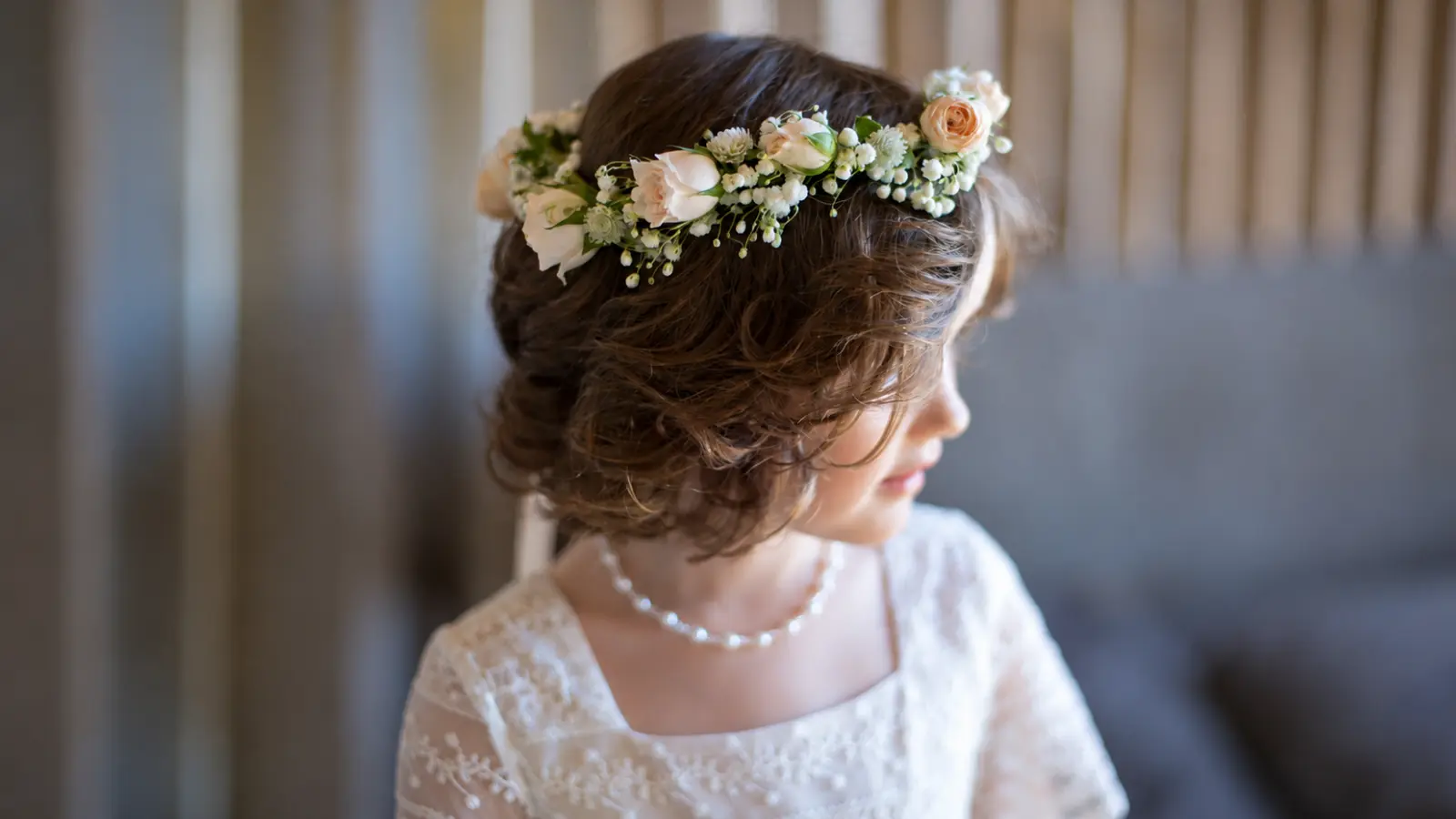
A flower crown can be one of the most charming flower girl accessories, especially at outdoor, garden, and bohemian weddings where the floral detail connects naturally to the ceremony’s setting. When it’s the right choice, it photographs beautifully and requires no other styling to feel complete. When it’s the wrong choice — too heavy, too large, poorly sized, or secured by friction alone on slippery hair — it becomes a logistics problem that someone is managing throughout the ceremony.
The practical details matter more here than with most accessories. The crown should be sized for the child’s head, not for an adult. It should be secured with bobby pins into the hair rather than balanced on top of it. The weight should be light — thin wire with small blooms holds better than a thick wreath of heavy garden flowers. Fresh flower crowns can be more delicate than faux versions, so ask the florist how they should be stored and handled before the ceremony. For very young children, a simpler version — a few small flowers on a thin wire or clip — is more manageable than a full circle crown that can shift, tip, or become something the child is constantly adjusting.
Headbands and Hairpieces
A headband is the most convenient styling solution for many flower girls, particularly those with shorter hair, natural texture, or a low tolerance for pinning and pulling. It adds a finished detail without requiring significant prep, and it can be removed easily if the child becomes uncomfortable — which is a real advantage over styles that are pinned in place.
The fit is the deciding factor. A headband that’s too tight creates pressure behind the ears that becomes increasingly uncomfortable over the course of a long day. A headband that’s too loose slides off. Before the wedding, have the child wear the headband for a full afternoon to check the fit at both points — and to confirm that she actually tolerates wearing it. Some children find headbands annoying and remove them within minutes; finding that out at home is considerably better than finding it out at the altar.
Hairpieces — floral clips, decorative pins, or embellished combs — offer more positioning flexibility than a headband and tend to create less pressure. A single flower clip near the face, a small pearl pin tucked into a braid, or a ribbon bow secured at the back are all options that read as intentional without being elaborate. The test for any hairpiece is that it’s secured well enough that the child can move her head freely without it shifting.
Tiaras
A tiara works for traditional, formal, and princess-themed weddings and is a popular choice for flower girls who are enthusiastic about wearing one. For the right child and the right ceremony, it’s a sweet and photogenic detail.
The practical considerations are fit and weight. A tiara that doesn’t sit securely on the child’s head will shift, tip, or need to be held in place — and a child who is managing her tiara is not walking the aisle with any composure. Tiaras should be secured with bobby pins into the hair, not balanced on top of it. Lightweight styles are more comfortable than heavy rhinestone pieces across a long event, and children’s sizing matters: an adult tiara placed on a small head will not sit at the right angle and will not stay in place. As with all accessories for this role, the tiara should be worn for a trial period before the wedding rather than introduced on the day.
Hairstyles by Age
Flower girl age affects both what’s realistic to achieve during styling and what’s comfortable to wear through the day. A few general guidelines by age group:
- Toddlers (under 3). Simple, low-intervention styles are usually the most practical option. A small clip, a soft headband she already wears, or natural styling with a touch of product. Toddlers often remove accessories that feel unfamiliar, and a hairstyle that requires significant pinning or prep time is not likely to survive the ceremony. The goal is something that looks intentional if it stays in and doesn’t look like a disaster if it comes out.
- Ages 3 to 5. Half-up styles, soft single braids, and loose curls with a single clip or bow work well. This age group can cooperate with more styling than toddlers, but sustained stillness during a detailed updo is still unreliable. Keep the styling process relatively short and simple.
- Ages 6 to 9. The full range of styles becomes more realistic — half-up, braids, low buns, flower crowns. Many children in this range can manage a wider variety of styles and accessories. It’s also the age at which a child often has opinions about how she wants her hair to look, which is worth factoring into the decision.
- Ages 10 and up. Older flower girls can wear the same styles as adult bridesmaids scaled appropriately. A low bun, a formal braid, or loose waves with a hairpiece are all manageable. The main consideration shifts from logistics to preference — involving her in the decision usually produces a better outcome than assigning a style she doesn’t connect with.
Whatever the age, the most reliable hairstyle is one the child has worn before the wedding, not one introduced on the day.
Hairstyles for Outdoor Weddings
Outdoor ceremonies introduce wind, humidity, and heat as real variables that change the hairstyle calculation. Styles that hold well indoors can fall apart in outdoor conditions, and that’s worth planning for before rather than discovering during the ceremony.
Braids and low buns can work well in windy conditions because they keep more of the hair contained. Loose curls at an outdoor summer ceremony in humidity will drop or frizz, which may or may not matter depending on the hair type and the look being aimed for. Flower crowns work well outdoors aesthetically but should be secured more firmly than they might be for an indoor ceremony. Any style involving flyaways will have more of them outside — which is fine and looks natural in photos, but worth knowing in advance.
For very hot outdoor ceremonies, the child’s comfort in the heat is a practical consideration that overrides aesthetic ones. Hair fully pulled back or braided keeps it off the neck and face, which makes a real difference for a child who is already wearing a dress, shoes, and accessories in warm weather.
Hairstyles That Stay Comfortable Through the Ceremony
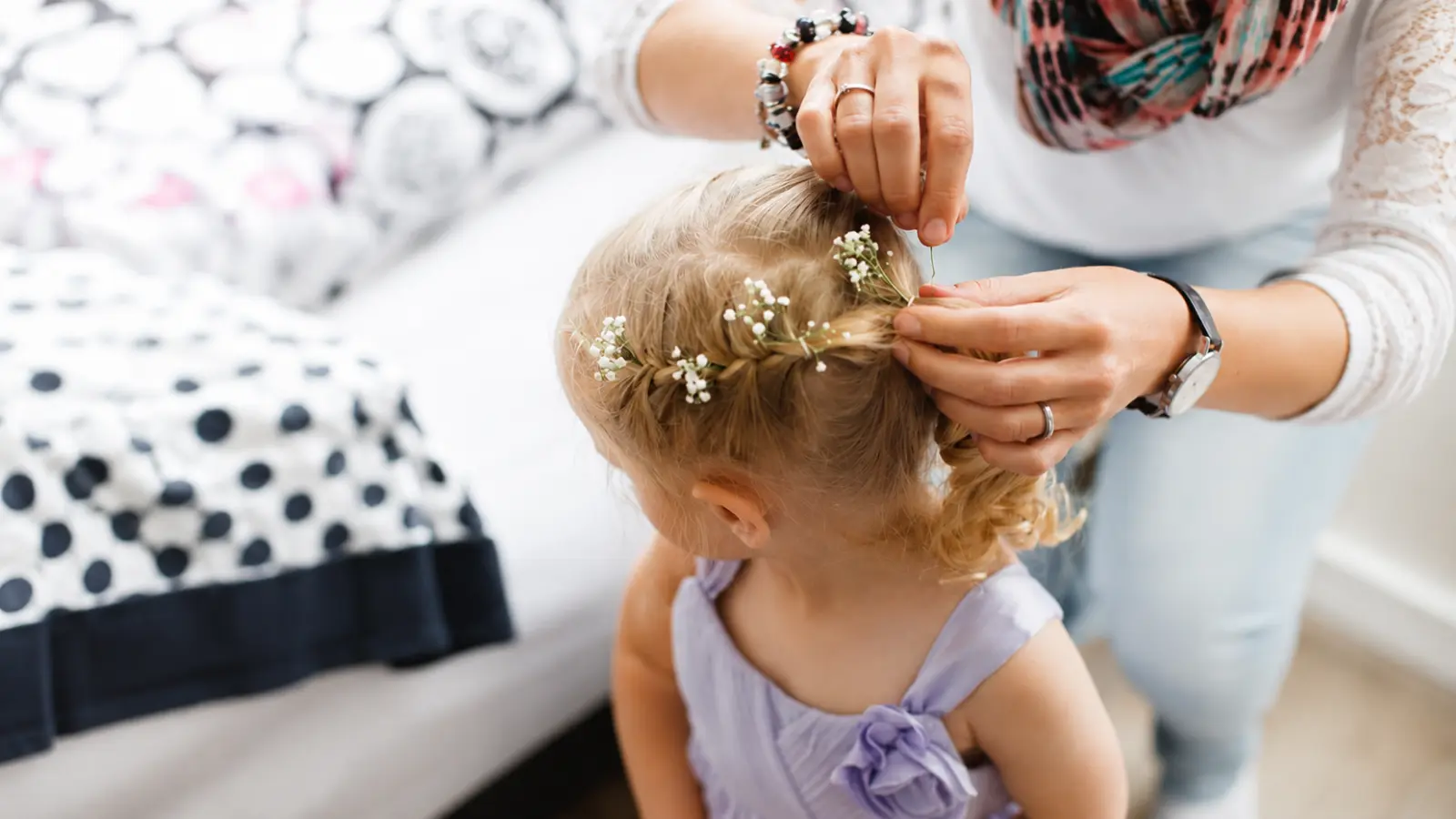
A hairstyle that looks right in photos for the first thirty minutes but causes discomfort by the reception is not actually a successful choice. Comfort over a full event day is worth building into the plan from the start. A few specific things that determine whether a style stays comfortable:
- Tension at the scalp. Any style that requires pulling the hair tight — a high ponytail, a slicked-back bun, a very tight braid — creates cumulative discomfort over hours. Looser is almost always better. A style that’s styled slightly loose and then gently tightened if needed is a better approach than one that starts too tight and can’t be adjusted.
- Pin placement. Bobby pins that are too long, inserted at the wrong angle, or pressing against the scalp create pressure points. Pins should feel secure without pressing into the scalp. After styling, check for any uncomfortable pressure points.
- Accessory weight. Any accessory that’s heavy enough to pull the hair down over hours will create tension at the roots. Flower crowns, thick headbands, and heavy hairpieces are the most common culprits. Lightweight alternatives in the same style usually solve the problem.
- Humidity and weather. Curled or straightened styles in humid conditions require either a humidity-resistant product or the expectation that the style will evolve through the day. Natural texture — curly hair worn as curly, straight hair worn naturally straight — is more reliable in most weather conditions than a style that requires fighting the hair’s natural behavior.
The single most useful preparation step is a trial: style the hair at least a week before the wedding, have the child wear it for two to three hours, and check what holds and what doesn’t. Adjustments made then take minutes; adjustments made on the morning of the wedding take patience no one has to spare.
What to Avoid
Most flower girl hair problems are predictable. A few patterns worth avoiding before they become issues on the day:
- Styles that have never been practiced. Any hairstyle attempted for the first time on the wedding day carries risk — of taking too long, of the child refusing to cooperate, of the style not working with her hair type in real conditions. A trial run is especially helpful for more elaborate styles.
- Too many accessories at once. A flower crown, a tiara, and hairpins at the same time creates competing visual elements and usually looks busier than any single one of them alone. One focal accessory reads more intentionally and is easier to manage.
- Headbands tried on the day for the first time. A headband that’s the wrong size, the wrong material, or simply uncomfortable for that child will come off within the first hour. Wearing it at home first is the only way to know.
- Styles that require sustained stillness to achieve. A very intricate updo, a detailed crown braid, or anything requiring prolonged stillness may be difficult for younger children. The style should match how long the child can comfortably cooperate with styling.
- Fighting the hair’s natural texture. Significantly changing the child’s natural hair texture may require more styling and maintenance throughout the day. Working with the natural texture is often simpler and easier to maintain.
Flower Girl Hairstyle Inspiration
Explore flower girl hairstyle ideas with braids, buns, half-up looks, curls, flower crowns, headbands, and simple styles for every age and hair type.
Choose a Hairstyle That Feels Natural for Her
The best flower girl hairstyle is one that suits the child’s natural hair, feels comfortable, and stays manageable throughout the wedding. A simple style that holds well will usually work better than an elaborate look that requires constant adjustment.
Choose the hairstyle around her age, hair type, comfort level, and the wedding setting. When the style works with the child rather than against her, it will look more natural and be much easier to maintain throughout the day.
Frequently asked questions (FAQ)
What is the best hairstyle for a flower girl?
The best flower girl hairstyle is one that suits the child’s hair type and age while staying comfortable throughout the wedding. Half-up styles are especially versatile because they work with many lengths and textures without heavy pinning. For toddlers and younger children, simple natural styles with one secure accessory are often the most reliable choice.
How do you keep a flower girl’s hair in place all day?
Choose a style that works with the child’s natural hair texture, use lightweight products and secure pins or clips, and avoid excessive tension. Most importantly, test the complete hairstyle before the wedding. Have the child wear it for a few hours so you can see what slips, loosens, or becomes uncomfortable before the actual event.
Should a flower girl wear a flower crown?
A flower crown can work beautifully for garden, outdoor, or bohemian weddings, but it should be lightweight, properly sized, and securely attached. Large or heavy crowns can slip or become uncomfortable, especially for younger children. For toddlers, a few small flowers on a thin base or floral clip may be easier to wear than a full crown.
What hairstyle works for a flower girl with curly hair?
Natural curls usually work beautifully without major alteration. Consider a half-up style that leaves the curls loose, a low bun that gathers them without flattening their texture, or natural curls finished with a simple bow or clip. Working with the child’s natural curl pattern generally creates a more comfortable and reliable hairstyle for a long wedding day.
Can a flower girl have short hair?
Yes. Short hair can be one of the easiest flower girl styles to manage. It can be worn naturally with a small bow, clip, headband, flower crown, or delicate hairpiece. There is no need to force short hair into an updo; a simple style that works with its natural length often looks more polished and stays comfortable longer.
What hair accessories work best for a flower girl?
Soft bows, secure clips, small floral pins, and lightweight headbands are practical choices because they add a wedding detail without requiring complicated styling. Choose an accessory that fits comfortably, stays in place when the child moves, and does not pull on the hair. Test it before the wedding to make sure she can wear it comfortably for several hours.