
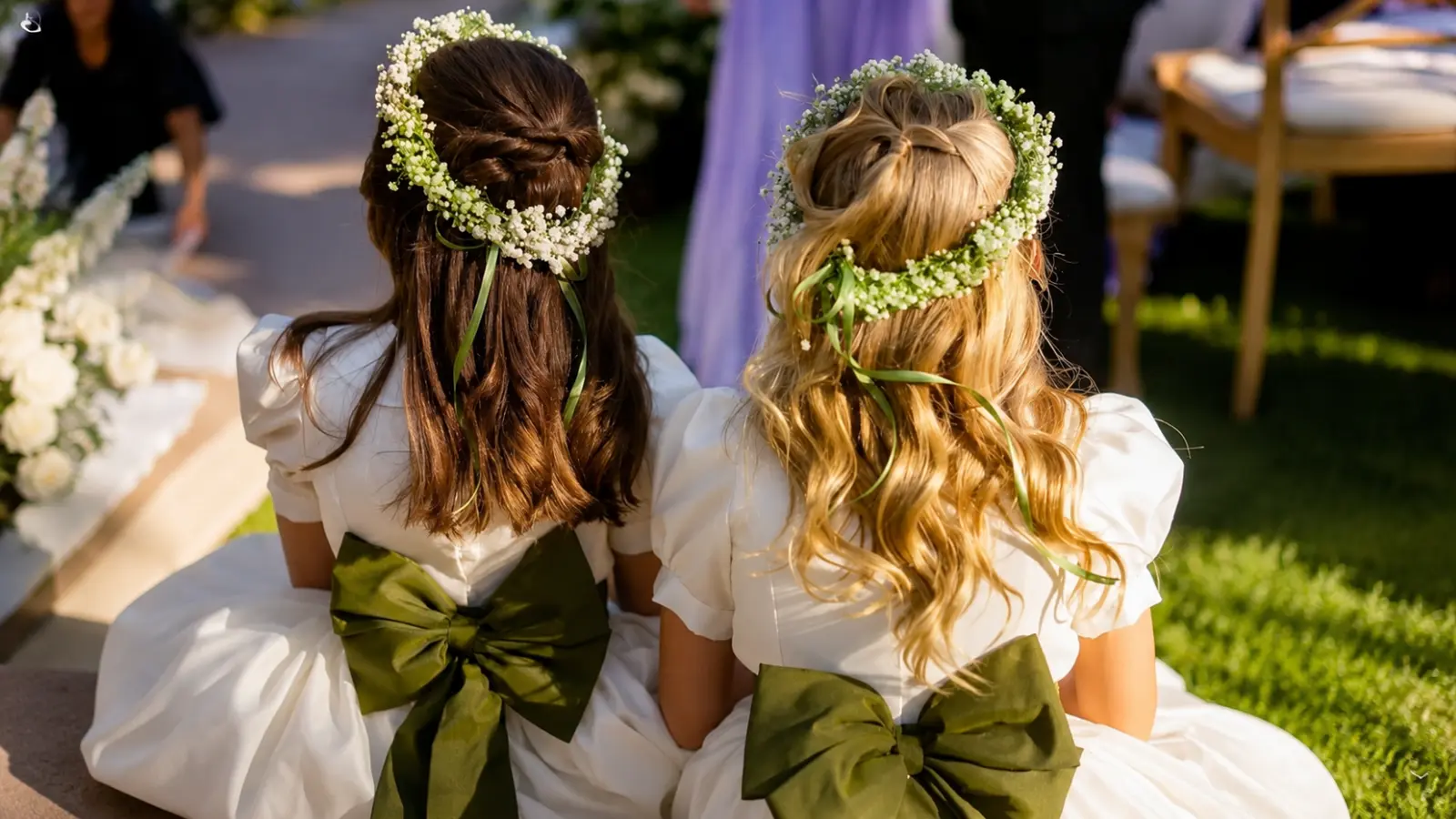
A flower girl is a young member of the wedding party who usually walks down the aisle before the bride, often carrying flowers, petals, a basket, or another simple item. The role is traditional but completely optional, and what she does can be adapted to her age, personality, and comfort level.
The best flower girl experience is simple and low-pressure. She doesn’t need to scatter petals, stand through the entire ceremony, or perform perfectly. What matters most is giving her a clear role she understands, comfortable clothing, and realistic expectations for the day.
This guide explains everything you need to know about the flower girl role, including duties, age, processional order, what she carries, what she wears, who pays for the dress, how to prepare her, when multiple flower girls work well, and when a junior bridesmaid role may be a better fit.
What Is a Flower Girl?
A flower girl is a young girl, typically between three and eight years old, who walks down the aisle as part of the wedding processional. She usually appears just before the bride enters, and her presence signals that the ceremony is about to begin. The role has roots in ancient wedding traditions where young girls would carry herbs, grains, or flowers as symbols of fertility and good fortune for the couple — a detail most modern weddings have simplified into a basket of petals or a small bouquet.
In contemporary American weddings, the flower girl’s role is mostly symbolic and visual. She marks a gentle transition in the processional, softening the moment before the bride’s entrance. She is not a required member of the wedding party, she holds no formal ceremonial duty, and her participation does not need to follow any specific script. What makes the role work is less about tradition and more about choosing the right child, giving her a simple task, and setting realistic expectations for the day.
It’s worth noting what the flower girl role is not: it is not the same as a junior bridesmaid, a child bridesmaid, or a page boy. Those roles carry different expectations and a closer connection to the wedding party itself. The flower girl’s role is specific to the processional moment, and that distinction matters when you’re deciding which role fits which child in your life.
What Does a Flower Girl Do?
The flower girl’s main job is to walk down the aisle before the bride. Everything else about the role — what she carries, whether she scatters anything, whether she walks alone or with someone — is flexible and should be tailored to the child and the ceremony.
In terms of what she typically does on the day, the flower girl’s involvement breaks down like this:
- She walks in the processional. This is the core of the role. She walks down the aisle after the bridesmaids and before the bride, at her own pace, usually guided by an adult at the end if needed.
- She may scatter petals. This is the most traditional version of the role, but it’s not universal. Many venues restrict loose petals on the floor, and some children find the scattering part distracting or stressful.
- She carries something. A basket, a small bouquet, a single flower, a decorative sign, or a pomander ball are all common alternatives to petals. What she carries should feel manageable and age-appropriate.
- She sits with family after walking. In most ceremonies, the flower girl takes a seat with her parents or a trusted adult once she reaches the front. She is generally not expected to stand at the altar for the full ceremony.
The most important thing to keep in mind is that the flower girl is a child, not a performer. Her job is to walk from one end of the aisle to the other. Anything beyond that is a bonus, not a requirement.
Is a Flower Girl Required?
No. A flower girl is entirely optional. Plenty of beautiful, well-organized ceremonies have no flower girl at all, and the processional works just as well without one. The role exists because many couples want to include a young girl from their family or circle in a meaningful way — but if there isn’t a child you’d like to include, or if the children in your life are not the right age or temperament for the role, skipping it is a completely reasonable choice.
If you do want to include a young child but the flower girl role doesn’t quite fit — maybe she’s a toddler, maybe she’s shy, maybe you want her to feel involved without the pressure of the aisle walk — there are other ways to bring her into the day. She might carry flowers during photos, hand out programs at the entrance, or simply be present in family portraits. The ceremony can acknowledge her without requiring a formal processional role.
The decision to have a flower girl should be based on whether the role genuinely fits the child and the ceremony, not on tradition for its own sake.
Best Age for a Flower Girl
Most flower girls are between three and eight years old, and that range tends to work well for a specific reason: children in those years are old enough to understand a simple instruction and follow a path, but young enough that the role still reads as genuinely sweet and unhurried rather than awkward. Within that range, though, there’s a meaningful difference between a three-year-old and a seven-year-old — and planning for those differences matters.
| Age Range | What to Expect | Planning Adjustment |
|---|---|---|
| Under 3 | Unpredictable, may freeze or cry | Have an adult walk with her; keep expectations low |
| 3–5 | Can follow direction, but may get distracted | Keep the task simple; practice the walk beforehand |
| 5–8 | Generally reliable and capable | Can scatter petals, carry a basket, walk alone |
| 9–12 | May feel too old for the flower girl role | Consider a junior bridesmaid role instead |
Children under three can absolutely be flower girls, but the role needs to be designed around the reality of that age. Walking with a parent or a bridesmaid, carrying something simple, and having zero expectation of staying on script is the right approach. For detailed guidance on how age shapes the experience, the dedicated guide on flower girl age goes deeper into what each stage looks like in practice.
Who Should Be the Flower Girl?
There is no rule about who the flower girl has to be. She can be a daughter, a niece, a cousin, a goddaughter, or the child of a close friend. The most important factors are the child’s age and temperament — not her relationship to the couple, though family ties are often what leads couples to the choice in the first place.
A few things worth thinking through before you ask:
- Is she the right age? A child who is two months shy of three and a child who just turned six will have very different experiences of the same role. Age matters more than most people expect.
- Is she comfortable in front of people? Some children love attention; others find it overwhelming. A child who tends to freeze in unfamiliar situations may do better in a behind-the-scenes role than as the center of a processional moment.
- Will her parents be present and available? The flower girl needs a trusted adult nearby on the day. If both parents are in the wedding party and the child is very young, you’ll need a plan for who is responsible for her.
- Are there multiple girls who might feel left out? If you have two nieces close in age, choosing one and not the other is a family dynamics decision as much as a wedding one. Having two flower girls is always an option.
The conversation about who fills this role is often more personal than logistical — but thinking through the practical side first usually makes the personal side easier to navigate. Once you’ve chosen her, asking her to be your flower girl can be as simple or special as feels right for your relationship.
Can You Have More Than One Flower Girl?
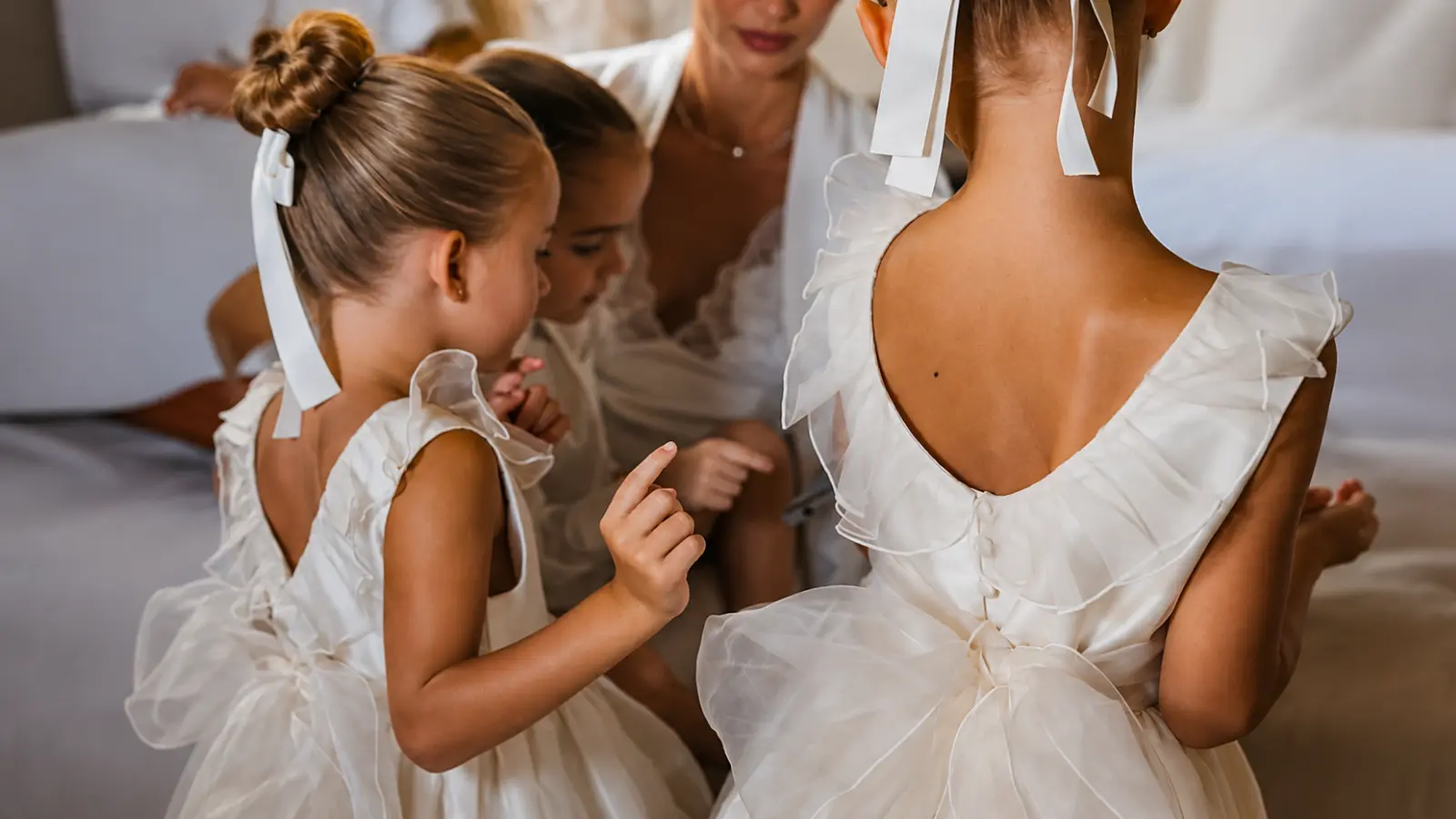
Yes, and having two or three flower girls is quite common, particularly in larger weddings or families where multiple young girls are close to the couple. There is no rule limiting the role to one child, and a small group of flower girls walking together can be one of the warmer, more visually cohesive moments of the processional.
When you have more than one flower girl, a few logistics are worth thinking through:
- Walking together or in sequence? Two girls close in age and friendship often walk side by side naturally. If ages are very different, walking one after the other can be easier to manage.
- Do they all carry the same thing? Matching baskets or bouquets read as more intentional. Mismatched items are fine too, but it helps to think it through so the look feels deliberate.
- Aisle width. Two small children walking side by side need enough room to move comfortably. A narrow aisle in a small chapel may work better with a single-file arrangement.
The most common reason to include multiple flower girls is family — when leaving one child out would create more tension than including her. When that’s the situation, two flower girls is often the most elegant solution.
What Does a Flower Girl Carry?
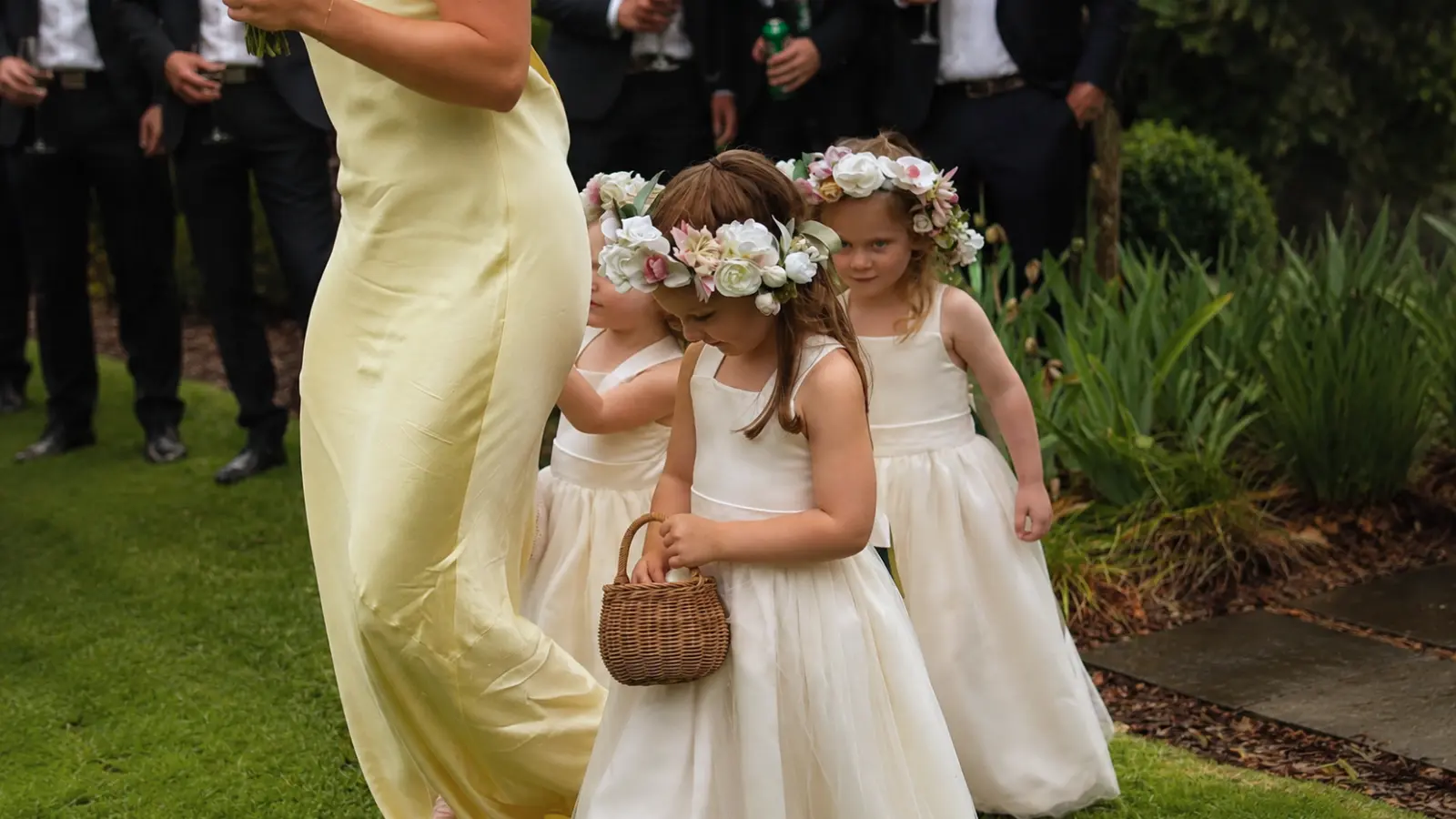
The basket of petals is the image most people picture, but it is far from the only option. What a flower girl carries should depend on the child’s age, the venue’s restrictions, and the overall aesthetic of the ceremony. The goal is something she can hold comfortably and carry down the aisle without it becoming a source of stress or distraction.
Here are the most common options, along with what makes each one work:
- Petal basket. The traditional choice. Works well for children who are comfortable scattering as they walk. Fresh petals add fragrance and texture; freeze-dried petals are lighter and less likely to stain.
- Small bouquet. A miniature version of the bridal bouquet or a simple tied bunch of flowers. Easy for children to hold and carry, and it photographs beautifully.
- Single stem. One flower — a garden rose, a ranunculus, a simple dahlia — is an understated and modern choice. Works especially well for toddlers who might drop or lose a basket.
- Pomander ball. A round floral ball on a ribbon, held with both hands. Popular with young children because it’s simple to hold and doesn’t require any coordination with scattering.
- Decorative sign or banner. A small sign reading “Here comes the bride” or “She said yes” gives the child something to carry without requiring any scattering or holding of flowers. A good option for shy or younger children who need a clear, simple task.
- Nothing at all. Walking empty-handed is a completely valid choice, especially for very young children or ceremonies where the visual simplicity is intentional.
If you’re leaning toward petals, check with your venue first — some locations, particularly historic churches or indoor spaces with certain flooring, have restrictions on what can be scattered on the aisle. The guide on flower girl baskets covers style and practical options in more detail.
Does the Flower Girl Have to Toss Petals?
No. The petal toss is the most recognizable version of the flower girl tradition, but it is not a requirement, and there are good practical reasons why many couples skip it entirely.
For younger children, scattering petals while walking in front of a crowd is a lot to coordinate at once. The result can be a child who stops moving entirely, tosses the whole basket at once, or gets so focused on the petals that she forgets to keep walking. For older, more confident children, it tends to go smoothly — but even then, venue restrictions may make the decision for you.
Fresh flower petals on certain flooring can create a slip hazard. Some indoor venues, particularly those with polished hardwood or marble, ask that couples use an alternative. Freeze-dried petals and fabric petals can offer a similar visual effect, but check with your venue before scattering any material on the aisle. But if the venue, the child, or the logistics make petals more complicated than they’re worth, any of the carrying options listed above works just as well.
When Does the Flower Girl Walk Down the Aisle?
The flower girl walks near the end of the processional, after the wedding party has entered and before the bride. Her walk is the signal that the bride’s entrance is coming — which is part of what gives the moment its function in the ceremony’s pacing.
One common processional order looks like this:
- Grandparents and parents are seated
- Officiant takes position at the altar
- Groom and groomsmen enter (often from the side)
- Bridesmaids walk down the aisle
- Maid of honor walks
- Ring bearer walks (if included)
- Flower girl walks
- Bride enters
The timing between the flower girl and the bride is usually brief — just long enough for the flower girl to reach the front and take her seat, so there is a clear pause before the bride’s music begins. Your officiant and wedding coordinator will typically guide this timing on the day, but it helps to walk through the sequence at the rehearsal so the child knows exactly what to expect.
Does the Flower Girl Walk Before or After the Bridesmaids?
The flower girl commonly walks after the bridesmaids. In many American wedding processionals, this serves a specific purpose: by the time the flower girl enters, the wedding party is already in place, the mood has shifted, and her walk becomes a brief, tender transition before the bride appears.
Some couples reverse this for a specific reason — for example, if the flower girl is very young and a bridesmaid will be walking with her to keep her on track. In that case, having her enter alongside a bridesmaid earlier in the processional can make more sense logistically. But as a general rule, the flower girl’s walk is most effective when it comes last in the wedding party sequence, right before the bride.
Can the Flower Girl Walk With the Ring Bearer?
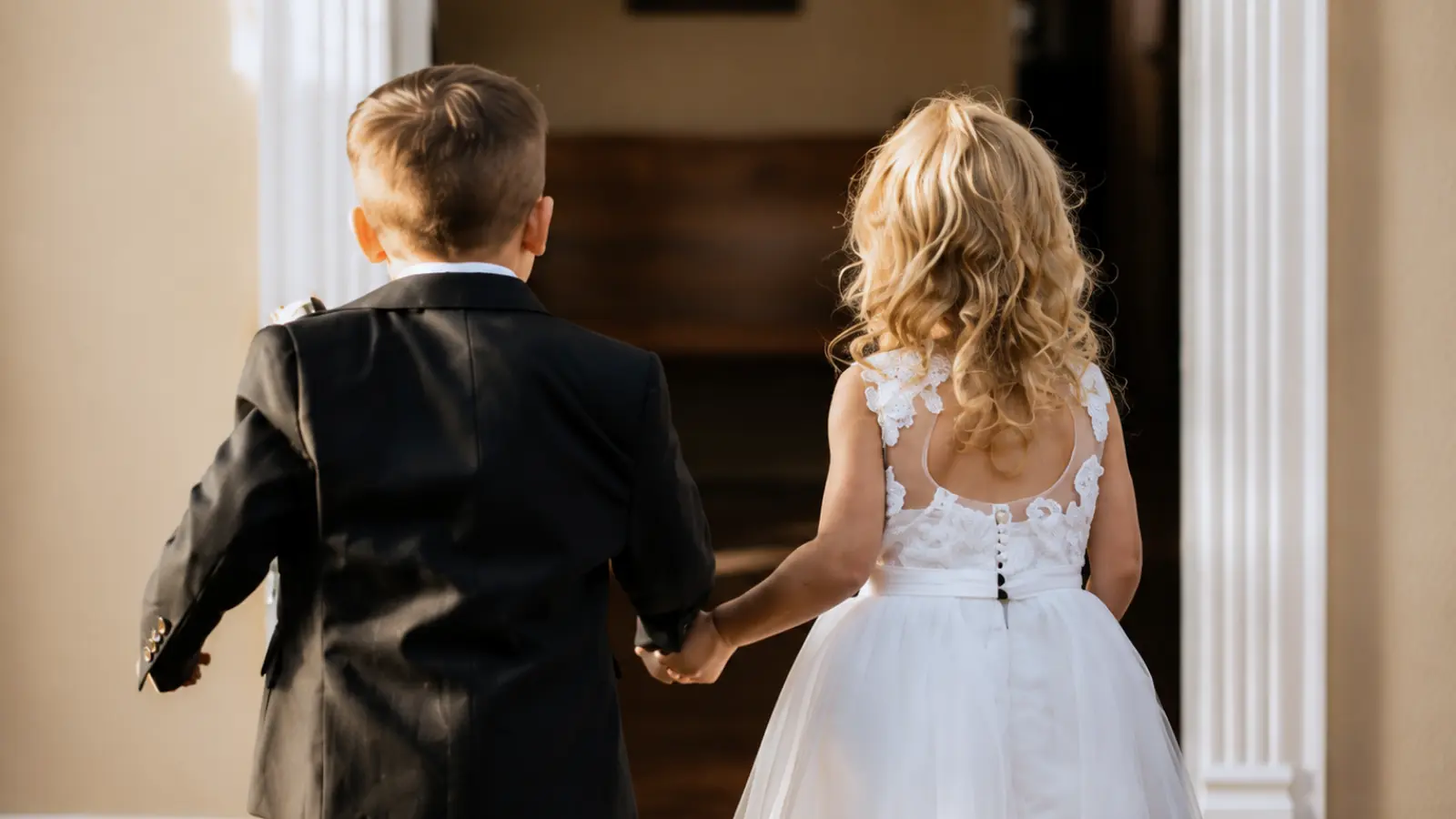
Yes, and this pairing is one of the most common arrangements in American weddings. The flower girl and ring bearer often walk together, either side by side or with the ring bearer slightly behind, and the combination tends to be one of the most photographed moments of the processional.
When pairing the two children, a few things are worth considering. If the children already know each other — siblings or cousins, for example — the walk tends to go more smoothly because they have a built-in comfort level. If they are strangers, introduce them at the rehearsal and give them a moment to get comfortable before expecting them to walk together in front of a crowd.
Age proximity also helps. A five-year-old flower girl and a three-year-old ring bearer will move at different paces and have different levels of focus. Pairing children who are close in age usually creates a more natural dynamic. And if either child is shy or anxious, walking with someone they know and trust — even a bridesmaid rather than the ring bearer — may work better than sticking to a paired arrangement for tradition’s sake.
Does the Flower Girl Stand or Sit During the Ceremony?
For most ceremonies, the flower girl sits with her family after walking down the aisle. This is the arrangement that works best for young children, and it’s the one most officiants and planners recommend when the flower girl is under eight or nine years old.
Standing at the altar for the full length of a ceremony — which can run anywhere from fifteen minutes to well over an hour — is a long time for a small child. The result is usually fidgeting, wandering, whispered conversations, or a child who simply sits down on the altar steps because her legs are tired. None of that is a disaster, but it is distracting, and it pulls focus from the ceremony itself.
Having the flower girl walk to the front and then be guided to her seat by a parent or a designated adult keeps her comfortable and the ceremony flowing. It also means she has a clear, finished task — she walked, she did her job, and now she gets to watch from somewhere she can actually sit still. For older flower girls (nine or ten and up), standing at the front is more feasible, but even then, a seat nearby is a good backup plan.
What Does a Flower Girl Wear?
The flower girl’s dress is one of the most talked-about planning decisions in this role, and it’s also one where couples have the most flexibility. There is no single correct answer — the right choice depends on the wedding’s color palette, the formality of the event, and, just as importantly, what the child will actually be comfortable wearing for several hours.
Dress Style and Formality
The flower girl’s dress should coordinate with the overall aesthetic of the wedding without trying to match the bridal gown exactly. For formal weddings, a more structured dress in a soft color — ivory, blush, pale gold — tends to feel cohesive. For garden weddings or more relaxed ceremonies, a flowy dress, a sundress with a floral print, or something with a slightly more playful silhouette can work just as well.
One thing that often gets overlooked: the dress needs to work for a child who is walking, possibly dancing, sitting on the ground if she gets bored, and wearing it for an entire afternoon or evening. Itchy fabrics, stiff skirts, or shoes she hasn’t worn before are all worth reconsidering before the wedding day. The guide on flower girl dresses covers styles, fabrics, and what to look for by age in more detail.
Shoes and Accessories
Whatever shoes the flower girl wears should be tested before the wedding day. A child wearing heeled or dress shoes she has never worn before is a recipe for a stumble on the aisle, blisters by dinner, or shoes that get kicked off under the table by cocktail hour. Ballet flats, Mary Janes, or soft-soled dress shoes are generally the most practical choices for young children. Details on what works best by age are covered in the flower girl shoes and accessories guide.
Hair should follow the same principle: choose a flower girl hairstyle that suits her age, hair type, comfort, and the formality of the wedding.
Does the Flower Girl Have to Wear White?
No. White is the most traditional color for a flower girl dress, and it remains popular because it photographs cleanly and feels cohesive with a white bridal gown. But it is not required, and many couples today choose something different — often with better visual results.
Soft neutrals like ivory, champagne, and blush are common alternatives that photograph similarly to white while feeling slightly warmer. Dresses that pick up one of the wedding’s accent colors — a pale sage, a dusty mauve, a soft blue — can tie the flower girl more intentionally into the overall palette. Floral prints on a neutral background are another option that reads as both coordinated and playful without being overly matchy.
The one consideration worth keeping in mind: if the flower girl is wearing white and the bride is not, or vice versa, it’s worth thinking through how that reads in the photos. More on color coordination and what works across different palettes is covered in the flower girl dress colors guide.
Who Pays for the Flower Girl Dress?
There is no fixed etiquette rule on this, and customs vary widely. Some couples cover the cost of the flower girl dress entirely, especially when they have a specific style or color in mind that they selected themselves. Others ask the child’s parents to purchase it, treating it similarly to how bridesmaids are typically expected to buy their own attire. Both approaches are common, and both are acceptable.
The most practical way to think about it: if you have a strong preference about what the flower girl wears — a specific dress, a specific shade, a particular silhouette — it makes sense to either purchase it yourself or provide a very clear direction and offer to cover the cost. If you’re comfortable giving the parents some flexibility in choosing something that fits the general palette, asking them to handle it is reasonable.
When budget is a consideration for the family, a thoughtful way to handle it is to quietly cover the cost without making it a production. Flower girl dresses tend to run less than bridesmaid attire, but the gesture of covering it often means more than the amount.
How to Prepare a Young Flower Girl
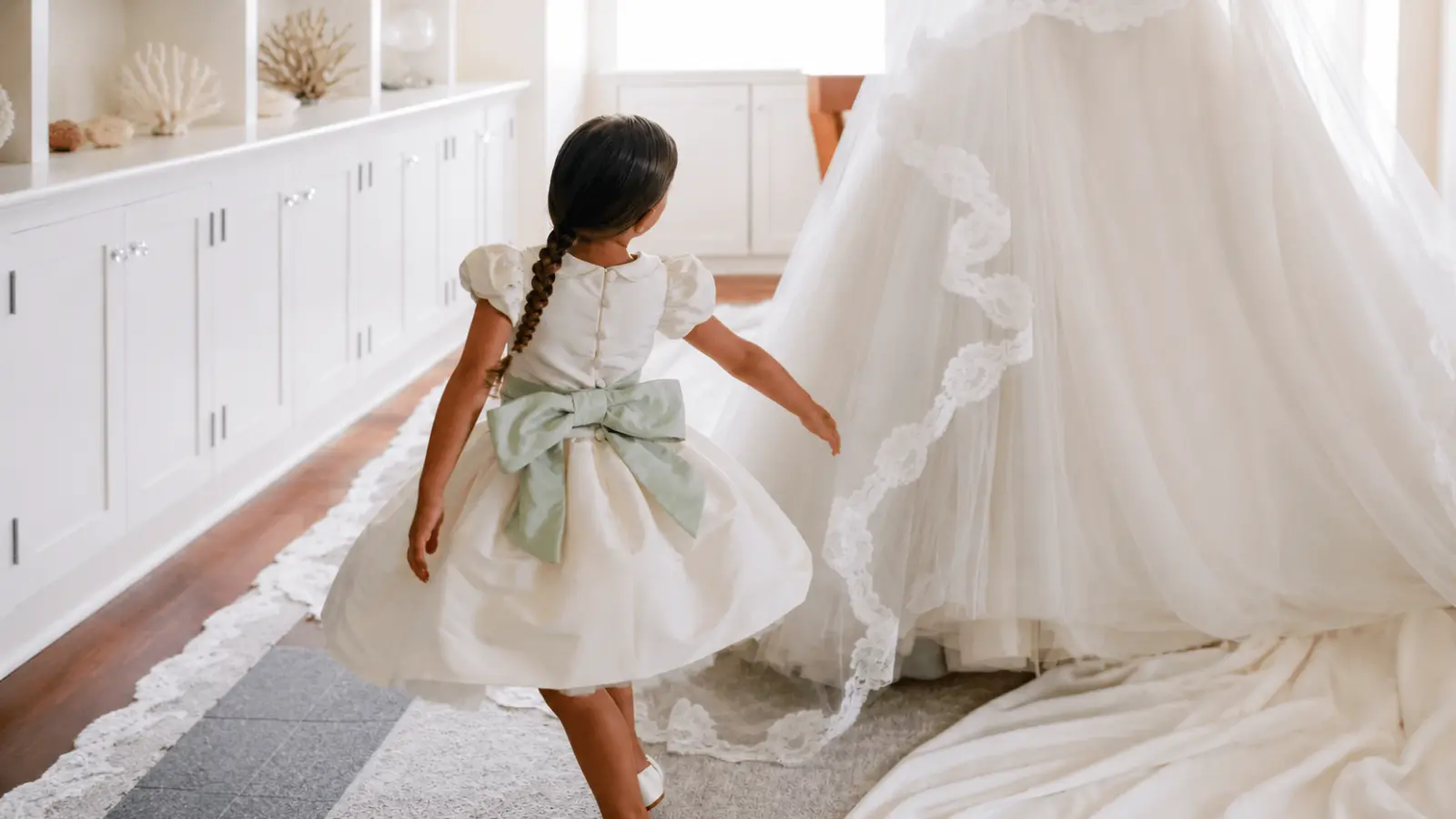
How you prepare the flower girl — and how much you ask of her — matters as much as the role itself. The goal is a child who feels excited and confident on the day, not one who has been rehearsed so many times that the experience feels like a performance she might fail.
A few things that consistently make a difference:
- Walk the aisle at the rehearsal. Seeing the actual space — the length of the aisle, where the music comes from, where she’s supposed to end up — removes a lot of the mystery and anxiety. Do this at the wedding rehearsal, not for the first time on the wedding day.
- Give her one simple job. “Walk down the aisle and scatter these flowers” or “Carry this basket and walk to where the flowers are” is more useful than a multi-step explanation. Keep the instruction clear and specific.
- Have a trusted adult at the end of the aisle. Whether it’s a parent, a bridesmaid, or a grandparent, someone she knows and trusts should be visible at the front of the aisle when she starts walking. That anchor point helps more than most people expect.
- Have a backup plan if she freezes. A child who stops moving, bursts into tears, or turns around and runs back is not a wedding disaster — it’s a child being a child. Decide in advance who will calmly walk out to get her if needed, so there isn’t a confused pause while everyone looks around.
- Don’t overpractice. One or two walkthroughs is enough. Children who are rehearsed excessively either get bored and disengaged or start to feel the weight of expectation. Let the rehearsal inform the day, then let the day unfold.
The children who tend to have the best experience in this role are the ones whose parents and the couple treated the whole thing with some lightness. Whatever she does on the day is the story you’ll tell at her wedding someday — and the charming versions of that story almost never involve the child doing exactly what she was supposed to do.
Flower Girl Mistakes to Avoid
Most flower girl hiccups are predictable and preventable. Here are the ones that come up most often — and what to do instead:
- Choosing a dress she hasn’t worn before the wedding day. A child in an unfamiliar dress, stiff shoes, or scratchy fabric will spend the entire ceremony focused on her discomfort rather than the role. Have her wear the dress for at least a short period before the wedding so any fit or comfort issues surface in advance.
- Forgetting to check on petal restrictions. Ask your venue about aisle restrictions before you commit to a petal toss. Finding out the night before that loose petals are not allowed creates an unnecessary scramble.
- Setting expectations the child’s age can’t support. A three-year-old walking down the aisle in a crowd of people she’s never seen is unpredictable by definition. Expecting her to scatter petals in a neat pattern, hold her basket a certain way, and smile at the camera is too much. Adjust what you’re asking based on what the child can realistically do.
- Not having a clear plan for after she walks. Where does she go when she reaches the front? Who takes her to her seat? Who is responsible for her during the ceremony? This should be worked out at the rehearsal, not figured out in the moment.
- Treating her as part of the décor rather than a child. The flower girl is a person participating in the ceremony, not a visual element to be positioned and directed. When the experience is designed around her comfort, the visual outcome is almost always better anyway.
- Choosing a junior bridesmaid role when flower girl is the better fit — or vice versa. A seven-year-old who is responsible and excited about being close to the action may feel more included as a junior bridesmaid. A ten-year-old who finds the flower girl role babyish may do better in a junior bridesmaid role. Think about what each role actually involves before assigning it based on convention.
Flower Girl Inspiration
Discover beautiful flower girl inspiration featuring wedding dresses, baskets, petals, bouquets, shoes, hairstyles, accessories, and meaningful ceremony ideas. Explore age-appropriate flower girl styles, processional inspiration, color ideas, and thoughtful ways to make the role comfortable, memorable, and perfectly suited to your wedding aesthetic.
How Do You Make the Flower Girl Role Work Well?
The flower girl role works best when it is planned around the child rather than around a picture-perfect version of tradition. Her age, personality, comfort level, outfit, and ability to understand the task matter more than whether she tosses petals exactly as planned.
Keep the role simple, prepare her without pressure, and have a clear backup plan if she becomes shy, distracted, or decides she doesn’t want to walk. When the expectations fit the child, the flower girl can become one of the most natural and memorable parts of the ceremony.
Frequently asked questions (FAQ)
What does a flower girl do at a wedding?
A flower girl’s main role is to walk down the aisle near the end of the wedding processional, usually just before the bride. She may scatter petals, carry a basket, hold flowers or a sign, or simply walk. After reaching the front, young flower girls typically sit with family rather than standing through the entire ceremony.
What is the best age for a flower girl?
Most flower girls are between three and eight years old. Children under three can still participate but usually need an adult to walk with them and very simple expectations. Children around nine to twelve may feel more comfortable as junior bridesmaids instead. Temperament and readiness matter just as much as the child’s exact age.
Is a flower girl required at a wedding?
No. A flower girl is an optional part of the wedding party and processional. The role works best when there is a child you genuinely want to include and the responsibility suits her age and personality. If the role would make a child uncomfortable or does not fit your ceremony, you can simply skip it.
Does a flower girl have to throw petals?
No. Scattering petals is traditional but completely optional. A flower girl can carry a small bouquet, basket, single flower, pomander, or sign, or walk empty-handed. Some venues also restrict loose petals because of cleanup or flooring concerns, so check the venue’s rules before planning a petal toss.
Can you have more than one flower girl?
Yes. Two or three flower girls can walk together or one after another, and including multiple children can work especially well when several young relatives are close to the couple. Consider their ages, comfort with each other, processional timing, and aisle width when deciding how they should walk.
Does the flower girl stand at the altar or sit down?
Most young flower girls sit with a parent or trusted adult after walking down the aisle. Standing through an entire ceremony can be difficult for a small child and is not necessary for the role. Older flower girls may be comfortable standing with the wedding party, but having a nearby seat is still a useful backup.