
Flower girl dress colors go far beyond traditional white. Ivory, blush, sage, blue, lavender, champagne, burgundy, and even black can work beautifully when the color feels connected to the wedding palette, venue, and overall ceremony style.
The best choice doesn’t have to match the bride or bridesmaids exactly. It can coordinate through a softer shade, complementary color, neutral tone, or small detail that connects the flower girl’s look to the rest of the wedding party while keeping her role visually distinct.
This guide explores flower girl dress colors from classic white and ivory to pink, blue, green, purple, champagne, black, burgundy, and yellow, with practical advice for coordinating the dress with the bride, bridesmaids, florals, venue, and overall wedding aesthetic.
Do Flower Girls Have to Wear White?
No — and this is worth saying plainly because many couples assume white is the only acceptable option. The tradition exists, but it’s a convention, not an etiquette rule. There’s no ceremony protocol that requires a flower girl to wear white, and the range of colors now used in real weddings is genuinely broad: blush, champagne, sage, dusty blue, lavender, even black in the right setting.
The more useful question is what color makes sense for the wedding as a whole. A flower girl in white at a wedding with ivory bridesmaids and warm floral tones can look slightly disconnected — the bright white reads cool against a warmer palette. A flower girl in champagne or blush in that same setting ties into the visual story more naturally. White is often chosen by default rather than by design, which is fine — but it’s worth actually deciding rather than defaulting.
Why Do Flower Girls Wear White?
The tradition comes from the flower girl’s historical role as a companion to the bride — a child dressed to echo the bridal look, symbolizing innocence and the transition into a new life. In earlier centuries, the flower girl wore white specifically to mirror the bride’s gown. That association has softened considerably in modern weddings, but the visual habit persisted long after the symbolism became less central.
Today, white on a flower girl reads primarily as traditional and classic rather than as a deliberate symbolic statement. Couples who choose white are usually doing so because it coordinates broadly with most floral palettes, photographs cleanly, and reads as timeless without requiring close coordination with the bridesmaid dresses. Those are all reasonable reasons — but they’re practical rather than obligatory.
Color-by-Color Guide
The following sections cover each major color in honest terms: where it works well, where it can be tricky, and what to keep in mind when considering it for a real child in a real ceremony.
White Flower Girl Dresses
White remains the most common flower girl dress color, and it earns that position in the right context. It works cleanly against almost any floral arrangement, photographs crisply in natural and studio light, and connects to the bridal procession in a way that feels intentional and traditional.
The limitation is that bright white can read as stark in warm-toned settings. Candlelit venues, outdoor ceremonies with golden-hour light, and weddings built around earthy or warm florals often photograph more warmly with ivory or champagne than with bright white. If the bride’s gown is ivory and the flower girl is in stark white, the difference will be visible in photos taken side by side. It’s worth comparing the actual gown and dress together in natural light before committing.
Ivory Flower Girl Dresses
Ivory is one of the most versatile choices for flower girl dresses and is worth considering when bright white feels too stark. Ivory photographs warmly across lighting conditions, coordinates naturally with cream, champagne, blush, and soft gold palettes, and avoids the starkness that bright white can create in certain venues. It also tends to look softer and more natural on young children than the visual crispness of true white.
The one situation where ivory can be tricky is when the bridesmaids are in a cool-toned color — dusty blue, soft gray, or slate — where the warmth of ivory may not coordinate as naturally. In those cases, white tends to bridge better. But for the majority of weddings with warm or neutral palettes, ivory is worth considering first.
Pink and Blush Flower Girl Dresses
Blush and soft pink are among the most popular non-white choices for flower girls: they photograph warmly and coordinate naturally with many romantic, garden, and classic wedding palettes. A soft blush dress reads as feminine without being overdressed, and it coordinates naturally with ivory, champagne, and rose-toned florals.
The range within pink is wide enough to matter. Pale blush functions almost as a neutral and works across romantic, garden, and classic ceremonies. Brighter or more saturated pinks are more specific — they work well when the wedding palette actively includes pink but can feel disconnected in weddings built around cooler or more muted tones. As with all colors, the test is whether the flower girl’s dress reads as part of the same visual palette as the bridesmaids and florals, or whether it looks like a separate decision.
Blue Flower Girl Dresses
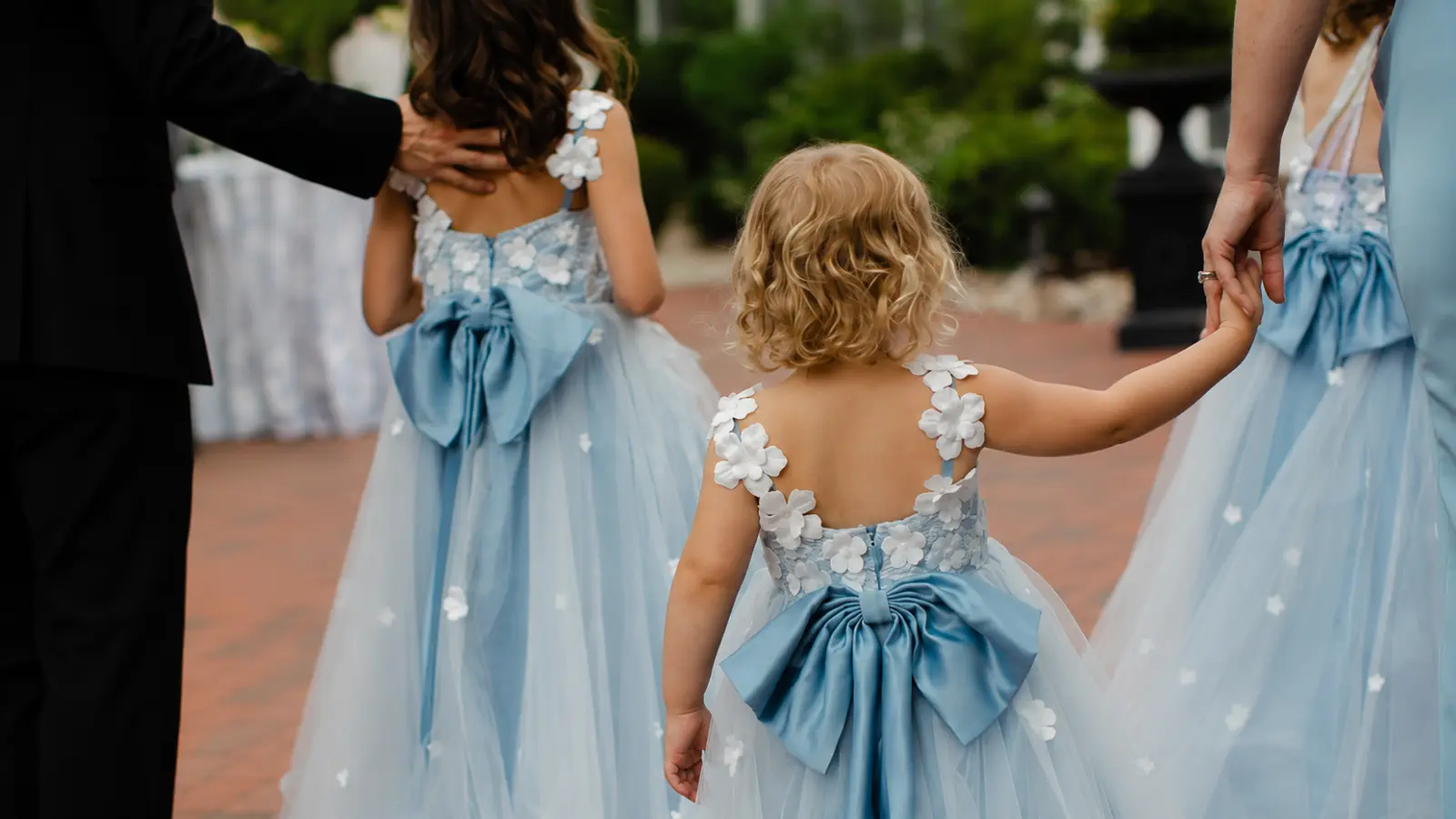
Blue flower girl dresses have grown in popularity alongside the rise of coastal, garden, and summer weddings. Soft and dusty blues coordinate well with neutral florals and beach settings, and they photograph crisply in natural light. A pale blue dress on a young child has a freshness that works particularly well at outdoor daytime ceremonies.
Deeper blues — navy, cobalt, or royal — are more formal in feeling and work best when the bridesmaid dresses or overall palette already runs in that direction. Navy on a young child can look polished and intentional at a formal evening wedding, though it reads differently than it would on an adult bridesmaid. The depth and saturation of the color matter more with children’s dresses than with adult gowns, because there’s less fabric and less visual context around the color.
Sage and Green Flower Girl Dresses
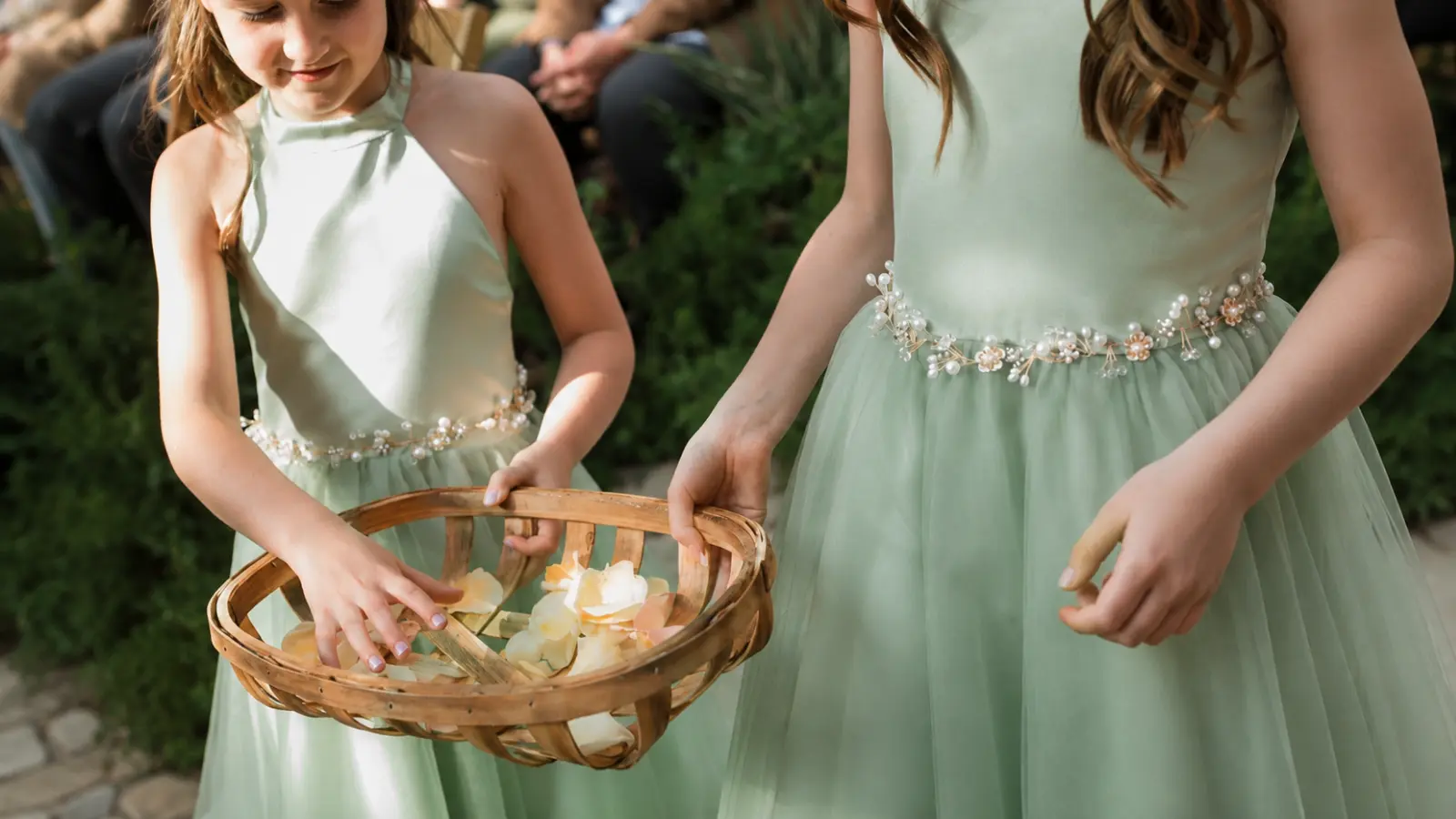
Sage green has become one of the most requested bridesmaid colors in recent years, and it translates naturally to flower girl dresses in the same palette. Soft green coordinates beautifully with botanical florals, outdoor settings, and garden venues, and it photographs well against greenery and natural backgrounds. It also works as a complement to ivory and blush in ways that feel cohesive rather than matched.
Deeper greens — forest, hunter, or emerald — are richer and more specific in feeling. They suit formal and moody aesthetics but require more deliberate pairing to avoid looking heavy against young children’s proportions. Sage and soft muted greens are significantly more versatile and carry less visual weight, which tends to work better for the flower girl role across a broader range of ceremony styles.
Purple and Lavender Flower Girl Dresses
Lavender and soft purple are reliable options for garden and romantic weddings, particularly spring and early summer ceremonies where the floral palette includes lilac, wisteria, or soft violet tones. Light lavender photographs similarly to soft blue — it reads as fresh and delicate — and coordinates naturally with dusty mauve bridesmaid dresses.
Deeper purples require a more deliberate wedding palette to support them. A rich plum or violet can look striking in the right context, but it’s a strong color choice that benefits from bridesmaids or florals that carry it through the rest of the visual story. For couples considering purple without a clear palette anchor, starting with lavender is the lower-risk path.
Gold and Champagne Flower Girl Dresses
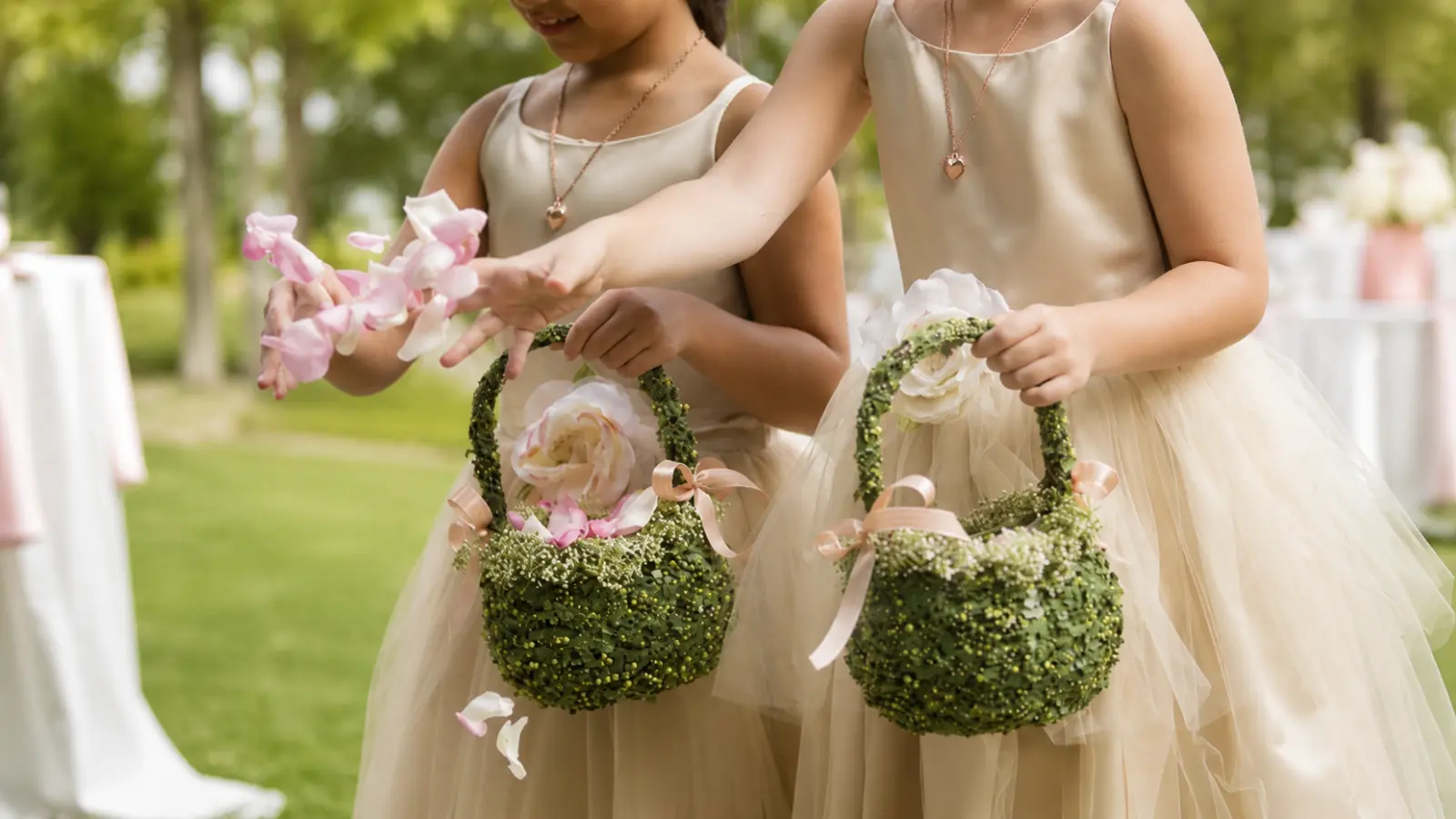
Champagne and pale gold are among the most elegant options for flower girl dresses and work particularly well at formal and evening weddings. They coordinate naturally with ivory and blush bridal palettes, photograph warmly in candlelit settings, and have a refinement that white doesn’t always carry in more formal contexts.
The distinction between champagne and gold matters. Champagne reads as a warm neutral and is versatile across ceremony styles. Gold with more metallic sheen is specific to formal or evening settings and can look overdressed for daytime or casual venues. If the wedding has a warm, candlelit, or black-tie feeling, this color range is worth serious consideration — it tends to look more intentional and less default than white in those settings.
Black Flower Girl Dresses
Black flower girl dresses occasionally prompt questions from family members, but they’re a legitimate and sometimes striking choice for the right wedding. They work best at formal, modern, or evening ceremonies where the overall aesthetic runs dark or sophisticated — a black-and-white wedding, a formal city venue, or a reception with an editorial feeling.
The consideration with young children is proportion and tone. Black is a visually heavy color, and a floor-length black dress on a small child can read as overly serious at the wrong wedding. A shorter silhouette — knee length or tea length — and a style with some softness (an A-line skirt rather than a fitted or column shape) brings the color into better balance for the flower girl role. At casual or daytime ceremonies, black on a young child often creates a visual mismatch with the setting that a different color would avoid.
Red, Burgundy, and Terracotta Flower Girl Dresses
Deep reds and burgundy work well at fall weddings, particularly when the bridesmaids are in the same or adjacent tones. Burgundy is one of the more common saturated colors for fall flower girl dresses because it coordinates naturally with autumn florals and photographs warmly against fall foliage. Terracotta has emerged as a popular choice for rustic and outdoor fall weddings alongside earthy bridesmaid palettes.
Bright red is more specific and carries more visual weight. It works in certain formal contexts but draws significant attention, which may or may not be the intention. A muted or wine-toned red tends to be more versatile than a true Christmas red in a wedding setting. As with all saturated colors, the test is whether the rest of the palette supports the color or whether it reads as a standalone decision disconnected from the rest of the visual story.
Yellow Flower Girl Dresses
Soft yellow and butter tones work well at spring and summer weddings, particularly in outdoor or garden settings where the color coordinates naturally with bright florals. Yellow is cheerful and light on a young child, and pale or muted versions of it can be genuinely lovely when the wedding palette includes warm tones, sunflowers, or citrus-inspired florals.
Saturated or neon yellows are harder to work with and photograph with high contrast in certain lighting. Pale lemon, butter, and soft marigold are more consistently successful for the flower girl role. Yellow can shift noticeably under different lighting, so seeing the actual dress in natural light before committing to it is worth the effort.
Should the Flower Girl Match the Bride?
Not necessarily, and in many cases the distinction between the two is actually desirable. A flower girl who reads as a miniature bride — same color, similar silhouette — can blur the visual hierarchy of the processional. The bride’s entrance carries more impact when the flower girl’s dress is clearly related to the wedding’s palette without duplicating the bridal look.
That said, white and ivory flower girl dresses coordinate with the bridal gown in a way that feels connected without being identical. The flower girl dress silhouette, fabric, and scale are all different enough that the two don’t compete. The risk of looking too matched is higher when the flower girl’s dress is in the same ivory or lace as the bridal gown and styled with similar flower girl accessories — that’s the version that can read as overly coordinated.
Should the Flower Girl Match the Bridesmaids?
Coordination rather than an exact match tends to look more intentional. A flower girl in the same dusty blue as the bridesmaids can look thoughtful — or it can look like a small bridesmaid, depending on the dress style and fabric. The more deliberate approach is a related color that reads as part of the same palette without being identical: a lighter shade of the bridesmaid color, a complementary neutral, or a white or ivory dress with a sash or ribbon in the bridesmaid color.
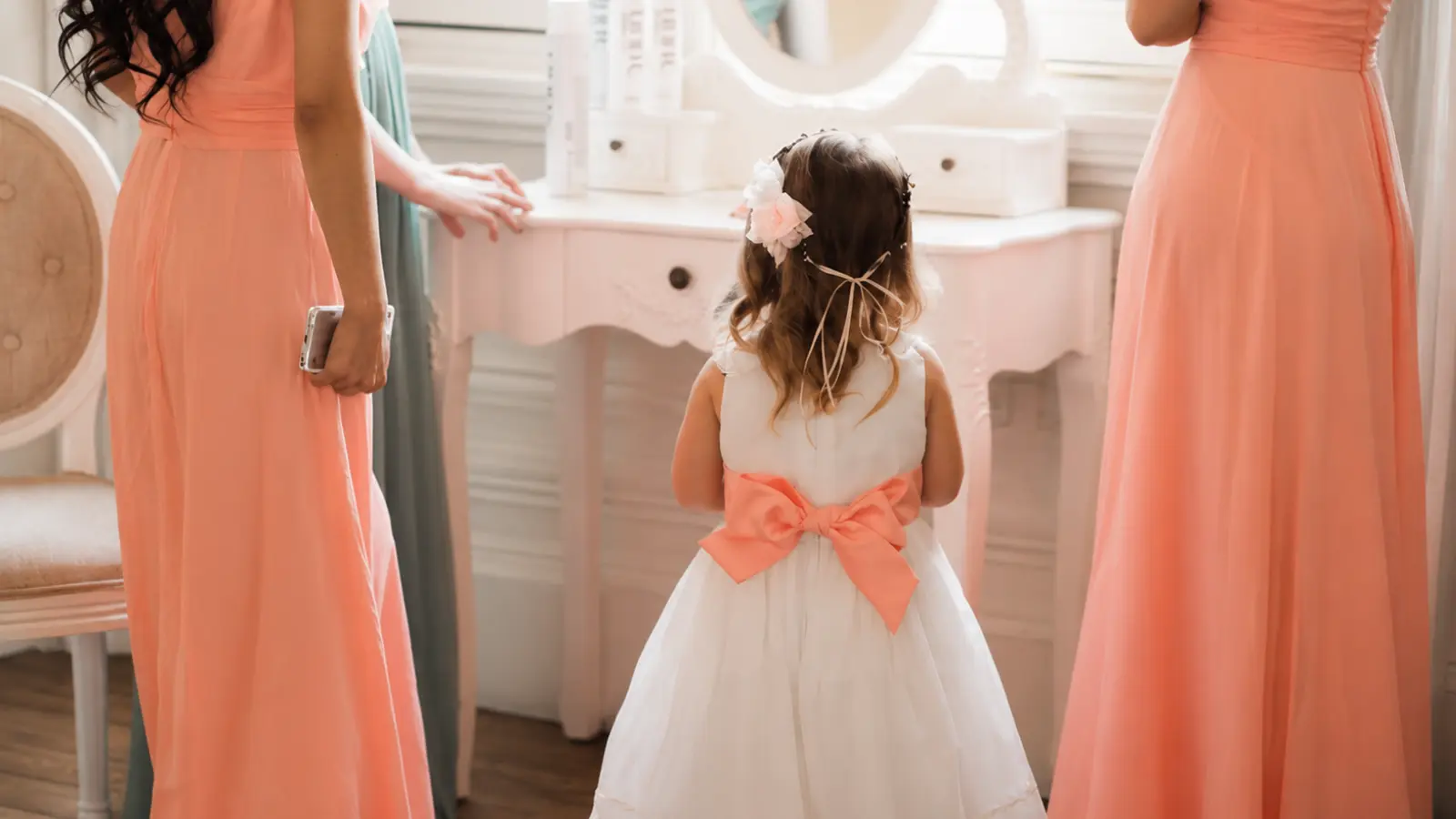
The sash or ribbon option is worth noting specifically because it solves the coordination question practically: the flower girl wears white or ivory (familiar, broadly appropriate, widely available) with a ribbon at the waist in the exact bridesmaid color. The palette connection is clear, the dress reads as distinct from the adult members of the party, and the child has a comfortable, classic dress rather than a miniature version of an adult gown.
How to Choose the Right Color
Working through three questions in order usually narrows the decision quickly.
First, what is the wedding’s color palette, and where does the flower girl’s dress fit within it? The dress should read as part of the same visual story — not necessarily matching, but coordinated with the bridesmaids, the florals, and the overall tone of the ceremony. A dress color that would look out of place in the ceremony photos is the wrong choice regardless of how it looks on its own.
Second, what is the venue’s lighting? Candlelit and indoor evening settings read warmer, which makes ivory, champagne, blush, and gold more successful than stark white. Outdoor settings with natural light are more forgiving of a wider color range. Bright, neutral ballroom lighting tends to work with most options. The dress color that looked right in the shop or online may photograph differently in the actual venue.
Third, what works for this particular child? Consider whether she feels comfortable and confident in the color, and remember that shades can look different online, indoors, and in natural light. Seeing the actual dress on the child before deciding is the most reliable way to confirm the choice.
Color Mistakes to Avoid
Most color missteps come from making the decision in isolation — choosing a color that looks right on its own without checking it against the rest of the palette. A few patterns worth catching before they become a problem:
- Choosing bright white against a warm palette. If the bridesmaids are in dusty rose, the florals are in ivory and peach, and the tablecloths are cream, a stark white dress reads as a cooler, harder color than everything around it. Ivory or blush typically integrates more naturally.
- Matching too precisely to the bridesmaids. A flower girl in the exact same dusty blue as the bridesmaids, in a similar silhouette, reads as a small bridesmaid rather than a distinct role. A lighter shade or a white dress with a ribbon in the bridesmaid color creates the connection without the duplication.
- Choosing a color the child clearly dislikes. A child who is unhappy in her dress — because the color feels wrong to her, because it’s nothing she would choose, because it makes her feel uncomfortable — will communicate that in photos and in her general attitude on the day. Where it’s feasible to involve her in the decision, doing so matters.
- Heavy or saturated colors on very young children. Deep navy, black, or burgundy can work beautifully, but they require a silhouette and styling that balances the weight of the color. A heavily saturated dress with a stiff skirt on a toddler rarely photographs the way it looked in the plan.
- Skipping the natural-light check. Color reads differently under fluorescent store lighting, on a screen, and in the actual ceremony setting. Looking at the dress alongside a bridesmaid dress or a floral sample in natural light, before the wedding, is the most reliable way to confirm the coordination works.
Flower Girl Dress Color Ideas & Inspiration
Explore flower girl dress color ideas in white, ivory, blush, sage, blue, lavender, champagne, burgundy, black, and more for every wedding style and palette.
What Color Should Your Flower Girl Wear?
The best flower girl dress color is the one that feels connected to the wedding without needing to match every other detail exactly. White and ivory remain timeless choices, but blush, sage, blue, champagne, lavender, and deeper shades can be just as beautiful when they belong naturally within the palette.
Consider the bridesmaid dresses, florals, venue, season, and overall wedding style together rather than choosing the flower girl’s color in isolation. A coordinated shade will usually feel more intentional than an exact match chosen simply because tradition says it should be there.
Frequently asked questions (FAQ)
How do you choose a flower girl dress color?
Start with the wedding palette, then consider the venue’s lighting and how the color looks on the child. The dress does not need to match the bride or bridesmaids exactly, but it should feel connected to the overall color story. When possible, compare the dress with bridesmaid colors or floral samples in natural light before deciding.
Do flower girls have to wear white?
No. White is traditional, but it is not required. Ivory, blush, champagne, sage, blue, lavender, and deeper colors can all work depending on the wedding palette and style. Choose a shade that coordinates with the ceremony and suits the child rather than defaulting to white simply because it is traditional.
Should the flower girl match the bridesmaids?
Not exactly. Coordination usually looks more intentional than an identical match. Consider a lighter shade of the bridesmaid color, a complementary neutral, or a white or ivory dress with a sash in the bridesmaid color. This connects the flower girl to the wedding party while keeping her role visually distinct.
Can a flower girl wear a dark color like black or navy?
Yes. Black, navy, burgundy, and other deep colors can work beautifully at formal, modern, fall, or evening weddings when the overall palette supports them. Because dark colors carry more visual weight on a young child, softer silhouettes or shorter lengths can help keep the dress appropriate to the flower girl role.
What color flower girl dress photographs best?
There is no single color that photographs best in every setting. Ivory, blush, champagne, and other soft neutrals tend to work well across many lighting conditions, while bright white can look stark in warm settings. The most reliable choice is a color that complements the wedding palette, venue lighting, florals, and the child herself.
Can the flower girl wear a different color than the bridesmaids?
Yes. A different but coordinated color often creates a more intentional look than an exact match. White or ivory can distinguish the flower girl from colored bridesmaid dresses, while blush, champagne, or another complementary shade can connect her to the palette. The goal is visual coordination, not identical color.