
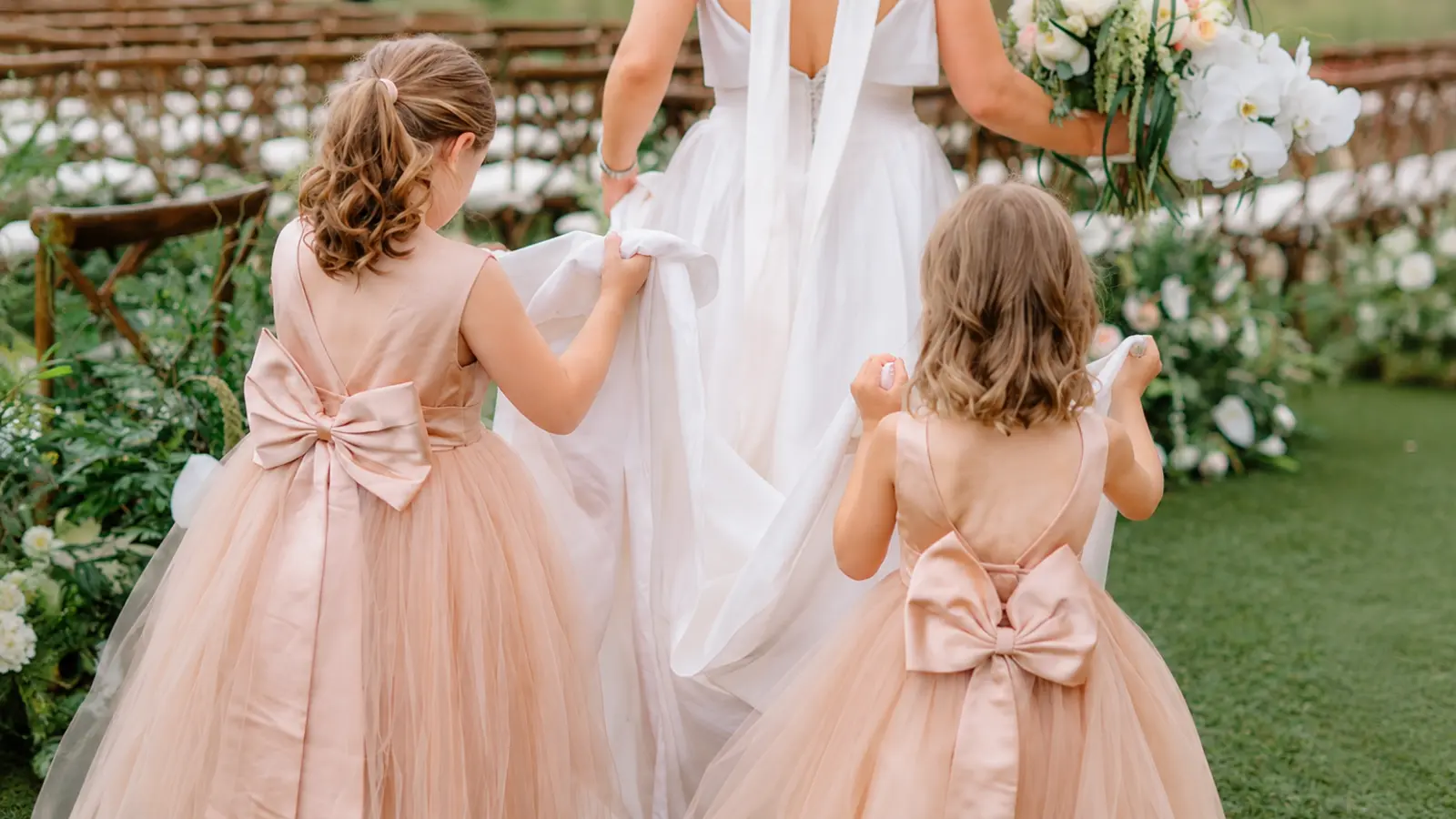
Flower girl dresses need to do more than look beautiful in ceremony photos. The right dress should coordinate with the wedding style and color palette while still allowing a child to walk, sit, eat, dance, and stay comfortable for several hours.
Age, fabric, fit, season, and venue all matter. A structured tulle dress may suit a formal indoor wedding but feel impractical for a toddler at an outdoor summer ceremony, while a lightweight chiffon or soft cotton-blend style may work beautifully in a more relaxed setting.
This guide explains how to choose flower girl dresses by style, fabric, color, age, wedding aesthetic, and season, including how to coordinate with the bride and bridesmaids, choose a practical length and fit, and avoid the comfort mistakes that can make a beautiful dress difficult for a child to wear.
How to Choose a Flower Girl Dress
The starting point for choosing a flower girl dress is not the dress itself — it’s the child and the wedding together. Those two things need to inform every other decision: the color, the silhouette, the fabric, the length, and the level of embellishment. A dress that would look beautiful on a confident seven-year-old at a formal ballroom wedding is the wrong choice for a shy four-year-old at an outdoor garden ceremony, even if the aesthetic is similar.
Before you start browsing, it helps to settle a few things first:
- How old is the child, and what is her temperament? Younger children need simpler dresses with fewer structural elements. A child who tends to be sensitive to texture or clothing will need a soft, well-lined option regardless of what looks best on a hanger.
- What is the wedding’s style and setting? Outdoor ceremonies have different requirements than indoor ballrooms. Beach venues have different practical needs than a formal church.
- What is the color palette? You don’t need an exact match to the bridesmaids, but you do need a dress that reads as intentionally coordinated with the overall look of the wedding party.
- What is the season and likely weather? Layers that look elegant in photos can make a child miserable in July. A lightweight dress at an outdoor November wedding creates a different problem.
Once those basics are clear, the shopping process becomes much more straightforward — because you’re choosing within a defined set of criteria rather than starting from scratch with every option you see.
Should the Flower Girl Match the Bride?
The flower girl does not need to match the bride, and in most cases, trying to create a miniature version of the bridal gown is not the most effective approach. A child in a heavily embellished, structured white dress that echoes the bridal silhouette can read as an imitation rather than a complement — and at the fabric level, what works for a bridal gown rarely works for a child’s dress in terms of comfort or ease of movement.
What tends to work better is a dress that shares one visual element with the bridal look without trying to replicate it. That might be a similar neckline treatment, a lace detail at the hem or bodice, a similar softness in the skirt, or simply a color that coordinates with the bride’s accessories or flowers. The flower girl and the bride should look like they belong in the same wedding, not like they’re dressed in the same outfit.
If the bride is wearing a heavily embellished, structured gown, a simple, softer flower girl dress can actually be a better visual counterpart than something that attempts to compete with it. The contrast — understated child beside the bride — often reads as more intentional in photos than two elaborate silhouettes next to each other.
Should the Flower Girl Match the Bridesmaids?
Coordination is the goal, not an exact match. The most common approach is to put the flower girl in a dress that lives in the same color family as the bridesmaids — a lighter shade of the same hue, a complementary neutral, or a print that incorporates one of the palette’s colors — rather than the identical fabric and style.
There are a few reasons this tends to look better. First, bridesmaids’ fabrics are typically chosen for adult bodies and adult formality levels; the same fabric on a child’s dress often reads differently, especially if it’s a structured or draped fabric that doesn’t translate to a children’s silhouette. Second, an exact match can flatten the visual hierarchy of the wedding party — the flower girl’s role is distinct from the bridesmaids’, and the dress can reflect that distinction while still feeling cohesive.
If the bridesmaids are in a dusty blue, the flower girl might wear a pale sky blue, a soft white with blue accents, or an ivory dress with blue sash. If the bridesmaids are in sage green, a soft floral dress with green tones or a simple ivory dress with sage ribbon can coordinate without matching. The guide on flower girl dress colors covers specific coordination strategies by palette in more detail.
Flower Girl Dresses by Color
Color is one of the most searched aspects of flower girl dresses, and it’s also one of the most flexible decisions in this category. There is no single correct color — what matters is how the dress fits into the wedding’s overall palette and how it photographs in the ceremony and reception lighting.
White Flower Girl Dresses
White is the most traditional color for a flower girl dress and remains a popular choice, particularly for formal church ceremonies and classic weddings. It photographs cleanly, reads as intentionally bridal, and coordinates with almost any wedding color palette. The practical consideration with white is visibility: dirt, grass stains, and food show up more readily on white than on any other color, which matters at an outdoor event or a reception where the child will be eating. White dresses also benefit from a soft lining — unlined white fabric against fair or light skin can appear sheer in certain lighting conditions.
Ivory Flower Girl Dresses
Ivory reads as slightly warmer than white and tends to photograph better at candlelit or warm-toned receptions. It works particularly well when the bride’s gown is also ivory or off-white, since a stark white flower girl dress next to an ivory bridal gown can create an unintentional contrast. Ivory is also slightly more forgiving than white when it comes to minor stains over the course of the day.
Pink Flower Girl Dresses
Pink is one of the most popular non-white choices and works across a wide range of wedding styles. Pale blush and soft rose tones photograph warmly and feel feminine without competing with the bridal look. Deeper pinks — mauve, dusty rose, or antique rose — coordinate well with more earthy, bohemian, or autumnal palettes. Hot pink or saturated bright pinks are less common in wedding contexts but can work for casual, colorful, or non-traditional celebrations.
For a deeper look at how specific shades and palettes work together, the flower girl dress colors covers the full range of options by wedding style and season.
Flower Girl Dresses by Style
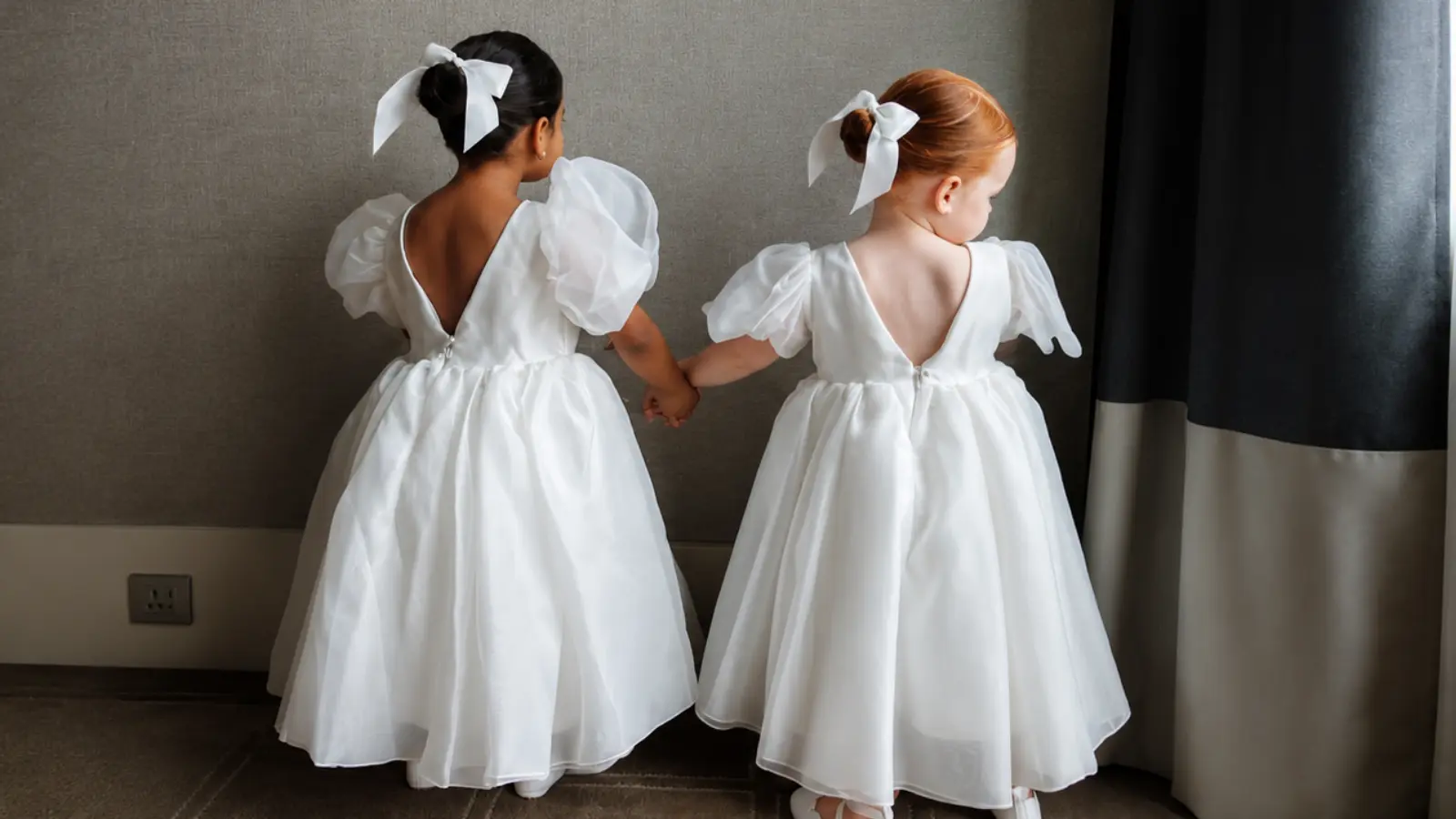
Style describes the overall aesthetic of the dress — its level of formality, its silhouette, and the decorative choices that define its look. The right style depends on the wedding’s overall aesthetic and the child’s age, but a few general directions are worth understanding before you start shopping.
Simple and Modern Flower Girl Dresses
Simple dresses have become increasingly popular for flower girls, particularly at modern, minimalist, or contemporary weddings. A clean A-line silhouette in a soft fabric, without heavy embellishment, lace overlay, or tiered skirts, reads as intentional and elevated rather than plain. Simple dresses also tend to be more comfortable for children because there are fewer structural elements that restrict movement or create discomfort. For older flower girls — nine, ten, or eleven — a simple, more grown-up silhouette often feels more age-appropriate than something with an elaborate tiered skirt or heavy sash.
Classic and Elegant Flower Girl Dresses
Classic styles typically feature a fuller skirt — either in tulle or a soft organza — with a defined bodice, often with a sash or bow at the waist. This is the silhouette most people picture when they think of a flower girl, and it works particularly well for formal weddings, ballroom settings, and traditional church ceremonies. The key with a more structured classic dress is ensuring that the bodice is not too tight and that the skirt layers are soft rather than scratchy.
Vintage and Boho Flower Girl Dresses
Vintage-inspired dresses often incorporate lace, smocking, or delicate embroidery, and they pair naturally with garden parties, vineyard weddings, and outdoor ceremonies with a romantic feel. Boho flower girl dresses tend toward flowy fabrics, floral prints, and less structured silhouettes — a direction that also happens to be one of the most comfortable for active children. Both styles work well in natural light and tend to photograph warmly against outdoor or textured backdrops.
Flower Girl Dresses by Fabric
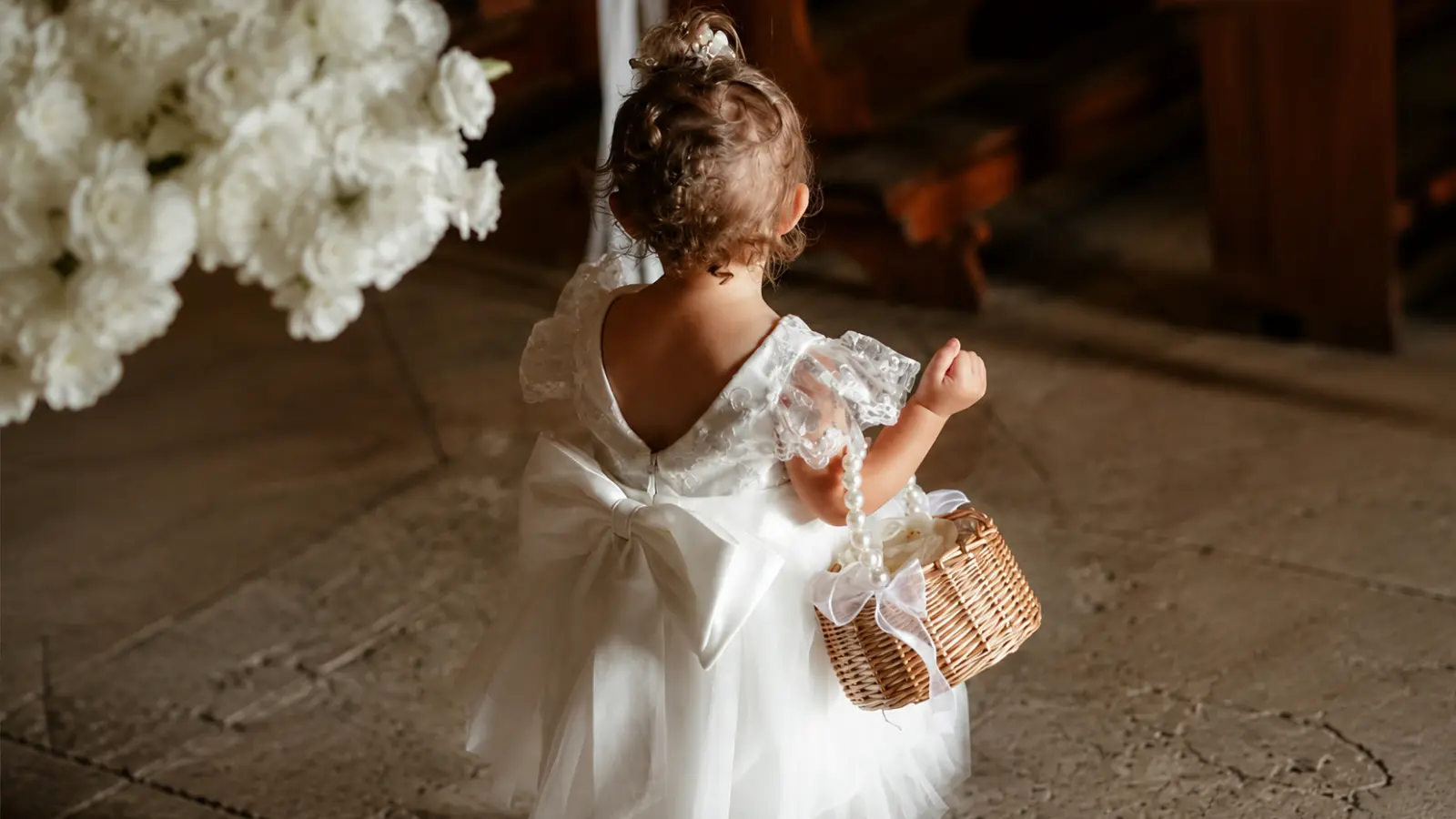
Fabric is where aesthetic choices and comfort realities intersect most directly. A dress can look right in every other way and still be unwearable for a child if the fabric is wrong for her skin, her age, or the event’s conditions. Understanding the main fabric options and their trade-offs makes the shopping process significantly easier.
Tulle Flower Girl Dresses
Tulle is the most common fabric in flower girl dresses and the source of both their charm and their most common comfort complaint. The fuller, layered skirt that tulle creates photographs beautifully and reads as genuinely festive — but unlined or rough tulle against bare legs and arms can be irritating, particularly for children with sensitive skin or those who have never worn a structured skirt before.
When considering a tulle dress, check that the underside of the skirt has a soft lining — typically a slip layer in cotton or a smooth synthetic — between the tulle and the child’s skin. A dress with soft lining underneath is usually fine; a dress with raw tulle touching the legs directly is the one that gets kicked off under the dinner table. Tulle also holds shape well, which means a wide skirt on a young child can make navigating narrow aisles, bathroom stalls, or car seats more complicated than expected.
Lace Flower Girl Dresses
Lace dresses range from delicate and airy to more structured depending on the lace weight and backing. Lightweight lace over a soft lining can be quite comfortable; heavy lace with a stiff backing is not. Lace details on an otherwise soft dress — a lace overlay on a chiffon skirt, or a lace bodice with a soft tulle skirt — often offer the best of both worlds visually while keeping the overall wearability high. Lace works particularly well for romantic, vintage, and classic wedding aesthetics.
Satin Flower Girl Dresses
Satin has a polished, formal look and is a common choice for black-tie or ballroom weddings. The main consideration with satin is that it can feel warm, particularly in heavier styles, which may make it less practical for outdoor or summer events. It also shows every wrinkle and crease, which means a child who has been sitting in a car or on the floor will arrive with a dress that tells that story. Satin works well when the event is largely indoors, the weather is cool, and the ceremony timeline is relatively tight. A matte satin or satin-back crepe tends to be slightly more forgiving than a high-shine finish.
Chiffon and Soft Blended Fabrics
Chiffon and lightweight fabric blends are among the most comfortable options for flower girls across age groups. They drape softly, move well, breathe in warm weather, and don’t create the bulk that structured tulle does. They also tend to be more forgiving of minor wrinkles over the course of a long day. The trade-off is that they have less visual drama than tulle or satin — they read as more understated, which is exactly right for some wedding styles and less so for others.
Long Sleeve Flower Girl Dresses
Long sleeve dresses are a practical choice for fall and winter weddings, as well as indoor ceremonies in cooler venues. They add a layer of warmth without requiring a separate jacket or cardigan that the child may refuse to wear or lose track of during the reception. Visually, long sleeves can add a more formal or vintage feel to the dress, particularly in lace.
The comfort consideration with long sleeves is fit: sleeves that are too snug at the wrist or elbow restrict movement and become uncomfortable over time. Fitted sleeves in a soft stretch fabric tend to work better than stiff or structured ones. For indoor winter weddings where the venue may be well-heated, consider whether the child will overheat — a three-quarter sleeve or a lightweight long sleeve in a breathable fabric can be a middle-ground solution.
Flower Girl Dresses by Age
Flower girl age shapes the dress choice more than almost any other factor, because a dress that is appropriate and comfortable for a seven-year-old may not work at all for a three-year-old, and vice versa. The differences are both practical and aesthetic.
Baby and Infant Flower Girl Dresses
For babies and infants who will be carried or in a stroller rather than walking independently, the dress is primarily a visual choice rather than a functional one. That said, comfort still matters: stiff fabrics, scratchy seams, or tight waistbands can make an already unpredictable baby significantly less manageable on a wedding day. Simple, soft dresses — often without a structured skirt — work best for this age. Easy closures in the back or sides matter more here than they do for older children, because diaper changes and unexpected outfit moments are more likely.
Toddler Flower Girl Dresses
Toddlers need dresses that allow for full, unimpeded movement: squatting, running, sitting on the floor, and using the bathroom without assistance being optional rather than guaranteed. A shorter skirt — at or just above the knee — prevents tripping. A soft, non-structured waist prevents the discomfort that often leads to meltdowns. Avoid any dress with embellishments that could be pulled off and swallowed, and test the closures in advance to ensure they can be managed quickly in a bathroom situation.
Sizing for toddlers is also worth approaching carefully. Many children’s dress sizes run small, and a dress that fit perfectly at the fitting three months before the wedding may be noticeably tighter by the wedding date. Use the brand’s size chart and the child’s current measurements, then plan a final fit check closer to the wedding date.
Older Flower Girl Dresses
For girls between eight and twelve who are participating in the flower girl role, the dress should feel age-appropriate rather than overly juvenile. Heavy tulle skirts, exaggerated bows, or very childish silhouettes can make an older child feel self-conscious rather than included. A more streamlined A-line, a simple lace dress, or a style with cleaner lines tends to land better with this age group. For girls at the older end of this range — ten, eleven, twelve — the junior bridesmaid role and its associated attire may be a more natural fit than the flower girl dress category.
Flower Girl Dresses by Wedding Style
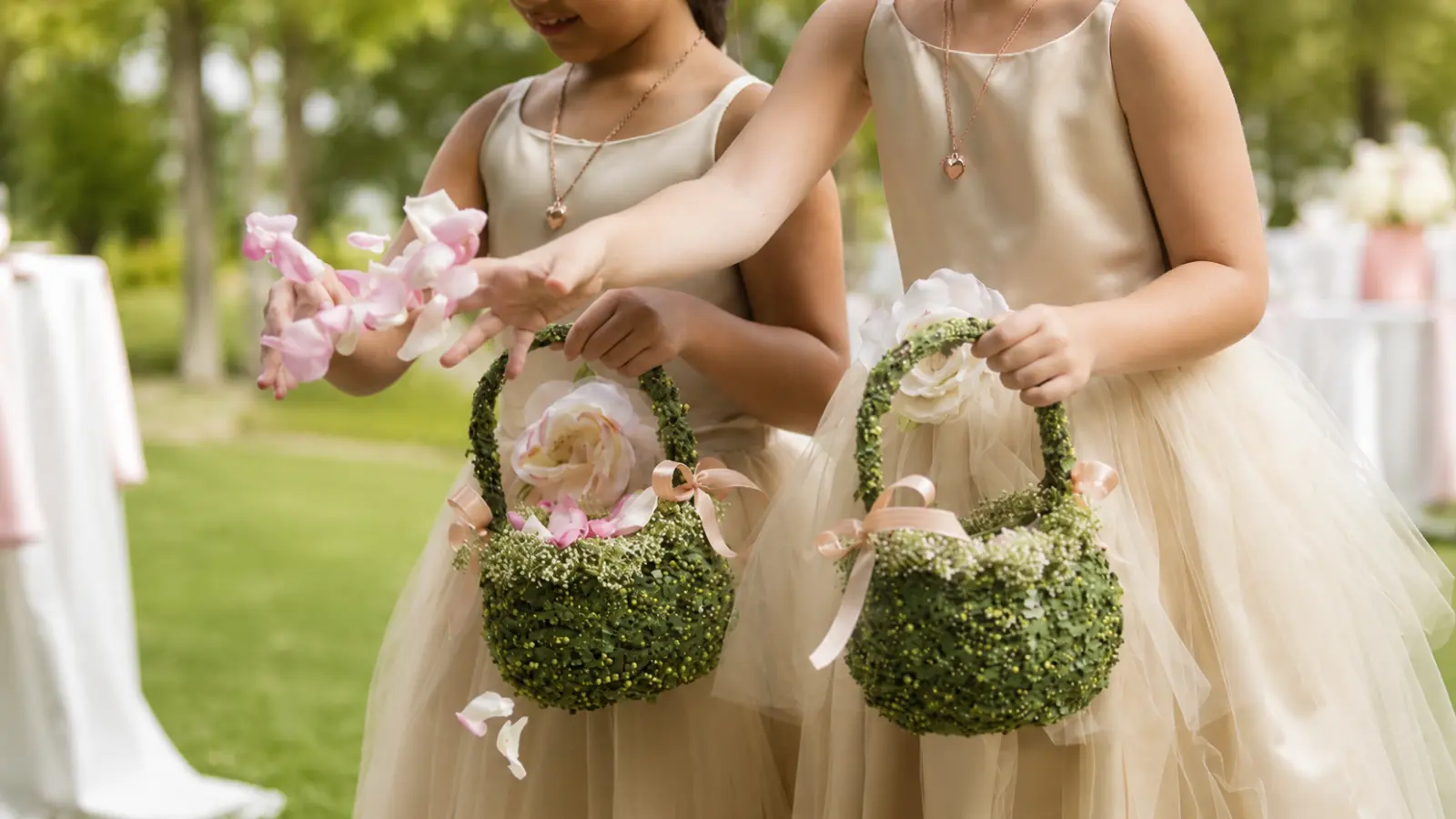
The wedding’s overall setting and aesthetic should shape the dress direction as much as color preference does. A dress that photographs beautifully at one type of event can look out of place at another — not because it’s unattractive, but because it doesn’t belong to the same visual world as the rest of the wedding.
For formal and ballroom weddings, a more structured silhouette in satin or layered tulle tends to feel proportionate to the setting. For garden or outdoor ceremonies, flowy fabrics and lighter silhouettes work better and are significantly more practical in warm weather or on uneven terrain. Beach and destination weddings call for the lightest possible layers — cotton-blend or chiffon dresses that won’t trap heat or become unwieldy in a breeze.
Rustic and barn weddings tend to suit simpler, less formal dresses — floral prints, lace details on a softer fabric, or a clean A-line in a warm neutral. Boho ceremonies, often held outdoors with natural backdrops, work well with flowy silhouettes and organic textures. A heavily embellished formal dress at a casual vineyard wedding reads as mismatched in the same way that a simple cotton dress would at a black-tie event.
Flower Girl Dresses by Season
Season affects both fabric choice and practical wearability in ways that are easy to overlook when you’re choosing a dress based on photos. The child will be wearing this dress for several hours, likely in varying conditions — outdoors before the ceremony, air-conditioned reception hall for dinner, possibly outside again for photos at golden hour. The dress should be able to handle those transitions without making her uncomfortable.
For spring and summer weddings, the priority is breathability. Soft tulle, chiffon, and light cotton blends allow air circulation and don’t trap heat the way satin or heavy structured fabrics do. Multiple layers of tulle in warm weather are a common source of overheating for young children — if the skirt is layered, make sure the layers are genuinely lightweight rather than the dense variety that looks substantial even when it’s not.
For fall and winter weddings, long sleeves become more practical, and slightly heavier fabrics read correctly with the season. A velvet sash, a lace overlay, or a dress in a deeper shade — dusty rose, burgundy, forest green — can coordinate well with autumnal or winter palettes. If the ceremony involves any outdoor time in cold weather, a soft bolero or coordinating wrap gives the child an option without requiring that she wear it the whole time.
What Makes a Flower Girl Dress Comfortable?
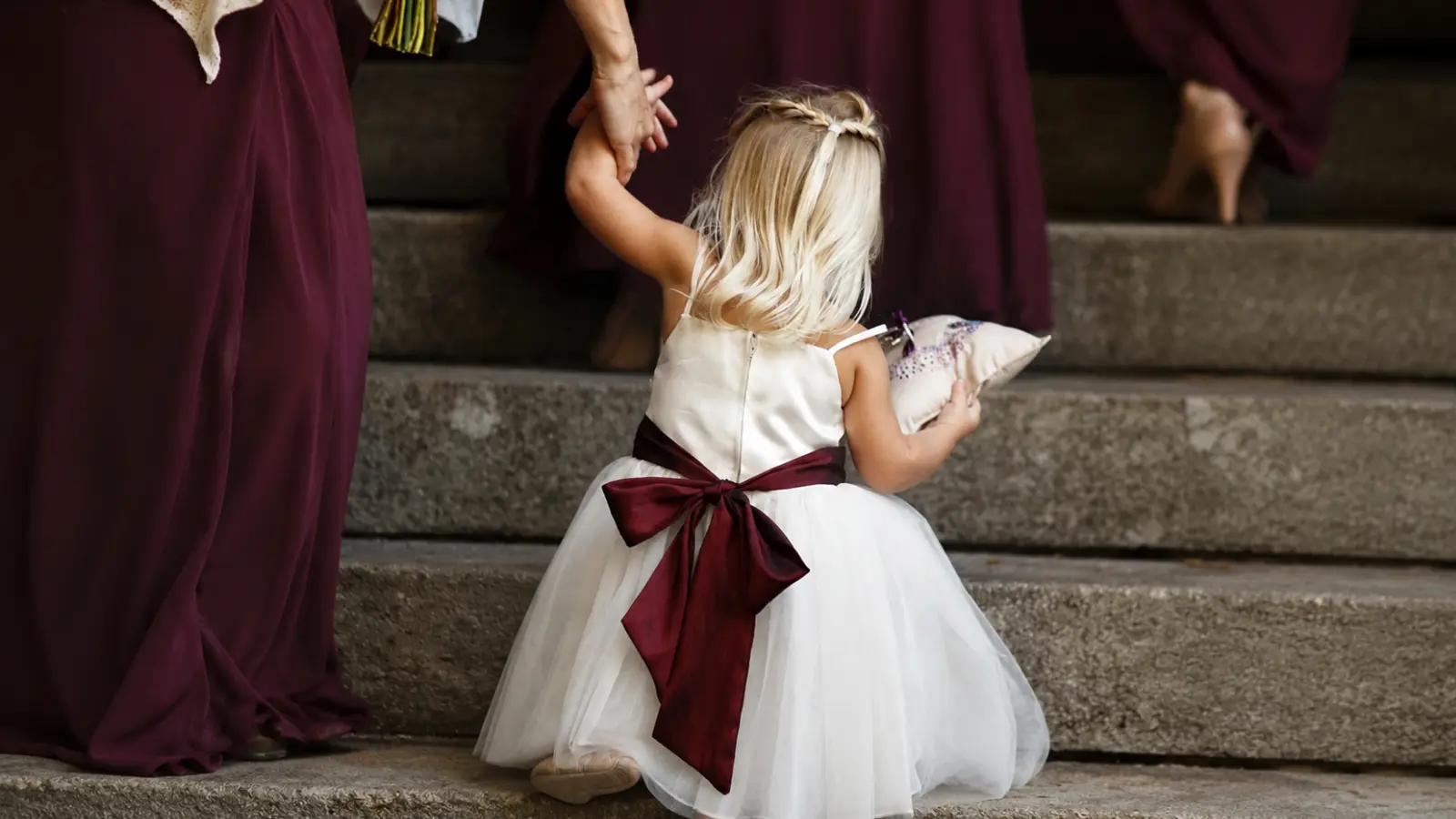
This is the section that most dress guides skip, and it’s the one that makes the most practical difference on the actual wedding day. A child who is uncomfortable in her dress is going to tell you — through fidgeting, complaining, or simply taking it off. The comfort factors below are worth checking for any dress before you commit to it.
- Soft lining throughout. The lining should feel smooth and gentle against the skin — no raw seams, no scratchy interfacing, no unlined tulle touching bare legs or arms. Run your hand along the inside of the dress before purchasing.
- A non-restrictive waist. Stiff waistbands or tight sashes look polished in photos but become uncomfortable quickly for active children. A natural waist or a soft empire waist with a little give tends to work better than a structured cinched style.
- Correct length for the shoes. Measure the hem with the shoes the child will actually be wearing. A dress that grazes the floor can become a tripping hazard, and the hem may sit differently depending on the shoes the child will actually wear.
- Easy closure in the back. Buttons or a long row of hooks are charming and look wonderful, but they require time and precision to fasten and unfasten. For younger children especially, a zipper with a button detail overlay offers the look of a buttoned back with the function of a zipper — a small thing that matters enormously in a reception bathroom.
- Manageable skirt width. Very full skirts are beautiful but can make it difficult for a child to sit in a car seat, fit through a narrow bathroom door, or sit comfortably in a reception chair. A moderately full skirt photographs nearly as well and is significantly more manageable across a long day.
- Weather-appropriate fabric. A heavily layered dress at an outdoor summer wedding or a thin sleeveless dress at a November ceremony creates a comfort problem that no amount of planning can fully solve once the day arrives.
One practical test worth doing before the wedding: have the child wear the dress for at least an hour at home, including sitting, moving around, and using the bathroom. Any comfort issue that’s going to surface on the wedding day will usually reveal itself in that trial run — and there’s time to address it when you discover it three weeks out rather than thirty minutes before the ceremony.
Flower Girl Dress Mistakes to Avoid
Most dress-related problems on the wedding day come from decisions that seemed fine during the shopping process. Here are the ones worth avoiding:
- Ordering the dress too late. Children’s dresses often need alterations — hemming, waist adjustments, strap shortening — and those alterations take time. Ordering a few months before the wedding, and earlier for custom or boutique options, leaves time for shipping, fit checks, and alterations.
- Choosing a dress the child hasn’t tried on. Sizing is highly inconsistent across brands in children’s formalwear. A size 6 from one brand may fit like a 4 from another. If you’re ordering online, check the brand’s specific measurements against the child’s actual measurements rather than going by her regular clothing size.
- Ignoring the shoe situation. Shoes are a separate decision from the dress, but they affect the dress choice. The hem length only makes sense in the context of the shoes being worn, and shoes that haven’t been broken in before the wedding day are a consistent source of problems. More on this in the flower girl shoes and accessories guide.
- Choosing embellishments that can become hazards. Loose beading, detachable flowers, or delicate decorations that a toddler can pull off and put in her mouth are worth reconsidering. A dress that reads as simpler but holds together through a full reception is a better choice than one with delicate details that require constant monitoring.
- Skipping the trial wear. The single most effective thing you can do to prevent a comfort problem on the wedding day is to have the child wear the dress for a real stretch of time before it. Not just try it on — actually wear it, sit in it, move around, eat a snack. Problems surface quickly when the dress is on a real child doing real things.
Flower Girl Dress Ideas & Wedding Inspiration
Discover beautiful flower girl dress ideas and wedding inspiration, from classic white and ivory dresses to blush, floral, lace, tulle, chiffon, long sleeve, modern, boho, and elegant styles. Explore flower girl looks by age, season, wedding aesthetic, color palette, and fabric, with inspiration for creating a coordinated look that feels beautiful, comfortable, and appropriate for the celebration.
Choose a Dress That Looks Beautiful and Feels Comfortable
The best flower girl dress should feel like it belongs in the wedding without asking a child to sacrifice comfort for the look. Style, color, and fabric matter, but so do movement, fit, temperature, dress length, and how the outfit will feel after several hours of wear.
Choose a dress that suits the child’s age and the setting, coordinate rather than forcing an exact match, and test the complete look before the wedding day. When comfort and aesthetics are considered together, the result is a flower girl dress that looks beautiful in the ceremony and still works long after the photos are finished.
Frequently asked questions (FAQ)
How do you choose a flower girl dress?
Choose the dress based on the child’s age and comfort as well as the wedding’s style, season, venue, and color palette. Look for a soft lining, manageable skirt, comfortable waist, and appropriate length before focusing on embellishments. The best dress should coordinate with the wedding while still allowing the child to walk, sit, eat, and move comfortably.
What fabric is best for a flower girl dress?
Soft, lined fabrics such as chiffon, soft tulle, and lightweight blends work well for most flower girls. Satin can suit formal or cooler weddings, while breathable fabrics are usually better in warm weather. Whatever fabric you choose, avoid rough seams, stiff layers, or unlined tulle touching the child’s skin.
Should the flower girl dress match the bridesmaids?
Not exactly. Coordination usually looks more intentional than putting the flower girl in a miniature version of the bridesmaid dress. Choose a complementary shade, a lighter version of the bridesmaid color, or a dress that incorporates part of the wedding palette while keeping the fabric and silhouette appropriate for the child’s age and comfort.
How long should a flower girl dress be?
Knee-length and tea-length dresses are usually the easiest for young flower girls to walk and move in. Floor-length styles can work for formal weddings, but the hem should be measured carefully with the child’s wedding shoes to reduce the risk of tripping. Younger children generally benefit most from shorter, easier-to-manage lengths.
What should a toddler flower girl wear?
Choose a soft, simple dress that allows unrestricted movement and easy diaper changes or bathroom trips. Knee-length or slightly longer skirts are easier for toddlers to walk in than floor-length styles. Avoid stiff bodices, tight waistbands, scratchy fabrics, and detachable embellishments that could become uncomfortable or unsafe.
How early should you order a flower girl dress?
Ordering a few months before the wedding usually leaves time for shipping, fit checks, and alterations. Custom or boutique dresses may require more lead time, so check the seller’s timeline before ordering. Because children can grow quickly and sizing varies between brands, use the brand’s measurements and plan a final fit check closer to the wedding.