
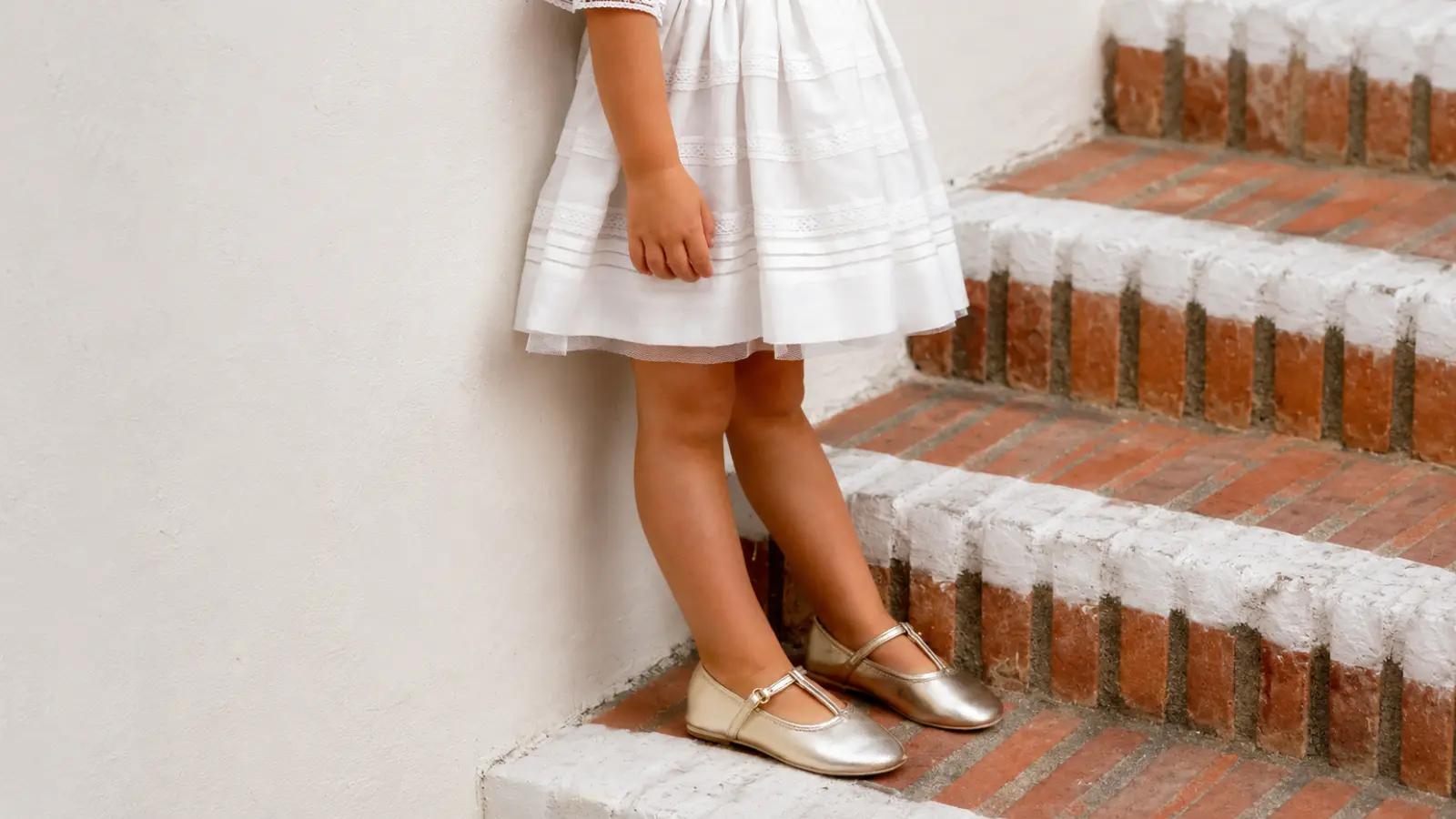
Flower girl shoes and accessories should complete the wedding look without making the child uncomfortable or giving parents another detail to manage throughout the day. Shoes that rub, jewelry that moves around, or a sash that constantly needs adjusting can quickly become more noticeable than the accessory itself.
Comfort and practicality matter just as much as appearance. The best choices fit securely, suit the venue and weather, and are familiar enough that the flower girl can walk, sit, eat, and move without thinking about what she’s wearing.
This guide explains how to choose flower girl shoes and accessories, including flats, sandals, Mary Janes, socks, tights, sashes, jewelry, cardigans, outdoor footwear, toddler-friendly options, and a comfort checklist for the wedding day.
What Shoes Should a Flower Girl Wear?
The most practical flower girl shoe is one that fits well, has a sole with good grip, and has been worn before the wedding day. That last point matters more than most people plan for: a child in new shoes walking a polished floor in front of a crowd is navigating two unfamiliar things at once. Even a single trial run at home — around the house, with the dress on — removes the shoe from the list of variables on the day.
Beyond fit and familiarity, the right shoe depends on the venue and the flower girl’s age. Hard floors call for soles with grip. Outdoor settings require a heel that won’t sink into grass or gravel. Toddlers do best in shoes they can walk in without thinking about them. Older girls have more options, but the same basic principle applies: the shoe should support the walk, not complicate it.
Flats, Sandals and Mary Janes
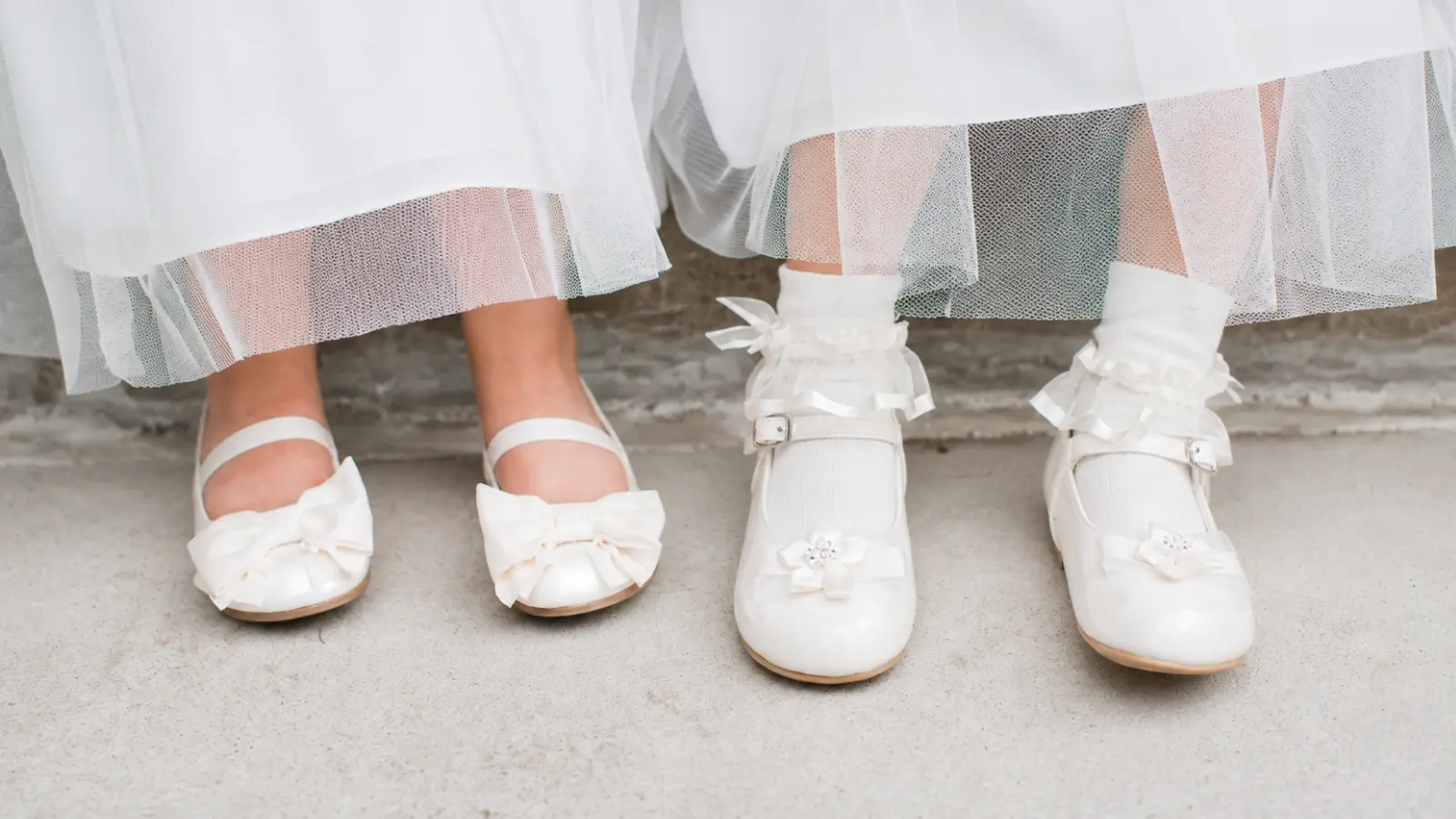
Ballet flats are the most commonly chosen flower girl shoe, and they earn that position. They’re lightweight, available in a wide range of colors and finishes, comfortable for most children after minimal break-in time, and appropriate across a broad range of wedding styles. The one consistent issue is sole grip — many dress flats for children have smooth soles that can slide on polished wood, stone, or tile. Before the wedding, check that the sole provides enough grip for the ceremony surface.
Sandals work naturally for beach, outdoor, and summer weddings. They’re cool, easy to put on, and for many children more comfortable than a closed shoe across a long day. The consideration is strap placement: a sandal that rubs at the ankle or between the toes is immediately noticeable on a child, and a blister that develops during the reception won’t wait until after the photos. Having the child wear the sandals for a full afternoon before the wedding is the most reliable way to catch any fit issues in time to address them.
Mary Janes are a classic choice for traditional and formal ceremonies. The strap across the instep keeps the shoe secure in a way that a slip-on flat doesn’t, which matters for younger children. The trade-off with leather Mary Janes is break-in time — stiff leather on the day of is its own problem. Soft leather or synthetic versions tend to require less break-in and work just as well for the role.
Should Flower Girl Shoes Be White?
White is traditional and coordinates with most flower girl dress colors, but it isn’t the only option — and for some dress colors and settings, it’s not the best one. Ivory and champagne photograph more warmly than bright white and pair more naturally with off-white, blush, or ivory dresses. Gold is a strong choice for formal weddings, particularly when the dress is in champagne or warm neutral tones. Nude and blush can also coordinate well with soft, warm-toned dresses and romantic wedding palettes.
The practical rule is that shoe color should coordinate with the dress rather than default to white. A champagne dress with stark white shoes creates a contrast that’s visible in photos in a way that champagne or ivory shoes wouldn’t. Matching isn’t necessary — but coordination is.
Shoes for Toddlers
For toddlers, the priority is a shoe the child can walk in with full confidence. Any style that requires the child to concentrate on her feet rather than the aisle ahead is the wrong shoe for this role. Simple, secure closures such as Velcro can be practical for toddlers because they are easy to fasten and adjust. Soft soles are generally more comfortable than rigid ones for children who are still developing their gait.
If the toddler already has a pair of white or ivory shoes she wears regularly and comfortably, those are often the most sensible option. They fit well, she’s used to them, and she won’t be thinking about them during the ceremony. A pair of dress shoes purchased specifically for the wedding, worn for the first time on the day, carries real risk of discomfort, blisters, or an unhappy child by the time the reception begins.
Shoes for Outdoor Weddings
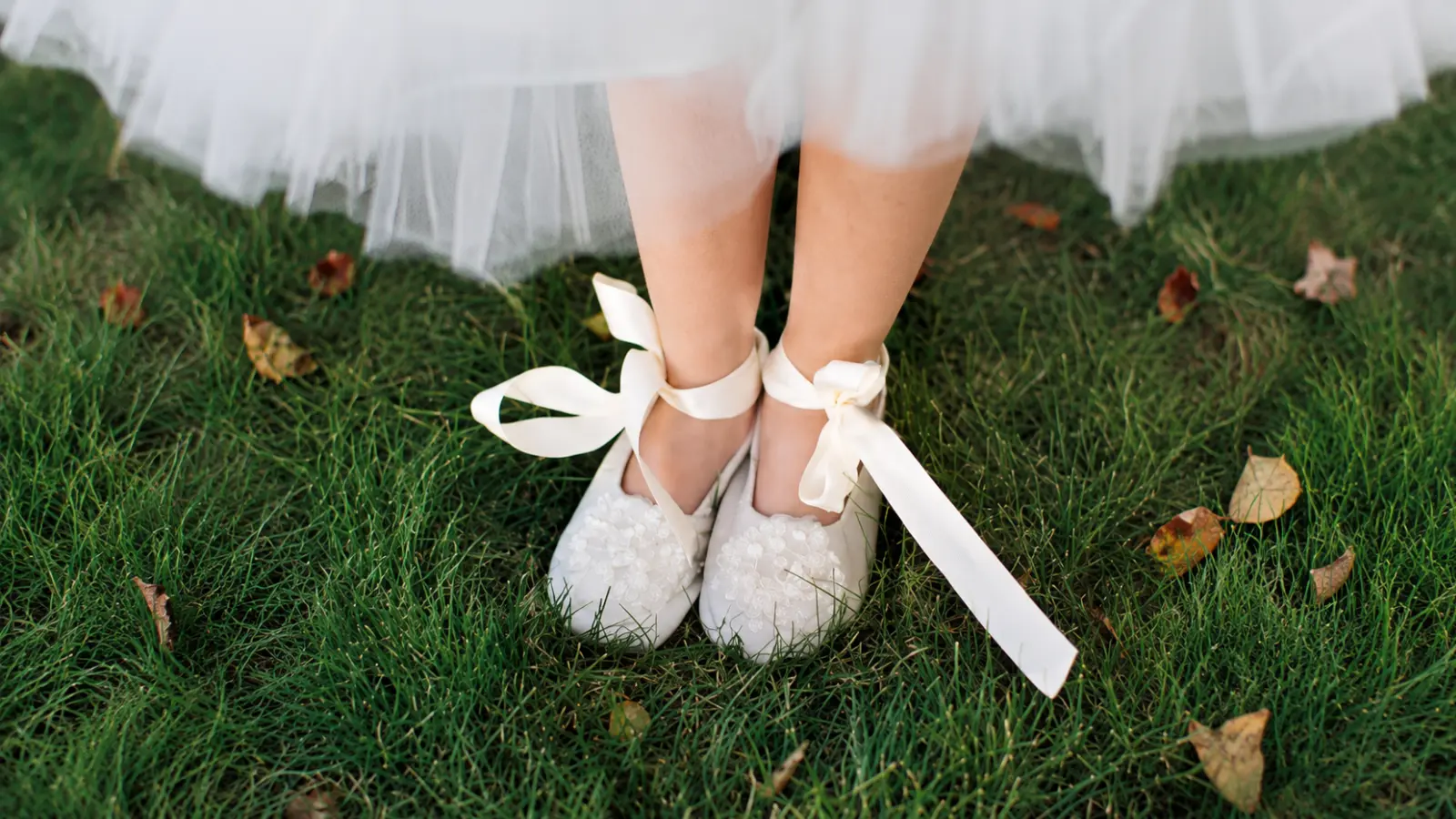
Outdoor ceremonies introduce terrain that changes the shoe calculation significantly. Grass, gravel, packed dirt, sand, and wooden decking all behave differently underfoot, and a shoe that works on a ballroom floor may become a problem outside. The two most consistent outdoor issues are heel penetration — any small heel on a young child’s shoe will sink into soft ground — and sole slippage on damp grass or wooden surfaces.
For outdoor settings, flat-soled shoes with some texture are the most dependable choice. Sandals work well on beach and garden surfaces. Ballet flats with rubber soles outperform smooth leather ones on grass. If the ceremony is on lawn, checking the ground conditions in advance is worth doing — a recent rain changes things considerably, and knowing that before the day allows for a footwear adjustment.
Socks and Tights
Lace ankle socks are a classic detail for younger flower girls and photograph nicely under tea-length and knee-length dresses. They add a small sweet element without any real effort, and for children who are self-conscious about bare legs, they provide coverage that makes the child more comfortable. The fit matters: a sock that bunches, slides down, or cuts into the ankle will need to be adjusted repeatedly and becomes its own distraction.
Tights provide more coverage and warmth for cooler weather or indoor venues with strong air conditioning, and they work well under floor-length dresses where bare skin wouldn’t be visible anyway. The consideration is fit and weight — tights that are too thick, too tight, or too warm for the setting will be uncomfortable well before the ceremony ends. For warm-weather or outdoor summer weddings, neither socks nor tights are usually needed, and skipping them entirely is the most comfortable choice.
Sashes and Bows
A sash is one of the most useful accessories for a flower girl dress because it solves a real coordination problem: it ties the dress color into the bridesmaid palette without requiring an exact color match in the dress itself. A white or ivory dress with a ribbon sash in the bridesmaid color reads as intentional and cohesive without the child looking like a miniature version of the adult attendants.
The two things that determine whether a sash works in practice are fabric and attachment. Fabric should be soft and lightweight — a sash in stiff grosgrain ribbon can rub at the waist over the course of a long day, and a large structured bow at the back may need readjustment throughout the reception. A sash sewn into the dress at the seam is more reliable than one tied on the day; tied sashes tend to come loose during dancing or active play and require someone to retie them. If the bow is tied on the day, check that it stays secured after the child sits, stands, and moves around — before the ceremony, not during it.
Flower Girl Jewelry
For older flower girls, simple jewelry can finish the look without adding much extra fuss. A thin bracelet, small stud earrings, or a delicate pearl necklace are all options that read as thoughtful details in photos without being distracting. The operative word is simple: a single piece that coordinates with the dress and requires no management during the ceremony.
For younger children and toddlers, jewelry is generally better skipped. Small pendants, dangling earrings, and bracelet charms are safety concerns for children who may pull at them or put them in their mouths. A bracelet that slides around on a small wrist will be taken off within the first hour. A necklace that feels unfamiliar becomes the only thing the child is aware of during the processional. The younger the child, the more strongly the accessories should recede into the background — or not be there at all.
If jewelry matters aesthetically, the safest version is a piece that can be put on right before the ceremony and comes off without a struggle. Avoid anything with a complicated clasp, a long chain, or a dangling element that could snag on dress fabric or hair.
Light Jackets and Cardigans
For cooler weather, outdoor fall ceremonies, or venues with significant air conditioning, a light layer over the dress is a practical addition rather than a decorative one. A soft cardigan in white, ivory, or the bridesmaid color keeps the child comfortable without requiring a wardrobe change. The consideration is whether the layer can be removed easily during the reception if the child gets warm — a cardigan with buttons or a simple front tie works better than a pullover style that requires full undressing to remove.
For older children, a short bolero or lace cover-up can add a layer of formality that works well at traditional ceremonies. For toddlers, the simpler the better: a soft knit cardigan that goes on and comes off without drama is the right call. Avoid anything structured or stiff that limits the child’s movement, and confirm that the layer won’t make her overheated if the reception moves indoors or into the sun.
What to Avoid for Young Children
Most accessory problems on the wedding day come from choices that seemed fine during planning but didn’t account for how a young child actually wears things over several hours. A few categories worth reconsidering:
- New shoes on the day. Any shoe worn for the first time at a wedding is a risk. Even a single trial afternoon at home removes blisters, fit problems, and unfamiliarity from the equation.
- Jewelry with small parts or loose clasps. Anything that can be pulled off, opened, or swallowed is a safety issue with toddlers and young children. Jewelry for flower girls works best when it’s age-appropriate and secure.
- Anything that requires readjusting. A bow that needs retying, a necklace that needs untwisting, a bracelet that slides to the elbow — these become the parent’s job throughout the ceremony and reception. If an accessory will need active management, it’s probably not worth including.
- Heels of any height. Even a small kitten heel on a young child walking an unfamiliar aisle in front of a crowd is an unnecessary risk. Flat soles are safer and more comfortable for every age in this role.
- Too many accessories at once. A sash, a bracelet, a necklace, lace socks, and a hair bow is a lot of things to coordinate on one child. Each addition multiplies the chance of something needing adjustment. Less tends to photograph better and wear better across a long day.
The test worth applying to every accessory decision: would this still seem like a good idea if the child is wearing it for six hours, sitting through a ceremony, eating dinner, and dancing? If the answer is uncertain, simplify.
Comfort Checklist Before the Wedding
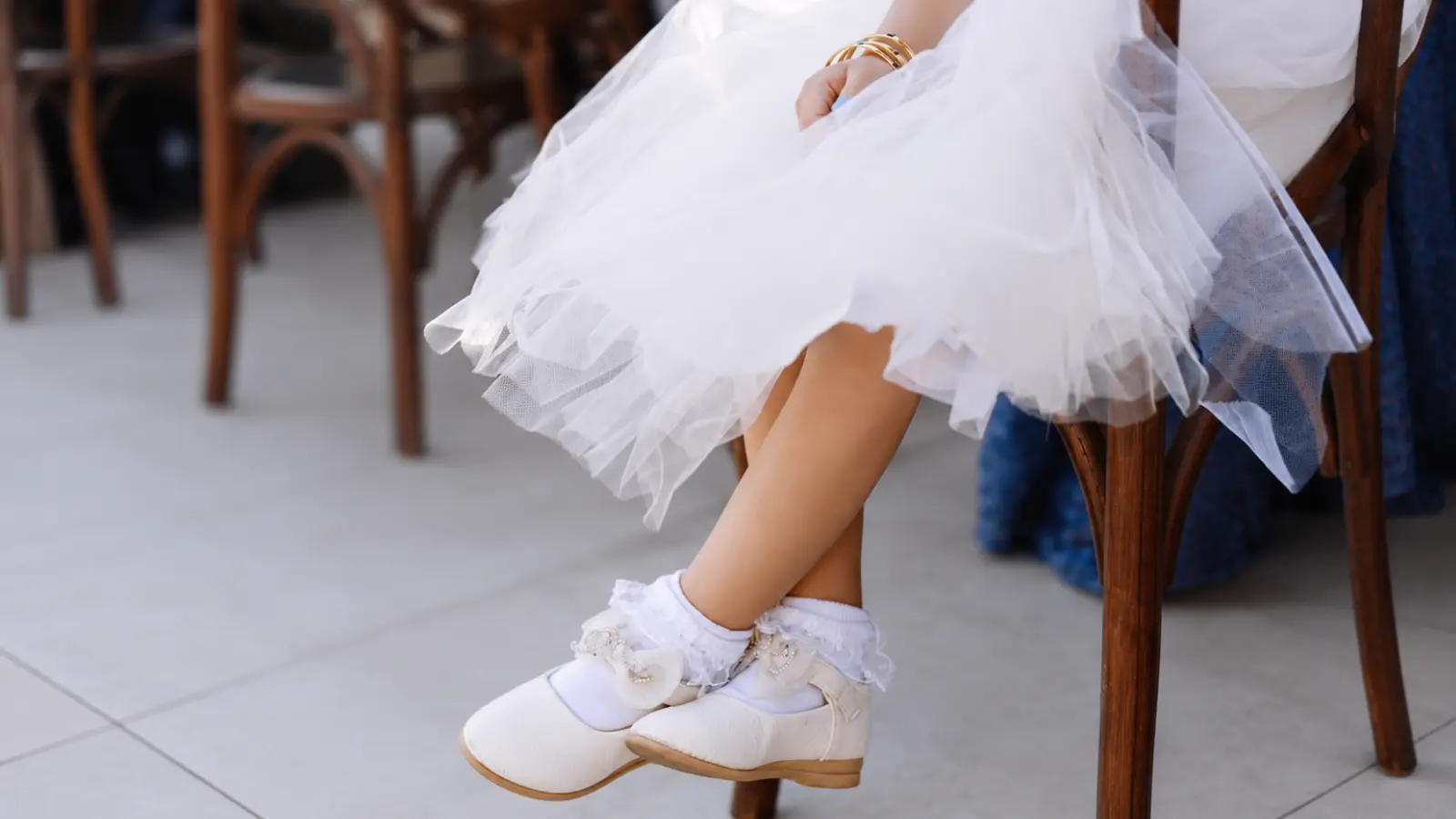
Running through this list at least a week before the wedding — not the night before — leaves time to address anything that turns out to be a problem.
- Have the shoes been worn for at least one full afternoon, ideally with the dress?
- Do the soles have grip appropriate for the ceremony floor or outdoor surface?
- Does the dress closure work easily? Can a parent unfasten it for a bathroom break without full undressing?
- Is the sash secure, and will it stay tied through sitting, standing, and movement?
- Has the child worn any jewelry being included, and does she leave it alone when it’s on?
- Are socks or tights the right weight for the venue and season?
- If a cardigan or jacket is included, can it be removed easily if she gets warm?
- Has the full outfit been worn together — not just tried on — so any comfort issue can surface with time to fix it?
Any item that prompts a “not sure” answer is worth revisiting before the wedding day. The checklist is most useful precisely because it’s done early enough to matter.
Flower Girl Shoes & Accessories Inspiration
Explore flower girl shoes and accessory ideas, from flats and sandals to sashes, socks, cardigans, and simple details for every wedding style.
Choose Accessories She Can Wear Comfortably
The best flower girl shoes and accessories should feel almost effortless once they’re on. Secure shoes, simple accessories, comfortable layers, and details that stay in place will usually work better than anything that needs constant adjusting throughout the day.
Choose each piece around the child’s age, the venue, the dress, and how long she’ll be wearing it. When comfort and fit come first, the accessories can finish the look without becoming another part of the wedding that needs managing.
Frequently asked questions (FAQ)
What shoes and accessories should a flower girl wear?
Choose comfortable shoes with a secure fit and sole with good grip, then keep accessories simple. A sash, bow, light cardigan, or minimal jewelry can complete the look depending on the child’s age and wedding style. Every item should stay comfortable and secure without needing frequent adjustment during the ceremony or reception.
What shoes should a flower girl wear?
Ballet flats work well for most weddings, while Mary Janes suit classic ceremonies and sandals are practical for beach or summer events. Whatever the style, prioritize a secure fit, good sole grip, and comfort. Have the child wear the shoes before the wedding so any rubbing, slipping, or sizing problems appear early.
Do flower girl shoes have to be white?
No. White is traditional, but ivory, champagne, gold, nude, and blush can all work depending on the dress. The shoe color should coordinate with the overall look rather than default to white. For example, ivory or champagne shoes usually pair more naturally with warm-toned or off-white dresses than bright white.
What shoes should a toddler flower girl wear?
Choose a soft, flat shoe with a secure closure and sole with good grip that the toddler can walk in confidently. Familiar shoes are often better than a brand-new formal pair. Avoid heels, stiff leather, loose slip-ons, or anything that makes the child concentrate on her feet rather than simply walking down the aisle.
Should a flower girl wear jewelry?
Older flower girls can wear simple jewelry such as small stud earrings or a lightweight bracelet if it is comfortable and secure. For toddlers and very young children, jewelry is usually better skipped because small pieces, clasps, and dangling elements can create safety or snagging concerns. The younger the child, the simpler the accessories should be.
Should a flower girl wear socks or tights?
It depends on the season, dress length, and the child’s comfort. Lace ankle socks can work well with shorter dresses, while tights add warmth for cooler weddings. Neither is usually necessary for hot-weather or beach ceremonies. Make sure anything worn underneath fits comfortably and does not bunch, slide, or feel too warm.