
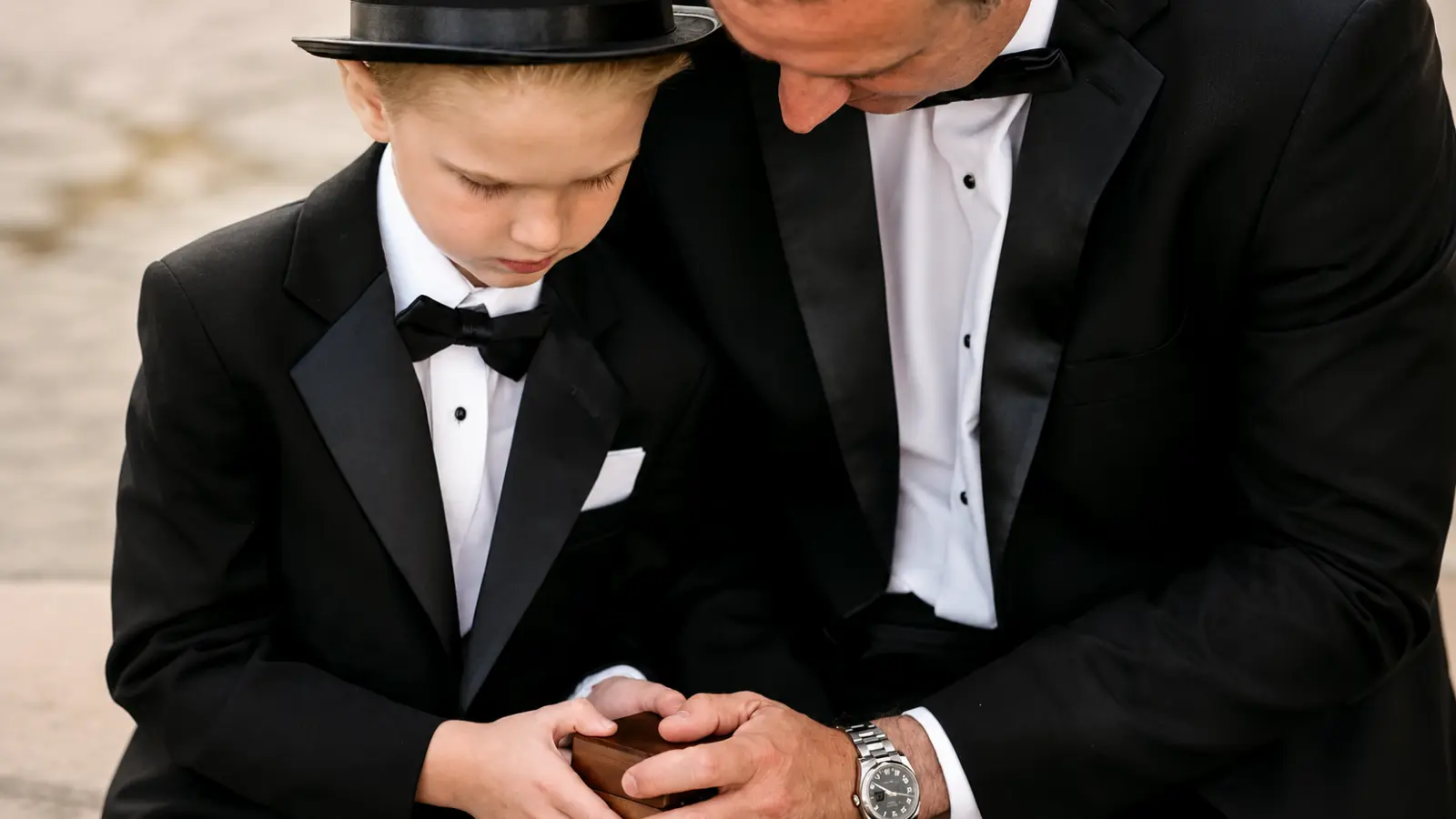
A ring bearer is one of the most recognizable members of a wedding processional, but the role involves much more than simply carrying a pillow down the aisle. Couples often have questions about what he should carry, whether the rings should be real, what age works best, what he should wear, and what happens once he reaches the front.
Although a ring bearer is never required, the role can add a memorable and personal moment to the ceremony when it matches the child’s age, personality, and comfort level. A little planning beforehand usually makes the experience easier for both the child and the couple.
This guide explains everything you need to know about the ring bearer role, including meaning, duties, age, outfits, ring pillows and boxes, real rings, processional order, ceremony etiquette, preparation tips, and common mistakes to avoid.
What Is a Ring Bearer?
A ring bearer is a child — traditionally a young boy — who walks in the wedding processional carrying the rings or a symbolic stand-in for them. He usually enters near the end of the processional and carries the rings, or a symbolic pillow or box, toward the front of the ceremony. His role is brief, ceremonial, and almost always the thing guests are quietly delighted by.
The name itself tells you the original function: he bears the rings. In historical tradition, a page boy carried the rings on a cushion as part of formal court ceremonies, and the role evolved over centuries into the modern ring bearer. What has stayed consistent is the symbolic weight of the moment — the rings being brought forward, toward the couple, before the vows are exchanged.
In practice, the role today is quite flexible. What the ring bearer carries, whether those rings are real, how he enters, and what he does afterward are all decisions the couple makes based on the child’s age, the wedding’s style, and how much complexity they want to manage on the day.
What Does a Ring Bearer Do?
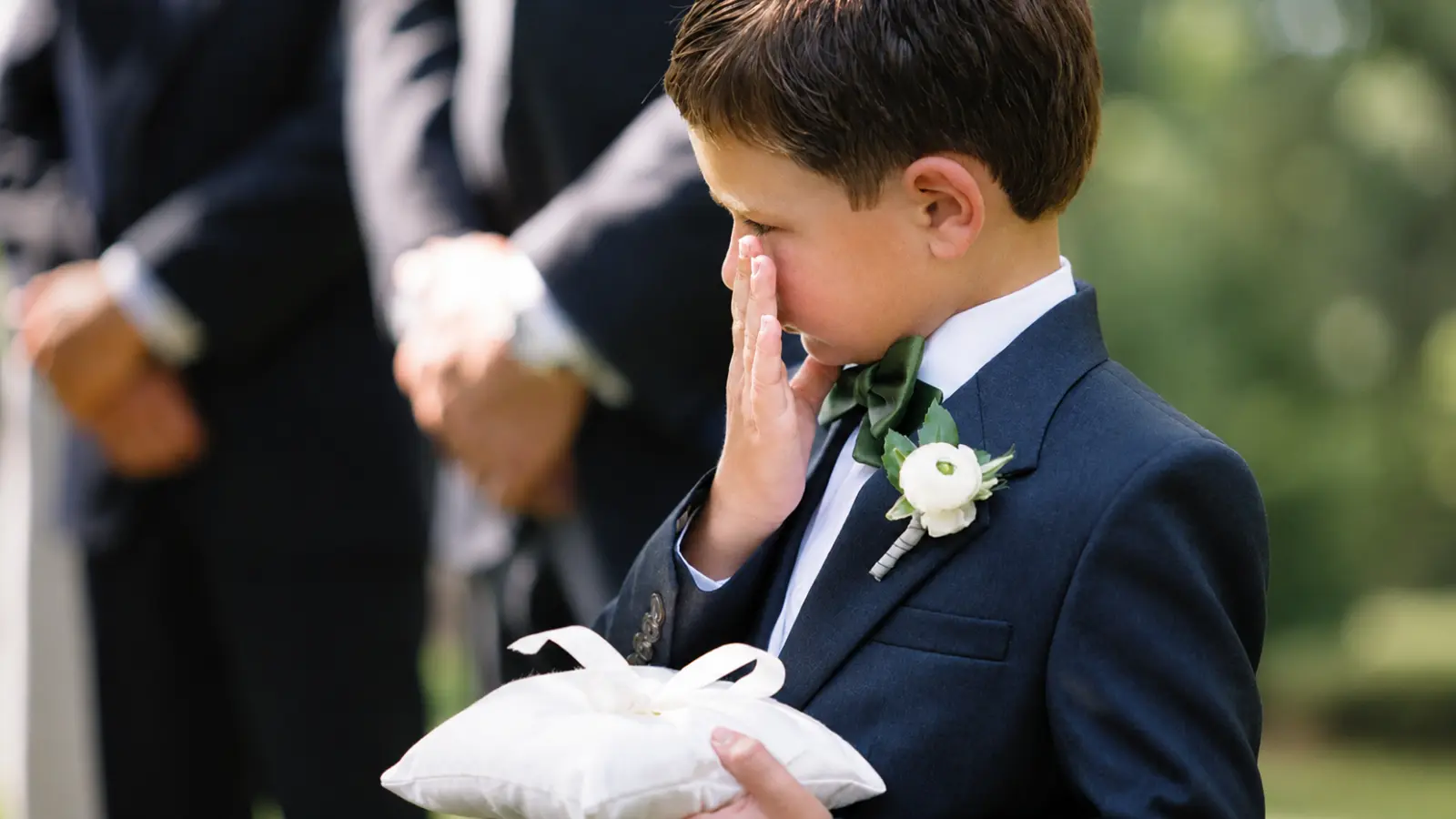
The ring bearer’s job has three parts: he waits, he walks, and he delivers. Everything before the processional is preparation; everything after is a child at a party.
Before the ceremony, he gets dressed, attends the rehearsal, and learns the one or two things he needs to know: where to stand, when to start walking, and where to go when he gets to the front. At the rehearsal, keep this simple and specific. “You walk when you hear the music change, you carry the pillow like this, and then you hand it to Grandpa at the front” is more useful than a detailed explanation of processional order.
During the ceremony, he walks down the aisle at the designated time, carries whatever he has been given, and reaches the front. He may hand the rings or pillow to the best man, the officiant, or another designated person — or he may simply hold the pillow at the altar for a moment before being guided to his seat. After that, he sits with a parent or family member for the remainder of the ceremony.
At the reception, his role is simply to enjoy being there. He is not expected to give a toast, be responsible for anything, or participate in formal reception events. He is a child at a celebration.
Is a Ring Bearer Required?
No. The ring bearer is a tradition, not a requirement, and there is no etiquette rule that says a wedding is incomplete without one. Plenty of weddings — large and small, formal and casual — skip the role entirely and feel no less ceremonious for it.
The role makes the most sense when there is a child in your life who genuinely fits it: a nephew, a younger brother, a close family friend’s son, or another boy whose presence in the ceremony would feel personal rather than performative. If no child comes to mind immediately, or if the children in your life are very young or temperamentally unpredictable in ways that concern you, there is no obligation to create the role for the sake of tradition.
If you do want a child in the processional but don’t have an obvious ring bearer candidate, the flower girl role or a combined ring bearer and flower girl walk are both options worth considering. The goal is a processional moment that feels genuine — not a checklist item completed.
Best Age for a Ring Bearer
The three-to-eight range tends to work well for most ring bearers. Children in those years are old enough to follow a simple instruction and walk independently, young enough that the role reads as genuinely sweet rather than self-conscious, and usually cooperative enough to get through the processional without major incident — most of the time.
Under three is a different situation. Toddlers and very young children can absolutely participate, but they need an adult walking alongside them. A two-year-old who walks the aisle holding a parent’s hand while carrying a pillow is a completely workable and often very charming version of the role. The expectation just needs to match the child’s actual developmental stage, not a picture-perfect vision of what ring bearers do.
Over eight, the role starts to require a different kind of calibration. Boys in the nine-to-twelve range are often self-aware enough to feel awkward about a role designed for younger children, particularly the outfit and the pillow-carrying element. A junior groomsman role may fit better at that age — it carries the same ceremonial presence without the elements that can feel childish to a preteen. More on age-specific expectations in the ring bearer age.
Who Should Be the Ring Bearer?
The ring bearer is typically a child with a meaningful connection to the couple — a nephew, a younger sibling, a godson, or a close family friend’s son. The relationship matters more than the child’s technical ability to perform the role, because the moment carries emotional weight when the guest watching him walk down the aisle knows who he is and why he’s there.
Beyond the relationship, the child’s temperament is worth thinking about honestly. A child who is comfortable in new situations, willing to follow direction, and not prone to stage fright in front of crowds is a better fit for this role than one who tends to freeze up, cry, or bolt when faced with a roomful of unfamiliar adults. This is not a judgment on the child — it is a practical assessment of what the moment requires.
If multiple children seem like natural candidates and you can only choose one, consider age and temperament over family politics. Once you have chosen the child, asking him to be your ring bearer can be a simple conversation or a small proposal with a thoughtful gift. A slightly older, more confident child will almost always produce a smoother processional moment than a younger or more anxious one. If family dynamics make choosing between children genuinely complicated, having two ring bearers is a perfectly reasonable solution.
Can You Have More Than One Ring Bearer?
Yes, and it is more common than you might expect. Two ring bearers walking side by side — brothers, cousins, close friends — tends to read as charming rather than cluttered, and it solves the problem of having to choose between children who are equally important to the couple.
Practically, two ring bearers need slightly more coordination at the rehearsal: make sure they know whether they are walking side by side or one behind the other, who carries what, and how they hand things off at the front. Two children walking the aisle together also tend to be calmer than one child walking alone, because they have each other as an anchor.
Three or more ring bearers starts to require more processional planning and aisle width consideration. It can work, especially in larger, more formal weddings, but the logistics become more complex the more children are involved.
Can a Girl Be a Ring Bearer?
Yes, without qualification. There is no rule that the ring bearer must be a boy. A girl who is too old for the flower girl role, a child whose connection to the couple makes her the obvious choice regardless of gender, or simply a girl who would find the ring bearer role more exciting than carrying a basket of petals — all of these are good reasons to include her.
The title can be adjusted to suit the situation. “Ring bearer” is entirely appropriate for a girl; “ring girl” and “ring attendant” are also in use and may feel more natural depending on the family’s preferences. What the title is matters far less than the clarity with which she understands her role and the warmth with which she is included in it.
Can an Adult Be a Ring Bearer?
Technically yes, and it does happen occasionally — a younger adult sibling, a close friend, or a beloved family member who the couple wants to include in the processional without a formal groomsman or bridesmaid role. The more common solution for adult inclusion in this function is simply asking the best man or a groomsman to carry the rings, which is the most traditional arrangement anyway.
If the intent is purely to give someone a meaningful role in the ceremony, a reading, a ceremonial task at the altar, or another form of participation may serve that purpose more naturally than asking an adult to carry a ring pillow. The ring bearer role carries a particular visual expectation, and the sweet charm of it comes almost entirely from the child-sized version of it.
What Does a Ring Bearer Wear?
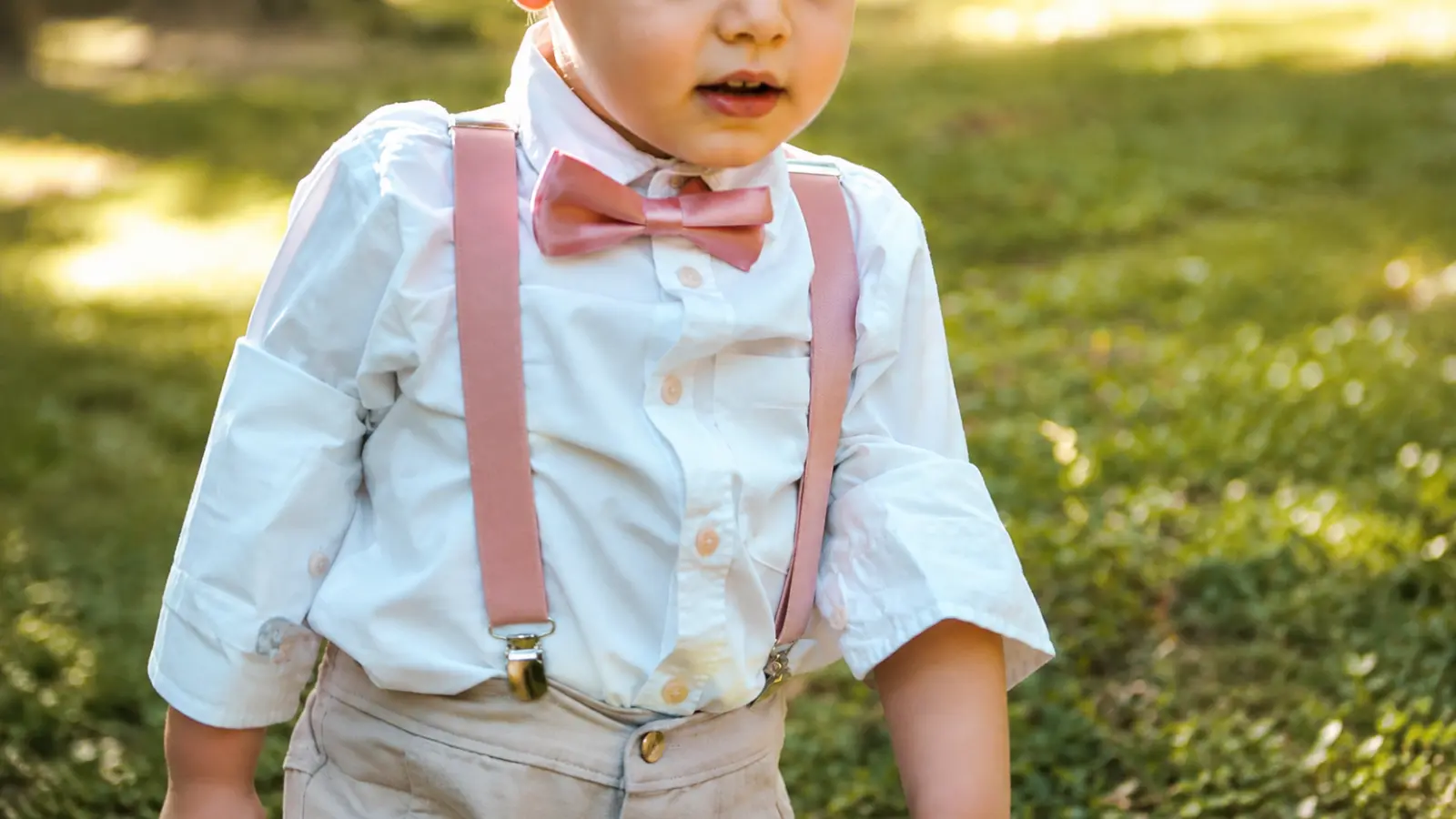
The ring bearer’s outfit should coordinate with the groom and groomsmen rather than match them exactly. A miniature version of the adult men’s suits can be charming in formal weddings, but it is not the only approach, and for many children it is not the most comfortable one either.
The coordination principle matters more than the exact match. If the groomsmen are in navy suits, the ring bearer might wear a navy suit, a navy vest with dress pants, or a lighter complementary shade — whatever reads as intentionally coordinated without requiring a child to wear something stiff or uncomfortable for several hours. Formal suspenders, bow ties, and simple dress shoes tend to look more natural and age-appropriate on young boys than an exact replica of an adult wedding suit.
Comfort is not a secondary consideration. A child in an outfit he cannot move in, shoes that hurt, or a collar that is too tight will spend the entire processional communicating his discomfort through his body language and expression — and that discomfort will show in photos. Have him wear the full outfit, including shoes, for at least a short stretch before the wedding day so any fit or comfort issue surfaces in advance. The ring bearer outfit covers this in full, including what to look for by wedding formality and season.
What Does a Ring Bearer Carry?
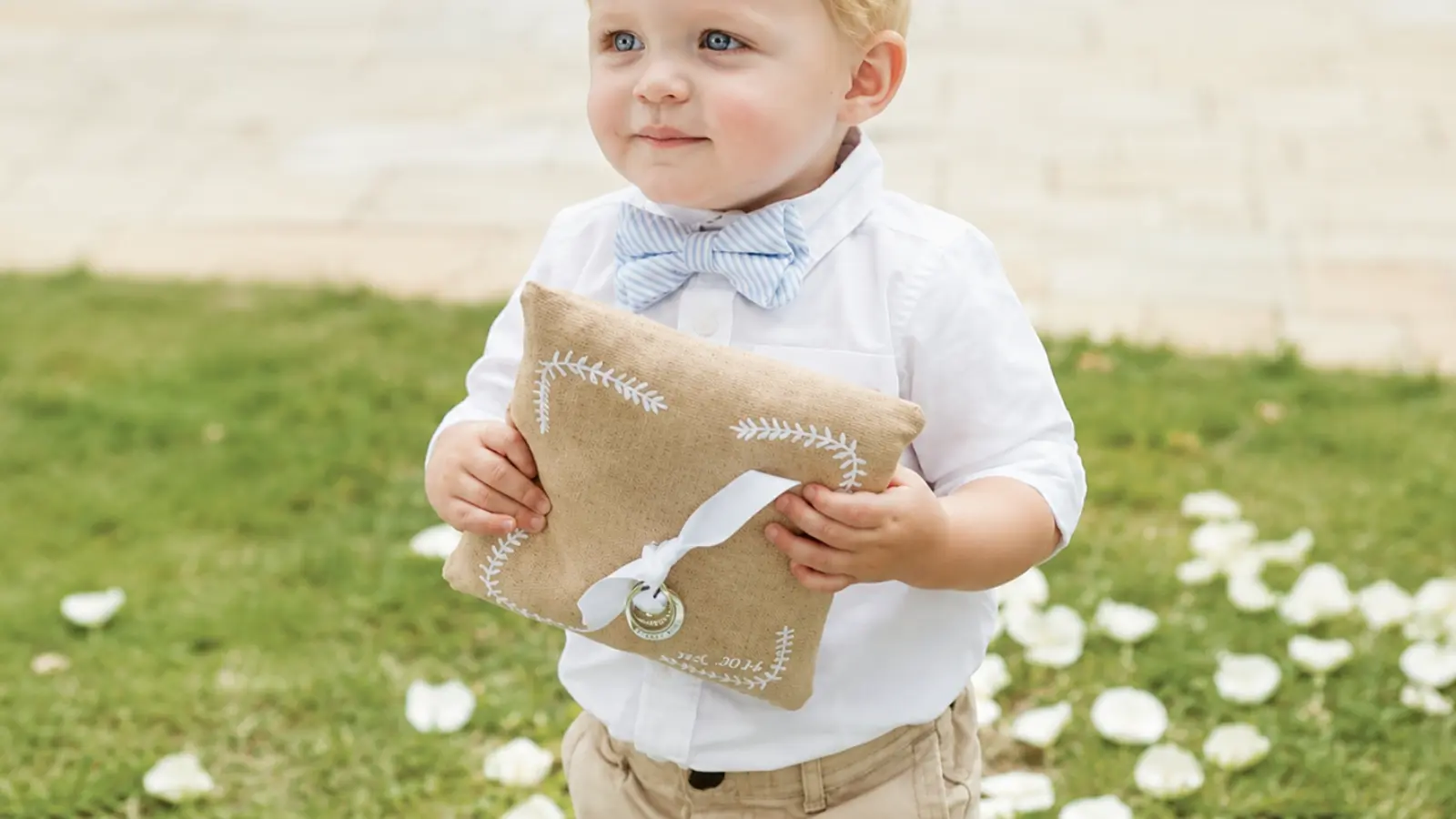
The most traditional option is a ring pillow — a small, decorative cushion with the rings (or ring replicas) tied or placed on top. Ring pillows come in everything from simple white satin to elaborate embroidered or personalized designs, and the style should coordinate with the wedding’s overall aesthetic rather than stand out on its own.
Alternatives to the traditional pillow have become increasingly common and work well depending on the wedding’s style and the child’s age. A small wooden or acrylic box, a lantern, a shadow box, a decorative tray, or even a small wagon pulled by a very young child are all options couples have used successfully. For very young children, a lightweight, easy-to-hold option is almost always preferable to a traditional pillow, which requires some coordination to carry level while walking.
Whatever he carries, the item should be sized appropriately for the child — not so large that he is awkward with it, not so small that it looks like an afterthought. And it should be something he has practiced carrying during the rehearsal, so the walk itself does not involve any surprises. More detail on pillow and box options is in the ring bearer pillow and box.
Does the Ring Bearer Carry the Real Rings?
This is one of the most frequently asked questions about the role, and the honest answer is: it depends on the child’s age, and for most young children, the answer should be no.
For young children, replica or decorative rings are often the simpler and lower-risk choice. Real wedding rings are small, easy to drop, and genuinely difficult to retrieve from a church aisle or outdoor venue in the middle of a ceremony. The risk is real, and it is not worth taking simply for the sake of authenticity in a moment the guests cannot verify either way.
For an older, reliable child who has practiced the walk, carrying the real rings may be reasonable. The rings should be securely tied or fastened to the pillow rather than simply resting on top, and a designated adult should be aware of where the rings are at all times from the moment they are placed on the pillow until they are handed off at the altar.
The best man is typically responsible for the rings on the wedding day. In many ceremonies, the best man holds the real rings the entire time and the ring bearer carries the pillow with replicas. This is a completely standard arrangement and removes the single most stressful logistical variable from the ring bearer’s role.
Who Does the Ring Bearer Give the Rings To?
This depends on the ceremony’s structure, and it should be decided and rehearsed in advance — not figured out in the moment when a five-year-old is standing at the front of the aisle holding a pillow and waiting for someone to tell him what to do next.
The most common arrangements are: he hands the pillow or box to the best man when he reaches the front; he hands it directly to the officiant; or he stands at the altar briefly while the rings are taken, then is guided to his seat. All three work. What matters is that the child knows exactly what he is doing, the adult receiving the rings knows to step forward when the moment comes, and there is no confused pause while everyone figures it out.
If the ring bearer is very young, having a parent positioned near the front of the aisle — ready to receive him and take the pillow — keeps the moment clean and prevents the awkward scenario of a toddler wandering the front of the ceremony holding a ring pillow while the officiant waits.
When Does the Ring Bearer Walk Down the Aisle?
In the standard American processional order, the ring bearer walks near the end of the processional — after the bridesmaids and maid of honor, and before or alongside the flower girl. He is typically one of the last people to enter before the bride, and his walk signals to the guests that the bride’s entrance is imminent.
Whether the ring bearer walks before the flower girl, after her, or beside her is a matter of preference rather than protocol. Some couples prefer to have the ring bearer and flower girl walk together as a pair; others separate them by a beat or two so each child gets a moment of the guests’ attention. Either arrangement works — decide at the rehearsal, make sure both children know the plan, and run through it at least once with the music if possible.
The gap between the ring bearer reaching the front and the bride beginning her entrance is typically brief — long enough for him to complete the handoff and be guided to his seat without interrupting the flow of the processional.
Does the Ring Bearer Stand or Sit During the Ceremony?
For most ceremonies, and especially with young children, sitting with a parent or family member after the processional walk is the right call. Standing at the altar for the full length of a ceremony is a significant ask for a child between three and eight. The ceremony may last thirty minutes or more, and a child who is bored, tired, or uncomfortable will eventually make that known — through fidgeting, wandering, whispering loudly, or simply sitting down on the floor at the front of the church.
The processional walk and the ring delivery are the meaningful parts of the ring bearer’s role. Everything after that is ceremonial presence, and it is presence that a young child is not reliably able to sustain. Seating him with a parent right after he has completed his walk keeps the ceremony focused, keeps the child comfortable, and eliminates one of the most common sources of distraction during the vows.
For older ring bearers — boys in the eight-to-ten range who are mature enough to stand still and pay attention — standing near the groomsmen for part or all of the ceremony is workable and often something they will want to do. The decision should be based on the specific child, not on a general expectation of what ring bearers do.
Does the Ring Bearer Match the Groom or Groomsmen?
The ring bearer typically coordinates with the groom and groomsmen rather than matching them exactly. The distinction matters because an exact match in fabric, cut, and style can look forced on a child’s body — a miniature adult tuxedo on a five-year-old often reads as costume rather than coordinated. A complementary look in the same color family, using silhouettes and fabrics appropriate for a child’s age and proportions, photographs more naturally and tends to be significantly more comfortable to wear.
In practice, coordination usually means matching the color and formality level of the men’s attire without replicating the exact garment. If the groom and groomsmen are in charcoal suits with white shirts, the ring bearer in a charcoal vest, white button-down, and dress pants reads as clearly coordinated without needing to be dressed in an identical suit. Accessories — a matching bow tie, a pocket square in the same color as the groomsmen’s, or similar shoes — reinforce the connection between his look and the rest of the men’s party without requiring the full outfit to match.
Does the Ring Bearer Need a Boutonniere?
A boutonniere for the ring bearer is optional, and if you include one, it should be proportionate to a child’s size — smaller and simpler than what the adult men in the wedding party are wearing. A full-sized boutonniere on a four-year-old can overwhelm a small frame and look visually out of place next to the rest of the child’s outfit.
If the ring bearer is old enough and the wedding is formal enough that a boutonniere makes sense, a single small bloom — a rose bud, a sprig of greenery, or a simple white flower that coordinates with the wedding’s florals — tends to look more intentional than a miniature version of the groomsmen’s larger arrangements. A boutonniere is a nice detail, not a requirement, and skipping it entirely is a perfectly acceptable choice.
How to Prepare a Young Ring Bearer
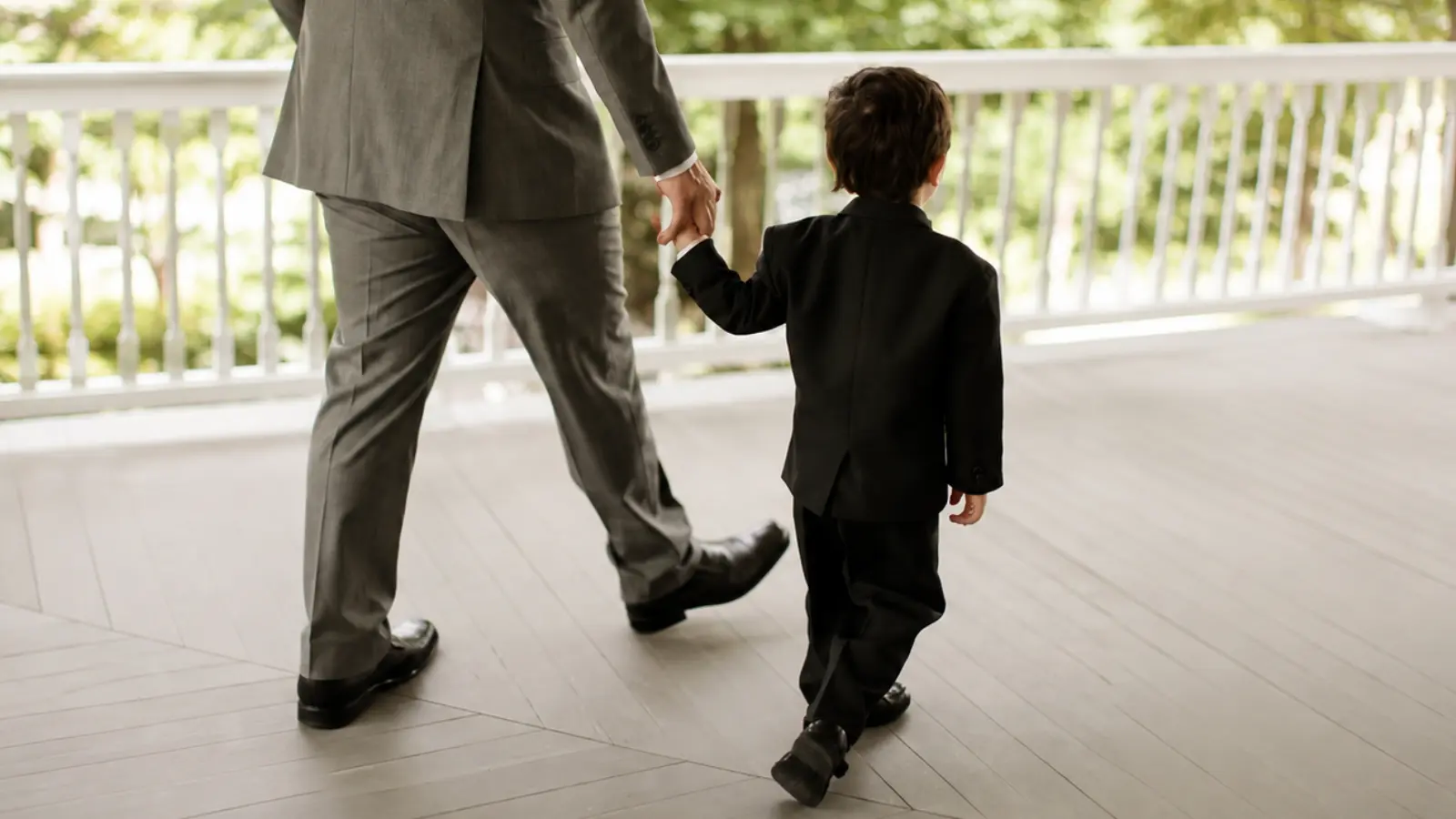
The ring bearer who has the best experience on the wedding day is almost always the one who was prepared simply and without pressure. Over-rehearsing, over-explaining, and building up the significance of the moment is one of the most common ways to make a young child more anxious rather than more confident.
The basics of preparation that actually help:
- Practice the walk before the wedding. If the venue is available for a rehearsal, walking the actual aisle can give the child a clearer picture of what to expect. “You start here, you walk toward those flowers, and Grandma is going to be right there waiting for you” is far more useful than describing it in the abstract.
- Practice with whatever he is carrying. If he is carrying a pillow, have him carry it during the rehearsal walkthrough. If there are rings on it, let him feel the weight. The walk should not involve any surprises on the day itself.
- Give him a specific person and a specific destination. “Walk toward Uncle David” is more grounding than “walk to the front.” A face he knows and a target he can see takes the uncertainty out of the moment.
- Keep the explanation short. For a child under five, one sentence is enough: “You carry this down the aisle and then you hand it to Uncle Michael.” More than that creates more questions and more things to forget.
- Have a designated rescue adult. Decide in advance who steps in quietly if the child freezes, turns around, or starts crying. This person should be positioned at the back of the aisle and ready to act without fanfare — walk out calmly, take the child’s hand, and complete the walk together as if that was always the plan.
Children who know what to expect, know where they are going, and have someone they trust nearby almost always perform better than children who have been rehearsed extensively but told to figure it out alone on the day. The preparation is for the child’s comfort, not for a flawless performance.
Ring Bearer Mistakes to Avoid
Most ring bearer problems on the wedding day are predictable, which means most of them are preventable. Here are the ones that come up most consistently:
- Letting him wear the outfit for the first time on the wedding day. Shoes that have not been broken in, a collar that is too tight, or a suit jacket he has never moved in will announce themselves within minutes of the ceremony starting. Have him wear the full outfit — including shoes — for at least a short stretch before the wedding day.
- Putting the real rings on the pillow for a toddler. The risk of dropped, lost, or forgotten rings is real. Use replicas for young children and keep the actual rings with the best man until they are needed.
- Not deciding in advance who receives the pillow. The handoff at the altar should be choreographed, not improvised. The child should know exactly who he is walking the rings to, and that person should know to step forward when the moment comes.
- Not practicing the processional in advance. A simple practice walk helps the ring bearer understand where to start, where to go, and who will meet him at the front. When possible, include him in the wedding rehearsal so the ceremony feels familiar before the wedding day.
- Setting expectations that exceed the child’s age. A three-year-old who walks the aisle and hands the pillow to someone has done his job magnificently. Expecting him to also look at the camera, smile, walk slowly, hold the pillow perfectly level, and stand still at the altar for thirty minutes is setting both of you up for disappointment.
- Not having a backup plan. Children are unpredictable. Decide in advance what happens if he freezes, cries, or refuses — and communicate that plan to his parent and your processional coordinator before the ceremony begins.
The couples who navigate the ring bearer role most gracefully are the ones who planned the details quietly and held the outcome loosely. Whatever the child does on the day tends to become the version of the story worth telling — and the memorable versions almost never involve everything going exactly as planned.
Ring Bearer Ideas & Wedding Inspiration
Looking for ideas before making your final decision? Explore ring bearer outfits, pillows, ring boxes, processional moments, and creative ways to include a child in your wedding ceremony. Save your favorite inspiration to help plan a ring bearer role that fits your wedding style.
How Do You Choose the Right Ring Bearer?
The best ring bearer is not necessarily the youngest child or the one who creates the cutest photos. The role works best when it matches the child’s personality, comfort level, and ability to enjoy the experience without unnecessary pressure.
With realistic expectations, a little rehearsal, and a simple plan for the ceremony, the ring bearer can become one of the most memorable parts of the wedding while still allowing the child to enjoy the day like everyone else.
Frequently asked questions (FAQ)
What is a ring bearer?
A ring bearer is usually a young child who walks near the end of the wedding processional carrying a ring pillow, box, or another decorative item representing the wedding rings. The role is ceremonial rather than essential and can be adapted to the child’s age, personality, and the couple’s wedding style.
Does the ring bearer carry the real rings?
Not always. Most couples give young children decorative or replica rings while the best man or another trusted adult keeps the real wedding rings until the ceremony. Older, reliable children may carry the real rings, but the decision should depend on maturity rather than tradition.
What is the best age for a ring bearer?
Most ring bearers are between three and eight years old because they can usually walk independently and follow simple directions while still fitting the traditional role naturally. Younger children often need an adult escort, while older boys may feel more comfortable as junior groomsmen.
When does the ring bearer walk down the aisle?
The ring bearer usually walks near the end of the processional, after the bridesmaids and before or alongside the flower girl. He is one of the final members of the wedding party to enter before the bride. Whatever order you choose, rehearse it beforehand so everyone knows exactly when to walk.
Can a girl be a ring bearer?
Yes. The role is not limited to boys. A girl can carry the rings if that better suits her relationship with the couple or feels more appropriate than the flower girl role. Some families also use titles such as ring girl or ring attendant, although “ring bearer” is perfectly acceptable.
Does the ring bearer stand at the altar or sit after walking?
Most young ring bearers sit with their family after reaching the front of the ceremony. Standing through the entire service can be difficult for young children and often leads to unnecessary distractions. Older children may stand with the wedding party if they are comfortable doing so and the ceremony is not excessively long.