Wedding gloves are bridal accessories worn on the hands, wrists, or arms to add elegance, texture, formality, or a specific style direction to a wedding look. They can be short, wrist-length, elbow-length, opera-length, fingerless, lace, satin, sheer, silk, or embellished depending on the dress and overall vision.
Although wedding gloves are no longer required in modern weddings, they remain one of the most transformative bridal accessories. A long satin glove can make a simple gown feel formal, sheer gloves can create a fashion-forward look, and delicate lace gloves can add softness and romance. The accessory itself is simple — what it does to a look is not.
This guide explains everything about wedding gloves, including different styles, lengths, fabrics, white vs ivory options, how to match gloves with your dress and veil, what to do during the ring exchange, when to remove them, and how to choose a pair that feels intentional.
What Are Wedding Gloves?
Wedding gloves are bridal accessories worn on the hands and wrists — or further up the arm, depending on the style — as part of a complete wedding-day look. Unlike everyday gloves worn for warmth, bridal gloves are primarily chosen for style, symbolism, and the way they complete a wedding look. They come in a range of lengths, fabrics, and finishes designed specifically to complement formal and semi-formal wedding attire.
They are not a new concept. Gloves have appeared in bridal fashion across centuries, carrying associations with formality, elegance, and occasion. What has changed is that wearing them today is entirely a matter of personal style — not expectation.
Are Wedding Gloves Still Worn?
Yes — and today they are worn more as a personal style choice than as a formal expectation. When gloves were a standard part of formal dress, wearing them was almost automatic. Today, a bride who chooses them is making a deliberate aesthetic statement. That intentionality is exactly why they photograph so well and feel so considered when done right.
They show up most often at formal and black-tie ceremonies, vintage or Old Hollywood-inspired looks, and editorial-style weddings where the overall visual is highly curated. But they are not exclusive to those settings. A simple lace wrist glove can work just as naturally at a garden ceremony as a pair of opera-length satin gloves does at a grand ballroom reception. The occasion matters less than the styling relationship between the glove, the dress, and the rest of the look.
Are Wedding Gloves Required?
No. For most modern weddings in the United States, gloves are entirely optional. They are chosen as a personal styling detail rather than because of a formal rule or expectation.
The question worth asking is not “should I wear gloves?” but “do gloves add something to the look I’m building?” If the answer is yes — if they give your gown the finishing touch it’s missing, or if they’ve been part of your vision from the beginning — they are worth exploring seriously. If they feel like something you’d be doing for the sake of appearance rather than because you genuinely want them, that’s useful information too.
Quick Reference: Glove Styles at a Glance
Wedding gloves can create very different effects depending on their length, fabric, and overall design. A dramatic opera glove, a delicate lace style, and a simple sheer glove all change the feeling of a wedding dress in different ways.
Use this quick comparison as a starting point to understand the main bridal glove styles before exploring each option in more detail.
| Glove Style | Best For | Overall Look |
|---|---|---|
| Opera Length (above elbow) | Sleeveless or strapless gowns, black-tie ceremonies | Dramatic, classic, Old Hollywood |
| Elbow Length | Off-shoulder or wide-strap gowns, formal settings | Polished, vintage-inspired, romantic |
| Wrist Length | Most necklines, garden and outdoor ceremonies | Delicate, understated, versatile |
| Fingerless / Open-Tip | Brides who want comfort and practicality | Modern, relaxed, editorial |
| Lace Gloves | Romantic, bohemian, or vintage-inspired looks | Soft, feminine, textured |
| Satin Gloves | Formal gowns, ballroom settings | Classic, structured, elegant |
| Sheer / Tulle Gloves | Layered over structured gowns or minimalist dresses | Ethereal, dreamy, fashion-forward |
| Pearl-Embellished Gloves | Romantic and ornate looks | Luxurious, bridal, sculptural |
Most Popular Wedding Glove Styles
Wedding gloves are often chosen first by the feeling they create, not only by their fabric or length. Some brides are drawn to a dramatic, formal look, while others want something soft, romantic, minimal, or modern. These are some of the most recognizable bridal glove styles and the looks they create.
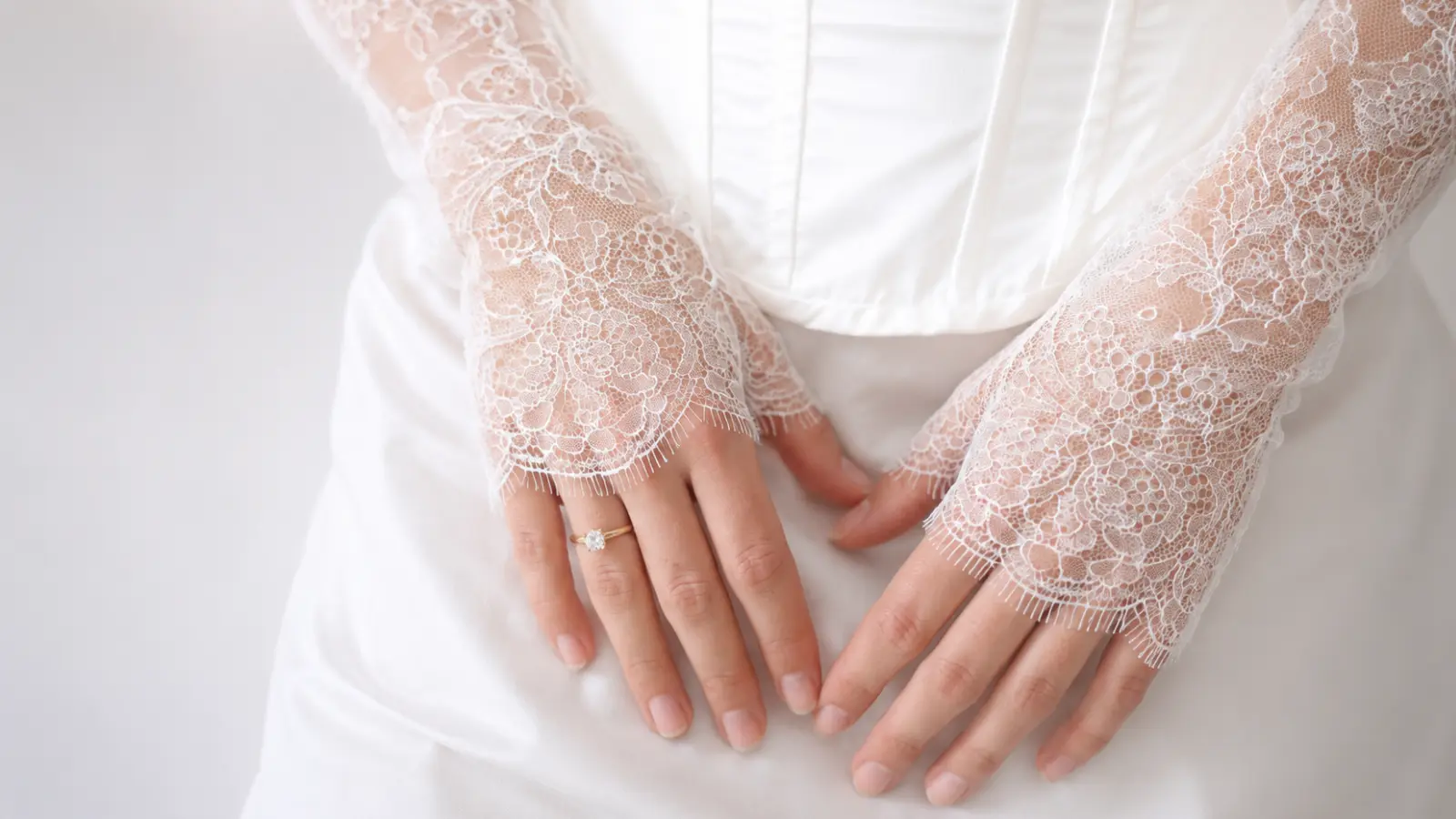
- Lace Wedding Gloves
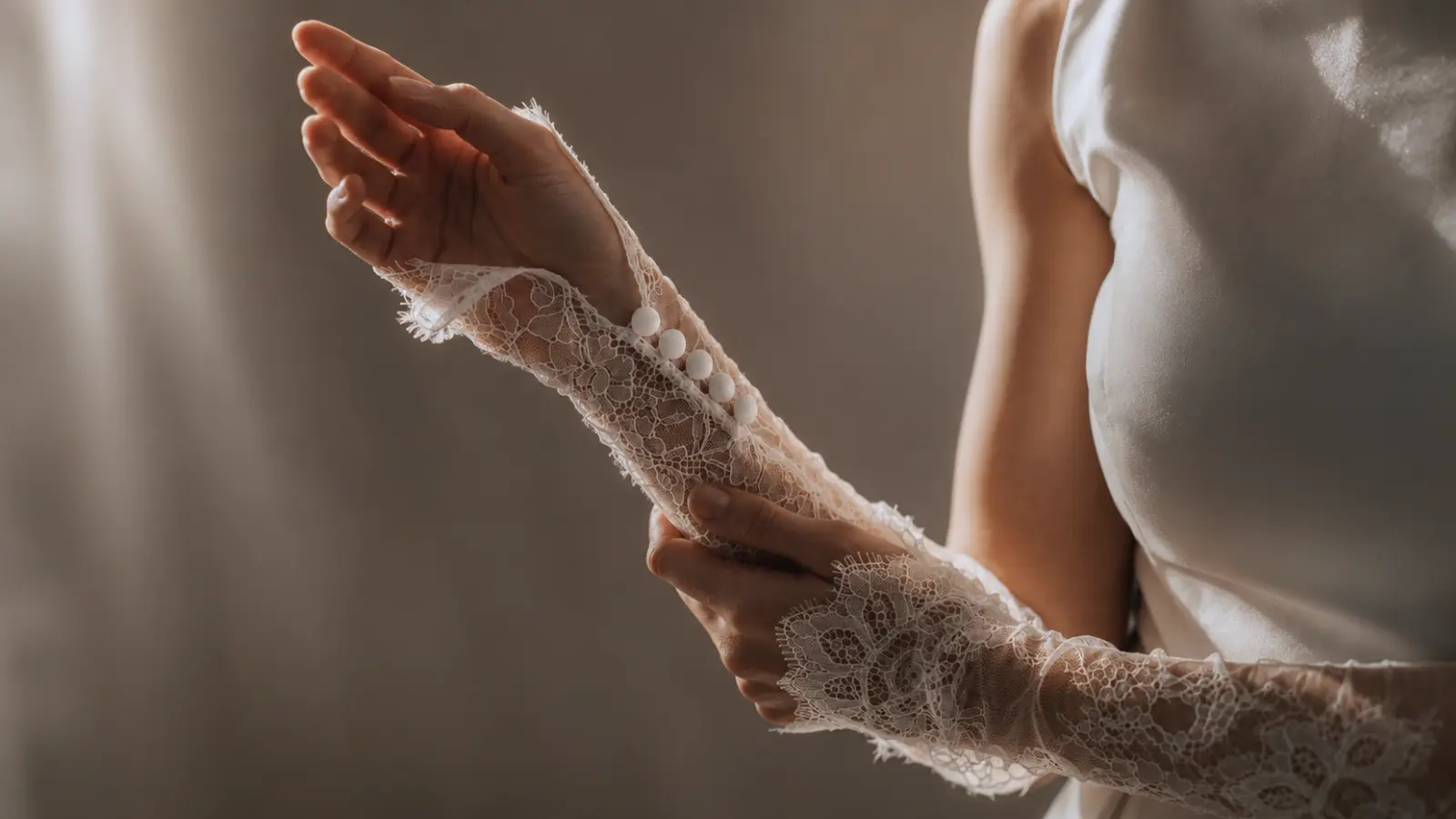
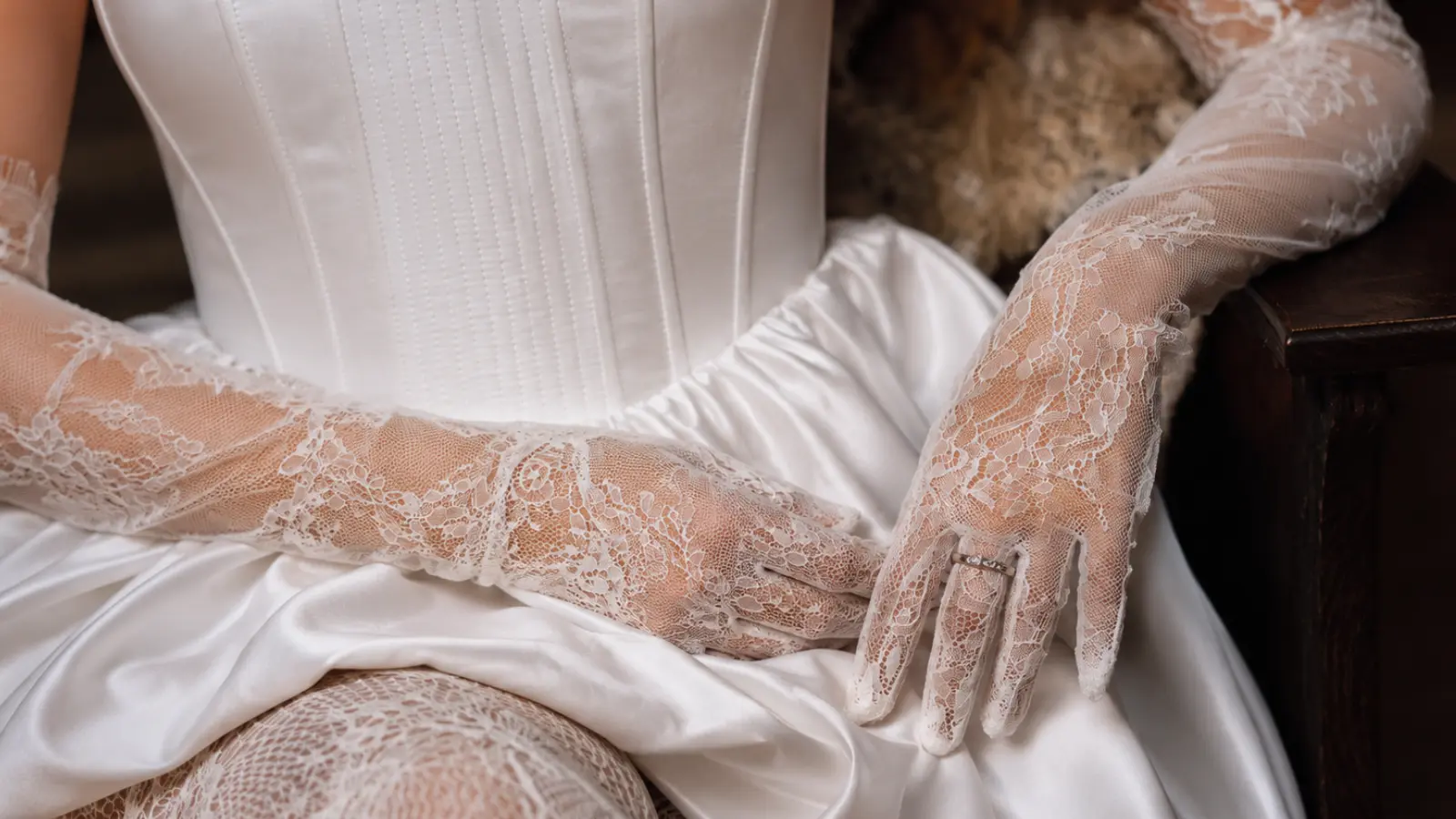
Lace wedding gloves create a romantic, vintage-inspired feeling and work especially well with softer bridal styles. They can add texture to a simple gown or continue the delicate details of a lace dress when the patterns complement each other.
- Long Wedding Gloves
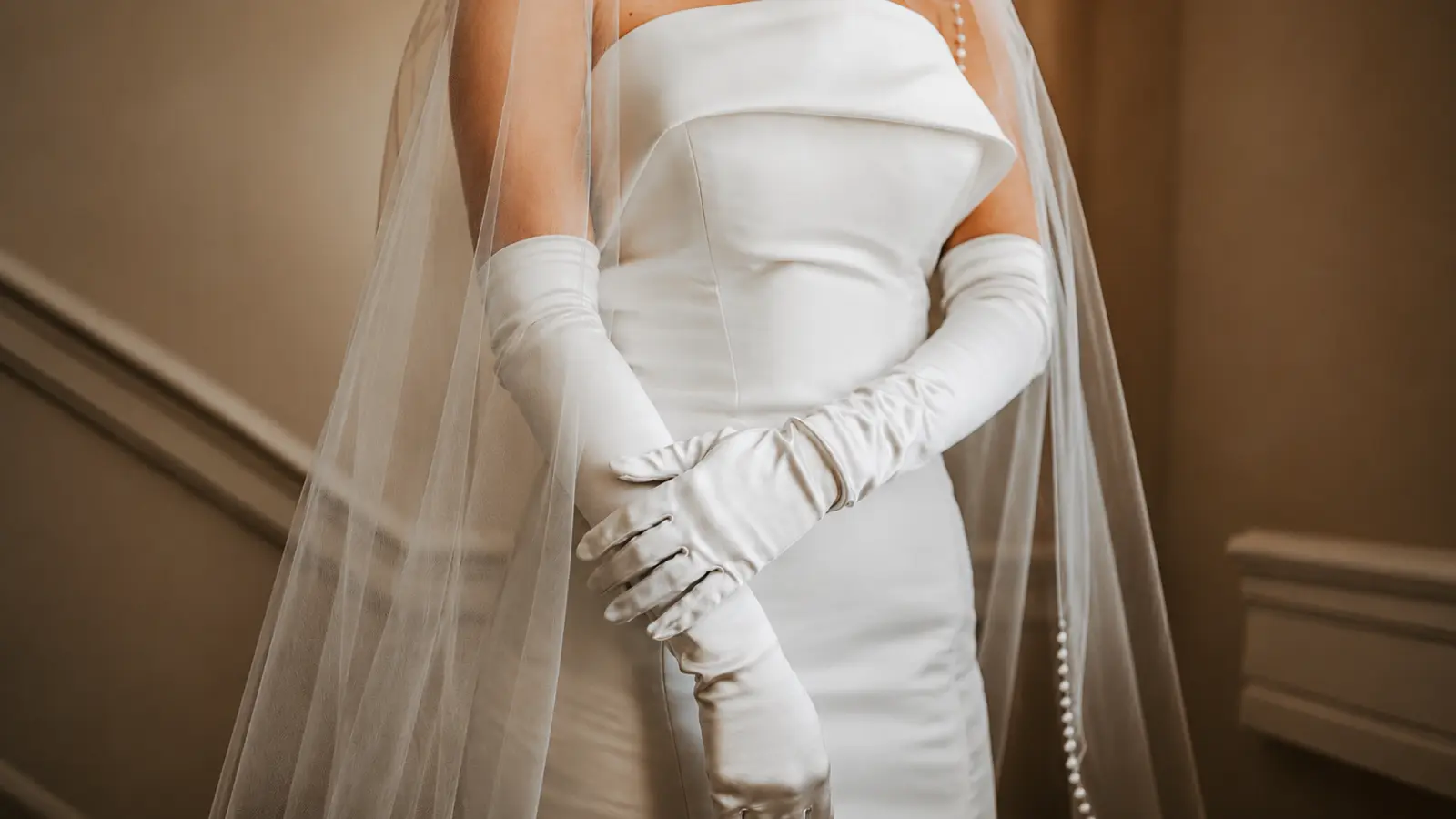
Long wedding gloves, including elbow-length and opera-length styles, create the most dramatic effect. They pair especially well with strapless, sleeveless, and minimalist gowns because the glove becomes part of the overall silhouette.
- Fingerless Wedding Gloves
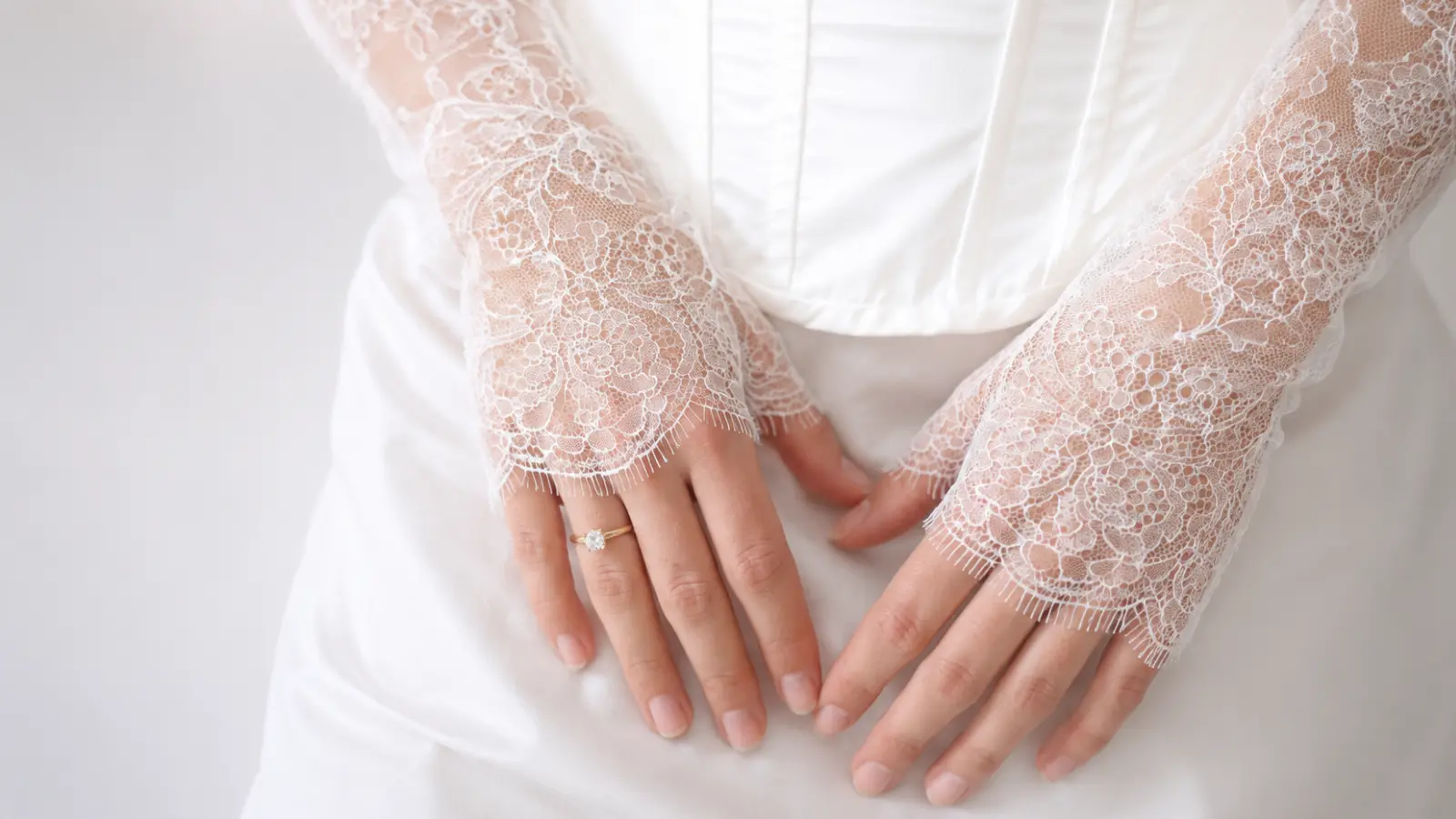
Fingerless wedding gloves give brides the look of gloves while keeping the fingers free. They are especially practical for the ring exchange and often feel more modern or fashion-forward than traditional closed-finger styles.
- Satin Wedding Gloves
Satin wedding gloves are a classic choice for formal bridal looks. Their smooth finish pairs beautifully with structured gowns and creates the polished style often associated with black-tie weddings.
- Sheer Wedding Gloves
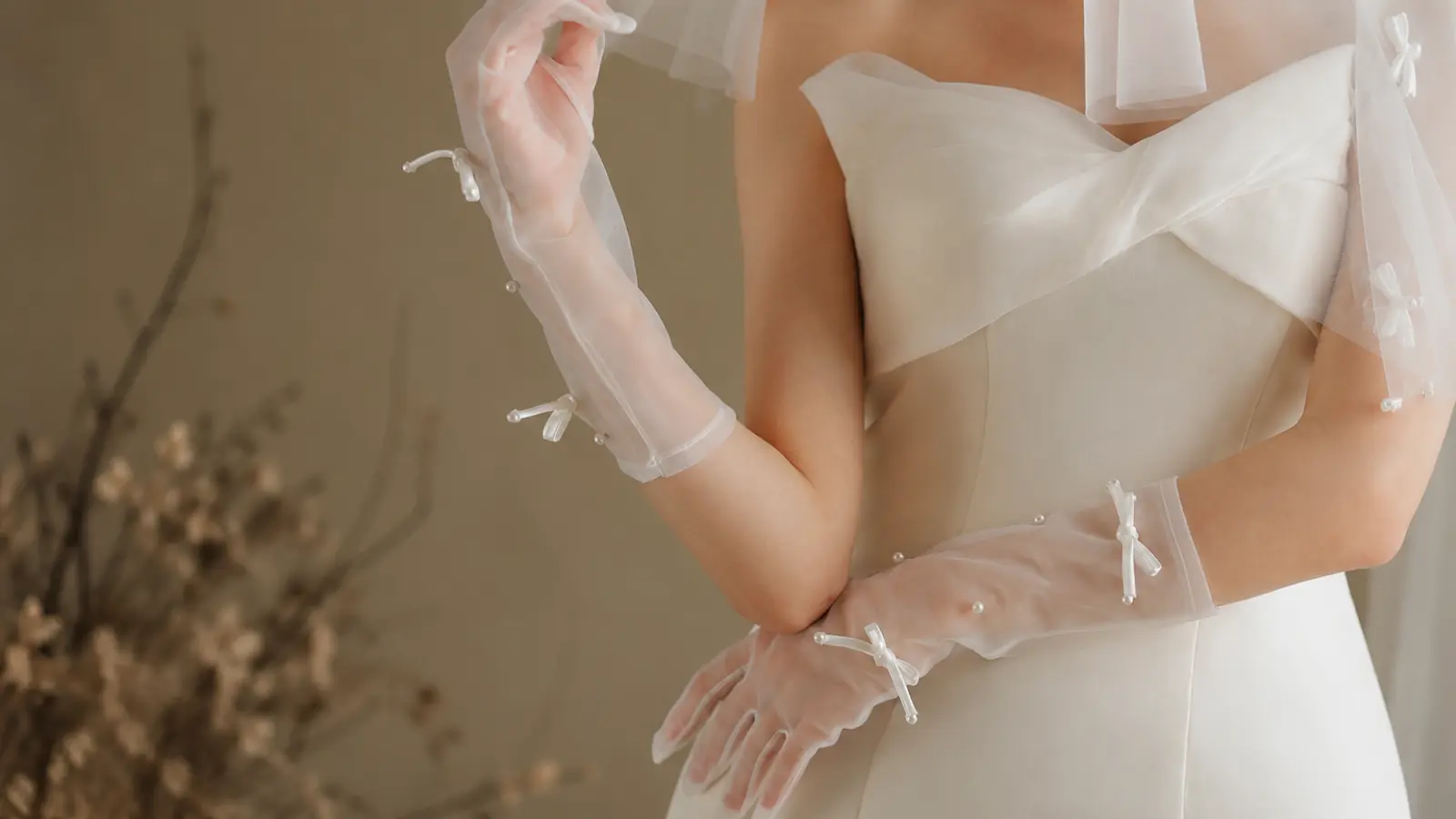
Sheer, tulle, and organza gloves add softness without covering the dress completely. They are popular for brides who want an editorial detail that still feels light and delicate.
- Pearl Wedding Gloves
Pearl wedding gloves work best as a statement accessory. They pair especially well with simpler gowns where the pearl details can stand out without competing with heavy embellishment.
Types of Wedding Gloves by Fabric
Wedding glove fabrics determine far more than how a bridal glove looks it affects how it photographs, how it feels after four hours of wear, and how it interacts with your gown’s texture. These are the most common options and what each one brings to a look.
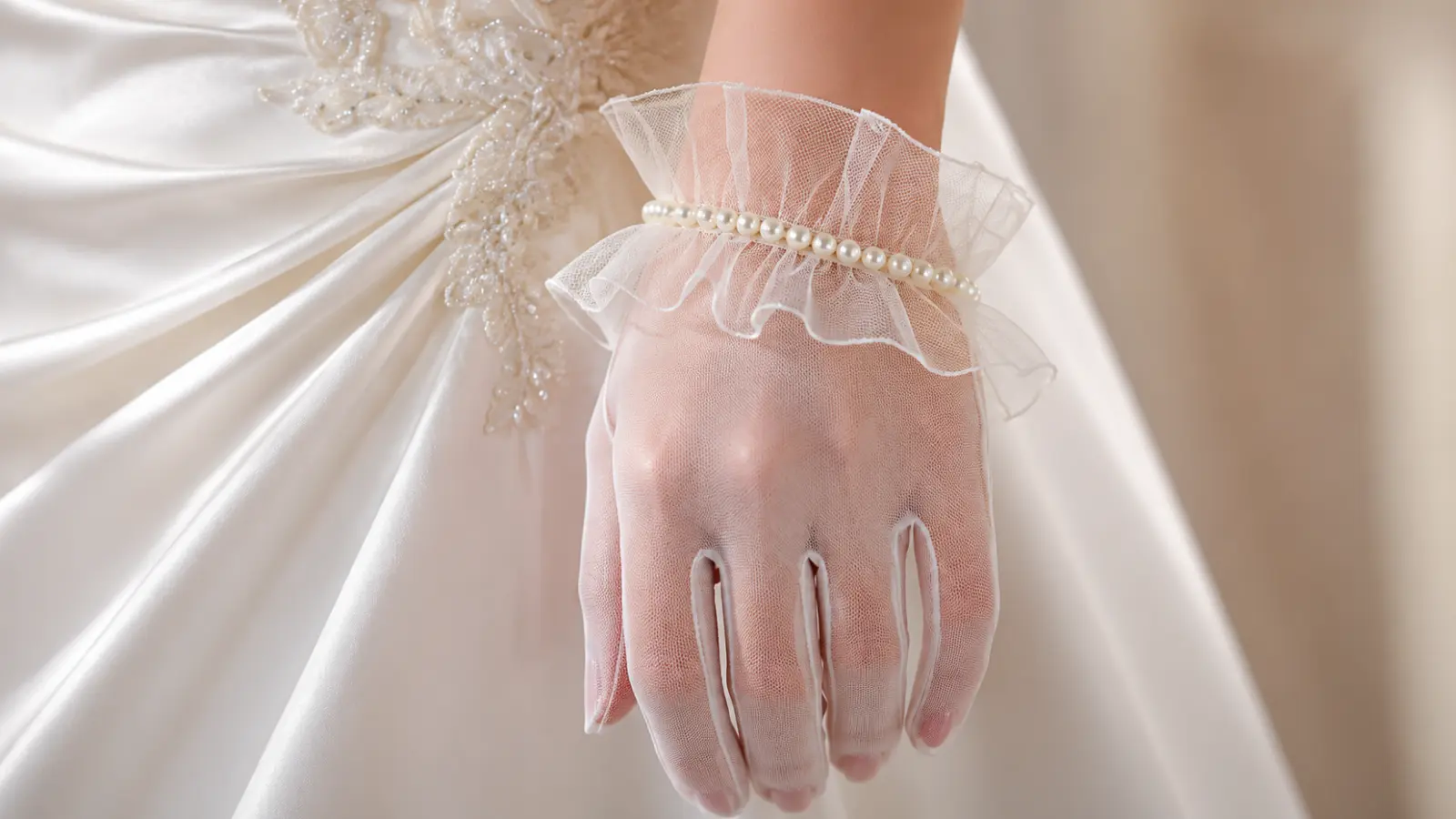
Satin
Satin remains one of the most recognized bridal glove fabrics. It photographs with a clean, polished finish, holds its shape well, and reads as formally as almost any fabric can. It works best alongside structured gowns — duchess satin, mikado, or taffeta — where the surfaces share a similar sheen. Against a matte or heavily textured gown, satin gloves can look slightly disconnected.
Lace
Lace gloves are among the most romantic choices in bridal fashion and among the trickiest to pair well. On their own, a simple lace wrist glove over bare skin has a soft, vintage quality that suits garden ceremonies, bohemian looks, and gowns with minimal embellishment. Pairing lace gloves with a heavily laced gown requires care — if the lace patterns are too different, the result looks layered in the wrong way. When the pairing is right, the result can be beautiful. But this combination benefits from seeing both pieces together before committing. See our full guide to lace wedding gloves for styling details.
Sheer and Tulle
Sheer gloves — whether made from organza, chiffon, or tulle — have the unique ability to add coverage and texture while remaining airy and light. They are particularly effective layered over a structured bodice or a dress with interesting architectural details, because they soften the outline without hiding it. They have a fashion-forward, editorial quality that suits brides who want something unexpected but not overtly costume-like.
Silk
Silk bridal gloves tend to have a softer drape than satin, with a more subdued sheen that suits warmer or more natural lighting. They feel exceptional against the skin and work especially well for outdoor or daytime ceremonies where the setting is elegant but not black-tie formal. The trade-off is that silk requires more care — it marks more easily and doesn’t hold structure as firmly as satin.
Embroidered and Pearl-Embellished
Embroidered or pearl-trimmed gloves occupy the ornate end of the spectrum. They work well on gowns that are relatively simple, because the glove becomes the focal point of the arm. Placing heavily embellished gloves alongside a beaded or embroidered bodice usually creates too much visual noise. Think of them as you would statement earrings — beautiful on their own, less effective when competing with other bold elements.
Wedding Glove Lengths Explained
Length is one of the most practical decisions in choosing bridal gloves — not just aesthetically, but in terms of what actually works with your gown’s sleeve structure. The interaction between sleeve and glove length is where most mismatches happen.
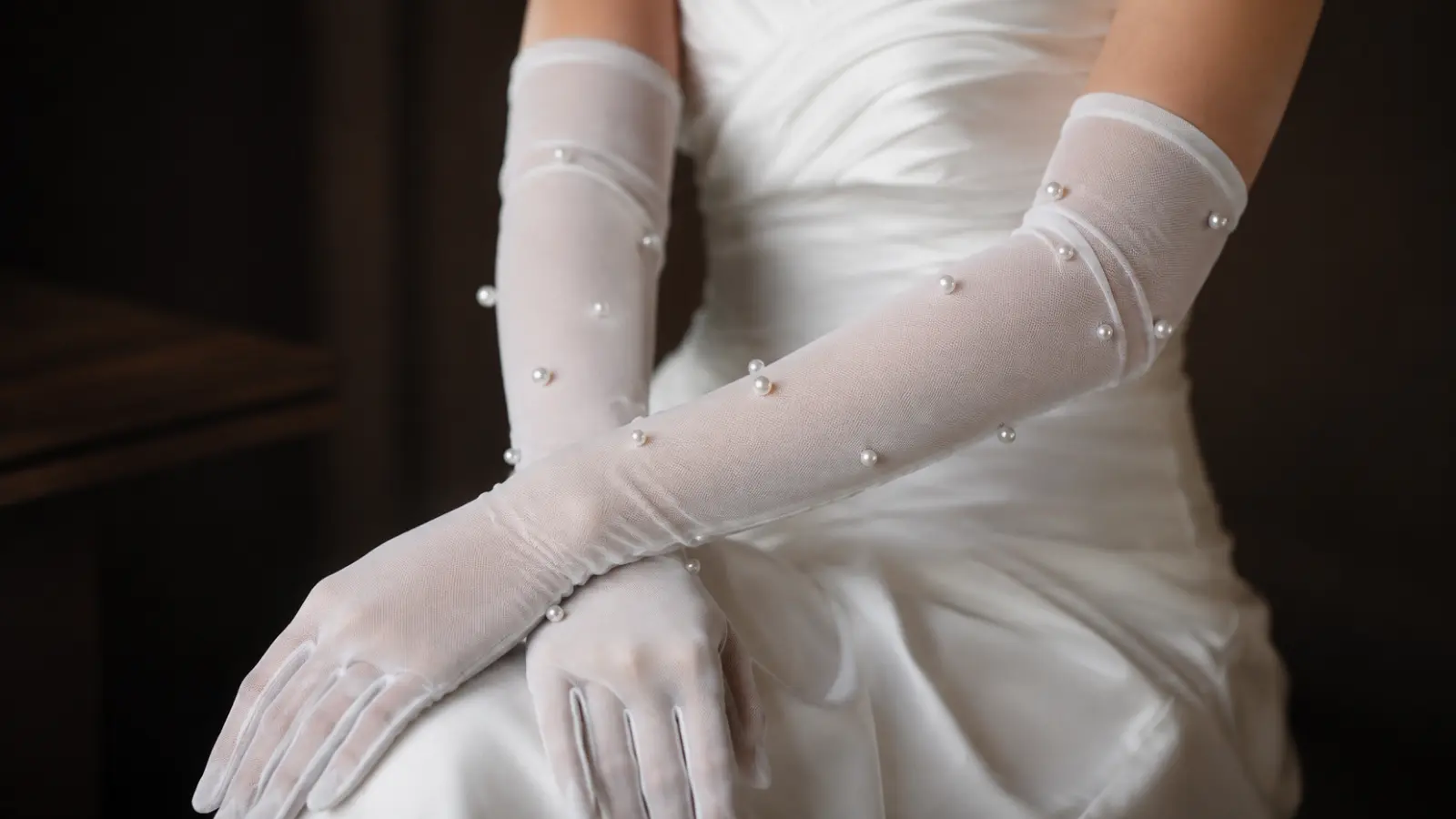
Wrist Length
Wrist-length gloves end just at or slightly above the wrist. They work across the widest range of necklines and sleeve styles and are the most forgiving choice if you are uncertain about proportion. For brides who want the visual detail of a glove without a strong commitment to formality, this length hits the right balance.
Short Gloves (Below the Wrist)
Short gloves that cover just the hand and stop before the wrist are generally the most casual option in bridal styling. They suit garden, outdoor, and non-traditional ceremonies where a delicate touch is wanted without much formality. In lace or sheer fabric, they lean romantic rather than dressed-up.
Elbow Length
Elbow-length gloves end mid-arm, between the wrist and the shoulder. They pair best with sleeveless, strapless, or off-shoulder gowns, where there is sufficient bare skin to give the glove room to read as an intentional element. On a dress with any sleeve — even a cap sleeve — elbow length tends to create an awkward bundled effect at the arm. This length photographs particularly well in detail shots and has a classic bridal quality without reaching for full drama.
Opera Length
Opera gloves extend past the elbow, often reaching the upper arm or even higher. They are the most formal and visually dramatic choice in bridal gloves. Paired with a sleeveless or strapless gown at a black-tie or cathedral wedding, they create a cohesive, sculptural line from shoulder to fingertip. See our detailed guide to long wedding gloves for styling this length.
White vs. Ivory Wedding Gloves
This is one of the most practically important decisions in the glove selection process — and one of the most frequently overlooked until photographs reveal the problem.
White is a cool, bright tone. Ivory is warmer, with yellow or cream undertones. When a white glove is placed next to an ivory gown, the difference reads clearly in photographs, especially in natural light. The glove appears brighter and slightly harsh against the softer tone of the dress. The same mismatch can happen in reverse: an ivory glove against a bright-white gown can look off-white or slightly dirty by comparison.
The practical rule is to match the warmth of your gown. If your dress is cool-toned and bright, go with white. If your gown reads as ivory, champagne, or off-white, look for gloves that carry similar warmth. When in doubt, hold the glove directly against your gown fabric in daylight before finalizing your choice — not under a bridal boutique’s flattering lighting.
There is also an intentional contrast approach that works in specific contexts: a deliberately bright-white glove against a warm gown for a graphic, fashion-editorial effect. But this requires the contrast to be unmistakable and intentional. Slight differences in tone that appear accidental almost always read as a mistake.
How to Match Gloves With Your Wedding Dress
The relationship between your gloves and your gown is the foundation of styling a wedding dress with gloves successfully is essentially a conversation between two garments. The goal is for them to feel like they belong to the same thought — not like they were styled separately and placed together at the last moment.
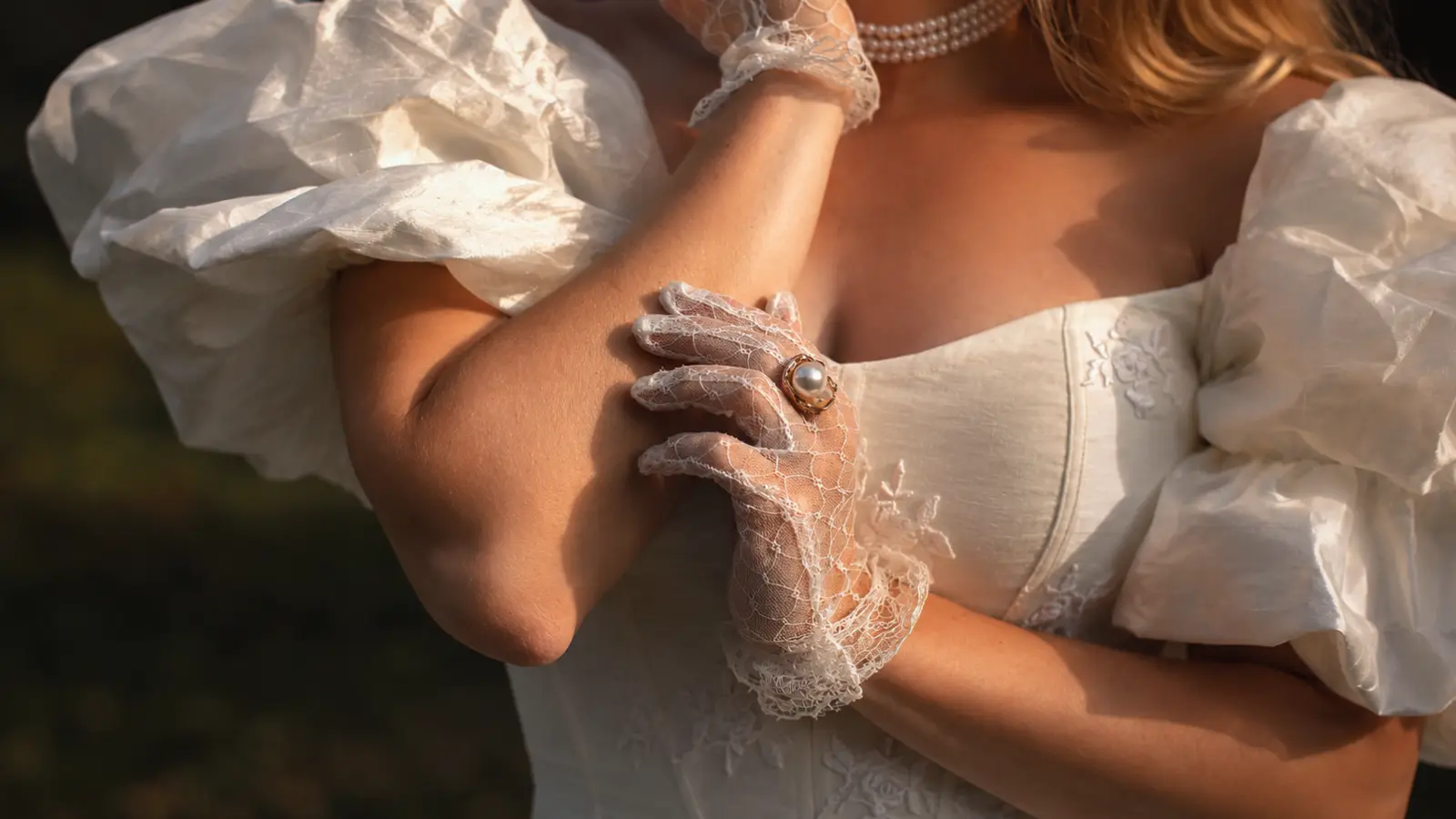
Consider the dress’s surface texture first
A gown with a matte or textured surface — crepe, mikado, or matte chiffon — tends to pair more naturally with a glove that has a similar quality. Satin gloves can look too shiny by comparison. A sheer or lace glove often bridges the gap more successfully. Conversely, a dress with noticeable sheen reads better alongside satin or silk gloves, where the surfaces share the same language.
Let the embellishment level guide you
A heavily beaded or embroidered gown usually calls for a simpler glove — the dress is already making its statement. A minimal, clean-lined gown can carry more glove detail, whether that means lace, embroidery, or pearl trim. Think of the total visual weight of the look: one element should lead, the other should follow.
Think about the neckline
Strapless and sleeveless necklines have the most flexibility because they leave the arm entirely visible, giving the glove uninterrupted length to work with. Gowns with illusion lace sleeves or long sleeves generally don’t need gloves at all — the sleeve already covers the arm and adds texture. Short or three-quarter sleeves are the trickiest pairing: a wrist-length glove that ends right where the sleeve does creates an odd doubling of fabric at the arm.
Check the look in photographs
Styling decisions that feel right in a mirror can read differently in photographs, particularly in how color tone and texture translate. Before finalizing your glove choice, take a photo in natural light with the glove held against your gown. What you see in that image is what will appear in your wedding photographs.
Wedding Gloves With a Veil
The combination of gloves and a veil is one of the more elegant moves in bridal styling — and one that requires balance. Both accessories carry visual weight. When they work together, the look feels considered and complete. When they compete, it can feel like the bride is wearing a costume rather than a wedding look.
Long veils — cathedral or chapel-length — tend to pair naturally with opera or elbow-length gloves because both accessories share a sense of scale and drama. The sweep of the veil and the length of the glove create a balanced silhouette. A short blusher or shoulder veil alongside opera gloves, on the other hand, can feel top-heavy and mismatched in proportion.
Simpler veils — a plain single-tier without trim — tend to give gloves the most room to be seen. When a veil has heavy lace edging, ribbon trim, or beaded detail, it is already doing significant decorative work. Adding embellished gloves to that combination pushes the look into overworked territory for most brides. A clean satin or sheer glove is usually the better call alongside a heavily detailed veil.
Wedding Gloves and Rings
This is the most practical concern most brides raise when considering gloves — and it has straightforward solutions.
Wearing rings over gloves
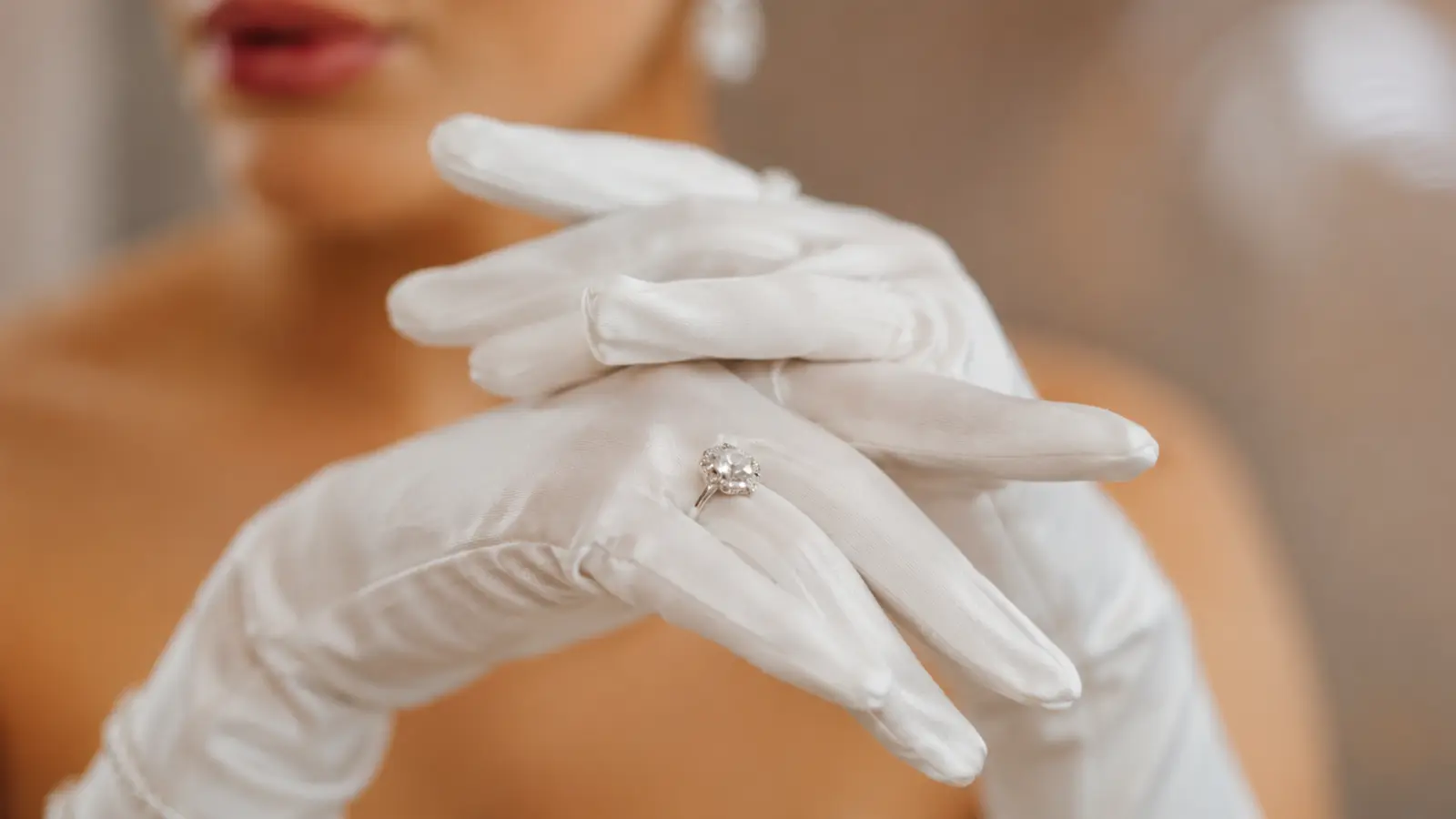
Historically, rings were worn over gloves — a practice that reads as formal but decidedly vintage. This works if the glove fabric is thin and the ring fits, but not every ring or glove combination accommodates it comfortably. Thicker satin or structured fabrics don’t compress easily under a ring, which can distort the glove at the finger and feel uncomfortable during the ceremony.
Removing the glove for the ring exchange
One of the most practical approaches is to remove the glove — or at least slide it off the ring finger — just before the ring exchange. Many brides hand their gloves to a maid of honor right before the ceremony begins, then put them back on after. Some gloves are made with a small button or snap at the ring finger seam specifically for this purpose, allowing just that finger to be freed without removing the glove entirely.
Fingerless gloves as a practical choice
Fingerless or open-tip gloves bypass the ring issue entirely. The ring sits naturally on a bare finger while the glove covers the hand and wrist. This option has grown significantly in popularity not only for the practical benefit but for the visual appeal — fingerless bridal gloves have an editorial, modern quality that suits minimalist gowns and contemporary wedding aesthetics very well.
When Should You Remove Wedding Gloves?
There is no single rule, but there are natural transition points where most brides find it makes sense to put the gloves away.
During the ring exchange: As noted above, most brides remove their gloves entirely or free the ring finger at this moment. Have a plan in place before the ceremony begins — designate a person to hold them or have a small bag tucked away in the bridal suite.
For dinner: Eating in gloves is uncomfortable and risks staining them. Most brides who wear gloves remove them before sitting down for the reception dinner. If you want to keep the look for cocktail hour and the early reception, transitioning out of gloves before dinner is a natural and practical moment.
For cake cutting and dancing: Long gloves in particular can feel restrictive during dancing. Many brides choose to wear them through portraits and cocktail hour — capturing the visual in photographs — and then remove them once the reception shifts into a more relaxed mode.
The most important thing is to plan your glove moments intentionally. Know when you want them on for photographs, and know who is holding them when they come off.
Common Wedding Glove Mistakes
Most glove missteps are avoidable. These are the ones that come up most often.
Choosing gloves before finalizing the gown
Gloves are a response to a dress, not the other way around. Selecting a pair before you have confirmed your gown’s fabric, neckline, and embellishment level makes it nearly impossible to judge whether the pairing works. Gloves should be the last major accessory decision — after the dress, the veil, and the jewelry are settled.
Too many competing details at once
Embellished gloves alongside a heavily beaded gown, dramatic earrings, and a detailed veil is too much happening at one time. Each element is beautiful individually; together, they exhaust the eye. The most cohesive bridal looks tend to have one clear statement accessory and supporting pieces that are quieter by comparison.
Wrong fabric for the gown’s texture
A smooth satin glove against a matte crepe gown, or a thick lace glove alongside a structured duchess satin — these combinations fight each other. Take the time to hold your glove against your actual gown fabric before committing to the combination.
Mismatched tone between glove and gown
As detailed above: white against ivory, or ivory against bright white. The difference that seems subtle in a store reads clearly in photographs. Always check in natural daylight.
Ignoring sleeve length in the length decision
Long gloves work when there is a clear expanse of bare arm to fill. When a dress already has a sleeve — even a short one — adding length to a glove can create visual doubling that may feel less balanced.
How to Choose Wedding Gloves: A Decision Guide
Before finalizing any bridal glove, work through these questions in order. Each answer narrows the field and brings you closer to a pairing that genuinely works for your look.
Step 1: What does your dress require?
Look at the neckline and sleeve structure. Sleeveless and strapless gowns have the most flexibility across lengths. Short or three-quarter sleeves limit length options significantly. Long-sleeved or illusion-sleeve gowns typically don’t need gloves at all. Let the dress lead this decision.
Step 2: What is the formality level of your wedding?
A black-tie ballroom ceremony can carry opera gloves with confidence. A garden ceremony or non-traditional venue may feel better served by a shorter lace or sheer style. The glove should feel proportionate to the overall occasion, not overdressed or underdressed relative to its setting.
Step 3: What tone is your gown?
Confirm whether your dress reads as cool white or warm ivory before selecting a glove color. Bring the gown (or a photograph taken in natural light) when shopping for gloves.
Step 4: What is the embellishment level of the dress?
Heavy embellishment on the gown argues for a simpler glove. A minimal, unadorned gown can carry more glove detail. One element should lead visually; the other should support.
Step 5: What role do gloves play in your portraits?
Think about the photographs you want. Detail shots of your hands holding flowers, of the ring exchange, of your bouquet — gloves appear in all of these. Consider whether their presence in those images adds to the story you want your photographs to tell.
Step 6: Are you comfortable in them?
Try wearing a pair for a sustained period before committing. Consider how they feel when you shake hands, hold a bouquet, and move through a space. Gloves that feel restrictive or uncomfortable before the ceremony begins will feel significantly more so after four hours of wear.
Wedding Gloves Inspiration Board
Wedding gloves can completely transform a bridal look, from romantic lace details to dramatic opera-length satin styles. Explore wedding glove ideas, including long gloves, fingerless designs, pearl details, white and ivory gloves, and beautiful ways to style them with your dress, veil, and rings.
The Right Gloves Should Feel Like They Belong
The best wedding gloves are not chosen because tradition says they should be worn. They are chosen because they complete the dress, the mood, and the way a bride wants to feel throughout the day.
When the length, fabric, color, and styling all work together, gloves stop feeling like an accessory added at the end. They become part of the bridal look itself — intentional, personal, and naturally connected to the overall style.
Frequently asked questions (FAQ)
Are wedding gloves still worn today?
Yes. Wedding gloves are still worn today, but they are now considered a personal bridal style choice rather than a required tradition. Many brides choose gloves for formal weddings, vintage-inspired gowns, Old Hollywood looks, or simply because they complete the overall design of the outfit. The right wedding gloves should feel intentional with your dress, venue, and personal style rather than something you wear only because of tradition.
How do you choose wedding gloves for your dress?
Choose wedding gloves by looking at your dress neckline, sleeve length, fabric, and overall level of detail. Strapless, sleeveless, and off-the-shoulder gowns often pair beautifully with longer gloves, while dresses with more coverage usually work better with shorter styles. Simple gowns can handle more detailed gloves, while heavily embellished dresses often look more balanced with cleaner, understated designs.
What length wedding gloves should a bride wear?
The best wedding glove length depends on the style and proportions of the wedding dress. Opera and elbow-length gloves usually complement strapless, sleeveless, and off-the-shoulder gowns because they create a longer, balanced silhouette. Wrist-length gloves are more versatile and work with many bridal styles. The goal is choosing a length that complements the dress rather than following a strict rule.
Do you wear wedding gloves during the ring exchange?
Most brides remove their wedding gloves or uncover the ring finger during the ring exchange so the wedding ring can be placed directly on the finger. Some bridal gloves have openings, buttons, or fingerless designs that make this easier without removing the entire glove. Planning this detail before the ceremony helps the moment feel natural and effortless.
Should wedding gloves match the dress exactly?
Wedding gloves should coordinate with your dress, but they do not always need to be an exact match. The most important detail is matching the overall color tone. Bright white dresses usually pair best with white gloves, while ivory, cream, or champagne gowns often look better with warmer-toned gloves. Checking the combination in natural light can help prevent noticeable color differences in wedding photos.
When should a bride remove wedding gloves?
Many brides remove wedding gloves for the ring exchange, dinner, and parts of the reception where comfort becomes more important. Some brides keep gloves on during the ceremony, portraits, and cocktail hour because these moments highlight the complete bridal look. There is no strict rule — the best timing depends on your glove style, comfort, and wedding day plans.