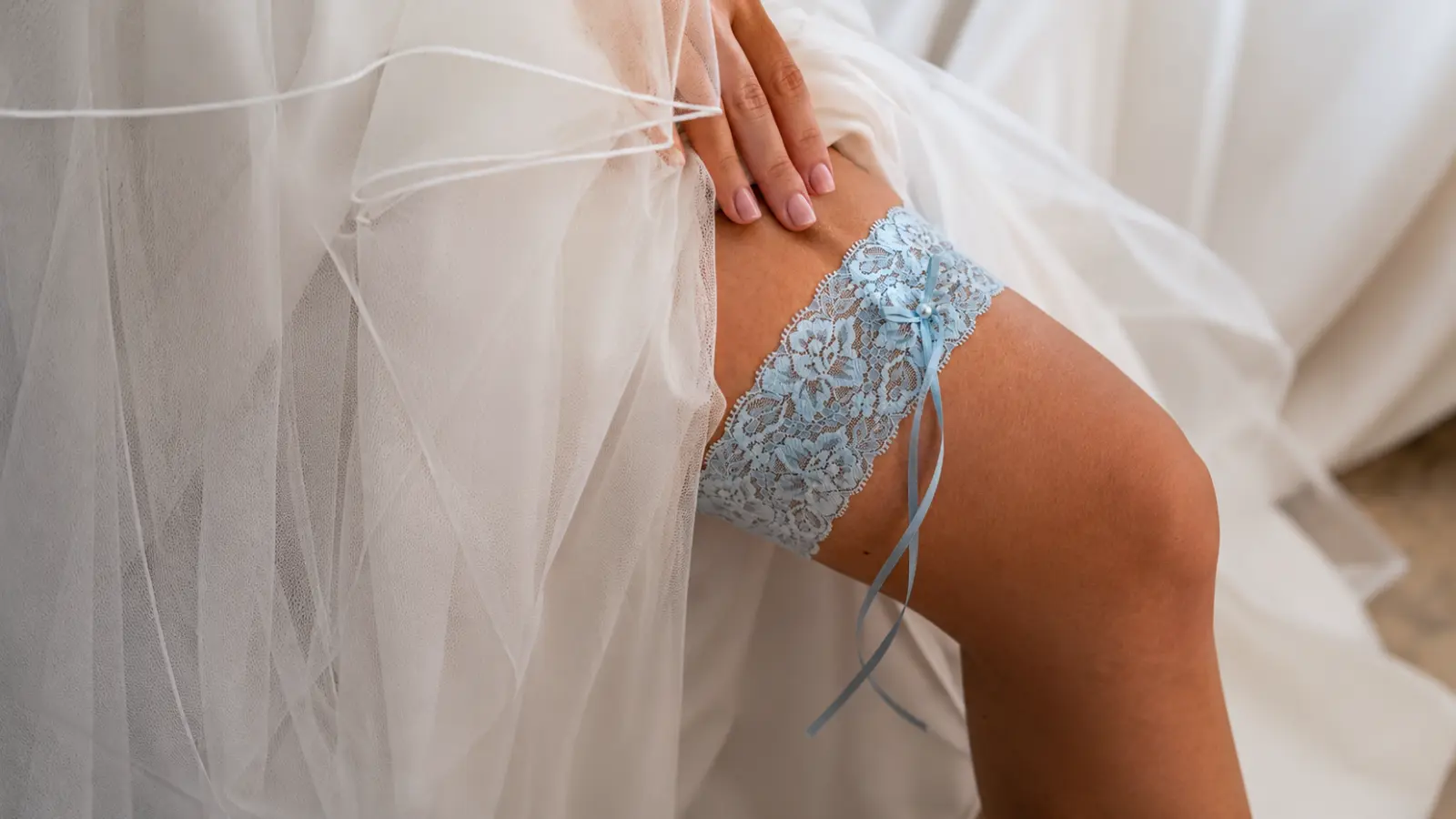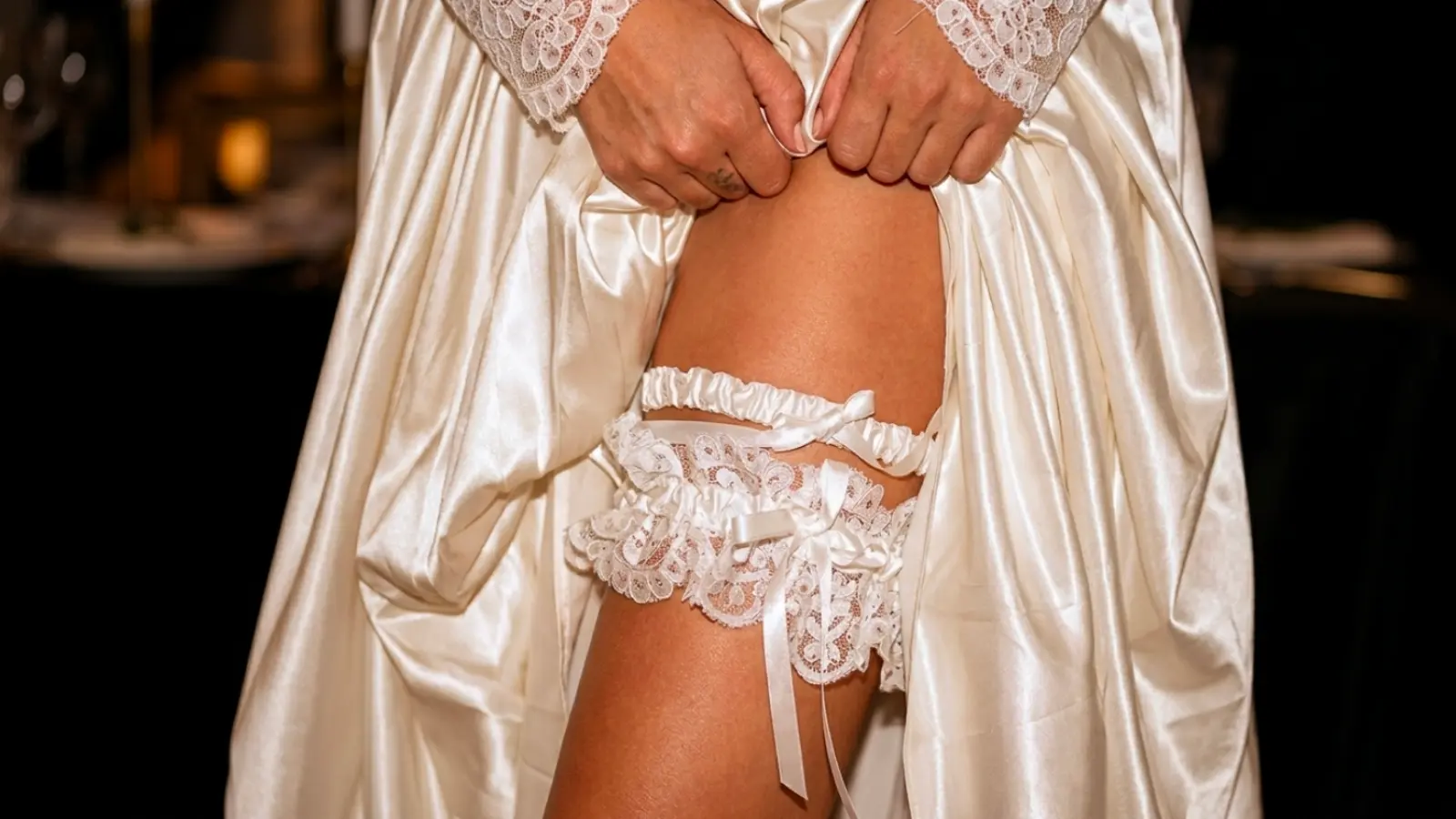

A garter toss is a wedding reception tradition where the groom removes the bride’s garter and throws it to a group of unmarried male guests. Once considered a common part of many wedding receptions, it is now an entirely optional moment that some couples enjoy while others choose to skip.
Today, the garter toss means different things to different couples. For some, it is simply a playful tradition that adds energy to the reception. For others, it feels too personal, outdated, or out of place with the atmosphere they want to create. Neither choice is more correct than the other, and modern wedding etiquette fully supports both.
This guide explains what the garter toss is, where the tradition comes from, when it usually happens, how it differs from garter removal, why opinions about it have changed, and how to decide whether it fits your wedding day.
What Is a Garter Toss?

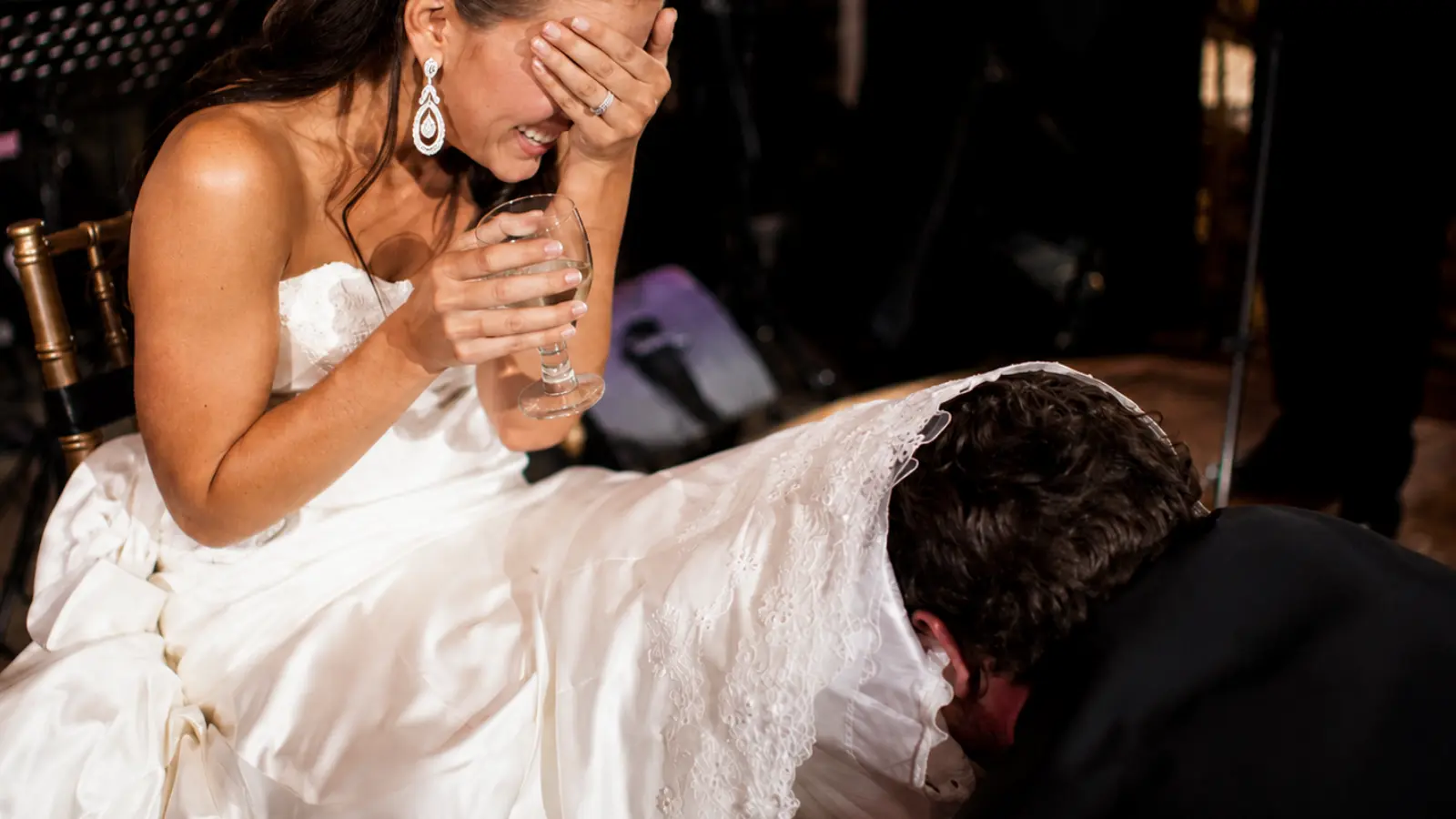
The garter toss happens at the reception, usually after dinner, often around the same time as the bouquet toss. The groom removes the garter from the bride’s leg, sometimes with a bit of playfulness or showmanship, and then throws it backward to a group of single male guests gathered on the dance floor. Whoever catches it is often jokingly treated as someone who could be “next,” much like the bouquet toss tradition.
The entire moment usually lasts less than a minute. It’s typically set to music, sometimes a song with a cheeky or upbeat tone, and the DJ or MC often frames it as a quick, fun aside rather than a major moment. For song options, see the garter toss songs guide.
If you’re still deciding whether to wear a garter at all, start with the full wedding garter guide, which explains the accessory, the tradition, how to wear it, and modern ways to skip or adapt it.
When Does the Garter Toss Happen?
The garter toss usually happens during the wedding reception, often after dinner, toasts, and the bouquet toss, when guests are already gathered near the dance floor. It’s usually treated as a quick transition moment rather than a central event, which is why most couples who include it keep it short and move quickly back into dancing.
There’s no required timing for it. Some couples place it near the bouquet toss because the two traditions are often paired, while others skip it without announcing anything at all. If the moment doesn’t fit the reception flow, it’s perfectly fine to leave it out.
What Does It Actually Mean?
At its core, the garter toss is a descendant of an old belief that touching or owning a piece of the bride’s wedding attire brought good luck. For most couples today, the tradition no longer carries the same symbolic meaning it once did. For most couples who include it, the moment is closer to a playful reception bit than anything symbolic, more about a few seconds of group fun on the dance floor than a meaningful ritual.
That shift in meaning is part of why opinions about it vary so much. Couples who treat it as just a silly moment tend to enjoy it. Couples who feel the original framing, however watered down, doesn’t sit right with them tend to skip it. Neither read is wrong.
Garter Toss vs. Garter Removal
These are two separate steps, and a couple can choose to do one without the other. Wedding garter removal is simply the groom taking the garter off the bride’s leg. That can happen as its own small moment, sometimes private, sometimes in front of guests, with nothing thrown afterward.
The toss is the additional, more public step: throwing the garter to the group gathered for the toss once it’s off. A couple might do a quick removal in front of guests purely for a laugh, then skip the toss and just hand the garter back rather than throwing it. Or they might skip removal in front of guests entirely and do it privately, with no public moment at all. Splitting these two decisions apart gives couples more room to keep the parts they like and drop the parts they don’t.
A Brief Origin

The wedding garter tradition traces back several centuries in Western Europe, tied to a belief that a piece of the bride’s wedding clothing carried good luck. That belief once led guests to grab pieces of the bride’s attire as keepsakes, sometimes aggressively enough that it became disruptive. Over time, the garter toss evolved into a more structured version of that earlier custom, turning the tradition into a planned reception activity rather than an unpredictable interaction with guests.
The version practiced today is a long way from that origin. It’s softened into a brief, low-stakes reception bit, more of a lighthearted reception tradition than a symbolic ritual, which is part of why so many couples treat it as optional rather than essential.
Is the Garter Toss Still Common?
It’s less common than it once was. Plenty of weddings still include it, particularly more traditional receptions or ones where the couple grew up watching family members do it and want to carry the moment forward. Plenty of others skip it entirely, especially smaller weddings, more modern receptions, or couples who simply never connected with the bit.
There’s no version of current wedding etiquette where including it makes a wedding more proper, or skipping it makes a wedding less complete. It’s simply one optional reception tradition among many, on the same tier as a dollar dance or a particular type of send-off.
Is It Required?
No. There’s no rule, written or unwritten, that requires a garter toss. Couples can wear a garter purely as a private detail, do a quiet removal with no public moment, or skip the garter altogether and still have a wedding that feels complete and true to their celebration.
Why Some Couples Find It Uncomfortable
A few specific things tend to come up. The physical intimacy of the moment, even when kept brief and tasteful, can feel like a lot to perform in front of family, coworkers, or an officiant who’s still in the room. Some couples are simply more private and don’t want that particular kind of attention, regardless of how lighthearted it’s meant to be.
Others have an issue with the framing rather than the moment itself. Singling out unmarried guests, even playfully, can feel pointed for guests who are single by choice, recently went through a breakup, or are simply tired of being reminded of their relationship status at every wedding they attend. None of this means the tradition is wrong to include. It just explains why many couples choose not to include it, and why that choice deserves the same respect as choosing to keep it.
Is It Ever Inappropriate?
Context matters more than the tradition itself. A garter toss done quickly, with both partners comfortable, in front of a crowd that’s clearly enjoying it, reads very differently from one that’s drawn out, overly suggestive, or done in front of guests who seem visibly uneasy. The difference usually comes down to tone and length, not whether the tradition is included at all.
If either partner feels unsure about how it will land with their specific guest list, whether because of religious values, family dynamics, or simple personal taste, that’s a strong signal to either keep it brief and tasteful or skip it. There’s no version of the moment that’s worth pushing through if it makes either partner genuinely uncomfortable.
Modern Etiquette: Does It Fit Your Wedding?
This is the part worth thinking through deliberately, since the right answer depends entirely on the specific couple, family, and reception, not on a fixed rule.
Consider the couple first. Does the idea sound fun to both partners, or does one of them feel pressured into it because the other wants it, or because it’s “expected”? A garter toss that one partner is dreading isn’t worth including just for tradition’s sake.
Consider the family. Some families have done this at every wedding for generations and would genuinely miss it. Others come from backgrounds where it would feel out of place or mildly uncomfortable for older relatives in the room. Neither family is wrong; it’s worth thinking about who’s actually in the audience.
Consider the reception’s overall tone. A playful, high-energy reception with a crowd that’s already loose and having fun tends to absorb a garter toss easily. A more formal, intimate, or subdued reception may find the moment feels mismatched with everything around it.
Consider the guest list itself. If there’s a meaningful number of unmarried guests who might feel singled out or uncomfortable being called to the floor, that’s worth weighing against how much the couple actually wants the moment.
None of these considerations point to a universal answer. They’re simply the questions worth asking before deciding, which tends to produce a better outcome than defaulting to “everyone does it” or “no one does it anymore.”
How to Do It Without Awkwardness
For couples who land on including it, a few choices reliably make the moment land better.
- Keep it short. A quick removal and a quick toss read as a fun aside. A drawn-out version starts to feel like a performance, which is where most of the discomfort tends to come from.
- Pick a song that matches your sense of humor. The right music does a lot of the tone-setting work. See the garter toss songs guide for options that lean playful rather than anything that overplays the moment.
- Make participation genuinely optional. A relaxed invitation for guests invited to participate, with zero pressure on anyone who’d rather stay seated, keeps the moment light instead of singling people out.
- Brief the DJ or MC ahead of time. A good MC can keep the moment moving and avoid lingering on it longer than the couple is comfortable with.
- Decide in advance how far you’re taking it. Removal only, removal plus a quick toss, or skipping it altogether are all fine. Deciding ahead of time avoids either partner feeling pushed into more than they wanted in the moment.
Alternatives
For couples who like the idea of a lighthearted reception moment but don’t want the garter toss specifically, a few options achieve something similar without it.
- Bouquet toss only. Keep the bouquet toss and skip the garter toss entirely. This preserves a familiar moment without the part either partner is less comfortable with.
- Private garter removal. Do the removal away from guests, with no public moment at all, treating the garter as a private or keepsake detail instead.
- Anniversary dance. Couples on the floor are gradually narrowed down by years married until the longest-married couple remains, often sharing a piece of advice.
- A small raffle or guest game. A quick, low-stakes activity that still gives guests something fun to participate in.
- Open dancing. Instead of replacing the garter toss with another formal moment, the DJ can simply move into an upbeat dance set and keep the reception energy going.
- Skipping the moment entirely. Many receptions move straight from dinner and toasts into open dancing with no toss-style moment at all, and that flow feels completely natural for many couples.
For a longer list and tips on how to brief your DJ or planner, see the full garter toss alternatives guide. For more on the garter itself, including how to wear a wedding garter, colors, and the something blue tradition, see the wedding garter guide.
Garter Toss Ideas and Reception Inspiration
The garter toss can be a playful wedding tradition or a moment many couples choose to skip. Explore reception ideas, modern etiquette, tasteful ways to include the tradition, and alternatives that fit different wedding styles and guest lists.
The Right Tradition Is the One That Fits Your Wedding
The garter toss has changed far more than many wedding traditions. What was once considered a nearly automatic part of the reception has become a personal choice, shaped by the couple’s comfort, their guests, and the atmosphere they want to create. There is no expectation that every wedding should include it, and skipping it never makes a celebration feel incomplete.
Whether you decide to keep the tradition, simplify it, adapt it, or replace it with something entirely different, the best choice is the one that feels natural for your wedding. The most memorable receptions are the ones where every tradition that is included feels intentional and true to the couple.
Frequently asked questions (FAQ)
What is a garter toss?
A garter toss is a wedding reception tradition where the groom removes the bride’s garter and tosses it to a group of unmarried guests. It is often paired with the bouquet toss, but the two traditions are independent. Today, many couples treat the garter toss as an optional reception activity rather than an expected part of the wedding.
Do you have to do a garter toss at your wedding?
No. A garter toss is completely optional. Some couples enjoy it as a fun tradition, while others prefer to skip it because it does not match their personalities, guest list, or wedding style. Modern wedding etiquette fully supports either choice.
What is the difference between a garter toss and garter removal?
Garter removal is simply the act of taking the garter off the bride’s leg. A garter toss is the separate step of throwing the garter to guests after it has been removed. Couples can choose to include both, keep the removal private, or skip the tradition altogether.
Is the garter toss still common at weddings?
The garter toss is less common than it once was, but many couples still include it, especially at traditional or family-oriented receptions. Others replace it with different activities or leave it out entirely. Whether it fits your wedding depends on your comfort level and the atmosphere you want to create.
Why do some couples skip the garter toss?
Some couples skip the garter toss because they prefer a more private celebration or feel the tradition does not fit their personalities or guest list. Others simply want a different reception flow. Choosing not to include the tradition has become a completely normal wedding decision.
How can you make a garter toss feel comfortable?
The best approach is to keep the moment brief, respectful, and optional for everyone involved. Choosing appropriate music, setting expectations with your DJ, and avoiding anything that feels overly staged or uncomfortable helps the tradition stay lighthearted and enjoyable.
What can you do instead of a garter toss?
Many couples replace the garter toss with an anniversary dance, bouquet toss only, guest games, raffles, or simply continue with open dancing after dinner. Others wear a garter as a private keepsake without including any public reception tradition.