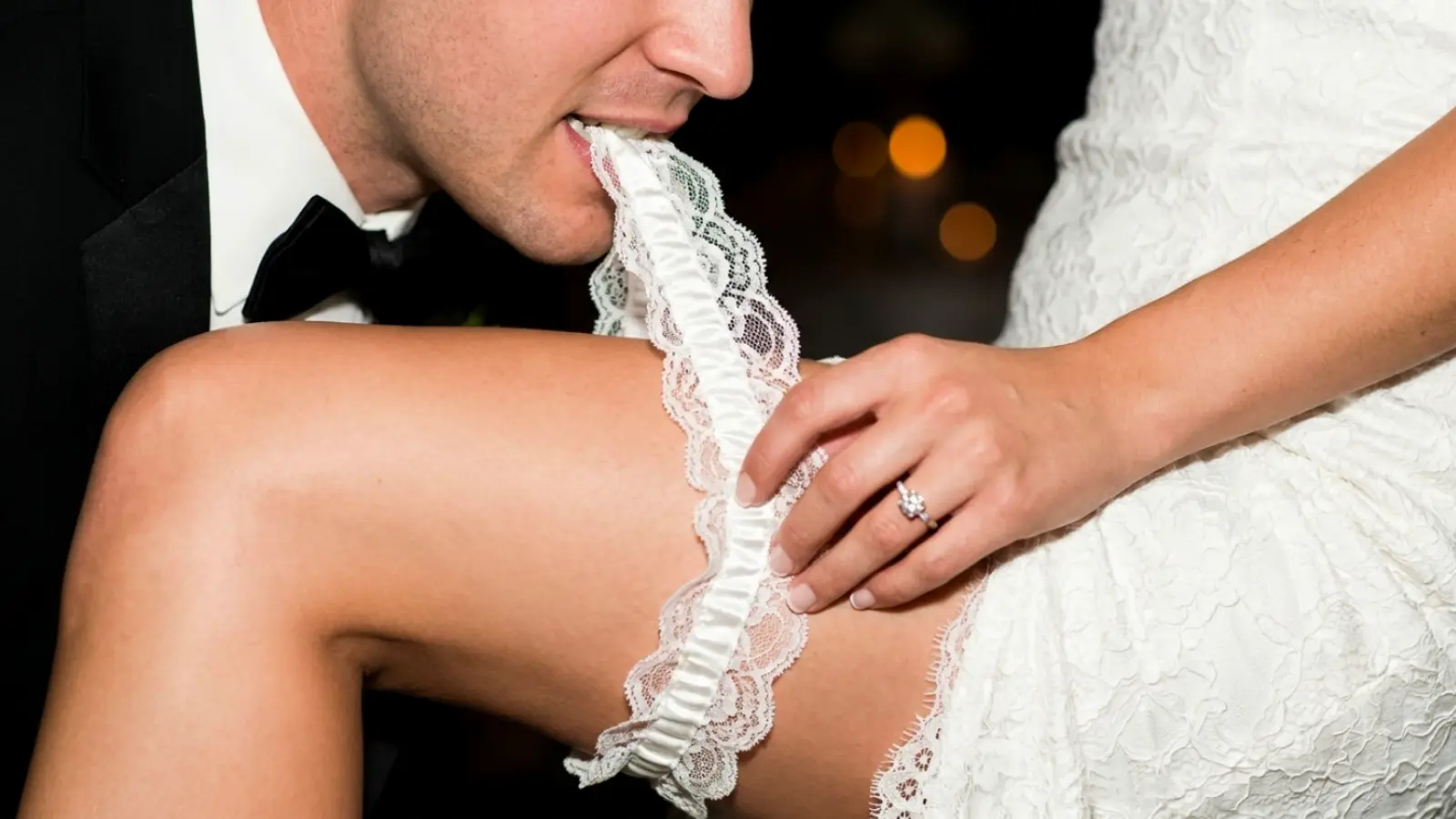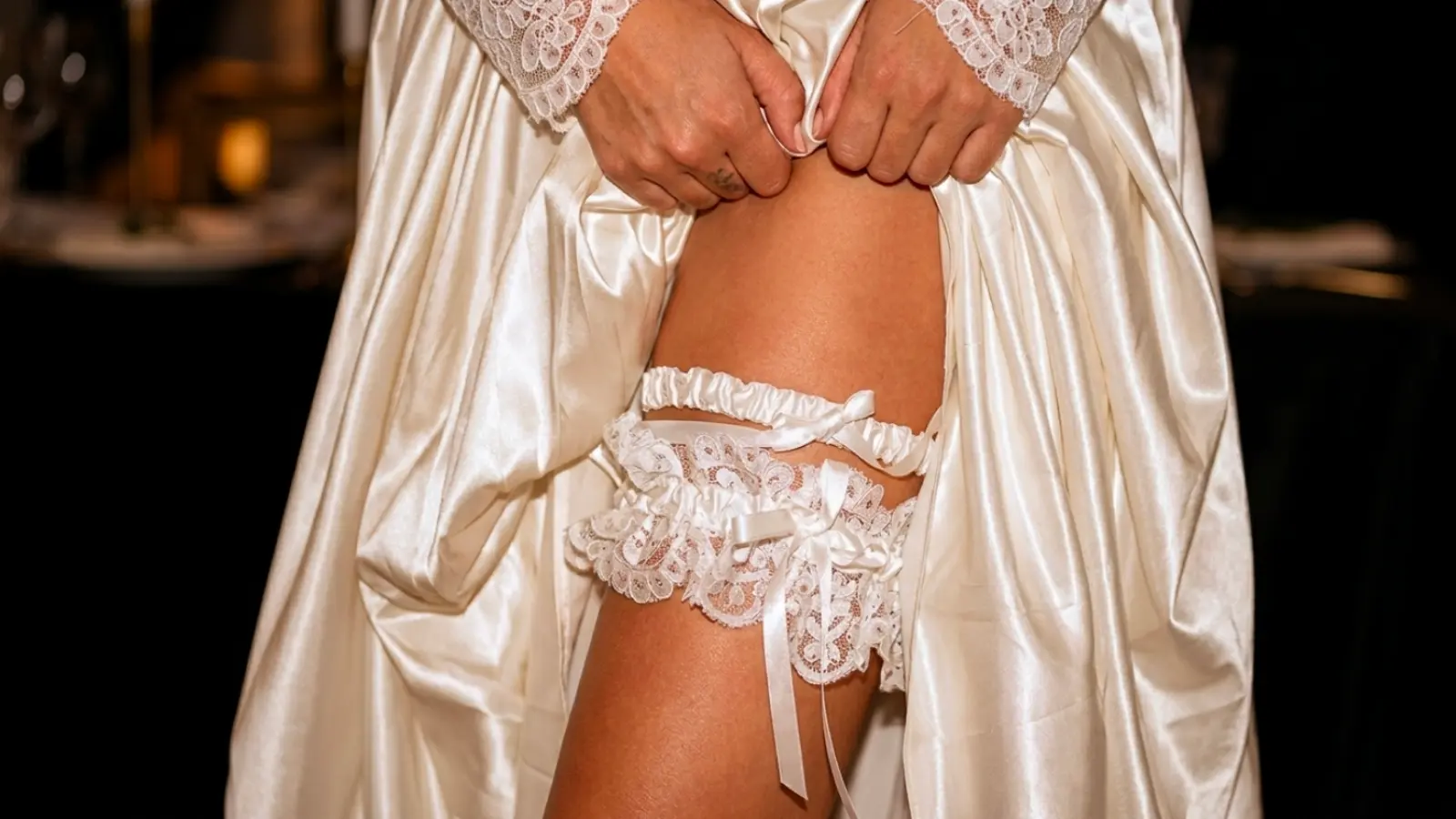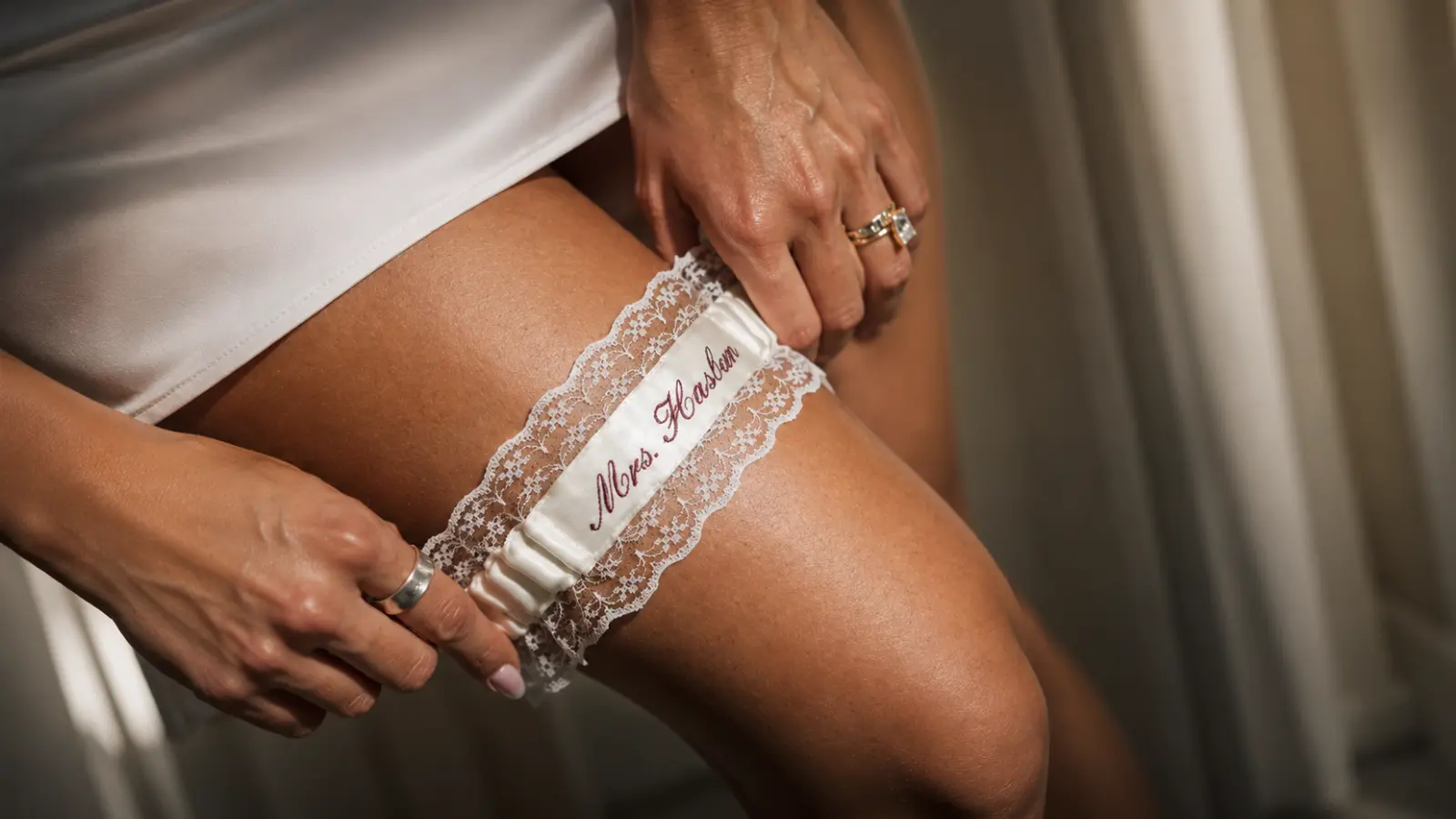
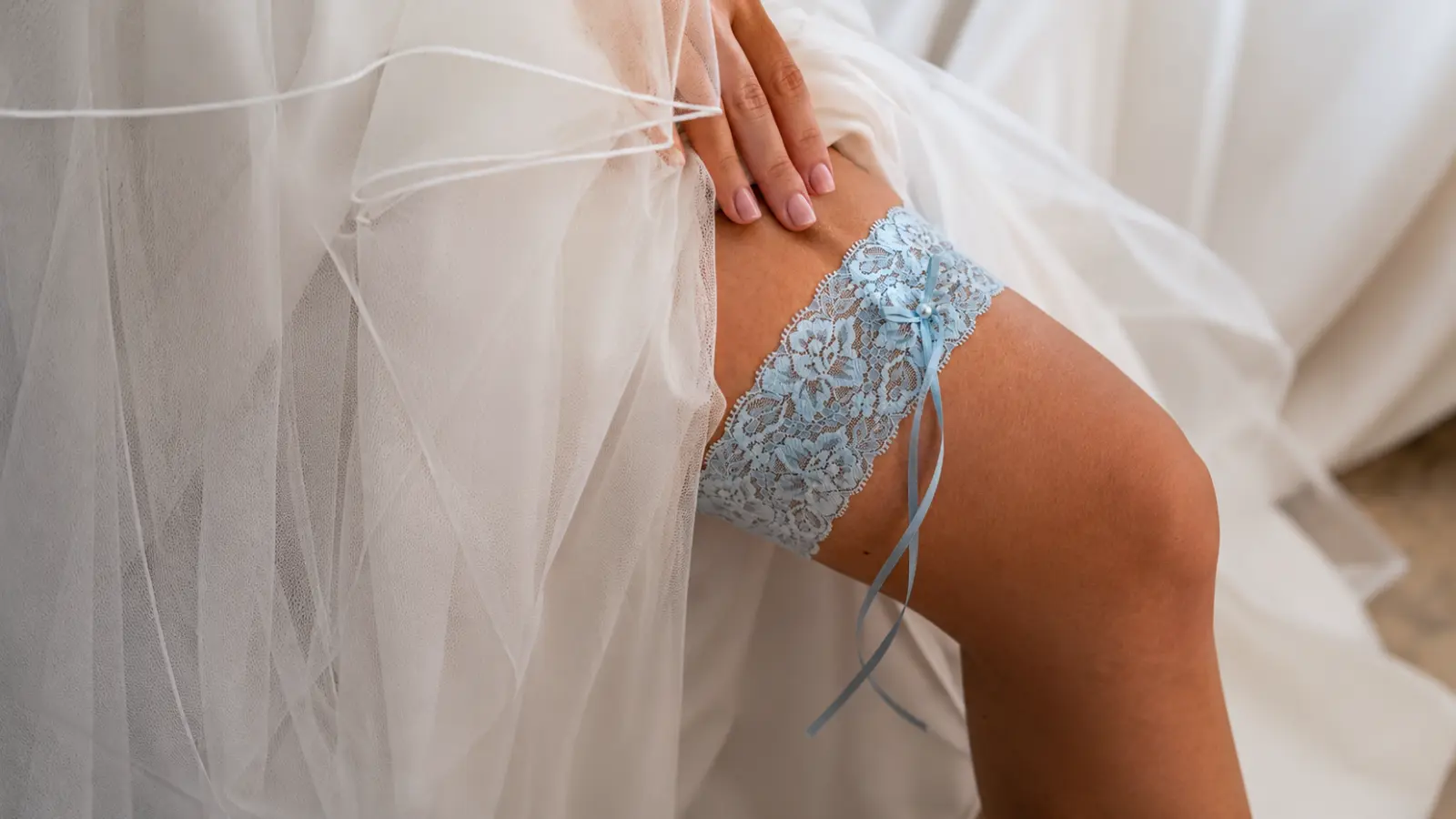
Blue wedding garter is one of the most traditional ways for a bride to include “something blue” on her wedding day. Worn under the dress, it adds a hidden symbolic detail without changing the visible look of the gown, bouquet, or accessories.
A blue garter is usually connected to love, fidelity, and the classic bridal rhyme “something old, something new, something borrowed, something blue.” Some brides choose pale blue for a soft traditional look, while others prefer navy, royal blue, dusty blue, lace, ribbon, or embroidery for a more personal detail.
This guide explains what a blue wedding garter means, how it connects to the something blue tradition, which shades and styles to consider, whether it needs to match anything, and other ways to include something blue if a wedding garter does not feel right for you.
What the Blue Garter Means
The blue garter’s meaning is tied directly to the color itself. Blue has long been associated with faithfulness, loyalty, and love. Those associations appeared in different cultural and historical traditions well before the wedding rhyme became widely known, where brides sometimes wore blue dresses entirely for this reason before white became the dominant bridal color. By the time the “something blue” rhyme was widely circulating, blue’s association with constancy in love was already well established, which is part of why it fit so naturally into the tradition.
Worn as a garter specifically, that meaning becomes a private one. Knowing how to wear a wedding garter allows the bride to carry the symbolism throughout the day without anyone needing to see it, giving the tradition a quiet, personal quality that a more visible blue accessory wouldn’t have in the same way.
The Something Blue Tradition
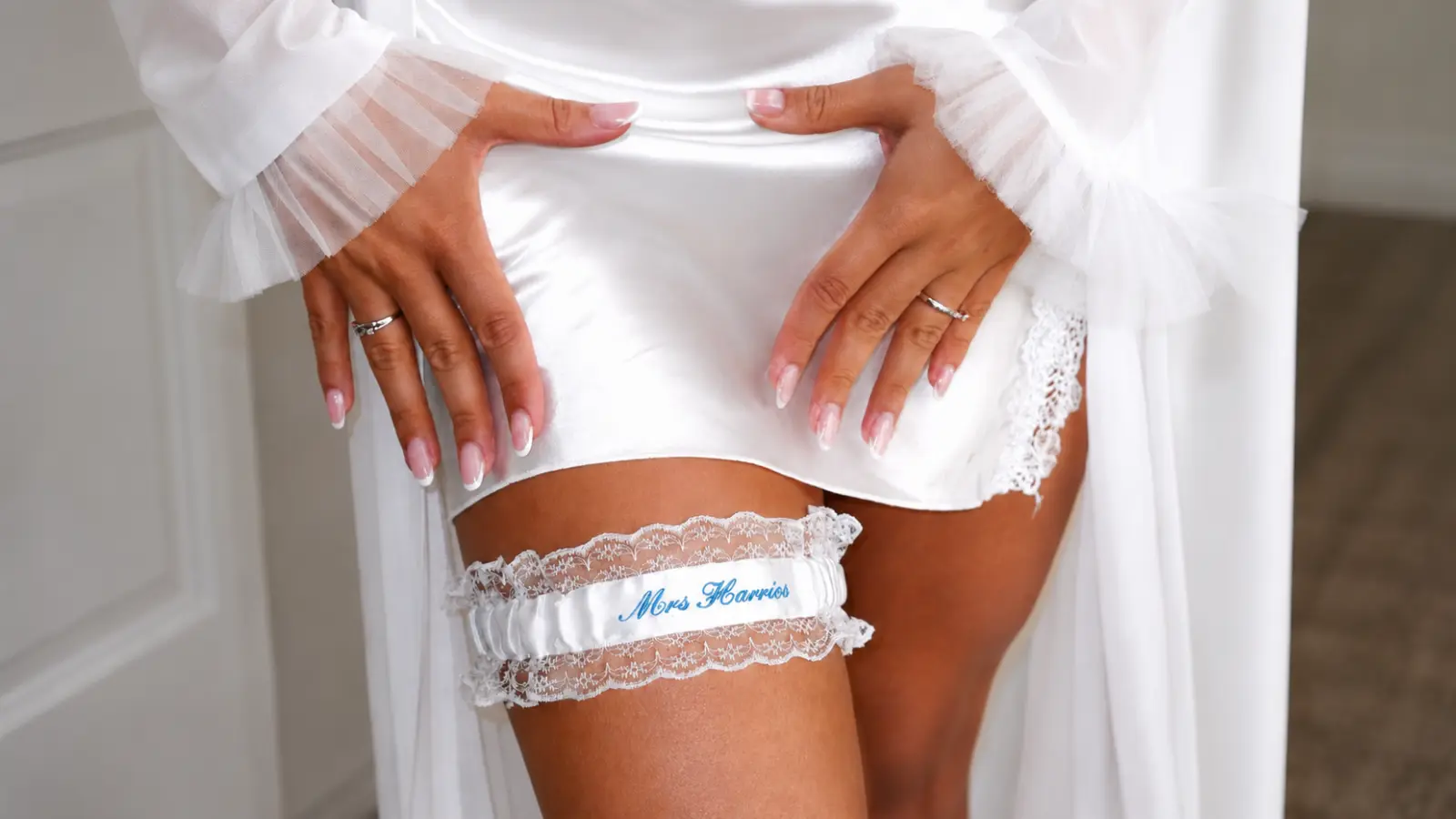
The full rhyme, “something old, something new, something borrowed, something blue, and a sixpence in her shoe,” is an English tradition dating back to the Victorian era, meant to bring the bride good fortune as she began married life. Each line carries its own symbolism: something old for continuity with the past, something new for optimism about the future, something borrowed for borrowed happiness from a loved one’s successful marriage, and something blue for fidelity and love.
The garter eventually became one of the most popular ways to fulfill the “something blue” tradition because it became part of the wedding garter tradition, allowing brides to include the symbolic color without changing the visible bridal look. Most wedding dresses are white or ivory, and a visible blue accessory, a sash, a ribbon woven into the bodice, can clash with an otherwise neutral bridal look or simply not be the aesthetic a bride wants. A garter sidesteps that entirely. It’s blue, it counts, and it’s never seen unless the bride wants it to be. For the full history of how this rhyme developed and spread, see the wedding garter colors and meanings guide, which covers blue alongside every other common garter color.
Shades of Blue to Consider
“Blue” covers a wide range, and the shade chosen often says something about the bride’s overall style, even though it’s a detail no one else will see.
- Powder blue / pale blue. The most classic and traditional shade, soft and romantic, the color most people picture when they think “something blue.”
- Royal blue. A richer, more saturated option for brides who want the tradition with a bit more visual presence, even if it’s only seen briefly.
- Navy. Deeper and more formal, a popular choice for fall and winter weddings or brides who prefer richer tones over pastels.
- Dusty blue. A muted, slightly grayed shade that suits romantic, vintage-inspired, or soft-palette weddings.
- Light blue with white lace. A two-tone option that keeps things classic while adding texture and a bit of bridal detail.
Because the garter isn’t visible for most of the day, choosing a wedding garter comes down to personal preference rather than anything that needs to coordinate with the dress, flowers, or wedding party. A bride drawn to navy isn’t making a styling mistake by skipping the softer powder blue, the tradition is fulfilled by the color blue itself, not a specific shade of it.
Blue Lace, Ribbon, and Embroidery
Beyond the base color, garters come in a range of styles that bring blue into the design in different ways.
- Blue lace. A garter made from blue lace, sometimes alone, sometimes layered over a white or ivory base, brings texture and a romantic, vintage quality to the piece.
- Blue ribbon. A simple satin or grosgrain ribbon in blue, often used as a trim or bow on an otherwise white garter, a subtler way to include the color without making the whole piece blue.
- Blue embroidery. A white or ivory garter with blue thread stitched into a pattern, initials, or a small phrase, which lets a bride keep a neutral base while still working blue into the design intentionally.
- Blue stitching or piping along the edge. A thin line of blue along the trim of an otherwise white garter, the most understated version of the tradition.
These styles matter most for brides keeping the garter as a keepsake, since the level of detail and craftsmanship becomes part of what makes it meaningful to look back on later, not just something worn once and forgotten.
A Hidden Detail, Not a Styling Decision
It’s worth saying plainly: the blue garter doesn’t need to be styled to match anything. It’s not a visible accessory the way earrings or a veil are, so there’s no pressure to coordinate it with the bouquet, the bridesmaids’ dresses, or the wedding’s color palette. This is actually part of the appeal for a lot of brides. It’s one decision in the entire wedding planning process that comes with zero risk of clashing with anything else, since it’s worn under layers of fabric and seen, at most, briefly during a toss or a private moment with a partner.
That freedom means the choice can be made purely on what feels meaningful or pretty to the bride herself, a sentimental shade, a color she’s always loved, something passed down from a family member, without any obligation to think about how it reads next to the rest of the bridal look.
Blue Garter Sets
Many brides choose a garter set rather than a single piece, one garter to keep as a personal keepsake, and a second, often simpler one to use for the toss if the couple is doing that tradition. Both pieces in a blue garter set are usually coordinated in shade, though the keep garter is often more detailed, lace, embroidery, a sentimental phrase, while the toss garter is simpler and less precious, since it’s the one being thrown into a crowd.
This approach lets a bride keep the meaningful piece intact regardless of what happens during the reception, while still participating in the toss tradition if she wants to. For couples deciding whether to do a toss at all, the garter toss tradition guide covers where that custom came from, and the garter toss alternatives guide covers what to do instead if it’s not for you.
Other Ways to Wear Something Blue
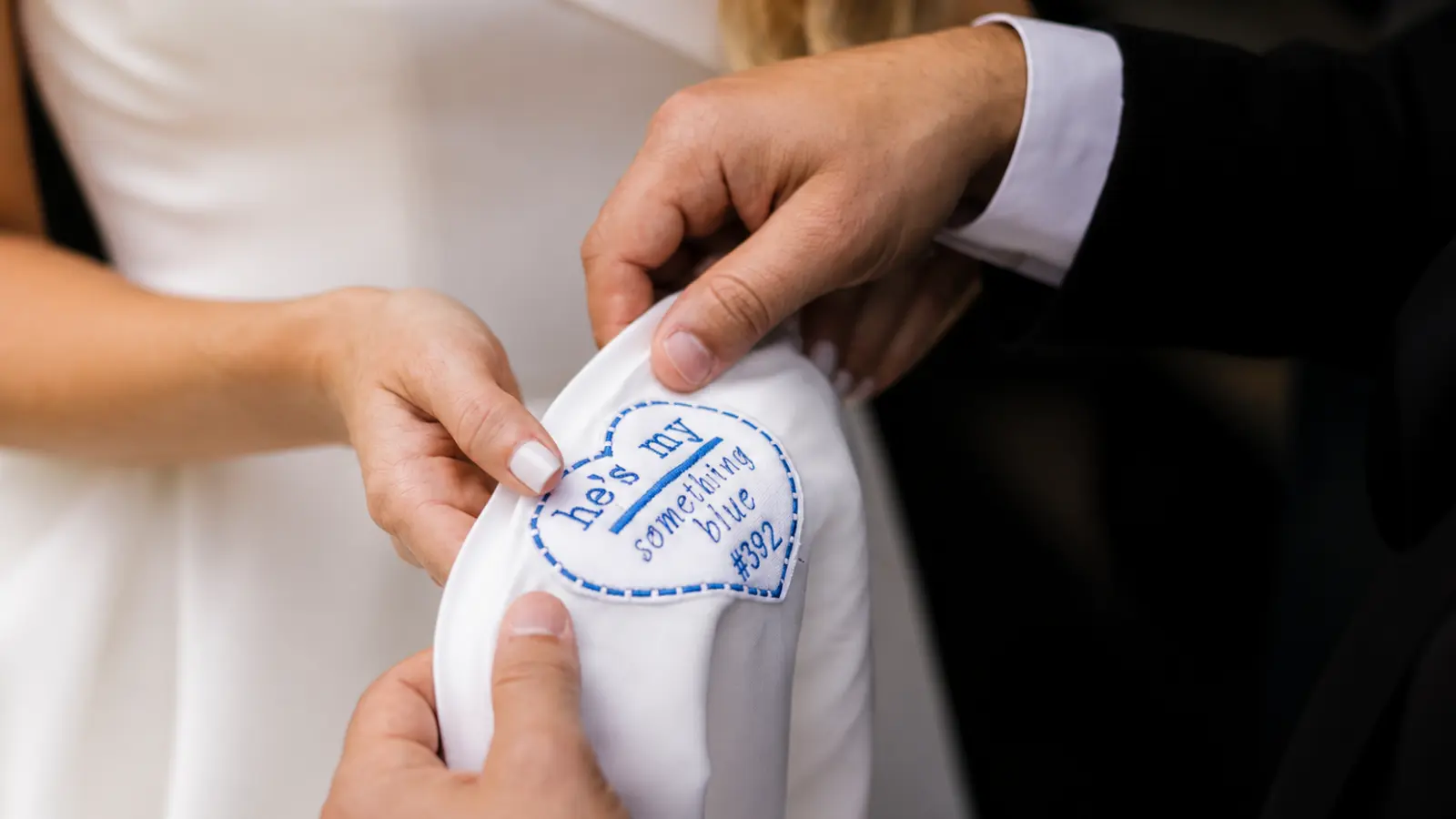
The garter is one of the most popular ways to carry “something blue,” but it’s far from the only one, and plenty of brides skip the garter entirely while still honoring the tradition somewhere else.
- Blue stitching in the hem. A small detail sewn into the inside of the dress, invisible to anyone but the bride.
- A blue ribbon on the bouquet. Tied around the stems, often paired with sentimental fabric like a piece of a family member’s clothing. The wedding bouquets guide covers more on bouquet wraps and ribbon details.
- Blue shoes. A more visible option for brides who want to wear their “something blue” rather than hide it.
- A small blue gemstone in jewelry. Sapphire earrings, a blue stone bracelet, or a pendant passed down through family.
- Blue embroidery inside the dress. Some designers offer a hidden blue detail stitched into the lining, similar in spirit to the garter but built into the gown itself.
None of these options is more “correct” than the others, and a bride can mix and match or skip the tradition altogether. The blue garter remains popular mostly because it’s easy, discreet, and steeped in history, not because it’s the only valid choice.
Blue Wedding Garter Inspiration
Blue wedding garters are a beautiful way to include the something blue tradition in a subtle, personal way. Explore pale blue, navy, royal blue, lace, ribbon, embroidered garters, and other meaningful ways to wear something blue on your wedding day.
A Hidden Blue Detail With Meaning
A blue wedding garter works because it carries tradition without demanding attention. It can stay completely private beneath the dress, appear briefly during a reception moment, or become a keepsake the bride saves after the wedding day.
Whether you choose pale blue, navy, lace, ribbon, embroidery, or another something blue detail entirely, the meaning comes from the intention behind it. The best blue detail is not the one guests notice most, but the one that feels quietly connected to the bride wearing it.
Frequently asked questions (FAQ)
What does a blue wedding garter mean?
A blue wedding garter represents the “something blue” tradition, which has long been associated with love, fidelity, and lasting commitment. Because the garter is worn beneath the wedding dress, it allows brides to carry this symbolic color in a personal and discreet way without changing the overall bridal look.
Why do brides wear a blue wedding garter?
Many brides wear a blue wedding garter as their “something blue,” following the traditional wedding rhyme. Others simply appreciate its sentimental meaning or enjoy including a hidden detail that represents love and good fortune. Wearing one is a personal choice rather than a wedding requirement.
What shade of blue is traditional for a wedding garter?
There is no required shade of blue. Powder blue is the most traditional option, while dusty blue, royal blue, and navy are also popular choices. The best shade depends on your personal style rather than any rule connected to the tradition.
Does a blue wedding garter have to match the wedding colors?
No. Since a blue wedding garter is usually hidden beneath the dress, it does not need to match the bouquet, bridesmaid dresses, or wedding color palette. Many brides intentionally choose a blue garter even when blue is not part of the visible wedding design.
Can you have something blue without wearing a blue garter?
Yes. Many brides choose blue shoes, blue embroidery inside the dress, a blue ribbon around the bouquet, or sapphire jewelry instead of a blue garter. The tradition is about including the color somewhere meaningful, not about using one specific accessory.
Should every bride wear a blue wedding garter?
No. A blue wedding garter is completely optional. Some brides love the symbolism and history behind the tradition, while others choose a different “something blue” or decide not to include the custom at all. Modern wedding etiquette supports whichever choice feels right for the couple.