Wedding veils are one of the most iconic bridal accessories, yet choosing the right one can quickly become overwhelming. From cathedral and chapel lengths to mantilla, birdcage, blusher, and drop veils, the number of options is much greater than most brides expect before they begin shopping.
The perfect veil isn’t simply the longest, most traditional, or most elaborate one. It should complement your dress, suit your hairstyle, fit your venue, and reflect the atmosphere you want to create on your wedding day.
This complete guide explains everything you need to know about wedding veils, including styles, lengths, fabrics, traditions, practical styling advice, and expert tips to help you choose your perfect veil with confidence.
What Is a Wedding Veil?
A wedding veil is a sheer, lightweight piece of fabric (usually tulle, silk, or organza) attached to the bride’s hair with a comb or pins and worn as part of the bridal look. It can be as short as a few inches, barely framing the face, or as long as several feet, trailing dramatically behind the gown. It can be plain and barely visible, or heavily embellished with lace, pearls, or embroidery.
What a veil is not is complicated, despite how the shopping process can make it feel. At its core, it is an accessory with a long history and a clear aesthetic function: it frames the bride, creates movement and drama in photos, and signals something ceremonial about the moment. Whether you wear one is entirely up to you.
Why Brides Wear Veils
The short answer is: for many different reasons, and not always the ones people assume.
The tradition itself goes back centuries: ancient Rome, medieval Europe, and countless cultural variations since. Historically, veils were worn to protect the bride, to signal modesty, or in arranged marriages, to keep the groom from seeing his bride until the ceremony. Queen Victoria popularized the white veil in 1840, and by the Victorian era, the veil had become a symbol of status as much as tradition.
Modern American brides wear veils for reasons that are far more personal. Some choose a veil because they’ve always pictured themselves in one. Some wear it to honor a family tradition, to match a mother’s or grandmother’s look, or simply because they love how it photographs. Some wear it as a deliberate ceremony marker, something they’ll remove at the reception to signal the shift in the day’s tone. And some skip it entirely.
The meaning you give your veil is yours to decide. For a deeper look at the history and symbolism behind this tradition, see our guide to wedding veil meaning and history.
Wedding Veil Lengths Explained
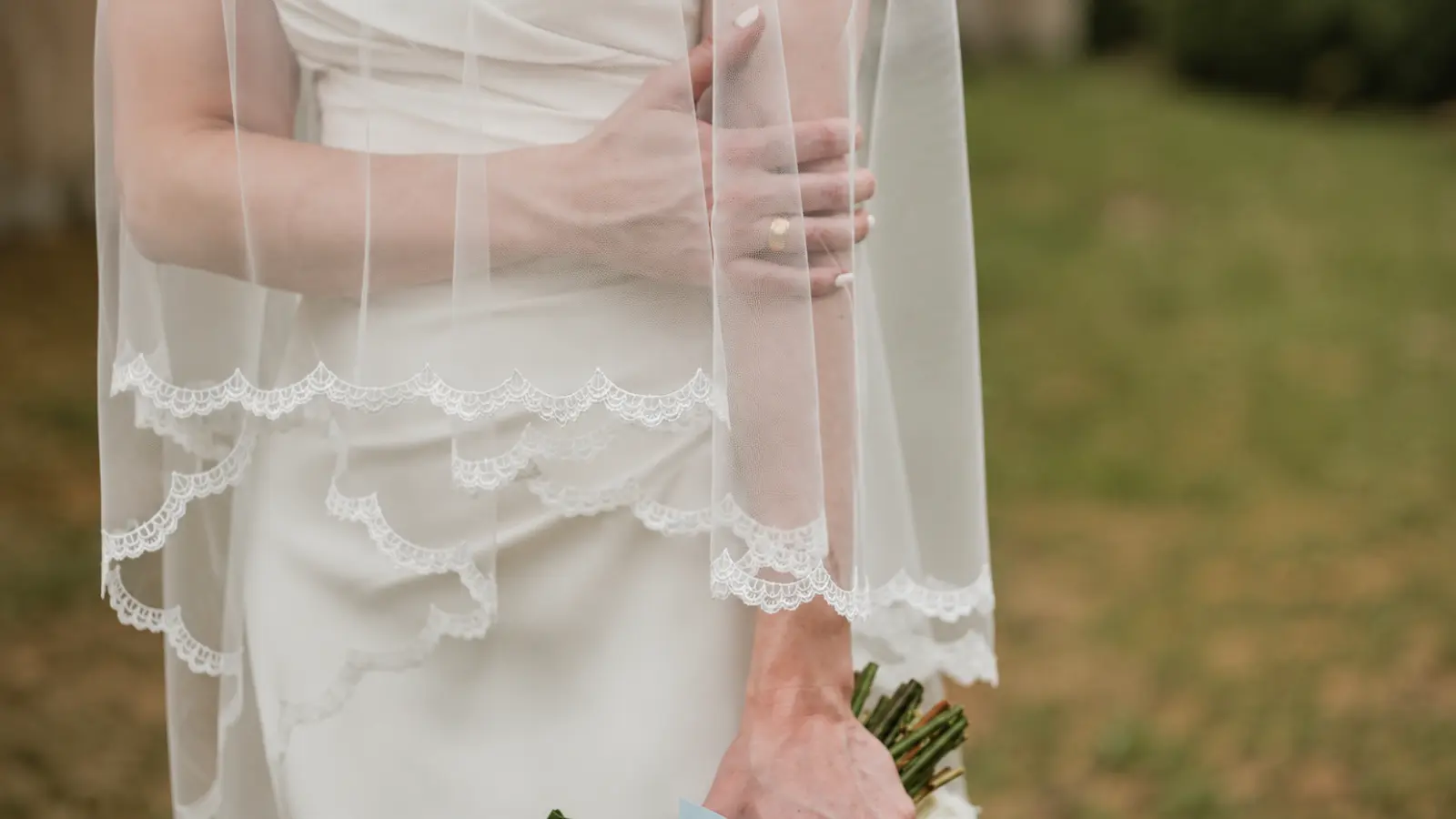
Length is the first real decision in veil shopping, and it has the biggest impact on the overall feel of your bridal look. Short veils read as modern and relaxed; long veils create drama and formality. The measurements below are general industry standards; individual designers may vary by a few inches in either direction.
| Veil Length | Approximate Measurement | Where It Falls | Best For |
|---|---|---|---|
| Birdcage / Bandeau | 4–9 inches | Eyes to chin | Vintage, retro, elopements, short dresses |
| Shoulder | 20 inches | Shoulder level | Casual ceremonies, intricate bodices, modern looks |
| Elbow | 25–30 inches | At the elbows | Classic and balanced; works with most dress styles |
| Fingertip | 36–40 inches | At the fingertips | One of the most versatile lengths; suits almost any silhouette |
| Knee / Ballet / Waltz | 50–60 inches | Knee to ankle | Mid-formal; elegant movement without full train |
| Floor / Chapel | 85–95 inches | Sweeps the floor | Formal ceremonies, most dress styles |
| Cathedral | 108–120 inches | Extends well beyond the hem | Grand venues, traditional ceremonies, dramatic effect |
| Royal / Monarch | 144+ inches | Several feet of train | Very formal settings; requires significant venue space |
A note on the longer lengths: chapel, cathedral, and royal veils are beautiful, but they require practical planning. You’ll need enough aisle or outdoor space for the veil to lay flat, someone positioned to arrange it before you walk, and a clear plan for managing it at the reception. If your venue has a short aisle or no procession, a shorter veil often photographs better anyway.
For a full breakdown of how each length compares in person and in photos, see our wedding veil lengths guide.
Wedding Veil Styles Explained
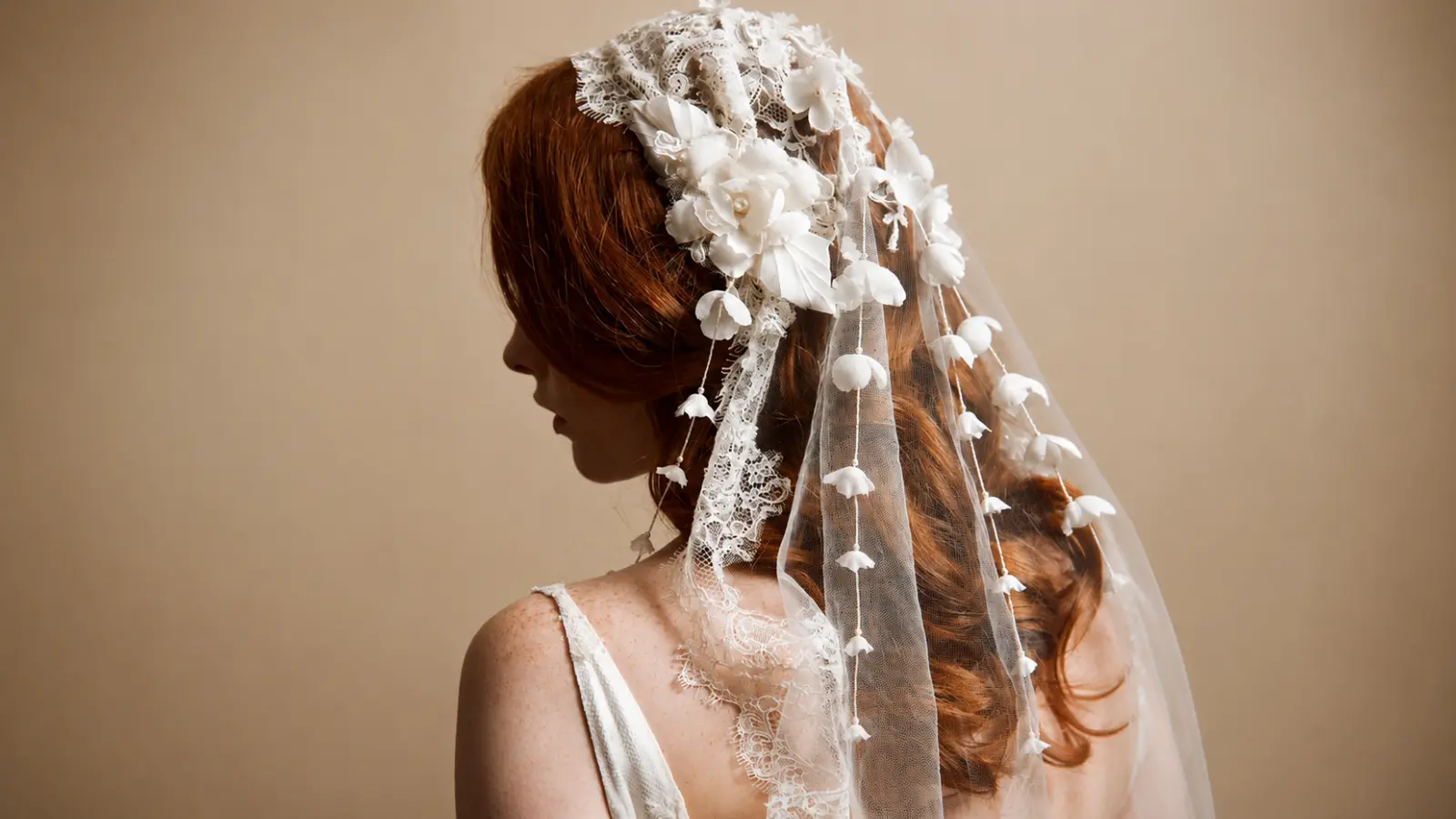
Veil style refers to its shape, layering, and structural design, which is a separate consideration from length. Two veils can be the same length but look completely different based on their style. Here are the main categories worth understanding before you shop.
Single-Tier Veil
One layer of fabric, falling behind the head. Clean, simple, and the most versatile option. It doesn’t cover the face and is the default choice for brides who want a classic veil without the ceremony of a blusher. Works at every length from fingertip to cathedral.
Two-Tier Veil (with Blusher)
Two layers: a shorter front layer (the blusher) that covers the face during the processional, and a longer back layer that creates the veil’s main silhouette. The blusher is lifted at the altar by the groom, a parent, or the bride herself, before the vows or the kiss. It’s one of the most ceremonially charged moments of a wedding. If you want that moment, this is the style that creates it.
If you are specifically considering a face-covering layer, see our full guide to the blusher veil.
Mantilla Veil
An oval or round lace veil worn draped directly over the head, often secured with pins or carefully placed under the hairstyle rather than gathered on a visible comb. It falls around the face rather than behind it, and the lace edge frames the bride’s profile entirely. It’s one of the most recognizable and romantic veil styles, rooted in Spanish and Catholic bridal tradition. For everything about this style, see our mantilla wedding veil guide.
Birdcage Veil
A short, structured veil made from wide netting that covers part of the face, typically from the eyes to the nose or chin. It attaches to a comb, clip, or fascinator. The style is strongly associated with mid-century bridal fashion and has a distinctly vintage, old-Hollywood quality. It works beautifully with tea-length dresses, jumpsuits, and intimate ceremonies. Not a fit for every bride, but for the right aesthetic, there’s nothing else quite like it.
Drop Veil
A one-layer veil with no gather at the attachment point. It lies flat against the head and falls smoothly, without the volume created by a gathered comb. The result is sleeker and more modern, with less of the traditional “bridal” silhouette. Often chosen by brides who want the length without the fullness.
Cascade / Waterfall Veil
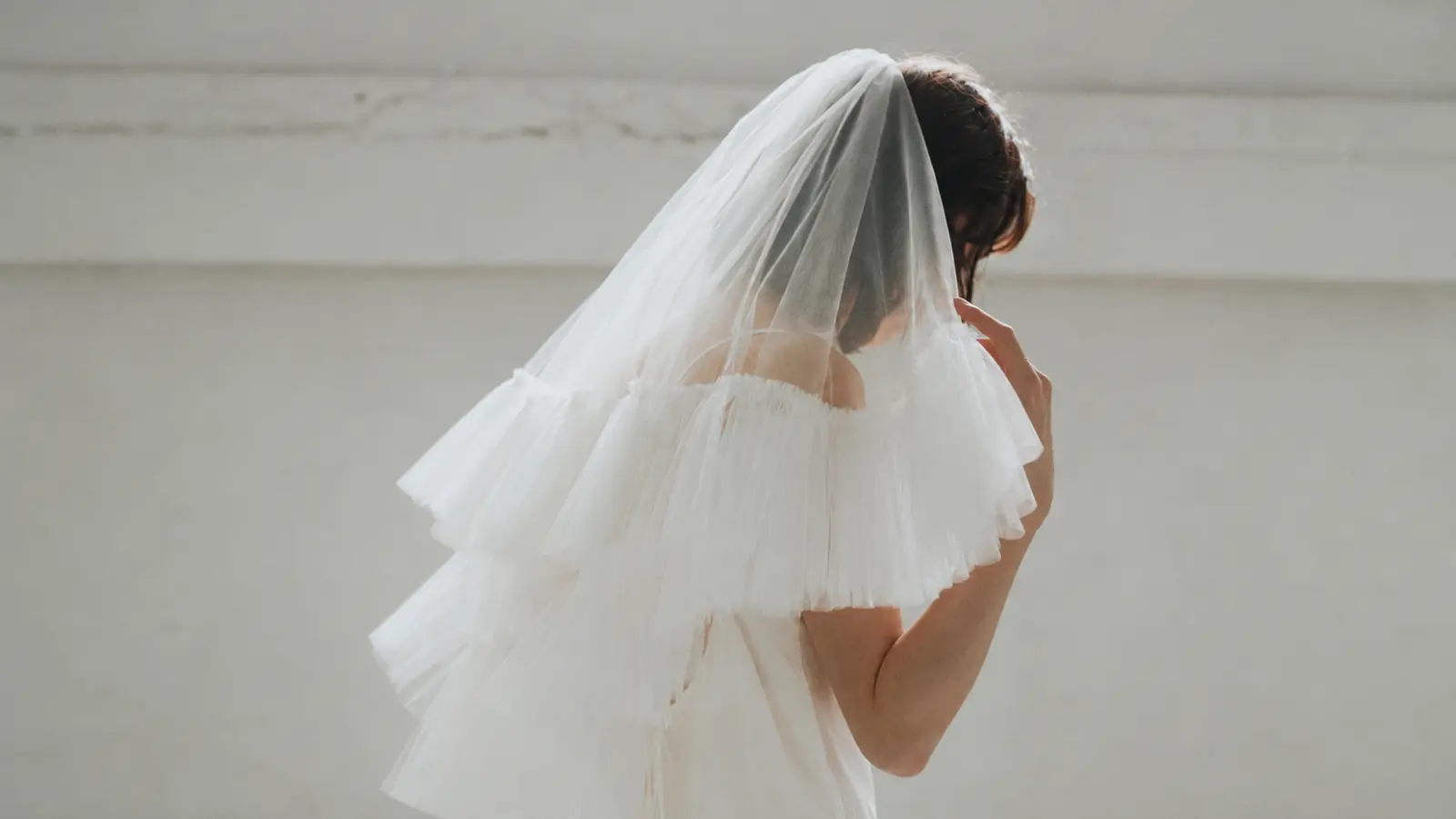
A veil with multiple tiers of decreasing length, creating a layered effect that flows downward. Less common than single and two-tier options, but striking on brides who want drama with a softer structure than a cathedral sweep.
Length vs. Style: Understanding the Difference
One of the places where veil shopping becomes confusing is the overlap between these two words. When a stylist asks what length you want, she’s asking where the veil should fall. When she asks what style you prefer, she’s asking about the veil’s structure and shape. These are independent decisions: a fingertip veil, for example, can be a single-tier drop, a two-tier with blusher, a mantilla, or a birdcage. A cathedral veil can be plain or heavily embellished, gathered or flat.
Understanding this separation helps you go into appointments with more specific preferences instead of just pointing at photos and hoping the stylist can read your mind. Exploring the different wedding veil styles also helps when shopping online, where the same terms can be used inconsistently by different sellers.
Which Wedding Veil Should You Choose?
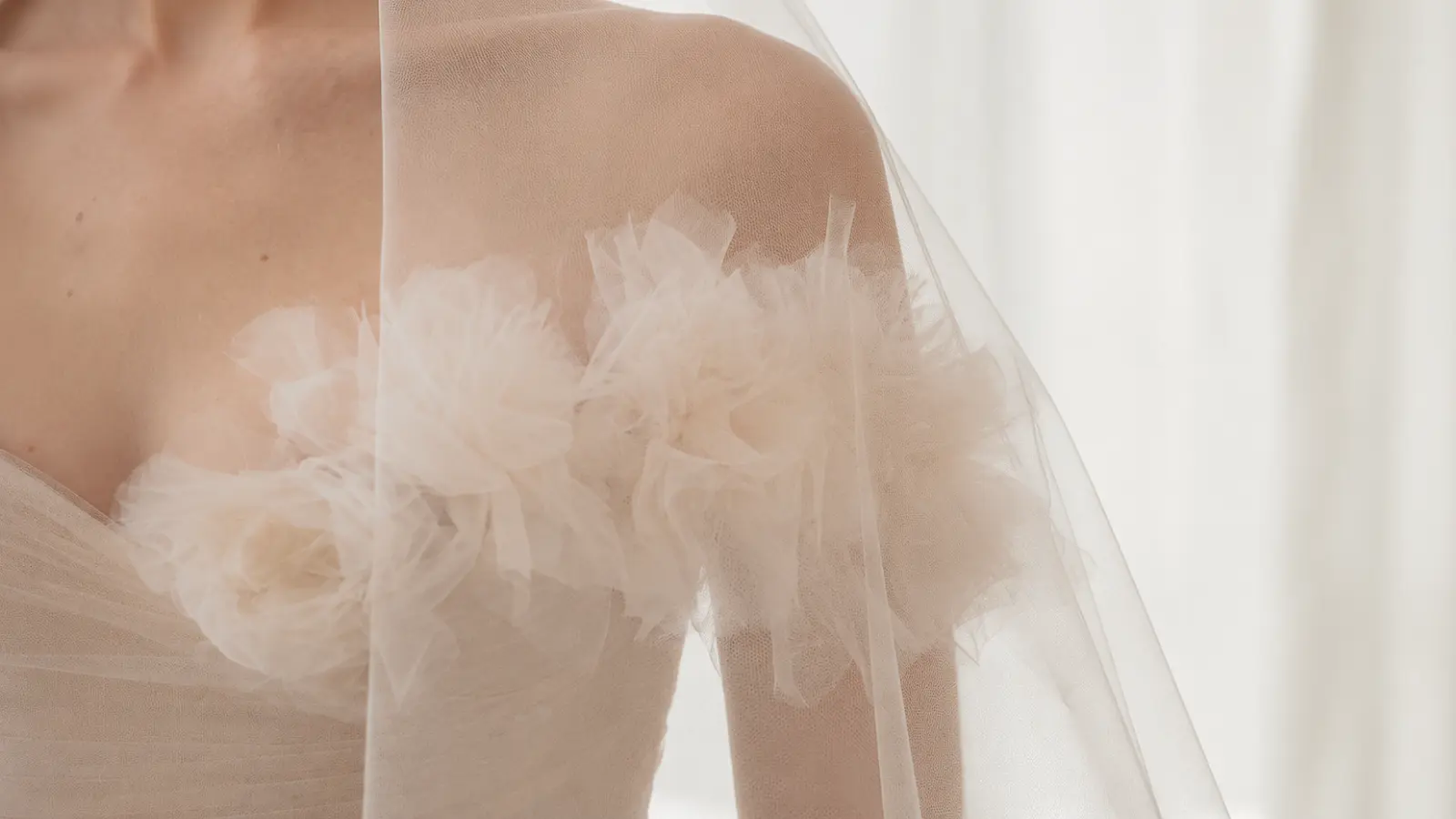
This isn’t a formula. No table can replace trying veils on with your dress, but it’s a useful starting point for narrowing the field before your appointment.
| If You Have… | Consider | Why It Works |
|---|---|---|
| A ballgown or full-skirt dress | Fingertip, chapel, or cathedral | Proportional to the dress’s volume; avoids looking buried |
| A mermaid or trumpet silhouette | Chapel or cathedral; or a birdcage for contrast | Long veils complement the drama; short veils offer modern contrast |
| An A-line dress | Almost any length; elbow to cathedral all work | The most veil-versatile silhouette |
| A sheath or column dress | Drop veil, fingertip, or floor length | Clean, sleek options that don’t compete with the dress’s line |
| A short or tea-length dress | Birdcage, shoulder, or elbow | Proportional scale; longer veils overwhelm shorter skirts |
| A heavily embellished dress | Simple, unadorned veil | Lets the dress be the focal point |
| A minimalist or plain dress | Lace-edged, pearl, or embroidered veil | The veil carries the detail the dress doesn’t |
| A formal church or ballroom | Chapel, cathedral, or two-tier with blusher | Matches the formality of the space |
| An outdoor, beach, or garden ceremony | Fingertip, elbow, or waltz | Wind-resistant lengths; easier to manage on uneven terrain |
| An updo or structured hairstyle | Most lengths work; comb placement is key | Clean attachment point for any veil; longer veils often read best |
| Hair worn down | Elbow or fingertip; avoid very long lengths | Very long veils can get lost in loose, flowing hair |
This table reflects general guidelines, not rules. Brides regularly wear cathedral veils with outdoor ceremonies and birdcage veils with ballgowns, and it works when the rest of the look supports it. Use this as a starting point, not a ceiling.
How to Choose Your Wedding Veil
Once you have a general sense of the length and style you’re drawn to, a few practical considerations help narrow things down further.
Start With Your Dress, Not the Veil
The veil’s job is to complement the dress, not compete with it. Before your veil appointment, know your dress silhouette, the level of embellishment, the neckline, and whether it has a train (and if so, how long). A veil that ends mid-train tends to look awkward; one that extends slightly past it or falls at a completely different length usually works better. For a full breakdown of how different veil styles pair with specific dress silhouettes, see our guide to matching your wedding dress with your veil.
Think About Your Ceremony Setting
Venue scale matters more than most brides anticipate. A cathedral-length veil in a small intimate chapel can feel out of proportion. A short birdcage veil in a grand cathedral can read as underdressed. Neither is wrong, but it’s worth considering how the veil will look in the specific space you’re walking through, not just in the mirror at the bridal salon.
Factor in Your Hairstyle
Veils attach to the hair, which means your hairstyle affects both the placement and the visual effect. An updo creates a clean attachment point and tends to work with most lengths. Hair worn down changes the picture significantly: very long veils can disappear into loose waves, and the blusher moment reads differently when the hair isn’t swept back. For specific pairing ideas, see our wedding hairstyles with veil guide.
Consider What Happens After the Ceremony
A cathedral veil is breathtaking during the processional. It is also something you’ll need to manage during portraits, cocktail hour, and the reception. Think about how long you plan to wear the veil and what the plan is for removing it: who will hold it, where it will go, and how it will be stored without getting crushed. This isn’t a reason to avoid a long veil, but it is a reason to have the plan before the wedding day.
Veil with a Tiara, Crown, or Headpiece
If you’re planning to wear a tiara, a headband, or another structured headpiece, the veil’s attachment point and style need to work with that element, not against it. Styling a wedding veil with a tiara is especially dependent on getting that placement right. A mantilla veil and a tiara are difficult to combine, since the mantilla lies flat against the head and doesn’t leave clean space for a crown. A single-tier veil attached below a tiara is one of the most classic combinations. A birdcage veil pairs naturally with a fascinator or a small decorative comb. Get both elements at your appointment at the same time, if possible, rather than deciding separately and hoping they work together.
Wedding Veil Materials
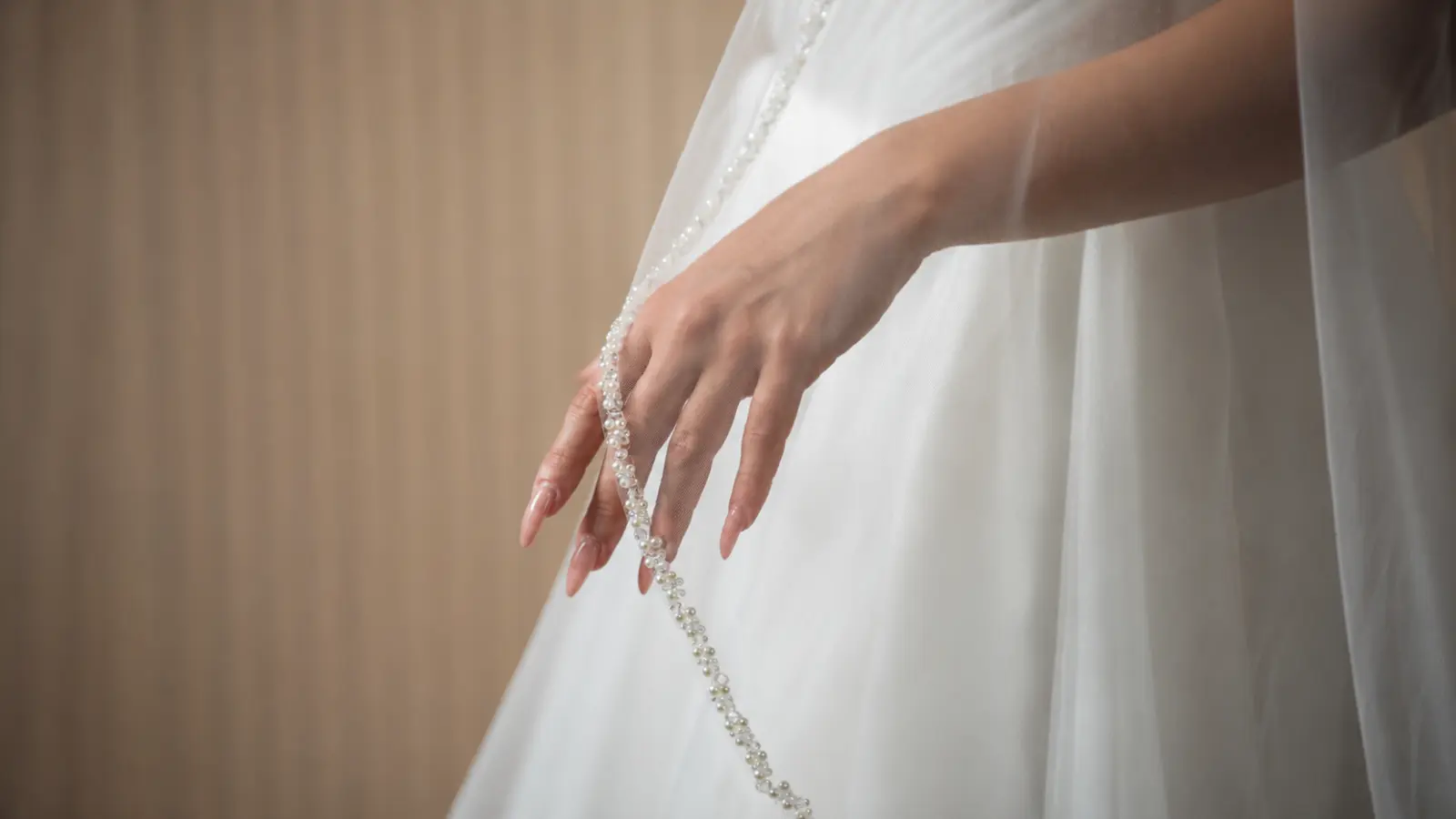
The fabric of a veil determines how it moves, how it photographs, and how it holds up across the course of a long day. Most brides don’t start shopping with a fabric preference, but understanding the main options helps you evaluate what you’re looking at when samples are placed in your hands.
- Bridal illusion tulle is the most common veil fabric. It’s lightweight, slightly stiff, holds its shape, and is forgiving in different lighting conditions. It photographs cleanly and is the most accessible option at most price points.
- Silk tulle is softer, more fluid, and considerably more expensive. It drapes naturally and reads more luminous and less structured on camera. It’s also more delicate and requires careful handling.
- Organza is crisper and more structured than tulle. It holds volume well and works for veils where shape matters more than flow.
- Chiffon is soft and moves beautifully, but it’s lighter and less structured, better suited to informal or outdoor settings than to formal ceremonies where the veil needs to hold a particular shape.
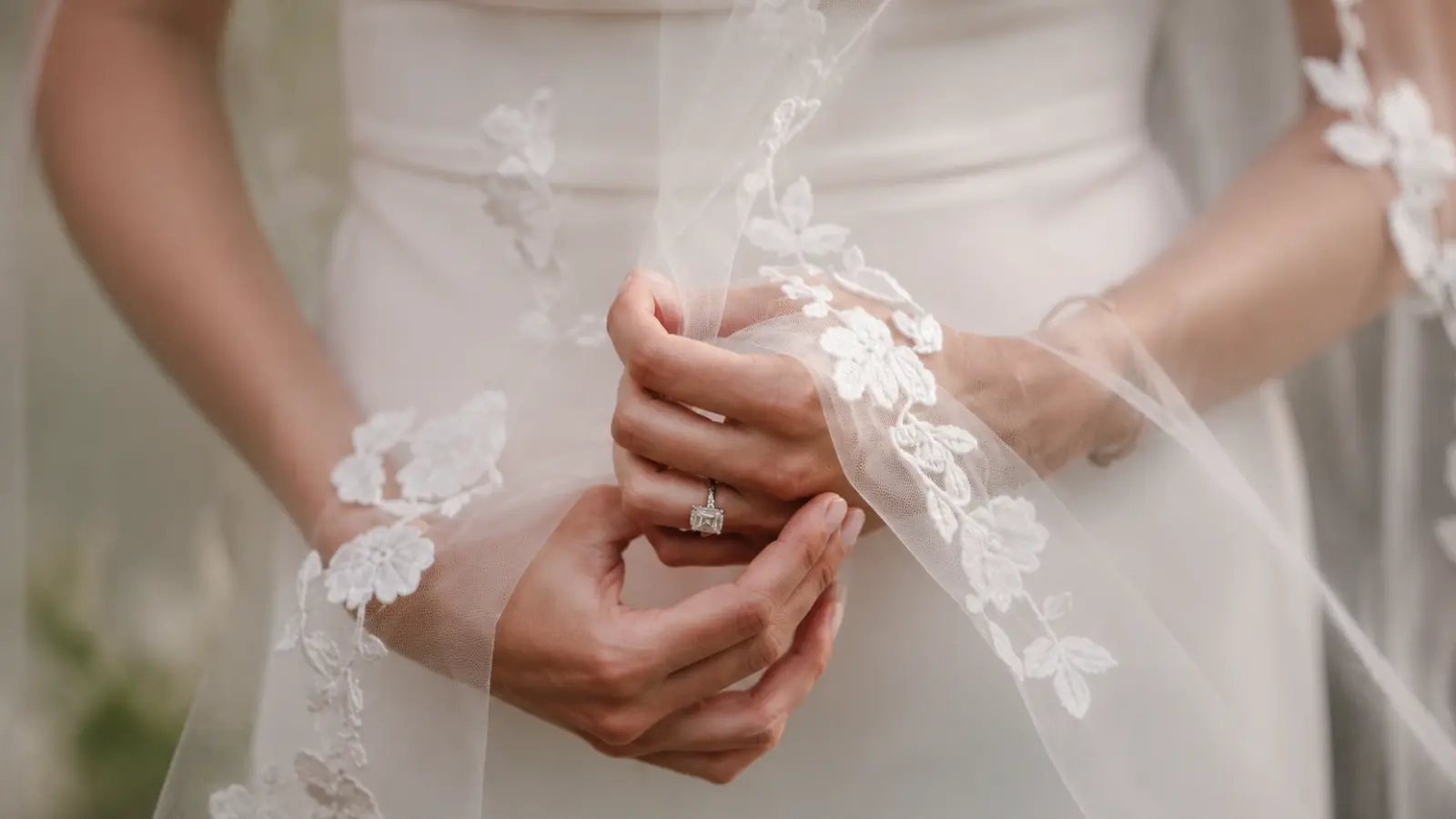
- Lace is used either as an all-over fabric in mantilla-style veils, or as an edge trim applied to a tulle base. The weight of the lace matters significantly: a heavy, ornate lace on a cathedral-length veil reads very differently than a delicate scallop trim on an elbow-length one. For more pairing guidance, see our lace wedding veil guide.
- Pearl and crystal embellishments are applied to the veil’s surface or edge, typically on tulle. They add weight and texture, catch light beautifully, and are particularly popular for formal evening ceremonies. If you like this look, see our guide to pearl wedding veils.
If you can, ask to see fabric samples side by side before making a decision. The difference between bridal tulle and silk tulle is almost impossible to describe but immediately obvious when you hold both. For a deeper breakdown of each fabric and what to ask at the salon, see our wedding veil materials guide.
When to Remove Your Wedding Veil
There’s no rule about when a veil should come off, but there is a practical reality: most brides are more comfortable without a veil once the dancing starts. The typical approach is to wear the veil through the ceremony and bridal portraits, then remove it before the reception begins or immediately after the first dance.
If you’re planning to keep the veil on longer, assign that job to someone specific before the wedding day. Your maid of honor, a bridesmaid, or your coordinator should know where the veil will be stored, how to remove the comb without pulling your hair, and how to fold or roll it so it doesn’t get creased. A cathedral veil left unattended on a chair will not survive the reception intact.
Some brides also choose to do a veil flip during the reception: removing the blusher layer and wearing just the back layer through dinner, then removing the veil entirely before dancing. That’s a practical middle ground if you love the look but don’t want to manage fabric all night.
What to Avoid
A few consistent mistakes show up when brides are choosing veils. Most of them are easy to avoid once you know to look for them.
- Choosing a veil before confirming your dress. This happens more often than you’d think, especially when brides fall in love with a veil at an early appointment. The veil has to work with the specific dress you’re wearing, not a theoretical version of it. Bring your dress details, a photo, and ideally a fabric swatch to every veil appointment.
- Trying veils in isolation. A veil that looks beautiful on a hanger or on a different bride may look completely different with your specific dress, your coloring, and your face shape. Try the veil with your actual dress whenever possible, or at minimum with a dress of the same silhouette and neckline.
- Matching too literally. The veil doesn’t need to be an exact shade match to your dress. Slight tonal differences between ivory and off-white are normal and often invisible in full light. What matters is that the veil doesn’t look noticeably different, not that it is technically identical.
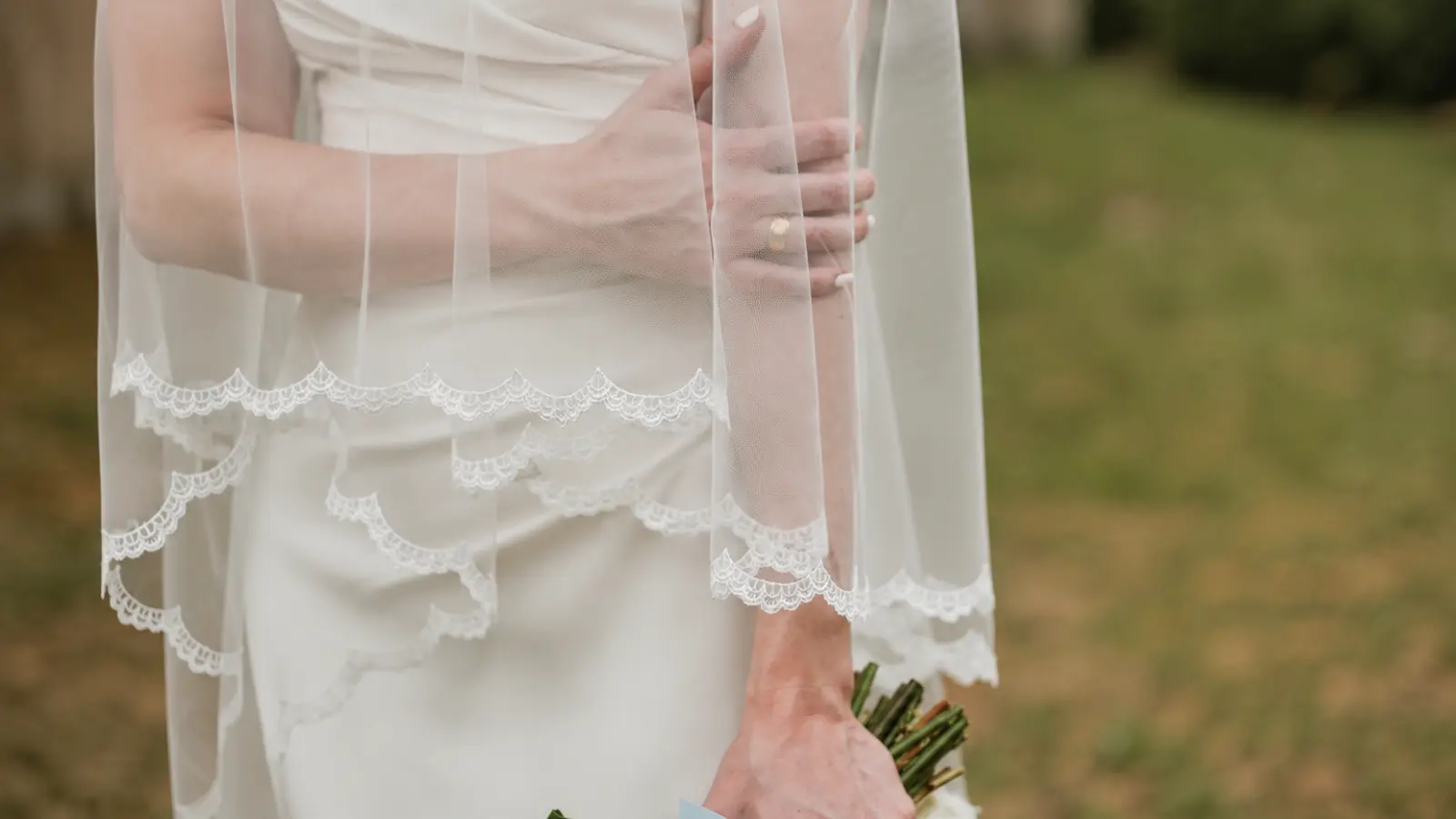
- Ignoring the edge detail. The edge of a veil — raw, rolled, ribbon, scallop lace, pearl trim — has a significant effect on the overall look. Many brides spend all their attention on length and forget that the edge is often what reads most clearly in photos.
- Underestimating outdoor conditions. Wind, humidity, and uneven terrain change how a veil behaves. A dramatic cathedral veil that looked stunning in a salon can become a logistical challenge on a breezy beach or a grass lawn. If your ceremony is outdoors, test the veil in a light wind before the day, or choose a shorter, more controlled length.
- Leaving the removal plan to chance. Decide before the wedding who is responsible for taking the veil off, how to store it, and when it comes off. A veil removed in a hurry by someone who isn’t sure how to handle it can damage your hair, your comb, or the veil itself.
The thread connecting most of these is the same: the veil appointment works best when you arrive with information, not just inspiration. Knowing your dress, your venue, and your plan turns a potentially overwhelming appointment into a much shorter, clearer conversation.
Veil Alternatives
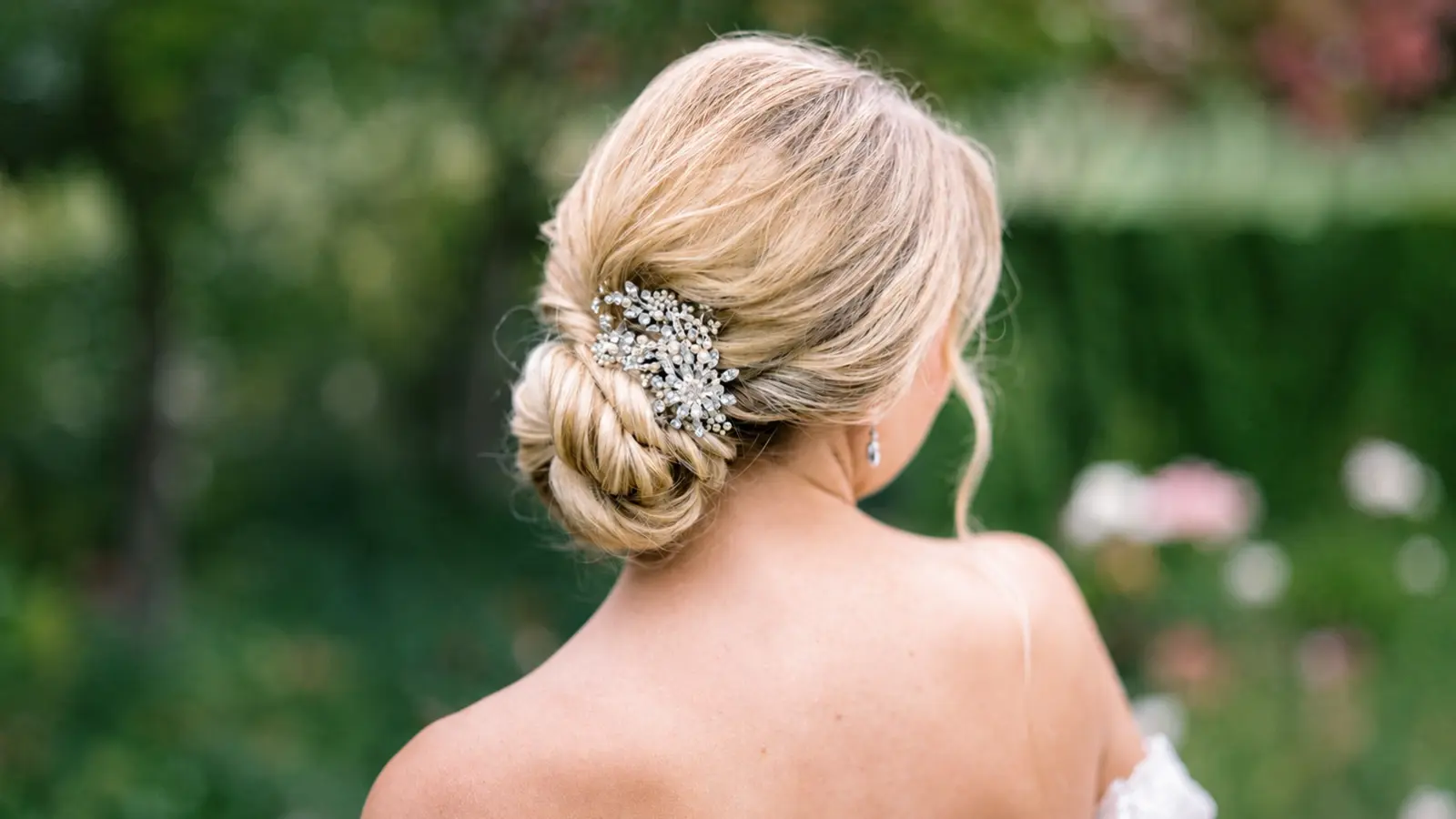
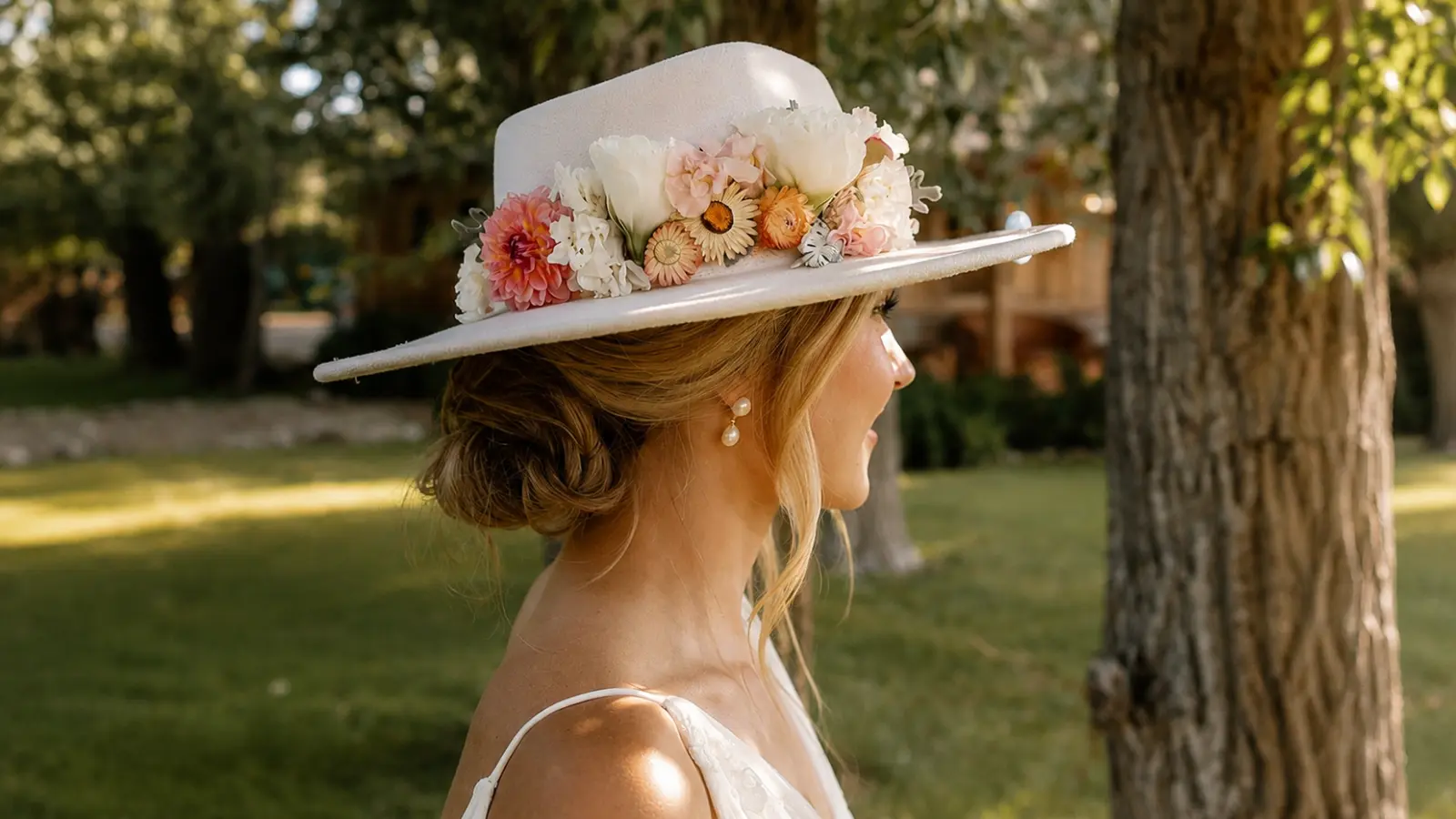
A veil is one option, not the only one. Many brides choose a different kind of hair accessory that serves a similar visual function without the fabric element. Common alternatives include floral crowns and fresh flower arrangements worked into the hair, embellished headbands and hair combs, structured fascinators, ribbon-tied hair bows, and simple hairpins or barrettes with pearl or crystal detail. Some brides choose no headpiece at all and let the hairstyle stand on its own.
None of these are compromises. They’re legitimate choices that often photograph just as beautifully as a veil and can feel more aligned with a particular aesthetic or personal style. For a full look at what’s possible, see our guide to wedding veil alternatives.
Wedding Veil Ideas, Styles & Inspiration for Every Bride
Discover beautiful wedding veil ideas, from cathedral and fingertip veils to mantilla, birdcage, lace, pearl, and modern bridal styles. Find inspiration to choose the perfect wedding veil for your dress and wedding style.
The Perfect Wedding Veil Is the One That Feels Right for You
Choosing a wedding veil isn’t about following tradition or selecting the longest style available—it’s about finding the one that completes your bridal look and feels authentic to who you are. Whether you love the timeless elegance of a cathedral veil, the romance of a mantilla, the simplicity of a fingertip veil, or decide not to wear a veil at all, the right choice is always the one that makes you feel confident and comfortable.
Now that you understand the different veil styles, lengths, fabrics, traditions, and practical considerations, you’ll be able to approach your bridal appointment with clarity instead of confusion. The perfect wedding veil isn’t simply another accessory—it’s the finishing touch that brings your entire bridal vision together.
Frequently asked questions (FAQ)
How do you choose the right wedding veil?
Choose your wedding veil by considering your dress silhouette and details first, followed by the ceremony setting, hairstyle, desired level of formality, and how long you plan to wear it. A simple veil often complements a heavily embellished gown, while a lace, pearl, or embroidered veil can add detail to a minimalist dress. The best choice should feel proportional to the gown and practical for the venue rather than following one universal rule.
Do you have to wear a veil at your wedding?
No. Wearing a veil is entirely optional unless it has a specific role within your cultural or religious ceremony. Many brides choose a headband, tiara, floral accessory, decorative comb, bow, or no headpiece at all. A veil should be worn because it feels meaningful or completes the bridal look, not because it is considered mandatory.
What wedding veil length should you choose?
The ideal length depends mainly on the dress silhouette, venue, and level of formality. Fingertip veils are versatile and suit many gowns, while chapel and cathedral veils create more drama and generally work best with formal dresses and venues that provide enough space. Shorter birdcage, shoulder, and elbow veils suit modern, vintage, informal, or short-dress looks particularly well.
What is the difference between a cathedral veil and a chapel veil?
A chapel veil usually reaches the floor and extends slightly beyond the gown, commonly measuring around 85 to 95 inches. A cathedral veil is longer, generally around 108 to 120 inches, and creates a more dramatic train behind the bride. Both are formal options, but cathedral veils require more space and usually need additional help with arrangement and movement.
What is a blusher veil?
A blusher is the short front layer of a two-tier veil that can cover the bride’s face during the processional. It may be lifted by the bride, her partner, or a family member before the vows or first kiss. Wearing the blusher over the face is optional, even when the veil includes one.
Should your veil match your wedding dress exactly?
The veil should complement the dress, but it does not need to match every detail precisely. Slight differences among ivory, warm white, and off-white are often difficult to notice under natural or reception lighting. More important than an exact match is whether the veil’s fabric, embellishment, edge, volume, and overall formality work harmoniously with the gown.
When should you remove your wedding veil?
Many brides remove their veil after the ceremony and formal portraits, before cocktail hour or the reception. Others keep it on through the first dance and remove it before dancing begins. Decide the timing in advance and assign the maid of honor, a bridesmaid, or the coordinator to remove and store it safely without disturbing the hairstyle.