Blusher wedding veil is one of the most iconic and symbolic bridal accessories, creating the timeless moment when the bride’s face is gently covered before the ceremony and revealed at the altar. Although this tradition has been part of weddings for centuries, many modern brides still wonder what the blusher actually represents, whether it’s required, and how it fits into today’s ceremonies.
Unlike a standard single-layer veil, a blusher adds an extra front layer that creates both visual impact and ceremonial meaning. The decision to wear it involves more than choosing a veil style—it also includes deciding when it will be lifted, who will lift it, and whether that tradition feels right for your wedding.
This guide explains everything you need to know about the blusher wedding veil, including its history, symbolism, how it works with different veil styles, practical styling tips, and how to decide whether this classic bridal tradition belongs in your ceremony.
What Is a Blusher Veil?
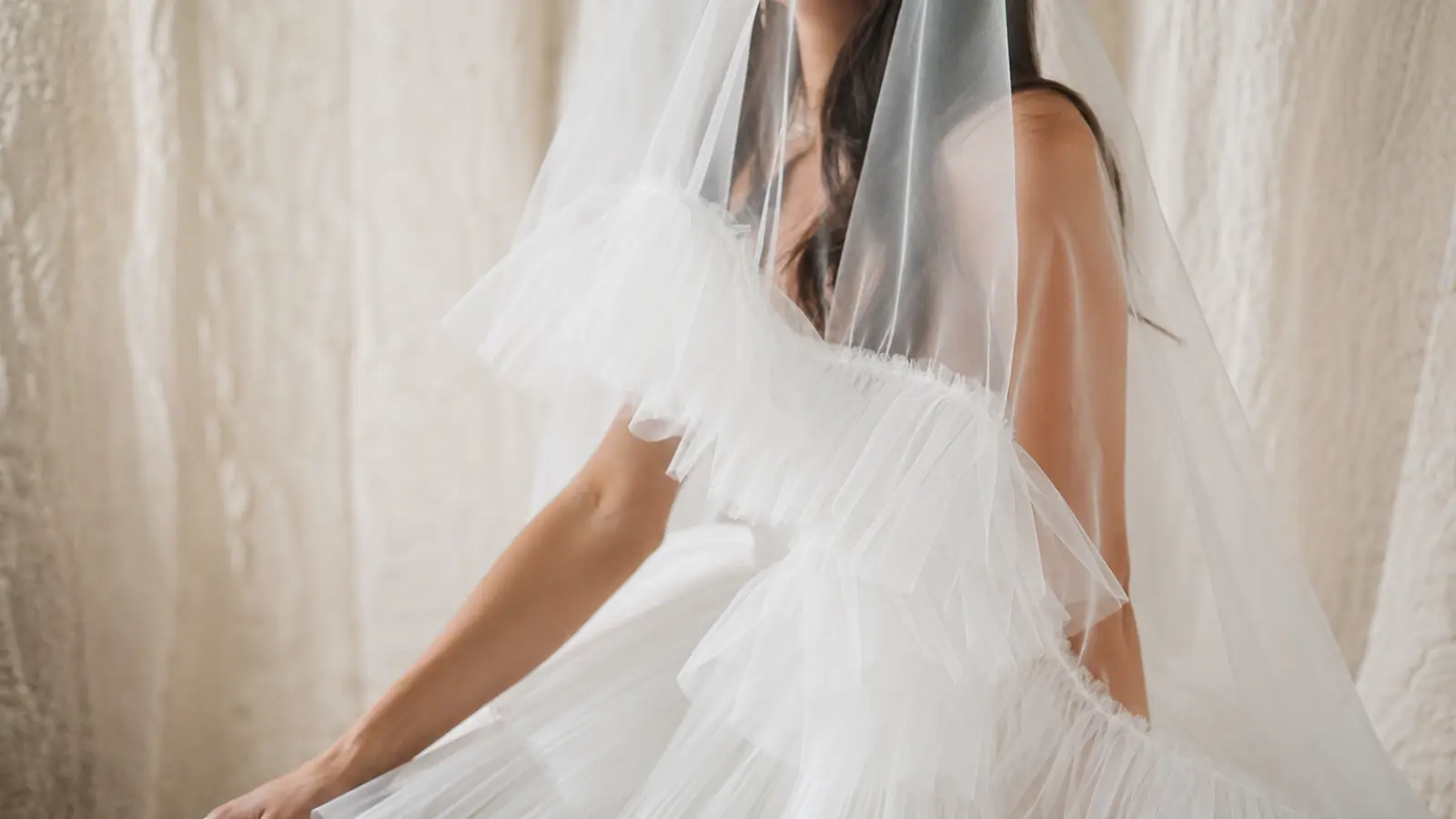
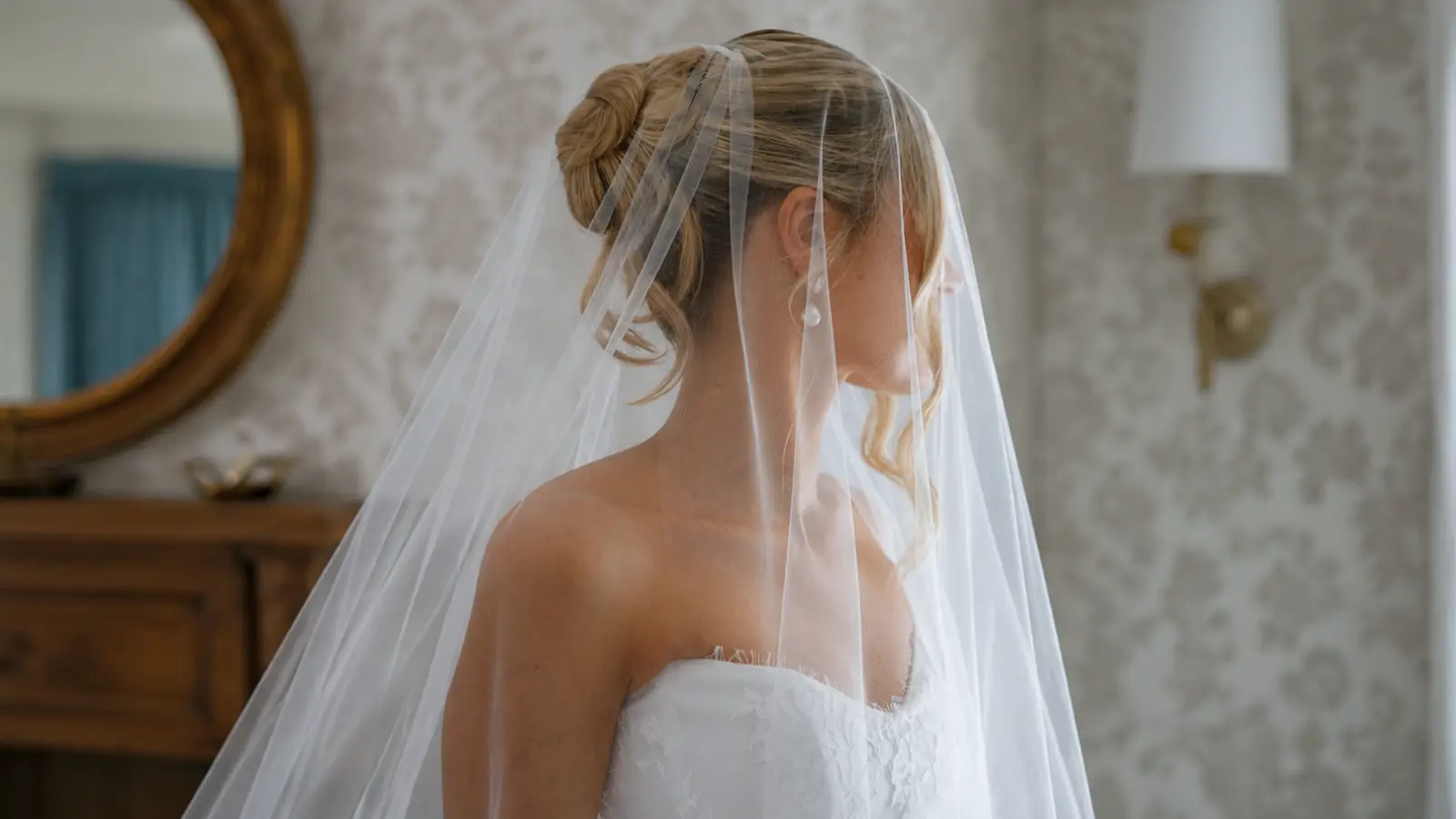
The blusher is the shorter front tier of a two-tier veil. When a two-tier veil is worn with the blusher forward, that front layer drapes over the bride’s face — usually reaching from the attachment point at the crown to somewhere between the chin and the chest. The longer back tier falls behind, creating the veil’s main visual length.
The word “blusher” appears in American bridal tradition from the early twentieth century, though the practice of covering the bride’s face during the ceremony is considerably older. Today, the term is used specifically for this front face-covering layer, whether it is part of a fingertip veil, a chapel veil, or a cathedral veil.
It is worth distinguishing the blusher from a few styles that get confused with it. The blusher is not the same as a birdcage veil, which is a structured short netting that sits at the front of the face and does not lift. It is also not the same as a mantilla, which is a single-piece lace veil that frames the face and does not have a separate lifting layer. The blusher is specifically the removable front tier of a two-layer veil — the part that creates that ceremonial lift moment. For a full comparison of all veil styles, see our wedding veil styles.
Meaning and Tradition
The tradition of covering the bride’s face goes back much further than the modern wedding veil. In many historical cultures, covering the bride was a protective gesture — a way to shield her from evil spirits or envious eyes in the moments before she became a wife. In arranged marriages common through much of European history, it also served a more practical purpose: the groom did not see his bride’s face until the ceremony was already underway, which is where the phrase “lifting the veil” takes on its more dramatic meaning.
By the Victorian era, the veil as a symbol of modesty and purity became firmly established in Western bridal culture, and the two-tier style — with a front layer to be ceremoniously lifted — formalized the moment as a ritual within the ceremony itself. The lift came to represent the groom’s first true “seeing” of his bride, a visual revelation tied to the beginning of their life together.
In modern American weddings, the symbolism has softened but the moment remains. Many couples still find it meaningful, even if they couldn’t cite its historical origins. The blusher creates a pause in the ceremony — a quiet beat before the vows — that many brides describe as one of the most intimate moments of the entire day. For more on the broader symbolism of the wedding veil, see our guide to wedding veil meaning and history.
Do You Have to Wear a Blusher?
No — and this is worth saying plainly, because a surprising number of brides assume that choosing a two-tier veil means committing to the face-covering moment. It does not. The two decisions are separate.
A two-tier veil has a blusher layer built in. Whether you wear that layer over your face during the processional is entirely up to you. Many brides choose a two-tier veil specifically for the fullness and layered look it creates from behind, with no intention of covering their face during the walk. In that case, the blusher is simply flipped back before the procession begins — either pinned loosely in place or left to fall behind the main tier — and worn as a two-layer veil throughout the ceremony.
If you love the idea of the blusher moment but feel uncertain about walking down the aisle with your face partially obscured, there is a practical middle ground: wear the blusher over your face for just the first few steps of the processional, then have a family member lift it at the end of the aisle rather than waiting until the altar. Some brides also prefer the lift to happen at the start of the vows rather than immediately upon arrival, which gives them a few minutes to settle before the moment.
The table below can help you decide which approach fits your situation.
| The Blusher Works Well If… | Consider Skipping or Flipping It If… |
|---|---|
| You want a ceremonial lift moment | You prefer to see guests clearly during the walk |
| Your ceremony is indoors with no wind | Your ceremony is outdoors and the wind is unpredictable |
| Your makeup is fully set and matte | You have heavy or wet-finish products that may transfer |
| Your partner and officiant know the plan | The logistics haven’t been discussed in advance |
| You enjoy the feeling of that private, veiled moment | The idea of covered vision makes you anxious |
| You’re wearing a very formal, traditional gown | Your dress is more relaxed, minimalist, or modern |
There is no wrong choice here. The blusher is a tradition, not a rule, and the version that makes sense for your ceremony is the right one.
When Is the Blusher Lifted?
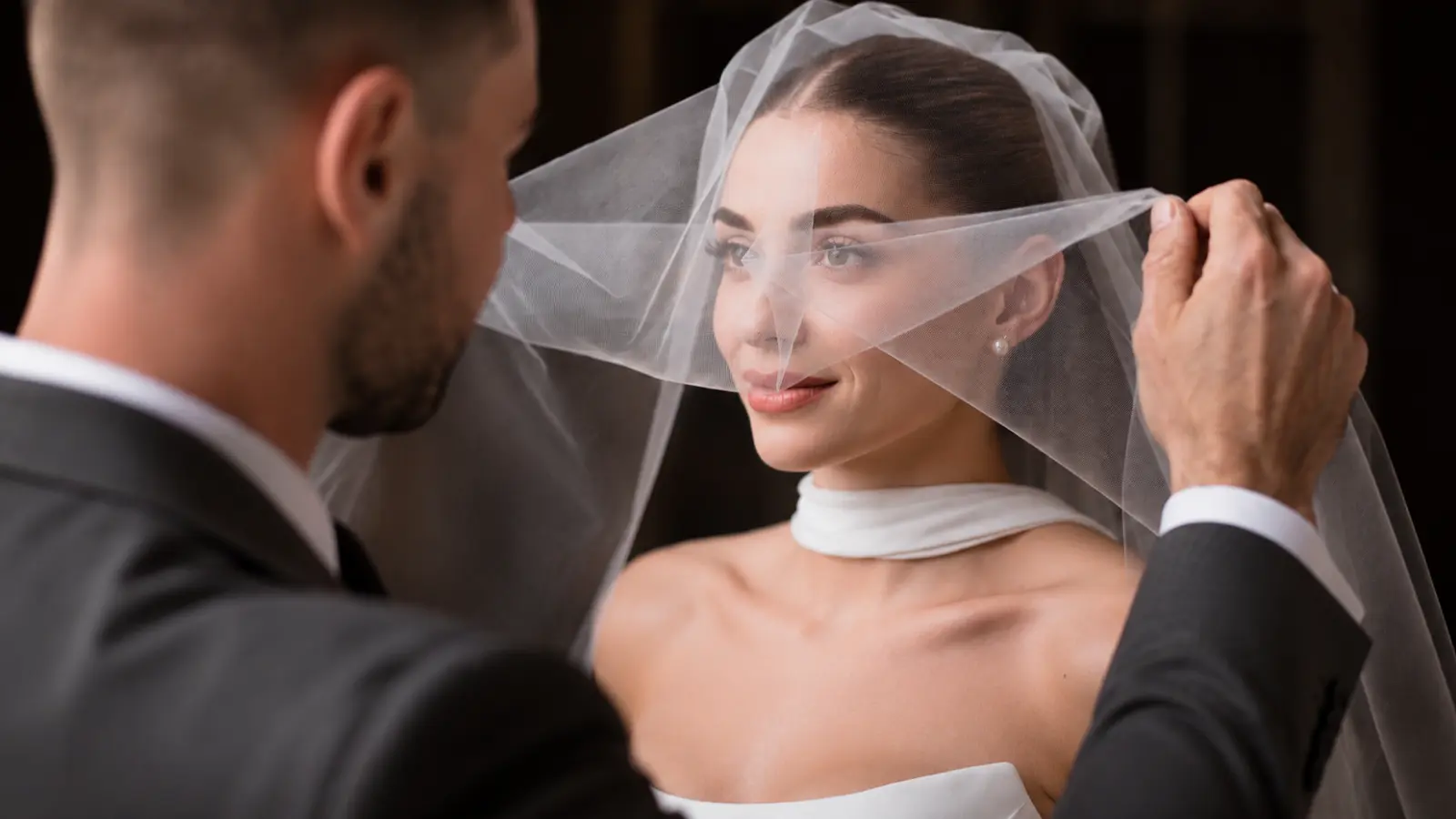
The timing of the blusher lift varies by ceremony structure, religious tradition, and personal preference. In most modern American ceremonies, there are three common moments where the lift happens.
At the End of the Aisle, Before the Vows Begin
This is the most common approach. The bride arrives at the altar, and the groom or a parent lifts the blusher before the officiant begins speaking. It creates a natural visual moment for photos, and allows the bride to be fully present — and fully visible — for the words of the ceremony. This timing works well when the lift is meant to be a quiet personal gesture rather than a public focal point.
Just Before the First Kiss
In some ceremonies, particularly Catholic or more traditional Protestant services, the blusher remains down through the reading of the vows and is lifted only immediately before the first kiss. This creates a longer “reveal” arc and keeps the fabric element more visually prominent throughout the ceremony. It also means the veil must hold its position reliably for a longer period — something worth testing before the day.
During the Hand-Off at the Aisle
When a bride is walked down the aisle by a parent, some families incorporate the blusher lift into that hand-off moment: the parent lifts the veil, kisses the bride, and then “presents” her to the groom with the face uncovered. This is particularly common in ceremonies where the question of “who gives this woman” is part of the service. It adds a layered meaning to the hand-off and gives the parent a defined, visible role.
Whatever timing you choose, brief your partner and your officiant in advance. A blusher lift that happens because someone remembered to do it, rather than because the ceremony reached its natural moment, tends to read awkwardly on video. A quick conversation during the rehearsal is all it takes.
Who Lifts the Blusher?
Traditionally, the groom lifts the blusher. This is the most common practice in American weddings, and for couples who find meaning in the gesture, it creates a genuinely intimate moment — the first clear sight of each other before the vows.
That said, there is nothing prescriptive about it. A parent lifting the veil before presenting the bride to the groom is equally traditional, particularly in ceremonies with a strong family or religious emphasis. The bride lifting it herself is also a valid choice, especially in ceremonies where the couple meets at the altar without a traditional processional escort, or where the bride simply prefers to control the moment.
The one thing that tends to go wrong is when no one has been clearly designated in advance. Rehearsals occasionally skip over the blusher lift as a small detail, and then on the day, everyone waits for someone else to act. Assign the moment to one person, confirm it at the rehearsal, and let the ceremony carry it naturally from there.
Blusher With Different Veil Styles
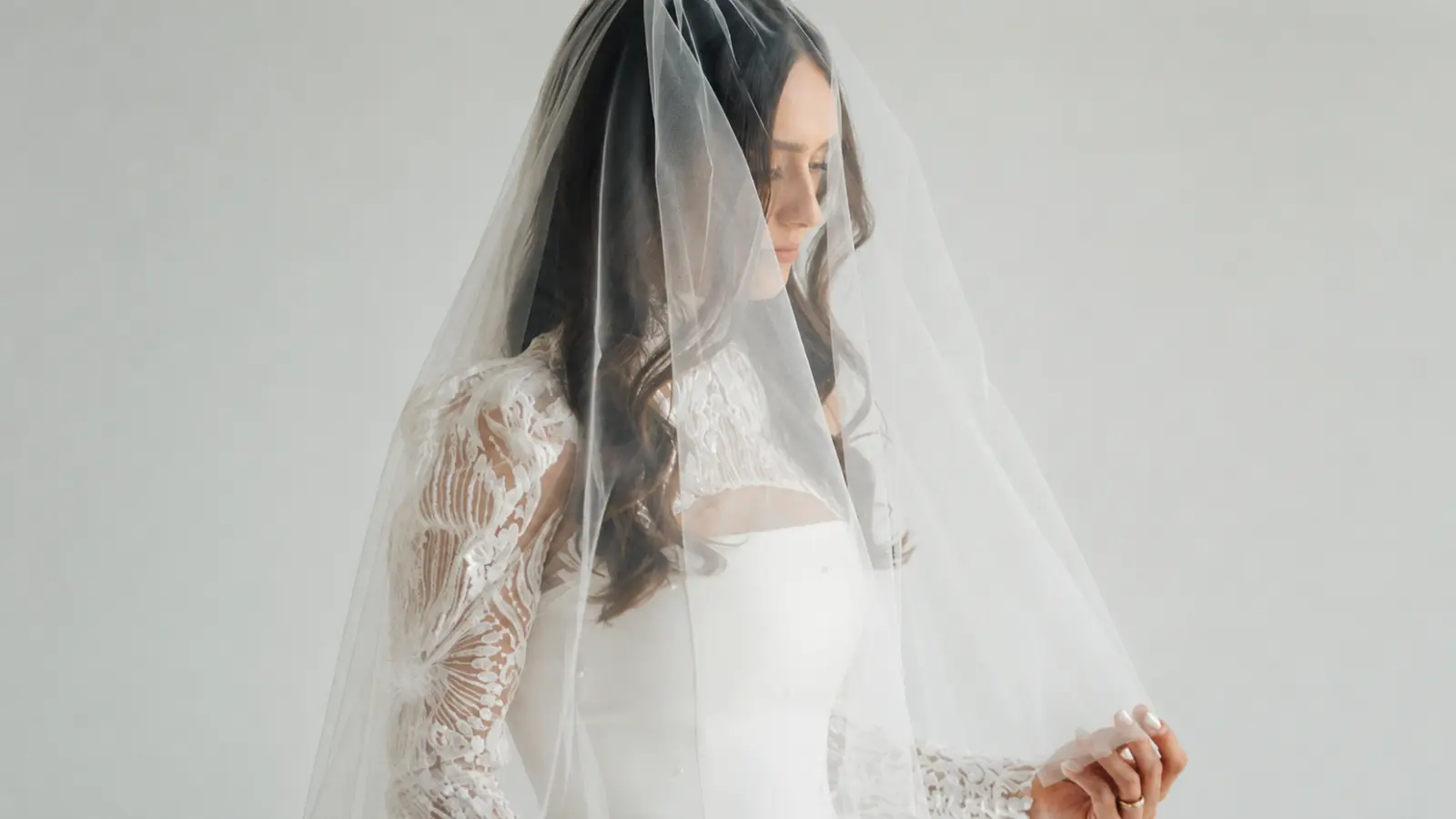
The blusher is a structural feature, not a style on its own — which means it can appear in combination with several different veil types. Each combination has a slightly different feel and practical profile.
Blusher With a Cathedral Veil
This is one of the most traditional and photographically dramatic combinations. A cathedral-length back tier paired with a blusher front layer creates the full ceremonial bridal silhouette: a veiled face during the processional, a sweeping train, and a lift moment at the altar. It is the highest-formality version of the blusher and works best in large churches, ballrooms, or venues where the cathedral train has room to lay properly. For everything about styling and managing a cathedral-length veil, see our cathedral wedding veil.
Blusher With a Fingertip or Chapel-Length Veil
A two-tier veil at fingertip or chapel length is arguably the most practical blusher option for brides who want the lift moment without the logistical demands of a cathedral train. The overall scale is more manageable, the veil is easier to bustle or remove after the ceremony, and the blusher layer still creates the same face-covering effect during the walk. This combination works across most dress silhouettes and venue sizes.
Blusher With a Mantilla Veil
A traditional mantilla does not have a blusher in the conventional sense — it is a single-piece lace veil draped over the head, and the face framing it creates is built into the design. Some brides request a two-tier interpretation of the mantilla style with a short front layer, but this is a departure from the classic form and requires a skilled seamstress or specialty bridal salon to execute well. If you love the mantilla look but also want the lift moment, this is worth exploring as a custom order. For more on the mantilla itself, see our mantilla wedding veil.
Blusher With a Birdcage Veil
A birdcage veil and a blusher serve overlapping but distinct functions — both cover part of the face, but in very different ways. The birdcage is structured netting that does not lift; it sits at the face as a fixed accessory. A few brides layer a short blusher behind a birdcage for a highly editorial, vintage-inspired look, but this is a style decision rather than a traditional pairing. It is not a common combination, and it requires careful coordination with your stylist so the layers work together rather than competing.
How to Secure a Blusher So It Stays Put
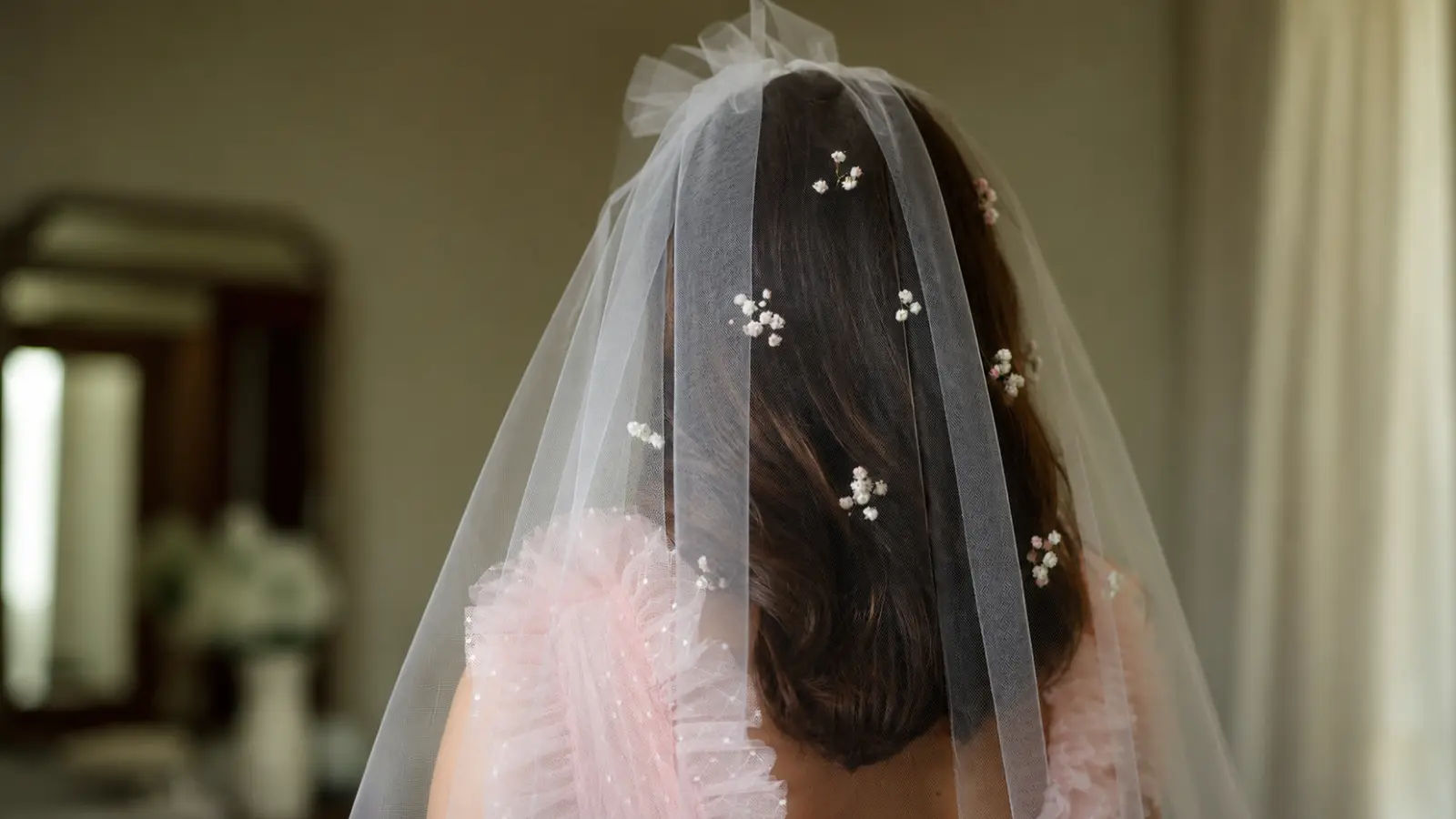
One of the most common blusher complaints is that it flips back on its own before the lift moment. Understanding how to wear a wedding veil securely can help prevent this, especially when the issue comes from fabric weight, blusher length, or a comb that is not gripping the hair properly.
- Choose the right length for your blusher. A blusher that ends above the chin tends to catch air and flip. One that reaches at least to the chin, ideally to the chest, has enough weight and surface area to stay in place during the walk. If you are planning an outdoor ceremony, err toward the longer end.
- Use a comb with real grip. Plastic combs with wide teeth hold better than very fine-toothed combs in most hair types. Your stylist should test the comb before the ceremony begins, not just at the trial — hair behaves differently on the wedding day than in a relaxed salon setting.
- Consider the fabric weight. Heavier fabrics like organza hold position more reliably than very fine silk tulle in a breeze. If you are getting married outdoors, mention this specifically when you are choosing the veil so the fabric recommendation accounts for your conditions.
- Do a walk test at the rehearsal. Have someone observe you walking down the rehearsal aisle with the blusher in position. If it flips during the rehearsal, it will almost certainly flip during the ceremony. Adjust the placement or secure it with a small, discreet pin if needed — just confirm with your stylist that the pin placement won’t damage the fabric.
A blusher that stays in position through the entire processional without assistance is the goal. If you cannot get there through placement and fabric alone, it is better to know that before the ceremony than to discover it halfway down the aisle.
Makeup Transfer and Photography Tips
The blusher rests directly on the face, which means it is in contact with whatever is on your skin. For most brides, transfer is a manageable concern rather than a dealbreaker — but it does require a little planning.
Minimizing Makeup Transfer
The most effective approach is to give your makeup time to fully set before the veil goes on. Ask your makeup artist to apply a setting spray as one of the final steps, then wait at least ten minutes before placing the blusher. Avoid layering product near the hairline and forehead where the veil makes the most contact. If you are wearing a bold lip, consider applying it after the blusher is placed and before it comes down — or simply plan on a light touch-up immediately before the processional.
Also consider the fabric. Different wedding veil materials can behave differently against makeup: very fine silk tulle is more porous and tends to pick up product more readily than bridal illusion tulle. If transfer is a genuine concern, a slightly crisper, less porous fabric is the more forgiving choice.
Photographing the Blusher Lift
The blusher lift is one of the most photographed moments in a ceremony, and it is worth a brief conversation with your photographer before the wedding. A few things make the difference between a shot that really works and one that just documents the moment.
- Brief your photographer on timing. If the lift happens at the altar before the vows begin, they need to be in position early. If it happens just before the kiss, the position changes. A quick walkthrough at the rehearsal — or at minimum a detailed timeline sent ahead of time — helps them anticipate the moment rather than react to it.
- Consider the light direction. Sheer fabric photographs differently depending on where the light is coming from. A front-lit blusher can look nearly invisible; a side or backlit one shows the texture and translucency of the fabric beautifully. If your ceremony space has side windows or a strong directional light source, mention this so the photographer can plan their position accordingly.
- Allow for a posed version during portraits. Many brides also recreate the blusher lift during their portrait session — simply putting the blusher back down and having the groom or a parent lift it again in a calmer setting. This gives the photographer more control over framing and light and often produces the more polished version of the shot. It takes about two minutes and is almost always worth doing.
The blusher lift is one of those ceremony moments that benefits enormously from being photographed by someone who knew it was coming. A brief heads-up to your photographer is one of the more useful small preparations you can make before the day.
What to Avoid
A few consistent mistakes come up when brides are planning the blusher. Most of them are easy to sidestep once you know to look for them.
- Not discussing it with your partner before the ceremony. The most common blusher fumble is a partner who wasn’t sure they were supposed to lift it, or who wasn’t confident about the timing, and ended up either waiting too long or skipping it altogether. It is a quiet two-sentence conversation at the rehearsal, and it makes the actual moment feel natural rather than hesitant.
- Wearing the blusher without testing it first. If you have not walked in the blusher during a fitting or a rehearsal, you do not know whether it stays in position, whether it obstructs your vision more than you expected, or whether it makes you feel the way you imagined. Test it before the wedding day.
- Choosing a very short blusher for an outdoor ceremony. Wind is unpredictable, and a very short blusher is much more vulnerable to it than a longer one. If your ceremony is outside, go longer or go with a crisper fabric — or skip the face-covering moment entirely and simply wear the blusher flipped back.
- Forgetting to coordinate the lift moment with the officiant. In ceremonies with a highly scripted structure, the blusher lift needs to happen at a clearly defined point in the service. If your officiant doesn’t know the plan, there is a chance the moment gets buried under the opening words of the ceremony. A quick note on your ceremony timeline for the officiant solves this entirely.
- Assuming a two-tier veil is the only way to get a blusher. Some brides love the blusher concept but don’t want the fuller, layered silhouette a two-tier veil creates. A single-tier veil can be worn forward over the face as a blusher and pinned back after the lift. It creates a different effect than a structured two-tier veil, but it is a legitimate option worth exploring with your bridal salon.
The blusher is genuinely one of the more logistics-dependent choices in wedding planning — not complicated, but worth thinking through carefully so that the moment unfolds the way you imagined it rather than the way it happened to unfold.
Blusher Wedding Veil Inspiration
Discover elegant blusher wedding veil inspiration featuring timeless bridal traditions, romantic cathedral veils, classic fingertip styles, and graceful ceremony moments. Explore beautiful ideas for wearing a blusher veil, styling different veil lengths, and creating unforgettable wedding photographs with this iconic bridal accessory.
Is a Blusher Wedding Veil Right for You?
A blusher wedding veil is more than a beautiful bridal accessory—it creates one of the most memorable and symbolic moments of the ceremony. Whether you choose to wear it over your face, flip it back before walking down the aisle, or simply appreciate its layered design, the blusher adds a sense of tradition and emotion that many brides continue to love.
The best choice is the one that reflects your personal style and the type of ceremony you want to create. By understanding its meaning, planning the timing of the veil lift, and choosing a style that complements both your dress and your wedding, you can decide whether a blusher veil is the perfect finishing touch for your bridal look.
Frequently asked questions (FAQ)
Should you wear a blusher wedding veil?
A blusher is a wonderful choice for brides who want the traditional face-covering moment during the ceremony or appreciate its symbolism and photography. If you prefer an unobstructed walk down the aisle or a more contemporary bridal look, you can simply wear the blusher folded back or choose not to use it over your face.
What is a blusher veil?
A blusher is the short front layer of a two-tier wedding veil that covers the bride’s face during the processional. It is traditionally lifted before the vows or the first kiss, creating one of the most recognizable moments in a wedding ceremony.
Do you have to wear a blusher over your face?
No. Choosing a two-tier veil does not require wearing the blusher over your face. Many brides simply fold the front layer back before walking down the aisle while still enjoying the fullness that two layers create.
Who lifts the blusher veil?
The groom traditionally lifts the blusher before the vows or before the first kiss, but many couples choose a parent, officiant, or the bride herself. The important part is deciding in advance so the ceremony flows naturally.
When should the blusher veil be lifted?
The blusher may be lifted at the end of the processional, before the vows, or immediately before the first kiss, depending on the ceremony structure, religious tradition, and personal preference.
Will a blusher veil ruin your makeup?
Not usually. Allowing foundation and setting spray to dry completely before lowering the blusher significantly reduces transfer. Brides wearing bold lipstick may also choose a quick touch-up after the veil is lifted.
Can you wear a blusher with a cathedral veil?
Yes. A cathedral veil with a blusher is one of the most traditional bridal combinations. The short front layer creates the ceremonial reveal while the cathedral tier provides the dramatic train behind the bride.