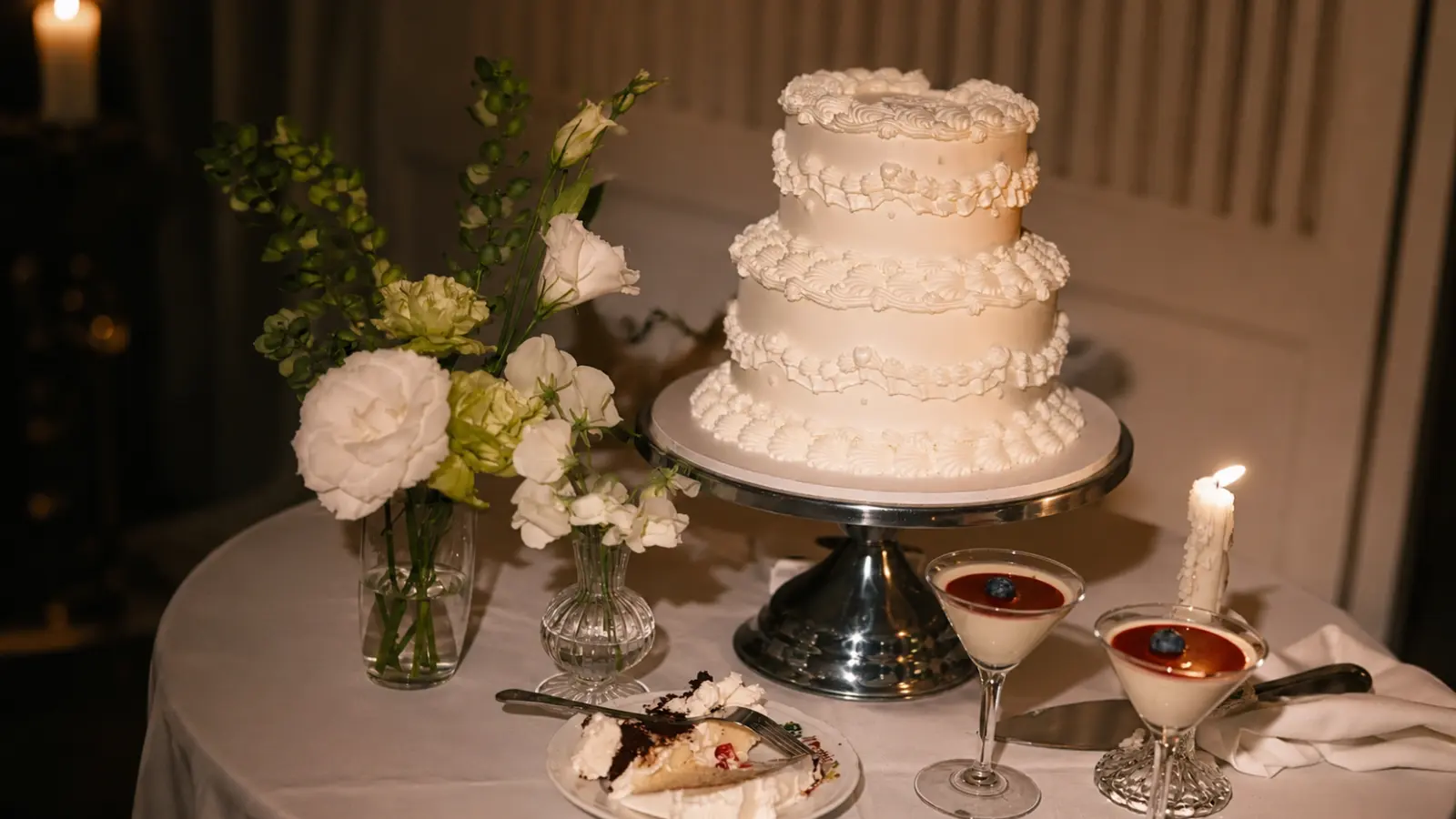
Wedding cake stands are decorative and structural displays used to elevate, support, and showcase wedding cakes during the reception. The right stand helps frame the cake, improve photographs, match the wedding style, and safely support the cake’s size and weight throughout the event.
Choosing a wedding cake stand is about more than finding a beautiful design. The size, height, material, weight capacity, table setup, and overall reception style all affect whether the final cake display looks intentional and functions correctly on the wedding day.
This guide explains how to choose a wedding cake stand, including the right size for different cakes, gold, silver, wood, acrylic, and glass options, tiered cake stands, renting versus buying, styling ideas, and the safety details every couple should confirm before the reception.
What Size Cake Stand Do You Need?
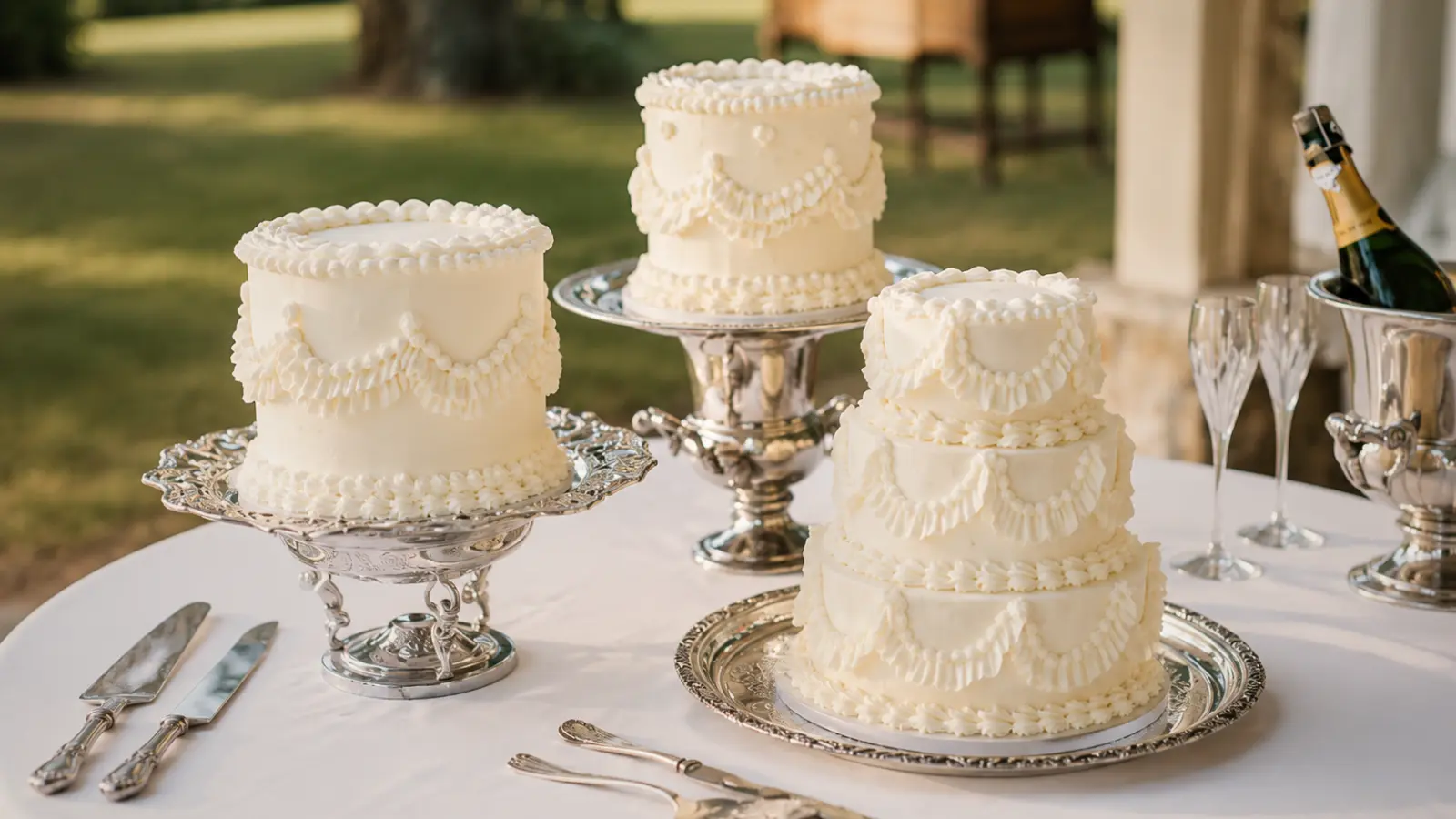
A helpful size rule for wedding cake stands is to choose a stand about 1 to 2 inches larger in diameter than the bottom tier of the cake. If your bottom tier is 10 inches across, the stand should be 11 or 12 inches. This proportion ensures the cake sits securely on the stand surface, the edge of the stand is visible as a deliberate frame around the cake’s base, and the cake does not hang over the edge in a way that looks structurally precarious.
Where couples go wrong most often is guessing the bottom tier size rather than confirming it with their baker. Wedding cakes can have bottom tiers ranging from 8 inches to 16 inches depending on the number of guests and the design, and the difference between a 10-inch and a 14-inch bottom tier is significant for stand selection. Before purchasing or renting any stand, ask your baker for the exact dimensions of the bottom tier and confirm the stand size based on that measurement.
Understanding diameter vs. display surface
One detail that trips up many couples: the nominal size of a cake stand and its actual display surface are not always the same. A stand marketed as “12 inch” might have a display surface — the flat top plate where the cake sits — of 10.5 inches, with the remaining diameter in the decorative rim or base. If the stand’s display surface is smaller than the cake’s bottom tier, you have a problem. Ask specifically about the usable display surface when renting or purchasing, particularly for decorative stands with wide ornamental rims.
Wedding Cake Stands by Cake Size and Tier Count
Different cakes require different stands — not just in diameter, but in structural capacity, weight distribution, and height. Here is a practical breakdown by cake configuration.
These are general planning ranges only. Actual cake weight depends on flavor, filling density, frosting type, fondant, internal support, and the baker’s construction method.
| Cake Configuration | General Weight Range | Recommended Stand Size | Stand Type |
|---|---|---|---|
| 1-tier display cake (6–8 inch) | 3–8 lbs | 8–10 inch stand | Any — decorative glass, acrylic, wood, metal |
| 2-tier cake (6+8 or 8+10 inch) | 8–18 lbs | 10–12 inch stand | Metal or reinforced acrylic; verify weight limit |
| 3-tier cake (6+8+10 or 8+10+12 inch) | 15–30 lbs | 12–14 inch stand | Heavy-duty metal or bakery-grade platform; glass needs verification |
| 4-tier cake | 25–45 lbs | 14–16 inch stand | Heavy-duty metal only; confirm rated capacity in writing |
| 5+ tier cake | 40–70 lbs | 16–18 inch stand or bakery platform | Baker typically provides specialized support; discuss at booking |
The weight estimates above are general planning figures — especially for larger designs like three-tier wedding cakes, since actual cake weight varies significantly based on flavor, filling density, frosting type, and internal support structure.
A dense carrot cake will weigh more than a light sponge of identical dimensions; a fondant-covered cake will weigh more than a buttercream one. Ask your baker for a weight estimate before finalizing stand selection, particularly for cakes larger than three tiers.
Gold, Silver, Wood, Acrylic, and Glass Stands
The material of the cake stand shapes the entire visual register of the cake table — and the choice is not just aesthetic. Different materials have different weight capacities, different surface stability characteristics, and different behaviors in warm or humid reception environments. Here is a complete breakdown of each.
Gold and silver metal stands
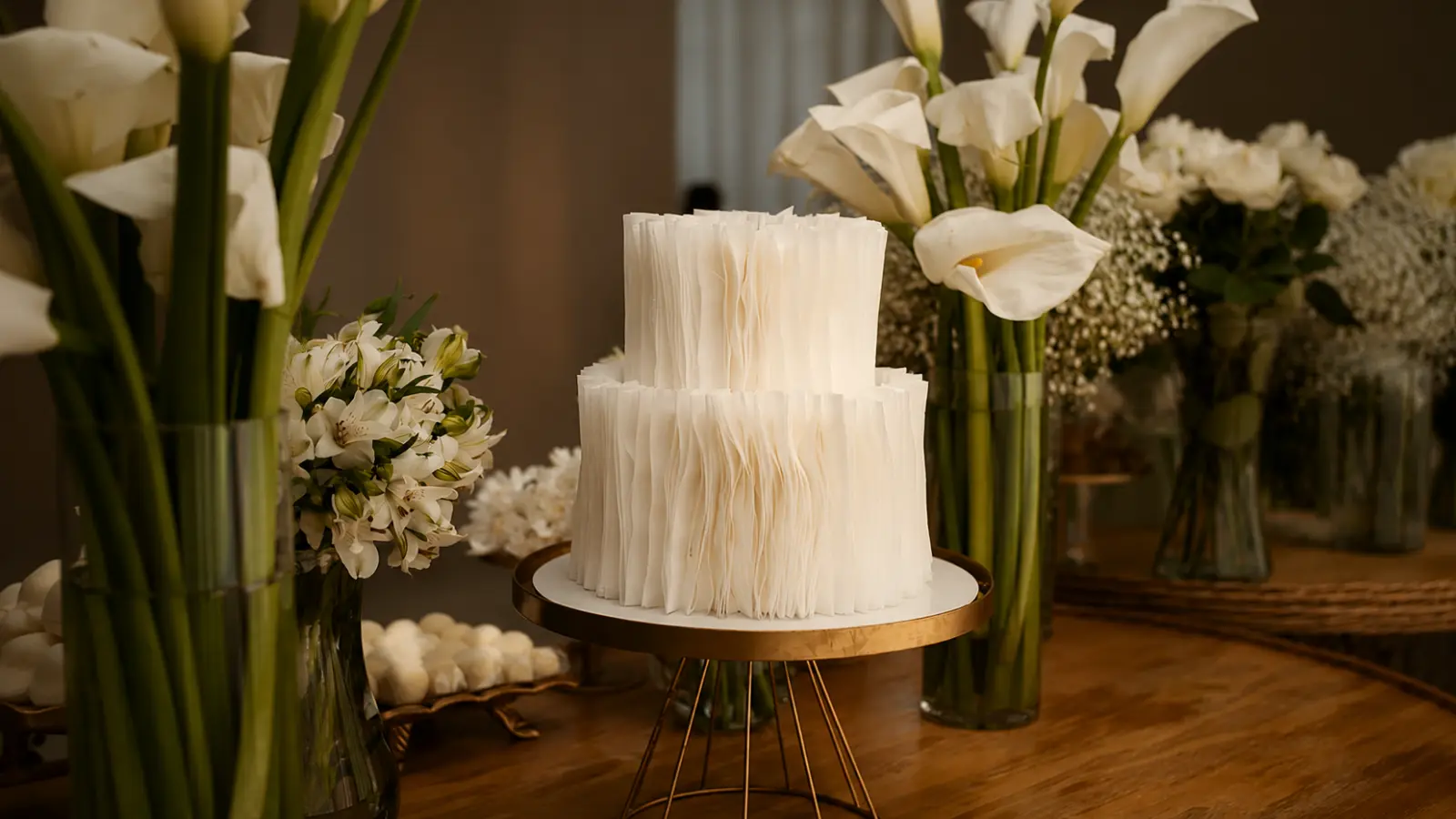
Metal cake stands — in gold, silver, rose gold, or brushed finishes — are among the most versatile and structurally reliable options for wedding cakes. They photograph well in many lighting conditions, work across a wide range of reception styles, and often have higher weight ratings than glass or decorative acrylic alternatives. Their surface is stable and non-slip when the cake drum is placed correctly, and their durability means they are available through rental inventories at most wedding rental companies.
Gold stands read as warm, luxurious, and celebratory — suited to maximalist, garden, and glam aesthetics. Silver stands read as clean and formal — suited to classic, minimalist, and modern wedding aesthetics. Rose gold occupies a middle ground that feels warm, romantic, and softer than traditional yellow gold. Brushed metal finishes photograph with less glare than polished finishes, which is worth considering if the cake table will be in direct light during photographs.
Wood stands
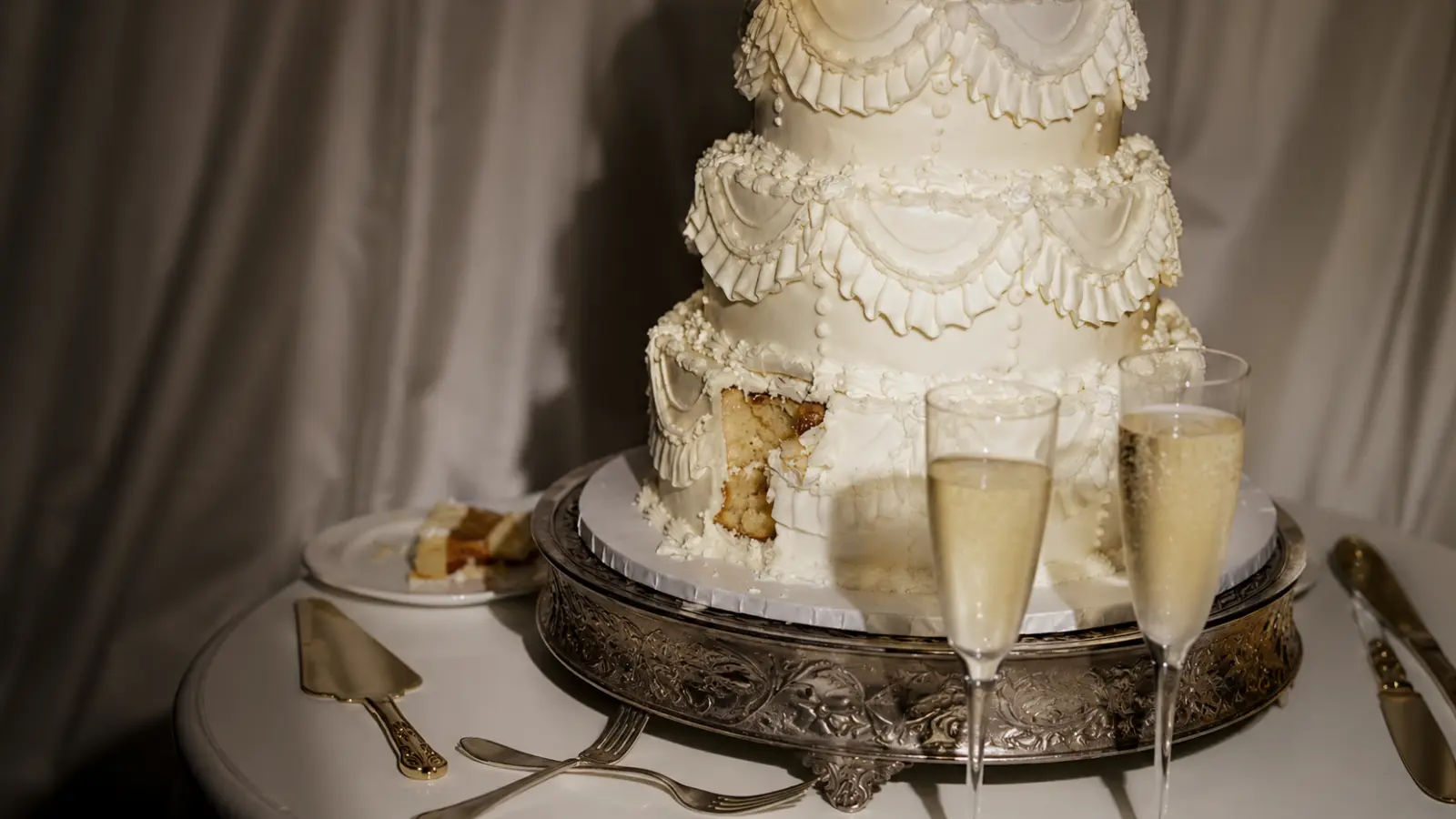
Wood cake stands — in raw, whitewashed, stained, or painted finishes — are a natural choice for rustic, bohemian, farmhouse, and outdoor weddings. They add warmth and organic texture that metal cannot replicate, and they connect visually with natural floral arrangements, wooden signage, rustic wedding cakes, and linen table styling.
The practical consideration with wood stands is surface stability. A slightly uneven wood surface — common in handmade or vintage pieces — can create a tilt that becomes visible (and potentially dangerous) under the weight of a heavy cake. If using a wood stand, test it on the actual table surface before the wedding day. Place a level on the display surface and confirm it reads flat. A subtle tilt that is invisible to the eye can affect how a heavy cake sits after hours in a warm room.
Acrylic stands
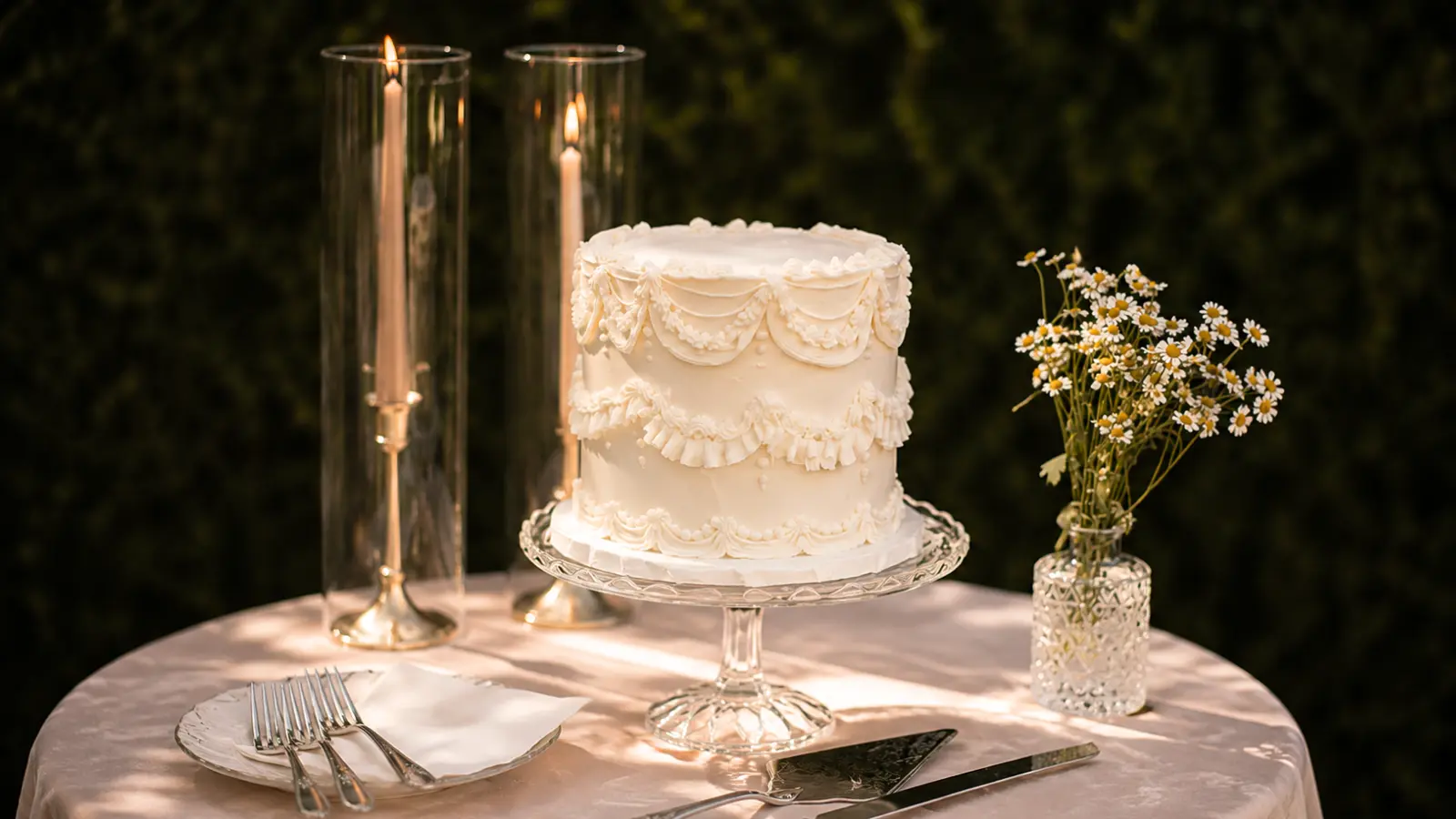
Acrylic cake stands offer a clear, modern aesthetic at a lower price point than glass. They are more durable than glass — significantly less likely to chip or shatter if bumped — and they create the visual effect of the cake floating above the table surface, which is particularly striking with minimalist or contemporary wedding designs, especially modern wedding cakes. Acrylic scratches more easily than glass and can show fingerprints and smudges, so they require careful handling and cleaning before the wedding.
Weight capacity varies significantly by manufacturer — some acrylic stands are decorative pieces rated for 15 to 20 pounds, while bakery-grade acrylic platforms are designed for much heavier loads. Confirm the rating before using an acrylic stand for any cake over 15 pounds, and ask your baker whether they are comfortable setting the cake on the specific stand you have selected.
Glass and crystal stands
Glass cake stands can be one of the most visually elegant options, but they also require the most caution. They are heavy, they are fragile, they have lower weight limits than metal alternatives, and they require a perfectly level and completely stable surface. A glass stand that wobbles slightly on an uneven floor, or that is placed too close to a high-traffic area, can create a real stability concern under the weight of a wedding cake.
That said, a high-quality glass or crystal pedestal stand under a small, beautifully decorated display cake can create a striking wedding cake presentation in the right venue and lighting. The light that passes through glass creates effects that no other material achieves. The key is using glass for display cakes of appropriate weight and ensuring the setup is stable before the cake is placed on it.
| Material | Weight Capacity | Best For | Key Risk |
|---|---|---|---|
| Metal (gold/silver) | High (35–75 lbs) | Many styles and most tier counts, with confirmed weight rating | Polished finishes can reflect harshly in flash photography |
| Wood | Moderate (25–50 lbs) | Rustic, bohemian, outdoor | Surface may not be perfectly level — test before the day |
| Acrylic | Variable (15–50+ lbs) | Modern, minimalist, contemporary | Rating varies widely by product — confirm before heavy cakes |
| Glass / crystal | Lower (15–25 lbs) | Small display cakes, formal settings | Fragile; requires stable, level surface; lower weight limit |
Cake Stands for Tiered Wedding Cakes
Tiered wedding cakes present a specific set of display challenges that single-tier cakes do not. The weight compounds with each additional tier. The height of the assembled cake changes the visual relationship between stand height and cake height. The internal support structure — dowels, rods, or plates installed by the baker — is what actually holds the tiers apart and prevents collapse, but the external stand needs to support the full assembled weight on its display surface.
Many couples assume that because the baker installs supports inside the cake, the stand does not need to support the full weight, but the stand still matters. The cake’s internal supports distribute the weight of upper tiers through the lower tiers, and the entire assembly — all tiers together — rests on the stand’s display surface. A stand rated below the estimated cake weight should not be used for a larger tiered cake, even when the cake has internal supports.
The separator plate vs pedestal approach
Some tiered wedding cakes are displayed using a separator system — decorative pillars or spacers between each tier creating visual space and height between levels — rather than stacking tiers directly on each other. This approach is often associated with vintage wedding cakes and formal wedding aesthetics. When a separator system is used, the bottom tier typically sits directly on the cake stand, and the additional structure adds both visual height and significant additional weight. Confirm with your baker whether a separator system is planned and adjust stand selection accordingly.
Floating tier stands
A specific stand type designed for tiered cakes — called a floating tier stand or acrylic tier stand — uses clear rods or arms to hold each tier at a fixed distance from the others, creating the appearance of tiers floating in space. This is a specifically contemporary aesthetic and is highly effective when executed well. The engineering of these stands is more complex than a simple pedestal, and quality varies significantly. If using a floating tier system, source it from a reputable baker-supply company rather than a general home goods retailer, and confirm that the specific stand is designed for the weight and configuration of your cake.
Cake Stand Height — Why It Matters More Than Most Couples Realize
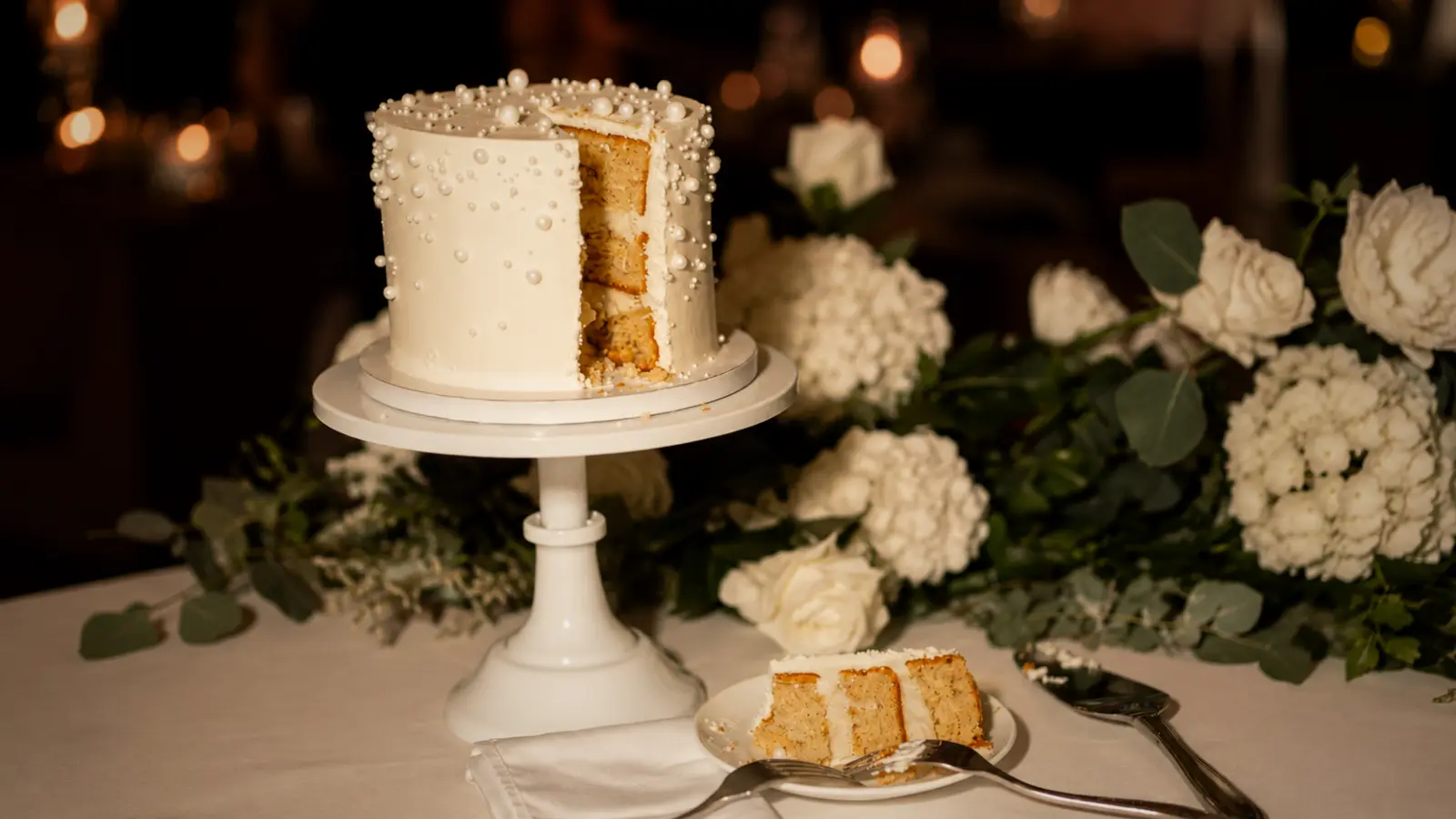
Stand height is easy to overlook, but it can have a major effect on how the cake appears in photographs — which is where the cake will be remembered long after the wedding is over.
A cake placed directly on a table, or on a very low platform, disappears into the horizontal plane of the table surface in photographs. The base of the cake blends into the tablecloth, the cake appears to have no separation from the table, and the overall image reads as flat. A cake elevated 4 to 8 inches above the table surface has a clear visual distinction between the stand and the table, which gives the cake three-dimensional presence in photographs and draws the eye upward through the tiers in the intended direction.
Practical considerations by stand height:
- 1–2 inches (very low platform or board): Provides minimal visual elevation. Appropriate for rustic displays where the table surface itself is decorative, or for very large cakes where adding height would create a stability concern.
- 3–5 inches (standard pedestal): The most common and versatile height range. Provides clear visual elevation without significantly raising the cake’s center of gravity.
- 6–10 inches (tall pedestal): Creates dramatic visual impact, particularly for small wedding cakes where the height contrast between stand and cake reads as architectural. Requires a stable, level surface and confirmed weight capacity.
- 10+ inches (column pedestal or tall plinth): Statement display for very formal or maximalist receptions. The cake needs to be appropriately scaled — a small cake on a very tall stand can look precarious rather than dramatic. Baker involvement in setup is typically required at this height.
One consideration many couples miss: if the reception venue has a low table, an already tall cake on a very tall stand can create visual interference with overhead lighting, floral installations, or ceiling decorations. Confirm the table height and ceiling clearance before selecting a stand height.
Renting vs Buying a Cake Stand
For many couples, renting a wedding cake stand makes more practical sense than purchasing, but it is still worth comparing both options before deciding.
The case for renting
A quality wedding cake stand can be expensive to purchase, especially if it is built for heavy wedding cakes. Renting from a wedding rental company, venue, or baker is often more affordable for a one-time event. After the wedding, a purchased stand requires storage, cleaning, and either keeping indefinitely or reselling. Many couples will not use a dedicated wedding cake stand often after the wedding. For many couples, renting is the more practical financial choice.
The additional advantage of renting is access to a wider range of styles and sizes than most retail channels carry. Wedding rental inventories typically include heavy-duty metal stands in multiple finishes, acrylic platforms in various heights, and specialty stands that are impractical to purchase for a single use. The rental company also handles cleaning and condition — you receive a stand that is ready for display without any preparation.
The case for buying
Purchasing makes sense in specific situations: you entertain frequently and will use the stand for parties and events after the wedding; you have a specific stand in mind that rental inventories in your area do not carry; you want a vintage or artisan stand that is inherently a one-of-a-kind object; or the stand itself is a meaningful object — an heirloom, a gift, something with significance beyond its function.
If purchasing, buy from a bakery supply company rather than a home goods retailer when structural reliability is a priority. Bakery-supply stands are rated for commercial use, which means their weight capacities are tested and accurately represented. Decorative stands from home goods stores are often rated for display purposes only, with weight limits significantly below what a real wedding cake requires.
Where to rent or buy
- Rent: Your venue (ask first — many include a stand), wedding rental companies, your baker’s preferred vendor list, party rental companies
- Buy (decorative): Williams-Sonoma, Pottery Barn, Anthropologie, specialty bridal retailers, Etsy (for vintage and artisan pieces)
- Buy (structural): CakesDecor supply, Global Sugar Art, Iced Jems, Amazon bakery supply category — confirm weight ratings before purchasing
Cake Stand Safety Tips
Wedding cake stand safety is not a topic most planning guides cover in detail, but it is worth treating as a real logistics decision because the cake depends on the stand for both support and presentation. A heavy tiered wedding cake on an unstable stand can create a serious reception problem, not just a damaged dessert.
The safety checks every couple should complete before the wedding
Confirm the weight rating in writing. Ask the rental company or manufacturer for the stand’s rated weight capacity. Do not rely on visual assessment — a stand that looks robust may be rated only for 20 pounds. Share your baker’s weight estimate with the rental company and confirm the stand is appropriate. Get this confirmation in writing or by email.
Test the stand on the actual table surface. If possible, during your venue walkthrough, place the stand on the specific table it will be used on and test its stability. Some tables have slightly uneven surfaces, and a stand that is perfectly stable on a smooth floor can wobble on an older table with minor surface imperfections.
Ask your baker about using a non-slip liner between the cake drum and the stand. A piece of food-safe non-slip material, approved by the baker and cut to the stand’s display surface, can help prevent the cake from sliding on a smooth metal or glass surface. This is particularly important when the venue has air conditioning, which can cause condensation on metal or glass surfaces.
Brief the caterer and venue staff on the stand’s location. The cake table should be in a low-traffic area away from the dance floor’s perimeter, high-traffic server pathways, and anywhere guests might lean or press against the table. Brief the venue’s event staff specifically that the cake table is not to be moved once the cake is placed and that no additional items should be placed on the table surface after setup.
Confirm setup sequence with your baker. The baker should place the cake on the stand — not venue staff, not a well-meaning family member. The baker knows the cake’s weight distribution, its internal supports, and the correct placement on the stand surface. Confirm with your baker exactly who will be responsible for the final placement and at what point in the setup timeline.
Check the floor surface under the cake table. Outdoor weddings on grass, uneven pavers, or gravel present specific challenges for cake stand stability. Ask your baker and venue coordinator how the cake will be stabilized at outdoor receptions — some bakers refuse to use decorative stands at outdoor venues and prefer to deliver directly to a stable indoor surface. If the reception is outdoors, this conversation needs to happen at booking, not the morning of the wedding.
Cake Table Styling and the Stand’s Role
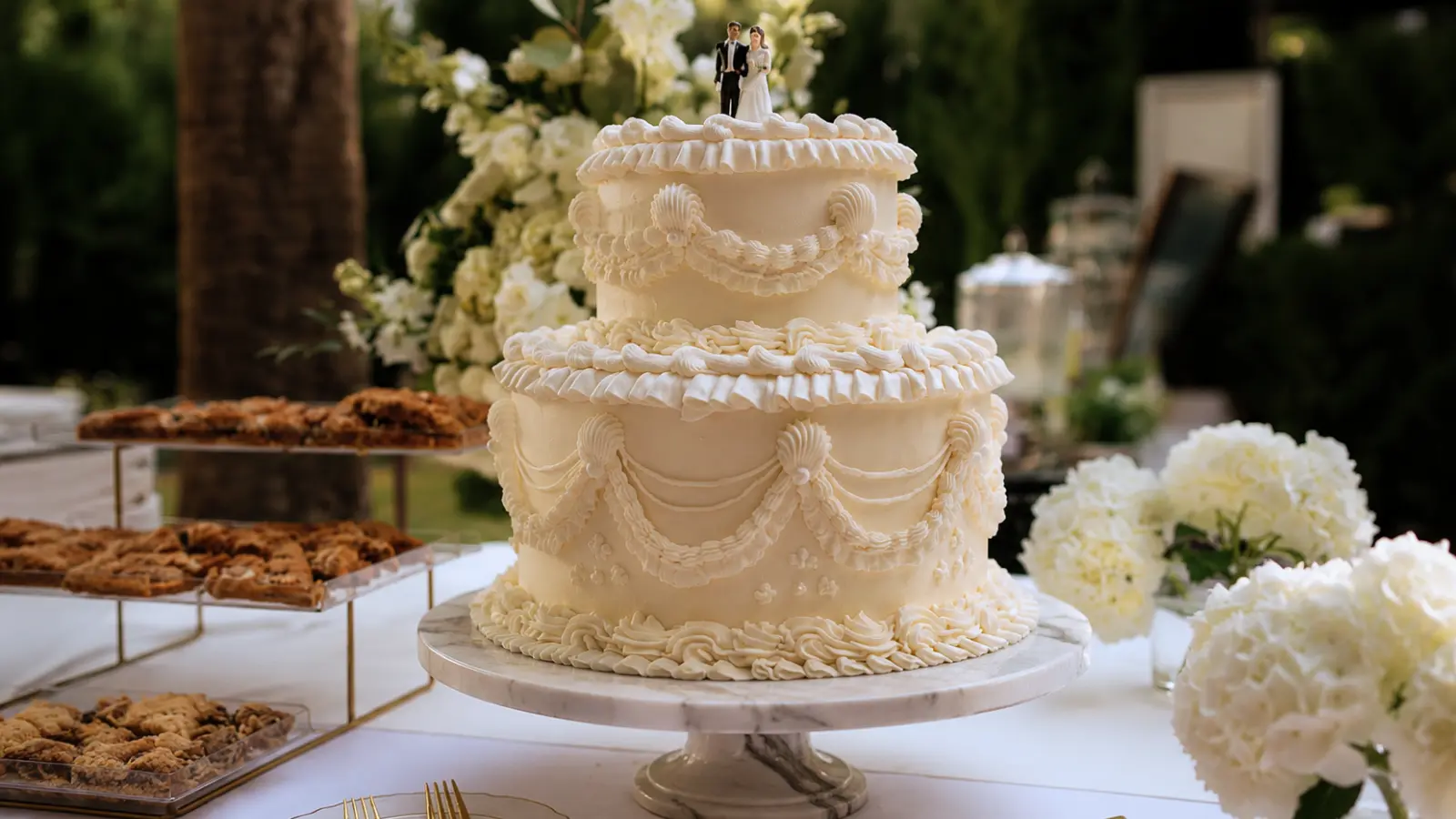
The stand is the structural center of wedding cake table ideas and the overall visual composition — and its height, finish, and proportion relative to the table, the cake, and the surrounding decor determine whether the overall presentation reads as designed or assembled. Many couples focus heavily on surrounding table styling, but the stand itself often has more impact on the final display than they realize.
A few principles that consistently improve cake table photography:
- The stand should create visual separation between the cake and the table. Without elevation, the base of the cake blends into the tablecloth in photographs. Even 4 to 5 inches of elevation creates the visual separation that makes the cake read as a display object rather than something sitting on a table.
- The stand’s finish should relate to one of the existing metallic tones in the reception. A gold stand on a table with silver candle holders and silver cutlery creates a visual dissonance that is subtle but registers. Matching or complementing the dominant metallic in the reception is one of the easiest ways to make the cake table feel cohesive.
- Keep the table surface simple. The cake and the stand are the visual anchors. Additional items — flowers, candles, signage — should support rather than compete. A cake on a beautiful stand surrounded by too many competing elements disappears into the arrangement. A cake on a beautiful stand with one simple flower arrangement beside it can create the same thoughtful balance seen in many floral wedding cakes.
- The tablecloth should fall cleanly. A wrinkled or poorly fitted tablecloth under the stand creates visual noise in every photograph. If the venue provides the table linen, inspect it before the cake is placed and request a replacement if it has been folded in a way that leaves visible creases.
Who Provides the Stand — Baker or Couple?
This is one of the easiest logistics questions to overlook in wedding cake planning, and it can create avoidable stress if it is not clarified before the wedding. The answer varies by baker and needs to be confirmed explicitly in writing at booking.
Some bakers include a stand as part of their delivery and setup service. The stand is part of their kit, it suits the cake they are making, and it is factored into their quote. These bakers will arrive with a stand, place the cake on it, and retrieve it after the event. For couples who use this approach, the stand is entirely the baker’s decision and responsibility — but it is worth asking to see the specific stand ahead of time to confirm it suits the reception’s aesthetic.
Other bakers deliver the cake to a stand that is already at the venue and expect the couple to have sourced it independently. These bakers will set the cake on whatever surface is available but do not provide their own display equipment. In this model, the couple is responsible for the stand — its size, its weight rating, its presence at the venue before the baker arrives.
A third scenario: the venue provides the cake stand as part of its event package. This is common at hotels and full-service venues. Ask your venue coordinator specifically whether a cake stand is included and what it looks like. If the venue’s stand does not suit your aesthetic, most venues will allow you to provide your own.
The confirmation every couple needs before the wedding: ask your baker directly, in writing — “Are you providing the cake stand, or should we source one? If we source it, what are the specifications you need?” That question, answered in writing, prevents the most common last-minute cake logistics failure there is.
Wedding Cake Stand Inspiration Board
Before choosing your final cake stand, it helps to see how different stand sizes, heights, materials, and finishes change the way a cake looks within the reception design. Explore our wedding cake stand inspiration board for gold stands, silver cake displays, wood pedestals, acrylic styles, tiered cake stands, elegant cake tables, and beautiful ideas to find the perfect presentation for your wedding cake.
Final thoughts
A wedding cake stand may seem like a small detail, but it changes how the entire cake display feels. The right choice gives the cake height, balance, stability, and a finished look that connects naturally with the rest of the reception design.
Choosing a stand carefully means thinking beyond appearance alone. When the size, material, strength, and style all work with your cake and venue, the final display feels intentional, photographs beautifully, and lets the cake become the centerpiece it was designed to be.
Frequently asked questions (FAQ)
Why does the cake stand change how expensive a wedding cake looks?
A cake stand changes the way the cake is perceived because it controls height, proportion, and presentation. The same cake can look completely different when placed on a low basic surface versus an elevated stand that creates visual presence. A great stand frames the cake instead of simply holding it.
What is the biggest mistake couples make when choosing a wedding cake stand?
Choosing the stand after every other cake decision has already been made. The stand affects the final height, photography, table styling, and overall design. It should be selected with the baker’s input, not purchased separately because it looks beautiful on its own.
Should the cake stand stand out or disappear into the design?
It depends on the role you want it to play. A decorative gold, silver, or vintage stand can become part of the overall style, while acrylic or simple white stands allow the cake itself to remain the focus. The best choice supports the design instead of competing with it.
Can the wrong cake stand make a beautiful cake look less impressive?
Yes. A stand that is too small, too low, or visually mismatched can change how the entire cake reads in photographs. Wedding cakes are designed as complete displays — the cake, stand, table, flowers, and lighting all work together.
What size cake stand do I need for a wedding cake?
A wedding cake stand should usually be about 1 to 2 inches larger than the bottom tier of the cake. If the bottom tier is 10 inches wide, an 11- or 12-inch stand often works well. Always confirm the exact bottom tier size, cake weight, and usable display surface with your baker before renting or buying the stand.
Who provides the wedding cake stand?
The wedding cake stand may be provided by the baker, the venue, a rental company, or the couple. Because every vendor handles this differently, ask your baker and venue in writing who is responsible for the stand, what size is needed, and whether the stand must be at the venue before cake delivery.
Related Guides
- Wedding Cake Designs: Elegant, Modern, Floral and Unique Styles
- How to Freeze Wedding Cake: Save the Top Tier the Right Way
- Grocery Store Wedding Cakes: Publix, Costco, Walmart & Sam’s Club Guide
- Buttercream vs Fondant Wedding Cakes: Which Is Better for Yours?
- Classic Wedding Cake Flavors: Vanilla, Chocolate, Red Velvet & Classic Ideas