
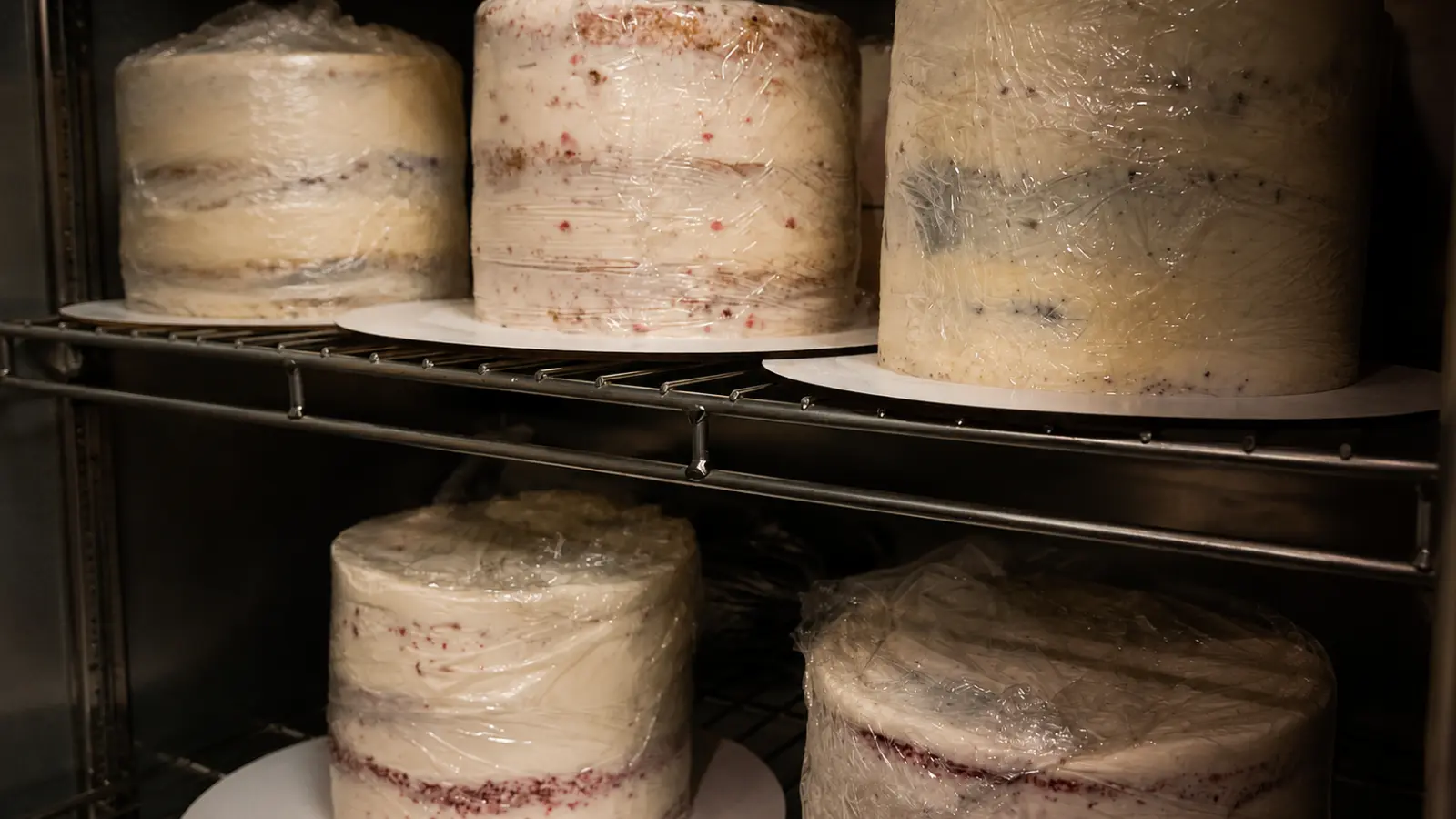
How to freeze wedding cake correctly means protecting the cake’s texture, flavor, and frosting so the top tier has the best chance of being enjoyed after the wedding. The wedding cake preservation tradition usually involves wrapping and freezing the top tier to celebrate the couple’s first anniversary, but the final result depends heavily on how the cake is prepared, stored, and thawed.
Many couples save their wedding cake because the tradition feels meaningful, but not every cake survives a year in the freezer the same way. The type of frosting, filling, decorations, wrapping method, freezer conditions, and thawing process all affect whether the cake still tastes enjoyable months later.
This guide explains how to freeze wedding cake properly, including how to wrap the top tier, which cakes preserve best, how long frozen wedding cake lasts, how to thaw it safely, common mistakes to avoid, and when ordering a fresh anniversary cake may actually be the better choice.
Why Couples Save the Top Tier
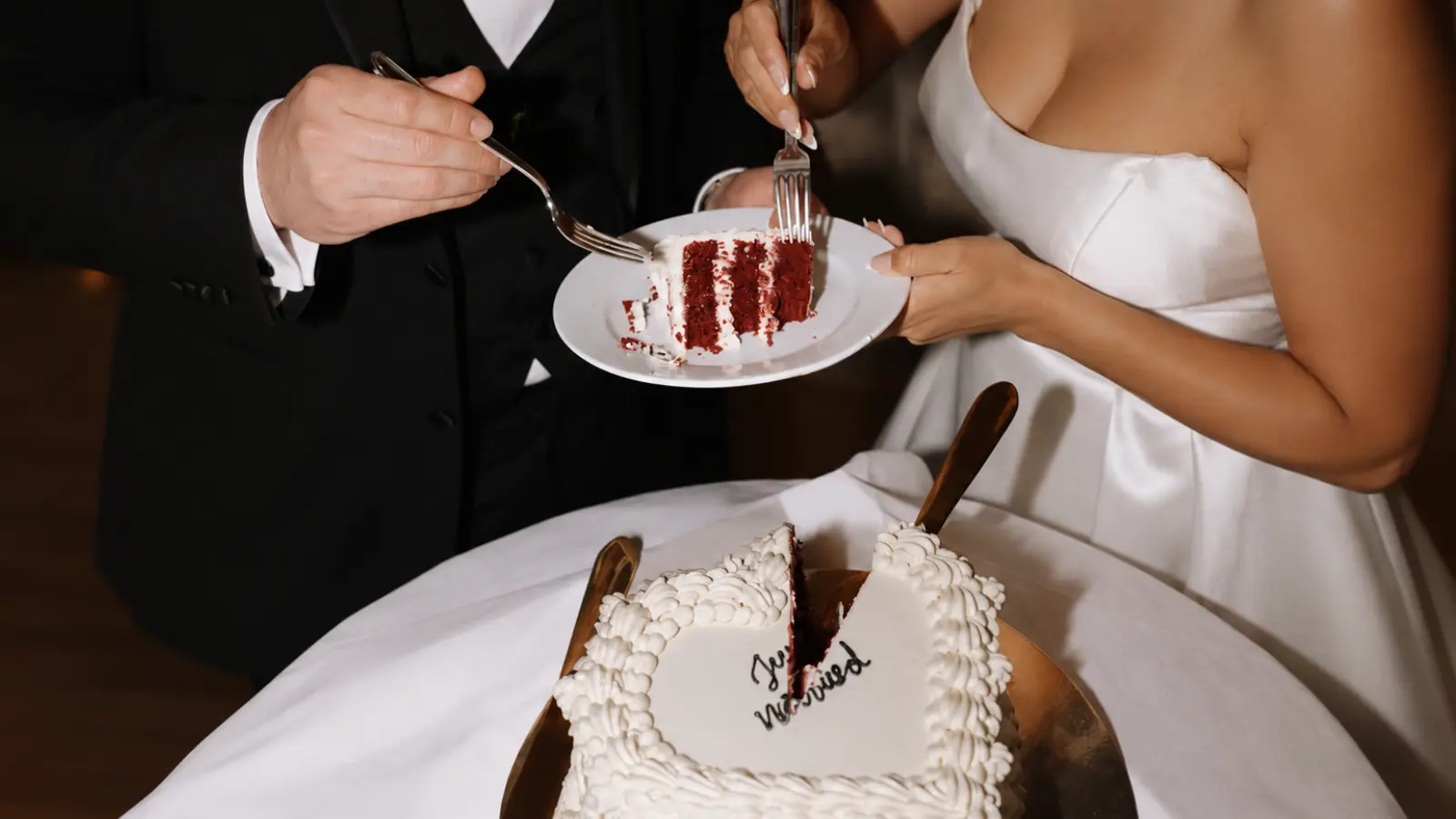
The tradition is older than most people realize — and its original meaning was different from what it is today.
In earlier wedding traditions, especially in Britain and America, the top tier of a wedding cake was often connected to the christening of the couple’s first child rather than the first anniversary. At the time, family timelines were often expected to move quickly after marriage, so a preserved cake could be used again for an early family celebration. The cake and the child were considered linked events in a couple’s early life together.
Over the course of the 20th century, as family timing became less predictable and as the first anniversary emerged as the primary romantic milestone of early marriage, the tradition shifted. The christening cake became the anniversary cake. The sentiment remained similar: saving a piece of the wedding day and sharing it later as a way of reconnecting with the beginning of the marriage.
Today the tradition is observed unevenly. Many couples save the cake because it is simply what is done — the caterer boxes it up, a family member freezes it, and it sits in the back of a freezer for twelve months. After the wedding cake cutting and celebration are over, some couples eat the saved cake joyfully on their anniversary and find the experience genuinely touching. Others eat it politely and acknowledge that the cake was better at the wedding. A small number open the box and decide not to eat it at all.
The honest version of this wedding cakes tradition is one the couple chooses deliberately — knowing what the process requires, knowing what the outcome is likely to be, and choosing it anyway because the ritual has value regardless of whether the cake is perfect. That is a completely reasonable choice. So is skipping it entirely and ordering a fresh cake instead. What usually does not work is letting the cake sit improperly wrapped in a home freezer for a year and expecting it to taste close to fresh.
Which Cakes Freeze Well and Which Don’t
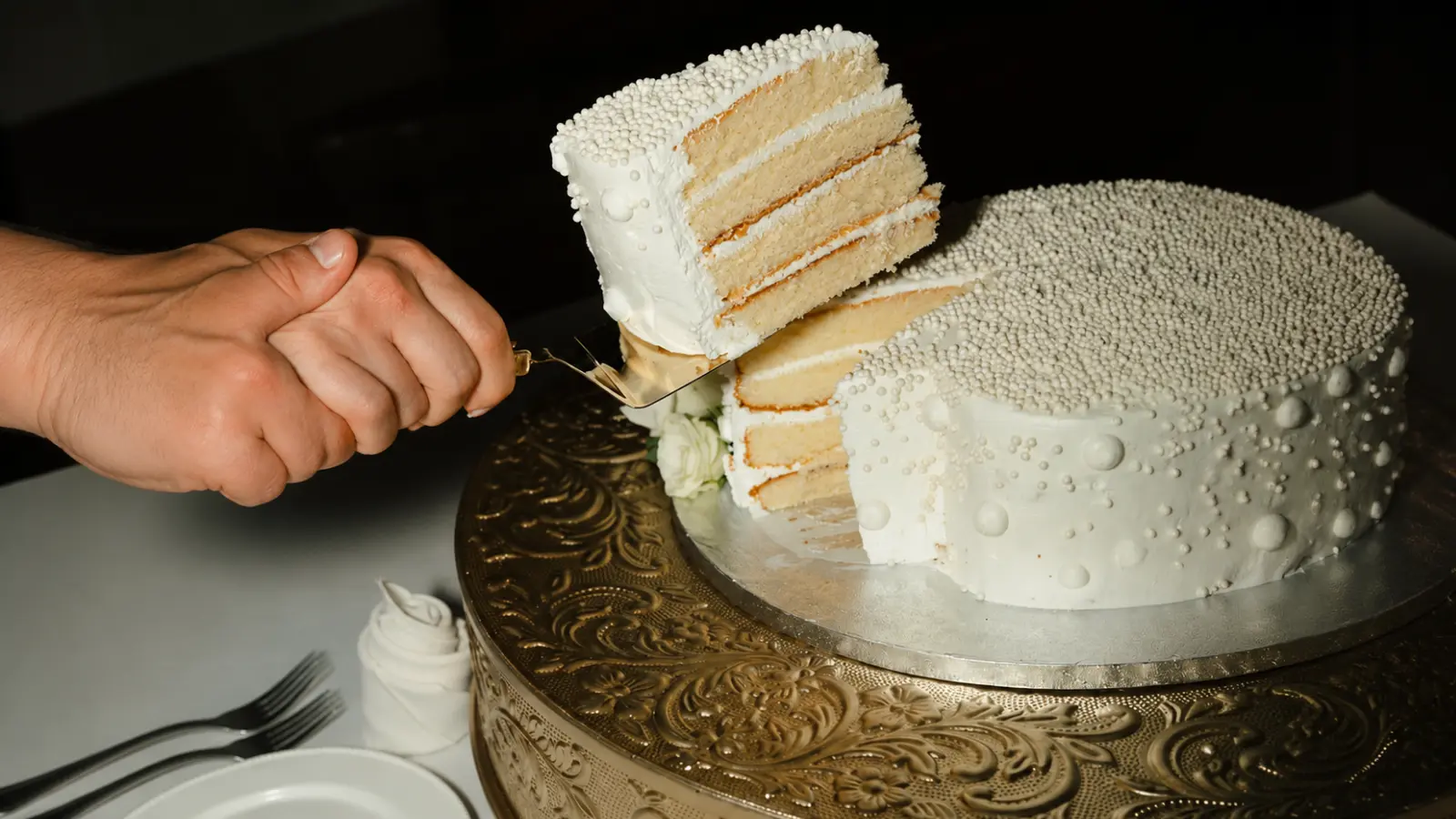
This is the question many guides on this topic skip, even though it should shape the entire preservation plan. Not every wedding cake should be frozen. Some wedding cake flavors and frosting combinations hold up remarkably well after twelve months in the freezer and thaw into something that is genuinely close to the original. Others deteriorate in ways that cannot be corrected and should not be attempted.
Knowing which category your cake falls into before the wedding day determines whether saving the top tier is worth the effort — or whether the better answer is to eat it at the wedding and order something fresh on the anniversary.
Cakes that freeze well
| Cake / Frosting Type | How It Freezes | Notes |
|---|---|---|
| Vanilla or almond buttercream | Very well | The most reliably successful combination for freezing; buttercream re-sets well and the cake interior holds its texture |
| Chocolate cake with chocolate buttercream | Well | Chocolate holds moisture better than white or vanilla cake; freezes and thaws with minimal texture loss |
| Lemon or citrus cake with buttercream | Reasonably well | Flavor may dull slightly after freezing; the citrus note is less bright than fresh but still pleasant |
| Fruit cake (traditional) | Exceptionally well | Traditional fruit cake was the original preservation cake for a reason — the alcohol content and dense structure allow it to last well beyond 12 months |
| Carrot cake with buttercream (not cream cheese) | Well | Only with American buttercream, not cream cheese frosting — the distinction matters significantly |
Cakes that do not freeze well
| Cake / Frosting Type | What Goes Wrong | Better Option |
|---|---|---|
| Cakes with fresh fruit fillings | Fresh fruit releases water during freezing and becomes watery, mushy, and structurally compromised during the thaw | Eat at the wedding; order a fresh mini cake for the anniversary |
| Cream cheese frosting | Cream cheese frosting can become grainy, watery, or less smooth after freezing and thawing, depending on the recipe | Ask the baker to use American buttercream instead of cream cheese if saving the top tier is a priority |
| Mousse or custard layers | Delicate emulsified layers collapse during freezing and thaw into a weeping, separated mess | Usually not a good candidate for long-term freezing; ask your baker before attempting to preserve it |
| Fondant-covered cakes | Fondant develops condensation during the thaw process that pools on the surface and causes the fondant to weep, bubble, and collapse; the interior may be fine but the exterior may not return to its original appearance | Remove the fondant before freezing if possible, or freeze the inner cake only and re-frost fresh on the anniversary |
| Wafer paper or sugar decorations | Dissolve on contact with moisture during thawing; cannot survive the condensation of the thaw cycle | Remove before freezing; the cake without them may freeze fine |
| Whipped cream frosting | Whipped cream collapses and weeps during thawing; not a good candidate for long-term wedding cake preservation | Not a candidate for saving; eat at the wedding |
If you are not certain whether your specific cake will freeze well, knowing how to choose a wedding cake baker who can guide preservation decisions is important before the wedding. A good baker will give you an honest answer, and if they say the cake is not a good candidate for freezing, it is worth taking that guidance seriously. They know the specific structure of the cake they built.
How to Wrap Wedding Cake Properly
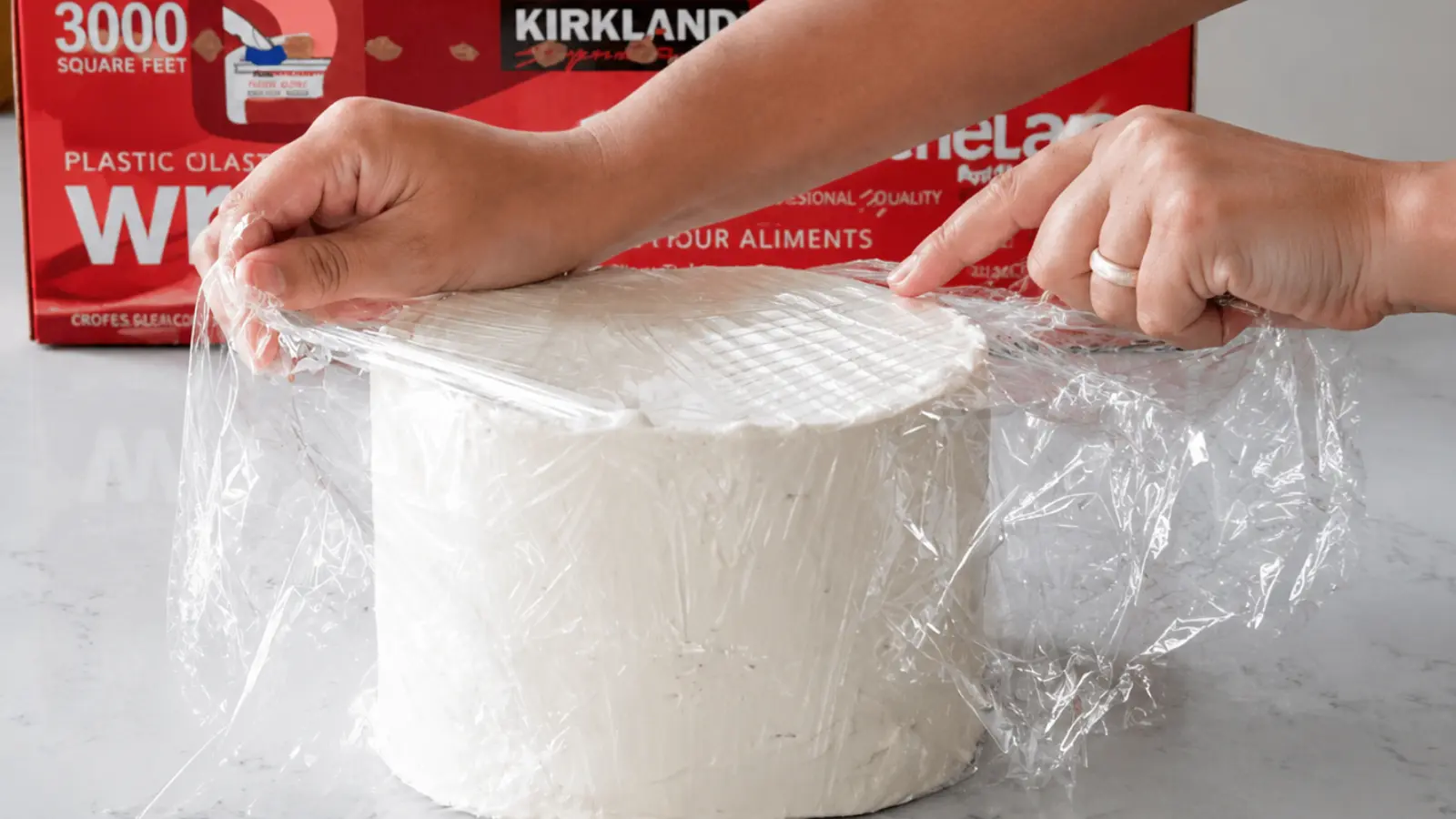
Wrapping is where most couples get this wrong — not because the process is complicated, but because it is done at the end of a long wedding day by someone who is tired, in a hurry, or unfamiliar with what proper wrapping actually requires. The result is a cake that enters the freezer with air pockets, exposed surfaces, or insufficient protection from freezer odors — and exits twelve months later having absorbed the accumulated smell of everything else in the freezer.
Proper wrapping is a multi-layer process. Each layer serves a different function. Skipping or shortcutting any layer reduces the result.
Step-by-step: wrapping the top tier correctly
Step 1 — Chill the cake first
Before any wrapping happens, the cake should go into the refrigerator uncovered until the frosting feels firm and no longer tacky. The goal is to firm up the frosting until it is completely set and not tacky. If you wrap plastic wrap against soft, room-temperature frosting, the plastic will pull and drag the frosting surface when you remove it — and it will bond to the cake in ways that are difficult to peel off cleanly. Cold, firm frosting wraps cleanly and releases cleanly.
Step 2 — First layer: plastic wrap, tight and thorough
Wrap the chilled cake in plastic wrap — not one loose pass, but tight, overlapping coverage with no gaps. Press out as much air as possible as you go. Cover the top, the sides, and the bottom. Two full wrapping passes are a strong starting point, and a third layer can add extra protection for long storage. The plastic wrap layer is the primary barrier against freezer burn and moisture loss. It needs to be complete.
Step 3 — Second layer: heavy-duty aluminum foil
Wrap the plastic-wrapped cake in heavy-duty aluminum foil — again, tight and overlapping, with no exposed plastic showing. The foil layer serves two purposes: it provides a second barrier against air exposure, and it blocks freezer odors. Heavy-duty foil is preferable because it tears less easily and provides a stronger odor barrier. A second layer can add extra protection.
Step 4 — Outer protection: rigid container or large freezer bag
Place the wrapped cake inside a rigid airtight container or a large zip-top freezer bag. This outer layer protects the cake from physical damage — being knocked, compressed by other freezer items, or punctured — and provides a final odor barrier. A rigid container is preferable for anything with a delicate surface; a sturdy freezer bag works for cakes where surface appearance after thawing is less critical.
Step 5 — Label with the date
Write the wedding date on a piece of tape applied to the outer container. This seems unnecessary in the moment — of course you will remember when you got married — but a year later, when the container has been moved multiple times and you are genuinely not sure if this is the right thing, a labeled date matters.
What to do if the cake has a topper or decorations
Remove all non-edible wedding cake toppers, ribbons, and structural elements before wrapping. Sugar flowers, wafer paper, and other fragile edible decorations should also be removed — they will not survive the freezer or the thaw, and they interfere with clean wrapping. Keep any meaningful toppers separately; they do not need to be frozen to be kept as mementos.
If the cake has a fondant surface with hand-painted or piped details, understanding buttercream vs fondant wedding cake differences can help before freezing. In some cases, the most practical approach is to remove the fondant entirely before freezing, freeze the interior cake, and re-frost it fresh on the anniversary. This is more work, but it produces a better result than a fondant exterior that weeps during the thaw.
How to Freeze Wedding Cake
Once the cake is wrapped correctly, the freezer itself matters more than most people account for. Not all freezer positions are equivalent, and the stability of the freezer’s temperature directly affects how the cake holds over twelve months.
Freezer placement
A chest freezer is the best option. Chest freezers maintain a more stable temperature than upright freezers because cold air sinks and stays in the cavity rather than falling out every time the door is opened. They also typically have fewer door-opening cycles than a household upright freezer that is used daily. If you have access to a chest freezer, use it.
In an upright freezer, use the back. The back of an upright freezer is the most temperature-stable position — furthest from the door, least affected by the warm air that enters every time the freezer is opened. Never store the cake in the door or on the top shelf of an upright freezer, where temperature fluctuation is most pronounced.
Keep it away from strong-smelling foods. Even with multiple layers of wrapping, a cake stored next to fish, strongly seasoned meat, or anything with a penetrating odor for twelve months will absorb some of that character. If possible, dedicate a section of the freezer to the cake where it is not in direct contact with strong-smelling items.
Temperature
The freezer should be set to 0°F (-18°C) or below. Most household freezers operate in this range by default. If you have any doubt about the temperature stability of the freezer — if it is old, makes unusual sounds, or has had any performance issues — consider storing the cake in a more reliable appliance for the year. A freezer that cycles unpredictably or struggles to stay cold can reduce the cake’s quality much faster than a stable unit.
How Long Can You Save Wedding Cake?
The honest answer is: up to twelve months with good wrapping and a stable freezer — and meaningfully less than that if either condition is not met.
Twelve months is the number that aligns with the anniversary tradition, and it is also roughly the outer limit at which a well-wrapped buttercream cake maintains something close to its original flavor and texture. Beyond twelve months, the quality decline is gradual rather than sudden, but it is real. Flavor becomes flat. Texture becomes drier. If the cake has stayed continuously frozen and was handled properly, it may still be edible, but it will no longer taste like the cake you had at the wedding.
| Time Frozen | Expected Quality | Notes |
|---|---|---|
| Up to 3 months | Excellent — close to fresh | Most noticeable difference is a slight cooling of flavors; texture is essentially unchanged |
| 3 to 6 months | Good — some flavor flattening | Still enjoyable; bright flavors (citrus, fresh vanilla) are the first to dull |
| 6 to 12 months | Acceptable — noticeably different from fresh | The sentimental context of the anniversary makes this acceptable for most couples; the experience is about the ritual, not the perfection |
| 12 to 18 months | Declining — texture and flavor significantly changed | May still be safe if continuously frozen and properly handled, but quality is usually much lower; best only if the couple values the ritual more than the taste |
| Beyond 18 months | Not recommended for eating | The cake may be safe but is unlikely to be enjoyable; the tradition is better served by a fresh anniversary cake at this point |
One practical note that many couples do not consider: if the first anniversary falls during a busy or stressful period — a move, a new job, a difficult personal moment — the cake can be saved for a more intentional celebration later. The tradition is flexible. Eating it on the actual anniversary date is not a requirement; eating it together and with intention is.
How to Thaw Wedding Cake
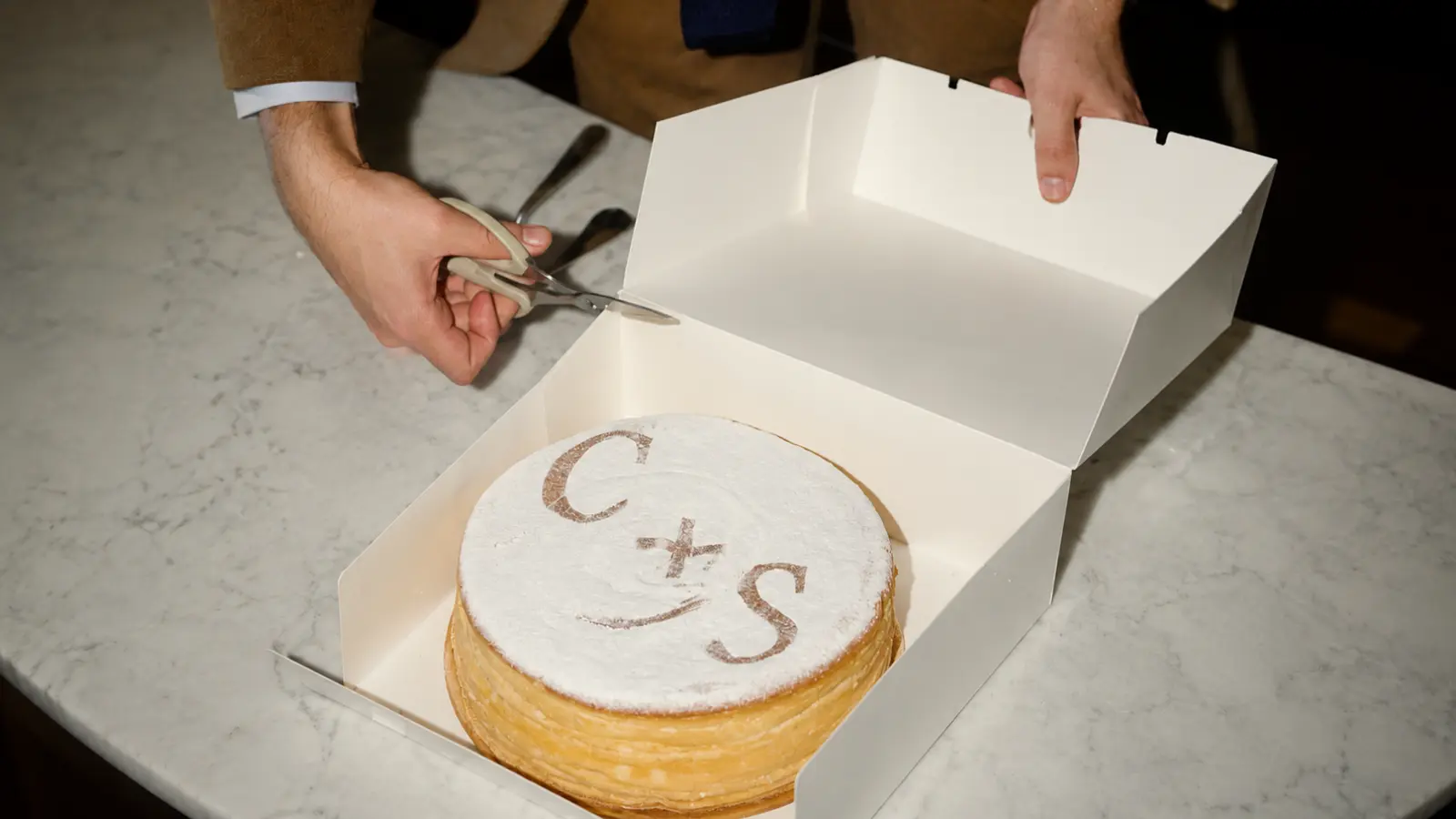
Thawing is where more saved wedding cakes fail than in the freezer itself. The temptation to speed up the process — to leave the cake on the counter overnight, to unwrap it immediately, to put it in the microwave for a few seconds — is understandable. These shortcuts usually create more problems than they solve. Each one introduces the same problem: uneven temperature change that causes moisture to condense on the wrong surface, damaging the frosting and producing an uneven, soggy, or gummy texture.
The correct thawing process is slow, controlled, and patient. For most top tiers, it takes at least a full day and often closer to two days from start to finish.
Step 1 — Move from freezer to refrigerator (still wrapped)
Transfer the fully wrapped cake — in its container, with all wrapping intact — from the freezer to the refrigerator 24 to 48 hours before you plan to eat it. Do not open, unwrap, or inspect the cake at this stage. The wrapping is doing critical work: as the cake slowly warms, condensation forms on the outside of the plastic wrap rather than on the cake surface. If you unwrap the cake in this phase, the condensation forms directly on the frosting, causing it to weep and dissolve.
Step 2 — Move from refrigerator to room temperature (still wrapped)
After 24 to 48 hours in the refrigerator, remove the cake and let it sit at room temperature for one to two hours — still wrapped. This second phase allows the cake to come to serving temperature gradually without a sudden warm-environment change that would produce more condensation on the surface.
Step 3 — Unwrap and serve
After one to two hours at room temperature, unwrap the cake carefully, starting with the foil and then the plastic wrap. The frosting should be intact, the surface should be dry, and the cake should be at or near room temperature. Serve soon after unwrapping, and follow your baker’s guidance for how long that specific cake can safely sit at room temperature. Do not re-freeze a thawed wedding cake.
What to expect when you open it
Even with perfect technique, a year-old frozen wedding cake will not taste identical to the fresh version. This is worth knowing in advance, not as a disappointment but as appropriate expectation management. The flavor will be somewhat flatter. The texture may be slightly denser. The frosting may have a different consistency than it did on the wedding day.
Many couples describe eating the saved cake as an emotional experience that is distinct from the experience of eating the original cake at the wedding. The imperfection is part of the moment — a year of life has passed, the cake reflects it, and eating it together carries a meaning that a perfect piece of fresh cake does not. That does not make the tradition a failure. It simply reframes the moment as memory rather than dessert perfection.
Mistakes That Ruin Frozen Wedding Cake
Most of these happen at the wedding itself — in the distraction and exhaustion of the end of the night — rather than at home. Knowing them in advance is the best protection against them.
- Wrapping at room temperature without chilling first. Soft frosting bonds to plastic wrap and tears when it is removed. The cake must be refrigerated until firm before any wrapping begins. This is one of the easiest mistakes to make, and it can affect the cake’s texture and appearance later.
- Using only one layer of wrapping. A single layer of plastic wrap is not enough. Air reaches the cake through any gap, any thin spot, or any small tear — and over twelve months, even a small amount of air exposure produces noticeable freezer burn. Multiple layers of plastic wrap, foil, and outer protection are not excessive when the goal is long-term preservation.
- Leaving it in the front of an upright freezer. The door and front shelves of an upright freezer experience temperature fluctuations every time the door opens. Twelve months of daily temperature cycling in a household freezer causes ice crystal damage in the cake’s structure that affects texture significantly. Back of the freezer, or a dedicated chest freezer, is the correct position.
- Storing next to strong-smelling foods without adequate outer protection. A cake stored without a rigid outer container next to seasoned meats, fish, or other strong-smelling items will absorb those odors over twelve months, even through plastic wrap and foil. A rigid container or sealed freezer bag adds important protection.
- Thawing on the counter from frozen. Going directly from freezer to room temperature produces rapid, uneven temperature change that causes the outer surface of the cake to warm faster than the interior, creating condensation on the surface and gumminess in the inner layers. The refrigerator step is the safest way to thaw the cake slowly and evenly.
- Unwrapping the cake while it is still cold from the refrigerator. A cold cake taken from the refrigerator and unwrapped immediately will develop surface condensation as warm room air hits the cold surface. Frosting can dissolve, surfaces can weep, and decoration can collapse. Unwrap only after the room-temperature resting period is complete.
- Delegating without specific instructions. “Can you make sure someone saves the top tier?” is not an instruction. It is a hope. Someone — a specific person — needs to know exactly what to do: chill it first, use specific wrapping layers, place it in a specific location. If this task is not assigned to someone with the information to execute it, it will be done incorrectly.
Better Alternatives to Saving the Cake
The tradition exists because couples wanted a way to reconnect with their wedding day on their first anniversary — to eat something from that day, to sit together with something tangible from the beginning of the marriage. The frozen top tier was the practical solution available to earlier generations. It is not the only solution available now.
Order a fresh mini cake from the original baker
This is the alternative that more couples should know about — and that many bakers actively offer or will offer when asked. Contact the baker who made the wedding cake several weeks before the first anniversary and order a small version inspired by one-tier wedding cakes in the same flavor, same frosting, and same design as the original wedding cake. The baker has the recipe. They know exactly what the cake tasted like. They can reproduce it with precision.
The result: on the anniversary, the couple can sit down with a cake that closely echoes the wedding day flavor and design without the storage risk, wrapping anxiety, or twelve-month freezer gamble. Many couples who have done this describe it as a significantly better experience than eating a frozen version of the original.
The wedding cake cost for this option varies by bakery, size, flavor, and decoration level, but a small single-tier anniversary cake can be a simpler and more enjoyable choice than risking a poorly preserved top tier.
Save a small amount to taste, not to eat as a meal
Some couples freeze a small piece of cake — a few bites rather than the entire top tier — specifically to taste on the anniversary rather than to eat as a dessert. A small portion, carefully wrapped, serves the ritual purpose without the investment of preserving a full tier. If it thaws well, it is a meaningful taste of the original. If it does not, the loss is minimal and a fresh cake can still be ordered.
Make the anniversary cake its own tradition
Some couples choose to visit the same bakery every year on the anniversary and order the same cake — fresh, current, and exactly as it was. Over time this becomes its own tradition: the anniversary bakery visit, the familiar flavor, the continuity of the choice. This approach requires no freezer, no wrapping, and no year of uncertainty. It simply requires that the baker is still operating — which is worth confirming before the wedding, particularly for small or boutique bakeries.
When saving the cake genuinely is not worth it
If your cake has fresh fruit fillings, mousse layers, cream cheese frosting, fondant decoration, or any other element that does not freeze well — save a piece to taste at the wedding, eat the top tier with your immediate family after the reception, and order something fresh for the anniversary. The tradition is the ritual of sharing something meaningful together. The specific object matters less than the intention behind it.
The honest version of this tradition
The first anniversary cake is not really about the cake. It is about the couple sitting together a year into their marriage with something from the day it began — a tangible connection to a moment that is now a year behind them and a lifetime ahead. Whether that something is a frozen tier from the original wedding cake or a freshly baked replica from the same baker is almost beside the point. What matters is that it is intentional. That it is shared. And that the year between the wedding day and the anniversary was lived together well enough that the moment is worth marking.
Wedding Cake Preservation Inspiration Board
Before deciding how to preserve your wedding cake, it helps to see different ways couples save, recreate, display, and celebrate the top tier tradition. Explore our wedding cake preservation inspiration board for anniversary cake ideas, top tier traditions, cake storage tips, keepsake inspiration, mini anniversary cakes, and meaningful ways couples celebrate their wedding cake after the big day.
Final thoughts
Saving the top tier of your wedding cake is not only about preserving dessert. It is about keeping a small piece of the wedding day and creating a moment to revisit that memory together after the celebration has passed.
Whether you carefully freeze the original cake or order a fresh version from your baker, the most meaningful choice is the one that creates the anniversary experience you want. When the process is intentional, the tradition becomes less about having a perfect slice of cake and more about remembering the day it represents.
Frequently asked questions (FAQ)
Why do some couples regret saving their wedding cake?
Most couples do not regret the tradition itself — they regret expecting the cake to taste exactly like it did on the wedding day. A preserved cake is usually more about revisiting a memory than recreating a perfect dessert. Understanding that difference makes the anniversary moment much more meaningful.
Is saving the top tier still worth it with modern wedding cakes?
It depends on what matters most to the couple. Modern wedding cakes often use fresh fillings, delicate textures, and detailed decorations that were not designed for long-term storage. For some couples, freezing the original cake is meaningful; for others, recreating the flavor with a fresh anniversary cake creates a better experience.
What is the biggest mistake couples make with the anniversary cake tradition?
Waiting until after the wedding to think about it. The decision should happen when choosing the cake because ingredients, frosting, fillings, and design all affect whether preservation will work. A cake meant to be saved should be planned differently from the beginning.
Does a fresh anniversary cake lose the meaning of the tradition?
Not at all. The meaning comes from celebrating the first year of marriage, not from the freezer itself. A freshly made version from the original baker can still bring back the same memories while creating a better tasting experience.
Should every couple save their wedding cake?
No. Some couples love having a physical piece of the wedding day preserved, while others prefer photos, videos, keepsakes, or a recreated dessert. The tradition is most meaningful when it is chosen intentionally rather than followed only because it is expected.
What do wedding planners recommend about saving the cake?
Many planners recommend deciding before the wedding day. They consider the cake style, storage options, couple’s expectations, and whether someone can properly handle the cake after the reception. The best preservation plans are organized before the celebration begins.
How long can you freeze wedding cake?
Wedding cake can usually be frozen for up to one year when it is wrapped carefully, stored in a stable freezer, and thawed slowly. The cake may still be safe beyond that if it has stayed continuously frozen, but the flavor and texture usually decline. For the best experience, most couples should plan to enjoy it around the first anniversary or order a fresh anniversary cake instead.
How do you thaw frozen wedding cake?
Move the wrapped cake from the freezer to the refrigerator and let it thaw slowly for at least 24 hours, or longer for a larger tier. Keep it wrapped while it thaws so condensation forms on the outside of the wrapping rather than on the frosting. After it has thawed in the refrigerator, let it sit briefly at room temperature before unwrapping and serving.
Related Guides
- Grocery Store Wedding Cakes: Publix, Costco, Walmart & Sam’s Club Guide
- Wedding Sheet Cake: Budget Friendly Ideas and When to Use One
- Italian Wedding Cake: Millefoglie, Traditions and Elegant Ideas
- Fall Wedding Cakes: Autumn Colors, Flavors and Designs
- Beach Wedding Cakes: Coastal, Tropical & Elegant Ideas