Wedding glove fabrics change how bridal gloves look, feel, photograph, and pair with a wedding dress. Satin, lace, silk, tulle, sheer fabrics, and embellished designs can create completely different effects even when the glove length and color are exactly the same.
Two gloves can be the same length, the same color, and cut from the same pattern — and feel completely different on the look. One reads as formal and precise. Another feels airy and romantic. Fabric determines how a glove drapes on the arm, how it relates to the gown’s own surface, and whether both pieces feel like they belong together. A mismatch often happens not because the color is wrong, but because the surfaces are speaking different aesthetic languages.
This guide explains the most common wedding glove fabrics, including satin, silk, sheer, tulle, lace, pearl, and embroidered styles, how each one photographs, which dresses they pair with best, and how to choose the right wedding gloves for your bridal look.
Quick Reference: Glove Fabrics at a Glance
Choosing a wedding glove fabric is easier when you understand what each material naturally does best. Some fabrics create structure and formality, while others add softness, texture, or a more romantic feeling.
Use this comparison as a quick starting point before exploring each fabric in more detail below.
| Fabric | Best Dress Match | Overall Style | Watch Out For |
|---|---|---|---|
| Satin | Structured satin, mikado, taffeta gowns | Classic, formal, polished | Sheen mismatch against matte gowns; tone differences visible in photos |
| Silk | Fluid gowns, outdoor and daytime ceremonies | Soft, natural, refined | Marks easily; less shape retention than satin |
| Sheer (organza) | Minimalist, structured, or architectural gowns | Ethereal, editorial, modern | Fit imperfections visible; quality of construction matters more |
| Tulle | Romantic, full-skirted, and garden-style gowns | Dreamy, soft, feminine | Snags easily; less durable through a full day of wear |
| Mesh | Contemporary, minimalist, or editorial gowns | Graphic, modern, architectural | Can read as costume if not balanced carefully |
| Lace | Minimally embellished gowns or coordinated lace gowns | Romantic, vintage, textured | Competing lace patterns; visual weight can accumulate quickly |
| Pearl-embellished | Simple gowns with room for statement detail | Ornate, bridal, sculptural | Too many embellished elements in one look |
| Embroidered | Plain or matte gowns that need a decorative counterpoint | Artistic, bespoke, romantic | Pattern clash with embellished gowns |
Best Wedding Glove Fabrics by Bridal Style
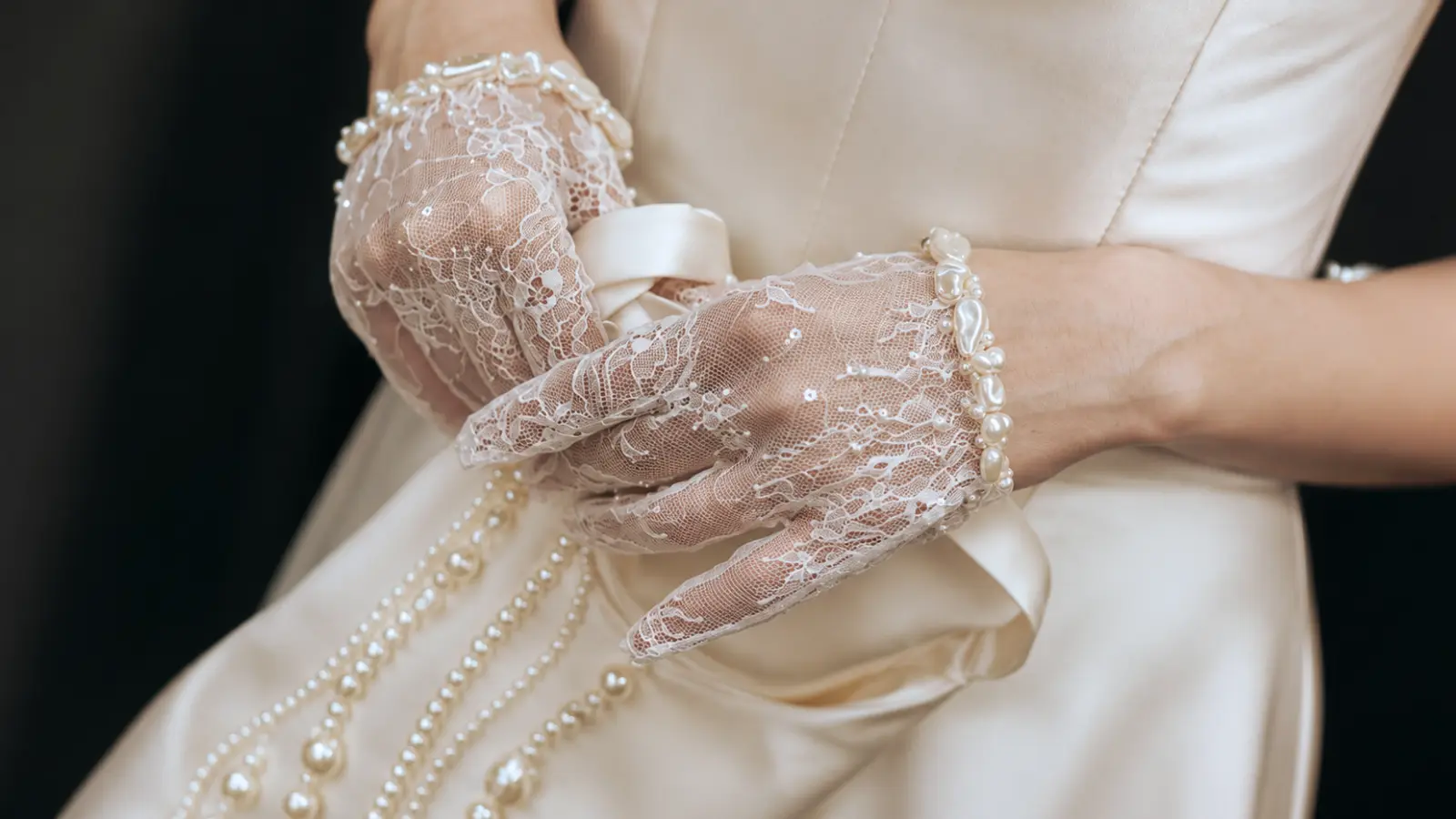
Choosing the right fabric for a wedding dress with gloves becomes easier when you start with the feeling of the dress. The right fabric should support the gown’s personality rather than compete with it.
Classic Bridal Looks
Satin and silk gloves usually work best for classic bridal styles because they create a polished, refined finish that pairs naturally with structured gowns.
Romantic Bridal Looks
Lace and tulle gloves add softness, texture, and detail. They work especially well when the dress has enough simplicity to let those delicate elements stand out.
Modern Bridal Looks
Sheer, mesh, and minimalist glove fabrics create a more contemporary feeling. They add interest without making the overall look feel overly traditional.
Statement Bridal Looks
Pearl and embroidered gloves work best when they are treated as a focal point. A cleaner dress usually gives these detailed fabrics enough visual space.
Satin Wedding Gloves
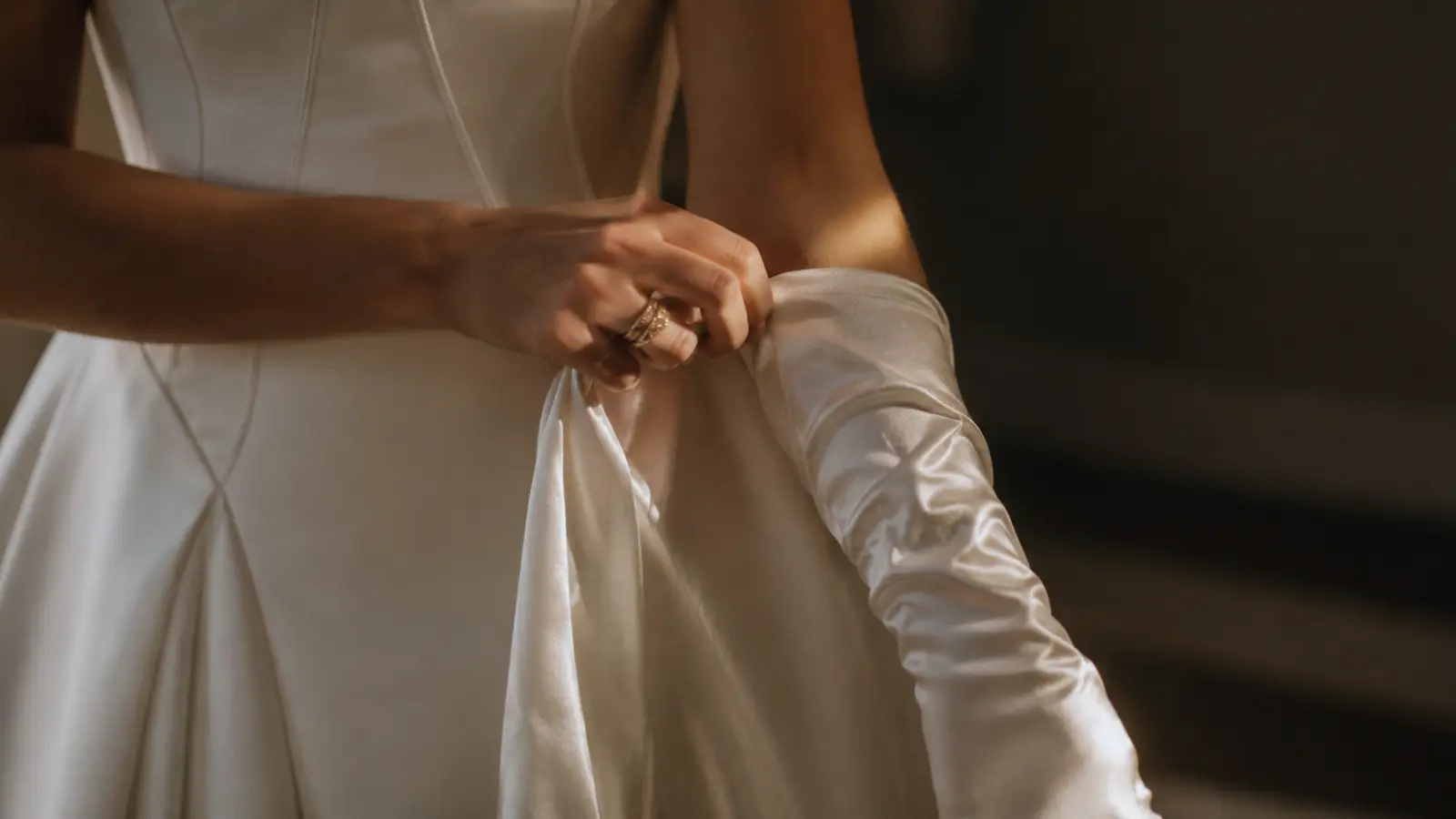
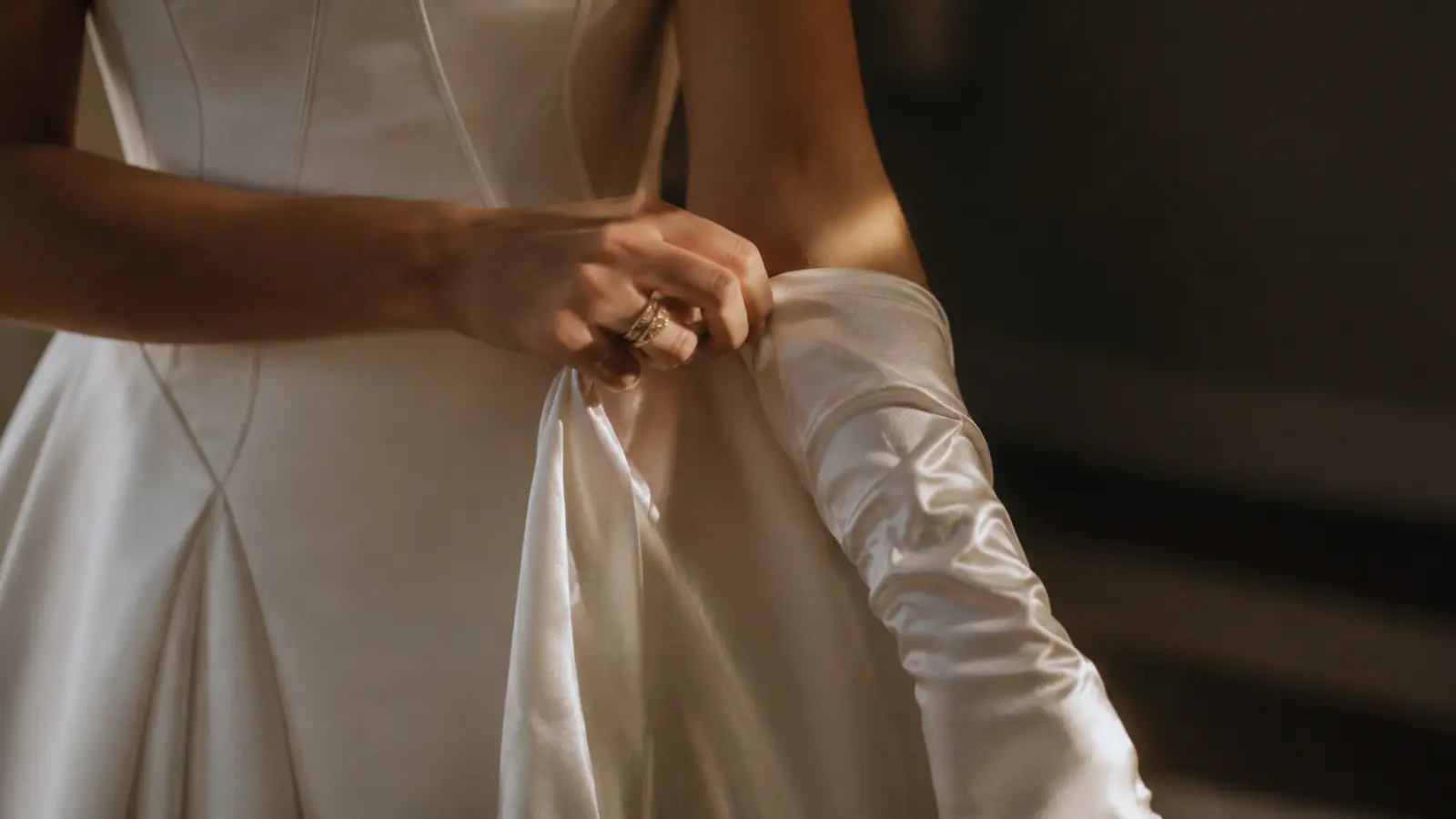
Satin is one of the most recognized fabrics for formal bridal gloves — the one most people picture when the words “wedding gloves” are spoken. It earns that position. Satin holds its structure across extended wear, photographs with a clean and precise finish, and naturally creates a polished, elevated appearance. It doesn’t require interpretation. It simply looks polished.
Where satin works best is alongside gowns with similar surface qualities: duchess satin, mikado, taffeta, or any structured fabric with a degree of sheen. The two surfaces share a visual language. A satin glove next to a satin bodice reads as designed together rather than assembled separately.
Where satin creates friction is against matte or heavily textured gowns. A smooth, high-sheen satin glove alongside a matte crepe dress can look as though the accessories came from a different outfit — the surfaces simply don’t share the same aesthetic register. If your gown is in a matte fabric, a sheer or lace glove typically integrates more naturally.
The other satin-specific concern is tone. Satin’s surface shows color clearly and reflects light in a way that amplifies subtle tone differences. A white satin glove against an ivory gown reads as noticeably brighter in photographs — more so than the same mismatch in a matte or textured fabric. Always check satin gloves against your gown in natural daylight before finalizing.
Silk Wedding Gloves
Among wedding glove fabrics, silk and satin are often conflated, but they behave quite differently on the arm and in photographs. Silk has a softer, more natural drape — it follows the contour of the hand and arm rather than holding a defined structure. Its sheen is subtler, warmer, and less reflective than satin, which gives it a more organic quality that suits outdoor, daytime, and garden ceremonies particularly well.
Silk gloves feel exceptional against the skin — that softness is part of their appeal. For a bride who will be wearing gloves for an extended period, the softness and movement of silk can make it an especially comfortable option. The trade-off is care: silk marks more easily, shows oils from the skin, and requires more attention to keep looking pristine through a full wedding day. It also holds its shape less firmly than satin, which means fit needs to be precise — a slightly too-large silk glove will drape rather than sit cleanly.
Silk works beautifully with fluid gowns: chiffon, charmeuse, soft A-line silhouettes. It is less at home alongside highly structured fabrics where the organic quality of the silk feels at odds with the gown’s precision.
Sheer Wedding Gloves
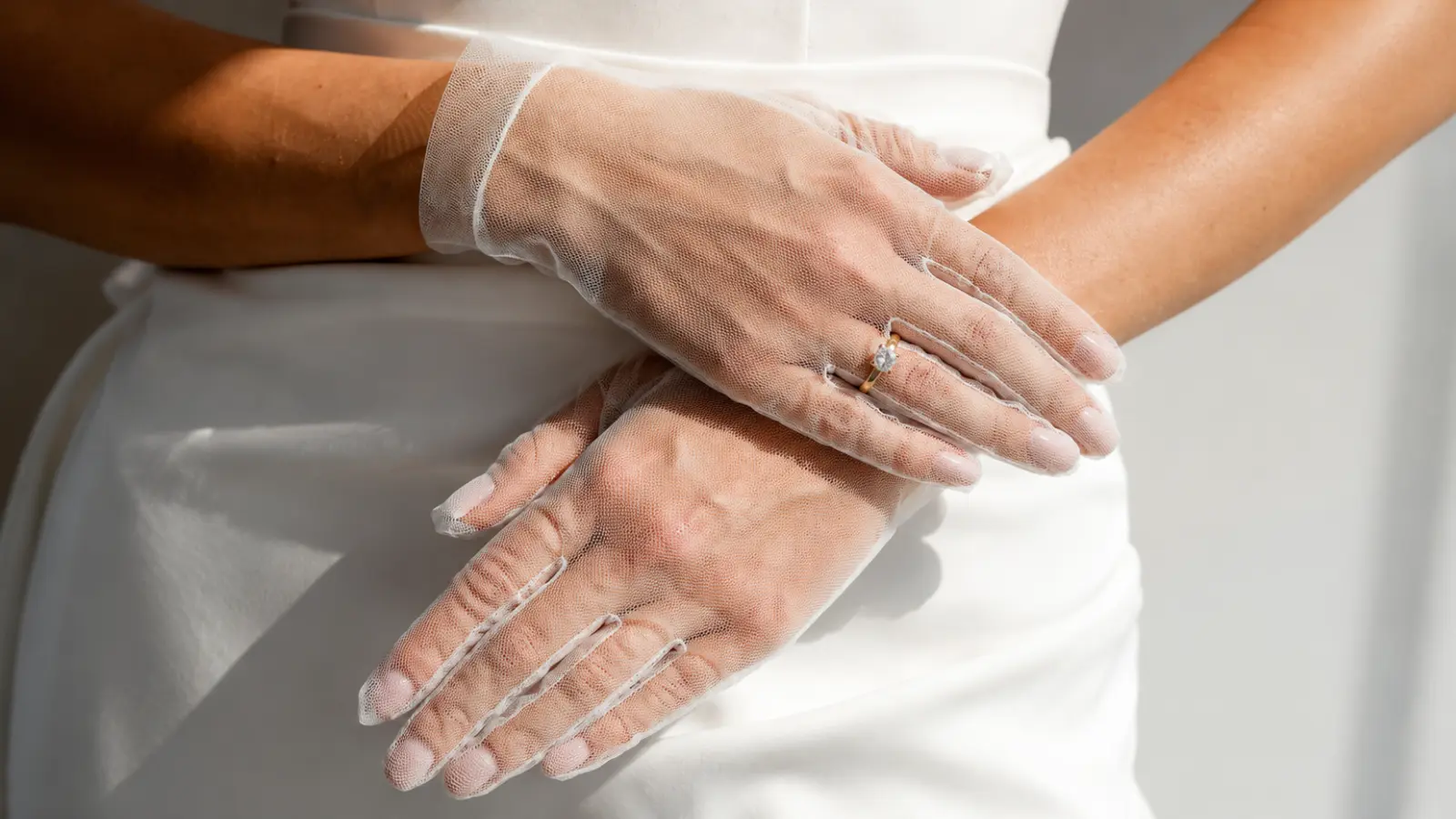
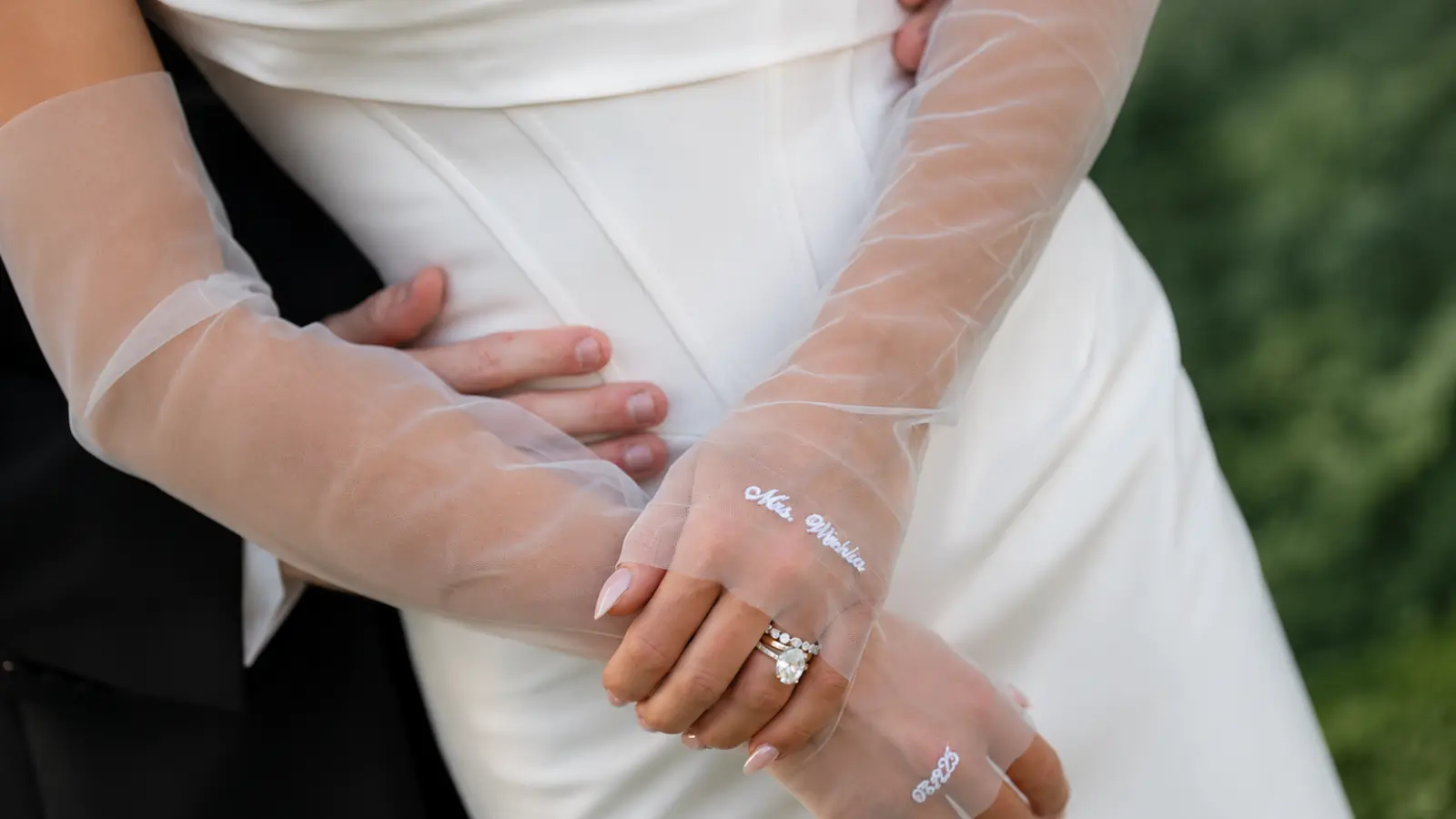
Sheer gloves — primarily in organza or fine chiffon — are among the more contemporary fabric options in bridal gloves and can work across many different gown styles. Their defining quality is translucency: the arm is visible beneath the fabric, softened rather than hidden. Coverage and openness exist simultaneously.
That quality gives sheer gloves an editorial character that opaque fabrics don’t replicate. Against a minimalist gown — clean crepe, structured column, unadorned satin — a sheer glove adds visual interest and texture without the weight of lace or the formality of satin. The arm reads as styled without being rigidly covered. On architectural or modern gowns, this combination can feel genuinely fashion-forward.
Sheer gloves are also the most forgiving when it comes to tone matching. Because the fabric is partially transparent, subtle differences in white or ivory register less obviously than they do in opaque fabrics. The glove’s tone blends partially with the skin beneath it, which softens any minor mismatch.
What sheer gloves demand is construction quality. Because the fabric is transparent, every internal seam, every gathering, and every imprecision in the fit is visible. A well-made sheer glove is genuinely beautiful. A poorly constructed one — with visible stitching, uneven gathering, or a loose fit that allows the fabric to shift — reads as unfinished. Quality and construction are especially important with sheer bridal glove fabrics.
Tulle Wedding Gloves
Tulle is one of the softest wedding glove fabrics and creates a dreamlike, softly diffused quality that sits between sheer and structured. The netting of tulle catches light in a way that creates a slight haze along the arm — softer than organza’s crispness, more voluminous than a flat chiffon. Against a full-skirted or romantic gown, tulle gloves feel like an extension of the same aesthetic world: both accessories share a certain lightness.
They work particularly well as long wedding gloves, where the tulle has enough length to create gentle movement along the arm. Short tulle gloves can feel slightly amorphous, while long or elbow-length styles give tulle the space to behave as intended.
The practical caution with tulle is durability. Tulle snags. It catches on rings, on rough surfaces, on the edge of a bouquet stem. For a long wedding day with active handling of flowers, greeting guests, and general movement, tulle gloves require more care than satin or sheer alternatives. They’re worth the consideration if the look genuinely calls for them — but the logistics of protecting them through a full day are worth factoring into the decision.
Mesh Wedding Gloves
Mesh is one of the most contemporary wedding glove fabrics in the bridal glove spectrum. The structured grid of the mesh creates a graphic, architectural quality that is neither soft nor traditional — it reads as decisively modern. On the right gown, that contrast between the dress’s bridal softness and the glove’s structural precision creates something genuinely interesting. On the wrong gown, mesh can feel like it belongs to a different event entirely.
Mesh works best alongside minimalist, contemporary, or editorial gowns where the design language of the dress is already slightly unconventional. It can be more challenging to pair with very traditional or romantic silhouettes because the visual styles need to feel intentionally balanced. This is the fabric choice for a bride who is making a deliberate, considered styling statement and wants the glove to be part of that statement rather than a conventional finishing touch.
As with sheer, construction quality is critical with mesh. The pattern of the grid needs to lie flat and evenly across the hand and arm. Any puckering, distortion at the seams, or misalignment in the mesh pattern is immediately apparent and undermines the precise, graphic quality that makes mesh interesting.
Lace Wedding Gloves
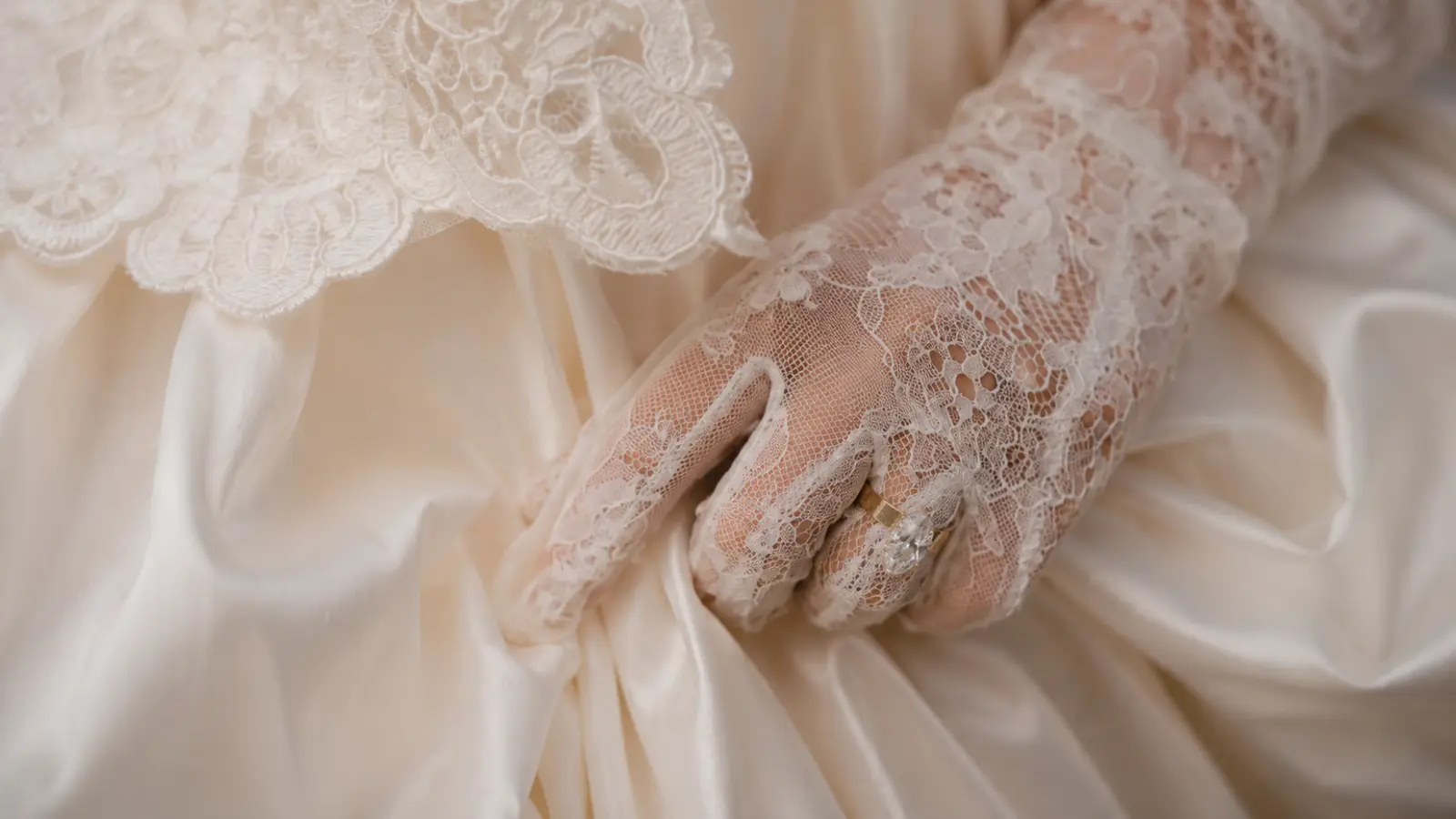
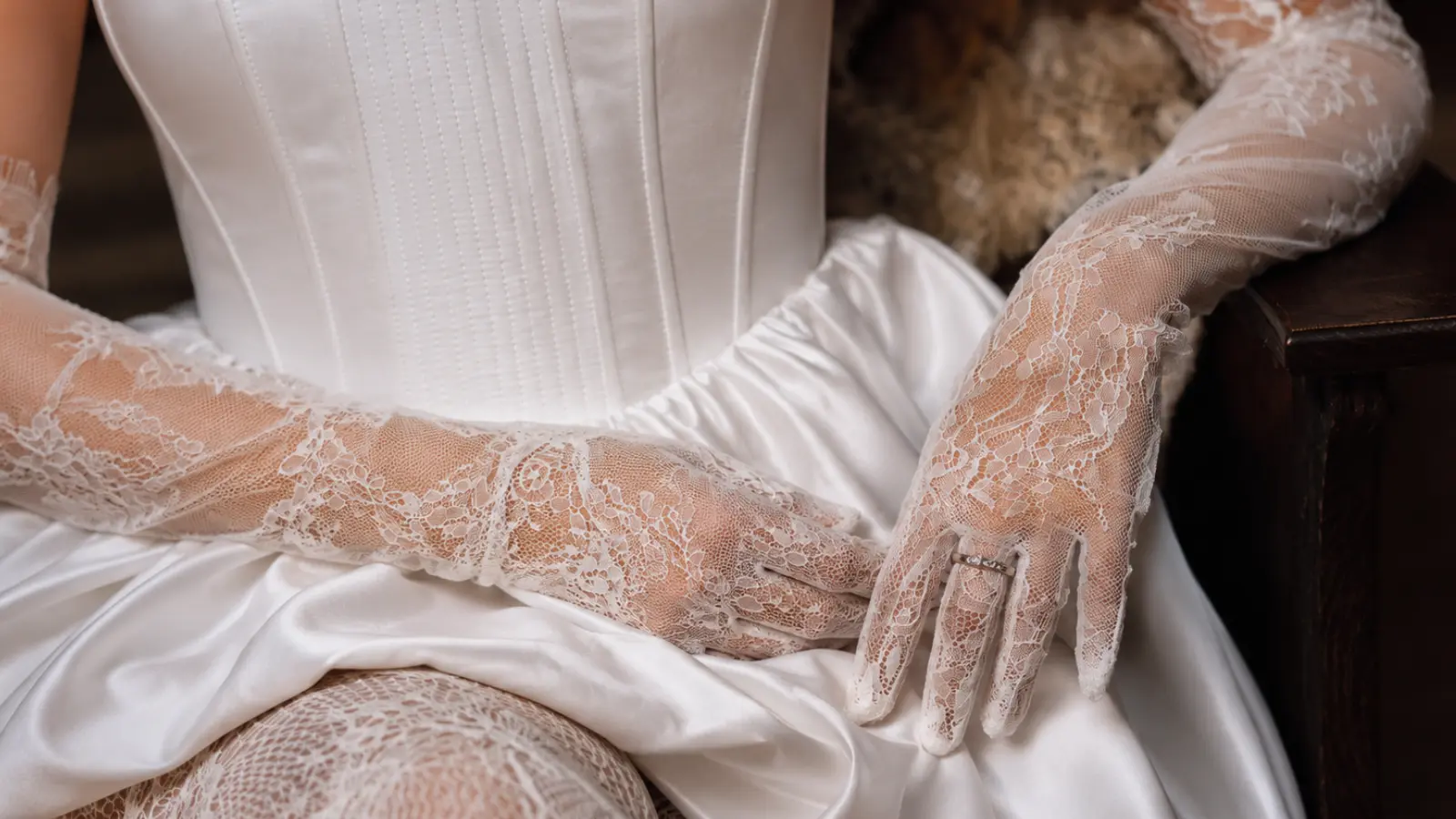
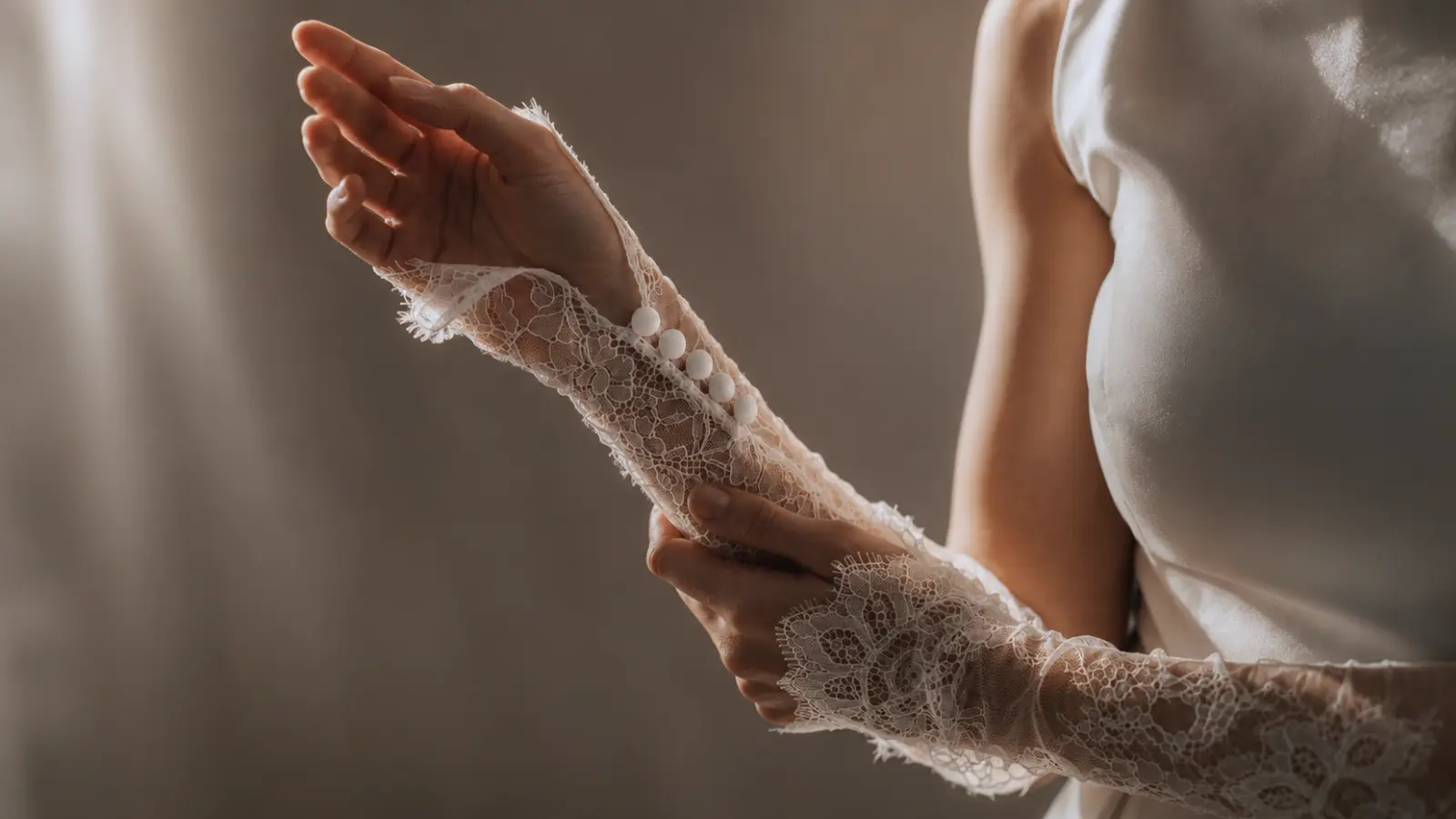
Lace is one of the most emotionally expressive wedding glove fabrics in the bridal glove category — romantic, textured, and specific in the feeling it creates. It’s also the most complex to pair well, because lace has strong visual personality that needs room to be appreciated. When a look gives it that room, lace gloves are among the most beautiful choices in bridal accessories. When the look doesn’t, the lace becomes one more competing element in an already-full visual field.
The pairing principle for lace gloves is that the gown should leave visual space for the lace to register. Minimally embellished gowns — clean crepe, plain satin, unadorned tulle — make that space available. Heavily embellished gowns, or gowns with significant lace of their own, need to be managed carefully. The lace patterns need to coordinate in scale and weight, or one of the fabrics needs to be distinctly simpler than the other. Our lace wedding gloves guide covers these pairing decisions in detail.
Pearl-Embellished Wedding Gloves
Pearl gloves are not a base fabric in the way satin or sheer is — they are a base fabric with pearl beading applied as embellishment. The base is typically lace, satin, or sheer, with pearls scattered across the surface, clustered at the cuff, or used to trace a pattern through the lace. What defines them is the pearl detail, and that detail carries significant visual weight.
Pearl gloves work best as a statement element in a look that has space for one. A simple gown with clean lines gives pearl gloves room to be the decorative focal point — the beading reads clearly and contributes meaningfully to the bridal look. A heavily embellished gown, a detailed veil, and statement earrings all competing alongside pearl gloves tip the balance into excess. The pearl detail needs to be the dominant embellishment in the look, not one of several.
In close-up photography, pearl gloves are particularly striking. Individual pearls catch light and create distinct highlights in macro shots of the hand and ring. The texture of the beading against the base fabric creates depth and dimension that flat fabrics can’t replicate at close range.
Embroidered Wedding Gloves
Embroidered gloves carry a hand-crafted, artisanal quality that places them in a category of their own. The embroidery — whether floral, geometric, or abstract — is applied to a base fabric, most commonly sheer, satin, or lace, and creates a raised, textured pattern across the glove’s surface. At their best, embroidered gloves feel genuinely bespoke — like something made with intention for a specific look.
Their styling logic follows the same principle as pearl gloves: the embroidery requires visual space to register. A plain or minimally embellished gown gives the embroidered glove room to be the artistic element of the look. A gown with its own embroidery or heavy beading creates a pattern conflict — two detailed surfaces in conversation with each other rarely reach a coherent resolution.
The embroidery pattern’s scale relative to the gown also matters. A large, bold embroidered motif on a glove alongside a small, fine lace pattern on the gown creates visual friction. Proportional consistency — where the scale of decoration in the glove relates sensibly to the scale of decoration in the gown — produces the most cohesive result.
Which Wedding Gloves Photograph Best?
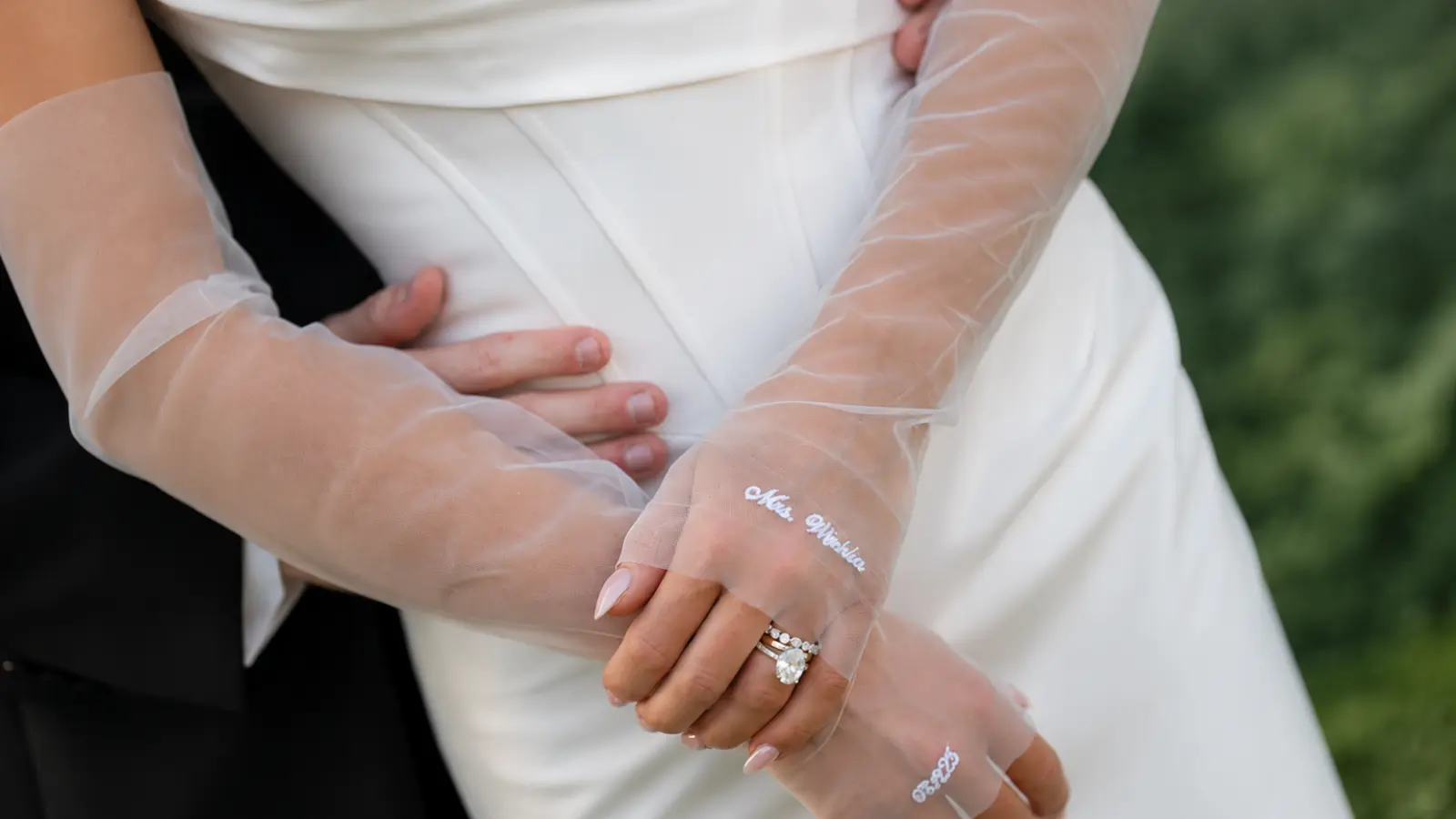
Every fabric behaves differently in front of a camera, and the bridal look that works in a mirror doesn’t always translate to photographs the same way. Understanding how each fabric renders in different shooting conditions is one of the most practically useful things a bride can know before making a final decision.
Satin: precision and polish
Satin photographs with clarity and definition. It reflects light in a directional way — catching the angle of a flash or a window light and returning it as a bright, polished sheen. In portraits and full-length shots, this reads as crisp and formal. In close-up detail shots, satin surfaces can show fingerprints, oils, or slight surface variations that are invisible to the naked eye but register in a high-resolution image. If you’re wearing satin gloves, handling them minimally before portrait time is worth the effort.
Sheer and tulle: soft luminosity
Sheer and tulle fabrics handle light differently than opaque surfaces. Rather than reflecting it back in a concentrated way, they diffuse it — creating a soft glow along the arm that reads as luminous rather than shiny. This quality photographs beautifully in natural light and in backlit settings, where the translucency of the fabric becomes part of the image’s atmosphere. In low-light reception photography with direct flash, sheer fabrics can lose some of that softness — the translucency becomes less visible and the fabric reads closer to a flat texture. Natural-light portrait sessions are where sheer and tulle gloves perform at their absolute best.
Lace: pattern and depth in close-up
Lace can be one of the most photogenic fabrics for close-up images. When a photographer moves in for hand detail shots — the ring, the bouquet grip, the hands held together — the lace pattern becomes visible and creates depth in the image that flat fabrics simply cannot produce. The negative space within the lace, the shadows it casts on the skin beneath, and the raised texture of the thread all contribute to images with genuine visual complexity. At full-length portrait distance, lace reads as a soft textural element rather than a pattern-specific one — the detail registers as “romantic and textured” rather than “this specific lace pattern.” Both are valuable, and both are what lace uniquely offers across different types of wedding photography.
Pearl embellishment: highlights and macro magic
Pearl-embellished gloves create their most striking images in close-up and macro photography. Individual pearls catch light and create small, distinct highlights across the surface of the glove — giving ring detail shots and hand photographs a luminous, layered quality. At portrait distance, pearl gloves read as ornate and textured without the specific beading being fully legible. The combination of these two registers — macro impact and portrait softness — makes pearl gloves especially impactful from a photographic perspective, as long as the look has the visual space to support them.
The practical test
Before the wedding day, take photographs in the full look — gown, gloves, and veil — in natural light. These test images will reveal tone mismatches that indoor lighting conceals, construction imperfections that are visible only at camera resolution, and the overall register of the fabric combination in the kind of light your ceremony and portraits are likely to feature. What you see in those test photographs is the closest approximation of your actual wedding images you’ll have before the day itself.
How to Choose the Right Fabric for Your Dress
The decision starts with the gown’s surface and the setting’s formality — and narrows from there.
If your gown is structured and has a degree of sheen — satin, mikado, duchess — satin gloves are the most natural companion. They share surface logic. If your gown is matte — crepe, matte chiffon, jersey — a sheer or lace glove integrates more naturally than satin, which will feel slightly foreign against the dress’s texture.
If the setting is formal and the look is already richly layered — detailed veil, embellished gown — the glove should be the quietest element in the look. Satin or sheer, plain and precise, gives the gown room to lead. If the gown is deliberately simple and the setting is more relaxed, the glove can carry more personality — lace, embroidery, or pearl detail have space to work.
Finally, if you’re considering fingerless wedding gloves, hold the glove against the gown in natural daylight before deciding. The relationship between the two surfaces in that light is what the camera will capture. No amount of description or in-store evaluation replaces seeing the specific combination in the specific light your wedding will actually be photographed in.
Wedding Glove Fabrics Inspiration
Wedding glove fabrics can completely change the feeling of a bridal look, from polished satin styles to romantic lace, soft tulle, sheer designs, and pearl details. Explore different bridal glove fabrics and discover how each option pairs with wedding dresses, accessories, and photography styles.
The Fabric That Completes the Look
The right wedding glove fabric is not just about choosing the material that looks most beautiful on its own. It is about understanding how that fabric interacts with the dress, the light, the photographs, and the overall feeling the bride wants to create.
When the texture, movement, and finish of the glove work together with the gown, the accessory stops feeling separate from the look. The fabric becomes part of the design story — a detail that feels intentional every time the bridal look is seen.
Frequently asked questions (FAQ)
What is the best fabric for wedding gloves?
The best fabric for wedding gloves depends on your dress style, wedding formality, and the overall look you want to create. Satin creates a classic and polished appearance, lace adds romance and texture, while sheer fabrics like tulle and organza create a softer, more modern effect. The best choice is the fabric that complements your gown rather than competing with it.
Are satin or lace wedding gloves better?
Neither satin nor lace wedding gloves are automatically better — they create different bridal styles. Satin gloves usually feel more formal, structured, and traditional, especially with polished gowns. Lace gloves create a softer, romantic, or vintage-inspired look. A simple dress can often support more detailed lace, while a highly detailed gown may look more balanced with a cleaner satin or sheer glove.
What wedding glove fabric photographs best?
Different wedding glove fabrics create different effects in photos. Satin creates a smooth, elegant finish, sheer and tulle gloves soften the look with a light, airy effect, and lace adds texture in close-up images. The best fabric for photos is the one that matches your dress texture, color tone, and overall bridal style.
Should wedding gloves match the fabric of the dress?
Wedding gloves do not need to be made from the exact same fabric as the dress, but the materials should feel connected. A structured satin gown often pairs naturally with satin or sheer gloves, while lace, crepe, or softer gowns may work better with fabrics that add balance. Matching the overall texture and formality is usually more important than choosing identical materials.
Are sheer and tulle wedding gloves formal enough?
Yes. Sheer and tulle wedding gloves can look formal when the fabric quality, fit, and styling match the dress. Modern brides often choose sheer gloves because they add softness and dimension without feeling heavy. They work especially well with minimalist gowns, romantic styles, and looks where the glove should enhance rather than dominate.
How do you choose wedding glove fabric for your dress?
Choose wedding glove fabric by looking at your dress fabric, amount of detail, and overall style. A simple gown can handle more texture, such as lace, pearls, or embroidery. A heavily embellished dress usually pairs better with a cleaner glove fabric. Always compare the glove and dress together in natural light to check color, texture, and balance before the wedding day.