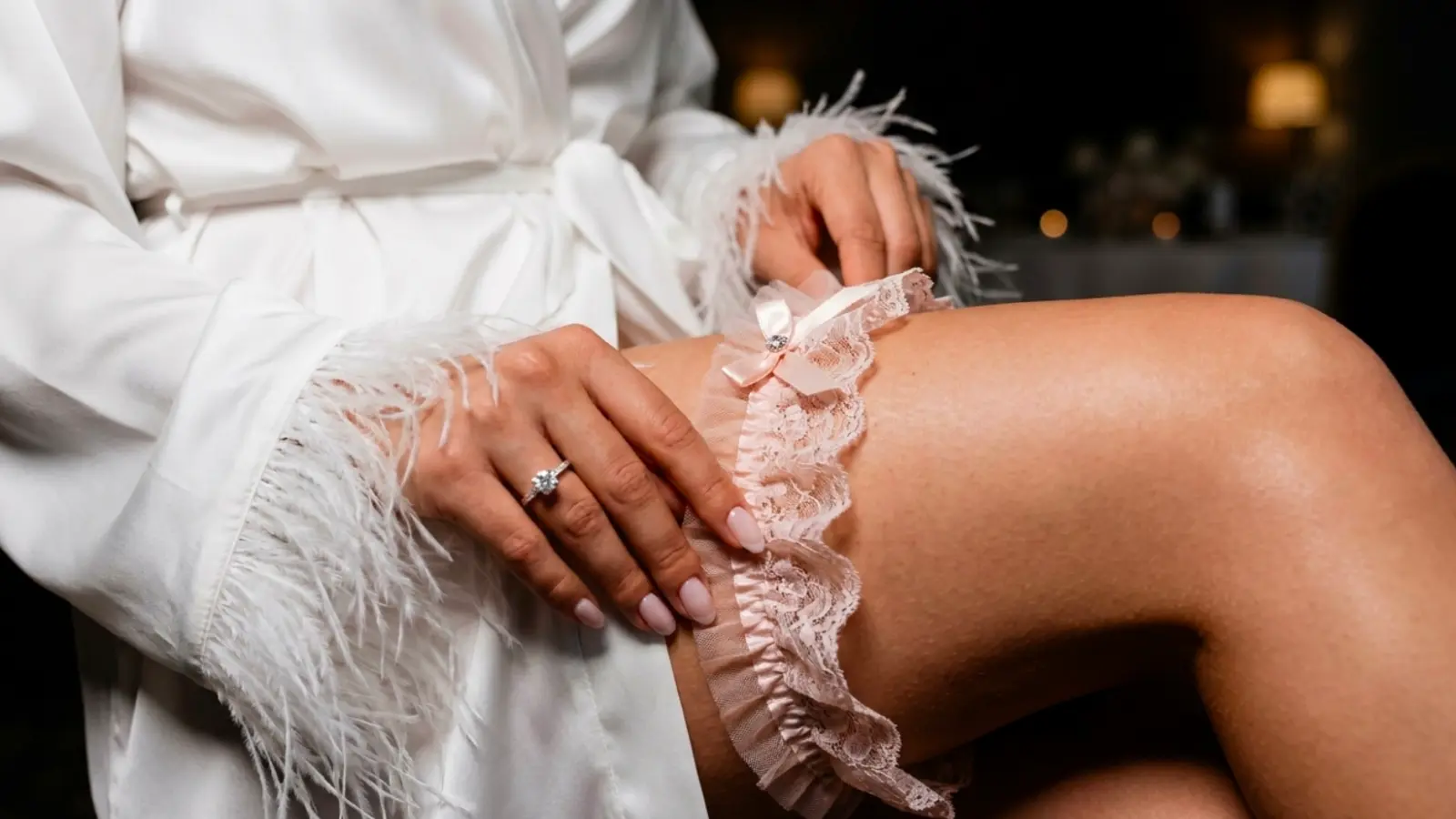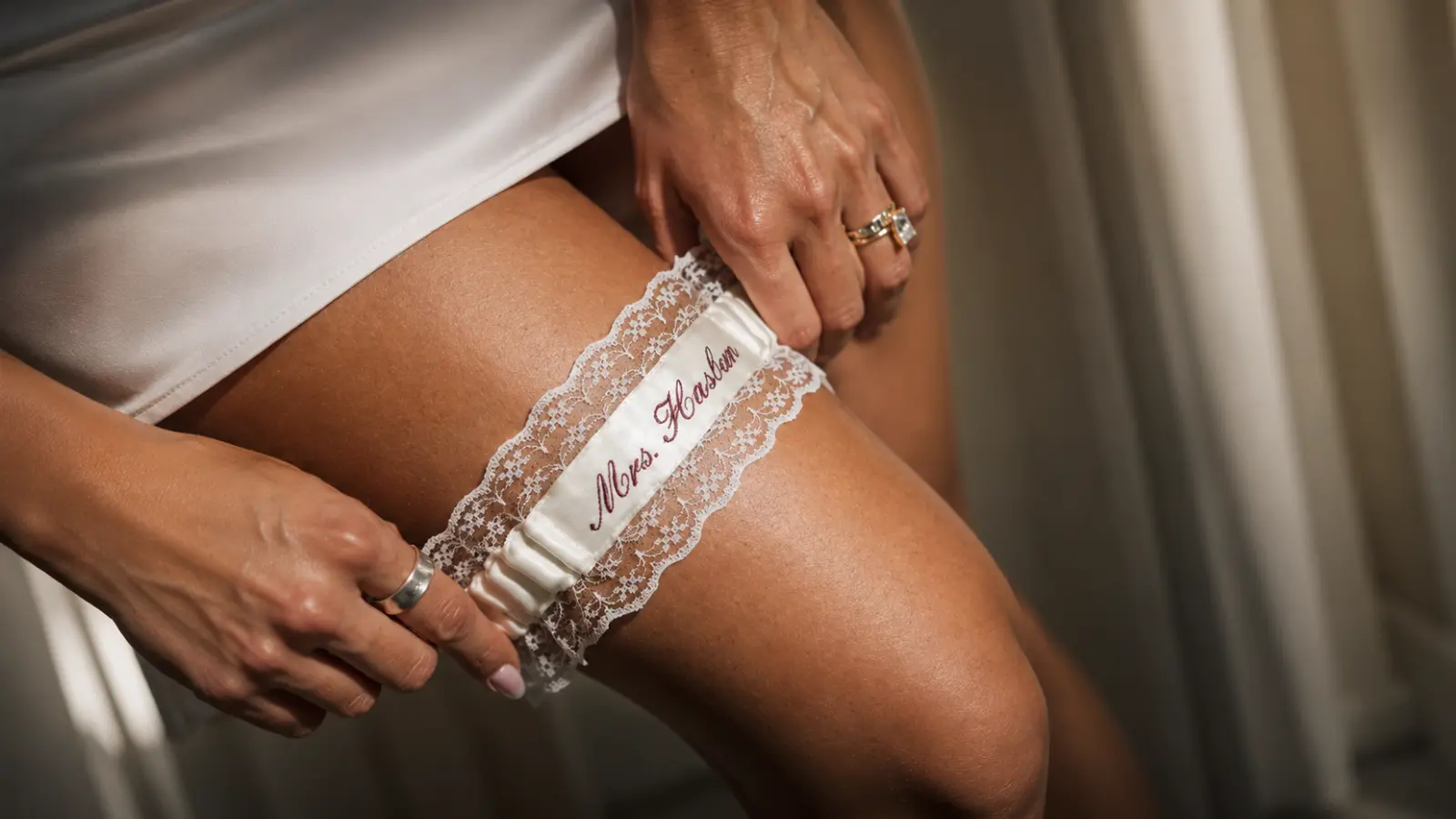
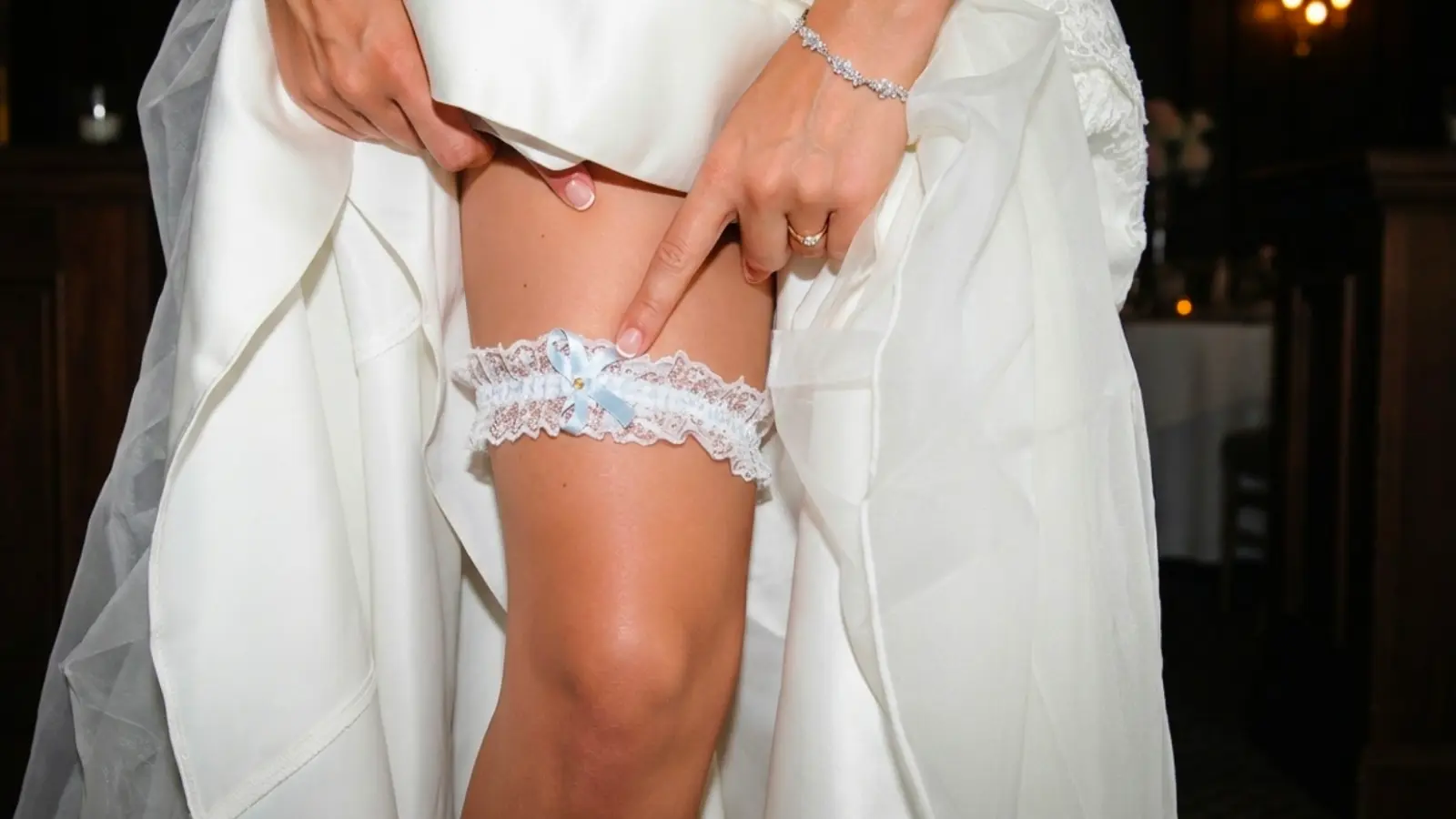
How to wear a wedding garter is one of the most common questions brides ask after deciding to include this traditional accessory. Most of the uncertainty is surprisingly practical: which leg should it go on, how high should it sit, when should you put it on, and how do you keep it from slipping throughout the day?
The good news is that there are very few strict rules. Wearing a wedding garter comes down to comfort, placement, and personal preference rather than formal etiquette. Small adjustments in fit and positioning usually make a much bigger difference than tradition ever will.
This guide explains how to wear a wedding garter correctly, including which leg to choose, the ideal placement on the thigh, how to measure the right fit, when to put it on, and how to wear a wedding garter comfortably from the ceremony through the reception.
Which Leg Does It Go On?
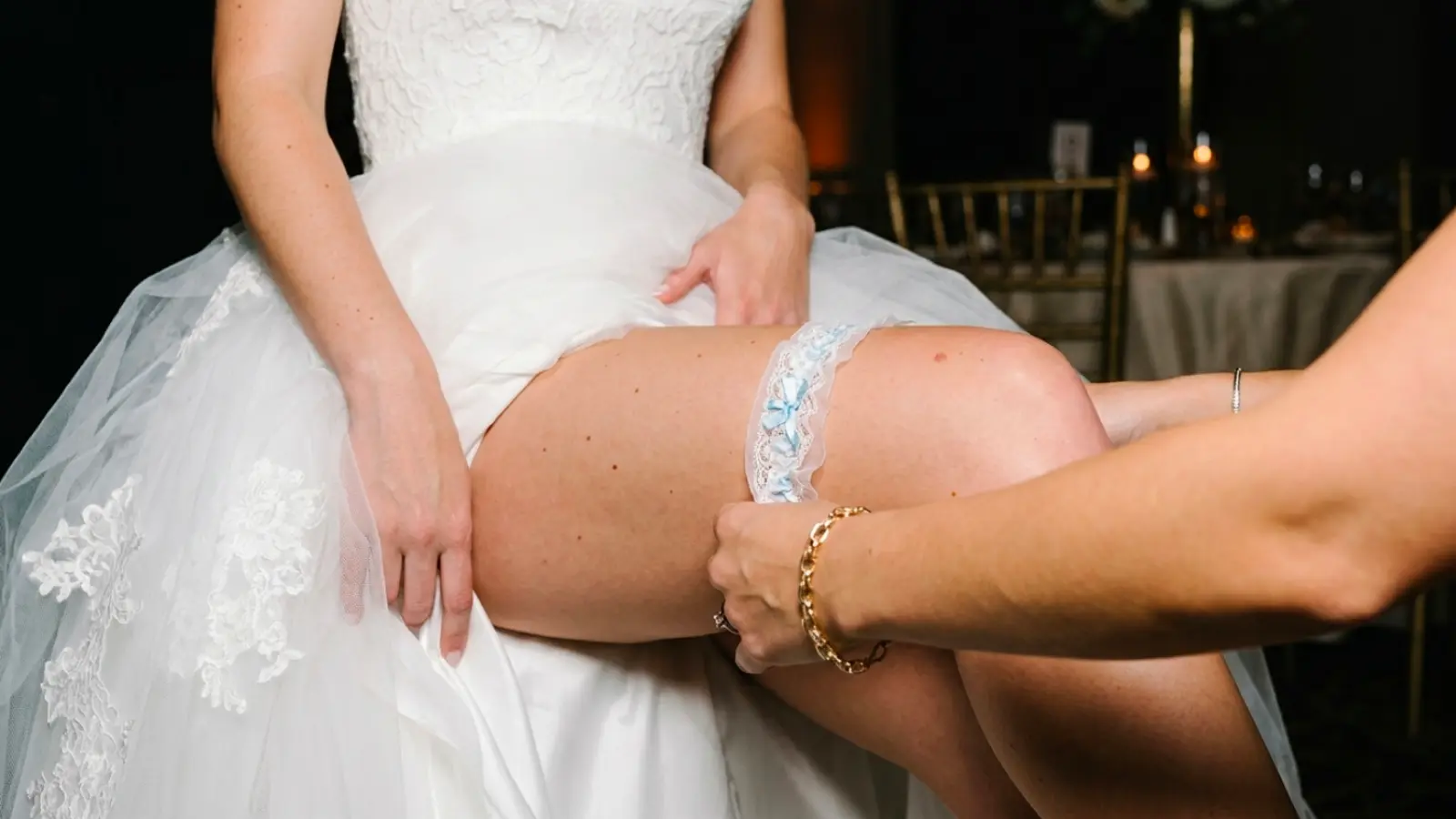
There’s no actual rule about this, despite how often the question comes up. Right leg is the more common convention at American weddings, likely just because that’s what most people have seen at other weddings or in movies, but there’s no etiquette guide, religious tradition, or historical reason that makes left leg incorrect. A bride can wear it on whichever leg feels more natural or comfortable, and no one at the wedding is likely to notice or care which one she chose.
If there’s a toss planned, some brides find it slightly easier to lift the leg that corresponds to their dominant side, but this is a minor practical preference, not a rule. The honest answer is: pick whichever leg feels right.
Placement: How High on the Thigh
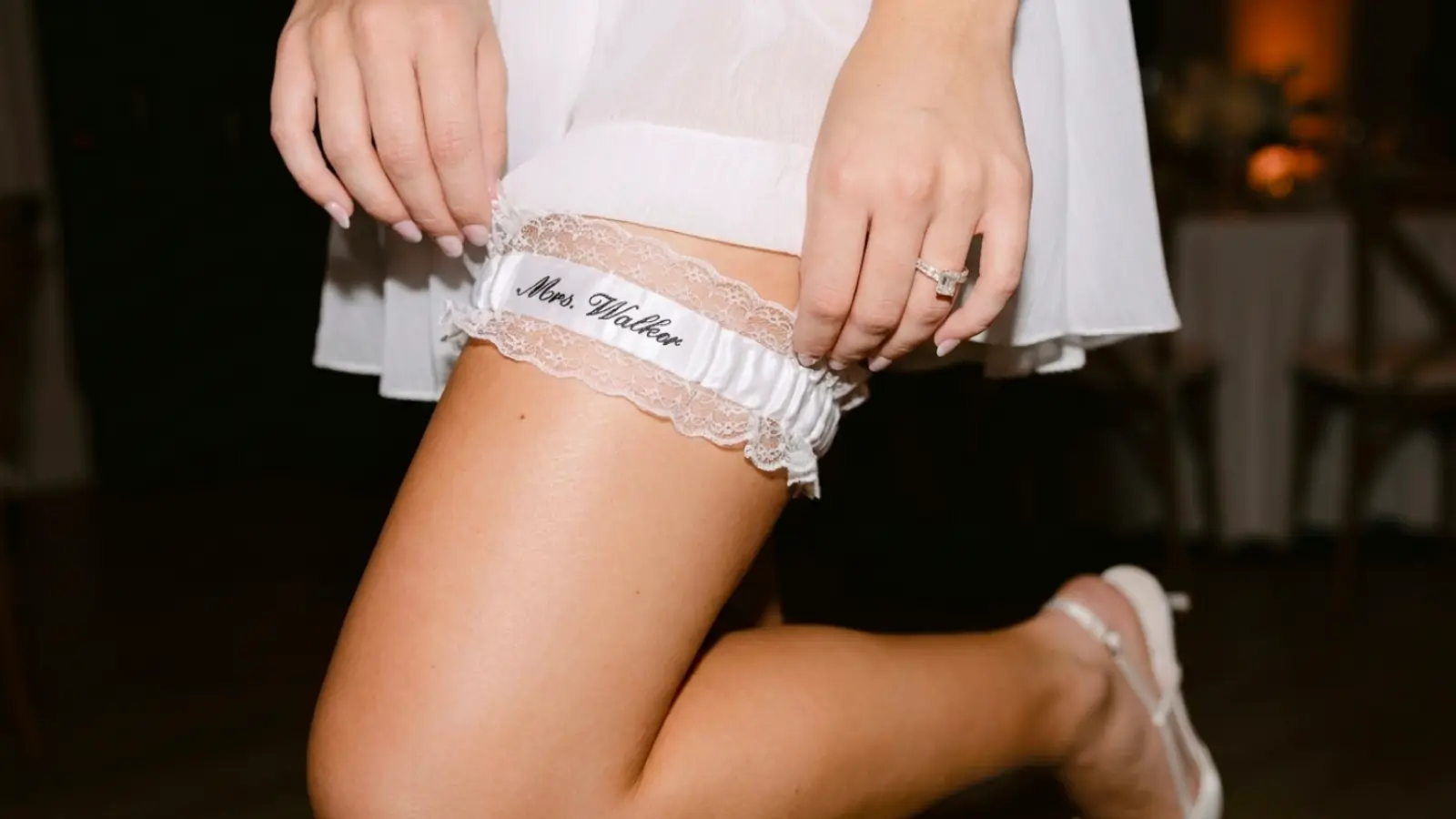
Most brides wear the garter four to six inches above the knee. This range tends to work well for a few practical reasons: it’s comfortable to sit in without digging into the leg, it’s easy to reach if there’s a wedding garter removal or toss planned, and it sits in a spot unlikely to show under most dress lengths, even fairly fitted ones.
- Too close to the knee: more likely to slide down with normal movement, since there’s less thigh muscle to hold it in place.
- Very high on the thigh: can feel restrictive when sitting for extended periods, like through dinner or a long ceremony.
- The middle range (4–6 inches above the knee): the most commonly recommended placement for a reason, it balances comfort, visibility, and practicality better than either extreme.
How to Measure Correctly
Getting the size right starts with measuring at the actual placement point, not just anywhere on the thigh. Wrap a soft measuring tape around the leg at the spot where the garter will sit, four to six inches above the knee, without pulling it tight. That number is what should be checked against a garter brand’s specific size chart, since sizing isn’t standardized across different makers.
For more detail on sizing, fabric, and fit beyond placement specifically, the how to choose a wedding garter guide covers the full picture of choosing a garter that’s actually comfortable to wear, not just to look at.
Fit, Slipping, and Comfort
A garter that slides down throughout the day is one of the most common complaints, and it almost always comes down to one of two things: the garter is too loose, or the elastic itself isn’t strong enough to hold its position through normal movement.
- Snug, not tight. The garter should stay in place without needing to be pulled uncomfortably tight to begin with. If it requires real tension to stay up, it’s likely the wrong size.
- Wider bands hold better. A wider elastic distributes pressure across more of the thigh, which generally means less slipping and less digging in than a narrow band.
- Test it under real movement. Sitting, walking, and dancing all shift how a garter sits differently than standing still. A quick try-on in a mirror doesn’t reveal how it’ll behave for hours.
- Body warmth and skin matter too. Some skin types or fabrics (like tights or hosiery underneath) affect how well elastic grips. If slipping is a known issue, testing the exact undergarments planned for the wedding day is worth doing.
If a garter consistently slides no matter the sizing adjustments, it may simply be the wrong style for that particular leg shape, and trying a different width or elastic type is a reasonable next step rather than assuming nothing will work.
When to Put It On
Most brides put the garter on while getting dressed, around the same time as the wedding dress itself, so it’s in place, tested, and forgotten about well before the ceremony starts. This timing also gives a chance to notice any discomfort early enough to adjust or swap it out before it matters.
There’s no rule requiring a specific moment in the day. Some brides choose to put it on later, just before the reception, particularly if they found it less comfortable during the ceremony and photos and would rather skip it for that portion of the day. Either approach is completely normal.
Wearing It Under a Fitted Dress
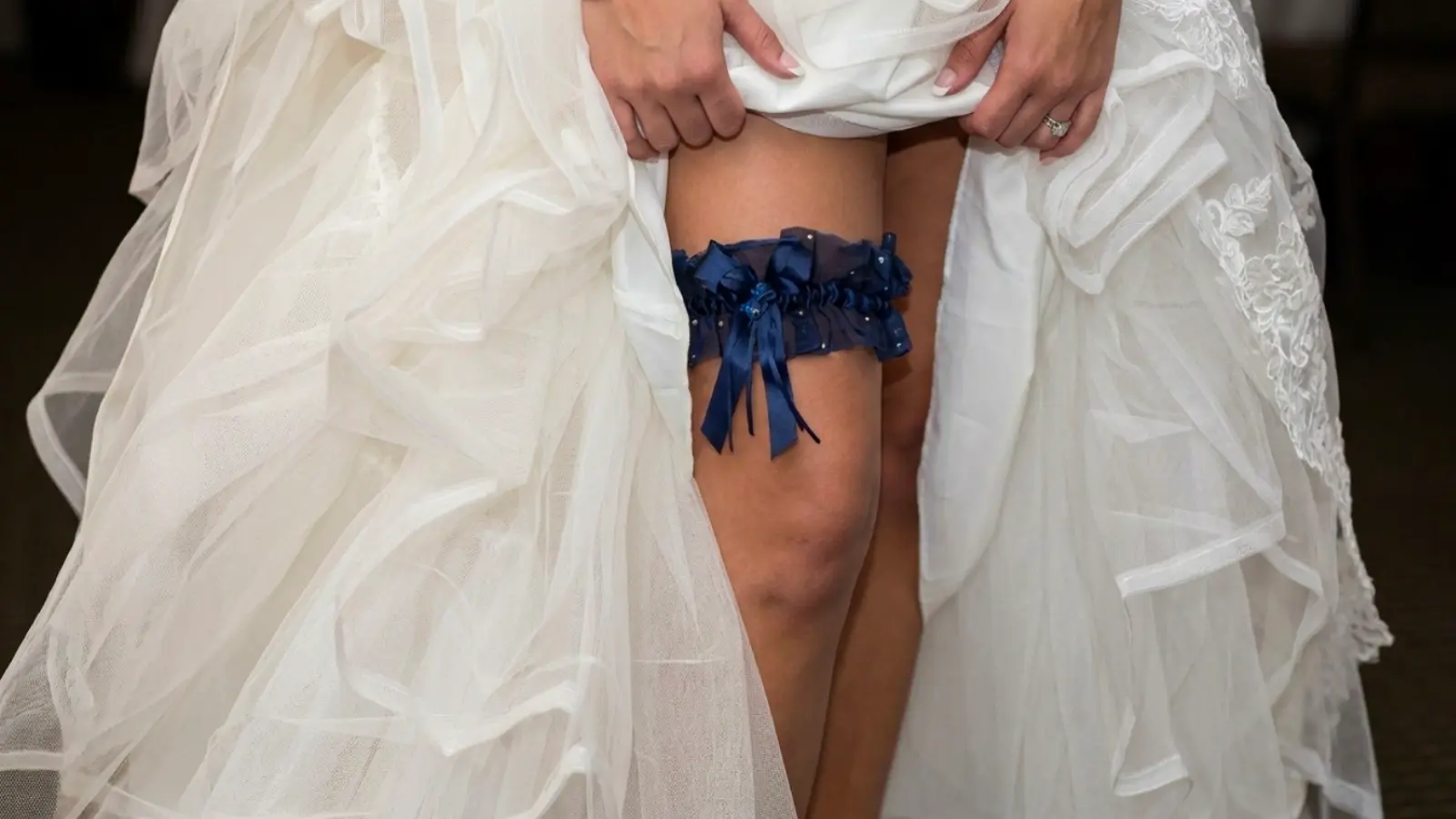
Fitted and form-fitting dress silhouettes, mermaid, trumpet, sheath, are the styles most likely to show some hint of what’s underneath, which makes garter choice slightly more important for brides wearing this kind of gown.
- Choose a flatter, slimmer garter rather than anything heavily embellished or bulky, since raised texture is more likely to be visible through close-fitting fabric.
- Avoid thick lace layers stacked on top of each other, which add bulk that a fitted skirt has less room to hide.
- Test it under the actual dress during a fitting, standing in the lighting and fabric the dress will actually be seen in, to check whether anything shows.
None of this means a fitted dress rules out a beautiful or detailed garter, it just means checking how it looks under that specific silhouette before assuming it’ll be invisible.
Wearing It Under a Full Skirt
Ball gowns, A-line skirts, and any other full or layered silhouette give far more room to work with. There’s little to no chance of a garter showing through this kind of fabric, regardless of width, lace, or embellishment, which means the choice can be made purely on comfort and personal preference without worrying about visibility at all.
This is also the easier silhouette for layering a garter set, one keepsake piece and one toss piece, since there’s enough room under the skirt for either to be repositioned or removed without disturbing the dress.
Using a Garter Set
A garter set, one piece to keep and one simpler piece for the toss, is worn the same way as a single garter, just with two pieces instead of one, typically on the same leg, one slightly above or below the other, or one on each leg if that’s more comfortable. There’s no required arrangement; whatever feels secure and comfortable is the right approach.
If doing a toss, the simpler piece is the one removed and thrown, while the keepsake garter stays in place the entire time, untouched by the toss itself. This is a popular way to participate in the tradition without risking the more sentimental piece.
Wearing One Without Doing a Toss
Wearing a garter and doing a garter toss are two completely separate decisions, and plenty of brides wear one with no intention of ever doing a toss at all. The garter can simply be worn as a personal tradition, a “something blue” detail, or a keepsake, with no public moment built around it whatsoever.
If skipping the toss specifically while still wearing a garter, no announcement or explanation is needed, it simply doesn’t come up during the reception, and most guests won’t notice or expect it unless it’s specifically part of the planned timeline. For couples deciding how to handle the toss specifically, the garter toss tradition guide and garter toss alternatives guide both cover that decision separately from the question of simply wearing a garter.
Taking It Off Before the Reception
There’s no rule requiring the garter to stay on for the entire wedding day. Some brides remove it after the ceremony and photos are done, especially if it wasn’t particularly comfortable for dancing or extended sitting, or if there was never a toss planned and it was only meant to be worn for the earlier, more photographed part of the day.
This is a personal accessory, not an obligation. Taking it off early, leaving it on the whole time, or never wearing it past the dressing room are all equally valid choices, and none of them affect the meaning behind wearing it in the first place.
How to Wear a Wedding Garter
Learn how to wear a wedding garter comfortably, including which leg to choose, where it should sit, how to prevent slipping, and practical tips for wearing a garter with different wedding dress styles.
Comfort Matters More Than Tradition
Wearing a wedding garter should feel simple, comfortable, and completely personal. While traditions often suggest different ways to wear it, there is no single correct placement, leg, or timeline that every bride must follow. The right choice is always the one that feels secure and natural throughout the day.
Whether you wear your garter from the moment you get dressed, add it before the reception, keep it as a private detail, or pair it with a garter toss, the most successful approach is the one that lets you enjoy your wedding without thinking about the accessory you’re wearing.
Frequently asked questions (FAQ)
How do you wear a wedding garter correctly?
There is no single correct way to wear a wedding garter. Most brides choose the leg that feels most comfortable, place it about four to six inches above the knee, and make sure it fits snugly without feeling tight. The goal is keeping it comfortable and secure throughout the day rather than following a strict tradition.
Which leg does a wedding garter go on?
There is no official rule about which leg to wear a wedding garter on. Many brides choose the right leg because it has become the more common convention in the United States, but the left leg is equally correct. Comfort and personal preference matter much more than tradition.
How high should a wedding garter sit?
Most wedding garters are worn about four to six inches above the knee. This placement helps keep the garter comfortable, reduces the chance of slipping, and makes it easy to reach if you plan to include a garter toss or removal during the reception.
How do you keep a wedding garter from slipping?
Choose the correct size, look for a garter with a comfortable elastic band, and test it before the wedding while walking, sitting, and moving naturally. A garter that is too loose is the most common reason it slips, while one that is too tight can become uncomfortable after several hours.
When should you put on a wedding garter?
Most brides put on their wedding garter while getting dressed before the ceremony so they have time to adjust the fit if needed. Others wait until later in the day if they only plan to wear it for the reception. Either option is completely acceptable.
Do you have to wear a wedding garter all day?
No. Many brides wear the garter throughout the entire wedding day, while others remove it after the ceremony, after photos, or before dancing. If you are not planning a garter toss, you can take it off whenever it no longer feels comfortable. There is no etiquette rule requiring you to keep it on all day.