
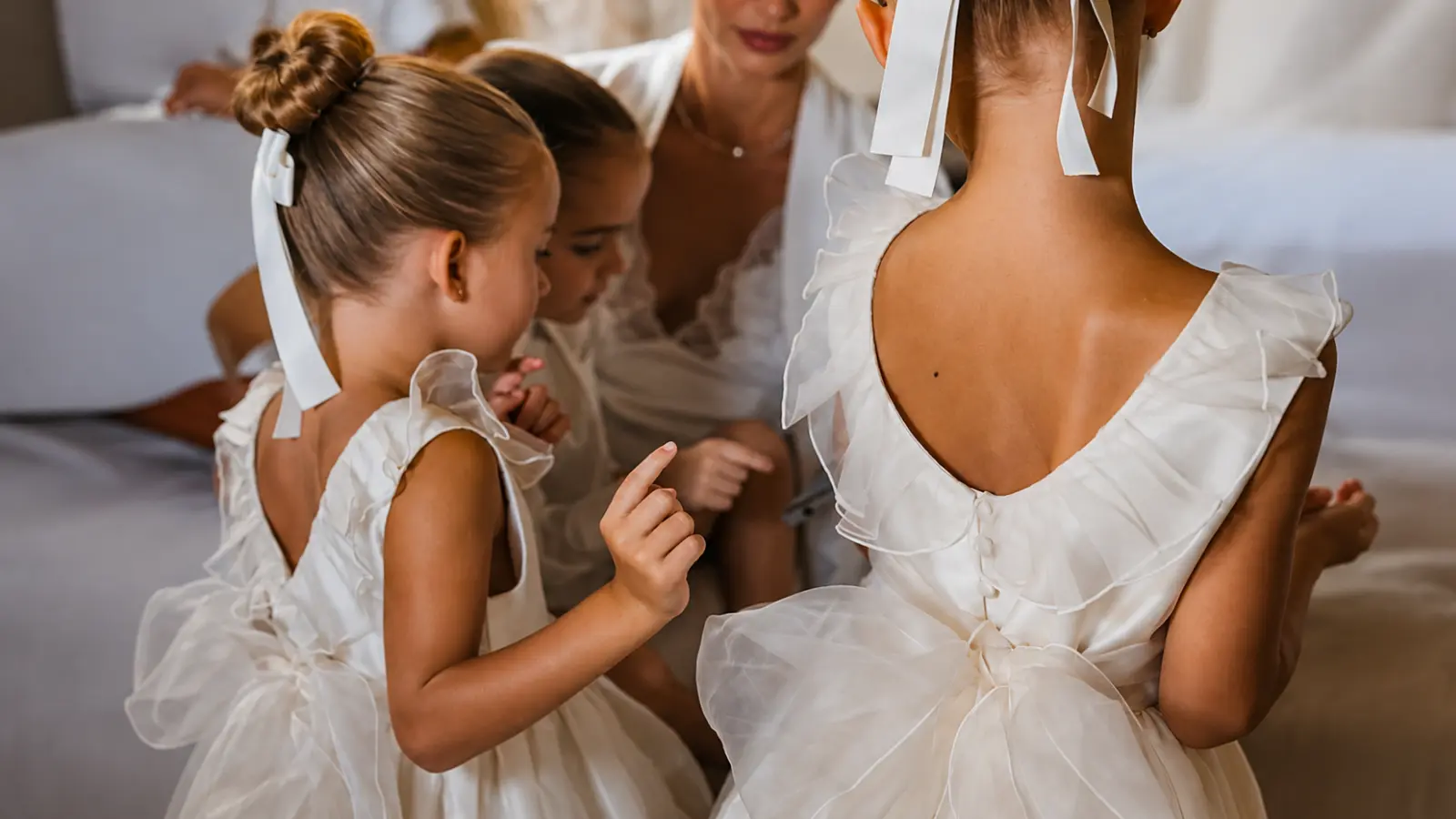
What should kids wear to a wedding? The best outfit balances the wedding dress code with the reality that children still need to sit, eat, move, dance, and stay comfortable for several hours. Something that looks perfect for ceremony photos also needs to work through the reception.
Age, venue, weather, and formality all matter. Babies and toddlers need easy, comfortable clothing, while older children and teens can follow the dress code more closely without sacrificing practical fit and movement.
This guide explains what kids should wear to a wedding by age and dress code, including outfits for babies, toddlers, school-age children, tweens, and teens, plus shoes, formal weddings, outdoor and beach ceremonies, evening receptions, and what to avoid.
Understanding the Dress Code for Kids
Children’s wedding guest attire doesn’t have its own separate dress code — it follows the same general guidance as adult attire, scaled down for age and practicality. A casual outdoor wedding calls for lighter, less formal clothing for children just as it does for adults. A black tie evening reception means something polished and dressy, even for a seven-year-old.
In practice, children are given a bit more flexibility than adults at most dress codes, particularly at the younger end of the age range. No one expects a three-year-old to be in a floor-length gown or a miniature tuxedo. What guests and couples do notice is when a child is dressed in a way that’s clearly too casual for the event — sneakers and jeans at a formal evening wedding, for instance — or dressed in a way that’s impractical enough to make the parents’ evening difficult.
A simple rule of thumb: follow the same dress code as the adult guests, adjusted for the child’s age and comfort. If you’re wearing a cocktail dress, a child in a knee-length dress in a dressy fabric is appropriate. If you’re in a suit, a child in a collared shirt and trousers reads correctly. The goal is to look intentional, not to match the adult guests exactly.
What Babies Should Wear
For babies, comfort and practicality are the only criteria that genuinely matter. A baby won’t remember being at a wedding, and no one at the wedding will judge an infant for not meeting a dress code. What everyone will notice — including the parents — is if the baby is overheated, uncomfortable, or dressed in something that makes a diaper change a production.
Soft, breathable fabrics are the starting point: cotton and cotton blends work well across most climates and seasons. A simple romper, a soft dress, or a onesie with an outfit layered over it gives parents flexibility to adjust as the temperature changes throughout the day. Avoid anything with scratchy embellishments, tight elastic, or hard closures near the skin. Whatever the baby wears for the ceremony and photos, pack an easy spare — because there will likely be a moment when it’s needed.
Shoes are optional for babies who aren’t walking. Soft booties or bare feet are entirely appropriate. If you do put shoes on a baby for photos, make sure they’re soft-soled and stay on without needing to be constantly adjusted.
What Toddlers Should Wear
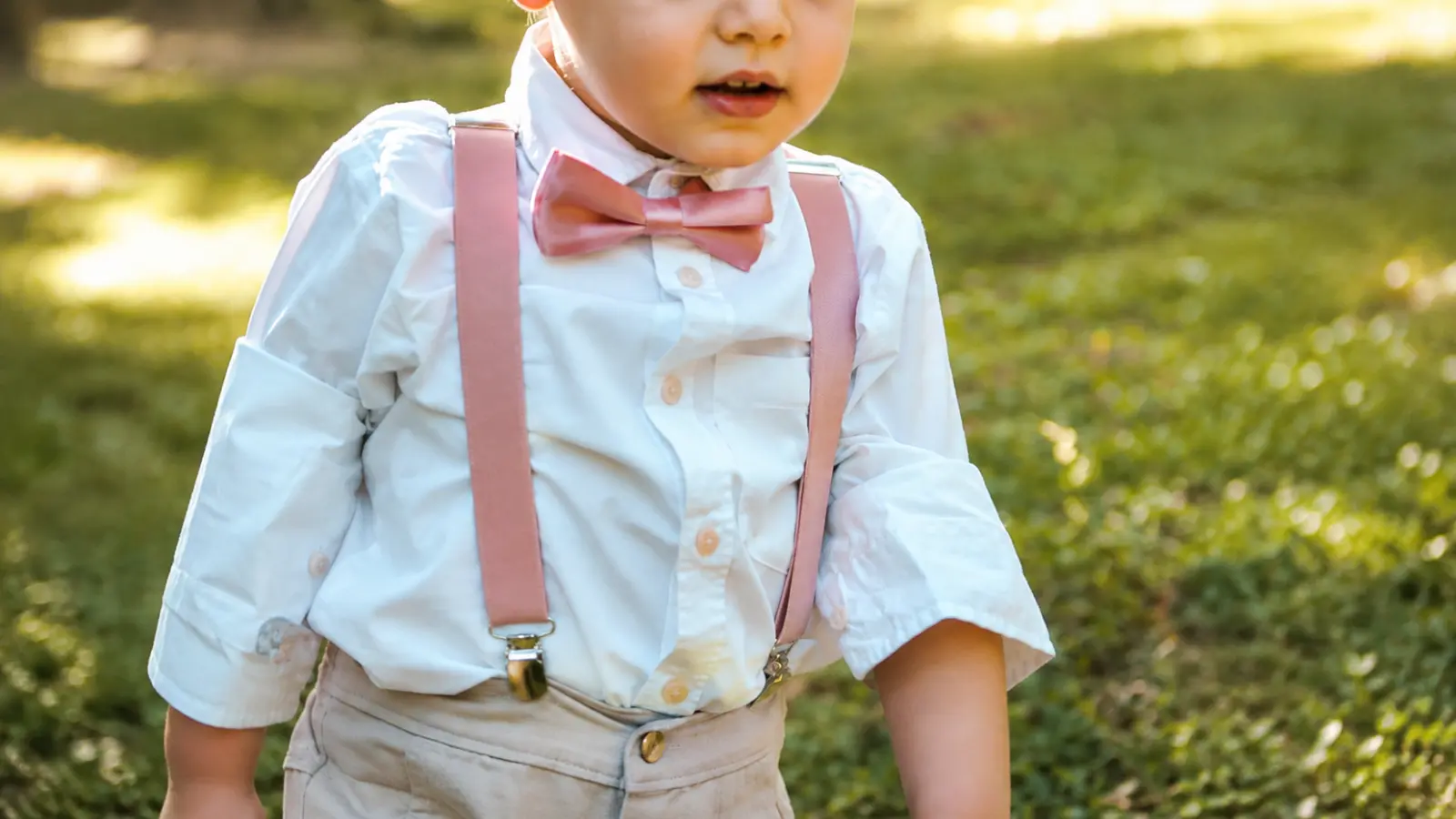
Toddlers present the greatest clothing challenge at a wedding, not because of dress code complexity but because of the combination of physical activity, bathroom needs, and emotional unpredictability that comes with the age. The outfit needs to survive all of it — and ideally, so does the parent wearing it next to them.
For toddler girls, a simple dress in a soft fabric hits the right note for most weddings. Look for styles with enough room in the skirt to allow movement, without layers of stiff netting underneath that make sitting, crawling, or a quick bathroom trip more complicated than it needs to be. Smocked dresses, soft knit dresses, and A-line styles in cotton or jersey are reliably comfortable and still look polished in photos.
For toddler boys, soft trousers with an elastic waistband paired with a collared shirt — or a comfortable romper for the youngest toddlers — works for most dress codes. Suspenders can be a charming touch for photos, but make sure they’re easy to remove quickly. A blazer or cardigan adds formality when the event calls for it and can come off when the child is done with it.
Pack a spare outfit. For toddlers at a wedding, this is not overcautious — it’s standard. Spills, grass stains, and general toddler-related clothing events are nearly inevitable over the course of a reception.
What Young Kids Should Wear
Children between roughly four and eight are old enough to have an opinion about what they’re wearing, which makes the process easier and more complicated in equal measure. At this age, the goal is a dressy-but-practical outfit that the child finds comfortable enough to wear for several hours without wanting to take it off by cocktail hour.
For girls in this age range, a knee-length dress in a slightly structured fabric — a ponte knit, a soft cotton blend, or a simple chiffon overlay — works across most dress codes and allows enough movement for dancing and sitting on the floor. A skirt-and-blouse combination is another option that tends to be comfortable and looks intentional. Avoid very stiff fabrics, floor-length hems that children trip on, and any style that’s difficult to manage independently in the restroom.
For boys, a collared shirt with neat trousers and a belt, or a full suit at more formal events, hits the right level for most weddings. At this age, a tie is manageable if the child is comfortable wearing one — but a clean, polished look without a tie is equally appropriate at most dress codes. Clothing that fits well matters more than the specific style: an outfit that’s too tight, too stiff, or constantly being adjusted becomes a distraction for the child and the parent.
What Tweens and Teens Should Wear
Tweens and teens bring their own preferences to the dress code conversation — and those preferences deserve to be part of the process rather than overridden in favor of what looks cute to a parent. A teen who feels awkward or uncomfortable in what she’s wearing will be visibly uncomfortable, which tends to color her entire experience of the day.
For tweens, the goal is an age-appropriate version of the dress code — something that looks intentional and polished without borrowing too heavily from adult formal wear. A midi dress, a dressy jumpsuit, or separates in a coordinated fabric read correctly at most weddings and give a tween room to feel like herself rather than like a small adult dressed up for someone else’s aesthetic.
Teens can generally follow adult dress code guidance with the same age-appropriateness considerations that apply to their regular clothing. A formal wedding calls for a floor-length or cocktail-length dress for teen girls, a suit or blazer and trousers for teen boys. A garden party wedding allows something lighter and less structured. The main adjustment from adult attire is that very revealing styles — plunging necklines, high hemlines — that might be appropriate for adult guests are still worth calibrating for a teen at a wedding. Let the teen have input; just frame the conversation around the dress code rather than around rules.
Boys’ Wedding Guest Outfits
Boys’ wedding guest attire follows a fairly consistent logic across most age groups: collared shirt, trousers, and appropriate shoes, with the level of formality scaled to the dress code. The variables are mainly about fabric, fit, and how many layers the event calls for.
For casual or semi-formal weddings, a collared button-down shirt in a solid color or subtle pattern paired with chinos or dress trousers works well for most ages. A blazer adds formality when needed and can be removed once the reception gets going. For formal or black tie events, a suit with a dress shirt and tie — or a full suit in a darker fabric — is the right direction. Bow ties are a popular choice for younger boys and photograph well.
Fit matters considerably more than brand or price point. A well-fitting outfit in a modest price range looks far more polished than an expensive suit that doesn’t fit. For boys who are growing quickly, it’s worth trying the outfit on a few weeks before the wedding to confirm the trousers still hit the right length and the jacket sits correctly in the shoulders.
Girls’ Wedding Guest Outfits
Girls’ wedding guest attire offers more variation than boys’, which can make it feel more complex — but the core principle is the same: dressy enough for the event, practical enough for the child. The dress code and the venue are the two filters; age-appropriateness and comfort do the rest of the work.
For most weddings, a dress in a soft, slightly dressy fabric is the simplest solution for girls of most ages. Solid colors and simple patterns in pastels, soft neutrals, or muted jewel tones work across a range of wedding aesthetics. Floral prints are particularly reliable for daytime and garden weddings. Velvet, satin, and structured knits work well for evening and formal events.
Separates — a blouse with a skirt, or a dressy top with wide-leg trousers — offer flexibility and can be more comfortable for older girls who don’t love dresses. A dressy romper is a practical option for younger children who will be moving a lot. Whatever the style, the test is the same: can the child sit, eat, dance, and visit the restroom in it without help? If yes, it’s a good choice.
Shoes for Kids at Weddings
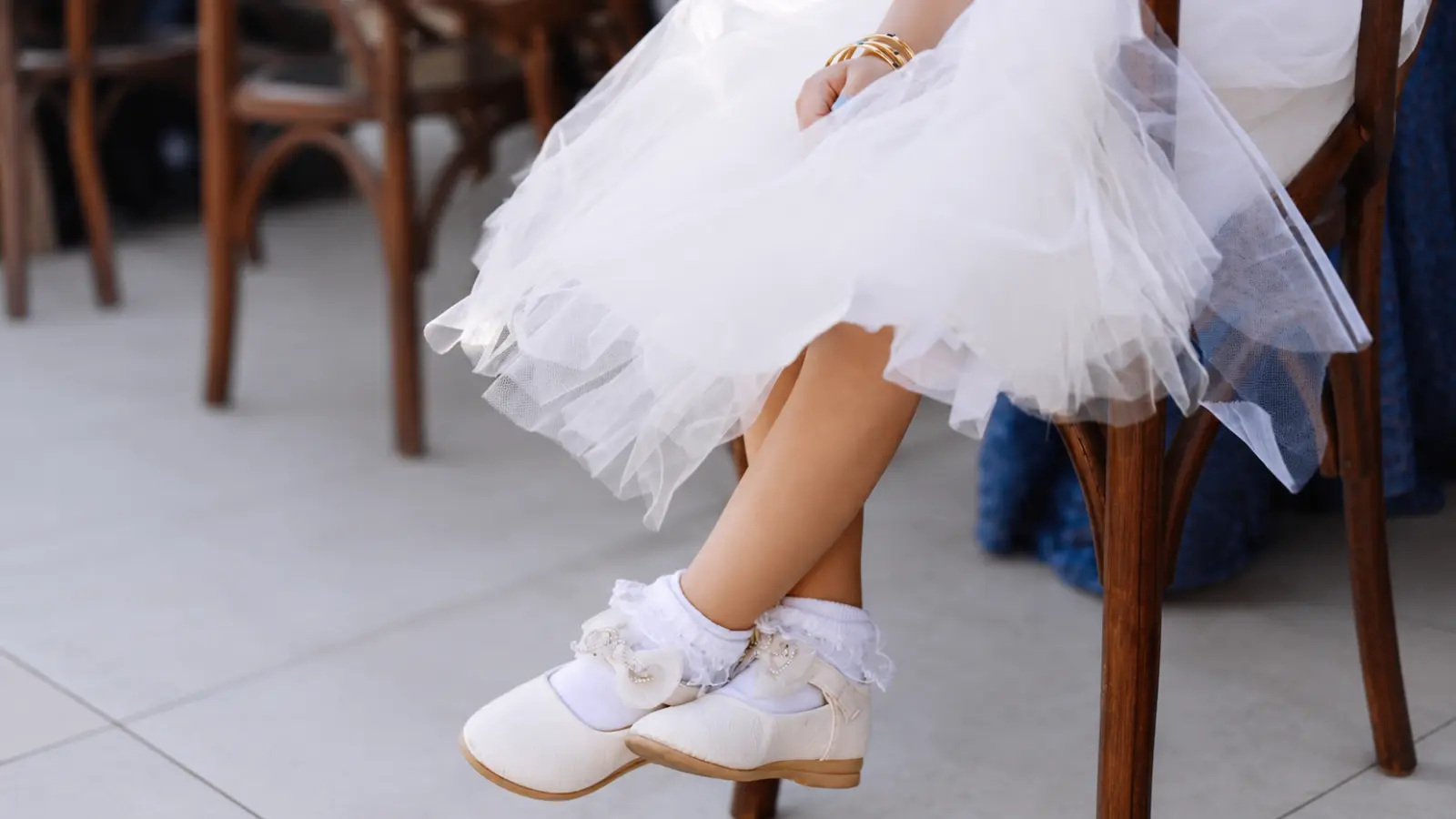
Shoes are where children’s wedding guest outfits most often go wrong — not because of aesthetics, but because of practicality. A shoe that looks correct but doesn’t stay on reliably, hurts after an hour, or isn’t safe on the venue’s flooring becomes a problem that the parent is managing for the rest of the evening.
The non-negotiables for kids’ wedding shoes are fit, security, and appropriateness for the venue surface. Mary Janes with a bar closure, simple ballet flats with a snug fit, or low-heeled dress shoes that have been broken in before the wedding work reliably for girls. For boys, leather-look dress shoes or simple loafers with a sole appropriate for the venue are the standard choices. At less formal outdoor weddings, clean white sneakers or simple leather-look trainers are increasingly accepted for children, particularly younger ones.
Heels for children — even low heels — are worth thinking carefully about. On a polished ballroom floor or a grass lawn, any heel adds instability for a child who isn’t used to wearing them. If the look calls for a slight heel for an older child or teen, choose a stable style with a secure back strap rather than a narrow or unstable heel. And whatever shoes you choose, have the child wear them at home for at least one full afternoon before the wedding day. Shoes that are stiff or slightly too tight on a regular Tuesday are genuinely painful after four hours at a reception.
Outdoor, Beach, Formal, and Evening Weddings
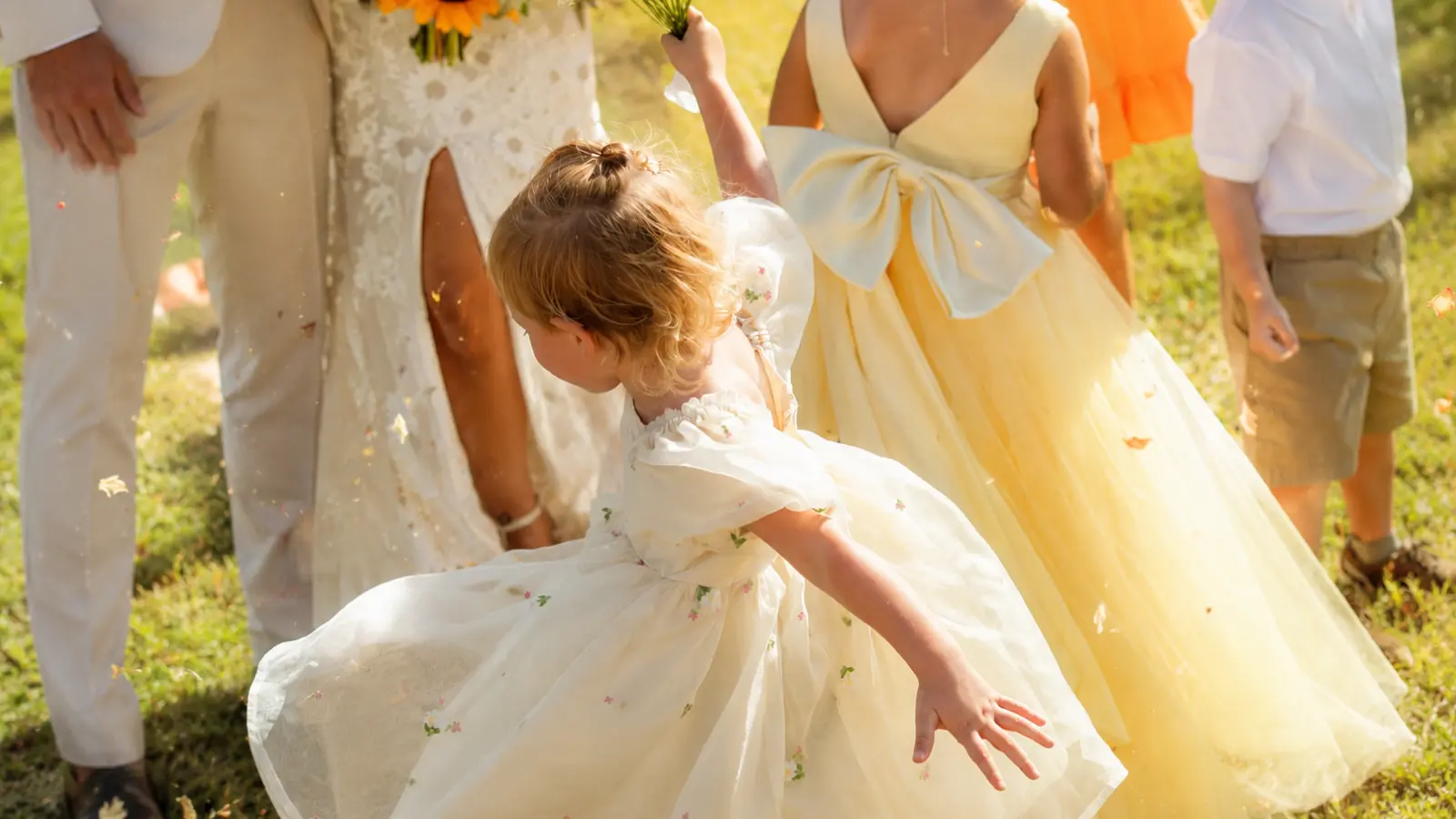
The venue and time of day change the equation more than almost any other factor. An outfit that’s appropriate for a summer garden ceremony may be completely wrong for a winter ballroom reception. Here’s how to adjust for the most common wedding contexts.
Outdoor and Garden Weddings
Lightweight, breathable fabrics are the priority for outdoor weddings — linen, cotton, and cotton blends handle heat and movement well. Avoid dark colors in full sun and synthetic fabrics that trap heat. Shoes need to be stable on grass or uneven paths: flat-soled options, wedge sandals with a secure strap, or clean sneakers are safer than thin heels. Sun protection for children is worth planning in advance — a light hat or a thin layer can save a lot of discomfort during a long outdoor ceremony.
Beach Weddings
Beach weddings call for the lightest possible fabrics and the most practical footwear. Sundresses, linen pants, and breathable separates work well. Shoes are often optional at beach ceremonies — bare feet may be appropriate — but if the reception moves to an indoor or tented space afterward, pack a pair of simple flats or sandals with a strap. Sand in formal shoes is uncomfortable and hard to remove mid-event.
Formal and Black Tie Weddings
At formal evening weddings, children’s attire should reflect the dress code as closely as age and practicality allow. For girls, a velvet or satin dress in a darker or richer color reads correctly at a winter formal event; a silk or structured fabric in a softer shade works for other formal occasions. For boys, a full suit with a dress shirt and tie is the right direction. Very young children at formal weddings get more latitude — a polished, neat outfit in a dressy fabric reads as appropriate even if it doesn’t technically match the adult dress code exactly.
Evening Receptions
Evening weddings tend to run long and often run late, which means children need outfits that can go the distance. Avoid fabrics that wrinkle badly, styles that become uncomfortable in prolonged sitting, and shoes the child will want to remove before dinner is over. Building in a layer — a cardigan, a blazer — means the child can adapt as the room gets warmer or cooler through the evening without needing a full wardrobe change.
What Kids Should Not Wear
A few specific things come up often enough in the context of children’s wedding attire that they’re worth naming directly.
- All white or very close to white. The convention around white at weddings applies to children just as it does to adult guests, particularly for girls. A child in a white dress can read as mimicking the bride’s palette in a way that most parents would rather avoid. Ivory, cream, and off-white are similarly worth steering clear of for young girls.
- Outfits that look like wedding party attire. A child attending as a guest shouldn’t be dressed in a way that could be confused with a flower girl, ring bearer, or junior bridesmaid. If the couple has a specific wedding party look, it’s worth asking whether children’s guest attire might inadvertently echo it.
- Anything the child has never worn before. New shoes, new waistbands, new fabrics — all of these can be uncomfortable in ways that only become apparent after the first hour. If possible, have the child wear the full outfit for at least part of a day before the wedding so you know what you’re working with.
- Complicated closures for young children. Buttons at the back, hooks and eyes, and multiple layers are difficult for a child who needs help in the restroom and impossible for a child who is trying to manage independently. Simple closures — zippers, snaps, elastic waistbands — save a surprising amount of time over the course of a long event.
- Very formal attire for very young children at casual weddings. A toddler in a stiff taffeta ball gown at a casual backyard wedding is overdressed in a way that will make both the child and the parents uncomfortable. Match the energy of the event.
The common thread across all of these is the same: prioritize fit, comfort, and appropriateness to the actual event over the outfit’s performance on social media or in the family’s memory of how the child looked.
How to Keep Kids Comfortable All Day
The outfit is only part of what determines whether a child is comfortable at a wedding. A few practical additions make a real difference over the course of a long event.
- Pack a spare outfit for young children. Spills, grass stains, and general wardrobe emergencies are predictable for children under six. A simple, clean backup in the bag means the rest of the evening doesn’t have to be managed around a stained dress or wet trousers.
- Bring a bag for shoes. Many children end up barefoot or in socks at some point during a reception. A small bag for shoes that have been removed means they don’t get lost before it’s time to leave.
- Layer for temperature changes. Reception venues can be significantly different in temperature from the ceremony space, and outdoor events change as the sun goes down. A cardigan, a light jacket, or a wrap gives children the ability to adjust without a full wardrobe decision mid-event.
- Check the fit one week before. Children’s sizing changes quickly. An outfit purchased six weeks before the wedding may fit differently than it did at purchase. A fitting in the week before the event catches any adjustments that need to be made while there’s still time to make them.
Comfort is not a concession to practicality over style — it’s the thing that determines whether a child can actually be present and enjoyable to have at a wedding rather than a source of ongoing management for the parent next to them.
Kids Wedding Guest Attire Inspiration
Discover kids wedding guest attire inspiration for babies, toddlers, school-age children, tweens, and teens. Explore dressy and comfortable outfit ideas for formal, black tie, garden, beach, outdoor, and evening weddings, plus practical shoes, layers, colors, and age-appropriate styling ideas for every wedding dress code.
How Do You Choose the Right Wedding Outfit for a Child?
The best kids wedding outfit respects the dress code without making the child uncomfortable for the sake of formality. Consider age, venue, weather, movement, bathroom needs, and how long the celebration will last before choosing the final look.
Try the complete outfit and shoes before the wedding, bring a backup for younger children, and give older kids some input when possible. When the outfit looks appropriate and still allows the child to enjoy the day comfortably, you’ve found the right balance.
Frequently asked questions (FAQ)
What should a child wear to a wedding?
A child should wear a dressy but practical outfit that fits the wedding dress code while allowing comfortable movement throughout the day. Collared shirts with trousers and simple dresses or dressy separates work for many weddings. Adjust the formality for the child’s age, venue, and weather, and avoid stiff fabrics, restrictive fits, or uncomfortable shoes.
What should a toddler wear to a wedding?
Choose soft, comfortable clothing that allows plenty of movement and makes diaper changes or bathroom trips easy. Simple dresses, soft trousers with a collared shirt, or comfortable rompers can all work depending on the dress code. Avoid stiff layers, tight waistbands, and complicated closures, and always pack a spare outfit for spills or accidents.
What should kids wear to a formal or black tie wedding?
For a formal or black tie wedding, boys can wear a suit with a dress shirt and tie, while girls can wear a knee-length or midi dress in a dressy fabric such as velvet or satin. Very young children have more flexibility, but their outfits should still look polished. Formality should never come at the expense of fit or comfort.
What should kids wear to a beach or outdoor wedding?
Choose lightweight, breathable fabrics such as linen, cotton, or comfortable blends that suit the weather. For grass or uneven ground, secure flat shoes or strapped sandals are more practical than heels or loose footwear. At daytime outdoor weddings, also plan for sun protection and bring a light layer if temperatures may change later.
What colors should kids wear to a wedding?
Soft neutrals, pastels, muted tones, jewel tones, and appropriate prints can all work depending on the season and dress code. It’s generally safest to avoid white, ivory, and cream for children attending as guests, particularly dresses that could resemble flower girl attire. The outfit’s fit, comfort, and formality matter more than choosing one specific color palette.
What shoes should kids wear to a wedding?
Choose secure, comfortable shoes that suit both the dress code and the venue surface. Mary Janes, ballet flats, loafers, dress shoes, and clean dressy sneakers can work depending on the event. Avoid unstable heels or shoes that slip off easily, and have the child wear the shoes beforehand to identify any rubbing, tightness, or discomfort.