
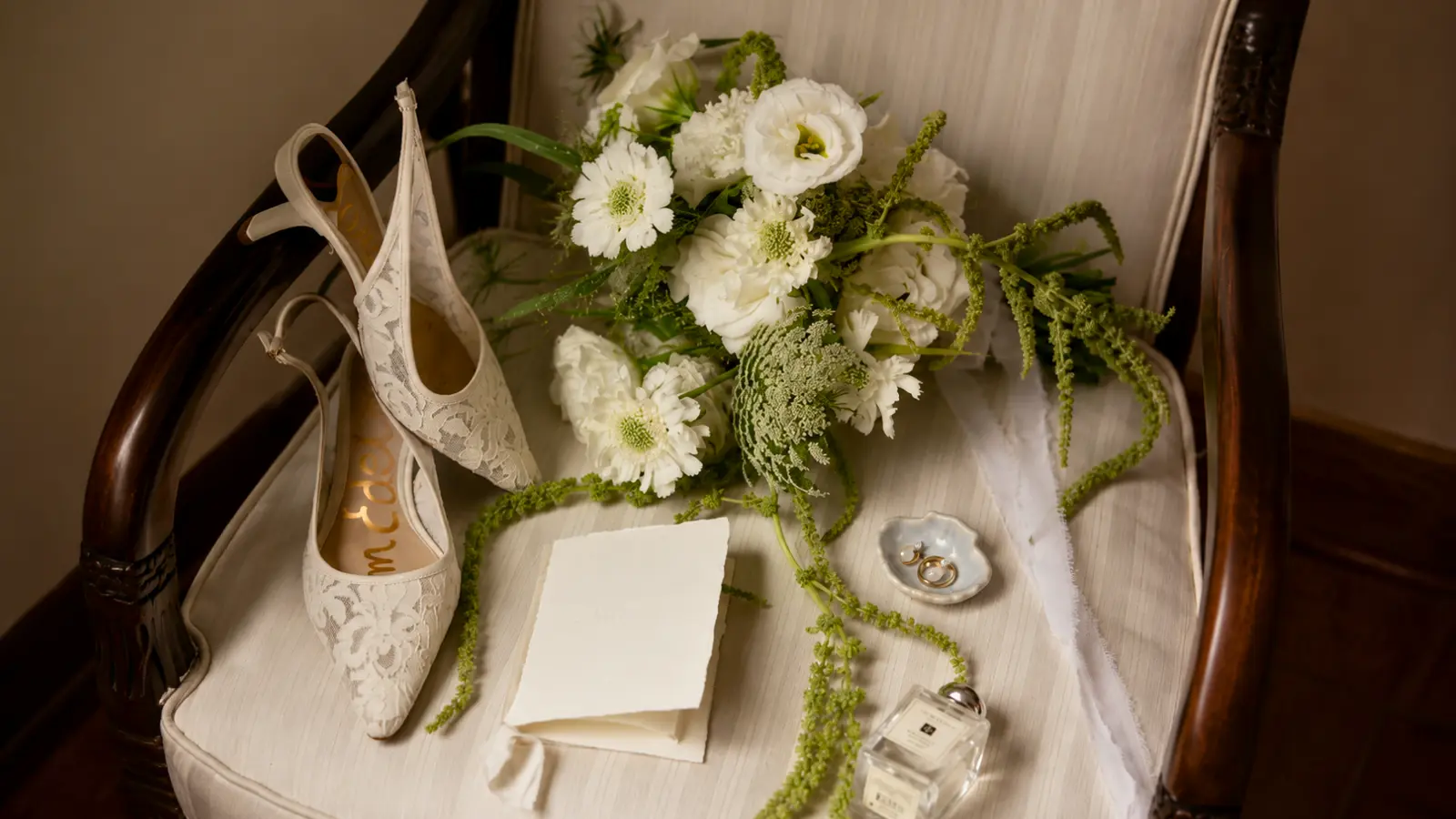
Wondering what to do with your wedding bouquet after the wedding? You’re not alone. After months of choosing the perfect flowers, many brides suddenly realize they haven’t planned what comes next. Whether you want to preserve your bouquet as a keepsake, donate it to brighten someone else’s day, create meaningful mementos, or simply enjoy the flowers a little longer, there are more options than most people realize.
While professional preservation is often the first idea that comes to mind, it’s only one of many possibilities. Some brides save a few meaningful stems, others create framed keepsakes or jewelry, and many choose to donate their bouquet so it can continue bringing joy after the celebration. The best choice depends on your budget, your memories, and what you hope your bouquet will represent after the wedding.
This guide explores what to do with your wedding bouquet after the wedding, including the first 24 hours, preservation options, donation, shadow boxes, keepsakes, and practical advice to help you choose the option that feels most meaningful for you.
The First 24 Hours After the Wedding
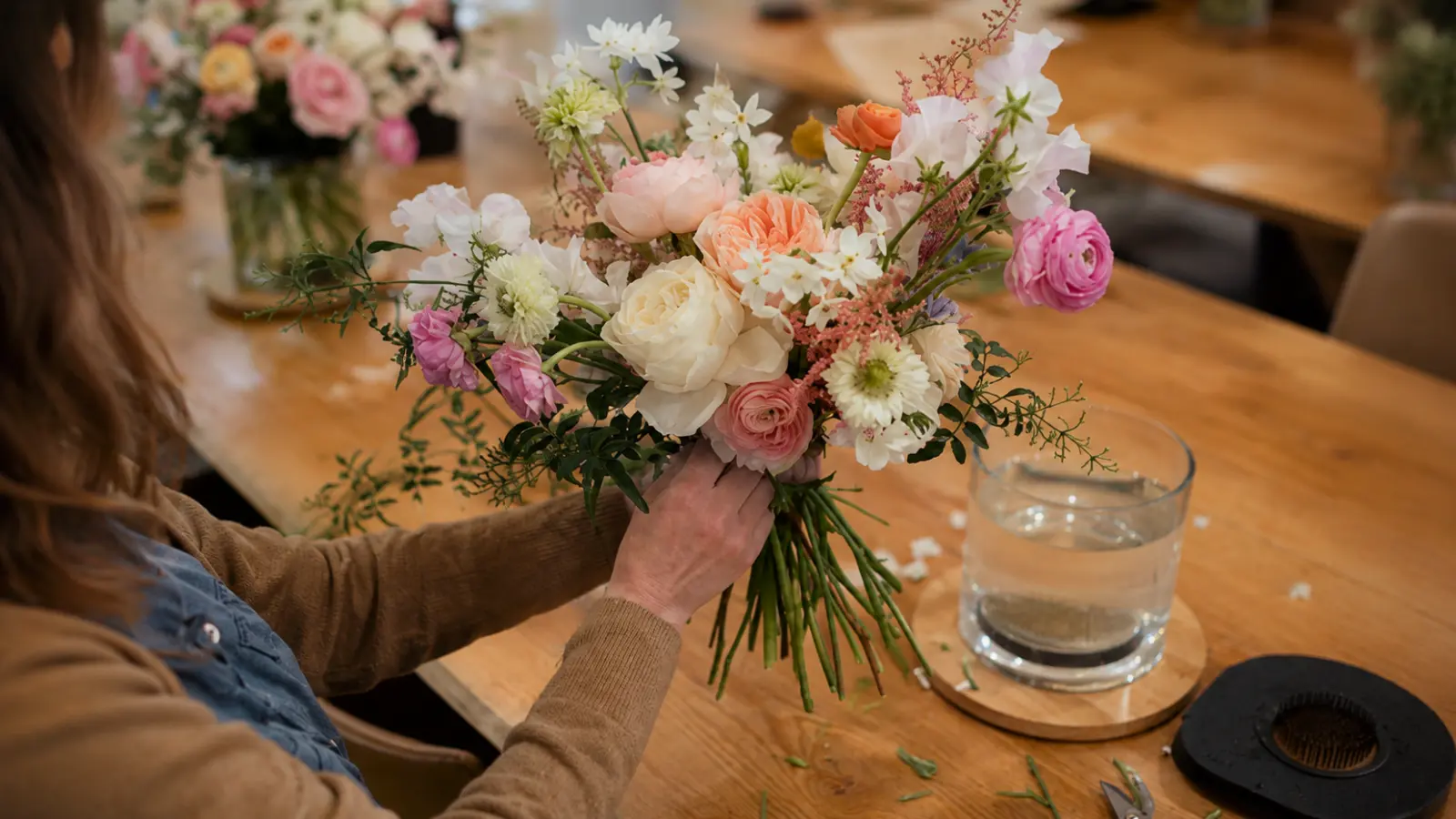
Whatever you eventually decide to do with your bouquet, the first 24 hours determine how many options are still realistically available to you. Flowers in fresh wedding bouquets start losing moisture within hours, especially when left out of water through the ceremony and reception.
The most useful thing you can do is assign the responsibility to someone else before the wedding day arrives. Ask a bridesmaid, parent, or your coordinator to take charge of getting the bouquet into water — a simple vase will do — as soon as the bulk of the photography is finished, and to keep it somewhere cool and out of direct light for the rest of the night. You will not be thinking about this in the moment, which is exactly why it needs to be someone else’s job in advance.
The next morning, before anything else, trim the stems at an angle and place the bouquet in fresh, cool water. This single step buys you time to make a calmer decision about preservation, donation, or any other option, rather than rushing into whatever feels most urgent the day after the wedding.
Preserving Your Bouquet
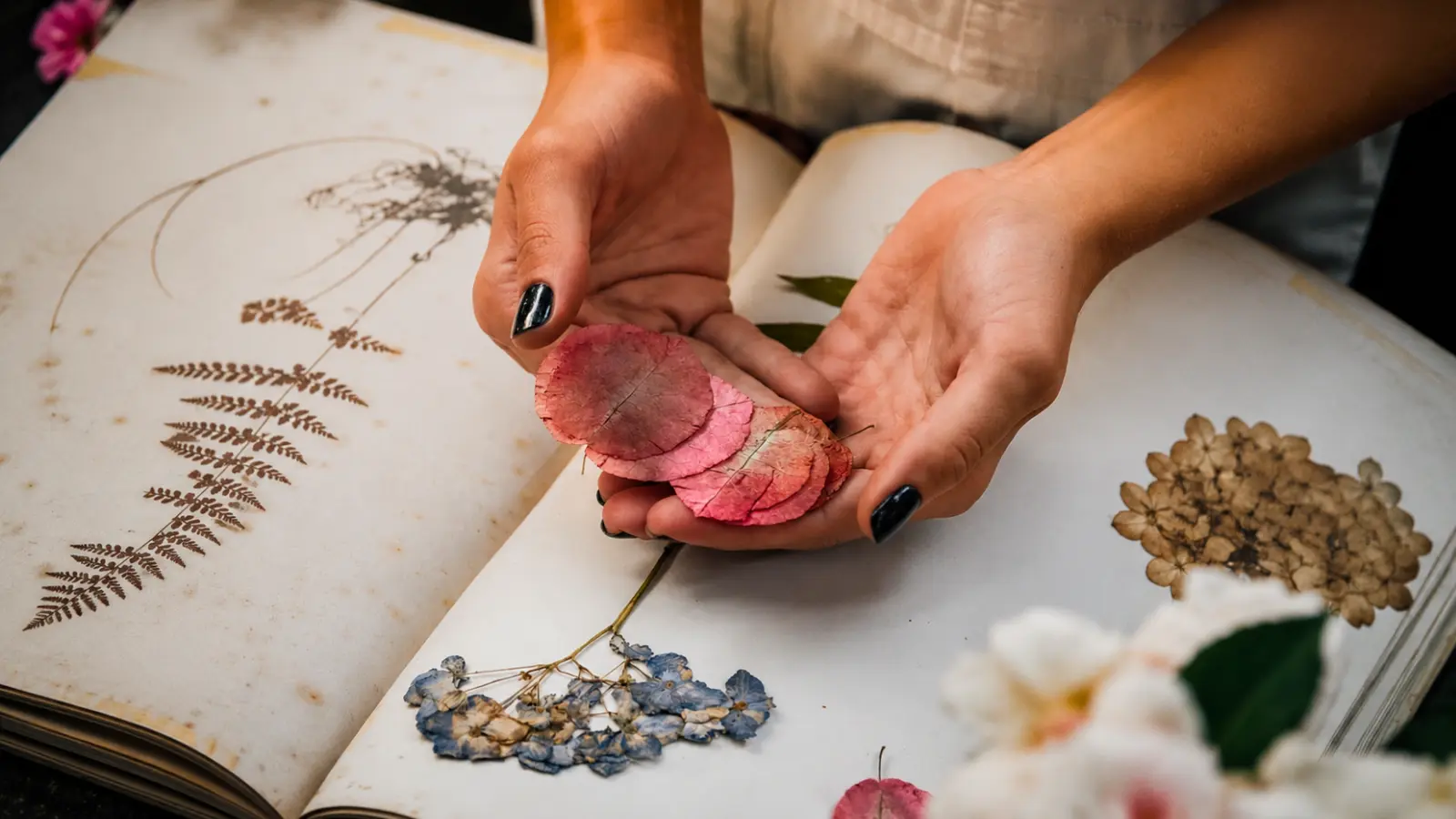
Preservation is the most popular path for brides who want their bouquet to last well beyond the wedding itself, and it covers a wider range of methods than most people realize. Air drying creates dried flower wedding bouquets by hanging the arrangement upside down in a cool, dark space. Pressing flattens individual blooms between parchment paper for use in frames, albums, or stationery. Resin preservation encases flowers permanently in clear casting as paperweights, coasters, or jewelry. Professional freeze-drying tends to retain the most accurate shape and color of any method, typically taking four to six weeks through a specialized studio.
Each method suits different wedding bouquet flowers, since not every bloom responds equally well to drying or pressing. The dedicated guide on how to preserve a wedding bouquet walks through each method in full detail, including which flowers hold up best and what realistic costs look like for DIY versus professional preservation.
Displaying Your Bouquet in a Shadow Box
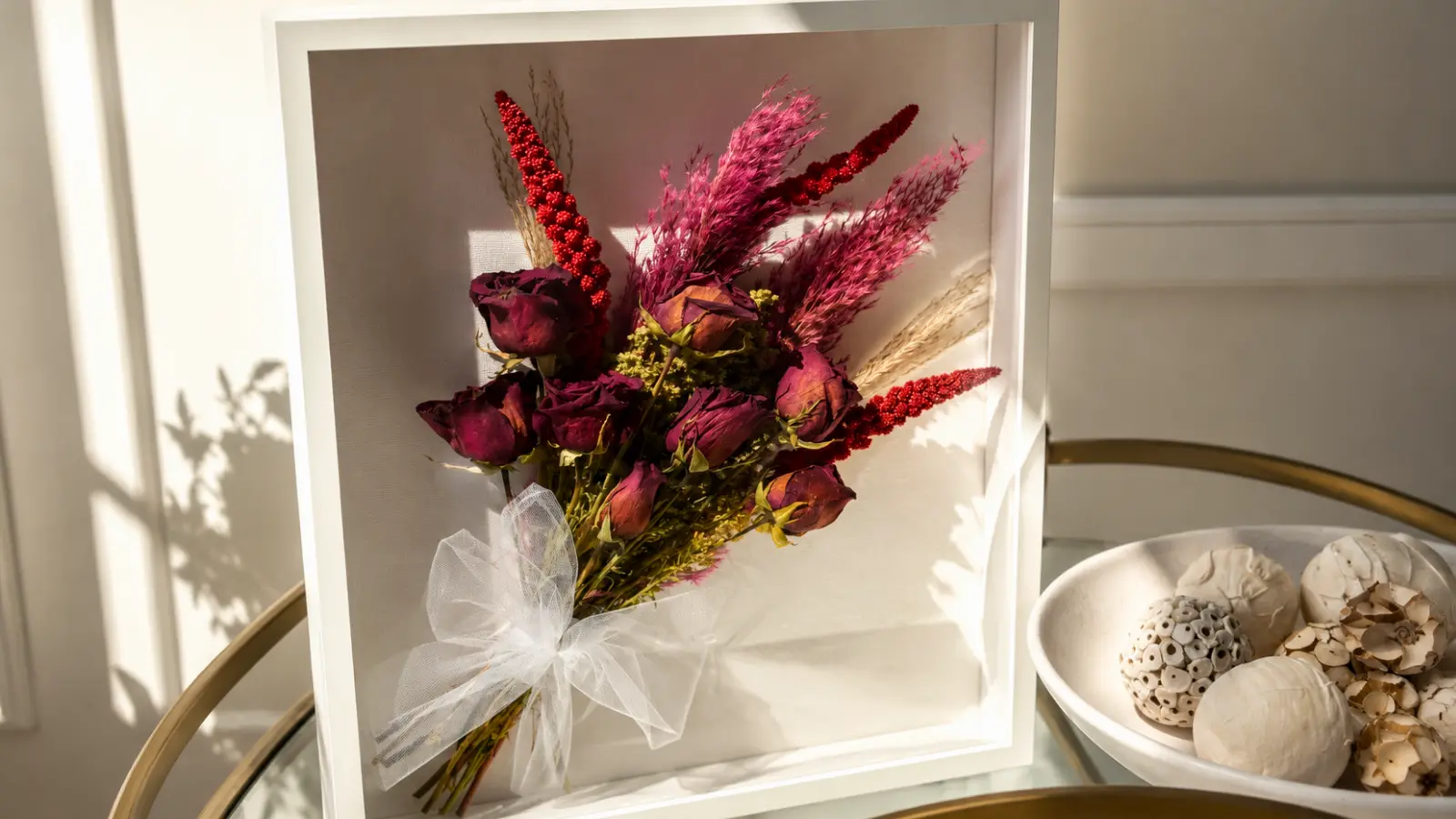
A shadow box is one of the most popular end results for a preserved bouquet, mainly because it turns flowers that would otherwise sit in a box into something actually displayed in your home. The bouquet — pressed, air-dried, or a mix of both — is arranged behind glass in a deep-set frame, often alongside other wedding keepsakes like an invitation, a piece of ribbon from the dress, or a handwritten vow.
Combining materials this way gives a shadow box more visual depth than flowers alone, and it’s a meaningful way to fold several small keepsakes from the day into a single display rather than scattering them in different drawers. Most florists and preservation studios offer shadow box framing as a finishing option once the flowers themselves have been dried or pressed, so it’s worth deciding early if this is the direction you want, since it affects how the flowers should be prepared.
Saving Just a Few Stems or Petals
Full preservation isn’t the only way to hold onto something from your bouquet, and it’s worth knowing that before assuming you have to commit to an entire process. Many brides save a handful of meaningful stems — the flower from a grandmother’s favorite variety, or simply a few blooms that photographed beautifully — rather than preserving the whole arrangement.
This smaller approach reduces the final wedding bouquet cost and is much easier to display than a full arrangement. A few pressed petals fit into a small frame, a locket, or even tucked into the pages of a wedding album. It’s a practical middle ground for brides who want a physical reminder of the bouquet without the cost or commitment of preserving every stem, and it pairs naturally with letting the rest of the bouquet go to donation or simply composting.
Donating Your Bouquet
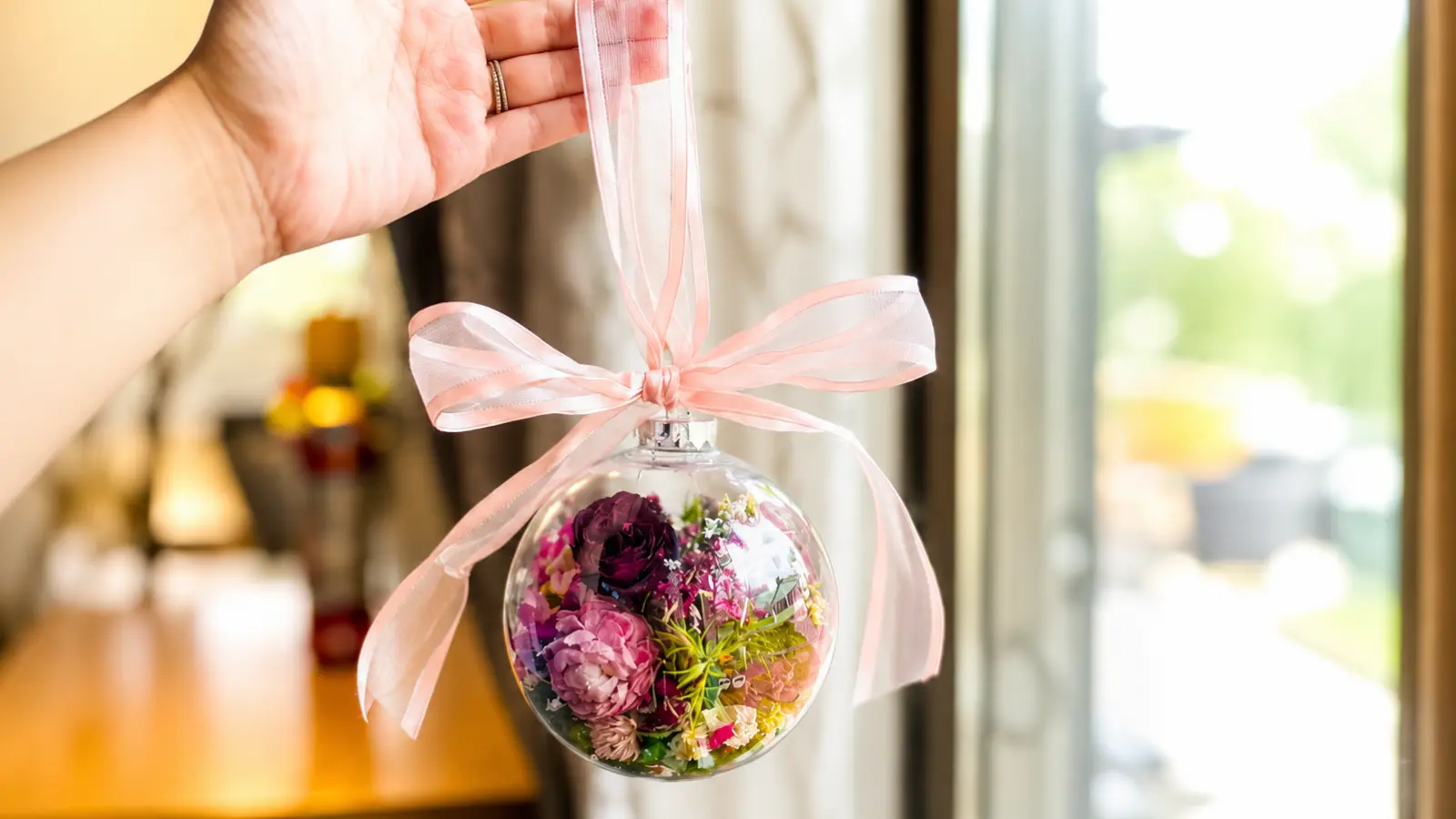
Donation is one of the more overlooked options, and it’s worth considering even if you also plan to preserve a few stems for yourself — the two aren’t mutually exclusive. A number of hospitals, hospice facilities, nursing homes, and local nonprofits accept fresh wedding flowers, either displaying full arrangements as-is or breaking them down into smaller bunches for patients and residents.
Some organizations will coordinate pickup directly from your venue the night of the wedding, which is worth arranging in advance rather than figuring out the morning after when everyone is exhausted and packing for a honeymoon. A quick search for flower donation programs in your area, or a question to your florist, usually turns up at least one local option. It’s a meaningful way to extend the life of flowers that would otherwise be thrown away at the end of the night, and it gives the bouquet a second purpose beyond your own keepsake.
Using Your Bouquet for a Memorial Tribute
For some brides, the most meaningful use of the bouquet has nothing to do with keeping it at all. Bringing a few stems to the grave of a parent or grandparent who couldn’t be at the wedding, or leaving flowers at a place that held significance for someone who’s passed, is a quiet way to include them in the day after the fact.
This doesn’t need to be elaborate. A handful of blooms set down at a headstone, or pressed into a small frame alongside a photo of the person being honored, carries real weight without requiring any special preparation. If this feels meaningful to you, it’s worth deciding before the wedding which stems you’d want set aside for this purpose, so it isn’t an afterthought once the day’s momentum has taken over.
Turning Your Bouquet Into Everyday Keepsakes
Beyond formal preservation, there’s a wide range of smaller, lower-commitment ways to repurpose bouquet flowers into things you’ll actually use rather than simply display. Pressed petals make their way into bookmarks, the pages of a wedding guest book, or handmade stationery for thank-you notes. Dried petals add a faint, personal scent to a jar of potpourri or a sachet kept in a drawer. Some brides melt petals into the wax of a candle, where the flowers catch the light from behind as it burns. Resin work scales down nicely too — a single petal set into a small pendant or pair of earrings is a far smaller undertaking than preserving an entire bouquet.
These options share a common appeal: they’re accessible without specialized equipment, and they turn flowers into something genuinely part of daily life rather than an object kept carefully out of reach. If full preservation feels like more commitment than you want, this category is worth considering instead — or alongside a few stems set aside for a shadow box or frame.
Mistakes to Avoid
A few avoidable missteps account for most of the regret brides mention after the fact, and nearly all of them come down to timing or a missing plan rather than anything more complicated.
Waiting too long to decide. Flowers don’t wait for you to make up your mind. The longer a bouquet sits without water or a clear plan, the fewer of these options remain genuinely available.
Not assigning the bouquet to anyone. Leaving the bouquet’s care to whoever happens to remember on a busy wedding night is how flowers end up forgotten in a hot car or left on a table until morning. Decide in advance who’s responsible.
Freezing the bouquet. It might seem like an easy way to pause the clock, but freezing damages petal structure and leaves flowers mushy and discolored once thawed. It is not a substitute for proper preservation.
Assuming preservation is all-or-nothing. A lot of brides skip preservation entirely because preserving the whole bouquet feels like too much effort, without realizing that saving a few stems is a perfectly legitimate middle ground.
Wedding Bouquet Keepsake Ideas
Discover beautiful ways to reuse your wedding bouquet with preservation ideas, shadow boxes, flower keepsakes, bouquet donation, pressed flowers, and meaningful inspiration after the wedding.
Your Bouquet Doesn’t Have to Be the End of the Story
Your wedding bouquet has already served its most important purpose—being part of one of the most meaningful days of your life. What happens next is entirely your choice. Whether you preserve every flower, save just a few petals, donate the bouquet, or simply enjoy it for a few more days before saying goodbye, there’s no single “right” way to honor those memories.
The best decision is the one that reflects what matters most to you. Planning ahead, even by a day or two, gives you the freedom to choose thoughtfully instead of reacting once the flowers begin to fade. Whatever path you take, your bouquet can remain a meaningful reminder of your wedding long after the celebration is over.
Frequently asked questions (FAQ)
What should you do with your wedding bouquet right after the wedding?
Place the bouquet in clean, cool water as soon as the ceremony and photos are finished, and keep it away from heat and direct sunlight. If possible, ask a bridesmaid, family member, or wedding coordinator to take responsibility for it during the reception. The first 24 hours have the greatest impact on whether the bouquet can later be preserved, donated, displayed, or repurposed into keepsakes.
Do you have to preserve your entire wedding bouquet?
No. Many brides preserve only a few meaningful flowers or petals instead of the entire arrangement. This approach is often more affordable, easier to display, and still preserves the emotional value of the bouquet. The remaining flowers can be donated, displayed at home for several days, composted, or used for other keepsake projects.
Can you donate your wedding bouquet after the ceremony?
Yes. Many hospitals, hospice organizations, nursing homes, and community nonprofits welcome donated wedding flowers. Some florists and volunteer organizations even arrange pickups directly from the venue. Planning the donation before the wedding ensures the flowers remain fresh enough to be enjoyed by others.
What can you make from your wedding bouquet besides preserving it?
Wedding flowers can become pressed bookmarks, framed botanical artwork, resin jewelry, candles, potpourri, greeting cards, scrapbook decorations, ornaments, or other small keepsakes. These projects preserve meaningful parts of the bouquet without requiring professional preservation of the entire arrangement.
Is it okay to throw away your wedding bouquet?
Absolutely. There is no etiquette rule or meaningful superstition that requires couples to preserve their bouquet. Many brides simply enjoy the flowers for several days after the wedding and then compost or discard them naturally. The right decision depends entirely on your personal attachment to the bouquet and how you want to remember your wedding day.
How do you decide whether to preserve, donate, or let your bouquet go?
Think about what matters most to you after the wedding. If having a lasting keepsake is important, preservation may be the best choice. If sharing the flowers with others feels more meaningful, donation can give them a second purpose. If neither option feels necessary, enjoying the bouquet for a few days before letting it go is equally valid. There is no single “correct” choice—only the one that best reflects your priorities.