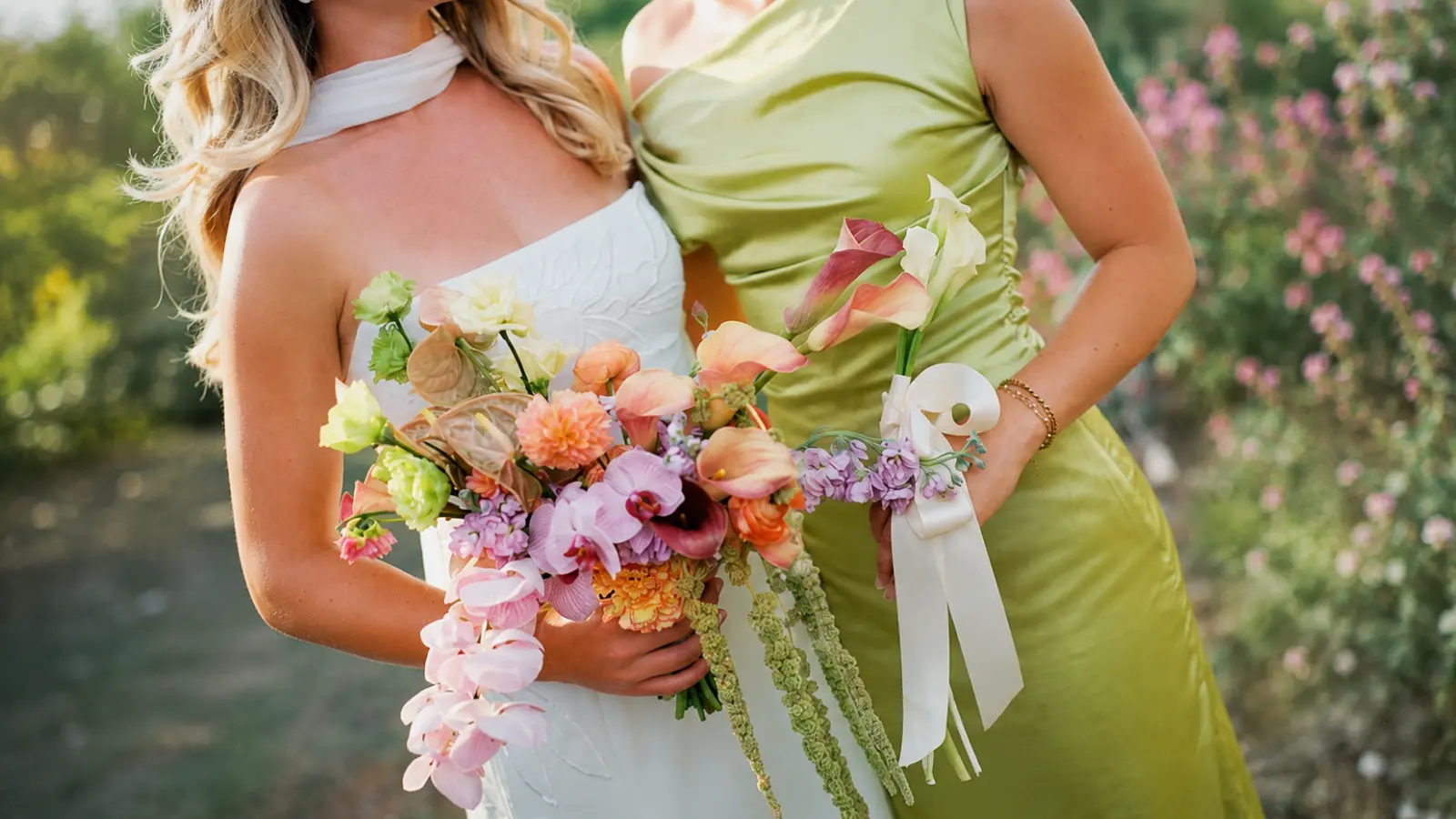
Wedding bouquets for bridesmaids are much more than smaller versions of the bridal bouquet. They help create visual balance throughout the wedding party, complement the bride’s flowers, and bring the entire color palette together in photographs. The best bridesmaid bouquets support the bridal bouquet without competing for attention, creating a coordinated look that still allows the bride to remain the focal point.
Choosing bridesmaid bouquets involves more than selecting matching flowers. Size, bouquet shape, flower varieties, dress colors, budget, and the overall wedding style all influence how the arrangements will look together throughout the ceremony and reception. Small design differences often create a more elegant result than making every bouquet identical.
This guide explores wedding bouquets for bridesmaids within the broader world of wedding bouquets, including bouquet size, matching strategies, popular bouquet styles, color coordination, pricing, and practical advice.
Bridal Bouquet vs. Bridesmaid Bouquet
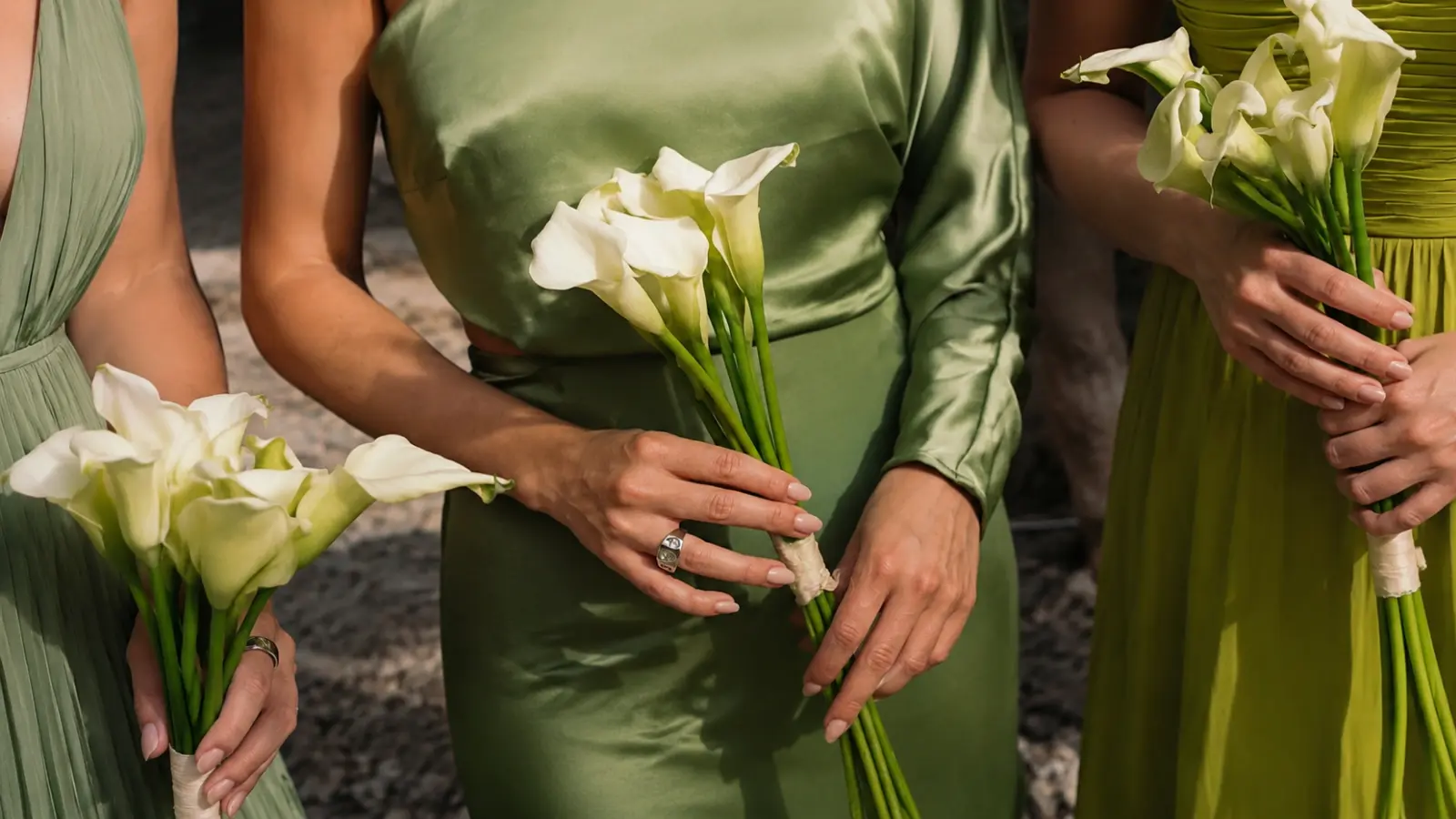
It helps to think of these as two related decisions within bridal bouquet styles, not one bouquet ordered in different sizes. The bridal bouquet is the visual anchor of the day — it’s larger, often more detailed, and built to stand out in every photo where the bride appears. The bridesmaid bouquet is there to support that, which means it’s doing a quieter job by design.
Florists typically approach this by starting with the bridal bouquet’s color story and flower selection, then scaling down. A bridesmaid bouquet might use two or three of the bridal bouquet’s flowers instead of five or six, in a tighter, less elaborate shape. The result should feel like part of the same family of flowers without competing for attention. When bridesmaid bouquets are accidentally the same size or complexity as the bride’s, it’s usually a communication gap with the florist rather than an intentional choice.
How Big Should a Bridesmaid Bouquet Be?
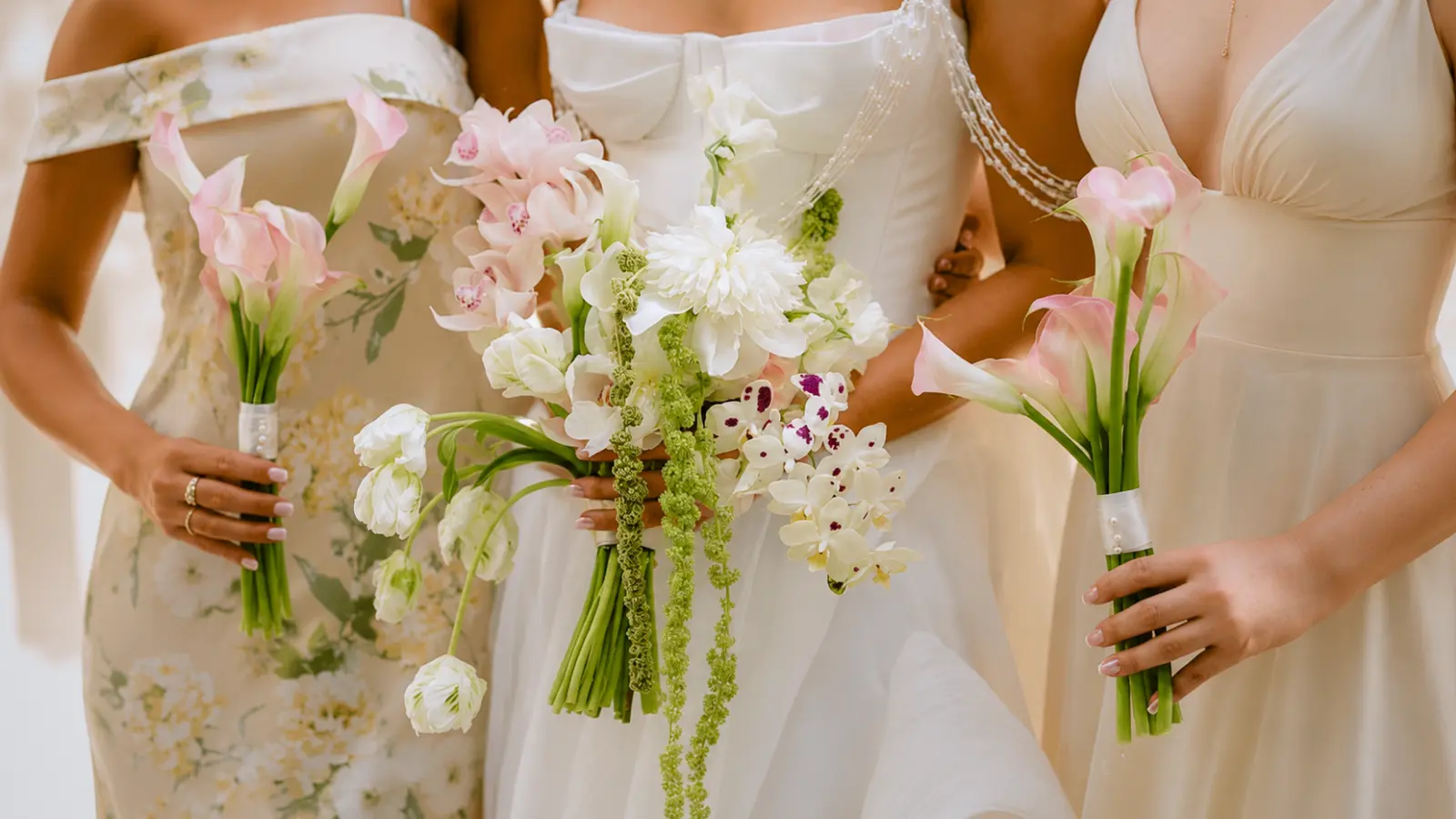
Size is where a lot of the visual hierarchy actually happens, more than color or flower type. A bouquet that’s clearly smaller than the bride’s signals her role without anyone having to think about it consciously — it just reads correctly in every group photo.
As a general guide, bridesmaid bouquets land at roughly half to two-thirds the size of the bridal bouquet. That’s substantial enough to look intentional in photos rather than like a stray handful of stems, but still clearly secondary. Going much smaller than that risks the opposite problem: bouquets that look thin or forgotten next to the bride’s, especially in wider shots with the full wedding party lined up.
If you have several bridesmaids standing in a row, it’s also worth asking your florist to mock up one bouquet before the full order goes in. Size that looks right held alone can read differently multiplied across five or six people standing shoulder to shoulder.
Should Bridesmaid Bouquets Match the Bride’s?
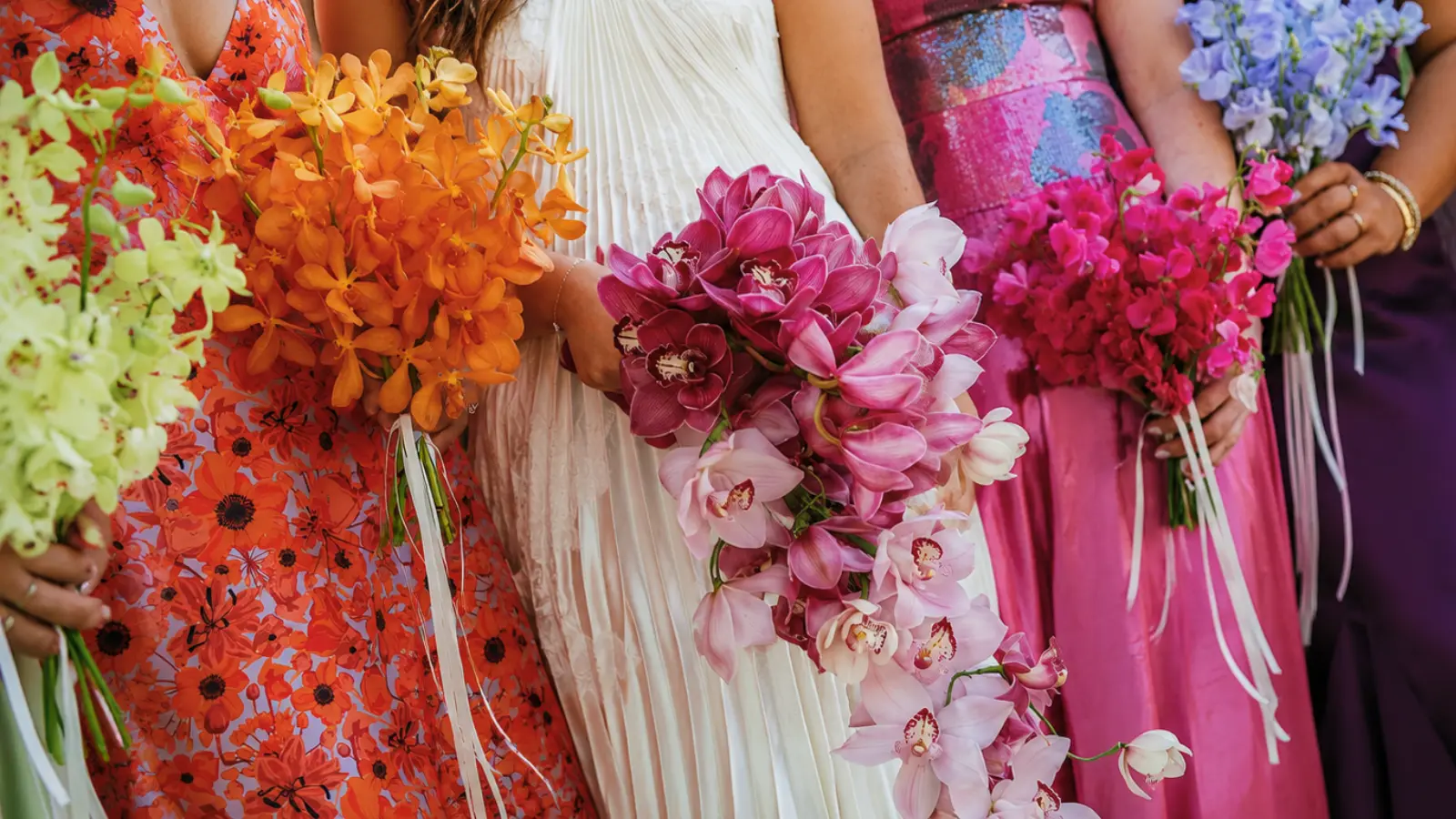
This is one of the more common points of confusion in floral planning, partly because “matching” can mean a few different things. Matching the palette is almost always a good idea. Matching the bouquet exactly, stem for stem, is usually not.
A shared wedding bouquet color palette is what makes a wedding party look like one cohesive unit in photos rather than several people who happened to be handed flowers. Beyond that, most florists recommend differentiating in at least one of these ways:
- Size. The bridal bouquet stays visibly larger, even with the same flowers used throughout.
- Flower count. The bride’s bouquet might use four or five varieties; bridesmaids’ versions use two or three of those same flowers.
- Shape. A bride carrying cascading wedding bouquets might give bridesmaids a simpler round or nosegay in the same color family.
- One accent flower. Some couples reserve a specific bloom — a rare garden rose, for instance — exclusively for the bridal bouquet as a small, deliberate distinction.
Any one of these is usually enough to create the right hierarchy. You don’t need to stack all four — picking even one clear point of difference does the job without overcomplicating the order.
Bridesmaid Bouquet Styles
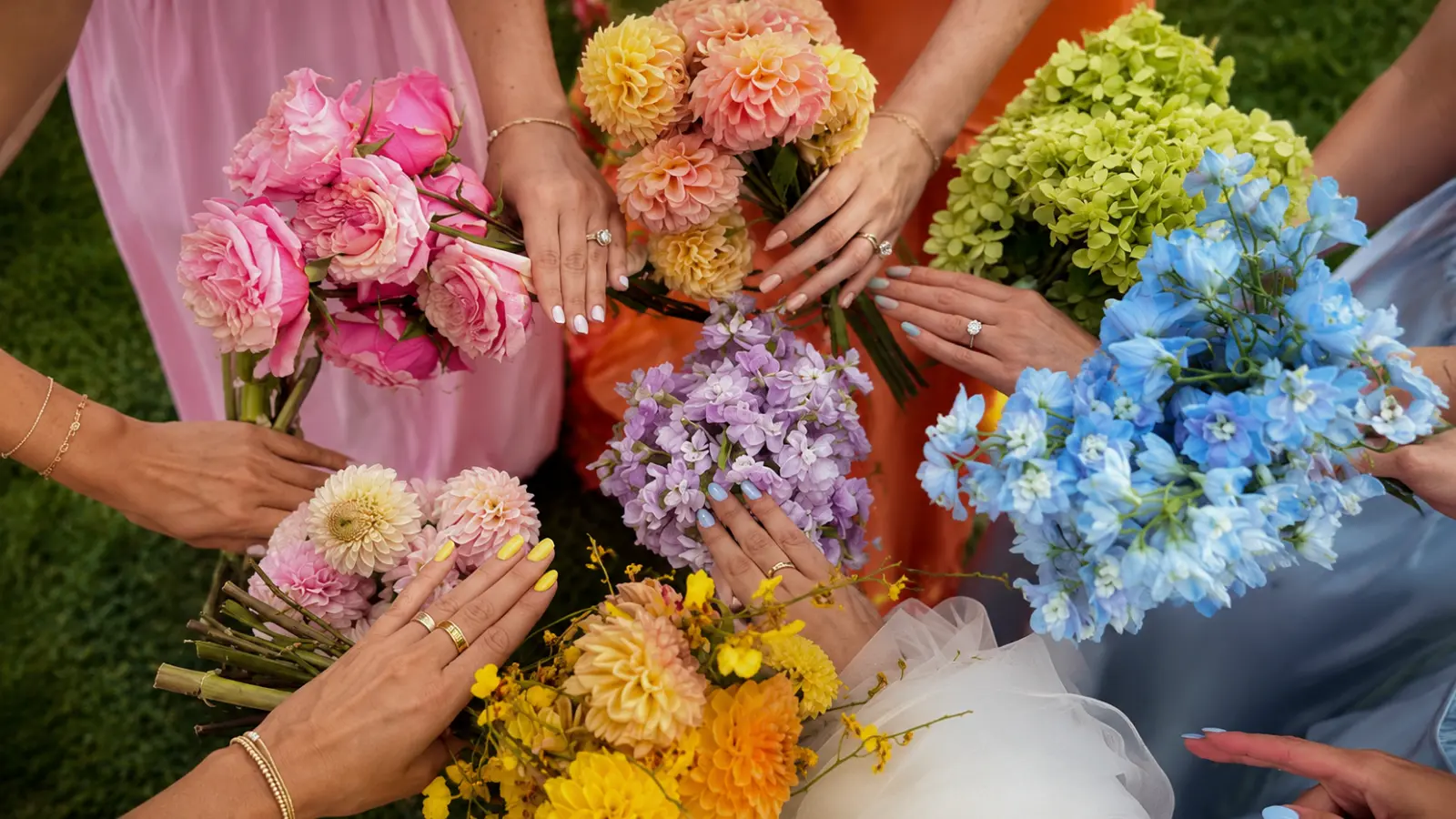
Bridesmaid bouquets don’t need to follow the bridal bouquet’s exact shape, and in practice, simpler styles tend to work better for a group of people who’ll be carrying, setting down, and picking the bouquet back up repeatedly throughout the day.
| Style | Best For | Notes |
|---|---|---|
| Nosegay | Most weddings; classic, easy to carry | Compact and tidy; the most common bridesmaid choice |
| Single stem | Minimalist or budget-conscious weddings | One dramatic bloom; lowest cost per bouquet |
| Loose, hand-tied | Garden, outdoor, or relaxed weddings | Slightly undone look; pairs well with a romantic bridal bouquet |
| Greenery-forward | Modern or minimalist palettes | One or two accent flowers against mostly foliage; budget-friendly |
The nosegay remains the default for good reason — it’s compact, it photographs cleanly in group shots, and it doesn’t shift around much when carried for hours. Simple wedding bouquets, including single-stem designs, have picked up momentum for smaller wedding parties or couples managing a tighter floral budget, since the look reads as deliberate rather than minimal. Whichever style you land on, including greenery wedding bouquets, it’s worth choosing the same shape across all bridesmaids; varying the style on top of varying the person tends to look unplanned rather than personalized.
Choosing Colors for Bridesmaid Bouquets
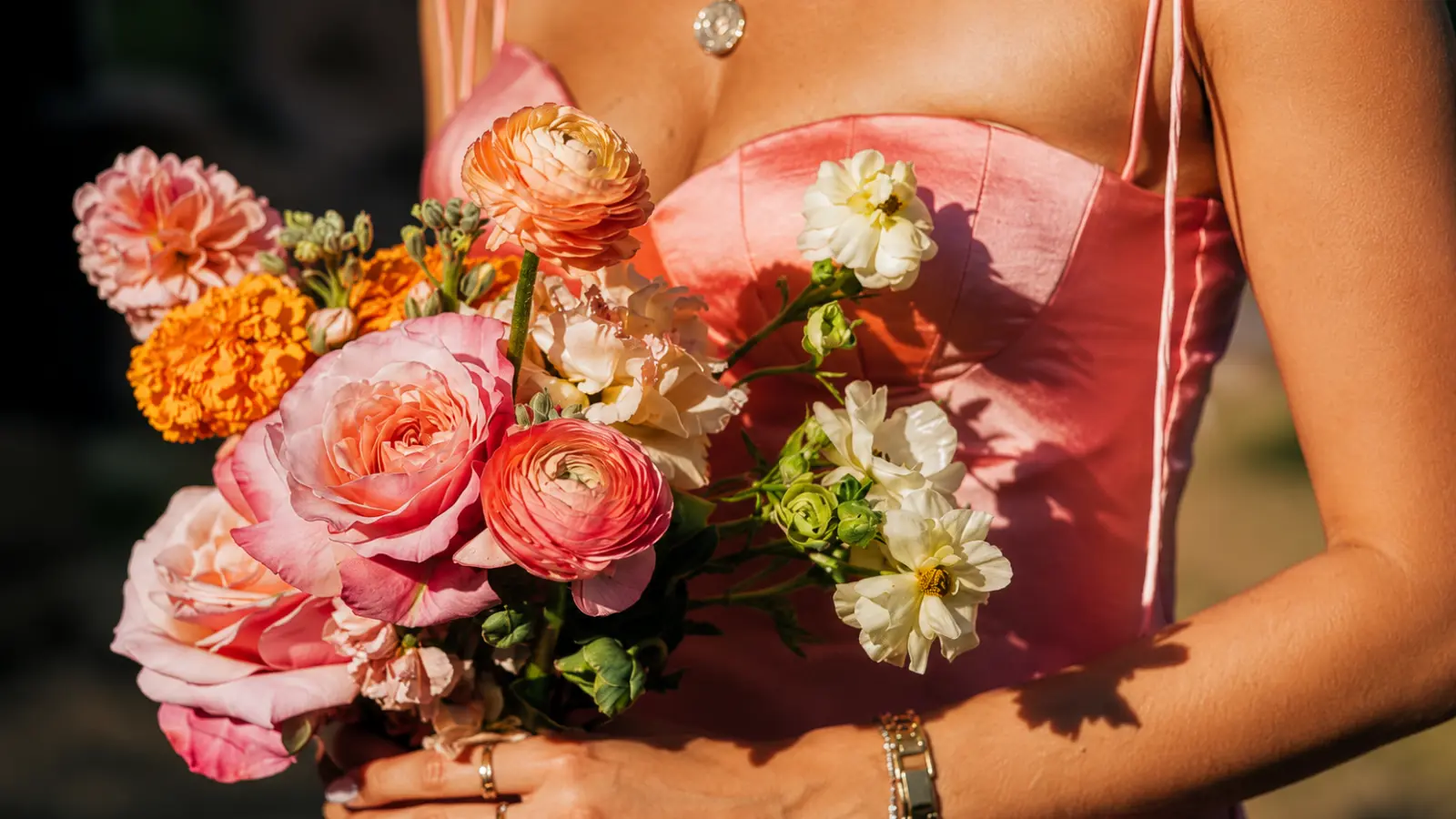
Color is usually the easiest connective thread between the bridal and bridesmaid bouquets, and it’s where florists typically start the conversation. The most reliable approach is pulling colors from the bridesmaid dresses rather than working backward from a flower you’ve already fallen for.
If the bridesmaid dresses are a solid color, the bouquet often works best leaning into a complementary or tonal palette rather than matching the dress shade exactly — flowers in the exact same color as the dress can flatten together in photos instead of standing out against it. A deep green dress, for example, often pairs better with warm blush or ivory blooms than with another shade of green.
When the bride’s bouquet is monochromatic or all-white, some couples intentionally give bridesmaids a touch of color instead of an identical white palette. This creates a visual frame around the bride, since her bouquet becomes the one neutral element surrounded by color, rather than blending into a wall of matching white bouquets.
How Much Do Bridesmaid Bouquets Cost?
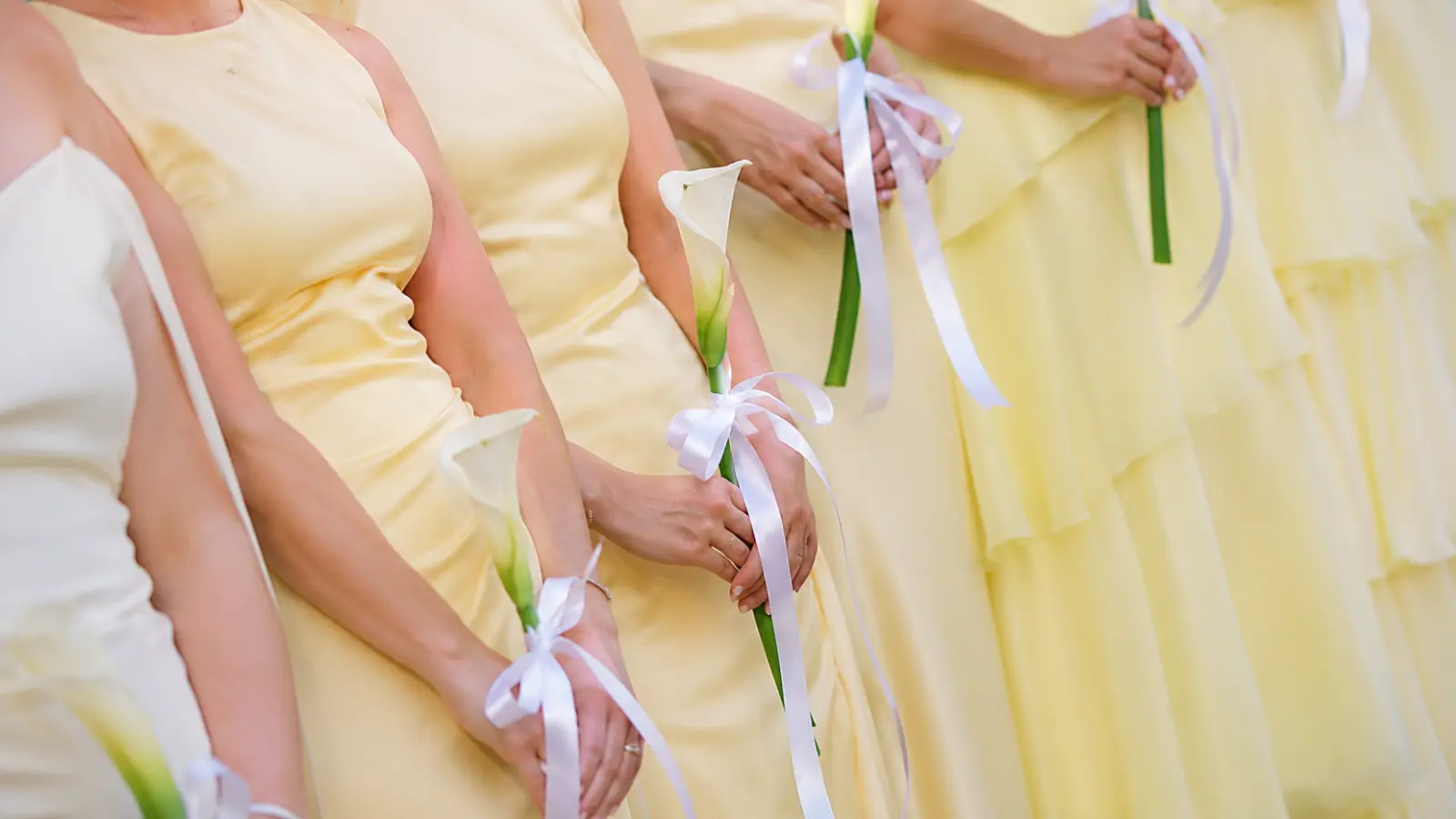
Bridesmaid bouquets are one of those line items that quietly multiplies. A single bouquet might look like a small cost on its own, but ordered across four, five, or six bridesmaids, it becomes a meaningful chunk of the floral budget — sometimes more than couples expect when they’re focused on the bridal bouquet first.
| Bouquet Type | Typical Range (Each) | What Drives the Price |
|---|---|---|
| Single-stem or simple nosegay | $65–$85 | Fewer stems, accessible flower varieties |
| Standard nosegay | $85–$120 | Mixed varieties, moderate size |
| Premium or larger bouquet | $120–$150+ | Garden roses, ranunculus, or other premium blooms |
If you’re working with a set floral budget, it’s usually more effective to simplify the bridesmaid bouquets — fewer flower varieties, a smaller size, a single-stem option — than to cut corners on the bridal bouquet itself. Most florists can suggest a substitute flower that achieves a similar look at a lower per-stem cost without anyone noticing the swap in photos. For a fuller breakdown of how floral budgets typically shake out across the whole wedding, our guide to wedding bouquet cost goes through the full range in more detail.
When Matching Bouquets Looks Forced
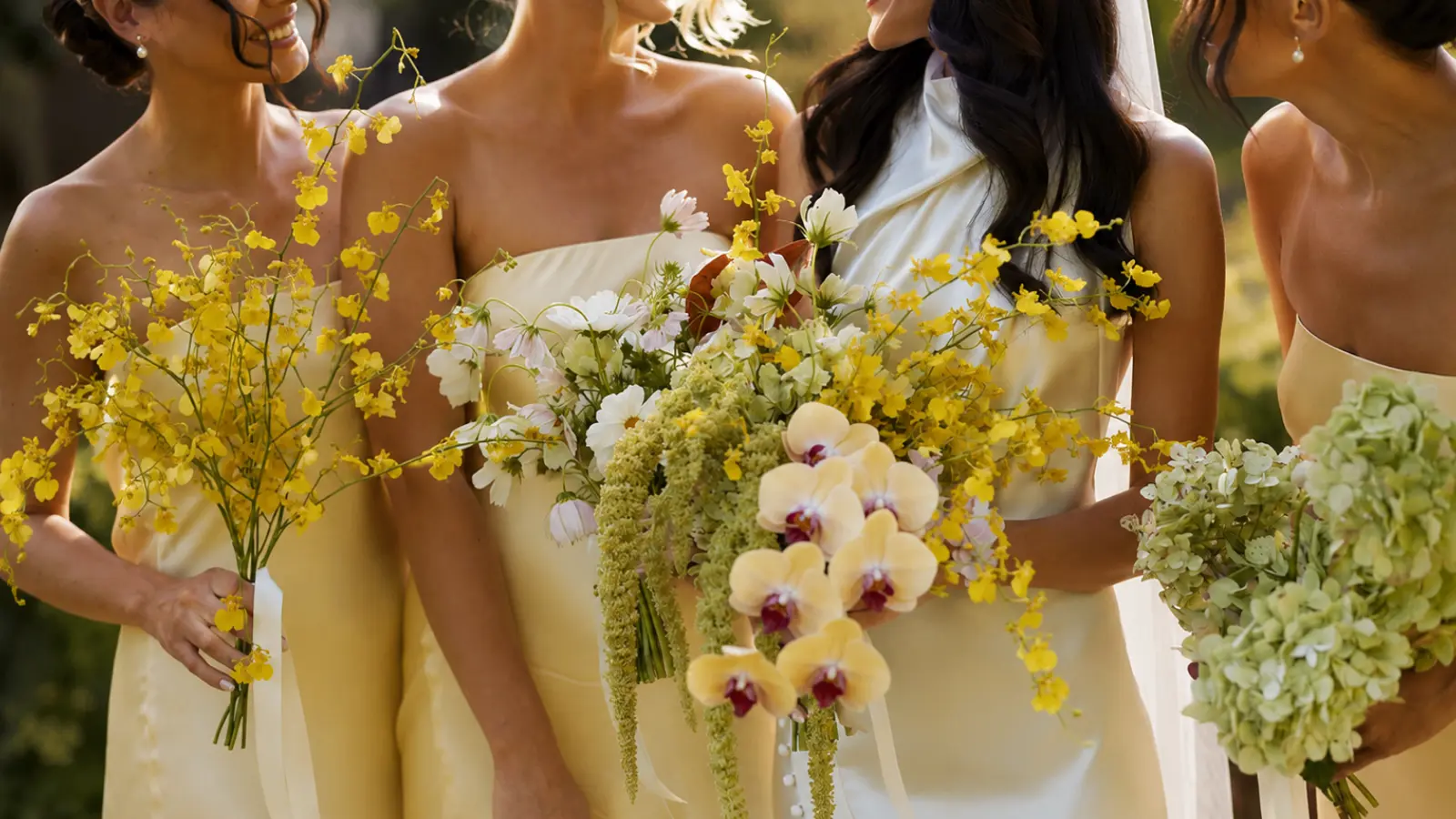
Here’s the part most florist sites won’t say outright: matching everyone’s bouquet too precisely can backfire. There’s a specific look — every bridesmaid holding an identical, fully matched bouquet in a tight cluster shot — that’s become so common it can read as generic rather than polished, especially once you’ve scrolled past a dozen near-identical wedding albums.
This tends to show up most when the only design instruction given to the florist was “match the bridesmaid dresses.” It’s not wrong, exactly, but it’s the bare minimum, and bare-minimum instructions tend to produce bare-minimum results. The bouquets end up technically coordinated and visually flat at the same time.
Matching works best when it’s one deliberate layer of a larger decision — the palette ties to the dresses, the flowers tie to the season, and the shape ties to the venue — rather than the only decision made. A wedding party where each bouquet uses a slightly different flower mix within the same palette will almost always photograph as more considered than one where every bouquet is a carbon copy. If your florist’s only question was about color, it’s worth asking a few more before the order is finalized.
Mistakes to Avoid
A few patterns show up consistently when bridesmaid bouquets don’t turn out the way couples expected — and most of them come down to under-specifying the order rather than anything going wrong with the flowers themselves.
- Not specifying a size difference. If you don’t tell your florist how much smaller bridesmaid bouquets should be relative to the bride’s, you may end up with bouquets that are closer in size than intended.
- Choosing flowers without checking they hold up. Bridesmaid bouquets often spend more time being set down and picked back up during photos than the bridal bouquet does. Some fresh wedding bouquets use delicate blooms that bruise easily, making them a riskier choice here.
- Forgetting the budget multiplies. A $120 bouquet sounds reasonable until it’s ordered six times. Price out the full bridesmaid total early, not after the rest of the floral budget is already allocated.
- Ignoring how bouquets photograph in a group. A bouquet that looks great held by one person can look uneven across several people of different heights holding it at different angles.
None of these are dramatic mistakes on their own, but they share the same root cause: assuming the florist will fill in the gaps the way you imagined. The more specific your instructions, the less guessing happens on the day itself.
Bridesmaid Bouquet Inspiration
Discover wedding bouquets for bridesmaids featuring elegant bouquet styles, coordinated color palettes, romantic flower ideas, size comparisons, and timeless inspiration for every wedding party.
Coordination Matters More Than Matching
The most beautiful bridesmaid bouquets aren’t exact copies of the bridal bouquet—they’re thoughtfully designed companions. By sharing colors, selected flowers, or a similar overall style while maintaining differences in size or detail, each bouquet contributes to a wedding party that feels coordinated without looking repetitive.
As you plan your wedding flowers, think about the entire group rather than each bouquet individually. When proportions, colors, and floral styles work together, the result is a wedding party that photographs beautifully, highlights the bride naturally, and creates a timeless, balanced look from the ceremony through the final portraits.
Frequently asked questions (FAQ)
Do bridesmaid bouquets have to match the bridal bouquet?
No. Bridesmaid bouquets should coordinate with the bridal bouquet rather than duplicate it. Most florists create a shared color palette and repeat one or two flower varieties while making the bride’s bouquet larger, more detailed, or slightly more distinctive. This creates visual harmony while naturally keeping the bride as the focal point in photographs.
How big should bridesmaid bouquets be?
Most bridesmaid bouquets are about half to two-thirds the size of the bridal bouquet. This proportion creates a clear visual hierarchy without making the bouquets look too small or insignificant in group photos. The exact size depends on the bridal bouquet, dress silhouettes, and the scale of the wedding party.
Can each bridesmaid carry a different bouquet?
Yes. Many modern weddings give each bridesmaid a slightly different bouquet while keeping the same overall color palette. Small variations in flower selection, greenery, or bouquet shape create a more natural, editorial look than making every bouquet identical, while still maintaining a cohesive wedding party.
How much do bridesmaid bouquets usually cost?
Bridesmaid bouquets typically cost between $65 and $150 each, depending on the flower varieties, bouquet size, local florist pricing, and seasonal availability. Premium flowers such as garden roses, peonies, or ranunculus generally increase the cost, while greenery-forward or single-flower designs offer more budget-friendly alternatives.
What flowers work best for bridesmaid bouquets?
Garden roses, spray roses, ranunculus, lisianthus, tulips, carnations, and seasonal greenery are among the most popular choices because they photograph beautifully, are comfortable to carry, and coordinate easily with many bridal bouquet styles. The best flower selection depends on the wedding season, color palette, and the overall floral design.
Should bridesmaid bouquets match the dresses?
Not exactly. Bridesmaid bouquets should complement the dresses rather than match them perfectly. Choosing flowers that echo or softly contrast the dress color usually creates more depth in photographs, while bouquets in exactly the same shade as the dresses can sometimes blend into the fabric and lose visual definition.