
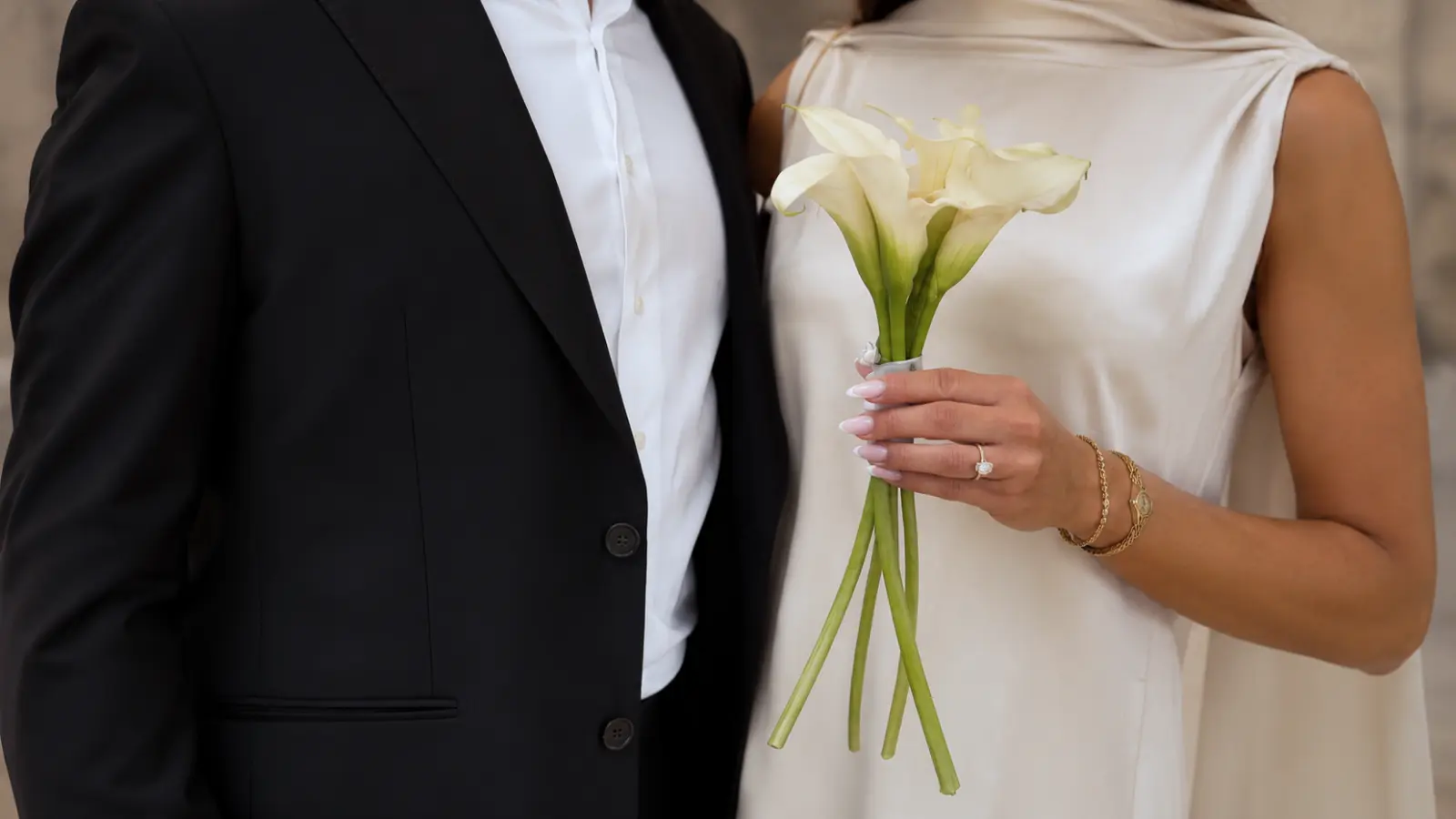
Simple wedding bouquets prove that elegance doesn’t depend on size or complexity. Whether you’re planning a courthouse ceremony, a modern minimalist wedding, or a classic celebration, a thoughtfully designed bouquet with fewer flowers can feel just as beautiful and intentional as the most elaborate floral arrangement.
The secret isn’t using fewer stems it’s making every design decision count. Flower variety, bouquet shape, ribbon choice, and proportion all become more noticeable in a simple bouquet, which is why restraint and quality matter more than quantity. When every element has a purpose, simplicity becomes one of the strongest design statements a bride can make.
This guide explores simplicity within the broader world of wedding bouquets, including minimalist ideas, small bridal arrangements, single-flower designs, courthouse flowers, elegant white bouquets, and practical styling tips.
Simple Wedding Bouquet Ideas
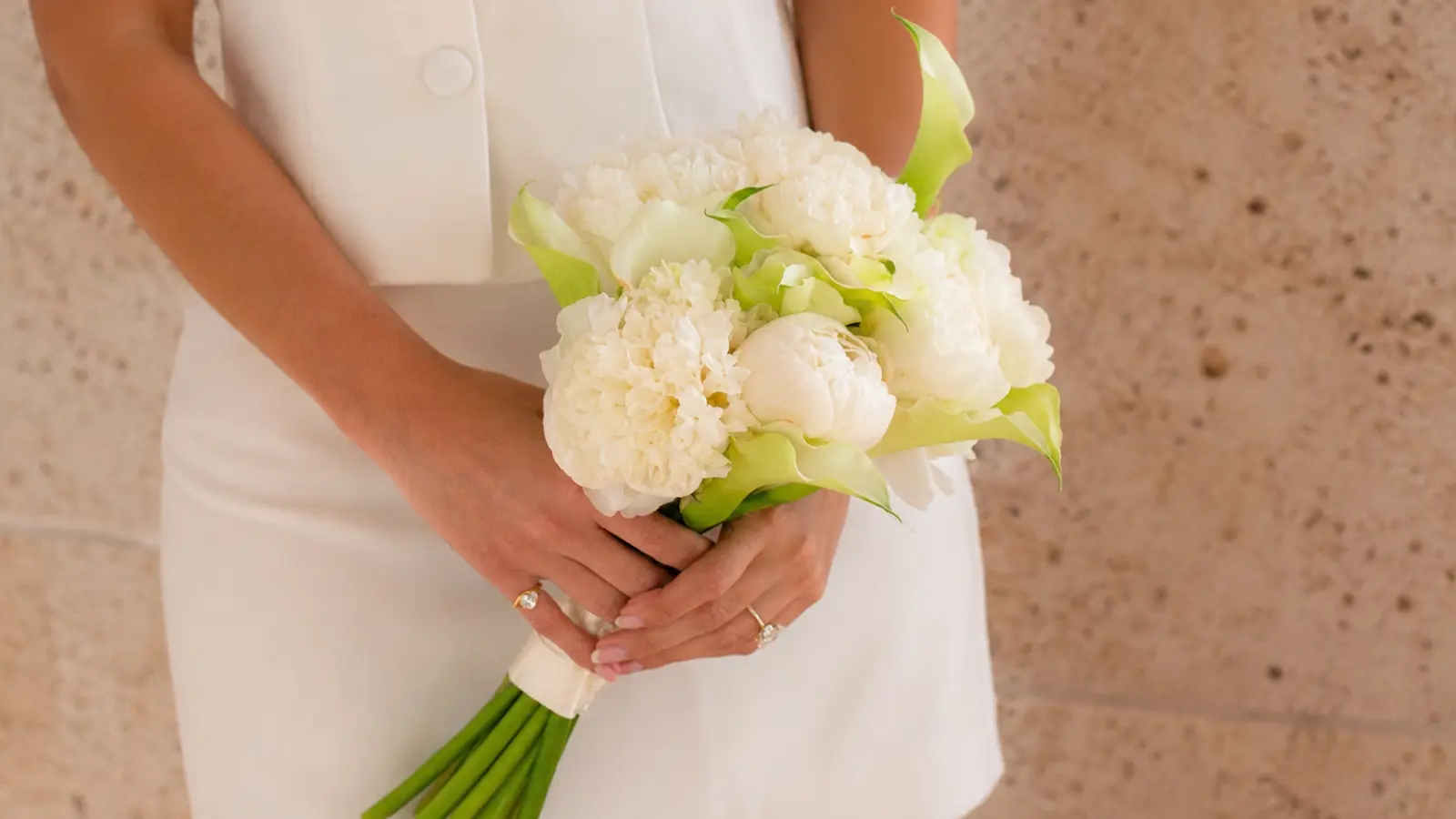
The word “simple” covers a wider range than it might suggest. A bouquet with five calla lilies wrapped in satin ribbon is simple. So is a loose handful of garden roses tied with twine. So is a single stem of white orchid carried long. What they share is an absence of complexity: fewer flower types, less mixed greenery, no structural tricks, rather than any single silhouette or scale.
These are the approaches that translate most consistently from inspiration to real results:
- The tonal monochromatic round: One color palette, two or three flower varieties with different textures, no greenery or just a few stems of something fine and neutral. Works across almost every wedding setting and photographs cleanly at any distance.
- The single-variety nosegay: One flower type, tight and round, wrapped with a clean ribbon. Garden roses, ranunculus, or tulips work especially well. The repetition is the point. It creates an intentional, almost graphic quality.
- The long-stem carry: Three to seven long-stemmed blooms held loosely at the stems rather than wrapped into a traditional bouquet. The flowers aren’t arranged so much as gathered. Works particularly well for garden or outdoor weddings.
- The minimal greenery design: A small cluster of flowers with just one type of foliage (eucalyptus, ruscus, or olive branch) rather than a mixed green base. The restraint in the greenery is what keeps the design from feeling complex.
- The single focal flower with trailing vine: One standout bloom (a peony, a garden rose, a garden dahlia) supported by a single trailing element like jasmine vine or ivy. Two ingredients, one clear composition.
The common thread across all of these is commitment. Simple bouquets fail when they hedge: when one flower becomes five varieties because each one seemed like a good addition. Pick your idea and stay there.
Small Wedding Bouquets
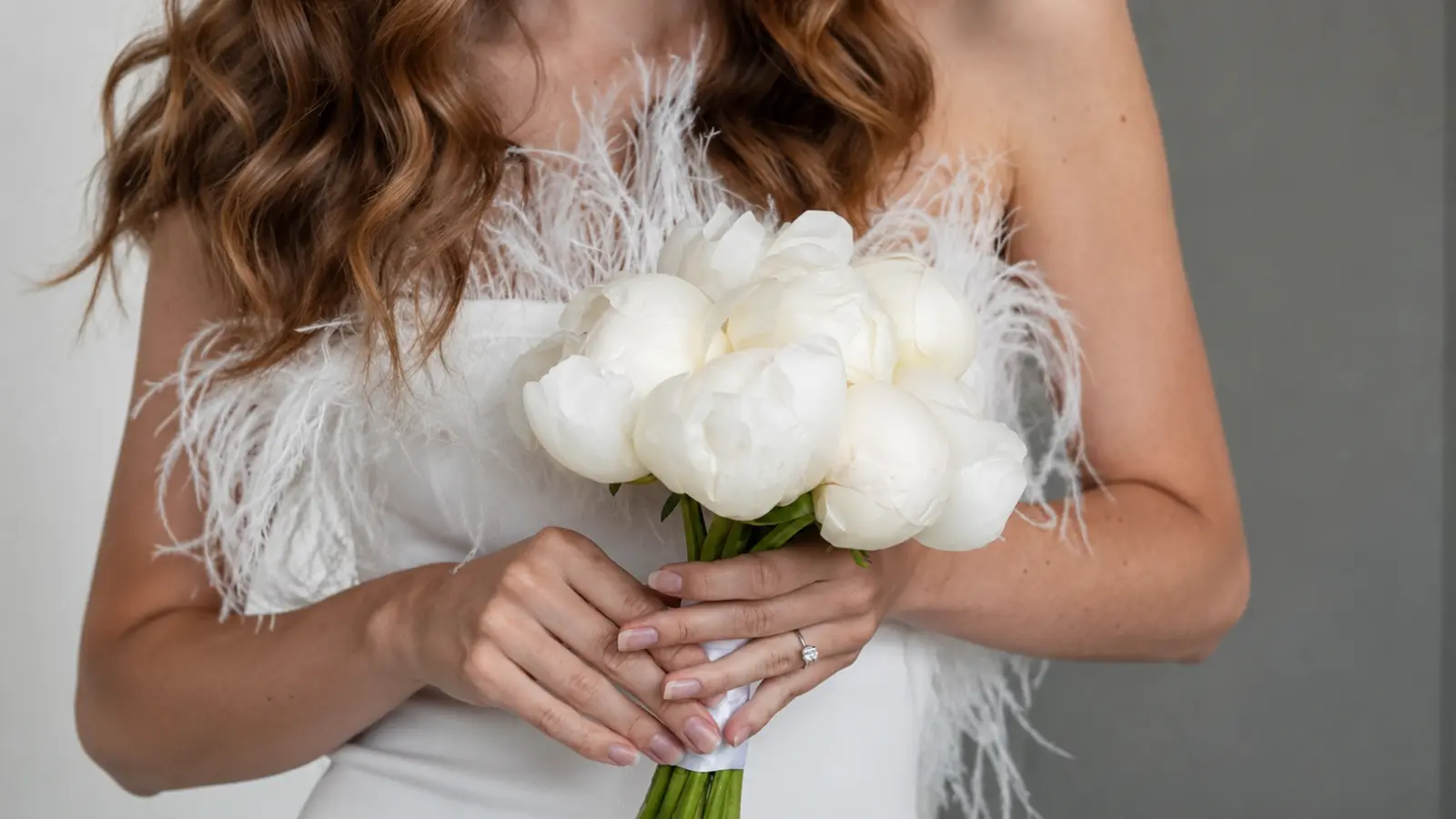
Small refers to scale rather than one specific look, since different bridal bouquet styles can be lush, layered, spare, or architectural at a smaller size. The scale just means fewer stems. What changes at smaller scale is the weight the individual flowers carry. In a large mixed arrangement, a single imperfect stem gets absorbed. In a bouquet of twelve, it matters.
A small round bouquet or nosegay typically uses 8 to 15 stems, depending on the bloom size. Flowers with natural fullness (garden roses, ranunculus, peonies) fill space efficiently and look substantial even at lower stem counts. Slender flowers like tulips or lisianthus need a few more stems to read as complete at small scale.
Small bouquets tend to work especially well in a few specific contexts:
- Petite frames: A large bouquet can feel overpowering on a smaller bride. A 10 to 12 stem round bouquet in the 6 to 7 inch diameter range sits in proportion with the body and doesn’t compete with the dress.
- Heavily detailed dresses: Lace, beading, and intricate embroidery on the bodice already carry significant visual weight. A small, clean bouquet gives the dress room to be seen rather than fighting for attention.
- Intimate ceremonies: When the guest list is small, the ceremony is close, and the setting is personal, a small bouquet matches the scale of the event. A full-sized bridal bouquet at a 20-person backyard wedding can feel like it belongs to a different occasion.
- Budget-conscious planning: A smaller bouquet uses fewer stems and less construction time, which typically lowers the cost without requiring any compromise on flower quality. Fewer blooms of better quality usually produces a better result than more blooms of a lower grade.
One practical note: ask your florist to think in terms of finished diameter, not stem count. The same 12 stems can produce a bouquet that reads very differently depending on how it’s constructed and how tightly it’s gathered.
Minimalist Bridal Bouquets
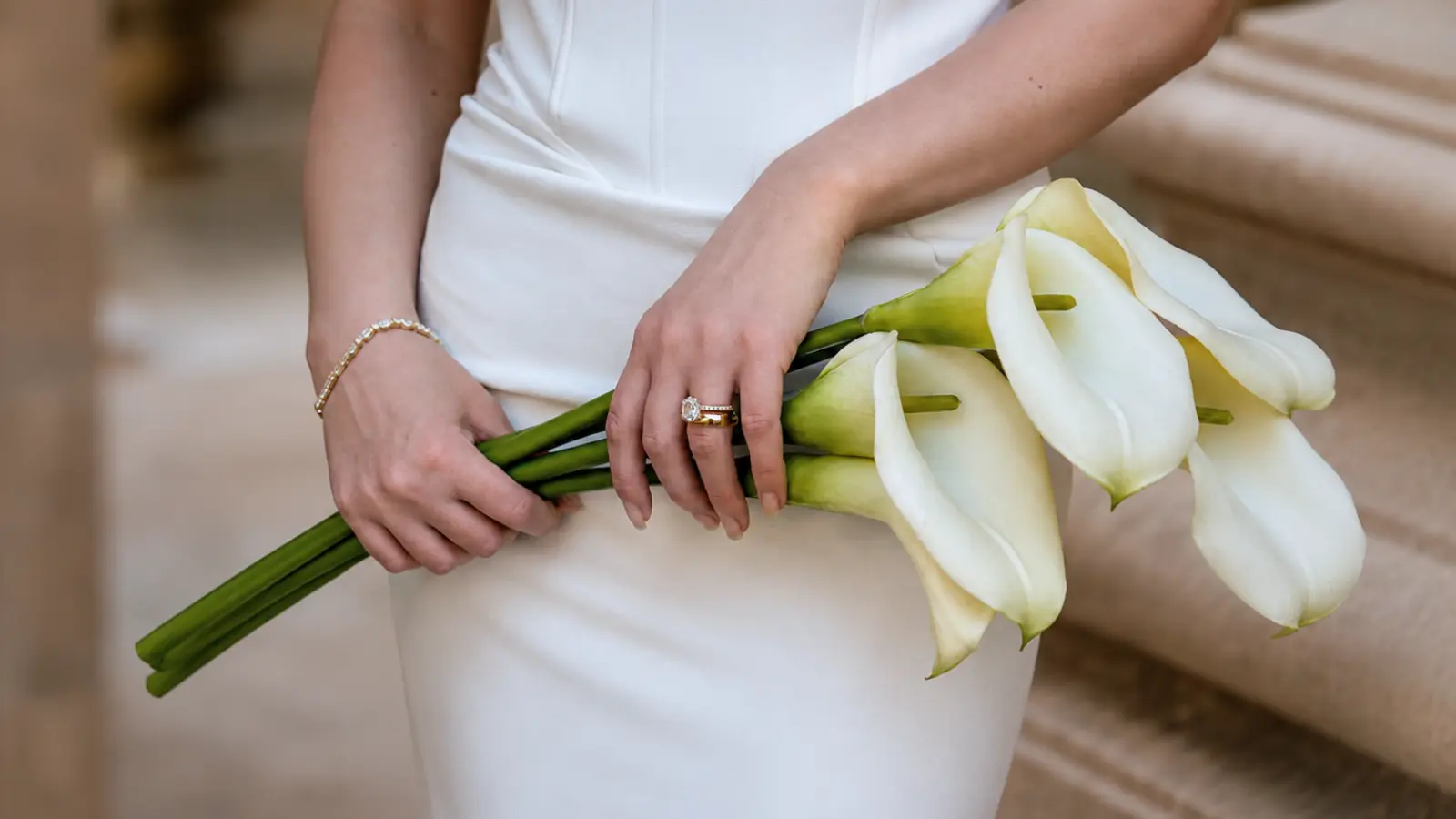
Minimalist bouquets take the small-bouquet logic further: the goal isn’t just fewer elements, it’s a cleaner visual idea. Where a small bouquet might still use two or three flower types and some supporting greenery, a minimalist design typically commits to one central element and edits everything else away.
This restrained aesthetic also appears frequently in modern wedding bouquets, where the design feels intentional rather than romantic and heavily layered. It photographs well in editorial contexts (clean backgrounds, close portraits, natural light) and works particularly well with contemporary dresses: column silhouettes, minimalist slip dresses, structured crepe gowns.
A few approaches that hold up well in practice:
- Single flower type, white or ivory: Seven to ten stems of one bloom, tightly gathered, wrapped in a wide satin ribbon. No variation, no accent. The simplicity is the design.
- Graphic stem design: Five to seven calla lilies or tulips arranged so their stems create a visible pattern, bound simply at the grip. The geometry of the stems is as intentional as the blooms.
- Foliage-forward design: A bouquet built primarily around a single leaf or foliage type (olive branch, eucalyptus, magnolia leaf) with one or two blooms as the accent rather than the focus. Reads as very current and suits outdoor and garden settings.
- Dried and neutral: Dried pampas grass, bleached foliage, dried cotton, or neutral seed pods gathered loosely. Minimal color, maximum texture. Works well for fall and winter ceremonies and for brides who want a bouquet they can display afterward without preservation.
The challenge with minimalist designs is the finish. A raw stem wrap or rushed ribbon tie reads as unfinished rather than spare. The detail that holds a minimalist bouquet together is usually the wrapping: a well-pressed ribbon, properly pinned at the overlap, with a clean length at the base of the stems. It’s a small thing, but it’s what separates minimal from simply incomplete.
Simple White Wedding Bouquets
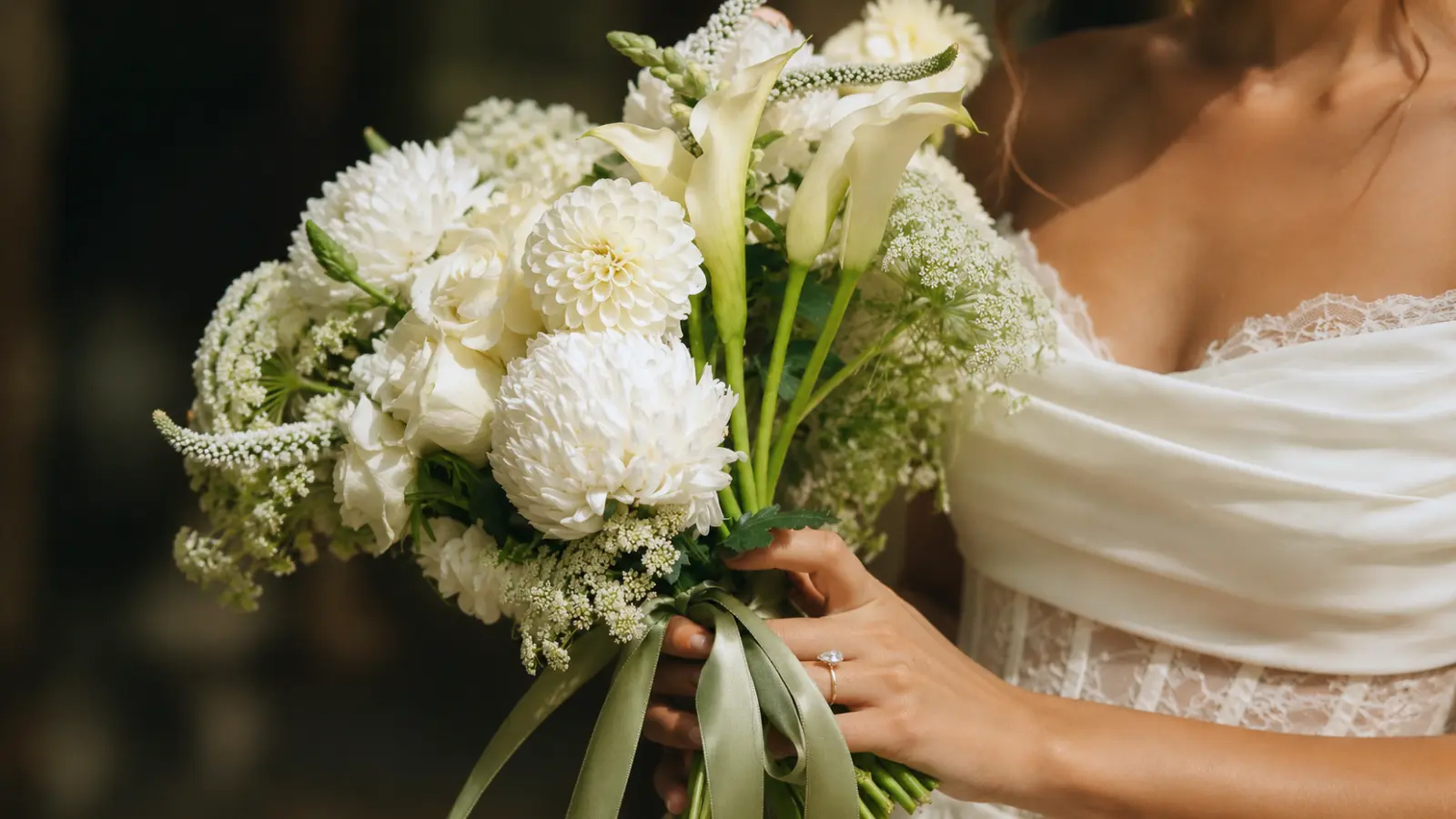
For many white wedding bouquets, simplicity works naturally because removing additional colors allows shape, texture, and proportion to lead the design. When color is off the table, the composition becomes about shape, texture, and proportion, all of which are easier to control with a limited ingredient list.
The risk in a simple white bouquet is flatness. One white flower at small scale can look unfinished. The solution isn’t adding more variety. It’s choosing a flower with enough internal texture to carry the design on its own, or pairing two flowers whose white tones are slightly different from each other.
| Flower | Tone | Best paired with |
|---|---|---|
| Garden rose | Warm ivory to pure white | Ranunculus, lisianthus, or alone |
| Ranunculus | Cream to pale ivory | Garden roses, sweet peas |
| Anemone | Pure white with black center | Alone or with olive branch |
| Calla lily | Clean, graphic white | Alone; pairs with dark foliage |
| Lisianthus | Soft white with slight green cast | Ranunculus, garden roses |
| Tulip | Cool clean white | Alone in quantity; paired with anemones |
One detail that consistently elevates a simple white bouquet is the controlled foliage often seen in greenery wedding bouquets. A handful of olive branch leaves, dark ruscus, or magnolia provides contrast that makes white flowers look more vibrant without complicating the color palette. The foliage doesn’t need to be elaborate. A few stems woven through the base of the arrangement is enough to do the work.
Single-Flower Bouquets
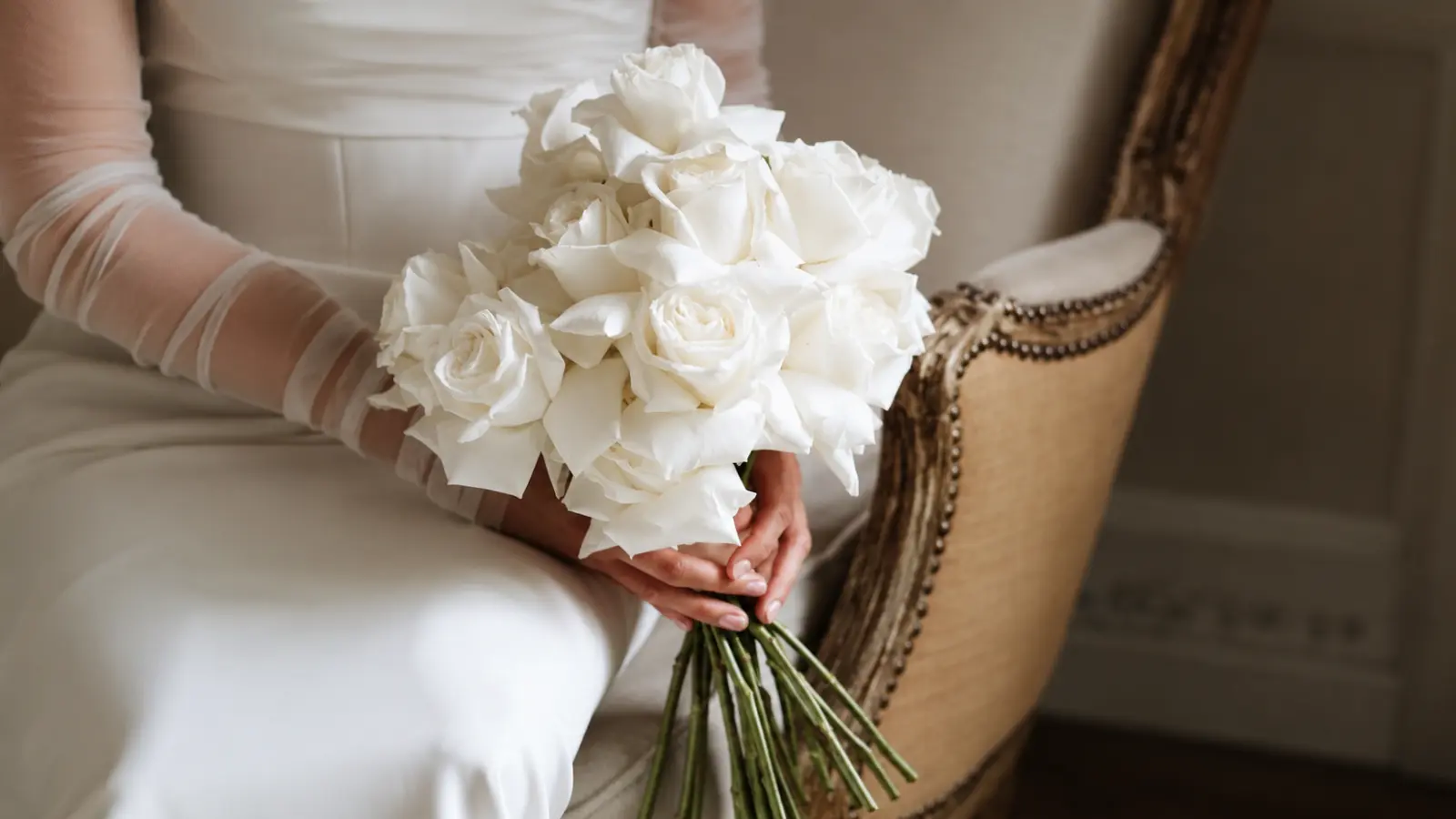
A single-flower bouquet is exactly what it sounds like: one variety of bloom, gathered and bound. No mixed greenery, no accent flowers, no secondary elements. The design is built entirely on the quality and character of that one flower — which means the selection matters more than it does in a mixed arrangement where individual choices are absorbed into the whole.
These designs have a long history in wedding floristry (the all-rose bouquet, the all-tulip spring bouquet) but feel current again precisely because they read as intentional. A bride carrying twelve perfect garden roses wrapped in wide ivory ribbon doesn’t look like she couldn’t afford more. She looks like she made a very specific decision.
Flowers that carry single-variety designs well:
- Garden roses: The layered petals and natural variation in how they open means no two stems look exactly alike, which provides internal visual interest even in a single-variety design. An all-garden-rose bouquet is probably the most versatile single-flower option available.
- Peonies: One of the few flowers that can anchor an entire bouquet alone. A tight cluster of 5 to 7 peonies looks full, rich, and complete. The seasonal limitation is the main consideration: peonies are reliably available in late spring and early summer.
- Tulips: Long, smooth stems that create a clean graphic quality when gathered together. Tulips work well in quantity (15 to 20 stems for a mid-size bouquet) and suit both minimalist modern and spring-garden aesthetics depending on color choice.
- Anemones: The white petals and dark centers create natural contrast within a single variety, which makes all-anemone bouquets particularly interesting at close range. Usually available in fall and winter.
- Calla lilies: As covered in the cascading guide, calla lilies carry minimalist and architectural designs with ease. An all-calla bouquet held long works as well in a courthouse as it does in a formal venue.
- Lisianthus: Softer and less familiar than roses, lisianthus have ruffled, layered petals that read as romantic and refined. Often overlooked in single-variety designs, but worth requesting from your florist if you want something less expected than roses.
The wrapping and binding do more visible work in a single-flower bouquet than in a mixed design. A clean, wide ribbon tied with a proper bow, or a simple length of raw silk secured with pearl-headed pins, is worth spending time on. It’s the finishing detail that tells the viewer the simplicity is intentional.
Simple Bouquets for Courthouse Weddings
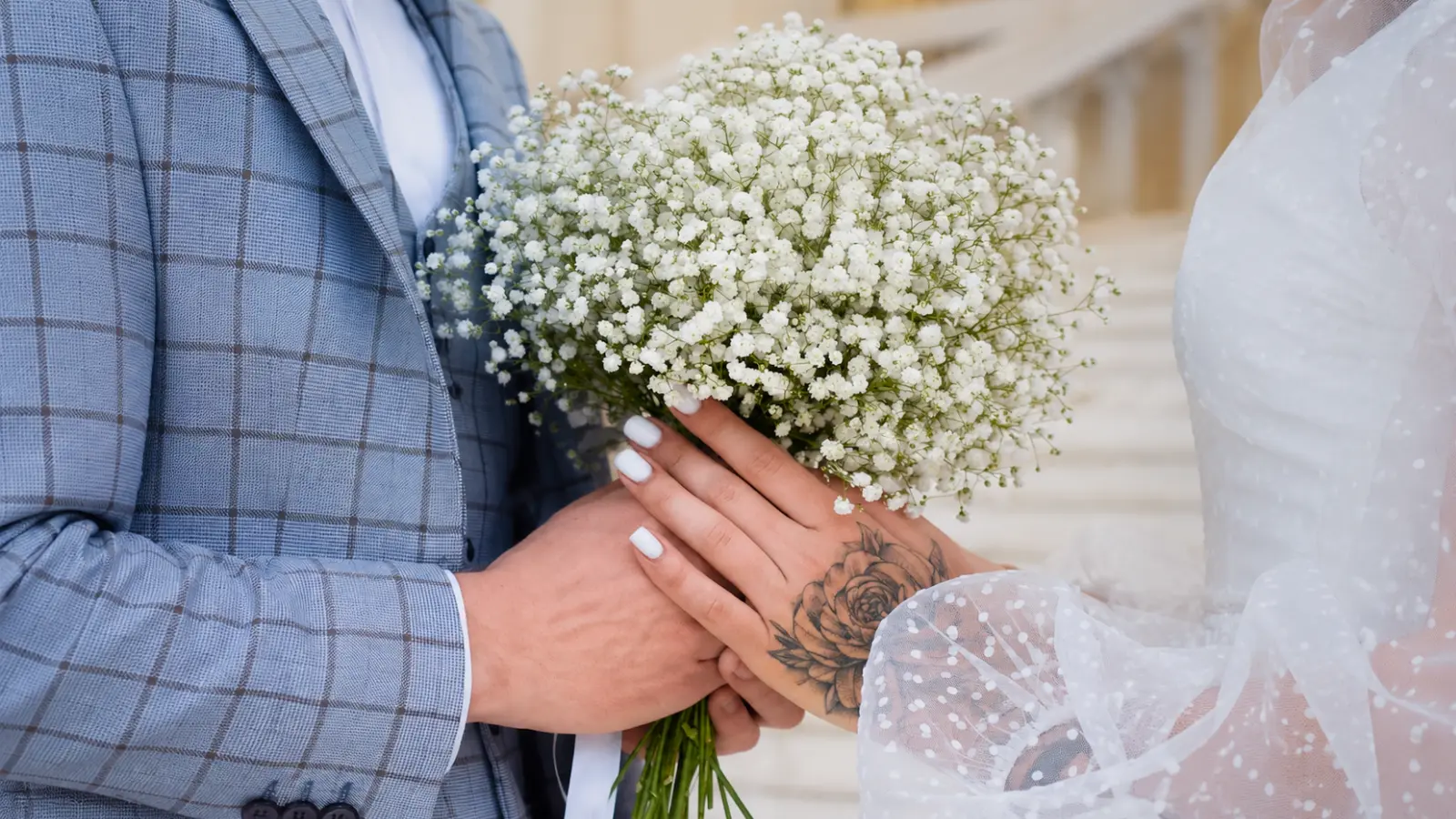
Courthouse weddings have their own logic. The ceremony is typically short, the setting is functional rather than decorated, the guest count is small or zero, and the focus of the day is entirely on the two people at the center of it. A bouquet for that context should fit the moment rather than trying to transpose a traditional wedding aesthetic onto a different kind of day.
That doesn’t mean going without flowers, or grabbing something from a grocery store because “it doesn’t matter.” It means choosing something appropriately scaled and personal: flowers that you actually love, in a size that makes sense for a close ceremony and close photographs, finished with the same care you’d bring to any other detail of the day.
A few approaches that work particularly well for courthouse ceremonies:
- A small hand-tied bouquet, 8 to 12 stems: One or two flower varieties, minimal greenery, finished with a ribbon you keep rather than discard. Small enough to feel right in an intimate setting, present enough to hold and photograph.
- A long-stem carry: Three to five long-stemmed blooms held loosely at the stems with a single ribbon tie. Roses, ranunculus, or anemones work well. This approach feels effortless rather than composed, which suits the tone of a courthouse day.
- A single focal flower: One garden rose, one perfect peony, or one calla lily held with intention. It sounds almost too minimal, until you see a photograph of it. The single flower in a small ceremony reads as a deliberate, confident choice.
- A small dried or seasonal wildflower bouquet: For brides who want something they can keep without preservation and who want a more relaxed aesthetic, a small bundle of dried lavender, dried cotton, or seasonal wildflowers works well. It also travels better than fresh flowers if the ceremony involves a car ride.
One logistical point for brides learning how to make a wedding bouquet without a florist is to buy the flowers a day ahead and keep them in water overnight. A single-variety fresh arrangement stays fresh with minimal care, far more forgiving than a complex mixed bouquet that needs to be properly conditioned throughout.
How to Make a Simple Bouquet Feel Elegant
The gap between a simple bouquet that reads as refined and one that reads as sparse almost always comes down to execution rather than ingredients. The same ten stems of ranunculus can look considered or look like an afterthought depending on three things: flower quality, how the stems are handled, and the finish on the wrap.
Flower quality matters more at small scale. In a large, complex arrangement, lower-grade blooms get absorbed into the overall composition. In a bouquet of ten stems, every flower remains visible, so choosing well-conditioned wedding bouquet flowers has an especially strong impact on the final result. If you’re working with a florist, ask for their freshest available stems in your chosen variety rather than accepting whatever’s already pulled. If you’re DIYing, buy two to three days before and condition properly in clean water.
Stem length and evenness matter more than most brides expect. A bouquet where the stems are cut to inconsistent lengths and sit at different angles in the hand looks disorganized, regardless of how beautiful the blooms are. For a simple design, ask your florist to cut the stems to an even length — typically 8 to 12 inches below the lowest bloom — and to bind them tightly and evenly so the bouquet sits straight and doesn’t rotate when held.
The ribbon wrap is a design element, not a practical detail. The most common finish for a simple bouquet is a wide ribbon wrapped several times around the stem, secured with pearl-headed pins, with a length left loose at the bottom. The width, material, and color of the ribbon change the entire register of the bouquet. A wide ivory satin ribbon reads formal and classic. A raw-edge silk ribbon in a natural tone reads modern and editorial. A narrow velvet ribbon in a deep color reads romantic and unexpected. Choose it deliberately rather than accepting a default.
Finally, the thing most brides don’t think about until they’re holding the bouquet on the day: how you carry it changes how it looks. A simple bouquet held low, in front of the waist, photographs differently from one held at hip height. Most photographers will guide you — but knowing that a simple bouquet reads best when held slightly lower than you think, so the full stem length is visible, is a useful thing to have in mind before you walk.
Simple Wedding Bouquet Inspiration
Discover simple wedding bouquets featuring minimalist floral designs, elegant white flowers, single-flower bouquets, courthouse wedding ideas, and timeless bridal inspiration for every wedding style.
Simplicity Is a Design Choice
Simple wedding bouquets stand out because every flower has a purpose. Without layers of greenery or dozens of different blooms competing for attention, the beauty comes from proportion, flower quality, and thoughtful composition. The result is a bouquet that feels calm, elegant, and effortlessly timeless rather than understated.
The best simple bouquets aren’t created by removing elements until very little remains—they’re created by choosing only what truly belongs. Whether you carry a handful of garden roses, a few elegant calla lilies, or a single-variety bouquet wrapped in beautiful ribbon, intentional simplicity will always photograph beautifully and remain one of the most refined choices a bride can make.
Frequently asked questions (FAQ)
What makes a wedding bouquet look simple but elegant?
A simple bouquet looks elegant when every design choice feels intentional. Instead of combining many flower varieties, colors, or decorative elements, it focuses on one clear idea—a single flower type, a restrained color palette, or a clean silhouette. High-quality blooms, balanced proportions, and a beautifully finished ribbon wrap create a bouquet that feels refined rather than unfinished.
What flowers work best for a simple wedding bouquet?
Garden roses, ranunculus, tulips, lisianthus, anemones, peonies, and calla lilies are among the best flowers for simple bouquets because they have enough natural character to stand on their own. Single-variety bouquets are especially effective, allowing the beauty of each bloom to become the focal point without relying on elaborate floral combinations.
Can a simple wedding bouquet look luxurious?
Absolutely. Luxury comes from flower quality, thoughtful proportions, and expert finishing—not from the number of stems. A bouquet of premium garden roses or perfectly conditioned peonies often feels more sophisticated than a much larger arrangement filled with many flower varieties. Careful editing is what creates an elevated look.
What is the best bouquet for a courthouse wedding?
A small hand-tied bouquet, a single-variety nosegay, or three to seven long-stemmed flowers wrapped with a quality ribbon are all beautiful choices for a courthouse wedding. Their scale suits an intimate ceremony while still creating elegant photographs that feel personal and timeless.
How many flowers do you need for a small wedding bouquet?
Most small bridal bouquets use approximately 8 to 15 stems, depending on the flower variety and bouquet style. Flowers with naturally full blooms, such as garden roses or peonies, require fewer stems than slimmer flowers like tulips or lisianthus. The goal is to achieve visual balance rather than reach a specific stem count.
Are simple wedding bouquets less expensive?
Usually, yes. Smaller bouquets generally require fewer flowers and less labor, making them more affordable than elaborate designs. However, choosing premium flowers such as garden roses or peonies can increase the final cost. A simple bouquet is best viewed as a design choice rather than simply a budget option.