
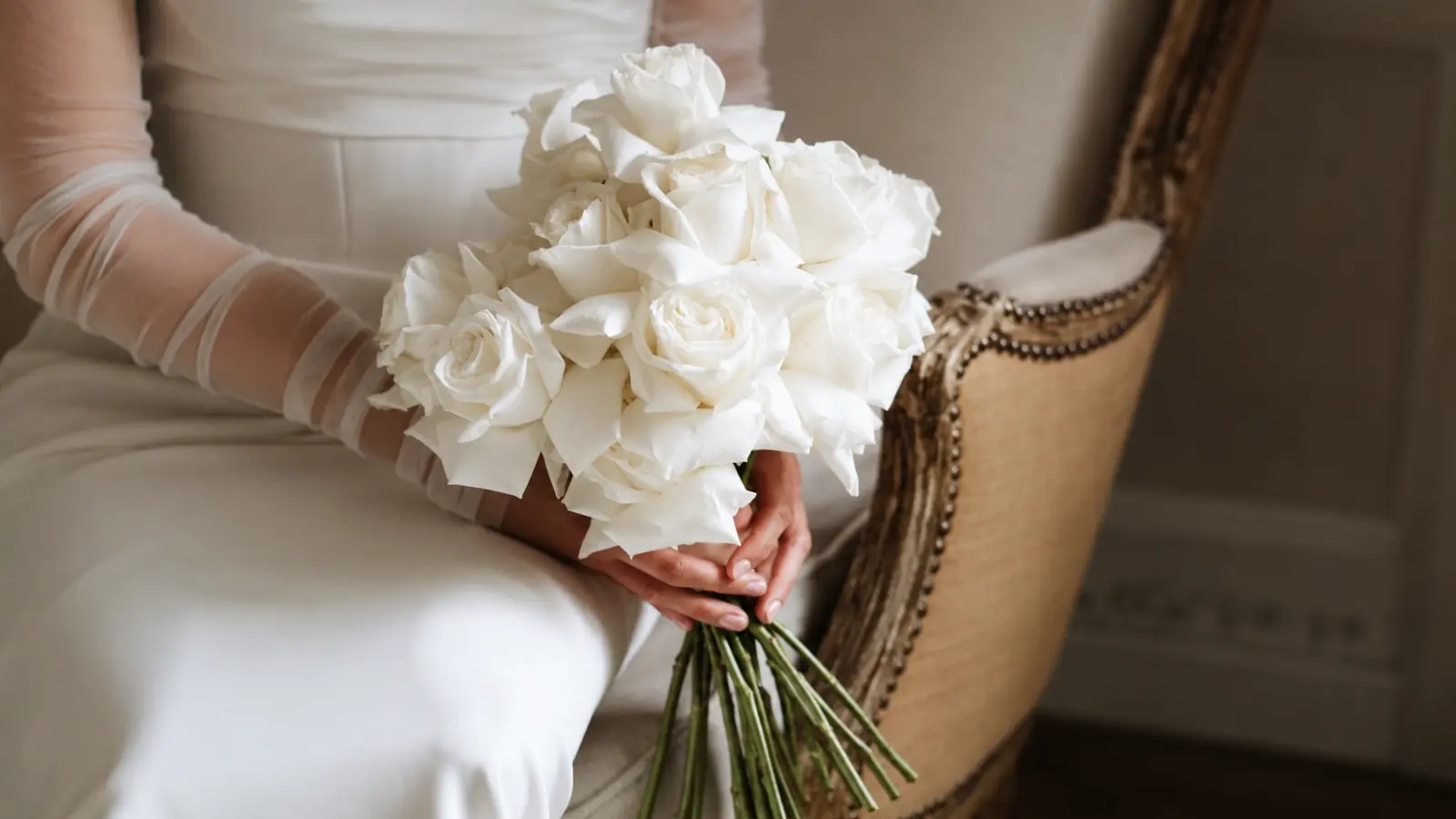
Rose wedding bouquets remain one of the most popular choices for brides because they combine timeless beauty, remarkable versatility, and year-round availability. Whether you’re planning a classic church ceremony, a romantic garden celebration, or a modern wedding, roses adapt effortlessly through different colors, varieties, and bouquet styles while maintaining their unmistakable elegance.
One of the reasons roses have remained the world’s most requested wedding flower is their incredible diversity. Standard roses, garden roses, David Austin varieties, and spray roses each create a different visual effect, while colors ranging from soft ivory to deep burgundy allow the same flower to suit almost any wedding aesthetic. Understanding those differences helps you choose a bouquet that feels intentional rather than simply traditional.
This guide explores roses as one of the most versatile choices for a wedding bouquet, including garden roses, David Austin roses, white, pink, and red bouquet ideas, beautiful flower pairings, modern styling techniques, and practical advice for creating a design that feels timeless, romantic, and uniquely yours.
Types of Roses for Wedding Bouquets
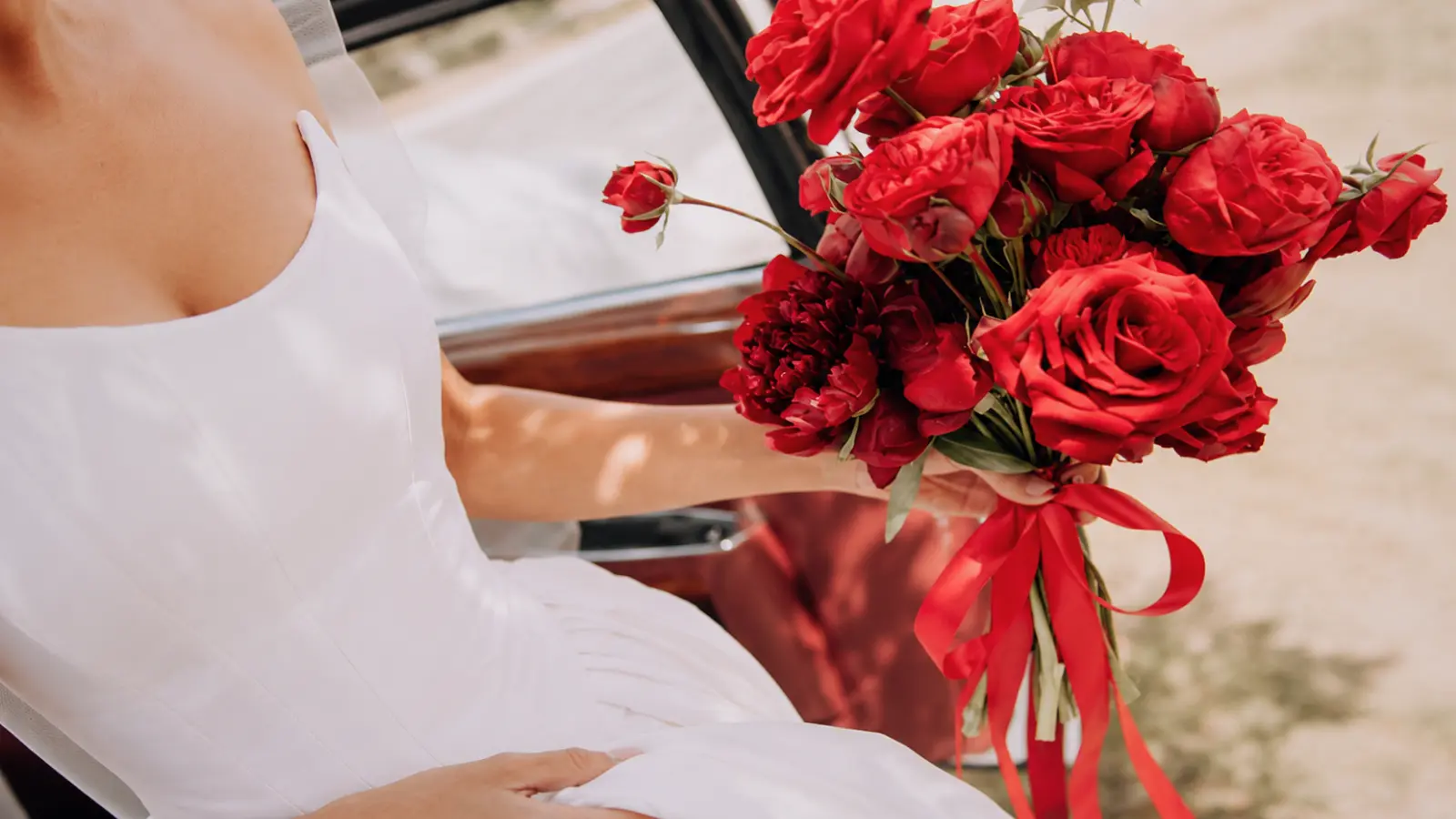
Before color or pairing, the type of rose you choose changes the entire character of the bouquet — and a lot of brides aren’t aware there’s a meaningful difference until they’re standing in a florist’s cooler comparing options side by side.
| Type | Look | Fragrance | Notes |
|---|---|---|---|
| Standard (hybrid tea) rose | Tighter bud, classic pointed shape | Minimal to none | Most affordable, widely available year-round |
| Garden rose | Full, ruffled, many petal layers | Noticeable | More delicate; higher cost per stem |
| David Austin rose | Very full, peony-like rosette form | Strong, classic rose scent | A specific, premium garden rose variety |
| Spray rose | Smaller blooms, multiple per stem | Minimal | Adds volume affordably; good for filler or smaller bouquets |
For a bouquet meant to feel soft and romantic, garden roses or David Austin varieties are usually worth the extra cost — the layered petal structure does a lot of the visual work on its own. For a cleaner, more graphic look, or for managing budget across a larger wedding party, standard and spray roses hold their own perfectly well, especially when paired with the right greenery.
White Rose Wedding Bouquets
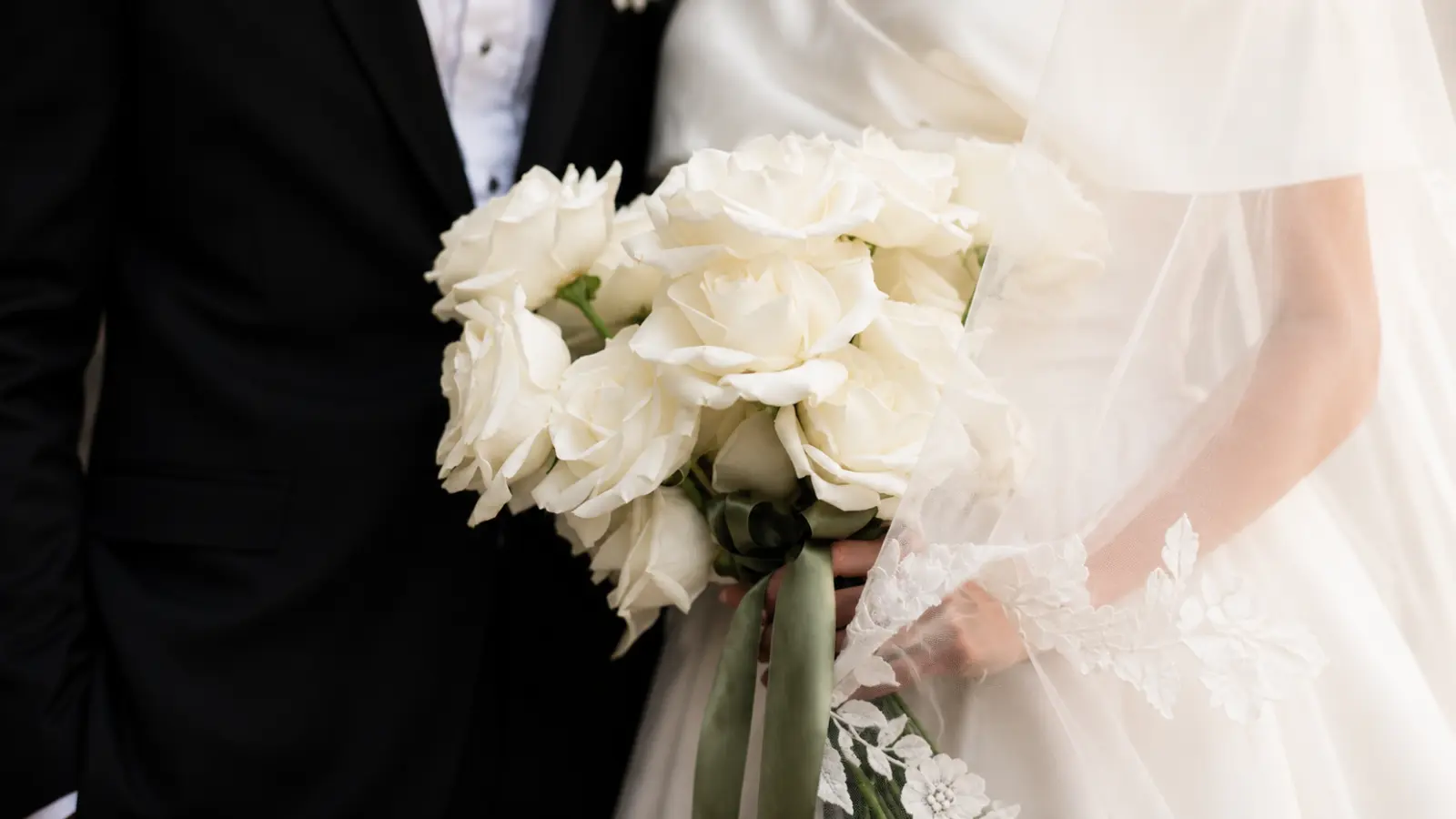
White roses are among the most versatile flowers for white wedding bouquets, working naturally with every dress, venue, and surrounding wedding color. A white rose bouquet pairs as naturally with a cathedral as it does with a beach ceremony.
The risk with an all-white rose bouquet is flatness, especially in photos where everything reads as one tone without enough contrast to register as detail. The fix is texture rather than color: mixing in dusty miller, eucalyptus, or another soft greenery breaks up the white and gives the bouquet visual depth that color alone would otherwise need to provide. A few open, fully bloomed roses next to tighter buds also adds dimension that a uniform arrangement lacks.
Red Rose Wedding Bouquets
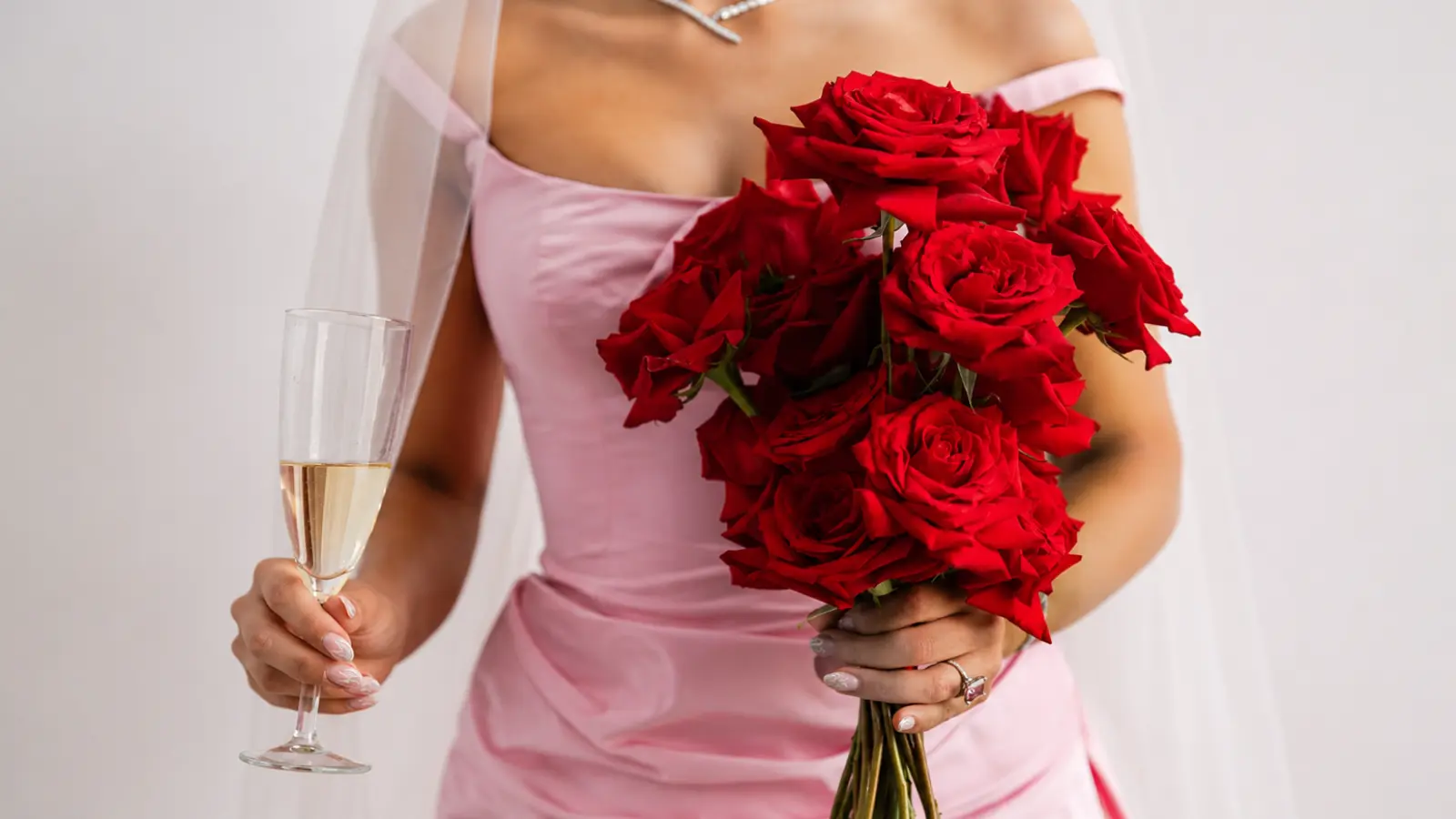
Red roses carry a different kind of weight than almost any other bouquet choice — the symbolism is impossible to separate from the flower, and that’s exactly the appeal for a lot of brides. Roses give red and burgundy wedding bouquets a deliberate, romantic quality that is difficult to create with other flowers.
Red works especially well in fall and winter weddings, where it sits naturally alongside deep greens, burgundy, and gold accents, and in formal venues where the saturation has room to make a real visual statement. It photographs beautifully against both white and deep-colored gowns, though it’s worth noting that an all-red bouquet is one of the most dramatic choices on this list — it’s not a quiet, blend-into-the-background flower, and brides who want their bouquet to be a clear focal point in every photo tend to be the happiest with it.
Pink Rose Wedding Bouquets
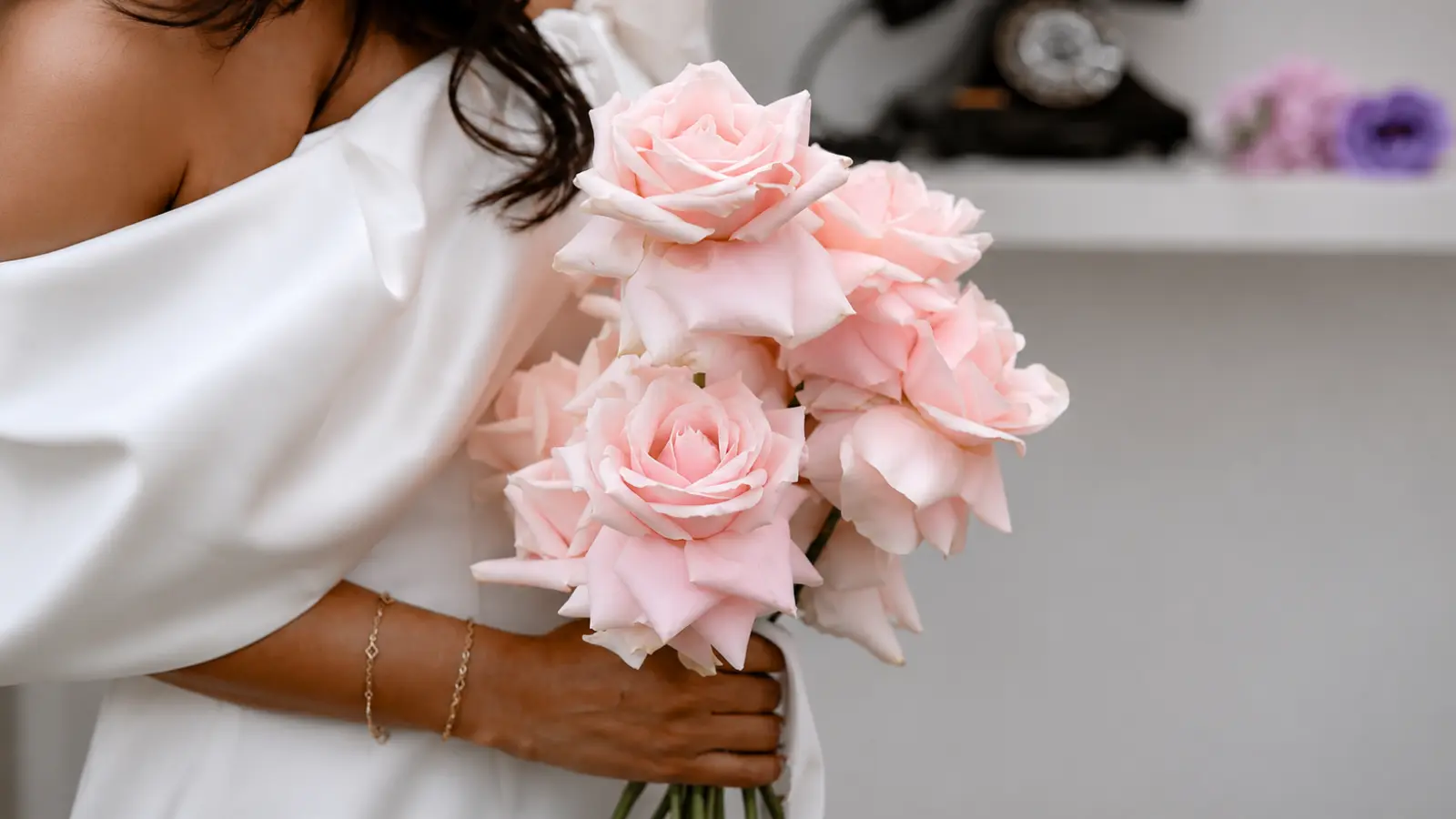
Pink covers more emotional ground than any other rose color, simply because the range within “pink” is so wide. Pale blush reads as soft and romantic. Hot pink reads as bold and joyful. Dusty, antique pink reads as vintage and slightly muted. Naming the specific shade you mean — and bringing a swatch or reference photo rather than just the word “pink” — makes a real difference in what your florist sources.
Blush and soft roses are among the most requested flowers for pink wedding bouquets because they work across spring, summer, and fall and photograph warmly in almost any lighting. Deeper rose-pink tones lean more traditionally romantic, while coral-leaning pinks have become a popular warm-weather alternative for brides who want color without going fully bold.
Rose and Peony Bouquets
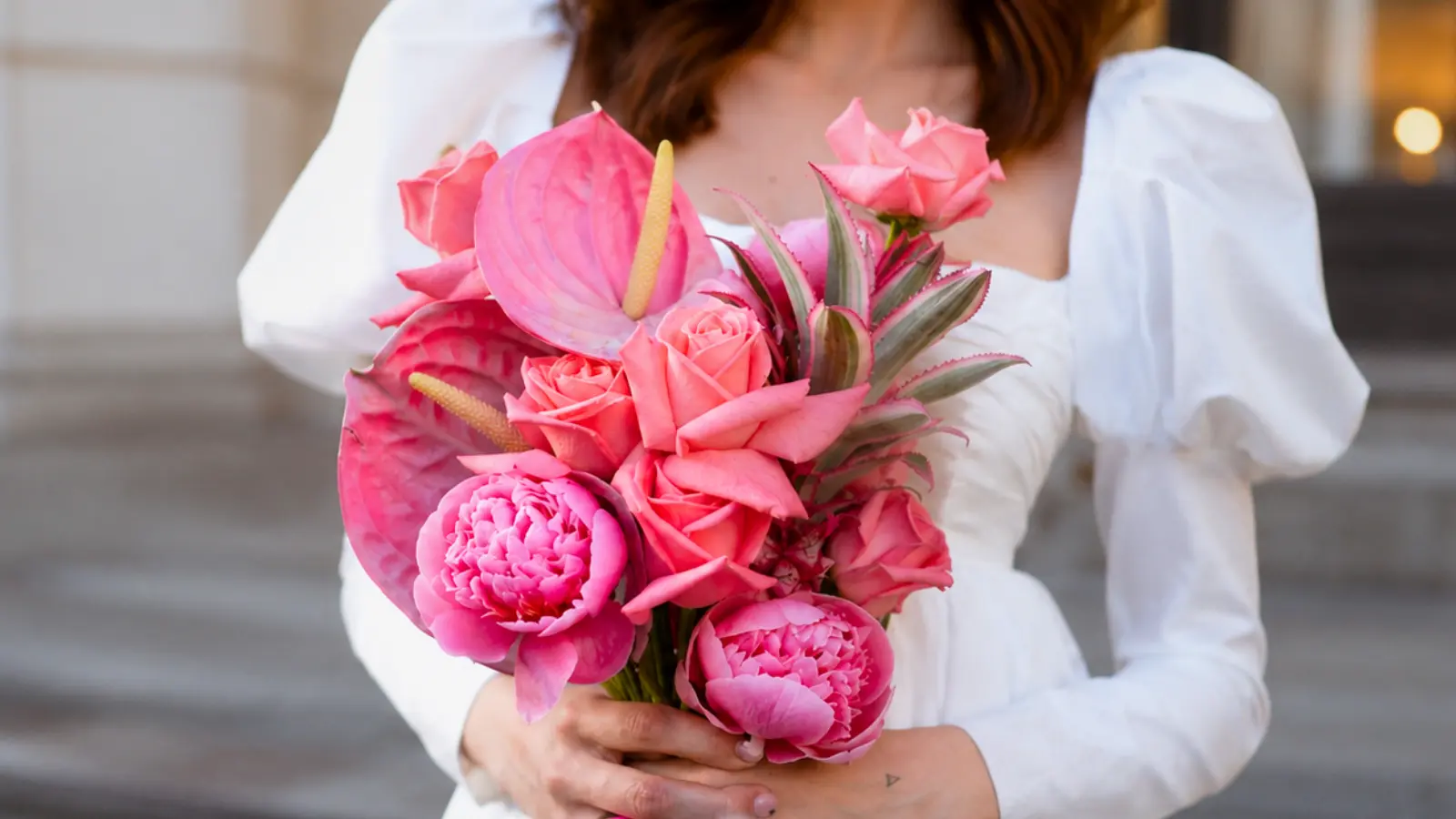
Roses and peonies are one of the most natural pairings in bridal florals because they solve each other’s limitations. Peonies bring a lush, layered fullness that’s hard to replicate, but they’re only available for a few months a year and bruise easily. Roses extend that same soft, romantic feel across the rest of the calendar and hold up far better through a full day of handling.
The two flowers also photograph well together because their petal structures are similar enough to feel cohesive but different enough to read as intentional rather than repetitive — peonies provide the volume, garden roses provide structure underneath that volume. For a wedding outside peony season, garden roses alone, or roses paired with ranunculus, are the closest practical substitute for the same visual effect.
Rose and Hydrangea Bouquets
Hydrangeas solve a different problem than peonies do: volume. A single hydrangea bloom is made up of dozens of small clustered petals, which means a bouquet can look full and lush without needing a high stem count of expensive focal flowers. Pairing roses with hydrangeas lets the roses serve as the visual anchor while the hydrangeas fill out the shape efficiently and affordably.
This combination works particularly well for larger bouquets, or for bridesmaid arrangements where the goal is a cohesive, full look across the wedding party without the cost of an all-rose or all-peony design. The one consideration worth knowing: hydrangeas are sensitive to being out of water and can wilt faster than roses in heat, so a bouquet leaning heavily on hydrangea volume benefits from the same heat-conscious handling as any delicate fresh flower.
How to Make a Rose Bouquet Look Modern
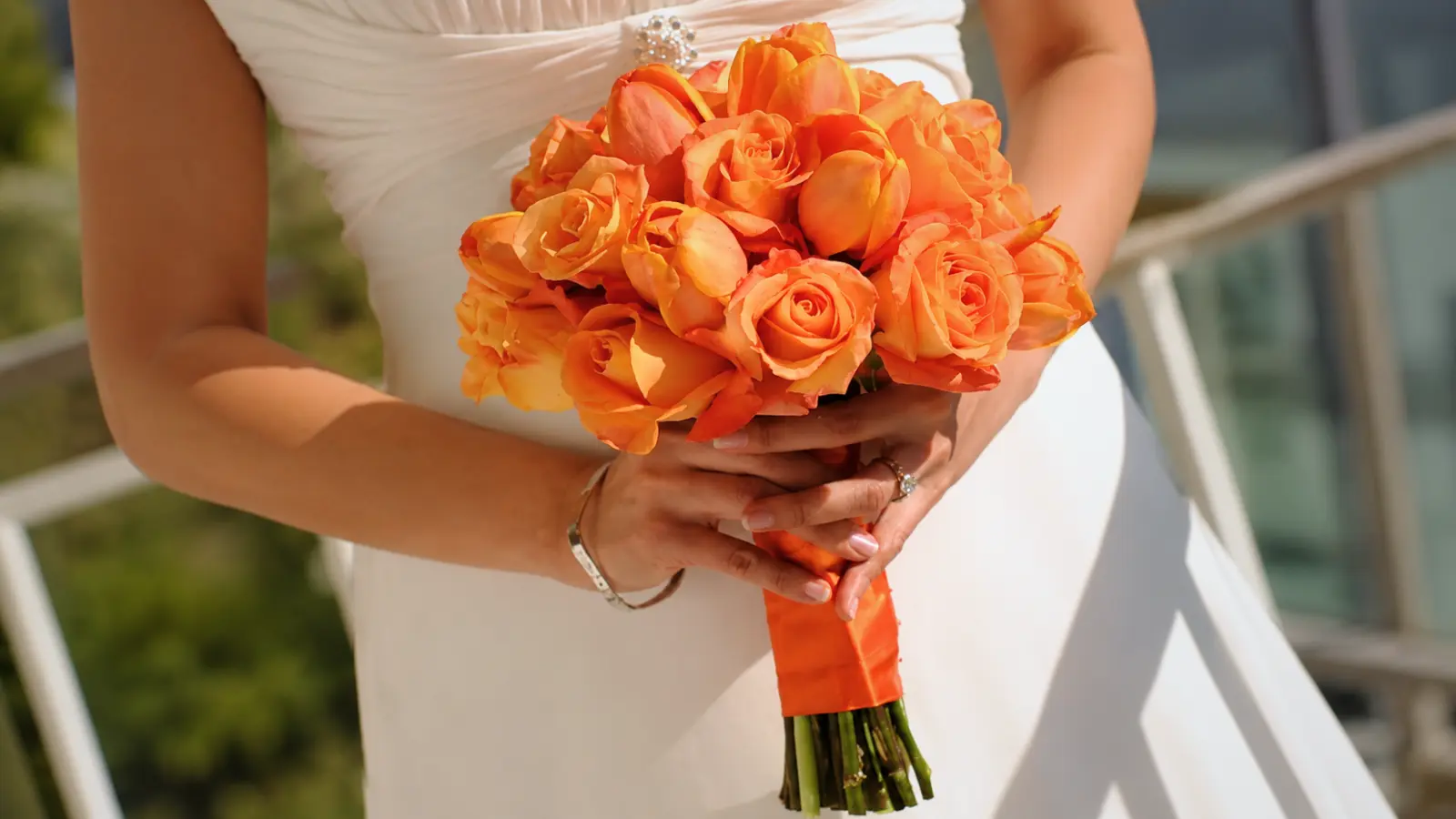
Roses carry a strong classic association, which is why they are sometimes overlooked when brides consider modern wedding bouquets. That association comes from how roses are typically arranged, not from the flower itself — and a few specific choices shift a rose bouquet from traditional to current without abandoning the flower entirely.
- Commit to a monochromatic palette. A bouquet built entirely from one saturated rose color reads as far more contemporary than a soft, mixed pastel arrangement.
- Tighten the arrangement. A dense, graphic round or a structured hand-tied shape feels more modern than a loose, garden-style gathering.
- Swap soft greenery for structural foliage. Dark ruscus, monstera leaf, or eucalyptus used sparingly and deliberately reads differently than a full, airy greenery base.
- Consider exposed stems. A long-stem presentation carry, with the stems visible and loosely bound rather than fully wrapped, is one of the clearest signals of a contemporary design.
- Limit the flower count. A bouquet of just garden roses, with no secondary blooms competing for attention, often feels more intentional than a fuller mixed arrangement.
None of these changes require a different flower — they require a different set of decisions about color, density, and structure, which is really what separates a modern bouquet from a classic one across every flower type, not just roses.
Rose Bouquet Mistakes to Avoid
Most rose bouquet disappointments trace back to a small set of avoidable choices rather than anything wrong with the flower itself.
Assuming all roses are interchangeable. Ordering “roses” without specifying standard, garden, or spray can result in a very different look and cost than what you had in mind. Bring reference photos and be specific about the type, not just the color.
Skipping fragrance consideration. Standard roses have little to no scent, which surprises some brides who expect the classic rose fragrance from any rose bouquet. If scent matters to you, garden roses or David Austin varieties are the better choice.
Going all-white without texture. An all-white rose bouquet with no greenery or shape variation can photograph as flat. A little contrast in texture goes a long way.
Overcrowding with too many secondary flowers. Roses pair beautifully with one or two complementary blooms. Adding several competing flower types tends to dilute rather than enhance the arrangement.
Rose Wedding Bouquet Inspiration
Discover rose wedding bouquets featuring elegant garden roses, David Austin blooms, romantic white and blush arrangements, modern bridal bouquets, and timeless floral inspiration for every wedding style.
Roses Stay Timeless Because They Keep Evolving
Rose wedding bouquets have remained a bridal favorite for generations because they adapt effortlessly to changing styles without losing their timeless appeal. Whether you choose classic white roses, richly layered garden roses, romantic David Austin varieties, or bold modern arrangements, the flower itself offers remarkable flexibility while maintaining the elegance brides have always loved.
The most beautiful rose bouquet isn’t determined by tradition alone—it’s shaped by thoughtful choices about color, variety, proportion, and design. By selecting roses that complement your wedding style, season, and venue, you’ll create a bouquet that feels personal, sophisticated, and every bit as memorable as the celebration itself.
Frequently asked questions (FAQ)
Are roses a good choice for a wedding bouquet?
Absolutely. Roses remain one of the most versatile wedding flowers because they are available year-round, come in nearly every color, and adapt beautifully to classic, romantic, modern, minimalist, and garden-inspired bouquet styles. The flower itself is rarely the deciding factor—the final look depends on the rose variety, color palette, bouquet structure, and floral styling.
What is the difference between garden roses and regular roses?
Standard roses, also called hybrid tea roses, have tighter buds, fewer petals, and little to no fragrance. Garden roses—including many David Austin varieties—feature layered, ruffled petals, a fuller bloom, and often a stronger fragrance. Garden roses create a softer, more luxurious appearance but are generally more expensive and require gentler handling than standard roses.
What color roses are most popular for wedding bouquets?
White and ivory roses remain the most popular because they complement virtually every wedding style and color palette. Blush and soft pink create a romantic feel, while red and burgundy add drama and depth for formal celebrations. The best color ultimately depends on the overall wedding palette, venue, and season rather than popularity alone.
How do you make a rose wedding bouquet look modern?
Modern rose bouquets rely on simplicity, clean structure, and intentional restraint. A monochromatic palette, architectural greenery, exposed stems, sculptural shapes, and premium garden roses create a contemporary aesthetic without abandoning the timeless beauty of roses. Reducing unnecessary filler flowers often has a greater impact than changing the flowers themselves.
What flowers pair best with roses in a wedding bouquet?
Peonies, ranunculus, hydrangeas, lisianthus, sweet peas, anemones, and orchids all pair beautifully with roses. The strongest bouquets usually combine roses with one or two complementary flower varieties rather than mixing many different blooms. This creates texture and depth while allowing the roses to remain the visual focal point.
Are roses available year-round for wedding bouquets?
Yes. Roses are one of the few wedding flowers that are consistently available throughout the year, making them an excellent choice regardless of the wedding season. While some premium garden rose varieties may have more limited availability or higher prices during certain periods, standard roses are reliably sourced year-round in a wide range of colors.