
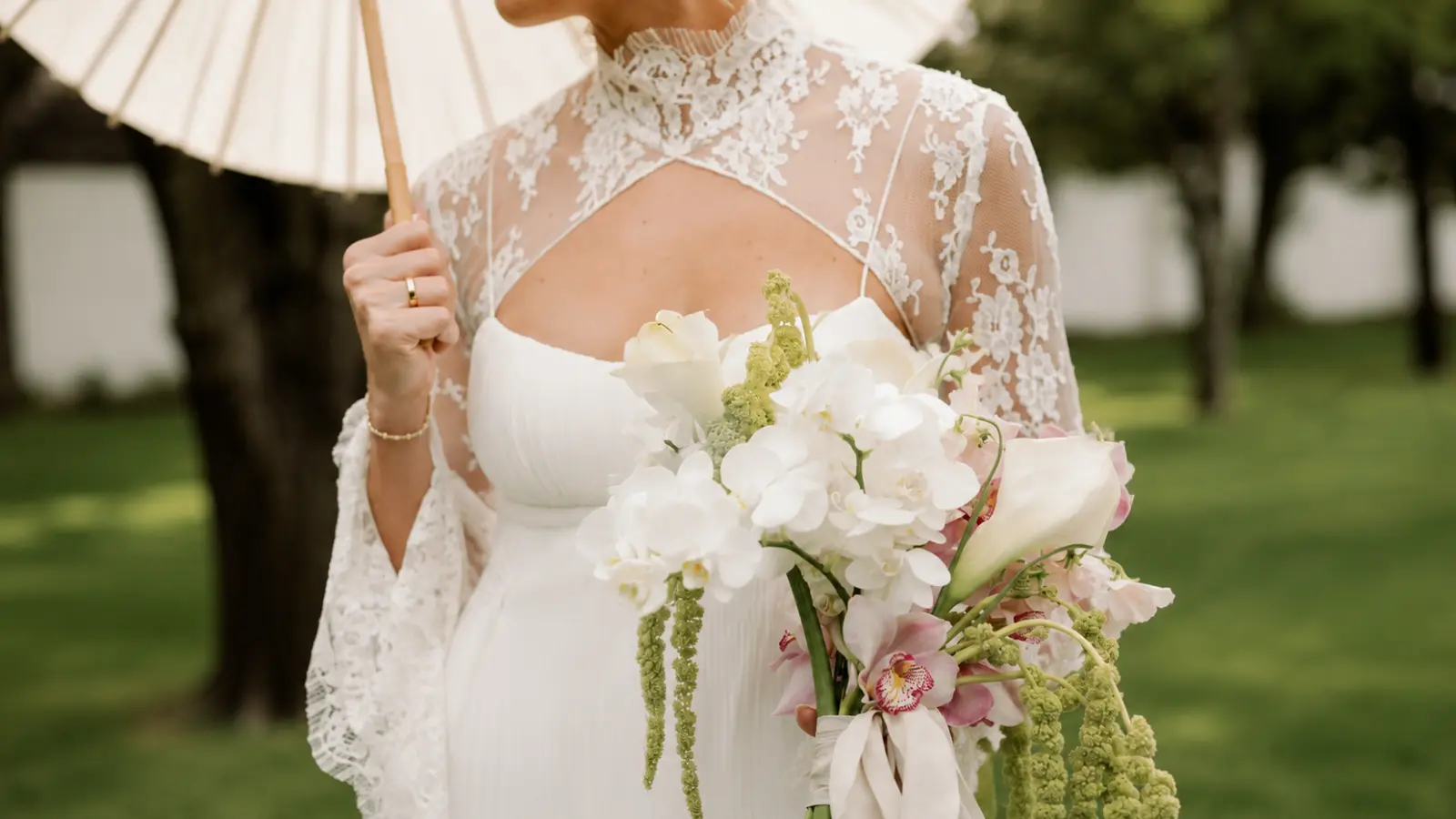
White wedding bouquets have remained one of the most timeless choices for brides because they combine elegance, versatility, and effortless sophistication. Whether you’re planning a classic church ceremony, a romantic garden wedding, a modern celebration, or a beach destination event, a white bouquet can be adapted to suit almost any wedding style through the right combination of flowers, textures, and bouquet shape.
The beauty of a white bouquet isn’t created by color alone. Different flower varieties, subtle white tones, greenery, and floral textures work together to add depth and dimension, preventing the arrangement from looking flat while preserving its clean, refined appearance. Understanding those details is what transforms a simple bouquet into one that feels intentionally designed.
This guide explores white designs within the broader world of wedding bouquets, including all-white bouquet ideas, roses, peonies, orchids, white-and-green arrangements, styling tips, and practical advice for choosing a bouquet that complements both your wedding style and your dress.
White Wedding Bouquet Ideas
“White bouquet” covers a wider range of looks than most people expect, and the right one depends heavily on venue and overall wedding style rather than personal preference alone.
| Style Direction | Core Flowers | Best Suited For |
|---|---|---|
| Classic / Traditional | Garden roses, peonies, standard roses | Church ceremonies, formal venues, traditional styling |
| Modern / Minimalist | Orchids, calla lilies, anthurium | Contemporary venues, clean architectural spaces |
| Garden / Romantic | Peonies, ranunculus, sweet peas, garden roses | Outdoor garden venues, loosely structured ceremonies |
| Beach / Destination | Orchids, anthurium, tropical white blooms | Outdoor coastal settings, heat and humidity |
Each of these directions uses white differently. A classic bouquet relies on full, rounded flowers and a tightly structured shape. A modern bouquet uses fewer, more architectural stems with visible negative space between them. A garden bouquet is looser and more textured, often including more greenery worked in among the blooms. A beach bouquet leans on flowers that are naturally suited to heat and an open-air setting, in a shape that reads as relaxed rather than formal.
All-White Bridal Bouquets
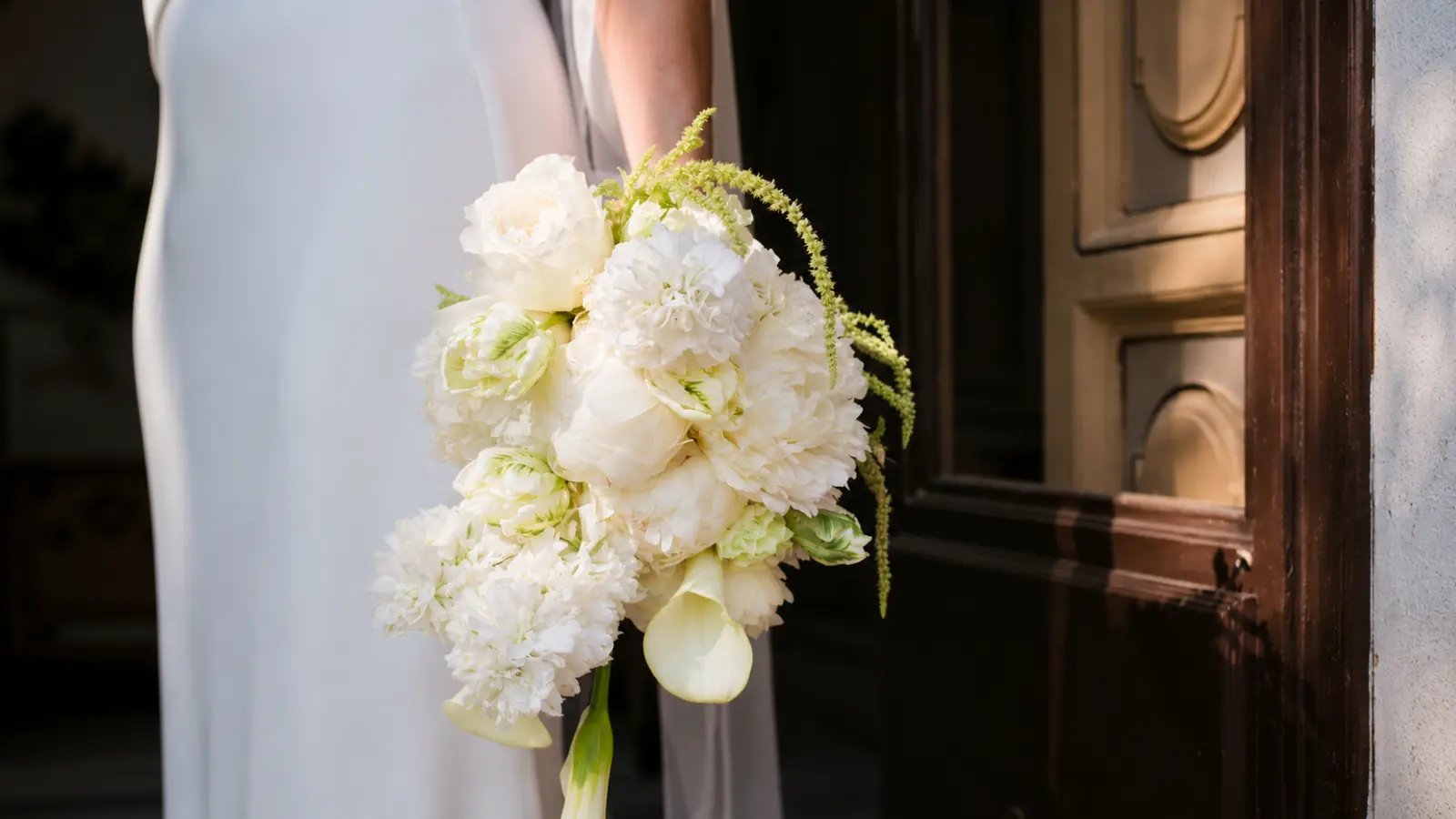
Building a bouquet entirely in one color is harder than it looks, because the usual tool for visual interest — color contrast — isn’t available. Everything has to come from texture, shape, and tone instead, and the bouquets that succeed at this use all three deliberately.
| White Tone | Character |
|---|---|
| Pure white | Crisp and cool-toned; reads as the most formal and classic |
| Ivory | Warmer and slightly creamy; softens the overall look |
| Blush-white | Faint warmth without becoming pink; adds subtle depth |
Layering two of these tones — pure white peonies with ivory garden roses, for example — adds depth that a single uniform white can’t achieve on its own. Petal shape matters just as much: pairing a tightly layered flower like a peony with something cleaner and more open, like an orchid or ranunculus, gives the eye variation to move across even though the color never changes.
Foliage choice is the other major lever. Bright green leaves can make an all-white bouquet look slightly flat or overly sweet. Deeper, richer foliage — eucalyptus with a silvery or bronze tone, Italian ruscus, or trimmed greenery in a darker shade — gives the white flowers a stronger backdrop to stand out against.
White Rose Wedding Bouquets
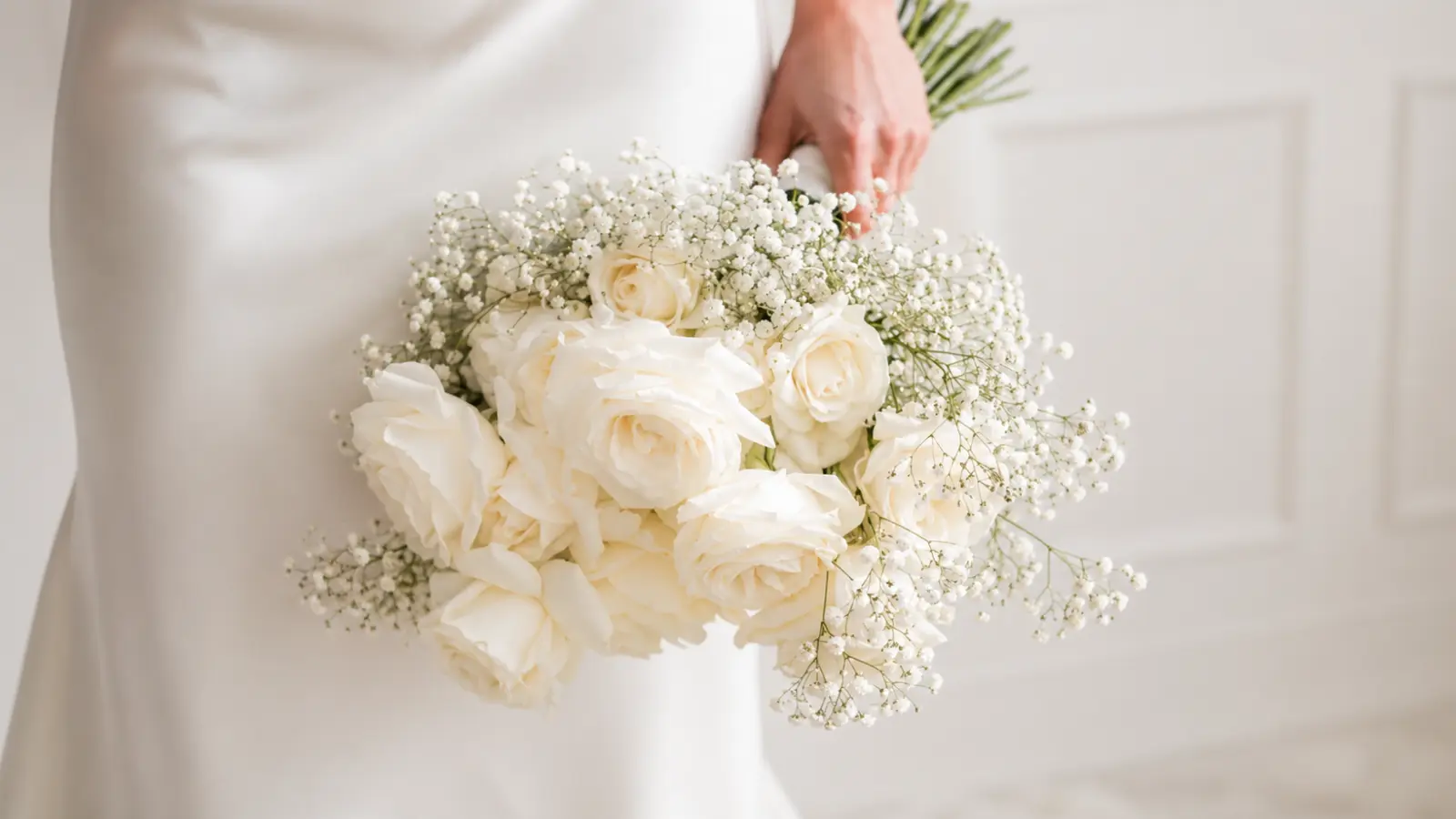
White roses are the most dependable foundation for almost any white bouquet style, available consistently and across a wide range of price points and forms. The choice between standard roses and garden roses changes the character of the bouquet more than the color does.
| Rose Type | Character | Best Fit |
|---|---|---|
| Standard white roses | Clean, tighter bloom; widely available year-round | Classic and modern bouquet styles alike |
| White garden roses | Fuller, more layered bloom with a softer, romantic look | Classic and garden-style bouquets |
Standard white roses give a bouquet a cleaner, more uniform look and are a dependable, cost-conscious choice for couples who want a classic all-white bouquet without the variability that comes with more delicate blooms. Garden roses bring more texture and romance, with petals that catch light differently than a standard rose, and tend to suit both classic church weddings and looser garden-style designs equally well. Either type pairs easily with peonies, ranunculus, or orchids as a secondary flower without clashing.
White Peony Wedding Bouquets
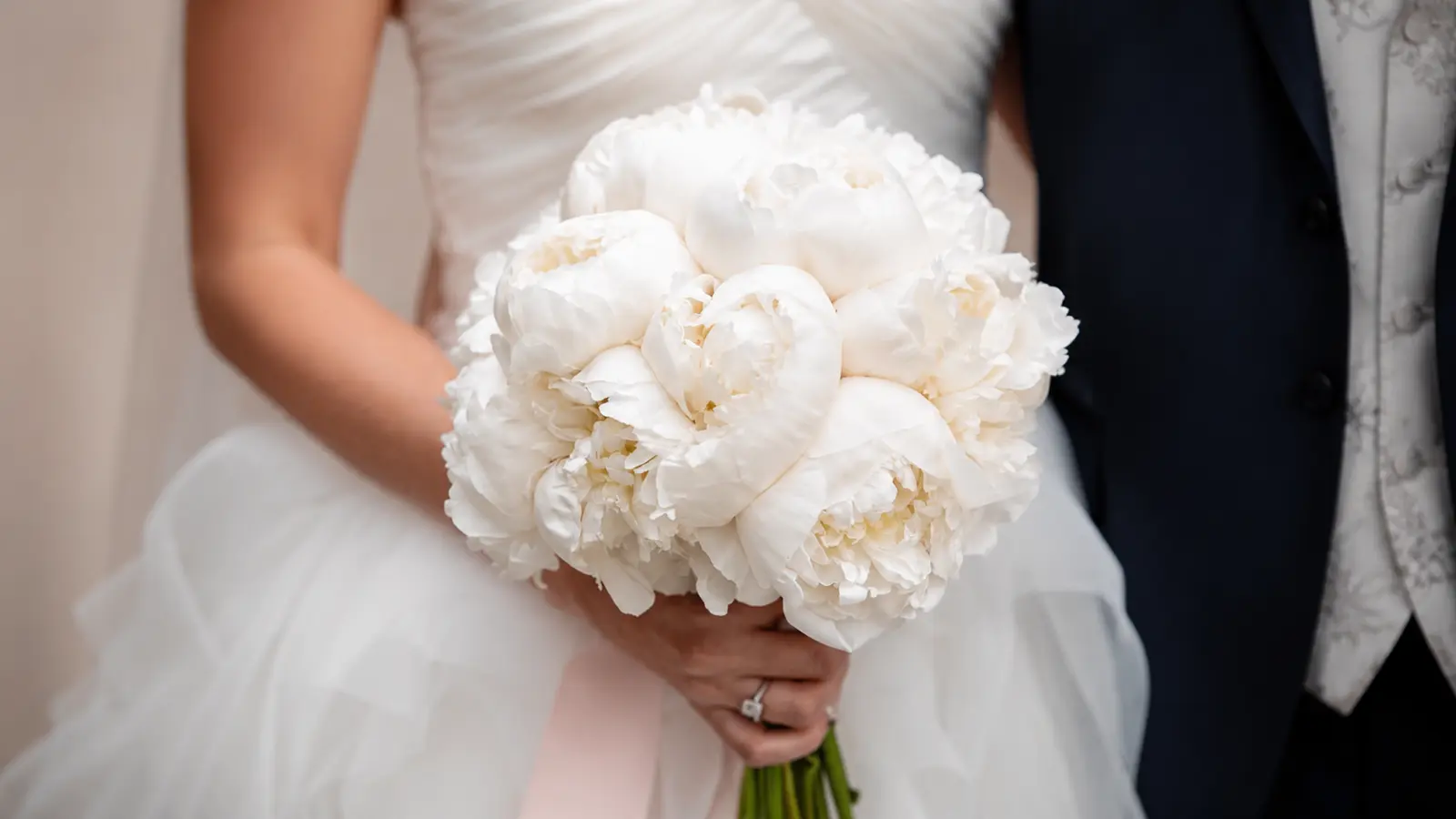
White peonies are one of the most requested bridal flowers, prized for their full, ruffled shape and soft, romantic look. They suit classic and garden-style bouquets particularly well, bringing volume and texture that few other flowers match.
The one real constraint is timing. Peonies have a short, mid-spring season and limited, often inconsistent availability outside of it — a detail covered in more depth in the seasonal flower guide. A wedding date that falls within that window makes white peonies a realistic, often excellent choice. Outside of it, white peonies become harder to source reliably and considerably more expensive when available at all, which is worth knowing before building a bouquet design entirely around them.
White ranunculus is the closest substitute in both look and texture for couples outside peony season, and pairs naturally with white garden roses to recreate a similar full, layered effect without the same availability risk.
White Orchid Wedding Bouquets
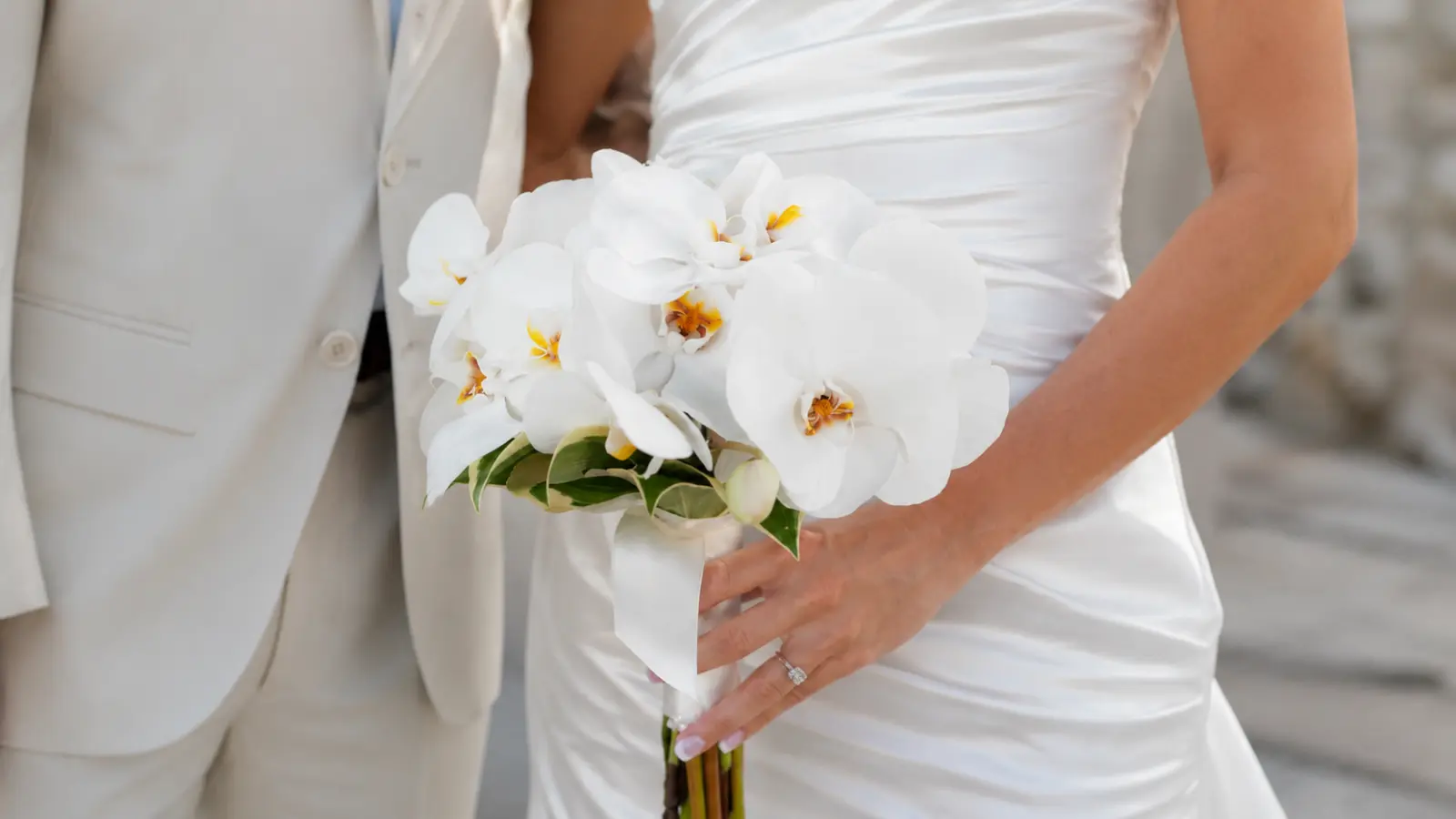
White orchids bring a cleaner, more architectural quality to a bouquet than roses or peonies, and they’re the clearest path to a modern or beach-style white bouquet rather than a classic one.
| Orchid Type | Shape | Notes |
|---|---|---|
| Phalaenopsis | Broad, flat-faced bloom | Most commonly used in bridal bouquets; reads as elegant and modern |
| Cymbidium | Sturdier, slightly smaller bloom on a long stem | Good for structural or cascading designs |
| Dendrobium | Smaller blooms, often used in clusters | Adds texture without dominating the bouquet |
Beyond their look, orchids are genuinely practical: they’re naturally suited to heat and humidity, which makes them one of the sturdier choices for an outdoor beach or destination wedding, where more delicate white flowers like peonies or ranunculus are more likely to struggle. A bouquet built primarily around phalaenopsis or cymbidium orchids holds up through a long day outdoors noticeably better than one built around softer-petaled alternatives.
White and Green Wedding Bouquets
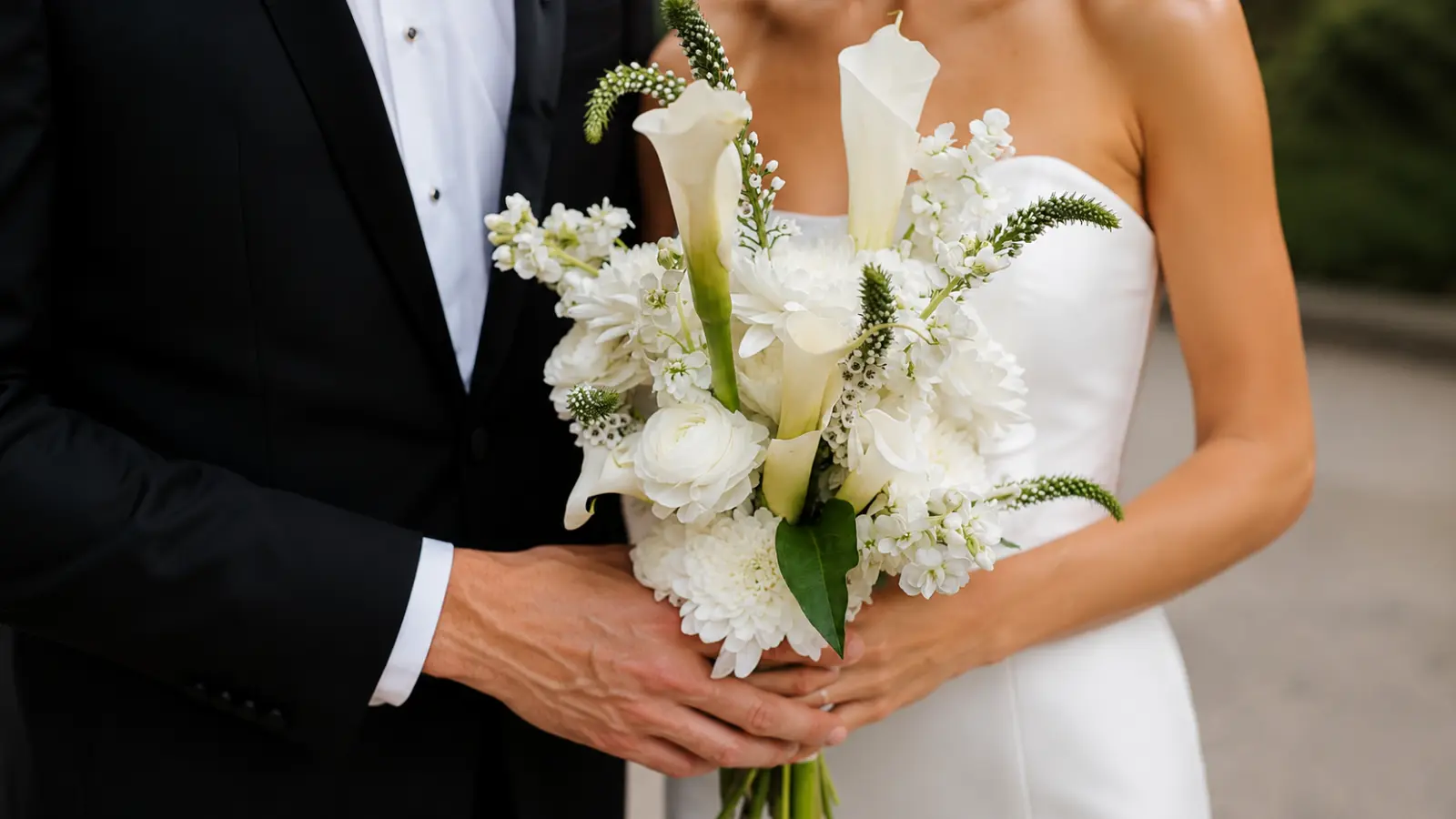
Adding more greenery to a white bouquet shifts the entire feeling of the design, often more than changing the flowers themselves would. A white-and-green bouquet reads as fresher and more organic than a tightly packed all-white design, and it’s a natural fit for garden venues, outdoor ceremonies, and couples who want a softer, less formal version of white.
How Much Greenery Is Too Much:
Greenery should support the white flowers, not compete with them. A bouquet that’s mostly foliage with a few white blooms tucked in reads as a greenery bundle rather than a white bouquet. A useful guideline is to let the white flowers remain the visual anchor, with greenery filling in around and beneath them rather than taking up an equal or larger share of the overall shape.
The type of greenery matters as much as the amount. Soft, trailing eucalyptus or jasmine vine gives a romantic, garden feel. Structured leaves like ruscus or galax give a cleaner, more modern edge. Trailing greenery that extends below the bouquet’s main shape also adds movement, which suits an outdoor or garden setting particularly well without requiring any additional flowers.
How to Choose a White Wedding Bouquet
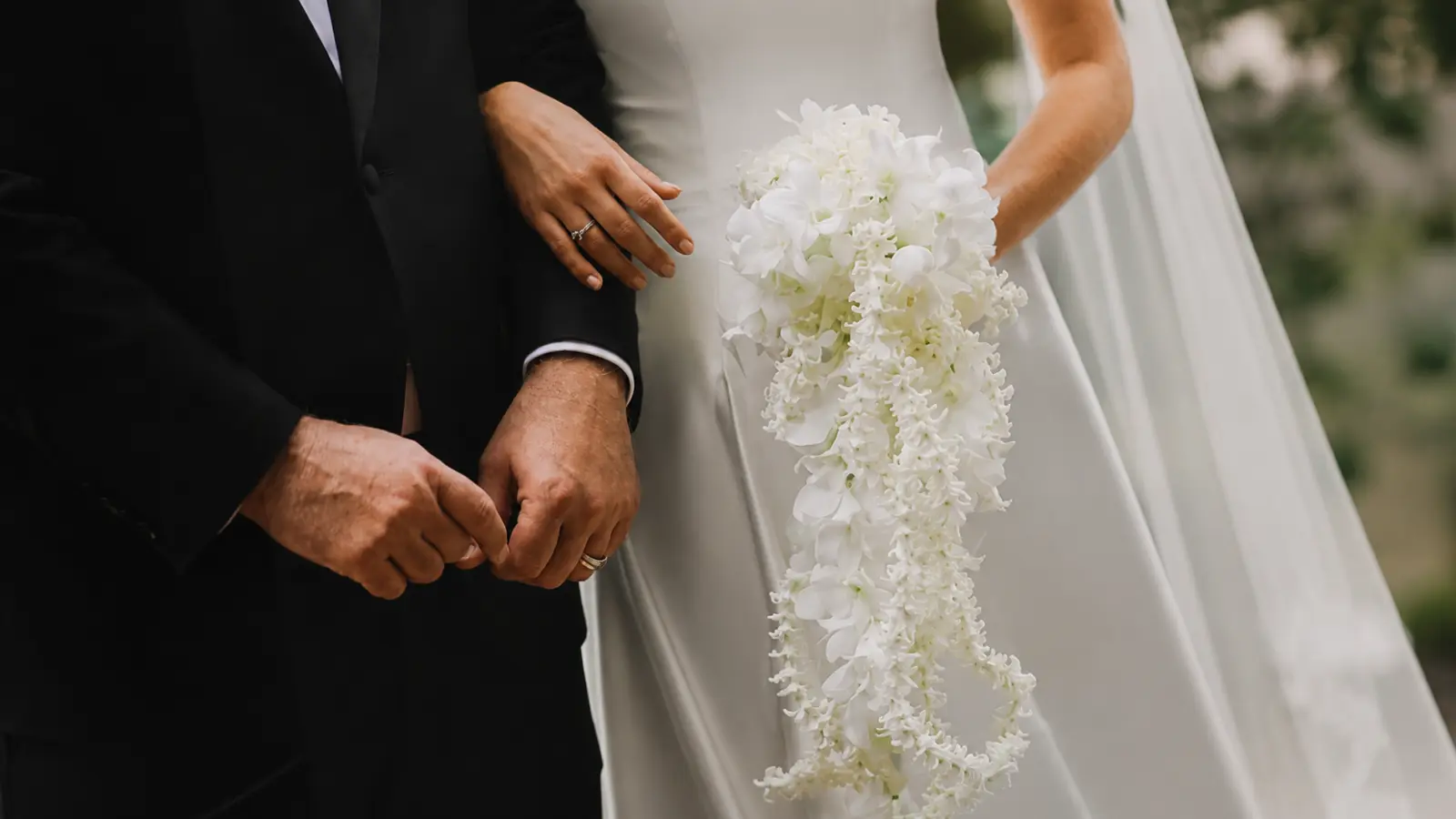
The clearest starting point is venue, since it does more than any other single factor to determine which version of white actually fits.
| Venue / Setting | Recommended Style | Suggested Flowers |
|---|---|---|
| Church / formal ceremony | Classic, tightly structured round bouquet | White garden roses, peonies (in season), standard roses |
| Modern venue / minimalist styling | Architectural, loosely structured shape | Orchids, calla lilies, anthurium |
| Garden / outdoor ceremony | Looser, garden-gathered shape with visible greenery | Peonies, ranunculus, garden roses, trailing foliage |
| Beach / destination | Relaxed shape with heat-tolerant flowers | Orchids, anthurium, tropical white blooms |
Beyond venue, dress tone is the next consideration. A warm ivory dress generally pairs more naturally with cream or ivory-toned flowers than with stark, cool pure white, which can create an unintentional contrast against the fabric. A bright white dress has more flexibility, since it can handle a wider range of white flower tones without an obvious mismatch. Sharing your dress’s specific shade with your florist early makes this an easy detail to get right rather than something noticed only in photos.
Climate and season round out the decision. An outdoor summer or beach wedding favors heat-tolerant orchids over delicate peonies; a spring garden wedding can take full advantage of peonies and ranunculus at their seasonal best. Matching the flower choice to both the venue’s style and its practical conditions produces a far more reliable result than choosing flowers on look alone.
White Bouquet Mistakes to Avoid
White bouquets fail in a fairly specific, predictable set of ways — almost all related to flatness, mismatched tone, or practical handling.
Using only one flower type with no texture variation. An all-white bouquet built from a single flower, in a single shape, can look plain rather than classic. Mixing two or three white flowers with different petal shapes and textures solves this without introducing any color.
Choosing delicate white flowers for an outdoor summer event without a plan. Peonies and ranunculus are beautiful but wilt faster in heat than orchids or roses. An outdoor wedding in warm weather needs either hardier flowers or a clear plan for keeping delicate ones cool and hydrated until close to the ceremony.
Pairing the wrong white tone with the dress. A cool, stark white bouquet against a warm ivory dress (or the reverse) can create a contrast that’s only obvious in photos. Confirming dress tone with your florist ahead of time avoids this.
Building a design entirely around peonies without checking the date. Peony availability is short and seasonal. A white bouquet planned around peonies for a date outside their natural window risks sourcing problems and added cost.
Letting greenery overwhelm the flowers. In a white-and-green design, too much foliage relative to flowers can shift the bouquet from “white bouquet with greenery” to “greenery bundle with a few white flowers.” Keeping the white blooms as the visual anchor avoids this.
White Wedding Bouquet Inspiration
Discover timeless white wedding bouquets featuring elegant roses, peonies, orchids, all-white bridal arrangements, white-and-green bouquet ideas, and classic floral inspiration for every wedding style.
White Never Goes Out of Style
A white wedding bouquet remains one of the most enduring choices because it adapts beautifully to almost every wedding style. Whether your celebration is classic, modern, romantic, or coastal, the right combination of flowers, textures, and greenery allows white to feel distinctive rather than predictable. The elegance comes from thoughtful design, not simply from choosing white flowers.
The most memorable white bouquets balance softness, contrast, and dimension while respecting the season, venue, and overall atmosphere of the wedding. By selecting flowers that complement your dress, your setting, and the time of year, you’ll create a bouquet that feels timeless on your wedding day and just as beautiful when you look back at your photographs for years to come.
Frequently asked questions (FAQ)
How do you create an elegant all-white wedding bouquet?
An elegant all-white bouquet relies on texture, shape, and subtle tonal variation rather than color contrast. Combining flowers such as garden roses, peonies, orchids, and ranunculus with slightly different shades of white, ivory, and cream creates natural depth. Rich greenery, varied petal forms, and thoughtful spacing keep the bouquet refined instead of flat.
What flowers are best for an all-white wedding bouquet?
White garden roses, peonies, orchids, ranunculus, lisianthus, and sweet peas are among the best flowers for an all-white bridal bouquet. The strongest designs combine two or three flower varieties with different textures instead of relying on a single bloom, creating a bouquet that feels layered, balanced, and visually interesting.
What’s the difference between a classic and a modern white bouquet?
A classic white bouquet features rounded shapes, lush blooms such as garden roses and peonies, and a timeless, formal silhouette. A modern white bouquet emphasizes clean lines, negative space, and sculptural flowers such as orchids or calla lilies, making it especially well suited to contemporary venues and minimalist weddings.
Should a white bouquet match the wedding dress exactly?
Not necessarily. Matching the overall undertone is more important than matching the exact shade. Warm ivory gowns usually pair best with cream or ivory-toned flowers, while bright white dresses work beautifully with crisp white blooms. Comparing flowers to the dress in natural light helps avoid subtle color mismatches that may become noticeable in photographs.
Are white peonies available year-round?
No. White peonies naturally bloom for only a short period during mid-spring. Outside their peak season, they become more difficult to source and significantly more expensive. Brides planning weddings at other times of year often achieve a similar romantic look by combining white garden roses with ranunculus instead.
Do white orchids work well for beach weddings?
Yes. White orchids are one of the best choices for beach and destination weddings because they tolerate heat and humidity far better than delicate flowers such as peonies or ranunculus. Their clean, sculptural shape also complements the relaxed yet elegant aesthetic common to coastal celebrations.