
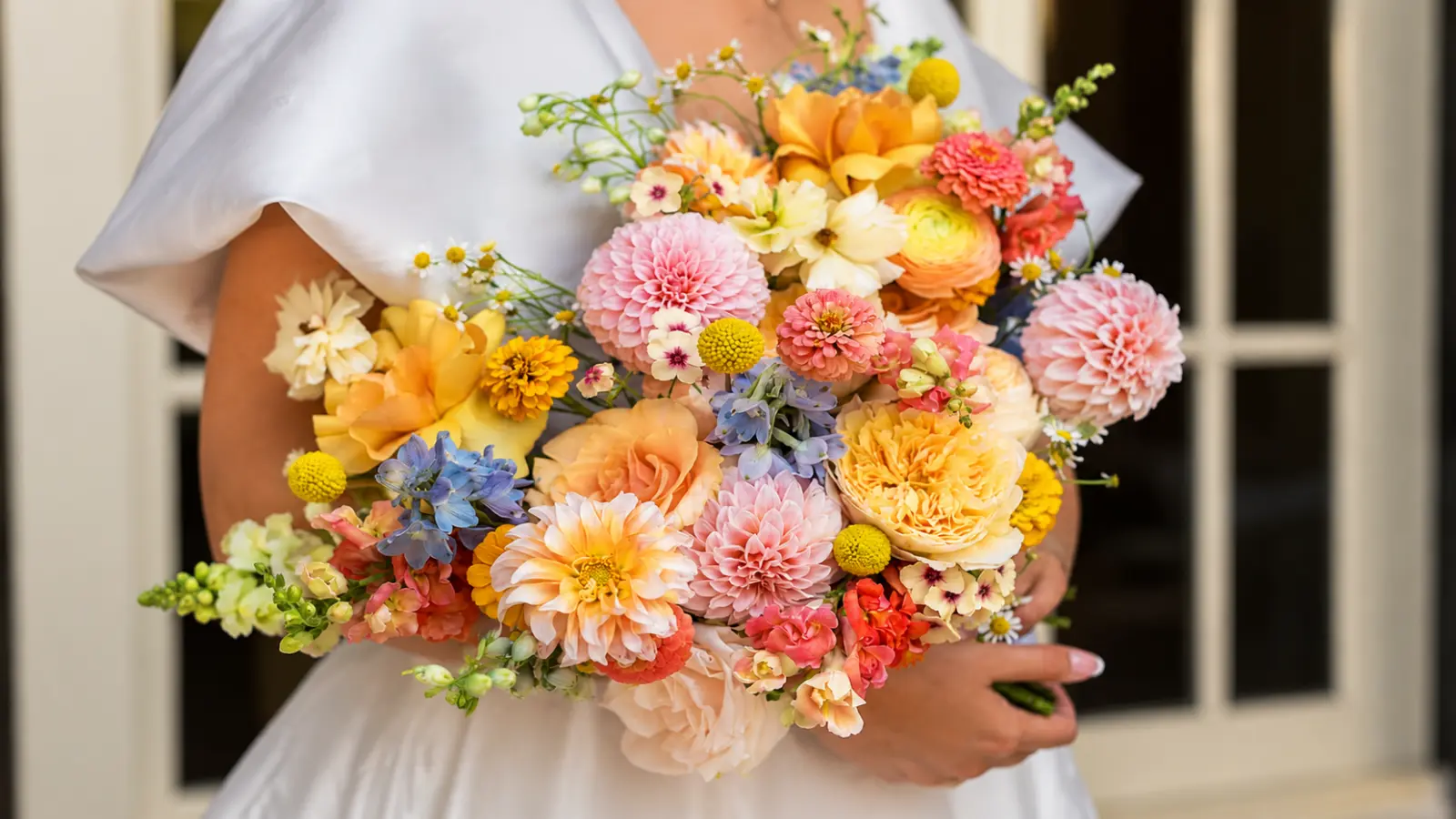
Summer wedding bouquets are known for their vibrant colors, abundant seasonal flowers, and bold floral designs. From cheerful wildflower arrangements to elegant tropical bouquets and lush garden-inspired styles, summer offers endless possibilities for brides who want flowers full of energy, texture, and natural beauty.
Along with that incredible variety comes one important challenge: heat. Summer flowers must not only look beautiful but also withstand warm temperatures, outdoor ceremonies, and extended photography sessions. Choosing blooms that naturally perform well in summer conditions helps your bouquet stay fresh throughout the celebration without sacrificing style.
This guide explores summer designs within the broader world of wedding bouquets, including the best seasonal flowers, tropical and wildflower bouquet ideas, vibrant color palettes, heat-tolerant blooms, and practical advice for creating a bouquet that remains beautiful from the ceremony to the last dance.
Summer Wedding Bouquet Ideas
Summer bouquets tend to land in one of a few clear directions: a bright, saturated bouquet built around bold tropical or garden colors; a loose, gathered wildflower bouquet suited to outdoor and garden venues; a tropical bouquet with structural flowers and broad leaf greenery; or a softer, more classic bouquet that uses summer’s flower availability without leaning into intense color or unstructured shape.
The right direction depends on venue and setting as much as personal taste. An outdoor garden or barn wedding suits a wildflower bouquet naturally. A beach, rooftop, or modern venue suits tropical styling. A more traditional ballroom or church wedding can still take advantage of summer’s flower availability with a brighter, but more structured, bouquet that doesn’t lean fully wild or fully tropical.
Best Flowers for Summer Wedding Bouquets
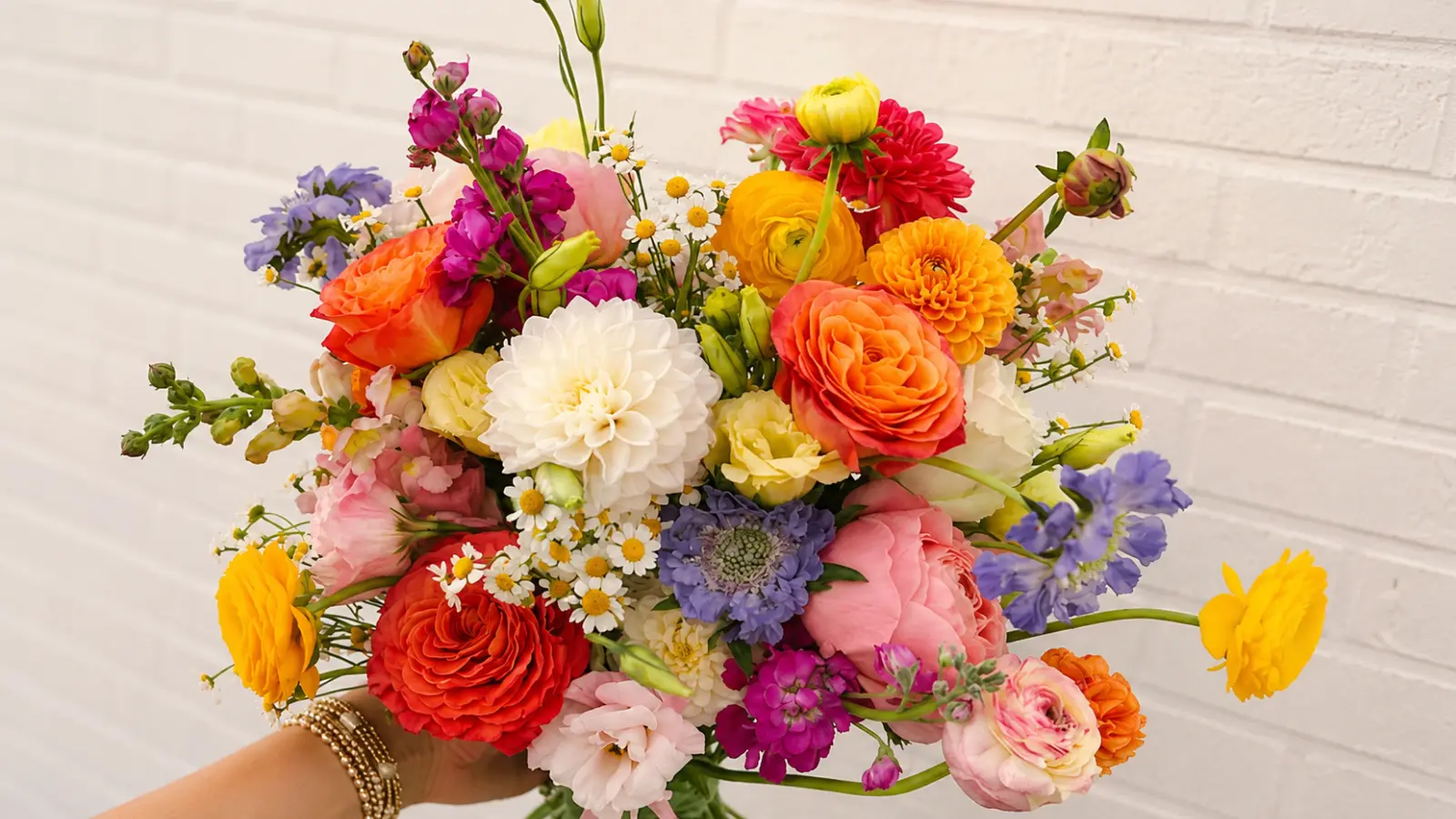
The range of wedding bouquet flowers available in summer is wide, but not every bloom handles a hot, sunny wedding day equally well. Choosing flowers that are naturally suited to heat — rather than ones that simply happen to be in season — makes a real difference in how the bouquet looks by the end of the day.
| Flower | Heat Tolerance | Notes |
|---|---|---|
| Zinnias | High | Sturdy petals and stems; one of the most reliable heat-tolerant summer flowers |
| Celosia | High | Textural, velvety bloom that holds up well through a full day |
| Sunflowers | High | Bold focal flower; best handled with good hydration in extreme heat |
| Dahlias | Moderate | Holds up reasonably well but can soften in prolonged, extreme heat |
| Garden roses | Moderate | Fine for a few hours outdoors with proper hydration; not as sturdy as zinnias |
| Lisianthus | Moderate | Holds its shape well; a good secondary bloom for bright summer palettes |
| Hydrangea | Low | Wilts quickly in heat; needs careful handling and limited sun exposure |
| Ranunculus / sweet peas | Low | Delicate petals; better suited to spring or a fully indoor summer event |
This doesn’t mean low-tolerance flowers are off the table for a summer wedding — it means they need more careful handling: limited time out of water, no direct sun before the ceremony, and ideally an indoor or shaded setting rather than hours outdoors in full heat. For an outdoor summer ceremony with extended time in the sun, building the bouquet primarily around high-tolerance flowers and using delicate ones sparingly as accents is the safer approach.
Bright Summer Bouquet Colors
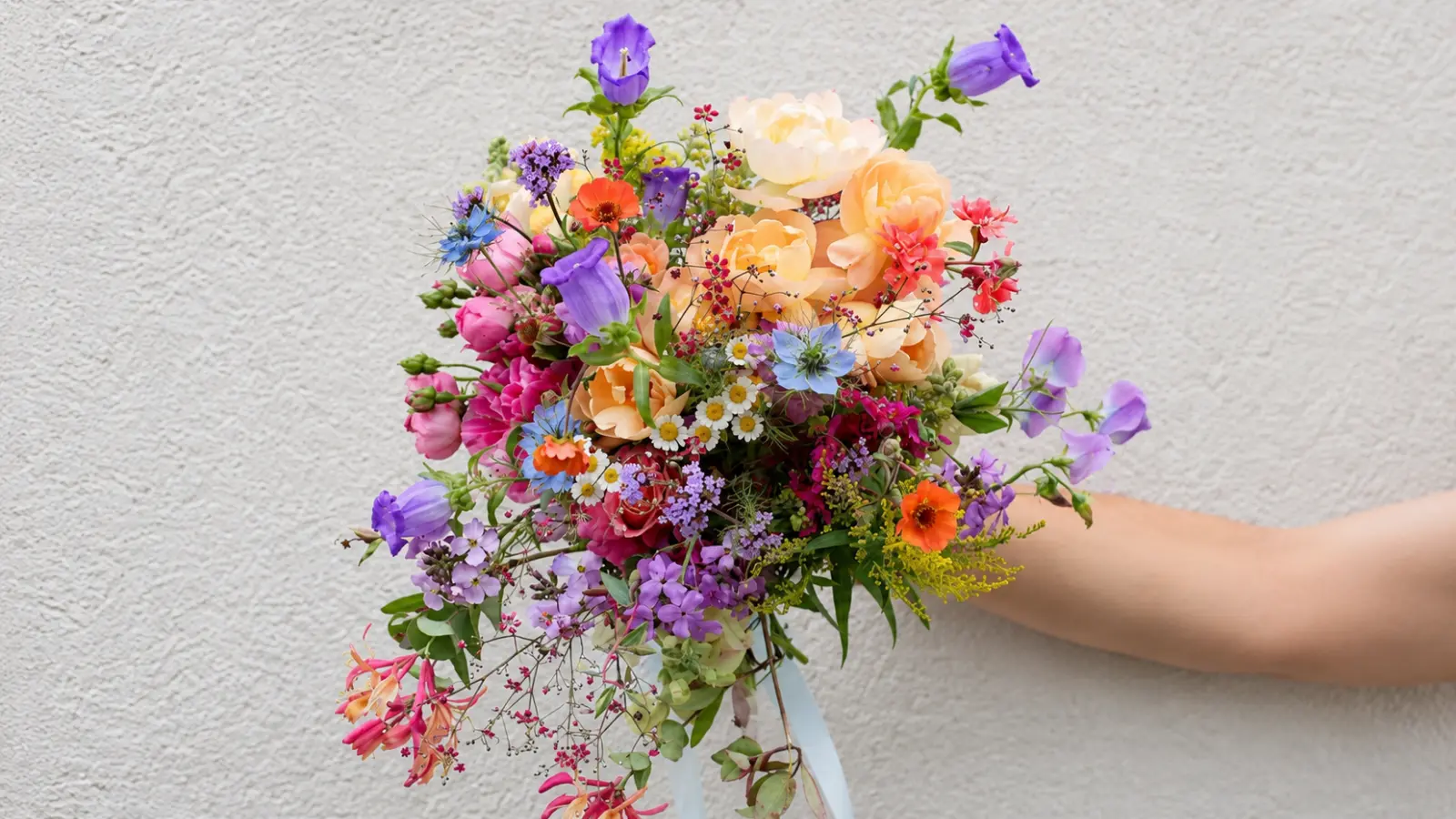
Summer supports some of the most colorful wedding bouquets of any season, and the right direction depends on how saturated and energetic you want the arrangement to feel.
| Palette Direction | Core Colors | Mood |
|---|---|---|
| Vivid Tropical | Fuchsia, orange, hot pink | Bold and energetic; suits modern or destination-style weddings |
| Sunny Bright | Yellow, coral, white | Cheerful and warm without being overwhelming |
| Wildflower Mixed | Lavender, white, pale yellow, touches of blue | Soft and natural; suits a looser, garden-gathered bouquet |
| Bold Jewel Summer | Magenta, deep purple, teal accents | Rich and saturated without leaning bright or pastel |
One detail worth planning around: very bright, saturated colors can look harsh in direct midday sun, especially in photos. If the ceremony or main photo session falls in the middle of the day, a slightly softer version of a bright palette — or scheduling key portraits for earlier or later in the day — tends to photograph better than the same colors under flat, intense overhead light.
Summer Wildflower Bouquets
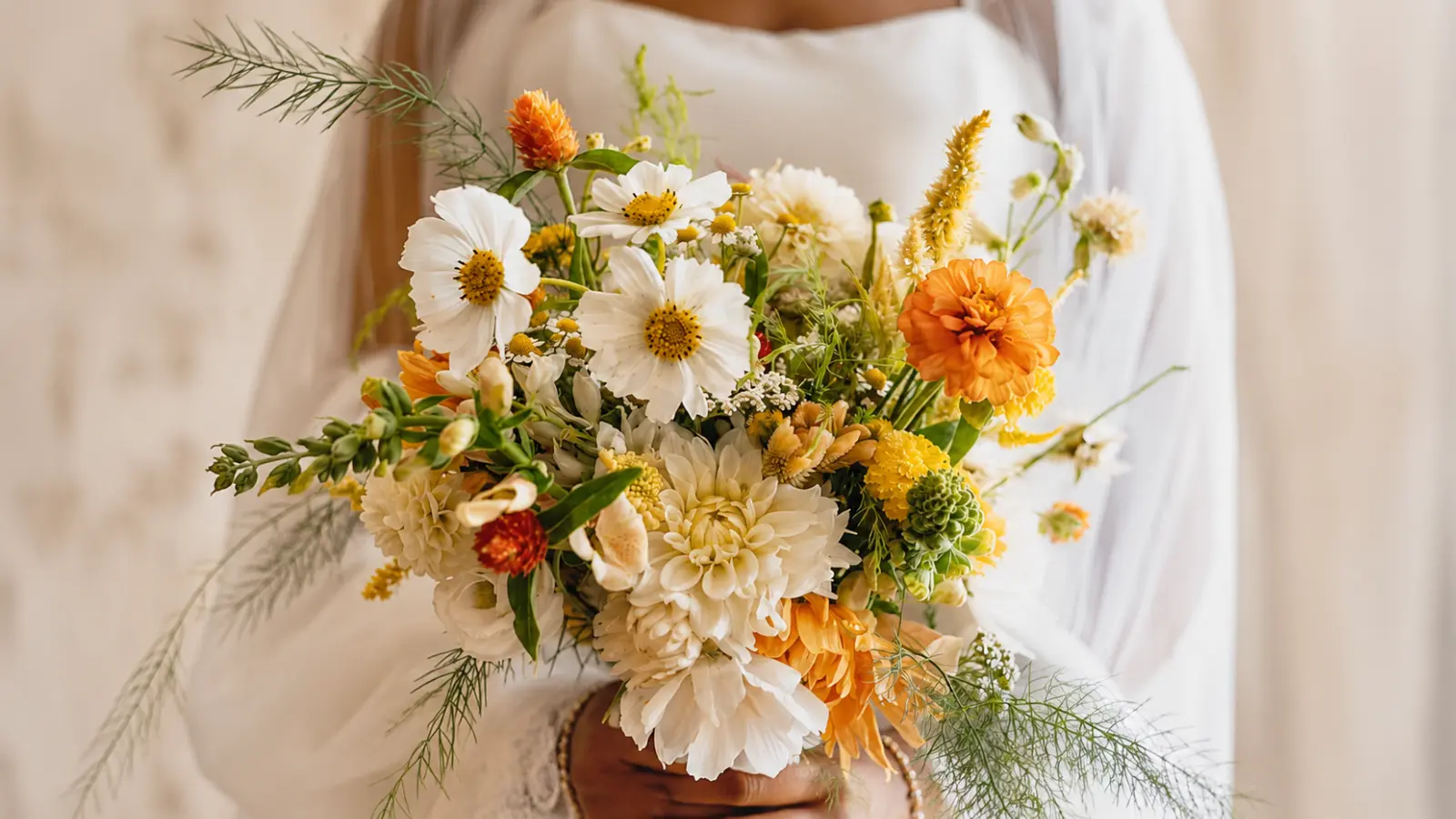
A wildflower bouquet is built to look gathered rather than designed — loose, slightly irregular, and full of smaller blooms rather than one or two large focal flowers. It’s one of the most natural-feeling bouquet styles available and suits outdoor, garden, and rustic summer weddings particularly well.
The flower list leans toward smaller, more delicate-looking blooms: queen anne’s lace, cosmos, black-eyed susan, scabiosa, larkspur, billy buttons, and statice are all common choices. Loose grasses or wild-looking greenery often replace more structured foliage to support the relaxed feel. The construction matters as much as the flower choice — a wildflower bouquet is typically gathered at varying heights rather than arranged into a tight, uniform dome, which is part of what gives it that just-picked quality.
Because many classic wildflower blooms are on the smaller and more delicate side, this style benefits from the same heat-handling care as any low-tolerance flower: minimal time in direct sun, good hydration beforehand, and ideally a venue with at least some shade for an extended outdoor ceremony.
Tropical Summer Bouquets
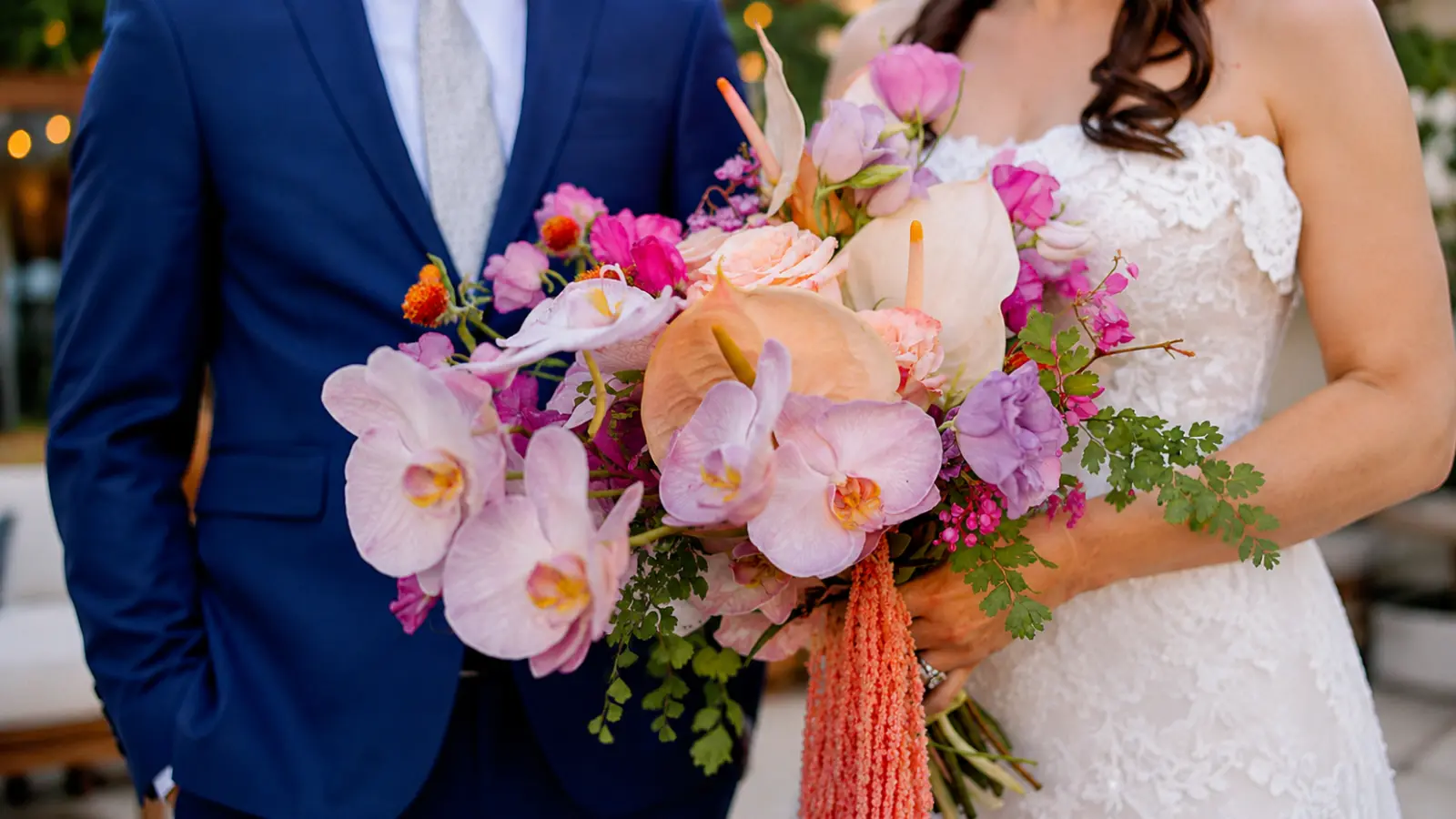
A tropical bouquet sits at the opposite end of the summer bouquet spectrum from wildflower — bold, structural, and architectural rather than loose and natural. It’s the clearest way to bring a beach or destination feeling into a bouquet, though it works for any summer wedding that wants a modern, graphic look.
| Flower / Element | Role |
|---|---|
| Orchids | Focal flower; clean lines and long-lasting structure |
| Anthurium | Bold, glossy focal flower with a distinctive shape |
| Bird of paradise | Dramatic structural element; usually one or two stems, not a focal cluster |
| Ginger flower | Textural accent with strong tropical color |
| Protea | Bold, sculptural focal flower; naturally suited to heat |
| Monstera / palm leaves | Greenery replacement; large, graphic leaves instead of standard foliage |
Wildflower vs. Tropical — Which One Fits?
Wildflower bouquets suit a relaxed, garden, or rustic outdoor wedding and lean on smaller, softer blooms. Tropical bouquets suit a bold, modern, or destination-style wedding and lean on large, structural flowers and broad leaves. Both genuinely belong to summer, but they signal very different things visually — it’s worth picking one direction rather than blending them, since the loose and the architectural don’t combine cleanly in a single bouquet.
One practical advantage for fresh wedding bouquets is that most tropical flowers are naturally suited to heat and humidity. Orchids, anthurium, and protea in particular hold up well through a long, hot day with far less wilting risk than many traditional summer garden flowers.
How to Keep Summer Wedding Flowers Fresh
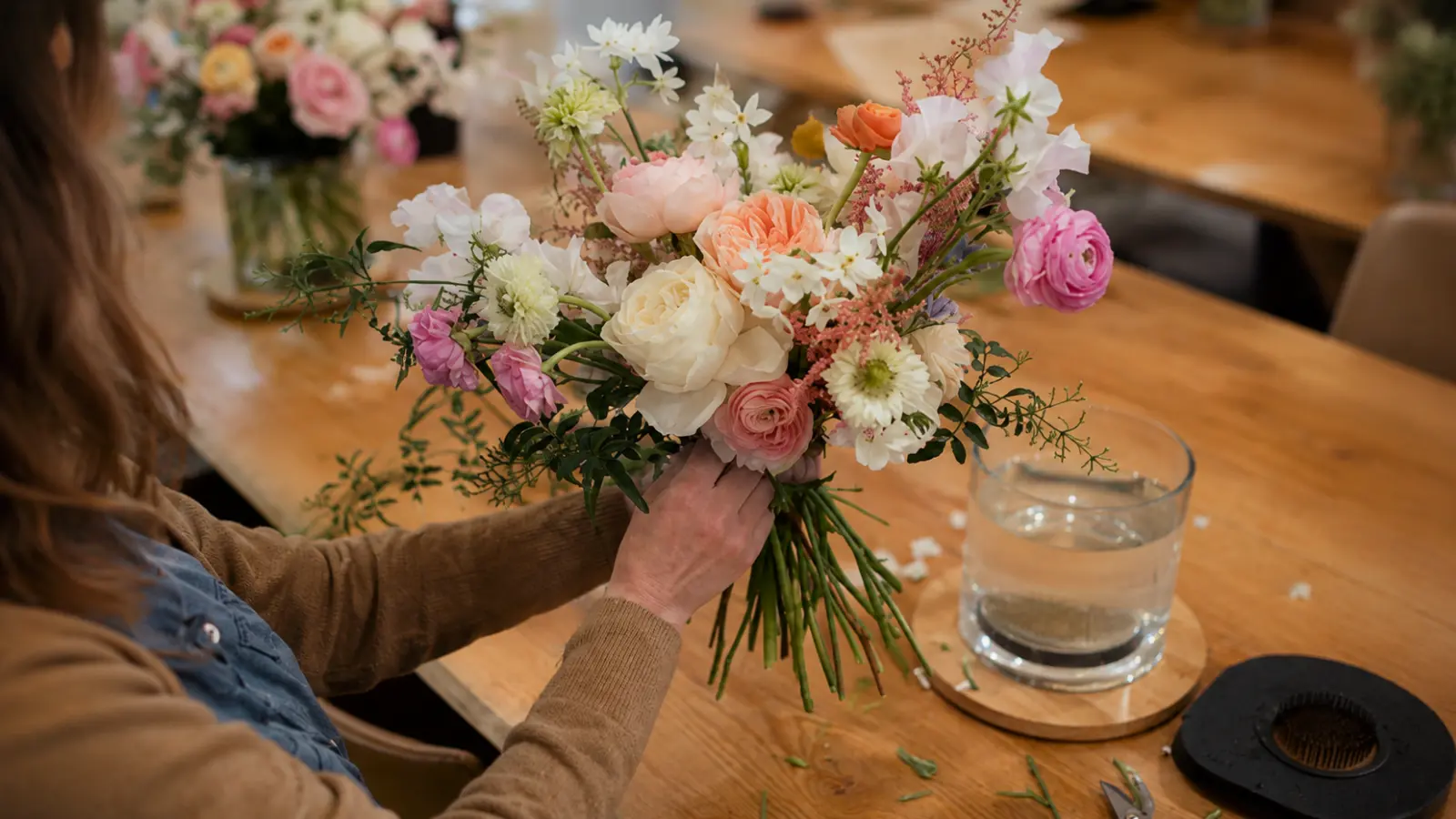
Heat is the defining challenge of a summer bouquet, and managing it comes down to a few practical habits rather than any single trick.
Build around heat-tolerant flowers first. Zinnias, dahlias, celosia, and tropical flowers all handle sun and warmth better than delicate spring blooms. Treat hardier flowers as the foundation and use anything delicate sparingly, as an accent rather than the bulk of the design.
Keep the bouquet in water until the last possible moment. Stems out of water lose hydration quickly in heat. A bouquet stored in a cool container of water in an air-conditioned room until just before the ceremony will hold up far better than one assembled hours early and left out.
Avoid direct sun and hot cars during transport. A bouquet left in a hot car, even briefly, can wilt noticeably faster than one kept in shade or air conditioning. If transport is part of the day’s logistics, treat the bouquet like something that needs climate control, not just careful handling.
Ask your florist about hydration treatment and finishing sprays. Many florists hydrate stems thoroughly the day before a hot-weather wedding and apply a light anti-wilt spray to help flowers retain moisture longer. This is a normal part of preparing a bouquet for a hot ceremony and worth asking about directly if your wedding date falls during a heat wave or peak summer month.
Time assembly close to the ceremony when possible. For an outdoor summer wedding, having the bouquet finished as close to the actual ceremony time as practical — rather than the night before — reduces the total time the flowers spend out of controlled conditions.
Summer Bouquet Mistakes to Avoid
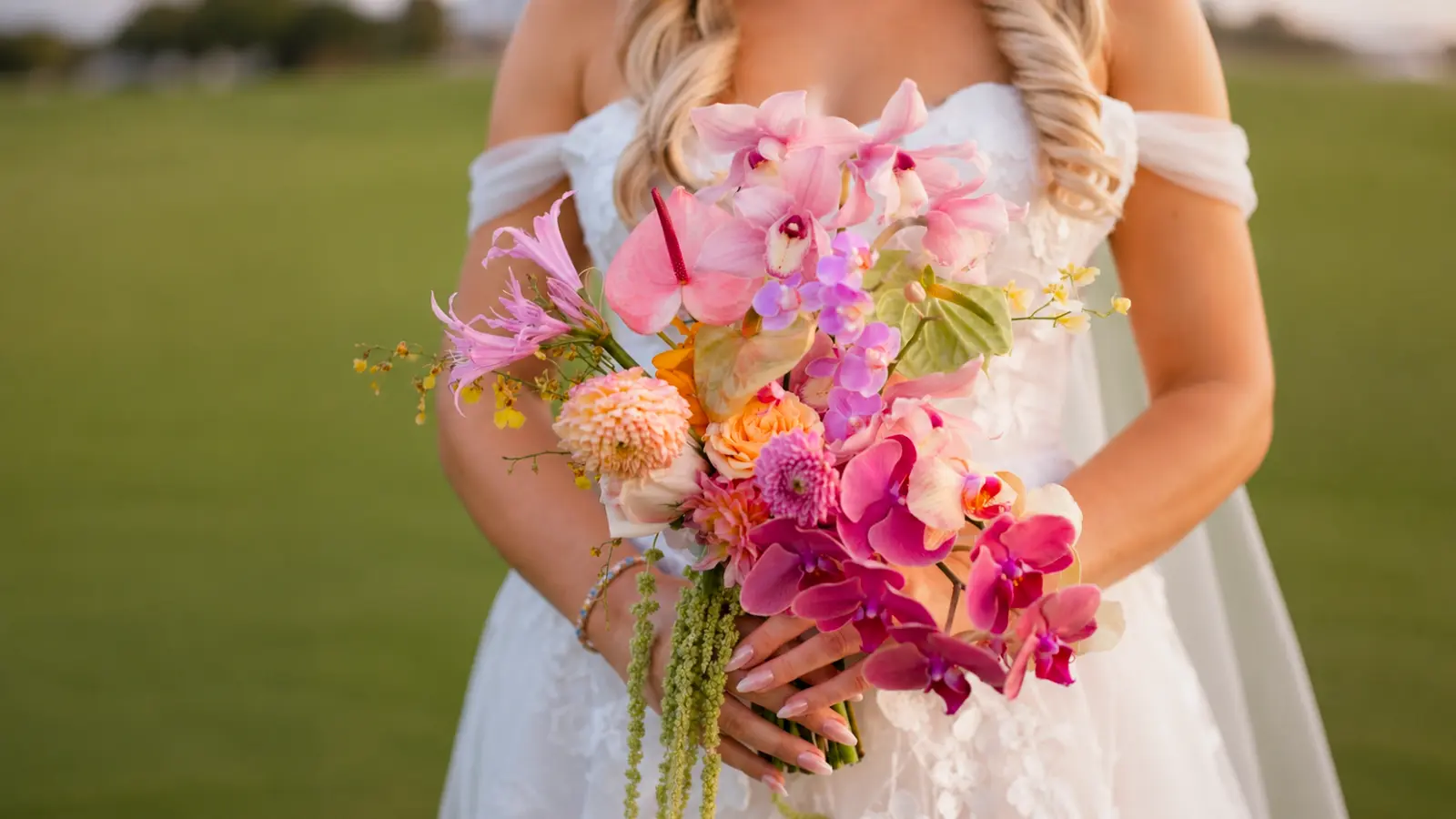
Most summer bouquet problems come down to underestimating heat, not poor flower choice or design.
Choosing delicate flowers for an all-day outdoor wedding without a plan. Hydrangea, ranunculus, and sweet peas can all wilt fast in sustained heat. If you want them in a summer bouquet, plan for limited sun exposure and good hydration rather than leaving them out for hours.
Leaving the bouquet in a hot car or direct sun. Even a short period in a hot vehicle can undo hours of careful florist preparation. Treat bouquet transport as a climate-control problem on a hot wedding day.
Assembling the bouquet too far in advance. The longer flowers sit out of water before the ceremony, the more wilting risk builds, especially in heat. Closer assembly to the actual event reduces that window.
Mixing wildflower and tropical styles without intention. Both are valid summer directions, but combining loose wildflower blooms with bold structural tropical flowers in one bouquet often looks unresolved rather than intentional. Pick one direction and build around it.
Underestimating midday light for photos. Very bright, saturated bouquet colors can look harsh under direct overhead sun. If portraits are scheduled for midday, consider a slightly softer palette or shifting key photos to earlier or later light.
Summer Wedding Bouquet Inspiration
Discover beautiful summer wedding bouquets featuring vibrant seasonal flowers, tropical bridal arrangements, colorful wildflower bouquets, bright floral palettes, and fresh bouquet ideas for unforgettable summer weddings.
Let Summer Flowers Shine Naturally
Summer offers some of the richest colors and greatest flower variety of the entire year, making it the perfect season to create a bouquet that feels vibrant, joyful, and full of life. Whether you’re drawn to bold tropical blooms, relaxed wildflower arrangements, or timeless garden-inspired designs, choosing flowers that naturally thrive in summer will always produce the most beautiful results.
The most successful summer bouquets balance creativity with practicality. By selecting heat-tolerant flowers, planning around the weather, and embracing the colors and textures of the season, you’ll create a bouquet that not only photographs beautifully but also stays fresh throughout one of the most memorable days of your life.
Frequently asked questions (FAQ)
What flowers hold up best in summer heat?
Zinnias, celosia, sunflowers, orchids, anthuriums, proteas, ginger flowers, lisianthus, and many tropical blooms are among the best flowers for hot summer weddings. Their sturdy petals and strong stems tolerate heat and sun exposure much better than delicate flowers such as hydrangeas, ranunculus, or sweet peas, making them reliable choices for outdoor ceremonies.
How do you choose flowers for a summer wedding bouquet?
Start by considering your wedding conditions before choosing colors or flower varieties. Outdoor ceremonies, beach weddings, and long photo sessions require flowers with excellent heat tolerance, while indoor weddings allow more flexibility. The strongest summer bouquets balance seasonal beauty with flowers that can realistically stay fresh throughout the day.
How do you keep a wedding bouquet from wilting on a hot day?
Keep the bouquet in clean water inside an air-conditioned space until shortly before the ceremony, avoid direct sunlight during transportation and portraits whenever possible, and choose heat-tolerant flowers as the foundation of the design. Many florists also hydrate flowers thoroughly before the wedding and apply professional anti-wilt treatments for additional protection.
What’s the difference between a wildflower bouquet and a tropical bouquet?
A wildflower bouquet features smaller blooms, loose movement, and a naturally gathered appearance that suits garden, rustic, and countryside weddings. A tropical bouquet relies on bold architectural flowers such as orchids, anthuriums, and bird of paradise, creating a modern, destination-inspired aesthetic. Although both belong naturally to summer, they communicate completely different visual styles.
Are tropical flowers only for beach weddings?
No. Tropical flowers work beautifully in city weddings, luxury venues, botanical gardens, rooftop celebrations, and elegant indoor receptions as well. Their exceptional heat resistance simply makes them especially practical for warm-weather weddings, regardless of location.
Can dahlias and garden roses handle summer heat?
Yes, but with some limitations. Dahlias and garden roses perform well during moderate summer temperatures when they remain properly hydrated and protected from prolonged direct sunlight. For extremely hot outdoor weddings, they work best alongside sturdier flowers such as zinnias or tropical blooms, which provide additional structure and durability throughout the day.