Modern wedding bouquets are defined by clean lines, sculptural flowers, and intentional simplicity rather than traditional fullness. Instead of relying on abundant blooms and romantic styling, modern bouquets emphasize shape, proportion, texture, and carefully selected flowers to create arrangements that feel elegant, contemporary, and visually striking.
Although they’re often associated with minimalism, modern bouquets aren’t simply smaller versions of traditional designs. Every decision—from the flower selection and color palette to the bouquet silhouette and handle wrap—is made deliberately. This thoughtful restraint is what gives modern bouquets their unmistakable editorial quality.
This guide explores modern design within the broader world of wedding bouquets, including minimalist ideas, sculptural flowers, orchids, calla lilies, monochrome arrangements, and practical styling advice.
Modern Wedding Bouquet Ideas
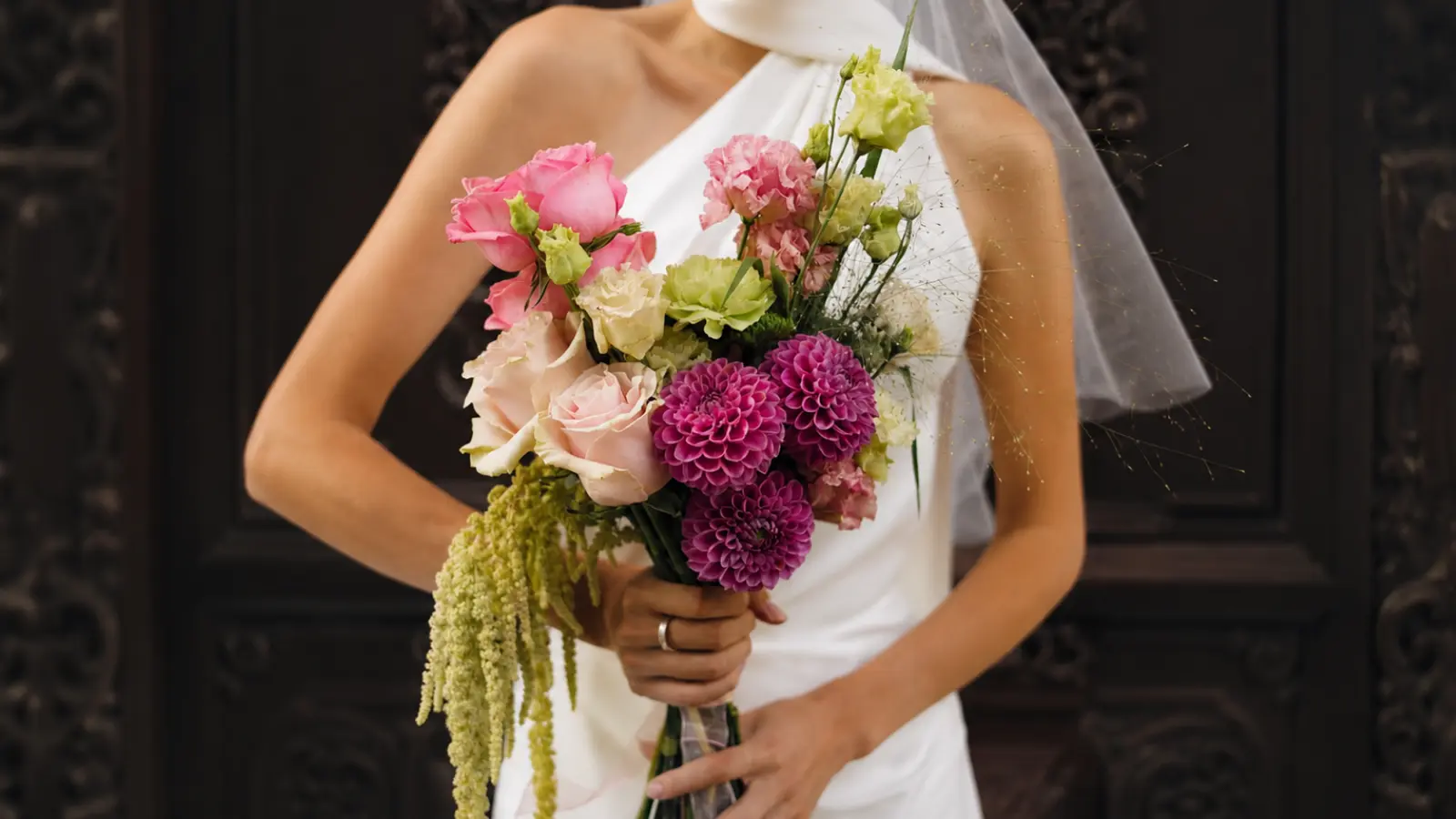
The range within bridal bouquet styles is wider than most brides expect. At one end, there are clean, tight nosegays using a single flower type in a graphic color — twelve black anemones wrapped in a slim leather tie, or a cluster of white ranunculus with no greenery, no softening element, nothing but the flower. At the other end, there are larger sculptural arrangements with calla lilies or tropical foliage that read as statement pieces in their own right. What connects them is an absence of fussiness: no mixed bouquets with seven flower types, no abundant greenery filling out the shape, no decorative details that weren’t earned by the design.
The approaches that translate most consistently from inspiration to real results:
The single-variety geometric round. One flower type, tightly gathered, with the stems cut to a uniform length and the blooms sitting at a consistent height. Anemones in white or deep burgundy, white ranunculus, or cymbidium orchid clusters all carry this format. The repetition creates a graphic quality that reads from any distance.
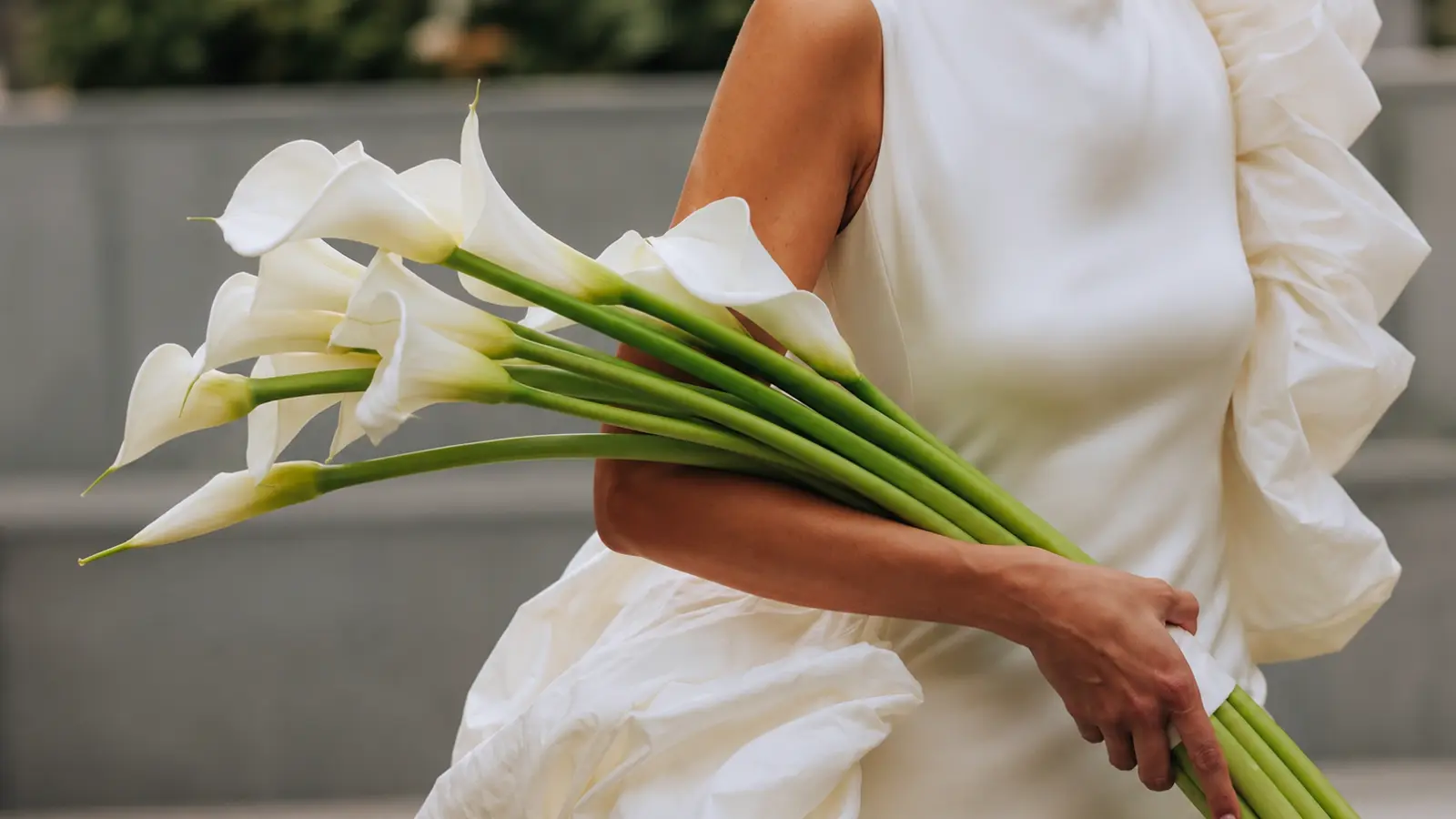
The long-stem presentation carry. Five to nine long-stemmed blooms — calla lilies, phalaenopsis orchids, or garden roses — held loosely at the stems rather than arranged into a traditional round. The stems are as much a part of the visual as the flowers. A slim ribbon tie or a single wire binding is all the construction it needs.
The asymmetric sculptural arrangement. A deliberately off-center composition where the flowers and foliage reach in one direction — one side fuller, one side spare. Requires a florist experienced in contemporary design, but produces photographs that look genuinely editorial rather than traditionally bridal.
The foliage-forward design. One or two standout blooms surrounded primarily by architectural foliage — a single anthurium with dark ti leaf, or a garden rose with monstera. The greenery is the structure; the flower is the accent. This reversal of the typical bouquet logic is what makes it read as modern.
The clearest test: look at the inspiration image and identify the single thing that makes it feel modern. If you can’t name it specifically, neither can your florist. Naming it — asymmetric silhouette, monochrome palette, exposed stems, sculptural foliage — is what makes the florist appointment productive.
Minimal Modern Bouquets
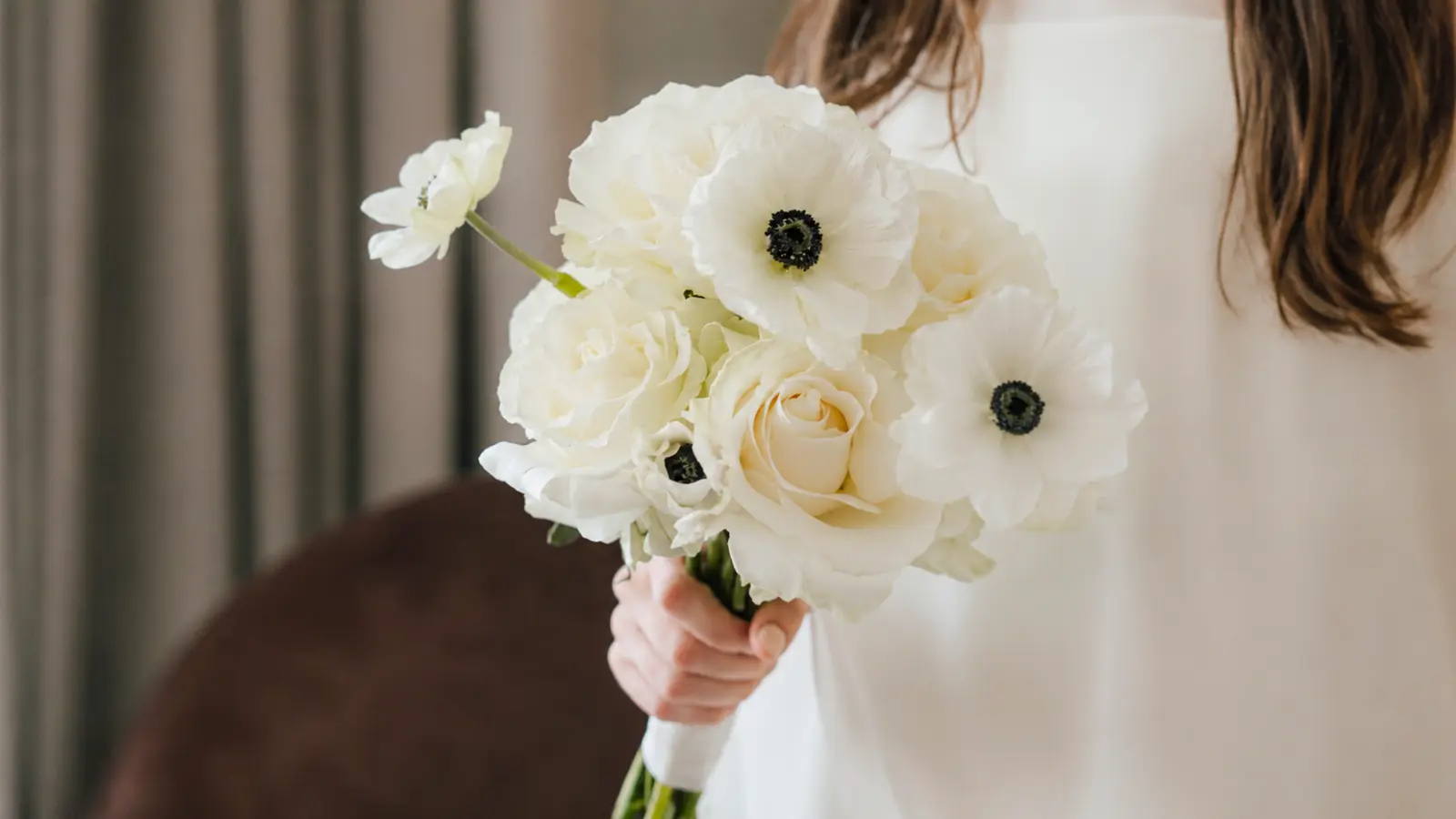
Minimalism in simple wedding bouquets doesn’t mean small or sparse. It means a high degree of editorial commitment: one idea, executed with precision, with everything that doesn’t serve that idea removed. A minimal modern bouquet can use a significant number of stems — a tight cluster of thirty white anemones is still a minimal design — but the variety of elements is deliberately limited and the construction is deliberately clean.
The flowers that carry minimal modern designs most effectively are the ones with enough intrinsic visual interest to stand without supporting elements. Anemones have graphic dark centers that create internal contrast. Ranunculus have layered petals that catch light differently at each stage of opening. Tulip wedding bouquets often showcase long smooth stems as part of the design. Garden roses in a single saturated color work in minimal formats because the petals themselves provide the depth that a mixed arrangement would otherwise need from variety.
Where minimal modern bouquets most commonly go wrong is in the finish rather than the flowers. A sparse, deliberate arrangement with a carelessly wrapped ribbon or an uneven stem cut reads as unfinished rather than restrained. The less decorative information in a bouquet, the more visible each detail becomes. This applies to the ribbon material, the binding, the stem length, and the angle at which the flowers sit. A minimal design holds itself to a higher standard of execution than a lush mixed arrangement, where individual imperfections get absorbed into the overall composition.
One design note worth discussing with your florist: the difference between minimal and incomplete is almost always visible in the handle. A clean, wide ribbon — pressed, not wrinkled, secured with two or three pins rather than an elaborate bow — tells the viewer the simplicity was chosen. A twisted, thin ribbon on a minimal bouquet tells them something was missing.
Sculptural Bridal Bouquets
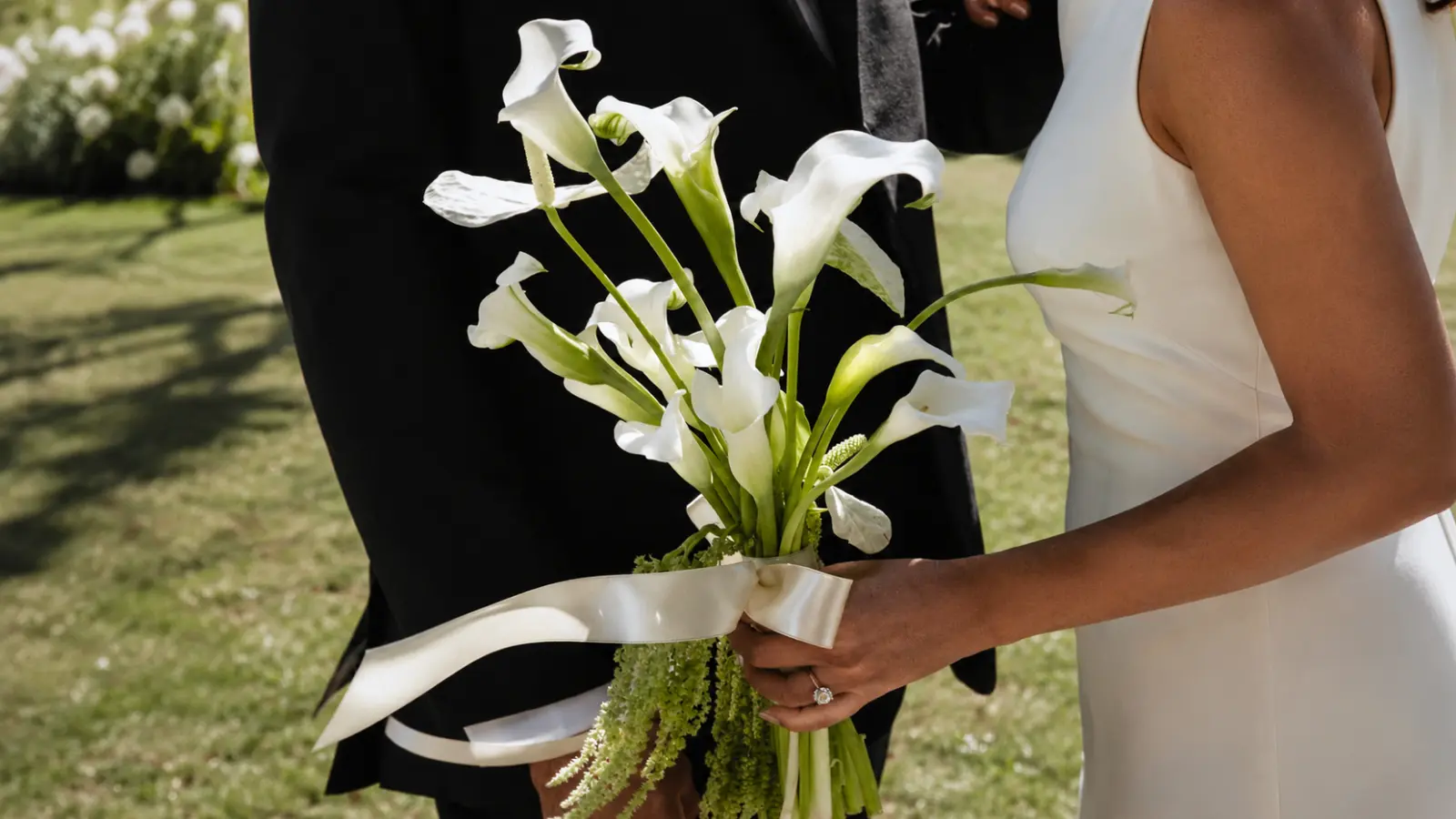
Sculptural bouquets are built around form rather than fullness. The selection and arrangement of flowers is driven by how they hold a three-dimensional shape — how they catch light, how they read from twenty feet away, how the composition holds its silhouette throughout a ceremony rather than gradually softening as stems shift. This is a different brief than “beautiful flowers arranged well,” and it produces a noticeably different result.
The flowers and foliage that work in sculptural designs have distinct, holdable shapes: calla lilies with their clean trumpet form, anthuriums with their waxy, almost graphic surface, cymbidium orchid clusters with their architectural weight. They’re chosen because their individual form contributes to the overall shape of the bouquet, not because they’re the most romantic or the most seasonal option.
Structural foliage, central to greenery wedding bouquets, plays a more significant role in sculptural designs than in any other bouquet category. These elements are worth knowing specifically:
Monstera leaves. Large, perforated tropical leaves with a graphic, immediately recognizable shape. A single monstera leaf used as the backdrop for a cluster of white blooms creates a composition that reads as design-forward in a way most wedding flowers don’t.
Ti leaf. Long, smooth, and available in deep green or burgundy. Often folded or shaped deliberately in sculptural arrangements, which is unusual in bouquet floristry and immediately signals intention.
Magnolia leaves. Glossy on one side, velvety brown on the reverse. The contrast between the two surfaces adds dimensional interest when the leaves are arranged to show both.
Dark ruscus and Israeli ruscus. Fine-stemmed foliage with small, oval leaves. Less dramatic than tropical options but more flexible — it can extend a silhouette, fill negative space, or add fine texture without competing with the flowers.
The asymmetric silhouette is the format that most naturally suits sculptural design. A perfectly round bouquet, regardless of how architecturally the individual flowers are arranged, reads as traditional. Allowing the composition to extend in one direction — one stem reaching beyond the others, foliage that creates an intentional visual weight on one side — is what shifts it into a genuinely contemporary register.
Modern Orchid Bouquets
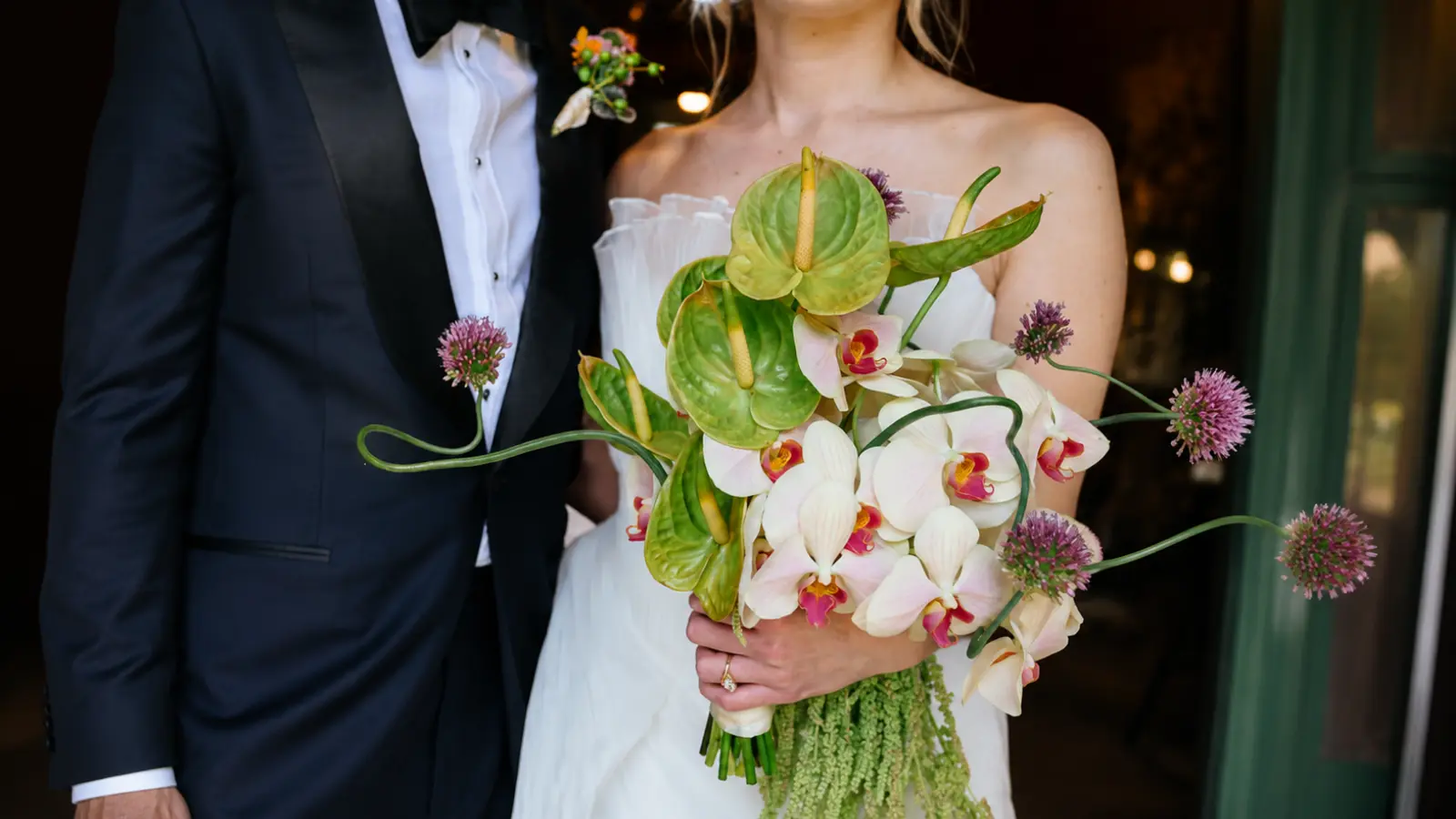
Orchid wedding bouquets are among the most architecturally versatile choices in bridal floristry and also one of the most frequently used incorrectly. The problem is usually scale and variety confusion: the “orchid bouquet” a bride imagines from an inspiration image is often a specific variety used in a specific format, and the result of an open-ended orchid request can look very different from the reference.
Understanding what each variety actually contributes makes the florist conversation significantly more productive:
Cymbidium orchids. Larger blooms with a waxy, architectural surface. Available in white, blush, deep burgundy, and green. When clustered tightly, they create a bouquet with graphic weight and a clear sculptural presence. One of the strongest orchid choices for a modern round bouquet.
Phalaenopsis orchids. The classic white moth orchid. More delicate in scale than cymbidium, and most effective in presentation-style carries — several long stems held loosely — rather than tight round clusters. Their translucent petals photograph beautifully in natural light.
Dendrobium orchids. Fine, spray-like clusters on long stems. One of the few orchid varieties that adds the kind of trailing texture typically associated with greenery. Used as a cascade element or woven through a larger arrangement rather than as the primary flower.
Vanda orchids. Large, flat blooms in vivid purple-blue, deep burgundy, and pink. One of the few flowers that provides a genuinely saturated, non-pastel color in a large bloom size. A small number of vanda orchids can anchor a monochrome deep-tone bouquet in a way that no other orchid variety does.
| Orchid Variety | Best Format | Color Range |
|---|---|---|
| Cymbidium | Tight round cluster, nosegay | White, blush, burgundy, green |
| Phalaenopsis | Presentation carry, loose arm sheaf | White, pale pink, deep purple |
| Dendrobium | Cascade accent, texture element | White, lavender, deep purple |
| Vanda | Focal accent in deep-tone designs | Vivid purple, magenta, burgundy |
One practical consideration: orchids generally need to be sourced a week before the wedding and conditioned carefully to arrive at the right stage of opening for the ceremony. This is more timing-sensitive than standard roses or ranunculus, so confirming sourcing lead times with your florist early is worth doing — particularly for specialty varieties like vanda or large cymbidium clusters.
Modern Calla Lily Bouquets
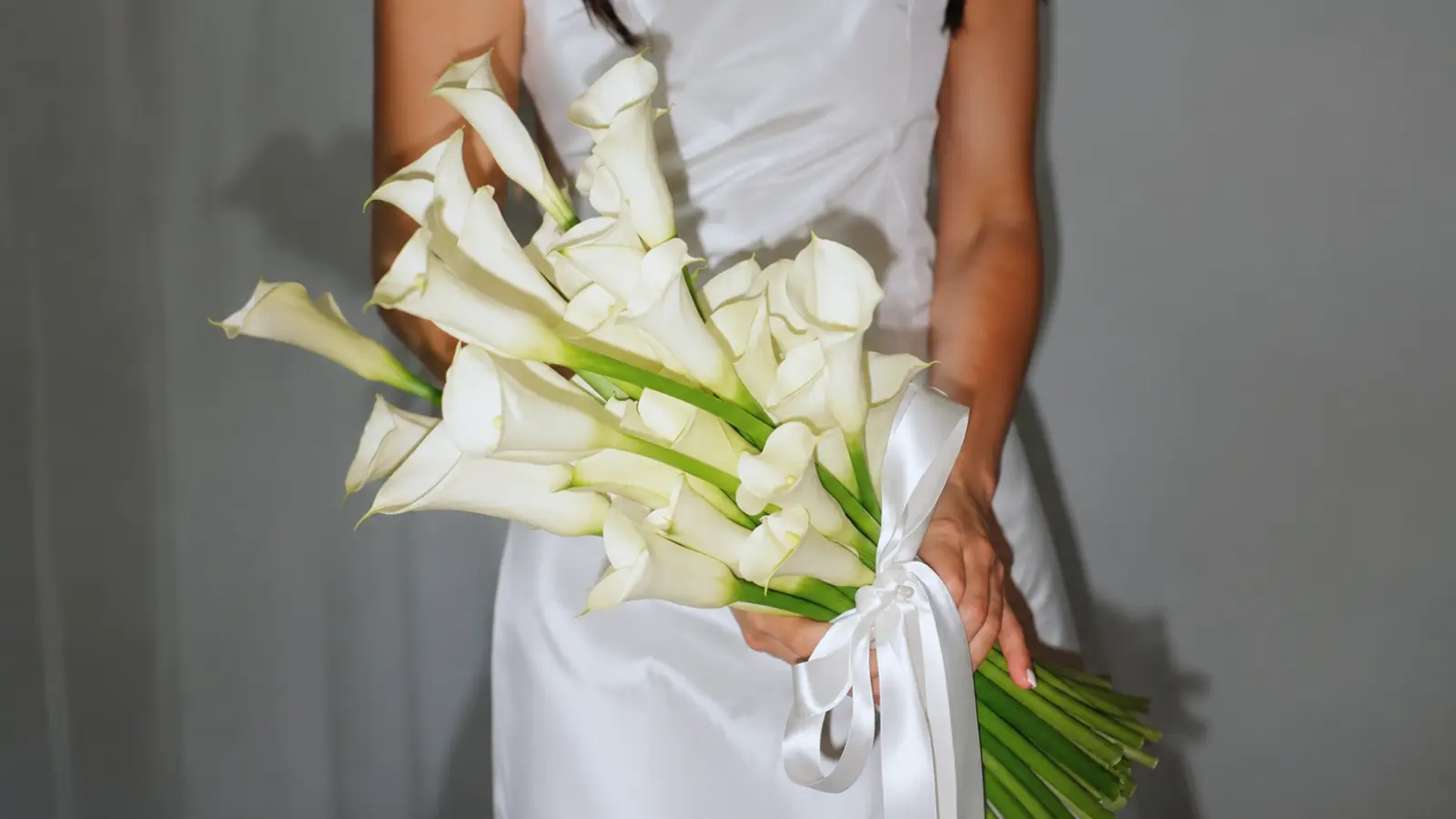
Calla lily wedding bouquets have a longer history in modern bridal design than almost any other flower. Their clean trumpet shape, the smooth curve of the spathe, and the way they hold a structured silhouette without any arrangement tricks make them the natural anchor for a contemporary bouquet. They also photograph in a way that few other flowers match: their surface holds light evenly, their form reads clearly at any distance, and their stem length allows for a presentation style that breaks from the traditional round entirely.
There are essentially three formats where calla lilies work at their strongest:
The tight round cluster. Standard or mini calla lilies gathered tightly, stems cut short, blooms at a uniform height. The result is a compact, graphic bouquet where the repeating trumpet shapes create a pattern. Mini callas in pure white against a clean satin wrap is one of the most enduring modern bridal designs for a reason — it works at any scale and against any dress.
The long-stem presentation carry. Seven to twelve standard calla lilies held at the stems, blooms angled slightly outward, bound with a slim ribbon or leather tie at a single grip point. The stems are fully visible and intentionally part of the aesthetic. This format suits column and sheath dresses particularly well — the vertical line of the stems extends the line of the dress rather than interrupting it.
The asymmetric sculptural arrangement. Calla lilies of different lengths arranged so the blooms reach at different heights and in slightly different directions, supported by architectural foliage rather than neutral greenery. The organic curve of each stem does the compositional work that deliberate arrangement would do in a more traditional design.
Color is worth a separate note. Calla lilies are available in a broader palette than most brides realize — pure white, warm ivory, pale blush, deep burgundy, near-black, purple, and yellow. Deep burgundy and near-black calla lilies are one of the strongest options available for a dramatic monochrome modern design, and they’re significantly more versatile in photographs than they appear in person, where the depth of color can look heavier than it reads on camera.
Monochrome Wedding Bouquets
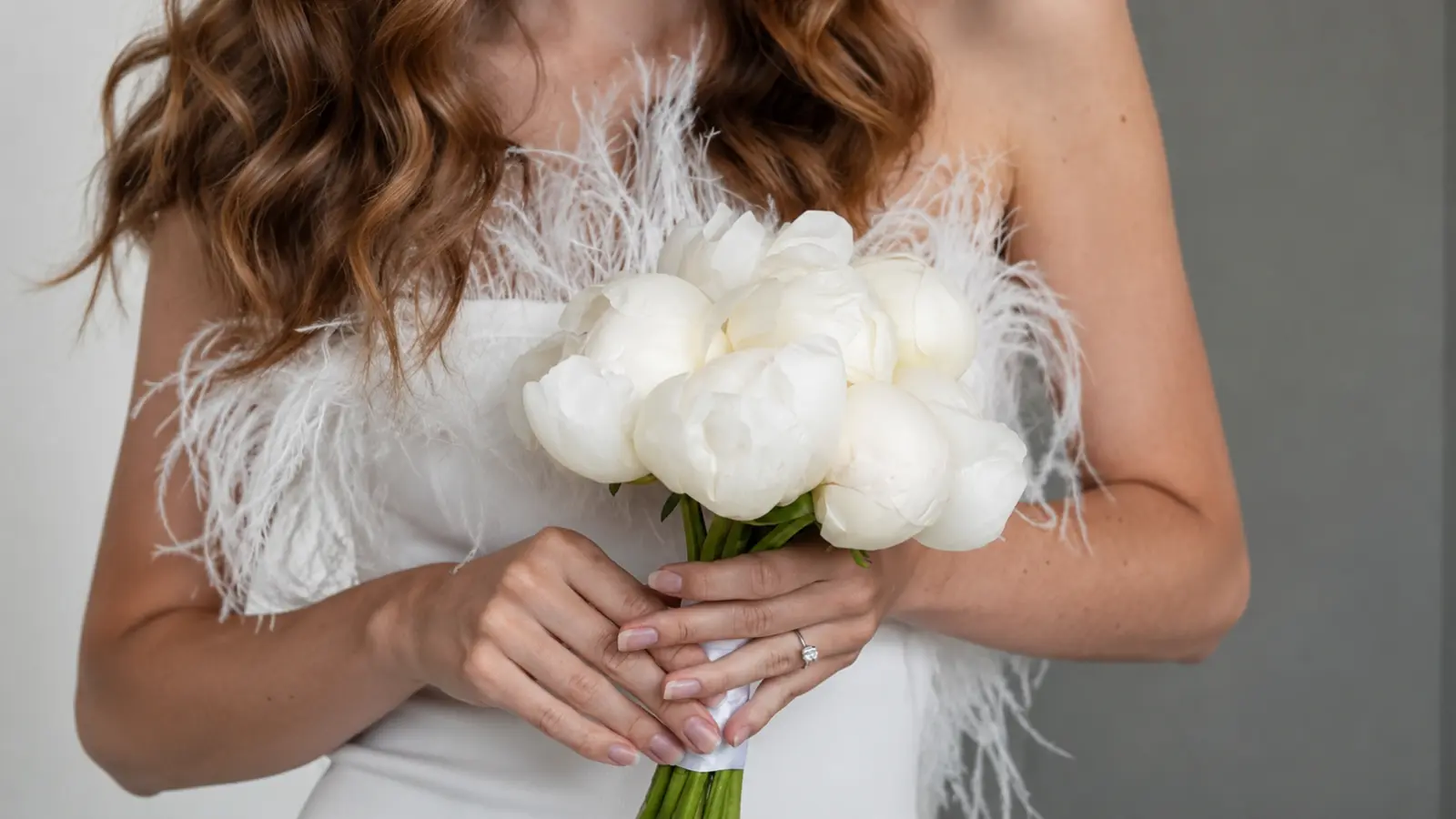
A monochrome bouquet uses one color family throughout, with variation coming from texture and petal shape rather than hue contrast. It’s one of the most distinctly modern bouquet choices available — it requires a level of editorial commitment that mixed-palette designs don’t, and when it’s executed well, it reads as genuinely intentional in a way that a layered, multi-color arrangement often doesn’t.
The three monochrome directions that work most consistently in contemporary bridal design:
All-white. The most classic monochrome palette, and the one with the most internal range. White calla lilies, white anemones, white ranunculus, and white orchids used together create a composition where all the visual interest comes from form — the trumpet of the calla against the flat face of the anemone against the layered petals of the ranunculus. No color contrast; all texture contrast. The result looks significantly more complex than a single-flower white bouquet and reads as considered rather than conventional.
Deep and near-black. Black calla lilies, deep burgundy dahlias, dark anemones with black centers, and near-black scabiosa used together create a dramatically contemporary bouquet that suits city weddings, evening ceremonies, and editorial aesthetics. This palette, often seen in black wedding bouquets, photographs strikingly — the contrast between the dark blooms and a white dress is one of the most graphic visual combinations available in bridal floristry. Worth bringing reference images to a florist appointment, because the specific depth of tone matters and “dark” means different things to different vendors.
Deep single-color. An all-burgundy bouquet, an all-deep-purple design, or a composition built entirely in terracotta and rust tones. These monochrome designs have more warmth than the black-and-white palette and suit a wider range of ceremony settings. The design logic is the same: choose flowers whose tones sit within the same color family and let form and texture do the work that color variation usually does.
The practical challenge with monochrome designs is sourcing consistency. Flowers from different suppliers or different growing batches can vary enough in tone that what was intended as a cohesive monochrome palette reads as slightly mismatched in person and in photographs. This is particularly common in white wedding bouquets warm white and cool white are visibly different side by side, and mixing them unintentionally breaks the monochrome logic. Confirming that all flowers in a monochrome design come from the same supplier batch is a detail worth raising with your florist, particularly for all-white designs.
How to Choose a Modern Bouquet
The modern bouquet category is broad enough that two brides who both want “something modern” can end up with designs that look nothing alike — which makes the conversation with your florist more specific than a single-word aesthetic brief. Working through these decisions before the appointment will produce a much more directed result.
Start with the silhouette, not the flower list
The shape of the bouquet — tight round, long-stem carry, asymmetric, sculptural — affects everything else, including which flowers actually work in the design. A florist who knows you want a long-stem presentation carry will pull different flowers than one who knows you want a tight monochrome cluster. Deciding on the format before choosing the flowers narrows the options in a productive rather than limiting way.
Your dress silhouette should inform this decision. Column and sheath gowns are natural partners for the long-stem carry — the vertical line reads as an extension of the dress rather than an interruption. Structured A-line gowns can support a sculptural arrangement with some asymmetry. Heavily detailed dresses are better served by a cleaner, more restrained design that doesn’t compete with the fabric.
Decide on color before you decide on flowers
Modern bouquets depend on palette discipline more than most other styles. A monochrome brief — all white, all deep burgundy, all black and ivory — is a more useful starting point for a florist than a specific flower request, because it allows them to work with what’s at peak quality and availability while staying within the visual logic of the design. Bringing a color reference (a fabric swatch, a printed paint chip, a torn magazine page) is more useful than a verbal description of any color.
Name what makes the reference images feel modern
This is the most practically useful step in the preparation process, and the one most frequently skipped. Look at the three or four images that feel right to you and identify the specific element in each one that reads as contemporary. Is it the exposed stems? The asymmetric weight? The single-color palette? The tropical foliage? The absence of any greenery? Each of those is a specific design instruction, not just a general aesthetic.
| If you want this | Ask your florist for | Avoid |
|---|---|---|
| Clean, graphic look | Single-variety design, tight cluster, uniform stem length | Mixed greenery, multiple flower types |
| Sculptural quality | Architectural foliage, asymmetric silhouette, calla lilies or anthuriums | Round, symmetrical construction |
| Editorial drama | Monochrome palette, near-black blooms, exposed stems | Mixed color palette, traditional ribbon bows |
| Minimal elegance | Tight nosegay, single variety, clean wide ribbon | Multiple filler elements, abundant greenery |
| City wedding aesthetic | Orchids, calla lilies, graphic foliage, slim leather tie | Wildflowers, dried grasses, rustic wrapping |
One final note worth making explicit: modern bouquets reward florists with contemporary portfolio experience more than most styles do. A florist whose work runs primarily to lush garden designs and romantic mixed bouquets will find it genuinely difficult to shift into a sculptural or monochrome modern direction, regardless of skill level. Before booking, look at the florist’s actual portfolio for examples of clean, architectural work — not just a general assurance that they can do any style.
Modern Wedding Bouquet Inspiration
Discover modern wedding bouquets featuring sculptural orchids, elegant calla lilies, monochrome floral designs, minimalist arrangements, architectural greenery, and contemporary bridal inspiration.
Modern Design Begins With Intentional Choices
Modern wedding bouquets prove that elegance comes from precision rather than abundance. Clean silhouettes, architectural flowers, restrained color palettes, and thoughtful composition create bouquets that feel contemporary without becoming cold or overly minimal. Every element has a purpose, and nothing is included simply to fill space.
Whether you’re drawn to sculptural calla lilies, elegant orchids, monochrome flowers, or a refined minimalist design, focus on clarity instead of complexity. When shape, proportion, and texture work together, a modern bouquet becomes more than a floral accessory—it becomes one of the defining design elements of your wedding day.
Frequently asked questions (FAQ)
What makes a wedding bouquet look modern?
A modern wedding bouquet is defined by intentional design rather than by the number of flowers it contains. Clean lines, sculptural forms, limited color palettes, negative space, and carefully chosen architectural flowers create a contemporary look. Instead of focusing on abundance, modern bouquets emphasize proportion, silhouette, and visual clarity, making every element feel purposeful.
What flowers work best in a modern wedding bouquet?
Calla lilies, cymbidium orchids, phalaenopsis orchids, anthuriums, anemones, and tulips are among the strongest flowers for modern bouquets because of their clean forms and sculptural character. Architectural foliage such as monstera, ti leaf, magnolia, and dark ruscus reinforces the contemporary aesthetic. Traditional flowers like roses and peonies also work beautifully when arranged in restrained, graphic compositions.
What is a sculptural wedding bouquet?
A sculptural bouquet is designed around shape rather than fullness. Each flower and foliage element is positioned to create movement, balance, and a clearly defined silhouette instead of simply adding volume. The result often feels architectural, with strong lines and intentional negative space that create visual impact from every angle.
Are orchid bouquets a good choice for modern weddings?
Absolutely. Orchids are among the most recognizable flowers in contemporary floral design because of their elegant shape and architectural presence. Cymbidium orchids create structured, graphic bouquets, while phalaenopsis orchids work beautifully in long-stem presentation bouquets. Choosing the right orchid variety is more important than simply choosing orchids as a category.
What does a monochrome wedding bouquet look like?
A monochrome bouquet stays within a single color family while creating visual interest through flower shape, texture, and scale instead of contrasting colors. All-white bouquets, deep burgundy arrangements, and even near-black floral designs all fall into this category. The result feels sophisticated because the eye focuses on form and composition rather than color variation.
How do you keep a modern wedding bouquet from looking too simple?
Focus on structure rather than adding more flowers. Architectural blooms, intentional spacing, premium-quality stems, and a clean handle wrap create visual impact without unnecessary decoration. In modern floral design, thoughtful restraint almost always feels more sophisticated than additional embellishment.