
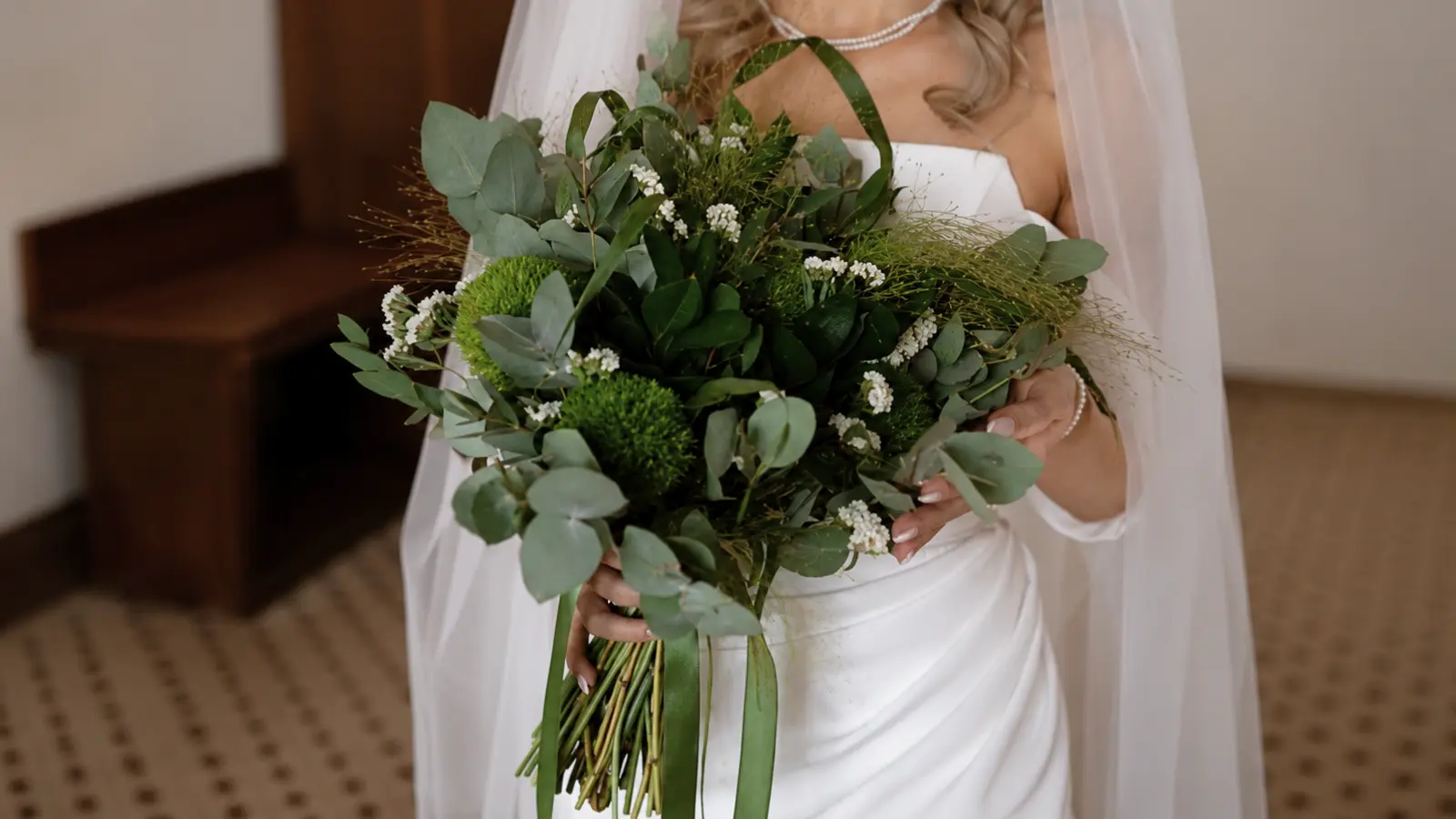
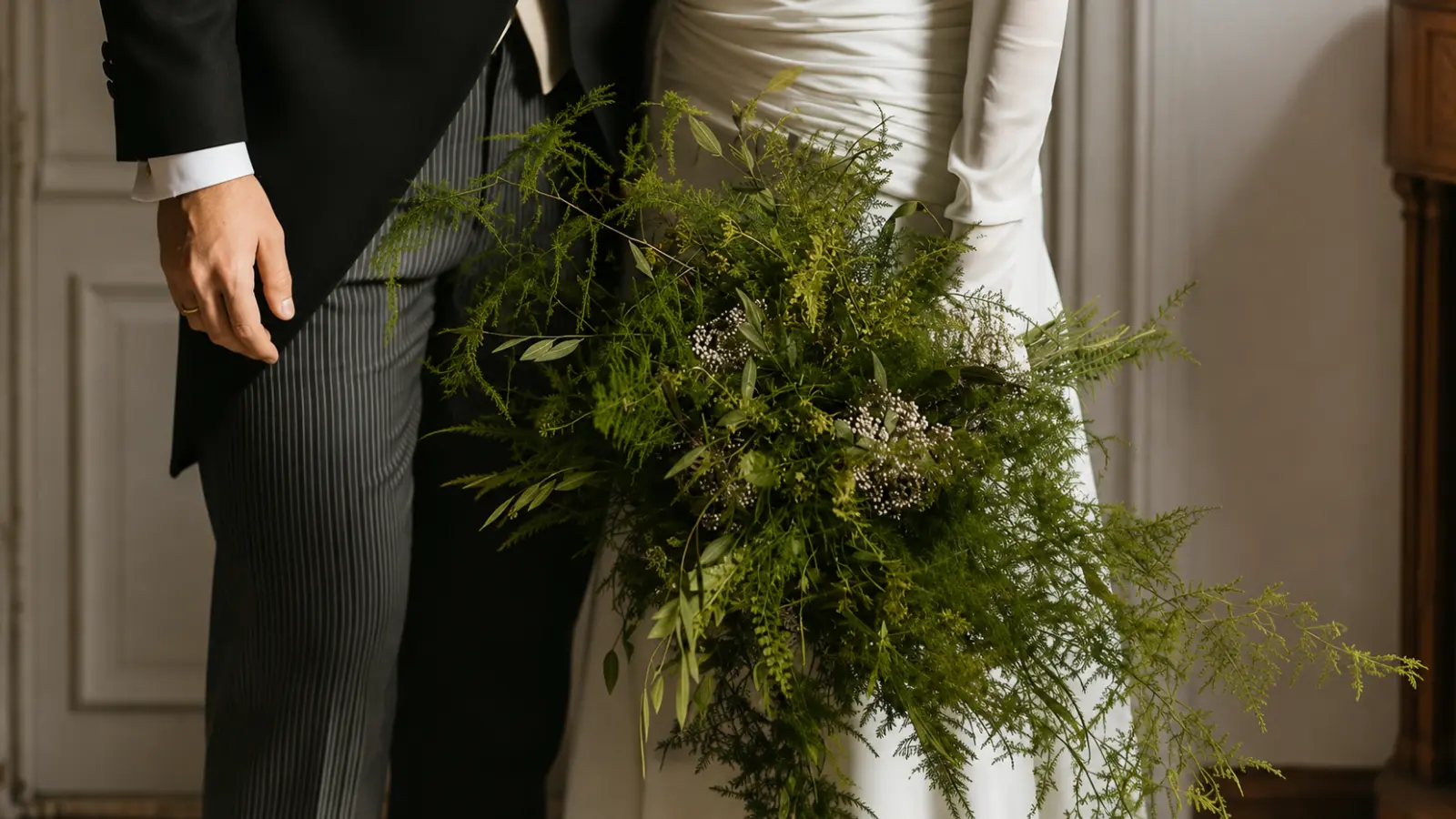
Greenery wedding bouquets prove that beautiful bridal bouquets don’t need traditional flowers to make an unforgettable impression. Built entirely—or almost entirely—from foliage, these bouquets create depth, texture, and natural movement through carefully layered greenery instead of colorful blooms. The result is a look that feels elegant, modern, and quietly sophisticated rather than incomplete.
Although many brides first associate greenery bouquets with minimalist weddings, their versatility extends far beyond that style. They work beautifully in garden celebrations, outdoor ceremonies, editorial weddings, rustic venues, and contemporary designs, especially when different foliage varieties are combined thoughtfully to create contrast, balance, and visual interest.
This guide explores greenery designs within the broader world of wedding bouquets, including the best foliage varieties, bouquet structure, texture, durability, costs, subtle floral accents, and practical advice for creating a bouquet that feels intentional, refined, and beautifully complete.
What Is a Greenery-Only Bouquet?
A greenery-only bouquet is exactly what it sounds like: an arrangement built entirely from foliage, with no traditional flowers included at all. Instead of color and bloom shape carrying the design, the bouquet leans on leaf texture, stem movement, and variation in green tones to create visual interest.
This isn’t a new idea so much as a returning one. Greenery has always played a structural role in bouquet design, usually as a supporting layer around focal flowers. What’s changed is treating that supporting layer as the entire design, rather than the backdrop for something else. It fits naturally among quieter, more editorial modern wedding bouquets, where restraint is the point rather than something to apologize for.
Who This Style Actually Suits
This look isn’t for every bride, and it doesn’t try to be. It tends to resonate most with a specific set of priorities rather than a single wedding style.
Minimalist and editorial brides are drawn to it for the same reason they’re drawn to clean-lined dresses and restrained tablescapes — it reads as intentional rather than sparse, and it photographs with a quiet sophistication that a maximalist floral bouquet doesn’t aim for.
Garden and outdoor weddings also suit the look naturally, since foliage feels at home in a setting that’s already organic and unfussy.
It also appeals to couples thinking about sustainability, since foliage generally has a smaller environmental footprint than imported or out-of-season flowers, and many varieties compost or dry well afterward. Brides planning a second wedding, a smaller ceremony, or anyone with significant flower allergies often gravitate here too — it gives them something beautiful to hold without the scale or expectations of a traditional floral bouquet.
Foliage Types Used in Greenery Bouquets
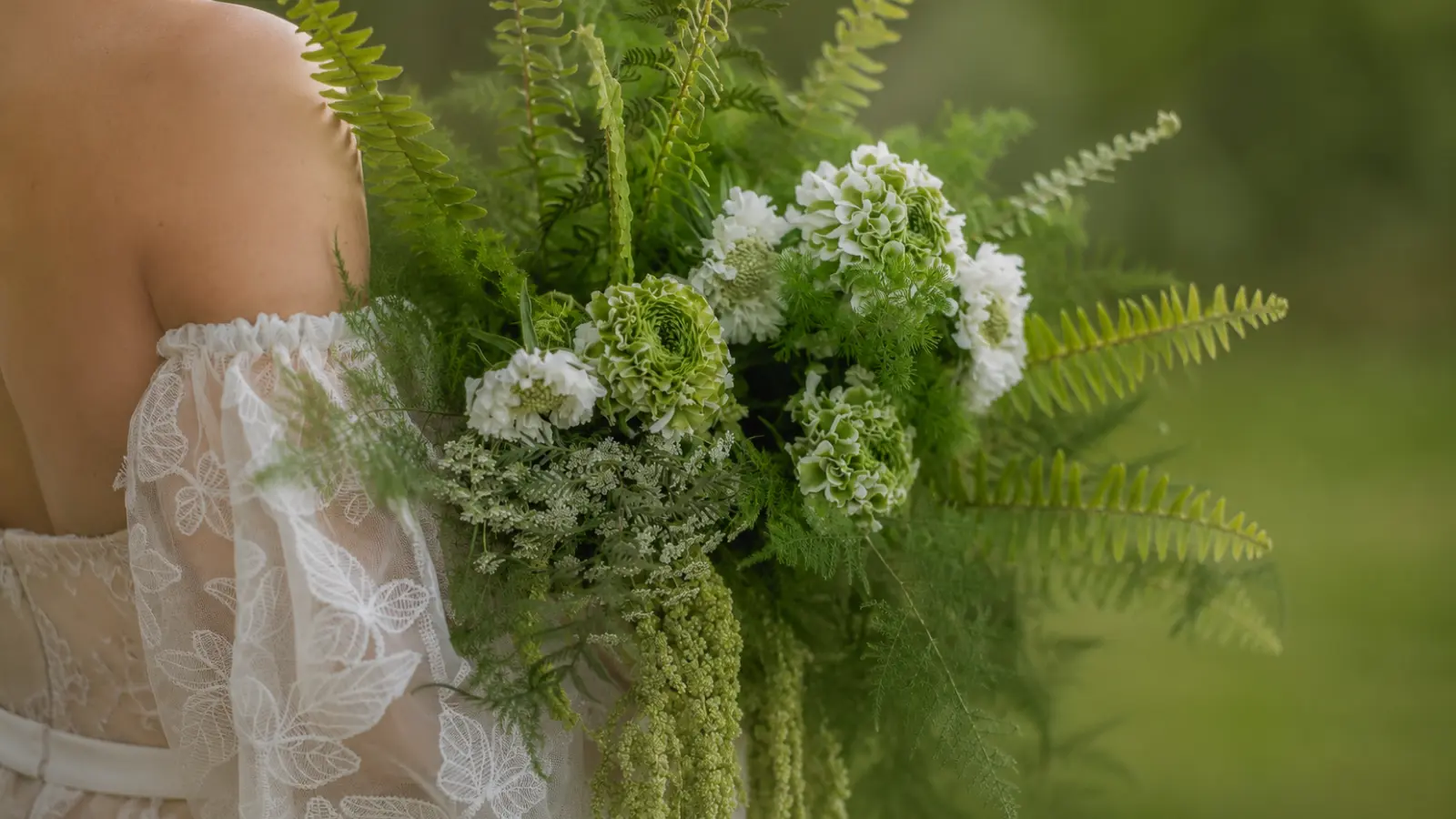
The success of a greenery bouquet depends almost entirely on which foliage goes into it, since each variety brings a different shape, color, and movement to the arrangement.
- Eucalyptus (silver dollar and seeded). The most common base for this style, prized for its soft blue-green tone, rounded leaf shape, and pleasant scent. Seeded eucalyptus adds a slightly more textured, rustic note than the smoother silver dollar variety.
- Italian ruscus. Glossy, structured, and naturally full, ruscus holds its shape well and gives a bouquet a more deliberate, tailored silhouette than looser foliage on its own.
- Ferns. Delicate and finely textured, ferns add movement and a slightly wild, garden-grown quality that balances out denser foliage like ruscus.
- Olive branch. A favorite for its silvery-green leaves and architectural stems, often used as a structural accent rather than the main volume of the bouquet.
- Dusty miller. Soft and silvery, almost velvet in texture, dusty miller introduces a tonal shift away from straight green that keeps the palette from feeling one-note.
Most well-built greenery bouquets combine three or four of these rather than leaning on just one, since the contrast between rounded, trailing, and structured shapes is what gives the arrangement its sense of completeness.
Building Texture Without Flowers
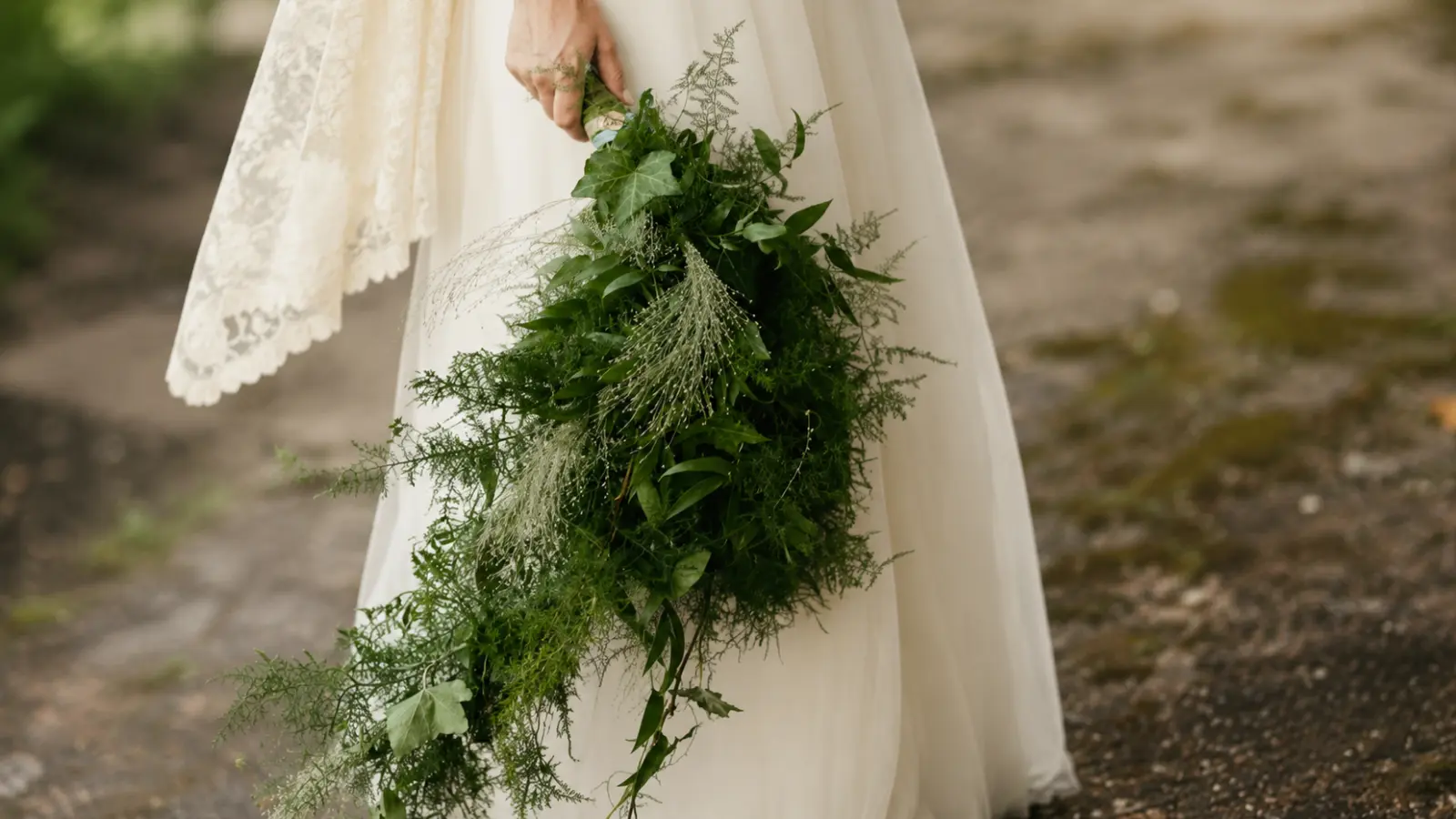
The biggest risk with a foliage-only bouquet isn’t that it lacks color — it’s that it lacks variation. Traditional wedding bouquet flowers naturally provide varied shapes and focal points, so a greenery bouquet must recreate that depth through texture and tone.
The most reliable approach is to think in three layers: a fuller, rounded element for volume, something with movement or drape for softness, and a structural piece that adds shape and holds the design together. Eucalyptus or ruscus can anchor the volume, ferns or trailing ivy add the movement, and olive branch or a few woody stems give it structure. Varying the tone within that mix — silvery dusty miller against deep green ruscus, for example — does more visual work than adding more of the same leaf.
Stem length and how the foliage is gathered also matter more here than in a flower-heavy bouquet, since there’s no bloom to draw the eye. A slightly asymmetrical, hand-gathered shape tends to look more intentional than a tightly uniform round, which can read as stiff without flowers to soften it.
Durability and Cost
Greenery has a practical advantage that’s worth factoring into the decision beyond aesthetics alone: most foliage varieties hold up better than flowers across a long day, particularly in heat. Eucalyptus, ruscus, and olive branch in particular can go hours without water and still look fresh, which makes this style genuinely low-maintenance for outdoor or summer weddings.
Cost tends to favor greenery bouquets as well, though it isn’t a guarantee. Foliage is generally less expensive per stem than garden roses or peonies, so a greenery-only design can reduce the overall wedding bouquet cost. That advantage narrows if you’re requesting a larger size, specialty foliage that’s harder to source, or detailed hand-tying work, so it’s worth getting an actual quote rather than assuming the savings before you ask.
Adding One Accent Without Losing the Look
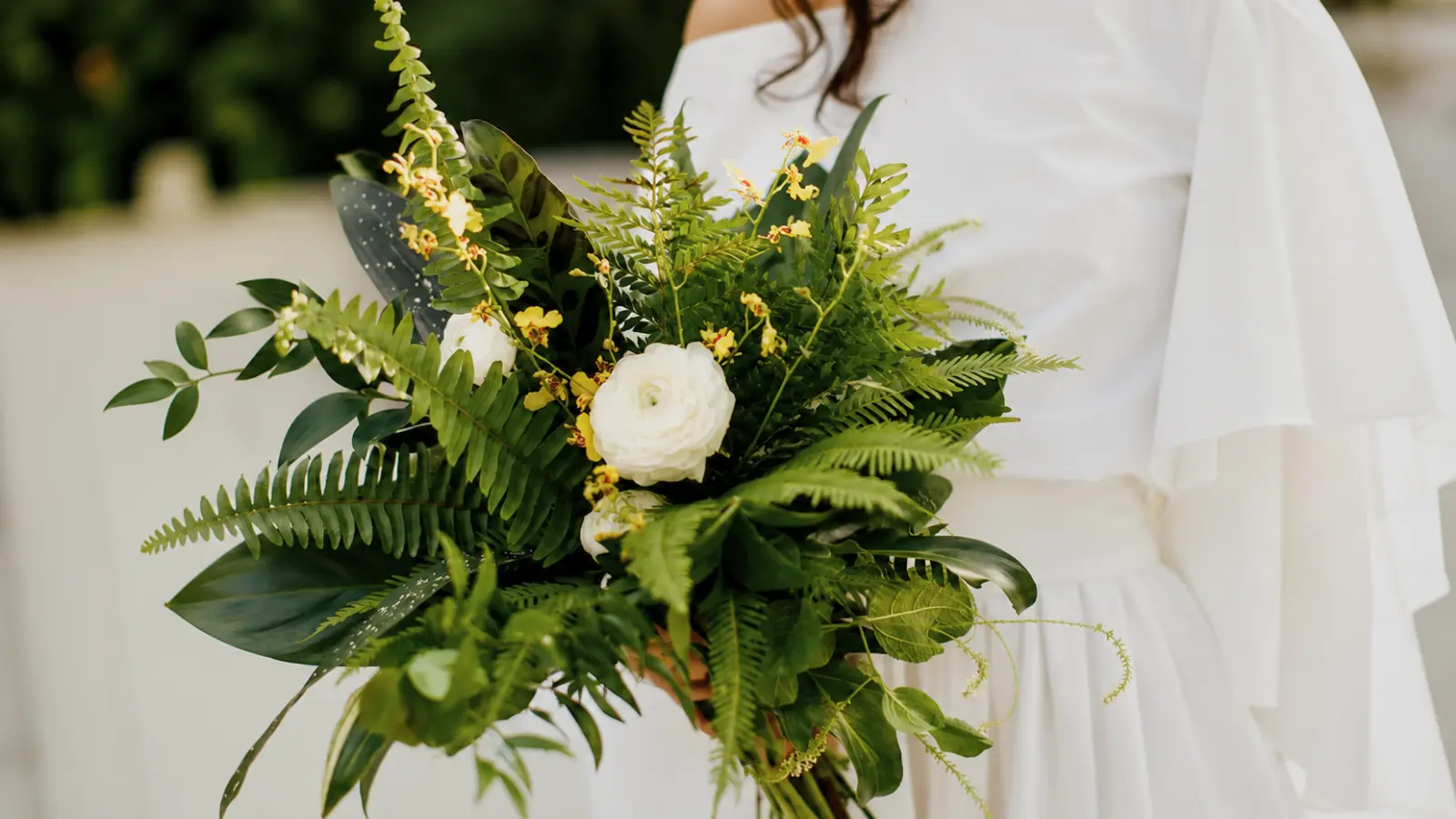
A greenery bouquet doesn’t have to mean zero color or zero focal point. Many brides add a single understated element specifically to give the eye somewhere to land, without reintroducing a full floral palette.
A small cluster of one flower variety — a few sprigs of lavender, a single garden rose, or a handful of berries — works because it stays subordinate to the foliage rather than competing with it. A dried element like pampas grass or a seed pod adds texture in the same tonal family as the greenery, so it blends rather than contrasts. A ribbon in a soft, muted color can do similar work at the handle, drawing attention without adding visual noise to the bouquet itself.
The line to watch for is restraint. One accent reads as a considered detail. Two or three different flower types, even in small amounts, starts to shift the bouquet back toward a traditional floral arrangement with greenery added in, which defeats the purpose of choosing this look in the first place.
Common Mistakes to Avoid
Most disappointing greenery bouquets share the same root cause: treating foliage as an easy default rather than a design choice that needs the same intention flowers usually get.
Using only one type of foliage. A bouquet built entirely from one variety, even a beautiful one like eucalyptus, tends to look flat and underdeveloped. Variation in shape and tone is what makes this style work, not the greenery itself.
Assuming it will always be the cheaper option. Specialty or imported foliage, larger sizes, and detailed construction can close the price gap with a floral bouquet. Confirm the actual cost with your florist instead of treating savings as automatic.
Skipping texture in favor of just volume. Packing in more stems without varying shape or tone makes a bouquet look dense rather than rich. More isn’t the same as more interesting.
Adding too many small accents. A few berries here, a flower there, a dried pod somewhere else can quickly turn a clean greenery look into a busy, undecided one. One clear accent does more than several scattered ones.
None of these are difficult to avoid once you know to watch for them, and a florist who’s built this style before will usually flag these issues during the design conversation rather than after the bouquet is finished.
Greenery Wedding Bouquet Inspiration
Discover greenery wedding bouquets featuring eucalyptus, Italian ruscus, ferns, olive branches, foliage-only designs, and elegant natural inspiration for modern bridal bouquets.
Beautiful Greenery Is About Texture, Not Less Design
Greenery wedding bouquets succeed because they replace flowers with something equally important: texture, movement, and thoughtful composition. When different foliage varieties are layered intentionally, the bouquet feels rich, elegant, and complete without relying on colorful blooms as the visual focus.
Rather than thinking of a greenery bouquet as a simplified version of a floral bouquet, think of it as its own design language. By combining complementary leaf shapes, subtle tonal variation, and balanced structure, you’ll create a bouquet that feels timeless, sophisticated, and perfectly suited to a bride who appreciates understated beauty.
Frequently asked questions (FAQ)
Can a greenery-only wedding bouquet look elegant?
Absolutely. A greenery-only bouquet looks elegant when it combines different foliage shapes, textures, and tones instead of relying on a single type of greenery. Mixing structured foliage such as Italian ruscus with softer eucalyptus, trailing ivy, or delicate ferns creates depth and movement, giving the bouquet a refined editorial look rather than an unfinished appearance.
Is a greenery bouquet cheaper than a flower bouquet?
Usually, but not always. Greenery generally costs less than premium flowers such as peonies or garden roses, making foliage-only bouquets more budget-friendly in many cases. However, specialty greenery, oversized designs, and intricate hand-tied construction can significantly increase the final price. Requesting a florist’s quote is the best way to compare costs accurately.
What greenery works best in a wedding bouquet?
Silver dollar eucalyptus, seeded eucalyptus, Italian ruscus, olive branches, dusty miller, ferns, and trailing ivy are among the most popular choices. The strongest greenery bouquets usually combine several foliage varieties so each one contributes a different texture, shape, or shade of green instead of relying on one plant alone.
Can you add flowers to a greenery bouquet without changing the style?
Yes. Adding one flower variety—or even a single statement bloom—creates a focal point while preserving the greenery-first aesthetic. The key is restraint. One carefully chosen floral accent enhances the design, while multiple flower varieties begin to transform the bouquet into a traditional mixed arrangement.
Does a greenery bouquet work in every season?
Yes. Most foliage varieties used in wedding bouquets are available year-round through greenhouse production, making greenery bouquets one of the most seasonally flexible options. By adjusting leaf tones and textures, the same overall concept can feel fresh in spring, airy in summer, warm in fall, or rich and dramatic in winter.
Who is a greenery-only wedding bouquet best suited for?
Greenery-only bouquets are especially popular for minimalist, editorial, garden, organic, and modern weddings. They also appeal to brides seeking a more sustainable floral option, couples planning intimate celebrations, or anyone who prefers understated elegance over traditional flower-heavy arrangements.