
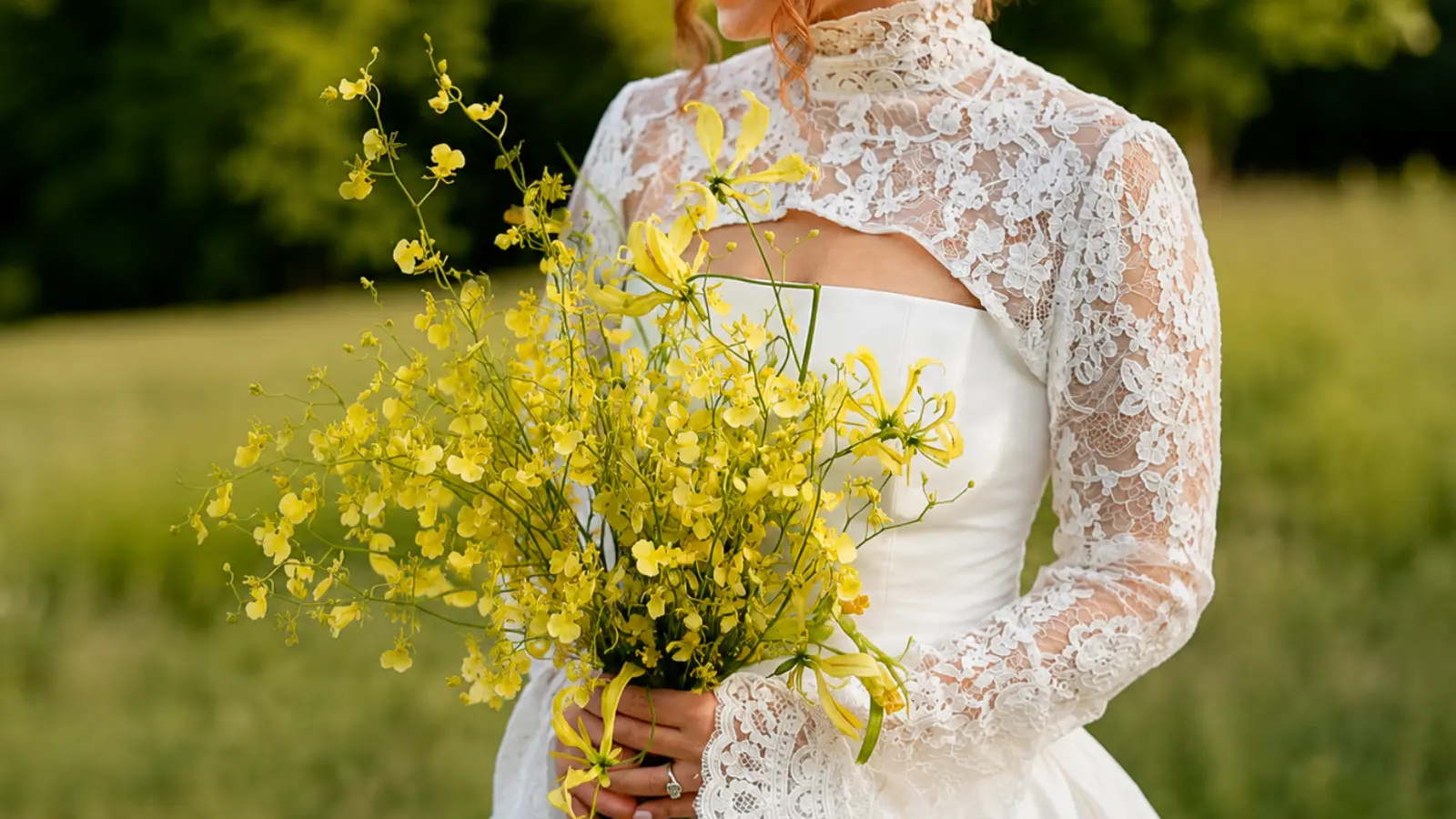
Yellow wedding bouquets bring warmth, happiness, and personality to a wedding day while offering far more versatility than many brides expect. From soft butter yellow and pale lemon to rich golden tones, the right shade can create a bouquet that feels elegant, romantic, modern, or seasonal depending on the flowers, foliage, and color palette you choose.
Although yellow is often associated with cheerful spring weddings, it also works beautifully in sophisticated garden celebrations, formal ceremonies, and autumn weddings when paired thoughtfully with complementary flowers and greenery. The key is choosing shades and combinations that feel intentional rather than overly bright.
This guide explores yellow designs within the broader world of wedding bouquets, including the best yellow flowers, elegant color combinations, seasonal inspiration, styling tips, and practical advice for creating a bouquet that feels timeless, refined, and beautifully bridal.
Yellow Wedding Bouquet Ideas
The same wedding bouquet colors can read very differently depending on their tone — a pale lemon-and-white arrangement has almost nothing in common with a golden, autumn-toned harvest bouquet. The table below maps the most common directions, which helps narrow down the right approach before talking to a florist.
| Style Direction | Core Flowers | Mood | Best Suited For |
|---|---|---|---|
| Soft Butter / Pale Lemon | Pale yellow garden roses, cream ranunculus, white accents | Delicate, romantic, near-neutral warmth | Spring and garden weddings; classic and formal settings |
| Bright Sunshine Yellow | Yellow garden roses, yellow tulips, yellow daisies | Cheerful, energetic, celebratory | Outdoor summer weddings; casual and garden settings |
| Golden / Harvest | Golden roses, yellow dahlias, dried elements, warm foliage | Warm, earthy, textured | Fall weddings; barn, garden, and rustic venues |
| Yellow and White | Yellow roses or ranunculus with white garden roses or peonies | Crisp, balanced, classic | Spring and summer; most venue types |
| Yellow Color Mix | Yellow roses with blue, pink, purple, or orange secondary flowers | Vibrant, layered, editorial | Modern, outdoor, and summer weddings |
The soft butter and yellow-and-white directions are the most universally wearable across venues and wedding styles. Bright sunshine yellow and the color mix directions reward more deliberate styling, since they need the right foliage and construction choices to stay elegant. Golden and harvest tones work particularly well in fall and are among the easiest versions of yellow to make look sophisticated.
Yellow Rose Wedding Bouquets
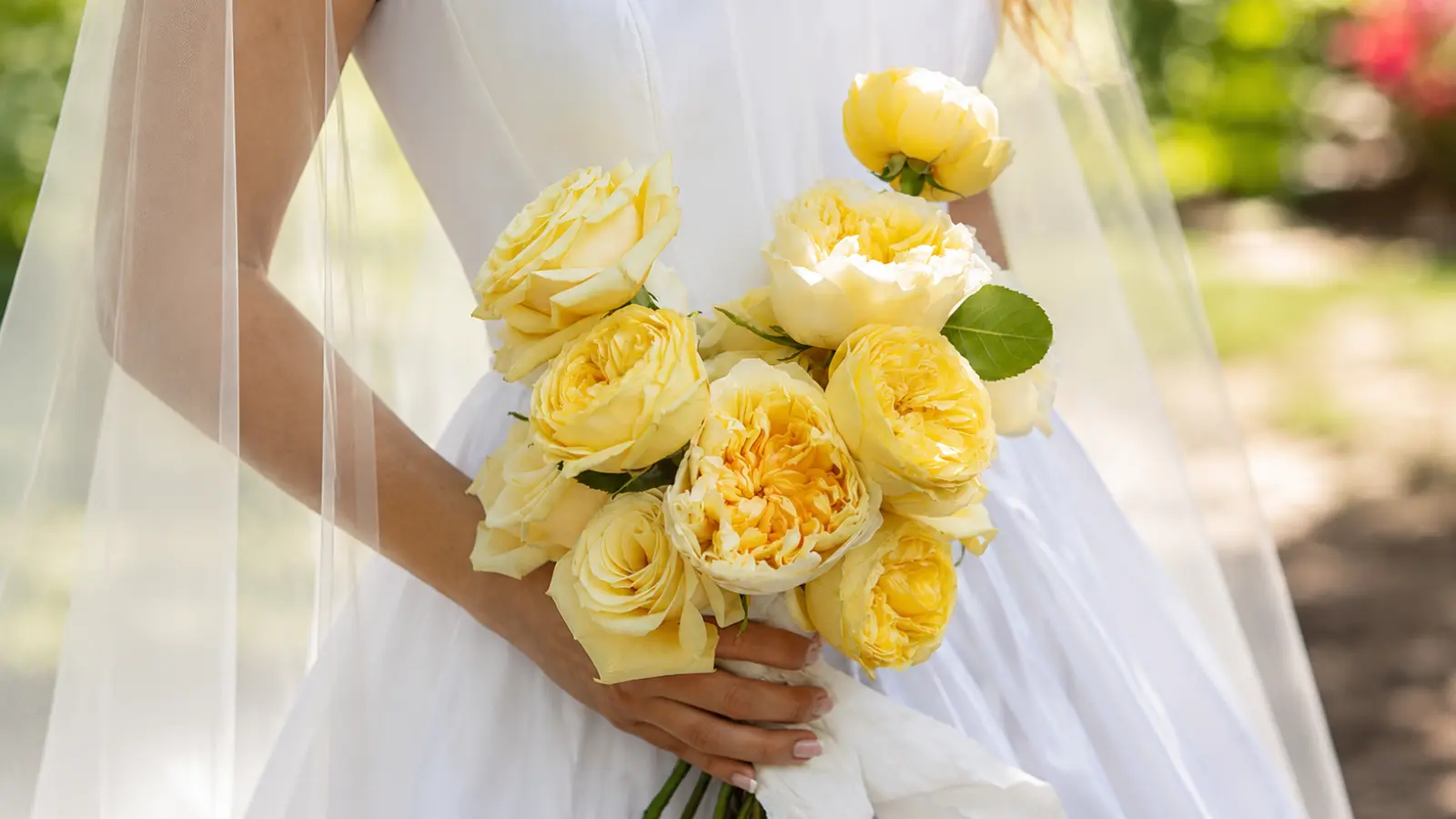
Yellow roses are the most reliable starting point for a yellow bouquet — they’re available year-round, come in a wide range of yellow tones from pale champagne to deep golden amber, and pair well with almost every secondary flower and color combination in this family. The choice between garden roses and standard roses matters here, just as it does with any other rose color.
| Rose Type | Character | Best Fit |
|---|---|---|
| Yellow standard roses | Tighter, more uniform bloom; clean and classic | Structured bouquets; classic and formal settings |
| Yellow garden roses | Fuller, more layered bloom with a softer, more romantic feel | Garden-style, romantic, and loose arrangements |
| Pale champagne / cream roses | Near-yellow with warm undertones; reads as sophisticated and subtle | Formal settings; pairs naturally with ivory and white |
For a yellow rose bouquet that reads as bridal rather than casual, the shade of yellow matters significantly. Pale champagne and soft butter garden roses in yellow sit at the elegant end of this spectrum. Deep golden garden roses have warmth and richness that suit fall and outdoor ceremonies particularly well. Bright, saturated yellow standard roses can work beautifully when paired with enough white and structured with rich foliage, but they require a deliberate design hand to avoid reading too bold for a formal setting.
A yellow rose bridal bouquet pairs well with white ranunculus, cream garden roses, or soft peach accents as secondary flowers. The deep foliage often used in greenery wedding bouquets — Italian ruscus, dark eucalyptus, or bay leaf — gives yellow roses a more deliberate backdrop.
Yellow Tulip Bouquets
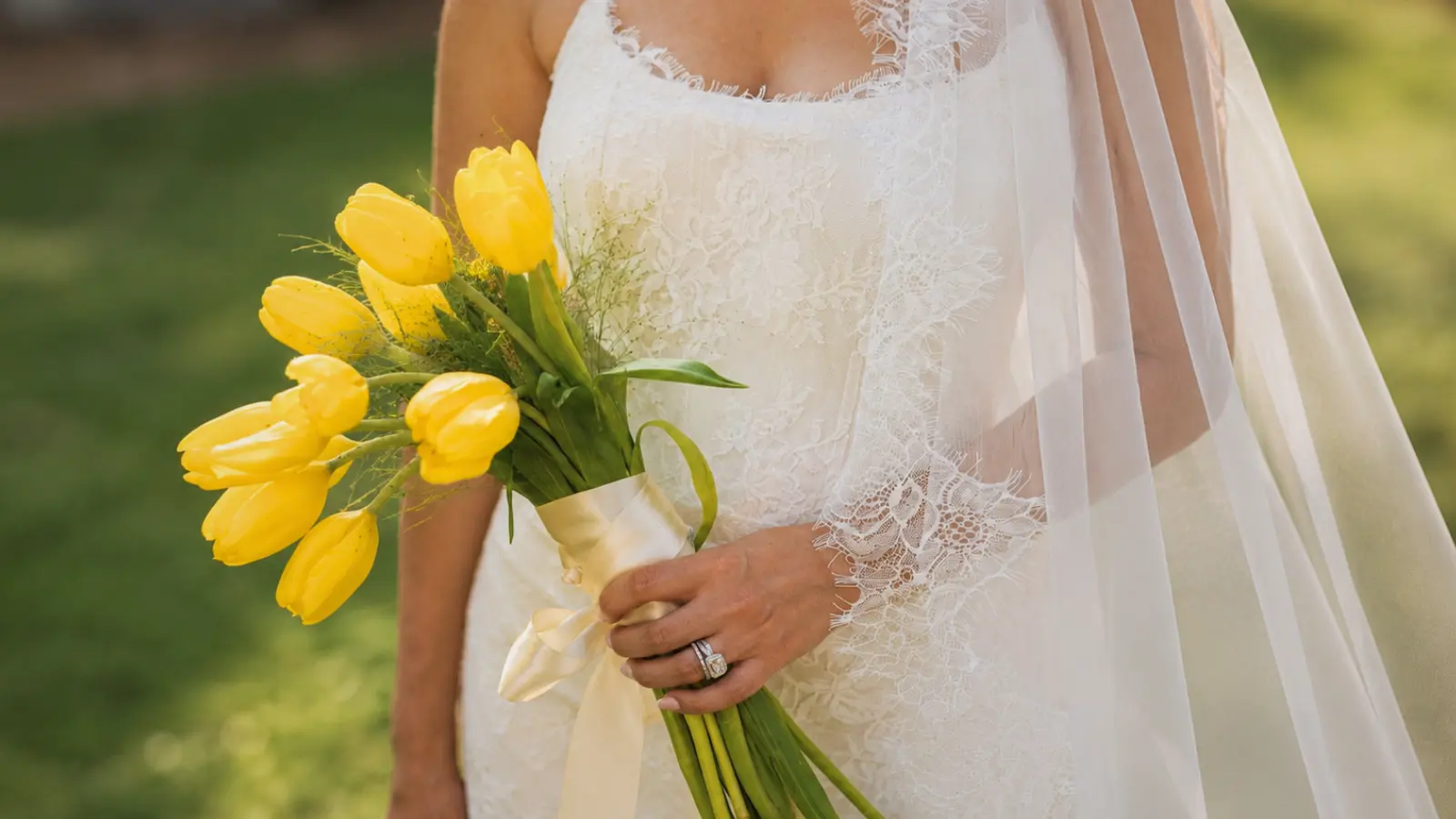
Yellow tulips are one of the defining flowers of spring weddings, and a bouquet built around them has a specific character that’s hard to replicate with any other flower: light, clean, uncluttered, and effortlessly seasonal. For tulip wedding bouquets, February through May usually offers the best availability, pricing, and flower quality.
A yellow tulip bouquet works best when kept simple. Tulips have a natural elegance in their smooth, unadorned stems and single-color blooms — overloading the arrangement with too many secondary flowers can undercut that. A clean bunch of yellow tulips with simple foliage or a few white ranunculus tucked in is often stronger than a complex multi-flower arrangement built around them. Outside of spring, yellow tulips become less consistent in availability and quality, which is worth knowing before committing to them for a summer or fall date.
Yellow Daisy Bouquets
Yellow daisies bring a cheerful, relaxed energy that suits outdoor, garden, and casual wedding settings well. They’re better used as accent flowers within a larger arrangement than as the sole focal point, partly because of their scale and partly because a bouquet built entirely from daisies can read as informal in a way that’s hard to balance in a bridal context.
Within a mixed bouquet, yellow daisies add texture, movement, and a wildflower quality that complements fuller focal flowers like garden roses or ranunculus. They pair naturally with white, ivory, and soft green accents, and they’re a common element in meadow-style or bohemian bouquets where the goal is a gathered, organic look rather than a structured, formal one. For a daisy-forward arrangement that still reads as bridal, adding one or two fuller focal flowers — yellow garden roses or white ranunculus — gives the eye somewhere to land within the more delicate daisy texture.
Yellow Lily and Calla Lily Bouquets
Yellow lilies and yellow calla lilies are two very different flowers that share a color, and choosing between them is largely a question of the aesthetic you’re going for rather than availability or price.
Yellow calla lilies have a clean, sculptural shape that reads as modern and sophisticated — the smooth, trumpet-like bloom is architectural in a way that most other yellow flowers are not. They suit contemporary venues, minimalist styling, and brides who want yellow to feel more refined than cheerful. A yellow calla lily bouquet in a simple hand-tied style, with very little foliage, has a particular graphic quality that works well in photos and pairs naturally with a sleek, unadorned gown.
Standard yellow lilies — orientals, Asiatics, and similar varieties — are fuller and more traditional in character. They bring volume and fragrance to an arrangement and work well as a secondary or accent flower in a larger mixed bouquet, though their bloom size can be difficult to balance when used as a sole focal flower. For deeper coverage on lily varieties and seasonal availability, the dedicated lily guide covers that in more detail.
Yellow and White Wedding Bouquets
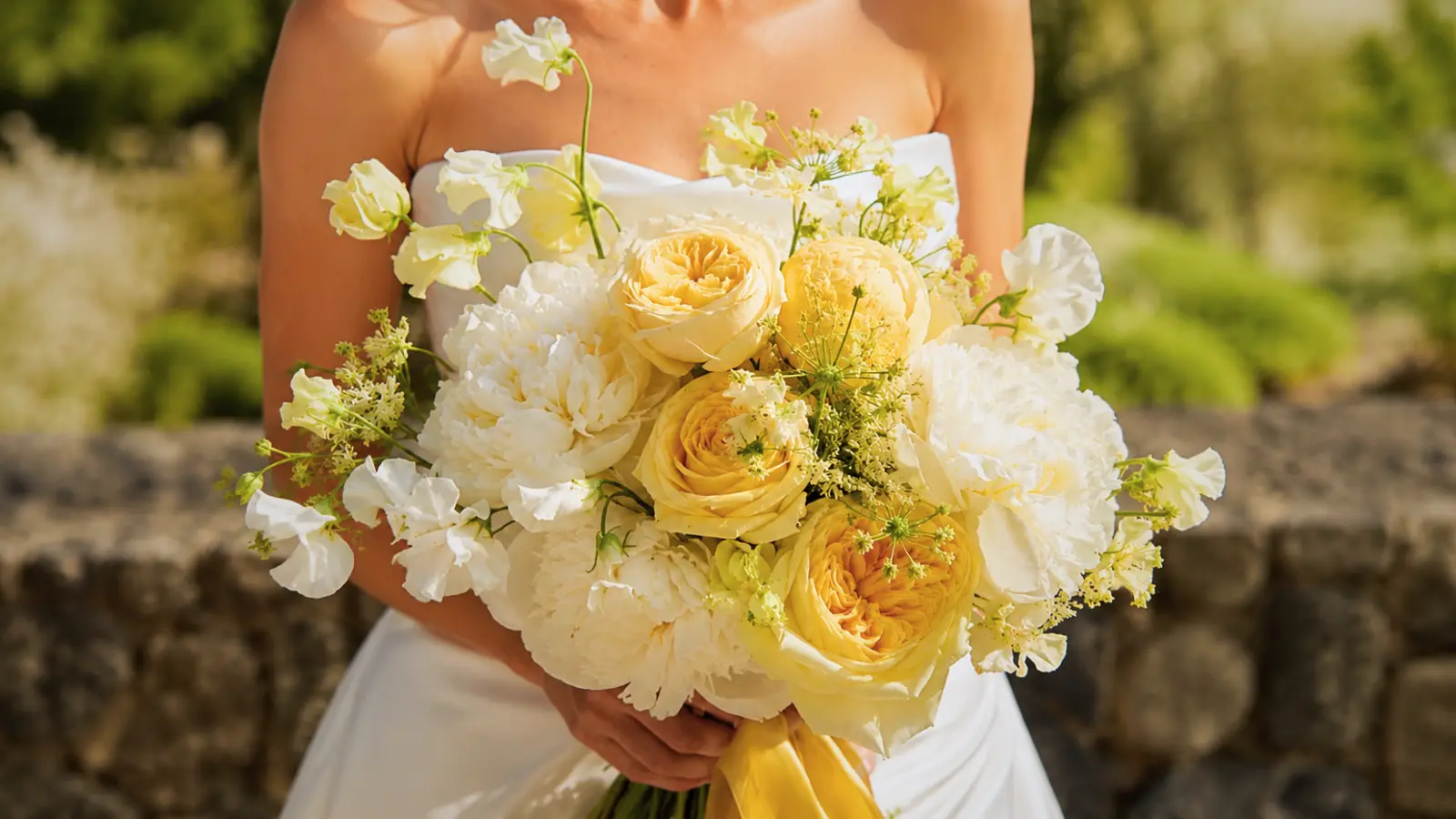
Yellow and white is the most naturally elegant combination in the yellow family. White gives yellow the balance it needs to read as sophisticated rather than bold, and yellow gives white warmth and personality that an all-white arrangement sometimes lacks. The result is a palette that’s versatile enough to work across venue types and seasons, which is part of why it’s one of the most-searched yellow color combinations for bridal florals.
The key to making yellow and white work is ratio and flower pairing rather than just mixing colors. Letting white wedding bouquets lead with yellow as the primary accent usually produces a more refined result than an even 50-50 split. White garden roses or ranunculus as the base, with yellow garden roses or yellow tulips woven through, gives the bouquet a cohesive structure that reads as designed rather than assorted.
Yellow and White Bouquet: A Practical Note
The exact shade of yellow matters more against white than against any other color. A cool, bright yellow next to pure white can create a slightly jarring contrast. A warm, soft butter yellow next to white or ivory reads as harmonious and naturally elegant. When in doubt, bringing a fabric swatch from your dress to the florist consultation will make this call much easier than describing it verbally.
Foliage in a yellow-and-white bouquet can tip the overall aesthetic significantly. Bright green leaves push the arrangement into a more garden or casual register. Silvery eucalyptus or pale dusty miller keeps the palette cooler and more refined. Dark, rich greenery — Italian ruscus, deep bay leaves — grounds the yellow and white without adding another color to the mix.
Yellow and Pink Bouquets
Yellow and pink is a warm, romantic combination that reads best when the tones on both sides are carefully matched. A pale butter yellow alongside soft blush or blush-peach creates a delicate, spring-like palette that works across garden and outdoor settings without feeling loud. A brighter yellow alongside coral or deeper pink adds more vibrancy and energy, which suits summer and outdoor celebrations particularly well.
The combinations to approach with more care are bright yellow paired with hot pink — that’s a high-contrast, high-energy pairing that requires deliberate, confident styling to avoid looking unintentional — and yellow paired with dusty rose or antique pink, where the warm-cool difference between some yellow tones and muted pinks can clash rather than complement. Confirming that the specific yellow and specific pink tones you’ve chosen are genuinely compatible, rather than assuming shades with the same name will work together, is worth doing early in the planning process.
Blue and Yellow Wedding Bouquets
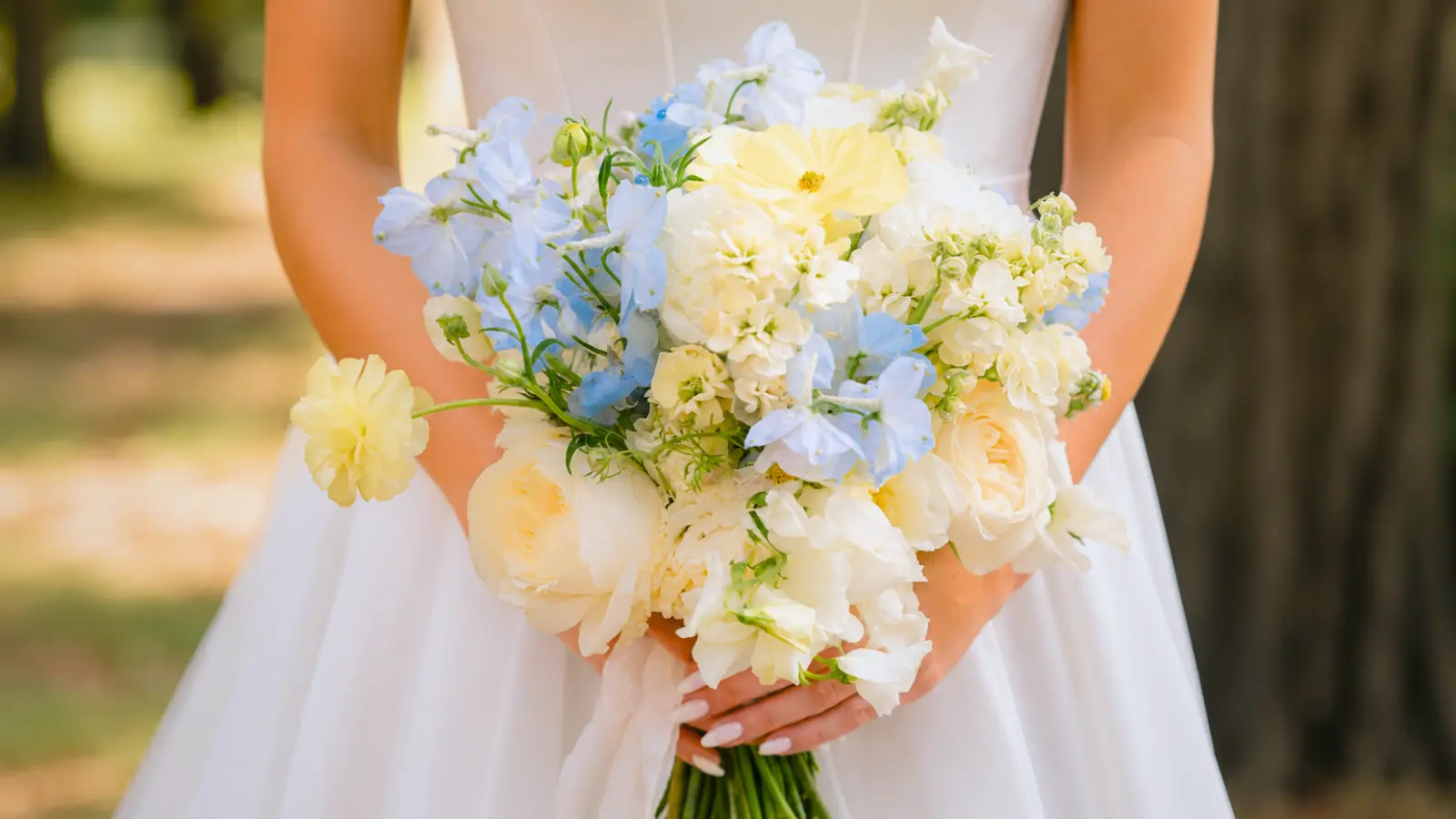
Blue and yellow is a classic complementary color combination — the two sit opposite each other on the color wheel, which means they create natural visual contrast without needing a third color to balance them. In a bouquet, this tends to produce a result that reads as graphic, cheerful, and confident rather than soft or romantic, which suits summer outdoor weddings and more casual, festive celebrations particularly well.
| Blue Tone | Best Yellow Pairing | Mood |
|---|---|---|
| Dusty blue (hydrangea, eryngium) | Soft butter yellow, pale lemon | Soft, romantic, garden-like |
| True blue (delphinium, cornflower) | Bright sunshine yellow | Crisp, summery, high-contrast |
| Navy / deep blue | Golden or deep amber yellow | Rich, dramatic, formal |
Blue and yellow as a bridal bouquet works best when one color leads and the other accents rather than splitting the design evenly. A predominantly yellow design inspired by blue wedding bouquets, with dusty blue eryngium or hydrangea tucked through it, reads as intentional and layered. An even 50-50 split can look less designed. Adding white or ivory as a neutral buffer between the two colors — a few white ranunculus or cream blooms — helps the combination breathe and prevents it from feeling too graphic for a bridal context.
Purple and Yellow Wedding Bouquets
Purple and yellow is one of the more dramatic complementary pairings in bridal florals — another opposite-on-the-color-wheel combination that creates strong visual contrast. The aesthetic it produces depends almost entirely on which shades of each color you’re working with, since the tonal range within both purple and yellow is wide enough that not all of these combinations work the same way.
Soft lavender alongside pale butter yellow is romantic, garden-inspired, and relatively easy to style elegantly — these are both muted, gentle tones that complement rather than compete. Deep violet or plum alongside golden or amber yellow reads as richer and more dramatic, and suits fall weddings or more editorial styling. Bright purple alongside bright yellow is the most high-contrast version, and it’s one that benefits from a more deliberate approach — white accents and rich foliage help prevent it from reading as too bold rather than sophisticated.
For anyone leaning toward this combination, the purple wedding bouquets guide covers the full range of purple tones and their flower options in more detail, which is useful context for choosing the right purple to pair with yellow.
Yellow and Orange Wedding Bouquets
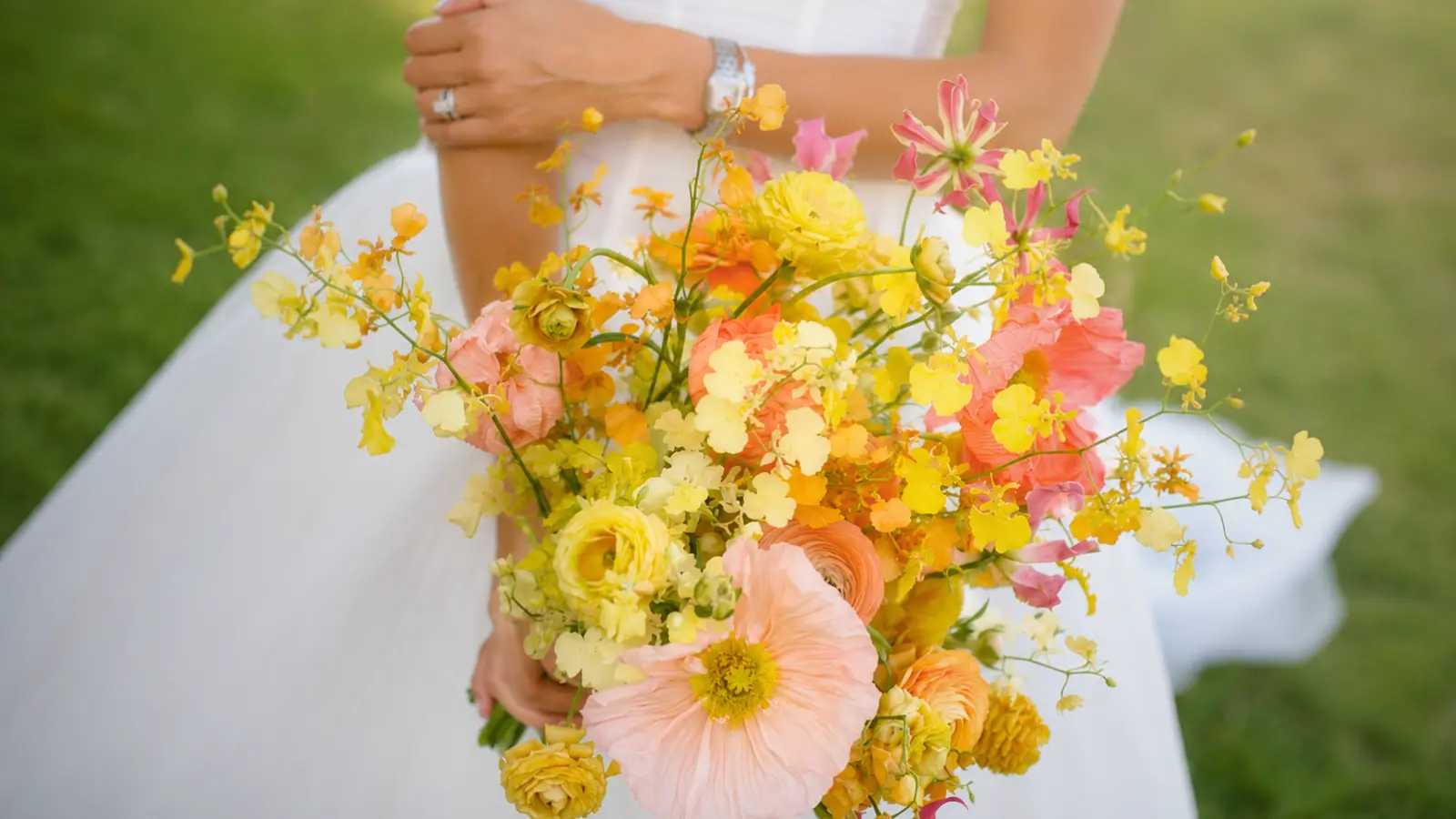
Yellow and orange is one of the warmest palettes in bridal florals — an analogous combination (colors adjacent on the color wheel) that blends naturally and suits late summer and fall weddings particularly well. This palette tends to evoke harvest, warmth, and the golden end of the growing season, and it works beautifully at outdoor and garden venues where the surrounding landscape reinforces the color story.
The important distinction here is tone. Yellow leaning toward golden amber sits closely with orange and transitions naturally. A bright, cool lemon-yellow paired with vivid orange can look more discordant because the warm-cool difference between them is more pronounced. Keeping both colors in the same warm register — butter yellow, golden yellow, amber, and apricot to coral orange — produces the most cohesive result. Dark, matte greenery works better with this palette than light, bright green foliage, which can compete with the warmth of the flowers.
Best Seasons for Yellow Wedding Flowers
Yellow is one of the more seasonally flexible colors in bridal florals, partly because yellow roses and ranunculus are available year-round and partly because yellow exists across different flower families that peak at different times. That said, there are clear seasonal high points worth knowing before committing to a specific flower type.
| Season | Best Yellow Flowers Available | Notes |
|---|---|---|
| Spring | Yellow tulips, yellow ranunculus, yellow garden roses, daffodils as accent | Peak season for tulips; wide yellow flower variety available |
| Summer | Yellow garden roses, yellow dahlias, yellow daisies, yellow calla lilies | Strong season for bold yellow tones; daisies and dahlias at their best |
| Fall | Yellow dahlias, golden garden roses, dried yellow elements, yellow marigolds | Golden and amber tones are most available; harvest palette at its strongest |
| Winter | Yellow garden roses, yellow ranunculus, yellow calla lilies | Seasonal variety is narrower; year-round flowers are the most reliable |
The main practical takeaway: if you’ve set your heart on yellow tulips or yellow dahlias, your wedding date needs to align with their availability. Yellow roses and ranunculus give you the most scheduling flexibility, which is worth knowing if your date falls in a season that limits other yellow options. A conversation with your florist about what’s genuinely available in your month — rather than what’s available in an ideal season — will produce a more reliable outcome than planning from a general flower list.
How to Make Yellow Bouquets Look Elegant
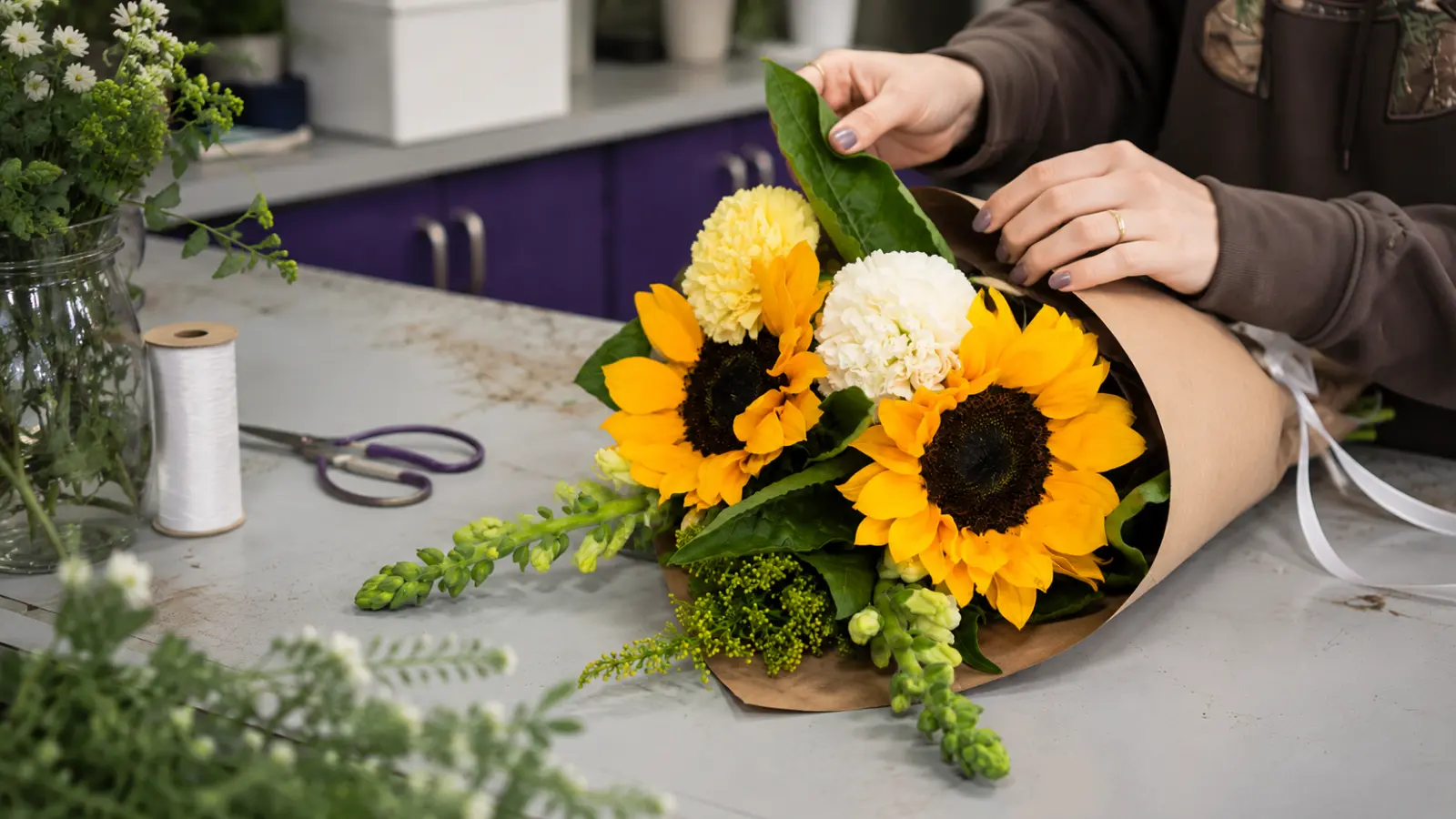
Yellow is cheerful by nature, which is exactly what makes it appealing — and exactly what needs to be managed carefully when the goal is a bouquet that reads as sophisticated and bridal rather than festive. The good news is that this is a question of styling, not a limitation of the color itself.
Choose the right shade of yellow. Pale butter yellow, soft lemon, and warm golden tones are the most naturally bridal options. Bright, saturated yellow can absolutely work, but it requires more deliberate pairing and construction to feel elegant rather than bold. When in doubt, a softer yellow shade is an easier starting point.
Pair with white, ivory, or cream rather than using yellow alone. Yellow used as the only color in a bouquet demands a lot from the flower choice and construction to stay interesting and refined. Adding white or ivory as a secondary color gives the yellow something to contrast against and immediately reads as more intentional.
Use dark, rich foliage. This is possibly the single most effective tool for elevating a yellow bouquet. Deep green Italian ruscus, dark eucalyptus, or bay leaves give yellow flowers a sophisticated backdrop. Bright, light green filler foliage tends to push yellow toward a more casual, garden-party register.
Limit the color mix. Yellow alongside one other color — white, blue, pink, or purple — is easier to style elegantly than yellow in a multi-color mix. Adding three or four colors to a yellow bouquet increases the risk of the palette reading as busy rather than designed.
Match the construction to the venue. A tightly structured round bouquet in butter yellow and white reads as formal. A loose, hand-gathered arrangement in bright yellow and daisies reads as garden and casual. Neither is wrong, but the construction and setting should agree with each other.
Yellow Bouquet Mistakes to Avoid
Most yellow bouquet mistakes fall into one of two categories: shade misjudgment or pairing misjudgment. Both are easy to avoid once you know what to look for.
Choosing a shade of yellow that photographs differently than expected. Yellow can shift significantly in photos depending on lighting. Bright yellow can appear almost neon under certain indoor lighting. Pale yellow can wash out in direct outdoor sun. Checking how the specific shade you’ve chosen photographs in conditions similar to your venue — ideally by asking your florist for a sample stem — is worth doing before finalizing the order.
Pairing yellow with bright green foliage. Bright green leaves alongside bright yellow flowers can make the bouquet read as too casual, almost like a prop rather than a designed arrangement. Dark, rich foliage is almost always the better choice.
Confusing yellow tones on the warm-cool axis. Not all yellows are equally warm or equally cool. A slightly greenish lemon-yellow and a golden amber yellow can look noticeably different against the same dress. When mixing yellow flower types, checking that they share a similar warmth or coolness level prevents unexpected tonal clashes in person or in photos.
Planning around seasonal flowers without confirming availability. Yellow tulips, dahlias, and daisies are seasonal and not always available on request outside their natural windows. Building a bouquet design around a specific flower type without checking its availability for your wedding date is a common planning mistake that’s easy to avoid early in the process.
Using too many colors alongside yellow. Yellow is a social color — it gets along with most colors but can start to compete rather than coordinate when surrounded by too many at once. Keeping the palette to yellow plus one or two complementary colors generally produces a stronger, more cohesive result than trying to work in four or five colors together.
Yellow Wedding Bouquet Inspiration
Discover yellow wedding bouquets featuring roses, tulips, ranunculus, lilies, elegant yellow and white designs, colorful floral palettes, and beautiful inspiration for every wedding season.
Yellow Is More Sophisticated Than Most Brides Expect
Yellow wedding bouquets stand out not because they’re louder than other bouquet colors, but because they bring warmth, optimism, and personality in a way that few other palettes can. When the right shade is paired with complementary flowers, balanced proportions, and thoughtful greenery, yellow becomes elegant rather than overpowering.
Whether you choose a soft butter palette for a romantic garden ceremony or rich golden blooms for an autumn celebration, the most successful yellow bouquet is one that complements your dress, reflects your wedding style, and feels intentionally designed. With the right combinations, yellow becomes one of the most memorable and timeless choices a bride can carry.
Frequently asked questions (FAQ)
How do you make a yellow wedding bouquet look elegant?
The easiest way to make a yellow wedding bouquet look elegant is to choose a softer shade of yellow and pair it with balanced neutrals. Butter yellow, pale lemon, champagne yellow, and warm golden tones usually feel more bridal than bright, saturated yellow. White, ivory, cream, and dark green foliage help ground the color, while too many bright colors at once can make the bouquet feel more casual than refined.
What flowers work best for a yellow wedding bouquet?
Garden roses, ranunculus, tulips, calla lilies, dahlias, and orchids can all work beautifully in yellow wedding bouquets. Garden roses and ranunculus are the most versatile choices because they create a soft, romantic shape and come in several yellow tones. Tulips are ideal for spring, dahlias work especially well in summer and fall, and calla lilies give yellow a more modern, sculptural look.
What colors go best with yellow wedding bouquets?
White, ivory, cream, blush, dusty blue, lavender, purple, and orange can all pair beautifully with yellow wedding bouquets. Yellow and white feels classic and bridal, yellow and blush feels soft and romantic, blue and yellow feels crisp and summery, and yellow with orange or golden tones works especially well for late summer and fall weddings. The safest approach is to let yellow lead and use one or two supporting colors rather than building a crowded palette.
Can yellow work for a bridal bouquet?
Yes, yellow can work beautifully for a bridal bouquet when the shade and styling are chosen carefully. Pale butter yellow, soft lemon, champagne yellow, and golden yellow can feel romantic, warm, and distinctly bridal. The key is giving the bouquet enough structure with refined flowers, balanced neutrals, and rich greenery so it feels intentional rather than overly casual or playful.
Are yellow wedding flowers available year-round?
Some yellow wedding flowers are available year-round, while others are seasonal. Yellow roses, garden roses, ranunculus, orchids, and calla lilies are usually easier to source in multiple seasons. Yellow tulips are strongest in spring, yellow dahlias peak in summer and fall, and sunflowers are most associated with summer and early fall. Your florist can help you choose the most reliable yellow flowers for your wedding month.
Does a yellow bouquet work with a white or ivory wedding dress?
Yes, but the shade of yellow should complement the tone of the dress. A bright white gown can handle crisp lemon or brighter yellow because the contrast feels clean. An ivory or warm white dress usually looks better with butter yellow, champagne yellow, golden yellow, or yellow flowers with cream undertones. Bringing a dress swatch to the florist makes it much easier to choose the right yellow tone.