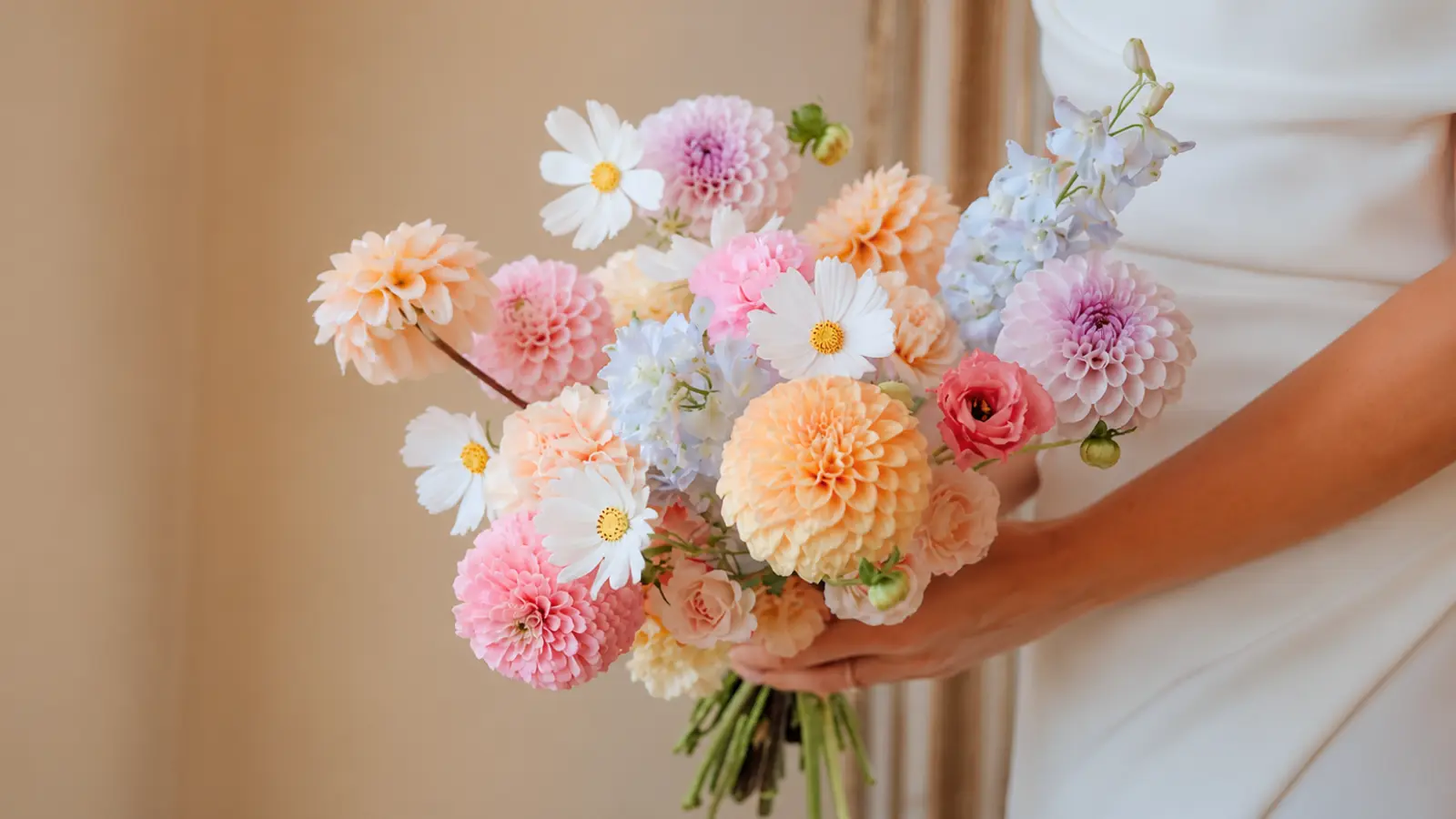
Pastel wedding bouquets are timeless because they combine softness, elegance, and versatility in a way that suits almost every wedding style. Built with gentle shades of blush, lavender, peach, butter yellow, soft blue, and creamy white, these bouquets create a romantic look while still offering enough variety to feel unique and thoughtfully designed.
Although pastel flowers are often associated with spring weddings, they work beautifully throughout the year when paired with the right blooms, foliage, and bouquet style. The secret is creating depth through tonal variation, texture, and contrast, preventing the arrangement from looking flat or washed out in photographs.
This guide explores pastel designs within the broader world of wedding bouquets, including the best flowers, color combinations, seasonal inspiration, styling tips, and practical advice for creating a bouquet that feels soft, sophisticated, and beautifully balanced.
Pastel Wedding Bouquet Ideas
The first and most useful thing to understand about pastel wedding bouquets is that “pastel” is not a single look — it’s a family of approaches that range from a tight, formal arrangement of blush garden roses to a loose, wildflower-style gather of lavender, mint, and pale yellow blooms. Before narrowing down specific flowers, compare the different wedding bouquet colors within the pastel family and identify the direction you’re actually drawn to.
| Style Direction | Core Flowers | Mood | Best Suited For |
|---|---|---|---|
| Blush and White / Classic Pastel | Blush garden roses, white ranunculus, soft peonies, white sweet peas | Romantic, refined, timeless | Garden, ballroom, and formal weddings; spring and summer |
| Multi-Tonal Pastel Mix | Blush, lavender, soft yellow, and mint flowers; ranunculus, roses, sweet peas | Dreamy, garden-gathered, effortless | Outdoor, garden, and bohemian weddings; spring |
| Pastel Peony-Forward | Soft pink or blush peonies, cream garden roses, white anemones | Lush, full, deeply romantic | Spring weddings; garden and estate venues |
| Pastel Blue and White | Soft blue hydrangeas or delphiniums, white garden roses, pale lilac accents | Fresh, airy, slightly unexpected | Spring and summer; coastal, garden, and modern venues |
| Pastel Wildflower | Mixed soft-toned flowers — sweet peas, cosmos, larkspur, soft ranunculus | Loose, organic, gathered-from-a-meadow | Outdoor, rustic, barn, and bohemian weddings |
The blush-and-white direction is the most broadly wearable — it suits the widest range of venues, dress tones, and photography styles, and is the easiest to get right when working with a florist who may not specialize in elaborate pastel palettes. The multi-tonal mix requires a more confident florist hand to keep all the soft tones cohesive rather than random. The wildflower direction is the most forgiving structurally but the most demanding in terms of sourcing — every flower needs to hit the right softness of tone for the arrangement to read as intentional rather than accidental.
Pastel Rose Bouquets
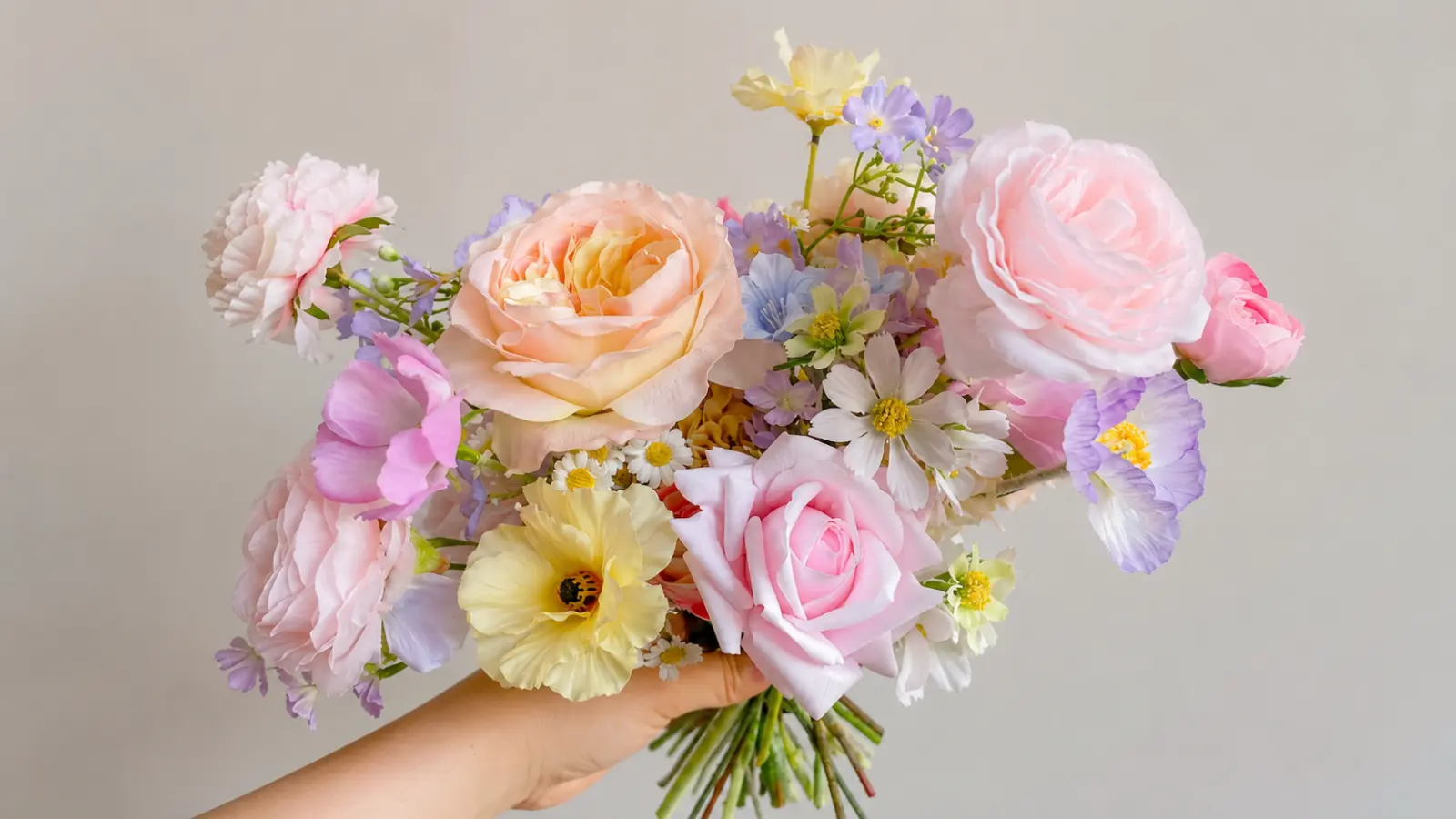
Garden roses are the backbone of most pastel bridal bouquets, and for good reason. No other flower delivers the combination of large blooms, layered petals, and the full range of soft tones — from barely-there blush to lavender-adjacent pink to warm peachy apricot — with the same reliability and photographic quality. A pastel rose bouquet can look like half a dozen entirely different things depending on the specific varieties chosen, which is why it’s worth going beyond “blush roses” as a request and getting specific with your florist about the tones you’re after.
The most commonly used pastel rose types in bridal work are garden roses in soft blush, pale pink, cream, and warm peach tones, and spray roses in lighter versions of those same shades used as supporting elements. Standard roses in pastel tones are also available and more affordable, but their tighter, more uniform blooms create a different character than the full, ruffled garden rose — suited to a more structured arrangement than a lushly gathered one. When the goal is the soft, layered, romantic look most people associate with a pastel bouquet, garden roses are the right choice.
Blush, Pink, Peach, and Cream: Which Rose Is Which?
These tones look different on a screen than they do in person, and they often look different at the flower market than they do in finished bouquet photos. Blush reads as a very pale, cool-leaning pink — closer to pale skin than to pink. Soft pink is clearly pink but muted, without the brightness of a standard pink rose. Peach has a warm, apricot quality that sits between pink and orange. Cream is warm white with a yellow or ivory undertone. In a bouquet, these tones can all coexist beautifully — or they can clash slightly if the undertones pull in different directions. Seeing actual stem samples together in person, rather than relying on color names or photos alone, is the most reliable way to confirm they’ll work together.
A pastel rose bouquet works best when it isn’t built from roses alone. Adding ranunculus — which shares the layered, ruffled petal quality of garden roses but in a smaller, more varied scale — creates textural interest without disrupting the soft color palette. Sweet peas, if available in season, add a loose, trailing quality that gives a gathered-roses arrangement a sense of natural movement. Deep green foliage, rather than the bright filler greens that florists often default to, is the element that keeps a soft rose bouquet reading as sophisticated rather than simple.
Pastel Peony Bouquets
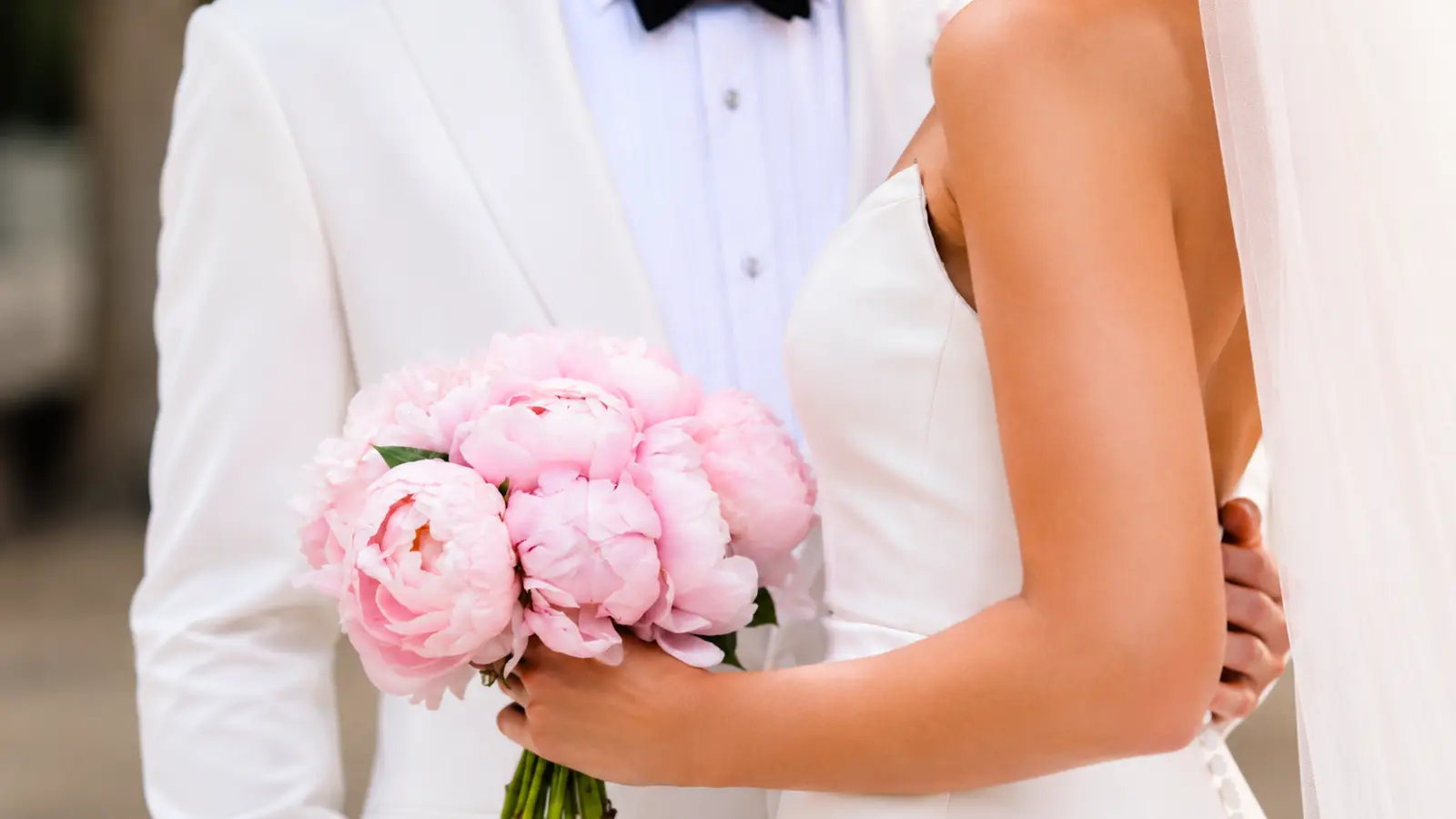
Peonies are the flower most associated with the romantic, lush version of a pastel bouquet — full, layered, fragrant, and abundantly beautiful. A pastel peony bouquet is one of the most requested bridal arrangements for spring weddings, and when the conditions are right, it’s easy to understand why. There is nothing quite like a generous armful of soft pink or blush peonies for a ceremony in May or June.
The pastel peony color range runs from very pale blush — nearly white with just a hint of pink — through soft pink, warm coral-pink, and lilac-adjacent lavender, depending on the variety. No peony comes in true blue or true lavender, so brides seeking pastel blue should look elsewhere. The most reliable pastel peony varieties in bridal florals are the double-bloom types with the densely layered petals that create that characteristic full, romantic look — these are generally more available and more consistently soft-toned than the single or semi-double varieties.
One important practical consideration with pastel peonies: they have a defined season. Peonies peak from roughly late April through June in the United States, depending on region. Outside that window, they’re either unavailable from domestic growers or significantly more expensive when sourced internationally. Confirming peony availability for your specific wedding date — rather than assuming they’ll be available year-round — is one of the most important early conversations to have with your florist. If your wedding falls outside the peony season and they’re a priority for you, your florist can advise on supplementary flowers that achieve a similar full, layered aesthetic.
Pastel Tulip Bouquets
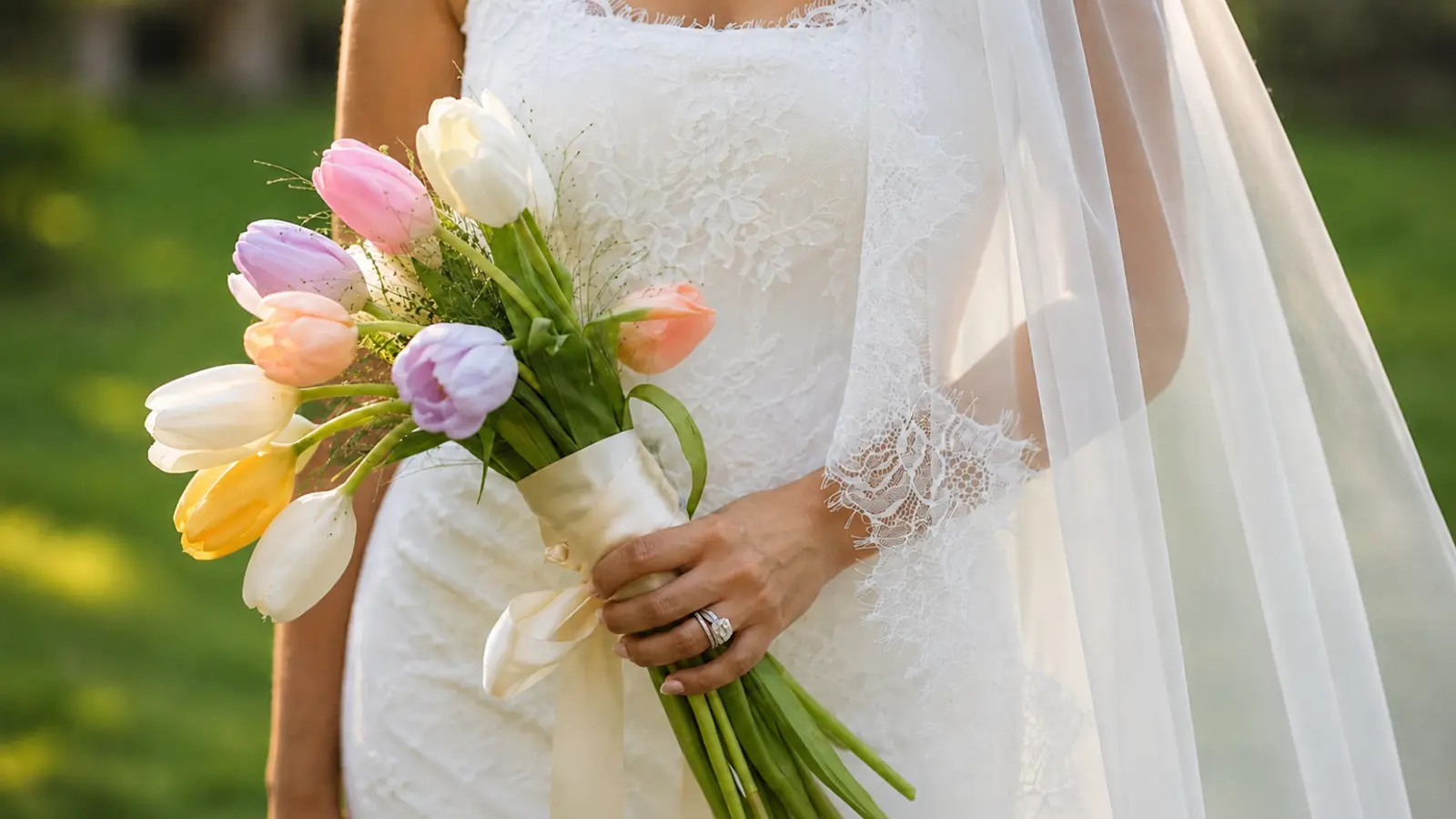
Pastel tulip bouquets occupy a specific aesthetic space — clean, graceful, and distinctly spring in character. They don’t offer the same fullness as peonies or the same layered texture as garden roses, but they bring a long-stemmed elegance and a simplicity that suits certain brides and certain weddings far better than more elaborate arrangements do.
Pastel tulip wedding bouquets work best in a gathered, hand-tied style where the stems remain visible and the flowers fall naturally. This construction suits the drooping, graceful quality of the tulip bloom and looks more intentional than a tight tulip sphere would. Pastel tulips in soft pink, lavender, white, and pale yellow all mix well together, and the variation in color within a single gathered bouquet of mixed-pastel tulips creates a naturally effortless look.
The seasonal reality of tulips is worth planning around: they’re a spring flower, peaking roughly from March through May. Summer and fall brides who want a tulip look will find them harder to source and more expensive outside their natural season. If tulips are important to your vision and your wedding isn’t in spring, discussing alternatives with your florist early gives you the most flexibility — ranunculus in soft tones offers some of the same graceful, cup-shaped quality in a longer-season flower.
Pastel Hydrangea Bouquets
Hydrangeas appear in pastel bridal arrangements constantly, and they bring real appeal: large, fluffy flower heads, a soft powdery quality in their color, and a natural abundance that lets a few stems fill a lot of visual space. A pastel hydrangea bouquet, or a bouquet that incorporates hydrangeas alongside other soft flowers, has a certain relaxed, garden-gathered quality that suits casual outdoor and garden weddings particularly well.
Where hydrangeas need careful handling in a pastel context is as the primary or only flower. A bouquet built almost entirely from hydrangeas in a single soft tone — say, pale lavender or dusty blue — tends to photograph as a flat, undifferentiated wash of color without the detail and texture variation that makes a bouquet interesting in images. The flower heads are beautiful individually but similar in structure, which means a bunch of them at the same scale tends to blend together.
The most successful approach is to use hydrangeas as a supporting element rather than a focal flower — as the soft backdrop against which more textured blooms like garden roses, ranunculus, or lisianthus stand out. A loose bouquet with soft blue or blush hydrangeas providing volume, and two or three types of more structured flowers filling in above and through them, reads as effortful and layered in a way that straight hydrangeas alone often don’t. Foliage matters particularly with hydrangeas — dark green leaves or eucalyptus give the soft, round flower heads a defined edge that prevents them from looking shapeless.
Pastel Wildflower Bouquets
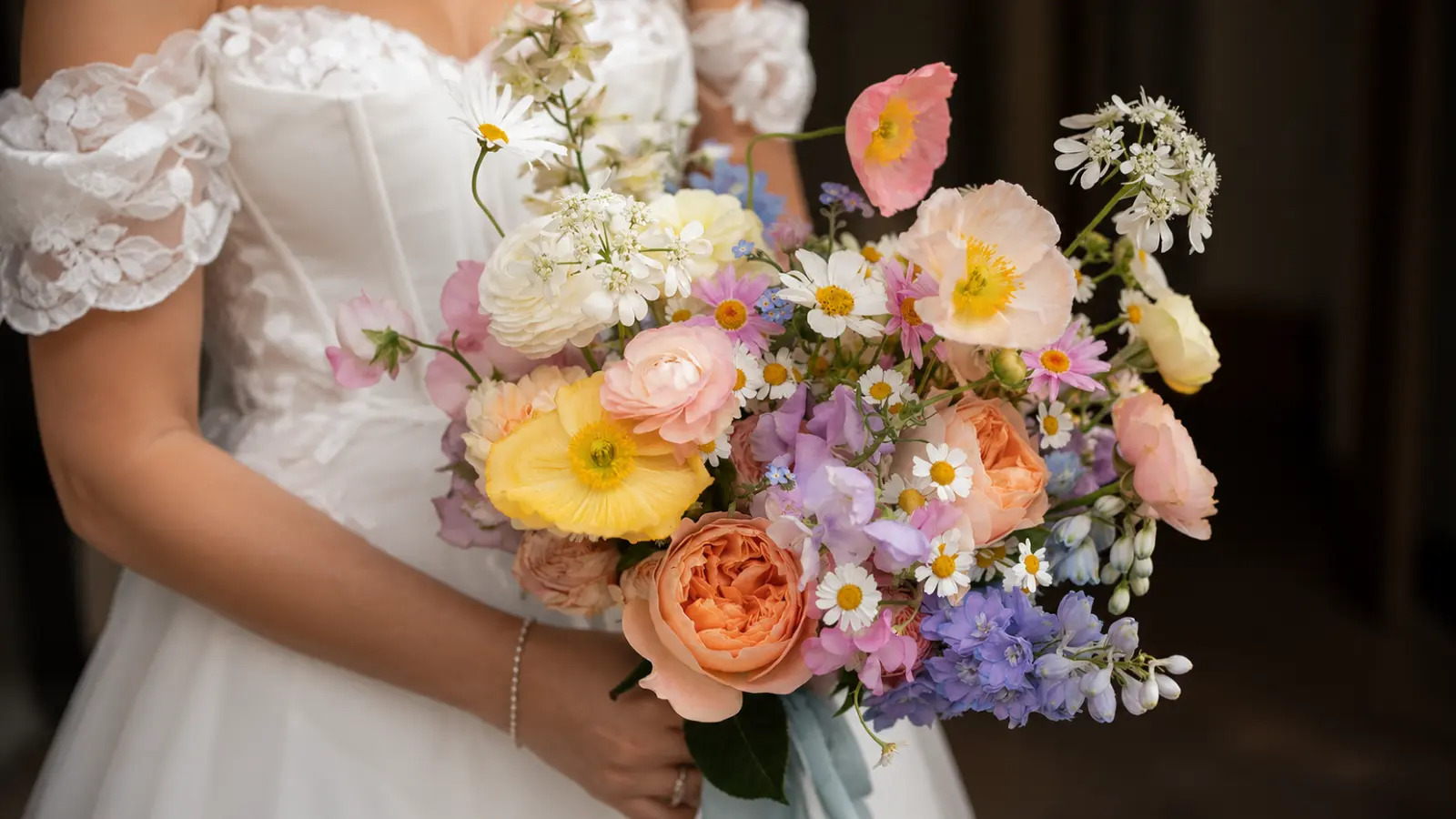
A pastel wildflower bouquet is the direction to choose when the goal is something that looks beautiful in its looseness — unhurried, naturally gathered, as if the flowers were picked from a meadow rather than arranged by a florist. Done well, it’s genuinely romantic and perfectly suited to outdoor venues, garden ceremonies, and weddings with an organic, relaxed aesthetic. Done poorly, it just looks unfinished.
The flowers that typically make up a pastel wildflower bouquet include sweet peas, cosmos, larkspur, soft-toned scabiosa, delicate ranunculus, lisianthus in pale lavender or blush, and small-bloom varieties of garden roses. What they share is a lightness and informality — these are flowers that don’t demand to be the center of attention in the way a peony or large garden rose does. Combining several soft-toned flowers with long visible stems and trailing foliage creates the effortless character of wildflower wedding bouquets.
The key distinction between a pastel wildflower bouquet that reads as intentional and one that reads as haphazard is the soft uniformity of the color palette. Every flower needs to stay within the pastel register — no single element should jump in saturation or brightness, because one vivid flower in an otherwise soft arrangement disrupts the whole gentle quality of the design. The style is loose in construction but should be disciplined in color. Working with a florist who has experience with this aesthetic, and providing reference images of the specific mood you’re after, makes the difference between something lovely and something that needed more time to be figured out.
Pastel Pink Wedding Bouquets
Pastel pink is the most-requested color in bridal florals, and it’s earned that position: it’s soft, flattering, and endlessly adaptable. The version most brides have in mind when they say “pastel pink” is somewhere between pale blush and soft rose — light enough to read as delicate, saturated enough to have some presence. The challenge is that “pastel pink” covers a wide tonal range in practice, and the difference between a cool soft pink and a warm peachy blush can affect which dress tones it pairs with, which secondary flowers complement it, and how it reads in photos.
Pastel pink bouquets work across almost every wedding setting — they’re among the very few color choices that suit a formal ballroom, a garden ceremony, and a rustic barn equally well, because the shade is soft enough to take on the character of its surroundings rather than competing with them. The secondary color strongly affects how pink wedding bouquets read: white feels classic, lavender feels romantic, and green with ivory creates a lusher, earthier result.
For flowers, blush garden roses and soft pink ranunculus are the most reliable combination — they share a delicate quality and both photograph warmly in natural light. Adding one or two stems of white or cream alongside them immediately elevates the palette from single-note to layered. Pale pink sweet peas, if in season, contribute a loose, gentle movement that keeps the arrangement from reading as stiff.
Pastel Blue Wedding Bouquets
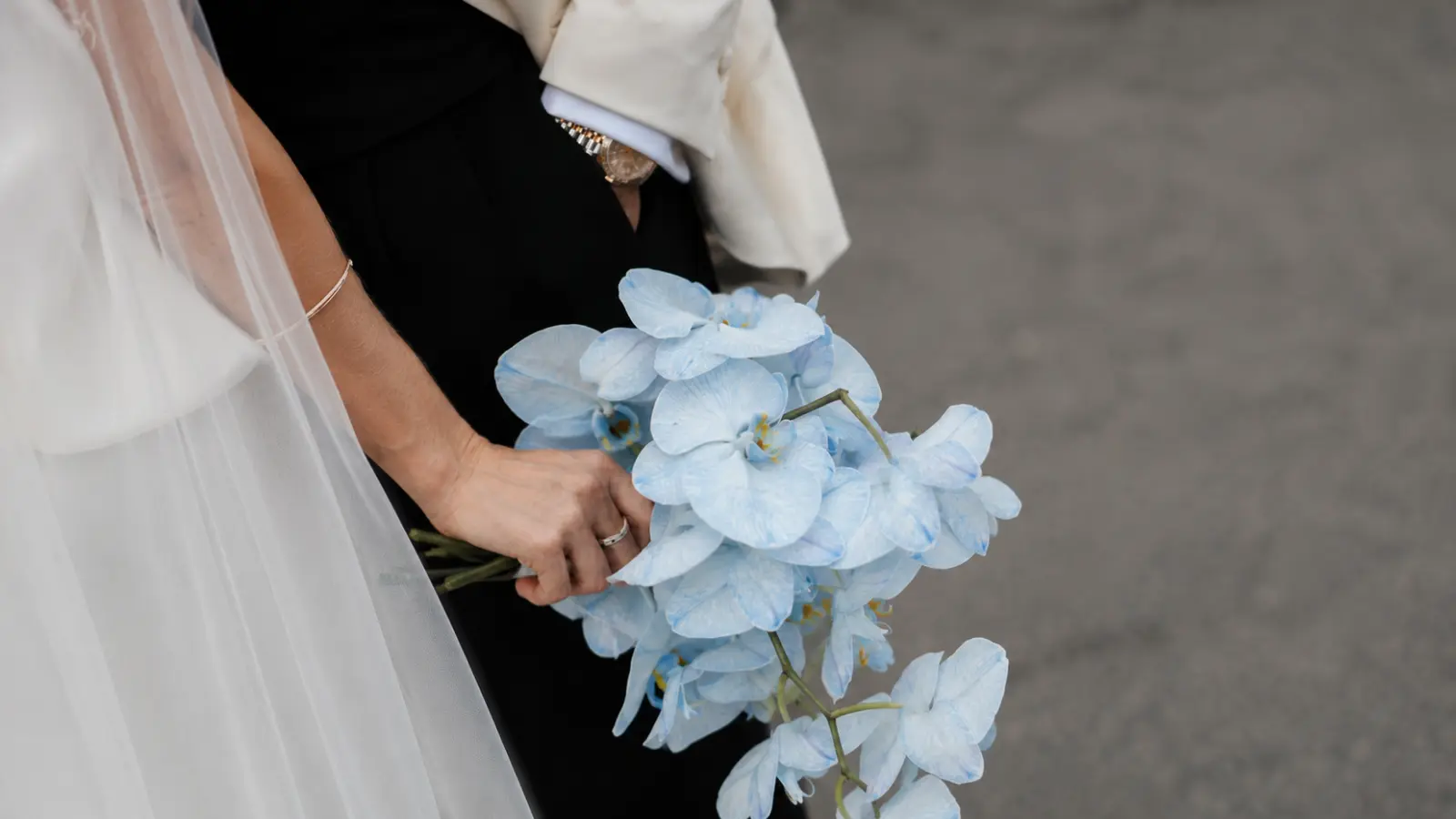
Pastel blue is the most distinctive option in the soft palette — it reads as unexpected in the best way, fresh and airy without the sweetness of pink or the warmth of peach. A genuinely pastel blue bridal bouquet is genuinely beautiful, and it’s rare enough that it feels like an individual choice rather than a default. The challenge is that true soft blue flowers are limited in availability, which requires some creative sourcing.
The flowers that achieve the softest, clearest pastel blue tones in bridal work are delphinium and larkspur in their palest blue varieties, hydrangeas in soft powder blue or ice blue, and muscari (grape hyacinth) in its most muted blue-violet tone. Soft blue scabiosa adds a delicate, petite quality. Forget-me-nots contribute a genuine cornflower-blue note in very small scale. Blue anemones lean into violet-blue and work well as an accent. What doesn’t exist naturally is a soft, full-bloom garden rose or peony in a clear pastel blue — the closest available alternatives are certain lavender varieties that have a distinctly blue quality in certain lighting.
The softest blue wedding bouquets pair blue with white or pale lavender rather than pink, which can pull the palette in competing directions. A bouquet of soft blue hydrangeas with white garden roses, pale blue delphinium, and deep green foliage reads as genuinely elegant and cohesive. White gives the blue tones contrast without disrupting the airy, fresh quality that makes a pastel blue bouquet distinctive in the first place.
Pastel Purple Bouquets
Pastel purple covers a range that includes soft lavender, lilac, pale violet, and mauve — and these tones read quite differently from one another, which makes it worth getting specific. Lavender has a grey-purple quality that photographs with a slightly muted, dusty tone. Lilac is clearer and brighter, more obviously purple-pink in character. Pale violet sits between the two but leans cooler. Mauve has a grey-pink undertone that’s less distinctly purple and reads more as a muted dusty rose.
Flowers that deliver pastel purple tones reliably include lisianthus in lavender and lilac varieties, which have a ruffled petal quality similar to garden roses and photograph beautifully. Sweet peas in soft lavender are a delicate, seasonal option. Soft lavender spray roses and garden roses in lilac tones work as focal flowers. Soft-toned clematis and scabiosa add a lighter, more airy quality as accent blooms. Soft wisteria, where available, adds a cascading looseness that can be used in more organic, draping arrangements.
The most natural pairing for a pastel purple bouquet is with blush or white flowers rather than with other pastels at competing brightness levels. Lavender and blush together create a particularly romantic, soft combination that works across spring and garden settings. Adding white or cream — either as flowers or in the ribbon wrapping — gives the soft purple tones definition and ensures the bouquet doesn’t disappear into a single tone. Foliage with a grey-green quality, like silver-dollar eucalyptus or dusty miller, reinforces the slightly cool, dusty quality of lavender and lilac tones in a way that standard dark green doesn’t.
Pastel Yellow Bouquets
Soft yellow is the warmest option in the pastel family and the one that most often surprises brides who weren’t sure it would work for them. A pale butter yellow or soft lemon tone in a bouquet adds warmth and light without the full brightness of a saturated yellow, and it pairs naturally with both white and blush in a way that creates a genuinely luminous, spring-morning effect.
Garden roses in the softest butter and cream-yellow tones, ranunculus in pale lemon and warm white-yellow, and soft yellow sweet peas are the most reliable flowers for a pastel yellow bouquet. Unlike some colors where the softest tones are hard to source, pale yellow flowers are broadly available and photograph with a gentle warmth that most other pastel colors can’t replicate. Soft yellow also bridges the pastel palette naturally — it sits comfortably alongside blush, lavender, and white without the tonal tension that can arise between, say, soft blue and soft pink.
The consideration with soft yellow is its relationship to the dress. A warm ivory or champagne gown pairs naturally with butter yellow, since both have warm undertones that complement each other. A cool, stark white gown can make a very pale yellow bouquet look almost white in comparison — slightly more saturation in the yellow, or the addition of blush or cream elements alongside it, resolves this. The full range of yellow bouquet ideas is covered in the yellow wedding bouquets guide, which includes a deeper look at shades from pale lemon through golden harvest.
Best Pastel Color Combinations
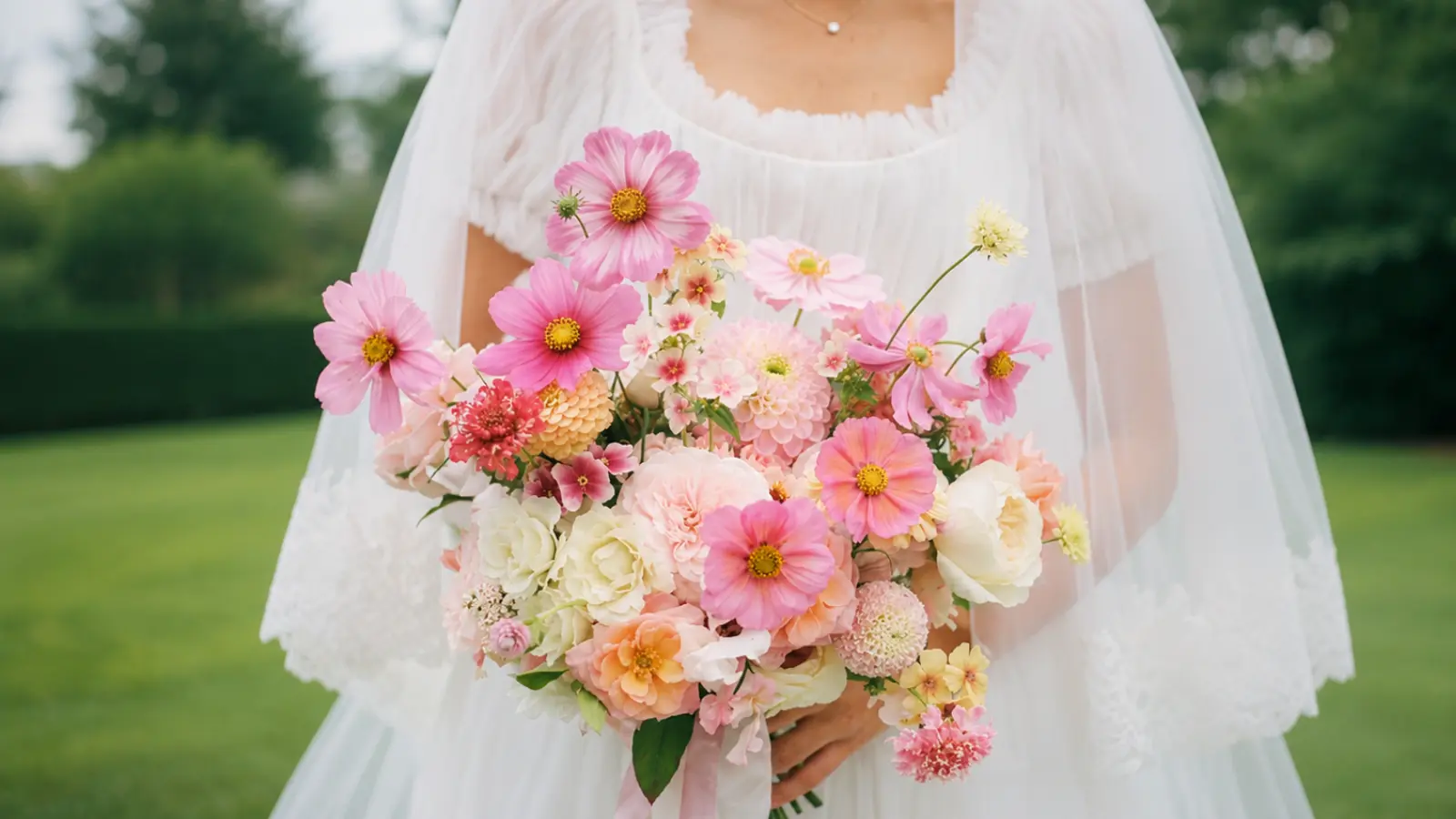
The most important principle in mixing pastel tones is consistency of saturation. When every flower in the arrangement sits at a similar, softened level of intensity, the palette reads as intentional and harmonious. When one element is significantly more saturated or brighter than the rest, it pulls focus in a way that disrupts the soft, cohesive quality the pastel palette is meant to achieve.
| Color Combination | Mood | Best Flowers | Best Suited For |
|---|---|---|---|
| Blush and White | Classic, romantic, universally wearable | Blush garden roses, white ranunculus, white sweet peas | Most venues and seasons; formal to garden settings |
| Blush and Lavender | Dreamy, garden-romantic, soft femininity | Blush peonies or roses, lavender lisianthus, lilac sweet peas | Spring gardens; outdoor and estate venues |
| Pastel Blue and White | Fresh, airy, gently unexpected | Soft blue hydrangeas, white garden roses, pale blue delphinium | Spring and summer; garden and coastal settings |
| Blush, Peach, and Cream | Warm, effortlessly elegant, sunset-soft | Peach ranunculus, blush garden roses, cream spray roses | Summer and early fall; outdoor and barn venues |
| Full Pastel Mix | Garden-gathered, effortless, maximally soft | Soft pink, lavender, pale yellow, and mint flowers; varied types | Outdoor, bohemian, and garden wedding settings |
The blush-and-white combination is the safest and most flattering across the widest range of situations — it adds depth to the soft palette without introducing complexity, and it reads as bridal in any context. The full pastel mix is the most expressive but the most dependent on a florist’s skill in keeping the varied tones cohesive. Blush, peach, and cream together is the direction for brides who want warmth in their palette without committing to full orange or coral territory.
Best Seasons for Pastel Wedding Flowers
Pastel palettes have a natural home in spring, and that alignment isn’t arbitrary. The flowers that deliver the fullest range of soft, nuanced tones — peonies, tulips, sweet peas, ranunculus, certain garden rose varieties — are at their peak availability and best quality between April and June. The light in those months also tends to be gentler and more diffused than summer’s direct sun, which photographs well with soft flower tones without the harshness that can make pastels look slightly washed out under bright midday light.
Summer extends the pastel season well, adding dahlias in soft blush and peach tones as peonies and tulips fade. Garden roses and ranunculus remain available through summer, and the looser, wildflower-style arrangements suit summer’s outdoor settings. The main adjustment in summer is to work with foliage and secondary flowers that don’t pull the arrangement warm — bright summer greens can read as too saturated against pastel flowers, making the soft tones look even paler by comparison.
Fall pastel bouquets are achievable but require more deliberate sourcing. Most fall-blooming flowers skew toward deep, warm, and saturated tones — dahlias in their richest colors, mums, and autumn foliage don’t naturally suggest a pastel palette. Garden roses and ranunculus from greenhouse cultivation remain available year-round and can anchor a pastel fall bouquet, supplemented by soft lisianthus, anemones, and carefully chosen foliage in muted rather than vivid green. Winter pastel bouquets follow a similar logic — greenhouse roses, ranunculus, and imported flowers can sustain the palette, though the range of available soft-toned flowers narrows and costs may be higher than in spring.
How to Keep Pastel Bouquets From Looking Too Pale
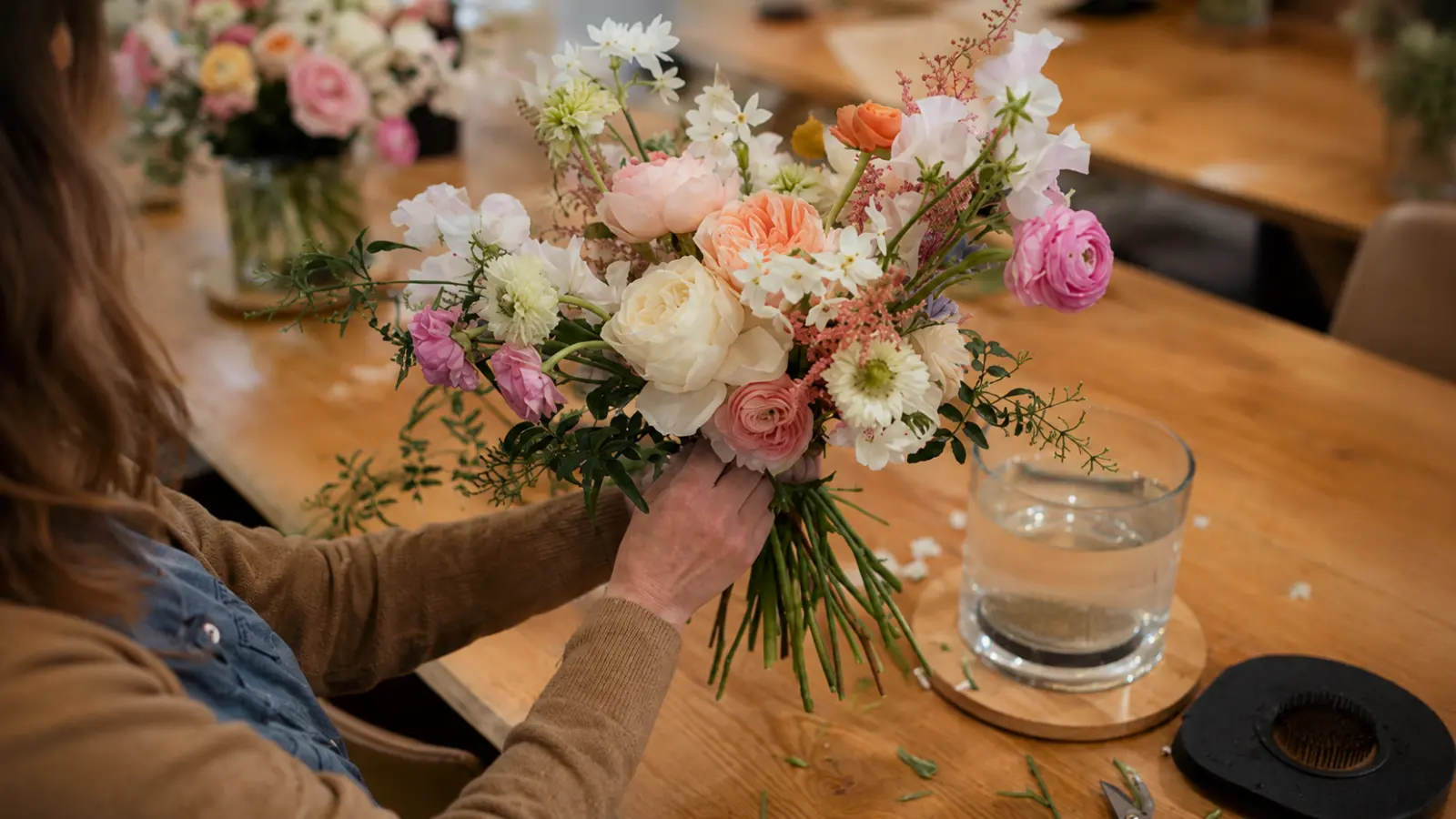
This is the most practical challenge with pastel bridal bouquets and the one most worth thinking through before finalizing a design. Soft colors lose definition in direct sun, in low light, and in photography exposures that are calibrated for the white of a bridal gown rather than for the subtlety of soft blooms. The result, when it isn’t planned for, is a bouquet that reads beautifully in person and disappears in photos.
The most effective adjustments fall into three categories: color, texture, and contrast. On the color side, using two or three slightly different pastel tones within the same arrangement creates depth that reads even when individual tones flatten slightly in photos. A bouquet of only pale blush garden roses looks far more one-dimensional in images than a bouquet of blush roses with soft pink ranunculus, cream sweet peas, and a few pale lavender lisianthus stems — even though every flower in both arrangements is “pastel.”
On the texture side, combining flowers with visibly different petal shapes and structures gives the camera something to work with. A full, layered peony beside a ruffled ranunculus beside a smoother garden rose creates variation that registers even in small or distant photos. Bouquets built from flowers with very similar bloom sizes and shapes tend to read as a single soft blur.
On the contrast side, deep green foliage is the single most reliable tool. Dark eucalyptus, Italian ruscus, bay leaves, or ferns provide a visual anchor that makes every pastel bloom stand out against it. Bright, lime-green filler greens compete with soft flowers rather than supporting them. A small amount of white or cream worked into an otherwise all-pastel arrangement provides similar contrast without introducing a competing color. Discussing this specifically with your florist — asking for darker foliage rather than bright green filler — is a straightforward request that makes a real difference in the final result.
Pastel Bouquet Mistakes to Avoid
Pastel bouquets are among the most popular choices in bridal florals, which means there are also well-worn paths toward arrangements that don’t achieve what the bride had in mind. These are the specific decisions worth reconsidering before committing to a design.
Building the entire bouquet from hydrangeas. Hydrangeas are lovely, broadly available, and frequently default-recommended by florists working on a budget. But a bouquet that’s primarily or entirely hydrangeas in a pastel tone tends to read as a shapeless, low-texture mass in photos — the large, similar-structured flower heads blend into one another without individual flowers being distinguishable. Hydrangeas used as backdrop or volume filler, with garden roses or ranunculus as focal flowers in front of them, read far better.
Using bright green filler greens. Standard green filler — the bright, vivid greenery that florists often add to fill space — reads as visually louder than any pastel flower alongside it. It pulls the eye away from the soft blooms rather than framing them. Asking specifically for dark foliage, muted greens, or grey-green varieties like eucalyptus is the most reliable way to avoid this.
Choosing a single pastel color and one flower type. An arrangement of all pale pink roses, all soft blue hydrangeas, or all white tulips can look beautiful on its own terms — but it often photographs flat because there’s no tonal or textural variation for the camera to read. Mixing even two flower types at slightly different soft tones creates significantly more visual depth.
Assuming pastel tones will match without seeing them together. “Blush,” “pale pink,” “soft rose,” and “baby pink” can all describe noticeably different tones depending on the supplier, the season, and the light. Two flowers described as blush by different florists may not look like a match in person. Requesting sample stems and viewing them together in natural light before finalizing the order is the most reliable way to confirm the palette is actually cohesive.
Skipping the photography conversation. Pastel bouquets benefit from a brief conversation with your photographer about how they’ll expose for the soft tones during portrait time. Over-exposure, which is common when photographers calibrate primarily for a white dress, can wash out soft flowers entirely. This is a simple conversation that takes two minutes and makes a real difference in the final images.
Pastel Wedding Bouquet Inspiration
Discover pastel wedding bouquets featuring roses, peonies, ranunculus, tulips, soft floral color palettes, romantic garden flowers, and elegant inspiration for every wedding style.
Soft Colors Create Lasting Elegance
Pastel wedding bouquets remain one of the most enduring bridal choices because they rely on balance rather than boldness. When different textures, subtle color variations, and carefully selected flowers come together, the result feels effortlessly romantic without ever looking ordinary.
Whether you prefer a classic blush bouquet, a soft garden-inspired arrangement, or a delicate mix of pastel shades, the most beautiful designs are those built with intention. By choosing flowers that complement your dress, season, and wedding style, you’ll create a bouquet that looks timeless both in person and in your photographs.
Frequently asked questions (FAQ)
How do you create a beautiful pastel wedding bouquet?
A beautiful pastel wedding bouquet starts with more than just soft colors. The best designs combine different pastel shades, varied flower textures, rich greenery, and subtle contrast to create depth without losing the delicate aesthetic. Choosing flowers that naturally bloom in soft tones and mixing focal flowers with lighter supporting blooms helps the bouquet feel romantic, intentional, and elegant rather than flat or washed out.
What flowers work best for a pastel wedding bouquet?
Garden roses, ranunculus, peonies, tulips, sweet peas, and lisianthus are among the best flowers for pastel wedding bouquets. Garden roses and ranunculus provide soft layers and photograph beautifully, while peonies create fullness during their spring season. Hydrangeas work well as supporting flowers rather than the main feature, helping add volume without making the bouquet lose texture.
How do you keep a pastel bouquet from looking washed out in photos?
The key is combining tonal variation, texture, and contrast. Using several soft shades instead of one single pastel color creates more depth, while mixing flowers with different petal shapes prevents the bouquet from blending into one soft mass. Deep green foliage and small touches of white or cream also help pastel flowers stand out naturally in photographs.
What are the best pastel color combinations for a wedding bouquet?
Blush and white remain the most timeless combination because they create softness without losing definition. Blush and lavender feel romantic, pastel blue and white create an airy spring look, and peach with cream adds warmth while remaining elegant. Multi-tonal pastel bouquets can also be beautiful when all the colors share the same soft level of saturation.
What season is best for pastel wedding flowers?
Spring offers the widest selection of naturally pastel flowers, including peonies, tulips, sweet peas, and many garden roses. Summer continues many of those options while introducing soft dahlias. Fall and winter pastel bouquets are still possible with greenhouse-grown roses, ranunculus, and carefully selected flowers, although availability and pricing may require additional planning.
Can a pastel bouquet work for a formal wedding?
Yes. A pastel bouquet can feel just as elegant as any bold color palette when built with refined flowers, structured design, rich foliage, and quality ribbon finishes. Garden roses, peonies, and ranunculus arranged in a full, balanced shape often look perfectly suited to formal, luxury, and black-tie weddings.