
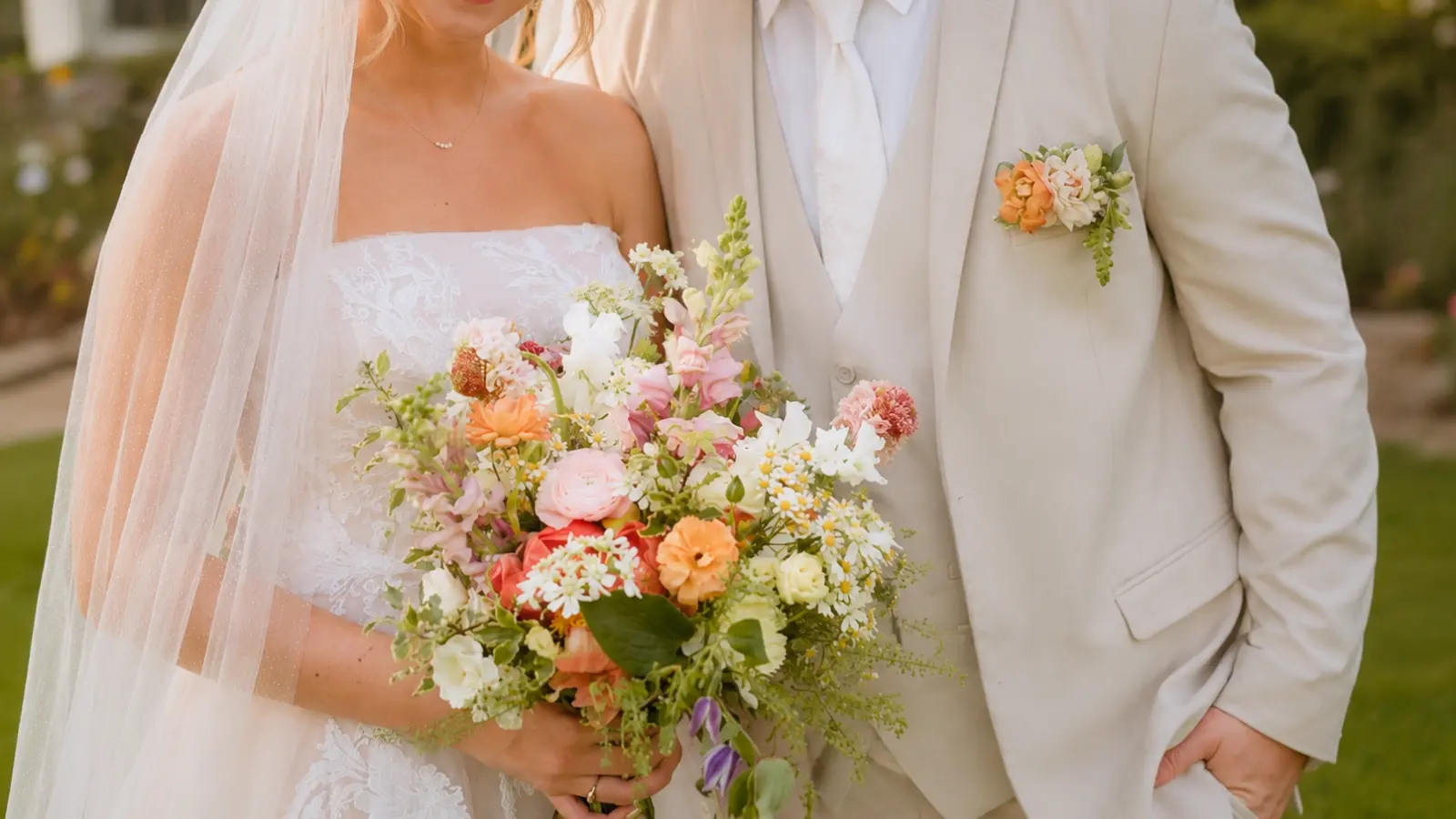
A wedding bouquet and boutonniere should feel like two parts of the same floral story, even though they’re very different in size and purpose. While the bridal bouquet naturally becomes the centerpiece of the wedding flowers, the groom’s boutonniere creates an equally important visual connection, especially in ceremony portraits and couple photographs where the two are seen side by side.
The goal isn’t to create a miniature version of the bouquet. Instead, the best floral designs share colors, textures, or a single flower variety to create harmony without looking identical. When planned together, the bouquet and boutonniere strengthen the overall wedding aesthetic while allowing each piece to serve its own role.
This guide explains how to coordinate a wedding bouquet and boutonniere within the broader world of wedding bouquets, including who wears a boutonniere, how to match flowers and colors, pricing, attachment styles, and common mistakes to avoid.
What Is a Boutonniere?
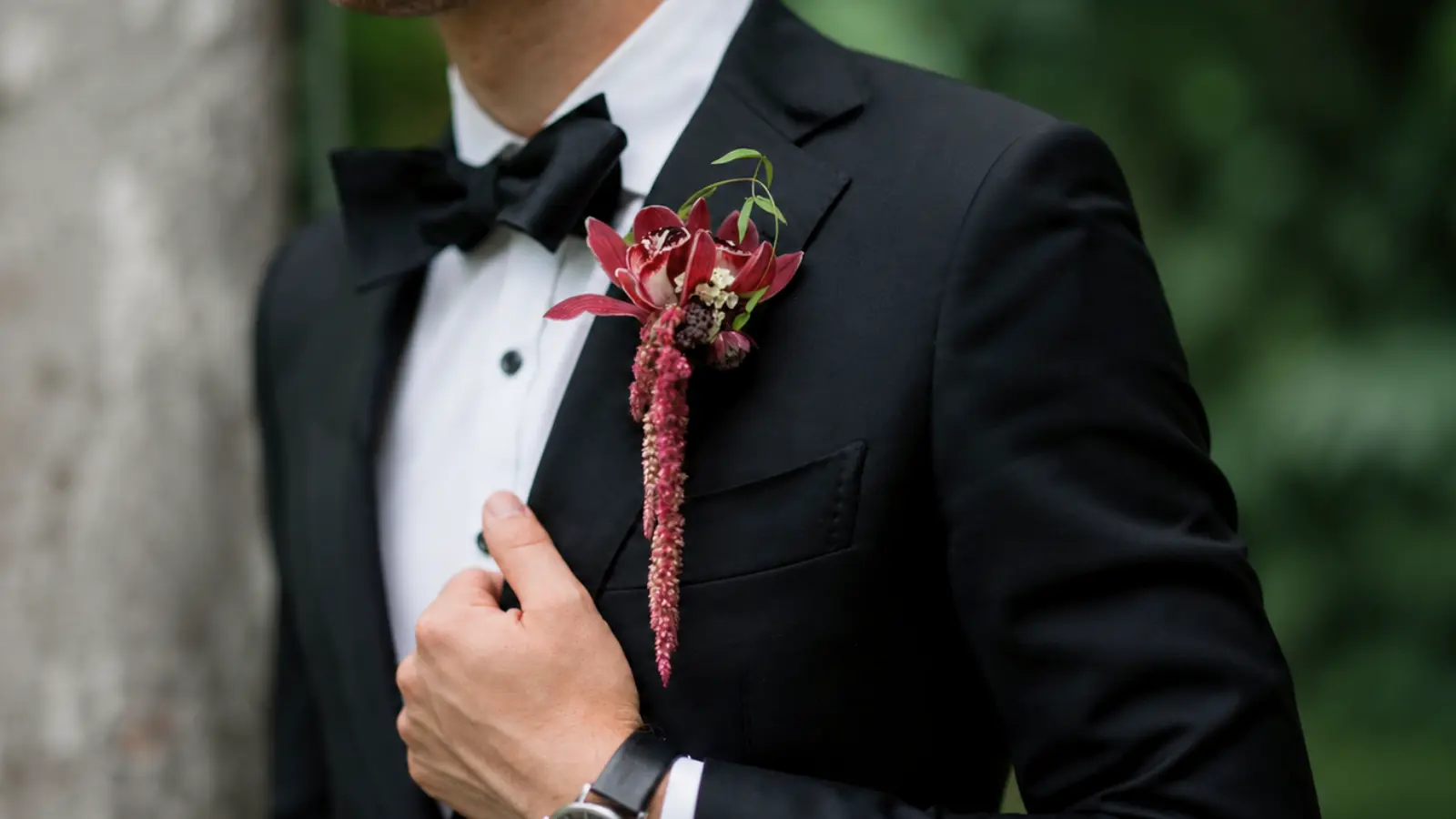
A boutonniere is a small floral arrangement, usually built around one or two flowers and a touch of greenery, worn pinned to a jacket lapel. The word comes from the French for “buttonhole,” which is literally where it was traditionally worn — through the buttonhole built into formal jacket lapels, though modern pinning methods have made that less essential.
Functionally, a boutonniere does for the men in a wedding party what the bouquet does for the women: it adds a small floral note to the formal look and visually marks who’s part of the wedding party versus a guest. It’s deliberately scaled down — a single accent rather than a full arrangement — which means the flower choice and craftsmanship matter more per stem than they do in a larger bouquet, since there’s nowhere for an awkward detail to hide.
Who Wears a Boutonniere at a Wedding?
The groom wears one, almost without exception, and groomsmen typically follow. Beyond that, boutonnieres extend to close family members on both sides — fathers, grandfathers, and sometimes stepfathers or father figures who are being honored as part of the ceremony.
Some weddings extend the list further to include the officiant, ushers, or the ring bearer, depending on how formal the wedding party structure is and how many people the couple wants visually marked as part of the celebration. There’s no fixed rule here; it comes down to who the couple wants distinguished in photos and during the receiving line. A good florist will ask for a full headcount of who needs one well before the wedding so nothing gets left out at the last minute.
Should the Boutonniere Match the Bridal Bouquet?
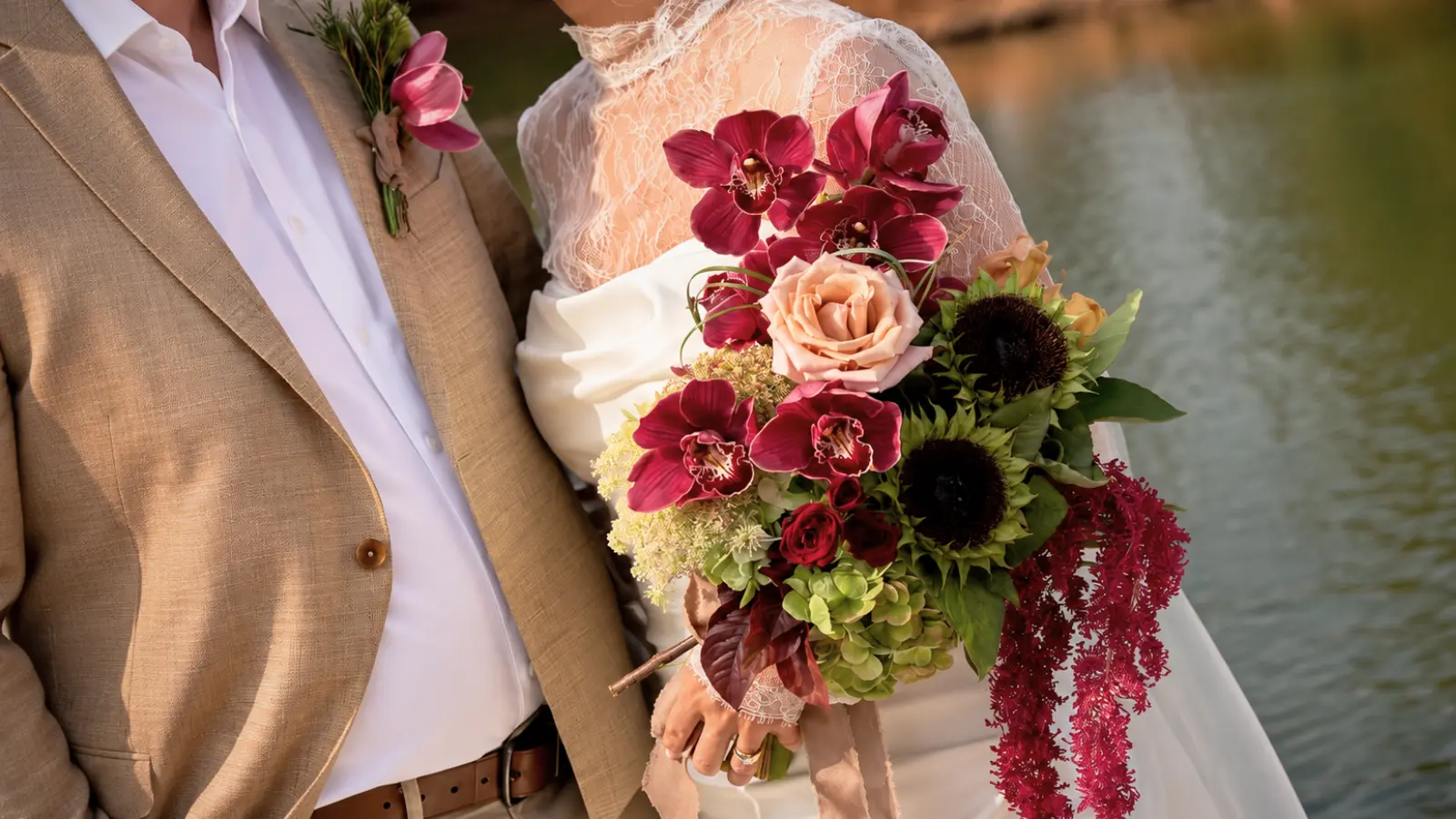
Yes, but loosely — and this is where a lot of couples either overthink it or skip the decision entirely. A boutonniere that has no visual relationship to the bridal bouquet looks like an unrelated detail rather than part of the same wedding. One that tries to be an exact miniature of the bouquet usually looks fussy and overworked for something this small.
The sweet spot is a single point of connection: the same flower in a smaller scale or the same wedding bouquet color palette, or a matching ribbon wrap that echoes the bouquet’s handle treatment. That’s typically enough for the two to feel like they belong to the same wedding without the boutonniere trying to do too much. Florists who build the bouquet and boutonnieres as a coordinated set, rather than as separate orders, tend to land on this balance more naturally than when the boutonniere is requested as an afterthought.
How to Match Bouquet and Boutonniere Flowers
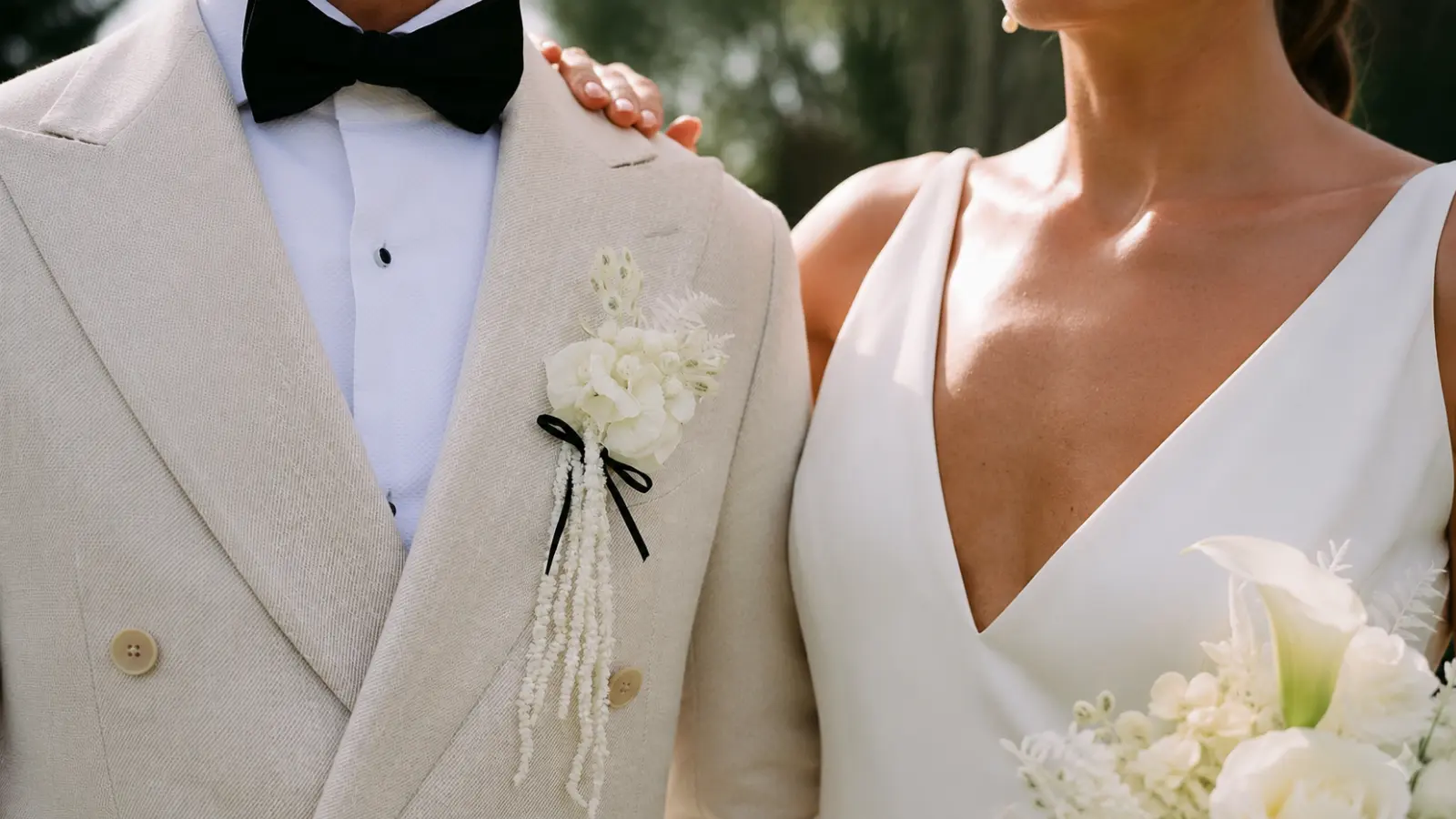
There are really two paths here, and most successful pairings pick one rather than blending both halfway.
| Approach | How It Works | Best For |
|---|---|---|
| Same flower | One bloom from the bouquet used alone in the boutonniere | Bouquets with one clear focal flower (a single rose, a single dahlia) |
| Same color, different flower | A smaller, sturdier flower in the bouquet’s color palette | Mixed or textured bouquets where no single bloom dominates |
The “same flower” approach works cleanly when rose wedding bouquets feature a single garden rose variety, for example — that scales down well on its own. The “same color, different flower” approach tends to work better for bouquets with several flower types mixed together, since trying to shrink the whole bouquet into a boutonniere usually looks cluttered. In that case, a single sturdier bloom in a matching shade reads as connected without the miniaturization problem.
Groom Boutonniere vs. Groomsmen Boutonnieres
The groom’s boutonniere usually carries one small distinction from the groomsmen’s — not a different flower entirely, but a subtle marker that sets him apart the same way different bridal bouquet styles distinguish the bride from the bridesmaids. This might mean one extra accent bloom, a slightly larger size, or a different ribbon color.
Groomsmen boutonnieres typically stay identical to each other for visual consistency in photos, using the same flower and greenery across the group. Fathers and grandfathers are sometimes given a slight variation — a different ribbon color, for instance — to distinguish their role from the groomsmen without requiring an entirely separate design. This kind of small hierarchy mirrors what works on the bridal side and helps photos read clearly at a glance: who’s the groom, who’s the wedding party, who’s family.
Best Flowers for Wedding Boutonnieres
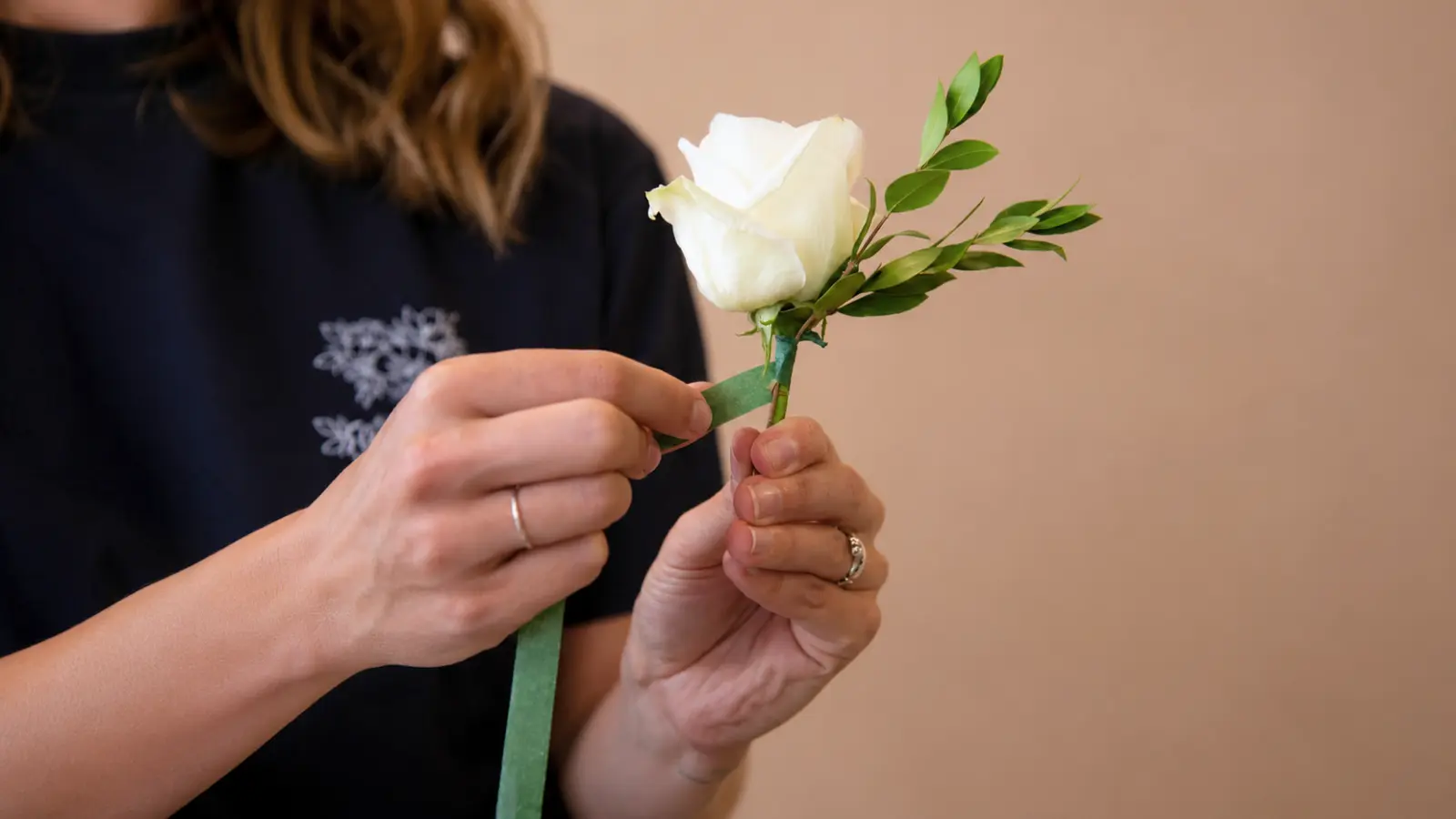
Durability matters more for boutonnieres than almost any other floral element in the wedding, since they’re pinned in place for hours, brushed against during hugs, and rarely given a second thought once they’re on. A boutonniere that wilts by the reception is a common, avoidable disappointment.
- Spray roses and garden roses remain the most popular boutonniere flowers because they hold up well and scale down cleanly to a single bloom.
- Ranunculus works similarly and adds texture without much added fragility.
- Succulents have become especially popular in rustic wedding bouquets and outdoor weddings, since they don’t wilt at all and can be kept as a small keepsake afterward.
- For greenery, eucalyptus and ruscus are standard choices that add structure without overwhelming the small scale of the piece.
Delicate flowers like sweet peas or ranunculus in their fullest bloom stage can struggle to last through a long reception, so it’s worth asking your florist specifically how a chosen flower holds up over several hours, not just how it looks at the moment it’s pinned on.
Pin-On, Pocket and Magnetic Boutonnieres
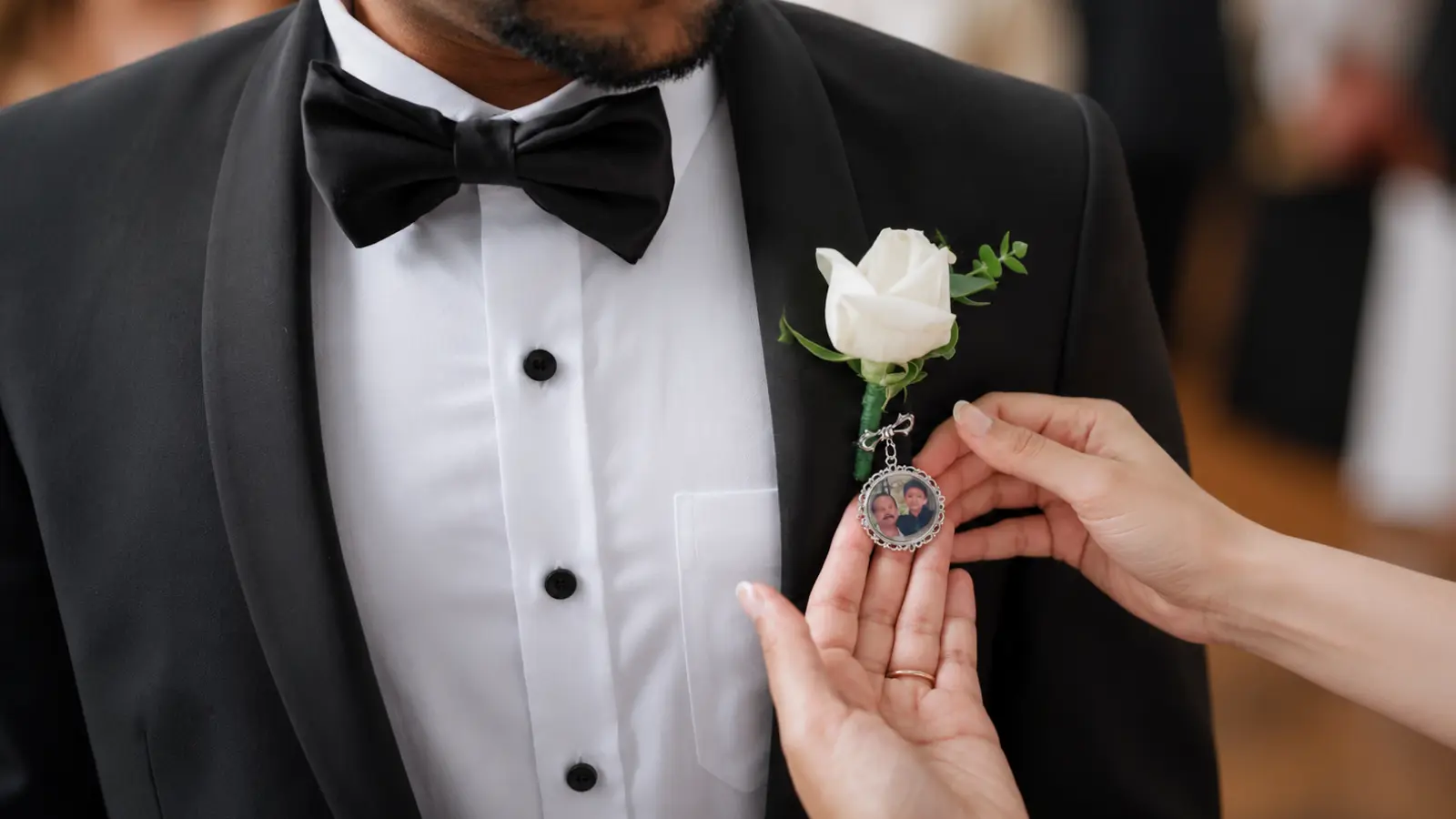
How a boutonniere attaches matters more than it might seem, especially for anyone unfamiliar with pinning one correctly. The traditional pin-on method can damage delicate fabrics like silk or velvet if done carelessly, which has pushed several alternatives into wider use.
- Pin-on. The classic method, using a corsage pin through the lapel. Reliable, but requires some care with thinner or more delicate suit fabrics.
- Pocket boutonniere. Designed to sit inside a jacket’s breast pocket rather than pinned to the lapel, avoiding fabric damage entirely. A more modern, increasingly common choice.
- Magnetic boutonniere. Uses a small magnet on each side of the fabric instead of a pin, making it the easiest option for anyone nervous about pinning correctly, though it can be slightly less secure on heavier flowers.
For wedding parties with several groomsmen who may not have pinned a boutonniere before, magnetic or pocket-style options tend to reduce last-minute fumbling in the moments before photos start. Whichever method you choose, doing a quick trial run before the wedding day, even just once, prevents the scramble of figuring it out for the first time while everyone’s already dressed.
How Much Do Wedding Boutonnieres Cost?
Boutonnieres are inexpensive individually, but they still contribute to the overall wedding bouquet cost but like bridesmaid bouquets, the per-item cost adds up once you count groomsmen, fathers, grandfathers, and anyone else included in the order.
| Boutonniere Type | Typical Range (Each) | What Drives the Price |
|---|---|---|
| Simple, single-bloom design | $15–$25 | Greenery plus one accessible flower |
| Premium flower or layered design | $25–$35 | Garden roses, ranunculus, or added texture |
| Specialty (succulent, unique pairing) | $20–$40 | Non-traditional material, custom design work |
If you’re managing a tighter floral budget, boutonnieres are a reasonable place to simplify without it reading as a cut corner — a clean, single-flower design rarely looks lacking next to a more elaborate bouquet, since the two pieces aren’t expected to match in complexity to begin with.
Bouquet and Boutonniere Mistakes to Avoid
Most boutonniere problems come from treating it as an afterthought rather than a small but visible part of the wedding’s overall floral story.
- Making it too large. A boutonniere built like a mini bouquet rather than a single accent tends to look heavy and overworked on a lapel.
- Choosing a flower that won’t survive the day. Delicate blooms often used in fresh wedding bouquets can bruise or wilt by the reception, fixable disappointment — ask specifically about durability.
- Picking a color with no connection to the bouquet. A boutonniere in an unrelated color reads as disconnected rather than intentional, even if both pieces are individually attractive.
- Ordering boutonnieres separately, late, and without a full headcount. Confirm everyone who needs one — including last-minute additions like a stepfather or an officiant — well before the final floral order goes in.
Most of these are solved simply by treating the boutonniere order with the same intentionality as the bouquet, even though it’s a much smaller piece. A few extra minutes of planning here prevents the most common version of “it looked fine, but it didn’t really go with anything.”
Wedding Bouquet and Boutonniere Inspiration
Discover elegant wedding bouquet and boutonniere pairings, matching flower ideas, groom boutonniere inspiration, coordinated wedding florals, and timeless styling ideas for every wedding.
Small Details Create the Strongest Visual Connection
A wedding bouquet and boutonniere don’t need to match perfectly to look beautiful together. In fact, the most elegant pairings usually rely on subtle connections—a shared flower, a repeated color, or complementary textures—rather than creating an exact miniature version of the bridal bouquet.
When both pieces are designed as part of the same floral vision, they naturally enhance your wedding photographs and create a polished, cohesive look throughout the ceremony. Giving the boutonniere the same thoughtful attention as the bridal bouquet ensures that every member of the wedding party feels connected to the overall design while allowing the bride and groom to remain the visual focal point.
Frequently asked questions (FAQ)
Should the boutonniere match the bridal bouquet?
Yes, but it should coordinate rather than copy. Most florists repeat one flower, one color, or one design detail from the bridal bouquet in the groom’s boutonniere to create a visual connection. This subtle approach keeps the bouquet and boutonniere feeling like part of the same wedding while allowing each piece to suit its own scale and purpose.
What flower should the groom’s boutonniere have?
The best choice is usually one of the bouquet’s focal flowers or a smaller bloom in the same color palette. Spray roses, garden roses, ranunculus, orchids, carnations, and small succulents are among the most popular options because they are durable, photograph well, and maintain their shape throughout a long wedding day.
Who wears a boutonniere at a wedding?
The groom almost always wears a boutonniere, followed by the groomsmen, fathers, grandfathers, and other close family members. Depending on the wedding, the officiant, ushers, ring bearer, or other honored participants may also wear one. The final list depends on how the couple chooses to recognize members of the wedding party.
What is the difference between the groom’s boutonniere and the groomsmen’s?
The groom’s boutonniere is usually distinguished by one small design detail, such as a premium flower, an extra accent bloom, or a slightly different ribbon wrap. The groomsmen’s boutonnieres typically remain identical to one another, creating visual consistency while allowing the groom to stand out naturally.
How do you attach a boutonniere correctly?
A traditional boutonniere is worn on the left lapel and secured from behind with one or two floral pins. Pocket and magnetic boutonnieres have also become increasingly popular because they are easier to wear and reduce the risk of damaging delicate suit fabrics. Whichever style you choose, testing it before the wedding helps avoid last-minute adjustments.
How much do wedding boutonnieres usually cost?
Most wedding boutonnieres cost between $15 and $35 each, depending on the flower selection, floral complexity, and local florist pricing. Although each boutonniere is relatively inexpensive on its own, ordering them for the groom, groomsmen, fathers, grandfathers, and other family members can become a meaningful part of the overall floral budget.