Bridal bouquet styles are defined by shape rather than flowers, and choosing the right silhouette can have a bigger impact on your overall bridal look than the blooms themselves. Whether you love a classic round bouquet, a dramatic cascade, a relaxed hand-tied arrangement, or a modern single stem, the bouquet’s shape influences how it complements your dress, photographs throughout the day, and feels in your hands during the ceremony.
Many brides begin by choosing flowers or colors, but professional florists usually make one important decision first: the bouquet style. Once the overall shape is established, selecting flowers, textures, and seasonal blooms becomes much easier because every design choice supports a clear visual direction.
This guide explores the most popular shapes within the broader world of wedding bouquets, including round bouquets, cascades, hand-tied arrangements, nosegays, arm sheaves, crescents, and single stems, along with practical advice for matching each style to your dress, venue, and wedding aesthetic.
Style Means Shape, Not Flowers
This is the distinction most bouquet conversations skip, and it creates real confusion during florist appointments. “Style” in bridal florals refers to the silhouette of the arrangement — round, cascading, loose, structured, arm-length, single stem. It’s the shape the flowers form together, not the specific blooms or the color palette.
You can have a round bouquet made entirely of peonies or one made of wildflowers and eucalyptus — the style is the same. Your wedding bouquet flowers determine color, texture, and seasonal availability, while the shape determines how the arrangement photographs, sits against your dress, and feels in your hands. Both decisions matter, but they’re separate decisions, and the shape usually comes first.
Understanding this makes florist conversations significantly more useful. Rather than describing how you want the flowers to look, you can describe the silhouette you’re after — and then work with your florist on which flowers best achieve it.
Round / Posy Bouquet
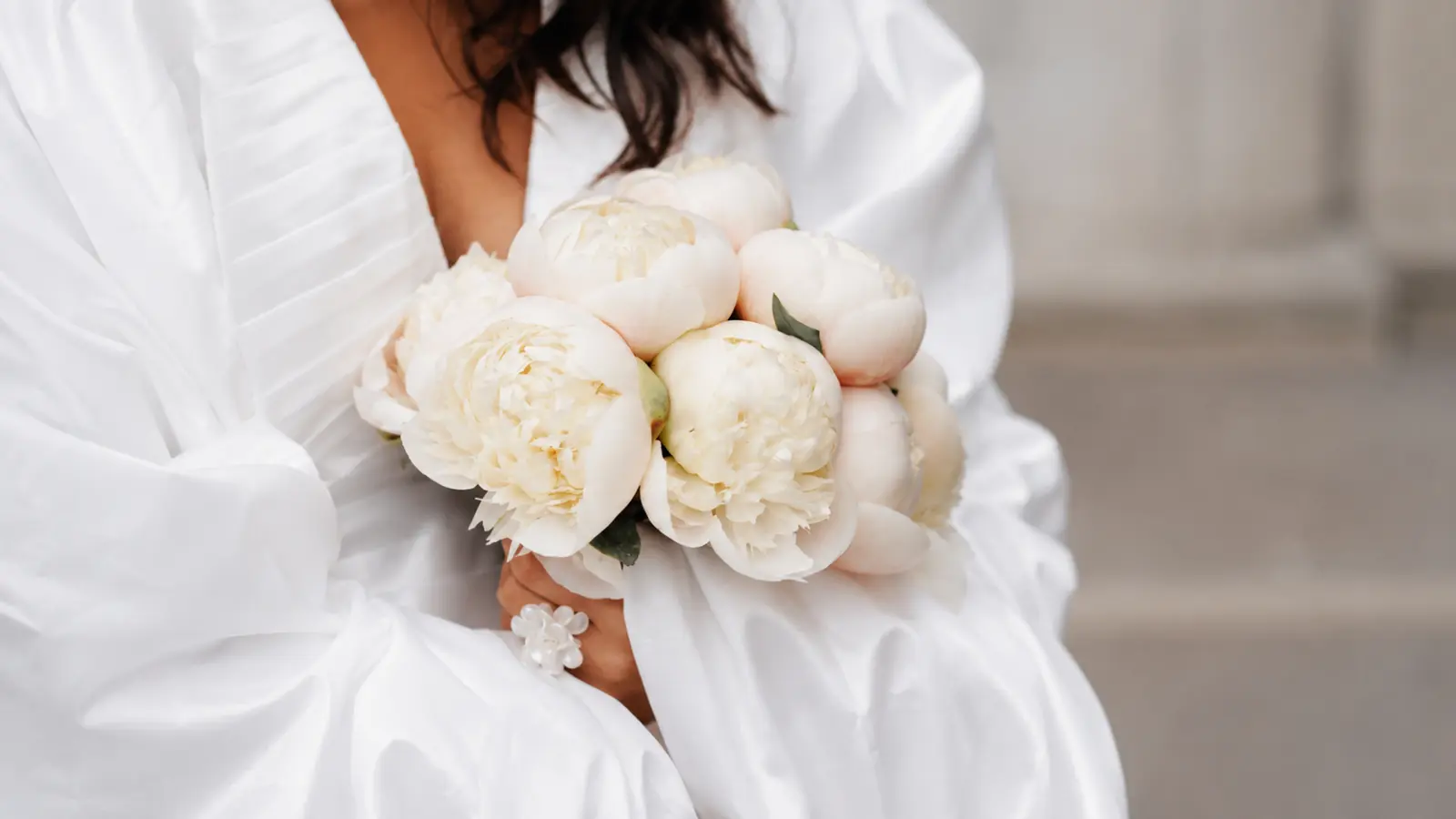
The round bouquet is, without question, the most widely requested style. It’s a compact, dome-shaped arrangement — flowers gathered into a tight, full sphere with a straight handle below. What makes it so consistently popular isn’t a single visual characteristic but rather its adaptability: it reads as formal in a cathedral, relaxed in a garden, classic in a ballroom, and intentional nearly everywhere else.
In terms of size, round bouquets run a wide range. A tight, smaller version with a single flower type can feel almost sculptural. A larger, fuller version with several blooms layered together creates the lush, overflowing quality that dominates editorial wedding photos. Both are “round” — the diameter and stem count determine the weight within the style.
The round bouquet works well with almost every dress silhouette, which is partly why it’s the default recommendation. It pairs particularly well with A-line and ball gown silhouettes, where the rounded skirt creates a natural visual echo with the round bouquet shape. For sheath and fitted dresses, a smaller round or nosegay is usually the better choice — a large dome-shaped bouquet against a sleek column dress can look slightly incongruous.
One thing worth noting: a round bouquet is not inherently simple. The tighter the construction and the more varied the flowers, the more skilled the execution needs to be. A loosely built round that’s lost its dome shape reads as an unfinished hand-tied, not a round bouquet.
Cascade / Waterfall Bouquet
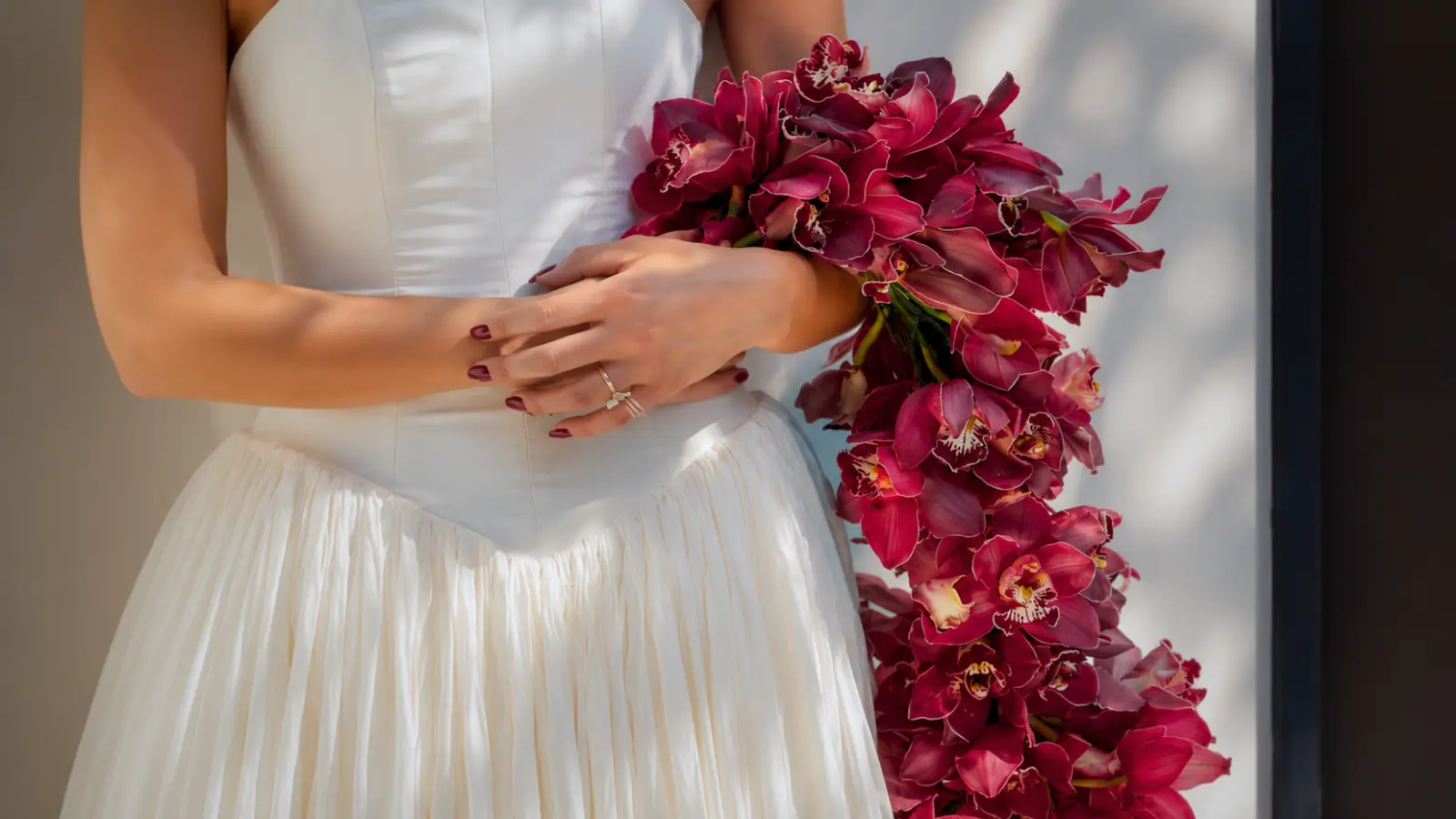
The cascade is the most architecturally dramatic of the major styles — flowers arranged to flow downward from a central mass, extending past the hands in a trailing shape that can range from a few additional inches to a dramatic length that reaches mid-thigh. It’s the bouquet most associated with formal, traditional weddings, and for good reason: it photographs magnificently in a cathedral setting or against a ballgown with a long train.
What has changed in cascading wedding bouquets is the construction: stiff, triangular arrangements have increasingly given way to softer, more organic interpretations. Modern cascades tend to use trailing greenery, hanging orchids, or loosely placed blooms that drape rather than point. The overall impression is still downward movement, but the look is softer and more natural than the traditional version.
| Structured Cascade | Organic Modern Cascade | |
|---|---|---|
| Shape | Triangular, defined, formal | Loose, flowing, more asymmetric |
| Flowers | Stephanotis, calla lilies, formal roses | Trailing orchids, garden roses, hanging amaranthus |
| Venue | Grand cathedral, ballroom | Estate, garden, modern venue |
| Dress pairing | Ball gown with volume | Ball gown or fit-and-flare |
Both versions share one practical consideration: the cascade is a heavier bouquet to carry. A long trail of flowers adds weight that accumulates over several hours. If you’re planning a long ceremony or a day with many photos, talk to your florist about how the cascade is constructed internally — a well-built one distributes weight more evenly than one that’s top-heavy.
Hand-Tied / Garden Bouquet
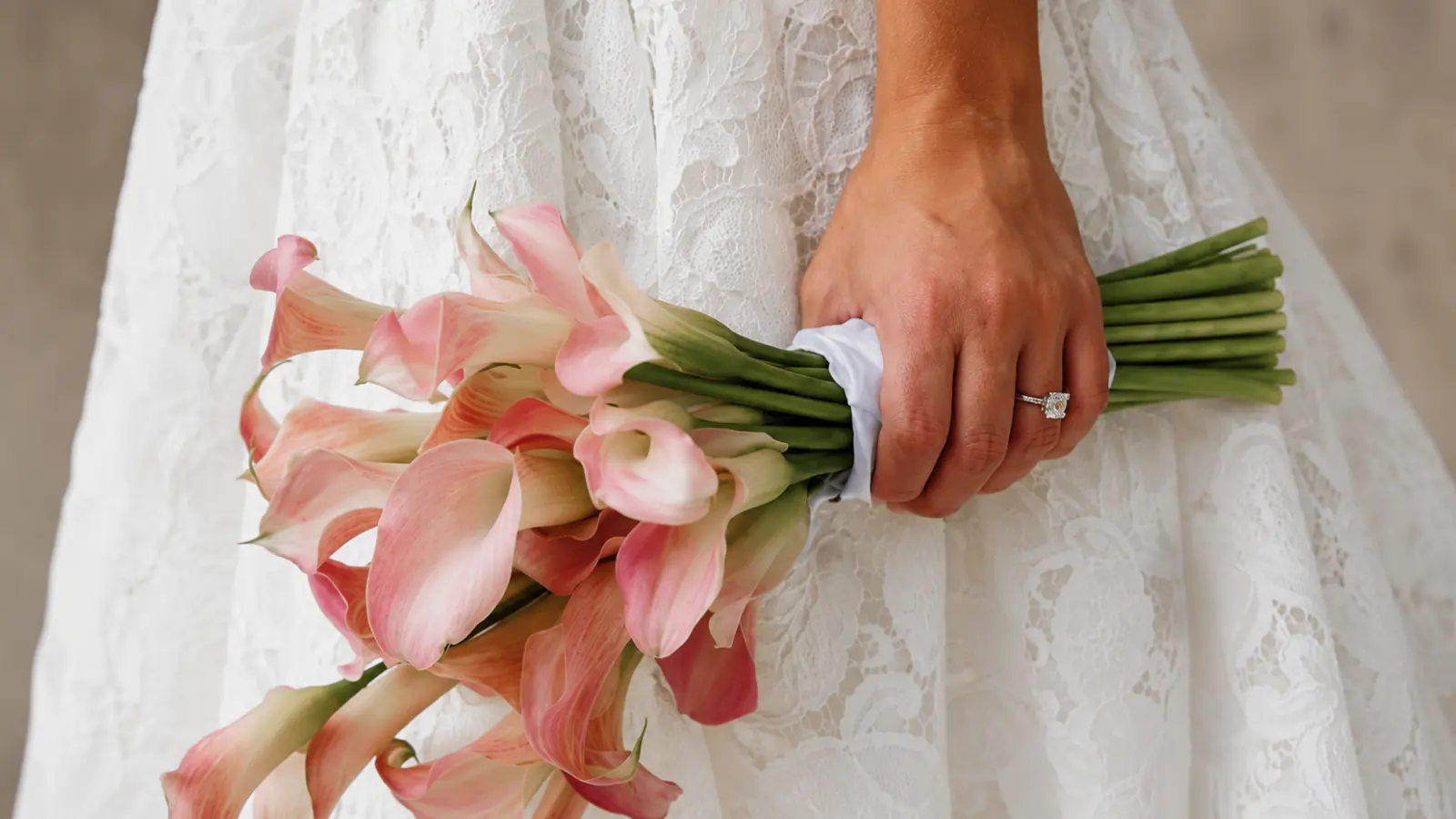
The hand-tied bouquet is the style that looks most like flowers gathered directly from a garden — loosely arranged, slightly asymmetric, with stems visible below the bloom area. It’s less structured than a round bouquet and less dramatic than a cascade, but it has a natural quality that photographs with a warmth and effortlessness that’s genuinely difficult to achieve with tighter styles.
The key visual marker is the stems. In a hand-tied bouquet, the handle is intentionally part of the look: stems bound with ribbon or twine, often left at a longer length than in other styles. This gives the bouquet an organic, gathered quality — it looks like something picked, not arranged, even when the composition has been very deliberately built.
Hand-tied bouquets work particularly well in outdoor and garden settings, where the loose style matches the surroundings. They are also among the most DIY-friendly options for anyone learning how to make a wedding bouquet, since the hand-tied technique is genuinely approachable without professional training. For formal ceremonies in highly structured venues, the looseness of a hand-tied arrangement can sometimes feel slightly underdressed — though this depends entirely on the flowers and how the bouquet is finished.
Nosegay
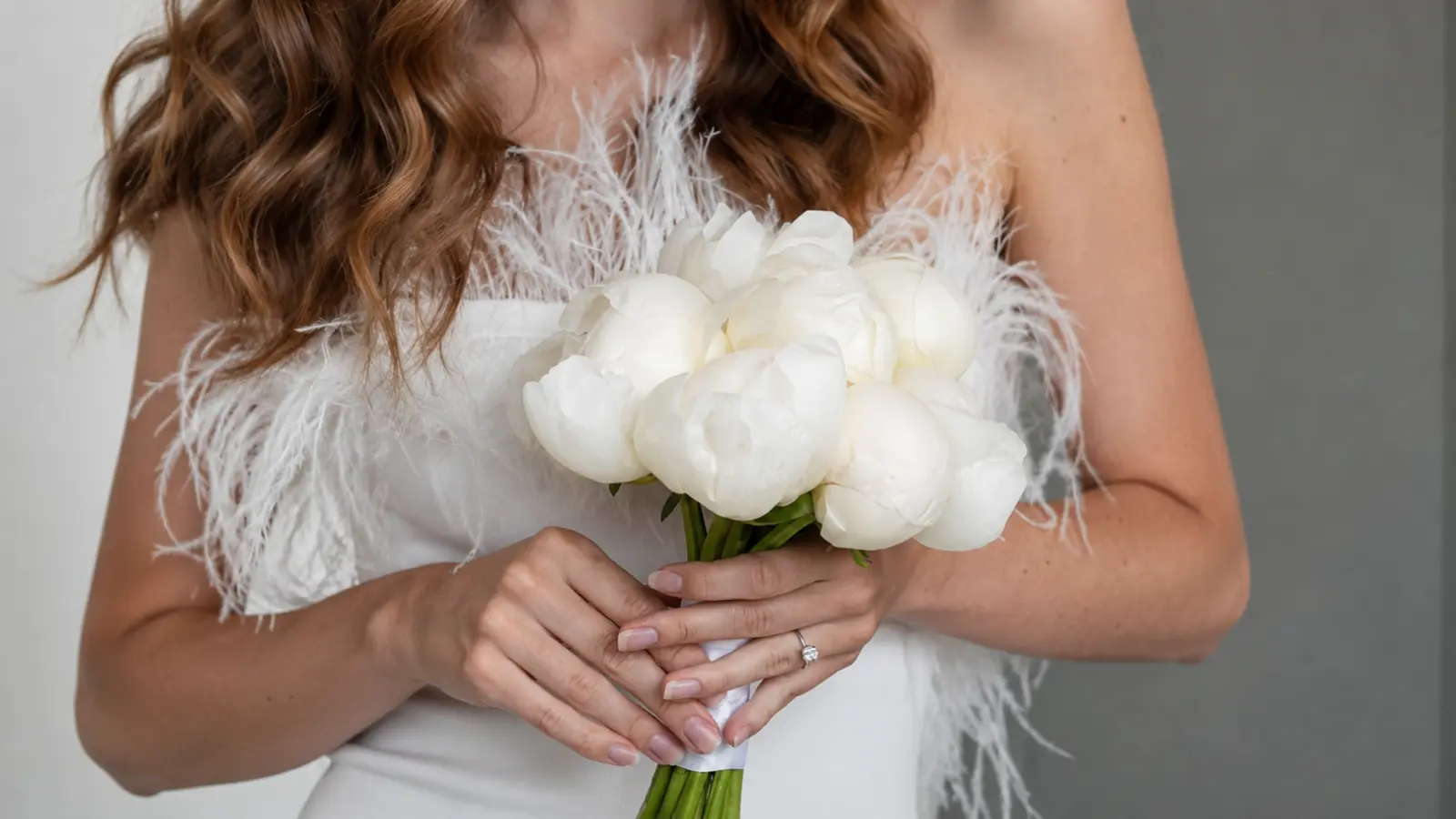
The nosegay is essentially a smaller, tighter version of a round bouquet — which sounds like a minor distinction until you see them next to each other. A nosegay is compact and close-held, traditionally just a few inches in diameter, with flowers arranged in an almost circular cluster and stems cut short. It reads as deliberate and refined rather than lush and full.
The practical difference from a round bouquet goes beyond size. A nosegay typically uses fewer flower varieties — sometimes just one — which gives it a graphic, almost graphic-design quality. It is a strong choice for minimalist brides, embellished gowns, and wedding bouquets for bridesmaids that need to remain cohesive but more scaled back than the bridal arrangement.
Height and frame factor more with a nosegay than with other styles. On a petite bride, a nosegay can look perfectly proportional in full-length shots. On a taller bride with a dramatic gown, a very small nosegay may get visually lost — a slightly larger round would likely serve better. This is worth raising with your florist once you’ve established the dress and have a sense of how much visual weight the bouquet needs to carry.
Arm Sheaf / Presentation Bouquet
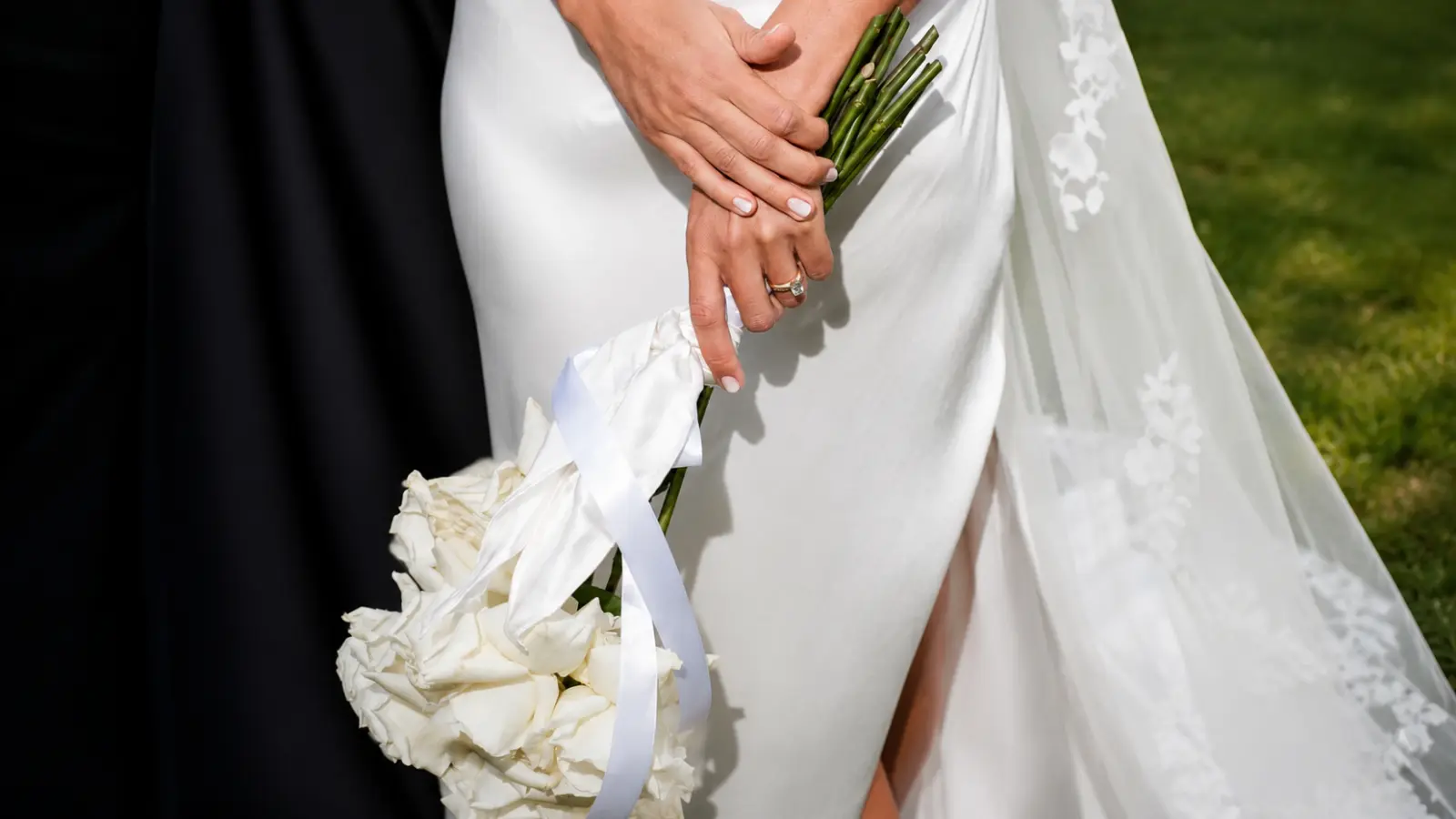
The arm sheaf is the style that looks least like what most people imagine when they picture a wedding bouquet — and that’s exactly what makes it interesting. Rather than held in front of the body, it’s cradled in the crook of one arm, long stems extending across the forearm like flowers just gathered from a field. The overall impression is editorial rather than traditional, more photo spread than wedding catalog.
Visually, the arm sheaf is an excellent match for sheath and column gowns, where the clean silhouette of the dress benefits from something equally clean rather than a bulky arrangement held in front of it. Brides considering modern wedding bouquets often gravitate toward the arm sheaf when wearing minimalist, architecture-forward gowns. It’s also one of the few bouquet styles that allows stems to remain a central design feature — long, architectural stems are part of the visual, not something to be hidden under ribbon.
The practical adjustment: an arm sheaf shifts where your hand rests. Instead of holding stems in front of you, one arm is cradling the bouquet while the other may rest naturally or hold your partner’s hand. This is worth practicing once before the wedding, since it changes both your posture and where the photographer will focus. Brides who haven’t carried an arm sheaf before can sometimes look slightly uncertain about how to hold it — which is less about the style and more about rehearsal.
Crescent Bouquet
The crescent is one of the more structured and technically complex bouquet styles — a curved, C-shaped arrangement built so that flowers extend from a central mass in two opposing directions, curving slightly inward to form a crescent shape when viewed from the front. It requires significant construction skill to execute correctly, which is part of why it’s less commonly seen than round or cascade styles today.
The crescent reads as formal and slightly vintage. It appears most naturally in traditional religious ceremonies and in bridal aesthetics that lean toward the classic end of the spectrum — think fitted lace gowns, cathedral veils, pearl details. Modern brides who want a highly structured look with visual distinction sometimes request it, though they may need to specifically seek out florists who are practiced in the style.
If the crescent appeals to you, ask your florist specifically whether they’ve built one before and whether they have photos of previous work. The style is unforgiving — an imprecisely built crescent loses the shape that defines it, and the result can look like a failed cascade rather than a crescent. Seeing their previous execution is a reasonable and practical request.
Single Stem
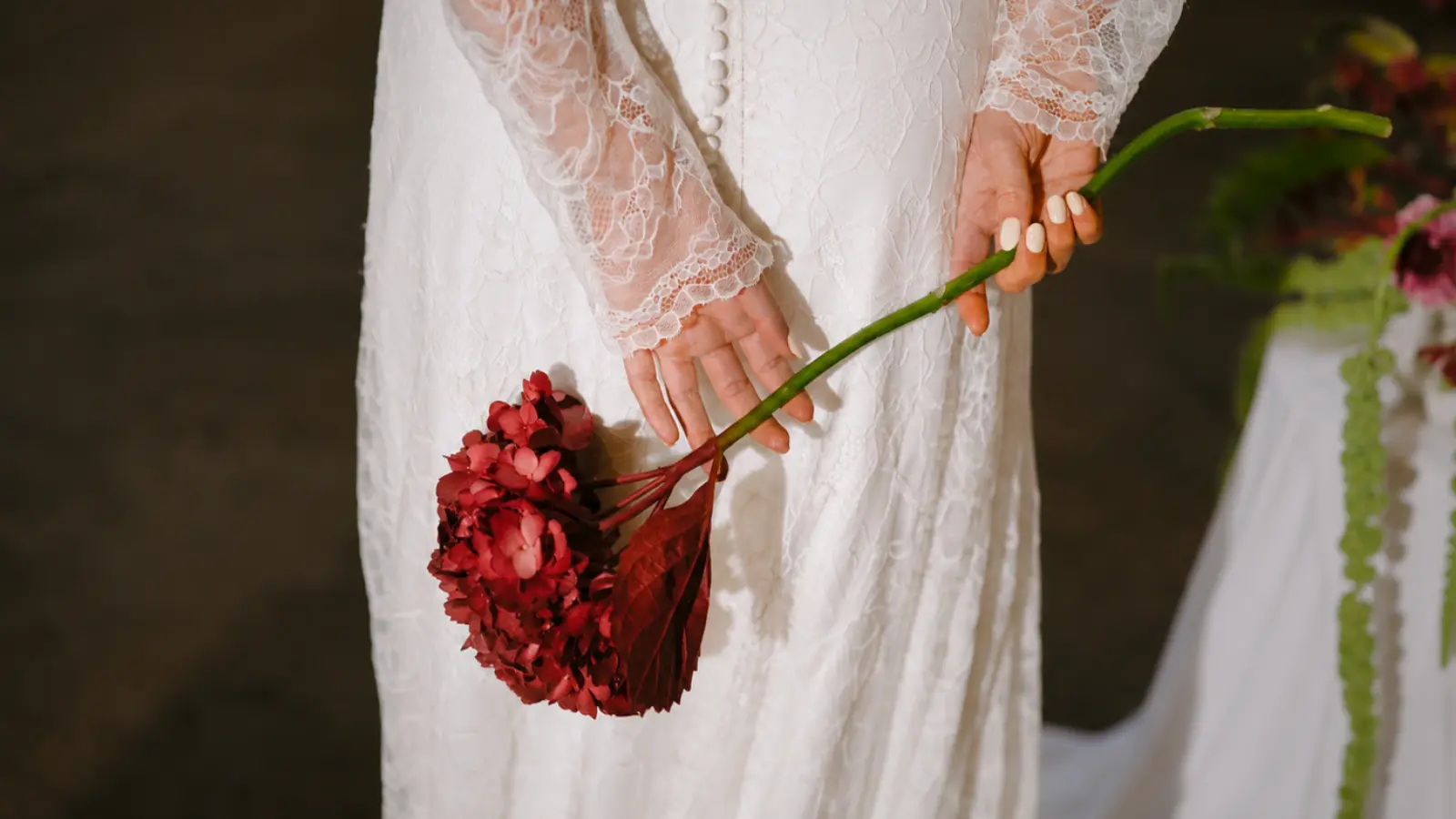
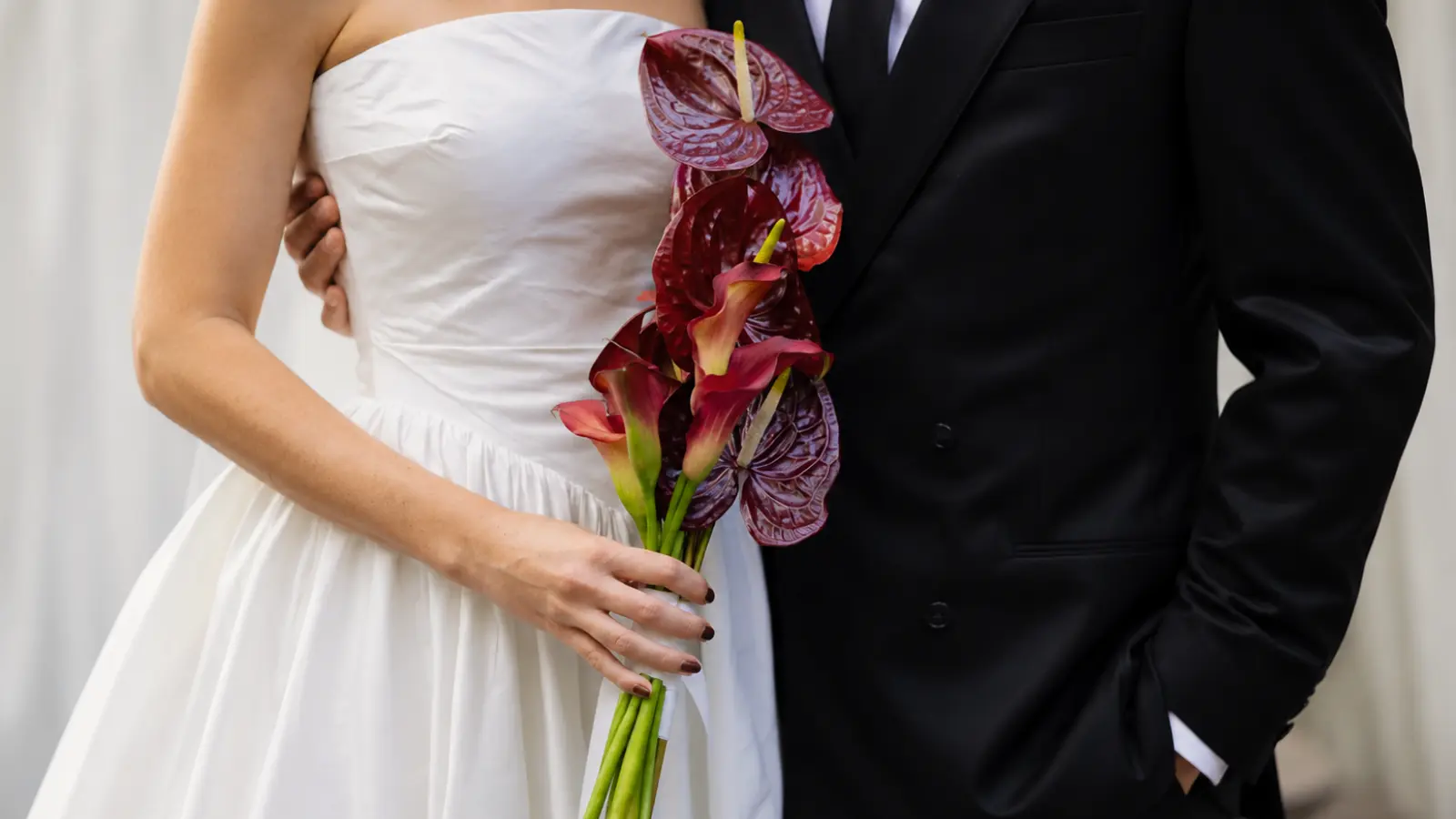
A single stem is exactly what it sounds like: one flower, or a small cluster of two or three at most, held without a bound arrangement around it. Among simple wedding bouquets, the single stem is the most minimal option available and, in the right context, one of the most striking.
The single stem works best when the bride’s dress is itself the statement — a heavily embellished or architecturally dramatic gown that would be competed with rather than complemented by a full bouquet. It’s also a strong choice for micro-weddings and elopements, where intimacy of scale is part of the overall aesthetic. A single long-stemmed bloom, especially the sculptural flower associated with calla lily wedding bouquets, photographs with a different kind of elegance than a full arrangement.
What the single stem does not do well: provide something to focus on during a long ceremony. The practical function of a bouquet — giving hands something to hold naturally — is somewhat reduced when the only thing you’re carrying is one flower. This is a minor consideration for most brides, but worth keeping in mind if nerves are a factor or if the ceremony is particularly long.
How to Match Style to Dress Silhouette
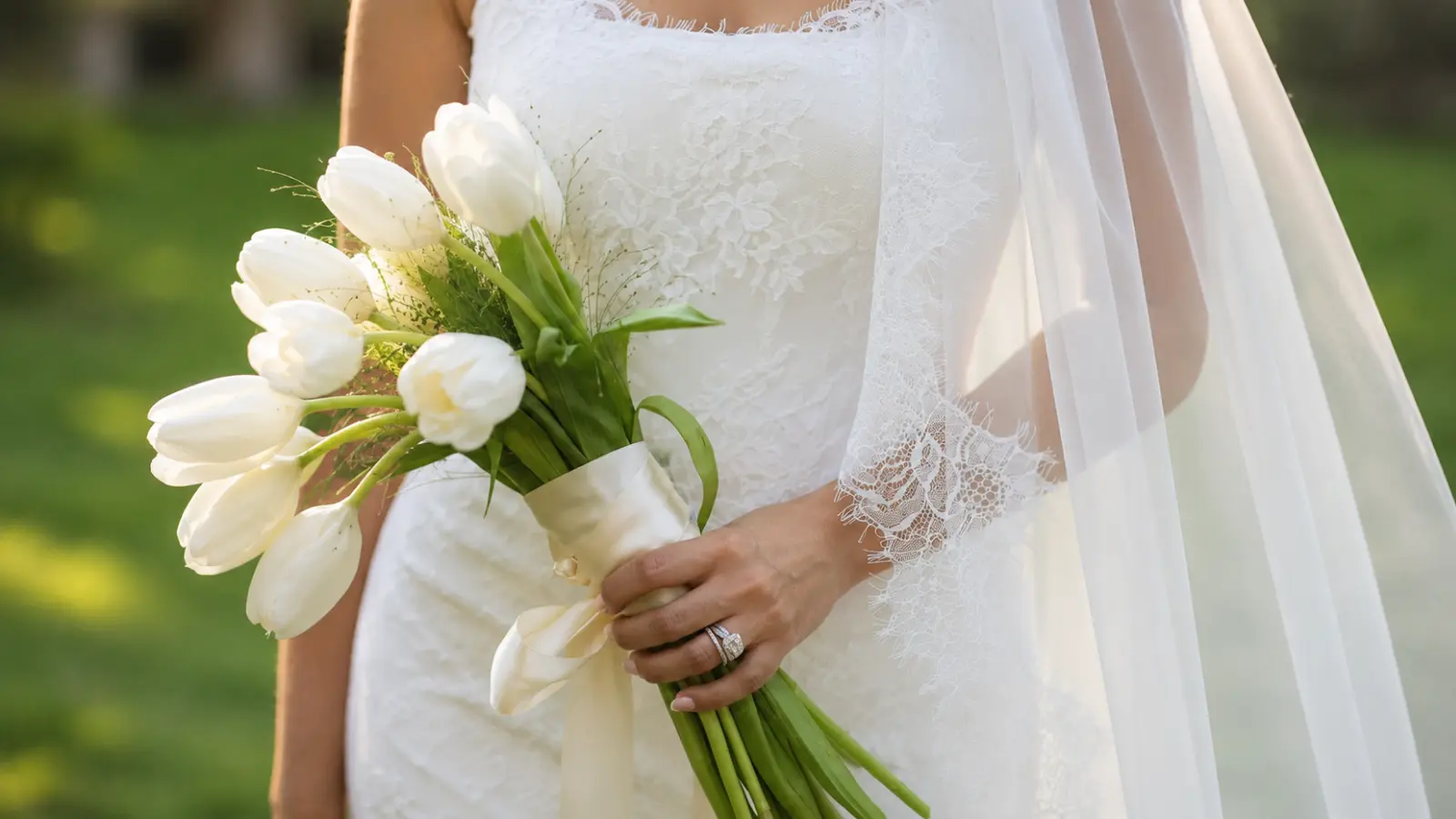
The relationship between bouquet shape and dress silhouette is the single most useful framework for making this decision, and it’s more specific than most planning resources suggest. The general principle is balance: the bouquet should complement the volume, structure, and overall visual weight of the gown rather than fight it. That means a very full dress benefits from a bouquet that can hold its own visually, and a very sleek dress benefits from something that doesn’t interrupt its lines.
| Dress Silhouette | Bouquet Styles That Work | Styles to Approach Carefully |
|---|---|---|
| Ball gown | Round (medium to large), cascade, garden round | Single stem (may disappear against the volume) |
| A-line | Round, hand-tied, nosegay, cascade | Very large cascade (can overwhelm a softer silhouette) |
| Sheath / column | Arm sheaf, single stem, small nosegay | Large round, full cascade (competes with the clean line) |
| Mermaid / fit-and-flare | Round, organic cascade, hand-tied | Very structured cascade (can look heavy against the fitted top) |
| Tea-length / midi | Nosegay, small round, hand-tied | Long cascade (proportion mismatch) |
| Heavily embellished / beaded | Nosegay, single stem, small arm sheaf | Busy hand-tied or mixed large round (two competing focal points) |
A few nuances worth adding to this framework. First, size within a style matters as much as the style itself. A large round bouquet and a small round bouquet pair differently with the same dress — the smaller version has a lighter visual footprint and tends to work across more silhouettes. When in doubt, err toward a size that feels manageable, not one that requires two hands to hold comfortably.
Second, the embellishment of the dress often matters more than the silhouette label. A heavily beaded mermaid gown and a simple crepe mermaid gown are the same silhouette on paper but call for quite different bouquet approaches. The beaded version already has significant visual texture; the bouquet should simplify rather than add more. The crepe version can support more complexity in the bouquet because the dress itself is restrained.
How Venue Affects the Right Style
Dress silhouette is the primary filter, but the ceremony setting is a meaningful secondary one. Venue and bouquet style interact in a few specific ways that are worth understanding before you make a final decision.
Formal, enclosed venues — grand cathedrals, estate ballrooms, historic manor houses — tend to support more structured, architectural bouquet styles. A cascade, a full round, or even a crescent reads as intentional and fitting in these settings. The same bouquets in an open outdoor ceremony can sometimes feel slightly at odds with the environment, depending on how relaxed or natural the rest of the wedding’s aesthetic is.
Outdoor settings — garden venues, vineyard ceremonies, beach or cliffside weddings — tend to favor bouquets that feel organic and effortless. A hand-tied garden bouquet, a loose arm sheaf, or a small nosegay with wildflower textures suits these environments well. A very tight, formal round can look slightly stiff against an outdoor backdrop, though this depends heavily on how the bouquet is built — a round made of garden roses and trailing ivy feels different from one made of uniform spray roses in a tight dome.
Destination and beach weddings specifically warrant a note about weight and fragility. A heavy cascade or a large, complex arrangement can be challenging to transport and more vulnerable to heat and humidity. If your ceremony involves significant travel, a simpler, sturdier style is worth prioritizing for practical reasons, not just aesthetic ones.
Common Mistakes to Avoid
Most bouquet style decisions go wrong in one of a few predictable ways. Knowing them in advance doesn’t guarantee a perfect outcome, but it does prevent the most avoidable regrets.
Choosing a style based only on inspiration photos without considering the dress. This is the most common issue by a significant margin. An inspiration photo features a specific bride, in a specific dress, styled in a specific way. Lifting the bouquet style from that photo and applying it to a completely different gown silhouette doesn’t always transfer — and it’s often only apparent during photos on the actual wedding day, which is a difficult moment to discover a mismatch.
Going significantly larger than expected. Brides frequently underestimate how large a bouquet looks when held in photos versus how it looks sitting on a table. A bouquet that felt like a reasonable size during the florist consultation can dominate a full-length portrait if it’s larger than the dress calls for. Ask your florist to show you a size reference specifically held at the height and angle you’ll be carrying it.
Treating the cascade as a default formal option. The cascade is a specific aesthetic choice, not simply what formal brides carry. It pairs best with ball gowns and specific venue types — applied to a sleek sheath dress in a casual garden ceremony, it can look like a mismatch between the bouquet and everything around it.
Deciding on a hand-tied bouquet without understanding the construction variation. “Hand-tied” covers a wide range — from very loose and wildflower-like to relatively structured and close to a round bouquet. Before assuming a hand-tied is the right call, be specific about where on that spectrum you want to land, and ask your florist for references that match the look you have in mind.
Bridal Bouquet Style Inspiration
Discover bridal bouquet styles featuring round bouquets, cascading arrangements, hand-tied flowers, arm sheaves, crescent bouquets, and timeless inspiration for every wedding dress.
The Right Shape Changes Everything
The flowers you choose will always matter, but the bouquet’s shape is what determines how it complements your dress, balances your proportions, and appears in every wedding photograph. Once the right style is selected, choosing flowers, colors, and textures becomes a much more natural process because every design decision supports the same overall vision.
Rather than asking which bouquet style is the most beautiful, ask which one feels most harmonious with your dress, your venue, and the atmosphere you want to create. A bouquet that suits the bride will always look more elegant than simply choosing the latest trend, making thoughtful proportion the true foundation of timeless bridal florals.
Frequently asked questions (FAQ)
How do I know which bridal bouquet style is right for my dress?
Start with your dress silhouette rather than your favorite flowers. Ball gowns and A-line dresses usually pair beautifully with round, garden, or cascading bouquets, while sheath and column gowns often look best with an arm sheaf, a single stem, or a smaller nosegay. The goal is to choose a bouquet whose visual weight complements the proportions of your dress instead of competing with them.
What is the most popular bridal bouquet style?
The round bouquet, often called a posy, remains the most popular bridal bouquet style because it suits almost every wedding aesthetic, photographs beautifully, and adapts easily to different flower varieties and color palettes. Its lasting popularity comes from its versatility rather than from following a particular trend.
Which bouquet style works best for a petite bride?
Petite brides are usually complemented by smaller bouquet styles such as a nosegay, a compact round bouquet, or a single-stem arrangement. Oversized bouquets and long cascades can overwhelm a smaller frame, while a proportionally scaled bouquet creates a more balanced silhouette in both real life and photographs.
Can you combine elements from different bouquet styles?
Yes, but one style should remain dominant. For example, a bouquet can have the rounded silhouette of a posy while incorporating the loose texture of a garden bouquet, or a cascade can be designed with a softer, more organic flow. Trying to combine multiple primary shapes usually creates a bouquet that lacks a clear visual identity.
Does your wedding venue affect the best bouquet style?
Yes. Formal venues such as ballrooms and cathedrals naturally complement structured bouquet styles like classic rounds and cascades, while gardens, vineyards, beaches, and outdoor ceremonies often suit looser hand-tied bouquets, arm sheaves, or relaxed garden designs. The bouquet should feel appropriate to the setting without looking overly formal or too casual for the space.
Should your bouquet style match your body type or your dress?
Your dress should be the first consideration because it occupies the greatest visual space in your bridal look. Body proportions then help determine the ideal bouquet size and scale. When both elements are considered together, the bouquet enhances the overall silhouette instead of drawing attention away from it.