
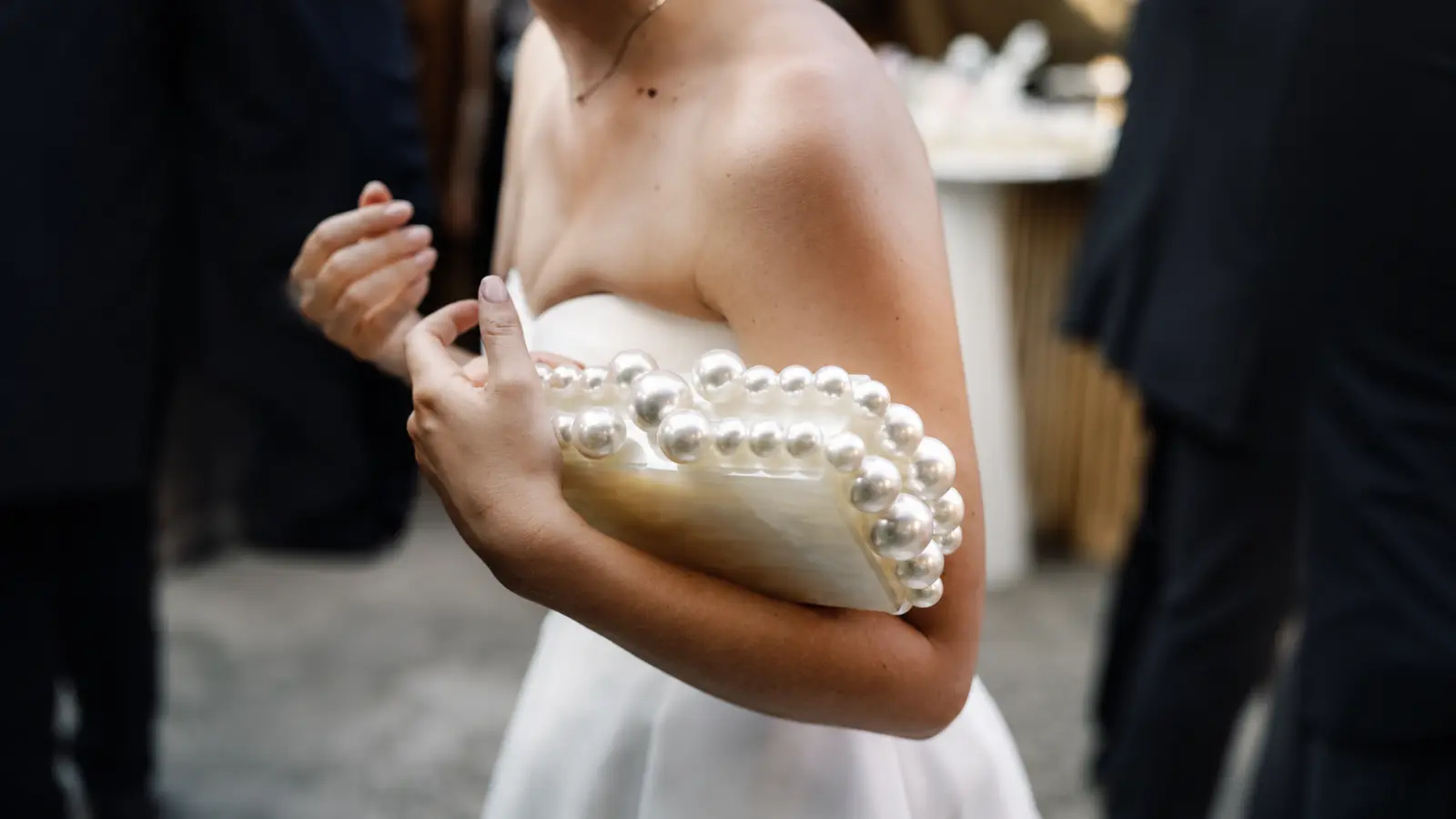
Planning a wedding without a bouquet is becoming an increasingly popular choice for brides who prefer a more personal, minimalist, or practical approach to their wedding day. While carrying flowers remains a beautiful tradition, it’s no longer an expectation, and many brides choose meaningful alternatives or simply walk down the aisle without carrying anything at all.
Skipping a bouquet doesn’t mean sacrificing elegance. Whether you’re drawn to a single flower stem, a vintage fan, a family heirloom, a stylish clutch, or simply the clean lines of your dress, the key is making the choice feel intentional rather than like something was forgotten. With thoughtful planning, a bouquet-free bridal look can feel every bit as polished and memorable as a traditional one.
This guide explores choosing between traditional wedding bouquets and bouquet-free alternatives, including hand placement, photography considerations, and practical advice for creating a confident bridal look.
Do You Actually Need a Bouquet?
The honest answer is no — and it’s worth saying plainly, because most wedding content treats the bouquet as a given rather than a choice. It became standard through Western bridal tradition and decades of floral industry marketing, not through any ceremony requirement. Many religious and cultural wedding traditions never centered a bouquet at all, and plenty of modern brides skip it without anyone at the wedding thinking twice.
That said, the bouquet does solve a real, practical problem: it gives you something to do with your hands during a moment when you’re being watched and photographed more than at almost any other point in your life. That’s the actual reason most brides end up carrying one, more than the flowers themselves. Once you separate the tradition from the function, it becomes much easier to decide whether you want a substitute, or whether you’d rather solve that problem a different way entirely.
Bouquet Alternatives for Brides
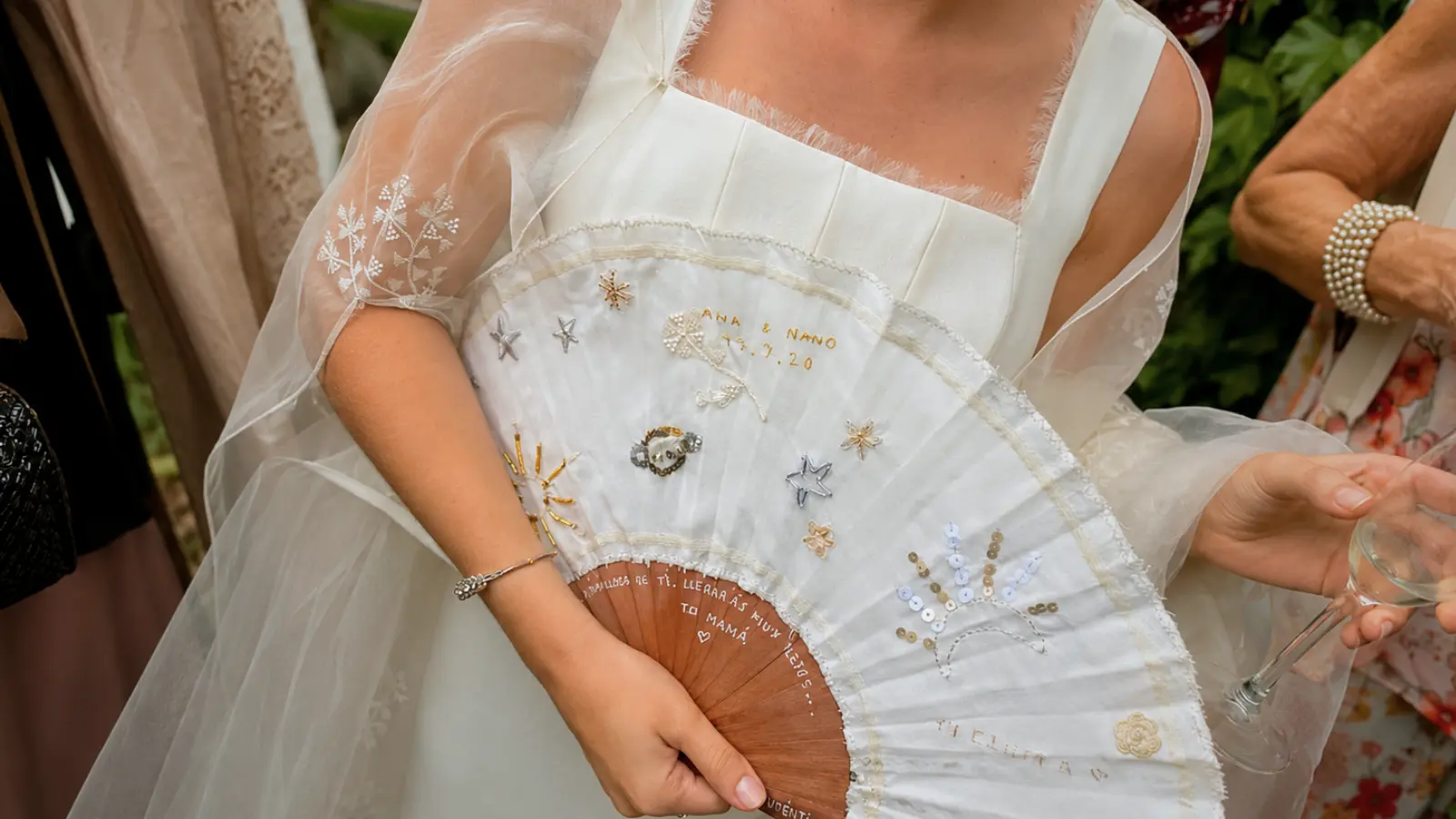
If a full bouquet doesn’t appeal to you, you’re not limited to a binary choice between flowers and nothing. There’s a real range of alternatives, each solving the “what do I do with my hands” question a little differently while still looking intentional rather than improvised.
| Alternative | Best For | Notes |
|---|---|---|
| Single stem | Minimalist, modern, or sleek gowns | One dramatic bloom; lowest floral cost of any option here |
| Clutch or small purse | Brides who want function, not just styling | Can hold lipstick, tissues, or a phone for the day |
| Fan | Warm climates, outdoor or destination weddings | Practical and decorative; works well with vintage-inspired looks |
| Prayer book or family Bible | Religious ceremonies, sentimental brides | Often a passed-down family item; adds meaning over decoration |
| Brooch bouquet | Brides who want a bouquet shape without fresh flowers | Built from vintage or family brooches; becomes a lasting keepsake |
| Corsage or wrist flower | Brides who want a small floral touch only | Keeps hands completely free; minimal cost |
| Nothing at all | Confident, pared-back styling | Works best with a partner’s arm or a deliberate hand position |
Each of these shifts the styling conversation slightly. A single stem and a corsage still register as “floral” choices, just scaled down. A clutch or a fan moves the focus away from flowers entirely and toward an accessory. A prayer book or other unique wedding bouquet alternatives can add sentimental weight that fresh flowers may not carry alone. None of these is automatically the “better” choice — it depends on what you actually want your hands and your look to communicate.
What to Do With Your Hands
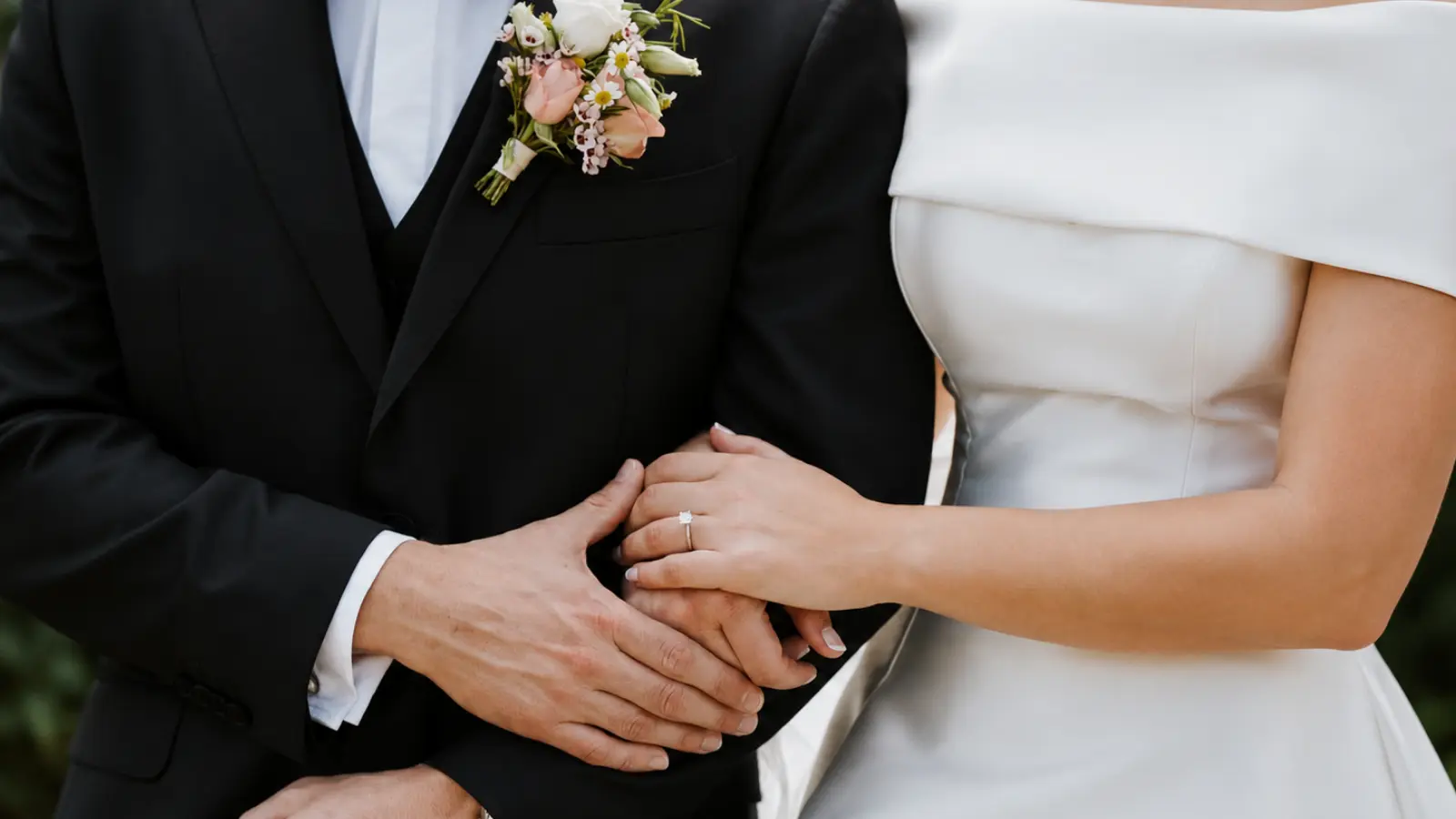
This is the part that rarely gets addressed directly, and it’s usually the real reason brides hesitate to go bouquet-free. Standing at the front of a room, walking down an aisle, posing for photos — having literally nothing to hold can feel exposing in a way that’s hard to anticipate until you’re actually there.
The most common solution is simple: hold a parent’s or partner’s arm during the processional, then let your hands rest naturally — loosely clasped in front of you, or at your sides — once you’re standing at the altar. It feels far more awkward in imagination than it tends to look in practice, especially once the moment is actually happening and your attention is elsewhere.
If you prefer the restraint of simple wedding bouquets, a single stem or slim clutch solves the problem with minimal visual weight. Practicing your entrance once or twice beforehand — even just walking across a room at home — makes a noticeable difference in how natural your hand placement feels on the day itself.
How It Reads in Photos
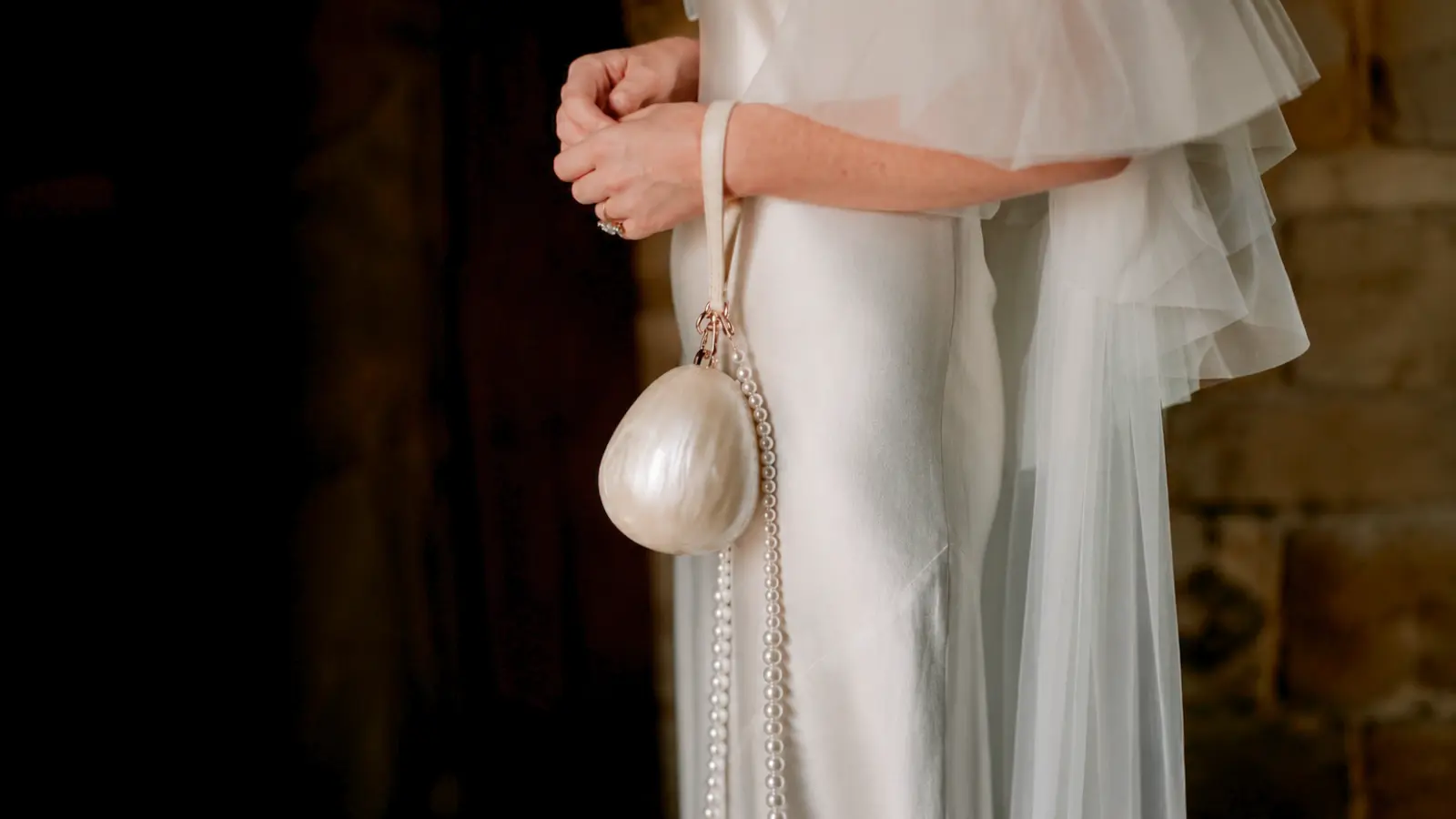
Photographers who know in advance that you won’t be carrying a bouquet can plan around it, and that advance notice matters more than almost anything else in this decision. A bouquet does double duty in traditional wedding photography — it adds color, fills negative space in a frame, and gives the bride a natural focal point to hold. Without it, a good photographer simply shifts that job to something else: hand placement, a partner’s arm, the lines of the dress, or a tighter, more intimate framing.
Where this goes wrong is when it’s a last-minute decision nobody planned for. A bride who decides the morning of the wedding to skip the bouquet, with a photographer who was expecting one, can end up with photos where her hands look unsure of what to do — not because going bouquet-free was the wrong call, but because nobody had a plan for it. Mentioning your choice to your photographer during the planning calls, not the morning-of timeline, is the difference between intentional and accidental.
One thing worth asking your photographer directly:
“What do you usually suggest for hand placement when a bride isn’t carrying anything?” Experienced wedding photographers have an answer ready — most have shot brides without bouquets before and have specific poses and framing tricks that solve exactly this. If your photographer seems unsure, that’s worth knowing before the wedding day, not after.
Who Skipping the Bouquet Actually Fits
Going without a bouquet isn’t right for every bride, and being honest about that is more useful than pretending it’s a universal upgrade. It tends to work best in a few specific situations rather than as a default choice for everyone trying to save money or simplify their look.
It fits naturally if your dress already has a strong visual identity on its own — heavy embellishment, a dramatic silhouette, or a train that draws the eye — where a bouquet would compete rather than complement. It also fits brides drawn to the clean look of modern wedding bouquets, as well as those with flower allergies or sensory sensitivities.
It tends to fit less naturally for brides who are nervous about the ceremony and want something to hold onto, literally, during a moment that already feels overwhelming. A bouquet, a clutch, or even a single stem gives your hands a job and can genuinely steady nerves in a way that’s easy to underestimate until you’re standing there. If you’re unsure which camp you’re in, a quiet practice walk at home — hands empty, no flowers — will usually tell you more than any amount of thinking about it in advance.
Mistakes to Avoid
Most regrets around skipping the bouquet come down to timing and communication rather than the decision itself being wrong.
- Deciding too last-minute. Tell your photographer and planner well before the wedding day, not during the morning timeline, so there’s time to plan posing and shot composition around it.
- Not testing how it actually feels. A practice walk with empty hands at home reveals a lot more than imagining the moment ever will.
- Assuming “nothing” means no cost considerations. Some alternatives, like a brooch bouquet or a vintage fan, still involve sourcing or rental costs — it’s not always the free option it might seem.
- Skipping flowers everywhere, not just the bouquet. If you want a flower-free bridal look but still want floral presence at the wedding, that’s a styling decision, not an all-or-nothing rule — ceremony and reception flowers can still carry the floral story even if your hands are empty.
A bouquet-free look works best when it is deliberate, including how each alternative affects the overall wedding bouquet cost.
Your Bouquet Is Optional – Your Style Isn’t
Choosing a wedding without a bouquet isn’t about leaving something out — it’s about making room for a bridal look that feels more authentic to you. Whether you carry a meaningful heirloom, a single flower, a beautiful accessory, or nothing at all, confidence and thoughtful styling will always matter more than following tradition.
The most memorable weddings aren’t defined by checking every traditional box. They’re shaped by intentional choices that reflect your personality, your ceremony, and the way you want to remember the day. If walking down the aisle without a bouquet feels like the right decision for you, embrace it fully and plan it with the same care you would give any other part of your wedding.
Frequently asked questions (FAQ)
Do brides have to carry a wedding bouquet?
No. Carrying a bouquet is a long-standing wedding tradition, not a requirement. Many modern brides choose a single flower, a fan, a clutch, a meaningful heirloom, or nothing at all. The best choice depends on your personal style, the look of your dress, and how you want to experience the ceremony rather than on any rule or expectation.
What can a bride carry instead of a bouquet?
Popular alternatives include a single statement flower, a bridal clutch, a decorative fan, a family Bible or prayer book, a brooch bouquet, a wrist corsage, or another sentimental keepsake. Some brides choose to carry nothing and let their dress become the visual focal point while walking arm in arm with a parent or partner.
What do you do with your hands if you don’t carry a bouquet?
Most brides either hold the arm of the person escorting them, keep their hands gently clasped in front of them, or allow their arms to rest naturally at their sides once they reach the altar. Practicing your entrance before the wedding helps your posture and hand placement feel relaxed and confident instead of awkward.
Will wedding photos look empty without a bouquet?
Not at all provided the decision is planned in advance. An experienced wedding photographer can use posing, hand placement, body angles, and the lines of your dress to create balanced compositions without flowers. Many minimalist and editorial weddings intentionally skip the bouquet to emphasize the bride’s silhouette and the emotion of the ceremony.
Is it okay to skip a bouquet for a formal wedding?
Absolutely. A bouquet is not what makes a wedding feel formal. Elegant gowns, thoughtful styling, beautiful ceremony décor, and confident posture all contribute far more to the overall look. Many luxury weddings intentionally omit the bouquet to create a cleaner, fashion-forward aesthetic.
Who is a wedding without a bouquet best suited for?
Going without a bouquet works especially well for brides wearing dramatic gowns, minimalist designs, highly detailed dresses, or statement sleeves that deserve full attention. It is also an excellent choice for brides who prefer a clean editorial style, have flower allergies, or simply feel more comfortable walking without carrying anything.