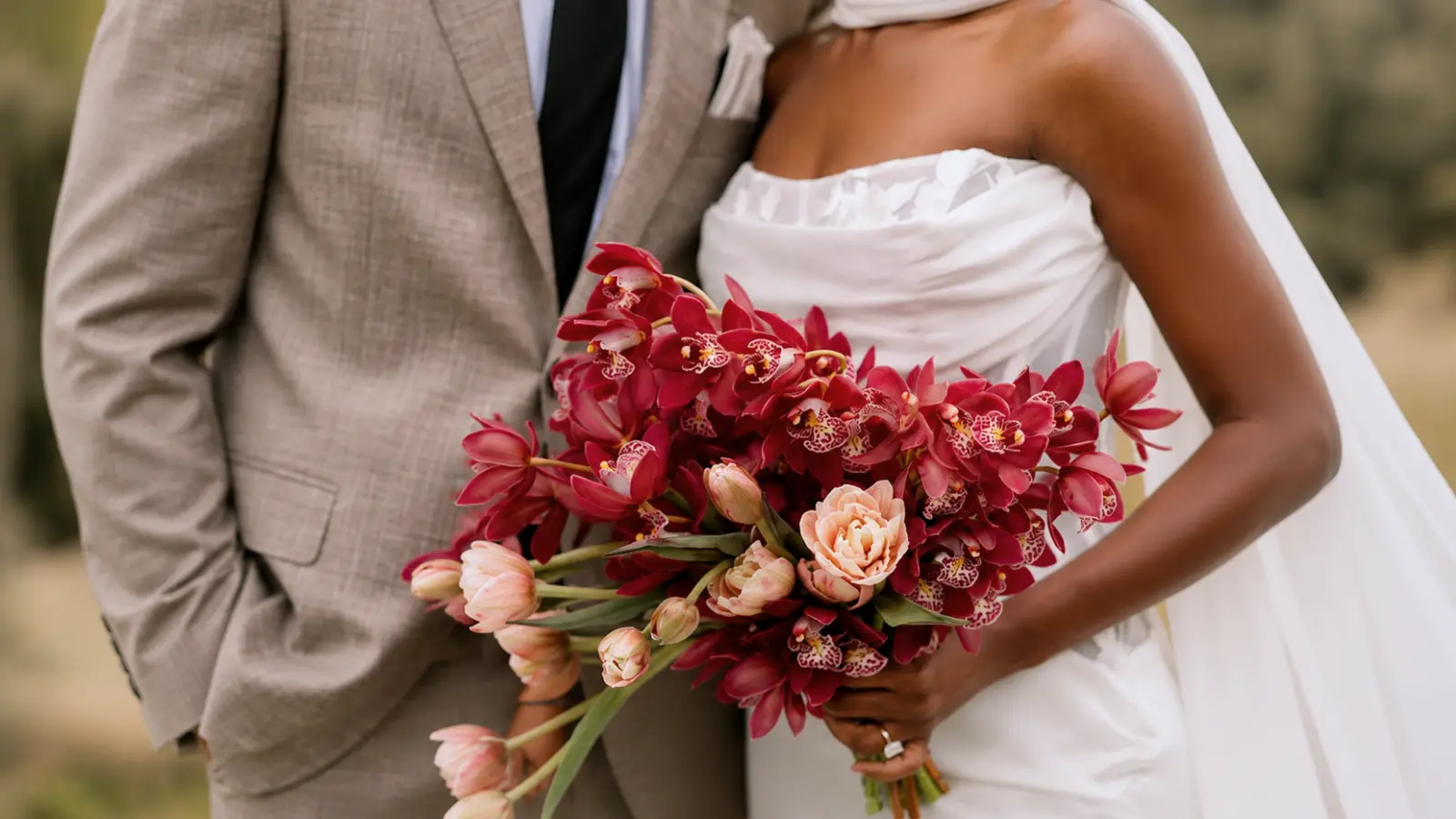
Orchid wedding bouquets are a sophisticated choice for brides who want elegant flowers with modern style, remarkable durability, and year-round availability. Whether you’re planning a formal ballroom wedding, a tropical destination celebration, or a minimalist ceremony, orchids offer a distinctive beauty that sets them apart from more traditional bridal flowers.
One of the greatest advantages of orchids is their versatility. Different varieties create completely different looks, from clean monochromatic bouquets featuring phalaenopsis orchids to dramatic cascading arrangements with dendrobiums or bold tropical designs with vibrant vanda orchids. Choosing the right variety is just as important as choosing the right color palette or bouquet shape.
This guide explores orchid wedding bouquets as one elegant approach to choosing a wedding bouquet, including the most popular orchid varieties, modern and tropical bouquet styles, cascading designs, pricing, and practical tips for creating a bouquet that feels timeless and perfectly suited to your wedding style.
Orchid Varieties for Wedding Bouquets
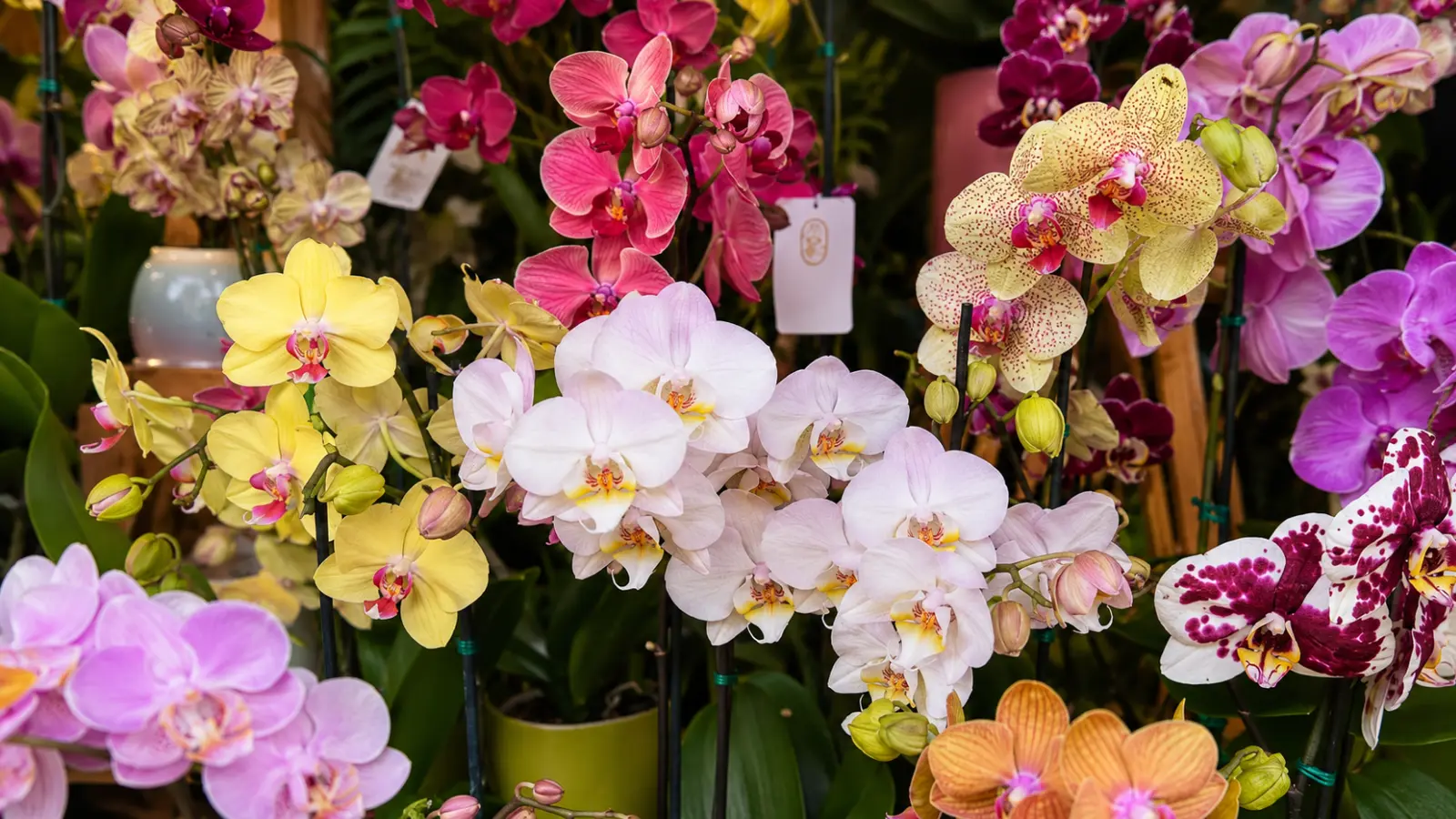
Not all orchids behave the same way in a bouquet. The variety you choose affects the shape of the arrangement, how it photographs, and what it’s likely to cost. Understanding the main options before you meet with your florist and comparing different wedding bouquet flowers makes the conversation much more productive.
Phalaenopsis (moth orchids) are the most widely used orchid in bridal florals. Their broad, flat blooms have a simple, refined shape that works in everything from tight round bouquets to loose, flowing designs. They come in white, blush, cream, and soft lavender — which makes them versatile across color palettes. Phalaenopsis are also one of the more accessible orchids price-wise and hold up well out of water.
Dendrobium orchids have a different structure — smaller blooms on longer stems, with an airier, more tropical quality. They cluster naturally and work particularly well in cascading arrangements and tropical designs. Dendrobiums come in white, purple, lavender, yellow, and bi-color options, giving florists a useful range for more colorful palettes.
Cymbidium orchids are larger and more architectural, with waxy, cup-shaped blooms that give a bouquet a grounded, substantial feel. They’re popular in high-end florals and work well in winter and spring weddings. Cymbidiums come in green, burgundy, blush, white, and yellow — some of the most unusual color options in the orchid family.
Vanda orchids are the boldest of the group. Their flat, broad blooms come in rich, saturated colors — deep purple, vivid fuchsia, blue-violet — that very few other cut flowers can match. They’re among the more expensive orchids to source and require a florist comfortable working with specialty varieties, but the visual impact is significant.
| Variety | Bloom Style | Best For | Relative Cost |
|---|---|---|---|
| Phalaenopsis | Flat, wide, elegant | Formal, modern, minimalist | Accessible |
| Dendrobium | Small clusters, airy stems | Tropical, beach, cascade | Mid-range |
| Cymbidium | Large, waxy, structured | Statement bouquets, winter | Mid to high |
| Vanda | Bold, flat, saturated color | Color-forward, luxury, editorial | High |
For most brides building their first orchid bouquet, phalaenopsis or dendrobiums are the most practical starting points. Both are reliably available, work with a wide range of supporting flowers and greenery, and give your florist flexibility in construction. Cymbidiums and vandas are worth exploring if you want something more specific — just confirm availability with your florist before committing to the design.
White Orchid Wedding Bouquets
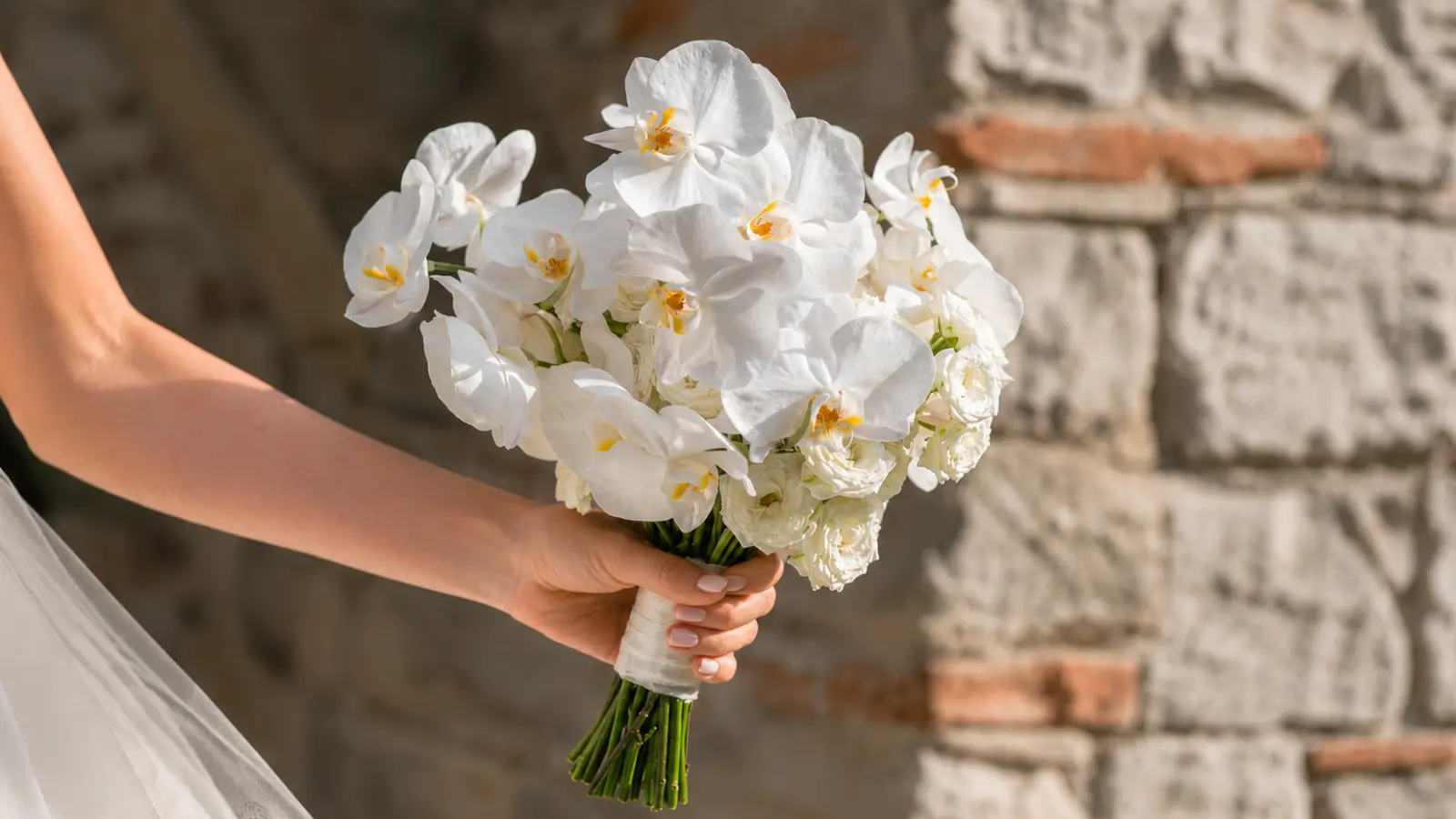
White orchid bouquets are one of the most elegant forms of white wedding bouquets because they have a quality that’s hard to replicate with other flowers: they’re clean without being cold, formal without being stiff. The structure of a phalaenopsis bloom — particularly the way the petals catch light — gives white orchid arrangements a slightly luminous quality in photos that white roses, as beautiful as they are, don’t quite match.
The most classic version of a white orchid bouquet uses phalaenopsis blooms arranged tightly with minimal greenery, often on a handle wrapped in satin or silk ribbon. This works especially well for formal ceremonies, cathedral settings, and weddings with an all-white or ivory palette. The restraint is part of the appeal — the bouquet reads as intentional rather than over-designed.
For brides who want more texture in a white bouquet, pairing phalaenopsis with white ranunculus, stephanotis, or small spray roses adds depth without introducing color. Trailing greenery like Italian ruscus or smilax gives movement and a slightly less rigid feel. This combination sits comfortably between formal and garden-inspired — it works in a ballroom and in an upscale garden tent.
A monochromatic white orchid arrangement also photographs exceptionally well with a dark dress — deep navy, black, or forest green bridesmaid dresses in particular. The contrast is graphic and clean in ways that a soft pink or blush bouquet wouldn’t achieve.
Cascading Orchid Bouquets
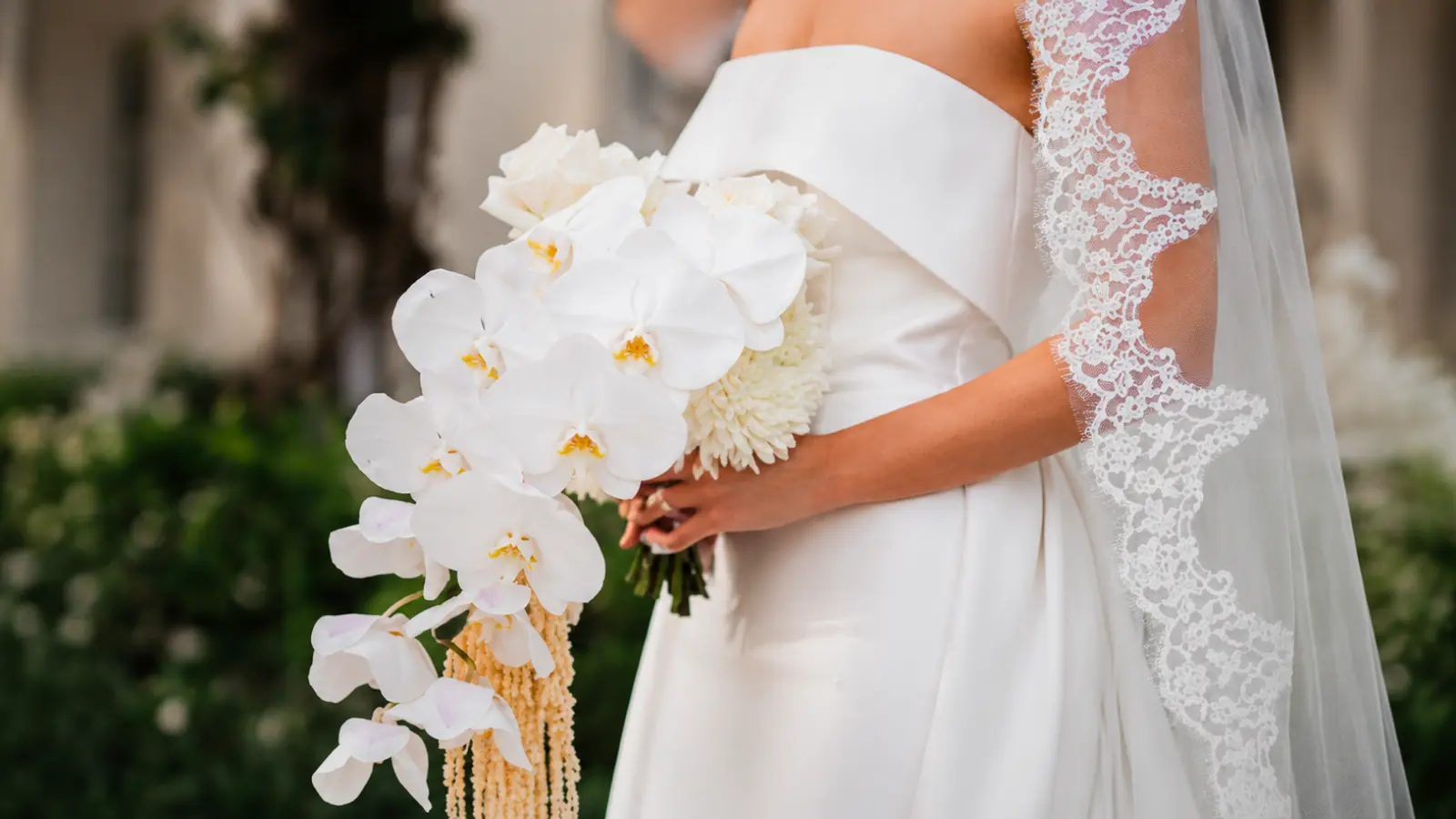
The cascade — or waterfall bouquet — is where orchids genuinely have an advantage over most other flowers. The arching, trailing quality of dendrobium stems doesn’t need to be forced or constructed the way it does with roses or peonies. The natural structure of the stem does a significant amount of the work, which is part of why orchid cascades read as elegant rather than overwrought.
Dendrobiums are the most common choice for cascading orchid bouquets because their long stems follow the downward flow naturally. Phalaenopsis can also be used in cascades, but the stems typically need to be wired and shaped, which adds construction time and cost. For a more architectural cascade — structured and formal rather than loose and flowing — cymbidiums can add weight and presence at the top of the arrangement.
Cascading orchid bouquets pair best with full, structured silhouettes. Ball gowns and fitted A-line dresses with a dramatic skirt are the most natural pairing — the bouquet’s length and movement complement the gown’s volume. Column and sheath dresses are trickier: a long cascade can overwhelm a minimalist silhouette and is usually better replaced with a single stem or small nosegay in those cases.
Cascade Length: What to Know Before You Design
The trailing length of a cascade bouquet should be proportional to your height. A long cascade that photographs beautifully on a 5’9″ bride can look overwhelming on someone shorter. Most florists will ask about your height and dress length before finalizing the cascade design — if yours doesn’t, it’s worth raising the question. A good reference point is to aim for a cascade that ends roughly at or just above the hemline of your dress when held naturally in front of you.
Tropical Orchid Bouquets
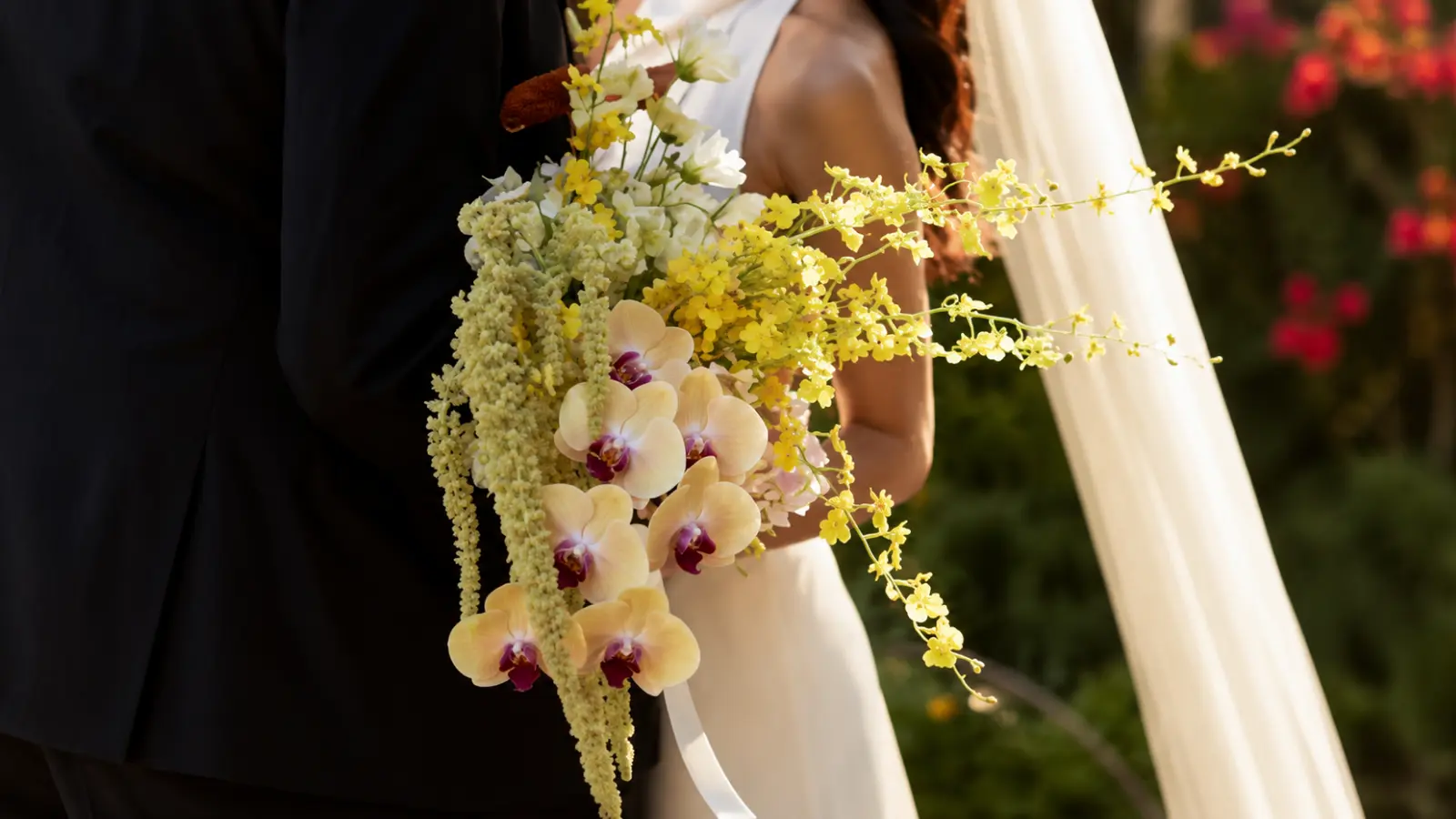
Tropical orchid bouquets have a completely different energy than formal orchid arrangements — looser, more vibrant, and rooted in the visual language of beach and destination weddings. They work in outdoor ceremonies, island venues, and any wedding with a warm, sun-drenched aesthetic. They also give brides a genuine opportunity to work with color in ways that most traditional bouquets don’t.
Dendrobiums are the natural anchor for tropical designs, often in lavender, yellow, or bi-color varieties. The supporting cast is where this style comes alive: monstera leaves, ti leaves, tropical palm fronds, and birds of paradise are common choices for foliage. Anthurium, heliconia, and ginger flowers are sometimes added for additional texture and color, depending on how bold the bride wants to go.
Color palettes in tropical bouquets tend to be warmer and more saturated than their formal counterparts — coral, peach, bright white, vivid purple, and sunny yellow are all natural fits. Mixing two or three complementary tones tends to photograph better than trying to include too many colors at once. If you’re uncertain about how saturated to go, asking your florist to build one or two small test arrangements can help clarify what will actually look cohesive.
One thing worth noting: tropical bouquets don’t always translate well to non-tropical venues. A bold arrangement with monstera and heliconia looks perfectly at home at a beach venue in Mexico or Hawaii. In a formal indoor setting, those same elements can read as visually jarring. The aesthetic logic of the setting should guide the bouquet — which is true for any style, but feels especially important here.
Are Orchids Expensive for Wedding Bouquets?
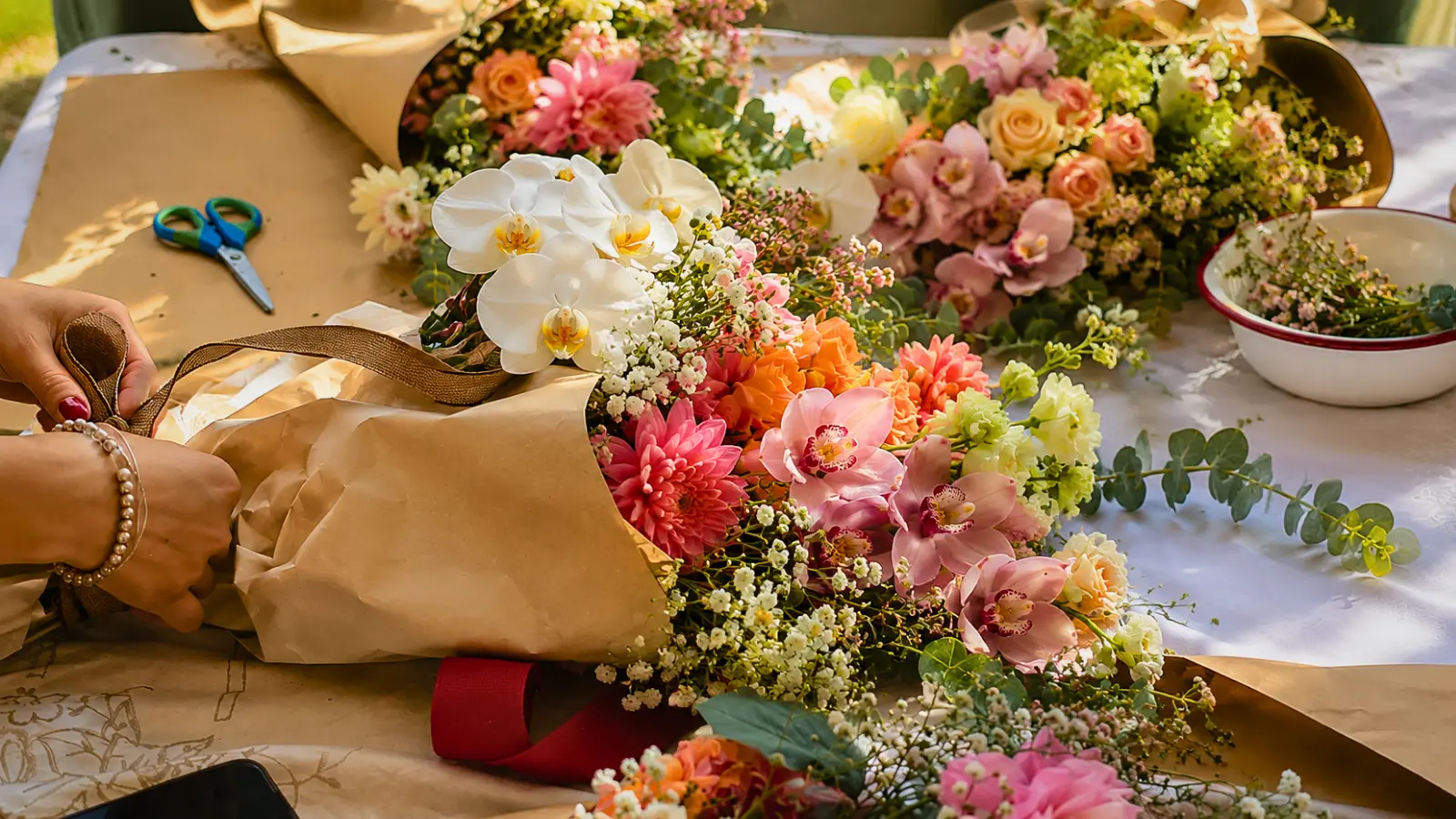
This depends almost entirely on which orchid you’re using and how many stems the design requires, both of which directly affect your overall wedding bouquet cost. Orchids have a reputation for being an expensive flower, but that reputation is based partly on the more exotic varieties — and doesn’t reflect the full range of what’s actually available.
Phalaenopsis orchids are among the more accessible cut flowers in professional florals. They’re produced at scale, available year-round, and widely stocked by wholesale flower suppliers. A phalaenopsis-forward bouquet is typically not significantly more expensive than a similarly sized rose or ranunculus bouquet. Dendrobiums fall in a similar range.
Cymbidiums are a step up in cost — their stems produce fewer usable blooms, and the flowers themselves have a higher wholesale price. Vandas and other specialty orchids are the most expensive option and may require advance ordering from specialty suppliers.
| Orchid Type | Cost Level | Availability |
|---|---|---|
| Phalaenopsis | Accessible — comparable to garden roses | Year-round |
| Dendrobium | Mid-range | Year-round |
| Cymbidium | Mid to high | Fall through spring; peak in winter |
| Vanda | High — specialty sourcing required | Variable; confirm with florist |
For a professionally made orchid bridal bouquet, a realistic planning range is $250 to $500 for a well-made arrangement using phalaenopsis or dendrobiums. Cymbidium or vanda-forward designs can run $400 to $700 or more depending on size and florist. As with any bouquet, the cost is driven by stem count, construction complexity, the florist’s market, and whether the design involves cascade wiring or specialty sourcing. Getting an itemized quote from your florist before committing is always worth doing.
How to Style Orchids for a Modern Wedding
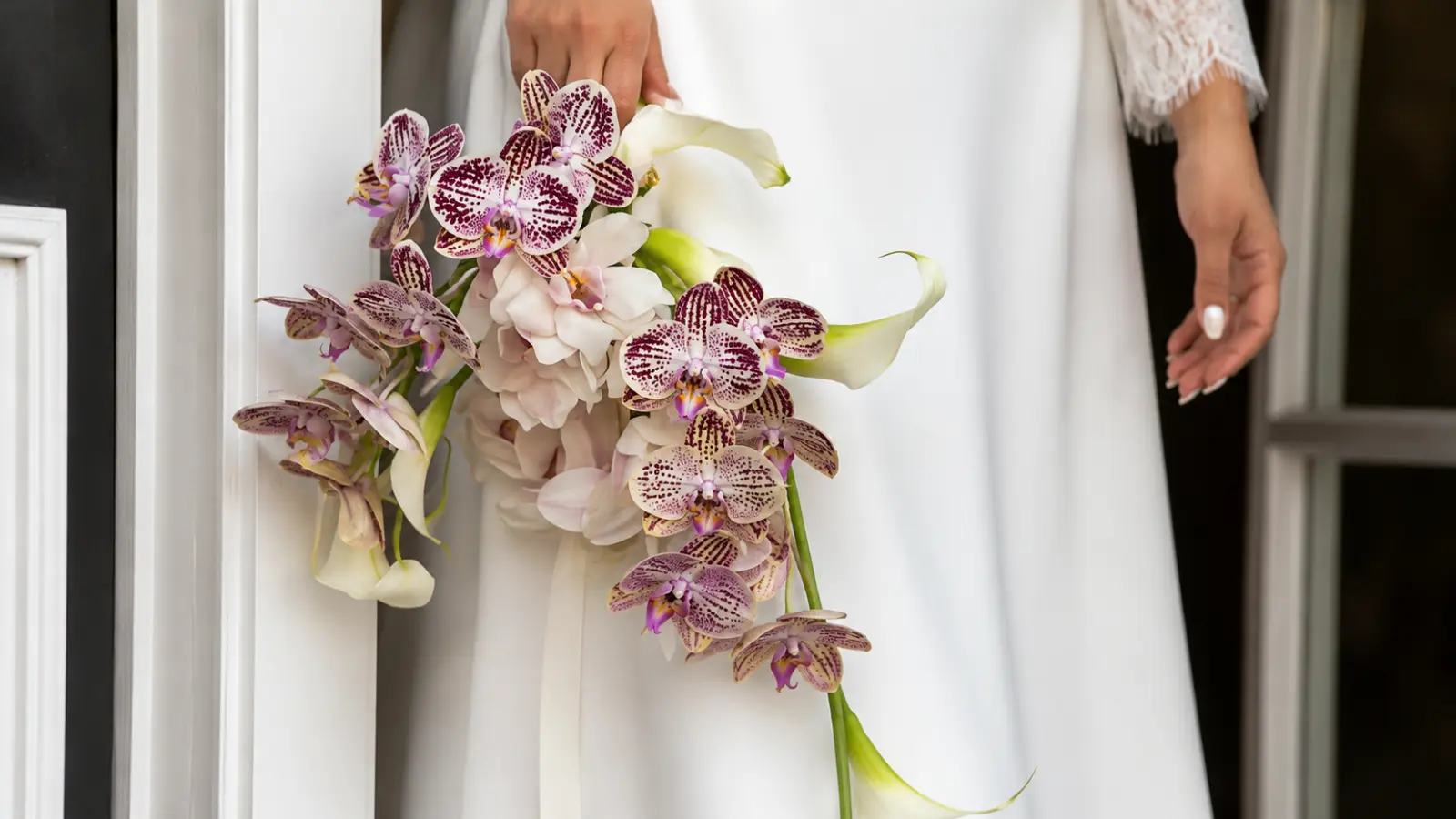
The most common mistake with orchid bouquets is over-designing them. Orchids have a natural architectural quality that makes them especially popular in modern wedding bouquets — they don’t need to be buried in greenery or surrounded by competing blooms to read as beautiful. Modern orchid styling tends to lean into restraint: fewer varieties, intentional color, clean construction.
Single-Variety Arrangements
One of the most effective minimalist wedding bouquets uses just one orchid variety — typically phalaenopsis or cymbidium — with minimal greenery and a clean ribbon wrap. The repetition of a single bloom creates visual rhythm, and the lack of competing flowers lets the orchid’s structure become the design itself. This approach works particularly well in white, blush, and deep green cymbidium, and pairs naturally with minimalist or fashion-forward dresses.
Monochromatic Color Palettes
Keeping the entire bouquet within one color family — all white, all blush, all deep purple — gives orchid arrangements a polished, editorial quality. Within a monochromatic palette, texture variation does the visual work that color variation might do in other bouquets. Mixing a flat phalaenopsis bloom with the waxy surface of a cymbidium and the delicate cluster of a dendrobium creates depth without introducing contrast color.
Pairing Orchids With the Right Greenery
Greenery choice matters more with orchids than with most flowers, especially when creating greenery wedding bouquets or mixed floral designs because the wrong pairing can pull the aesthetic in an unintended direction. For formal or modern bouquets, variegated pittosporum, Italian ruscus, and trailing vines work well — they add movement without looking tropical. For destination and beach weddings, monstera and ti leaves are the right call. Eucalyptus, which pairs naturally with rose wedding bouquets and ranunculus, can feel tonally inconsistent with orchids in formal or tropical designs, though it works in garden-style mixed arrangements.
Handle and Ribbon Finish
The way the handle is finished contributes significantly to whether an orchid bouquet reads as modern or traditional. For a sleek, contemporary look, a single-color silk or satin ribbon wrapped flat (rather than in loops or bows) is the most refined option. Velvet ribbon in charcoal, forest green, or deep navy is another choice that reads as considered and current. Visible stems with no ribbon at all — just a clean rubber band tie or thin wire wrap — is an even more editorial option for brides who want something truly minimal.
Orchid Wedding Bouquet Inspiration
Explore elegant orchid wedding bouquets featuring white phalaenopsis, cascading orchid designs, tropical bridal bouquets, modern floral arrangements, and timeless bouquet inspiration for every wedding style.
Orchids Bring Effortless Sophistication
Orchids have a unique ability to create bouquets that feel refined, modern, and unforgettable without relying on excessive flowers or elaborate designs. Their sculptural blooms, exceptional durability, and remarkable variety allow them to suit everything from elegant black-tie weddings to tropical destination celebrations while maintaining a timeless sense of style.
The most beautiful orchid bouquets begin with choosing the right variety for your vision rather than simply selecting your favorite flower. By matching the orchid type to your wedding style, bouquet shape, and color palette, you’ll create an arrangement that feels intentional, balanced, and memorable long after the celebration is over.
Frequently asked questions (FAQ)
Are orchids a good choice for a wedding bouquet?
Yes. Orchids are an excellent choice for brides who want a bouquet that feels elegant, modern, and refined. They are available year-round, hold up exceptionally well throughout the wedding day, and photograph beautifully. The key is selecting the right orchid variety and designing the bouquet around its natural shape rather than overwhelming it with too many competing flowers.
Which type of orchid is best for a wedding bouquet?
The best orchid depends on the style you want to create. Phalaenopsis orchids are the most versatile for classic and modern bouquets, dendrobiums naturally suit tropical and cascading designs, cymbidiums create bold architectural arrangements, and vandas are ideal for luxury bouquets with dramatic color. Your florist can recommend the variety that best matches your wedding style and bouquet shape.
Are orchids expensive for wedding bouquets?
It depends on the variety. Phalaenopsis orchids are widely available and often comparable in price to premium roses, while dendrobiums fall into the mid-range. Cymbidiums and especially vandas are more expensive because of their size, availability, and specialty sourcing. Most professionally designed orchid bridal bouquets range from about $250 to $500, while luxury designs featuring specialty orchids or elaborate cascading designs can cost significantly more.
Do orchids hold up well throughout a wedding day?
Yes. Orchids are among the longest-lasting wedding flowers and generally perform better than many traditional blooms during long ceremonies and portrait sessions. Although extreme heat should still be avoided, they tolerate being out of water for several hours better than flowers such as hydrangeas or peonies, making them a dependable choice for all-day celebrations.
Can orchids be used in a cascading wedding bouquet?
Absolutely. Dendrobium orchids are especially well suited to cascading bouquets because their naturally arching stems create graceful movement. Phalaenopsis orchids can also be incorporated into cascading designs with additional floral wiring, creating one of the most elegant bouquet styles for formal and destination weddings.
How do you style orchids without making the bouquet look overdesigned?
The most successful orchid bouquets rely on restraint. Using fewer flower varieties, limiting the color palette, choosing clean greenery, and allowing the orchids to remain the visual focus creates a bouquet that feels modern and sophisticated. Rather than filling every space, thoughtful simplicity highlights the natural elegance of the blooms.