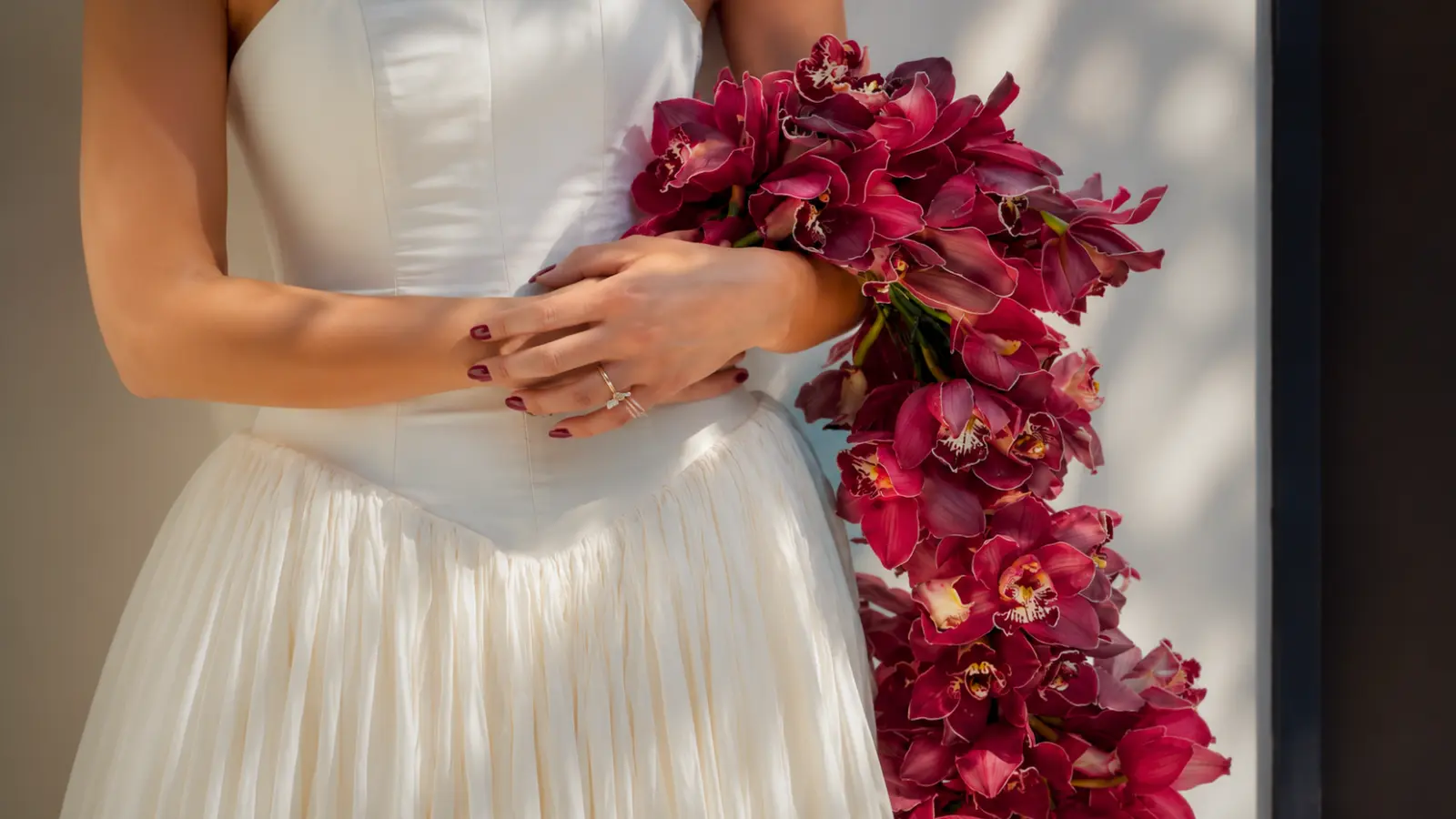
Cascading wedding bouquets are one of the most dramatic and elegant bouquet styles, designed to create graceful movement as flowers and greenery flow naturally below the bride’s hands. Often called waterfall bouquets, they add height, texture, and a sense of luxury that makes them especially popular for formal weddings, cathedral ceremonies, and romantic bridal looks.
Although cascading bouquets have existed for decades, today’s designs look very different from the heavily structured arrangements of the past. Modern cascades favor organic movement, airy greenery, and carefully placed flowers that create a relaxed, natural silhouette while still delivering the visual impact that makes this bouquet style so memorable.
This guide explores cascading designs within the broader world of wedding bouquets, including the best flowers for waterfall arrangements, orchid and calla lily cascades, dress pairing advice, bouquet costs, and practical tips for choosing a cascade that complements your wedding style without overwhelming your overall look.
What Is a Cascading Wedding Bouquet?
A cascading wedding bouquet (sometimes called a waterfall bouquet) is built to trail downward past the hands rather than staying contained in a round or oval shape. The defining feature is the drape: stems, trailing greenery, or blooms arranged so they fall below the grip point and create a flowing line that extends toward the floor.
That trail can be subtle, with just a few loose stems of eucalyptus extending a couple of inches below a compact arrangement, or dramatic, with orchid stems and jasmine vines reaching toward the hem of the dress. Both qualify as cascades. What separates them is the intention: the bouquet is designed to have movement and directionality rather than a uniform, enclosed silhouette.
The structure underneath varies by florist. Some cascades are built on a foam base, which allows more control over placement and keeps the shape stable throughout the day. Others are constructed as extended hand-tied designs, where the spiraling technique allows longer stems to drape naturally below. Neither approach is inherently superior. The choice usually depends on the specific flowers being used and how much trail the design calls for.
Where the cascade differs most from other bridal bouquet styles is in how it photographs. A round bouquet reads the same from almost every angle. A cascade has a clear front, a clear drape, and a strong visual axis, which makes it particularly effective in portraits where the bride is standing still and holding the bouquet in front of her.
Best Flowers for Cascading Bouquets
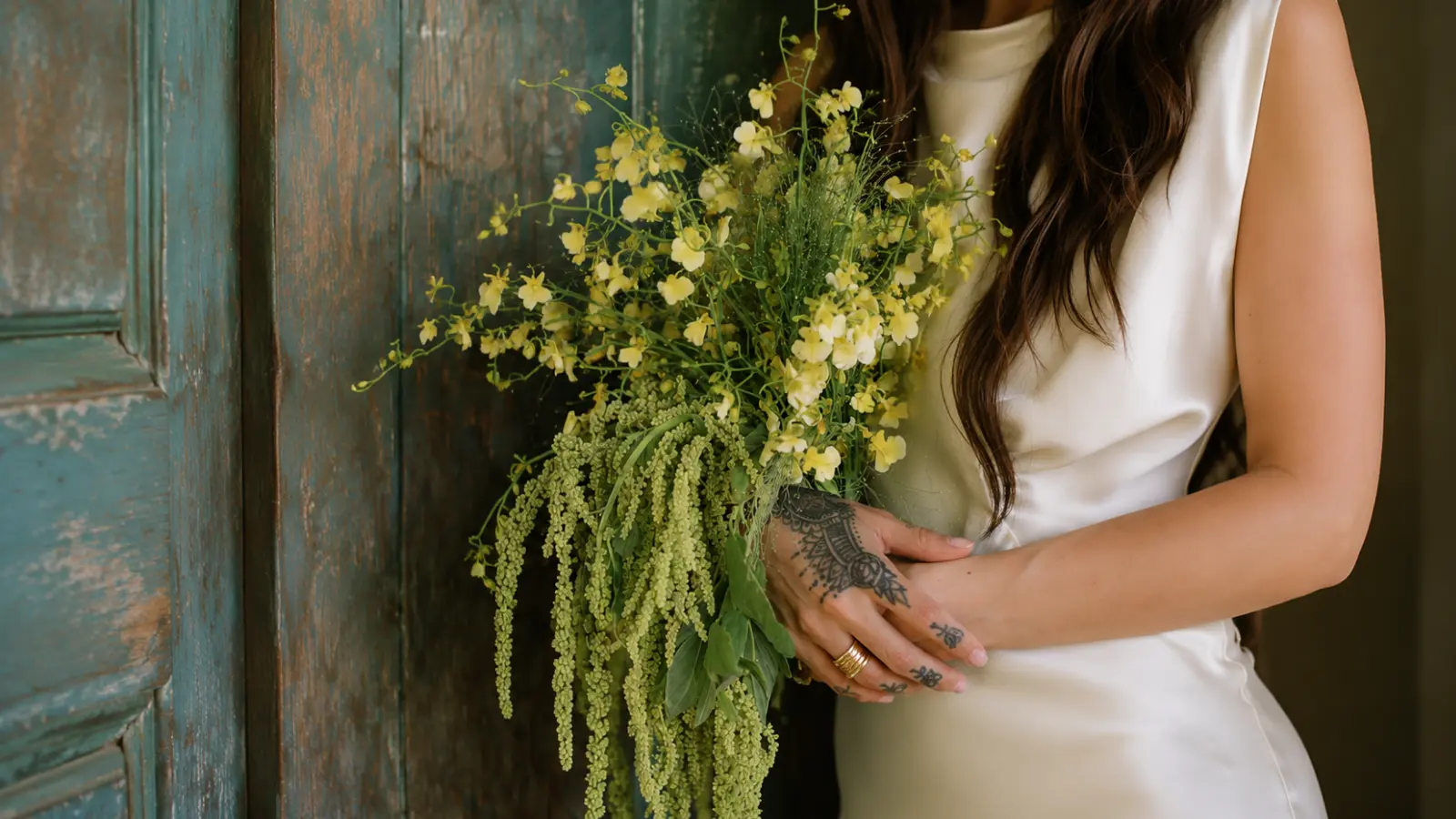
Not all wedding bouquet flowers cascade naturally. The style relies on two types of material working together: focal blooms that anchor the upper portion of the bouquet, and trailing elements (stems, vines, or elongated blooms) that create the actual drape. Getting this balance right is what separates a cascade that looks intentional from one that looks like a round bouquet with stems left too long.
For the trailing elements, these are the most reliable options:
- Jasmine vine: Fine-stemmed and fragrant, jasmine vine ranks among the strongest natural trailing materials available. It drapes easily, stays flexible, and adds texture without adding visual weight.
- Amaranthus: The long, rope-like strands of amaranthus (both green and burgundy varieties) are among the most effective cascade materials for adding length and soft movement.
- Ivy and smilax: Classic choices that have anchored cascades for decades. Both hold their shape well and give a lush, garden feel.
- Eucalyptus chains: Seeded or silver dollar eucalyptus in long strands provides structure and a soft grey-green tone that works across most color palettes.
- Clematis vine: When available, fresh clematis adds a delicate, almost wild quality to a cascade that feels genuinely current.
For focal blooms in the upper section, garden roses, ranunculus, and peonies all work well because their rounded shape anchors the arrangement without needing to trail. The flowers that do double duty, appearing in the upper section and continuing down through the drape, are orchids and calla lilies, both of which are covered in their own sections below.
One detail worth discussing with your florist: the weight of the cascade. Designs built around heavy blooms that extend far down can feel awkward to carry over a long ceremony. A cascade built primarily on lightweight trailing greenery with a few accent flowers throughout tends to feel more comfortable and look more natural in motion.
Cascading Bouquets by Wedding Style
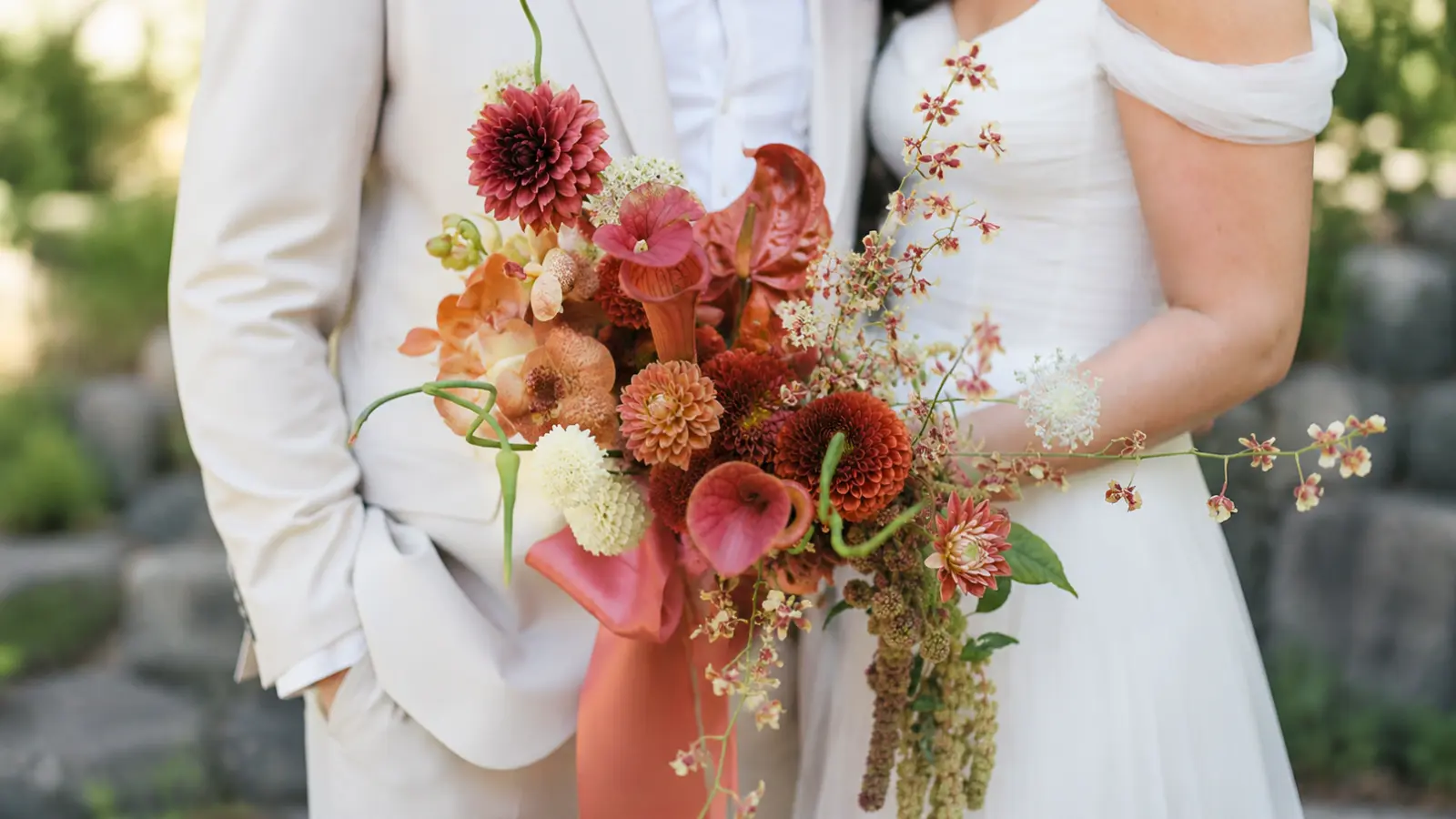
The cascade adapts differently depending on the overall wedding aesthetic, and the version that works for a black-tie ballroom wedding looks quite different from one designed for a garden ceremony. Understanding which approach fits your event helps narrow the design conversation with your florist considerably.
| Wedding Style | Cascade Approach | Flowers to Consider |
|---|---|---|
| Formal / ballroom | Full drape, architectural structure, longer trail | Dendrobium orchids, calla lilies, garden roses |
| Classic / church | Moderate cascade, white or blush palette, clean lines | White calla lilies, roses, stephanotis, ivy |
| Romantic / garden | Loose, organic drape with vines and trailing greenery | Garden roses, jasmine vine, clematis, amaranthus |
| Modern / minimalist | Graphic, single-flower cascade or sculptural drape | Calla lilies alone, single orchid stem, tropical leaves |
| Bohemian / outdoor | Wildflower-style cascade, asymmetric, very loose | Sweetpeas, cosmos, trailing herbs, eucalyptus |
The table above is a starting point, not a set of rules. What matters most is that the cascade’s scale matches the formality of the event and the proportions of the dress. A very long, dense cascade at a casual outdoor wedding tends to feel like it belongs to a different occasion entirely.
Cascading Bouquets With Orchids
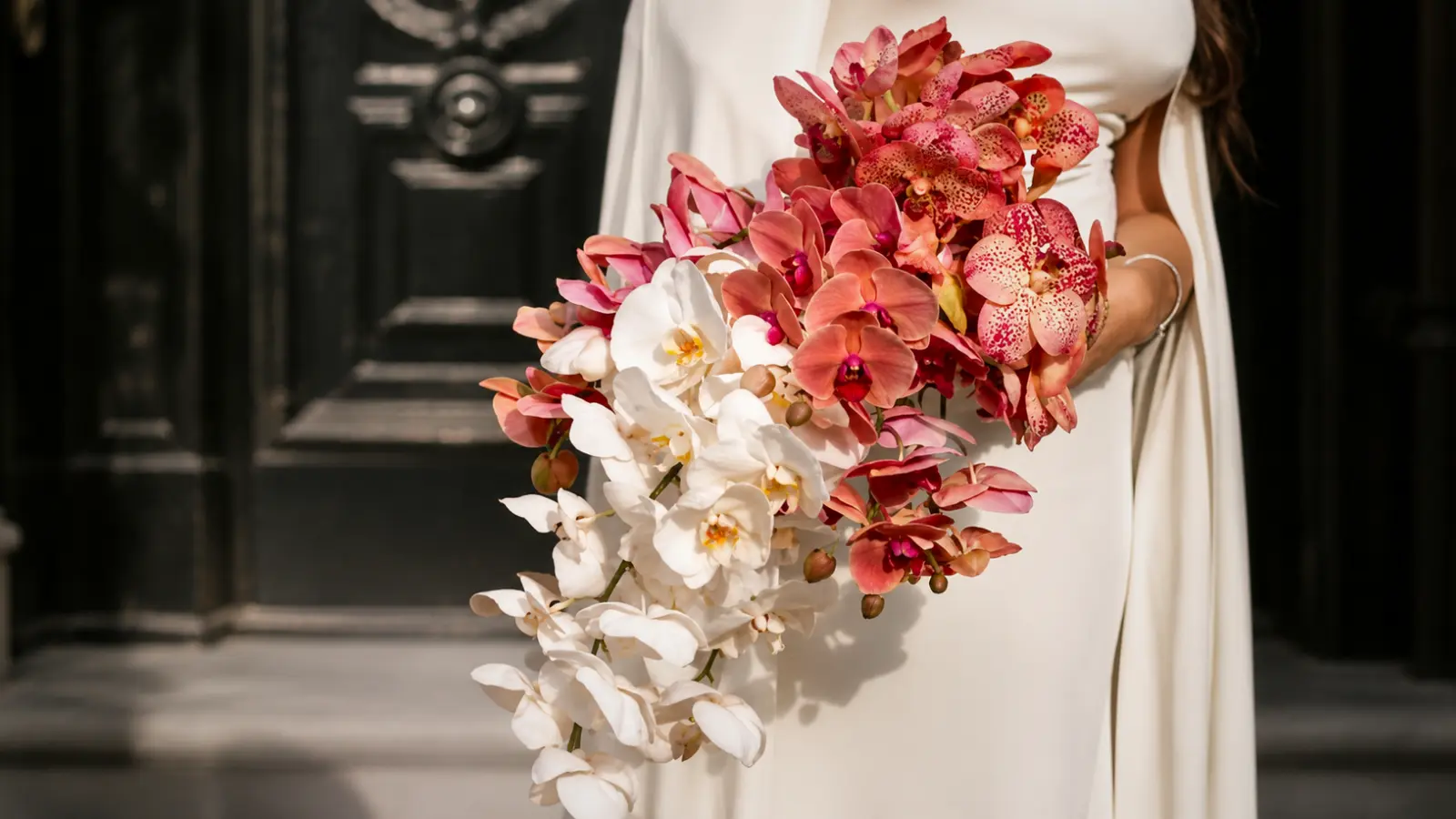
Orchid cascades have a specific quality that sets them apart from most other bridal bouquet designs: the blooms themselves do the trailing. Rather than relying on greenery or vines to create the cascade effect, a dendrobium or cymbidium orchid stem is naturally long, arching, and studded with multiple blooms along its length. A few well-placed stems can build an entire cascade on their own.
The most common orchid choices for cascades are:
- Dendrobium orchids: Long, slender stems with small blooms clustered along the length. They drape beautifully and come in white, purple, pink, and green. The most widely used orchid for cascading designs.
- Cymbidium orchids: Larger blooms on arching stems. They add more visual weight and a slightly more tropical feeling. Work well in modern or destination wedding designs.
- Phalaenopsis orchids: Flatter and more open-faced than dendrobium. Typically used as accent blooms rather than as the primary cascade element.
Orchid cascades tend to photograph exceptionally well because the blooms create repeating visual interest along the entire length of the drape rather than concentrating all the detail at the top. They also hold up reliably throughout a long wedding day. Orchids are among the more durable cut flowers, which matters for a bouquet that will be handled all day.
If you’re considering an orchid cascade, ask your florist about stem count rather than focusing on size. A cascade with seven to ten long dendrobium stems will have substantially more presence than one built on three, even if both are described as “full.”
Cascading Calla Lily Bouquets
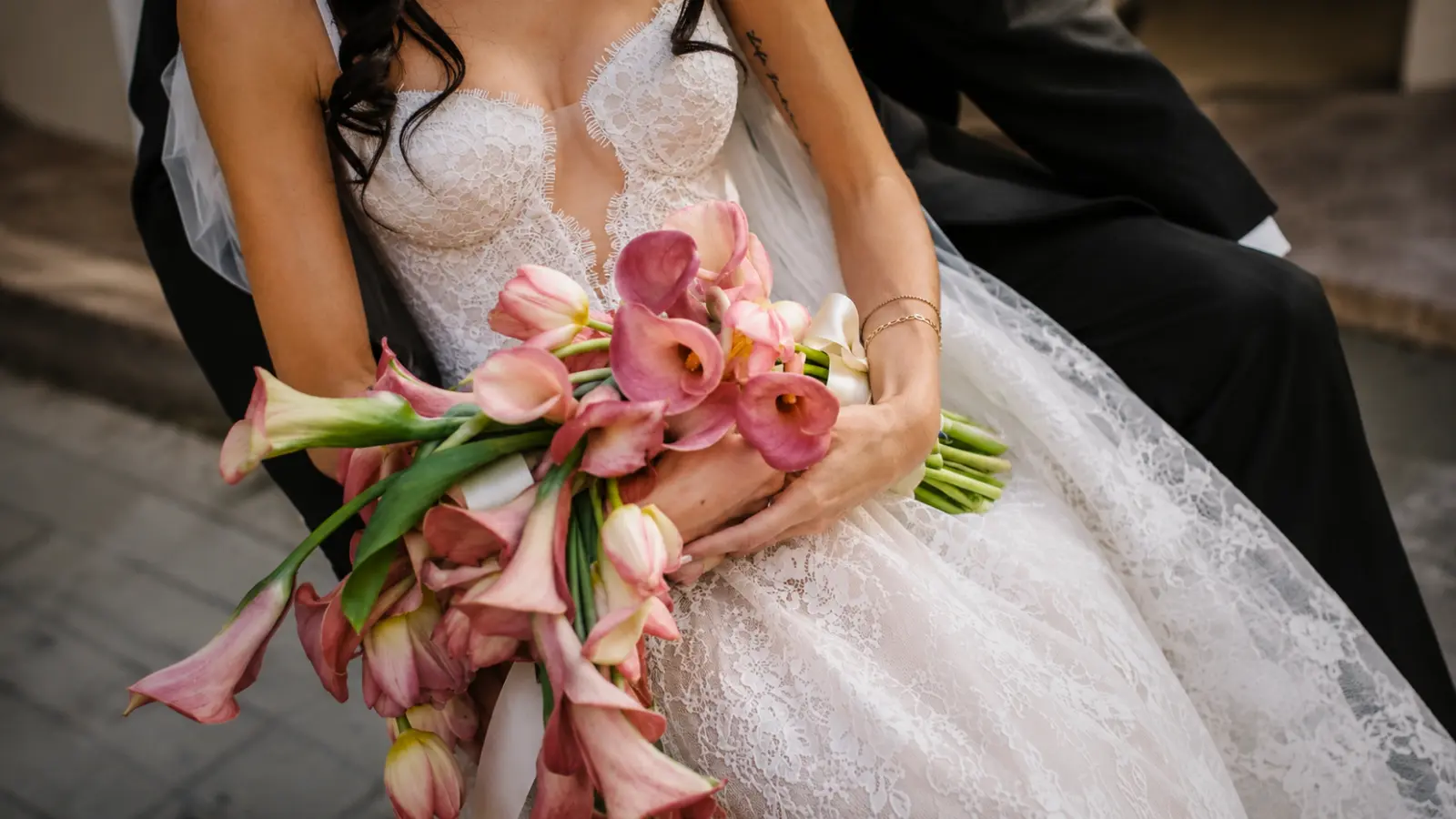
The calla lily cascade is one of the most photographed forms of modern wedding bouquets, and it has earned that status for practical reasons. The flower’s stem is long and naturally arching, its bloom is architecturally clean, and the whole stem has a sculptural quality that suits cascading shapes instinctively. A handful of long-stemmed calla lilies arranged in a gentle downward arch creates a cascade that looks intentional without requiring anything else.
Calla lily cascades typically fall into two distinct approaches:
The architectural minimalist cascade uses calla lilies alone (or nearly alone) gathered in a hand-tied cluster at the top with stems fanning out and trailing downward. No additional flowers, minimal greenery, maximum graphic impact. This is the version most often seen in editorial photography and modern, minimalist weddings. It reads as very current precisely because it avoids the loaded-down look of traditional cascades.
The full cascade with calla lilies as the focal flower uses the lilies as the primary bloom but incorporates supporting elements: trailing greenery, secondary flowers, or texture elements like berries or dried seed pods. This version has more warmth and complexity than the minimalist approach and suits romantic or classical aesthetics better.
One practical note worth flagging: calla lily stems can be heavy, particularly in larger bouquets. A cascade built around twelve or more full-sized calla lilies can become genuinely tiring to hold over a long ceremony. Mini calla lilies are a useful alternative. They have the same clean shape and similar trailing quality but with significantly less weight per stem.
Are Cascading Bouquets Expensive?
Compared to a round or hand-tied arrangement of similar flower quality, cascading designs typically increase the overall wedding bouquet cost. The price difference comes from two places: more materials (trailing elements require additional stem count beyond what a compact bouquet needs) and more labor (cascade construction requires more time to wire, tape, and build correctly, especially with foam-based designs).
A reasonable planning range for a mid-size cascade with quality materials runs from about $300 to $600 at most florists. Designs on the higher end of that range tend to involve premium flowers like garden roses or cymbidium orchids throughout the entire cascade, significant trailing length, or intricate construction. Simpler cascades built primarily on trailing greenery with a focused cluster of blooms at the top can come in closer to the lower end.
A few cost factors worth discussing with your florist upfront:
- Stem count in the trailing section: A cascade that trails 18 inches uses substantially more material than one that trails 6 inches. Knowing your preferred length helps get an accurate quote.
- Flower type: Dendrobium orchids are generally more affordable than cymbidium or garden roses. The same cascade silhouette built in different flowers can vary by $100 or more.
- Construction method: Foam-based cascades require more labor time than extended hand-tied versions. Ask which your florist recommends for your specific design.
If budget is a consideration, one approach that works well is a cascade built mostly around lush trailing greenery (jasmine vine, amaranthus, ivy) with a concentrated cluster of more expensive focal flowers only at the top. The silhouette reads as full and intentional, but the overall cost stays significantly lower than a cascade with premium blooms throughout.
How to Choose a Cascade Bouquet for Your Dress
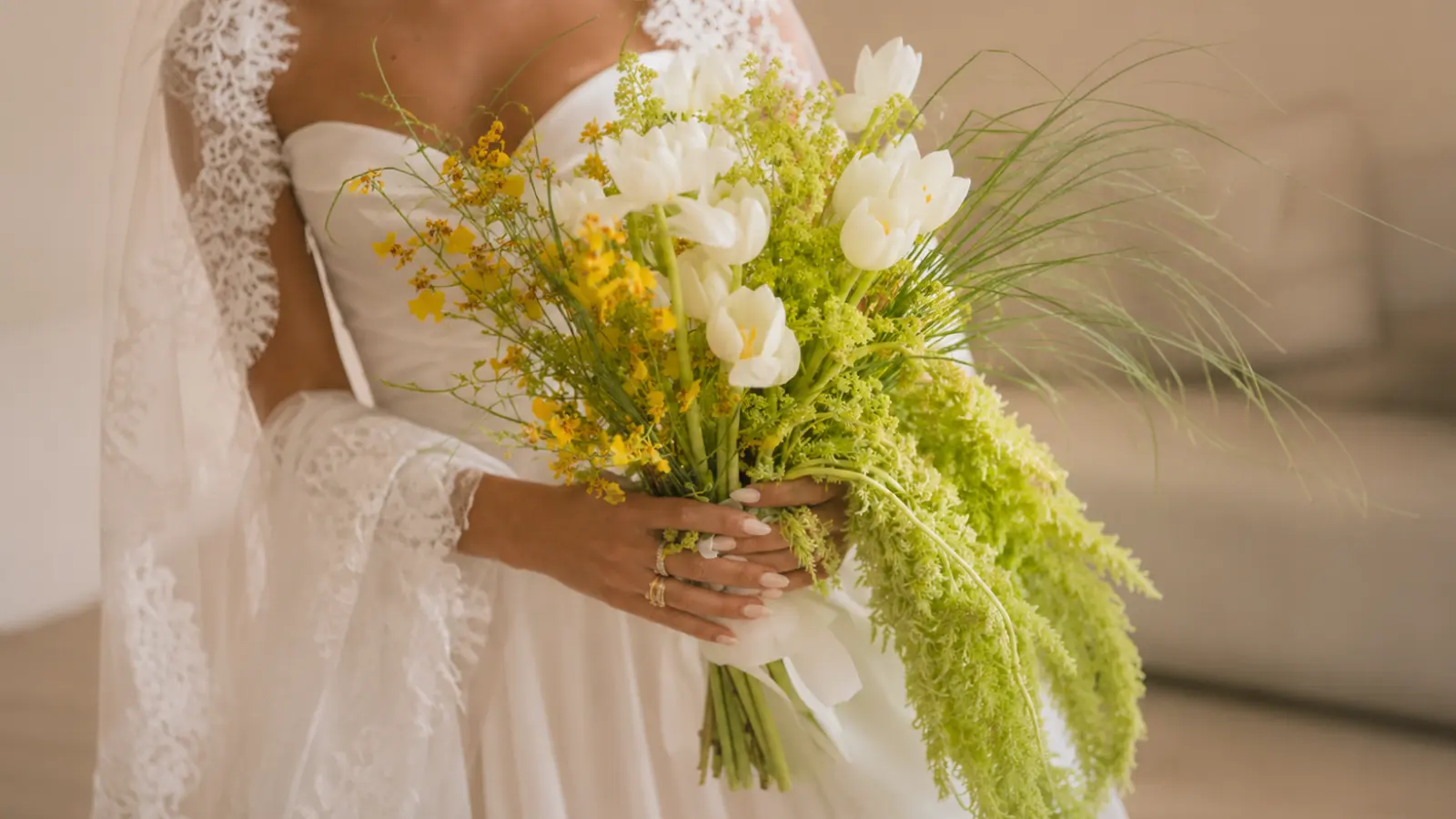
Dress silhouette is the single most important factor in deciding whether a cascade will work for you, and in determining what scale and shape it should be if you move forward. A cascade needs visual space to be seen and proportional weight to make sense against the dress. Getting this pairing right is what determines whether the bouquet feels like a natural extension of the look or a competing element.
Here’s how the most common silhouettes interact with cascading designs:
Ballgown and full A-line: The most natural match for a cascade. The full skirt creates a strong visual base, and the cascading bouquet adds a complementary vertical element without overwhelming the overall silhouette. Full drapes and longer trails work here without looking excessive.
Cathedral or royal train: A longer, more dramatic cascade suits this silhouette well, particularly for formal ceremonies. The proportions of the dress can carry more visual weight in the bouquet than most other styles.
Fit-and-flare: A moderate cascade works with fit-and-flare, but scale matters. A very full or heavily trailed cascade can compete with the drama of the flare. A cleaner cascade with a focused drape (orchids or calla lilies rather than massed greenery) tends to read better.
Sheath or column: Cascades are generally a difficult pairing here. The streamlined silhouette of a sheath works best with a bouquet that matches its simplicity: a long-stemmed single flower, a small round bouquet, or a tightly constructed nosegay. A cascade adds visual complexity where the dress calls for restraint. There’s one exception: an architectural, minimalist calla lily cascade can work with a sleek column dress because both the dress and the bouquet share the same graphic clarity.
Mermaid: Similar considerations to fit-and-flare. A cascade can work if it’s proportionally restrained, but the train and dramatic hip-to-hem line already create strong visual movement. The bouquet doesn’t need to add more. A moderate design beats a full one here.
Beyond silhouette, consider your height. A cascade that looks proportional on a 5’9″ bride can overwhelm someone at 5’2″. A florist worth working with will ask about your height and offer design adjustments accordingly. If they don’t, it’s a good question to raise yourself.
Cascading Wedding Bouquet Inspiration
Explore elegant cascading wedding bouquets featuring waterfall bouquet designs, orchids, calla lilies, trailing greenery, romantic bridal flowers, and timeless inspiration for every wedding style.
Movement Is What Makes a Cascade Beautiful
A cascading bouquet isn’t memorable because it’s larger than other bouquet styles—it’s memorable because it creates graceful movement. The gentle flow of flowers and greenery draws the eye naturally, adding elegance and dimension without relying on excessive size or decoration. When designed with balance and proportion, a cascade feels sophisticated rather than dramatic for the sake of drama.
The most successful cascading bouquets begin with the right combination of flowers, dress silhouette, and wedding style. By choosing blooms that naturally trail, keeping the proportions appropriate for your height and gown, and embracing the softer, more organic approach favored today, you’ll create a bouquet that feels timeless, refined, and unforgettable from the walk down the aisle to your final wedding photographs.
Frequently asked questions (FAQ)
What is a cascading wedding bouquet?
A cascading wedding bouquet is designed to flow naturally below the bride’s hands, creating a graceful waterfall effect instead of a compact round shape. Modern cascading bouquets emphasize movement, airy greenery, and naturally trailing flowers rather than the heavy, tightly structured designs that were popular decades ago. The result feels elegant, contemporary, and intentionally connected to the bride’s silhouette.
Are cascading wedding bouquets still in style?
Yes. Today’s cascading bouquets are very different from the formal waterfall bouquets associated with the 1980s and 1990s. Modern designs use loose greenery, natural movement, orchids, calla lilies, vines, and asymmetrical lines to create a lighter, more organic look. They remain especially popular for luxury weddings, editorial bridal styling, and formal ceremonies.
Which wedding dress styles work best with a cascading bouquet?
Cascading bouquets pair beautifully with ballgown, A-line, and cathedral-train dresses because these silhouettes provide enough visual balance for a bouquet with downward movement. Fit-and-flare and mermaid gowns usually work better with shorter, more restrained cascades, while sheath and column dresses generally suit simpler bouquet styles unless the cascade is intentionally minimalist.
What flowers work best in a cascading wedding bouquet?
Orchids, calla lilies, garden roses, clematis, jasmine vine, amaranthus, ivy, eucalyptus, and smilax are among the best flowers and foliage for cascading bouquets. The strongest designs combine rounded focal flowers in the upper portion with naturally trailing stems that create graceful movement instead of forcing the cascade through artificial structure.
How much does a cascading wedding bouquet cost?
Because cascading bouquets require more flowers, additional mechanics, and significantly more design time than round bouquets, they are usually one of the more expensive bouquet styles. Most professionally designed cascading bouquets range from approximately $300 to $600, although elaborate orchid cascades or extra-long waterfall designs can exceed that depending on flower selection and region.
Can you make a cascading wedding bouquet yourself?
Yes, but simple designs are much more realistic for DIY brides than elaborate waterfall bouquets. Cascades built mainly with trailing greenery and a limited number of flowers are easier to construct, while large orchid or foam-based designs require advanced wiring and floral mechanics. Practicing the design before the wedding is essential if you plan to make your own bouquet.